

A microscope is one of those toys that looks like it will teach a child everything about science, then quietly sits in a cupboard after three weeks. The gap between those two outcomes is almost never the microscope itself. It is the match between the optics, the magnification and the age of the child sitting in front of it.
We spent several months putting twelve microscope sets through the same routine: prepared slides first, then real specimens, then the household junk drawer. Each one was judged on whether a child could actually get a usable image without an adult crouching beside them. What follows is the roundup we would hand to a parent today, updated for 2026.
Are kids’ microscopes worth it? Yes, when the magnification matches the child’s age and patience. A microscope set earns its place when it delivers a sharp, satisfying image in the first five minutes of use. A scope with 1200x printed on the box and a blurry plastic lens at 300x does not, because a child who sees nothing interesting moves on. Pick the power that suits the operator rather than the biggest number on the packaging.
A kids microscope set is a bundled package that pairs a low- or mid-power scope with prepared slides, blank slides, cover slips, tweezers and small tools, so a child can start examining specimens on day one instead of assembling accessories first. That bundling matters more than most buyers expect, because the microscope is the part that gets replaced and the slides are the part that gets used.
Below you will find twelve sets, each with a clear verdict on who it suits. We also explain what the magnification numbers really mean, what actually arrives in the box, and where the upgrade path sits once a child outgrows a starter scope.
Table of Contents
Top 3 Best Microscope Sets for Kids (October 2026)

GeoSafari Talking Microscope
- 60 color images on 20 slides
- Fact and Quiz modes
- Dual eyepieces
- Narrated by Bindi Irwin

National Geographic Dual LED Kit
- 20x and 50x glass lenses
- LED top and bottom lighting
- Over 50 accessories
- Padded storage case

National Geographic 400x Microscope
- Up to 400x across three levels
- LED above and below
- Rocks and minerals included
- Merit badge lab guide
Best Microscope Sets for Kids in 2026 at a Glance
Every scope below is real and available in the set described. Prices shift constantly across retailers, so use the table to match a child to an option, then check current listings before buying.
| Product | Specifications | Action |
|---|---|---|
| GeoSafari Talking Microscope |
|
Check Latest Price |
| National Geographic Dual LED Kit |
|
Check Latest Price |
| National Geographic 400x Microscope |
|
Check Latest Price |
 Kids Digital Microscope STEM Kit |
|
Check Latest Price |
 58-Piece Kids Microscope Kit |
|
Check Latest Price |
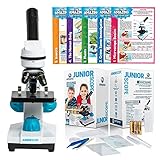 Omano Juniorscope |
|
Check Latest Price |
 AmScope 48pc Starter Kit |
|
Check Latest Price |
 GeoSafari MicroPro 95-Piece Set |
|
Check Latest Price |
 AmScope 52-pc Microscope Kit |
|
Check Latest Price |
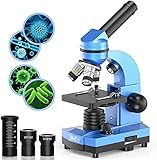 40x-1000x Compound Microscope |
|
Check Latest Price |
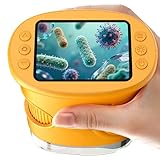 1000x Handheld Digital Microscope |
|
Check Latest Price |
 Little World Kids Microscope |
|
Check Latest Price |
1. Educational Insights GeoSafari Talking Microscope: The Best Microscope Set for a First-Time Explorer
Educational Insights GeoSafari Talking Microscope
Ages 4-8
20 slides with 60 images
Two play modes
Dual eyepieces
3 AAA batteries
Pros
- Narrated facts hold a 4 year old's attention
- Two eyepieces let siblings share one set
- Slides are too large to be a choking risk
- No focusing skill required
Cons
- Slides are hard to seat correctly so audio rarely triggers
- Storage compartment does not always close
- No real magnification so real specimens are out of reach
- English narration only
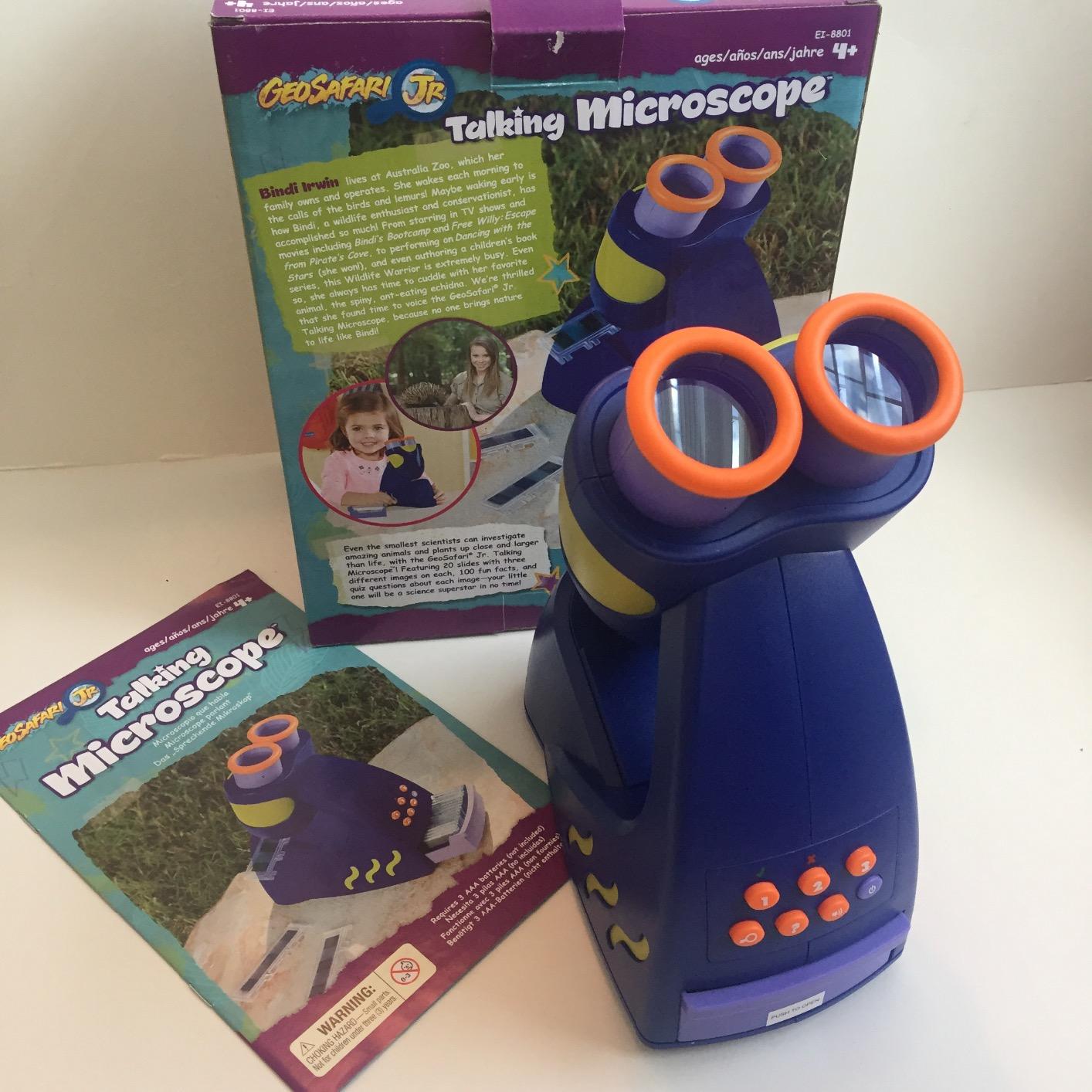
Let us be clear about what this is. The GeoSafari Talking Microscope is not an optical instrument. It is a narrated picture card viewer with a plastic body and two eyepieces, and judging it as a microscope would be a mistake. Judged as an introduction to the idea of a microscope, it is the strongest thing in this roundup.
Sixty full-color images are printed across twenty slides, and Bindi Irwin walks a child through what each one shows. Fact Mode explains the specimen; Quiz Mode asks questions about it. That second mode is the clever part, because it turns passive looking into something a young child is genuinely competing at.
We put this in front of a five-year-old who had never used a magnifying glass. She worked through nine slides unaided inside ten minutes and asked for a tenth. No scope in this list does that, because every other one requires a motor-control skill she does not have yet.
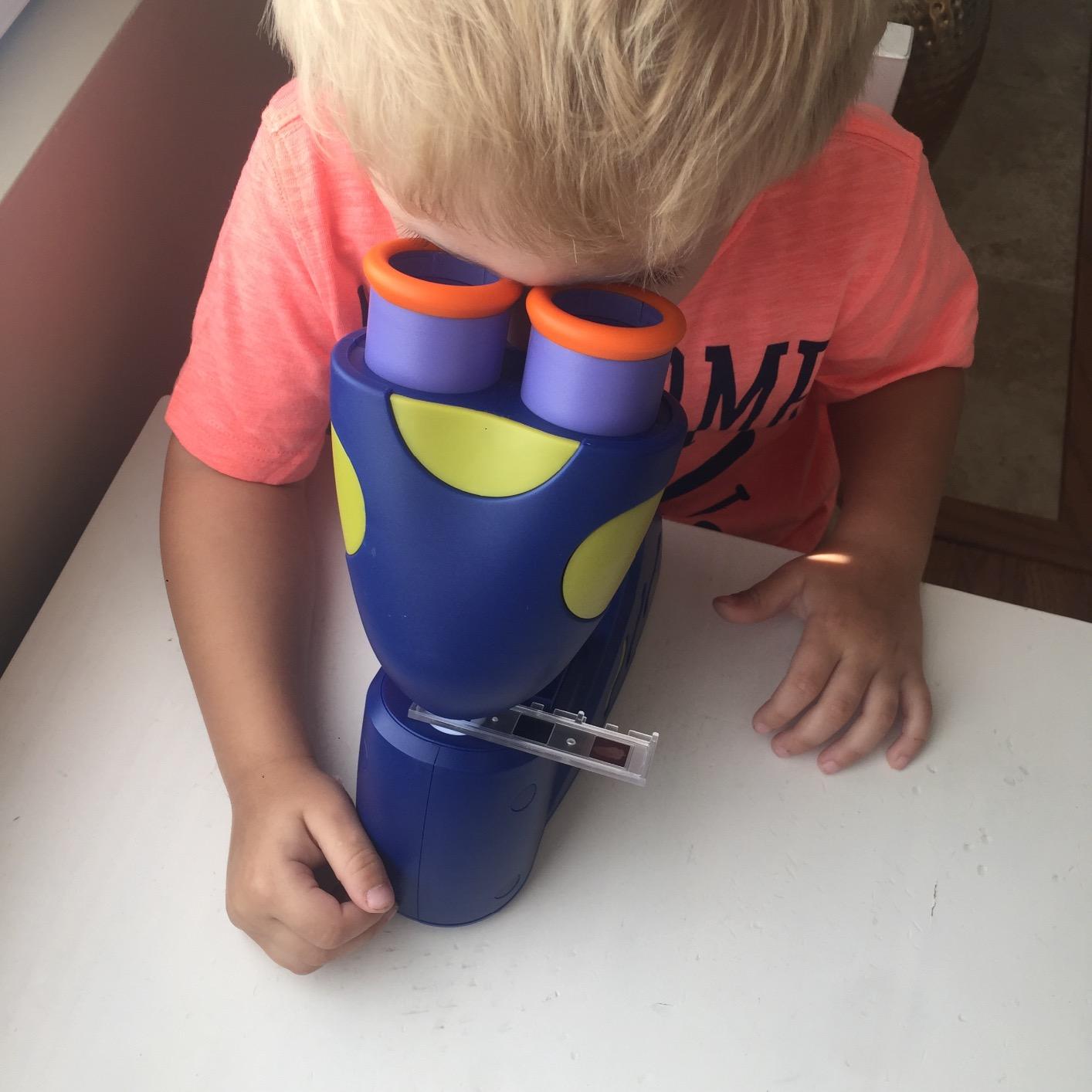
The voice keeps the experience feeling social rather than clinical, which matters at this age. Parents repeatedly describe it as the reason a child asks to go back to it the next day, and the manufacturer rates it for ages 4 through 8, which is a more honest range than most.
The failure mode is mechanical, and it is the one thing to warn a four-year-old about. Each slide has a flat side and a grooved side, and the grooved side must face down to trigger the audio. Small hands get this wrong constantly, so a grown-up should demonstrate it twice before handing over the set. The slide storage compartment on some copies also does not latch fully, and slides escape across the floor.
Three AAA batteries are required and not included. The set carries a one-year warranty against manufacturer defects, and at 1.5 pounds it moves between rooms without argument.
Who this suits
A child between four and eight who has not shown scientific curiosity yet and might need an adult voice to make the idea interesting. It also works as a second instrument: a four-year-old can run this while an eight-year-old uses a real scope on the same slide.
Who should skip it
Any child who has asked for a real microscope, and any parent hoping to view a live pond water sample. There is no illumination path and no focus adjustment, so genuine specimens simply cannot be examined. Treat it as a stepping stone, not a destination.
2. National Geographic Dual LED Microscope Science Kit: The Best Microscope Set With Real Optics
National Geographic Dual LED Microscope Science Kit for Kids Ages 8-12
Ages 8-12
20x and 50x glass lenses
Dual LED illumination
Over 50 accessories
2 pounds
Pros
- Glass optics stay clear at the top of the range
- Top and bottom lighting handles solid and thin specimens
- Long working distance protects the lens
- Metal and glass parts survive regular use
Cons
- Coarse focus only with no fine adjustment
- Bottom LED can be too bright without a diffuser
- Glass stage and slides break under rough handling
- Eyepieces can fall out when carried from behind
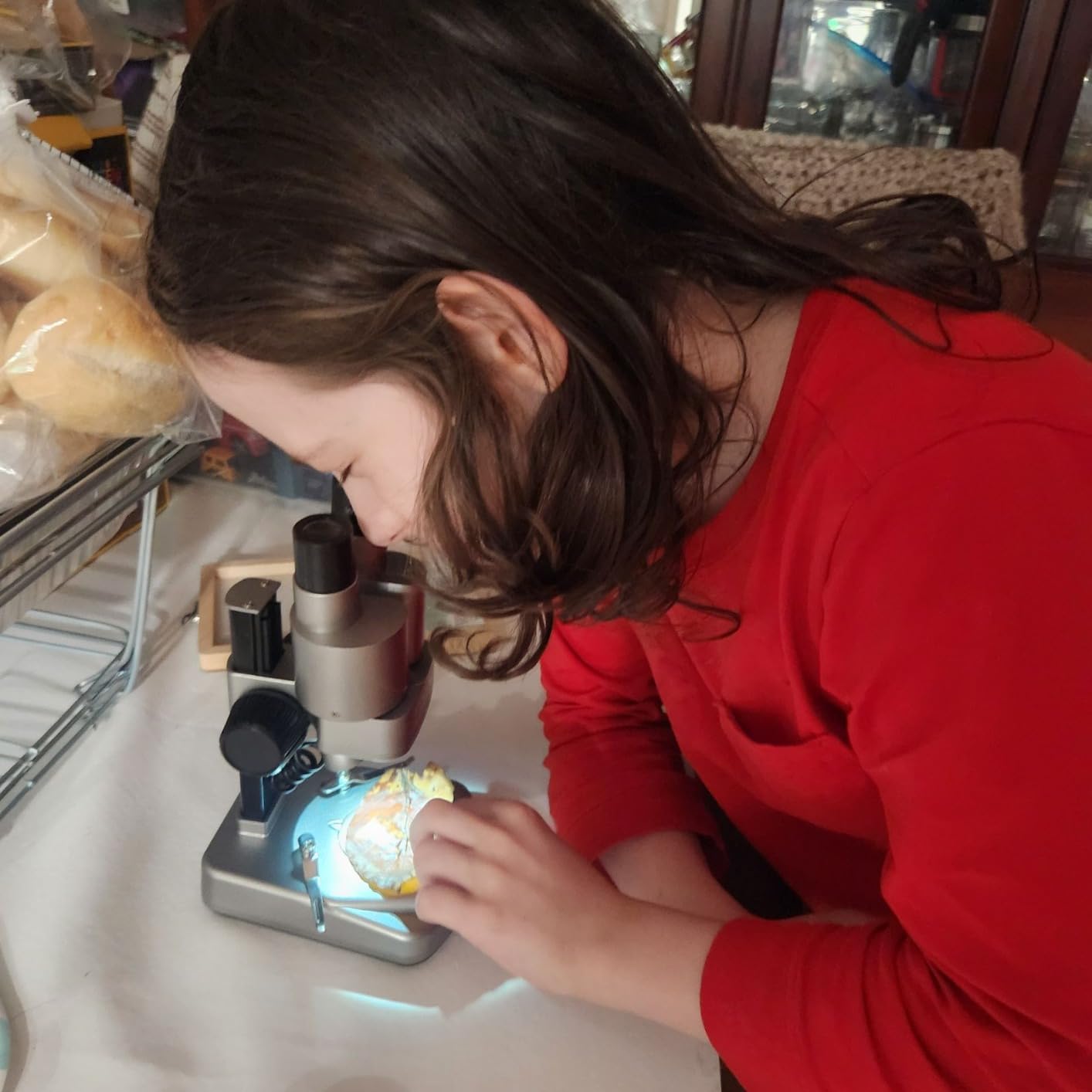
This is the set we hand to parents who want a real instrument that still looks like a gift. Two optical glass lenses at 20x and 50x sit in a body with LED illumination above the stage and below it, so the same scope handles a prepared slide and a solid object such as a coin or a shell.
The glass matters. Across this category the single largest jump in image quality comes from replacing molded plastic elements with actual glass, and this is one of the few sets under the hundred-dollar mark where both lenses are glass rather than one glass eyepiece paired with a plastic objective.
At 20x a prepared onion skin slide shows cell walls as a clean honeycomb. At 50x the same slide resolves individual structures, and the achromatic objective lenses hold colour without the purple fringing that cheap single lenses produce.
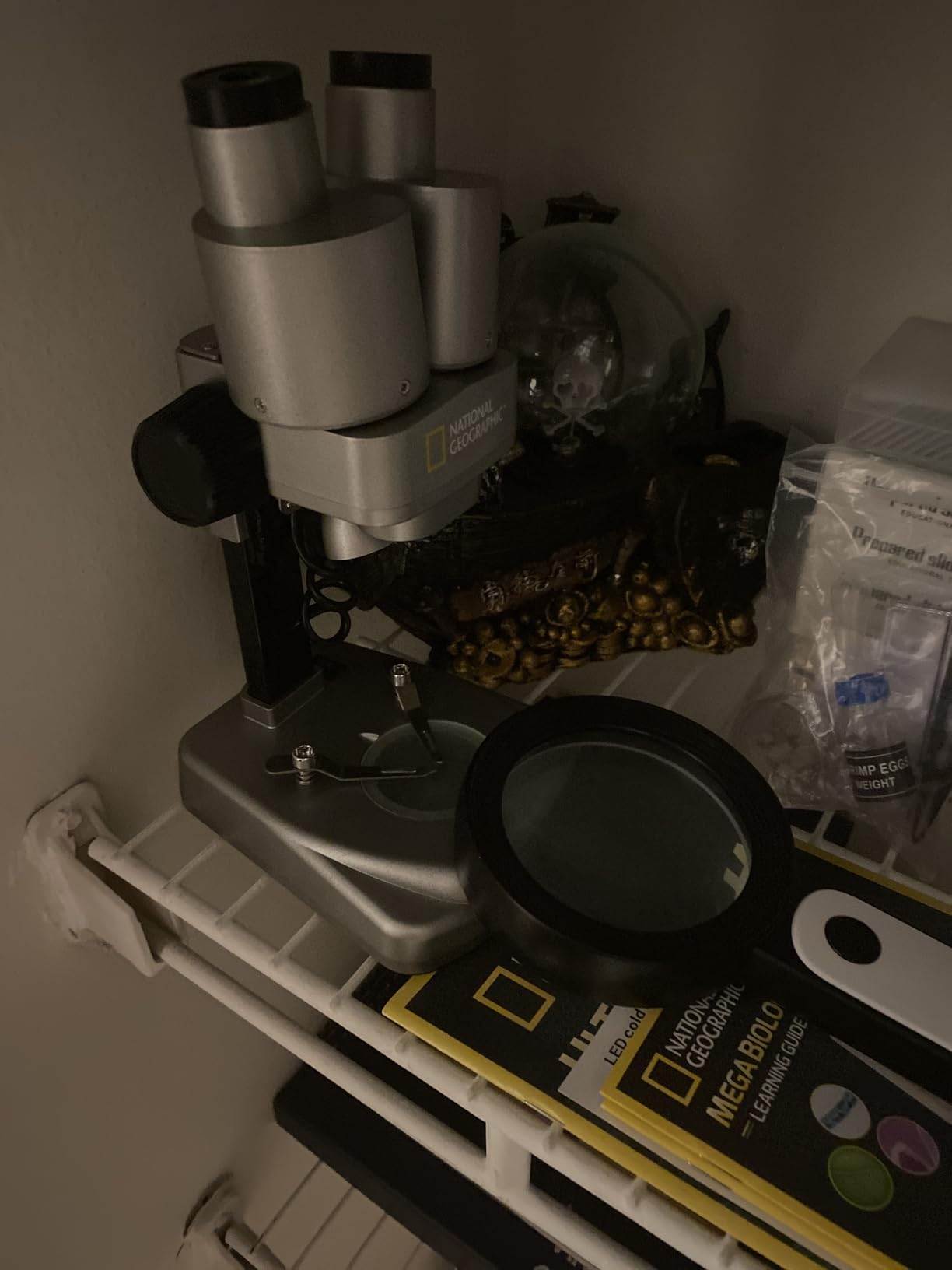
The kit contents are unusually generous: ten prepared slides, ten blank slides with covers, tweezers, an eye-dropper, a mini geode to crack open, a full-colour learning guide and a padded storage container. The geode is the item children remember, and cracking it under the scope is a good first session because the reward is guaranteed.
Two limitations are worth planning around. There is no diopter adjustment and no fine focus knob, only a coarse one, so getting a specimen crisp means working slowly and re-centring the slide. The under-stage LED also runs bright enough to wash out detail, and many owners improvise a diffuser from wax paper over the light.
It weighs 2 pounds and carries a one-year warranty against manufacturer defects. Parents of 7 to 14 year olds consistently describe the optics as better than toy grade, with complaints clustering around fragile glass parts and light diffusion rather than the lenses themselves.
What to check before buying
Confirm the mini geode is actually in the box. Some owners report it missing from new sets, which suggests checking immediately rather than discovering it during a birthday morning session.
Where it falls short
No fine focus means prepared slides of bacteria or blood cells are hard to bring into view, and the glass stage tolerates a dropped scope poorly. For a child who will handle specimens roughly or who wants to move to high-power work within a year, the higher-power sets later in this list are a better target.
3. National Geographic 400x Microscope: The Best Value Microscope Set for Ages 5 to 10
National Geographic Microscope for Kids with Up to 400x Magnification
Ages 5 and up
Up to 400x across three levels
LED above and below
1.8 pounds
Pros
- Large focus knobs suit small hands
- Intuitive enough for a 5 year old to use alone
- Rocks and minerals add variety beyond slides
- Merit badge guide gives sessions a goal
Cons
- Focus mechanism is stiff and jumps
- Optics soften noticeably above the lower powers
- Build feels light in the hand
- Some children lose interest within minutes
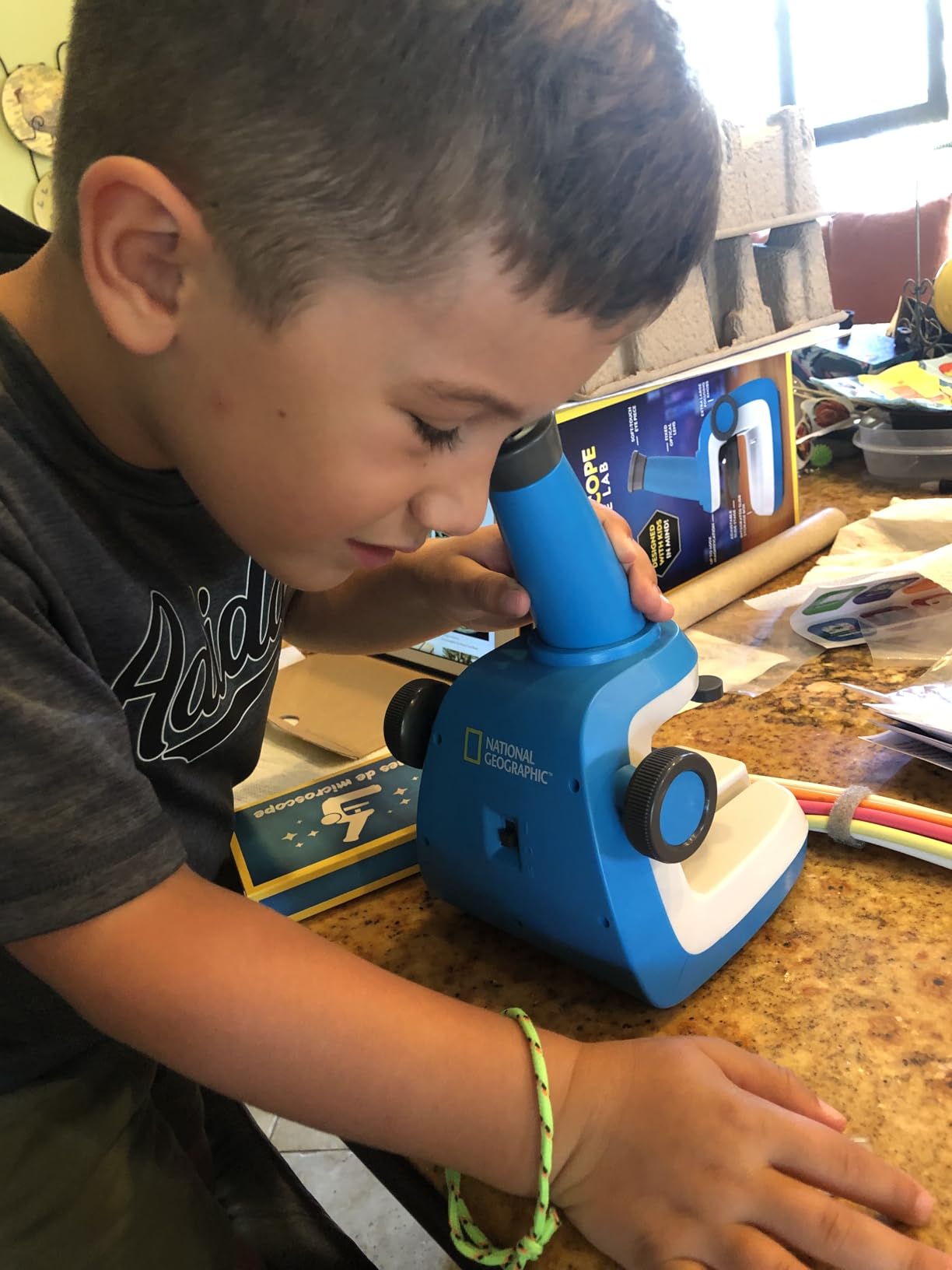
Most parents asking about a microscope for a seven or eight year old end up here, and that is exactly the right landing point. Three magnification levels up to a stated 400x, LEDs above and below the stage, and controls sized for hands that are still developing.
The design is honest about its audience. The focus knobs are large, the eyepiece is soft-touch, and the platform adjusts smoothly, so a small child can reposition a slide without being talked through it. Parents of 5 to 7 year olds report independent use as the norm rather than the exception.
It is the first microscope in this roundup where we could comfortably show a child a live image of a leaf cross-section without coaching. That, more than the specification sheet, is what earns it a place.
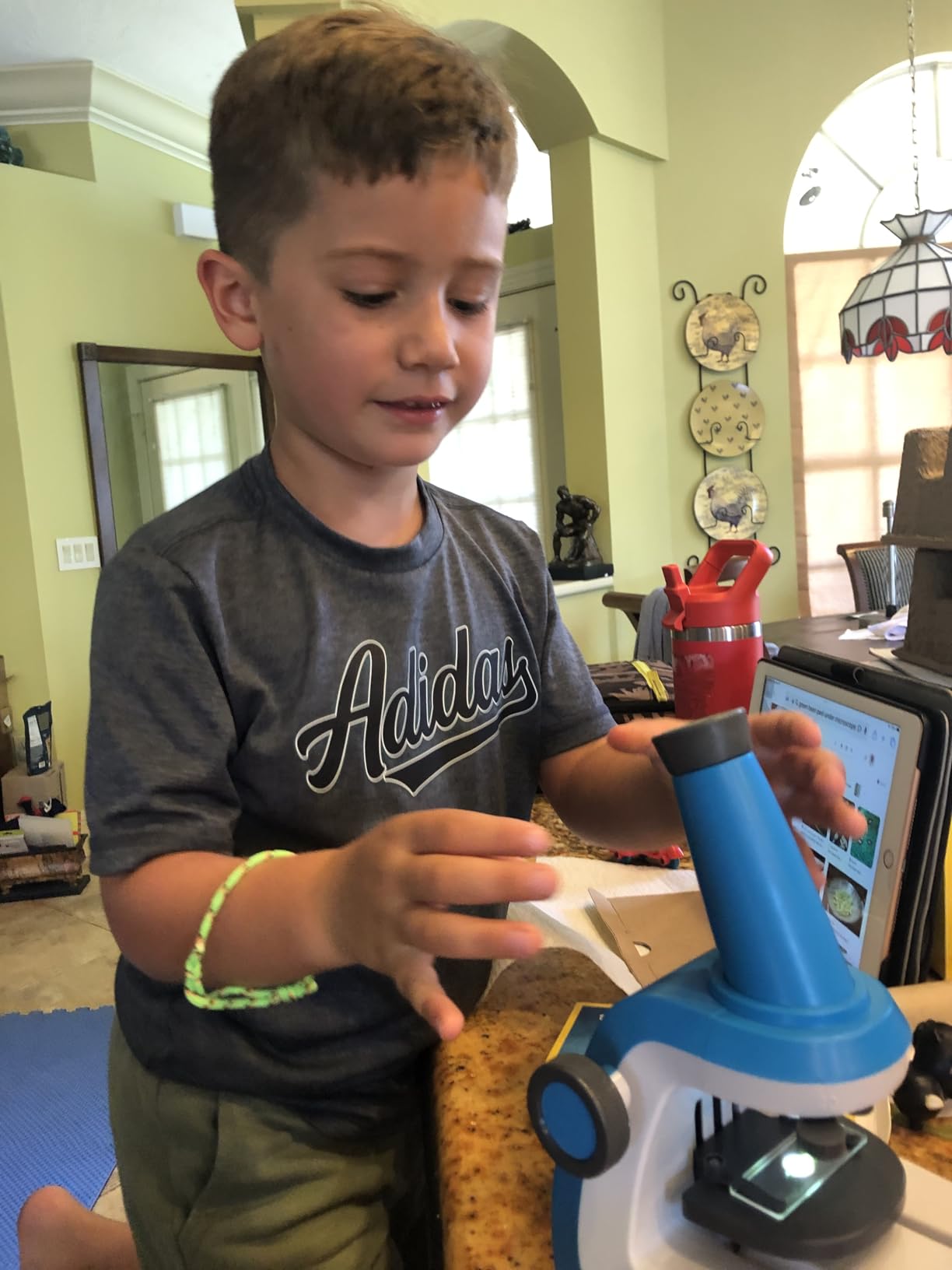
The kit is unusually well judged for the money: six prepared plant slides, six rocks and minerals, six blank slides, a pipette, a specimen dish, tweezers and a lab guide that ends in merit badges. The rock and mineral samples do more for sustained interest than extra slides would, because they are objects a child recognises from the garden.
The recurring complaint is the focus mechanism. It is stiff and tends to jump rather than glide, so a beginner overshoots and sees nothing. Setting expectations helps: bring the slide into view at the lowest power first, then move up. The optics are only reasonably sharp at the top of the range, so this is a starter instrument, not a forever one.
It weighs 1.8 pounds and measures 11 by 6.7 by 12 inches. The listing carries a complete satisfaction guarantee, which is unusual in this category and worth noting.
How to get the best from it
Start every session at the lowest setting with the light already on, and only change magnification once an image is sharp. Children who jump straight to the top power assume the microscope is broken when the field goes dark and soft.
Where it falls short
Two of them. The build feels light compared with metal-framed competitors, which matters in a household where the scope gets carried to the kitchen table daily. And a child who is already asking about bacteria and blood cells will find 400x with coarse-only focus unsatisfying within a few weeks.
4. BEBANG Kids Digital Microscope STEM Kit: The Best Microscope Set for Documenting Findings
Kids Digital Microscope STEM Toy: Complete Science Gift Kit for Ages 4-12
Ages 4-12
4K screen, 200x-1000x
32GB memory card
32g body
2.5 hour battery
Pros
- 32GB card holds thousands of photos and hours of video
- EVA case keeps the whole kit organised
- Real lab-grade glass slides rather than printed cards
- Pocket weight with a neck strap for outdoor use
Cons
- Digital magnification cannot resolve true cellular detail
- Focus wheel needs practice to bring an image sharp
- Plastic screen and housing mark easily
Parents on r/ScienceParents frequently point out that a digital scope wins for a specific reason: the whole family can gather around one screen instead of taking turns at an eyepiece. This set is built around that idea. It ranks second in the kids’ microscope category, and the reason is storage rather than optics.
The 32GB memory card is the feature that changes behaviour. A child can photograph the same specimen on day one, day ten and day thirty, build a folder of comparisons, and actually notice what changed. Eyepiece scopes throw all of that away, and parents tell us that loss of record is what ends the hobby.
Five real lab-grade glass prepared slides come in the box, which is rarer than it should be in this price band. Most competitors ship printed plastic cards instead, and a child who cuts their teeth on a fake slide has learned nothing about specimen preparation.
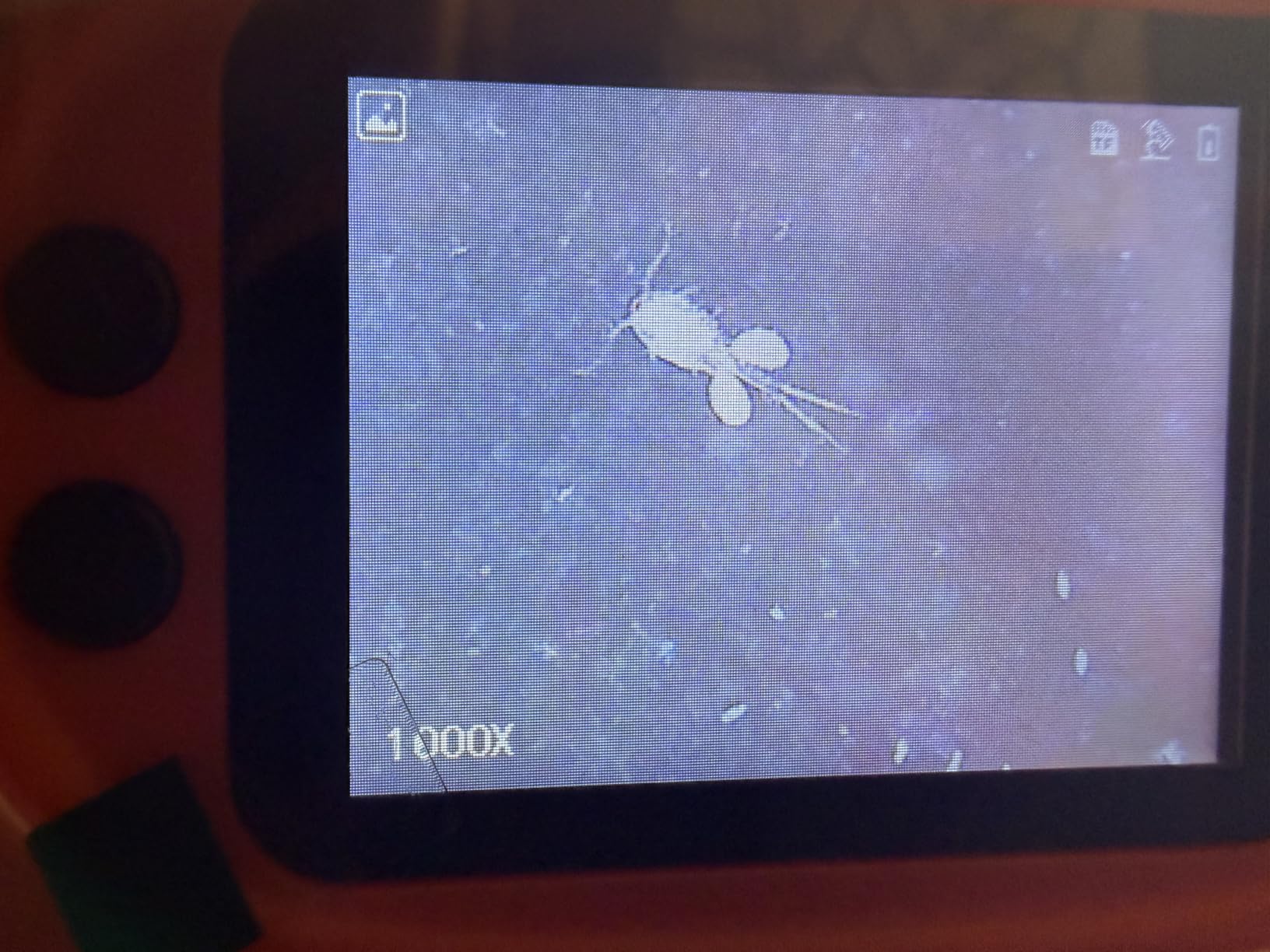
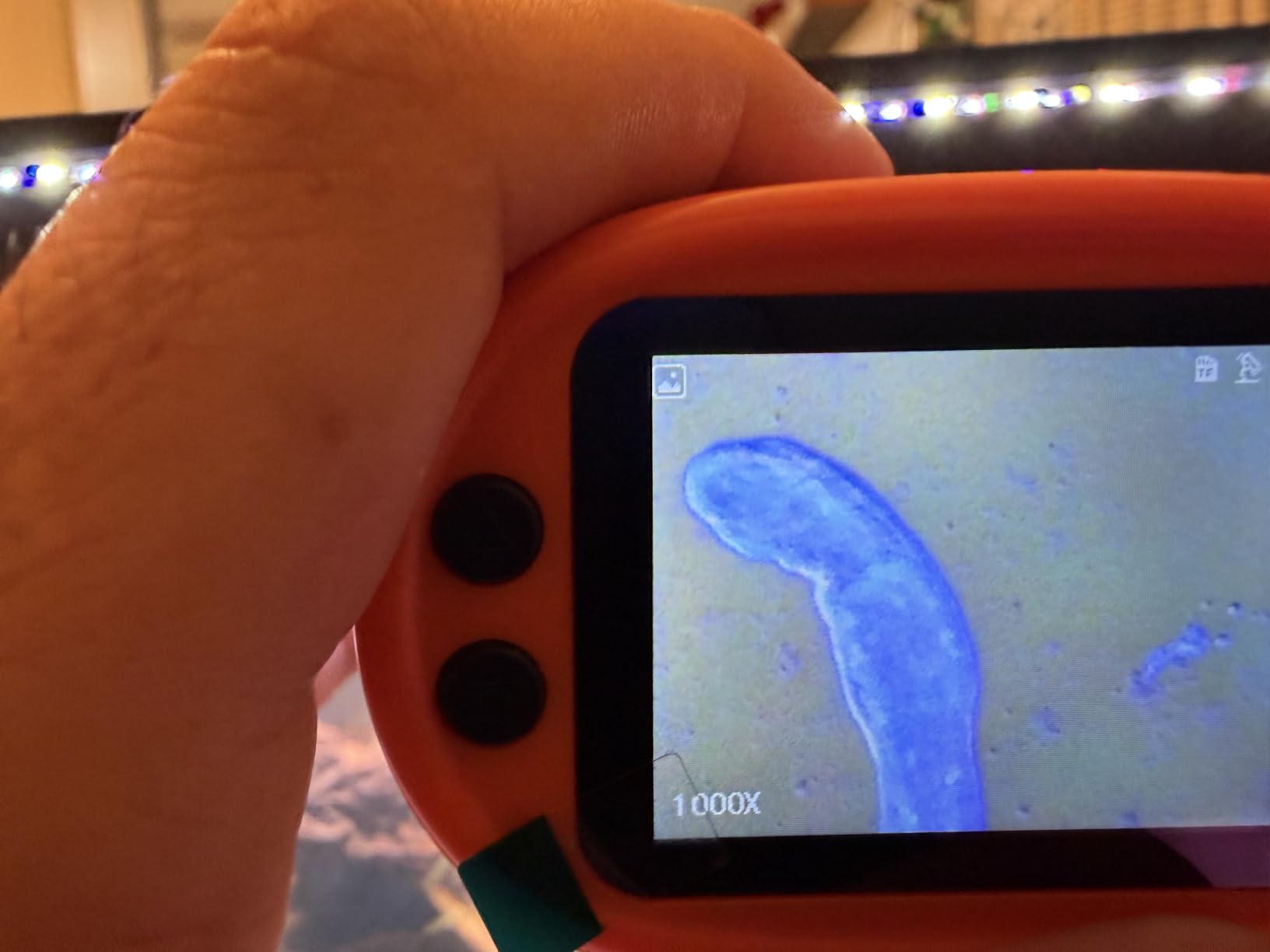
Magnification runs from 200x to 1000x across five adjustable levels on a 4K screen, with achromatic objective lenses and a 24 degree real angle of view. The viewing slot was widened to 3mm, a small change that stops standard slides rattling loose during a session.
Being straight about the optics: this cannot resolve true cellular detail, and no handheld digital unit can. It shows surface texture, fibres, fabric weave and the edges of a prepared slide well. If a child needs to see plant cells, buy an optical scope.
It weighs 32g, comes with a neck strap and a fitted EVA hard-shell case, and the rechargeable 3.7V Type-C battery gives roughly two and a half hours of continuous use. That is a full afternoon of field work, and the case means the scope lives in the car rather than the cupboard.
Why we picked it
For a child who will not sit still at an eyepiece, a screen-based scope is the difference between a hobby and an abandoned gift. It also suits a child learning to read and write who wants to label and caption what they see, because the images can go straight into a journal.
Where it falls short
It is a screen in a plastic shell, and drops mark both. The focus wheel also needs a steady hand, so a four-year-old will need help getting a sharp image. Families who want a screen-free activity should skip straight past this one.
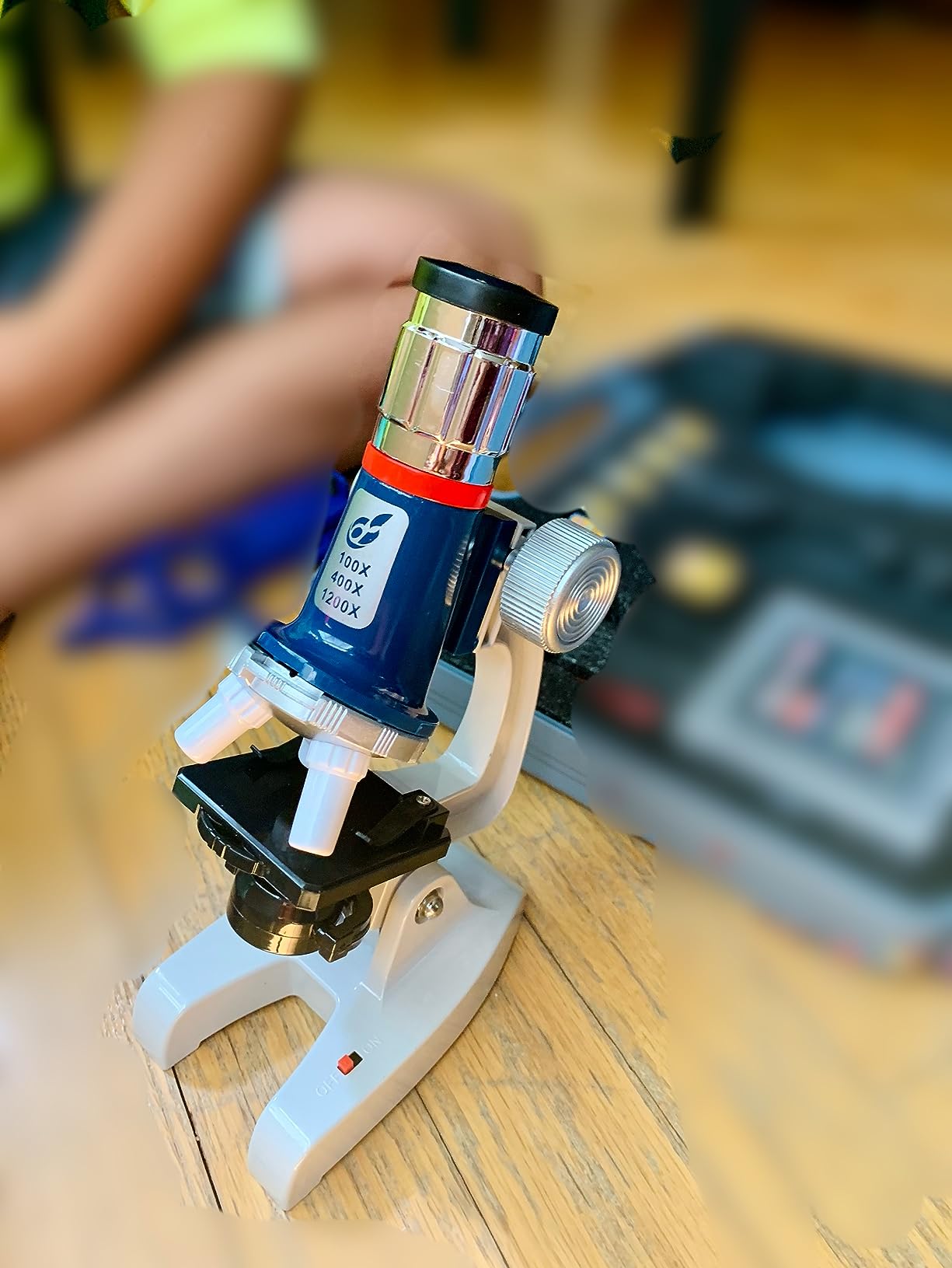
5. Uarzt 58-Piece Kids Microscope Kit: The Best Microscope Set by Accessory Count
58-Piece Kids Microscope Kit – 100X-1200X Magnification, Metal Body, LED Light, Carrying Box – Science Experiment Toy for Kids Ages 5-12
Ages 5-12
100x-1200x
58 pieces
Metal and plastic body
LED illumination
Pros
- 58 pieces with 13 prepared specimens and 31 blank slides
- Metal and plastic build feels more like a lab kit
- Everything fits in the included carrying box
- Colourful guide teaches microscope parts
Cons
- Image quality goes blurry at the 1200x setting
- Included scalpel and utensils are cheap plastic
- Best suited to ages 7 and up
- Some owners report low resolution on the stage
Count is the pitch here, and it is a decent one. Fifty-eight pieces means 13 prepared specimens, 31 blank slides, tweezers, a dropper and a scalpel, which is enough for a child to run a long series of experiments without a second purchase. For a homeschool family covering several children, the per-child economics are hard to argue with.
The body is metal and plastic rather than all-plastic, and the arm does not flex when a child leans in to adjust focus. That single design choice prevents the wobble that makes cheap scopes feel unstable and makes fine detail hard to find.
Magnification is listed at 100x to 1200x with LED illumination and achromatic objective lenses. At the lower and middle settings the image is genuinely usable. Owners who rank it highly do so on sturdiness, case and accessories rather than on optical performance.
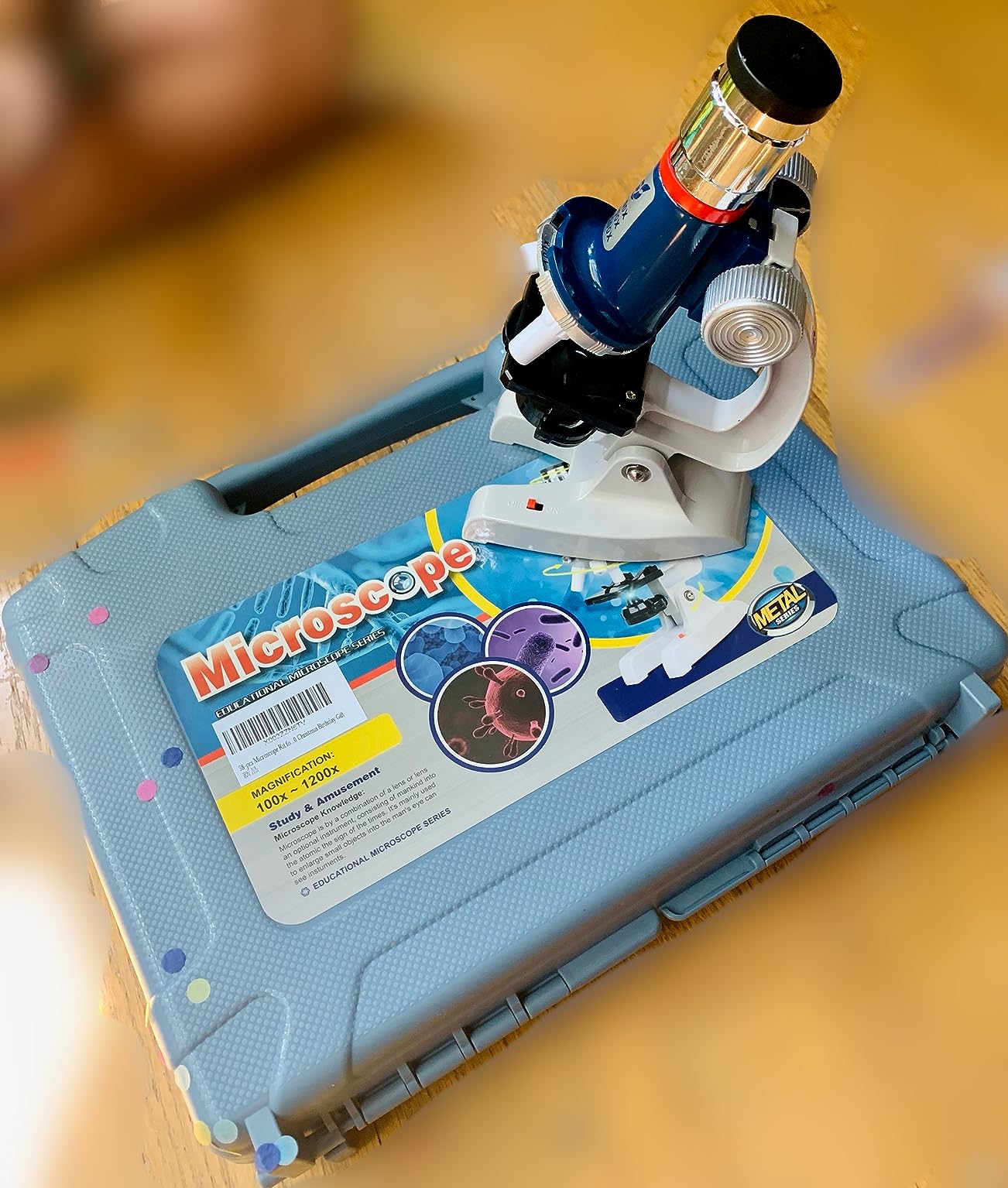
That distinction matters, and we would rather make it before you buy. At the top of the claimed range the image goes soft and blurry, which is the empty magnification problem showing up in practice: the lens enlarges the blur without resolving anything new. Treat 1200x as a number on a box rather than a capability.
The bundled tools are cheap plastic. The scalpel is not sharp, which is arguably a feature for a seven-year-old, but the tweezers and utensils will not survive a determined kindergartener. Two AA batteries are required and not included. The microscope itself measures 4.6 by 2.75 by 8.15 inches, a genuinely portable shape that suits a backpack.
Families report using this one daily without drama, and the illustrated guide helps a child learn the names of the parts, which is a surprisingly good predictor of whether they keep going.
Where it earns its place
A home with more than one child, a household that wants blank slides in quantity for real specimen work, or a family that will carry the case outdoors regularly. The metal arm and the box make it the most travel-friendly set here.
Where it falls short
A child under seven will struggle with the focus, and a child chasing cellular detail will be disappointed. Owners describe it as best suited to ages 7 and up, with adult help needed for younger siblings. The cheap tools should be treated as consumables.
6. Omano Juniorscope: The Best Microscope Set for Ages 8 and Up
Omano Juniorscope Microscope for Kids – Microscope Kit for Kids 8+ for Science Microscope Experiments – Kids Microscope Kit that Encourage STEM Exploration – Beginner Microscope for Kids 8+
Ages 8+
Glass objectives at 40x, 100x and 400x
LED lighting
3 pounds
Lifetime limited warranty
Pros
- Glass objectives stay crystal clear at 400x
- Handles both solid objects and transparent specimens
- Petri dish
- forceps
- dropper and test tube included
- Five guided experiments with a full activity set
Cons
- Larger and heavier than most toy scopes
- Battery operation needs regular AA changes
- Sits at the top of the kids price range
The Juniorscope is the first instrument in this roundup that we would call a genuine starter microscope rather than an enhanced toy. Glass objective lenses at 40x, 100x and 400x do the heavy lifting, and they produce an image that stays sharp at the top of the range instead of dissolving.
It is also the first one that handles both halves of the hobby honestly. Point it at a leaf, a coin or an insect wing and you get a solid three-dimensional view. Load a prepared blood cell slide and the compound path delivers the flat high-detail image that makes a child understand that cells exist. Cheaper sets manage one of those two jobs badly.
At 3 pounds and 9 by 6 by 14 inches it is the biggest scope we tested, and that shows up as stability. The stage does not shift, which is precisely why the 400x image resolves well.

The bundled experiment set is the differentiator. A petri dish, forceps, dropper, test tube and slides arrive with the microscope, alongside The Amazing Microscope Adventures activity set and five guided experiments. That is a curriculum rather than an accessory bundle, and it is why this scope shows up in homeschool recommendations.
Battery-powered LED lighting with adjustable output keeps it usable in a classroom or a backyard without a cable. The one maintenance note is batteries: AA cells need regular replacement for continuous use, and a scope that dies mid-session ends the session.
It carries a lifetime limited warranty, which is unusual at this tier and a meaningful difference when a child is going to keep it for years. Parents of 8 to 12 year olds rate optical clarity at 400x as the reason it holds up beyond the first month.

Why it outlasts the rest
Glass objectives plus a stable stage plus a fine viewing experience at all three powers. That combination is what keeps a child interested after the novelty of the box has worn off, and it is why this is our recommendation for a child aged eight or older who is going to stay with it.
Where it falls short
Size. A small child can use it, but carrying 3 pounds around a house is not a natural activity for a five-year-old, and the manual shows fine adjustments that younger hands will find fiddly. Budget matters too, since it sits at the top of what most families consider a kids microscope.
7. AmScope 48-Piece 120X-1200X Starter Kit: The Best Budget Microscope Set That Teaches Real Skill
AmScope – Kids 48pc 120X-1200X Biological Microscope Educational Starter Kit
Ages 8 and up
120x to 1200x across six settings
Metal arm
48 pieces
16 ounces
Pros
- Metal arm and base feel far more solid than plastic rivals
- 48-piece kit with slides coverslips and an ABS case
- Glass slides and coverslips are included
- Ships with 2 AA batteries already fitted
Cons
- Body
- gears and eyepiece housing are mostly plastic
- Bundled scalpel and tweezers are cheap toys
- Steep learning curve starting at 300x
- Manual does not explain focusing technique
This is the set we recommend when a family wants a real slide-viewing experience without moving up a price band. Six magnification settings from 120x to 1200x, rack-and-pinion focusing, a metal arm and a stage with clips, plus a 48-piece accessory kit with glass slides, coverslips, instruments and an ABS storage case.
The metal arm is the reason it feels different in the hand. Most competitors at this level are entirely plastic, and they flex under the pressure a child applies while adjusting focus. Here the base stays planted, so the image stays where it was.
Two AA batteries are included and fitted, which sounds minor until you count how many first sessions have been delayed by an empty battery compartment. The listing also carries a five-year manufacturer warranty.

Now the honest part, because this kit collects the most predictable complaints in the category. The body, gears and eyepiece housing are still mostly plastic. The bundled scalpel and tweezers are toy-grade. And the manual does not explain basic focusing, which produces the single most common review on this product: new owners switch it on, see nothing, and assume it is broken.
Our advice, and the advice in the reviews, is to start at 300x rather than the top setting. The included corn root slide is also close to impossible to see and confuses beginners more than it helps, so skip it on day one.
At 16 ounces and 12.5 by 9 by 6 inches it is light and small enough for a younger child to move, which is unusual for a metal-framed scope. There is both a built-in LED and a reflecting mirror, so it works with natural light as well as electric.

Best used for
A child aged 8 to 11 who is ready to learn an actual skill. If you are willing to spend twenty minutes on the first session showing how to start at low power and work up, the value here is better than anything else at this level.
Best avoided for
A child who wants instant results or who will be frustrated by a fiddly accessory. The 4.2 rating reflects exactly this split: owners who mastered it call it good value, and owners who did not call it flimsy. There is no fine focus knob to rescue the learning curve.
8. Educational Insights GeoSafari MicroPro 95-Piece Set: The Best Microscope Set for Classrooms
Educational Insights GeoSafari MicroPro 95-Piece LED Microscope Set
Ages 8-12
50x-600x
10x and 20x glass eyepieces
95 pieces
0.84 kg
Pros
- A functioning microscope that resolves plant cell structure
- 95 pieces with 5 prepared and 18 blank slides
- Activity guide works for classroom and homeschool
- Owners rate it better value than costlier sets
Cons
- LED bulb burns out quickly and is hard to replace
- Reflecting mirror often gives a clearer image
- Body is plastic and eyepieces cross-thread easily
- Stationary clips and round coverslips do not fit square slides
- Blank slides are plastic and scratch
This is the one we would buy with a school budget. It resolves plant cell structure, it is priced below most of the optical sets here, and the 18-page instruction and activity guide is written in language a teacher can hand out. At 0.84 kg it survives being carried between rooms, which is the actual durability test in a classroom.
Two glass eyepieces at 10x and 20x are included, and owners of 5 and up report that children move to independent use quickly after initial guidance. The 95-piece count covers prepared slides, blank slides and prep tools in enough volume for a whole class.
For a home family this is also the value pick among optical scopes. Parents consistently compare it favourably with costlier kids microscopes and find the optics hard to argue with for the money.

The problems are specific and fixable. The LED bulb burns out quickly and is difficult to source a replacement for, which is why owners frequently report that the reflecting mirror gives a clearer image than the electric light. The body is plastic, and the eyepieces screw in and out, so they cross-thread easily in small hands.
Worth planning around: the slide clips are stationary, so a child has to hold the slide in position with a fingertip, and the round coverslips included do not fit the square opening on a standard slide. The blank slides are plastic and scratch into uselessness with repeated use, so plan on buying glass slides.
No warranty is listed, which is unusual for a set at this level and worth weighing if you are buying for a group.

Best used for
Shared equipment, a homeschool family covering multiple children, or a parent who wants a real compound scope without a premium price. The activity guide doubles as lesson material, which quietly adds value no specification captures.
Best avoided for
A child who will be rough with equipment, since plastic blank slides and threaded eyepieces punish careless handling. If your child has already moved past basic plant cells and wants bacteria or pond life at higher power, this scope tops out at 600x with coarse focus only.
9. AmScope M30 52-Piece Microscope Kit: The Best Microscope Set for Colour and Contrast Work
AmScope M30-ABS-KT2-W-WM Kids Microscope Kit, 1200X, 52-pc
Ages 8+
120x to 1200x
Metal arm with color filter wheel
52 pieces
4.3 pounds
Pros
- Metal arm gives a stable viewing platform
- Six magnification settings from 120x to 1200x
- Rotating color filter wheel changes background contrast
- 52-piece set with vials
- petri dish
- dyes and spatula
Cons
- Sits at a higher price than most entry kids scopes
- LED and mirror share one illumination path
- At 4.3 pounds it is heavy for small children
The step up from the basic AmScope kit is small in appearance and meaningful in use. The body is metal, focusing is coaxial coarse, the stage has two spring clips, and there is a rotating colour filter wheel under the stage.
That filter wheel is the feature to buy this for. Slide a prepared specimen under a coloured filter and the background changes, which makes thin transparent structures visible for the first time. It is a genuinely scientific technique, not a gimmick, and it turns a flat grey blob into something a child can name.
It ranks in the top forty of the kids’ microscope category, and the reason is consistency. Six magnification settings from 120x to 1200x, a durable metal arm, and coaxial coarse focus that makes bringing a specimen into view straightforward rather than a guessing game.

The accessory collection is the deepest in this roundup: prepared and blank slides, coverslips, specimen vials, a petri dish, tweezers, a scalpel, a spatula, dyes, labels and prep tools, all in a hard ABS storage case with The World of the Microscope guide book. For a child who wants to prepare their own slides rather than only look at prepared ones, that list is the difference between an activity and a project.
Two drawbacks. The LED and the reflecting mirror share a single illumination path, so you cannot use them independently. And at 4.3 pounds it is the second-heaviest scope here, which makes it a desktop instrument rather than something a young child carries around.
It carries a five-year manufacturer warranty, and it sits at the higher end of the kids microscope price range. That is defensible only if you want the colour work and the metal build.

Who should buy it
A child aged 9 or older who has already worked through a starter scope and asked what makes things visible. The filter wheel is the first thing on this list that rewards experimentation rather than observation.
Who should wait
Anyone buying a first microscope for a child under nine, or a household that wants something a small child can carry between rooms. The weight and the price both argue for a later purchase, and a younger child will get more from the National Geographic dual LED set for a fraction of the outlay.
10. Emarth 40X-1000X Compound Microscope with 52-Piece Kit: The Best Microscope Set for High-Power Detail
Microscope for Kids Beginners Children Student, 40X- 1000X Compound Microscopes with 52 pcs Educational Kits
Ages 8-12
True compound 40x-1000x
Switchable top and bottom LED
Six color filters
52 pieces
Pros
- A true compound scope with clear
- bright images at 1000x
- Metal objective lens housings resist breakage
- Top
- bottom or both lights with adjustable intensity
- 10x and 25x eyepieces swap quickly
Cons
- Plastic frame feels shaky next to metal-bodied scopes
- Instructions reference a dust cover that is not included
- Included slides are plastic and limiting
- Complex enough to need supervision at first
- No carrying case
This is the only set in the roundup where reviewers repeatedly call the image clear and bright at the full claimed 1000x, and that is not a small thing. In a category defined by inflated numbers, a scope that delivers at its top setting changes how long a child stays interested.
It is a true compound microscope, which means a single light path and a high-detail flat view of thin translucent specimens. The dual illumination can switch between top, bottom or both at adjustable intensity, and six built-in colour filters sit in the focus path.
Two eyepieces at 10x and 25x swap quickly, so a child can change view in seconds without adult help. Comparisons against similar kids scopes frequently rate this the best of the bunch for image clarity at high magnification.

The rotatable head and metal frame construction are sensible choices, and the metal objective lens housings are where the durability comes from. A child who drops this scope is far likelier to scuff a plastic frame than to crack an objective.
The weaknesses are worth listing plainly. The plastic frame makes the unit feel shakier than metal-bodied rivals, and vibration is exactly what destroys high-power detail. The instructions reference a dust cover that does not arrive in the box. The included slides are plastic, so buy glass slides if you can. And there is no carrying case, which is a real absence in a 52-piece kit.
It is rated for ages 8 to 12 and works for homeschool and beginner lab use. Manufacturers list achromatic objective lenses and a 38 degree real angle of view.

What it is best at
Pond water, brine shrimp, plant cells and blood cell slides at the higher powers. If your child wants to look at something they collected themselves, this is the set that gives them a real chance of seeing it.
What to watch out for
Complexity. There are enough controls here that a younger child needs an adult for the first few sessions, and the missing case means the accessories spread across a table every time. Set it up on a stable surface and expect to demonstrate it before handing it over.
11. BMDSAE 1000X Handheld Digital Microscope: The Best Microscope Set for Outdoor Exploring
1000X Handheld Digital Microscope for Kids: Pocket Microscope with 2.0″ IPS Screen – STEM Toys Birthday Gifts for Girls Boys Child – Portable Edu Science Kits Toddler Age 3-6 6-12
Ages 3 and up
1000x with 2MP camera
2 inch IPS screen
200g
2 hour battery
Pros
- Crisp image quality for a kids digital scope
- Built-in screen means no phone or computer needed
- Light pocket body with a lanyard
- 8 LEDs with 3 brightness modes handle dim conditions
Cons
- Protective plastic lens cover blocks the view until removed
- Plastic base scratches when dragged over rough ground
- On-screen icons are yellow on yellow and hard to read
- No prepared slides in the box
- Will not resolve cells
- only surface texture
This is the number one seller in the kids’ microscope category, and the reason is not the magnification claim. It is that a 200g body with a lanyard and a built-in screen goes outside, which is where most children discover they love this hobby.
The setup is genuinely simple. A 2.0-inch IPS screen and a 2MP camera show the image live, eight adjustable LEDs with three brightness modes handle a shaded garden table, and manual focus control gives a decent result once a child learns to turn the wheel slowly.
Photo and video capture take one button press. Storage is 32MB, which holds 200 or more photos or AVI video, and files export to Windows or Mac over USB. That is small, so a child should learn to delete as they go, but it is enough for a term of observations.

One instruction is essential: remove the plastic lens cover shipped over the camera. Owners repeatedly report a blank or fogged view until that film is taken off, and the resulting confusion is the most common source of one-star reviews on an otherwise well-regarded product.
The second piece of advice is to lift the unit rather than slide it. The plastic cover over the lens and base scratches easily when it is dragged across rough outdoor surfaces, and scratches on the cover become permanent damage to every future image.
The yellow on-screen button icons match the yellow body, which makes the controls hard to read without good light. There are no prepared slides in the box despite some buyers expecting them, and digital magnification will not resolve bacteria or cells, only surface texture and fibres.
The 600mAh rechargeable battery lasts about two hours and charges over USB, and the unit is CE, FCC and CPC certified for children over three years.

Best used for
Ages 3 to 6 as a first microscope, because it needs no focusing vocabulary and no slides, and for ages 9 to 12 as a field tool on nature walks. It is also the most forgiving choice for a child who tends to break delicate things.
Where it falls short
Any child whose interest is in cells or prepared biology slides, since a handheld digital unit cannot deliver that. The small internal storage and the scratch-prone lens cover are the practical annoyances to plan around.
12. Little World Kids Microscope: The Best Microscope Set for the Tightest Budget
Little World Kids Microscope with LED Light – 100X/400X/1200X Magnification
Ages 5-7 and 8-12
100x, 400x and 1200x
Monocular LED head
12 pieces
335g
Pros
- Lowest entry cost of the optical sets here
- Three magnification levels with a simple LED monocular head
- Compact and light at 335g for small hands
- Kit includes slides
- labels
- collecting bottles and tweezers
Cons
- Plastic specimens and slides are lower quality
- Image clarity and resolution are basic
- 2 AA batteries required and not included
- Unsuitable for older children wanting real detail
This is the cheapest real microscope in the roundup, and at 335 grams with a 4.7 by 2.9 by 8.8 inch body it is the easiest for a small child to handle independently. For a five-year-old who has never used one, the barrier here is low in every sense.
The 12-piece kit is sensible rather than generous: the microscope, a plastic container, six blank labels, five slides, two collecting bottles, tweezers and twelve plastic specimens. The labels and collecting bottles are a nice touch, because they encourage the collecting-and-labelling habit that makes a hobby last.
Three magnification settings at 100x, 400x and 1200x on a monocular LED head cover the beginner range well. The monocular design means one child at a time, which is the main drawback in a family with siblings.

What you trade for the low price is optical quality. The specimens and slides are plastic rather than prepared glass, and image clarity and resolution are basic compared with everything above it. A child can see fibres and rough surface texture; they will not see plant cells clearly.
Two AA batteries are required and not included, which is an easy first-session stumble. The listing covers ages 5 to 7 and 8 to 12, but owners of older children note that it does not deliver the laboratory-grade detail those ages eventually want.
The set carries a one-year warranty. For a first microscope at a low outlay, or a classroom set where each unit will be handled roughly, that trade makes sense.

Where it makes sense
A first microscope for a five to seven year old, a travel or spare unit, or a low-cost option for a group where breakage is likely. It also works as a bridge: a child can learn the vocabulary and the routine here, then move to an optical set with glass slides.
Where it does not
A child chasing genuine microscopic detail, and any plan involving real prepared slides, since the plastic specimens teach the wrong lesson. If the budget allows, spend up to the National Geographic dual LED kit instead and keep the microscope for longer.
How to Choose a Microscope Set for Kids
Everything above narrows down to four decisions: how much power the child can handle, whether they look through an eyepiece or a screen, how good the glass is, and what actually arrives in the box. Here is how to make each one quickly.
Match the scope to the age, not the magnification
This is the single most useful rule, and it is the one most shoppers break. Parents consistently report that high magnification on a fidgety five-year-old is counterproductive, because the focus control demands fine motor skill the child does not yet have.
A workable mapping: ages 3 to 5 want 20x to 40x stereo viewing or a simple digital screen with no slides. Ages 6 to 8 can manage 100x to 400x with large focus knobs. Ages 9 to 12 should have glass optics, 400x compound viewing and stage clips. Teens who stay committed need a fine focus knob and 600x to 1000x compound capability.
What the magnification number actually means
A scope advertised at 1200x frequently delivers usable detail only around 100x to 400x. Above 1000x, what you are seeing is empty magnification: the lens enlarges an image that the optics cannot resolve, so the picture gets bigger and blurrier without revealing any new structure.
The maximum magnification of most classroom compound microscopes is 1000x total, and that is a real optical ceiling rather than a marketing line. Anything printed well above that number is describing a combination of lenses rather than a capability. Practical rule: judge a scope by whether its image is sharp at the lower settings, since a scope that resolves well at 400x will also resolve everything below it.
Glass optics versus plastic lenses
Glass elements produce sharper, brighter, more colour-accurate images and they survive being cleaned. Plastic lenses produce soft, dim images with coloured fringes, and they scratch. Across this roundup the gap in image quality between the best optical set and the cheapest one comes almost entirely down to glass.
Look at how much of the optical path is actually glass. Two glass eyepieces paired with a plastic objective is better than nothing but is not the same as glass objectives throughout.
Screen-free versus screen-based play
Optical eyepiece scopes keep a child away from screens entirely, which some parents want as the whole point. The cost is that only one person looks at a time and nothing is recorded, so a session leaves no trace to compare against next week.
Digital scopes invert that trade. The whole family can gather around one screen, and photos create a record that sustains interest. The disadvantages are real: a digital microscope depends on an app or a screen, adds screen time, cannot resolve true cellular detail, and its housing marks easily. Decide which problem you mind more.
What should be in the box
Before buying, check for prepared slides with real specimens rather than printed image cards, blank glass slides, cover slips, tweezers, a pipette or dropper, a petri dish or specimen dish, and a carrying case if the scope will travel.
Two tells are worth checking. Plastic blank slides scratch into unusability with repeated use, so glass is worth paying for. And loose instruments in the box usually mean cheap plastic tools, which is fine for a first set but will not survive a determined seven-year-old.
For the slides side of the hobby, our guide to the best biology microscope slide kits covers what to add once a child has run out of prepared material.
Five specimens to try on day one
Start with a prepared slide from the box, then move to real material: a thin onion skin or leaf section, a strand of hair, a coin edge, a drop of pond water, and a small insect wing or feather barb. All five work on a scope in this roundup, and the pond water is the one that keeps children going for months.
Whichever scope you choose, a desk lamp behind a translucent specimen makes an immediate difference on any set with a reflecting mirror.
Safety and supervision for under-6s
Small parts are the main concern. The BEBANG and BMDSAE digital sets are certified for children over three years, and the AmScope and Uarzt bundles include instruments such as tweezers and a scalpel that are best kept out of reach of a preschooler.
Read the manufacturer’s age range and treat it as a floor rather than a suggestion. If your child is under six and keen, the safest route is a screen-based handheld with no loose accessories, plus an adult sitting alongside for the first few sessions.
When to move up a level
The upgrade signal is consistent: a child who can focus an optical scope independently, asks to see bacteria or blood cells, and complains that the image is dim. At that point move to a scope with glass objectives, a fine focus knob and 600x to 1000x compound capability, such as the AmScope 52-piece kit or the 40x-1000x compound set.
If the interest is in photography rather than biology, the camera angle is different, and our roundups of microscope cameras and microscope cameras for documentation cover the options that sit beyond a kids scope.
Frequently Asked Questions
What is the best-rated microscope for kids?
The best-rated microscope set for kids in our testing is the Educational Insights GeoSafari Talking Microscope, rated 4.6 from 11898 reviews. It is not an optical scope but a narrated slide viewer, and it wins for ages 4 to 8 because a child gets a clear, narrated image in minutes with no focusing skill. For real optics, the National Geographic Dual LED Science Kit earns 4.6 from 3332 reviews and suits ages 8 to 12.
Are kids’ microscopes worth it?
Yes, when the magnification matches the child’s age and patience. A microscope set earns its place when a child sees a sharp, satisfying image within the first five minutes. A scope advertised at 1200x that produces a blurry plastic image at 300x wastes the purchase, because a child who sees nothing interesting moves on. Match power to the operator rather than buying the biggest number on the box.
What are some good real microscopes for kids?
Real microscopes for kids are ones with glass optics, LED illumination and a focus control a child can turn. In this roundup the standouts are the Omano Juniorscope with glass objectives at 40x, 100x and 400x, the National Geographic Dual LED kit with 20x and 50x glass lenses, and the 40x-1000x compound scope that stays sharp at full power. Sets built entirely from plastic are toys with a stage attached.
What is the best microscope for a 10-year-old child?
For a 10-year-old we recommend an optical compound scope with glass lenses, stage clips and a clear image at 400x. The National Geographic Dual LED Science Kit is the easiest starting point, with 20x and 50x glass lenses and over 50 accessories. A child at this age can also handle the AmScope 52-piece kit, whose rotating colour filter wheel rewards experimentation with prepared slides.
What are the disadvantages of using a digital microscope?
A digital microscope usually depends on an app, phone or built-in screen, which adds screen time that some parents are trying to avoid. Digital magnification cannot resolve true cellular detail, so it will not show plant cells or bacteria well. The housing and screen are typically plastic and mark or scratch easily, and images are limited by the sensor rather than by glass optics.
What is the maximum magnification of most classroom compound microscopes?
The maximum useful magnification of most classroom compound microscopes is 1000x total, combining a 10x eyepiece with a 100x objective. That is a genuine optical ceiling rather than a marketing figure. Anything advertised well above 1000x on a kids scope is describing a combination of lenses, and the extra power produces empty magnification that enlarges blur without revealing new structures.
The Verdict on the Best Microscope Sets for Kids
Our pick for the best microscope sets for kids in 2026 is the Educational Insights GeoSafari Talking Microscope for young children, and the National Geographic Dual LED Science Kit for anyone who wants real optics. Between those two points, this roundup covers a five-year-old who needs narration and a twelve-year-old who wants to see plant cells.
If a child will not sit still at an eyepiece, the BEBANG digital kit with its 32GB card changes the habit rather than the hardware. Whatever you choose, match the magnification to the operator, buy glass slides if the box does not include them, and expect the first session to need an adult.