

Short answer: the Pit Boss 440 Mahogany Series is the best pellet smoker under 500 dollars for most people, because it pairs 518 square inches of two-tier cooking space with a slide-through Flame Broiler and it carries more owner reviews than anything else in this price bracket. Every pick below sits under that ceiling, and I ranked all eight on cooking area, controller precision and steel gauge rather than on feature count.
I have been buying, cooking on and breaking in budget pellet grills for years, and the pattern never changes. Under 500 dollars you are not buying a premium appliance, you are buying a genuinely good smoker with a shorter feature list. You give up heavy-gauge steel, most WiFi control, and precise high-heat searing. What you keep is the thing that actually matters: automatic wood-fired temperature control, so a pork butt holds 225 degrees through a nine-hour cook without you opening the lid more than twice.
That is the trade I would make without hesitation. A smoker that holds setpoint for a full brisket beats a heavier unit with a phone app you will never open. Our 10 best pellet grills under 500 dollars guide covers the wider bracket, and this list is the strict, filtered version of it.
One thing to clear up first, since it decides half of your shortlist. Pellet smoker and pellet grill are the same appliance with two names, and buyers use them interchangeably. If you want low-and-slow, you are shopping the same category as someone who wants to sear steaks, and the only real differences are controller precision and whether a flame broiler is fitted. If you are still working out the basics of wood-fired cooking, our beginner pellet smoker guide covers the first-cook mechanics before you pick a machine.
Table of Contents
Top 3 Picks for Best Pellet Smokers Under $500 in 2026
These three cover the most common ways people buy in this price band. The Pit Boss 440 is the default choice, the Z Grills ZPG-550B2 is the most cooking space you can get at this money, and the Pit Boss 150 is the cheapest serious way in.

Pit Boss 440 Mahogany Series
- 518 sq in cooking space
- Flame Broiler for searing
- LED controller with Prime button
- 5 lb pellet hopper

Z Grills ZPG-550B2
- 553 sq in cooking area
- PID 3.0 controller
- Hopper cleanout window
- Meat probe included

Pit Boss 150 Tabletop
- 256 sq in cooking surface
- 7 lb pellet hopper
- Automatic start and cool-down
- 5-year warranty
The Pit Boss 440 wins on the balance of the two things that decide whether a budget grill feels cheap on day 60. It holds temperature steadily and it has an openable hopper panel plus two probe ports, and it has done so across more than 1751 owner reviews. The ZPG-550B2 answers a different question: how much flat cooking area can you get before you hit the 500 dollar ceiling, and the answer is 553 square inches.
All 8 Pellet Smokers Side by Side in 2026
Here is every grill in this roundup with the specs that actually change the cook. Cooking area is total grate space across all tiers, and the price column is deliberately absent because street pricing in this bracket moves constantly.
| Product | Specifications | Action |
|---|---|---|
| Pit Boss 440 Mahogany Series |
|
Check Latest Price |
| Pit Boss 150 Portable Tabletop |
|
Check Latest Price |
 Traeger Ranger with Cast Iron Griddle |
|
Check Latest Price |
| Z Grills ZPG-550B2 |
|
Check Latest Price |
 Z Grills ZPG-200A Tabletop |
|
Check Latest Price |
 Cuisinart CPG-256 8-in-1 |
|
Check Latest Price |
 Brisk It Zelos-450 |
|
Check Latest Price |
 Pit Boss 500 FB2 Series |
|
Check Latest Price |
Two patterns jump out immediately. First, the sub-500 bracket is dominated by portable formats: five of these eight are tabletop or compact bodies, because that is where manufacturers put the money at this price. Second, only one grill here has WiFi, and it is the Brisk It, which makes that decision obvious rather than subtle.
1. Pit Boss 440 Mahogany Series: Best Pellet Smoker Under 500 Dollars Overall
Pit Boss 440 Mahogany Series Wood Pellet Grill & Smoker with Flame Broiler and LED Digital Controller, 518-Sq. In. Cooking Space, 180°F to 500°F Temperature Range, 5 lb. Pellet Hopper, Brown
518 sq in
180 to 500 degrees F
5 lb hopper
Flame Broiler
Pros
- Holds temperature steadily for the money
- Flame Broiler gives real direct-heat searing
- Two probe ports
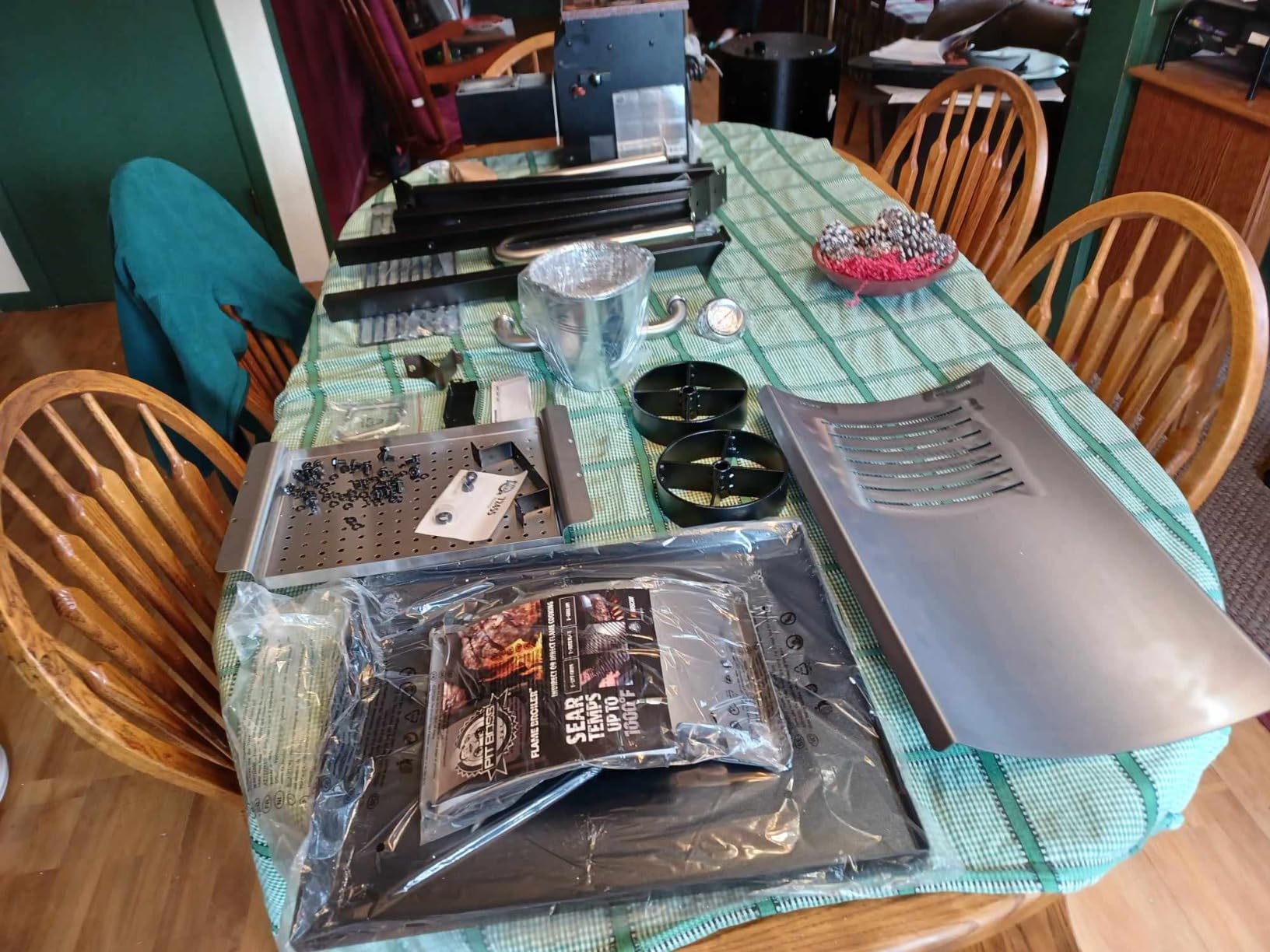
- Easy step-by-step assembly in about an hour
- Prime button for fast heat boost
Cons
- Small hopper needs refilling roughly every 90 minutes
- Lid thermometer is not accurate
- Controller steps in 50 degree increments
This is the grill I recommend to friends who ask me once and then stop researching. It arrives with a 518 square inch two-tier cooking chamber, a five pound hopper and a slide-through Flame Broiler that puts direct flame under the grate when you want it and indirect convection heat when you do not. That combination is the reason it handles both a twelve-hour brisket and a batch of burgers in the same cook.
Owners consistently describe assembly as straightforward, with most finishing in roughly an hour, and the Mahogany finish with its contrasting lid colour looks considerably more expensive than the other grills in this bracket. Temperature holding is the other repeated positive, with reviewers noting steadier heat than many pellet grills at similar money.
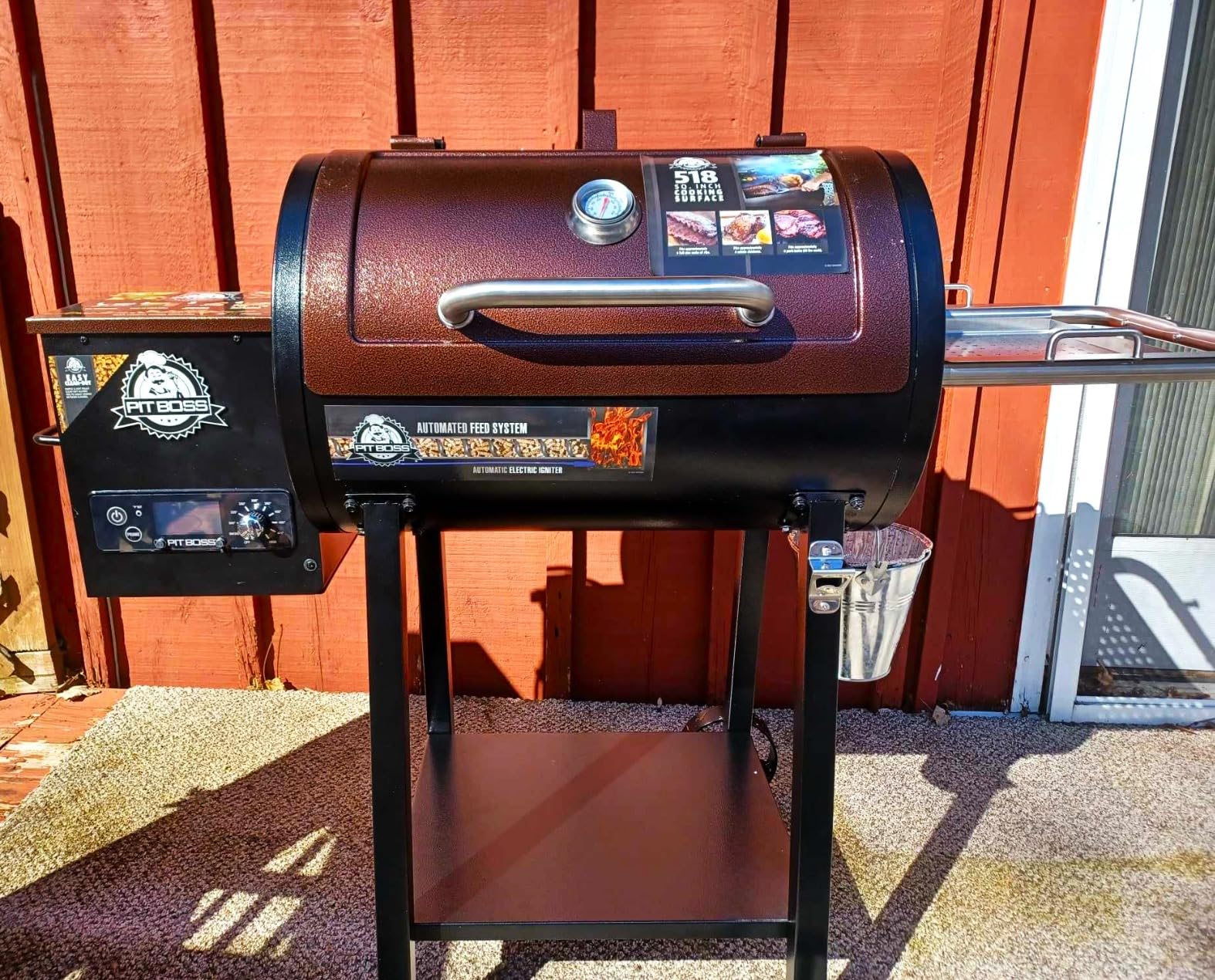
The Prime button is a small feature that gets used constantly. Rather than waiting for the setpoint to climb, one press dumps extra pellets in for a burst of heat or extra smoke, which is how you recover temperature after loading a cold grate with cold meat.
Two probe ports mean you can run a brisket and a pork butt at the same time and watch both from the panel, though the probes themselves are sold separately. The openable pellet bin panel is another genuinely useful touch, since you can check remaining pellets without lifting the whole hopper lid and losing heat.
The honest drawback is the five pound hopper. Owners report refilling roughly every 90 minutes at cooking temperature, so a long cook means planning ahead or accepting a brief lid-open pause. The lid thermometer is also decorative by most accounts, and reviewers say probe readings run slightly low, so trust your own probe over the lid dial.
What you should know before you buy it
The controller moves in 50 degree steps, which means you cannot select 275 degrees even though that is the classic brisket temperature. You set 250 or 300 and let the actual grill temp sit where it sits, so plan your cook around a slightly wider band than you would with a fine-increment panel.
There is also a minority of owners reporting control board, ignitor or temperature sensor failures over time. This is not the dominant experience, with the review base overwhelmingly positive on build and heat, but it is worth knowing that the electronics are the part most likely to need replacing, and it is where a longer warranty earns its keep.
Who should skip it
Skip this grill if you plan to run full-day cooks without interruption. A five pound hopper means an unplanned refill in the middle of a twelve-hour brisket, and a lid-open refill costs you both heat and the smoke you have built up.
Skip it if you are cooking for eight or more people regularly. 518 square inches is generous for a family of four, but a full packer brisket plus sides needs more room, and the top rack sits close to the barrel wall so large cuts are awkward up there.
2. Pit Boss 150 Portable Pellet Grill: Most Versatile
Pit Boss 150 Wood Pellet Grill & Smoker with Flame Broiler 256-Sq. In. Cooking Space, 180°F to 500°F Temperature Range, 7 lb. Pellet Hopper, for Tailgating, Camping, or Travel, Black
256 sq in
180 to 500 degrees F
7 lb hopper
43 pounds
Pros
- Largest hopper relative to its footprint
- Frame Broiler reaches 1000 degrees F
- Automatic start-up and cool-down cycles
- Locking lid and carry handles
- 5-year warranty
Cons
- 256 sq in is small for group cooks
- Simple panel with limited power settings
- 43 pounds is a real carry for a portable grill
The Pit Boss 150 is the rare budget grill that gets a genuinely unusual detail right: a seven pound hopper on a body with 256 square inches of cooking space. That is a hopper sized like a mid-size grill, which means a long cook on a small footprint without the refill cycle that usually defeats portable pellet smokers.
It is built for moving around, weighing 43 pounds with a latch-lock lid and carry handles, and sized at 24.8 by 18.6 by 14 inches. The Frame Broiler puts direct heat up to 1000 degrees F across the grate, so you can sear burgers after a long smoke on the same cook.
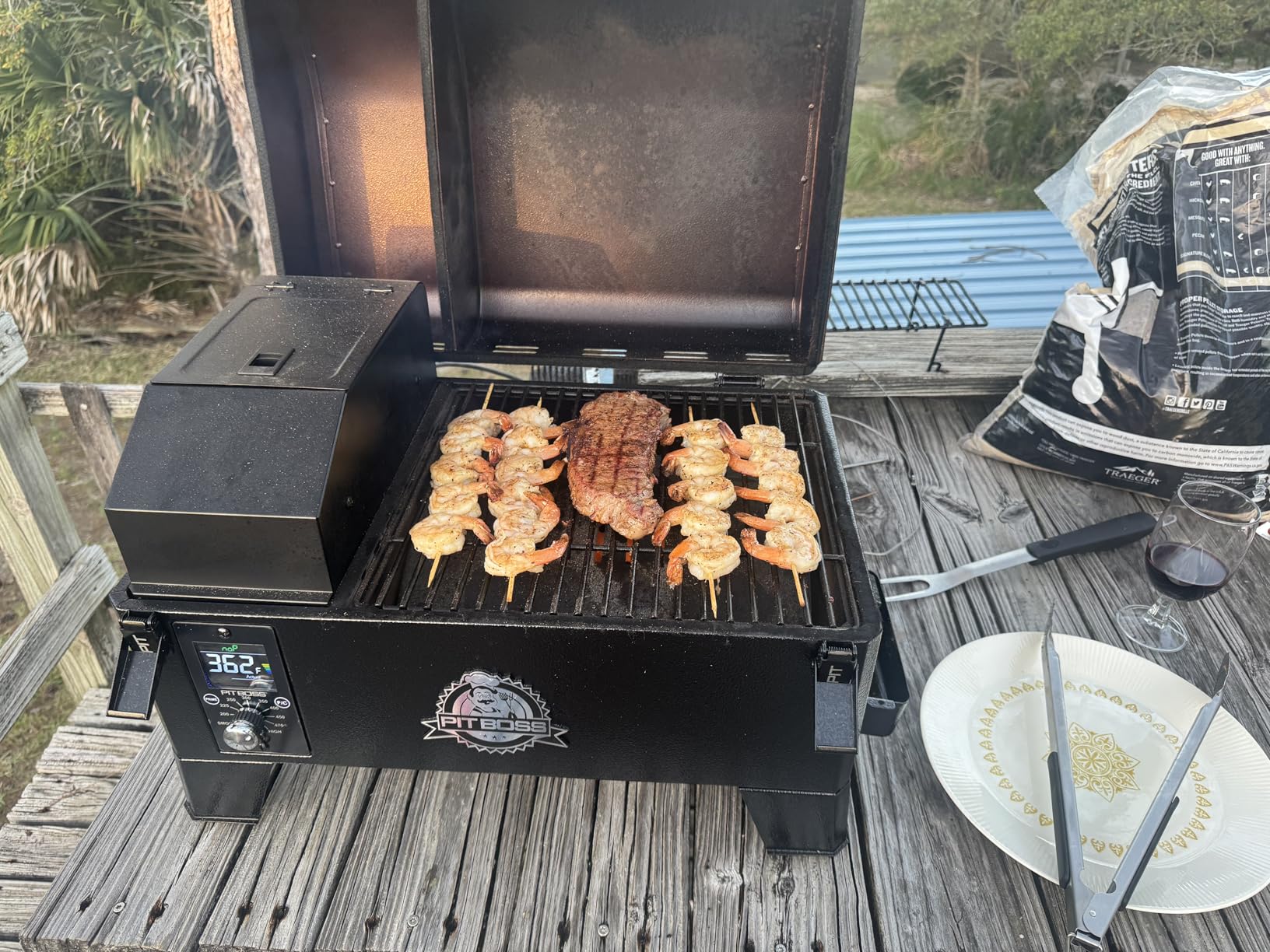
Automatic start-up and cool-down cycles do the unglamorous work for you. The auger primes, the hot rod lights the firepot, and the controller climbs to setpoint without you babysitting an ignition, which is exactly what you want when you are cooking in a driveway at seven in the morning.
Porcelain-coated steel grates clean up easily, and the five-year warranty is longer than most of what is offered in this bracket. Reviewers rate it 4.5 stars across 1268 reviews with 81 percent five-star distribution, and it sits at number 14 in Outdoor Grills and Smokers on Amazon.
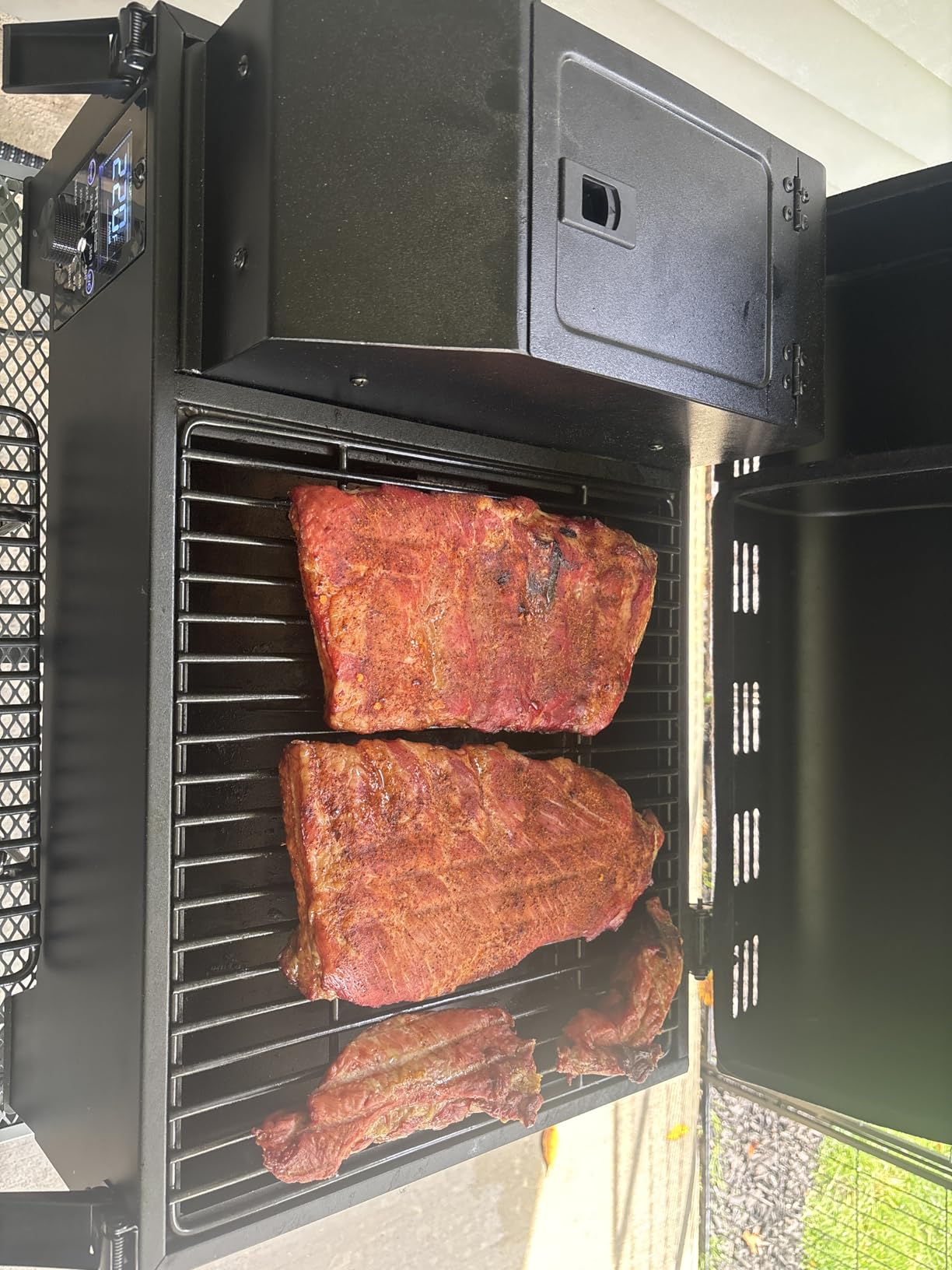
What you trade away is space and granularity. 256 square inches comfortably handles a full pregame meal or a couple of racks of ribs, but it is not a grill for feeding a group, and the control panel is simple rather than finely adjustable, with three power levels rather than precise increments.
What you should know before you buy it
The hopper is the reason to pick this over a smaller tabletop unit, and the cooking surface is the reason to pick something else. Seven pounds of capacity on 256 square inches is a genuinely long-running setup for a portable grill, and owners consistently single that out as the standout feature.
At 43 pounds it is portable in the way that car boot units are portable, not in the way that a single-person carry setup is. If you are moving it more than a short distance from a vehicle to a patio, budget for two hands or a trolley.
Who should skip it
Skip it if you cook for more than four people often. The surface is the constraint, not the heat, and you will end up cooking in batches on a grill that takes twenty minutes to recover temperature between them.
Skip it if you need fine setpoint control for a long low-and-slow. Nothing here holds 225 degrees as tightly as a PID-equipped grill, and the simple panel means less tolerance for correction when you are working on a delicate cook.
3. Traeger Ranger Portable Pellet Grill: Easiest Grill to Learn On
Traeger Ranger Portable Wood Pellet Grill & Smoker, Cast Iron Griddle
Digital Arc Controller
Wired meat probe
54 pounds
Keep Warm mode
Pros
- Very simple to operate with minimal learning curve
- Consistent temperature control for a portable unit
- High quality cast iron griddle included
- Easy to clean with drip pan liners
- Includes a wired meat probe
Cons
- Heavy at 54 pounds
- Temperature can run 10 to 15 degrees off setpoint
- No Wi-Fi connectivity
- Rubber feet can come off in transit
The Traeger Ranger is the pick for a first pellet appliance, and the reason is the Digital Arc Controller with Advanced Grilling Logic. It is the least demanding panel in this roundup, which means your first cook is more likely to succeed and less likely to end with you troubleshooting a temperature swing at midnight.
It also arrives with things you would otherwise buy. A wired meat probe plugs into the controller so you get internal temperature on the display, and the grates are a combination of porcelain-coated grill grates and a separate cast iron griddle, which turns the Ranger into a flat-top for breakfast or smash burgers without extra equipment.

Reviewers highlight ease of use, consistent low-and-slow results and the griddle quality, and the cleanup story is good too, particularly with drip pan liners. It scores 4.5 across 995 reviews with 76 percent five-star ratings, which puts it in the same band as the Pit Boss 150 with a smaller review base.
The Keep Warm mode is more useful than it sounds. It holds cooked food at serving temperature without continuing to cook it, which is the difference between finishing a cook during a party and rushing the last rib rack onto the grate while guests are already eating.
The real compromise is weight. At 54 pounds the Ranger is the heaviest portable unit here, and reviewers note it is awkward to carry any distance. It is genuinely popular for RV, tailgating and camping use, but those are destinations you drive to rather than carry to.

What you should know before you buy it
Temperature can run 10 to 15 degrees off the setpoint according to owners, so treat the display as a target rather than a promise and verify with your own probe. That variance is a fair trade for a controller that is genuinely easy to read and adjust mid-cook.
There is no Wi-Fi here, and you would need a separate Bluetooth thermometer if you want to monitor from inside. For a first smoker that is fine, because you are at the grill anyway. For a second appliance it is the feature you will miss most.
Who should skip it
Skip it if you need a hard sear. Owners note it cannot reach gas-grill sear temperatures, so reverse-sear and reverse-seared steak plans are out of reach without finishing in a pan or over a charcoal chimney.
Skip it if you have to carry it alone. The rubber feet can also detach in transit, which is a minor irritation but one worth knowing if you are loading it into a hatchback regularly.
4. Z Grills ZPG-550B2: Best Value for Cooking Space
Z GRILLS ZPG-550B2 Wood Pellet Grill & Smoker with PID 3.0 Controller, 553 sq in Cooking Area, Meat Probe, Hopper Cleanout, 8 in 1 BBQ Grill Outdoor Auto Temperature Control, Black
553 sq in
PID 3.0 controller
77 pounds
8 lb hopper area
Pros
- 553 sq in of cooking space for the money
- Heavy duty steel that suits long burns
- PID 3.0 auto-tunes fuel and airflow
- Hopper cleanout with viewing window
- Customer service ships replacement parts quickly
Cons
- Some owners report PID board failures
- Auger and blower replacement needed on some models
- Temperature fluctuates before correct burn-in
- Will not get hot enough for a hard sear
The ZPG-550B2 answers the square-inch question better than anything else under this ceiling. 553 square inches of cooking area on a 24 by 47 by 48 inch frame at 77 pounds, with a PID 3.0 controller that auto-tunes fuel and airflow, is more grill than the money should buy.
The PID 3.0 board with its LCD screen is a real step up from fixed-cycle panels, because it modulates pellet feed to hold setpoint rather than cycling between a hot phase and a cool phase. On a long cook that difference is the whole game, and owners who burn the grill in properly report good smoke output and temperature accuracy.

Eight cooking functions are listed, covering grill, smoke, bake, roast, braise, BBQ, sear and char, and a free meat probe is included rather than sold separately. The integrated hopper view window and hopper cleanout feature are thoughtful touches, since watching pellet level without opening the lid preserves your heat.
Two rugged wheels make it repositionable, which matters more than it sounds when you are moving a 77 pound grill to follow the sun or away from wind. Reviewers also single out responsive customer service that shipped replacement parts quickly.
Where it falls down is electronics and heat. The rating of 4.2 across 829 reviews sits below the other full-size grills here, and 12 percent of reviews are one star, with a recurring negative theme of PID board, auger and blower replacements within the first year on some models.

What you should know before you buy it
Temperature can fluctuate before the grill has a correct burn-in and placement, so give it a full seasoning cycle before you judge it. Owners who report trouble are often the ones who started cooking immediately rather than following the burn-in.
It will not get hot enough for a hard sear, so plan this as a smoker and griddle rather than a steak machine. The listed 8-in-1 modes include sear, but that means a high grill setting under indirect heat, not direct flame across the grate.
Who should skip it
Skip it if you want a turnkey appliance with minimal failure surface. The electronics here are the most commonly reported problem area in this roundup, and a replacement PID board is a weekend of downtime.
Skip it if searing is a priority. With 553 square inches and no direct-flame access, you are buying a lot of smoking area and giving up the ability to hit high heat fast.
5. Z Grills ZPG-200A Tabletop: Best for RVs and Small Patios
Z GRILLS 2026 200A Table Top Wood Pellet Grill, Pellet Smoker with PID V3.0 Controller, Meat Probes, 202 sq.in Cooking Area, Fit for RVs, Road Trips & Apartments
202 sq in
PID 3.0 controller
8 lb hopper
25 by 20 by 13 inches
Pros
- Compact 25 by 20 by 13 inch footprint
- 8 lb hopper gives about 10 hours of smoking
- PID controller holds within about 20 degrees
- Light enough to move easily
- 3-year warranty with responsive support
Cons
- 202 sq in is the smallest cooking area here
- Top end of the range is 450 degrees
- Small surface limits you to a couple of racks
The ZPG-200A solves a specific problem well: a full-size pellet grill will not fit in most RVs, and a 200 square inch griddle will not smoke a pork butt. This one does both, with a 25 by 20 by 13 inch footprint and eight cooking functions running from 180 to 450 degrees F.
The headline detail is the eight pound hopper, which the manufacturer rates at roughly ten hours of low-and-slow smoking. On a grill this small that is an unusually generous ratio, and it means a full cook without a refill, which is the main thing that normally goes wrong on small portable smokers.

The PID 3.0 controller holds temperature within about 20 degrees according to the specification, and reviewers treat that as good enough for steady long cooks. It includes meat probes and an LCD temperature display, so you get readouts on the unit itself rather than needing a separate thermometer for every cook.
It also carries a non-stick cooking surface and a 3-year warranty, and the listed weight of 23.67 kg is light enough to move between storage and the cooking spot without help. Reviewers rate it 4.3 across 786 reviews with 72 percent five-star distribution, and it ranks number 12 in Combination Grill-Smokers.
The limit is cooking area. At 202 square inches this is a grill for two people, a couple, or a small family meal, and you will not fit a full rack of ribs plus a side dish on it at once.

What you should know before you buy it
The temperature ceiling of 450 degrees F is lower than the 500 degrees F range of the Pit Boss and Cuisinart grills in this list. That is fine for smoking and grilling, but it means the sear function is a grill setting rather than anything approaching a hard sear.
Eight hours of pellet run time assumes low-and-slow at cooking temperature. At a high grill setting you will empty the hopper in a fraction of that, so match your fuel to the cook you are planning.
Who should skip it
Skip it if you routinely cook for five or more people. You will run out of grate before you run out of pellets, which is the wrong ratio for a smoker.
Skip it if you want searing capability. The 450 degree ceiling and modest surface area make this a smoking and low-temperature cooking tool, not a hybrid steak machine.
6. Cuisinart CPG-256 Portable Pellet Grill: Best for Tight Living Spaces
Cuisinart 8-in-1 Portable Wood Pellet Grill and Smoker, Compact for RV, Tailgates, Camping, and Backyard Cooking, Smoky Flavor, Versatile Meat Smoker
256 sq in
180 to 500 degrees F
39.6 pounds
8 cooking functions
Pros
- Stainless steel body resists weather well
- Digital PID display with real-time readout
- Automatic pellet feeding cuts refills
- Locking lid and carry handle for transport
- Integrated sear zone plus warming rack
Cons
- 256 sq in split across a 188 sq in main rack
- Thinnest review base here at 362 ratings
- Sear zone is smaller than a slide-through flame broiler
The Cuisinart CPG-256 is the pick when weather is the deciding factor. Its inner and outer materials are listed as stainless steel, and on a small balcony or in a carport that matters more than several other spec-sheet wins, because condensation and rain are what destroy budget grills over a few seasons.
Cooking space is 256 square inches split across a 188 square inch main rack and a 68 square inch warming rack, which is a well-proportioned layout. The warming rack holds finished food above the main grate without stealing grill space, so you can smoke a main course and keep sides warm above it.
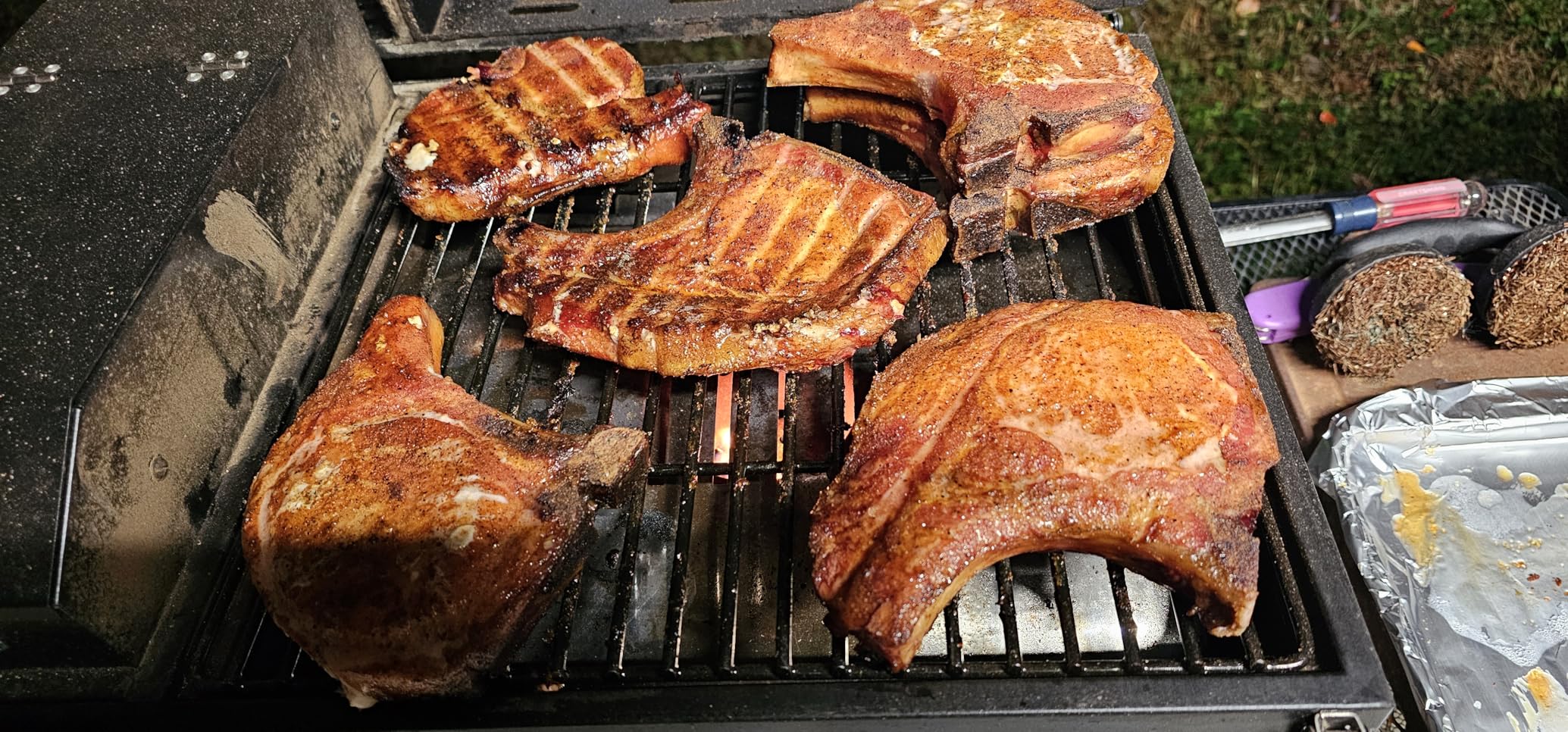
Control is digital with a real-time PID temperature display, running 180 to 500 degrees F, plus an automatic pellet feeder and electronic auto-start ignition and an included food probe. Owners highlight the range of cooking functions and the automatic pellet delivery, which together reduce the hands-on time on a cook.
At 39.6 pounds and 18.9 by 24.7 by 14.9 inches, it is a genuinely compact body with a locking lid and carry handle built for tailgating and RV use. It scores 4.3 across 362 reviews with 69 percent five-star ratings.
The main thing to weigh is that 362 ratings is the thinnest review base of any grill in this roundup, which means the long-term picture is less well documented than for the Pit Boss or Traeger models. It is not a warning, just a reason to factor warranty length into the decision.
What you should know before you buy it
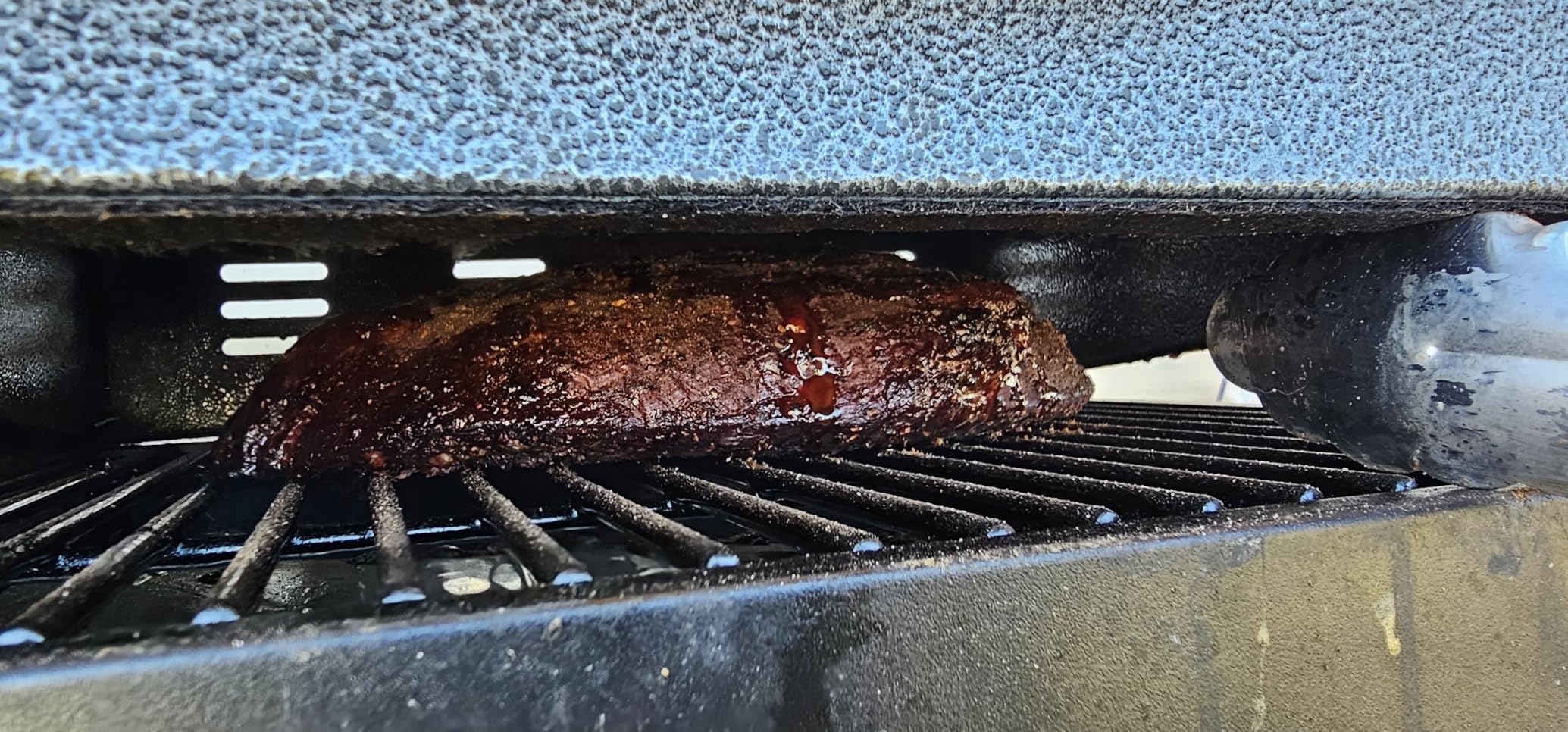
The sear zone is a defined area of the grate rather than a slide-through flame broiler, so it gives you more direct heat than a pure convection chamber but less than the Pit Boss Flame Broiler models that open a full-width flame path.
Because most of the 256 square inches is the main rack, plan cooking capacity around 188 usable square inches plus the warming shelf. That is a realistic two-to-four person cook.
Who should skip it
Skip it if you want the largest crowd-feeding surface available under this budget. The grills with two full-size tiers give you more usable flat cooking area for the money.
Skip it if you are an experienced low-and-slow cook who wants tight setpoint control on long cooks. The PID display helps, but the compact chamber means faster temperature swings than a full-size cabinet.
7. Brisk It Zelos-450: Best for WiFi Control Under 500 Dollars
Brisk It Zelos-450 Wood Pellet Grill & Smoker, 450 Sq In, WiFi and A.I.
450 sq in
180 to 500 degrees F
12 lb hopper
WiFi app control
Pros
- Only grill here with WiFi and app control
- A.I. assistant gives plain-language guidance
- 12 lb hopper feeds smoothly without jams
- Probes and display read accurately
- Waterproof cover included
Cons
- Thin metal causes noticeable temperature fluctuation
- App and A.I. features do not alert reliably
- Low cook height is awkward for taller users
- 450 sq in will not fit a full packer brisket
The Brisk It Zelos-450 is the only grill in this roundup with WiFi, and that alone makes it the pick if you want to leave the pit and monitor from indoors. The app connects over WiFi, the controller is an industrial-grade adaptive PID running 180 to 500 degrees F, and there is a natural-language cooking assistant that walks a beginner through a cook in plain language.
The 12 pound hopper is the largest in this group, and owners report the auger feeds smoothly with no jams. At 70.5 pounds on a 29.8 by 46 by 38.8 inch frame with rugged wheels, it is a full-size cabinet rather than a portable unit, and it includes a meat probe and a waterproof cover for storage.
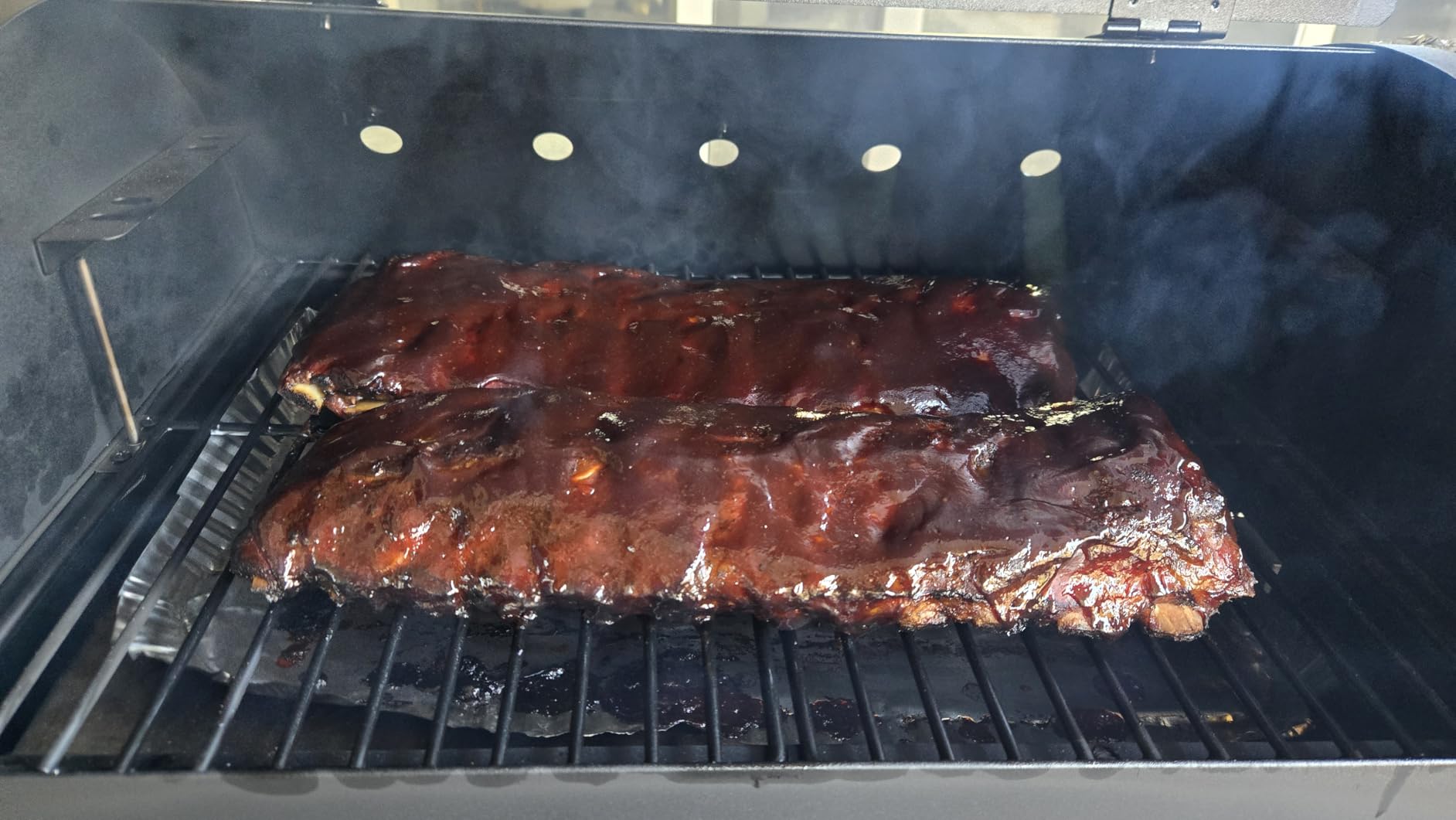
Owners value the remote monitoring, the hopper size and the beginner-friendly guidance, and reviewers note the probes and display read accurate against a handheld thermometer. It ranks number 2 in Combination Grill-Smokers, and the 450 square inch chamber is described as roughly 15 burgers or 2 rib racks.
Be realistic about the software, though. Owners report the A.I. and app features are still gimmicky and do not alert reliably, and WiFi can drop with a weak router signal or over long distances. Treat connectivity as a convenience for checking progress, not as a guarantee you will be told about a problem in time.
On hardware, the most common complaint is thin metal causing noticeable temperature fluctuation, and the low cook height is awkward for taller users who have to stoop to check the grate. It also ranks 4.2 across 170 reviews, the second thinnest review base here.
What you should know before you buy it
The 450 square inch chamber will not fit a full packer brisket, so if whole-packer cooking is on your list, this is the wrong grill at any connectivity level. The two rib racks it is sized for is the practical limit for large cuts.
Check your router situation before you commit. If your WiFi is weak in the yard, the connection will drop, and the product’s main advantage shrinks to a display you can walk over and read.
Who should skip it
Skip it if you want the most reliable heat retention in this bracket. Thin metal and temperature fluctuation are the recurring hardware complaint, and that matters more than an app if you are running overnight cooks.
Skip it if you are tall and prefer a chest-height cook surface. The low frame height is a real ergonomic issue that no software feature compensates for.
8. Pit Boss 500 FB2 Series: Best for High-Heat Searing
Pit Boss 500 FB2 Series Wood Pellet Grill & Smoker with Flame Broiler and LCD Digital Controller, 518-Sq. In. Cooking Space, 180°F to 500°F Temperature Range, Meat Probe, 5 lb. Pellet Hopper, Black
518 sq in
180 to 500 degrees F in 5 degree steps
5 lb hopper
5-year warranty
Pros
- 5 degree setpoint increments give finer control
- Flame Broiler lever reaches 1000 degrees F
- Holds temperature in windy conditions
- Two probe ports with one probe included
- Fan-forced convection and solid bottom shelf
Cons
- Flame Broiler grid can bake shut with grease
- Ash tray cannot be emptied without removing interior parts
- 5 lb hopper needs checking often
- 136.6 pounds is heavy to reposition
The Pit Boss 500 FB2 is the one to buy if searing matters as much as smoking, because the Flame Broiler lever opens a direct flame path up to 1000 degrees F across the grate. That gives you a genuine reverse-sear workflow on a grill that costs well under the 500 dollar ceiling.
It also solves a control problem the Pit Boss 440 does not. The digital controller runs 180 to 500 degrees F in 5 degree increments, so you can set 275 degrees for brisket and 300 for pork exactly where you want them, instead of rounding to the nearest 50.
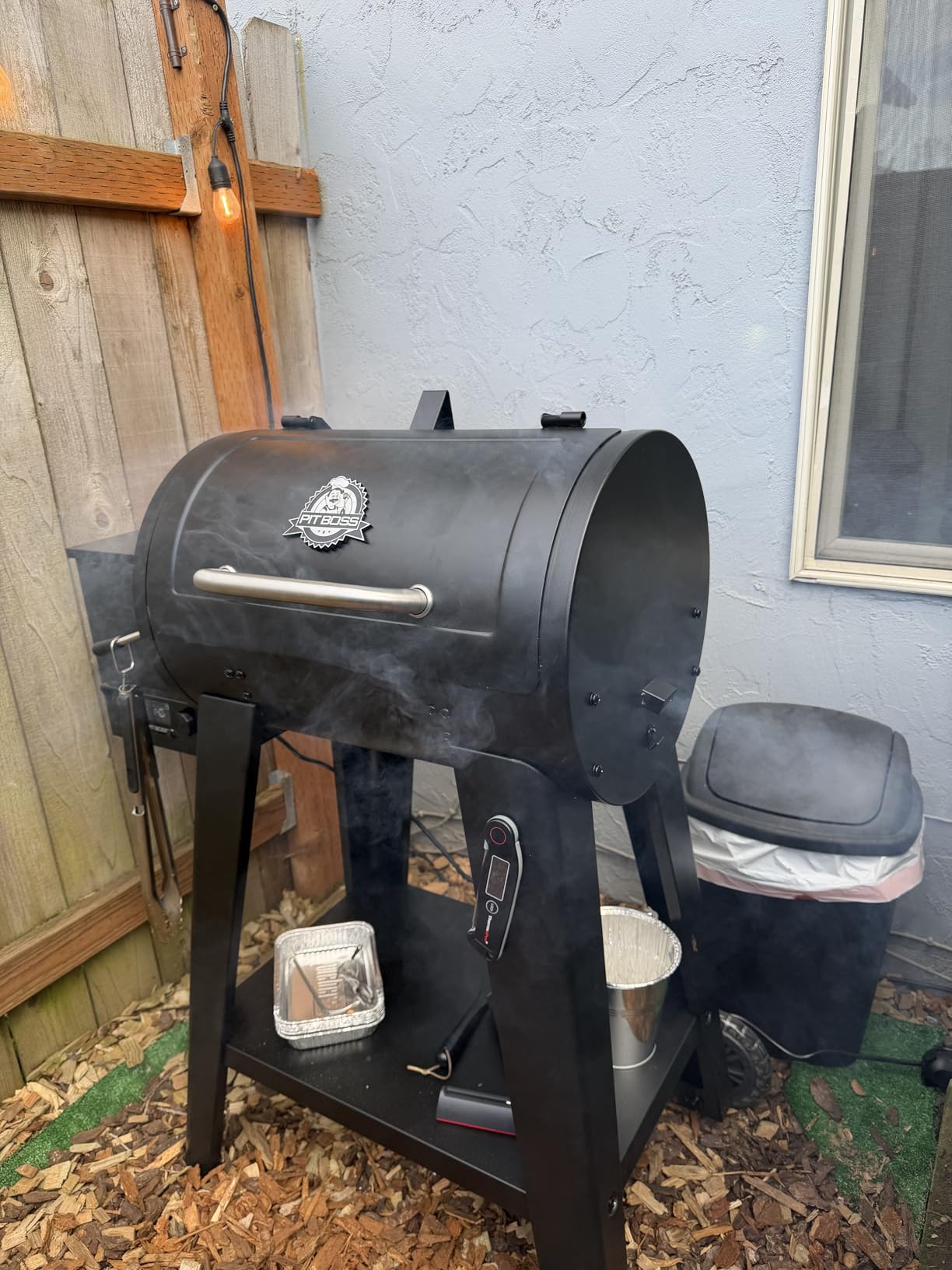
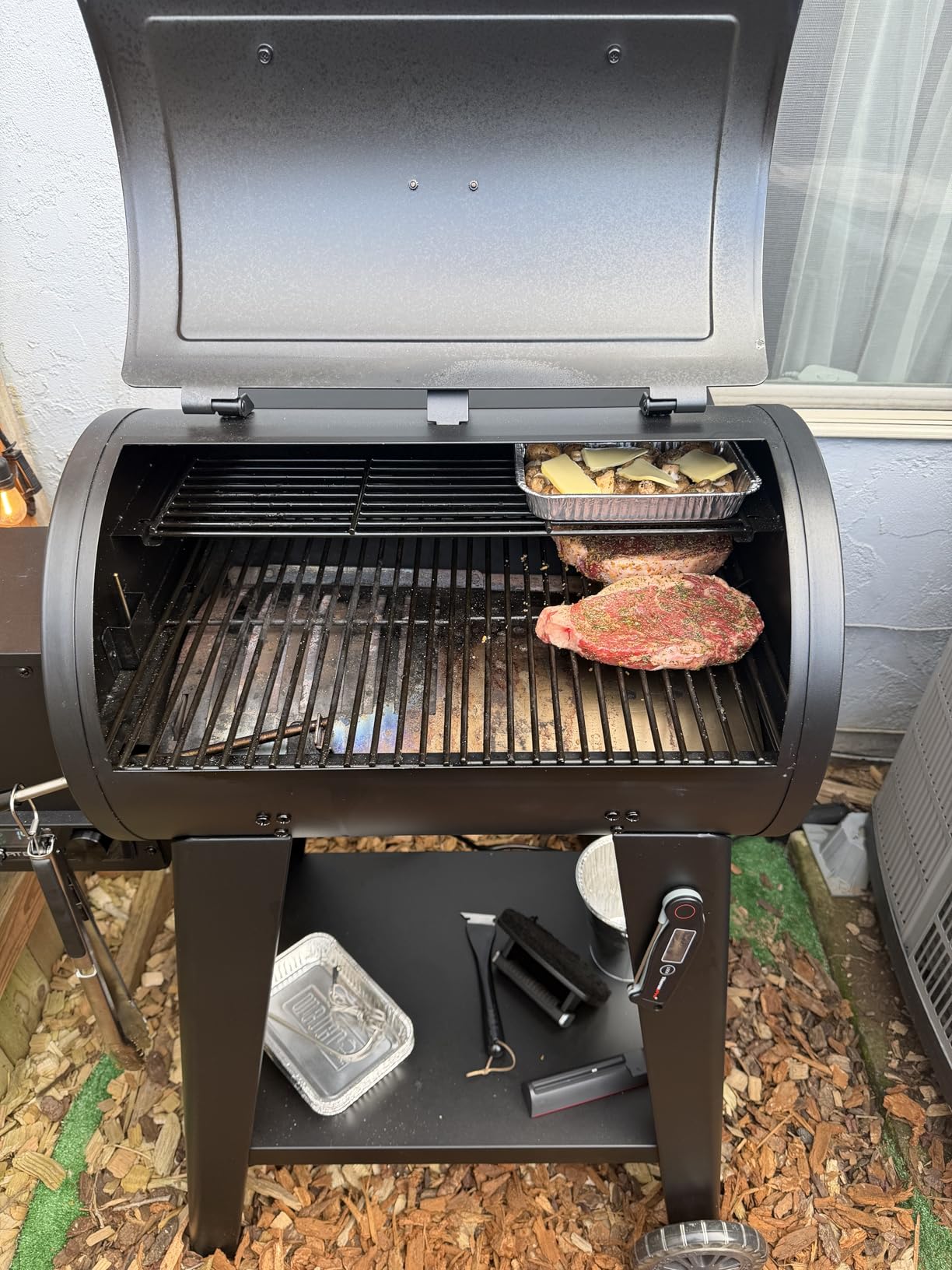
Two probe ports come with one probe included, fan-forced convection handles the indirect cooking, and a solid bottom shelf keeps pellets and tools within reach instead of scattered on the patio. Owners describe it as well made and heavy duty, and report that it holds temperature in windy conditions, which is a real test for any cabinet smoker.
It works well as a dedicated smoke oven too, with reviewers calling out results on tri-tip, brisket and chicken. The five-year warranty matches the best in this roundup.
The maintenance picture is where it loses ground. Owners report the Flame Broiler grid can bake shut with grease after first use, which is a genuine annoyance on the very feature that justifies the grill, and there is no way to empty the ash tray without removing interior parts.
What you should know before you buy it
At 136.6 pounds on a 26.7 by 47 by 47.2 inch frame, this is the heaviest grill in the roundup. The solid build is why it holds heat in wind, but plan your cooking position before assembly rather than after, because moving it later is a two-person job.
The five pound hopper is small for a grill of this size, and owners note it needs checking fairly often during long cooks. This is the clearest example in the roundup of a grill where you accept a hopper refill to gain searing and fine temperature control.
Who should skip it
Skip it if low-and-slow is the only thing you do. You will be paying for direct-flame capability and extra weight that a dedicated smoker does not need, and you will still be managing a small hopper.
Skip it if you hate post-cook cleanup. The broiler grid seizing and the inaccessible ash tray are both maintenance friction points that cheaper indirect-heat grills simply do not have.
How to Choose a Pellet Smoker Under 500 Dollars
Seven criteria decide the outcome of a purchase in this bracket, roughly in priority order. If you work through them in this sequence you will end up with a grill that fits your cooking rather than one that fits a spec sheet.
1. Cooking area in square inches, then your rib math
Cooking area is the single number that determines whether a grill fits your life. It is total grate space across every tier, and what matters is not the figure but the ribs it converts to. A rough working rule is that a full rack of ribs needs roughly 30 to 35 square inches of usable grate with airflow around it, so 200 square inches gives you a comfortable two racks and 500 square inches gives you six or seven plus sides.
Among these eight, the range runs from 202 square inches on the Z Grills ZPG-200A up to 553 on the ZPG-550B2, with a cluster of 256-square-inch portable formats and two 518-square-inch Pit Boss cabinets. If you are cooking for a family of four, the mid-size portable formats are honest value. If you ever host ten people, look at the 500-plus square inch grills and accept the extra weight.
Our offset smoker guide is worth a read if you are still deciding whether you want wood-fired flavor with total manual control or a pellet appliance with automatic control, because the maintenance commitment is very different.
2. Controller type, ranked from least to most precise
This is where the temperature swing complaints in forum threads come from, and it is the most important spec on the page. There are four types you will meet in this price range.
LMH controllers offer low, medium and high. You pick a level, not a number, and the grill drifts wherever the physics take it. Rare on new grills, common on old ones.
Multi-position controllers give you a numbered dial, often 1 to 9. Better than LMH because you have finer resolution, but still fundamentally open-loop: the machine does not know or care what the actual temperature is.
One-touch non-PID panels read a temperature and let you set one, but they act on fixed cycles rather than modulating fuel continuously. The grill overshoots, corrects and settles, which is why you see 20 degree or larger swings in owner reports.
PID controllers measure the actual chamber temperature continuously and adjust pellet feed to hold your setpoint. This is the category to prioritise in this budget. A PID board turns a grill that cycles into a grill that holds, and the ZPG-550B2, ZPG-200A, Cuisinart and Brisk It all use one, while the Pit Boss 440 and Traeger Ranger use digital non-PID panels.
The practical takeaway: if two grills are close on price, choose the PID one. If a grill has 5 degree increments like the Pit Boss 500 FB2, that is a partial substitute for a PID, because at least you can set the number you want.
3. Pit Boss versus Traeger at this budget
This is the most common question in pellet cooking forums and it has a real answer once you compare like for like. In the sub-500 bracket, Pit Boss puts more usable features into the box: two full-size 518 square inch cabinets with flame broilers, a 7 pound hopper on the portable 150, and five-year warranties on both the 150 and the 500 FB2.
Traeger competes from a different angle in this bracket. The Ranger prioritises simplicity and included hardware, with a Digital Arc Controller, a built-in wired probe and a cast iron griddle that you would otherwise buy separately, plus a Keep Warm mode that suits serving a meal straight off the grill.
So the choice comes down to what you are missing. If you want searing and fine setpoint increments, the Pit Boss cabinets are stronger. If you want the shortest learning curve and the most complete box, the Ranger is stronger. Neither is a bad purchase, and the two brands converge once you step past this budget.
4. Hopper capacity and what a cook actually costs in pellets
Hopper size in pounds is the number that decides whether a long cook is relaxing or stressful. The range here runs from 5 pounds on both Pit Boss cabinets to 12 pounds on the Brisk It, with the portable Z Grills units at 7 and 8 pounds. Bigger hoppers mean fewer refill breaks, and a refill break means a lid open, a heat drop, and smoke you have to rebuild.
On run time, the ZPG-200A is the only grill in this roundup with a published figure: its 8 pound hopper is rated at roughly 10 hours of low-and-slow smoking. That is the number to scale others against, since pellet consumption scales with hopper size, cooking temperature and how often you open the lid.
For cost, a full bag of hardwood pellets covers multiple cooks on a grill this size, so a low-and-slow cook typically costs a few dollars in fuel. That is worth knowing because it is far cheaper than the wood an offset smoker burns over the same cook, and it is one of the strongest arguments for a first pellet appliance.
5. Direct versus indirect heat, and the searing expectation
Most sub-500 pellet grills cook under a heat deflector, which is why searing is limited unless the grill has a flame broiler or runs very hot. This is the expectation gap that catches new buyers: a pellet grill is not a charcoal grill, and it will not throw radiant heat at a steak.
There are three patterns in this roundup. Full indirect with no direct path means the ZPG-550B2 and ZPG-200A, which smoke well and will not sear. A defined sear zone, as on the Cuisinart, gives partial direct heat over part of the grate. A slide-through or levered flame broiler, as on both Pit Boss cabinets, gives you genuine direct flame up to 1000 degrees F and makes reverse searing realistic.
If you mostly want brisket, ribs and pork, choose indirect and spend the money on cooking area. If you also cook steaks and burgers regularly, pay up for a flame broiler, because you cannot add that feature later.
6. Power source, and the outlet problem nobody mentions
Every grill here needs mains power, because the auger motor, induction fan, hot rod igniter and controller all draw electricity even though the fuel is wood. A standard 110V outlet with a grounded connection is the normal setup, and the high-draw igniter is what makes cheap extension cords a bad idea.
Check the amperage before you buy a cord. Divide the wattage by the voltage to get amps, and use a properly rated outdoor extension cord rather than a household one. Many owners report grills tripping breakers on light-duty cords, and that looks like a grill fault when it is a cord fault.
For tailgating, camping and RV use without a hookup, you need either a 12V car converter with enough current for the igniter or a portable power station. This is the single most common blocker first-time buyers hit, and it is the reason the portable formats in this roundup are worth a closer look before you commit.
7. Which brands deserve a second look before you buy
Forums in this category repeat one warning: unbranded grills sold only on marketplaces with no US support presence are the most common source of regret. The tells are thin steel, no clearly stated warranty, absent or unhelpful customer service, and a product page that lists no genuine owner reviews. If a grill has no serviceable company behind it, a failed controller ends the grill rather than a phone call.
The eight grills here all have established brands or stated warranty terms, ranging from three years on the ZPG-200A to five years on the Pit Boss 150 and Pit Boss 500 FB2. Warranty length matters in this bracket more than feature count, because electronics are the most commonly reported failure point and a longer warranty covers the part most likely to break.
One more check before you pay. Look at how many cooking functions are listed. A grill claiming 8-in-1 or 7-in-1 versatility is often one machine with several setpoint ranges, which is fine, but do not let function count stand in for cooking area or controller quality when you compare.
Frequently Asked Questions
What is the best pellet smoker for the money?
The Pit Boss 440 Mahogany Series is the best pellet smoker for the money under 500 dollars. It combines 518 square inches of two-tier cooking space, a slide-through Flame Broiler for direct-heat searing, two probe ports and a Prime button for fast heat recovery, and it carries more owner reviews than any other grill in this price bracket. If you want more flat cooking area instead of searing, the Z Grills ZPG-550B2 gives you 553 square inches with a PID 3.0 controller.
What is the best budget pellet smoker under 400 dollars?
Under 400 dollars the strongest options are the Pit Boss 150 at 256 square inches with a 7 pound hopper, the Z Grills ZPG-200A at 202 square inches with an 8 pound hopper rated for about 10 hours of smoking, and the Cuisinart CPG-256 at 256 square inches with an automatic pellet feeder. The Pit Boss 150 is the best general pick, while the ZPG-200A wins on hopper run time and the Cuisinart wins on stainless steel durability for outdoor storage.
Is Pit Boss better than Traeger?
At this budget the two brands compete on different priorities. Pit Boss puts more into the box, offering two 518 square inch cabinets with flame broilers, fine 5 degree setpoint increments on the 500 FB2, a 7 pound hopper on the portable 150 and five-year warranties. Traeger’s Ranger focuses on simplicity, with a Digital Arc Controller, a built-in wired meat probe, an included cast iron griddle and a Keep Warm mode. Choose Pit Boss for searing and control, or Traeger for the shortest learning curve and the most complete box.
Are pellet grills under 500 dollars any good?
Yes, for low-and-slow cooking they are genuinely good. The grills in this bracket hold setpoint through multi-hour cooks, produce real wood smoke flavor and automate temperature control, which is the main reason to buy one. What you give up under this budget is heavy-gauge steel, reliable high-heat searing on most models, WiFi on all but one, and the tightest setpoint accuracy. Buyers expecting charcoal-level searing are the ones most often disappointed.
How long does a hopper of pellets last?
It depends on hopper size, cooking temperature and how often you open the lid. The Z Grills ZPG-200A is the only grill in this roundup with a published figure, rating its 8 pound hopper at roughly 10 hours of low-and-slow smoking. As a rule of thumb, larger hoppers in this bracket run 5 to 12 pounds and the burn rate rises sharply at grilling temperatures, so plan an extra bag for a day of high-heat cooking.
The Verdict: One Default Pick and Three Specialists
If you buy one thing, buy the Pit Boss 440 Mahogany Series. 518 square inches of two-tier space, a Flame Broiler for searing, a Prime button and the deepest owner-review base in this bracket make it the safest bet among the best pellet smokers under 500 dollars for a household of four or five.
Then match the specialist to your problem. Buy the Z Grills ZPG-550B2 if you want the most flat cooking area and PID temperature control. Buy the Pit Boss 150 if you want the least money committed and a hopper big enough for long cooks. Buy the Pit Boss 500 FB2 if searing and 5 degree setpoint increments matter more to you than weight.
Two final checks before you pay. Decide whether you have a 110V outlet within reach, because a pellet grill is an electrical appliance that burns wood, and confirm the wattage before buying any extension cord. Check our pellet stove guide only if you are adding indoor pellet heat as well. Everything in this roundup is built to run unattended once it is seasoned, which is the whole point of the category.