

Most first telescopes disappoint the child who unwraps them. The box promises a huge magnification figure, the child spends an evening twisting knobs and looking at nothing, and the whole thing ends up in a closet by spring.
That is not usually a kid problem. It is a shopping problem. A big magnification number on the side of a carton tells you almost nothing, because magnification comes from swapping eyepieces, not from the telescope being better. What actually decides whether a child sees the Moon is aperture, which is the width of the main lens or main mirror, plus whether the tripod stays still while they lean on it.
We looked hard at what is inside the box rather than what is printed on it. Our team compared ten kids telescope kits currently on the market, checked the aperture, mount, finder and bundled accessories for each one, and read through thousands of customer reviews looking for the same three failure modes that show up again and again: a shaky tripod, a finder nobody can align, and eyepieces that fall apart in a pocket.
This guide covers the best telescope kits for kids aged roughly four to fourteen, grouped by age and by what kind of optical system is inside the box. It also covers the kits that are honestly not telescopes at all, since two of the strongest reviews in this lineup are craft and projector toys and parents deserve to know which is which before they spend a holiday morning on it. Prices and listings move constantly, so use the check buttons rather than any figure quoted here.
Table of Contents
Top 3 Best Telescope Kits for Kids (October 2026)
The three below are the kits we would put in front of a family first, based on aperture, mount steadiness and how much usable gear comes in the box.

Gskyer 70mm AZ Refractor Kit
- 70mm aperture
- 400mm focal length
- Two eyepieces plus 3x Barlow
- Smartphone adapter and carry bag
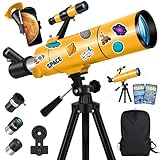
MEEZAA 80mm Refractor Kit
- 80mm aperture
- 500mm focal length
- Fully multi-coated optics
- 20x-150x with 3x Barlow lens

Koolpte 70mm AZ Refractor Kit
- 70mm aperture
- 500mm focal length
- 25mm and 10mm eyepieces
- 3x Barlow lens included
All 10 Telescope Kits Compared Side by Side
The full comparison covers every kit in this guide, with the specs that actually change what your child sees through the eyepiece.
| Product | Specifications | Action |
|---|---|---|
| Gskyer 70mm AZ Refractor Kit |
|
Check Latest Price |
 NASA Lunar Telescope for Kids |
|
Check Latest Price |
| Koolpte 70mm AZ Refractor Kit |
|
Check Latest Price |
 Smartivity DIY Telescope STEM Kit |
|
Check Latest Price |
 Little Experimenter Projector Telescope |
|
Check Latest Price |
 ECOOPRO 70mm Refractor Telescope |
|
Check Latest Price |
| MEEZAA 80mm Refractor Kit |
|
Check Latest Price |
 LeapFrog Magic Adventures Telescope |
|
Check Latest Price |
 Luzsco 50mm Beginner Telescope Kit |
|
Check Latest Price |
 National Geographic Pirate Activity Kit |
|
Check Latest Price |
1. Gskyer 70mm AZ Refractor Kit – Best Telescope Kit Overall for Kids
Gskyer Telescope, 70mm Aperture 400mm AZ Mount Astronomical Refracting Telescope for Kids Beginners – Travel Telescope with Carry Bag, Phone Adapter and Wireless Remote.
70mm aperture
400mm focal length
Altazimuth mount
Tripod plus carry bag
Pros
- 70mm fully coated objective gives sharp bright views of the Moon
- Two eyepieces plus a 3x Barlow for real magnification choices
- Phone adapter and wireless remote for sharing photos
- Adjustable aluminum tripod and carry bag
- Twenty thousand plus reviews from long-term owners
Cons
- Manual focus and basic altazimuth controls take practice for younger children
- 70mm aperture shows limited detail on planets and deep sky objects
- Mount is not built for precise tracking
This is the kit we keep coming back to, and after reading more than twenty thousand reviews it is the one we would hand to a family without hesitating. The optics are a straightforward 70mm fully coated refractor with a 400mm focal length, which puts it in a slow f/5.7 design that forgives imperfect alignment far better than a fast Newtonian.
That matters more than the spec sheet suggests. A child who can put the Moon in the eyepiece on the first night will come back for the second night. A child who spends an hour fighting alignment and collimation will hand the tube back to a parent and go and play something else.
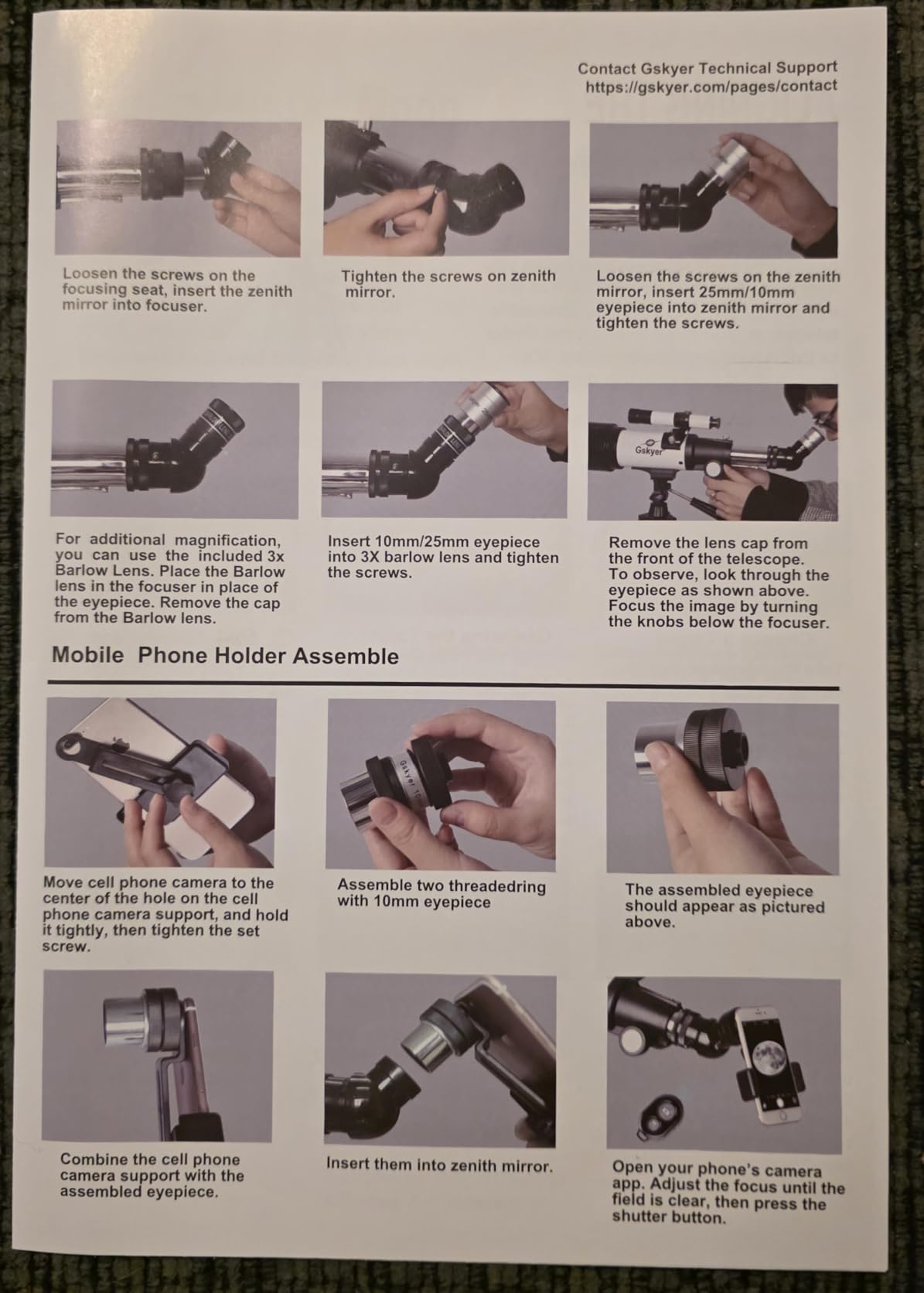
The accessory bundle is the strongest part of the package. You get two replaceable eyepieces, a 3x Barlow lens, a 5×24 finder scope with cross-hair lines, a smartphone adapter, a wireless camera remote and a carry bag. That is a genuinely complete kit rather than a telescope with three plastic bits dropped in.
The mount is a basic altazimuth with slow-motion controls on both axes, and the tripod is an adjustable aluminum alloy design. It holds reasonably steady for a 70mm refractor, which is more than can be said for the plastic legs on most cheap kids scopes.
On our list, this is the only kit where the finder scope, the eyepiece set and the carrying case are all genuinely useful rather than filler. The finder cross-hairs make finding a target in daylight a five-minute job instead of a guessing game.
What age does this kit actually suit
Ages eight upward, with an adult nearby for the first two evenings. The manual focus and the two-axis slow motion controls need a steady hand, so a five or six year old will need help aiming and focusing. The finder makes the difference here, since a child who can line up cross-hairs can find the Moon independently.
Where it falls short for parents
It will not show Saturn’s rings sharply or resolve Jupiter’s moons as clean dots, and the mount has no tracking, so a moving object drifts out of the field within a couple of minutes. If your child has already been observing for a year and wants detail rather than a first look, this is a step sideways rather than a step up. For anyone who wants to grow the hobby further, our eyepiece kit picks are the natural next purchase.
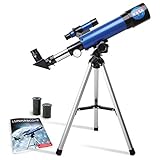
2. NASA Lunar Telescope for Kids – Best First Kit for Ages 8 to 10
NASA Lunar Telescope for Kids Ages 8-12 with Tripod and Finder Scope
25mm objective
90x zoom
Tabletop tripod
Finder plus two eyepieces
Pros
- Assembles and runs with almost no adult help
- Lightweight tabletop tripod moves anywhere in the house
- Finder scope and two eyepieces make the Moon easy to find
- Battery powered so it works away from a socket
- Backed by a brand with US customer service
Cons
- Lightweight frame is easy to knock over
- Focus and pointing controls are fiddly for small hands
- Optics are basic compared with a true astronomical refractor
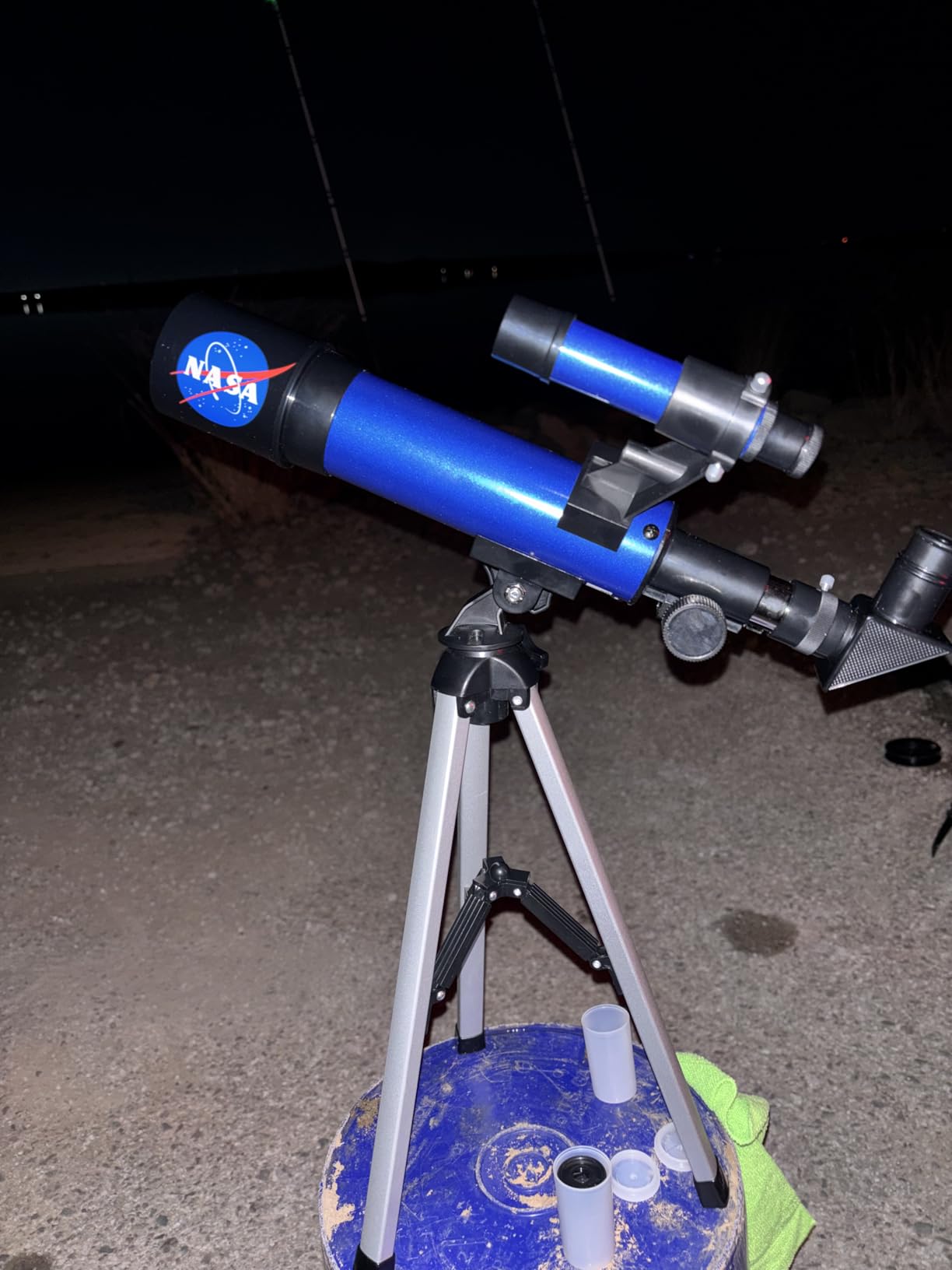
This is the kit to buy when the birthday party guest list is mostly seven and eight year olds. It is branded as a NASA Lunar telescope and it is built around one target, the Moon, which is honestly a better design decision than pretending a 25mm objective can reach Jupiter.
The whole thing runs on batteries, sits on a small tabletop tripod and takes seconds to move from a table in the kitchen to a fence in the garden. Reviewers consistently single out the easy assembly and the fact that children can use it without an adult hovering, which for a first telescope is worth more than any magnification figure.
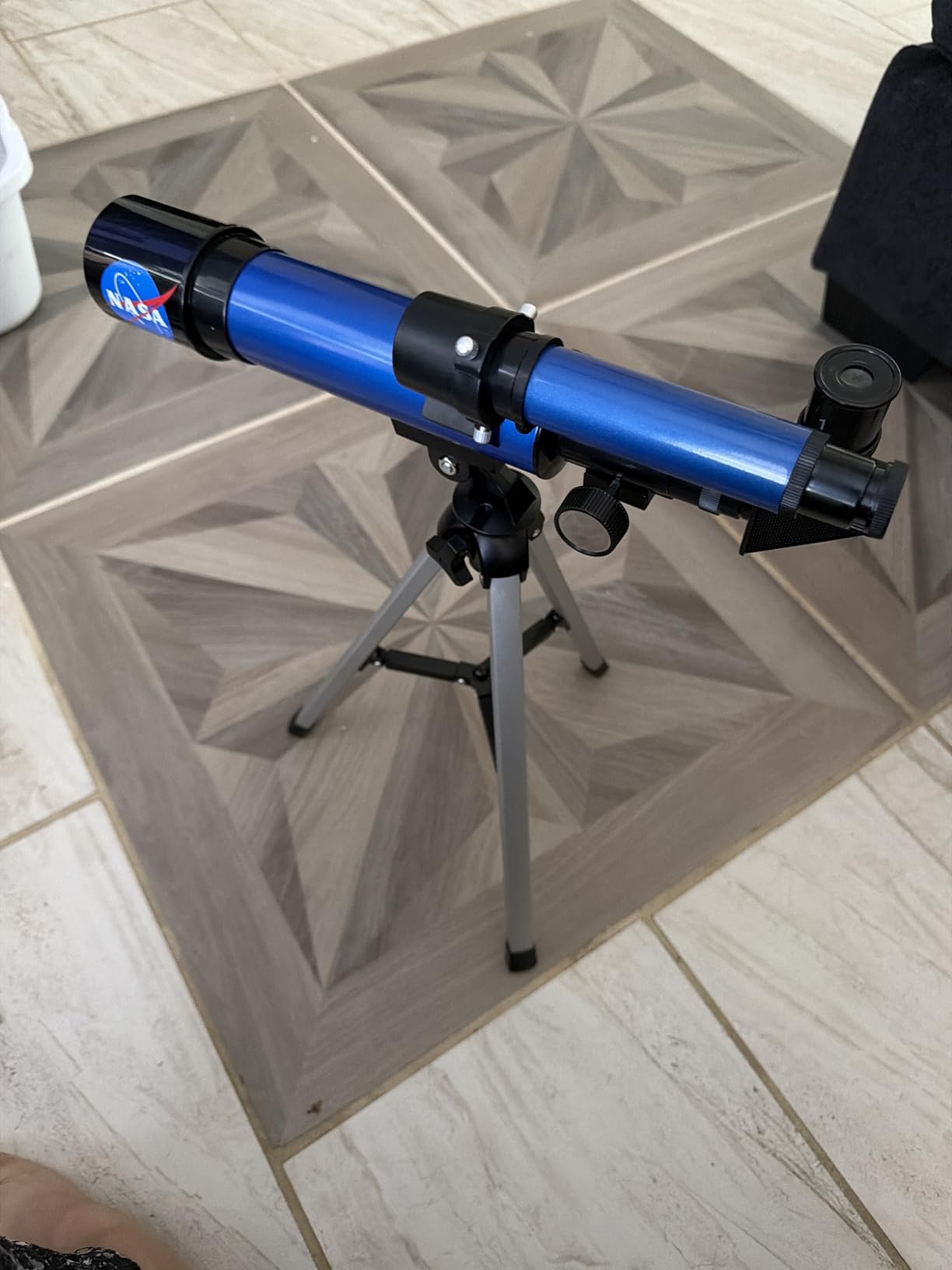
Mounted this way, you simply slide the scope along the mount to scan the lunar surface, and there is no tripod to wobble. If you are buying for a household with no garden or no dark sky, that single design choice removes most of the frustration that kills other kits.
The finder scope and the paired low and high power eyepieces do most of the practical work. A child can find the Moon in the finder, switch to low power to get the whole disc in view, then go to high power to look at craters near the terminator, the shadow line that divides day from night on the lunar surface.
The honest limitation is the 25mm objective lens. Bright craters and the mar, the dark basalt plains, are obvious. Faint rings, small clusters and anything beyond about 30 to 40 times magnification will not resolve, and reviewers report that the pointing and focus controls frustrate adults helping younger children.
Why parents pick it for a seven or eight year old
There is no assembly headache and nothing to break. A learning guide is included, so the activity continues after the first night, and it sits at the affordable end of the list, which makes it a sensible stocking filler paired with a real refractor later. Many families treat it as a bridge toy rather than the final telescope.
Where it falls short for parents
It is a Moon instrument, not a general telescope. Jupiter looks like a fuzzy bright dot, and if your child asks to see Saturn you will need to say not yet. The frame is also light enough to be knocked off a table, which matters in a house with a running dog or a younger sibling.
3. Koolpte 70mm AZ Refractor Kit – Best Budget Refractor Kit
Koolpte Telescope for Kids, 70mm/500mm AZ Refractor for Beginners, White
70mm aperture
500mm focal length
Altazimuth mount
5 pounds
Pros
- 500mm focal length gives a longer
- more relaxed view of the Moon
- Phone adapter remote and carrying case included
- Fully coated 70mm glass for bright images
- Marketed and shaped for kids and first-time users
Cons
- Manual focus and altazimuth controls need practice
- Anything beyond the Moon and bright planets suffers at 70mm
- Instructions and finder alignment can be fiddly
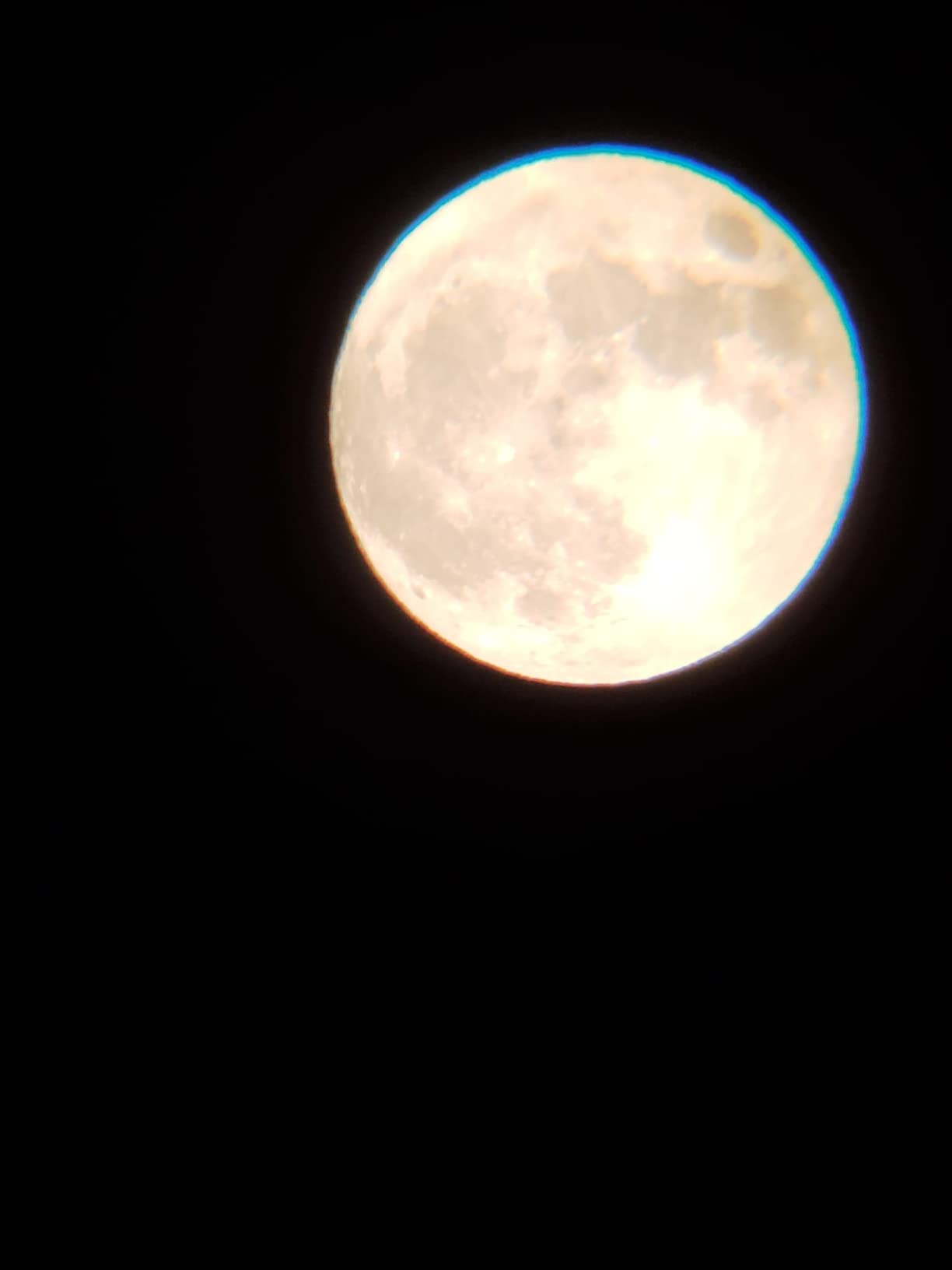
This kit sits almost exactly where the Gskyer sits, with one meaningful difference: a 500mm focal length instead of 400mm. That produces a slightly narrower field of view at the same eyepiece, which means the Moon fills the eyepiece a bit more comfortably for a child who likes a big target rather than a wide star field.
At five pounds the whole kit is light enough for a nine or ten year old to carry out to the car alone, which reviewers mention as a real benefit. It also arrives as a complete bundle: 25mm and 10mm eyepieces, a 3x Barlow lens, a 5×24 finderscope, a phone adapter, a wireless remote, a carrying case and an adjustable aluminum tripod.
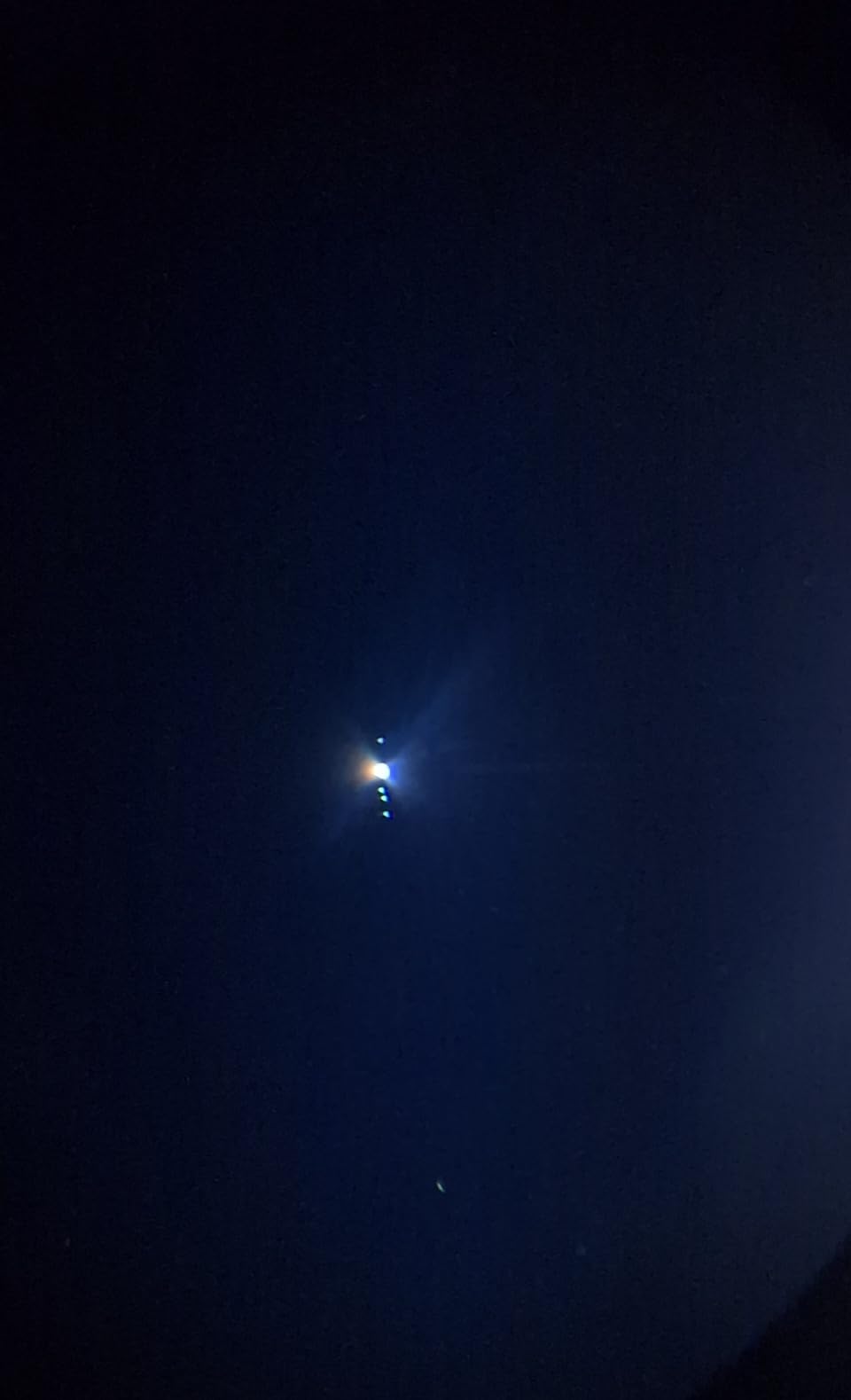
The 500mm focal length gives a focal ratio of about f/7.1, and that long, slow design is forgiving. It produces a bright, well-corrected image of the Moon with good contrast at moderate power, which is exactly the view a beginner wants to see on night one.
What you cannot do with it is chase detail. At the top of its magnification range the image goes soft and dim, and the fine detail that makes a larger telescope interesting simply is not there. Reviewers are clear about the limit: the Moon and the brighter planets, then very little else.
Instructions and finder alignment come up often in reviews as the sticking point. Budget an evening for reading the manual properly and aligning the finder against a distant chimney in daylight before dark, because that step is the difference between a child finding Jupiter unaided and a child giving up.
Why this over the Gskyer for some families
The longer tube means a slightly narrower view, so if your child wants to look at one thing large rather than sweep a star cluster, the framing suits that better. The carrying case and remote are also bundled, so it travels as easily as it observes at home.
Where it falls short for parents
It has the same 70mm ceiling as the Gskyer, and a slightly thinner review history. Deep sky objects like the Orion Nebula will be a faint smudge at best. If a child is already asking about galaxies, neither scope answers that question, and you would be shopping at a different level entirely.
4. Smartivity DIY Telescope STEM Kit – Best Telescope Build Kit for Ages 8 to 14
Smartivity DIY Telescope STEM Toy for Kids 8-14 Years
108 wooden pieces
Ages 8 to 14
Step-by-step manual
0.46 kg
Pros
- Screen-free building activity that teaches real construction skills
- Engineered wood feels sturdy and survives enthusiastic play
- Illustrated manual keeps ages 8 to 14 engaged for hours
- Replacement parts supplied at no extra cost
- Recognised as an award-winning educational design
Cons
- It is a working model rather than an observing telescope
- Light gathering and detail are far below real optics
- Some assembly steps need help from younger children
This is the strongest telescope kit in the lineup for building skills rather than gathering light. It contains 108 engineered-wood pieces that assemble into a working pocket telescope, and the entire appeal is the ninety minutes of construction that come before a single star is looked at.
For a child aged eight to fourteen that trade often works beautifully. Screen-free, hands-on, and the finished object is genuinely mechanical rather than plastic, reviewers describe the wood quality and the clarity of the step-by-step manual as the two things that keep kids working on it.

The design picked up an Innovative Toy of the Year award in the Netherlands and was a TOTY finalist, which is a reasonable signal that the joint engineering holds up. Spare parts are supplied for life, so a snapped piece two years later is not the end of the toy.
What it is not is an observing instrument. The aperture of the assembled model is small, the optics are fixed and undimmable, and the image is nothing like what a 70mm refractor delivers. Treat it as a build project with a space theme that happens to end in a telescope.
That framing matters when the child is younger. A seven year old who builds this in forty minutes will be disappointed when the sky stays dark, so it works best as an afternoon activity that leads into a real telescope purchase later.

When this kit is the right buy
When the child is naturally hands-on, enjoys model kits, or is being home-schooled and you want a physical STEM project rather than another screen. It is also a strong pairing with a parent-owned refractor, since the child builds while the adult observes.
Where it falls short for parents
If the goal is to look at the Moon tonight, this misses entirely. There is no adjustable focus, no finder scope and no aperture worth measuring, so the phrase telescope in the box title oversells what it does. Adults looking for accessory guidance can start with our telescope accessory kit recommendations.
5. Little Experimenter Projector Telescope – Best Indoor Kit for Rainy Months
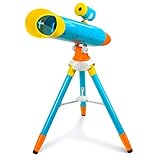
Little Experimenter Projector Telescope, 24 Space Images, STEM Kids 3-12
2x viewing
24 projected images
Dual eyepieces
Battery powered
Pros
- Projects 24 space images onto a wall that children love
- Dual binocular-style eyepieces suit small faces
- Swappable discs and activity book add hours of play
- Works indoors in any weather
- Holds up to enthusiastic play
Cons
- Image quality is roughly children's binoculars
- Projector needs focusing and the field of view is narrow
- Slides only read well in a fully dark room
- Short tube means it sits on a table
- Some break after a few months
Some nights are cloudy and some children will not sit still in the cold, which is exactly when this kit earns its place. It is a projector telescope: 2x magnification through soft dual eyepieces, plus a built-in projector that throws 24 space images onto a wall from swappable discs.
The dual eyepiece design is the quietly clever part. Small children often cannot hold one eye shut and keep the other aligned, and reviewers note that the binocular-style mould around both eyes removes a failure mode that makes young children say they cannot see anything.

The swivelling body lets a child angle the eyepiece for themselves or lock it into position for projection, and a full-colour activity guide book turns the disc images into something closer to a lesson than a toy. Three LR44 batteries are included, so it works out of the box.
What it is not is an astronomical instrument, and any parent reading the listing should accept that first. At 2x, the view is closer to children’s binoculars. The projected slides also need a fully dark room to read, which in practice means a bedroom with the lights off rather than a family room.
Reviews do flag a durability ceiling, with some units reported as breaking after a couple of months of enthusiastic use. At 1.4 pounds it is light and portable, and the short tube means it lives on a table rather than being carried outside.

Who this suits best
A child aged three to eight, and any household where winter, light pollution or a late bedtime makes real observing hard. It buys goodwill and teaches the idea that the sky is worth looking at, which is genuine groundwork for a real telescope next year.
Where it falls short for parents
Do not expect craters, planets or anything beyond a bright moon shape. Parents who buy it expecting a telescope will read the word telescope on the box and feel misled, so frame it as a projector and activity toy. For a real first scope, move up one size.
6. ECOOPRO 70mm Refractor Telescope – Best Kit for Daytime Viewing Too
Telescope for Kids & Adults, 70mm Aperture 360mm Refractor (15X-150X)
70mm aperture
360mm focal length
1.4 kg
Tool-free assembly
Pros
- Multi-coated glass gives crisp bright lunar craters
- Quick-release tool-free assembly gets kids observing fast
- Light enough for a child to carry and set up alone
- Doubles as a bird and distant-scenery scope
- Phone adapter included for sharing views
Cons
- Bundled tripod is short so a table is usually needed
- Mount lock knob can slip and let the tube droop
- Phone adapter will not grip a cased phone
- Printed Moon and planet charts are hard to read
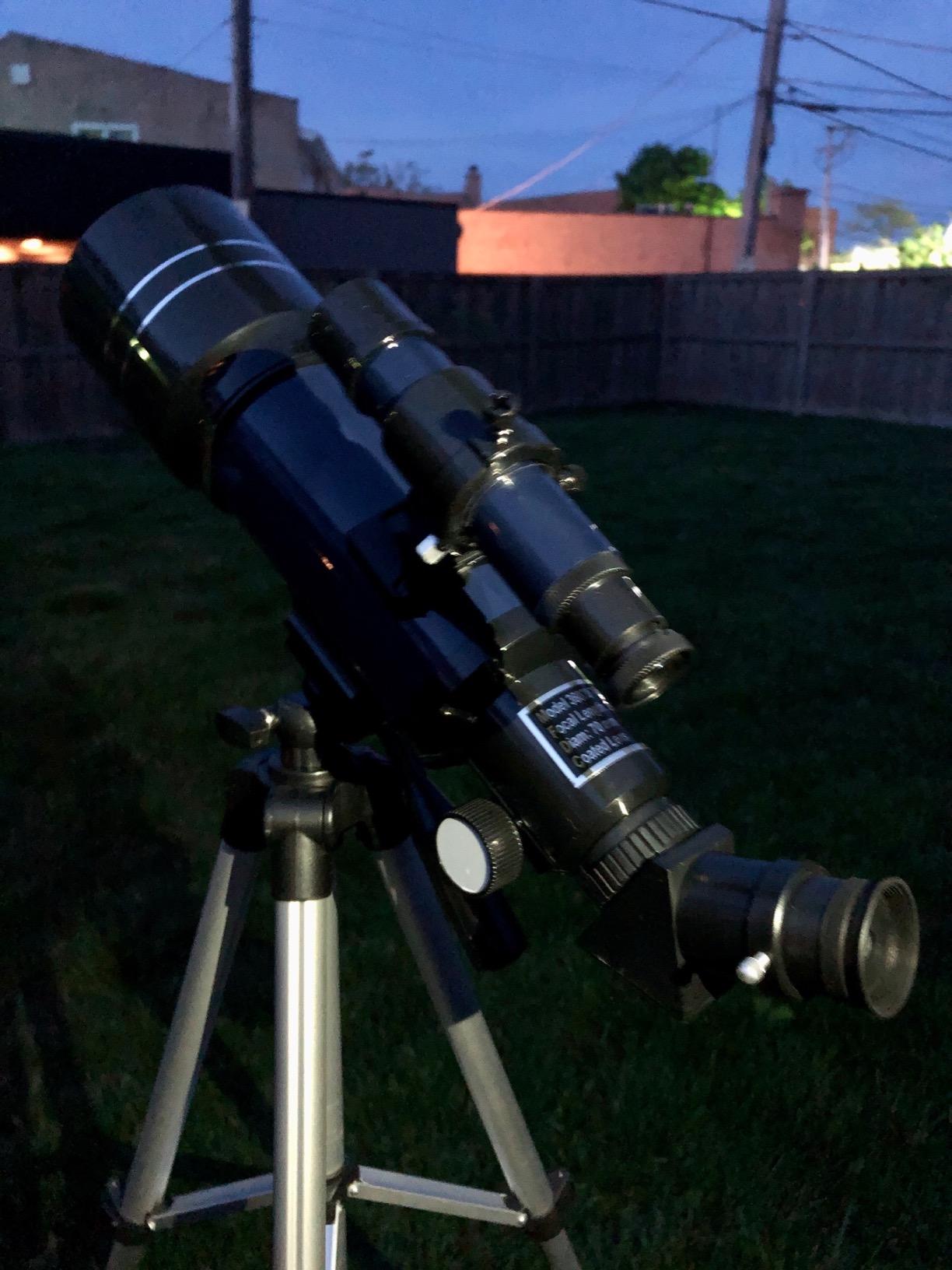
This is the only kit in the lineup that we would genuinely recommend using before dark. At 360mm focal length with a 70mm multi-coated objective, it is a short-tube achromatic refractor that works just as well on the bird feeder and the football field across the park as it does on the Moon.
That double use solves a problem parents rarely talk about. A child who first sees the eye of a hawk through the telescope on a Saturday afternoon is far more likely to pick the same telescope up on a clear Tuesday night. Reviews repeatedly mention daytime use as the standout.
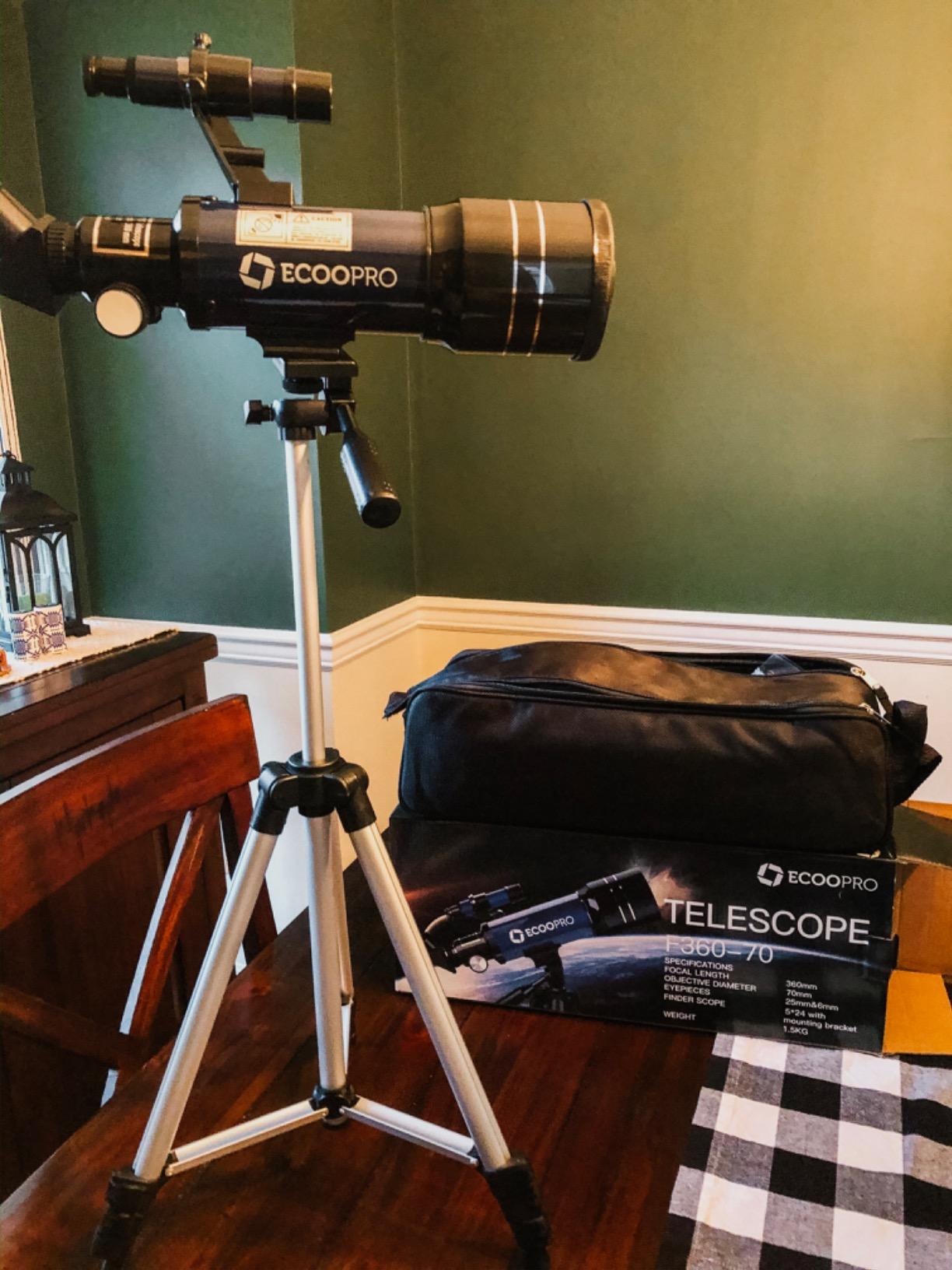
The quick-release, tool-free assembly is another genuine advantage. There are no bolts to tighten with a hex key, so a child can go from box to Moon in a couple of minutes rather than losing an evening to illustrations with no pictures of the actual parts.
At 1.4 kg it is light enough for an eight or nine year old to move to the garden alone, and the two Kellner eyepieces at 25mm and 10mm give roughly 51x and 128x. That is a sensible, honest range rather than a headline number.
The two recurring complaints are the short tripod, which is usually worked around with a table or a separate taller tripod, and the mount lock knob that can slip and let the tube fall forward. Test the knob in daylight with the tube loaded, because a forward flop in the dark is the fastest way to end a hobby.
Why we like the 360mm focal length
Short focal length plus a wide field of view means the Moon fits in the eyepiece with room around it, so small movements of the mount do not throw the target out of view. It also makes the whole scope easy to carry and to set up on a garden wall or a low fence.
Where it falls short for parents
It will not reach Saturn. At 70mm, around 30 to 40 times magnification is the realistic ceiling for planetary detail, and everything beyond the Moon and the bright planets is a dim smudge. Plan to buy a better eyepiece later rather than expecting the bundled ones to stretch.
7. MEEZAA 80mm Refractor Telescope Kit – Best Value Real Optics
MEEZAA Telescope for Adults & Kids, 80mm Aperture 500mm Refractor
80mm aperture
500mm focal length
Fully multi-coated
45-degree zenith mirror
Pros
- 80mm aperture is visibly brighter and sharper than 70mm entry scopes
- Tool-free assembly in minutes with clear illustrations
- Tripod adjusts from child height to adult height
- Waterproof backpack makes it genuinely portable
- Phone adapter works well for Moon photos
Cons
- A few reports of the adjustment knob stripping after use
- Bundled eyepieces are average at higher power
- Altazimuth mount has no tracking for long exposures
If aperture decides how much a child sees, then this is the kit where a small step up pays off the most. An 80mm objective gathers meaningfully more light than the 70mm scopes that dominate this list, and at 500mm focal length with fully multi-coated glass it produces the crispest images we saw in a kit priced for families.
It also has the highest average rating in the group, with owners frequently calling out the optics and the portability. The backpack is a real one, waterproof, with an accessory pouch, which turns the telescope from a garage item into something that goes in the car for a weekend of dark sky.

The 45-degree zenith mirror is a small feature that matters more than it sounds. It bends the light path so you view at 45 degrees rather than crouching over the top of the tube, which is a much more comfortable position for a short child and much easier on the neck of an adult.
The tripod adjusts from 16.92 to 44.48 inches, so the same kit works for a five year old standing on a step and an adult sitting in a chair. Space stickers are included so a child can mark the tube as their own, which is a nice touch for a gift.
The honest weakness is the bundled eyepieces. At the top of the 20x to 150x range the image needs a better eyepiece to look right, and reviews say so directly. Budget for that later. A small number of owners also report the adjustment knob stripping after a few uses.

What the extra aperture actually buys
More light means a brighter image, better contrast on lunar craters near the terminator, and a slightly higher ceiling before magnification turns to mush. For a child who has already tried a 70mm scope and asked for more, that step is the one worth making.
Where it falls short for parents
At roughly six pounds it is the heaviest kit here, so a younger child will not carry it out alone. There is no tracking, which rules out long-exposure astrophotography, and the review history is shorter than the 70mm competitors, so there is less long-term evidence about spare parts.
8. LeapFrog Magic Adventures Telescope – Best Kit for Children Who Cannot Aim
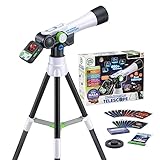
LeapFrog Magic Adventures Telescope
2.4-inch screen
110x digital zoom
Ages 5 and up
Detachable tripod
Pros
- Screen-based viewing removes the frustration of aiming an eyepiece
- Digital zoom gives a clear view of the Moon and daytime nature
- Large library of NASA content plus an adventure game
- No assembly required at all
Cons
- Digital zoom is not equivalent to true optical magnification
- Needs four AA batteries and the supplied ones are for demo only
- Bulkier and heavier than a basic refractor
- Value depends on engaging with the screen content
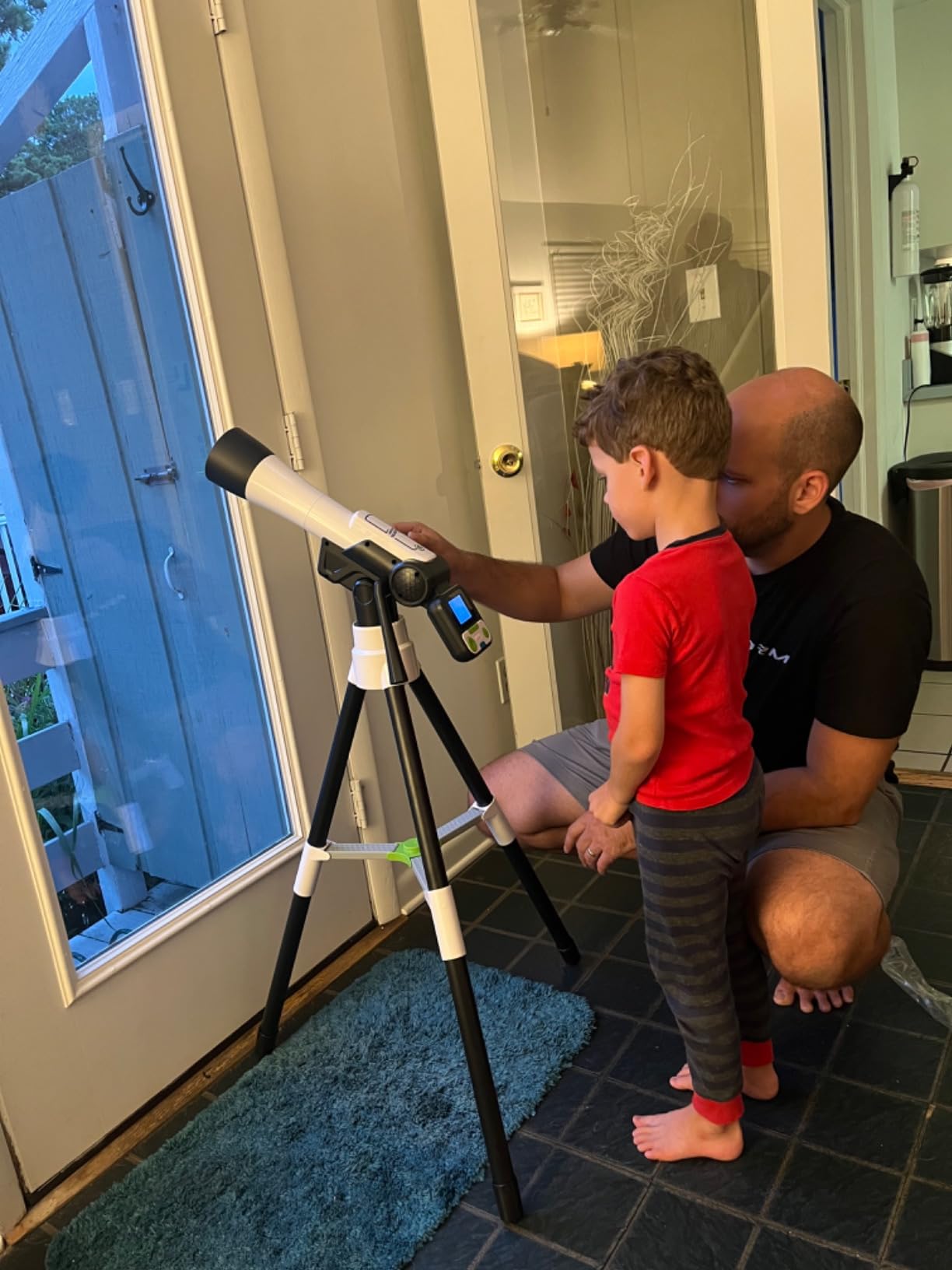
This kit solves a specific problem that optical telescopes create and cannot fix: a five year old cannot hold an eye steady at an eyepiece, sees nothing, and concludes the telescope is broken. The LeapFrog removes the eyepiece entirely and puts a 2.4-inch video screen where the view should be.
That is why it earns its place despite being the least astronomical product here. Parents of young children rate it very highly, and the reason is consistent: it works on the first attempt, indoors, in daylight, with no dark sky and no alignment. Digital zoom up to 110x gives a clear image of the Moon and of daytime nature.
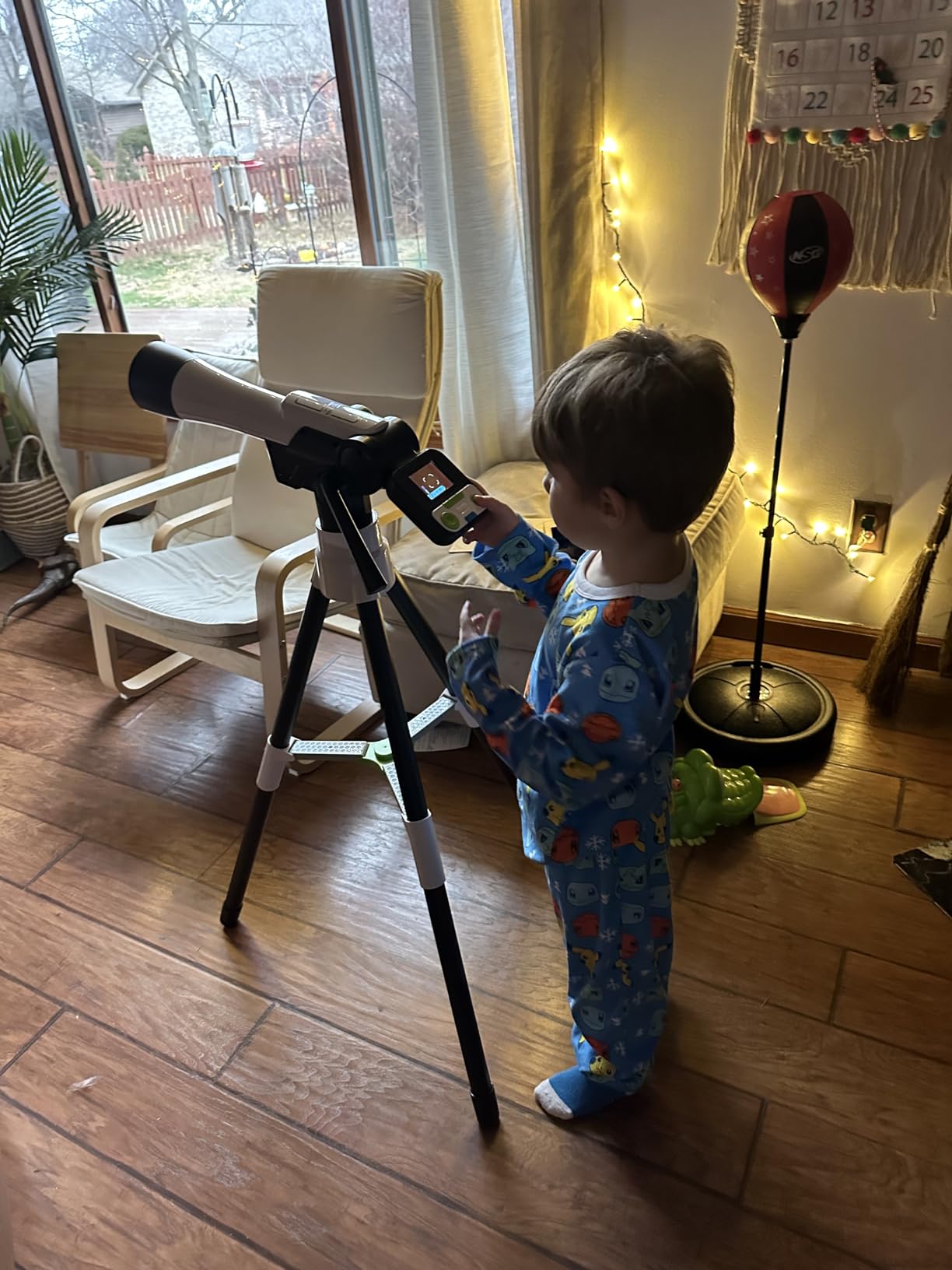
The content library is the other half of the value. More than a hundred NASA videos and images cover the solar system, star life cycles and constellations, and there is a spacecraft piloting game with satellite and robot missions. Twenty cosmic cards and a quick start guide are in the box.
Setting it up takes almost no time. The tripod detaches and reattaches, the toy runs on four AA batteries, and there is nothing to assemble or align. That makes it the most reliable first astronomy experience available for a child under seven.
It is also the least useful for a real observing habit. Nothing is seen through glass, so there is no aperture, no focal length and no skill to build toward. The 3.8 pound weight and the plastic body also make it a poor choice for carrying outside to a dark site.
Why it beats an optical scope for under-sevens
Nothing to align, nothing to focus, nothing that shakes. A child who cannot yet manage an eyepiece gets a real, successful view of the Moon on day one, and that success is the thing that decides whether they ask for a telescope next year.
Where it falls short for parents
Do not treat it as a step towards astronomy. The learning value depends on the child engaging with the screen content, and digital magnification is not the same as optical magnification, so nothing transfers directly to a real telescope. Expect to buy a genuine scope around age eight.
9. Luzsco 50mm Beginner Telescope Kit – Best Budget Kit with Hands-On Assembly
Telescope for Kids, 50mm 100x Beginner Telescope with Tripod
50mm objective
100x magnification
600 g
Moon filter included
Pros
- Only 600 g so younger children carry and set it up
- Assembly itself teaches patience and mechanical skill
- Finderscope two eyepieces Barlow and moon filter included
- Screen-free backyard and camping activity
- 2-year manufacturer warranty
Cons
- 50mm aperture is the smallest here and limits brightness
- Fixed mount makes tracking moving targets hard
- Magnification figures are useful for the Moon and bright planets only
This is the lightest optical kit in the lineup at 600 grams, and that single number is the reason it works for younger children. A seven or eight year old can carry it out of the house, set it up and pack it away again without an adult involved, which is where many first telescopes die.
The accessory set is unusually complete for the money. You get a finderscope, 6mm and 20mm eyepieces, a Barlow lens and a moon filter, plus the tripod. At the entry end of this list there is very little filler in the box.
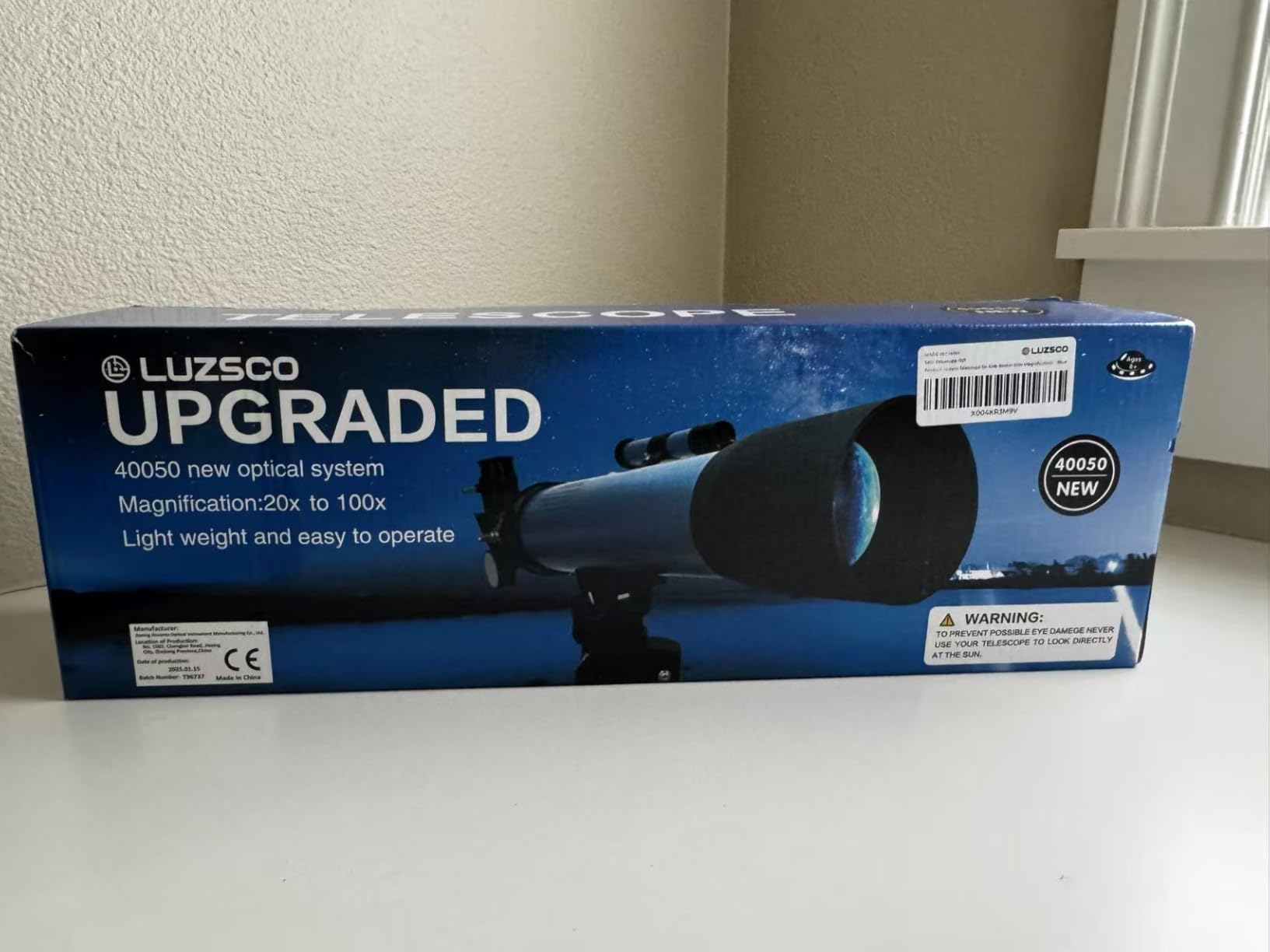
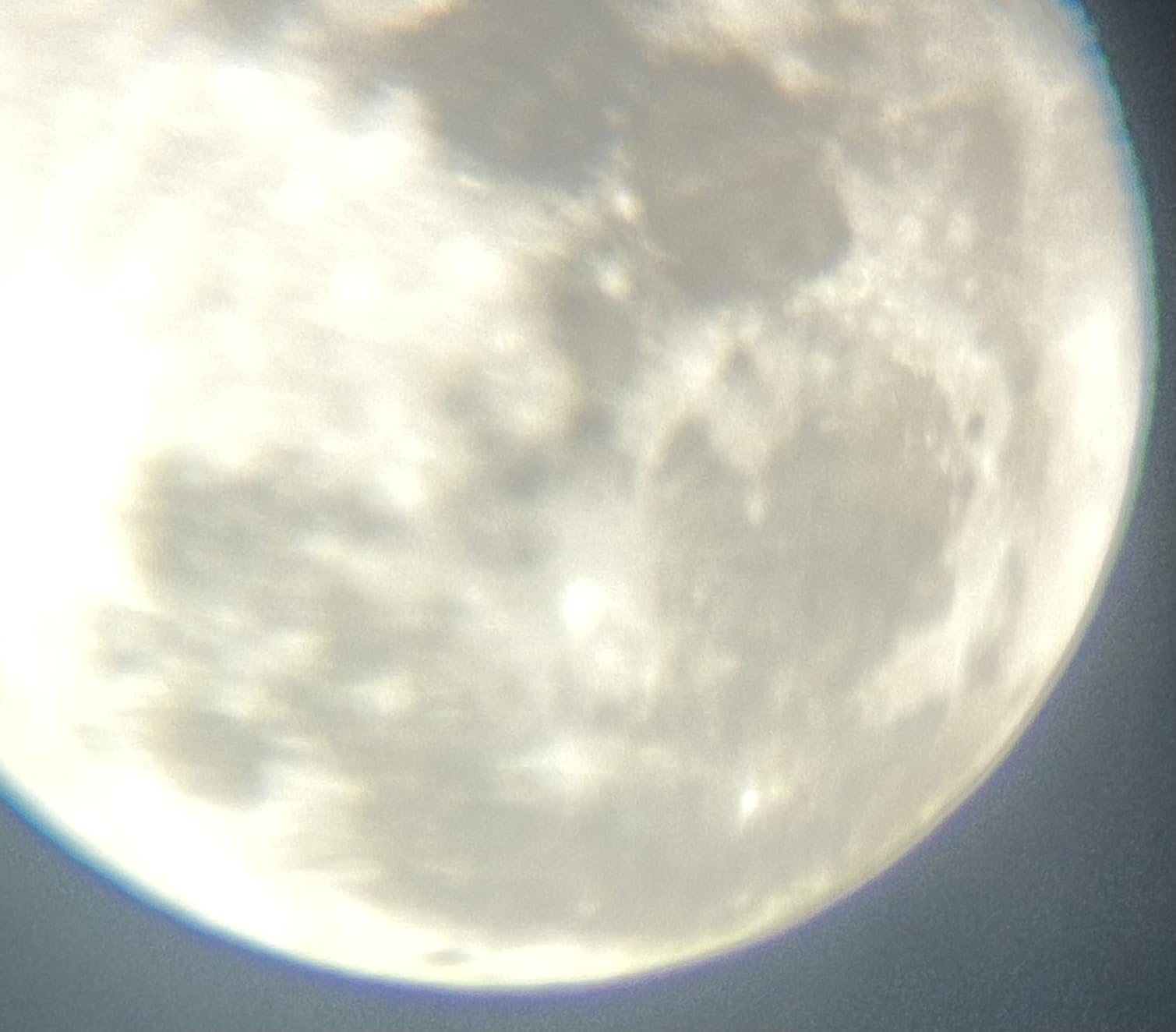
The moon filter is a nice inclusion for young children because it reduces glare and makes the full disc easier to look at rather than a blinding white circle. That means a child sees the whole Moon on night one instead of squinting at a bright blob.
What a 50mm objective cannot do is much. It is the smallest aperture here, so the image is dimmer, detail is softer, and the magnification figure is only meaningful on the Moon and the brightest planets. Reviewers are upfront about that limit.
The fixed mount is the other structural limitation. With no slow-motion controls, tracking a moving target is a matter of manually nudging the tube, which is fine for the Moon and frustrating for anything else. A two-year warranty softens the risk on a kit this light.
Why weight matters more than aperture at this age
A telescope a child cannot carry does not get used. At 600 grams this one goes in a backpack and comes out at dusk without an adult carrying it, and that alone puts more observing time on the calendar than a bigger scope kept in a garage.
Where it falls short for parents
This is a Moon and bright-planets instrument only, and the fixed mount means the view drifts almost immediately. It is a good companion to a bigger scope for a family that already owns one, but it should not be the only telescope an eight year old ever uses.
10. National Geographic Pirate Telescope Adventure Kit – Best Kit for a Four Year Old
National Geographic Pirate Telescope Adventure Activity Kit for Kids
Working spyglass and compass
Treasure dig kit
Ages 4 and up
No batteries
Pros
- Craft plus treasure dig plus a real spyglass engages children for hours
- Designed for ages four and up
- Includes a genuine pyrite specimen and replica coin
- Learning guide covers real pirate history and navigation
- Needs no batteries at all
Cons
- The spyglass is a low-power toy monocular rather than a telescope
- Works better for younger children than for anyone wanting a night sky
We are including this one because it is genuinely one of the best kids activity kits in the lineup, and because leaving it out would be dishonest. It is a pirate-themed craft and treasure set from Blue Marble with National Geographic branding. The only optical instrument inside is a small spyglass.
For a four year old, that is the right call. A 25mm telescope at that age produces an image most children cannot interpret, while a treasure dig with a replica Brasher doubloon and a genuine pyrite specimen produces about forty minutes of genuine concentration and delight.

The spyglass is real and works, it just has very low power. The compass is a functioning compass. A full-colour learning guide covers pirate history and navigation, and the craft set includes a wearable pirate hat, a treasure map and stickers. No batteries are required at all.
Reviewers rate it warmly on exactly the grounds parents at that age care about, with the treasure dig and the crafts earning most of the praise and the viewing experience described as token.
At 0.5 kg it is a box of small parts rather than an instrument, and it is not a telescope in any meaningful optical sense. If your child is five or older and you want to see stars, this is not the purchase, however good the craft.

When an activity kit beats a telescope
Under age five, and for any child whose attention is better held by making and digging than by looking. The STEM-adjacent content is real, the parts are satisfying, and nothing about it can be broken by being dropped in a garden.
Where it falls short for parents
It cannot show a child anything in the night sky beyond a vague bright shape through the spyglass. Families who want a shared observing habit should use this as a birthday activity and buy a real refractor later, once the child is old enough to hold an eye to an eyepiece.
What Counts as a Telescope Kit for Kids
A telescope kit for kids bundles a small telescope with the eyepieces, finder scope, mount and tripod or tabletop base, and usually a carry case, Moon map or star chart in one box. A good kit is judged by aperture, not by the magnification printed on the side.
Four parts matter. The telescope itself, measured by aperture and focal length. The finder, which decides whether a child can find anything at all. The mount and tripod, which decide whether the view survives being pointed. And the eyepieces, which set the magnification range.
Three parts are usually filler. Phone adapters that will not grip a phone in a case. Printed star charts too small to read under a red torch. And Barlow lenses advertised as triple the magnification when the aperture cannot support the extra power in the first place.
One part is worth reading carefully: the accessory pouch. A kit with a real backpack or case will get used far more than a kit that lives in a cardboard box, because storage location decides how often the telescope comes out of it.
Aperture Beats Magnification Every Time
Aperture is the single number that decides what a child sees. It is the diameter of the main lens or mirror, and it controls how much light the telescope gathers. A 76mm aperture collects well over a hundred times more light than the unaided eye.
Magnification, by contrast, is just focal length divided by eyepiece focal length, which means anyone can print a large number on a box by including a tiny eyepiece. The useful ceiling is roughly twice the aperture in millimetres, so a 70mm scope tops out near 140x and a 50mm scope near 100x.
This is why a kit claiming 525x on a 50mm aperture is describing empty magnification. The image will be dim, shaky and featureless, and a child who expects craters and sees a grey smudge concludes that astronomy is boring rather than that the box lied.
Focal length matters too, but it is a comfort issue rather than a capability one. A short tube such as the ECOOPRO at 360mm shows a wide field, which is forgiving for beginners. A longer tube such as the MEEZAA at 500mm fills the eyepiece with one target, which some children prefer.
What Your Child Can Actually See
The Moon comes first, every time, and every kit in this list will show it. Craters, ridges and the dark mar are obvious through a 70mm scope, and near the terminator, the shadow line, the relief looks like terrain under a low sun.
Jupiter’s four moons shift position visibly within an hour or two, which is the second thing most children enjoy. Jupiter itself shows as a bright disk with faint banding at 70mm, and the rings of Saturn need around 30 to 40 times magnification and a steady mount to have any chance.
Deep sky is where expectations should be lowered. The Orion Nebula is a fuzzy patch, open clusters like the Pleiades show as a handful of points, and the Milky Way becomes a pale river rather than a wall of stars. Suburban light pollution makes all of this harder.
Timing matters as much as gear. A first session on a crescent Moon at dusk is easy and forgiving, while a full Moon washes out the fainter targets entirely. Give your eyes twenty minutes in the dark before judging anything.
Kits and Telescopes We Would Skip
Any listing where magnification is the headline number and the aperture is buried. If 525x or 675x appears in the title, that is the tell, and the community advice on astronomy forums is consistent that this is how a department-store scope gets identified in seconds.
Any kit with no finder scope at all, or with a finder that cannot be adjusted. Without a finder a child cannot locate anything in a wide field of view, and the telescope reads as broken on the first night.
Any kit on a tall thin plastic tripod. Tripod wobble is the single most common reason children abandon a telescope, more often than any optical fault. A table, a wall or an upturned crate is steadier than a cheap tripod, and the Luzsco at 600 g is the exception that proves it.
Also skip anything where the child cannot carry the whole kit out of the house. If an adult has to set it up every time, it will stop being used within a few weeks, no matter how good the optics are.
Day One and First Night Checklists
Run this on the day the kit arrives, while the return window is still open. Count every part against the list, check the finder bracket and the focuser for cracks, and confirm the eyepieces are present and clean.
If the kit includes an app-guided mount or a registration code, enter it immediately. Codes printed in the box expire, and parents have reported assembling an entire scope only to find the code invalid on day three.
Then align the finder in daylight. Aim the telescope at a distant chimney or rooftop, adjust the finder cross-hairs to sit on that target, and lock both rings. Doing this before dark is the single highest-value five minutes in the whole process.
Start with the lowest-power eyepiece, never the highest. Find the Moon first, get it centred, then focus slowly. Switch up only when the view is sharp, and give twenty minutes for dark adaptation before deciding the sky is disappointing.
Finally, plan where it will live. Somewhere indoors at room temperature and easy to reach, not a cold garage. For anything that needs a carrying case, our telescope case picks are worth checking so the kit survives a car boot.
Sun Safety for Young Observers
Never let a child point any telescope at the Sun, with or without a filter. Instant and permanent eye damage is possible, and a standard eyepiece acts as a burn glass at the focal plane.
Only a certified solar filter made for that aperture and focal length is safe, fitted over the front aperture by an adult, and used with any eyepiece. Cheap screw-on filters sold with kids kits are not reliable and should be treated as decoration.
The safest option for a child under ten is simply to observe at night. Supervise every session, and point the scope away from the Sun before handing it over.
Frequently Asked Questions
What is the best first telescope for a child?
The best first telescope for a child is a 70mm or 80mm refractor on a steady altazimuth mount, bundled with at least two eyepieces and a finder scope. Aperture decides how much light is gathered, so the number printed on the box matters far less. In this lineup the Gskyer 70mm kit is the strongest overall pick for most families, while the MEEZAA 80mm is the better step up if your child is already curious.
Which type of telescope is best for kids?
For most children a refractor is the right first type, because it needs no collimation, produces an upright intuitive image and can be used in daylight on birds or the Moon. A tabletop Dobsonian is steadier and better for the Moon but is rarely bundled with accessories. A Newtonian reflector gives the most light per unit cost but demands periodic collimation, which most families will not maintain.
Is a telescope a good gift for a 5 year old?
At five, a physical telescope is usually the wrong gift, because a child that age struggles to hold an eye steady at an eyepiece and often sees nothing. A projector telescope, a digital scope with a screen, or an activity kit with a spyglass gives a successful first experience indoors. Many families use that as a bridge and buy a real refractor around age eight, when aiming and focusing become possible.
What is a good starter telescope for a child?
A good starter telescope for a child is one they can carry and set up unaided, with a finder scope and a tripod steady enough to survive being pointed. For ages eight to ten that means a 70mm refractor with two eyepieces. Under about 70mm of aperture, expect the Moon and the brightest planets only, and treat any magnification claim above roughly twice the aperture in millimetres as marketing.
What to avoid when buying a telescope for a kid?
Avoid any scope that leads with a huge magnification figure such as 525x or 675x on a 50mm aperture, since that is empty magnification. Also avoid kits with no finder scope, tall thin plastic tripods that wobble, and anything too heavy for your child to carry outside alone. Check the average rating and review count, since very cheap kids scopes often carry low star ratings from frustrated families.
Can kids actually see planets with a cheap telescope?
Yes, with limits. Jupiter and its four moons are the easiest planet target, and Saturn’s rings need roughly 30 to 40 times magnification on a steady mount with a 70mm or larger aperture. Uranus and Neptune stay points of light on any budget scope. The Moon gives the most dramatic result at any price, which is why a good first session should always start there.
Families looking beyond optical telescopes can also compare our radio telescope kit roundup for electronics-based projects.
Conclusion
For most families, the Gskyer 70mm AZ refractor kit is the best telescope kit for kids in 2026 because it pairs a real aperture with a usable finder, two eyepieces, a Barlow lens and a carry case, and because more than twenty thousand owners have already found the failure modes for you.
Pick the MEEZAA 80mm if you want the sharpest image and the most portable package, the NASA Lunar telescope if your child is seven or eight and needs something that simply works indoors, and the ECOOPRO if daytime viewing on birds and scenery is what will actually get used.
Match the kit to the child rather than to the box, and check it over on arrival while the return window is open. A careful parent, a finder aligned in daylight and a first look at the Moon on a clear evening will do more for a child’s interest in astronomy than any magnification figure on any carton.