
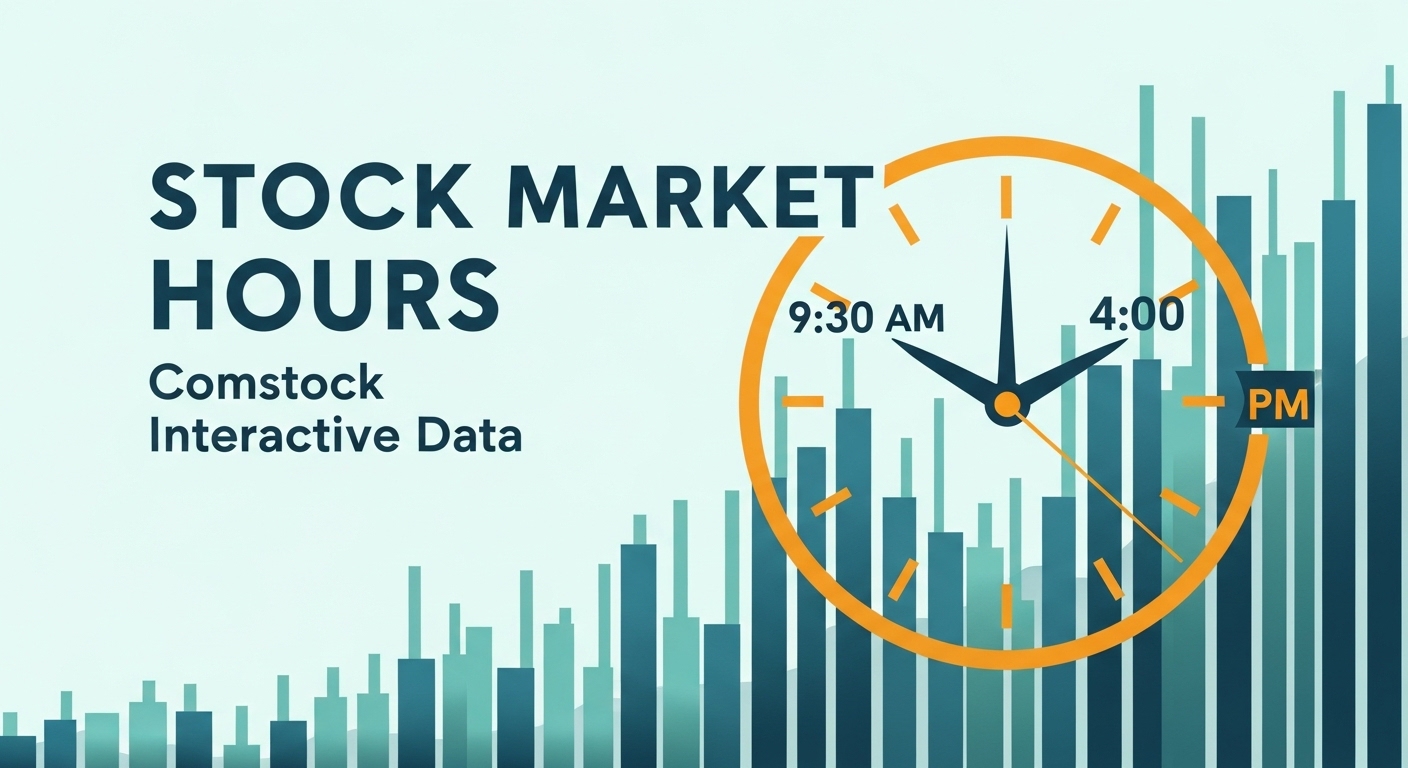
The US stock market opens at 9:30 a.m. ET and closes at 4:00 p.m. ET, Monday through Friday. Both the New York Stock Exchange (NYSE) and Nasdaq follow this schedule, excluding federal holidays and weekends. Understanding these hours helps you time your trades effectively and avoid missed opportunities.
I have been tracking market schedules for over a decade, and I still see confusion about time zones and extended hours. This guide covers everything from regular trading sessions to pre-market activity and holiday closures. By the end, you will know exactly when to trade and what to expect during different market sessions.
Whether you are a day trader waking up before dawn or a long-term investor placing orders after work, market hours affect your strategy. Let us break down each trading session and what makes them unique.
Table of Contents
Regular Trading Hours
The US stock market operates from 9:30 a.m. to 4:00 p.m. Eastern Time, Monday through Friday. This six-and-a-half-hour window is called the regular trading session or core trading hours. The NYSE and Nasdaq both follow this schedule, which has remained consistent since 1985.
The trading day begins with the opening bell at 9:30 a.m. ET. This ceremonial bell ringing marks the official start of trading and dates back to the 1870s. The closing bell at 4:00 p.m. ET signals the end of the regular session. These bells are more than tradition; they synchronize the start and stop of trading across millions of transactions.
Stock exchanges close on weekends. Saturday and Sunday trading has never been standard practice in US markets. This closure allows time for trade settlement, system maintenance, and gives market participants a predictable break. The weekend closure also aligns with bank operating hours, since settlement involves banking systems.
Major exchanges including NYSE, Nasdaq, NYSE Arca, and NYSE American all share these regular hours. The consistency across markets ensures that liquidity and price discovery happen efficiently. When all major venues operate simultaneously, you get tighter spreads and better execution on your orders.
Stock Market Hours by Time Zone
All US stock exchanges use Eastern Time, regardless of where you live. This means traders in California, Texas, or London must convert times to ET to know when markets are active. The table below shows market hours across different US time zones.
| Time Zone | Market Open | Market Close |
|---|---|---|
| Eastern Time (ET) | 9:30 AM | 4:00 PM |
| Central Time (CT) | 8:30 AM | 3:00 PM |
| Mountain Time (MT) | 7:30 AM | 2:00 PM |
| Pacific Time (PT) | 6:30 AM | 1:00 PM |
| Greenwich Mean Time (GMT) | 2:30 PM | 9:00 PM |
If you are on the West Coast, the stock market opens at 6:30 a.m. Pacific Time. Many California traders wake up early to catch the opening bell. Central Time traders have the most convenient schedule, with markets opening at 8:30 a.m. and closing at 3:00 p.m.
International traders in the UK can access US markets from 2:30 p.m. to 9:00 p.m. GMT. This evening window makes US markets accessible to European traders after their local markets close. Asian traders in Tokyo face a midnight to early morning window, which is why many use automated trading systems.
Extended Hours Trading
Extended hours trading lets you buy and sell stocks outside regular market hours. This includes pre-market trading before 9:30 a.m. ET and after-hours trading after 4:00 p.m. ET. Not all brokers offer extended hours, and rules differ from regular trading sessions.
Pre-market trading typically runs from 4:00 a.m. to 9:30 a.m. ET. However, most retail brokers limit this to 7:00 a.m. or 8:00 a.m. ET start times. Volume during pre-market is much lower than regular hours, often just 2-5% of daily volume.
After-hours trading runs from 4:00 p.m. to 8:00 p.m. ET. This session lets traders react to earnings reports and news released after the closing bell. About half of all earnings announcements come after 4:00 p.m. ET, making this session particularly active during earnings season.
Extended hours trading works through Electronic Communication Networks (ECNs). These digital systems match buy and sell orders without a traditional exchange floor. ECNs operate continuously during extended hours, but with fewer participants than regular sessions.
Pre-Market Trading (4:00 AM – 9:30 AM ET)
Pre-market trading begins at 4:00 a.m. ET for some institutional platforms, though most retail brokers start at 7:00 a.m. or 8:00 a.m. ET. This session lets traders react to overnight news, international market movements, and early economic data releases.
Institutional investors dominate pre-market trading. Retail traders face disadvantages including wider bid-ask spreads and lower liquidity. A stock that trades with a one-cent spread during regular hours might have a 10-cent or wider spread pre-market.
Most pre-market activity happens in the final 30 minutes before the opening bell. From 9:00 a.m. to 9:30 a.m. ET, volume increases as traders position for the regular session open. This period often sees the highest volatility of the entire pre-market window.
After-Hours Trading (4:00 PM – 8:00 PM ET)
After-hours trading starts immediately when the regular session closes at 4:00 p.m. ET. This four-hour window attracts traders reacting to earnings reports, merger announcements, and economic news released after the bell.
Volume in after-hours trading is concentrated in the first hour. From 4:00 p.m. to 5:00 p.m. ET, you see the most activity as traders digest earnings and news. After 6:00 p.m. ET, volume drops significantly and spreads widen further.
Individual investors increasingly use after-hours trading to manage positions outside work hours. However, the risks are real. Price swings of 5-10% happen regularly on lower volume. A modest order can move prices significantly when few buyers or sellers are present.
Risks of Extended Hours Trading
Extended hours trading carries specific risks that every trader should understand. The most significant is reduced liquidity. With fewer participants, your orders may not fill at expected prices. A limit order at $50 might only fill at $48 or $52 due to spread widening.
Volatility increases during extended hours. Price swings that take hours during regular sessions can happen in minutes after hours. Earnings surprises or news events create rapid price gaps. You might see a stock jump 10% in seconds, then fall back just as quickly.
Order types are limited during extended hours. Most brokers only accept limit orders, rejecting market orders entirely. This protects you from extreme fills but means you might miss fast-moving opportunities. Stop orders and stop-limit orders often do not work during pre-market or after-hours sessions.
Price discovery is less efficient outside regular hours. The consolidated tape that displays official prices during the day does not operate the same way after hours. You might see different prices on different platforms, creating confusion about true market value.
Best Times to Trade During the Day
The most volatile and potentially profitable trading happens in the first hour after the market opens. From 9:30 a.m. to 10:30 a.m. ET, prices move rapidly as overnight news gets priced in. Volume is highest during this window, creating opportunities for day traders.
The midday session from 11:00 a.m. to 2:00 p.m. ET is typically slower. Traders call this the “lunchtime lull” or “midday doldrums.” Volume drops and price movements become smaller. Many day traders step away during these hours, returning for the afternoon session.
The last hour of trading, from 3:00 p.m. to 4:00 p.m. ET, is called the “power hour.” Institutional traders adjust positions before the close, driving volume higher. Day traders focus heavily on this window for end-of-day momentum plays and closing gaps.
For beginners, I recommend avoiding the first 15 minutes after the open. The 9:30 a.m. to 9:45 a.m. window sees extreme volatility and false breakouts. Starting at 9:45 a.m. or 10:00 a.m. gives markets time to establish direction and reduces whipsaw losses.
Swing traders and long-term investors can place orders anytime during regular hours. Your priority should be execution quality rather than timing. Midday orders often get better fills because spreads are tighter and volatility is lower than at the open or close.
Stock Market Holiday Schedule 2026
US stock markets close for nine federal holidays each year. Additionally, markets close early on the day before Independence Day, the day after Thanksgiving, and Christmas Eve when it falls on a weekday. The table below shows the complete 2026 schedule.
| Holiday | Date 2026 | Market Status |
|---|---|---|
| New Year’s Day | January 1 | Closed |
| Martin Luther King Jr. Day | January 19 | Closed |
| Presidents’ Day | February 16 | Closed |
| Good Friday | April 3 | Closed |
| Memorial Day | May 25 | Closed |
| Juneteenth National Independence Day | June 19 | Closed |
| Independence Day | July 4 | Closed |
| Labor Day | September 7 | Closed |
| Thanksgiving Day | November 26 | Closed |
| Christmas Day | December 25 | Closed |
| Day before Independence Day | July 3 | Closes at 1:00 PM ET |
| Day after Thanksgiving | November 27 | Closes at 1:00 PM ET |
| Christmas Eve | December 24 | Closes at 1:00 PM ET |
When a holiday falls on a Saturday, markets close the preceding Friday. When a holiday falls on a Sunday, markets close the following Monday. This three-day weekend pattern affects trading volume in surrounding sessions, often creating higher volatility before and after holidays.
The bond market follows a similar but not identical schedule. Bond traders sometimes have holidays that stock traders do not, and vice versa. Treasury securities follow the stock market schedule closely, but corporate bonds may have slightly different hours through various trading platforms.
International markets have their own holiday schedules. If you trade ADRs (American Depositary Receipts) or international ETFs, remember that foreign exchanges might be closed even when US markets are open. This can create pricing anomalies and liquidity gaps.
Will the Stock Market Ever Trade 24/7?
In 2026, Nasdaq submitted a proposal to the SEC for 23-hour trading, five days a week. This plan would extend trading from 4:00 a.m. ET Monday to 7:00 p.m. ET Friday, with only a one-hour daily maintenance window. The proposal represents the biggest potential change to US market hours in decades.
The driving force behind extended hours is global demand. Asian and European traders want better access to US markets during their local business hours. Crypto markets trade 24/7, creating pressure for traditional markets to match that accessibility.
However, 24/7 trading faces significant obstacles. Settlement systems still operate on traditional banking hours. The DTCC (Depository Trust and Clearing Corporation) processes most trades, and their systems require daily maintenance windows. Changing this infrastructure involves massive coordination between exchanges, brokers, and clearing houses.
Risk management is another concern. Circuit breakers and volatility controls are calibrated for current hours. Extending trading would require rethinking how markets handle flash crashes and extreme moves during thinly traded periods. Regulators worry about retail investor protection during low-liquidity overnight sessions.
My view is that we will see gradual extension rather than overnight change. Nasdaq’s 23-hour proposal, if approved, would roll out in phases starting in late 2026 or 2027. Weekend trading remains unlikely in the near term due to settlement complexities and the banking system’s weekend closure.
Frequently Asked Questions
What time does the stock market open and close?
The US stock market opens at 9:30 a.m. ET and closes at 4:00 p.m. ET, Monday through Friday. This schedule applies to both the NYSE and Nasdaq. Markets are closed on weekends and federal holidays.
Is the stock market open on weekends?
No, the stock market is closed on Saturday and Sunday. US stock exchanges only operate Monday through Friday. This weekend closure allows time for trade settlement, system maintenance, and aligns with banking hours.
Can you trade stocks after hours?
Yes, after-hours trading runs from 4:00 p.m. to 8:00 p.m. ET Monday through Friday. However, after-hours trading has lower liquidity, higher volatility, and only limit orders are accepted at most brokers. Extended hours carries additional risks compared to regular trading sessions.
What time does pre-market trading start?
Pre-market trading typically starts at 4:00 a.m. ET for institutional platforms, though most retail brokers begin at 7:00 a.m. or 8:00 a.m. ET. Pre-market ends at 9:30 a.m. ET when regular trading begins.
Why does the stock market close on weekends?
Stock markets close on weekends primarily for settlement processing and system maintenance. Trade settlement involves banking systems that operate Monday through Friday. The weekend closure also provides a predictable break for market participants and exchange infrastructure maintenance.
What holidays is the stock market closed?
The stock market closes for New Year’s Day, Martin Luther King Jr. Day, Presidents’ Day, Good Friday, Memorial Day, Juneteenth, Independence Day, Labor Day, Thanksgiving Day, and Christmas Day. Markets also close early at 1:00 p.m. ET on the day before Independence Day, the day after Thanksgiving, and Christmas Eve.
Conclusion
Stock market hours when does the market open and close is essential knowledge for every investor. The US market operates from 9:30 a.m. to 4:00 p.m. ET, Monday through Friday, with extended hours available for early morning and evening trading. Understanding time zone differences, holiday schedules, and the risks of extended hours trading helps you make informed decisions.
I recommend bookmarking this guide for quick reference throughout 2026. Markets may evolve toward longer hours in coming years, but the fundamentals of timing your trades remain constant. Focus on execution quality during regular hours and understand the additional risks before trading extended sessions.