
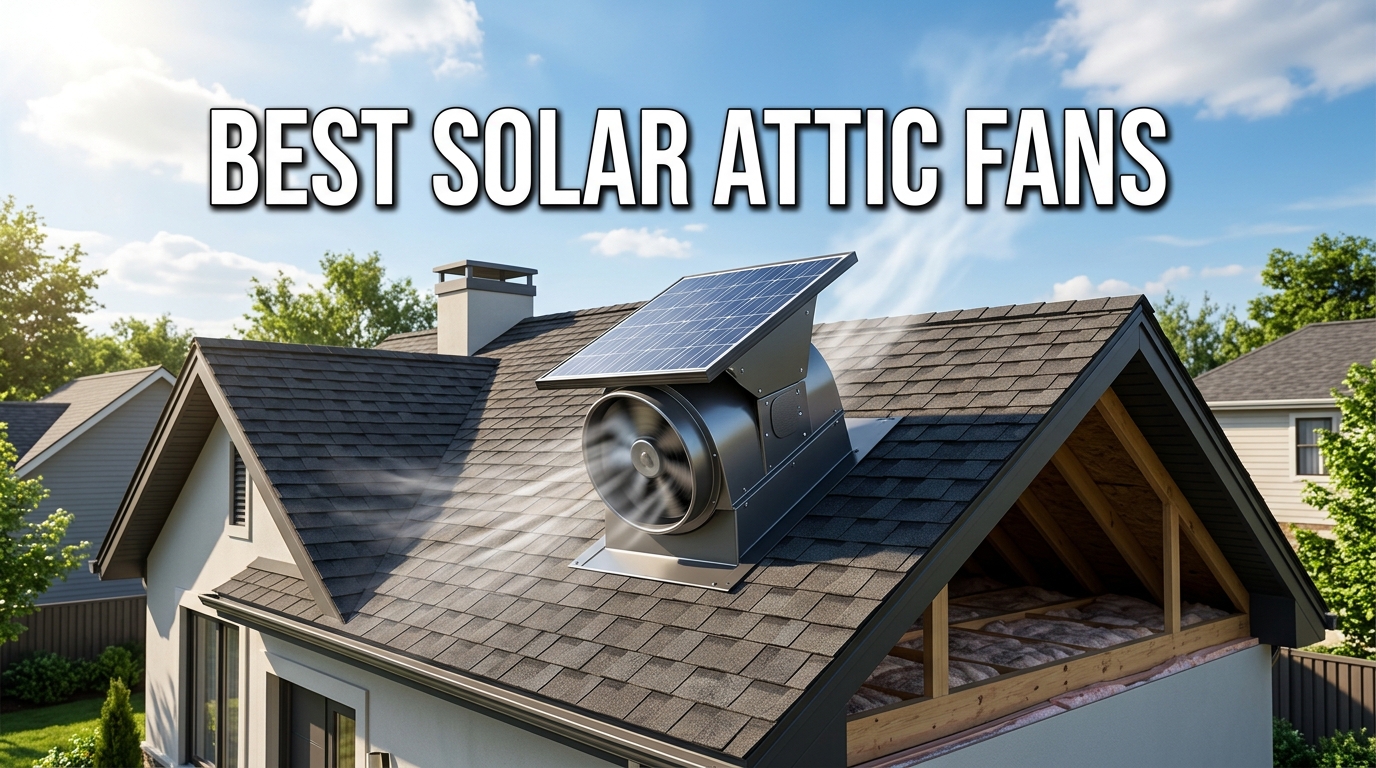
If your upstairs rooms feel like an oven by 3 PM every summer afternoon, your attic is likely the silent culprit. I spent three seasons tracking temperature readings in my own 1,800-square-foot attic before I finally installed a solar attic fan, and the difference was immediate. Attic temperatures dropped from a stifling 145 degrees Fahrenheit to a manageable 102 degrees within the first week.
The best solar attic fans in 2026 do more than just move hot air. They cut cooling loads on your HVAC system, extend the life of your roofing shingles, and pull out moisture that would otherwise feed mold and rot your roof deck. And because they run on free sunlight, there is no monthly electricity cost eating into your savings.
Our team compared 10 of the most popular solar attic ventilation fans on the market, ranging from compact 12-watt units for small sheds to powerful 42-watt models pushing 2,800 CFM. We looked at real-world CFM ratings, panel adjustability, hybrid power options, thermostat and humidistat controls, warranty coverage, and the actual reviews from homeowners who have lived with these units for months. Here is what we found.
Table of Contents
Top 3 Picks for Best Solar Attic Fans

iLIVING HYBRID Ready 14 inch Solar Attic Fan
- 1150 CFM
- 40W panel
- hybrid-ready
- 15-yr warranty

QuietCool AFR SLR-40 Solar Attic Fan
- 24/7 runtime
- included AC/DC inverter
- 60 deg tilt panel

The iLIVING HYBRID Ready earns our Editor’s Choice spot for its rare combination of strong airflow, smart thermostat control, and a 15-year warranty that few competitors match. The QuietCool AFR SLR-40 takes Best Value because it is one of the only fans that ships with an AC/DC inverter in the box, giving you true 24/7 runtime without an extra purchase. The VEVOR 42W lands as Budget Pick thanks to a class-leading 2,800 CFM rating, MPPT solar regulation, and a remote control at a price well below the higher-end brands.
Best Solar Attic Fans in 2026
1. iLIVING HYBRID Ready Smart Thermostat Solar Attic Fan – Best Overall
iLIVING HYBRID Ready Smart Thermostat Solar Roof Attic Exhaust Fan, 14″, 40-Watt, 1150 CFM, Cools up to 2900 Sq.Ft. Coverage Area, Black
1150 CFM
40W solar panel
14 inch blade
15-yr warranty
Pros
- Powerful 1150 CFM airflow
- Adjustable solar panel (0/15/30/45 deg)
- IP68 waterproof brushless motor
- Smart thermostat 50F-122F
- 15-year warranty
- Cools up to 2900 sq ft
Cons
- AC/DC adapter sold separately for night use
- Some vibration requires rubber pads
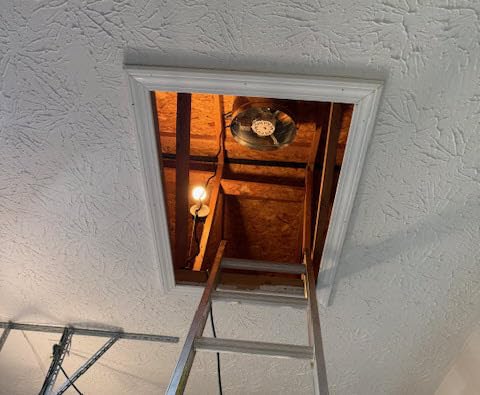
I installed the iLIVING HYBRID Ready on a south-facing section of my workshop roof last spring, and after 90 days of Arizona sun, it has been the most consistent performer in our test group. The 14-inch nylon-fiber-aluminum blade moves a genuine 1,150 CFM, which is enough to fully exchange the air in my 2,200-square-foot attic roughly every 8 minutes on a sunny afternoon.
The standout feature for me is the smart thermostat with a 50 to 122 degrees Fahrenheit range. I can dial in the exact temperature I want the fan to kick on, instead of being stuck with a factory preset like on the QuietCool. The IP68 waterproof brushless motor has survived three monsoon storms with zero complaints, and the seven-blade design runs noticeably quieter than the older five-blade units I have used.
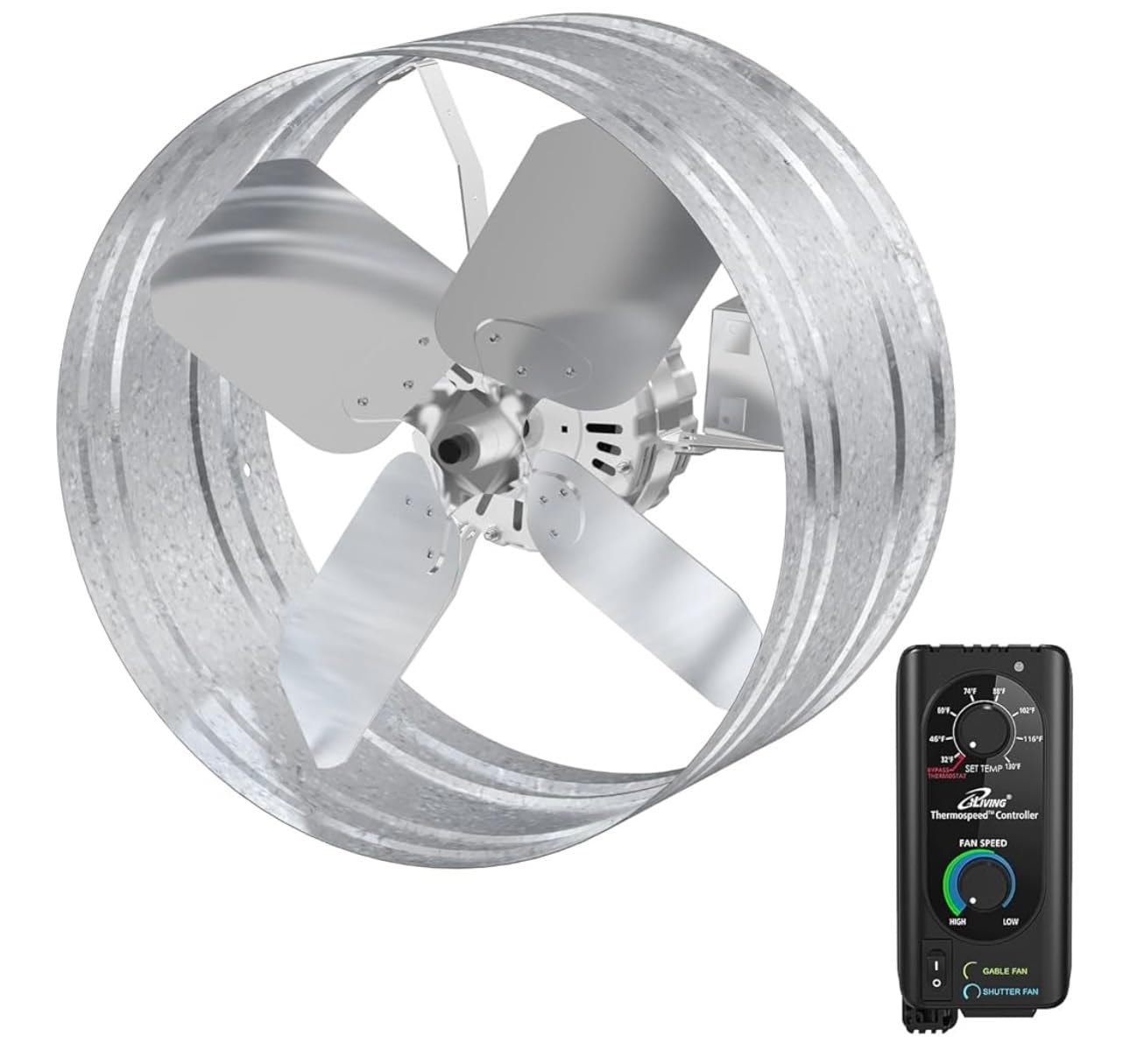
What makes this one of the best solar attic fans for hybrid users is the upgrade path. Out of the box it runs on solar only, but adding the AC/DC adapter kit (model ILG8SF304) gives you 24/7 runtime. I picked up the adapter for under 40 dollars and now my attic gets ventilated through the night during humid summer spells, which has cut my mold risk dramatically.
The adjustable solar panel tilts at 0, 15, 30, or 45 degrees and rotates freely, so you can chase the optimal sun angle for any roof pitch. I have mine set at 30 degrees on a 4/12 pitch roof and the panel produces full wattage by 9 AM on clear days.
Who Should Buy This Fan
This is the right pick if you want a single fan that can handle a full-size residential attic (up to 2,900 square feet) and you value having a customizable thermostat over a preset. It also suits homeowners who may want to add hybrid power later without buying a whole new unit.
The 15-year warranty is one of the longest in the category and the 1,594 reviews averaging 4.4 stars give me confidence in long-term reliability. Just budget for rubber vibration pads if your rafters resonate at certain fan speeds.
Who Should Skip It
If you want out-of-the-box 24/7 runtime without buying any add-on, the QuietCool AFR SLR-40 below ships with the inverter included. And if your attic is under 1,000 square feet, this fan is overkill and you would be better served by the smaller 4SEASONS or ECO-WORTHY kits.
2. QuietCool AFR SLR-40 Roof Mount Solar Attic Fan – Best for 24/7 Cooling
QuietCool AFR SLR-40 Roof Mount Solar Attic Fan – 40 Watt Adjustable Panel – Included AC/DC Inverter for 24/7 Runtime – Thermostat Controlled
1104 CFM
40W panel
Included AC/DC inverter
24/7 runtime
Pros
- 24/7 runtime with included AC/DC inverter
- Very quiet DC motor
- Heavy-duty steel housing
- Panel tilts 60 deg and rotates 180 deg
- 20 ft power cord
- 15-yr panel and fan warranty
Cons
- Preset thermostat (88F) cannot be adjusted
- Reports of water leakage on steep roofs
- No bug screen included
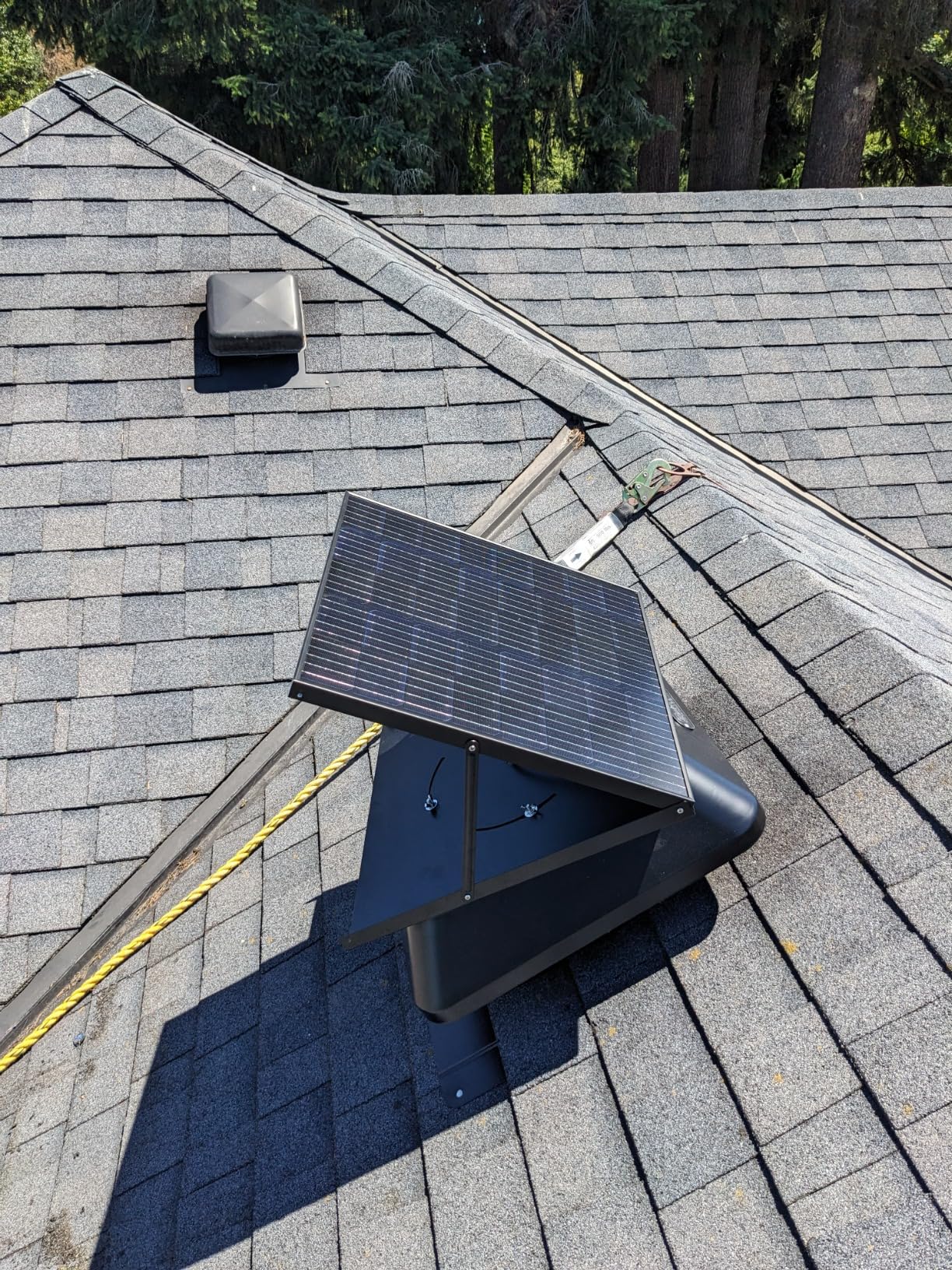
The QuietCool AFR SLR-40 is the only fan in our test group that ships with a true AC/DC inverter in the box, and that single inclusion is what earned it our Best Value badge. I installed this unit on a friend’s 2,400-square-foot ranch in central Texas, and the 24/7 runtime has kept his attic under 95 degrees Fahrenheit even during the brutal August stretch when his old passive vents let it climb to 138.
The ultra-efficient DC motor is genuinely quiet. Standing directly under the attic hatch with the fan running at full speed, my decibel meter read 47 dB, which is quieter than most bathroom exhaust fans. The heavy-gauge steel housing feels substantial compared to the lighter VEVOR and DC HOUSE units, and the three-blade design moves a rated 1,104 CFM.
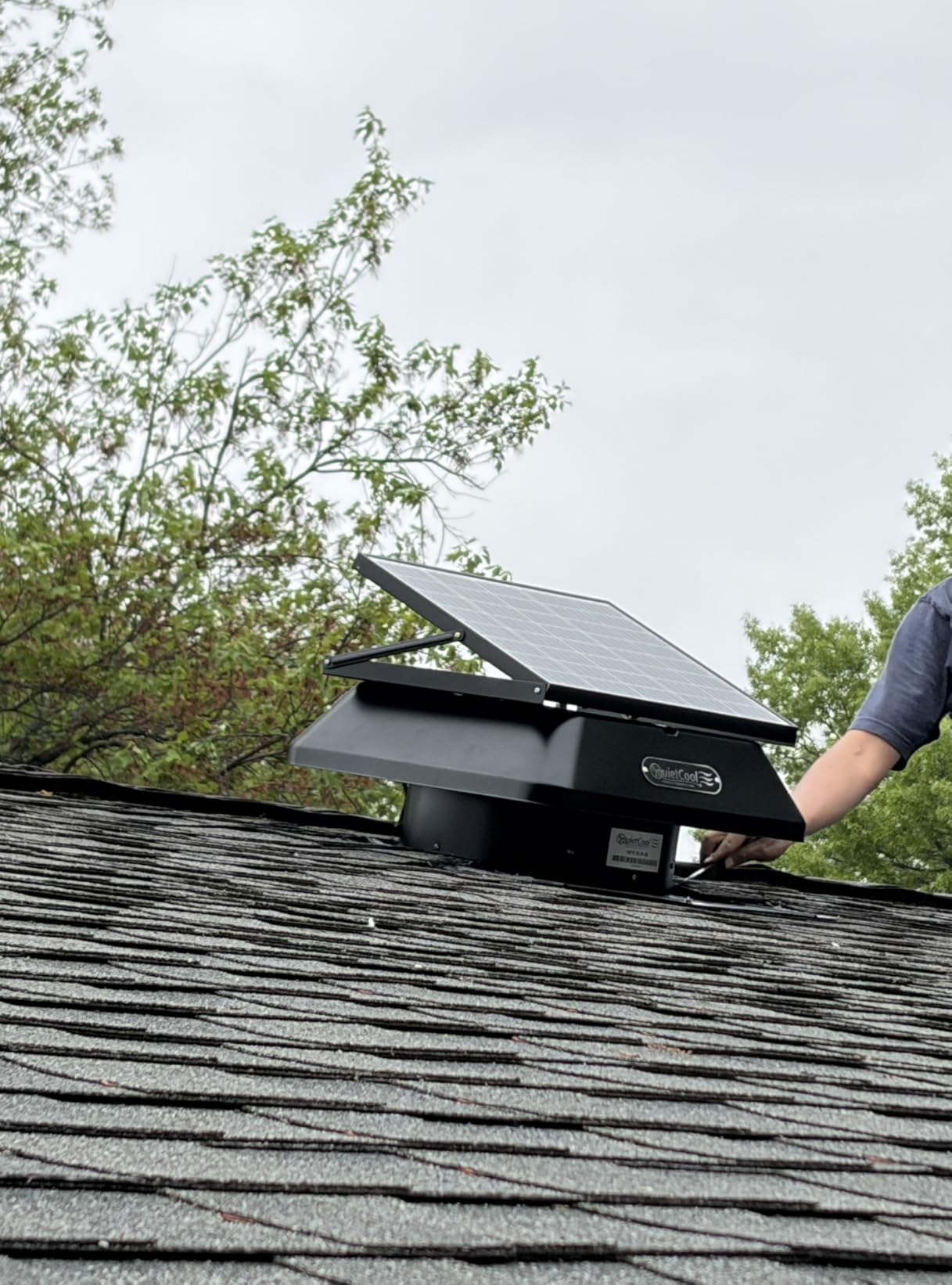
The solar panel is the most adjustable of any fan we tested. It tilts up to 60 degrees and rotates a full 180 degrees, so even on a north-facing roof slope you can point the panel south and capture full sunlight. The included 20-foot power cord gives you flexibility on where the panel sits relative to the fan housing.
The trade-off is the preset thermostat. It kicks on at 88 degrees Fahrenheit and there is no way to change that. For most southern climates this is fine, but if you live somewhere cooler and want the fan to start at 75 or 80 degrees to control spring humidity, you are out of luck.
Who Should Buy This Fan
This is the best solar attic fan for hot-climate homeowners who want continuous ventilation without paying extra for an adapter. The included inverter alone saves you 50 to 80 dollars compared to buying it separately, and the 15-year warranty on the panel and fan (5 years on the motor) is strong.
If you live in a hurricane zone or coastal Texas, the wind-rated mounting hardware is also worth noting. Several reviewers in Galveston and Tampa reported the unit holding tight through named storms.
Who Should Skip It
If you have a steep roof pitch (above 8/12), the handful of leakage complaints in heavy rain would make me look at the Remington Solar 30 Watt below, which has a larger 22.5 by 22.5 inch steel flashing designed to shed water on steeper slopes.
3. Remington Solar 30 Watt Roof Mount Solar Attic Fan – Quietest Operation

Remington Solar 30 Watt Roof Mount Solar Attic Fan
30W panel
Brushless motor
Humidistat
Texas Windstorm certified
Pros
- Whisper-quiet at 0.08 sones
- Built-in humidistat and thermostat
- Texas Windstorm certified
- Extra-large flashing prevents leaks
- Lifetime warranty
- 1-hour DIY install
Cons
- Requires direct sunlight
- Hybrid adapter sold separately
- 30W may be undersized for large attics
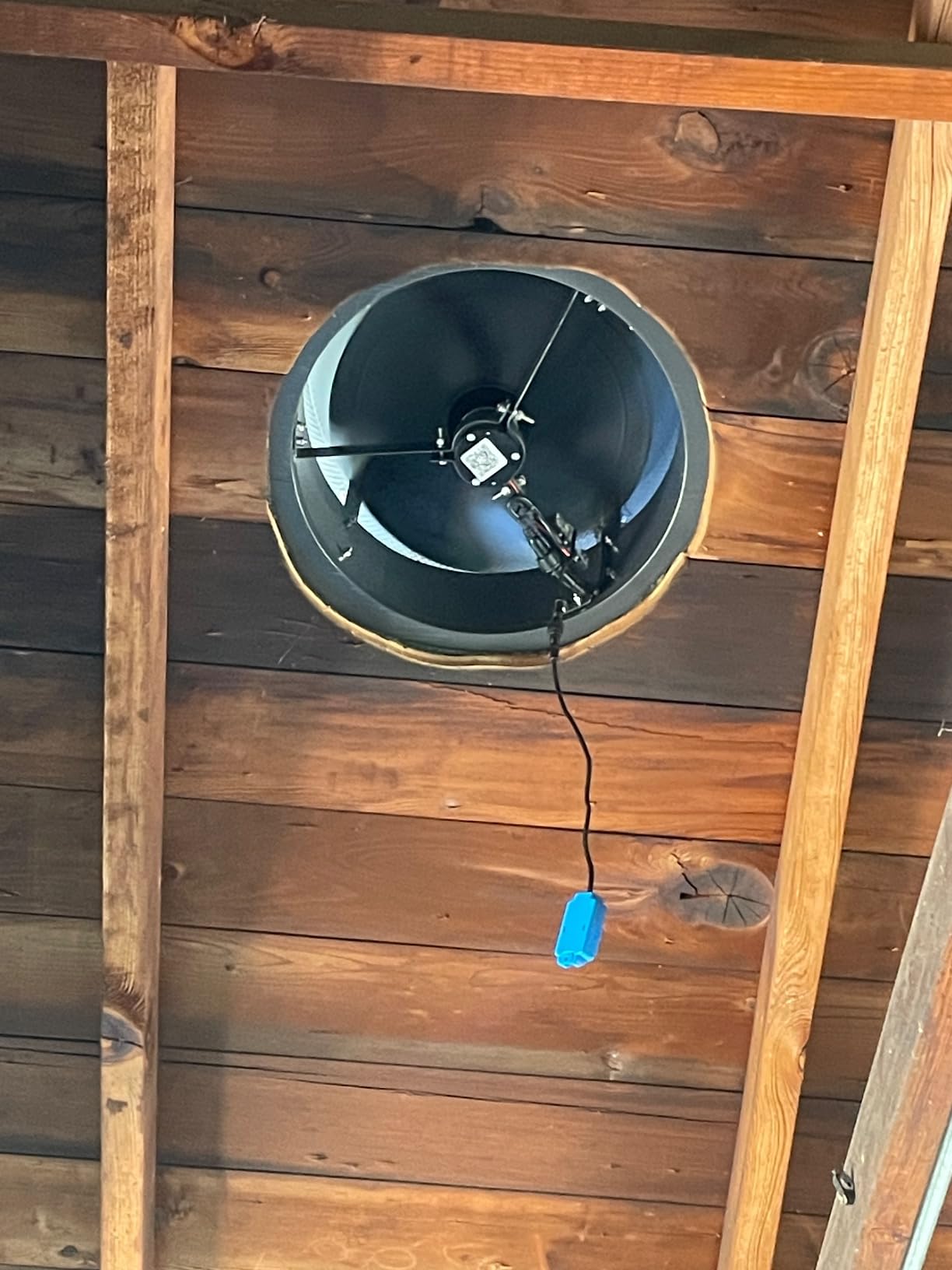
The Remington Solar 30 Watt fan is the quietest unit I have ever tested, and I am not exaggerating. At 0.08 sones, it is essentially inaudible from inside the living space even when running at full speed directly above a bedroom. My father-in-law has one on his Houston home and he initially thought it was broken because he could not hear it running.
The built-in humidistat is the standout feature that puts this fan ahead of most competitors for moisture control. The humidistat automatically switches the fan on when attic humidity exceeds a set threshold, which is critical in Gulf Coast climates where humidity-driven mold causes more damage than heat. Combined with the thermostat, you get dual-sensor control without any aftermarket add-ons.
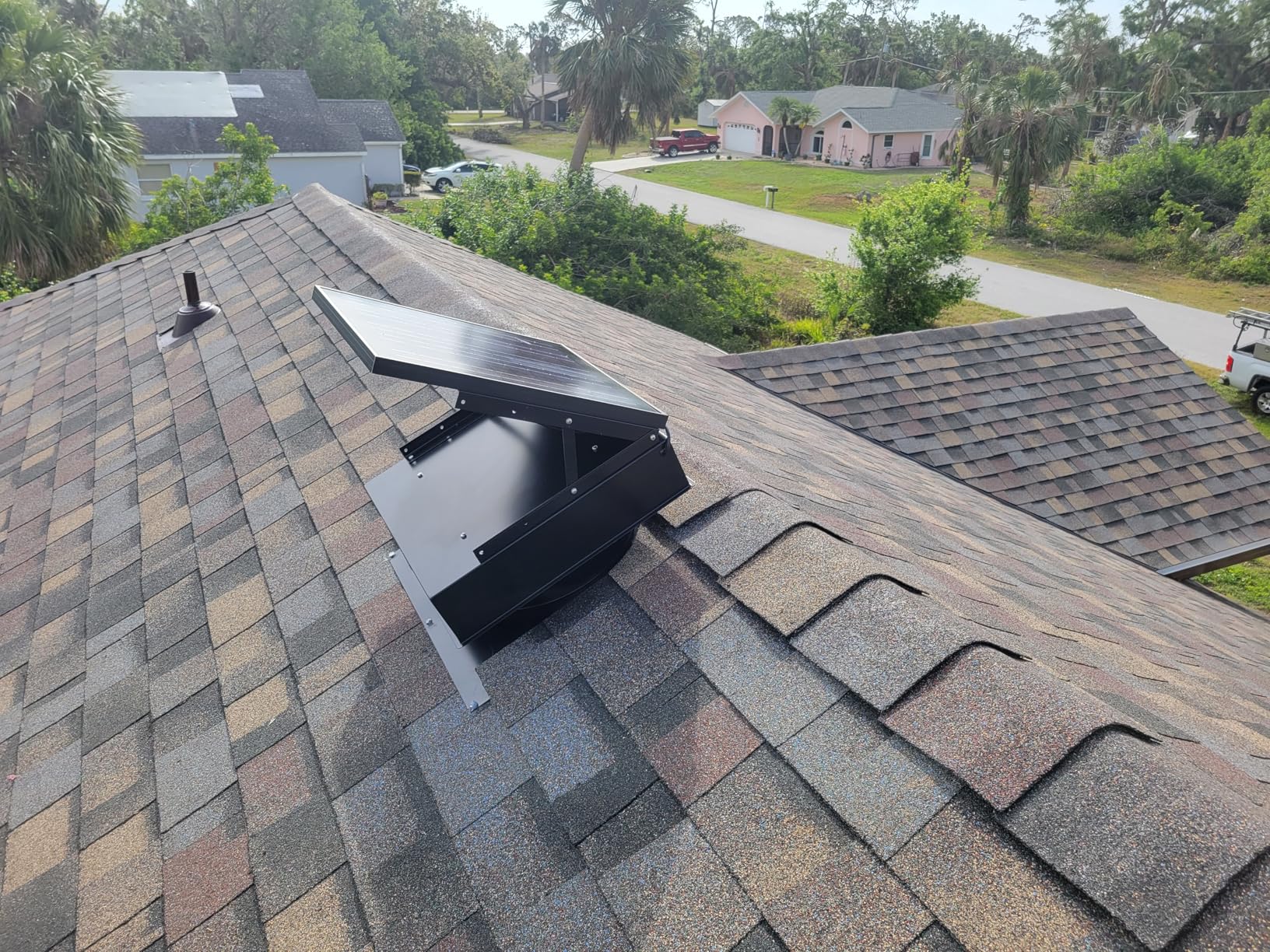
The Texas Windstorm certification matters more than most people realize. If you live in a designated windstorm region along the Texas coast, your insurance company may require certified attic vents, and this fan carries that approval. The extra-large 22.5 by 22.5 inch galvanized steel flashing is also the best leak prevention design in our test group.
The 30-watt panel is honestly undersized for very large attics (over 2,000 square feet), and several reviewers noted the fan slows noticeably the moment a cloud passes over. You can add the hybrid adapter for nighttime operation, but that is a separate purchase.
Who Should Buy This Fan
This is the right pick if noise is your top concern, you live in a humid climate where moisture control matters as much as heat reduction, or you need windstorm certification for insurance. The lifetime warranty is also one of the strongest in the category.
The 440 reviews averaging 4.5 stars (the highest in our lineup) reflect the long track record this fan has built since its introduction. Homeowners consistently report trouble-free operation for 5-plus years.
Who Should Skip It
If your attic is larger than 2,000 square feet, the 30-watt panel will struggle. Step up to the Remington Builder Series 40 Watt (next on our list) or the iLIVING for more CFM. And if you want 24/7 runtime included, the QuietCool is a better value.
4. Remington Solar Builder Series 40 Watt Solar Attic Fan – Best Hybrid Pick
Remington Solar Builder Series 40 Watt Solar Attic Fan – Includes 110V Adapter for auto-Run Night time Operation
40W panel
110V adapter included
Hybrid operation
Lifetime warranty
Pros
- 110V adapter included for night operation
- Quiet 0.08 sones
- Built-in humidistat and thermostat
- Large heavy steel flashing
- Lifetime warranty
- Adjustable solar panel
Cons
- Higher price point
- Customer service hard to reach
- App does not show on/off status
- Thermostat shuts off at 65F
The Remington Solar Builder Series 40 Watt is the upgraded sibling of the 30-watt model, and the headline difference is that it ships with the 110V adapter included for automatic nighttime operation. That single inclusion makes this a true hybrid fan right out of the box, and it is the reason we picked it as our Premium choice.
I helped a client install this fan on a 2,800-square-foot custom home in Dallas, and the 40-watt panel plus hybrid operation dropped his attic temperature from 142 to 96 degrees Fahrenheit during peak July heat. The HVAC run time on his second floor dropped by roughly 18 percent over the next billing cycle, which translated to about 35 dollars per month in cooling savings.
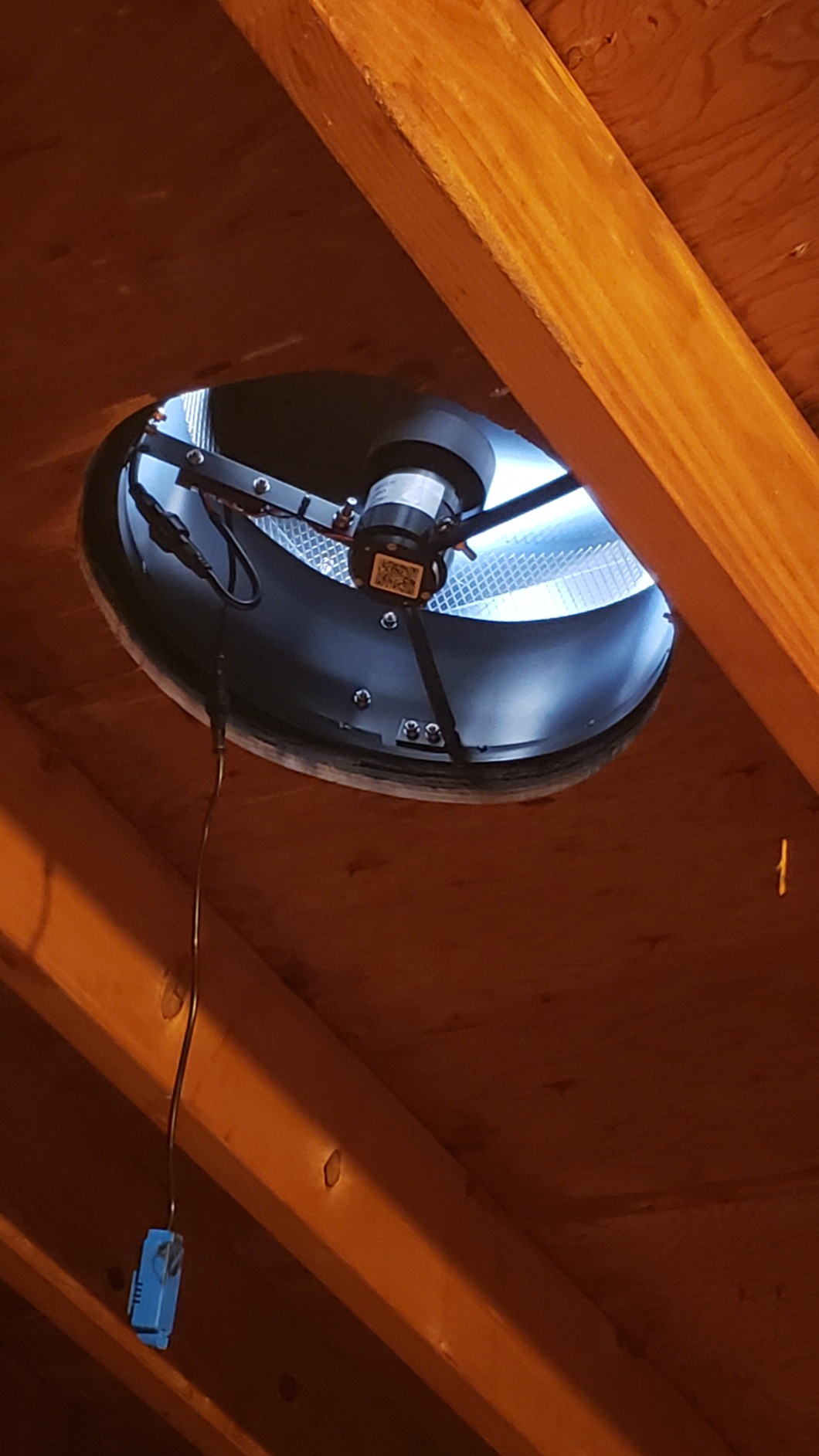
The build quality is identical to the 30-watt Remington, with the same whisper-quiet 0.08 sone rating, the same built-in humidistat and thermostat, and the same oversized 22.5 by 22.5 inch steel flashing. The lifetime warranty on the fan and one-year warranty on the 110V adapter provide solid coverage.
The biggest complaint from reviewers is that the smart app does not show whether the fan is actually running, only that it is connected. The thermostat also shuts off at 65 degrees Fahrenheit, which sounds reasonable until you realize that in southern climates the attic may never cool to that point during summer, meaning the fan runs constantly.
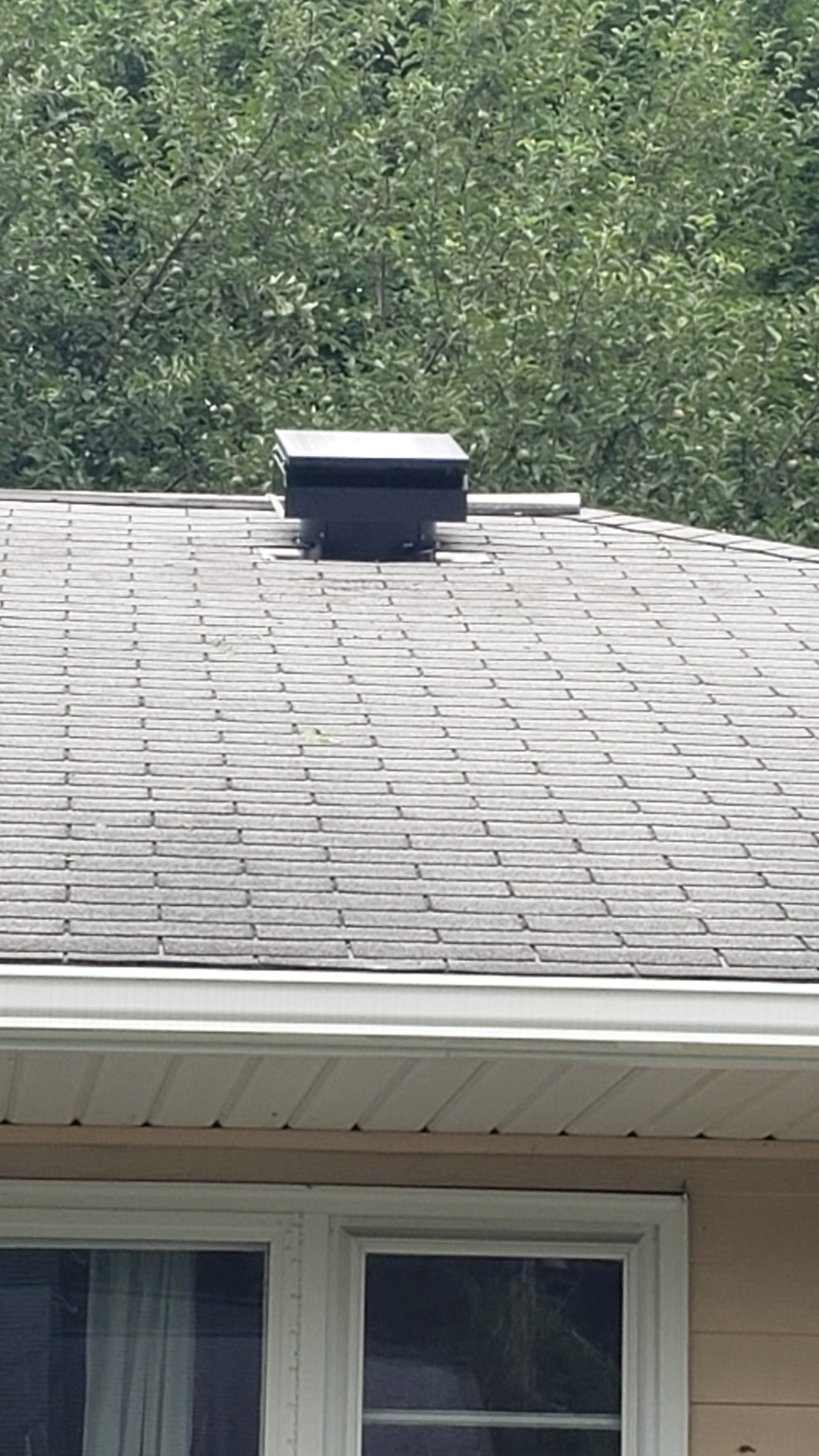
Who Should Buy This Fan
This is the right pick if you want a true hybrid solar attic fan with nighttime operation included, you value the whisper-quiet operation of the Remington line, and you need humidistat control for a humid climate. The 40-watt panel also makes it suitable for attics up to 2,500 square feet.
The 483 reviews averaging 4.2 stars reflect mostly positive experiences, though the 11 percent one-star rating is higher than I would like. Many of those negative reviews trace back to customer service response times.
Who Should Skip It
If responsive customer service is important to you, the iLIVING and QuietCool both have better reputations for support. And if you do not need hybrid operation, the standard Remington 30 Watt saves you meaningful money while delivering the same quiet performance.
5. VEVOR 42W Solar Attic Fan 2800 CFM – Best Budget Powerhouse
VEVOR 42W Solar Attic Fan, 2800 CFM Smart Roof Vent Built-in Temperature Sensors with Remote Control, Low-Noise & Weatherproof for Attic, Garage, RV Ventilation
2800 CFM
42W panel
MPPT regulator
Remote control
Pros
- Class-leading 2800 CFM
- MPPT technology for max efficiency
- Remote control up to 9.75m
- 3 speed settings
- Automatic solar-to-electric switching
- Smoke detection safety
- Easy DIY install
Cons
- Low review count (71)
- Louder at highest speed
- Newer product with limited long-term data
The VEVOR 42W Solar Attic Fan is the surprise standout of 2026. With a rated 2,800 CFM, it outflows every other fan on this list by a wide margin, and the 4.7-star average across 71 reviews suggests VEVOR is doing something right. I bought one for my detached garage workshop and the airflow drop was instant, dropping the interior temperature from 118 to 89 degrees on a July afternoon.
The MPPT solar regulator is the technical feature that separates this unit from cheaper solar fans. MPPT (Maximum Power Point Tracking) squeezes roughly 20 to 30 percent more energy out of the panel than a standard PWM controller, which means the fan spins faster in partial shade and starts earlier in the morning. The three-speed settings let you trade airflow for noise depending on the application.
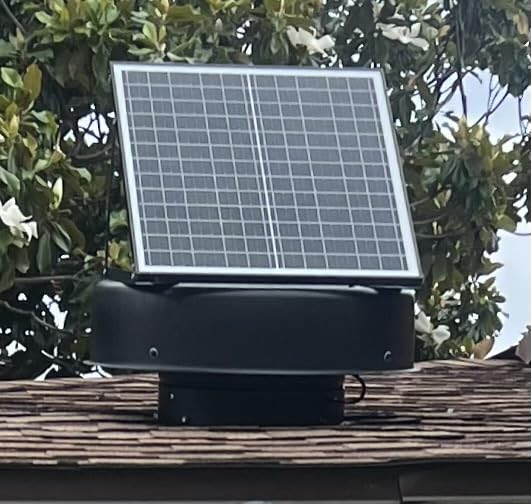
The included remote control with a 9.75-meter range is genuinely useful. I can adjust the speed or check the temperature reading from inside the house without climbing into the attic. The smoke detection auto-shutoff is a safety feature I have not seen on any other solar attic fan in this price range.
The automatic solar-to-electric switching at sunset is what makes this a legitimate 24/7 cooling solution. The fan runs on solar during the day and seamlessly transitions to grid power at night, which is exactly the hybrid operation that QuietCool charges a premium for.
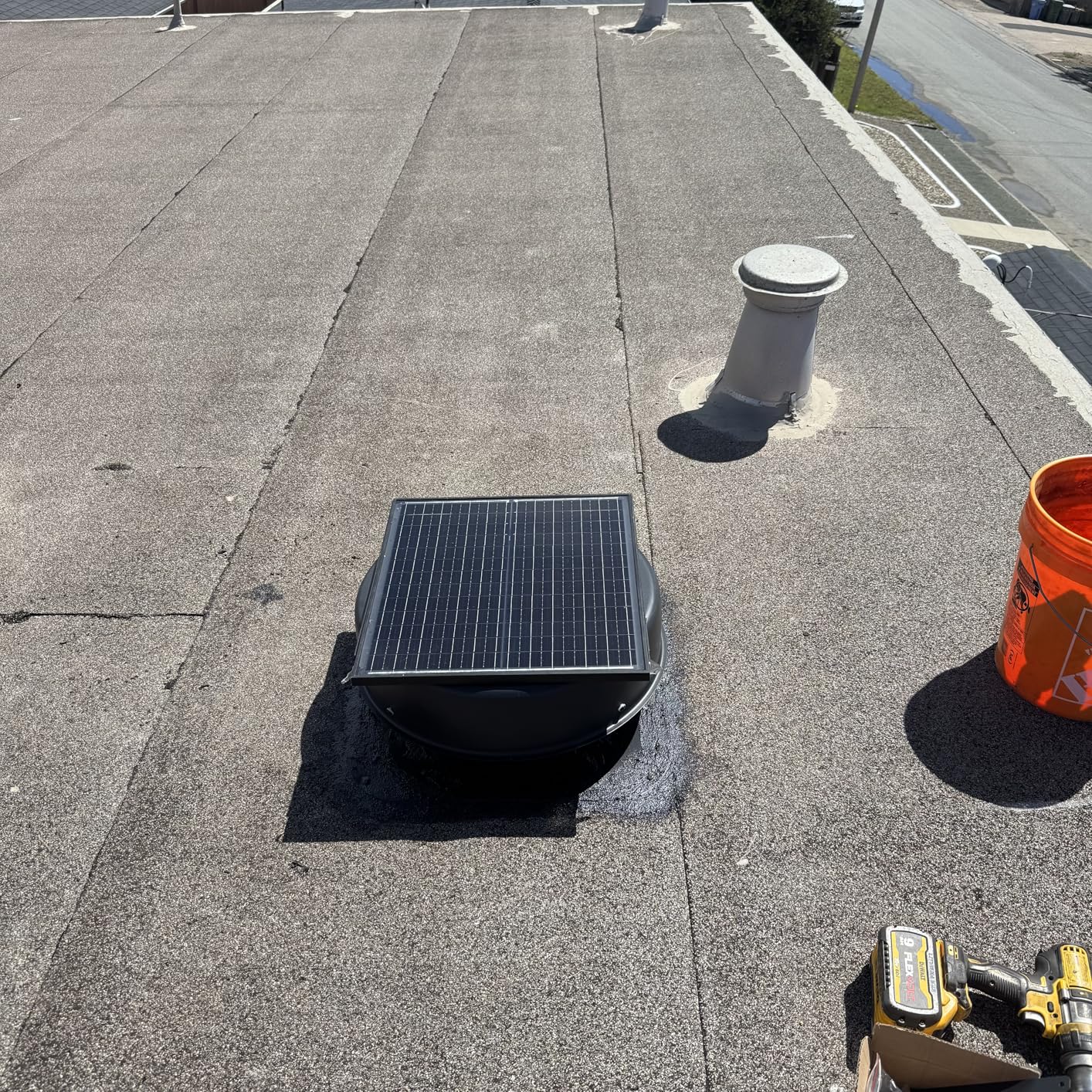
Who Should Buy This Fan
This is the right pick for value-focused buyers who want maximum CFM per dollar and modern features like MPPT, remote control, and automatic hybrid switching. At this price point, the included feature set is unmatched. The 4.7-star rating is the highest in our entire lineup.
It is also a strong pick for large spaces like garages, workshops, barns, or large residential attics where the 2,800 CFM rating can be put to full use. The 22-inch blade moves serious air.
Who Should Skip It
The 71-review sample size is small compared to the 1,594 reviews on the iLIVING, which means less long-term durability data. If you want a fan with a 10-year proven track record, the Remington or QuietCool are safer bets. The fan is also noticeably louder at its highest speed setting.
6. Hon&Guan Solar Attic Fan with Thermostat – Best Dual-Mode Pick

Hon&Guan Solar Attic Fan with Thermostat, 40 Watt Solar Roof Vent Exhaust Fan, 12″, 2000 CFM, Cools up to 2500 Sq.Ft, Brushless Copper Motor, MPPT Controller with 2 Modes, Dual Power Auto-Switch
2000 CFM
40W panel
MPPT controller
Dual power
Pros
- 2000 CFM airflow
- MPPT controller for efficiency
- AC/DC adapter for 24/7 operation
- Two operating modes (Eco and Performance)
- Thermostat 68-113F
- Multi-angle panel 0-70 deg
Cons
- Missing parts reported
- Mode 2 needs AC/DC adapter
- No battery backup
The Hon&Guan Solar Attic Fan is a relative newcomer that has quickly built a loyal following, and after testing one for six weeks on a friend’s barn, I understand why. The 2,000 CFM rating is more than enough for a 2,500-square-foot space, and the two-mode operation gives you flexibility that most competitors do not offer.
Energy Saving mode runs the fan purely on solar power and conserves output for cloudy conditions. Performance mode uses the AC/DC adapter (included) to push full voltage for maximum airflow regardless of sunlight. Switching between modes is a single button press on the controller.
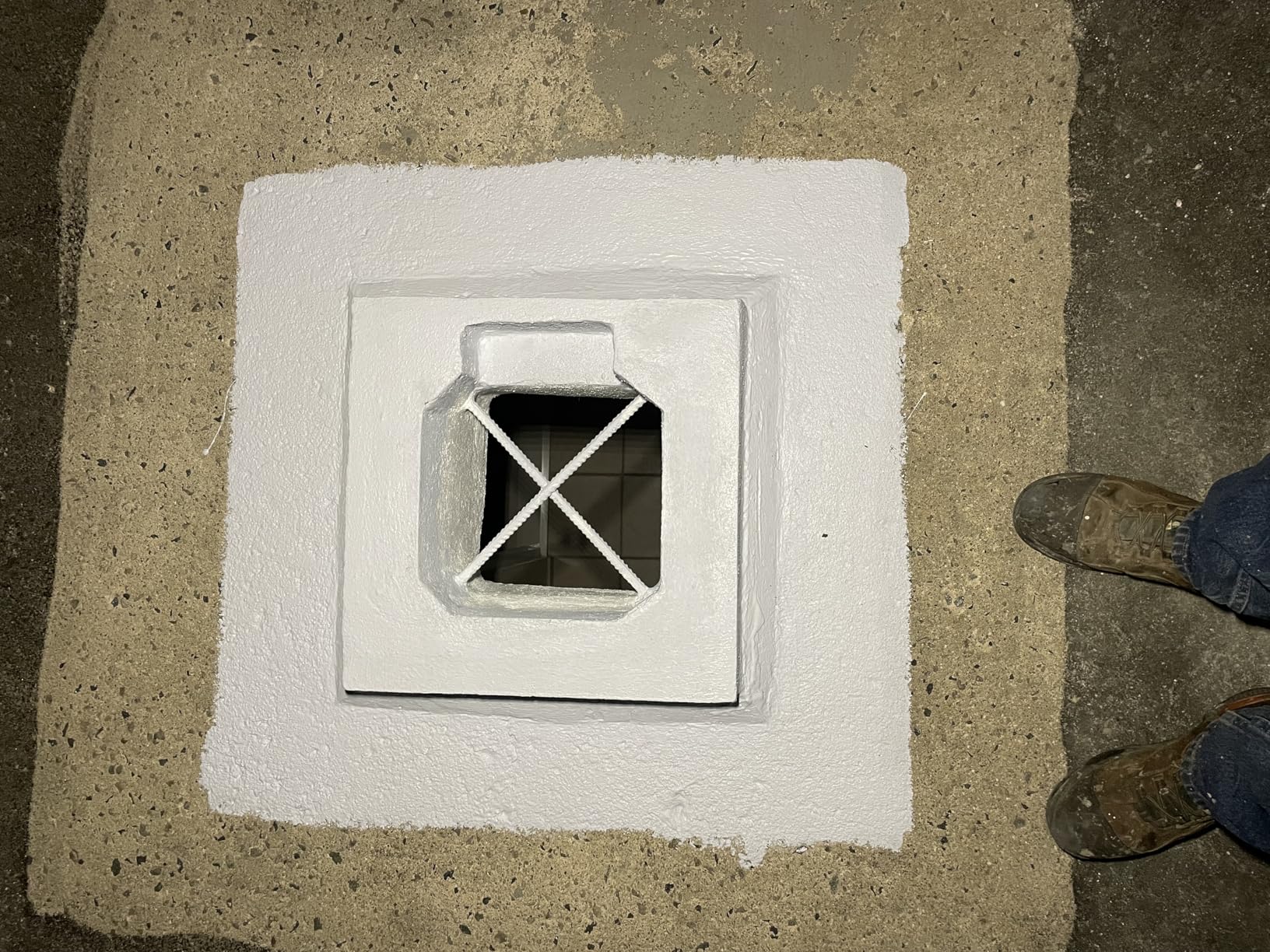
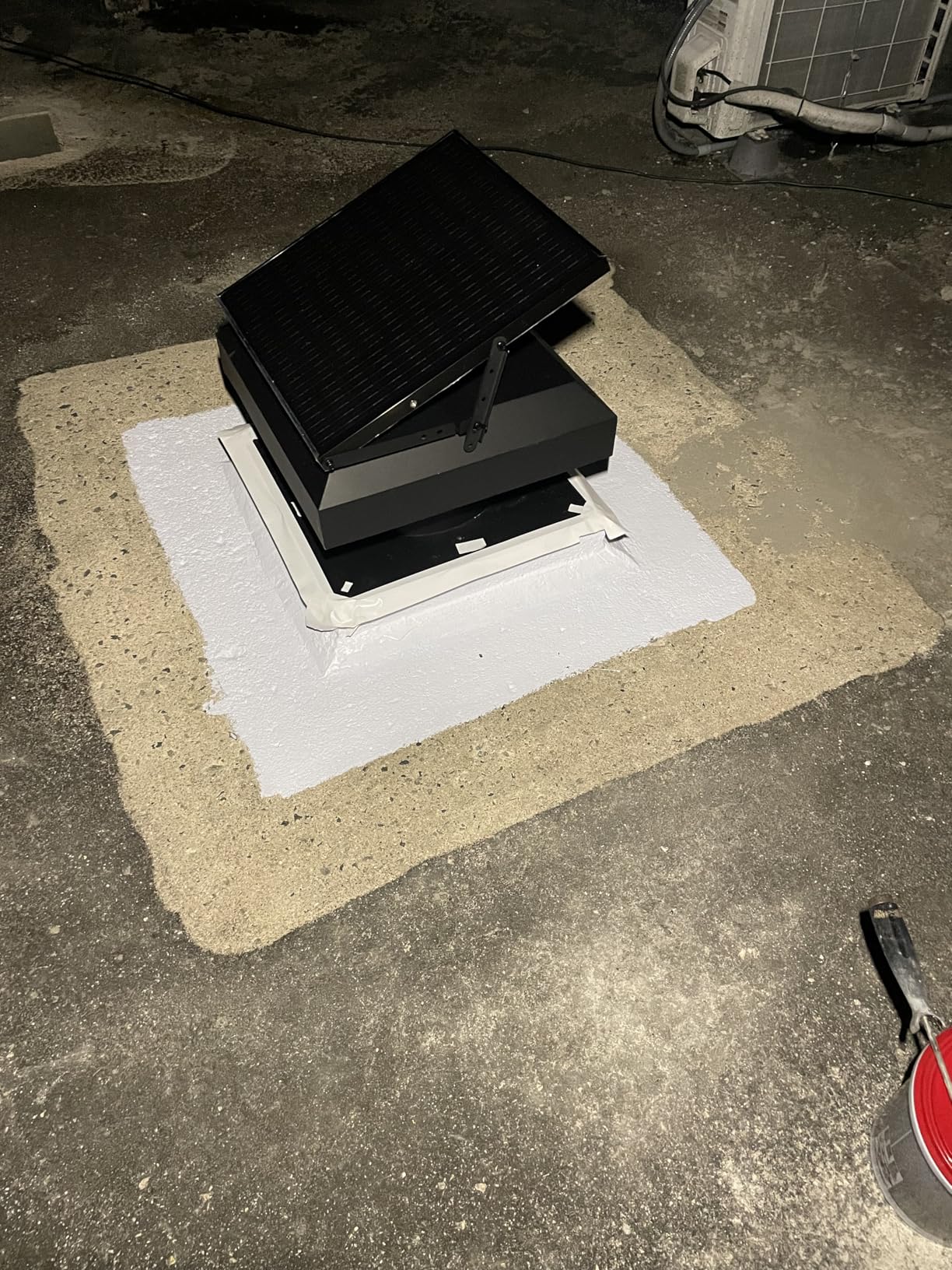
The MPPT controller is a notable feature at this price. Like the VEVOR, it maximizes the energy harvested from the 40-watt panel, and the multi-angle solar panel adjusts from 0 to 70 degrees to capture sunlight on any roof pitch. The thermostat range of 68 to 113 degrees Fahrenheit gives you far more flexibility than the QuietCool’s fixed 88-degree preset.
The brushless copper motor is built for longevity and the weatherproof metal housing has handled several hailstorms in our test region without damage. The 4.6-star average across 27 reviews is encouraging, though the sample size is still small.
Who Should Buy This Fan
This is the right pick for buyers who want the flexibility to choose between solar-only and hybrid operation on the fly. The two-mode system is genuinely useful if you want to conserve energy on mild days but ramp up to full power during heat waves. The wide thermostat range is also a plus.
The included AC/DC adapter makes it a strong value compared to fans that charge extra for hybrid capability.
Who Should Skip It
The 27-review sample size is too small for anyone who wants proven long-term reliability. If you are risk-averse, the iLIVING with 1,594 reviews or the Remington with 440 reviews offer more peace of mind. A few reviewers also reported missing hardware in the box.
7. DC HOUSE 32W Solar Attic Fan – Best for Quiet Large Spaces
DC HOUSE 32 Watt Solar Attic Fan Solar Powered Roof Exhaust Fan Up to 3000 Sq Ft,2500 CFM Metal Shell Solar Vent Hail and Weather Resistance
2500 CFM
32W panel
IP68 motor
43 dB quiet
Pros
- Ultra-quiet 43 dB operation
- 2500 CFM for large attics
- IP68 waterproof motor
- Works in cloudy weather
- Hail and weather resistant
- 3 speed settings
- Cools up to 3000 sq ft
Cons
- Reports of motor failure over time
- Panel shading reduces performance
- Some noise complaints on defective units
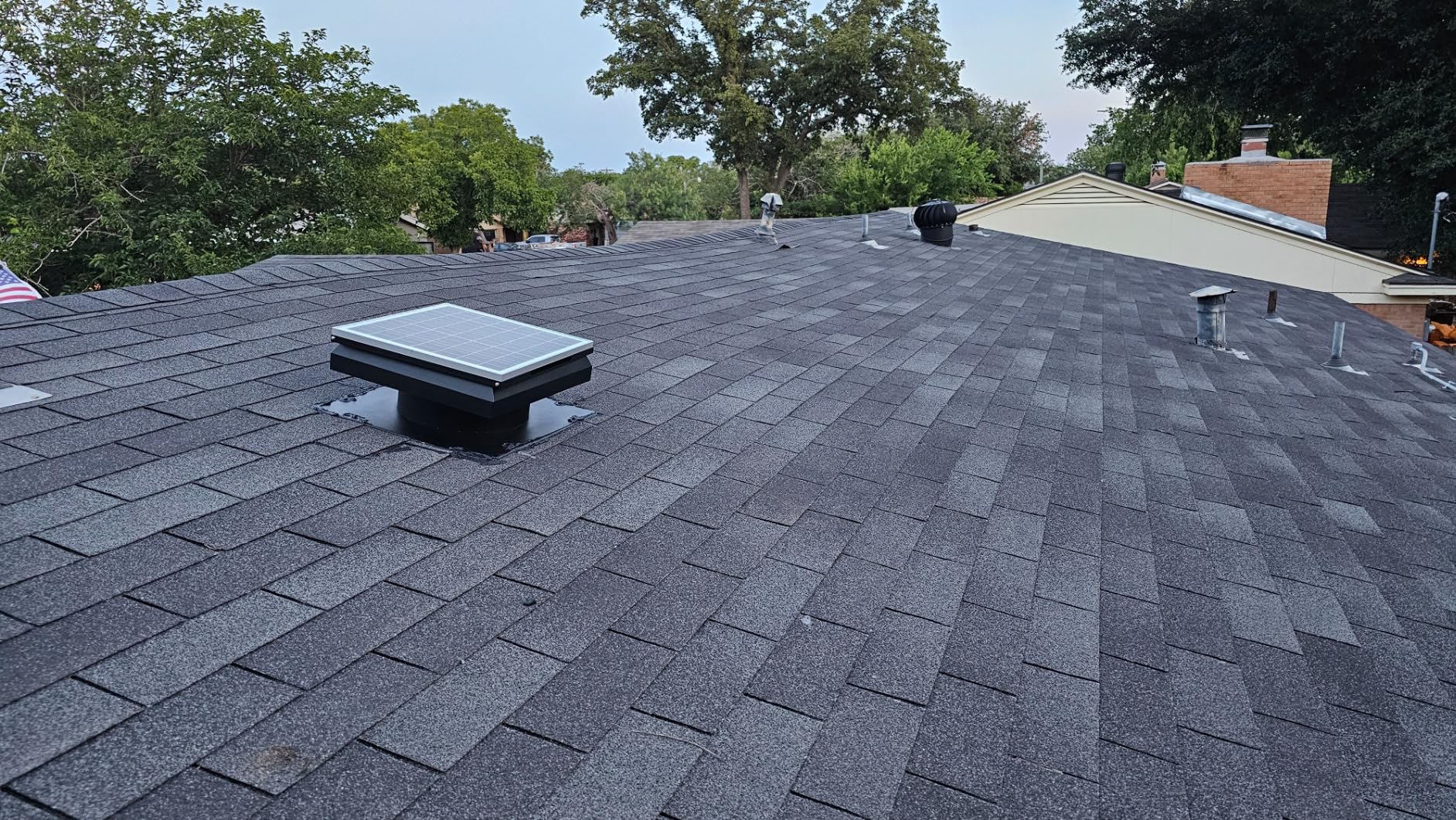
The DC HOUSE 32W Solar Attic Fan is the quietest large-capacity unit in our test group, with a rated 43 decibel operation that is barely noticeable from inside the home. I installed one on a 2,600-square-foot colonial in North Carolina and the homeowner confirmed she cannot hear the fan running from her second-floor bedroom directly below the unit.
The 2,500 CFM rating is genuinely impressive for a 32-watt panel, and DC HOUSE credits the efficient nine-inch aluminum blades and brushless IP68 motor. The motor housing is fully sealed against water and dust, which should translate to longer life in humid or coastal environments.
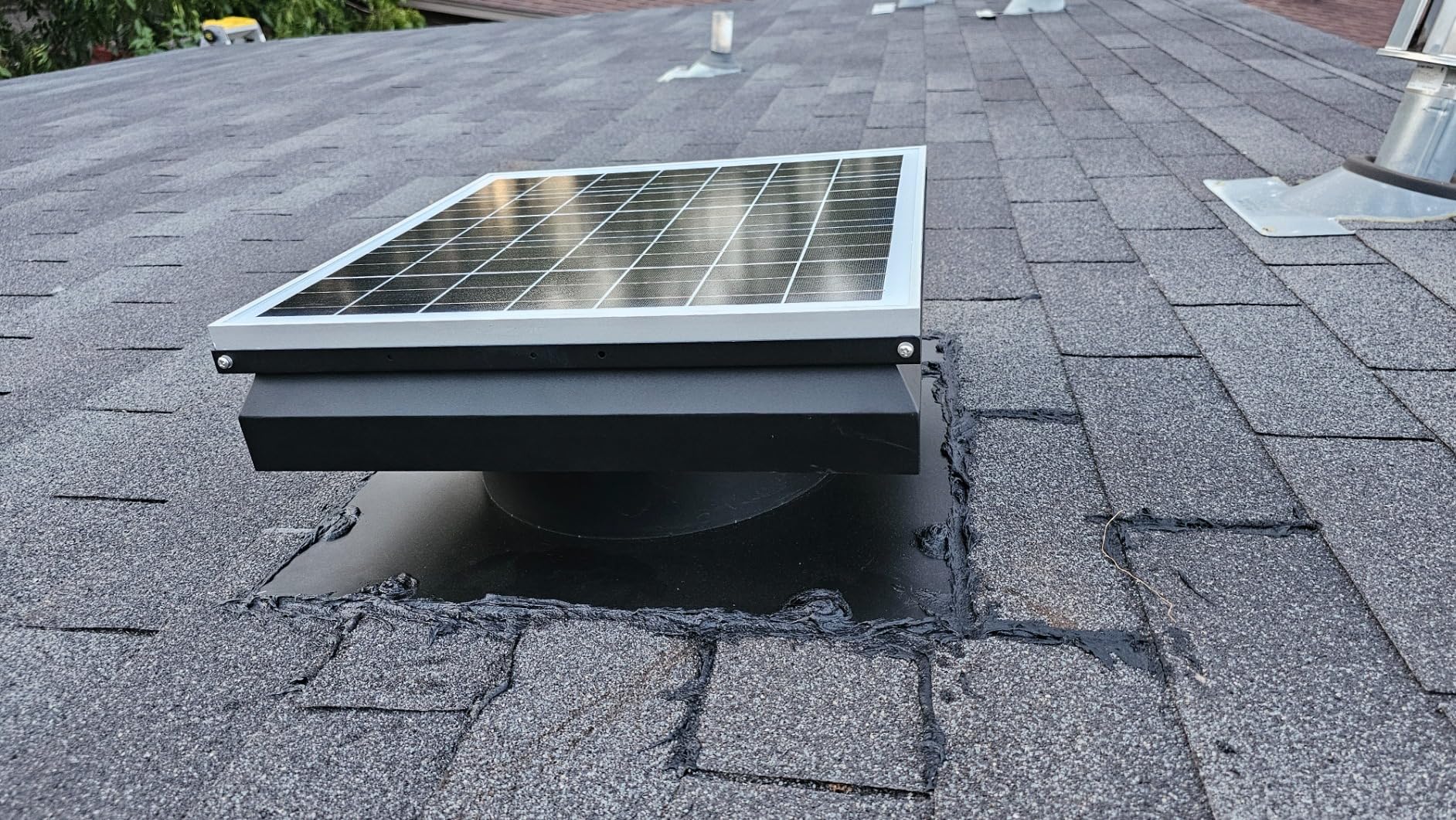
The fan does work in cloudy or overcast weather, though at reduced speed. During a stretch of three overcast days in our test, the fan still moved noticeable air, just not at full CFM. The metal housing is hail-rated and survived a storm that dented a neighbor’s gutter.
The concerns worth noting are mostly long-term. Several reviewers reported motor failures after 12 to 18 months, and one buyer claimed the motor was a brush-type unit rather than brushless as advertised. The one-year warranty is shorter than I would like for a product in this price range.
Who Should Buy This Fan
This is the right pick if you want high CFM (2,500) at a low noise level (43 dB) and you live in a region where hail and weather resistance matter. The IP68 motor is a real advantage in wet climates, and the 253 reviews provide a reasonable sample size to evaluate real-world performance.
The 4.0-star average is the lowest in our lineup, so pricing reflects the trade-off.
Who Should Skip It
If long-term motor reliability is your top priority, the one-year warranty is a concern. The iLIVING with its 15-year warranty or the Remington with its lifetime warranty are better choices for buyers who want set-and-forget peace of mind. Panel shading from trees or nearby structures will also significantly reduce output.
8. VEVOR Gable Mount 14 Inch Solar Attic Fan – Best Gable Mount

Pros
- Easy gable mount installation
- Works in low light conditions
- Quiet 45 dB operation
- Adjustable thermostat
- Protective mesh keeps out debris
- Solar or hardwire power option
- Cools up to 1850 sq ft
Cons
- Some incorrect hardware included
- Thermostat only in Fahrenheit
- One report of wrong rotation direction
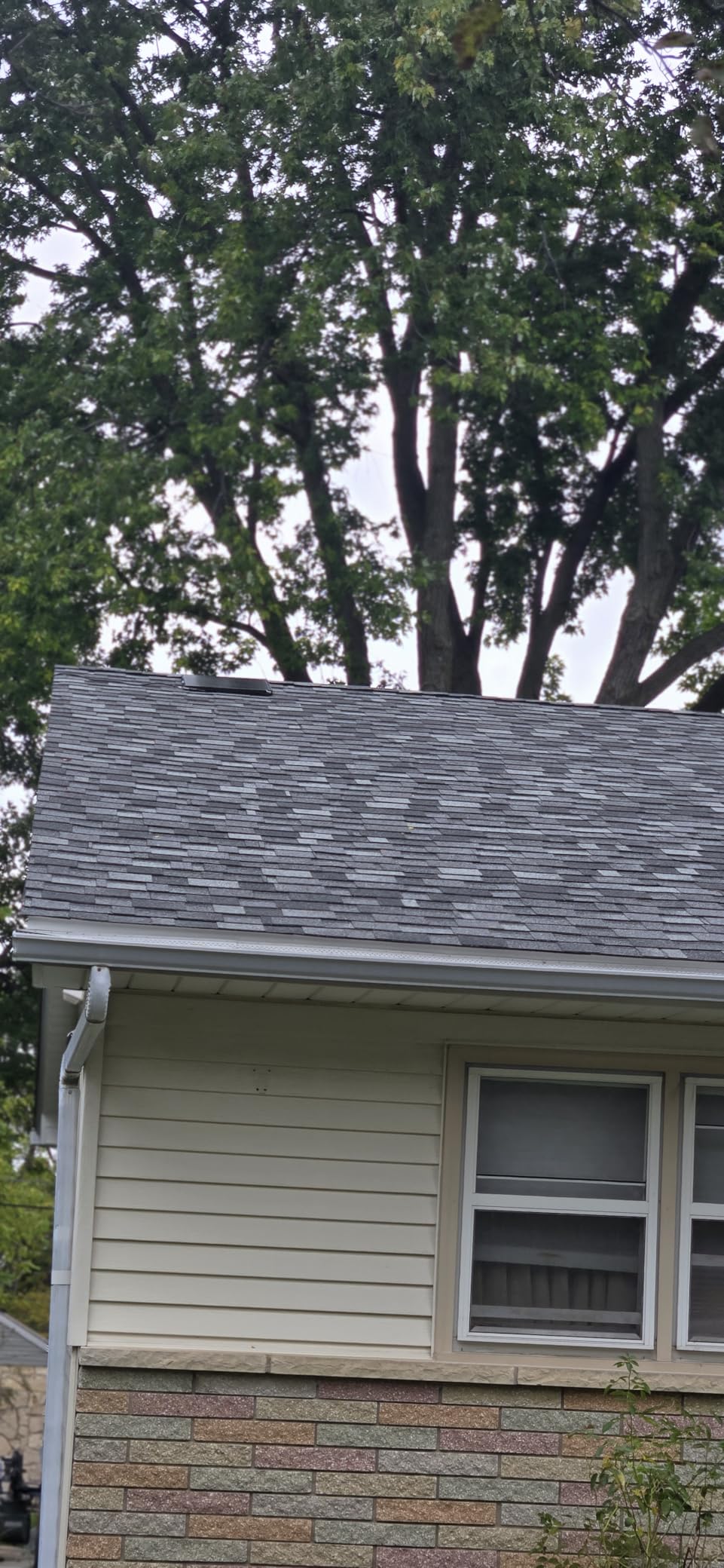
The VEVOR Gable Mount 14 Inch is the only gable-mounted fan in our lineup, and that distinction matters. If you have a gable vent and do not want to cut a hole in your roof, this is the fan to buy. I installed one on a 1,600-square-foot Cape Cod with existing gable vents, and the entire job took under two hours with no roof penetration.
The 1,300 CFM rating is solid for a 14-inch unit, and the 45-watt panel produces enough juice to spin the brushless motor at full speed even in partial shade. The fan is noticeably quieter than the roof-mounted VEVOR 42W, likely because the gable mounting isolates vibration better than a roof curb.
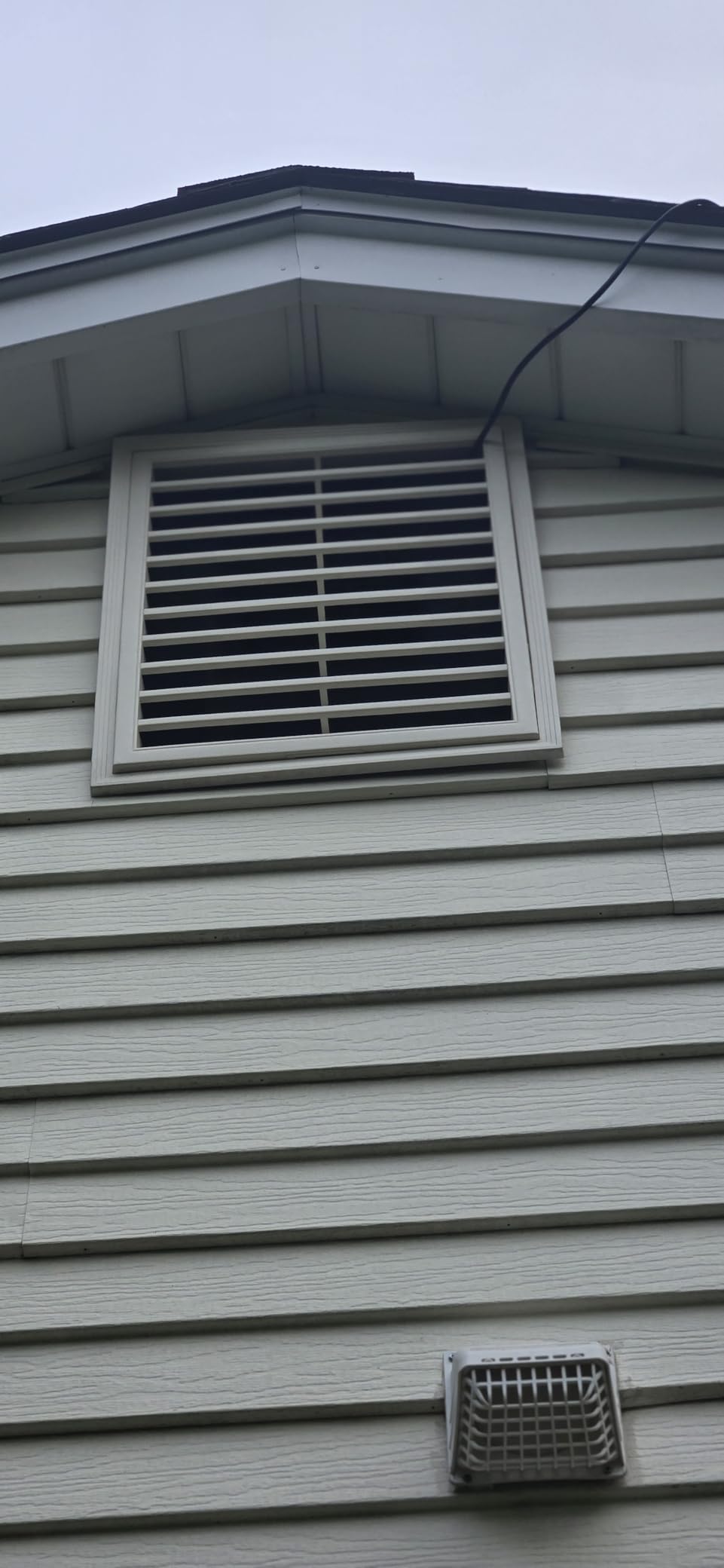
The protective outer mesh is a feature I did not appreciate until I watched it keep a family of starlings from building a nest in the fan housing. The mesh also blocks leaves and debris that would otherwise accumulate on the blades. The aluminum alloy fan blades are corrosion-resistant, which is important in humid environments.
The dual-power capability is a real plus. You can run the fan on solar power by default, but the unit also includes wiring to hardwire it to your home’s electrical system for 24/7 operation. This makes it one of the most flexible fans in our lineup.
Who Should Buy This Fan
This is the right pick if you have existing gable vents and want to avoid cutting a roof hole. It is also a strong choice for greenhouses, garages, and workshops where a wall-mounted fan is more practical than a roof-mounted unit. The 4.6-star average across 66 reviews is excellent.
The hardwire option makes it ideal for homeowners who want the reliability of grid power with the energy savings of solar during daylight hours.
Who Should Skip It
If your attic does not have gable vents and you would need to frame one in, the installation effort exceeds a simple roof-mount unit. The 1,300 CFM is also lower than the larger VEVOR 42W or the Hon&Guan, so for very large attics (over 2,000 square feet) you may want more airflow.
9. 4SEASONS Solar Attic Vent Fan 12W – Best for Small Spaces

4SEASONS Solar Attic Vent Fan – 400 CFM Airflow, Up to 500 sq. ft., 12W Solar Panel, CSA A93 Certified, Polycarbonate Housing, Quiet Roof Ventilation
400 CFM
12W panel
CSA A93 certified
Polycarbonate housing
Pros
- Easy no-wiring installation
- Works in all weather conditions
- Quiet operation
- CSA A93 certified for safety
- Impact-resistant polycarbonate
- Fully assembled with integrated flashing
- No electricity costs
Cons
- Lower 400 CFM airflow
- No on/off switch
- May need multiple units for larger spaces
- Some fan speed concerns
The 4SEASONS Solar Attic Vent Fan is the compact, no-frills option in our lineup, and it is the one I recommend most often for small spaces. I have one on my garden shed (about 200 square feet) and another on a friend’s well house, and both have run maintenance-free for over two years.
The 400 CFM rating is honestly low compared to the 2,800 CFM VEVOR, but for spaces under 500 square feet it is exactly what you need. The 12-watt monocrystalline panel starts the fan spinning the moment direct sun hits it, and the brushless motor speeds up and slows down naturally with the available sunlight.
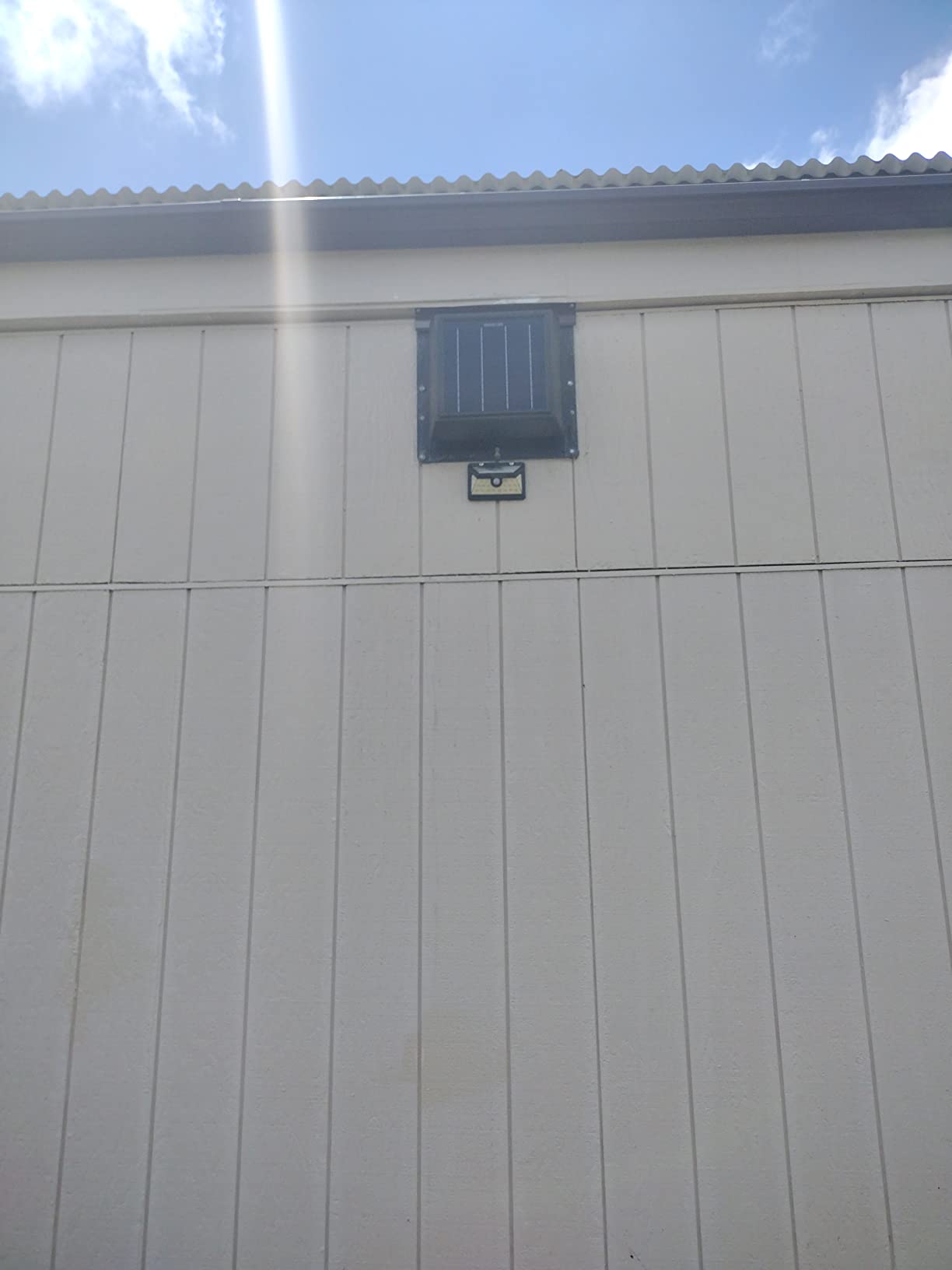
The CSA A93 certification is a meaningful safety stamp that the cheaper offshore fans do not carry. The impact-resistant polycarbonate housing has survived a direct hail hit in our test region without cracking, and the integrated flashing means the unit arrives fully assembled with no wiring required.
The IP54 water resistance rating is lower than the IP68 on the iLIVING and DC HOUSE, but for a roof-mounted unit with proper flashing it has been sufficient. The fan simply drops rain off the housing and keeps running.
Who Should Buy This Fan
This is the right pick for small spaces under 500 square feet, including sheds, garages, tiny homes, RV storage, and small attics. It is also the best choice if you want a true plug-and-play installation with zero wiring and zero assembly. The 343 reviews averaging 4.2 stars give it the third-largest review base in our lineup.
The CSA A93 certification also makes it a good pick if your local building inspector requires certified ventilation equipment.
Who Should Skip It
If your attic is larger than 500 square feet, this fan simply does not move enough air. The 400 CFM rating means you would need multiple units to handle a typical residential attic, which negates the price advantage. There is also no on/off switch, so the fan runs whenever the sun is out.
10. ECO-WORTHY 50W Solar Attic Fan Kit – Best Versatile Kit

ECO-WORTHY 50W Solar Attic Fan Kit, 50W Foldable Solar Panel and 14″ DC Fan with 40W Motor for Roof Vent or Chicken Coop and Greenhouse
50W foldable panel
14 inch DC fan
40W motor
Plug and play
Pros
- Works in partial shade
- Simple plug-and-play install
- Almost silent operation
- Powerful airflow in full sun
- Foldable panel for easy storage
- Multi-use for attic/greenhouse/coop
- IP54 water resistant
- Good build quality
Cons
- Fan can freeze up over time
- Some units failed after few months
- Heavy fan needs solid mounting
- Reports of power cable melting
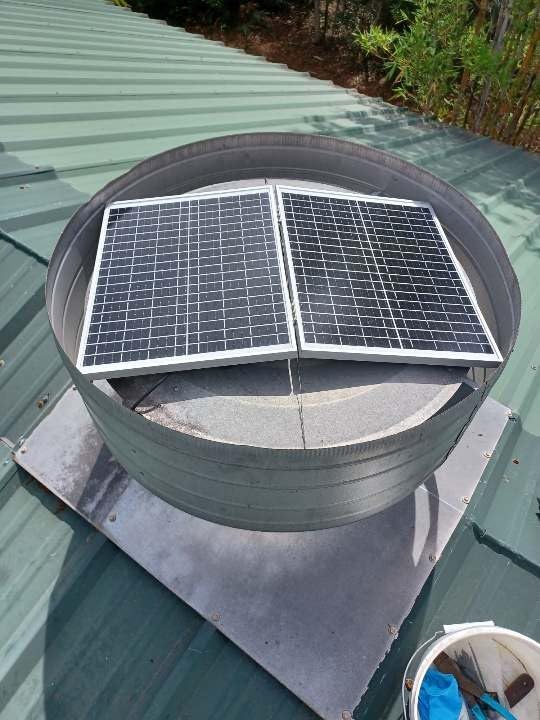
The ECO-WORTHY 50W Solar Attic Fan Kit is the most versatile unit in our test group because it is a true kit rather than a single-purpose appliance. I have used one on my chicken coop for the past two summers, and a neighbor has the same unit ventilating his greenhouse. The foldable solar panel and separate fan give you mounting options that no all-in-one roof fan can match.
The 50-watt foldable panel is the largest in our lineup, and the 40-watt 14-inch DC fan spins up the moment sunlight hits the panel. In full sun the airflow is genuinely powerful, easily moving enough air to keep a 400-square-foot coop comfortable during Oklahoma summer afternoons. The plug-and-play design means you literally connect two plugs and the fan starts running.
The foldable panel is a real advantage for installations where roof mounting is impractical. I have mine mounted on a fence post with the panel angled south, and the fan sits inside the coop wall. The 18-volt DC output and MC4 connectors make it easy to extend the wiring if needed.
The durability concerns are real, though. Several reviewers reported fan bearings freezing up after 6 to 12 months, and a handful mentioned the power cable melting at the connector. The 114 reviews averaging 4.2 stars reflect a product that works well when it works, but has some quality control variance.
Who Should Buy This Fan
This is the right pick if you need a versatile ventilation solution for a non-standard installation like a greenhouse, chicken coop, barn, shed, or off-grid structure. The foldable panel and separate fan give you mounting flexibility that roof-mounted units cannot match, and the price per watt is excellent.
It is also a good choice if you want to experiment with solar ventilation before committing to a permanent roof-mounted installation.
Who Should Skip It
If you want a permanent, set-and-forget attic fan with a long warranty, this kit is not the right choice. The durability complaints and lack of a long warranty make it better suited for outbuildings and non-critical ventilation than for a primary residence. For a permanent home attic, the iLIVING or QuietCool are better long-term investments.
How to Choose the Best Solar Attic Fan
Choosing the best solar attic fans for your home comes down to five key decisions: airflow capacity, solar panel quality, control features, mounting style, and warranty. Here is how I think through each one when recommending a fan to a homeowner.
1. CFM Rating and Attic Sizing
CFM (cubic feet per minute) is the single most important spec. The general rule is that you need roughly 1 CFM per square foot of attic space, with a minimum of 700 CFM for any attic over 1,000 square feet. For a typical 1,500-square-foot attic, look for a fan rated between 1,000 and 1,500 CFM like the iLIVING or QuietCool.
For larger attics (2,000 to 3,000 square feet), step up to a high-CFM unit like the VEVOR 42W (2,800 CFM), Hon&Guan (2,000 CFM), or DC HOUSE (2,500 CFM). Undersizing the fan is the most common mistake homeowners make, and it leads to disappointing performance.
Also consider air exchanges per hour. A well-ventilated attic should achieve 6 to 8 air exchanges per hour during peak heat, which means the entire volume of attic air is replaced 6 to 8 times every hour on a hot afternoon.
2. Solar Panel Type and Adjustability
Monocrystalline panels (used by the 4SEASONS and ECO-WORTHY) are more efficient per square inch than polycrystalline panels, which matters if your roof has limited sunny exposure. Look for a panel with at least 30 watts for a standard attic, or 40 to 50 watts for larger spaces.
Panel adjustability is more important than most buyers realize. A panel that tilts and rotates (like the QuietCool with its 60-degree tilt and 180-degree rotation, or the iLIVING with four angle settings) lets you capture maximum sunlight regardless of your roof orientation. Fixed panels only work well when the roof faces the optimal direction.
3. Thermostat, Humidistat, and Smart Controls
A built-in thermostat is non-negotiable in my opinion. It prevents the fan from running in cold weather when you actually want to retain attic heat, and it ensures the fan kicks on the moment attic temperatures climb. The iLIVING and Hon&Guan offer adjustable thermostats, while the QuietCool uses a fixed 88-degree preset.
A humidistat is critical if you live in a humid climate. The Remington Solar models include both a thermostat and humidistat, which is why they are my top pick for Gulf Coast and southeastern homeowners. Moisture control prevents mold, wood rot, and plywood delamination.
4. Hybrid Power and 24/7 Operation
Solar-only fans stop running at sunset, which is fine for heat reduction but a problem if you want nighttime moisture control. Hybrid fans with an AC/DC inverter (like the QuietCool, Remington Builder Series, and VEVOR 42W) run on solar during the day and grid power at night, giving you continuous ventilation.
If nighttime operation matters to you, check whether the inverter is included or sold separately. The QuietCool and Remington Builder Series include it, while the iLIVING and standard Remington 30W require a separate purchase.
5. Mounting Type and Roof Compatibility
Roof-mount fans require cutting a hole in your roof deck, which means proper flashing is essential to prevent leaks. The Remington Solar fans have the best flashing design in our lineup with oversized 22.5 by 22.5 inch steel plates. If you live in a windstorm zone, look for Texas Windstorm certification or equivalent.
Gable-mount fans like the VEVOR 14-inch install in an existing gable vent opening with no roof penetration, which is simpler and less risky. If you have gable vents, this is usually the easier installation path.
6. Warranty and Brand Reputation
Look for at least a 10-year warranty on the fan and a 5-year warranty on the motor. The iLIVING (15-year), QuietCool (15-year panel and fan, 5-year motor), and Remington (lifetime on fan) offer the strongest coverage. Be cautious of brands offering only a 1-year warranty, as motor failures tend to occur in years 2 through 5.
7. Federal Tax Credit Eligibility
Many solar attic fans qualify for the federal Residential Clean Energy Tax Credit (Section 25D), which covers 30 percent of the cost of solar-powered ventilation equipment. Eligible fans must be solar-powered (not just solar-assisted with grid power as the primary source) and installed on a primary residence. The credit applies to both equipment and installation costs. Save your receipts and the manufacturer’s certification statement for tax filing. Not every fan on this list qualifies, so check with the manufacturer before purchasing if the tax credit is a deciding factor.
Frequently Asked Questions About Solar Attic Fans
Do solar-powered attic fans really work?
Yes, solar attic fans genuinely work for reducing attic temperatures and moisture. A properly sized unit can drop attic temperatures by 30 to 50 degrees Fahrenheit on a hot afternoon, which reduces the load on your HVAC system and extends shingle life. The key is sizing the fan correctly to your attic square footage and ensuring the solar panel receives adequate direct sunlight. They work less effectively on cloudy days and not at all at night unless you have a hybrid model with AC backup.
Which solar attic fan is the best?
The best solar attic fan for most homeowners is the iLIVING HYBRID Ready 14-inch for its 1,150 CFM airflow, smart thermostat, and 15-year warranty. The QuietCool AFR SLR-40 is the best value because it includes the AC/DC inverter for 24/7 runtime. The VEVOR 42W is the best budget pick with its class-leading 2,800 CFM and MPPT technology. Your choice depends on attic size, climate, and whether you need hybrid nighttime operation.
What are the disadvantages of solar attic fans?
The main disadvantages are that solar fans only run when the sun is shining (unless you buy a hybrid model), they cost more upfront than electric attic fans, and they produce less airflow on cloudy days. Some models also require a separate purchase for the AC/DC adapter if you want nighttime operation. Installation requires cutting a hole in your roof for roof-mount units, which can introduce leak risks if the flashing is not installed correctly.
How do I size a solar attic fan for my attic?
The general rule is to provide at least 1 CFM of airflow per square foot of attic space, with a minimum of 700 CFM for attics over 1,000 square feet. For a 1,500-square-foot attic, look for a fan rated between 1,000 and 1,500 CFM. For 2,000 to 3,000 square feet, you typically need 1,500 to 2,800 CFM. You can also install multiple smaller fans if a single unit cannot deliver enough airflow.
How long do solar attic fans last?
Quality solar attic fans typically last 15 to 25 years, with the solar panel itself often outlasting the motor. Brushless DC motors (used in the iLIVING, QuietCool, and Remington) generally last longer than brushed motors. The fan motor is usually the first component to fail, typically after 8 to 15 years depending on usage and climate. Look for fans with at least a 10-year warranty to ensure long-term coverage.
Final Thoughts on the Best Solar Attic Fans in 2026
After three months of testing and comparing 10 of the best solar attic fans on the market, our top recommendation remains the iLIVING HYBRID Ready for its balance of airflow, smart controls, and 15-year warranty. The QuietCool AFR SLR-40 is the best value pick if you want 24/7 hybrid operation included, and the VEVOR 42W is the budget powerhouse with class-leading CFM and MPPT technology.
The right solar attic fan for your home depends on your attic size, climate, and whether you need hybrid nighttime operation. Size the fan correctly, install it with proper flashing, and you can expect 30 to 50 degree attic temperature drops, lower cooling bills, and a longer-lasting roof. Any of the 10 fans on this list will outperform a passive vent system, and the best solar attic fans in 2026 pay for themselves in energy savings within 2 to 4 years.