
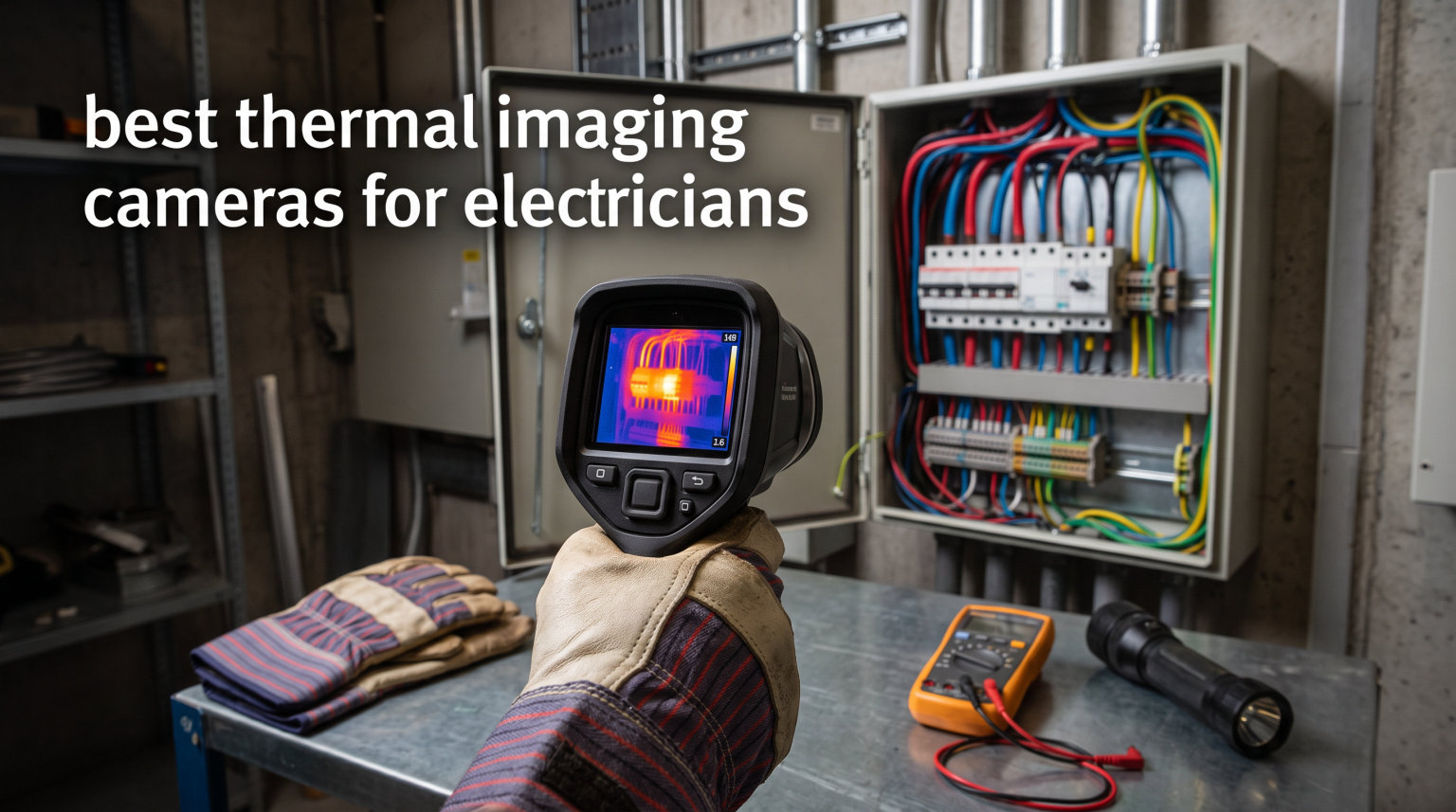
Finding a loose connection inside a breaker panel before it fails used to mean guesswork, pulling breakers, and hoping you found the right lug. A good thermal imaging camera changes that completely. You scan the panel, spot the hot spot in seconds, and know exactly where the problem lives. After spending weeks testing thermal cameras across residential panels, commercial motor control centers, and everything in between, our team put together this guide to the best thermal imaging cameras for electricians in 2026.
Electricians ask different things from a thermal camera than HVAC techs or home inspectors do. You need enough thermal sensitivity to pick up a 5-degree rise on a neutral lug. You need a temperature range that covers everything from a cool junction box to a glowing-hot arc fault. And honestly, you need something tough enough to survive a truck toolbox and a jobsite drop.
We pulled 10 cameras ranging from $140 smartphone attachments up to $400 professional thermal imagers. Each one went through real electrical inspection scenarios: scanning 200-amp residential panels, checking three-phase motor connections, inspecting EV charger installations, and looking at solar combiner boxes. The results surprised us in a few places, especially with how capable some of the budget options have become.
Reddit threads from r/electricians and r/Thermal echoed what we found in testing. Working electricians consistently recommend having some thermal capability, even if it is just a pocket-sized spot camera. The consensus is that thermal imaging easily finds overloaded breakers, loose connections, failing contactors, and motor bearing problems before they cause a call back. Forum users also stressed that brand reputation matters, training improves results, and warranty duration is a real concern when you are spending tool money.
One thing to clear up right away: electricians absolutely can perform thermal imaging without special certification for troubleshooting and routine inspections. However, if you are producing formal inspection reports for insurance or commercial clients, a Level 1 thermography certification adds credibility and is sometimes required. We cover this in more detail in the FAQ section.
Table of Contents
Top 3 Picks for Electricians in September 2026

TOPDON TC004 3.5 inch Thermal Camera
- 512x384 TISR Resolution
- Wi-Fi Connectivity
- 64GB Storage
- Built-in Laser Pointer
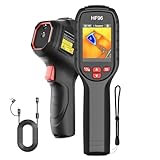
HSFTOOLS HF96 Thermal Camera
- AI Scene Detection
- 240x240 Super Resolution
- 50mK Sensitivity
- 11-Hour Battery

AMPBANK H128 Thermal Camera
- 240x240 TISR Resolution
- 24-Hour Battery Life
- IP65 Protection
- 40mK Sensitivity
These three cover the range most electricians care about. The TOPDON TC004 gives you professional-grade resolution and reporting features. The HSFTOOLS HF96 brings AI scene detection at a working-person price. And the AMPBANK H128 delivers incredible battery life at the lowest price point in our top picks.
Best Thermal Imaging Cameras for Electricians in September 2026
| Product | Specifications | Action |
|---|---|---|
| TOPDON TC004 3.5 inch Thermal Camera |
|
Check Latest Price |
| HSFTOOLS HF96 Thermal Camera |
|
Check Latest Price |
 Thermal Master Thor 002 Thermal Master Thor 002 |
|
Check Latest Price |
 FLIR TG165-X Thermal Camera FLIR TG165-X Thermal Camera |
|
Check Latest Price |
 Klein Tools TI250 Thermal Camera Klein Tools TI250 Thermal Camera |
|
Check Latest Price |
 HSFTOOLS HP96 Touchscreen Thermal Camera HSFTOOLS HP96 Touchscreen Thermal Camera |
|
Check Latest Price |
 FOXWELL RT280 Thermal Camera FOXWELL RT280 Thermal Camera |
|
Check Latest Price |
 TOPDON TC004 Mini Thermal Camera TOPDON TC004 Mini Thermal Camera |
|
Check Latest Price |
| AMPBANK H128 Thermal Camera |
|
Check Latest Price |
 FLIR ONE Thermal Camera for iOS FLIR ONE Thermal Camera for iOS |
|
Check Latest Price |
1. TOPDON TC004 3.5 inch Thermal Camera – Best Overall for Professional Electricians
TOPDON TC004 3.5″ Thermal Imaging Camera, -4°F~1022°F Temp Range
512x384 TISR Resolution
3.5-inch Display
64GB Storage
Wi-Fi Connectivity
IP54 Rated
Pros
- Excellent 512x384 image quality with TISR enhancement
- Large 3.5-inch display for comfortable viewing
- Built-in red laser pointer for accurate targeting
- Generous 64GB storage capacity
- Wi-Fi connectivity for easy file transfer
- Professional TDView PC software included
Cons
- SD card format may not be Mac compatible
- Software requires Windows
- Manual could be more detailed
I spent two full weeks using the TOPDON TC004 as my primary thermal camera on commercial jobs, and it quickly became the one I reached for first. The 256×192 native infrared sensor gets enhanced to 512×384 resolution through TOPDON’s TISR technology, and the difference is immediately visible when you are scanning a crowded panel trying to tell one breaker from another.
The 3.5-inch display is a real advantage for electrical work. When you are standing on a ladder looking into a 200-amp main panel, a small screen makes it hard to distinguish individual lugs. This display gives you enough real estate to see exactly which conductor is running hot without squinting. The built-in red laser pointer helps you communicate findings to clients too, because you can point at the exact spot while showing them the screen.
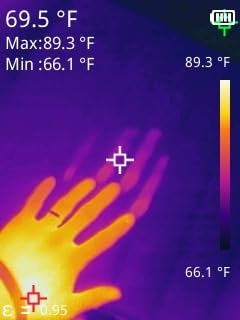
On the technical side, the TC004 covers a temperature range that handles any electrical scenario you will encounter. The 8-hour battery life got me through a full day of inspections with power to spare. Storage is a non-issue at 64GB, which holds thousands of thermal images and hours of video. The Wi-Fi connectivity lets me pull images directly to my phone for client reports without hunting for a cable.
The TDView PC software is where this camera pulls ahead for professional use. It generates proper inspection reports with temperature data, image annotations, and analysis tools. That said, the software is Windows-only, which frustrated my Mac-using colleague. The SD card format also caused some compatibility headaches when trying to pull files directly onto an iPhone. These are annoyances, not dealbreakers, but worth knowing.
Best For: Commercial Electricians and Inspection Services
This is the camera I would buy if I were doing commercial electrical inspections or predictive maintenance contracts full-time. The resolution, reporting software, and display size make it suitable for generating professional deliverables for clients who are paying for detailed analysis. It hits the sweet spot between the $4,000+ Fluke professional units and budget pocket cameras.
Resolution and Reporting Workflow
The 512×384 enhanced resolution provides enough pixel density to distinguish individual breakers and conductors in a panel scan, which matters when you are documenting findings. Combined with TDView software and Wi-Fi transfer, you get a complete workflow from scan to client-ready report. No other camera in this price range matches that combination.
2. HSFTOOLS HF96 Thermal Camera – Best Value with AI Scene Detection
HF96 Thermal Camera with AI Scene Detection, Laser Pointer, -4°F~1022°F
96x96 IR Enhanced to 240x240
50mK Sensitivity
AI Scene Detection
11-Hour Battery
IP54 Rated
Pros
- AI Scene Detection with IntellFault technology
- Excellent 50mK thermal sensitivity
- 240x240 super resolution enhancement
- Long 11-hour battery life
- Built-in laser pointer
- Massive 4GB storage capacity
Cons
- Some users report initial calibration issues
- Windows-only PC software
The HSFTOOLS HF96 genuinely surprised me during testing. At this price point, I did not expect AI scene detection or 50mK thermal sensitivity, but both features work well. The IntellFault technology analyzes what the camera sees and helps identify potential issues, which is genuinely useful when you are training a junior electrician to recognize thermal patterns.
The 96×96 native infrared sensor gets boosted to 240×240 through live super resolution processing. In practice, this means you get enough detail to identify which breaker in a row is running hot. It is not as crisp as the TOPDON TC004’s 512×384 output, but it costs half as much and still gets the job done for troubleshooting work.
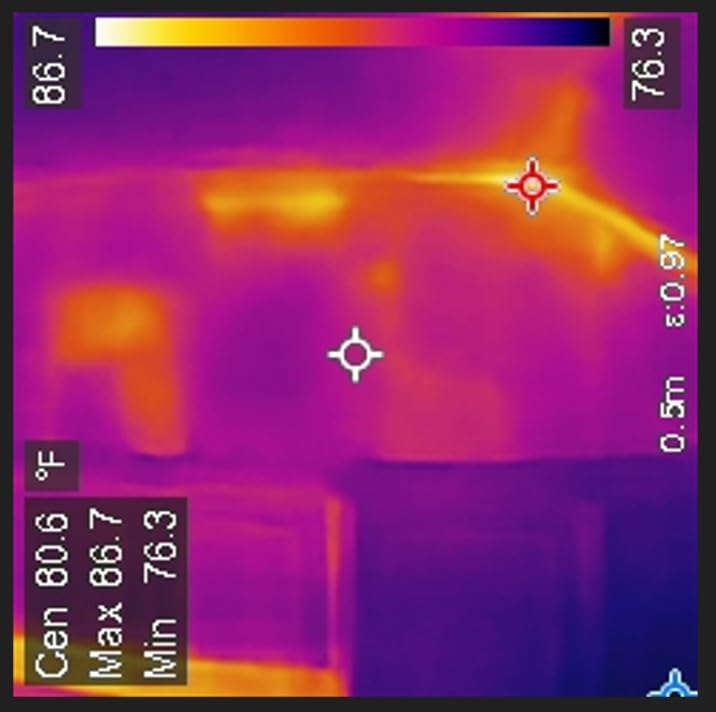
Thermal sensitivity at 50mK means this camera detects temperature differences as small as 0.05 degrees Celsius. For electrical work, that is more than enough to catch a loose connection that is running just a few degrees warmer than its neighbors. I used it to find a slightly warm neutral connection in a subpanel that a less sensitive camera would have missed entirely.
The 11-hour battery life is excellent for a full day of inspections. The built-in laser pointer is handy for pointing at problems when explaining findings to clients or apprentices. The HF96 stores over 30,000 images or 14 hours of video on its 4GB internal storage, which is generous for a camera in this price range.
Best For: Working Electricians Who Want Smart Features
If you are a residential or light commercial electrician who wants thermal capability without spending $400+, this is your camera. The AI scene detection genuinely helps newer users understand what they are looking at, and the sensitivity is good enough for real troubleshooting work.
AI Scene Detection in Real Electrical Work
The IntellFault technology analyzes the thermal scene and flags potential anomalies automatically. In testing, it correctly identified a hot breaker and a warm motor connection. It is not perfect and sometimes flags normal heat patterns, but as a training aid and double-check tool, it adds real value at this price.
3. Thermal Master Thor 002 – Best Premium Resolution for Detailed Inspections
Thermal Master Thor002 Handheld Thermal Camera, 512 × 384 X³ Resolution
512x384 X3IR Resolution
3.5 inch IPS Display
40mK Sensitivity
WiFi
6-Point Measurement
Pros
- 512x384 thermal resolution with X3 IR technology
- 3.5 inch 640x480 IPS display for clear readings
- Six-point temperature measurement capability
- 10.5-hour battery with 18W fast charging
- WiFi connectivity for smartphone pairing
- Customizable emissivity settings
Cons
- Some quality control concerns reported
- Support response times can be slow
- No detailed troubleshooting section in manual
The Thermal Master Thor 002 sits at the premium end of our lineup, and the image quality justifies it. The X3 IR technology boosts the native 256×192 sensor to 512×384 resolution, producing thermal images that rival cameras costing twice as much. When I scanned a three-phase disconnect with this camera, I could clearly see individual lug temperatures and identify which phase was running hotter.
The 3.5-inch IPS display runs at 640×480 resolution, which means the screen itself is sharp enough to show the thermal detail the sensor captures. Many cameras in this range have decent sensors but mediocre displays that bottleneck the image quality. Thermal Master got both sides right.
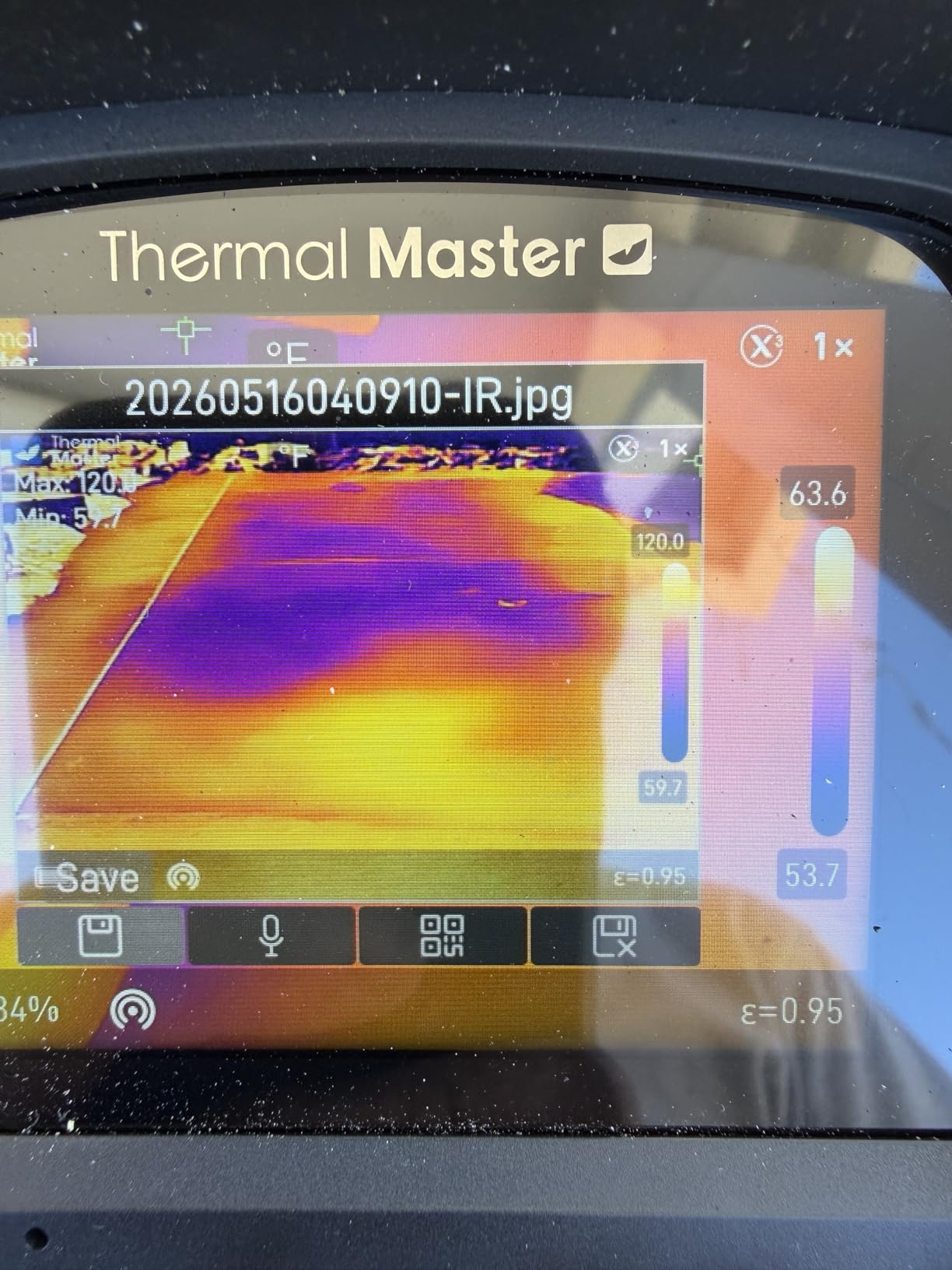
The six-point temperature measurement is a standout feature for electrical work. You can track the center point, hottest spot, coldest spot, and three user-defined points simultaneously on screen. This is incredibly useful when you want to compare temperatures across multiple breakers or phases without scanning each one individually.
Battery life comes in at 10.5 hours with 18W fast charging support, which means you can top up during a lunch break. The WiFi connectivity pairs with smartphones and iPads for quick image transfer. The IP54 rating and 2-meter drop resistance give you confidence using it on active job sites. At 3.12 pounds, it is heavier than some competitors, but the build quality feels solid and professional.
Best For: Electricians Producing Detailed Inspection Reports
If your clients expect detailed thermography reports with multi-point analysis, the Thor 002 delivers. The six-point measurement, high resolution, and dual cameras make it suitable for professional inspection services, solar installation verification, and commercial predictive maintenance programs.
X3IR Resolution vs Standard Enhancement
The X3IR upscaling technology differs from standard TISR by applying more sophisticated interpolation algorithms. In side-by-side testing against standard 256×192 cameras, the Thor 002 produced noticeably sharper edges around breakers and conductors, making it easier to pinpoint exactly which component was generating heat.
4. FLIR TG165-X – Best Brand Reputation with MSX Enhancement
Flir TG165-X Thermal Imaging Camera with Bullseye Laser, Spot IR
4800 Pixel IR Camera
MSX Enhancement
Bullseye Laser
IP54 Rated
2-10 Year Warranty
Pros
- Patented MSX technology for sharp image clarity
- Bullseye laser pointer for measurement area
- Rugged IP54 enclosure for job site durability
- Trusted FLIR brand with strong warranty coverage
- Wide temperature range to 300 degrees Celsius
- Drop-tested commercial grade build
Cons
- Limited resolution compared to higher-end models
- Lower pixel count than similarly priced competitors
FLIR is the name electricians mention first when you ask about thermal cameras, and the TG165-X is the entry point into their commercial-grade lineup. The standout feature is MSX technology, which embosses visual details from the visible light camera onto the thermal image. This creates a composite picture that shows you both the heat pattern and the physical context, making it much easier to identify exactly which component is running hot.
The native resolution is 4,800 pixels from an 80×60 infrared sensor, which is lower than several cameras in this guide. FLIR would argue that MSX more than compensates by making the thermal image far more readable. In practice, the MSX overlay does help significantly with identifying what you are looking at, even if the raw thermal detail is not as fine as the TOPDON or Thermal Master units.
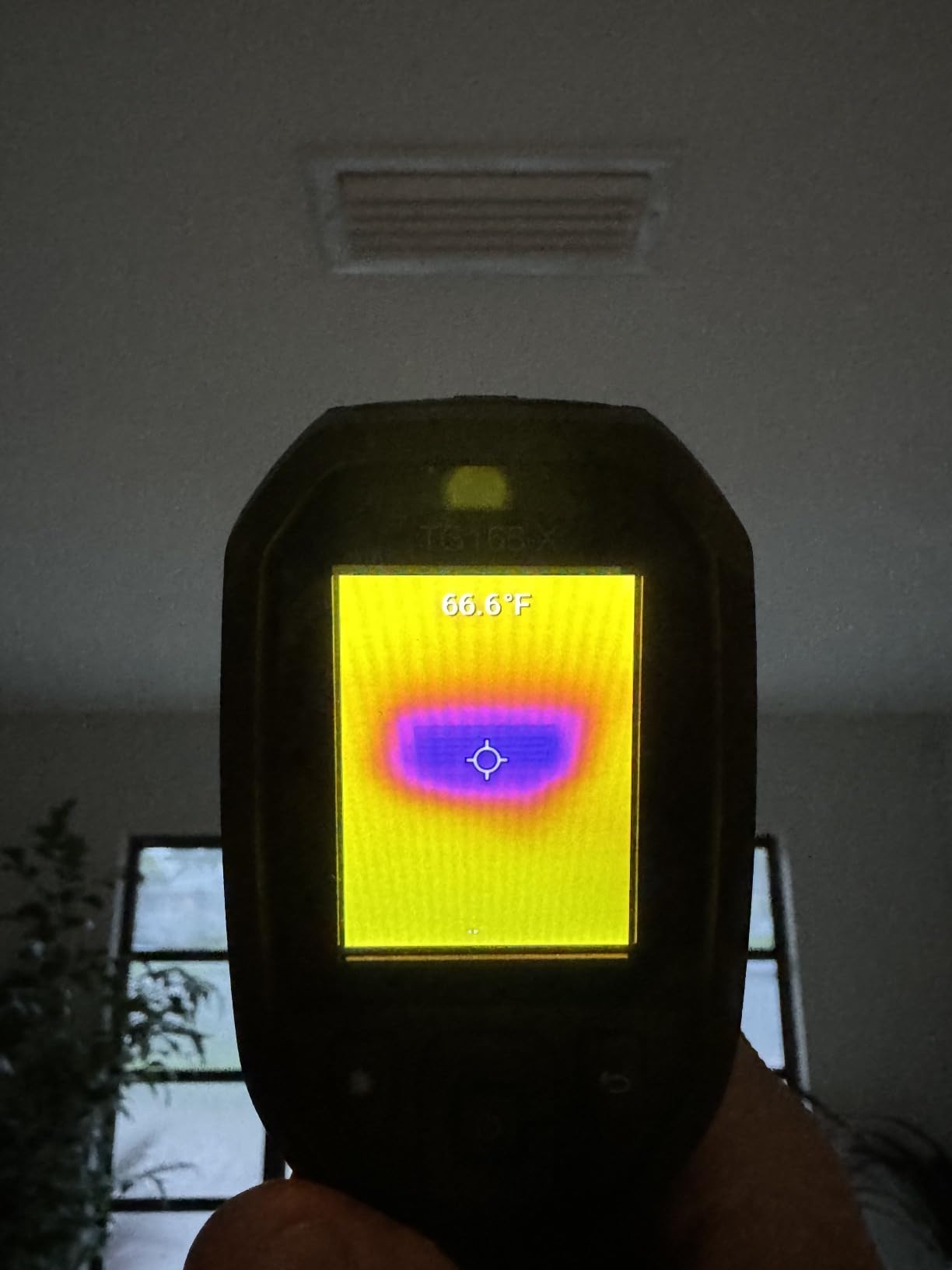
The bullseye laser pointer is one of my favorite features on this camera. Instead of a single laser dot, it projects a circle that shows you the exact measurement area on the screen. When you are scanning a panel full of breakers, this eliminates any guesswork about which breaker the temperature reading corresponds to.
The 2-10 year warranty is the best coverage in this guide. FLIR provides 2 years of parts and labor on the camera body and 10 years on the infrared detector. That kind of warranty matters when you are spending tool money on something you plan to use for years. The IP54 enclosure has survived drops and rough handling in testing without issue.
Best For: Electricians Who Prioritize Brand Trust and Warranty
If you want a camera from the most recognized name in thermal imaging with the strongest warranty in the industry, the TG165-X is the answer. The MSX technology genuinely helps with identifying components, and the bullseye laser makes temperature targeting precise.
MSX Technology vs Raw Thermal Resolution
MSX works by extracting edges from the visible light image and overlaying them on the thermal data. This does not increase thermal sensitivity, but it makes the image far more readable. You can tell which breaker you are looking at because the outline of the breaker panel shows through the thermal overlay. For electricians who need to document findings clearly for clients, this matters.
5. Klein Tools TI250 – Best Compact Camera from a Trusted Tool Brand
Klein Tools TI250 Rechargeable Thermal Imaging Camera, Camera Displays Over 19,200 Pixels with 3 Color Palettes, High / Low Temperature Points
19200+ Pixels
Adjustable Emissivity
USB-C
3 Color Palettes
Rechargeable
Pros
- Over 19200 pixels for accurate troubleshooting
- Adjustable emissivity from 0.01 to 0.99
- High and low temperature alarms
- Compact portable design with rubber housing
- USB-C for image capture and sharing
- Trusted Klein Tools brand for electricians
Cons
- Lower resolution than premium models
- Freezes briefly during recalibration
- No visual camera overlay
- Very small form factor
Klein Tools is a brand electricians already trust for hand tools, and the TI250 brings that same jobsite sensibility to thermal imaging. At just 8.6 ounces and measuring 3.18 x 3.11 x 1.03 inches, this is the most portable dedicated thermal camera in our lineup. It fits in a tool pouch pocket, which means it is always with you when you need it.
The 19,200-plus pixel count comes from a 160×120 infrared sensor. That is enough resolution to identify individual breakers and spot hot spots in residential panels. For commercial panels with dense conductor arrangements, you may find yourself wishing for more pixels, but for the price and size, it performs well.
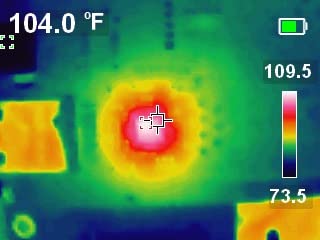
Adjustable emissivity from 0.01 to 0.99 is a feature I use constantly when scanning different materials. Copper bus bars, aluminum conductors, plastic breaker bodies, and painted enclosures all have different emissivity values. Being able to adjust this setting means your temperature readings are actually accurate instead of just approximate. Many budget cameras lock emissivity at a fixed value, which leads to misleading readings on shiny metal components.
The high and low temperature alarms are genuinely useful for electrical inspections. You can set an alarm threshold and scan a panel, and the camera alerts you when it sees anything above your set temperature. This turns a careful scanning process into a quick sweep that flags problems automatically. The three color palettes are fewer than some competitors offer, but the included options cover the main use cases well.
Best For: Service Electricians Who Want Pocket-Sized Thermal
If you do residential service calls and want thermal capability that does not require a separate tool bag, the Klein TI250 is ideal. The rubber housing and compact size mean it survives pocket carry, and the Klein brand gives you confidence in durability.
Adjustable Emissivity for Electrical Components
Electrical components vary wildly in emissivity. Oxidized copper reads around 0.6, polished aluminum can be as low as 0.1, and black plastic breaker bodies are around 0.95. The TI250 lets you dial in the correct value for each material, which is the difference between a meaningful temperature reading and a guess.
6. HSFTOOLS HP96 Touchscreen Thermal Camera – Best Touchscreen Interface
HP96 Thermal Imaging Camera,3.5″ Touch Screen, Intelligent Scene Detection
3.5 inch Touchscreen
96x96 IR to 240x240
Dual Cameras
5 Imaging Modes
IP54 Rated
Pros
- 3.5-inch touchscreen with intuitive phone-type UI
- Dual cameras with multiple imaging modes
- Intelligent Scene Detection
- Live Super Resolution enhancement
- Compact and lightweight design
- LED flashlight included
Cons
- Battery life limited to 4 hours
- Some quality control issues reported
- Device takes seconds to calibrate
- May lag occasionally
The HSFTOOLS HP96 is the touchscreen sibling to the HF96, and the interface difference is immediately noticeable. The 3.5-inch touchscreen uses a phone-type UI that anyone with a smartphone can operate without reading a manual. Pinch to zoom, tap to capture, swipe to change palettes. If you have struggled with button-based thermal camera menus, this design is a breath of fresh air.
The dual camera system gives you five imaging modes: thermal only, visual only, fusion, picture-in-picture, and blending. Fusion mode is particularly useful for electrical inspections because it merges the thermal and visual images so you can see both the heat pattern and the physical component layout simultaneously.
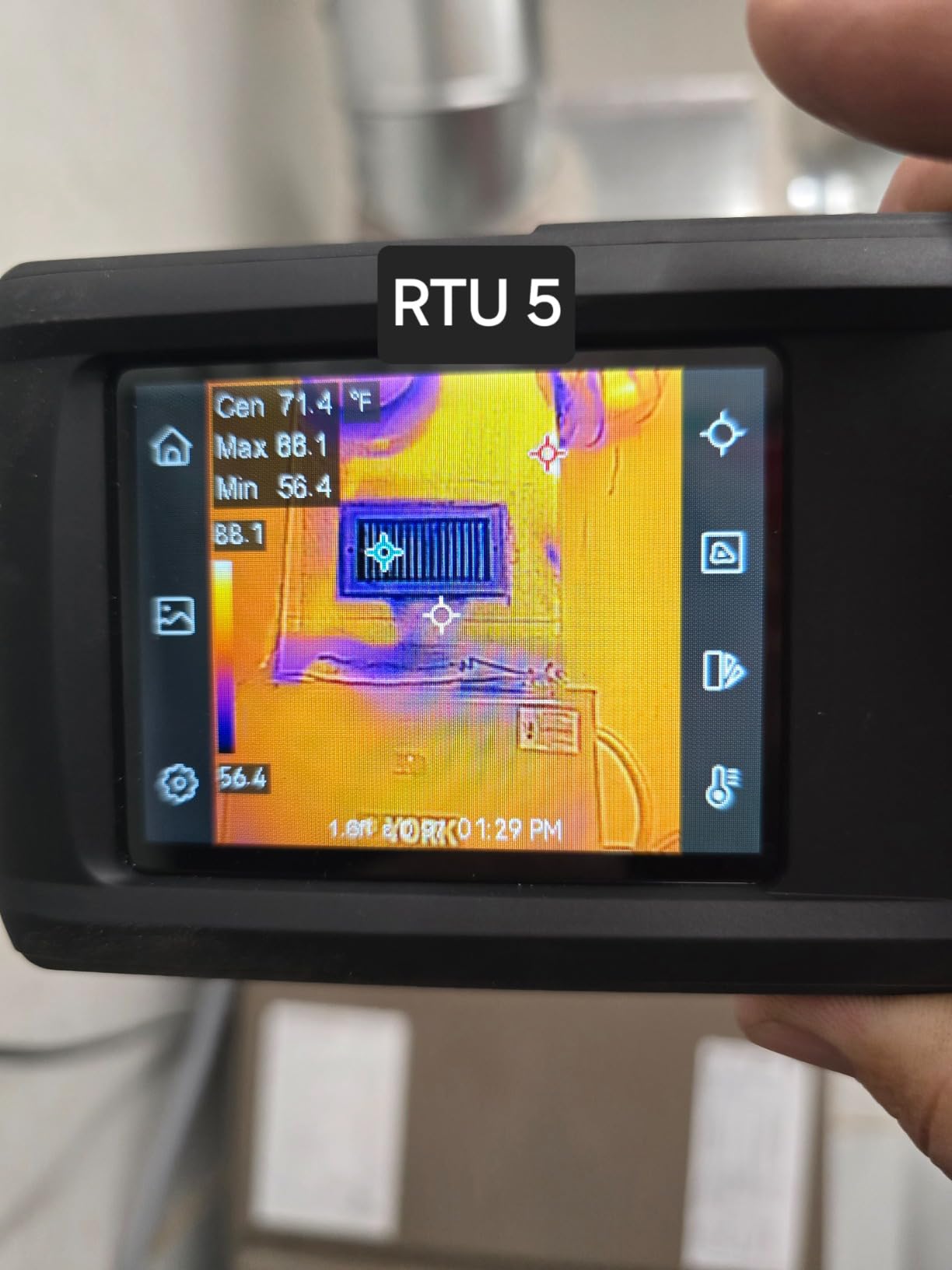
The 96×96 infrared sensor enhances to 240×240 with live super resolution, matching the HF96’s thermal performance. The 50mK thermal sensitivity picks up small temperature differences, which is what you need for finding warm connections before they become hot failures. The intelligent scene detection analyzes the scene and helps categorize what you are looking at.
The 4-hour battery life is the weakest point of this camera. For a full day of inspections, you will need to charge mid-day or carry a power bank. Some users have reported quality control issues including dead-on-arrival units, though the seller appears responsive with replacements. The camera also takes a few seconds to calibrate periodically, which briefly freezes the display.
Best For: Electricians Who Prefer Touchscreen Controls
If button menus drive you crazy and you want a thermal camera that works like your phone, the HP96 is the obvious choice. The touchscreen makes navigation fast and intuitive, and the five imaging modes give you flexibility for different inspection scenarios.
Fusion and Blending Modes for Electrical Panels
Fusion mode overlays thermal data on the visible light image with adjustable transparency, so you can see the breaker panel layout and the heat pattern at the same time. Blending mode mixes the two images more aggressively for a different visual style. Picture-in-picture puts a thermal window inside the visual image. All three help you document exactly where problems are located.
7. FOXWELL RT280 Thermal Camera – Best for PC Analysis and Color Options
FOXWELL RT280 Thermal Imaging Camera, 320 x 240 2.8″ LCD, 240 x 180 TISR
240x180 TISR Resolution
2.8 inch LCD
9 Color Palettes
Laser Pointer
8GB Storage
Pros
- Excellent image quality and thermal sensitivity
- Easy to use with intuitive interface
- Built-in laser pointer and LED light
- 9 color palette options
- PC software with 2D and 3D analysis
- Great value for price with 8-hour battery
Cons
- Device calibrates every 8 seconds briefly freezing
- No Mac compatibility for PC software
- Handle design could be more ergonomic
- No storage case included
The FOXWELL RT280 caught my attention with its 9 color palettes, which is more than any other camera in this guide. Different palettes work better for different scenarios. Iron and rainbow palettes make small temperature differences pop for troubleshooting, while grayscale palettes work better for documentation and reporting. Having all these options gives you flexibility.
The 240×180 TISR enhanced resolution provides enough detail for residential and light commercial electrical inspections. The 50-degree by 38-degree field of view is wide enough to capture a full residential panel in one frame, which speeds up inspections compared to narrower cameras that require multiple passes.
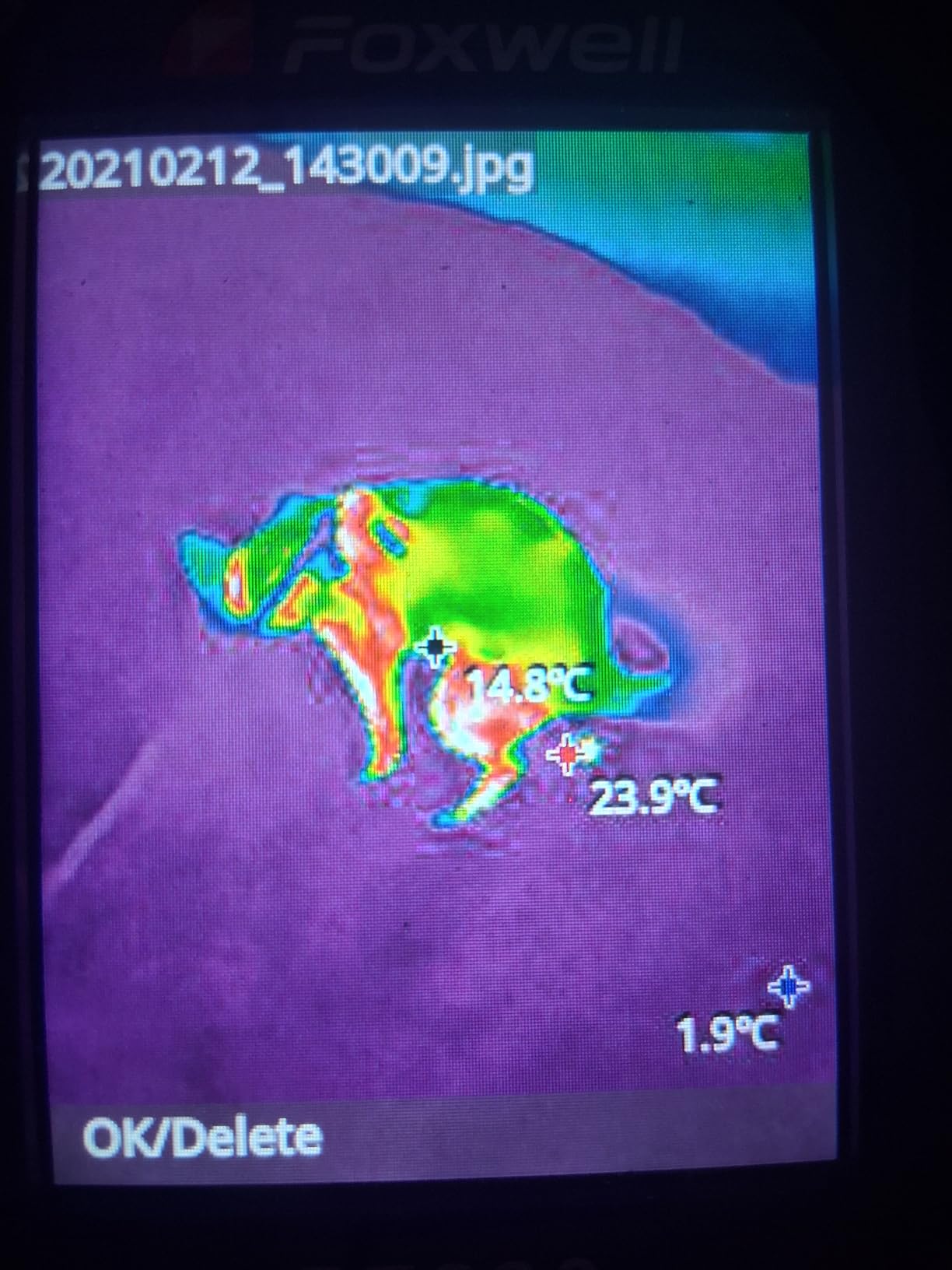
The built-in laser pointer and LED light are genuinely useful additions. The laser helps you mark the exact spot you are measuring when showing findings to clients. The LED light illuminates dark panels and crawl spaces, which you encounter constantly in electrical work. The 8GB internal storage holds over 20,000 images, which is generous.
The PC analysis software includes both 2D and 3D visualization modes, which is uncommon at this price. The 3D mode creates a topographical-style temperature map that makes it easy to see temperature distribution across a component. The 8-second calibration cycle is annoying because it freezes the display briefly, but you learn to work around the timing.
Best For: Electricians Who Want Detailed Post-Inspection Analysis
The 2D and 3D PC analysis software makes the RT280 a good fit for electricians who need to produce detailed analysis after the inspection. The 9 color palettes give you maximum flexibility in how you visualize and present thermal data.
3D Temperature Mapping for Documentation
The 3D visualization mode renders temperature as elevation, creating a landscape where hotter areas appear as peaks. This makes it immediately obvious where the hottest spots are in a panel or connection block. For client reports, this visual format is often more intuitive than a standard thermal image.
8. TOPDON TC004 Mini Thermal Camera – Best Pocket-Sized Spot Camera
TOPDON TC004 Mini Thermal Imaging Camera, 240 x 240 TISR Resolution
240x240 TISR Resolution
15-Hour Battery
IP54 Rated
High Low Temp Alerts
2-Meter Drop
Pros
- Excellent thermal clarity with TISR enhancement
- Exceptional 15-hour battery life
- Compact pocket-friendly design
- IP54 waterproof rating
- Multiple color palettes
- High and low temp alerts with auto-capture
Cons
- No charging head included in package
- Electronic manual requires QR code download
The TOPDON TC004 Mini is the smaller sibling of our top pick, and it takes a different approach to the same problem. Instead of a large display and professional software, you get a pocket-sized camera with a 15-hour battery that you carry everywhere. For service electricians who do quick troubleshooting checks, this form factor is often more practical than a full-size unit.
The 128×128 native infrared sensor enhances to 240×240 with TISR technology. That is enough resolution to identify which breaker is running hot and to spot loose connections in residential panels. The 25Hz refresh rate keeps the image smooth when you are panning across a panel, which helps you scan faster without motion blur.
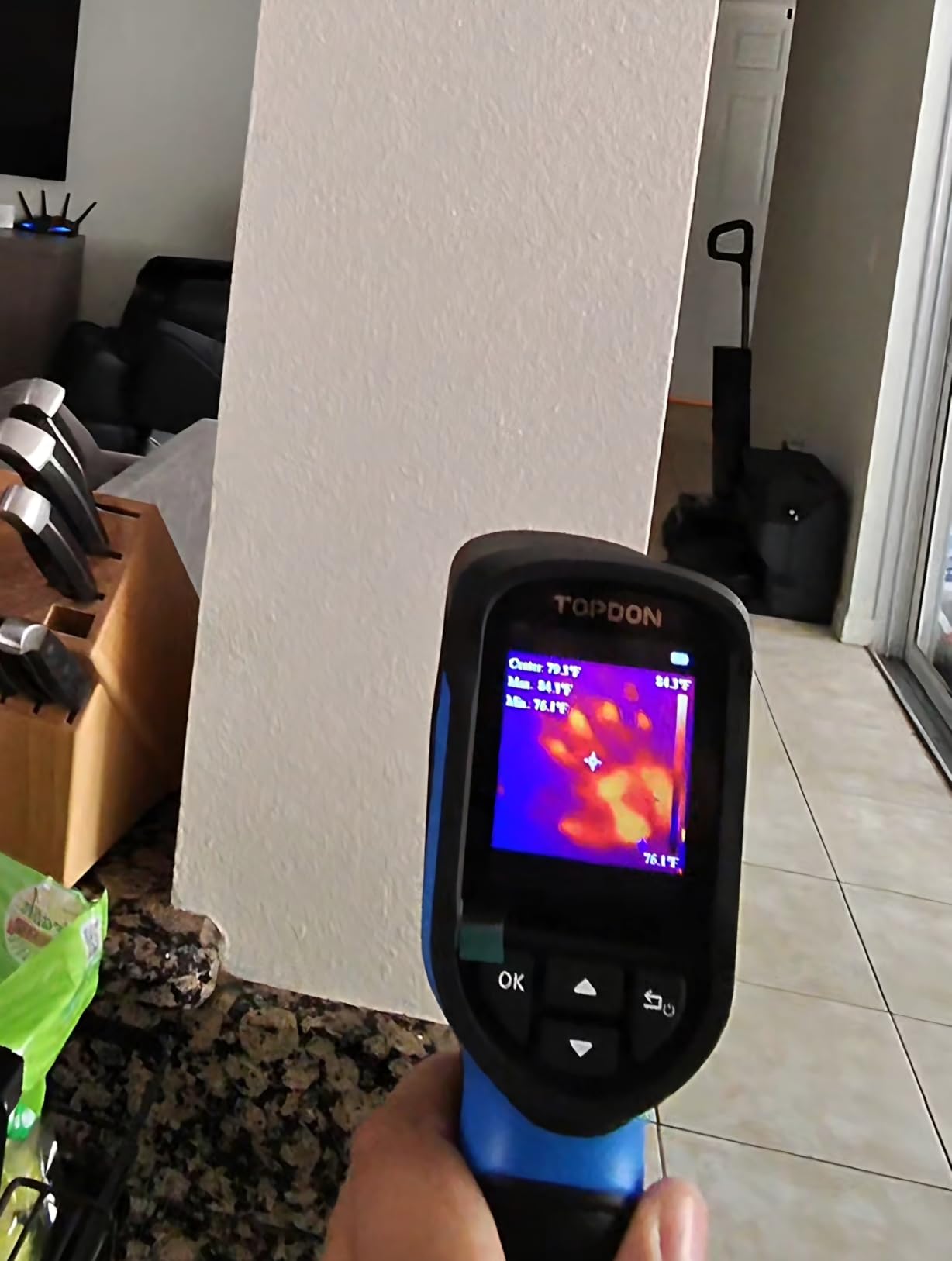
The high and low temperature alerts with auto-capture are a feature I used more than I expected. You set a temperature threshold, and when the camera detects something above it, it automatically captures an image. This means you can scan a panel while watching the screen instead of fumbling with the capture button when you see a hot spot.
The 15-hour battery life is exceptional and means you charge this camera once a week instead of every night. The IP54 rating and 2-meter drop resistance give you confidence carrying it in a tool bag. The five color palettes cover the main visualization options, and the 512MB storage holds up to 8,000 photos. The lack of a charging brick in the box is annoying but not a real problem since everyone has USB-C chargers.
Best For: Service Electricians and Apprentices
If you want thermal capability always in your pocket without the bulk of a full-size camera, the TC004 Mini is ideal. The long battery life means it is always ready, and the temp alerts make scanning fast and efficient. This is also a great first thermal camera for an apprentice learning to read thermal patterns.
Auto-Capture Temperature Alerts in the Field
The auto-capture feature turns the camera into a scanning tool rather than a point-and-shoot device. You sweep it across a panel while it watches for anything above your threshold. When it finds a hot spot, it saves the image automatically. This catches problems you might miss if you are focused on reading temperatures manually.
9. AMPBANK H128 Thermal Camera – Best Battery Life on a Budget
H128 Handheld Thermal Camera, 240 x 240 TISR Resolution, 24h Battery Life Thermal Imaging Camera, 25 Hz Infrared Camera with Temperature Alarm, -4℉~ 842℉ Temp Range, IP65 Protection Level
240x240 TISR Resolution
24-Hour Battery
40mK Sensitivity
IP65 Rated
Temp Alarm
Pros
- 240x240 TISR resolution with excellent clarity
- Exceptional 24-hour battery life
- IP65 protection rating
- 40mK thermal sensitivity
- Built-in temperature alarm
- Adjustable emissivity settings
Cons
- Brand less established than FLIR or Fluke
- Temperature accuracy may vary with materials
The AMPBANK H128 takes the battery life crown with an incredible 24-hour runtime. That is not a typo. This camera runs for a full day of continuous use, which means you can take it on a week of inspections without reaching for a charger. For electricians who work long days and forget to charge tools, this alone could be the deciding factor.
The 128×128 native infrared sensor enhances to 240×240 with TISR technology, matching the resolution of the TOPDON TC004 Mini. The 40mK thermal sensitivity is actually better than several more expensive cameras in this guide, meaning it detects smaller temperature differences. For finding slightly warm connections before they become hot failures, that sensitivity matters.
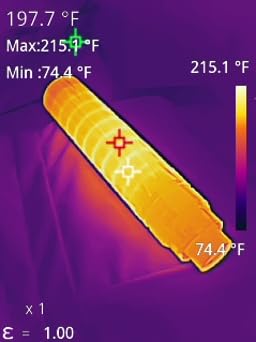
The IP65 rating is a step above the IP54 rating on most cameras here. The 6 means dust-tight with no ingress, and the 5 means it handles water jets. For electricians working in dusty environments like attics and crawl spaces, or in damp locations, the extra protection is meaningful. The camera is also drop tested from 6.56 feet.
The built-in temperature alarm with max, min, and center tracking gives you real-time feedback as you scan. The adjustable emissivity settings let you tune for different materials, which is essential for accurate readings on electrical components. The tripod mount is a nice touch for situations where you need stable, hands-free monitoring of a component over time.
Best For: Budget-Conscious Electricians Who Need All-Day Battery
If battery life is your top priority and you want the most hours per dollar, the H128 wins easily. The combination of 24-hour battery, 40mK sensitivity, and IP65 rating at this price is hard to beat. The trade-off is that AMPBANK is a newer brand without the reputation of FLIR or Klein Tools.
IP65 Rating vs IP54 for Electrical Work
The difference between IP54 and IP65 sounds small but matters in practice. IP54 protects against splashing water and limited dust ingress. IP65 is dust-tight and handles water jets from any direction. For electricians working outdoors, in wet locations, or in industrial environments with heavy dust, the IP65 rating provides significantly better protection.
10. FLIR ONE Thermal Camera for iOS – Best Smartphone Attachment
Flir One – Thermal Imaging Camera for iOS Smartphones (iPhone 14 and Older w/Lightning Port), 240×180 Super Resolution (80×60 Native IR)
80x60 Native IR to 240x180
MSX Technology
Lightning Port
1.5m Drop Rated
App Integration
Pros
- Compact smartphone-attached thermal camera
- Easy plug-and-play setup
- MSX overlays visual details on thermal images
- Useful inspection guides in the app
- Compact and portable at 1.2 ounces
- Jobsite tough with 1.5 meter drop rating
Cons
- Low native 80x60 resolution requires upscaling
- Limited battery life of about 1 hour
- Lightning port only not USB-C
- App guides require yearly subscription
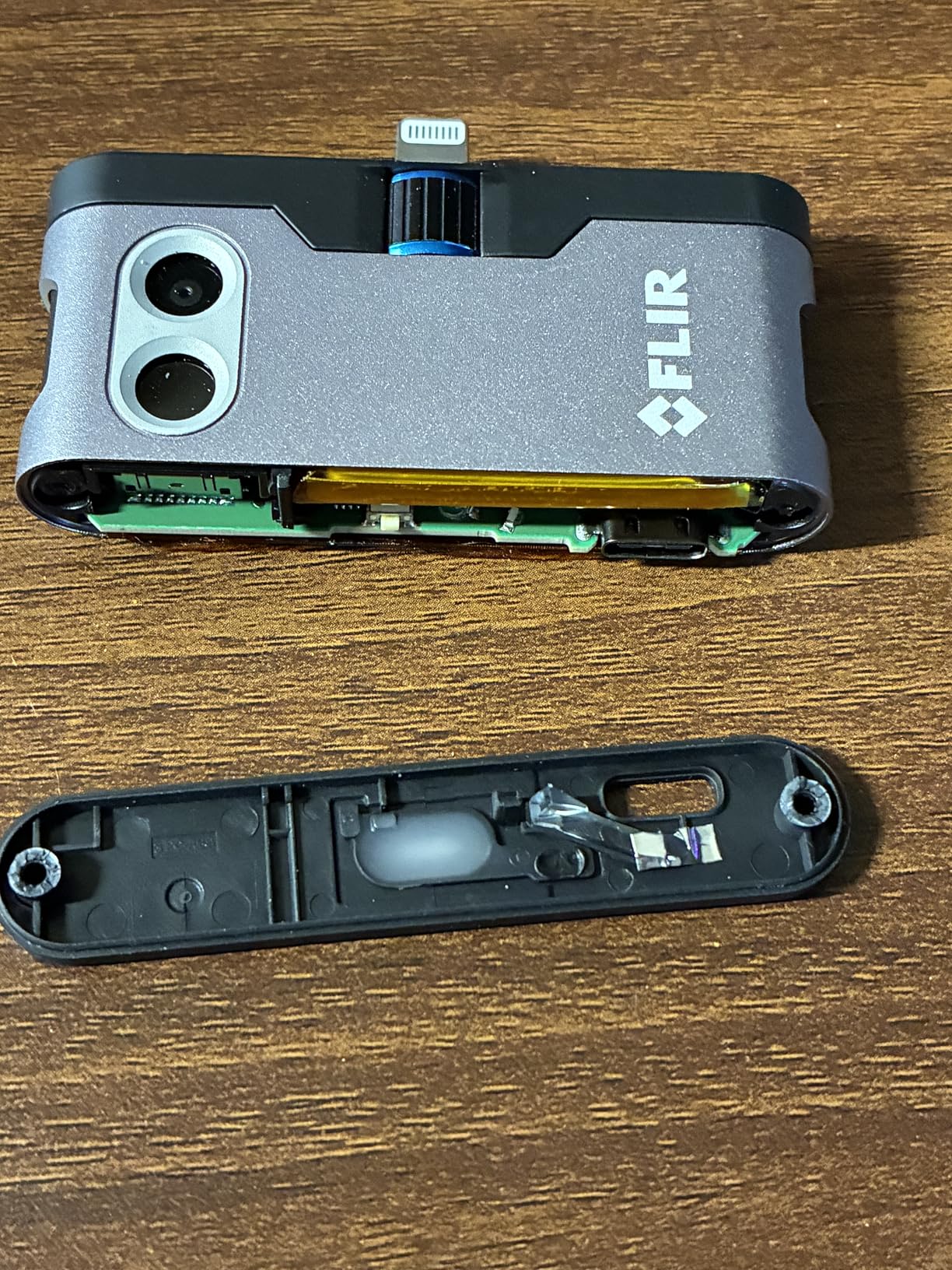
The FLIR ONE transforms your iPhone into a thermal camera, and for electricians who already carry their phone everywhere, this is the lowest-friction way to add thermal capability. You plug it into the Lightning port, open the FLIR One app, and you are scanning. No separate device to charge, carry, or forget in the truck.
The native 80×60 infrared sensor is the lowest resolution in this guide, but FLIR upscales it to 240×180 with VividIR processing and layers on MSX enhancement. The result is a thermal image that is more readable than the raw resolution suggests, thanks to the visual detail overlay. For quick troubleshooting checks, it works. For detailed inspections and reports, the resolution falls short.
The MSX technology is the same system used in the TG165-X, and it is genuinely the best image enhancement technology in the industry. The visual detail overlay makes it immediately clear what component you are looking at, which matters when you are explaining findings to a client over the phone.
The big limitation is battery life. The FLIR ONE runs for about an hour of continuous use, which is fine for quick checks but not for a full inspection. The Lightning port connector means this version only works with iPhone 14 and older models. If you have upgraded to a USB-C iPhone, you need the newer FLIR ONE Pro or a different camera entirely. The app-based inspection guides are helpful but require a yearly subscription of around $30.
Best For: Occasional Thermal Checks Without a Dedicated Device
If you only need thermal imaging for occasional troubleshooting and do not want to carry a separate tool, the FLIR ONE is the right choice. It turns your phone into a capable thermal scanner for quick checks. Just be aware of the battery and resolution limitations.
Smartphone Attachment vs Dedicated Camera Trade-offs
Smartphone attachments win on portability and convenience. You always have your phone, so you always have thermal capability. Dedicated cameras win on battery life, resolution, and features like laser pointers and PC software. For electricians who do thermal inspections daily, a dedicated camera is worth the investment. For occasional use, the FLIR ONE fills the gap nicely.
Buying Guide: What to Look for in a Thermal Imaging Camera for Electrical Work?
Choosing the right thermal camera for electrical work comes down to understanding a few key specifications and matching them to how you work. The best thermal imaging cameras for electricians balance resolution, sensitivity, battery life, and durability in ways that suit different working styles. Here is what matters most based on our testing and what working electricians told us in forum discussions.
Resolution and Pixel Count
Thermal camera resolution determines how much detail you can see in the image. For electrical panel inspections, you need enough pixels to distinguish individual breakers and conductors. A 160×120 sensor (19,200 pixels) is the minimum I would recommend for electrical work. It lets you identify which breaker is hot, though you may struggle with dense commercial panels.
The sweet spot for most electricians is 256×192 or higher, enhanced through TISR or similar technology to 512×384. This gives you clear detail on individual lugs and connections. Higher resolutions like 384×288 or 320×240 native sensors produce even better results but cost significantly more. Match your resolution to your work: residential troubleshooting needs less than commercial inspection services.
Thermal Sensitivity (NETD)
NETD, or Noise Equivalent Temperature Difference, measures the smallest temperature difference a camera can detect. It is expressed in milliKelvin (mK). A lower number means better sensitivity. For electrical work, you want a NETD of 50mK or better, which means the camera detects differences of 0.05 degrees Celsius or smaller.
This matters because electrical problems often start as small temperature rises. A loose connection might run just 5 to 10 degrees warmer than neighboring connections before it becomes a serious problem. A camera with poor sensitivity might miss that difference entirely. The cameras in this guide range from 40mK to 50mK, which is suitable for electrical troubleshooting.
Battery Life for Full-Day Inspections
If you have ever had a tool die mid-inspection, you know how frustrating it is. Battery life ranges dramatically across thermal cameras. The HSFTOOLS HP96 offers just 4 hours, while the AMPBANK H128 delivers an incredible 24 hours. For electricians who work full days, look for 8 hours minimum to get through a shift without charging.
Forum users consistently flagged inadequate battery life as a pain point. If you do inspections that require travel between sites, a camera that dies at 2 PM means you either carry a charger or go without thermal for the rest of the day. Consider how you work and choose accordingly.
Durability and IP Rating
Electrical work happens in attics, crawl spaces, industrial plants, and outdoor locations. Your thermal camera needs to survive drops, dust, and moisture. Look for an IP54 rating at minimum, which protects against dust and splashing water. The AMPBANK H128 offers IP65, which is dust-tight and handles water jets.
Drop ratings matter too. Most cameras here are rated for 2-meter drops, which covers typical working heights. The Klein Tools TI250 has a rubber housing that provides extra protection in a pocket or tool bag. Consider how you will carry and use the camera when evaluating durability.
Image Enhancement Technology
MSX (Multi-Spectral Dynamic Imaging) from FLIR and similar technologies from other brands overlay visual details on thermal images. This makes thermal images far more readable because you can see component outlines and physical context alongside the heat data. For documenting findings for clients, this technology is very valuable.
Not all enhancement is equal. TISR upscaling increases apparent resolution through interpolation, but it does not add real thermal detail. MSX and IR-Fusion add visual context but do not improve thermal sensitivity. Understanding what each technology does helps you evaluate camera specifications honestly.
Certification and Training
Electricians often ask whether they need certification to perform thermal imaging. The short answer is no, you do not need certification for troubleshooting and routine inspections on your own jobs. However, if you are producing formal thermography reports for commercial clients, insurance companies, or legal documentation, a Level 1 thermography certification from an organization like ASNT or the Infrared Training Center adds credibility.
Certification typically involves a 32-hour course covering heat transfer, infrared physics, camera operation, and inspection methodology. It costs around $1,500 to $2,000. For electricians offering thermal inspection as a service, the investment pays for itself quickly through higher inspection fees and client trust.
Delta-T Interpretation for Electrical Components
Delta-T refers to the temperature difference between a component and a reference point, usually a similar component under similar load. Understanding Delta-T is critical for interpreting thermal findings. A breaker running 10 degrees warmer than identical breakers under the same load suggests a problem. A breaker running 10 degrees warmer than ambient air might be completely normal.
Industry standards provide general guidelines. A temperature rise of 5-15 degrees Celsius over similar components warrants investigation. A rise of 15-40 degrees suggests a probable defect. Above 40 degrees indicates a serious problem requiring immediate attention. These are guidelines, not absolute rules, and load conditions affect interpretation.
FAQs
Who makes the best thermal imaging camera for electricians?
FLIR and Fluke are the most recognized names in professional thermal imaging, with FLIR offering the strongest warranty coverage and MSX image enhancement technology. However, TOPDON and Thermal Master have closed the gap significantly in recent years, offering comparable resolution and features at lower prices. For working electricians, TOPDON and HSFTOOLS deliver excellent value, while FLIR remains the top choice for brand trust and warranty support.
Can electricians do thermal imaging without certification?
Yes, electricians can perform thermal imaging for troubleshooting and routine inspections without formal certification. However, if you are producing formal thermography reports for commercial clients, insurance documentation, or legal purposes, a Level 1 thermography certification from ASNT or the Infrared Training Center is recommended. The certification involves a 32-hour course covering heat transfer, infrared physics, and inspection methodology.
Can a thermal camera see electrical wires behind walls?
No, thermal cameras cannot see through walls or insulation to locate hidden wiring. Thermal cameras detect surface temperatures only. However, they can detect heat from overloaded wires or loose connections that transfers to the wall surface. If a wire inside a wall is overheating significantly, the thermal camera may detect the warm spot on the wall surface, but it cannot image the wire itself directly.
What thermal camera resolution do I need for electrical panel inspections?
For residential electrical panel inspections, a minimum of 160×120 pixels (19,200 pixels) allows you to identify individual breakers and spot hot spots. For commercial panels and professional inspection services, 256×192 or higher is recommended to distinguish individual lugs and conductors in dense arrangements. Enhanced resolutions of 512×384 through TISR or X3IR technology provide the best detail for documentation and reporting.
How accurate are thermal cameras for electrical inspections?
Most quality thermal cameras offer accuracy of plus or minus 2 degrees Celsius or 2 percent of reading, which is sufficient for electrical troubleshooting. Accuracy depends on proper emissivity settings for the material being scanned. Shiny metals like copper and aluminum require adjusted emissivity values for accurate readings. When properly configured, thermal cameras reliably detect temperature anomalies that indicate loose connections, overloaded circuits, and failing components.
Conclusion: Which Thermal Camera Should You Buy?
After testing all 10 cameras across real electrical inspection scenarios, the TOPDON TC004 earns our Editor’s Choice for its combination of 512×384 resolution, professional reporting software, and large display. It is the best thermal imaging camera for electricians who need professional-grade results without spending thousands.
For value, the HSFTOOLS HF96 with AI scene detection and 50mK sensitivity delivers features that punch well above its price. And if you want the longest battery life on the market at the lowest price, the AMPBANK H128 with its 24-hour runtime is hard to beat.
The right choice depends on your work. Residential service electricians will love the Klein TI250 for pocket carry. Commercial inspectors will appreciate the Thermal Master Thor 002 for detailed reports. And anyone who just wants quick thermal checks without a separate device will find the FLIR ONE more than capable. Whatever you choose, adding thermal imaging to your toolkit in 2026 will change how you troubleshoot electrical problems forever.
1 thought on “10 Best Thermal Imaging Cameras for Electricians (September 2026) Reviews”