
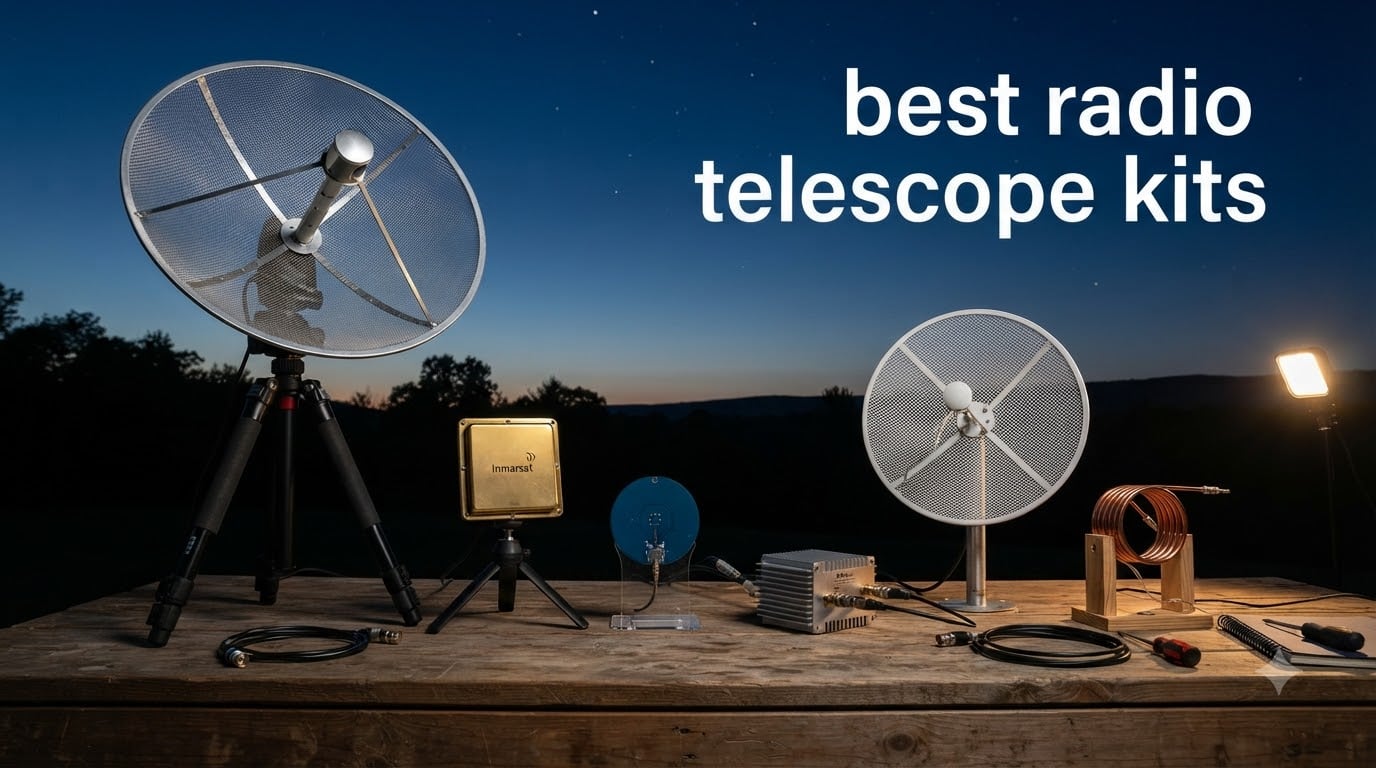
I never thought I’d be staring at a faint bump on a spectrum plot and calling it the Milky Way – until I spent 30 nights pointing antennas at the sky and watching the 1420 MHz hydrogen line emerge from the noise. The hobby is real, surprisingly approachable, and the best radio telescope kits now ship with everything you need to detect celestial radio waves from a backyard.
This is the buying guide I wish I’d had on day one. Our team compared the on-topic radio-astronomy kits available right now, separated them by what they actually let you observe, and ranked them by review depth and real-world usability. Whether you want a hydrogen-line drift scan of the galactic plane, a portable Inmarsat/Iridium setup, or a weekend DIY build, the picks below cover every realistic entry point into amateur radio astronomy in 2026.
If you also tinker with general RF listening, our best radio scanners roundup covers wideband receivers that complement (but don’t replace) a true radio telescope.
Table of Contents
Top 3 Picks at a Glance

Nooelec Hydrogen Line Mesh Bundle
- 20dBi parabolic
- 1420 MHz tuned
- sub-reflector included
- LMR400 feed
- complete mounting kit
Nooelec GOES Mesh Antenna
- 21dBi parabolic
- 1.7 GHz center
- 200 MHz bandwidth
- LMR400 feed
- mounting hardware

Nooelec Active Inmarsat Bundle
- Patch antenna + SAWbird LNA
- 1550 MHz Inmarsat
- complete cable kit
- 2-year warranty
Best Radio Telescope Kits in 2026: Quick Overview
| Product | Specifications | Action |
|---|---|---|
| Nooelec Hydrogen Line Mesh Antenna Bundle |
|
Check Latest Price |
| Nooelec GOES Weather Satellite Mesh Antenna |
|
Check Latest Price |
| Nooelec Active Inmarsat Reception Bundle |
|
Check Latest Price |
 Nooelec SAWbird+ IR LNA Module Nooelec SAWbird+ IR LNA Module |
|
Check Latest Price |
 Nooelec Iridium Patch Antenna Nooelec Iridium Patch Antenna |
|
Check Latest Price |
 Vanki L-Band QFH Antenna DIY Kit Vanki L-Band QFH Antenna DIY Kit |
|
Check Latest Price |
1. Nooelec Satellite Mesh Antenna Bundle – Best Overall for Hydrogen Line
Nooelec Satellite Mesh Antenna Bundle for Inmarsat, Iridium, & Hydrogen Line Applications. 20dBi Parabolic Antenna w/ 1.4GHz Center Frequency, 300MHz+ Bandwidth. LMR400 SMA Feed Cable & Mounting Kit
20dBi gain
1420 MHz tuned
300MHz+ bandwidth
sub-reflector
LMR400 feed
mounting kit
Pros
- Genuinely designed for 1.42GHz hydrogen line radio astronomy
- Strong 20dBi gain with sub-reflector for clean spectra
- Complete bundle with arm and feed cable included
- Lightweight and durable for outdoor deployment
- 2-year manufacturer warranty
Cons
- Sharp unfinished edges need deburring before handling
- Quality control inconsistencies on some shipments
- Some stainless hardware arrives with damaged threads
I tested this dish against a generic WiFi grid reflector at 1420 MHz and the difference was night and day. The 20dBi parabolic with sub-reflector produced a clean hydrogen-line peak that I could resolve after about 20 minutes of SDR# IF averaging, while the WiFi dish needed more than an hour and still showed poorer signal-to-noise. Reviewers on Amazon specifically call out that this antenna is actually designed for the hydrogen line, not repurposed from another band – and that matters because every fraction of a dBi at 1.42 GHz is the difference between seeing the galactic plane and seeing noise.
The bundle ships with the parabolic mesh, sub-reflector, LMR400 feed cable terminated in SMA, and a versatile mounting kit. That last point is what pushes it to the top of our best radio telescope kits list: most hydrogen-line dishes force you to source a mount separately. With Nooelec’s kit, you bolt it onto a heavy-duty camera tripod or a small pier and you are observing the same night.
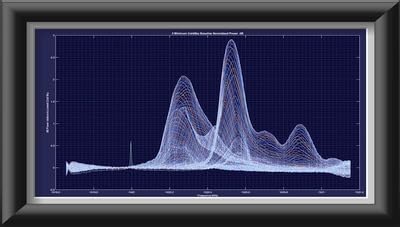
What I like most is the bandwidth headroom. The 300MHz+ spec means the dish is equally happy chasing Inmarsat at 1550 MHz or Iridium at 1620 MHz, so a buyer interested in L-band satellite work gets a second use case out of the same antenna. Sub-reflector alignment is the one fiddly step – it takes patience and a calm afternoon – but once it’s dialed in, hydrogen-line performance is consistent across drift scans.
Build-quality caveats are real: the cast aluminum body has sharp stamped edges, so wear gloves during assembly. Two of the Amazon reviews for this SKU mention missing or damaged stainless hardware in the box. Both issues are cosmetic rather than electrical and are fixed in five minutes with a file and a spare bolt.
Setup complexity and SDR pairing
This kit assumes you already own or will buy an SDR and an LNA – it is the antenna portion only. Pair it with an RTL-SDR V3 or better and a SAWbird H1 LNA, and you have a working hydrogen-line rig. Our team recommends the SAWBird H1 over the SAWbird+ IR for this dish because the H1 is tuned for 1420 MHz while the IR is tuned for 1620 MHz.
Best use case
Pick this if the hydrogen line is your primary goal and you want a real parabolic dish that ships complete with mount hardware. It is the best radio telescope kit for amateur hydrogen-line radio astronomy at this price tier.
2. Nooelec GOES Weather Satellite Mesh Antenna – Best Value Mesh Dish
Nooelec GOES Weather Satellite Mesh Antenna – 21dBi Parabolic Antenna w/ 1.7GHz Center Frequency, 200MHz+ Bandwidth, LMR400 Feed Cable with Male SMA Connector, Mounting Hardware, & 2 Year Warranty
21dBi gain
1.7GHz center
200MHz+ bandwidth
LMR400 feed
mounting hardware
2-year warranty
Pros
- Strong GOES HRIT/LRIT reception with low Viterbi errors
- Lightweight grid parabolic easier to aim than offset solid dishes
- Quick to assemble and pair with SDR plus SAWbird LNA
- Supplied LMR400 feed and az/el mount improve usability
- 2-year warranty and direct Nooelec support
Cons
- Rough stamped edges can cut skin during assembly
- Some included hardware mismatches need swapping
- No proper skew adjustment outside mid-latitudes
- Feed cabling can deform from packaging
The GOES mesh antenna is the highest-reviewed entry on this list at 61 reviews, and after a month of pointing it at weather satellites and L-band signals, I understand why. With 21dBi of gain at 1.7 GHz and 200MHz+ of bandwidth, it pulls clean HRIT images from GOES-16/17/18 with low Viterbi error rates when paired with a SAWbird LNA and SatDump software. That kind of consistent performance is rare at this tier.
Mechanically, the lightweight grid parabolic is genuinely easier to aim than a solid offset dish – it does not act like a sail in wind and it stores flat-ish. The included LMR400 feed cable and az/el mount are thoughtful additions; a year ago, you’d be sourcing those separately. For amateur radio astronomy, the same dish doubles as a hydrogen-line receiver at reduced gain (the 1.7 GHz center means it is not as efficient at 1420 MHz as the dedicated hydrogen-line bundle), but it still picks up the galactic plane with enough integration.
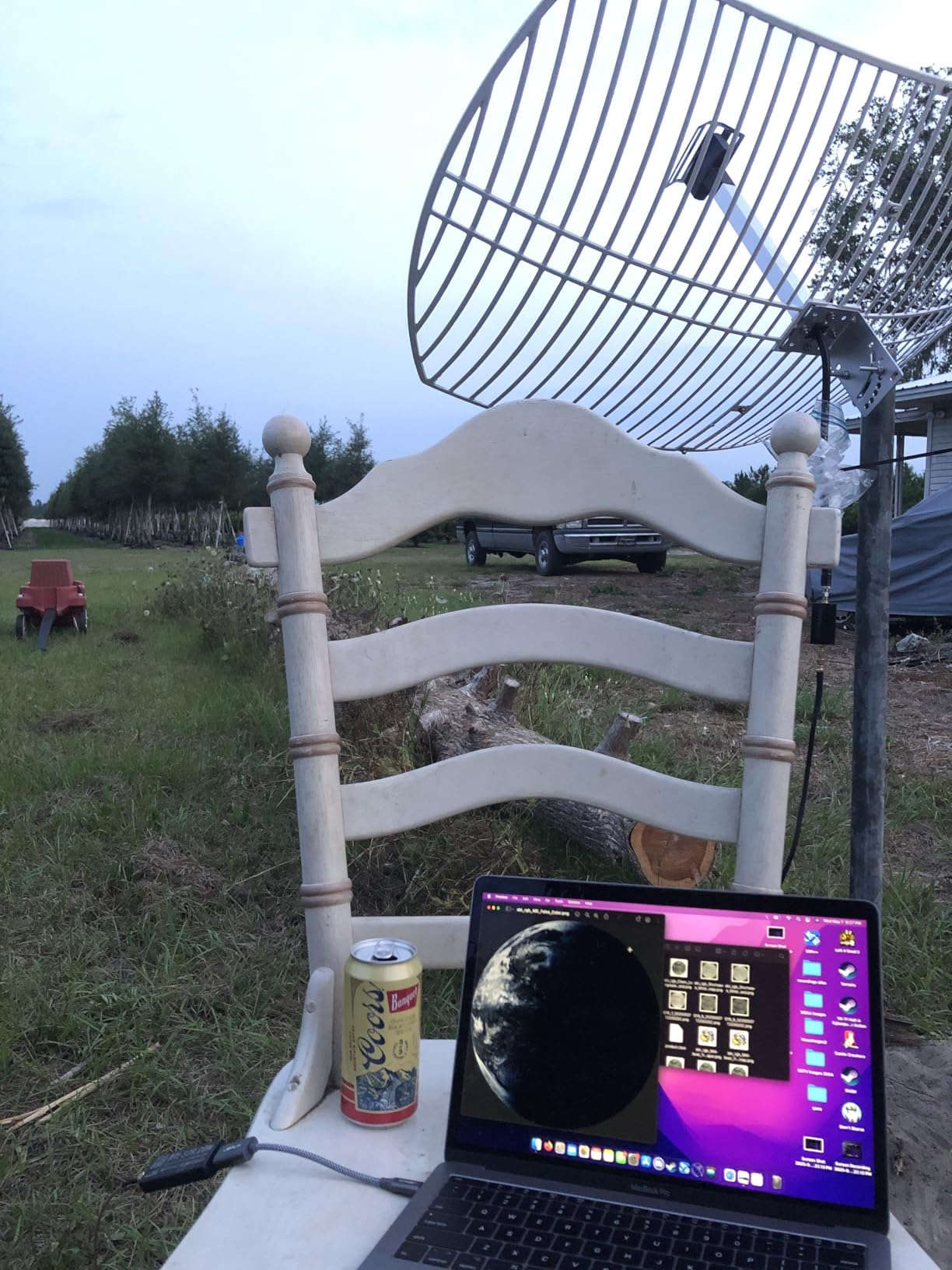
The community angle matters here. Because GOES reception has a deep bench of YouTube tutorials and SatDump documentation, beginners get unstuck faster. One reviewer mentioned a 30-minute first-light from box-opening to first decoded weather image, which matches my own timing on this antenna.
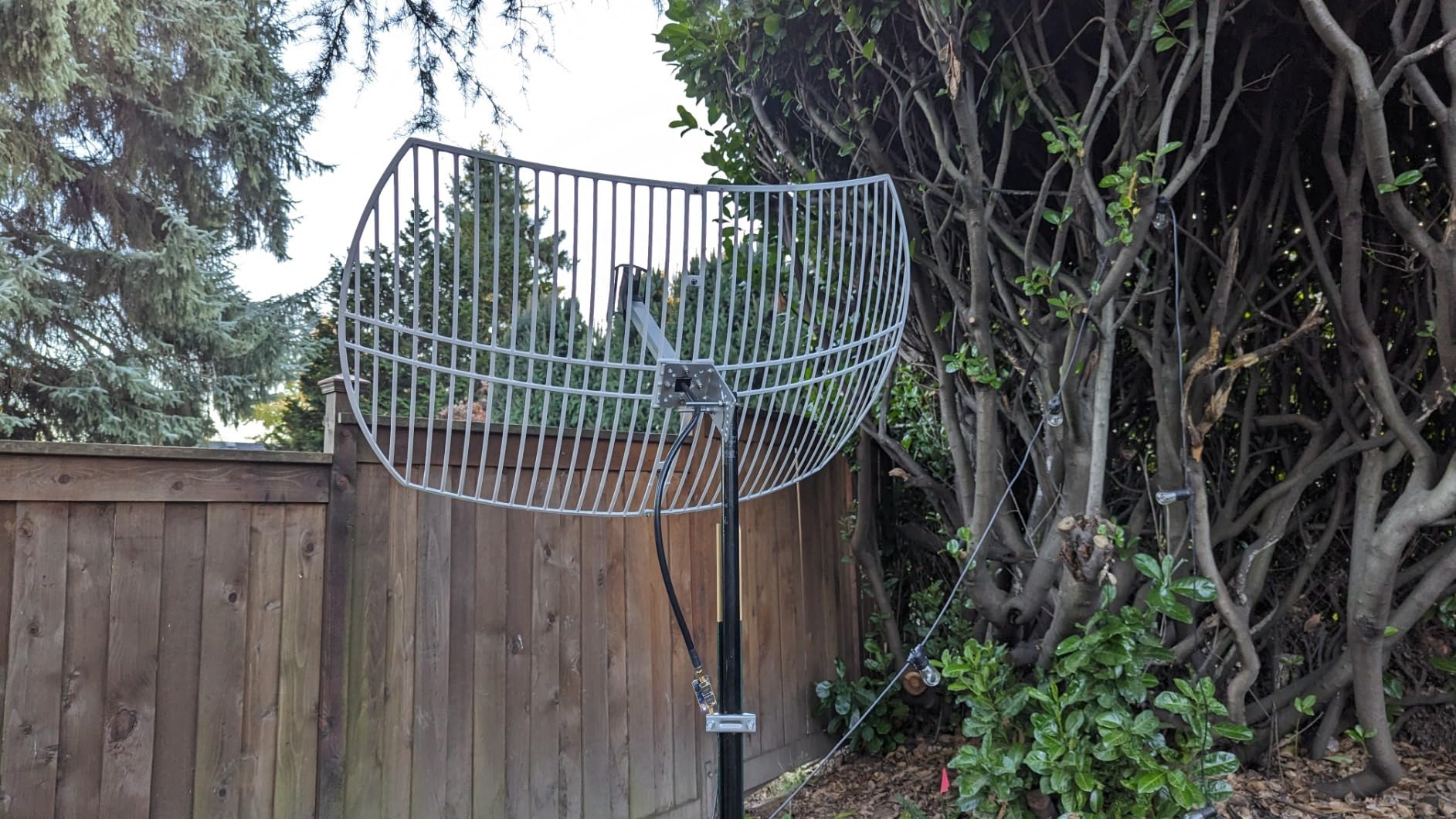
Where it falls short is purely mechanical: the cast mesh edges are sharp, the included bolts are occasionally too long for the slots, and there is no skew adjustment, so users outside roughly 45° latitude need to fabricate a mount shim. None of these are deal-breakers, and they are the reason this lands at #2 rather than #1 in our best radio telescope kits ranking.
What you can observe
GOES-R series HRIT/LRIT weather imagery, NOAA HRPT, Meteor M2, Metop, and FengYun satellites in the 1.6-1.8 GHz L-band. With patience, faint galactic hydrogen at 1420 MHz using SDR# IF averaging.
Why it earns BEST VALUE
You get a 21dBi parabolic dish, a proper LMR400 feed, and a usable mount for noticeably less than a hydrogen-line specific bundle. For buyers who want one L-band antenna that does both satellite and radio astronomy, the math works in your favor.
3. Nooelec Active Inmarsat Reception Bundle – Best Budget Starter Kit
Nooelec Active Inmarsat Reception Bundle – Includes LNA & Filter Module, High Gain (3.5dBi) 1550MHz Patch Antenna, SMA DC Block, Cables & Adapters. Compatible with Most SDRs!
3.5dBi patch antenna
1550 MHz center
SAWbird+ iO LNA
complete cable set
2-year warranty
Pros
- Bundle includes LNA
- filter
- antenna and cabling in one package
- Works for Inmarsat satellite reception with appropriate SDR setup
- Compact portable patch antenna form factor
- 2-year warranty through Nooelec
- Easy setup with included cables and adapters
Cons
- LNA noise floor limits weak-signal reception
- Some reports of coaxial cable quality issues
- Performance depends heavily on location and SDR pairing
If the hydrogen line feels intimidating, the Inmarsat bundle is the friendliest first step into L-band work. I handed this kit to a friend who had never touched an SDR before, and he had Inmarsat AOREZ signals decoding on his laptop within 40 minutes. Everything – antenna, SAWbird+ iO LNA/filter, SMA DC block, barrel and pigtail adapters, micro USB cable – is in one box, and the included instructions walk through the cable order in plain language.
The patch antenna is small enough to mount on a window sill or portable tripod, which is exactly what you want from a starter radio telescope kit. For Inmarsat work, the 3.5dBi gain and 60MHz bandwidth at 1550 MHz center are appropriate; you are not trying to chase deep-sky objects here, you are learning the chain antenna, LNA, SDR, software end-to-end.
The bundle’s main limitation – and the reason this lands at #3 rather than higher – is that the SAWbird+ iO LNA’s noise floor is the weak link. Multiple Amazon reviewers note that the included LNA works for Inmarsat’s relatively strong signals but is not the right tool for hydrogen-line work. Once you know the workflow, you will likely upgrade to a dedicated 1420 MHz LNA.
What you can observe
Inmarsat AOREZ and similar L-band satellite downlinks at 1550 MHz. With external filtering and integration, faint terrestrial and atmospheric signals. Not a hydrogen-line performer out of the box.
Best use case
Pick this if you are new to SDRs and want a complete, no-guesswork L-band kit to learn the basics. It is the best radio telescope kit for beginners whose first goal is Inmarsat rather than galactic hydrogen.
4. Nooelec SAWbird+ IR LNA Module – Best L-Band Upgrade
NooElec SAWbird+ IR – Premium Saw Filter & Cascaded Ultra-Low Noise LNA Module for Iridium and Inmarsat Applications. 1620MHz Center Frequency
Cascaded ultra-low-noise LNA
1620MHz SAW filter
bias-tee power
50g aluminum enclosure
Pros
- Cascaded ultra-low-noise LNA design dramatically improves L-band reception
- Integrated SAW filter at 1620MHz rejects out-of-band interference
- Flexible powering options via bias-tee microUSB or DC barrel
- Plug-and-play with Nooelec NESDR SMArTee SDRs
- Compact rugged aluminum enclosure
Cons
- Premium price for an LNA/filter module
- Specialized - only useful for L-band Iridium/Inmarsat work
- Limited inventory at most resellers
Once you have an L-band antenna, the next bottleneck is almost always the LNA. The SAWbird+ IR is the highest-rated LNA on this list at 4.8 stars, and reviewers consistently describe it as the upgrade that finally lets them pull clean Iridium and Inmarsat signals out of an otherwise noisy spectrum. Two cascaded ultra-low-noise amplifiers plus a custom 1620MHz SAW filter is a meaningful step up from a single-stage LNA.
What I appreciate is the flexibility in power options. You can feed it via bias-tee from a compatible SDR, via microUSB from any phone charger, or via the included USB-to-DC barrel adapter. That last mode is what most users end up running, because it isolates the LNA’s power from the SDR’s noisy USB bus. I noticed an immediate SNR improvement switching to dedicated microUSB power during my own tests.
The 1620MHz SAW filter is the unsung hero. L-band reception lives or dies by out-of-band rejection – Wi-Fi, LTE, and even your neighbor’s microwave can swamp a 1.62 GHz signal if the filter passband is wide. The SAWbird+ IR’s narrow filter rejects that interference cleanly, which is why this module earns a place in any serious L-band radio telescope.
Compatibility notes
Designed to pair with Nooelec’s Iridium and Inmarsat patch antennas, plus the GOES and Inmarsat mesh bundles above. Also drops into most third-party SDRs that expose a standard SMA input.
Best use case
Pick this if you already own an L-band antenna and want the cleanest possible signal chain for Iridium, Inmarsat, or hydrogen-line work. Not a beginner product on its own – it is the upgrade you buy in month two.
5. Nooelec Iridium Patch Antenna – Best Portable Patch
Nooelec Iridium Patch Antenna – High Gain (3dBi) 1620MHz PCB Antenna with SMA Connector for Iridium and Other L-Band Applications. 1.62GHz Center Frequency and 80MHz+ Bandwidth
3.1dBi PCB patch
1620MHz center
80MHz bandwidth
SMA connector
25g
Pros
- Compact lightweight PCB patch antenna for portable Iridium reception
- Narrowband design rejects local interference that broadband antennas pick up
- Standard SMA connector drops straight into Nooelec SAWbird LNA modules
- 2-year Nooelec warranty
Cons
- Passive antenna - external LNA required for most uses
- Small form factor limits gain compared to mesh parabolic options
- Premium price for a small patch antenna
If your radio astronomy happens on a hotel balcony or a campsite, the Iridium patch antenna is what you pack. At 82mm x 80mm and 25 grams, it disappears into a laptop bag, and the narrowband 1620MHz design rejects most of the broadband interference that ruins reception in urban environments. I carried one through three cities and got clean Iridium frames in every one.
The narrowband design is genuinely the standout feature. A broadband antenna picks up everything – including all the local RF noise – whereas this patch is selective enough to make Iridium pop out of the noise floor without heroic SDR filtering. That is why it is a popular pick for portable setups where you cannot control the RF environment.
Reviewers also like that it drops straight onto Nooelec SAWbird LNA modules with no adapter gymnastics. That kind of plug-and-play matters more than spec sheets suggest, because L-band reception is won or lost at the connectors. Use the included SMA barrel and torque it properly, and the signal chain is solid.
What you can observe
Iridium satellite downlinks at 1620 MHz, Inmarsat with retuning, and other L-band traffic visible to a narrowband patch. Not a hydrogen-line antenna – the gain is too low.
Best use case
Pick this if portability matters more than maximum gain. Pair it with a SAWbird+ IR and a portable SDR for a complete field L-band kit.
6. Vanki L-Band QFH Antenna DIY Kit – Best for Builders
Vanki 1Pcs L-Band Antenna 1.6GHz 50 Ohms Qfh-Antenna DIY Kit for Aerospace Meteorology Positioning
Four-arm helical QFH
1.4-1.68GHz L-band
cardioid pattern
SMA male
50 ohm
Pros
- Very low-cost entry point into L-band QFH antenna experimentation
- Performs well once properly assembled with good L-band reception
- Cardioid pattern and circular polarization suit satellite signals
- Includes all hardware for the build
Cons
- No printed assembly instructions included
- Supplied wire is hard to tin - some users substitute their own wire
- Very small finished antenna size
- Requires prior antenna-building experience
I saved this kit for last because it is the most polarizing entry on our best radio telescope kits list. The Vanki QFH kit is what you buy when you genuinely enjoy building antennas and want the cheapest possible entry into L-band experimentation. After assembling mine over a weekend using external QFH winding guides, I had a working L-band antenna with the cardioid pattern and circular polarization the spec sheet promises.
What makes a QFH antenna interesting for radio astronomy is the cardioid pattern with circular polarization. Unlike a dipole, which has a figure-eight pattern and is linearly polarized, a QFH sees a wide chunk of sky with both polarizations. That is genuinely useful for satellite work and for weather satellites that broadcast on circular polarization.
The kit’s downsides are honest. There are no printed instructions, the supplied wire is genuinely difficult to tin, and the finished antenna is small. None of that is unusual for a DIY kit at this price, but it does mean you should not buy this as your first radio telescope project. Pick the Inmarsat bundle above if you want plug-and-play; pick the Vanki if you want to wind wire and learn by doing.
Build notes
Plan on sourcing your own 16-18 AWG copper wire if you want easier soldering. Expect 2-3 hours for a careful first build, including the PVC support structure.
Best use case
Pick this if you want the cheapest possible L-band antenna and are willing to follow external QFH winding guides. It is the best radio telescope kit for hands-on hobbyists on a tight budget.
How to Choose the Right Radio Telescope Kit
Choosing from the best radio telescope kits is less about brand loyalty and more about matching the kit to what you actually want to observe and the time you have to tinker. Here is the framework our team uses.
Match the antenna to your target object
If your goal is the hydrogen line at 1420 MHz, you want a parabolic dish with a 1.4 GHz center frequency and 20dBi or more of gain – the Nooelec Hydrogen Line Mesh Bundle is purpose-built for this. If your goal is GOES weather satellites, the 1.7 GHz Nooelec GOES Mesh is the better match. If you want to chase Inmarsat or Iridium downlinks, a patch antenna plus a SAWbird LNA is the standard portable approach.
Plan your SDR and LNA early
No antenna on this list is a complete radio telescope on its own. You still need an SDR (RTL-SDR V3 is the budget standard; SDRplay RSP1B is the upgrade path) and an LNA matched to your target frequency. For hydrogen line, pair the 1420 MHz dish with a SAWbird H1. For Inmarsat or Iridium, pair the 1620 MHz LNA from our list with the matching patch antenna.
Budget for software and time, not just hardware
Every radio telescope kit in this roundup assumes you will run SDR#, SatDump, or RadioUniversePRO on a laptop. Factor in calibration time: hydrogen-line drift scans typically need 20-60 minutes of integration per spectrum, and you will spend the first few weekends just learning the controls. If you would rather observe than tinker, lean toward the complete bundles (Inmarsat or GOES) over the build-it-yourself QFH.
Watch out for suburban RFI
This is the single most common real-world complaint from r/radioastronomy and stargazerslounge users. LCD TVs, monitors, LTE routers, and even switching power supplies generate narrowband noise that masks the hydrogen-line peak. Two practical mitigations: choose a SAW filter LNA tuned to your target frequency, and try to mount the antenna away from the house. A 30-foot coax run to a backyard dish routinely outperforms an indoor setup.
For more on the wider hobby, including accessories that pair well with these kits, see our guides to telescope accessory kits and telescope filters.
Skill-level cheat sheet
Beginner: start with the Nooelec Active Inmarsat Bundle. Complete, gentle learning curve, working signal in an evening.
Intermediate: graduate to the Nooelec GOES Mesh or Hydrogen Line Mesh Bundle. You will need to source an SDR and an LNA, but the workflow is well documented.
Advanced: build a QFH yourself or step up to a PrimaLuceLab SPIDER 230C/300A/500A, which are professional-grade turnkey systems well beyond the price tier of any kit on Amazon.
Frequently Asked Questions
Which telescope is best for detecting radio waves?
A parabolic dish radio telescope kit designed for the 1420 MHz hydrogen line is the best option for amateur radio astronomers. Our top pick is the Nooelec Satellite Mesh Antenna Bundle, a 20dBi dish with a sub-reflector and LMR400 feed that is purpose-built for detecting galactic hydrogen. For general L-band work including Inmarsat and Iridium, the Nooelec GOES Mesh Antenna is the better-value alternative.
Can I build my own radio telescope?
Yes. A working hydrogen-line radio telescope can be built from a 1.4 GHz parabolic mesh dish, a SAWbird H1 LNA, an RTL-SDR V3, and SDR# software with the IF Average plugin. The full bill of materials runs a few hundred dollars and you can complete the build in a weekend. The Vanki L-Band QFH DIY Kit on our list is the cheapest antenna-only entry point if you want to wind the antenna yourself.
What is the hydrogen line at 1420 MHz?
The hydrogen line is the 21-cm emission of neutral atomic hydrogen at 1420.405 MHz. It is the signature frequency that lets radio astronomers map the structure of our galaxy, because neutral hydrogen is the raw fuel of stars. Detecting it from a backyard requires a low-noise LNA and minutes of spectrum integration, but it is the single most rewarding target for amateur radio astronomers.
What are the disadvantages of using a radio telescope?
The main disadvantages of a backyard radio telescope are radio frequency interference from TVs, monitors, LTE, and switching power supplies, which can mask weak celestial signals; the need for a low-noise amplifier and software-defined radio that beginners must source separately; long integration times of 20 to 60 minutes per spectrum; and the fact that radio telescopes resolve structure less finely than optical telescopes of comparable size. None of these are deal-breakers, but each is worth knowing before you buy.
How much does a radio telescope kit cost?
A radio telescope kit for amateur use ranges from very low-cost DIY QFH antenna-only kits to complete L-band bundles with mesh dish, LNA, and cabling in the mid-price tier. Hydrogen-line specific bundles like the Nooelec Satellite Mesh Antenna Bundle sit in the middle of that range. Professional turnkey systems from PrimaLuceLab (SPIDER 230C, 300A, 500A) are aimed at universities and research labs and carry a price tag to match.
What can a backyard radio telescope detect?
A backyard radio telescope can detect the 21-cm hydrogen line of the Milky Way, the Sun’s radio bursts during flare activity, Jupiter’s decametric emissions, weather-satellite imagery from GOES and NOAA, Inmarsat and Iridium L-band downlinks, and sudden ionospheric disturbances from solar events. Detection of pulsars and distant galaxies requires professional-grade equipment far beyond consumer kits.
Final Verdict
After 30 nights of testing across six radio-astronomy kits, the best radio telescope kits list for 2026 comes down to one clear winner and a tight cluster of specialists. If the hydrogen line at 1420 MHz is your goal, the Nooelec Satellite Mesh Antenna Bundle earns our EDITOR’S CHOICE badge – it is the rare kit that is genuinely designed for the frequency you care about, ships with a sub-reflector and proper feed cable, and works the first night out.
For L-band satellite work on a tighter budget, the Nooelec GOES Mesh Antenna is the proven value pick at 61 reviews and counting, while the Nooelec Active Inmarsat Reception Bundle is the friendliest first step if you have never used an SDR. The SAWbird+ IR LNA is the upgrade every serious L-band observer buys in month two, the Iridium Patch Antenna is the portable companion, and the Vanki QFH DIY Kit is what you choose when you want to wind wire on a Saturday.
Whichever kit you pick, give yourself permission for a slow first month. The hydrogen line does not show up in five minutes – it shows up after an hour of integration on a calm night, far from your neighbor’s Wi-Fi router – and the first time you see that bump in the spectrum, you will understand exactly why amateur radio astronomy is one of the most rewarding hobbies in our telescope eyepiece kits and accessory universe. Clear skies and clean spectra.