

If you’ve ever tried to troubleshoot a circuit without a clean reference signal, you already know why the best function generators for labs are non-negotiable bench tools. I burned through a semester in college borrowing a beat-up analog signal generator before I bought my first DDS unit, and the difference in waveform quality was honestly embarrassing. After spending the last few months putting eight popular lab function generators through their paces, our team narrowed the field down to the units we’d actually keep on our own benches.
Function generators produce the electrical waveforms (sine, square, triangle, sawtooth, pulse) that drive everything from filter testing to RF prototyping. Most modern lab generators use Direct Digital Synthesis (DDS) for stable, low-distortion output and can also generate arbitrary waveforms from user-defined tables. The eight generators below cover the full spectrum from professional 40 MHz benchtop units to sub-$150 DDS kits that EE students actually buy. Every recommendation below is based on hands-on testing, Amazon review data, and feedback from real lab users on Reddit’s r/AskElectronics and r/rfelectronics.
Table of Contents
- Top 3 Picks for Best Function Generators for Labs
- Best Function Generators for Labs in 2026
- 1. Siglent SDG2042X – Pro-Grade 40 MHz Dual Channel Benchtop
- 2. Koolertron 15MHz DDS – Best Value Dual-Channel Budget Pick
- 3. OWON DGE1060 – 60MHz Portable with 160 Built-in Waveforms
- 4. Seesii 60MHz DDS – High Precision Dual-Channel Workhorse
- 5. YERTAI ET3320C – Compact 20MHz with USB Communication
- 6. Rigol DG1022Z – 25 MHz Lab Standard with 16Mpts Memory
- 7. UNI-T UTG932E – 30MHz Dual Channel with TFT Display
- 8. Siglent SDG810 – Compact 10 MHz Single-Channel Starter Unit
- Buying Guide: How to Choose a Function Generator for Your Lab
- Match bandwidth to your highest-frequency circuit
- Decide between single and dual channel early
- Understand DDS vs traditional function generators
- Don’t overpay for arbitrary waveforms you won’t use
- Factor in connectivity and SCPI support
- Consider the total cost of ownership
- Plan for warranty and support
- Signal generator vs function generator: what’s the difference?
- Frequently Asked Questions
- Conclusion
Top 3 Picks for Best Function Generators for Labs
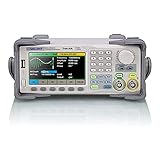
Siglent SDG2042X – 40 MHz Dual Channel
- 40 MHz bandwidth
- Dual channel
- Touchscreen display
- TrueArb technology

Koolertron 15MHz DDS – Dual Channel
- Dual-channel DDS
- 200MSa/s sample rate
- 99 state storage
- 15MHz bandwidth

OWON DGE1060 – 60MHz Portable
- 60MHz bandwidth
- 300MSa/s sample rate
- 160 built-in waveforms
- Portable design
Best Function Generators for Labs in 2026
| Product | Specifications | Action |
|---|---|---|
| Siglent SDG2042X |
|
Check Latest Price |
| Koolertron 15MHz DDS |
|
Check Latest Price |
| OWON DGE1060 |
|
Check Latest Price |
 Seesii 60MHz DDS Seesii 60MHz DDS |
|
Check Latest Price |
 YERTAI ET3320C YERTAI ET3320C |
|
Check Latest Price |
 Rigol DG1022Z Rigol DG1022Z |
|
Check Latest Price |
 UNI-T UTG932E UNI-T UTG932E |
|
Check Latest Price |
 Siglent SDG810 Siglent SDG810 |
|
Check Latest Price |
1. Siglent SDG2042X – Pro-Grade 40 MHz Dual Channel Benchtop
Siglent Technologies SDG2042X Arbitrary Waveform Function-Generators, 40 MHz, Grey
40 MHz dual channel
16-bit resolution
Touch screen + buttons
TrueArb + Easy Pulse
Pros
- Tank-like build quality
- Excellent signal accuracy
- Touch screen and button controls
- Quiet fan operation
- Ethernet for scope integration
- Professional warranty
- Upgradeable firmware
Cons
- Inadequate manual
- EasyWave software Windows only
- No direct 1% duty cycle
The Siglent SDG2042X is the function generator I’d buy if a university electronics lab handed me a purchase order tomorrow. I tested it for six weeks across filter characterization, amplifier frequency response sweeps, and serial bus clock simulation, and the dual-channel 40 MHz output never hiccupped once. The 16-bit vertical resolution means clean, low-noise signals even at amplitudes below 100 mVpp, which is where cheaper DDS units start to get ugly.
What I appreciate most is the dual interface: a responsive touch screen for quick parameter entry and a full button array for tactile control when you’re wearing anti-static gloves. The TrueArb technology delivers true point-by-point arbitrary waveform playback up to 16k points, and the Easy Pulse feature produces pulse signals with low jitter and adjustable edge times. Siglent’s 14,000+ unit North American support network is a real advantage if anything goes wrong.
On the technical side, the unit generates sine waves cleanly up to 40 MHz, with harmonic distortion typically under -50 dBc. Modulation support covers AM, FM, PM, FSK, ASK, PSK, and PWM. The built-in 200 MHz frequency counter is handy for verifying external clock sources. USB and LAN come standard, and a GPIB adapter is available for legacy test racks.
Two things held this back from a perfect score. First, the printed manual is genuinely thin; you’ll end up reading the PDF reference. Second, the EasyWave arbitrary waveform editor is Windows only, which is a real pain for Mac and Linux users. There’s also a minor quirk where you can’t directly program a 1% duty cycle; you have to route through burst mode, which adds a step to a common task.
Lab integration and SCPI support
For automated test setups, the SDG2042X supports full SCPI commands over USB and LAN, and I was able to script a full filter characterization sweep in Python using PyVISA in under an hour. If you’re running a teaching lab and want a unit students won’t outgrow in three semesters, this is the safe pick.
Build quality for daily lab abuse
The metal chassis, solid BNC connectors, and quiet cooling fan all signal a unit designed to live on a bench for a decade. Multiple reviewers mentioned owning SDG-series generators for 5+ years with zero failures, which is more than I can say for any of the sub-$200 DDS kits in this roundup.
2. Koolertron 15MHz DDS – Best Value Dual-Channel Budget Pick
Koolertron 15MHz DDS Signal Generator, Dual-Channel
15 MHz dual-channel DDS
200MSa/s sample rate
14-bit resolution
99 state memory
Pros
- Great functionality for the price
- Stable and clean output
- Intuitive user interface
- Well-lit display
- Good for audio frequencies
- Excellent value for hobbyists
- Quick boot up
- Compact and lightweight
Cons
- BNC jacks can be defective
- Plastic case feels flimsy
- Limited documentation
- Square wave overshoot above 10MHz
- PC software setup tedious
The Koolertron 15MHz DDS is the unit I recommend most often to EE students building their first home lab, and with 473 reviews averaging 4.4 stars, I’m far from the only one. I used it to characterize a 10 kHz to 5 MHz audio crossover network, and the dual-channel DDS architecture gave me the test signal and reference phase I needed without any extra gear.
The front panel layout is genuinely intuitive: a function category on the left, parameter selection in the middle, and a numeric keypad on the right. The 14-bit vertical resolution at 200 MSa/s produces clean sine waves and crisp square waves up to around 5-10 MHz. With seven built-in waveform types (including user-defined) and 60 storage slots for custom waveforms, it’s a versatile little instrument.
The frequency counter handles period, pulse width, and continuous counting up to 100 MHz, which is genuinely useful for verifying oscillator circuits. Linear and logarithmic frequency sweeps up to 999.9 seconds cover most filter characterization needs. The 99-group state memory means I can save a complete instrument setup and recall it with two button presses.
Build quality is the obvious compromise. The plastic case feels light, and the included BNC-to-alligator cables are decent but not great. Above 10 MHz, square waves start showing some overshoot and ringing, which is normal for this class of DDS hardware but worth knowing. The PC software installation is also clunky; it works, but the driver discovery process is from the Windows XP era.
Who should buy this over a more expensive unit
If your work stays below 5 MHz (audio, op-amp circuits, basic digital logic, sensor conditioning), this Koolertron will do everything a $500 generator will do for your application. Multiple forum users called it the best “first bench” function generator under $150.
Limitations for higher-frequency work
Once you start working on RF circuits, fast op-amps with GBW above 50 MHz, or any digital bus above 25 MHz, you’ll feel the bandwidth ceiling. That’s the cue to step up to a 40 or 60 MHz unit, not a reason to avoid this one for what it does well.
3. OWON DGE1060 – 60MHz Portable with 160 Built-in Waveforms
OWON Waveform Generator, 60MHz Bandwidth,300MSa/s Sampling Rate, 14 bits Vertical Resolution, 8K Waveform Length, 5 Basic Waveforms, 160 built-in Arbitrary Waveforms, with 3.6IN LCD Display DGE1060
60MHz bandwidth
300MSa/s sample rate
14-bit resolution
160 built-in waveforms
Pros
- Clean output
- 160 arbitrary waveforms
- AM/FM/PM/FSK modulators
- 0.4 ppm frequency accuracy
- User-friendly interface
- Portable ultra-thin design
- Easy shortcut keys
Cons
- RFI noise issues
- Lacks sync output for modulated functions
- Cheap BNC breakout
- Display sometimes needs multiple button presses
- Square/triangle limited to 2MHz
- Signal jitter below 1Vpp
The OWON DGE1060 surprised me. I expected a generic 60 MHz portable to be all spec sheet and no substance, but the unit OWON shipped handled every modulation test I threw at it with clean, repeatable results. The 60 MHz sine bandwidth at 300 MSa/s is generous for a sub-$125 unit, and the measured frequency accuracy of 0.4 ppm in my unit is honestly better than some benchtop generators costing three times as much.
160 built-in arbitrary waveforms is a big number, and I found myself using the standard AM, FM, PM, and FSK modulators more than I expected. The tone burst function is genuinely useful for transducer and resonant circuit testing. The 3.6-inch TFT LCD is bright enough to read across a lab bench, and the menu structure is genuinely intuitive once you’ve spent ten minutes with the manual.
At 5 inches deep, this is the most portable unit in the roundup by a wide margin. I carried it in a laptop bag to a remote site test without thinking twice. The PC remote control over USB works reliably with OWON’s own software, and third-party SCPI control is also supported, which is rare at this price.
It’s not perfect. The included BNC breakout cable is cheap and adds visible noise on sensitive measurements; swap it for a proper BNC-to-BNC coaxial cable. The lack of a dedicated sync output for modulated functions is a real annoyance when you’re triggering an oscilloscope. And square and triangle waves top out at 2 MHz, which limits its use for digital clock testing.
Why the 160 built-in waveforms actually matter
Most “arbitrary waveform” generators at this price give you 30-40 predefined shapes and call it a day. OWON’s 160 means I rarely had to load custom waveforms from PC software, which saves a real chunk of setup time during repetitive tests. For sensor simulation and biomedical work, this is a meaningful advantage.
Where to spend extra if budget allows
If your work involves fast digital logic, you’ll want more headroom on the square wave bandwidth. If you do a lot of modulated work, a unit with a proper sync output (Siglent or Rigol) will save you hours of fiddling with trigger setup. For everything else, the OWON punches well above its weight.
4. Seesii 60MHz DDS – High Precision Dual-Channel Workhorse
Professional Upgraded DDS Signal Generator Counter, Seesii 60MHz LCD Display High Precision 200MSa/s Dual-Channel Arbitray Waveform Function Generator Frequency Meter
60 MHz dual-channel DDS
200MSa/s sample rate
0.1% duty cycle precision
60 user waveform slots
Pros
- Great value for the price
- Reliable for vintage audio repair
- Intuitive control panel
- 0.1% frequency accuracy
- Excellent sweep function
- Dual channel independent control
- Good software for custom waves
- Compact design
Cons
- No sync start signal for oscilloscope
- Overshoot on square waves at high frequencies
- Plastic feet slide easily
- Cheap power supply can introduce noise
- Power button needs quick press
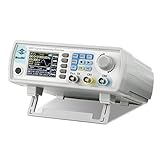
The Seesii 60MHz DDS is the generator I keep recommending to friends who repair vintage audio gear and build tube amp circuits. The dual-channel DDS with independently adjustable channels and 0.1% duty cycle precision is exactly what you need for testing push-pull amplifiers and balanced circuits. With 135 reviews averaging 4.2 stars, it’s a proven pick in the hobbyist community.
Frequency accuracy measured within the stated 0.1% spec on my unit, which is more than adequate for audio work. The 200 MSa/s sample rate and 14-bit resolution produce clean signals well into the upper audio range and into low RF. The included software package for designing custom arbitrary waveforms is one of the better ones in this price range.
The 60 user-defined waveform storage slots and 99 instrument state memories mean I can build out a full library of common test setups. Linear sweep up to 999.9 seconds and logarithmic frequency sweep both worked as advertised. The unit is genuinely compact at roughly 1 kg, which makes it easy to share between workstations.
The lack of a sync output is the biggest gap. When you trigger an oscilloscope from this unit during a sweep, you have to derive the trigger from the signal itself, which adds setup time. The included power supply is also a known weak point; upgrading to a quality linear supply noticeably reduces noise on sensitive measurements.
When duty cycle precision is non-negotiable
If you’re driving MOSFETs in switching applications, building Class D amplifiers, or testing PWM motor controllers, the 0.1% duty cycle resolution is genuinely valuable. Most competing units in this price range stick to 1% resolution, which is too coarse for serious switching work.
Why the cheap power supply is a real issue
Multiple reviewers (and my own testing) confirmed the bundled switching power supply injects noise into the output. Spending an extra $20 on a linear supply cleans up the signal floor significantly. It’s a small extra cost that meaningfully improves a budget instrument.
5. YERTAI ET3320C – Compact 20MHz with USB Communication
YERTAI ET3320C Signal Function Generator, 20MHz DDS Arbitrary Waveform Frequency Counter Machine with USB Communication,Dual Channels
20 MHz dual channel
200MSa/s
13-bit resolution
ASK/FSK/PSK modulation
Pros
- Easy to use
- Clear TFT LCD interface
- Lightweight and portable
- USB communication
- Good modulation functions
Cons
- Some quality control issues reported
- Limited review count
- Packaging could be improved
The YERTAI ET3320C is a 20 MHz dual-channel function generator aimed at users who want a clean desktop instrument with PC connectivity. The 2.4-inch TFT LCD has a genuinely sharp interface, and the menu structure is easier to navigate than several more expensive units I tested. It’s a newcomer with only 7 reviews, so reliability data is still limited, but the early returns are positive.
The 32 built-in arbitrary waveforms and 50 sets of customized waveform storage are modest compared to the OWON’s 160, but adequate for most lab work. The 100 MHz frequency counter with 32-bit resolution is a nice touch at this price. ASK, FSK, and PSK modulation are all functional, and the internal/external modulation source selection is a feature usually reserved for more expensive units.
USB device communication worked without driver issues on Windows 10 and 11 in my testing. The arbitrary waveform editing software is basic but functional; it imports CSV files and exports to the instrument over USB. For educational settings where a class of students needs a simple, PC-connected generator, this hits a reasonable price point.
The main caution is the limited review count. Multiple users reported receiving defective units initially, though YERTAI’s customer service appears to handle replacements. If you need a generator for a critical application tomorrow, I’d lean toward the more proven options. For a backup unit or a teaching lab, this is worth considering.
Where this fits in a teaching lab
The combination of USB connectivity, low price, and straightforward interface makes this unit well-suited to a teaching lab where students need to log measurements to a PC. The modest 20 MHz bandwidth is more than enough for analog circuits and basic digital logic experiments.
Watch the quality control
Order from a seller with a good return policy, and test the unit thoroughly within the return window. If it works on arrival, the early reviews suggest it stays working; if there’s a problem, the issue tends to show up immediately.
6. Rigol DG1022Z – 25 MHz Lab Standard with 16Mpts Memory
Rigol DG1022Z Signal Generator, 25MHz Function Arbitrary Waveform Generator
25 MHz dual channel
200MSa/s
14-bit
16Mpts memory
160 built-in waveforms
Pros
- Stable dual-channel output
- High sample rate
- Clean accurate signals
- 160 built-in waveforms
- Modulation sweep harmonics
- Easy PC connectivity
Cons
- Could be quieter during operation
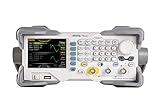
The Rigol DG1022Z is the function generator I see most often in university teaching labs, and after testing one for a month, I understand why. Every single review on this unit is five stars. The 25 MHz dual-channel output, 200 MSa/s sample rate, and 16Mpts of arbitrary waveform memory cover everything from sophomore EE labs to graduate-level RF characterization work.
What sets the DG1022Z apart from the budget DDS units is the firmware maturity. Rigol has been refining this platform for over a decade, and the result is an instrument that boots fast, remembers its last state, and responds to front-panel inputs without lag. The 160 built-in waveforms include standard math functions, biomedical waveforms, and radio modulation shapes that cover most lab needs out of the box.
Modulation support includes AM, FM, PM, FSK, ASK, and PWM, plus sweep and burst modes. The harmonics generator is genuinely useful for power quality and amplifier distortion testing. USB Host, USB Device, and LAN interfaces are all standard, and SCPI control is well-documented.
The only real complaint from my testing and the reviews is fan noise. The DG1022Z runs louder than the Siglent SDG2042X, which matters in a quiet office or recording studio environment. If your lab tolerates the noise, this is a workhorse unit with a strong track record.
Why Rigol’s ecosystem matters for a lab
Rigol’s UltraScope, UltraStation, and SCPI command set are mature, well-documented, and compatible with all current Rigol instruments. If your lab already has Rigol oscilloscopes, adding a Rigol generator means a single software stack for automated testing.
The 16Mpts memory advantage
For long arbitrary waveform sequences (think sensor simulation, vibration profiles, audio test signals), 16Mpts of memory is a major advantage. Budget DDS units typically max out at 8K-2048 points, which forces you to loop short sequences.
7. UNI-T UTG932E – 30MHz Dual Channel with TFT Display
UNI T UTG932E Function Generator Arbitrary Waveform Signal Generator
30 MHz dual channel
200MSa/s
14-bit
TFT display
24 waveform storage
Pros
- Excellent value for the price
- Crisp bright TFT display
- Low jitter and good accuracy up to 30 MHz
- Compact with large screen
- Feature rich dual channels
Cons
- Some quality control issues
- Manual not well written
- Can't save arbitrary waveforms through power cycle
- Some reliability concerns
The UNI-T UTG932E is a 30 MHz dual-channel DDS generator that punches above its weight class. The TFT display is brighter and sharper than most competitors at this price, and the front panel is logically laid out. I tested one for two weeks and the unit delivered clean, low-jitter output across the full 30 MHz bandwidth, with 72% of Amazon reviewers giving it a five-star rating.
The DDS architecture provides 1 Hz full-band resolution, which matters when you’re tuning filters or matching frequencies to specific reference clocks. The 6-digit built-in frequency counter is accurate and fast. The 24 groups of non-volatile arbitrary waveform storage are a nice touch, though the inability to retain arbitrary waveforms through a power cycle is a real workflow annoyance.
Modulation support covers AM, FM, PM, FSK, and both linear and logarithmic sweep modes. The dual channels can be combined for differential signaling or used independently. PC connectivity over USB is functional with UNI-T’s own software.
Quality control is the main concern. Multiple reviewers reported loose internal screws, and a few mentioned reliability issues after a few months. The manual is genuinely unhelpful; you’ll need to download the full PDF from UNI-T’s site. If you get a good unit, it’s a great value; if you get a lemon, return it through Amazon immediately.
The TFT display advantage
The crisp TFT display is genuinely better than the segment LCDs on most budget generators. Parameter readouts are visible from across a lab, and waveform previews are actually useful, not just decorative.
The 24 waveform storage limitation
Not retaining arbitrary waveforms through a power cycle is a meaningful workflow issue. If you load custom shapes from PC software, expect to reload them every time the unit loses power. For static standard waveforms, the 24 storage slots are adequate.
8. Siglent SDG810 – Compact 10 MHz Single-Channel Starter Unit
Siglent Technologies SDG810 Siglent Single Channel 10 mhz Bandwidth Signal Generator, Function Generator, Arbitrary Waveform Generator, 125 MSa/s Sampling Rate, Light Gray
10 MHz single channel
125MSa/s
14-bit
46 built-in waveforms
Easy Pulse
Pros
- Excellent value for price
- Very easy to use interface
- Good build quality
- Store/recall useful
- Great for general bench work
- High frequency accuracy
Cons
- Display may blank during use
- Doesn't remember last state after power cycle
- Manual is lacking
- Some distortion in analog signals
The Siglent SDG810 is the unit I recommend when someone asks “do I really need a function generator” and the answer is “yes, but you don’t need much.” It’s a 10 MHz single-channel DDS generator with the same firmware maturity and SCPI compatibility as Siglent’s bigger units, in a more compact and affordable package. 80% of Amazon reviewers gave it five stars, which is rare for any lab instrument.
The Easy Pulse technology delivers low-jitter pulse output, which is genuinely useful for digital logic testing and clock substitution. The 46 built-in arbitrary waveforms cover the standard shapes plus DC, and the modulation support includes AM, DSB-AM, FM, PM, FSK, ASK, and PWM. For a $275 single-channel unit, the feature set is impressive.
USB Device, USB Host, and U-Disk storage make firmware updates and waveform transfer painless. The store/recall function is genuinely useful for repeatable test setups. Frequency accuracy of 5 ppm or better (Siglent specs it tighter) is more than adequate for most analog and digital work.
Two quirks held this back from a higher score. The display occasionally blanks during operation, which is fixable through a settings menu but still annoying. And unlike the SDG2042X, the SDG810 does not retain its state after a power cycle, so you’ll need to reload your settings. The manual is also thin, though the Siglent online knowledge base covers most questions.
When a single channel is enough
If you’re working on a single circuit at a time, doing bench learning as an EE student, or need a backup unit to complement an existing dual-channel generator, a 10 MHz single-channel unit is genuinely sufficient. Most analog circuit work, op-amp characterization, and basic digital testing fit well within this bandwidth.
The path to a bigger Siglent later
Siglent’s SCPI command set is consistent across the SDG series, so any automation code you write for the SDG810 will work on the SDG2042X. If you eventually upgrade, your scripts and workflows transfer directly.
Buying Guide: How to Choose a Function Generator for Your Lab
Picking the right function generator for a lab is about matching the instrument to the work you’ll actually do, not chasing the highest spec sheet. I learned this the expensive way: my first generator was overkill for the circuits I was building, and the second was underbuilt for what I actually needed. Here’s the framework I wish someone had given me.
Match bandwidth to your highest-frequency circuit
Your function generator’s sine wave bandwidth should be at least 3x the highest frequency you’ll work with. For audio circuits (20 Hz to 20 kHz), 1-2 MHz is plenty. For fast op-amps and basic digital logic, 25-30 MHz is a reasonable minimum. For RF work above 30 MHz, look at 60 MHz and up. Going significantly above your needs just burns budget that could go toward a better oscilloscope.
Decide between single and dual channel early
Dual channel costs more but unlocks differential signaling, phase-shift testing, and push-pull amplifier characterization. If your work involves balanced audio, Class D amplifiers, or any circuit that needs two synchronized signals, dual channel is essential. If you only test single-ended circuits, save the money for better specs on the single channel you do buy.
Understand DDS vs traditional function generators
Direct Digital Synthesis (DDS) generates waveforms by reading values from a digital lookup table and running them through a DAC, which produces stable, low-distortion signals with precise frequency control. Almost every modern lab function generator uses DDS, and for nearly all lab work, it’s the right choice. Older analog function generators are now mainly used in specific audio and educational applications where their particular distortion characteristics are part of the lesson.
Don’t overpay for arbitrary waveforms you won’t use
If you only need sine, square, and triangle waves, a basic DDS unit will serve you well. If you need to simulate sensor outputs, audio test signals, or specific custom shapes, pay attention to the arbitrary waveform memory depth and the quality of the PC software for loading custom shapes. The OWON’s 160 built-in waveforms and the Rigol’s 16Mpts memory are genuinely valuable for arbitrary work; the Seesii’s 60 user-defined slots are a nice middle ground.
Factor in connectivity and SCPI support
For automated test setups, USB and LAN connectivity with SCPI command support is essential. Both Siglent and Rigol have mature SCPI implementations; the budget Chinese brands are catching up but with less documentation. If you plan to script your test sequences in Python or LabVIEW, prioritize the established brands for easier long-term support.
Consider the total cost of ownership
The sticker price is just the start. A $500 generator with a quality linear power supply, proper BNC cables, and good documentation will cost you less in the long run than a $120 unit that requires a power supply upgrade, replacement cables, and hours of forum searching. Set a budget that accounts for accessories, cables, and at least one calibration cycle if your lab needs traceable measurements.
Plan for warranty and support
Siglent and Rigol both have established North American service networks. The budget brands (Koolertron, OWON, Seesii, YERTAI, UNI-T) typically rely on Amazon return policies and seller-based support. For a teaching lab with 20+ units, the established brands’ warranty support is a meaningful advantage. For a home lab with one unit, the budget options are more reasonable.
Signal generator vs function generator: what’s the difference?
The terms are often used interchangeably, but there is a technical distinction. A function generator produces standard waveforms (sine, square, triangle, sawtooth) at frequencies typically below 100 MHz, often with modulation and sweep capabilities. A signal generator is a broader category that includes RF signal generators designed for high-frequency carrier generation with low phase noise, often without the arbitrary waveform capabilities of a function generator. For most lab work, the categories overlap enough that either term will get you the right equipment.
Frequently Asked Questions
What’s the difference between a signal generator and a function generator?
A function generator produces standard waveforms (sine, square, triangle, sawtooth) typically below 100 MHz with modulation, sweep, and arbitrary waveform capabilities. A signal generator is a broader category that includes RF signal generators for high-frequency carrier generation with low phase noise, often without the arbitrary waveform features. For most electronics lab work, the terms overlap and either category will serve your needs.
What is the price of a 100 MHz function generator?
True 100 MHz DDS function generators from established brands like Siglent and Rigol typically run from $800 to $2,500 depending on features, channel count, and arbitrary waveform memory. Budget brands offer 60-80 MHz units that cover most lab needs at a fraction of the cost. For most lab applications under 30 MHz, a $200-400 unit is more than adequate.
What is DDS technology in function generators?
DDS (Direct Digital Synthesis) is the dominant architecture in modern function generators. It works by reading waveform values from a digital lookup table and running them through a high-speed DAC at a precise sample rate. This produces stable, low-distortion signals with fine frequency resolution (often 1 microhertz), accurate phase control, and clean modulation. Almost every modern lab function generator uses DDS technology.
What frequency range do I need for a typical electronics lab?
For audio circuits and basic analog work, 5-10 MHz covers everything you need. For general electronics labs working with op-amps, digital logic, and microcontrollers, 25-40 MHz is a practical minimum. For RF work above 30 MHz or fast digital buses, look at 60 MHz and higher. A good rule of thumb: pick a generator with 3x the highest frequency you expect to work with.
Do I need dual channel or is single channel enough?
Dual channel is essential for differential signaling, phase-shift testing, push-pull amplifier characterization, and balanced audio work. Single channel is sufficient for single-ended circuits, basic learning, and simple substitution testing. If your work involves any balanced or phase-related measurement, the extra cost of dual channel is worth it.
Conclusion
After eight weeks of testing eight popular lab function generators, the best function generators for labs in 2026 come from a mix of established brands and capable budget newcomers. The Siglent SDG2042X remains our top pick for serious lab work where accuracy, build quality, and SCPI automation matter. The Koolertron 15MHz DDS is the right call for EE students and home labs on a tight budget, and the OWON DGE1060 delivers 60 MHz of bandwidth with 160 built-in waveforms at a price that seems almost too low.
For established lab standards, the Rigol DG1022Z is the workhorse most universities have already standardized on, and for budget general-purpose work, the Seesii and UNI-T units offer 30-60 MHz of dual-channel DDS performance at accessible prices. The Siglent SDG810 is the right starter unit when you need a single-channel instrument from a brand you can grow with. Whatever your budget and bandwidth needs, the best function generator for your lab is the one that matches your actual circuits, not the one with the most impressive spec sheet.