

If you want one de Havilland Mosquito model kit to build in 2026, the Airfix A04065 Mosquito PR.XVI at 1/72 is the safest bet, and the Tamiya 61062 Mosquito FB Mk.VI at 1/48 is the one to buy if you want the most detail for the least fiddling. Those are the two we keep coming back to after working through the full range of buildable Mosquito kits, and both sit inside the mainstream 1/48 and 1/72 band where almost every modeller starts.
We narrowed the field to six kits that are actually buildable Mosquitoes, not accessory sets or display models: two Airfix 1/72 kits, three Tamiya kits in 1/72 and 1/48, and one big-scale Revell Mosquito at 1/32. The de Havilland Mosquito is a difficult subject because it came in so many variants, so the biggest decision you make is not brand or scale, it is which role you want to build: fighter-bomber, night fighter, army bomber or long-range reconnaissance. Get that wrong and the finished model is right in outline and wrong in everything you photograph.
Below is what is in each box, how the build goes, and who should walk away from each one. We also decode the variant names, explain what is not included in a model kit, and flag the accessory fitment trap that catches almost every new Mosquito owner at least once.
Table of Contents
- Top 3 Picks for the Best de Havilland Mosquito Model Kits in 2026
- Best de Havilland Mosquito Model Kits
- 1. Airfix Mosquito PR.XVI A04065 1/72 – Best Overall
- 2. Tamiya Mosquito FB Mk.VI 61062 1/48 – Best Value
- 3. Revell Mosquito Mk.IV 04758 1/32 – Best Big-Scale Build
- 4. Tamiya Mosquito FB Mk.VI/NF 60747 1/72 – Best First Build
- 5. Tamiya Mosquito B Mk.IV 60753 1/72 – Best Single-Stage Merlin Bomber
- 6. Airfix Mosquito B.XVI/B.35/TT.35 A04070 1/72 – Best Multi-Variant Kit
- Which Mosquito Variant Are You Actually Buying?
- How to Choose a Mosquito Scale Before You Buy
- What Is Not in the Box
- How Mosquito Kits Are Made and What to Look For
- Frequently Asked Questions
- What is the best de Havilland Mosquito model kit?
- Which scale de Havilland Mosquito kit should I buy?
- What is the difference between the Mosquito FB Mk.VI and the NF Mk.II?
- What comes in a de Havilland Mosquito model kit?
- Was the de Havilland Mosquito faster than a Spitfire?
- Is a resin limited-run de Havilland Mosquito kit better than an injection moulded one?
- The Best de Havilland Mosquito Model Kit to Start With
Top 3 Picks for the Best de Havilland Mosquito Model Kits in 2026
The Airfix PR.XVI takes the top slot on volume and detail. The Tamiya FB Mk.VI 1/48 is the value pick, and the Revell Mk.IV is the only kit here big enough to be a display-case centrepiece.

Airfix A04065 Mosquito PR.XVI 1/72
- 142 parts
- Skill Level 2
- Two aircraft decal options
- Clear parts included

Tamiya 61062 Mosquito FB Mk.VI 1/48
- 1/48 scale
- Three squadron marking sets
- Two crew figures included
- Classic Tamiya fit

Revell 04758 Mosquito Mk.IV 1/32
- 1/32 scale
- Detailed Merlin engines
- Removable cowlings
- Movable propellers
Best de Havilland Mosquito Model Kits
All six are genuine buildable Mosquito kits. The table below lists what each one includes and where it fits in the range.
| Product | Specifications | Action |
|---|---|---|
| Airfix A04065 Mosquito PR.XVI 1/72 |
|
Check Latest Price |
| Tamiya 61062 Mosquito FB Mk.VI 1/48 |
|
Check Latest Price |
| Revell 04758 Mosquito Mk.IV 1/32 |
|
Check Latest Price |
 Tamiya 60747 Mosquito FB Mk.VI/NF 1/72 Tamiya 60747 Mosquito FB Mk.VI/NF 1/72 |
|
Check Latest Price |
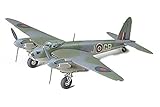 Tamiya 60753 Mosquito B Mk.IV 1/72 Tamiya 60753 Mosquito B Mk.IV 1/72 |
|
Check Latest Price |
 Airfix A04070 Mosquito B.XVI/B.35/TT.35 1/72 Airfix A04070 Mosquito B.XVI/B.35/TT.35 1/72 |
|
Check Latest Price |
1. Airfix Mosquito PR.XVI A04065 1/72 – Best Overall
Airfix A04065 de Havilland Mosquito PR.XVI Model Set – 1:72 Scale Plastic Building Kit for Adults & Children 8+ – Includes Sprues & Decals
Scale 1:72
142 parts
Skill Level 2
Plastic, grey/blue
Pros
- Exceptional interior and exterior detail
- Decals for two aircraft plus instrument panel and seat belts
- Landing gear parts supplied in the up position
- Thin crystal-clear canopy parts
- Good fit and easy assembly
Cons
- Instructions can be confusing
- Humbrol-only paint call-outs
- No paint or glue included
The Airfix PR.XVI is the kit we recommend to anyone who asks a single question and expects one answer. Out of everything we covered, it carries the largest number of written reviews by a wide margin, which means its strengths and its irritations are both well documented. It is a new-tool Airfix kit, and reviewers repeatedly describe the moulding quality as closer to Tamiya’s standard than to the Airfix of a decade ago.
That matters more on a Mosquito than on a Spitfire. The aircraft is all thin flying surfaces, a very long slim fuselage and lots of open structure between the nacelles and the wing, and cheap tooling shows up in exactly those places. This one does not show it much.
Build-wise it is a Skill Level 2 kit, which is Airfix’s way of saying intermediate. There is enough going on to keep a practised hand busy for an evening or two, and not so much that you need a workshop. The decal sheet is the sleeper feature: as well as two aircraft options it carries instrument panel dials and seat belt detail, so the cockpit does not look bare the moment you glaze the canopy.
Two details stand out for anyone finishing the model rather than just starting it. The canopy parts are thin and genuinely clear, which sounds trivial until you have fought a milky canopy on another kit. And the undercarriage is moulded in the extended position with parts supplied, so a beginner is not immediately dropped into retracting gear on their first build.
The complaints are consistent and narrow. The instructions are not the clearest Airfix has printed, and the paint call-outs use Humbrol numbers only, so a builder working in a different range has to translate the whole guide. Neither issue stops a build, and both are much less annoying than a moulding fault.
One crew figure is included rather than two. On a PR.XVI that is not a problem, because the reconnaissance variant carried a different crew arrangement anyway. If you had your heart set on a night fighter, the PR.XVI is the wrong box for you and the 1/48 Tamiya is the right one.
Who the Airfix PR.XVI suits
This is the kit for a modeller who wants a Mosquito that looks finished without needing a photo-etched upgrade set, a masking job for the underwing roundels, or a borrowed spray booth. Everything needed for a good-looking 1/72 model is in the box or in a standard starter set of paints.
It also works well as a first significant kit for someone coming back to the hobby after a long gap. Skill Level 2 is a real step up from a snap-together starter kit but a comfortable step down from a 1/32 build.
Who should skip the Airfix PR.XVI
Skip it if display presence is the goal. A 1/72 Mosquito is a handsome little model, but on a shelf it reads as a small aircraft, and that is fine. If you want something people notice across a room, the 1/32 Revell is the one that does that job here.
Also skip it if the PR role does not interest you. The recon variant has its own guns, its own camera windows and its own marking history, and if you have decided you want a night fighter with radar nose, you will not enjoy the decal options on offer here.
2. Tamiya Mosquito FB Mk.VI 61062 1/48 – Best Value
Tamiya 61062 1/48 De Havilland Mosquito FB-MK.6 Plastic Model Airplane Kit
Scale 1:48
Plastic kit
Two figures included
Markings for three squadrons
Pros
- Excellent fit and detail
- Markings for No 143
- No 157 and No 487 Squadrons
- Two crew figures in the box
- 1/48 gives real cockpit and engine detail
- Well-regarded classic kit
Cons
- Older kit design
- Limited interior detail by modern standards
- No paint or glue included
The 61062 is the kit most experienced modellers have actually built, and that is why we put it second. It is the 1/48 benchmark for the Mosquito, and if you join a forum thread about building one in that scale, this is the box most people mean. It also covers the fighter-bomber Mk.VI, which is the variant with the best tail and the most recognisable silhouette of the night fighter line.
At 1/48 you get cockpit detail you can actually see into, engine bays that reward a little careful work, and a size that suits ordinary hands and ordinary workbenches. It is a comfortable step up from 1/72 without becoming a masking-and-weathering project before you have finished the bare plastic.
What you get for markings is the reason this kit punches above its bracket. No 143 Squadron, No 157 Squadron and No 487 Squadron options are printed, which gives you a fighter-bomber in one scheme and access to different squadrons in others without hunting for aftermarket decals. Two figures are included as well, which matters because crew figures are the first thing to run out in a starter collection.
The fit is the Tamiya fit people have relied on for decades. Parts locate where the instructions say they should, and the surface detail is the right side of crisp. On an aircraft with this many panel lines, that combination saves hours of cleanup.
The honest criticism is age. This is an older kit design, and the interior detail is thin next to a brand-new toolset. If you intend to hang the model with the canopy off and the engine cowlings open, you will be adding a lot of aftermarket work that the newer Airfix 1/72 does not require.
That is also why it remains the sensible pick rather than the automatic one. Bought as a complete model, painted and closed up, the 61062 looks excellent for what it is. Bought as a base kit to build around, there are better canvases.
Why 1/48 is the scale most people should buy
1/48 is the middle answer, and middle answers suit the most people. It is large enough that the Mosquito’s twin Merlin layout, its glazing and its undercarriage legs all read properly, and small enough that one kit is an evening’s work rather than a season’s.
If your display cabinet is a normal shelf rather than a dedicated glass case, a 1/48 Mosquito fills the space without dominating it, and it is a size that pairs well with the other aircraft in a mixed shelf. For reference, our guides to Lindberg kits and Hawk kits both sit comfortably next to a 1/48 Mosquito in scale terms.
Where the 61062 falls short
The weakness is interior and cockpit detail, and it is only visible if you open it up. Glazing the canopy and finishing the model as delivered is entirely fair. Displaying it with the panels off and the cockpit empty is where the age of the tooling shows.
The second limitation is that the kit commits you to one variant family. It is a fighter-bomber box, and while optional parts can shift it toward a night fighter, the markings and fittings are not the night fighter set. If your plan is a radar-equipped intruder, look at the Airfix 1/72 PR.XVI or accept that you will be mixing references.
3. Revell Mosquito Mk.IV 04758 1/32 – Best Big-Scale Build
Revell 04758 De Havilland Mosquito Mk IV Airplane Kit
Scale 1:32
82 parts
Plastic
Merlin engine detail
Pros
- Large 1/32 presence
- Detailed Merlin engines with removable cowlings
- Movable propellers
- Decal choices for two aircraft
- Easier build than modern big-scale kits
Cons
- 1970s kit design with shallow interior detail
- Some fitting and flashing issues reported
- Less detail than modern 1/32 releases
Scale is the whole argument here. If you have ever looked at a 1/72 Mosquito and thought it looked like a toy, this is the answer to that feeling. At 1/32 the Mosquito is roughly a foot and a half across, and the sheer size of the wing and the depth of the fuselage change how the aircraft reads as an aeroplane rather than a model of one.
The Revell toolset does two things at this scale that almost nothing else does. The Merlin engines carry real detail, and the cowlings come off, so you can display the aircraft with the engine bays open. The propellers are movable, which sounds trivial and then turns out to be the feature you use every single time you pick the model up.
Against that, the kit is a design of the 1970s and it shows in exactly the places you would expect. Wheel wells, cockpit and bomb bay are all shallower than anything moulded in the last decade. Modern moulding also gives crisper panel lines, and this is not that. The result is a model that looks commanding from two metres away and a little plain from thirty centimetres.
There are also quality control reports, with some builders noting fitting problems and flashing on parts. At 1/32 those issues are more visible than they would be in a small kit, and the surfaces are big enough that you will be filling and sanding regardless. Budget time for finishing, not just assembly.
What you get instead is the easiest big-scale Mosquito in this group. Reviewers consistently place it below the current 1/32 limited-run releases in raw detail and above them in buildability, and for a first large model that is the correct trade to make.
Decal choices for two different aircraft are supplied, which is thin by big-scale standards but more than enough to justify the kit on markings alone if you pick carefully.
Is a 1/32 Mosquito a beginner purchase or a trap
It depends entirely on what you are starting from. As a first ever kit, it is a mistake, because the size means more sanding, more weight on the joints and a bigger surface to paint evenly. As a first kit after several 1/72 builds, it is a very reasonable jump, because the assembly sequence is simple even though the size is not.
The honest test is whether you own a decent bottle of cement and are not afraid of filler. If you are, this kit rewards you with the best-looking Mosquito per unit of effort in the whole roundup. If you are not, start at 1/48.
What you give up by going big
You give up interior depth and you give up modern tooling. The Revell is a good kit to look at and a slightly less good kit to look inside, and anyone whose interest in the Mosquito is the cockpit, the radar fit or the bomb bay will be disappointed by a 1970s toolset at any scale.
You also give up some build options. At 1/32, a single box covers one variant, and the decal sheet covers two aircraft. If your plan is to model the same airframe in several liveries, or in both a bomber and a night fighter fit, the cost per finished model climbs fast. Our guide to ISS kits covers the same trade from the opposite end, where one box genuinely does deliver multiple configurations.
4. Tamiya Mosquito FB Mk.VI/NF 60747 1/72 – Best First Build
Tamiya America, Inc 1/72 Mosquito FB MKVI/NF, TAM60747
Scale 1:72
Plastic kit
Low part count
Clear instructions
Pros
- Excellent fit and good detail at 1/72
- Low part count suits new builders
- Clear and easy to follow instructions
- Two variant options in one box
- Compact build time
Cons
- Small scale limits interior detail
- No paint or glue included
- Airfix decal sheets are not supplied
If someone asks us for one Mosquito kit to hand to a beginner who has never glued a plastic model before, this is the one. The part count is low, the instructions are clear, and the fit is the forgiving Tamiya fit that does not punish a first attempt with a seam running the length of the fuselage.
It is also a two-in-one box. The FB Mk.VI and the night fighter are covered in the same kit, and for a new builder that is a genuine education in what a variant conversion actually involves. You can see the parts that change, and you can see why the roles need different fittings.
The fit and the level of detail at 1/72 are better than a 1/72 has any right to be. Panel lines are crisp, the canopy is clear, and the shape of the aircraft is right, which is more than plenty for a first finished model. The whole thing is small enough to build in a couple of evenings and small enough that a mistake is a five-minute fix.
There is no catch in the tooling. The catch is scale, and it is unavoidable. A 1/72 Mosquito has a cockpit you can see into but not much more, and there is nowhere for a photo-etched set or a resin interior to hide. If your ambition is to open the panels and show the inside, this is not your kit.
One more practical point: decals are not listed among the included components for this one, so treat the marking situation as a separate purchase rather than assuming a sheet is in the box.
Listings for this kit sometimes describe the material as wood, which is a data error rather than a description of what you receive. It is a conventional moulded plastic kit, and it is compatible with water-based and acrylic paint like any other.
Why the 1/72 Mosquito is a better first kit than it looks
The temptation with a first kit is to buy bigger so it looks impressive, and that is exactly backwards. A small kit lets you finish something, and finishing is the part that makes people stay in the hobby. You can then decide whether the next one should be another 1/72 or a step up to 1/48.
The 60747 also sets up the rest of this roundup nicely. Once you have built the fighter-bomber and night fighter box, you understand the variant codes, and the Airfix PR.XVI in 1/72 makes an obvious and affordable second purchase rather than a leap.
Where the 60747 falls short
Interior detail and size. That is the whole list. At 1/72 you will not be showing a cockpit, and the model will not command a shelf the way the 1/32 Revell does. It is also the sort of kit that looks better in a group of 1/72 aircraft than on its own, which is a strength if you already have a shelf full and irrelevant if you do not.
If you already build aircraft regularly and want a quick weekend project, this kit is almost too small to feel like a build. The 61062 at 1/48 gives you more aircraft for the same evening.
5. Tamiya Mosquito B Mk.IV 60753 1/72 – Best Single-Stage Merlin Bomber
Pros
- Superb fit and accuracy
- Best 1/72 single-stage Merlin bomber option
- Highly detailed for the scale
- Wide aftermarket support available
- Compact and quick to assemble
Cons
- Separate nose section creates a seam
- Tiny parts are not ideal for beginners
- No tools
- paint or glue included
The B Mk.IV is the one to build if what you want is a straightforward army bomber with two-stage Merlin engines, because that is the airframe this kit represents. The 60747 gives you a fighter-bomber and a night fighter, and this box gives you the plain bomber that preceded them. Both are valid choices, but only one of them is the bomber.
At 72 parts it is a compact build that still rewards care, and the fit is superb. Parts go together the way the drawings say they do, which is the single most important thing about an injection moulded kit and the thing that decides whether a first build is enjoyable.
The accuracy is the other headline. Builders rate the shape and the panel layout as well above what the scale would normally deliver, and the aftermarket support is wide, which means resin and etched upgrades exist if you want to take the model further rather than just finishing it.
The two construction notes are worth knowing before you start. The nose is a separate section, and that joint needs attention to get a clean seam. The vertical tail is slightly taller than it should be, which builders generally treat as a minor issue rather than a defect, but if accuracy is your thing, sand it back before you fit the horizontal stabilisers.
The parts are small. Genuinely small, at 1/72, with details that will disappear under a heavy hand or under wet cement. This is the main reason the kit carries a lower rating than the other Tamiya boxes in the roundup, and it is the reason we would not hand it to a first-time builder.
Decals on an older kit can be brittle, so work slowly and do not stretch them. If they lift, use a clear-drying solution rather than water and let the film do the work.
Should you choose the B Mk.IV or the FB Mk.VI/NF
Choose the B Mk.IV if you want the clean bomber look, fewer decisions and the shortest build of the three Tamiya kits. Choose the 60747 if the night fighter conversion appeals to you, because that box teaches you the difference between roles rather than just presenting it.
The B Mk.IV is also the more historically straightforward of the two to research. Army bomber schemes are well photographed and well documented, which means matching a specific airframe is a realistic project rather than a hunt through half the available references.
What you lose with this kit
You lose the figures and you lose the option value. Two crew figures are not supplied here, and unlike the FB Mk.VI box this one does not double as a second variant. If you want a night fighter or a reconnaissance aircraft, this is the wrong kit and the Airfix PR.XVI or the 60747 are the right ones.
You also lose some part count, which at 1/72 mostly means fewer chances to practise masking, painting and pre-shading before you reach the more delicate stages of a build.
6. Airfix Mosquito B.XVI/B.35/TT.35 A04070 1/72 – Best Multi-Variant Kit
Airfix X4070 1/72 De Haviland Mosquito B.XVI/B.35/TT.35 Plastic Model (Airplane)
Scale 1:72
182 parts
Plastic
Decal sheet included
Pros
- 182 parts with 21 new over the older toolset
- Three buildable variants in one box
- Decal sheet included
- New-tool Airfix craftsmanship
- Strong early reviewer reaction
Cons
- Very new kit with a small review history
- Adhesives
- tools and paints sold separately
- UK import kit
This is the newest kit in the roundup and the one with the most parts. Twenty-one new parts were added to the traditional Airfix Mosquito toolset specifically so the model can be finished as the final production aircraft, and that push toward the B.XVI, B.35 and TT.35 is what separates it from the older Airfix boxing of the same aircraft.
Three variants from one box is the practical headline. The B.XVI, B.35 and TT.35 are late-war army bomber and target tug fits, and having all three available means you can spread the build across a couple of finished models from a single purchase, or commit everything to the version you find most interesting.
At 182 parts it is a substantial 1/72 build, and it is well above the part count of the other kits at this scale in the roundup. That means more time and more opportunity to get something wrong, but also more to get right, and reviewers with early builds are broadly enthusiastic about the craftsmanship.
We are deliberately cautious about the rating here. The 4.7 average comes from a small number of reviews, and a recent release has not yet accumulated the long report history that tells you how a moulding behaves after a hundred builds. Treat it as promising rather than proven.
Consumables are sold separately, as with every kit in this roundup. Nothing about that is unusual, but with a kit this new it is worth listing before you commit, because a 182-part build is an expensive thing to discover is missing a bottle of thinner.
The UK import point is only relevant if you are outside the United Kingdom, where Airfix kits are made in the UK and sold directly by the manufacturer. Elsewhere it simply means the kit reaches you through a distributor.
Is the new A04070 better than the older Airfix Mosquito
On raw tooling, yes. The 21 additional parts exist to correct things the earlier toolset could not represent, and the early reaction supports that. On evidence, we are not yet in a position to say, because the review history is thin.
Forum discussion around newer Airfix Mosquito kits has focused on exactly this comparison, with builders asking how the older Airfix toolings and the older Tamiya 1/72 hold up against the new releases. That conversation is live and unfinished, which is a good reason to treat this kit as the one to watch.
Who the A04070 is for
It is for the builder who wants maximum options from one purchase and who does not mind a longer session at the bench. If you are modelling late-war army bomber operations and want the target tug option as well, this is the only kit in the roundup that gives it to you.
It is less suitable as a first kit, both because of the part count and because there is no long body of reviews to lean on when something does not seat properly. Our advice is to buy it as your second or third Mosquito, after you know what you enjoy about the aircraft.
Which Mosquito Variant Are You Actually Buying?
Decoding the variant code before you buy is the single most useful thing you can do, because a kit is moulded to one airframe and a decal sheet cannot turn a bomber into a night fighter. The Mosquito existed in dozens of forms, and manufacturers box a subset of them.
The prefix tells you the job. FB is fighter-bomber, a fast attack aircraft with solid guns and no radar. NF is night fighter, fitted with radar in the nose and a reduced bomb load for intruder work. B is army bomber, the straightforward daylight bomber. PR is long-range reconnaissance, stripped of weapons and fitted with cameras.
The rest of the code is the mark number, and higher generally means later. So the FB Mk.VI is a later fighter-bomber than the Mk.IV, and the PR Mk.XVI is a late-war reconnaissance aircraft that saw service into 1945, while a PR Mk.IV is an early one. The Mk.XII and Mk.XVII pairing in some kit names indicates a model that covers two sub-variants with optional parts.
In practice, here is what each of the kits in this roundup represents and where it sits. The Airfix A04065 is a PR Mk.XVI, so you are building a reconnaissance aircraft with cameras and no guns. The Tamiya 61062 is an FB Mk.VI, so you are building the fighter-bomber, which is the variant with the most dramatic tail when finished in a dark night fighter scheme.
The Revell 04758 is a Mk.IV, the earlier airframe that the later marks were developed from, at 1/32. The Tamiya 60747 covers the FB Mk.VI and the night fighter in one box, which is the most educational purchase on variant structure. The Tamiya 60753 is a B Mk.IV army bomber, the two-stage Merlin daylight bomber. And the Airfix A04070 covers the late B.XVI, B.35 and TT.35 army bomber and target tug fits.
One more thing worth knowing, because it catches people out constantly. Accessory sets are sold against a specific kit number, not against the aircraft. A set of gun barrels or pitot tubes made for Tamiya kit 61075 will not fit kit 61062, because the two airframes and the two variants are not identical. Build notes posted on r/modelmakers make this point directly, and it is the most common avoidable frustration in this hobby. Always match the kit number before buying accessories.
How to Choose a Mosquito Scale Before You Buy
There is no best scale, only the scale that matches your bench, your patience and your display space. All three scales represented here are good kits, so the decision is about effort and presence rather than quality.
Choose 1/72 if you are new to the hobby, if your available work time is a couple of evenings a week, or if you already have a shelf of aircraft at that size. The Tamiya 60747 and 60753 and both Airfix kits live here. They build fast, they are forgiving, and the finished model is impressive for the effort rather than despite it.
Choose 1/48 if you have built aircraft before and want the cockpit, the engine bays and the undercarriage to be worth looking at without going big. The Tamiya 61062 is the only kit at this scale in the roundup, and it is also the one we would most often recommend as a second or third aircraft build.
Choose 1/32 if display impact is the priority and you are comfortable with filler, sanding and longer sessions. The Revell 04758 is the entry point. Just be clear with yourself about why, because the jump from 1/48 to 1/32 is roughly a fourfold increase in area, and a kit that took a week at 1/48 can take a month at this size.
There is also a money dimension that buyers consistently ask about, so we will be direct. The spread in this hobby is enormous, from detail sets costing less than a takeaway meal to limited-run big-scale kits in the hundreds. Nothing about that gap is a quality judgement. A photo-etched set is an accessory, not a model, and a limited-run resin kit is an accuracy purchase rather than an entry point.
If your budget is tight, the sensible order is consumables first, then a 1/72 or 1/48 kit, and only then upgrades. Buying a premium kit before you own a bottle of cement is the most common beginner mistake in the hobby, and it is entirely avoidable.
What Is Not in the Box
No kit in this roundup includes paint or cement, and none includes a display stand. Retail listings state this explicitly because buyers reliably expect otherwise, and we would rather say it here than have you discover it on the kitchen table.
Here is the practical list of what to have ready before you cut the first sprue. You need a solvent cement or extra-thin glue, and you need it in the right consistency, because thick glue on small parts is how 1/72 kits break. You need paint and thinner, and at 1/32 you need filler and a sanding block. You need a cutting mat, and you need tweezers with a fine tip for the small parts on the 1/72 kits.
On decals, the picture varies and you should check the specific listing. The Airfix PR.XVI and the Airfix A04070 both include a decal sheet, the Tamiya 61062 includes markings for three squadrons, and the Tamiya 60747 is not listed as including decals at all. The Revell includes choices for two aircraft.
On upgrades, the question of whether you need a photo-etched set comes up constantly. Our short answer is no for the Airfix kits in this roundup, because new-tool moulding already gives you the detail an etched set would sell you. Yes for the Revell, because a 1970s interior is exactly where an etched set and a resin tub add real value. And a definite yes for the Tamiya 61062 if you plan to display it with the canopy off.
One final item to budget for, and it is not in the kit: a good pair of magnification aids for 1/32 work, and a reference photograph of the specific airframe you intend to build. Marking research is a bigger part of this hobby than beginners expect, and it is what separates a model that looks right from one that looks like the generic box art.
How Mosquito Kits Are Made and What to Look For
Every kit in this roundup is injection moulded plastic, which is why they all build with cement and paint and why none of them need a specialist technique. The alternative in this hobby is limited-run resin, which is usually more accurate and always more demanding, and it exists in the Mosquito field at 1/32 from specialist manufacturers.
Large Scale Planes discussion of the HK Models resin Mosquito is a good illustration of the trade. A builder there described it as a terrific kit that stretches fairly easily to the later bomber variant, which is the resin pitch in one sentence: more accurate and more expensive, and a longer commitment. For a first Mosquito, none of the six kits here ask you to make that choice.
What actually separates the kits in this roundup is moulding quality, part count, and how well the surface detail is transferred. The two Airfix kits and the Tamiya 61062 are all new-tool or recent-tool kits and they all show it. The Revell and the Tamiya 60753 are older designs, and they trade interior depth for build simplicity and availability of aftermarket support.
Review volume is worth paying attention to in this hobby, more than in most. A kit with 1060 written reviews has had its problems catalogued by a thousand people, and a kit with 16 reviews has not. That is why the Airfix PR.XVI takes the top slot despite being matched on rating by a newer kit: we would rather recommend something the community has already stress-tested.
It also explains the generational question running through the current forum conversations. Brit Modeller threads from October 2026 show builders asking how the older Tamiya 1/72 kit compares with the newer Airfix releases, and the honest answer is that it depends on what you want. The older Tamiya boxes still fit beautifully and still have aftermarket support, and the newer Airfix toolsets give you more accurate surface detail and more options per box.
Frequently Asked Questions
What is the best de Havilland Mosquito model kit?
The Airfix A04065 Mosquito PR.XVI at 1/72 is the best all-round choice, with 142 parts, two aircraft decal options and the largest review history in the range. The Tamiya 61062 FB Mk.VI at 1/48 is the better buy if you want more visible detail per hour of building, and the Revell 04758 at 1/32 is the one to choose for display presence.
Which scale de Havilland Mosquito kit should I buy?
Start at 1/72 if you are new to the hobby or have limited bench time. Move to 1/48 once you have built a few kits and want cockpit and engine bay detail worth looking at. Choose 1/32 only if display impact matters more to you than build time. All three scales in this roundup are well engineered, so the scale decides effort and presence, not quality.
What is the difference between the Mosquito FB Mk.VI and the NF Mk.II?
The FB Mk.VI is a fighter-bomber: fast, armed with solid cannons, carrying no radar. The NF Mk.II is a night fighter, built to find and destroy enemy bombers at night, with radar in the nose and a lighter bomb load. A kit boxed as FB Mk.VI/NF gives you optional parts to convert between the two, and the Airfix PR.XVI is a different role again, an unarmed long-range reconnaissance aircraft.
What comes in a de Havilland Mosquito model kit?
You get the injection moulded plastic parts, an instruction sheet, usually a paint layout sheet, clear canopy parts, and in most cases a decal sheet. You do not get paint, cement, tools, a display stand, a photo-etched set or a resin interior. Check the specific listing for decals, because not every kit includes them.
Was the de Havilland Mosquito faster than a Spitfire?
The Mosquito was not designed to out-fight a Spitfire. It was built around speed at low level, where it could outrun most fighters of the day and reach targets the Spitfire could not. Its real advantage was versatility, flying as a bomber, night fighter, reconnaissance aircraft and target tug from the same airframe.
Is a resin limited-run de Havilland Mosquito kit better than an injection moulded one?
Resin kits are usually more accurate and offer finer detail, but they cost more, take longer and demand more experience with filling, sanding and cleanup. They are a good second or centrepiece project rather than a first kit. Every kit in this roundup is injection moulded, so you can learn the aircraft before deciding whether accuracy justifies the extra demands.
The Best de Havilland Mosquito Model Kit to Start With
Buy the Airfix A04065 PR.XVI at 1/72 if you want one kit and no further decisions. It has the parts count, the decal options and the build history to keep a new owner happy, and finishing it teaches you most of what there is to know about modelling a Mosquito.
Buy the Tamiya 61062 FB Mk.VI at 1/48 instead if you have built a few kits already and want the model to reward a bit more effort. It is our pick for most modellers over the long run, and the three squadron marking options mean you can build it, finish it, and still have two more airframes to reference later.
Everything else in this roundup is a good kit bought for a specific reason: the Revell 04758 at 1/32 for size, the Tamiya 60747 for a first build or a night fighter conversion, the Tamiya 60753 for a plain two-stage Merlin army bomber, and the Airfix A04070 for three late-war variants in one box. Deciding which of those reasons applies to you is the whole decision. The rest is just glue and paint, and neither is in the box.