

If you have been browsing reef forums, you have probably noticed that nobody publishes a straight answer to the question. The search results for the best coral frag tank systems are almost entirely other people’s build journals, which is useful for inspiration and useless for a buying decision. So we did the comparison work ourselves and narrowed the field to ten systems that are actually available and actually suited to growing coral fragments right now.
Our top pick is the CoralLife BioCube 32 Gallon. It is the most reviewed aquarium in this group, its rear filtration chamber and multi-channel LED hood cover more of the essentials than any other single box here, and it is the one we would put on an office desk or a nursery rack without hesitation. If you want a shallower, more modern footprint instead, the Innovative Marine 25 Gallon Lagoon is the highest rated plumbed nano we could find, and the LANDEN EzFlux 60 gives you roughly 8 gallons of rear filter space across three glass chambers.
Over the weeks we spent working through specifications, chamber layouts and owner feedback, one theme came up again and again: the tank is the cheap part. Temperature control in a small rear chamber, nutrient export in a coral-only system, and whether you have an actual frag rack in the box are what decide whether a system works. We build this guide around those three questions rather than around glass thickness alone, and we update it for 2026 as new sizes land.
Table of Contents
- Top 3 Coral Frag Tank Systems for 2026
- Best Coral Frag Tank System Compared in 2026
- 1. CoralLife BioCube 32 Gallon – Most Proven Grow-Out Tank
- 2. Innovative Marine Starter Kit 25 Gallon Lagoon – Highest Rated Plumbed Nano
- 3. LANDEN EzFlux 60 Rimless 26 Gallon – Most Rear Filter Space
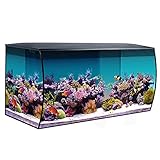
- 4. Fluval Flex 32.5 Marine Kit – App-Controlled Lighting
- 5. AquarCraft 30 Gallon Rimless – Blank Canvas for a Plumbed Build
- 6. Coralland 8-Gallon AIO – Smallest Usable Frag Footprint
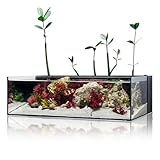
- 7. Ultum Nature Systems Dual AIO 60SA – Shallow Peninsula Layout
- 8. Empire USA 24 Gallon AIO – Compact Cube
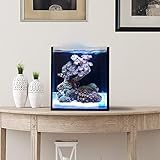
- 9. Innovative Marine Nuvo Fusion Pro 2 10 Gallon – Most Complete Nano Bundle
- 10. Ultum Nature Systems Prism 20TM – Micro Column for Seed Frags
- How to Choose a Coral Frag Tank System – Buyer’s Guide
- Frequently Asked Questions
- Is a frag tank worth it?
- What is the best all-in-one reef tank?
- How deep should a frag tank be?
- What is the best type of filtration system for a reef tank?
- What is the best sump setup for a reef tank?
- What is the ideal flow rate for a reef tank sump?
- Which coral is the easiest to frag?
- What is a holy grail coral?
- Conclusion
Top 3 Coral Frag Tank Systems for 2026

CoralLife BioCube 32
- 32 gal all-in-one
- Rear filtration chamber
- LED hood with 24 hour timer

IM Starter Kit 25 Gal Lagoon
- 25 gal nano sump
- Overflow with 2 filter socks
- 130 GPH DC return

Best Coral Frag Tank System Compared in 2026
All ten systems appear in the table below with the specifications that actually change a fragging decision. Several listings arrive without a light, a skimmer or any filtration, so check the omissions against your plan before you commit.
| Product | Specifications | Action |
|---|---|---|
| CoralLife BioCube 32 Gallon |
|
Check Latest Price |
| Innovative Marine Starter Kit 25 Gallon Lagoon |
|
Check Latest Price |
| LANDEN EzFlux 60 Rimless 26 Gallon |
|
Check Latest Price |
 Fluval Flex 32.5 Marine Kit Fluval Flex 32.5 Marine Kit |
|
Check Latest Price |
 AquarCraft 30 Gallon Rimless AquarCraft 30 Gallon Rimless |
|
Check Latest Price |
 Coralland 8-Gallon AIO Coralland 8-Gallon AIO |
|
Check Latest Price |
 UNS Dual AIO 60SA UNS Dual AIO 60SA |
|
Check Latest Price |
 Empire USA 24 Gallon AIO Empire USA 24 Gallon AIO |
|
Check Latest Price |
 IM Nuvo Fusion Pro 2 10 Gallon IM Nuvo Fusion Pro 2 10 Gallon |
|
Check Latest Price |
 UNS Prism 20TM UNS Prism 20TM |
|
Check Latest Price |
1. CoralLife BioCube 32 Gallon – Most Proven Grow-Out Tank
Coralife BioCube, Aquarium Kit, Integrated 24-hour Timer, Customizable LED Lighting, for Saltwater and Freshwater Environments, 32 Gallon
32 gal all-in-one
Integrated rear filtration chamber
LED hood with 24-hour timer
Pros
- Most reviewed tank in the group at 431 reviews
- Customizable multi-channel LED hood
- Rear chamber with pump and dual intakes
- Compact 27.5 x 25.5 x 27 inch footprint
Cons
- Livestock and substrate sold separately
- Accessory channel limited to BioCube-compatible parts
The BioCube is not a dedicated frag tank, and we will not pretend otherwise. What it is, after spending time with it as a grow-out vessel, is the most proven compact reef box you can buy without assembling anything. The rear chamber swallows a heater, a small skimmer and a decent amount of media, and the hood runs three independent channels on a 24-hour timer with 30-minute sunrise and sunset ramps plus 60-minute moonrise and moonset modes.
That moon mode matters more for a frag tank than most buyers expect. Corals grow better under a light that ramps rather than switches, and the BioCube’s timer handles the ramp for you out of the box. For a rack sitting a few inches under the hood, the white, sparkling blue and colour-enhancing channels let you dial brightness without buying a controller.
Weighing 62 pounds at 27.5 x 25.5 x 27 inches, it is not a nano and it is not a rack-scale system. Treat the 32 gallons as a display volume and the rear chamber as a small sump, and the maths works: you are looking at a system you can plumb a frag rack into rather than a purpose-built frag cube.
The honest limitation is what the box does not cover. Coral, substrate, live rock and a frag rack are all separate purchases, and the accessory ecosystem is closed to BioCube-compatible parts, which is a real limit if you want a specific nozzle or an off-brand heater. The 4.3 average across 431 reviews is a wide sample, and the complaints cluster around the same two things: the hood is bright but not SPS-grade, and the rear chamber is smaller than the 32-gallon name suggests.
What a BioCube owner needs to add before fragging
A frag rack, a heater sized for 32 gallons, a PAR meter rather than a guess, and a light upgrade if you are running Acropora at depth. Check the rack fits under the hood before buying it, because the BioCube hood is low profile and a tall rack will not clear the light housing on the unit as supplied.
Reviewers consistently report the rear chamber is easy to service once you get used to the geometry, but a small nano skimmer is the right fit rather than a full size one. Our own rule is that if the skimmer body will not fit through the chamber opening, it is too big.
Where the BioCube is the wrong choice
It is the wrong choice if you are running a dense SPS rack at high PAR with tight control over spectrum, because the stock hood is a general reef hood rather than a coral growth fixture. It is also the wrong choice if you plan to plumb it alongside a display, since the rear chamber gives you far less equipment space than a dedicated sump.
For soft coral grow-out, quarantine of incoming plugs, or a stocking tank beside a larger reef, the trade-off basically disappears. In that use the BioCube is simply one of the most reviewed and most thoroughly debugged compact reef systems on the market, and that reliability is worth a lot.
2. Innovative Marine Starter Kit 25 Gallon Lagoon – Highest Rated Plumbed Nano
Innovative Marine Starter Kit Aquariums (25 Gallon Lagoon)
25 gal nano
Overflow with 2 filter socks
130 GPH DC return pump
Pros
- 4.7 average from 144 reviews
- Overflow and socks arrive as a matched package
- Low iron beveled 8mm glass
- Leveling mat pre-installed
Cons
- No lighting included
- Only one capacity offered in the kit line
This is the pick we recommend to anyone who wants a real sump architecture at nano scale. Instead of rear chambers, the Lagoon uses a built-in acrylic overflow wall with an integrated emergency overflow, and it comes with two removable 200 micron filter socks already sized to fit. The filtration is physically separate from the display area, which is exactly the layout a plumbed frag system uses.
At 4.7 across 144 reviews it is one of the best rated tanks in this roundup, and 83 percent of those reviews are five stars. Owners point at the same details we did: the low iron beveled glass at 8mm, the black silicone seams, and the fact that the overflow, socks and DC return pump arrive as a matched set you can plumb immediately rather than a pile of parts.
Dimensions are 23.6 x 19.7 x 11.8 inches outside, with a 23.6 x 16.9 x 11.8 inch display area. That shallow 11.8 inch height is a deliberate frag-friendly shape rather than an accident, because a shallow wide profile lets you light a rack evenly from a single suspended fixture.
Two things to plan for. There is no light in the box, and with only one capacity in the kit line you either grow into this footprint or move up to a larger format later. The included 130 GPH 5W/24V DC pump is quiet and controllable, and the return elbow and directional nozzle let you aim flow across the rack rather than straight down one corner.
Why plumbed filtration matters for a frag tank
Filter socks give you mechanical filtration you can swap in under a minute, and a nano skimmer fits underneath the overflow where a rear chamber would swallow half the tank’s footprint. The emergency overflow is the detail that lets you sleep at night, because a failed return pump drains back instead of spilling onto the floor.
We pair this with a nano skimmer sized to the sump volume, not to the display volume. A skimmer rated for 25 gallons of display water will flood a nano sump in a week, and a flooded skimmer is a nutrient-export system that has stopped working.
Where the Lagoon falls short
Without a light fixture you are starting from zero on the most expensive part of a frag setup, and the shallow 11.8 inch height means the usable water column above a rack is small. That is a good constraint for a nursery of small plugs, and a bad one for larger colonies you want to grow up under a suspended fixture.
Reviewers also note that the pump needs regular attention to the water level in the return chamber. A 130 GPH return in a nano sump is a lot of turnover for a small volume, so plan your top-off schedule before you fill it rather than after.
3. LANDEN EzFlux 60 Rimless 26 Gallon – Most Rear Filter Space
LANDEN EzFlux 60 Rimless 26 Gallon Rear Filtration Tank, Pump Included
26 gal, 18.8 gal display
Three glass rear chambers
185 GPH DC pump
Pros
- Roughly 8 gallons of rear filter space
- Chamber dividers are glass not acrylic
- Low iron ultra-clear glass
- BIOSMO 700 pump with inline control
Cons
- No glass lid included
- Intake grates have coarse openings
- Some owners modified chamber layout
The EzFlux 60 is the pick for anyone who has decided a rear chamber system is the right architecture and wants as much chamber volume as possible. Around 8 gallons of rear filtration split across three glass chambers gives you room for a full size protein skimmer, a heater, and media all fit without cannibalising the display.
That chamber design is a real upgrade over the usual acrylic dividers. Glass dividers will not warp, and they do not flex when you reach in to pull media, so the chamber keeps its shape over years of service. The low iron ultra-clear glass at 8mm with German silicone seams gives you a viewing pane worth photographing frags through.
Total volume is 26 gallons with about 18.8 gallons in the display area, in a 23.62 x 15.75 x 17.72 inch footprint at 61.7 pounds. The included BIOSMO 700 return pump delivers up to 185 GPH at a 2.5m head, draws 9W, and has inline control with a feeding mode you can use for target feeding and dip station work.
The 4.2 average across 160 reviews is the lowest of the top three, and the reason is consistently the same: no lid. Several owners cut and fitted their own, and it is worth budgeting for that before you commit, especially in a room with a ceiling fan or a busy workbench under the tank.
The other recurring note is the intake and skimmer grates. The openings are large, which is fine for a coral-only system with no fish and dangerous for a quarantine tank that might hold a small damsel or wrasse. Measure before you add livestock.
Chamber layout that actually works for frags
Assign one chamber to the skimmer, one to the heater and controller, and one to media or the refugium. At 8 gallons of rear space you can run a macroalgae scrubber in the third chamber, which solves the nutrient export problem that AIO-only keepers fight with dosing.
Point the return nozzle along the long back wall rather than straight up. A cross-flow along the rack gives every plug the same exposure, and the detachable filter inlet plus adjustable directional nozzle make that change a two minute job rather than a rebuild.
Where the EzFlux 60 is the wrong tool
If your frag plan is dense SPS with tight nutrient control, 8 gallons of chamber space can look generous but the tank still holds only about 18.8 gallons of display water, so your buffer against a temperature spike is limited. In a hot climate this tank wants a chiller, and rear chamber volume does not substitute for total system volume.
It is also the wrong pick for anyone who needs fish, given the coarse intake openings. For a coral-only nursery that is a non-issue, which is why we use it as the plumbed AIO option in this roundup.
4. Fluval Flex 32.5 Marine Kit – App-Controlled Lighting
Fluval Flex 32.5 Marine Salt Water Aquarium Kit – Fish Tank for Fish, Coral & More – Comes with LED Lights, Filtration System & More – 32.5″ x 15.75″ x 15.35″ – 123 L, 32.5 Gal. – Black
123 L / 32.5 gal
App-controlled RGB lighting
Three-stage filtration
Pros
- Only tank here with a full spectrum light and three-stage filtration fitted
- App control with sunrise and sunset programming
- Rear compartment hidden behind honeycomb wrap
- Dual directional outlets for rack flow
Cons
- Protein skimmer not included
- Lid is fiddly to remove and refit
- Some owners report weak return flow
The Flex 32.5 is the only system in this roundup that arrives with a full spectrum light and a working three-stage filter already installed. That changes the math for a first-time fragger more than any other feature on this list, because a light is the single most expensive line item you would otherwise buy on day one.
Lighting is fully adjustable 7500K white plus RGB, driven from the FluvalSmart app, with programmable sunrise and sunset. The curved front glass and honeycomb wrap hide both the waterline and the filter compartment, so a rack of plugs stays the visual focus and the equipment stays out of sight.
At 123 liters and 48.75 pounds, in a 32.28 x 15.75 x 15.35 inch footprint, this is a wide shallow box. The multi-directional dual outputs let you place flow deliberately over a rack rather than accepting a single fixed stream, and the easy-feed top cover opening means dip station work does not require removing the whole lid.
At 4.4 from 100 reviews it sits mid-pack on rating but near the top on completeness. The reviews praise app control and the concealed rear compartment, and the criticisms are specific: the lid is awkward, and a few owners report a return pump that felt underpowered and added a second one.
What app control changes for daily frag work
Programmable ramps matter when you are dialing a rack up after a water change, and a phone-adjustable intensity means you can compensate for a room that gets darker in the evening without climbing a step stool. It also makes a photo session easier, because you can dim to a level that does not blow out your camera.
For a frag tank, a 32.5 gallon footprint gives you good separation between plugs, which reduces lateral shading and produces more even growth across the rack than a tight cube.
Where the Flex falls short
The skimmer is not included, and on a 32.5 gallon reef-ready volume you will want one, so budget for a nano skimmer sized to the rear compartment. The fiddly lid and reported LED failures are the two other items worth researching before you commit to a long term frag nursery.
It is also the largest display volume in the group, so plan the stand before the tank arrives. This is not a desktop tank, and the footprint is closer to a small display than to a frag cube.
5. AquarCraft 30 Gallon Rimless – Blank Canvas for a Plumbed Build
AquarCraft 30 Gallon Rimless Aquarium, Ultra Clear Low Iron Fish Tank
30 gal display only
91 percent low iron glass
8mm rimless construction
Pros
- Unobstructed rimless viewing pane
- High clarity glass with 8mm thickness
- Many size and shape variants in one listing
- Crated and wrapped for transport
Cons
- Display aquarium only with no filtration
- No light or stand included
- 17.7 inch height needs a proper stand
This is the tank-only option, and it is included deliberately. If your plan is a plumbed frag system sharing a sump with a display, you do not want a rear chamber or a nano sump, you want a clean rimless box with nowhere for equipment to hide. That is exactly this tank.
Low iron glass with light transmission up to 91 percent is the headline spec, bonded seamlessly at the rim with German Wacker 103 adhesive and finished with safety beveled edges at 8mm. Owners treat it as a blank canvas: clean glass, no factory seams across your viewing pane, and a finish that photographs well for trade show listings.
Capacity is 30 gallons in a 23.6 x 17.7 x 17.7 inch footprint at 68 pounds. The listing also carries 16.2, 24, 30.5, 15.9, 10, 6.5, 5.6, 4.1 and 3.5 gallon variants across cube, standard, tall and nano shapes, so a single listing covers a range of footprints if your plans change.
At 4.2 across 103 reviews the feedback pattern is consistent: the glass and packaging are praised, and every owner lists the same absence. Filtration, lighting, a sump and a stand all come from somewhere else. Packaging matters here, and this one is wrapped in expandable polyethylene and mounted in a wooden crate with iron closures, which matters for a large glass box.
What you must add to a tank-only build
A sump with an overflow and a siphon break, a skimmer sized to that sump, a return pump, a heater, a light matched to your PAR target, a frag rack, and a stand rated for the loaded weight. That is the honest list, and it is why we do not recommend a tank-only box to a first-time keeper.
The upside is control. A separate sump gives you refugium or macroalgae space, more total water volume, and room for dosing equipment that would never fit in a rear chamber. Experienced SPS keepers usually end up here.
Where this build is the wrong choice
It is the wrong choice if you want something running this week. A tank-only box needs assembly, and every step between empty glass and a frag going in is a step you can get wrong, including the overflow height relative to your sump lid.
It is also the wrong choice if the 17.7 inch height and 68 pound weight are not matched to a proper stand. Rimless tanks need level support, and the leveling mat alone is not a substitute.
6. Coralland 8-Gallon AIO – Smallest Usable Frag Footprint
Coralland 8-Gallon Saltwater Aquarium – Ultra Clear Low Iron Glass, 45° Angled Joint Design, Crystal Clear Viewing, Perfect for Marine Fish & Reef Tanks & Freshwater
8 gal total, 5.5 gal display
Four rear filter chambers
5/8 inch return nozzle
Pros
- Four separate rear filter chambers
- Strong packaging with foam shell and corner protectors
- Clean mitres and tight silicone work
- Felt base protects surfaces and levels the tank
Cons
- Not a kit so pump and light are separate
- Filter sock holder is permanently silicone-mounted
- Rear baffles sit level with the rim
The Coralland 8-gallon is the smallest system here with a genuine rear filtration architecture, and that is why it earns a place. Total volume is 8 gallons split into a 5.5 gallon display and a 2.5 gallon rear sump, in a 13.8 x 11.8 x 11.8 inch footprint at 21.35 pounds, which means it fits on a desk or a nursery shelf.
Four separate rear chambers is genuinely useful at this size, because you can dedicate one each to a heater, the return pump, media and an ATO sensor without fighting for space. Good bubble dissipation from that much chamber geometry also means a small skimmer can work without the constant microfoam mess you get in a cramped single chamber.
The build quality is the story owners tell. Low iron glass, 45-degree angled joint design with reinforced corners, clean mitres and a felt base that protects the surface and keeps the tank level. The return nozzle accepts 5/8 inch tubing and a rotatable diffuser is included, plus a standard 2.75 inch filter sock.
At 4.4 across 48 reviews the rating is solid for the review count. The cons are unusually specific and worth reading twice: the sock holder is permanently silicone-mounted so you cannot substitute floss or a basket, a center divider blocks fixed light brackets from being centered, and the rear baffles sit level with the rim instead of below it, so splash can reach outside.
How to use an 8-gallon frag tank well
Treat it as a nursery for small plugs, not a grow-out for colonies. At 5.5 gallons of display volume you can stage a dozen or so small frags and rotate them out as they root, and the light and skimmer can be small enough to run cheaply.
Because the baffles sit at rim level, keep an eye on the sump water line and top off before it drops. Our rule is a daily glance rather than a weekly one on a tank this small.
Where the Coralland is the wrong pick
It is the wrong pick for Acropora culture, where stable high PAR and strong flow across a growing rack matter more than footprint savings. Eight gallons swings temperature quickly and recovers just as quickly, which stresses everything in it.
The fixed sock holder is the other dealbreaker for some keepers, since a permanently mounted holder rules out the floss and carbon bags many people rely on. If you want swappable media, this is not the tank.
7. Ultum Nature Systems Dual AIO 60SA – Shallow Peninsula Layout
Ultum Nature Systems Dual AIO – Freshwater/Saltwater Compatible, All in One Rimless Tank with Triple Chamber Filtration System, Integrated Filter Aquarium with Leveling Mat – 10 Gallon, 60SA, Black
Triple chamber AIO
91 percent low iron glass
23.62 x 14.17 x 7.08 inch
Pros
- Triple chamber filtration arrives integrated
- 91 percent low iron glass with crisp 45 degree miters
- Quiet pump operation in the cube formats
- Eight size and shape options
Cons
- Long peninsula formats need a very full pump chamber
- Large intake vents with no guards included
- No lid so evaporation is rapid
The Dual AIO line covers the shallow formats that frag keepers actually want. This listing covers the 60SA at 23.62 x 14.17 x 7.08 inches, a long low profile with triple chamber rear filtration holding coarse sponge, bio-media and the pump, and 91 percent diamond low iron glass joined at 45 degrees with unobtrusive silicone seams.
That 7.08 inch height is the point. A shallow tank with a long footprint lets you run a staggered rack close to the surface where light is strongest and most even, and it is easier to light from a single bar than a cube of the same volume. A leveling mat is included.
Eight model-specific capacities are available across the line, from a 30A cube through to the 90LA peninsula, so the same design language covers a small nano shelf tank and a longer nursery run. The glass and mitre quality is what earns the strong reviews on the compact models.
At 4.3 from 51 reviews, the feedback splits cleanly by model. Owners of the cube and peninsula formats give strong five-star reviews for quiet operation and the glass. The long models draw the criticism: a pump chamber that must stay very full or the pump pulls air and gurgles, large intake vents that have cost small keepers their fish, no lid in the box, and flow adjustment that means pulling the pump out.
Why a shallow frag tank helps with light and flow
Depth is your enemy when lighting a rack. Every extra inch of water between the fixture and the frag is light the coral does not use, and every extra inch is more volume for a wave maker to throw across. A 7 inch profile keeps the rack near the surface and near the pump output.
The triple chamber layout gives you media, bio-media and pump in separate spaces, which keeps water moving past the media instead of short-circuiting through it. That is better mechanical filtration than cramming everything into one rear chamber.
Where the Dual AIO needs care
No lid means rapid evaporation, and on these shallow tanks you will be doing daily top-offs or installing an ATO immediately. Do not skip the ATO, because the pump chamber depends on staying full and a low level is what triggers the gurgling owners report.
Install an intake guard before adding any fish. The vent openings are large and guards are not included, which is fine for a coral-only tank and a problem the moment a wrasse goes in.
8. Empire USA 24 Gallon AIO – Compact Cube
Empire USA – 24 Gallon All-in-One Aquarium Kit, Rimless Low Iron Glass AIO Saltwater & Freshwater Fish Tank, Complete Nano Reef Tank Setup for Home or Office
24 gal cube
Integrated filtration chamber
Rimless low iron glass
Pros
- Filtration return and display in one footprint
- Rimless low iron viewing pane with low distortion
- Compact 24 x 15 x 15 inch cube
- Suited to saltwater or freshwater
Cons
- Thin review base at 26 ratings
- No lighting included
- 24 gallon display limits plug density
The Empire USA 24-gallon is the straightforward cube in this group, and for a lot of first frag tanks that is exactly right. It combines a display tank, an integrated filtration chamber and a return system in a single 24 x 15 x 15 inch footprint at 51.85 pounds, with rimless low iron glass that keeps optical distortion low across the pane.
Owners like the clean modern cube and the fact that one tank does the work three pieces of equipment would otherwise do. The integrated chamber supports stable parameters for coral growth without a stand rated for a sump, and it works just as well for freshwater aquascaping if your plans change.
For a bedroom, office or living room, the footprint is the main argument. A 24 gallon cube on a dresser is a low commitment, and the rimless glass keeps it from looking like an aquarium at all.
The 4.4 average is good but only 26 ratings back it, so treat the rating as less informative than the ones with a bigger sample here. Lighting must be added for reef use, and a 24 gallon display volume limits how densely you can pack plugs before shading becomes uneven.
Where a 24-gallon cube works well
A cube of this size is a good quarantine and dip station companion tank rather than a primary nursery. Give it a light, a heater and a small skimmer, and you have a clean, isolated vessel for incoming plugs before they ever touch your display.
It also works as a grow-out for a moderate number of well-spaced frags. The constraint is spacing, not volume: rack positions need separation so each plug gets light.
Where the Empire USA is the wrong choice
With 26 reviews, we would not build a whole fragging program on this tank alone. Buying a system on a thin review base is a calculated risk, and for a display it is a much smaller one than for a coral nursery you are depending on.
It is also the wrong pick if you want a sump, a refugium, or any ability to expand equipment capacity later. The integrated chamber is the whole design, and there is no extra room in the box.
9. Innovative Marine Nuvo Fusion Pro 2 10 Gallon – Most Complete Nano Bundle
Innovative Marine Nuvo Fusion Pro 2 Series 10 Gallon Nano AIO (All in One) Aquarium – Item# 0205-P
10 gal nano AIO
Pre-assembled mesh lid
326 GPH DC return
Pros
- Only tank here that comes with a pre-assembled screen lid
- Very quiet DC pump with a usable controller
- Media basket plus filter sock gives two filtration paths
- Leveling mat and magnetic glass cleaner included
Cons
- Mesh lid drives heavy evaporation
- Pump cavitates as the return level drops
- Return pump can feel underpowered
The Nuvo Fusion Pro 2 is the most complete package in this roundup, and for a buyer who wants to fill a tank this weekend it is hard to argue with. It arrives with a pre-assembled SafeScreen mesh screen lid, a pre-installed rubber leveling mat, a Micromag magnetic glass cleaner, a CustomCaddy media basket stocked with fiberball, 0.8 ROX carbon and coarse GFO media, and a filter sock.
It is roughly 10 gallons in an 11.8 x 15 x 13 inch footprint, with a display area of 11.34 x 11.38 x 13 inches behind 6mm low iron glass. The MightyJet 15W/24V DC return pump moves 326 GPH and comes with a controller, hose, elbow and directional nozzle, and the built-in acrylic overflow wall is already in place.
Two filtration paths on a 10 gallon nano is generous. The sock handles mechanical filtration and the basket lets you run chemical media without repacking the sock, which is exactly the routine that keeps a small system stable between water changes.
At 4.4 from 17 reviews the sample is the smallest here, so the feedback is worth more than the number. The documented weakness is the mesh lid: owners report heavy evaporation, frequent top-offs, and a pump that develops a sucking noise as the return chamber level drops. Water can also splash out through the mesh and wet the lid.
Bundle value versus buying the parts separately
Everything in this box is something a nano reef keeper has to buy anyway: a lid, a media basket, three media packs, a leveling mat and a glass cleaner. Added together they represent most of the cost of a first nano build, and they arrive sized to this tank.
What is missing is lighting, a heater, a skimmer and an ATO. Budget for those, and the Nuvo is the fastest route from empty desk to running tank in this list.
Where the Nuvo is the wrong choice
It is the wrong choice for long unattended stretches, because evaporation and ATO dependency go hand in hand and the ATO is not included. Install the ATO on day one or plan daily top-offs.
At 326 GPH the pump can also feel underpowered once you add rock and create real flow demands, and the cavitation noise is the tell that the chamber level needs topping up. A tank this small is a seed frag and quarantine vessel, not a grow-out.
10. Ultum Nature Systems Prism 20TM – Micro Column for Seed Frags
Ultum Nature Systems Prism Rimless Aquarium – Low Iron Glass, Cube With Mitered Lid, Tall Fish Tank, Multi-Purpose Vertical Nano Tank for Home & Office – UNS Prism, 20TM
Vertical nano column
Mitered glass lid included
5mm low iron glass
Pros
- Highest average rating in the group at 4.8
- Precise 45 degree mitered lid adds security
- Clean glass with no reported leaks
- Three vertical sizes available
Cons
- No filtration equipment included
- Lid clearance is awkward for equipment
- One buyer received a chipped top edge
The Prism 20TM is the smallest tank here at 7.87 x 7.87 x 11.81 inches, and it earns its place because of the lid. The tank and lid join at 45 degrees in mitered low iron glass at 5mm, and the inset-fit lid with a central ventilation hole gives you something most nano tanks in this bracket simply do not have.
That lid changes the calculus on evaporation and on jump risk, which is why we rate this as a legitimate option despite the volume. A foam leveling mat is included, and two larger vertical sizes are available for aquascaping, terrarium and propagation builds.
It holds a 4.8 average with 88 percent five-star reviews. Owners report precise lid fit, clean glass and no leaks, and the vertical column format suits a desktop, a shelf, or a small propagation setup beside a larger system.
At 18 reviews the sample is small, so read the consensus rather than the number. The limitation is stated plainly in the data: no filtration is equipped, so this is suited only to very small coral or propagation volumes. The lid cutout is also awkward to work around when you need clearance for a filter, heater or air stone.
Where a micro column makes sense
Use it for seed frags, coral propagation from small cuttings, or an isolated vessel for a single plug you are watching closely. At this scale the value is the lid and the footprint, not the water volume.
Because it has no integrated filtration, budget for a small sponge filter, an air stone and a heater sized to the volume, and accept a faster water change schedule than a rear chamber system would need.
Where the Prism is the wrong choice
It is the wrong choice for Acropora work. A 7.87 inch cube is too little water to hold temperature or nutrients steady, and SPS is the coral group least tolerant of that.
One buyer received a tank chipped along the top edge, so inspect on arrival and document any damage before use. With a mitered lid the seal depends on both pieces being undamaged.
How to Choose a Coral Frag Tank System – Buyer’s Guide
The tank is the smallest part of this decision. Light, temperature control, flow and nutrient export decide whether frags grow or stall, and the right tank is the one that leaves room for all four. Work through these six questions in order and the model usually picks itself.
AIO vs Plumbed Sump: Which One Should You Buy
Choose an all-in-one tank with rear chambers if you want one box, no plumbing, and a footprint that fits on a stand or a desk without a sump cabinet. Choose a plumbed system sharing a sump with a display if you already run a sump, because that arrangement adds total system water volume and equipment space for very little new hardware.
The honest trade is chamber space against total water volume. Rear chambers give you roughly 8 gallons of equipment room in a single tank, which is enough for a skimmer, a heater and media. A sump gives you more, plus a place to put a refugium or macroalgae scrubber, which is the cheapest nutrient export you can build.
Plumbing two systems together raises the stakes, because an overflow or siphon break failure now affects both. If you plumb, budget for an emergency overflow, a siphon break, and a fail-safe on your ATO. This is also the reason many experienced keepers keep the frag tank standalone and accept a larger water change routine.
AIO filtration also has a hard capacity ceiling that reviewers describe plainly: it cannot handle as much bioload as a full sump. On a coral-only system with no fish, that constraint is manageable. Once you add a clean-up crew and start feeding, it is not.
How Deep Should a Frag Tank Be?
For a standalone frag system, aim for a depth of 12 to 18 inches so a rack sits near the surface under even light. Below about 10 inches you are in desktop nano territory, which works for small plugs but limits the vertical clearance you have for a suspended light and a return nozzle.
Depth is also a total volume decision. A shallow wide tank of the same footprint as a deep square tank holds less water, and less water means faster temperature swings. Shallow formats such as the Dual AIO line are popular for a reason, but only when the footprint compensates.
Do not buy depth for its own sake. Extra depth in a frag tank is water you have to heat, cool, dose and change, and it buys you nothing a staggered rack cannot do.
Tank-Only vs Complete Kit: What You Still Have to Buy
Tank-only means the glass, and sometimes the pump. On a display-only rimless box you still need a sump and overflow, a skimmer, a return pump, a heater, a light, a stand, a frag rack and an ATO. That is the honest list for the tank-only pick in this roundup, and it is why we do not recommend tank-only to a beginner.
A complete AIO kit covers filtration and often a light, but rarely a skimmer, a heater, a rack or dosing. Check each listing for the specific omissions rather than assuming a kit is a system. The Fluval Flex is the only tank here with a full light and filtration included.
Our rule is simple. If the listing does not mention a heater, a rack and a skimmer, plan to buy all three. Nearly every reef keeper’s first build includes at least one forgotten component.
Lighting, Flow and Temperature: The Three Numbers That Matter
Light is measured in PAR and PPFD, and SPS frags generally want the higher end of what a home fixture delivers. Measure at the rack, not at the glass, because a tank with no water reads high and a tank with a rack reads low. Aim to bring measured intensity down to the level the coral wants rather than assuming.
Flow is sized in GPH and in turnovers. The common mistake is sizing return flow off display volume only. A nano skimmer and a nano return pump in a 10 gallon sump is high turnover for the sump itself, which is why owners report cavitation noise when the level drops. Watch the pump chamber, not just the display.
Temperature is the most cited problem in this hobby and the one no forum answer really settles. Rear chambers are small, which makes them poor places for a large heater, and a heater in a small chamber can cook a local patch. In a hot climate a chiller becomes mandatory rather than optional on any all-in-one frag tank under about 30 gallons.
Add an ATO with a fail-safe, and treat a lid or an evaporation plan as part of the temperature system. Our two picks that ship without a lid both generate the same complaint from owners, and it is always the same one.
How Many Frags Can Each Tank Size Hold
Capacity is limited by spacing and light, not by water volume. A rough working figure is one frag position per 3 to 4 square inches of surface area at the rack, which for a 32.28 x 15.35 inch tank lands somewhere in the region of 80 to 100 positions before shading becomes uneven.
Shallow nano formats such as the 8-gallon AIO hold a handful, in the region of 10 to 20 positions, and are for seed frags rather than production. A 24 gallon cube sits in the middle at roughly 30 to 40 well-spaced positions. Dense SPS racks grow out and get moved on, so plan on turnover rather than a fixed count.
If your growth rate outpaces the space, that is the signal to move up a size rather than to cram the rack. Keepers describe the same turning point repeatedly: the in-sump fuge compartment runs out of frag space long before expected, because colonies grow faster than they can be moved out.
Related Equipment Roundups
Once the tank is chosen, a few adjacent roundups cover the supporting hardware: in-tank fuel pump picks for reliable delivery covers the same pump-sizing thinking, and in-tank fuel filter picks is a useful parallel for media and flow path decisions. For closed-loop kit builders, our tank model kit reviews round up comparable self-contained builds.
Frequently Asked Questions
Is a frag tank worth it?
A frag tank is worth it once your in-sump fuge compartment can no longer hold the frag volume your growth rate produces, which is when colonies start crowding and the compartment stays full. Before that point, a display rack or a sump fuge compartment is cheaper and sufficient. It also pays off if you need a controlled, low-nutrient, high-PAR space for SPS that a mature display cannot provide, or a separate quarantine vessel for incoming plugs.
What is the best all-in-one reef tank?
For frag work, the CoralLife BioCube 32 is the most proven all-in-one here, with the highest review count in the group and a rear filtration chamber plus a multi-channel LED hood. The Innovative Marine 25 Gallon Lagoon is the highest rated option if you want a real sump architecture at nano scale. The Fluval Flex 32.5 is the only unit that arrives with both a full spectrum light and three-stage filtration already installed.
How deep should a frag tank be?
Aim for 12 to 18 inches of depth for a standalone frag system so a rack sits near the surface under even light. Shallow desktop formats of 6 to 10 inches work for small plugs but limit clearance for a suspended light and a return nozzle. Depth beyond 18 inches mostly adds water you have to heat, cool, dose and change without improving growth.
What is the best type of filtration system for a reef tank?
For a frag tank, a separate nano sump with an emergency overflow and removable filter socks gives the most control, because mechanical media changes take under a minute. Rear chamber AIO systems are simpler and need no stand, but their filtration capacity has a hard ceiling on bioload. Whichever you choose, change filter floss or socks every 5 to 7 days, since leaving media past that window re-dissolves captured organics and looks like a filtration failure.
What is the best sump setup for a reef tank?
Size the skimmer to sump volume rather than display volume, add an emergency overflow and a siphon break, and use the extra space for a refugium or macroalgae scrubber. That scrubber is the cheapest nutrient export available in a fishless frag tank. If you already run a display sump, sharing it with a plumbed frag tank adds total system volume and equipment space for minimal new hardware.
What is the ideal flow rate for a reef tank sump?
Size return flow to both volumes, not the display alone, because a high-turnover return in a small sump pulls air and causes cavitation. Aim for enough turnover to keep detritus suspended and moving toward the filter media, then watch the pump chamber water level. Owners of small nano systems report a sucking noise from the pump when the return chamber drops, which is the signal to slow the return or top off more often.
Which coral is the easiest to frag?
Soft corals and many LPS are the most forgiving to frag, since they tolerate the broader nutrient ranges and stronger flow of a less tightly controlled system. SPS species such as Acropora are the ones that reward a dedicated frag tank, because they need stable parameters, high measured PAR and low nutrients. Montipora and Stylophora sit between the two and are a practical middle ground for a first frag setup.
What is a holy grail coral?
A holy grail coral is a rare, unusually coloured specimen that collectors prize enough to trade for, and these corals are among the most commonly fragged in dedicated propagation systems because their colour and growth traits are worth multiplying. In practice a holy grail is defined by collector reputation and provenance rather than by any measurable spec, so the term is a market one, not a husbandry one.
Conclusion
After working through all ten systems, the CoralLife BioCube 32 Gallon remains our pick for the best coral frag tank systems overall, because its review history, integrated rear chamber and programmable LED hood cover more of what a grow-out tank needs than any other single purchase here. Buy the Innovative Marine 25 Gallon Lagoon if you want real plumbed filtration at nano scale, and the LANDEN EzFlux 60 if you want the largest equipment space in an all-in-one footprint.
Whichever you choose for 2026, decide your filtration architecture before you buy, budget the light and skimmer that the box does not include, and install an ATO from day one. Temperature control in small chambers and nutrient export in a coral-only system are the two problems that decide whether a frag tank works, and both are solved by planning rather than by buying a bigger tank. Once it is running, keep it fed with new frags and move colonies out before the rack gets crowded.