

Fired bottleneck brass does one thing relentlessly: it grows. Every time a rifle case is fired, the case head is driven forward under thousands of pounds of pressure, and the case never fully returns to its original length. A few hundred rounds later that once-correct case is too long to chamber cleanly, and it will not fire accurately no matter how good the bullet or the powder load is.
A case trimmer solves that problem by shaving the excess length off the case mouth while indexing the case on its shoulder, so every case ends up the same length. Picking the wrong one, though, means wrestling with a tool that drifts out of calibration, cannot handle your calibers, or leaves a burr that makes bullets feel tight in the chamber. This roundup covers the eight best cases trimmers for reloading we could get in front of a bench, from powered case prep centers to fixed-length hand kits.
We weighed each one on the same four things: how the case is held, how length is set, how repeatable the result is over a long batch, and what the tool costs you in extra pilots and cutter heads. If you are still building out a bench, our picks for the best reloading presses and best reloading kits pair well with any of the trimmers here.
Table of Contents
- Our Top 3 Best Cases Trimmers for Reloading in 2026
- Quick Overview of All 8 Case Trimmers in 2026
- 1. Frankford Arsenal Platinum Series Case Trim and Prep System
- 2. Hornady Cam-Lock Trimmer 050140
- 3. Frankford Arsenal Universal Precision Case Trimmer
- 4. RCBS Trim Pro-2 Manual Case Trimmer Kit
- 5. Lyman Universal Trimmer with 9 Pilot Multi-Pack
- 6. Lee Precision 90670 Deluxe Power Quick Trim
- 7. Lyman E-ZEE Trim Hand Case Trimmer Rifle Set
- 8. Lyman Universal Case Trimmer with Carbide Cutter
- How to Choose the Best Case Trimmers for Reloading
- How to Trim Cases: Setup and Workflow
- Do Straight-Wall Pistol Cases Need Trimming?
- Frequently Asked Questions
- Conclusion
Our Top 3 Best Cases Trimmers for Reloading in 2026

Frankford Arsenal Platinum Case Prep System
- Trims chamfers and deburrs in one grip
- Shoulder-indexing collet system
- Covers .17 Remington to .460 Weatherby
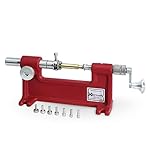
Hornady Cam-Lock Trimmer 050140
- Cam-lock shell holder holds cases square
- Micro-adjust cutter lever
- Seven pilot sizes included
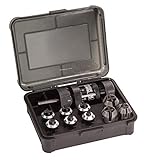
Frankford Arsenal Universal Precision
- Built-in depth micrometer
- Runs from almost any half-inch drill
- Shoulder-indexing universal collets
Quick Overview of All 8 Case Trimmers in 2026
| Product | Specifications | Action |
|---|---|---|
| Frankford Arsenal Platinum Case Prep System |
|
Check Latest Price |
| Hornady Cam-Lock Trimmer 050140 |
|
Check Latest Price |
| Frankford Arsenal Universal Precision Trimmer |
|
Check Latest Price |
 RCBS Trim Pro-2 Manual Case Trimmer Kit RCBS Trim Pro-2 Manual Case Trimmer Kit |
|
Check Latest Price |
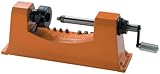 Lyman Universal Trimmer with 9 Pilot Multi-Pack Lyman Universal Trimmer with 9 Pilot Multi-Pack |
|
Check Latest Price |
 Lee Precision 90670 Deluxe Power Quick Trim Lee Precision 90670 Deluxe Power Quick Trim |
|
Check Latest Price |
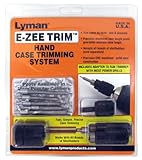 Lyman E-ZEE Trim Hand Case Trimmer Rifle Set Lyman E-ZEE Trim Hand Case Trimmer Rifle Set |
|
Check Latest Price |
 Lyman Universal Case Trimmer with Carbide Cutter Lyman Universal Case Trimmer with Carbide Cutter |
|
Check Latest Price |
1. Frankford Arsenal Platinum Series Case Trim and Prep System
Frankford Arsenal Platinum Series Case Trim and Prep System with Hardened High Speed Steel Chamfer Debur Tool and Primer Pocket Scrapers with Trimmer
Shoulder-indexing collet system
Covers .17 Rem to .460 Weatherby
8.9 pound powered bench unit
Pros
- Trim chamfer and deburr from a single grip
- Collets index on the case shoulder for square cuts
- Works from .17 Remington to .460 Weatherby
- Heavy-duty motor holds up on extra-long cases
- Storage box holds the extra tools
Cons
- No catch tray so shavings spread across the bench
- Cannot trim straight-wall cases
- Initial calibration is trial and error
This is the trimmer I recommend to anyone who does rifle work on more than one caliber. The unit weighs 8.9 pounds and bolts down as a complete bench system, with the trimmer head, a chamfer tool, a deburr tool, large and small primer pocket tools, three collets, six shoulder bushings and a storage box in the same package. Nothing has to be bought separately to get a complete case prep sequence, which is where a lot of the value sits.
The whole operation happens off one grip. You index the case on the shoulder in the collet, then work the cutting head, the chamfer tool and the deburr tool without letting go of the case, so you are not repeatedly dropping brass into a shell holder to pick it up again. On r/reloading, owners repeatedly name this machine as the sheer ease-of-use winner among the trimmers they have owned, and that reputation has held up as the model has been on the bench for years.
Throughput is where the machine separates itself from anything hand-cranked. Reviewers report roughly 5 to 22 seconds per case depending on how many operations they run, and initial setup takes about 10 to 20 minutes once you learn the sequence. The motor is heavy enough that it barely bogs down on long magnum cases, and owners describe it as quiet enough to use indoors.
The honest weakness is calibration. The first cut is always a guess until you dial in the collar, and on very long batches the setting can drift a little. Once calibrated, the consistency lands around plus or minus .002 inch. That is fine for hunting loads and general reloading, and it is not what a match shooter chasing sub-thousandth uniformity wants. Straight-wall pistol cases are also completely out of scope, since the collet indexes on a shoulder that straight-wall brass does not have.
What to check before you buy the Platinum Series
Check that every caliber you shoot is shouldered. The collets cover .17 Remington through .460 Weatherby, so 5.56, 7.62×39, .308 Winchester, 6.5 Creedmoor, 6mm and every common magnum are handled. Straight-wall cases such as .45 ACP, 9mm and .380 are not, and no setting will change that.
Look at your bench space. The unit measures 11 by 8 by 8 inches, and there is no catch tray, so brass shavings do end up on the bench top and across the front face plate during a session. Budget a few minutes of cleanup between calibers, and keep the included storage box close so the chamfer and deburr tools do not go missing.
Who should skip the Platinum Series
Skip it if your accuracy target demands better than .002 inch repeatability, because this is a high-speed steel cutter system and precision trimmer territory is a different product category. Anyone chasing match-grade ELR loads should look at a purpose-built precision unit instead.
Skip it if you reload only straight-wall pistol brass and never intend to add a rifle caliber. You would be paying for shoulder-indexing capability you can never use, and a straight-wall friendly or fixed-length kit will serve you better for the money.
2. Hornady Cam-Lock Trimmer 050140
Hornady Cam-Lock Trimmer 050140 – Reloading Case Trimmer Accurately Restore Fired Cases Up to 50 Calibers – Unique Brass Trimmer with Micro Adjust Cutter, 7 Pilot Sizes, & Large Diameter Cutting Head
Cam-lock shell holder holds cases square
About plus or minus .002 once set
Seven pilots and bench mount holes
Pros
- Cam-lock shell holder produces repeatable cuts
- Micro-adjust changes length without moving the case
- Large diameter replaceable tool steel cutter
- Four screw holes give a rigid bench mount
- Seven common pilot sizes included
Cons
- Only Hornady shell holders are compatible
- Fine adjust threads are coarse and jump in .010 steps
- Setup needs a known-good reference case
The Cam-Lock is the one I recommend to shooters who want a solid manual machine and already think in shell holders. It weighs 3 pounds, mounts through four screw holes for a genuinely rigid setup, and the cam-lock grip clamps the case so the length reference stays put while the cutter works. Experienced reloaders credit it with fixing wrinkled-neck problems on .223 and 300 BLK, which is the classic symptom of cases that have grown past their proper length.
The micro-adjust cutter lever is the feature that separates it from a cheap drill-driven head. You can change trim length in .001 inch steps without repositioning the case, and all lengths are measured from the cartridge head, so the number means the same thing across calibers. The large diameter replaceable tool steel head trims up to 50 caliber, and the included pilots cover .22, 6mm, .270, 7mm, .30, .38 and .45.
Owners report trimming 200 cases in roughly two hours, and the machine holds about plus or minus .002 inch once it is set. Several buyers compare it favorably against far costlier micrometer trimmers, which tells you where this machine actually sits. The bench-mount screw holes matter more than they sound like they should: a trimmer that is not rigid will not hold the same length twice.
The catch is the ecosystem, not the machine. Compatibility is limited to Hornady shell holders, so if you run another brand you are buying into that system from day one. The fine adjustment threads are also coarser than the .001 spec implies, jumping roughly .010 inch on a small turn, which makes small corrections slow work. Initial setup needs a case of known-good length to dial against, and the optional cordless drill adapter is reported to break under a heavy drill.
What to check before you buy the Cam-Lock
Count your shell holders before anything else. This is the single most common regret in this category, and it shows up repeatedly in forum threads where people buy the trimmer first and discover the holder requirement later. If you already load with Hornady heads, you are set; if not, factor the holders into your budget from the start.
Plan for a calibration session. You need at least one case trimmed correctly already in hand, and a case gauge or calipers, before the first cut is meaningful. Without that reference, the micro-adjust lever becomes guesswork and you will burn cases working the length out.
Who should skip the Cam-Lock
Skip it if your bench is small or shared, because the 11 by 6 by 4 inch footprint plus the mounting board needs a dedicated spot. Owners also note that the machine surface rusts easily if it sits in a humid shop, so it wants somewhere dry.
Skip it if your volume runs into the thousands per session. A hand-turned Cam-Lock at 200 cases in two hours is a comfortable pace for a weekend, but a progressive or high-volume rifle shooter will outgrow it quickly and want a powered case prep center instead.
3. Frankford Arsenal Universal Precision Case Trimmer
Frankford Arsenal Universal Precision Case Trimmer with HSS Construction, Drill Press or Hand Drill Functionality and Storage Case for Reloading
Built-in depth micrometer for trim changes
Shoulder-indexing universal collets
Runs from almost any half-inch drill
Pros
- Depth micrometer gives repeatable length changes
- Works with nearly any half-inch drill or press
- Hardened stainless cutter holds a long edge
- Storage case for collets and collars
- Limited lifetime warranty
Cons
- Drill or drill press is not included
- Not compatible with straight-wall cartridges
- Collet and collar must be matched by hand
This is the value pick in the lineup, and the reason is simple: it turns a hand drill or a drill press into a precision trimmer. The built-in depth micrometer is what separates it from a cheap drill adapter, because it holds a repeatable length setting instead of relying on how firmly you hold the drill. Reviewers consistently name the micrometer and the shoulder-indexing collets as the reasons to pick it over other drill-driven heads.
The universal collet system indexes cases on the shoulder, covering .17 Remington to .460 Weatherby with the adjustable collets, and the hardened stainless steel cutter is reported to stay sharp for thousands of rounds. A plastic storage case for the collets and collars is included, which matters more than it sounds when you are chasing small parts on a cluttered bench. The body is metal and carries a limited lifetime warranty.
Throughput is drill-limited rather than machine-limited, so it sits somewhere between hand cranking and a full powered prep center. Run it in a drill press for repeatability on a large batch, and use a hand drill for occasional work on a couple of calibers. That flexibility is the main argument for this unit over a fixed manual trimmer.
The tradeoffs are structural. You have to own the drill, straight-wall cases are out, and you have to match the collet and collar to each cartridge yourself. The brass shaving ejection port also needs clearing during heavy sessions, otherwise shavings pack against the cutter and the cut gets ragged. If you do not already have a drill on the bench, factor that into the real cost of this option.
What to check before you buy the Universal Precision
Check your drill. Nearly any half-inch hand drill or drill press will drive it, but a drill press gives you the consistency that the micrometer setting deserves. With a hand drill, keep the trigger light and steady, and expect more variation on a long batch.
Plan your collet inventory. The adjustable system covers a wide caliber span, but matching the collet and collar to the cartridge is your job, not the machine’s. If you shoot a lot of one or two calibers, you will only touch that part of the system and the setup burden is small.
Who should skip the Universal Precision
Skip it if straight-wall pistol brass is your primary ammo. Straight-wall cases will not index on a shoulder, and this design has no way around that. A fixed-length or straight-wall-capable kit handles that work without a dedicated purchase.
Skip it if you dislike clearing shavings mid-session or if your reloading area is tight and cluttered. The ejection port needs attention during long batches, and a drill-driven unit in a small space is an awkward combination compared with a self-contained bench system.
4. RCBS Trim Pro-2 Manual Case Trimmer Kit
RCBS Trim Pro-2 Manual Case Trimmer Kit
Hand crank design with no motor
Pilots span 5.7x28 to .338 Lapua Magnum
Model 90366 bench mounted
Pros
- Spring-loaded shell holder gives a fixed length reference
- Coarse and fine adjustments dial in length
- Silent operation with no motor or noise
- Holds calibration across long batches
- Designed and made in the USA
Cons
- Must be firmly mounted for the lever to work
- Cranking tires the arm after 50 to 100 rounds
- Allen wrench is not included
The Trim Pro-2 is the manual machine I trust for consistency rather than speed. The spring-loaded universal shell holder grabs the cartridge base and holds it against a fixed reference, which is why owners who came from cheaper trimmers with drifting adjustments or dulling cutters report none of those problems here. It is model 90366, designed and made in the United States by a company with a long manufacturing history.
The included pilots cover calibers from 5.7×28 up through .338 Lapua Magnum, which makes it one of the broader single-kit caliber ranges in this roundup without needing to buy a separate unit per cartridge family. Coarse and fine adjustments let you set trim length deliberately rather than by feel, and the setting holds over a full batch once calibrated. Owners report running thousands of 5.56 cases through it with the first and last case the same length.
Operation is completely silent, which matters if you reload in a room where a powered head would be annoying. The trade is physical: this is a hand crank, and after 50 to 100 rounds the arm starts to feel it. That is a real limit for anyone working through a large bucket of brass in one sitting.
Mounting is not optional. The lever only works properly if the unit is firmly screwed to a board or a bench, and the base has three mounting screws, one of which sits awkwardly under the lever where it is hard to reach. The shaving mount is small, brass shavings scatter widely, and the Allen wrench that sets the micrometer wheel is not included. None of that is fatal, but budget an afternoon to mount it properly.
What to check before you buy the Trim Pro-2
Check your bench mounting surface. You need a solid board or bench section with room for the lever to swing through its full arc, and you need to be able to reach the screw under the lever. Mounting it to a thin panel is the most common reason owners complain about the machine feeling loose.
Check your pilot coverage against your actual calibers. The kit covers 5.7×28 through .338 Lapua Magnum, which is wide, but anything outside that span means ordering a pilot separately. Bring a case gauge or calipers to the first session so the coarse and fine adjustments have something to dial against.
Who should skip the Trim Pro-2
Skip it if you trim high volumes in one block of time. The hand crank is the limiting factor, and a session that runs past a hundred cases turns into a workout. A drill-driven or powered unit moves cases faster with less fatigue.
Skip it if a loud or powered shop floor bothers you, or the reverse: skip it if you actually want speed more than silence. Either way, this is the machine for a shooter who values a held setting and a quiet bench over throughput.
5. Lyman Universal Trimmer with 9 Pilot Multi-Pack
Lyman Universal Trimmer with 9 Pilot Multi-Pack Trims .17 Cal to .458 Cal Orange
Universal body trims .22 to .458
Nine popular pilots in the box
Aluminum body with stainless blade
Pros
- Covers .22 to .458 without buying extra collets
- Nine common pilots included in the box
- Stainless steel blade with aluminum body
- Optional power adapter available
- Lyman limited lifetime warranty
Cons
- Pilot selection is manual at each caliber change
- Hand trimming is slower than powered systems
- Pilot range skips some obscure calibers
This is the trimmer I hand to someone building a first bench, because the box is genuinely complete. The universal body trims cases from .22 to .458 caliber without buying additional collets, and the nine pilots in the pack cover .22, .24, .27, 28/7mm, .30, 9mm, .35 (38/357), .44 and .45A. That combination means the common starter cartridges are covered out of the box rather than on a second order.
The body is aluminum with a stainless steel blade, and Lyman backs it with a limited lifetime warranty. The design is the classic universal approach: the case is held and the length is set by the pilot you select, so switching calibers means choosing a different pilot. Lyman describes the platform as accepting cases from .17 to .458 behind the universal chuckhead, and reviewers generally agree the caliber span is the reason people keep coming back to it.
The most common upgrade path is the power adapter, which is sold separately and turns the unit into a drill-driven trimmer. Start cranking by hand for small batches and add the adapter when your volume picks up, which is exactly the pattern most owners describe. Forum users put caliber changeovers at roughly two minutes per switch once you have a correctly sized case as a reference, so the manual pilot selection is a minor cost rather than a real barrier.
The drawback is pace. Hand trimming here is slower and more tiring than a drill-driven or press-driven system, and this body sits in the middle band of ratings rather than at the top. The pilot range also does not reach every obscure European or magnum caliber, so a niche cartridge can still send you back to the catalog.
What to check before you buy the Lyman Universal
List your calibers and match them to the nine included pilots. Most people are fully covered, but if you shoot a magnum or a European military cartridge, check whether the pilot is in the pack before you consider the trimmer done. A single extra pilot is a small addition compared with a wrong first purchase.
Decide how you will power it. The body works by hand out of the box, and the optional power adapter is the natural next step. Buying the adapter at the same time avoids the common complaint of hand fatigue halfway through a batch you did not expect to be that long.
Who should skip the Lyman Universal
Skip it if you shoot only one or two calibers at high volume. The universal flexibility is wasted capability there, and a fixed-length kit that comes with the pilots you need will run faster for less money.
Skip it if you want a tight consistency figure out of the box. The universal pilot reference is good, but a shoulder-indexing collet system or a shell holder with a hard stop gives a more consistent length reference across a long batch. This is a great first tool, not a precision instrument.
6. Lee Precision 90670 Deluxe Power Quick Trim
90670 Lee Precision, Deluxe Power Quick Trim Case Trimmer
Runs off a cordless screwdriver or drill
Works with the matching Lee Quick Trim die
Cuts to .670 to .680 inch
Pros
- Low cost way into power-driven trimming
- No calipers or adjustment needed once set
- Very fast and repeatable when set correctly
- Strong choice for bulk conversions
Cons
- Requires the caliber-specific Lee die sold separately
- Plastic adjustment ring can crack
- Shavings must be cleared every few dozen rounds
The 90670 is the cheapest route to power-driven trimming on this list, and the logic behind it is different from everything else here. Instead of a body that indexes on the shoulder, the trimmer head bolts onto a matching Lee Quick Trim die body for your caliber, and the die itself sets the length. There is no calipers work and no adjustment once the die is set, which is a genuinely different way of solving the problem.
You drive it with a cordless screwdriver or a drill, and the included cutter head trims to .670 to .680 inch. Owners report around 100 cases in roughly 20 minutes, and several users describe it cutting reloading bench time dramatically for bulk work. The clearest use case is caliber conversion, where you are turning a stack of surplus brass into a different cartridge and need speed more than finesse.
Understand what the die is doing before you start. The spring-loaded cutter has no adjustable stop of its own, so it can take brass below the die’s nominal length if the setup is wrong, and the die is what actually determines the cut. One caliber-specific detail worth knowing: for 300 BLK the bottom spacer has to come out or the case will not cut at all.
The quality complaints are consistent. The plastic adjustment ring can crack or break, and when it does the case mouth comes out ragged rather than square. Shavings have to be cleared from the die every few dozen rounds or the blades bind, which is annoying in the middle of a batch. Occasional out-of-the-box cutter condition also draws a few deductions, which is where the 4.3 rating comes from.
What to check before you buy the 90670
Confirm you will buy the matching Lee Quick Trim die for your caliber. The trimmer head does not stand alone, and the die is a separate purchase. If you shoot several calibers, each one needs its own die body, so work out how many you actually need before you commit to this route.
Check your driver tool. A cordless screwdriver is the intended setup and gives the most control at low speed. A full-speed drill works but generates more heat and more likely to upset the plastic ring, so take it slower than feels necessary.
Who should skip the 90670
Skip it if you want one tool to cover every caliber on the bench. The design is inherently single-caliber, because the die sets the length, and a multi-caliber body is a completely different purchase. This is the right answer for one cartridge done in bulk, not for a varied bench.
Skip it if case mouth quality is your top priority. A cracked plastic ring means a ragged cut, and you will be inspecting more brass than you would with a collet or shell holder system. Precision loads and match shooters should spend the money on a shoulder-indexing or micrometer design instead.
7. Lyman E-ZEE Trim Hand Case Trimmer Rifle Set
Lyman Products E-ZEE Trim Hand Case Trimmer Rifle Set
Trims by hand or with the power adapter
Pilots for .223 .243 .270 .30-06 .308
Works with any standard shell holder
Pros
- Kit includes both hand and power adapters
- Trims to a pre-set length with no measuring
- Works with any standard shell holder
- Rifle pilots for five common calibers included
- Compact and assembles in seconds
Cons
- Trim length is fixed by the pilot and not adjustable
- Pilot set screw works loose when swapping calibers
- Shell holder lock-down knob is small
The E-ZEE Trim is a fixed-length design, and understanding that up front saves a lot of confusion. The pilot determines the trim length rather than an adjustable collar, so there is nothing to measure and nothing to dial. It suits restoring once-fired military brass to spec, where the correct length is already known, and it suits bulk rifle work where you are running hundreds of cases through a drill press rather than chasing precision on a handful.
The rifle set includes pilots for .223, .243, .270, .30-06 and .308, plus the case locking device, cutter, trim-to-length pilot, cutter head and both a hand adapter and a power adapter. It works with any standard shell holder, which is a genuine advantage over machines that lock you into one brand. It assembles in seconds, weighs 10.56 ounces, and is made in the USA.
Owners like that the whole kit is complete out of the box, power adapter included, and that it handles bulk military 5.56 or .308 efficiently, especially in a drill press. One common bench pairing is this kit with a separate case prep station, which gets you trimmed, chamfered and deburred cases without the brass ever leaving your hands.
There is no length adjustment to speak of, so if you want to trim a case to a dimension other than the pilot’s fixed length, this is the wrong tool. A few cases out of a hundred need a second pass. The pilot set screw also tends to work loose, especially when you are swapping calibers, and the small lock-down knob on the shell holder is awkward with cold or gloved hands. At varied speeds you can get case mouth mushrooming instead of a clean cut, so the drill press is the better environment.
What to check before you buy the E-ZEE Trim
Check that fixed length works for you. If every case you trim needs to end up at the same dimension for that cartridge, the pilot system is a strength because it removes measurement from the process. If you need to hit a custom length, you need an adjustable machine instead.
Check that your calibers are rifle calibers in the included pilot set. The rifle kit covers .223, .243, .270, .30-06 and .308, and other cartridge families need their own pilot. Check the set screw on each pilot while you are at it, since that is the part that loosens in use.
Who should skip the E-ZEE Trim
Skip it if you reload across several cartridge families including magnums. This is a rifle-oriented kit with a fixed pilot for each cartridge, and expanding past the included pilots turns into a per-caliber purchase pattern rather than a one-time setup.
Skip it if you want the tightest possible case mouth. Fixed-length pilots get you to length, but you may find a small share of cases need a second pass or come out mushroomed at higher speeds. A collet or shell holder machine with a replaceable steel head produces a cleaner cut on every case.
8. Lyman Universal Case Trimmer with Carbide Cutter
Lyman Universal Case Trimmer with Carbide Cutter and 9 Pilot Multi-Pack
Carbide cutter head on the universal body
Nine pilot multi-pack included
Aluminum body model 7862009
Pros
- Carbide cutter holds an edge far longer than steel
- Universal body covers a broad caliber range
- Light aluminum body stays rigid
- Pilots interchange with the wider Lyman line
Cons
- Costs more than the comparable steel-cutter model
- Manual operation is slower than drill-driven units
- Smallest review base in this roundup
This is the low-maintenance option in the lineup, and the reason is a single word: carbide. Owners upgrading from a steel-cutter Lyman trimmer do it specifically to stop replacing blades, and that single change removes the most common recurring annoyance in this category. A dull cutter changes your effective trim length without any warning, and carbide holds its edge far longer.
The platform underneath is the familiar Lyman universal body in aluminum, so it stays light while remaining rigid, and the nine pilot multi-pack gives the same broad caliber coverage as the other Lyman universal unit here. Because it is the same platform, pilots are interchangeable across the wider Lyman trimmer line, which is a real advantage if you already own one of the other bodies.
What you accept for that edge retention is manual pace and a higher outlay than the steel version. This trimmer is not drill-driven, so cases move at hand speed, and the carbide head is the reason the price sits above the comparable steel-cutter model. For someone who trims in occasional sessions, that is a reasonable trade. For someone processing thousands of cases a year, the per-case math works out better with a faster machine and a replaceable steel head.
Pilots still have to be matched by hand to each cartridge, so the universal design does not remove that step. This listing also carries the smallest review base in the roundup at 164 reviews, so the ownership history here is thinner than the other seven and it is worth factoring that into how much weight you put on other owners’ experiences.
What to check before you buy the Carbide Lyman
Check whether you already own a Lyman universal body. If you do, the pilot interchangeability means you are really just buying a longer-lasting cutter head experience rather than a whole second machine, and that changes the value calculation considerably.
Check your trimming volume honestly. Carbide pays off when the same head has to survive repeated sessions. If you trim a few hundred cases once and then leave the bench alone for months, the premium over the steel model is not buying you much.
Who should skip the Carbide Lyman
Skip it if you trim in high-volume sessions, because manual operation caps how many cases you can process in an hour. A drill-driven or powered unit moves the same brass faster, and the steel cutter on those machines is cheap to swap.
Skip it if you are buying on a tight budget and do not need the edge retention yet. The steel-cutter version of the same body does the same job, and the money you keep can go toward spare pilots or a case prep station for chamfering and deburring, which is where most of the remaining bench time actually goes.
How to Choose the Best Case Trimmers for Reloading
Start with how the case is held, because that single choice determines most of everything else. Three systems show up in this roundup. A shell holder grabs the cartridge base and pushes it against a hard reference, which is the most repeatable approach and the one used by the Cam-Lock and the RCBS Trim Pro-2. A collet clamps the case body and indexes it on the shoulder, which is what the Frankford Arsenal units do, and it covers a very wide caliber span without per-caliber hardware. A pilot sets the length directly, either adjustable as on the Lyman universal body or fixed as on the Lee 90670 and the E-ZEE Trim.
The trap in this category is the proprietary lockout. If a machine only accepts one brand of shell holder or one brand of collet, your future parts list is set the day you buy it. Several owners in forum threads describe buying a trimmer first and only later realizing they also needed that brand’s shell holders, which is an avoidable expense. Before you commit, write down the system the machine uses and check what else you will need to own.
Next, look at cutter material and how the machine is powered. High-speed steel is the standard across most of these machines and keeps thousands of cases in a typical session before it needs attention. Carbide holds its edge much longer and is the right call if you trim often and never want to think about blade replacement. On power source, a hand crank is quiet and precise but tiring past a hundred cases, a drill-driven head is fast and flexible, and a mains-powered case prep center is the fastest and the least fussy once it is calibrated.
Then check two things people skip. First, straight-wall support. Every shoulder-indexing machine in this roundup is rifle-only by design, because a straight-wall case has no shoulder to index against. If you reload 9mm, .45 ACP or .380, you need a fixed-length or die-driven tool, or you simply never trim that brass at all. Second, accessories and running cost. Chamfering and deburring are separate operations from trimming, and a machine that only trims means buying a case prep station as well. Budget for spare pilots, a replacement cutter head, and a power adapter if the machine is manual.
Finally, match the tool to your volume. Under a few hundred cases a season, almost any of these works and simplicity wins. Running into the thousands, prioritize throughput and a setup that will not need re-dialing every time you switch calibers. Precision loads add a different axis entirely: here you want the tightest length reference you can get, a hard stop rather than a spring reference, and a machine that holds calibration over a full batch. If you are building the rest of the bench, our guide to the best reloading dies for handgun cartridges covers the sizing side of the same workflow.
How to Trim Cases: Setup and Workflow
Wear eye protection for every step. Trimming throws brass chips and shavings at speed, and the chip paths on drill-driven and powered machines point away from you in ways that are not always obvious. Clear a bench area before you start, and keep loose brass off the surface so it does not end up under a rotating cutter.
Mount or position the machine first. Bench-mounted units go down on a solid board with every screw torqued and no flex in the lever or crank. Drill-driven units need a firm grip or a drill press, and a hand drill works only if you are prepared to keep a light, steady trigger.
Select the correct pilot or collet for the cartridge, and confirm the case indexes on the shoulder rather than on the body. If the case will not seat fully against the reference, stop and check the pilot size, because a wrong pilot is the single most common cause of a cut that varies from case to case.
Dial in the trim length against a case gauge. Take a case you already know is correct, or measure one and set the length from the cartridge head, and make your cut a small amount long before you start the real batch. Confirm the result on three or four cases from different loads before you commit to a full bucket.
Trim to length, then run the chamfer and deburr steps. Chamfering rounds the inside mouth so the bullet seats evenly, and deburring removes the shaving on the outside edge so the case feeds smoothly. A powered case prep center does all three from one grip; a dedicated trimmer does only the first, which is why pairing it with a case prep station is the common bench pattern and gets you through cases in well under a minute.
Clean as you go. Chips left in a collet, a die or a shaving port change the cut over a long batch, and a clear of the working area every 50 cases or so is cheaper than discovering the drift at the end. Mark the dial or collar with a pencil so you can return to the setting quickly next session.
On the question of whether to trim before or after resizing: for most bottleneck rifle work, trimming after resizing is the normal order, because resizing is what pushes a fired case back toward its maximum length and gives you the worst case to measure against. Trimming first is a valid approach and several forum users prefer it because burrs are less likely to grab a pilot. The practical warning either way is that a burr or an over-trimmed case can stick on the shell holder pilot, and pulling it off by force is how necks get damaged. If your cases are sticking, fix the burr before you keep cutting.
Do Straight-Wall Pistol Cases Need Trimming?
Usually not, and this is the most common misunderstanding in the hobby. Bottleneck rifle cases grow with every firing because the case head is driven forward under pressure and the neck takes the load. Straight-wall pistol cases such as 9mm, .45 ACP and .380 do the opposite: repeated sizing and firing gradually shortens the case body, pushing it toward or past the minimum length rather than the maximum. A trimmer that restores a case to maximum length is solving a problem straight-wall brass does not have.
That is why most handgun reloaders never buy a trimmer, and why the machines in this roundup are overwhelmingly rifle tools. Every shoulder-indexing unit here works by stopping on the case shoulder, and a straight-wall case does not have one. If you want a single tool for both worlds, you need a fixed-length or die-driven design such as the Lee 90670, which trims a specific cartridge to a length set by its die body rather than by shoulder geometry.
There are cases to retire rather than trim, and these apply to rifle and pistol alike. Head separation, where the primer sits proud of the case head, is a hard retirement trigger and no amount of trimming fixes it. Blistered or pierced primers mean the case has been overworked, and a cracked neck, a dented rim that will not feed, or a case wall thinned by excessive necking are all signs the case has done its job.
The practical rule is simple. If your cartridge is bottleneck, you will trim on most cycles as the brass accumulates. If it is straight-wall, check length with a gauge occasionally and only intervene when a case actually falls below minimum, and retire anything with a separated head. That single distinction will save you from buying a machine you never need, or from trimming brass that was never too long in the first place.
Frequently Asked Questions
What is the best case trimmer for reloading?
The Frankford Arsenal Platinum Series Case Trim and Prep System is the best all-around choice because it trims, chamfers and deburrs from a single grip, uses a shoulder-indexing collet system that covers .17 Remington to .460 Weatherby, and includes the tools and storage box in one package. The Hornady Cam-Lock 050140 is the runner-up for manual work, and the Frankford Arsenal Universal Precision is the best value if you already own a drill.
What is the best electric case trimmer for reloading?
For powered trimming, the Frankford Arsenal Platinum Series is the strongest all-round machine, with a heavy-duty motor that handles extra-long cases and a reported pace of roughly 5 to 22 seconds per case depending on how many operations you run. If you want a cheaper route to power, the Lee Precision 90670 driven by a cordless screwdriver is the budget answer, though it requires the matching caliber-specific die.
Is a case trimmer necessary for reloading?
It depends entirely on the cartridge. Bottleneck rifle cases such as 5.56, 7.62×39, .308 Winchester and 6.5 Creedmoor grow longer with every firing and need regular trimming. Straight-wall pistol cases such as 9mm, .45 ACP and .380 gradually shorten instead, so most handgun reloaders never trim at all and should check length with a gauge only when a case runs below minimum.
Do I need to trim every case?
No. In a batch of fired bottleneck brass, the cases that have been fired the most are the ones that need trimming, so sort before you cut and you can skip a meaningful share of the pile. Check length with a case gauge rather than trimming blind, and retire any case showing head separation, a blistered or pierced primer, or a cracked neck, because trimming will not fix those defects.
How do I set the correct case length on a trimmer?
Start with a case you know is correct, or measure one and set the length from the cartridge head. Seat the case fully against the pilot or shoulder reference, make one deliberately short test cut, then measure the result and adjust in small increments until the case matches spec. Confirm the setting on three or four cases from different loads before running a full batch, and mark the dial so you can return to it next session.
Should I trim cases before or after resizing?
For most bottleneck rifle work, resize first, then trim, because resizing is what pushes a fired case back toward its maximum length and gives you the worst case to measure against. Trimming before resizing is also valid and several reloaders prefer it because fewer burrs grab the pilot. Whichever order you use, clear burrs first, since a burr is the usual reason a case sticks on the trimmer pilot.
Conclusion
The Frankford Arsenal Platinum Series Case Trim and Prep System is the pick for almost every rifle reloading bench in 2026, because trimming, chamfering and deburring in one grip removes more steps from brass prep than any other design here. If you want manual control and already run shell holders, the Hornady Cam-Lock 050140 gives you a rigid bench unit that holds its setting across a whole batch. The RCBS Trim Pro-2 is the quiet choice for a shooter who values a held length over throughput, and the Frankford Arsenal Universal Precision turns a drill you already own into a precision trimmer.
Match the tool to your situation rather than to a spec sheet. Straight-wall pistol shooters can usually skip a trimmer altogether, single-caliber bulk converters should look at the Lee 90670, and anyone who trims often and hates replacing blades belongs on the carbide-cutter Lyman. Whichever one you pick, the deciding details are the case retention system, whether it handles every caliber you actually load, and whether chamfering and deburring come with it, because that is where the rest of your brass prep time goes.