

Quick answer: the Critter Nation by MidWest Double Unit is the best chinchilla cage for tall habitats in 2026. Its 36 x 24 x 63 inch frame gives a chinchilla two full stories of climbable wire, 1/2 inch bar spacing, two full-width plastic pan floors, and height-adjustable shelves — the combination that satisfies the 3 ft x 2 ft x 3 ft minimum, the half-inch bar cap, and the platform rule at the same time.
Chinchillas are obligate vertical climbers. They were not built to sprint across a floor; they were built to hop up a rock face, so vertical space genuinely improves their welfare. But here is the catch that most cage listings bury: height on its own is not enrichment. A 69 inch frame with two platforms and bare wire floors is more dangerous than a 50 inch frame with five solid resting shelves.
That distinction drove how we built this guide. We compared twelve tall cages on published exterior dimensions, bar spacing measured in inches, platform count and interval, tray and grate design, latch type, and caster brakes, then matched each one against the safety rules set out by VCA Animal Hospitals and the Merck Veterinary Manual. Our method is desk research on manufacturer specs plus owner review data, not a year of housing animals ourselves, and we flag where the spec sheet and the reviews disagree.
If you keep birds as well, bar-spacing maths will already be familiar from our bird cage roundup, though chinchillas need far tighter wire than most parrot species. And if your interest is how much climbing surface an animal needs in a confined space, the chameleon screen cage guide covers the opposite problem — vertical reach without bars a chinchilla could chew through.
Table of Contents
- Top 3 Picks for Tall Chinchilla Cages in 2026
- Best Chinchilla Cages for Tall Habitats at a Glance (October 2026)
- 1. Critter Nation by MidWest Double Unit — Best Overall Tall Chinchilla Cage
- 2. Yaheetech 52-Inch 6-Level Metal Cage — Best Value
- 3. Yaheetech 69-Inch Wrought Iron 3-Level Cage — Best for Maximum Climb Height
- 4. PawHut 6-Level Small Animal Cage — Best for Adult Chinchillas
- 5. Polar Aurora 58.6-Inch Metal Cage — Best for Ramp Grip
- 6. PawHut 63-Inch 6-Tier Steel Wire Cage — Best for Door Access
- 7. HABUTWAY 50-Inch 5-Tier Metal Cage — Best for Mid-Sized Rooms
- 8. Mcage 67.5-Inch X-Large 4-Level Wrought Iron Cage — Best for Juveniles
- 9. PawHut 59.5-Inch 6-Level Cage — Best for Fast Cleaning
- 10. Mcage Deluxe Double Unit Two-Story Cage — Best Included Accessory Set
- 11. VEVOR 50-Inch 5-Tier Rolling Cage — Easiest to Assemble
- 12. HABUTWAY 40-Inch 2-Tier Rolling Cage — Best for First-Time Owners
- How Big Should a Chinchilla Cage Be?
- How Tall Should a Chinchilla Cage Be? The 12-Inch Platform Rule
- What Bar Spacing Is Safe for a Chinchilla?
- Fall Safety and Escape Routes: A 7-Step Audit
- Cleaning, Trays and Casters on a Tall Cage
- One Chinchilla or Two, and Where the Cage Goes
- Cages We Skipped and Why
- Frequently Asked Questions
- How big should a chinchilla cage be?
- How tall should a chinchilla cage be?
- What bar spacing is safe for a chinchilla?
- Do chinchillas need shelves and ledges in a tall cage?
- Can I keep a chinchilla in a ferret cage?
- Can two chinchillas share one cage?
- Where should I put the chinchilla cage in the house?
- Do chinchillas need a wheel inside the cage?
- Best Chinchilla Cages for Tall Habitats: The Final Word
Top 3 Picks for Tall Chinchilla Cages in 2026

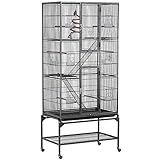
Best Chinchilla Cages for Tall Habitats at a Glance (October 2026)
Every figure below comes from the manufacturer specification, and every bar spacing is the number the listing actually publishes. An unlisted spacing is treated as a fail, because you cannot measure a cage you have not received and you cannot fix an animal that is already missing.
| Product | Specifications | Action |
|---|---|---|
| Critter Nation Double Unit |
|
Check Latest Price |
 Yaheetech 52-Inch 6-Level Yaheetech 52-Inch 6-Level |
|
Check Latest Price |
| Yaheetech 69-Inch Wrought Iron |
|
Check Latest Price |
 PawHut 6-Level 59.75-Inch PawHut 6-Level 59.75-Inch |
|
Check Latest Price |
 Polar Aurora 58.6-Inch Polar Aurora 58.6-Inch |
|
Check Latest Price |
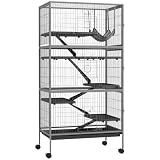 PawHut 63-Inch 6-Tier PawHut 63-Inch 6-Tier |
|
Check Latest Price |
 HABUTWAY 50-Inch 5-Tier HABUTWAY 50-Inch 5-Tier |
|
Check Latest Price |
 Mcage 67.5-Inch 4-Level Mcage 67.5-Inch 4-Level |
|
Check Latest Price |
 PawHut 59.5-Inch 6-Level PawHut 59.5-Inch 6-Level |
|
Check Latest Price |
 Mcage Deluxe Double Unit Mcage Deluxe Double Unit |
|
Check Latest Price |
 VEVOR 50-Inch 5-Tier VEVOR 50-Inch 5-Tier |
|
Check Latest Price |
 HABUTWAY 40-Inch 2-Tier HABUTWAY 40-Inch 2-Tier |
|
Check Latest Price |
1. Critter Nation by MidWest Double Unit — Best Overall Tall Chinchilla Cage
Critter Nation by MidWest Double Unit Small Animal Cage
36 x 24 x 63 in
1/2 in bar spacing
2 pans, 3 ramps, 2 shelves
44 lb
Pros
- Two full stories of climbable space
- 1/2 inch bars safe for chinchillas
- full-width doors that open flat
- height-adjustable shelves
- separates into two sections for transport
Cons
- Assembly takes 1.5 to 2 hours and is far easier with two people
- occasional bent pegs and misaligned doors
- door latches stick
- 44 lb with a large footprint
This is the cage the owner community keeps pointing new owners toward, and after comparing twelve frames the reason is easy to see. At 36 x 24 x 63 inches it clears the 3 ft x 2 ft x 3 ft minimum on all three axes, and the 1/2 inch horizontal wire spacing is exactly the cap most owners treat as the safe line for an adult chinchilla.
What sells it is the full-width double doors. They swing all the way open, which means you can reach the back corners to drop hay, spot-clean a platform, or catch your animal without dismantling anything, and the swing-up locking ramp lets you section off one level while you work on the other.
Owners describe the metal as the toughest in the category and report the frame still looks new after years of daily use. Multiple reviewers also describe a visible change in their animal’s activity and sociability after upgrading from a short pet-store cage, which is the outcome you are actually paying for.
Two full-width plastic pan floors mean the usable floor is far larger than the footprint suggests, because the animals walk on the upper pan and droppings land below. The height-adjustable shelf hooks on pre-cut holes let you reconfigure the interior as an animal grows or as your platform plan changes.
What you get right out of the box
The package includes two removable base pans, three textured ramps with covers, and two full-width resting shelves, plus a bar under the shelves for hanging a hammock. The bottom level shelf doubles as accessory storage, so hay and treats do not have to live on the floor of the room.
One practical note from owners: the unit separates into two stacked sections for moving. At 44 lb it is a heavy frame, and that split is the difference between moving it through a doorway yourself and needing a second person.
Where it falls short
Assembly is the honest weak point. Owners budget one and a half to two hours, recommend two people, and almost universally mention a rubber mallet for seating the pegs. Fit and finish problems turn up now and then — bent pegs, scratched panels, doors that do not line up perfectly.
The latches also stick more than they should, and the horizontal bars mean only certain clip-on accessories will hang on the walls. Both are minor next to what the build gives you, but they are the reason this frame is not flawless.
2. Yaheetech 52-Inch 6-Level Metal Cage — Best Value
Yaheetech 52-inch Ferret Cage 6 Level Metal Rat Cage with 3 Front Doors/Feeder/Wheels Small Animal Cage for Ferret/Chinchilla/Bunny/Rabbit/Squirrel, Black
25 x 17 x 52 in
Six tiers, three latched doors
Grate tray, four casters
28.2 lb
Pros
- Six tiers of vertical space in a narrow footprint
- three latched front doors
- slide-out tray with a metal grate
- powder-coated steel
- light enough for one person to wheel around
Cons
- Narrow 25 x 17 in footprint limits floor space
- only three front doors so deep corners are hard to reach
- lighter wire gauge than wrought iron frames
- some owners add clasps to the small side doors
This is the frame to buy if your room is narrow and your budget is real. Six tiers in 25 x 17 x 52 inches gives a chinchilla far more climbing surface than the footprint suggests, and 28.2 lb makes it light enough for one person to wheel from room to room.
Three latched front doors are a genuine upgrade over single-door budget cages, because you can feed and spot-clean at any level without reaching through a whole tier. The slide-out litter tray with a metal grate is the piece most owners mention first: the animal walks on wire, the waste lands in the pan underneath, and the pan pulls out sideways.
The build is powder-coated steel with corrugated ramps for grip and rounded corners, and reviewers consistently call the value hard to argue with for six tiers at this height. Deep cleaning is quick because you can get a cloth into most of the frame through the three openings.
One honest caution: the manufacturer does not publish a bar spacing figure for this listing. That is not automatically a problem for an adult chinchilla, but it means you are buying blind on the single number owners treat as non-negotiable. If you have a juvenile, or a chinchilla with a history of working at latches, we would not call this the right frame.
Where the narrow footprint earns its keep
At 25 inches wide by 17 inches deep, this cage fits against a wall or into a corner where a 32 inch frame simply will not go. The trade is floor area: owners regularly note there is plenty of vertical room and only moderate ground space, so a pair is a stretch in this one.
For a single adult that is an easy trade. A chinchilla that is awake, climbing at four levels and using a wheel is a far better outcome than a large cage that will not fit through the door and gets returned unopened.
Where it falls short
Three front doors means the deep interior corners are awkward to reach, and the powder-coated steel is lighter gauge than the wrought iron frames in this group. That matters most for a determined chewer working at a corner joint over years rather than months.
Several owners also add extra clasps or ties to the small side doors, which tells you something about how much the supplied latches inspire confidence on a frame this size.
3. Yaheetech 69-Inch Wrought Iron 3-Level Cage — Best for Maximum Climb Height
Yaheetech 69-Inch Extra Large Wrought Iron 3 Levels Ferret Chinchilla Sugar Glider Squirrel Small Animal Cage with Cross Shelves and Ladders, Black
30.3 x 18 x 69 in
3/8 in bar spacing
3 tiers, movable panels
47.8 lb
Pros
- Tallest frame in this group at 69 inches
- wrought iron resists chewing
- 3/8 inch bars are safe for juveniles
- detachable rolling stand with storage
- panels and ladders move
- assembles in about an hour
Cons
- Built as a bird cage so wire platforms and ladders must be covered
- side doors slide easily and need clips
- cage is not fixed to the wheeled base
- 18 inch depth is narrow for two
Nothing else here goes as high. At 30.3 x 18 x 69 inches with three tiers, this is the frame for an owner who is specifically trying to maximise climb height in a shallow room, and the 3/8 inch bar spacing is tighter than anything else on the list.
Wrought iron is the material story here. Owners consistently report it feels noticeably tougher and more chew-resistant than the wire on a typical pet-store cage, which matters for an animal whose entire life strategy is to gnaw on its housing.
The panels and ladders are not fixed, so the interior can be redesigned rather than accepted as supplied. The detachable rolling stand adds both mobility and an open storage shelf, and it lifts off entirely if you already have a stand. Assembly came together in roughly 45 minutes to an hour, and it separates into sections for moving.
At 47.8 lb it is one of the heavier frames here, and 69 inches is tall enough that doorway clearance becomes a real question. Measure your door and your ceiling before you commit, because this is the single most common reason a cage this size never makes it into the room it was bought for.
The retrofit you have to plan for
This is designed as a bird cage, and that single fact drives everything you need to do before an animal moves in. The wire platforms and metal ladders need covering with fleece or wood, and one owner reported a foot injury from an uncovered ladder. Treat the cover job as mandatory, not optional.
The ten small side doors are a genuine convenience for feeders and baths and a genuine weakness for a determined chinchilla, because they slide rather than swing and latch. Owners add zip ties or clasps to every one of them.
Where it falls short
The cage is not fixed to the wheeled base, so it can sit unstable if you leave it on the stand. It also cannot open fully flat, which means deep corners are only reachable through the doors, and the 18 inch width is narrow for housing two animals.
Height is the selling point and the risk in equal measure. With only two platforms across 69 inches of drop, this is precisely the configuration that turns a startled hop into a fall, unless you add wooden ledges yourself.
4. PawHut 6-Level Small Animal Cage — Best for Adult Chinchillas
PawHut 6-Level Small Animal Cage Rabbit Hutch with Wheels, Removable Tray, Platform and Ramp for Bunny, Chinchillas, Ferret, Black
32 x 20.75 x 59.75 in
0.95 in bar spacing
6 levels, ramp and platform
35.2 lb
Pros
- Six levels in a 59.75 inch frame
- four wheels with two brakes
- removable tray and two large access openings
- light at 35.2 lb
- platform and ramp included
Cons
- 0.95 inch bar spacing is too wide for juveniles and small rodents
- wire platforms and ramps should be covered
- assembly required with limited hardware guidance
This is a straightforward, well-proportioned six-level frame at 32 x 20.75 x 59.75 inches, and chinchilla owners specifically report it works as a full-height habitat without modification. The 35.2 lb weight is at the lighter end for a frame this tall, which makes repositioning realistic without a dolly.
Two details do most of the work. Four universal wheels with two brakes mean the cage actually stays where you put it, which matters more than it sounds on a tall frame, and two large access openings plus a removable tray make the daily clean genuinely quick.
The platform and ramp give an animal a proper route between levels rather than forcing it to jump gaps, and the metal wire frame with PP trim reads as solid rather than flimsy. Braked casters on more than half the wheels is better than most of the field.
The listing itself states the cage is not suitable for hamsters or rats, and the reason is the bar spacing. At 0.95 inch, that is a real number you can measure, which puts this listing ahead of most — but it is also more than double the half-inch cap.
Who this frame suits
An adult chinchilla that is not a chronic escape artist, in a home that needs a tall frame that two people can move without a dolly. The 32 inch length also gives better floor area per level than the narrow frames higher on this list.
If you are housing a pair, the 32 x 20.75 inch footprint is the number that matters, not the height. Two animals need the width; the extra tiers are what keeps them from fighting over the same floor space.
Where it falls short
At 0.95 inch, the bars are wider than the half-inch line most owners insist on, and a juvenile will fit through where an adult would not. That single specification rules this frame out for a young animal and for any chinchilla with escape history.
Wire platforms and ramps still want covering for foot safety, and the assembly guidance is thinner than we would like. If bar spacing is non-negotiable in your household, look at the Mcage 67.5-inch or the PawHut 59.5-inch instead.
5. Polar Aurora 58.6-Inch Metal Cage — Best for Ramp Grip
Polar Aurora Metal Small Animal Cage, 59″ H Ferret Cage with Lockable Wheels, Deluxe Chinchilla Cages with Hammock and Removable Tray, 6 Tiers Animal Cages for Pets
31.5 x 20.5 x 58.6 in
0.98 in bar spacing
5 platforms, hammock
6 tiers
Pros
- Five staggered platforms with blue flannel ramps that add real grip
- top hammock animals actually use
- detachable deep base tray
- hammer-pattern finish resists rust
- two of four wheels have brakes
Cons
- 0.98 inch vertical spacing is too wide for small species
- frame feels light duty next to wrought iron
- wheels are the weakest link
- some units arrive with an uncut screw hole
This frame’s genuine strength is the climbing surfaces. Five platforms at staggered heights with blue flannel-covered ramps is the best grip provision in this group out of the box, and owners consistently single the ramps out as the reason their animals use the whole height rather than the bottom two tiers.
At 31.5 x 20.5 x 58.6 inches across six tiers, it is a well-proportioned tall habitat, and the detachable deep base tray is one of the better waste systems we saw. A hanging hammock at the top gives a high resting spot that animals reliably choose.
The build specification is unusually transparent: 13mm square pipe with 0.8mm wall thickness, 2.5mm horizontal wire at 3.94 inch spacing, and 2mm vertical wire at 0.98 inch spacing, with a hammer-pattern finish for rust and wear resistance. We would rather publish those figures than have you discover them.
Two of the four universal wheels have brakes, so the cage holds position on a hard floor, and the frame tolerates a wet wipe-down without immediate surface corrosion. Owners like the balance of features for the tier count and height it delivers.
Why the ramp covers matter more than the tier count
Six tiers sounds generous until you realise how the animal moves between them. A bare metal ramp is a hard, narrow surface underfoot, and sore feet and limping are among the most common complaints in chinchilla keeping. Flannel-covered ramps sidestep that at the point of manufacture.
If your other option is a cage where you will have to bolt on your own grip material, this one already has it. That is real saved work, and it is why this frame is the pick for animals that use every level.
Where it falls short
The 0.98 inch vertical spacing rules out hamsters, mice and any juvenile, exactly as the listing states. For a full-grown chinchilla it is workable, but it is not a cage you can hand to a young animal.
The frame reads as light duty next to a wrought iron build, and owners report it can feel wobbly at full height. The wheels are a reported weak point, and some models arrive with an uncut screw hole in the top panel. Reinforce the casters if you roll it often.
6. PawHut 63-Inch 6-Tier Steel Wire Cage — Best for Door Access
PawHut 63″ 6-Tier Small Animal Cage, Ferret Cage, Large Chinchilla Cage with Hammock Accessory & Heavy-Duty Steel Wire, Small Animal Habitat with 6 Doors, Removable Tray, Gray
31.5 x 20.5 x 62.6 in
1 in bar spacing
6 tiers, 6 doors
48 lb
Pros
- Six access doors reach every level for feeding and cleaning
- pull-out bottom tray keeps cleaning simple
- powder-coated frame resists scratching
- hammock included at the top
- wheels for repositioning
Cons
- 1 inch bar spacing is the widest here and rules out small species
- 4.1 star average reflects build quality complaints
- 48 lb is heavy and casters struggle on some floors
Six doors on a 62.6 inch frame is more access than any other cage in this roundup, and for an owner who cleans daily that is the feature that decides everything. You can reach every tier to drop hay, change bedding, or remove a platform without taking the cage apart.
The 31.5 x 20.5 inch footprint is among the roomier ones here, the pull-out bottom tray makes the daily clean straightforward, and a hanging hammock at the top gives a high resting spot. Rolling wheels let you move the whole habitat for cleaning or to catch the light in a different part of the room.
The steel frame with a powder-coated finish is described as scratch resistant for daily use, and that holds up. What separates this frame from a well-built one is the rating spread, which tells you the finish varies from unit to unit more than it does here.
A 4.1 star average with more than 2000 ratings is not bad, but the distribution is more spread than anything else on this list. Buyers who get a good example love the door count; buyers who get a bad one are filing complaints about assembly fit and wire gauge.
Door access as a cleaning strategy
Think about what your daily routine actually requires. Hay goes in, bedding gets changed, a platform gets wiped, and once a week the tray comes out. With six doors spread across six tiers, each of those tasks happens through its own opening rather than through one door with a hand and a torch.
That is also why the top tiers stay usable. Cages with a single high opening tend to get neglected above shoulder height, and an unused upper tier is wasted money.
Where it falls short
One inch bar spacing is the widest in this group, and it is a genuine safety problem for a juvenile. It also means more places for a determined adult to start working at the frame, which is worth factoring in alongside the hardware strength.
At 48 lb it is among the heaviest, and the casters are not strong on every floor type. If you want six tiers of height with a safety margin, the same brand’s 59.5-inch model gives you 0.5 inch bars for only a few inches less climb.
7. HABUTWAY 50-Inch 5-Tier Metal Cage — Best for Mid-Sized Rooms
HABUTWAY 50”H Metal Small Animal Cages, Rolling Chinchilla Cage with Removable Ramps, Lagre Cage for Chinchillas/Guinea Pigs/Rabbit, Ferret Cages with Hammock & 5 Tiers, Black
31.5 x 20.5 x 50 in
0.9 in wire spacing
5 platforms, side door
35.7 lb
Pros
- Five platforms with flannel-covered ramps give real climbing variety
- full-width side door reaches the far side
- top hammock is a favourite
- soldered bar joints hold up better than welded budget cages
Cons
- 0.9 inch spacing is too wide for small species and one owner reported an escape
- side latches and the front lock are flimsy
- loose plastic tray with no grate
- wheel legs can snap
- plastic platforms are not chew-proof
At 50 inches with five platforms, this is the best height-to-landing-surface ratio in the group, and it is the frame that proves the platform rule better than any taller alternative. 31.5 x 20.5 inches of footprint on a 35.7 lb frame also means it fits mid-sized rooms without dominating them.
The construction detail that matters is soldered bar joints rather than simple welds, with a fully painted hammer-pattern surface. Owners note these hold up better than plain welded budget cages, and the five platforms with blue flannel ramps between them give an animal a genuinely varied route up.
A full-width side door is the quiet feature here. You can reach the far side of the cage without leaning in over the animal, which makes spot-cleaning the back of a mid-level platform realistic rather than aspirational.
The 4.0 star average is not a rounding error, though. It reflects two distinct problems: a 0.9 inch bar spacing that is genuinely unsafe for smaller species, and hardware fragility around the latches, the wheel legs, and the bottom tray.
Why this frame is a lesson in drop distance
Here is the maths nobody prints on the box. Fifty inches of height divided by four gaps between five platforms is roughly 12 inches per drop, which is the interval most experienced owners describe as the safe working number. Now take a 69 inch frame with two platforms and divide again, and you land somewhere near 22 inches per drop.
That is the difference between a landing surface an animal can reach by stretching and a gap they have to clear at speed. If height is the reason you are shopping, the platform count is what decides whether that height is a gift or a hazard.
Where it falls short
The hardware is the problem. Side latches and the front squeeze-style lock are reported as flimsy and breakable, the wheel legs can snap if the cage meets resistance while rolling, and the bottom is a loose plastic tray with no grate, so it flexes and can be worked open from inside.
The 0.9 inch bars have reportedly produced an escape, and the plastic platforms are not durable against a determined chewer. It is a good frame for a calm adult in a small home, and a poor choice for a juvenile or an animal that works at its housing.
8. Mcage 67.5-Inch X-Large 4-Level Wrought Iron Cage — Best for Juveniles
Huge X-Large Wrought Iron 4-Level Chew-Proof Tight 1/2-inch Wire Spacing Ferret Chinchilla Sugar Glider Rats Mices Rabbit Squirrel Hamster Cage with Detachable Rolling Stand
32 x 19 x 67.5 in
1/2 in bar spacing
4 levels, rolling stand
Pros
- All-metal chew-proof build that suits chinchillas and rats
- 1/2 inch spacing is safe for juveniles
- raised metal grate is more durable than a bare plastic tray
- double swing-out doors with a metal safety lock
- detachable stand with two lockable casters
Cons
- 19 inch depth is narrow so floor area per level is modest
- surface rust reported after extended use
- raised wire grate needs covering
- cage and stand are two pieces to keep aligned
Two numbers make this frame among the safest of the tall options: 1/2 inch bar spacing and an all-metal, chew-proof build. When a juvenile is the animal moving in, those are the two specifications that decide the purchase.
At 32 x 19 x 67.5 inches across four levels with a non-toxic epoxy finish, it pairs tight wire with a genuine height run. The double front swing-out doors carry a metal safety lock, which is a step above the plastic latch hardware most tall frames rely on.
The pull-out raised metal grate over a washable plastic tray is the design detail owners praise most. The grate separates the animal from its droppings and is far more durable than a bare tray, and it slides out for cleaning without removing anything else.
The detachable rolling stand carries a storage shelf and four heavy-duty casters, two of them lockable. Owners like the mobility and the fact that the stand lifts off if you already have somewhere to put the cage.
What tight bars actually prevent
Half-inch spacing does two things. It stops a juvenile squeezing through a gap that an adult would ignore, and it removes the corners an animal can get a mouth around and start working on. For an owner whose animal has never escaped, the second benefit matters just as much as the first.
The all-metal construction is the other half. A chinchilla will chew anything it can reach, and a wire cage with plastic shelves and plastic ramp sleeves gives it two materials to work on instead of one.
Where it falls short
Four levels across 67.5 inches is a long drop between shelves, so this frame needs added wooden ledges more than most. At 19 inches of depth, the floor area on each level is modest, and a pair would be cramped despite the height.
Surface rust has been reported after extended use on at least one cage, and the raised grate still needs covering if you are worried about bare feet. Keep in mind the stand is detachable, so the cage and the base need to stay aligned.
9. PawHut 59.5-Inch 6-Level Cage — Best for Fast Cleaning
PawHut 59.5″ Small Animal Cage with Wheels, 6-Level Portable Bunny Cage, Chinchilla Ferret Cage with Removable Tray, Platform and Ramp
31.5 x 20.75 x 59.5 in
0.5 in bar spacing
Removable grate and tray
40.7 lb
Pros
- 0.5 inch bar spacing meets the safety cap
- solid bottom door hinges downward with no bar gaps
- removable ladders let you control climbing access
- removable grate plus pull-out tray cleans fast
- four wheels with two security brakes
Cons
- Upper wire panels held by flimsy rotating clips
- internal shelves use a plastic bolt combo that will not sit level
- plastic door mechanisms can be janky
- ramps and shelves are slippery
- a step ladder is needed to assemble the top half
Chinchilla owners single this one out, and the reason is a combination two separate features. The 0.5 inch bar spacing meets the safety cap rather than merely approaching it, and the downward-hinged solid bottom door eliminates the bar gaps where a leg could get caught.
That door design is worth understanding. Instead of a barred opening, the bottom of the frame is a solid panel that hinges down to form a ramp. There is no gap at the threshold, which removes a specific injury route rather than a general risk.
Cleaning is the other draw. The removable bottom grate plus a pull-out tray makes this among the fastest daily cleans in the group, and four large openings give you access from several sides. The grid bottom also keeps feet off wet or dirty surfaces, which is the whole point of having a grate at all.
Removable ladders are a quiet feature that experienced owners appreciate, because they let you tune climbing access per animal. One owner uses them to restrict vertical movement for a senior animal, which is a form of harm reduction you cannot do with fixed ladders.
The retrofit that fixes the weak parts
Two of the complaints here have cheap fixes. The upper wire panels are held by rotating clips that let wire edges misalign, and owners replace them with proper cage clips. The internal shelves use a plastic bolt-and-nut combination that cannot be tightened, and owners stabilise them with fleece wrapped around the joint.
Both are ten-minute fixes with materials you already need for grip surfaces. They are worth knowing about before purchase, because they are the difference between a frame that works and a frame that rattles.
Where it falls short
Assembling the top half needs a step ladder, which is a real constraint in a room with low ceilings. The ramps and shelves are narrow and slippery out of the box, so grip fabric is effectively a required addition rather than an upgrade.
At 40.7 lb it is not a one-person move, and the listing notes it is not suitable for hamsters and rats despite the general small-animal framing. For a full-grown chinchilla, though, this is one of the safest tall frames here.
10. Mcage Deluxe Double Unit Two-Story Cage — Best Included Accessory Set
Deluxe Double Unit Two Full Story Small Animal Critter Home Rolling Cage
45 in tall on stand
1/2 in bar spacing
2 platforms, hammock, bottle
33.15 lb
Pros
- 1/2 inch spacing and all-metal chew-free construction
- two large hinged front doors give full-width access
- includes hammock
- water bottle and food bowl
- bottom shelf doubles as storage
- platforms grille and tray all remove
- assembles in about an hour
Cons
- Only 45 inches tall on the stand
- instructions often depict a different model
- bottom tray does not lock and can be pushed open
- light wire gauge reported
- one door per level limits access
- the included water bottle leaks
This is the frame that arrives complete. The package includes a hammock with a cage hook, a water bottle, and a food bowl, so on day one the cage is usable rather than empty while you buy the basics.
The structure is a two-story double unit with a full middle floor, 1/2 inch wire spacing, and all-metal chew-free wrought iron construction. Two metal wire platforms and two ramps come with paw-safe fabric covers already fitted, which is where most cages make you do the work yourself.
Two large hinged front doors measuring 21 x 15 inches give genuine full-width access, and owners note the door does not jam the way wooden ones do. The bottom shelf doubles as storage, and the platforms, grille, and bottom tray all remove for cleaning.
At 33.15 lb it is one of the lighter full-metal frames here, and the four rolling casters make it easy to reposition. Owners report assembly in about 45 minutes to an hour, including one where a 12-year-old built it alone.
What you give up for the accessories
Height. At 45 inches on the rolling stand, this is one of the shortest vertical runs of the tall cages here, and it is the one dimension where the double-unit format cannot compete with a six-tier frame. If your reason for shopping is climb height, this is not the cage.
What you get instead is floor area per level, because the full middle floor doubles the usable space at a height that most tall cages leave empty. For a single adult that trade is often the better one.
Where it falls short
The bottom tray does not lock in place and can be pushed open from inside by a determined animal, which makes it an escape route worth addressing on day one. The wire gauge is light, and one owner reported a ferret pulling the small wire sides apart and escaping.
Assembly guidance is a recurring frustration because the instructions frequently depict a different model, and some models arrive with holes that do not line up. The included water bottle also leaks and may not fit. Treat the accessories as a bonus rather than a plan.
11. VEVOR 50-Inch 5-Tier Rolling Cage — Easiest to Assemble
VEVOR Metal Small Animal Cage 50″ H 5-Tier Rolling Ferret Cage On Wheels, 0.55″ Wire Spacing Large Cages with Hammock, Ramps, Tray & Doors for Ferret, Chinchilla, Sugar Glider, Guinea Pig & Rabbit
31.5 x 20.47 x 50 in
0.55 in bar spacing
5 tiers, lockable casters
31.97 lb
Pros
- 0.55 inch spacing is tighter than most tall cages in this class
- assembles faster than most cages owners have built
- thick square metal tubes feel solid
- removable doors detach and re-seat easily
- lockable swivel casters
- non-slip ramp
Cons
- Finish durability is the big weakness with heavy rust reported after six months
- one reviewer documented rust and miswelded parts on arrival
- wide wire floor needs covering
- few hanging points
- smallest review base in the set
If assembly time is the thing holding you back, this is the frame that removes that objection. Owners repeatedly describe it as the easiest build they have put together, and at 31.97 lb it is light enough that one person can handle the whole thing.
The 0.55 inch bar spacing is among the tightest available here and is safe for chinchillas, sugar gliders, and rats, which is unusual for a cage in this height class. The frame uses thick square metal tubes with an even powder coat, and one owner at 15 months reports it still tight.
Removable doors that detach and re-seat easily are an underrated feature for deep cleaning, and lockable swivel casters let you move the cage and hose it out without worrying about where it ends up. The non-slip ramp surface means your animal is not walking on bare wire to get between levels.
Five tiers at 31.5 x 20.47 x 50 inches is a sensible package: roughly 12 inches of drop per gap, which satisfies the platform interval without any modification.
Why the review base matters here
This frame has the smallest number of ratings in the roundup by a wide margin, and with 148 ratings the long-term durability picture is genuinely unknown. The owners who have had theirs 15 months report it still holds together, but that is a small sample compared with 6000 reviews on the frame at the top.
That is worth weighing honestly. A strong short-term signal and an unknown long-term record are different things, and the difference shows up at around the two-year mark when a coating starts to fail.
Where it falls short
Finish durability is the deciding factor. One owner reports the coating flaking and heavy rust after only six months of regular cleaning, and another documented rust plus bent and miswelded parts on arrival. If you clean weekly, that is a live risk rather than a theoretical one.
There are also few hanging points for toys and few places to attach extra platforms without drilling, and the wire floor is wide enough to be uncomfortable for small bare feet unless covered. The instructions are also hard to read.
12. HABUTWAY 40-Inch 2-Tier Rolling Cage — Best for First-Time Owners
HABUTWAY 40”H Large Metal Rolling Ferrets Cage, 2-Tiers Small Animal Cages, Cage for Rats/Chinchillas, 0.5” Bar Spacing for Ferret,Small Animal Cage w/Removable Ramp & Platform
36.5 x 23 x 39 in
0.5 in bar spacing
2 tiers, side door, storage
42.05 lb
Pros
- 0.5 inch bar spacing meets the cap
- 36.5 x 23 inch base gives generous floor area
- special door lock reportedly resists even squirrels
- removable flannel ramp sleeve
- open storage shelf underneath
- numbered parts with hardware and tools included
Cons
- Only 39 inches tall across two tiers so the shortest climb here
- soldered bar construction is lighter duty
- wheels have no brakes listed
- wide wire floor sections need covers
This is the frame to buy if floor space and safety margins matter more to you than climb height. The 36.5 x 23 inch base is the most generous floor area in this roundup, and 0.5 inch bar spacing gives you the safety margin that most tall cages here give away.
The door lock is the detail experienced owners notice. It is specially designed so that even squirrels reportedly cannot work it open, which tells you how much care went into the containment, and the removable flannel ramp sleeve protects feet on the main climbing route out of the box.
There is a spacious metal open shelf underneath for toys and treats, so supplies stay out of the habitat and out of the dust. A side door plus a pull-out waterproof bottom tray make cleaning easier than on the five-tier HABUTWAY model, which is a fair thing to expect from a lower frame.
This is also the most straightforward build in the set. Numbered parts, hardware, tools, and step-by-step instructions are all included, which sounds minor until you are assembling your first habitat at nine in the evening.
When a 39-inch frame is the right answer
Two tiers at 36.5 x 23 inches is a lot of ground to run across, and run space is a real part of a chinchilla’s day. For a first-time owner who does not yet know how much vertical climb their particular animal uses, a large base with generous bar spacing is a lower-risk starting point.
It is also the frame most likely to grow into. Once you know your animal’s habits, adding a wooden ledge or two inside a 36.5 inch base is straightforward, and a wider floor makes a bonded pair workable in a way these narrow tall frames do not.
Where it falls short
At 39 inches, this is the shortest vertical climb in the group, and no amount of internal tweaking changes that. If your animal is a climber and the whole point is height, you are buying the wrong shape of cage.
The soldered bar construction is lighter duty than a wrought iron build, and the wide wire floor sections still need covering for small bare feet. At 42.05 lb it is a solid frame rather than a light one, and the four universal wheels have no brakes listed, so brace it if you move it often. It is a safe, well-made frame, just not a tall one.
How Big Should a Chinchilla Cage Be?
At least 3 ft x 2 ft x 3 ft for one chinchilla, and 3 ft x 2 ft x 5 ft for a bonded pair. Those are the figures published by VCA Animal Hospitals, and the Merck Veterinary Manual sets a similar floor. You will see other numbers online — 4 square feet, 12 cubic feet — and they are not in conflict; they are different ways of measuring the same requirement, and the cubed figure often counts platforms and enclosed interior volume rather than walkable floor.
Measure the exterior and then subtract the thickness of the frame before you compare. A cage marketed as 32 inches wide is often closer to 29 inches of interior space once you account for the wall structure.
If you are weighing open DIY habitats, our ant farm habitat roundup covers small-scale climbing surfaces worth copying.
How Tall Should a Chinchilla Cage Be? The 12-Inch Platform Rule
At least 3 ft for a single chinchilla and 5 ft for a pair, with a solid resting platform roughly every 12 inches of drop. The height number is the easy half. The platform interval is the half that decides whether your tall cage is safe or dangerous.
Do the division. A 50 inch frame with five platforms gives about 12 inches between surfaces. A 69 inch frame with two platforms gives you closer to 22 inches per drop, and that is a gap an animal has to clear at speed after a noise or a hand going into the cage. Height without landing zones is what owners on r/chinchilla keep repeating, in one form or another, as the thing that turns a luxury cage into a hazard.
Owners also recommend removing rung-style ladders entirely and replacing them with solid platforms, because rungs cause foot and limb injuries. If a cage arrives with ladders, plan that swap before the animal arrives, not after.
What Bar Spacing Is Safe for a Chinchilla?
Half an inch is the cap, and half an inch or tighter is what you should be looking for in any cage housing a chinchilla under a year old. Anything wider gives a small animal a gap to fit through, and chinchillas are good at finding the one gap that works.
The wider frames in this roundup sit between 0.9 and 1 inch. Those are fine for a calm adult in a home with no escape history, and they are genuinely unsafe for a juvenile. Several models here are sold as multi-species cages, and the wider spacing is why the listings warn against hamsters and rats.
If you already own a wide-bar cage, owners widely accept adding half-inch hardware cloth inside the frame as a retrofit. Budget for the material, cut it to the panel sizes, and secure it with clips rather than adhesive. Do not use zip ties as a permanent fix — owners report them chewed and swallowed, which is an ingestion hazard rather than a cosmetic problem.
Fall Safety and Escape Routes: A 7-Step Audit
Spend twenty minutes on this before the animal moves in, and the single most dangerous configuration — a very tall frame with too few platforms — becomes manageable.
Count your platforms and divide the interior height by the number of gaps. Target roughly 12 inches, never much beyond 18.
Remove every rung-style ladder and replace it with a solid platform or a wooden ledge.
Cover every wire floor section and every ramp with fleece, cork, or untreated softwood.
Test the tray: push it from underneath and then from inside. If it moves inward, add a clip or a carabiner.
Work every feeder door and every small side door. Slide doors in particular often need a clip.
Push the frame firmly at chest height. If bars flex or joints move, the wire gauge is too light for a chinchilla mid-jump.
Confirm at least two casters have working brakes, because a 50 inch cage on unbraked wheels will cross a room.
For wood, stick to untreated softwood species such as kiln-dried pine, poplar, aspen, or apple, and avoid cedar, aromatic cedar, and pine with strong resin odour. For enrichment, the shortlist is short: a 15 inch solid wheel with no spokes near the hub, a dust bath box, a hide, unlimited hay, and chew-safe wood. If you are building a large open habitat, our ant farm habitat guide has notes on surface textures that work for climbing animals.
Cleaning, Trays and Casters on a Tall Cage
A tall cage is a bigger cleaning job only if the tray is shallow or hard to reach. Look for a deep pull-out pan with a raised grate above it, because the grate keeps feet dry and off droppings while the pan comes out sideways without dismantling anything.
Frames with full-width doors are the fastest to clean, which is why the PawHut 63-inch with six doors earns its place for daily cleaners. Frames with a side door and a pull-out tray are second best. Anything that requires you to reach into a top tier through a single opening will get skipped on busy weeks.
On casters, the check is simple: at least two braked wheels, and the wheel legs themselves should be metal rather than plastic. Several owners here reinforce plastic wheel legs with thread tape after a snap. If a cage can roll, it can roll into a doorway, a dog, or a curious child.
One Chinchilla or Two, and Where the Cage Goes
Chinchillas are social animals, and a bonded pair housed together is generally a better outcome than two single animals kept apart. But width, not height, is the limiting factor for a pair. A 3 ft x 2 ft x 5 ft frame is the guideline, and a narrow 18 or 19 inch wide cage will not work no matter how tall it is.
Introduce two adults in a divided cage with a mesh barrier, and separate immediately if you see persistent barbering of the fur or any drawing of blood. A pair that does not bond cannot be un-bonded, and separate housing is the correct fallback.
On placement, keep the room between 60 and 75 F, out of direct sun, and away from radiators, air conditioning vents, and exterior doors. Check humidity in a humid season, because heat and damp together are what put a chinchilla in danger rather than either alone. A corner of a room away from the window and away from the walkway is the ideal spot.
Cages We Skipped and Why
Several cages in the category fail on numbers rather than on quality, and it is worth naming them so you do not spend a week assembling something that cannot work.
A 24 inch cube is the clearest miss. Its floor is a full 12 inches short of the 3 ft length the minimum requires, and no amount of interior shelf fixes a floor that small. Single-level wire hutches sold for rabbits or guinea pigs fail the other direction: wide bars, no platforms, and no vertical run at all. A hamster or gerbil cube is not a chinchilla cage under any reading of the sizing rules.
We also passed on anything that did not publish a bar spacing figure, and anything built primarily as an aquarium-style plastic or acrylic cube, where the animal has nothing to climb on. Where a cage did publish a wide number, we kept it in the roundup but flagged it for adults only, because hiding the figure helps nobody.
Frequently Asked Questions
How big should a chinchilla cage be?
At least 3 ft x 2 ft x 3 ft for one chinchilla, and 3 ft x 2 ft x 5 ft for a bonded pair, according to VCA Animal Hospitals. Measure the interior, not the exterior listing, and subtract the frame thickness. Other numbers you will see, such as 4 square feet or 12 cubic feet, describe the same requirement measured differently.
How tall should a chinchilla cage be?
At least 3 ft for one chinchilla and 5 ft for a pair, with a solid resting platform roughly every 12 inches of drop. Height alone is not the safety measure. Divide the interior height by the number of gaps between platforms, and treat anything much beyond 18 inches per drop as a fall risk that needs extra ledges.
What bar spacing is safe for a chinchilla?
Half an inch is the cap, and half an inch or tighter is the requirement for any animal under a year old. Spacing between 0.9 and 1 inch appears on many tall multi-species cages and is workable for a calm adult, but it is unsafe for juveniles. Existing wide-bar cages can be retrofitted with half-inch hardware cloth secured with clips rather than zip ties.
Do chinchillas need shelves and ledges in a tall cage?
Yes, and this is the requirement most often missed. Without a landing surface roughly every 12 inches, a startled hop becomes a fall. Owners also recommend removing rung-style ladders and replacing them with solid platforms, since rungs cause foot and limb injuries. Bare wire floors and bare metal ramps should be covered with fleece, cork, or untreated softwood.
Can I keep a chinchilla in a ferret cage?
A ferret cage works only if the bar spacing is half an inch or tighter and the frame is solid metal. Many ferret cages use wider bars, which a juvenile can squeeze through or work at with its teeth. Check the published spacing before buying, and add half-inch hardware cloth inside the frame if the existing bars are too wide. The Critter Nation double unit in this roundup is a ferret-style frame with half-inch spacing.
Can two chinchillas share one cage?
Yes, and a bonded pair is usually a better outcome than two single animals, provided the cage is wide enough. The guideline is 3 ft x 2 ft x 5 ft, and width is the limiting dimension rather than height. Introduce two adults through a mesh barrier in a divided cage, and separate them immediately if you see persistent fur barbering or any bleeding.
Where should I put the chinchilla cage in the house?
Keep the room between 60 and 75 F, out of direct sunlight, and away from radiators, air conditioning vents, and exterior doors. Check humidity during a humid season, since heat and damp together are what create danger rather than either alone. A corner away from windows and doorways reduces both heat and stress. If you build a large open habitat, our ant farm habitat guide covers climbable surface textures.
Do chinchillas need a wheel inside the cage?
A 15 inch solid wheel with no spokes near the hub is the accepted standard, and a cage with wide bar spacing still needs a secure wheel mount. A wheel supplements vertical space rather than replacing it, so a tall cage with proper platforms is the priority and the wheel is an addition. Make sure the wheel is large enough that your animal can run with its back straight.
Best Chinchilla Cages for Tall Habitats: The Final Word
The Critter Nation by MidWest Double Unit is the best chinchilla cage for tall habitats in 2026, and it wins on the combination of a 36 x 24 x 63 inch frame, half-inch bars, two full-width pan floors, and shelves you can reposition. If your animal is a juvenile, the Mcage 67.5-inch matches the bar spacing with a fully chew-proof metal build, and if budget is the constraint, the Yaheetech 52-inch gives you six tiers and a grate tray.
Before any of them arrive, do the platform division, remove the ladders, cover the wire, and check the tray from both sides. Those twenty minutes do more for your chinchilla than another ten inches of height ever will.