

Most dog leashes are built for a walk, and running with one changes the problem completely. A handheld leash means one hand is occupied, your stride goes lopsided, and a lunge from a squirrel can rotate your hips off line. A hands free dog leash clips to a belt at your waist so both hands stay free for your watch, your phone, and your balance on uneven ground. We put 12 popular waist leashes through running miles to find the ones that do not bounce, dig into your lower back, or tangle when your dog crosses behind you.
Most of the failure modes runners complain about are mechanical rather than marketing: a belt that rides up on mile three, a bungee that has lost its recoil after a season, hardware that twists the leash around a leg. The picks below are sorted on those specifics, because the best hands free dog leashes for runners are the ones that stay quiet over long, fast miles. Belt sizing is the other filter, since fit is the most common reason runners give up on a hands free setup.
If you are still sorting out the rest of your kit, our picks for bone conduction headphones for runners cover audio, and our jogging strollers roundup covers running with a child in tow. Otherwise, read on for the leash details that matter.
Table of Contents
- Top 3 Picks: Hands Free Dog Leashes for Runners in 2026
- Best Hands Free Dog Leashes for Runners (October 2026)
- What Is the Best Hands-Free Dog Leash for Running?
- 1. SparklyPets Hands Free Leash: The One That Handles the Most Dogs
- 2. LANNEY Waist Running Leash: The One With a Pocket Full of Extras
- 3. Tuff Mutt Waist Hands Free Leash: Best for Trail Runs
- 4. Kurgo Quantum 6 in 1 Leash: Best for Versatility
- 5. Pet Dreamland Hands Free Leash: Built for Large Dogs
- 6. Mighty Paw Bungee Waist Leash: The Hardware You Can Trust
- 7. SHINE HAI Dual Bungee Leash: Best for Two Dogs
- 8. iYoShop Retractable Hands Free Leash: Best Shock Absorption
- 9. VIVAGLORY Bungee Waist Leash: Best for Very Heavy Dogs
- 10. ETACCU Heavy Duty Waist Leash: Widest Fit Range
- 11. Tuff Pupper Bungee Waist Leash: Best for Strong Pullers
- 12. Ruffwear Roamer Bungee Leash: Best for Long Trail Workouts
- When Not to Use a Hands-Free Leash on a Run
- Bungee Sections and Shock Absorption: What Actually Changes
- Belt Fit, Padding and How to Stop a Waist Belt Bouncing
- Leash Length, Pace and Reflective Gear for Different Runs
- Keeping Your Dog Safe and Comfortable on Long Runs
- How to Introduce Your Dog to Running Beside You
- Matching the Running Harness to Your Leash
- Frequently Asked Questions
- Final Verdict
Top 3 Picks: Hands Free Dog Leashes for Runners in 2026
Three leashes earned a place above the rest, and the reasoning behind each is different.

SparklyPets Hands Free Leash
- Four grab handles
- Stainless steel dual clasps
- Reflective stitching
- Medium and large breeds

Tuff Mutt Waist Leash
- Easy glide belt clip
- Bungee 4 to 5 feet
- Full length reflective stitching
- For dogs 30-100 lb
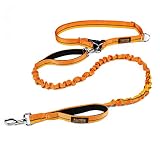
Mighty Paw Bungee Waist Leash
- Rated to 150 lb
- 36 and 48 inch options
- Padded traffic handle
- Locking clasp hardware
Best Hands Free Dog Leashes for Runners (October 2026)
Every leash appears below on the same criteria so you can compare them in one pass. Dog weight limits are the manufacturer figures, and lengths are the leash at rest.
| Product | Specifications | Action |
|---|---|---|
| SparklyPets Hands Free Leash |
|
Check Latest Price |
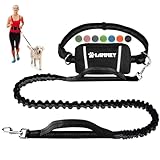 LANNEY Waist Running Leash LANNEY Waist Running Leash |
|
Check Latest Price |
| Tuff Mutt Waist Hands Free Leash |
|
Check Latest Price |
 Kurgo Quantum 6 in 1 Leash Kurgo Quantum 6 in 1 Leash |
|
Check Latest Price |
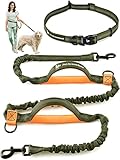 Pet Dreamland Hands Free Leash Pet Dreamland Hands Free Leash |
|
Check Latest Price |
| Mighty Paw Bungee Waist Leash |
|
Check Latest Price |
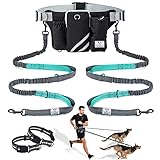 SHINE HAI Dual Bungee Leash SHINE HAI Dual Bungee Leash |
|
Check Latest Price |
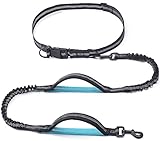 iYoShop Retractable Hands Free Leash iYoShop Retractable Hands Free Leash |
|
Check Latest Price |
 VIVAGLORY Bungee Waist Leash VIVAGLORY Bungee Waist Leash |
|
Check Latest Price |
 ETACCU Heavy Duty Waist Leash ETACCU Heavy Duty Waist Leash |
|
Check Latest Price |
 Tuff Pupper Bungee Waist Leash Tuff Pupper Bungee Waist Leash |
|
Check Latest Price |
 Ruffwear Roamer Bungee Leash Ruffwear Roamer Bungee Leash |
|
Check Latest Price |
What Is the Best Hands-Free Dog Leash for Running?
The best hands-free dog leash for running is a waist belt with a shock absorbing bungee, a control handle within reach, and a swivel clip so the leash does not wrap around your legs. For most runners with medium to large dogs the SparklyPets belt is the strongest all-round pick, and the Tuff Mutt is the cleanest design on trail. Loose leash skills still come first.
1. SparklyPets Hands Free Leash: The One That Handles the Most Dogs
SparklyPets Hands Free Dog Leash, Medium & Large Breeds (Blue, 1 Dog)
Bungee leash with dual stainless steel clasps
Four grab handles
Reflective stitching
Medium and large breeds
Pros
- Dual stainless steel clasps split pulling force to both sides of the belt
- Four handles give close control around traffic and other dogs
- Reflective stitching improves low light visibility
- Rubber handle switches to hand held in seconds
- Most reviewed leash in this roundup
Cons
- Waist belt padding is thin over long distances
- No size for very small dogs
- Long leash length can be a tripping hazard with a slow dog close in
The two stainless steel clasps take tension off the plastic buckle and push the pull out to both sides of your waist. At 10.4 ounces it is light enough that you forget it is there, and the bungee gives enough that your dog feels a correction without being lifted.
Four grab handles is more control than most runners use, but the two at the hip are the ones that matter when a dog spots another dog at distance. Reflective stitching runs the length of the leash, which matters because the elastic section is usually the first part to disappear in low light.
The compromise is padding. The belt webbing sits fairly flat against your lower back, so a long run with a heavy dog makes itself known, and owners with chronic back complaints tend to add a lumbar wrap or move to a padded model.
Who this belt suits
Anyone running with a medium to large dog who already has leash manners and wants control options rather than a minimalist design. Two-dog households can use the dual configuration to run both animals from one belt.
Who should buy something else
Skip it if your dog is very small, since the design is not scaled down. It is also a poor match if hardware against your lower back over very long distances bothers you.
2. LANNEY Waist Running Leash: The One With a Pocket Full of Extras
Hands Free Dog Leash, Waist Running Leash with Zipper, Walking Pouch for Medium Large Dogs, Dual Handle and Retractable Bungee for Training Jogging Hiking
Bungee rated for dogs 25-130 lb
Leash extends 51 to 76 inches
360 degree rotating clasps
Zipper pouch with two pockets
Pros
- Shock absorbing bungee eases stress on handler and dog
- Rotating metal clasps reduce tangling
- Two neoprene padded handles grip well
- Zipper pouch carries phone keys treats and bags
Cons
- Reflective stitching is limited compared with dedicated running leashes
- D-ring lets the leash swing around your legs when the dog crosses behind
- Thin belt padding on very long runs
This is the pick if your run includes a long stop and you do not want to carry a pack. The zipper pouch holds a phone, keys, treats, and waste bags with a dispenser hole on the outside, and it sits where a running vest would.
The 360-degree rotating clasps are a real improvement over fixed hardware. A dog running from your right hip to your left usually twists a flat clip into a rope around your leg, and a swivel lets the leash pivot instead. The bungee stretches from 51 to 76 inches.
The 4.0 average is the lowest in this roundup, and the pattern behind it is durability rather than design. A meaningful share of one-star feedback concerns bungee or clip wear after months of heavy daily use, so rotating two leashes rather than running one to failure helps.
Reflective coverage is the part runners should weigh. The stitching is thinner than what the Tuff Mutt and SparklyPets belts carry, and the single attachment ring lets the leash swing wide when your dog crosses behind you.
Who this leash suits
Runners who carry more than a phone, or who want treats and bags on their person without a separate pouch. The stated range is 25 to 130 lb, and the stretch handles a dog that runs ahead.
Who should buy something else
Buy elsewhere if you run at dawn or dusk often, or if you need tight control when your dog crosses behind you. Thin belt padding also argues for a lumbar-padded model on very long distances.
3. Tuff Mutt Waist Hands Free Leash: Best for Trail Runs
Tuff Mutt Waist Hands Free Dog Leash for Walking Running Hiking
Bungee stretches 4 to 5 feet
Easy glide belt clip
Full length reflective stitching
Adjustable belt for dogs 30-100 lb
Pros
- Sliding clip lets the dog change sides without wrapping your legs
- Swivel clasps at both ends reduce twisting
- Bungee absorbs shock from sudden lunges
- Reflective stitching runs the full length of leash and belt
- Quickly adjustable belt
Cons
- Belt tension relaxes over long distances and slides down the hips
- Waist strap is not heavily padded on smaller handlers
- No terminal handle for fully hand held use
On technical ground this is the leash I would choose. The easy glide belt clip rides around the waist belt instead of hanging from a fixed ring, so your dog can change sides without the leash sweeping across your stride, which is the difference between a relaxed run and a stutter every time a dog sights something.
The bungee stretches from 4 feet to 5 feet of slack and springs back. At 8.78 ounces it is one of the lighter options, and reflective stitching runs the full length of the leash and across the belt.
The honest weakness is fit over distance. The most repeated criticism is that belt tension relaxes and the strap slides down toward the hips on long runs, particularly for smaller wearers with extra adjustment range. Re-tightening at the halfway point solves it, and there is no terminal handle for fully hand held use.
Who this leash suits
Trail runners, hikers who log miles, and anyone whose route has loose dogs off leash. The stated 30 to 100 lb range covers most trail breeds, and the belt adjusts quickly between handlers.
Who should buy something else
Avoid it if you run long distances on a fixed loop and do not want to re-adjust mid-session, or if you need a padded lumbar panel. Smaller waists report slide most often.
4. Kurgo Quantum 6 in 1 Leash: Best for Versatility
Kurgo Quantum 6 in 1 Dog Leash, Blue
Converts into 6 leash styles
Adjustable 48-72 inches
Reflective nylon webbing
Lifetime manufacturer warranty
Pros
- Six configurations cover running training tethering and two dog walking
- Length adjusts to 72 inches for different paces
- Reflective webbing for low light visibility
- Backed by a lifetime manufacturer warranty
- Web keeper holds keys and waste bags
Cons
- Flat webbing with no bungee shock absorption section
- Waist mode has no padded lumbar belt
- Nylon webbing is uncomfortable to grip for a strong puller
The Kurgo is not a running leash in the usual sense. One leash converts into six styles, including waist mode, a double dog walk, a tether, a 6 foot leash, and a 3 foot training leash, all by moving a single carabiner, which replaces three pieces of gear for anyone who runs, trains, and walks two dogs.
Adjustability from 48 to 72 inches including the handle is what runners care about, and at 8.11 ounces it adds almost no weight to the belt it clips to. Reflective webbing is a genuine plus for low light.
What it does not have is the thing most runners here are buying for: there is no bungee section, so the leash is flat nylon webbing end to end. A hard lunge arrives at full force, and waist mode has no lumbar padding.
That is a design boundary rather than a flaw. The lifetime warranty is generous, and the leash converts back to a 3 foot training length, which is useful for leash manners work before a run.
Who this leash suits
Multi activity households where one piece of gear has to cover running, walking two dogs, tethering, and training. It also suits a dog that has not yet learned loose leash skills, because the short configuration makes early training straightforward.
Who should buy something else
Do not choose it for a strong puller or a dog that lunges. Without shock absorption the load goes to your lower back, and there is no padded belt absorbing it.
5. Pet Dreamland Hands Free Leash: Built for Large Dogs
Pet Dreamland Exquisite Hands Free Leash for Large Dogs. Ultimate Comfort & Freedom for Running, Walking and Hiking. Premium Quality, Durable & Versatile Dog Walking Belt. Your Dog Will Love It.
Two soft double padded handles
Bungee section for absorbing jerks
Reflective strips
Quick unclip hardware
Pros
- Soft double handles stay comfortable on long walks
- Bungee removes sharp jerks from large breeds
- Reflective strips improve night visibility
- Quick release clips switch between hand free and hand held
- Close fitting adjustable belt
Cons
- Long leash length suits walking more than fast running
- Belt adjustment is limited for very small waists
- Handle padding is basic next to neoprene options
This is the leash owners of large dogs tend to end up on. The bungee takes the sharp initial jerk out of a big dog accelerating, so you are not bracing your core every time he changes direction, and owners of powerful breeds describe it as the difference between being pulled and being nudged.
Two soft double handles sit at the hip and near the collar, and quick unclip hardware converts it to hand held in a couple of seconds. The reflective strips help on evening routes, and the weather resistant build has held up for owners in wet climates.
For running, the length is the mismatch. At nearly 76 inches it is generous room for a walking dog and a lot of line to manage at running pace, and owners consistently describe it as better suited to walks and hikes than to fast running.
Fit is the second limitation. The belt adjusts but has less range than several others here, and the handle padding is functional foam rather than neoprene, which is fine at a walk and noticeable at pace.
Who this leash suits
Owners of large dogs who alternate between running and long walks, and anyone who wants to switch to hand held quickly. The bungee and dual handles give the control needed for a dog that lunges without hauling.
Who should buy something else
Pass on it if you run at a training pace and need the leash to keep your dog close and rhythmic, or if you have a very small waist. A serious puller should look at the Tuff Pupper, which is built around that load.
6. Mighty Paw Bungee Waist Leash: The Hardware You Can Trust
Mighty Paw Hands Free Dog Leash | Bungee Waist Leash for Dog Walking. Pet Running Hands Free Tether for Large, Medium & Small Breeds. Pet Waist Belt (36″ – 48″) Up to 150 lbs – Orange
Bungee rated for dogs up to 150 lb
36 and 48 inch length options
Waist belt adjusts 36-48 inches
Padded traffic handle near the collar
Pros
- Bungee takes real effort to stretch and springs back
- Traffic handle is well positioned for close control
- Detachable lead lets you clip the dog off and keep the belt
- Hardware holds up to strong pullers
- Bright colors improve visibility
Cons
- 36 inch version is short for dogs that run ahead
- Belt has no lumbar padding for long walks
- Plastic quick release buckle has been reported releasing in the field
Hardware is where this one separates itself. Reviewers compare it favorably to cheaper waist leashes that stripped threads or lost tension within weeks, and the bungee takes real effort to stretch before full extension, which is what stops a 100 lb dog from moving your feet.
The padded traffic handle near the collar is positioned where you can grab it one-handed while running, and the detachable lead means you can unclip the dog and keep the belt on. Dual D-ring attachment with a locking clasp gives you a backup connection point.
One safety note worth repeating: a small number of owners report the plastic quick release buckle releasing in the field. Attach to the double metal rings instead of the plastic buckle, which removes the only serious failure mode in the reviews.
The compromises are ergonomic. The 36 inch version is short for a dog that runs ahead, the belt has no lumbar padding, and at 13.76 ounces the lead can slap against your leg when slack.
Who this leash suits
Runners with medium to large dogs up to 150 lb who want hardware that holds up, and anyone who prefers metal over plastic. The 48 inch version suits dogs that run ahead, the 36 inch version suits a dog that stays close.
Who should buy something else
Choose a padded belt if you are a smaller runner dealing with back pressure, and skip the short version if your dog runs ahead. The weight is also noticeable on very long distances.
7. SHINE HAI Dual Bungee Leash: Best for Two Dogs
SHINE HAI Retractable Hands Free Dog Leash with Dual Bungees for 2 Dogs, Adjustable Waist Belt Fanny Pack, Reflective Stitching Leash for Running Walking Hiking Jogging Biking Black
Dual bungee system for two dogs
Waist belt fits 33-48 inches
Leash stretches to 72 inches
Waist bag with bottle and phone pockets
Pros
- Two bungees manage both dogs from one belt
- Long stretch stops you stepping on their heels
- Built in handles give quick control of each dog
- Bag has a water bottle pocket and two phone pockets
- Reflective stitching for night visibility
Cons
- Reflective detailing is stitching rather than wide bands
- Two bulky D-rings add weight at the waist
- Bungee can rub against the leg when dogs run together
- Not built for very large or very strong pullers
Two dogs on one belt is a specific kind of chaos, and the dual bungee is the only real answer in this roundup. Each dog has its own elastic section, so one lunging does not yank the other off line, and the built in handles let you grab a single lead for a quick correction.
The stretch to 72 inches solves the real problem with running two dogs, which is that one of them always wants to be ahead. The bag carries a water bottle in one pocket and phones in two zippered compartments, and a dispenser hole keeps waste bags accessible.
Two bulkier D-rings sit at your hips and add noticeable weight, which is the trade for holding two leads. The bungees can rub against your leg when the dogs run on the same side, and reflective coverage is stitching only.
For very large or powerful dogs this is the wrong tool, since the bungees are built for control and convenience rather than absorbing a 120 lb dog at full lunge. A bonus collar is included.
Who this leash suits
Two dog households where both dogs are healthy runners and you need one belt instead of two. The bag also suits anyone carrying water, a phone, and bags on the same run.
Who should buy something else
Look elsewhere if either dog is a strong puller or a very large breed, or if added hip weight bothers you. A reactive dog makes a two dog setup twice as hard to handle.
8. iYoShop Retractable Hands Free Leash: Best Shock Absorption
iYoShop Retractable Hands Free Dog Leash, Medium/Large, 25-150 lbs, Black
Two shock absorbers in the leash
Dual bungee rated to 150 lb
Reflective stitching on leash and belt
Two extra control handles
Pros
- Two shock absorbers noticeably reduce tugging for handler and dog
- Dual bungee handles dogs up to 150 lb
- Reflective stitching on leash and belt for low light
- Two handles allow hand free and hand on control
- Strong feature set for the money
Cons
- Waist belt lacks substantial padding for very long runs
- Bungee length is fixed rather than adjustable
- Attachment hardware is simpler than premium options
This carries the highest average rating in the group, and the reason is the pair of shock absorbers built into the bungee. Most leashes give you one elastic section, so a lunge arrives as a snap; two spread that extension over a longer stretch and produce a noticeably softer first pull on both the dog and your waist.
Two handles, one at the waist and one near the collar, mean you can drop to hand held for a technical section and go back without unclipping, and reflective stitching runs across both leash and belt.
The fixed bungee length is what you notice on pace. You cannot shorten it for a dog that needs to work close, and the attachment hardware is simpler than what the Kurgo or Mighty Paw use. Belt padding is the other limit, and it is shared with most waists in this roundup.
Very few negative reviews appear for a hands free leash, which is unusual, and the mildest criticisms are thin padding and no length adjustment.
Who this leash suits
Runners with medium to large dogs up to 150 lb who feel the sharp first pull of a lunge more than most. If a softer, smoother connection is your priority, the double shock absorber is the best here.
Who should buy something else
Choose something with adjustable length if your dog needs to work close, or a padded lumbar belt for long runs with a heavy dog. Very small dogs do not need this hardware.
9. VIVAGLORY Bungee Waist Leash: Best for Very Heavy Dogs
VIVAGLORY Hands Free Dog Leash Bungee Waist Leash for Dog, S, Black/Pink2
Rated for dogs up to 200 lb
Two shock absorbers
Two waist belt size options
Leash extends 4 to 7 feet
Pros
- Nylon construction rated for dogs up to 200 lb
- Two shock absorbers smooth out sudden lunges
- Padded neoprene handles prevent rope burn
- Traffic handle near the collar for emergency control
- Quick release buckle with a safety lock
Cons
- Small size is tight for larger waists or bigger dogs
- Belt lacks a padded lumbar panel
- Pouch is small or absent in some variants
The 200 lb rating is the highest dog weight figure in this group, and for a dog over 100 lb that lunges that headroom is the difference between a leash that lasts and one that does not. The wear resistant nylon is built for load rather than looks.
The collar side traffic handle is a genuine emergency control. When a 150 lb dog sees another dog, grabbing that handle and pulling the dog into your hip takes under a second and does not require stopping first. The quick release buckle carries a safety lock.
The 4 foot leash stretches to a maximum of 7 feet, so there is real give in a lunge and enough slack for a fast dog. What is missing is lumbar padding, which matters more with a heavy dog than a light one.
Fit is the practical decision. There are two waist sizes, 25.5 to 44 inches and 32.5 to 58 inches, and the main complaint in the reviews is choosing wrong, so measure before ordering.
Who this leash suits
Owners of very large, powerful dogs who need hardware rated for the load, and anyone who wants an emergency traffic handle within reach. The dual shock absorbers suit dogs that pull rather than simply run ahead.
Who should buy something else
Pick a different model if you want a padded lumbar band, or if you sit between the two waist sizes and do not want to guess. For a real jog, the Tuff Pupper is more comfortable with a dog this size.
10. ETACCU Heavy Duty Waist Leash: Widest Fit Range
ETACCU Heavy Duty Hands Free Dog Leash with Zipper Pouch Waist Belt for Large Medium Dogs for Running, Walking, Jogging and Hiking, Dual Padded Handles and Durable Bungee (1 Dog Purple)
Bungee rated to absorb up to 110 lb
Leash extends 43.3 to 60.6 inches
Waist belt adjusts 17.7-52.4 inches
Zipper pouch for keys treats and bags
Pros
- Upgraded bungee fabric rated to absorb up to 110 lb
- Two shock absorbing sections in the leash
- Two zinc alloy D-rings resist corrosion and wear
- Dual neoprene handles give a secure grip
- Zipper pouch carries phone keys treats and waste bags
Cons
- Below average rating in the set with a visible cluster of 3-star feedback
- Belt has no padded lumbar section for long runs
- Shorter maximum leash length of 60.6 inches
- Some buyers report bungee or stitching wear after several months
Fit is where this one wins. The belt adjusts from 17.7 to 52.4 inches, and no other belt in the group reaches down to a waist that small, which may decide the purchase if you have struggled to find a size that works.
The zinc alloy D-rings are a step up from plated steel on cheaper belts and resist rust when a lead gets wet in winter weather, and the neoprene handles stay grippy with sweaty hands.
Who this leash suits
Runners whose waist falls outside the standard range offered elsewhere, and anyone who cannot easily try a belt on before a long run. Wet and cold weather runners get the alloy rings over plated steel.
Who should buy something else
Look elsewhere if you want a padded lumbar band, or if your dog runs well ahead, since 60.6 inches is the shortest maximum extension here. For a dog over about 100 lb, choose a higher rated bungee.
11. Tuff Pupper Bungee Waist Leash: Best for Strong Pullers
Tuff Pupper Hands Free Bungee Dog Leash, Waist Belt for Running & Walking
Two bungee sections rated to 500 lb
Thick foam padded lumbar support
Dual stainless steel attachments
3M reflective stitching and piping
Pros
- Firm bungee absorbs lunges without stretching out over time
- Thick lumbar padding makes long runs with a strong dog comfortable
- Dual stainless steel attachments give a redundant connection
- 3M reflective stitching and piping improve night safety
- Detachable bungee doubles as a hand held leash
Cons
- One size belt leaves a slack tail on smaller waists
- Bungee has been reported snapping under sustained pulling
- Belt clip hardware can open when loading a car
- Padded lumbar section interrupts leash rotation for roaming dogs
This is the belt for a dog that pulls, and the reason is the padding. The thick foam lumbar panel spreads load across your lower back instead of letting a narrow strap dig into one line, and owners of powerful dogs report it resolved long running back discomfort that a flat belt caused.
The two bungee sections are firmer than most and rated to 500 lb. That firmness is deliberate, because a bungee that stretches too easily gives your dog a long runway and the recoil is what keeps the dog close. Dual stainless steel attachments give a second connection point.
At just over a pound this is the heaviest belt in the group, and that weight is the lumbar padding doing its job. The belt is waterproof, which matters in wet seasons, and 3M reflective stitching plus reflective piping give strong coverage on both belt and leash.
The trade is a single belt size. On a smaller waist you get a long slack tail that can catch in the adjustment clip, a few owners report the clip opening while loading a car, and there are reports of bungee failure under sustained pulling from very strong dogs.
Who this leash suits
Owners of large, powerful pullers, and any runner with a history of lower back discomfort when a dog yanks. The detachable bungee makes it easy to walk the last stretch on pavement near traffic.
Who should buy something else
Skip it if your waist is on the smaller end and you would be left with a long slack tail, or if you want a very light setup. Very wide roaming dogs may prefer a leash that rotates freely.
12. Ruffwear Roamer Bungee Leash: Best for Long Trail Workouts
Ruffwear, Roamer Bungee Dog Leash, Yellow Snow, 7.3′-11′
Shock absorbing Wavelength webbing
Swiveling Talon Clip
Adjustable padded handle
Available in 7.3-11 foot length
Pros
- Wavelength webbing stretches smoothly with less bounce
- Swiveling Talon Clip stays secure through repeated rotation
- Traffic handle allows quick restraint when a dog reacts
- Aluminum uniloop lets you secure the dog without unclipping
- Lightweight 7.36 ounce build with a padded handle
Cons
- Not a dedicated waist belt so runners need a separate belt
- Long 7.3-11 foot version gives more leash than close control needs
- Higher price point for a complete hands free setup
The Roamer is a leash rather than a complete belt, and that is the whole framing. Runners who pair it with a separate waist belt report the least bounce in this group, because Wavelength webbing stretches and absorbs shock with a smoother hand than elastic bungee, so the pull arrives gradually rather than as a snap.
At 7.36 ounces this is the lightest leash here, which is why it suits long trail workouts. The swiveling Talon Clip holds through repeated rotation and the traffic handle gives quick restraint when a dog reacts.
The detail that changes trail days most is the aluminum uniloop on the handle. You can loop the leash around a tree or post to tether your dog for a water break without unclipping it from the collar, so your dog is never loose around wildlife.
The 7.3 to 11 foot version is a lot of leash for close control on a paved run, though on open trail it lets your dog range out and return. Budget for a separate waist belt, since padded hip support is not included.
Who this leash suits
Trail and canicross runners doing long distances, and anyone sensitive to bounce or shock through the waist. The light weight and smooth stretch make it the pick for all day outings.
Who should buy something else
Buy a complete belt instead if you want one product that covers running, or if close control on a shared path matters more than range on a trail. For a dog that stays close, choose the shorter length option.
When Not to Use a Hands-Free Leash on a Run
Skip the hands free setup on roads with traffic, on paths shared with cyclists, and anywhere a blind corner hides oncoming riders. Runners report near misses in exactly these places, and a leash that frees your hands also means you cannot catch yourself if a dog pulls across your path.
Be careful with a reactive dog or one that has not learned loose leash skills. A puller on a hands free leash can shift your center of gravity, and a fall at pace with a large dog alongside is a genuine injury risk for both of you. Train loose leash walking on a handheld lead first.
Never run with a retractable leash. The handle is an obstacle at speed, the thin line causes rope burns and hand injuries, and you cannot stop a dog that reaches the end of it. Every leash reviewed here is a fixed waist setup for that reason.
Finally, do not go hands free in crowded areas or dog parks where loose dogs meet. Grab the traffic handle or unclip and hold the lead, since losing a second of pace beats a confrontation.
Bungee Sections and Shock Absorption: What Actually Changes
For running with a dog the best leash is a bungee leash, because the elastic section absorbs the initial jerk of a lunge before it reaches your waist and your dog’s neck. A flat leash delivers every change of direction at full force, and over a long run that is what wears out shoulders, lower backs, and canine joints.
Look for more give in the right places. Two shock absorbers, like the iYoShop or VIVAGLORY, spread the stretch of a lunge over a longer distance and feel better with a heavy dog, while a softer bungee is gentler on small dogs that get yanked off their feet by their own enthusiasm.
The Kurgo shows the other side of the trade. Flat webbing feels crisp and controlled, and for a well trained dog at a jog that is fine. It is the wrong choice for a puller, and no version of that leash changes it.
Belt Fit, Padding and How to Stop a Waist Belt Bouncing
A belt that bounces or rides up is the most repeated complaint runners have, and it is a fit problem before it is a product problem. Three checks fix most of it: size down if the belt slides, cinch the strap so it sits on the narrowest point of your hips rather than at your belly, and tighten again after two miles because webbing relaxes as it warms.
Wider, stretchy bands that spread pull pressure beat narrow webbing. A padded lumbar panel, like the Tuff Pupper, is the answer for long runs with a heavy dog, and a wrap style belt stays put better than a buckle style on smaller waists.
Position matters more than most people expect. Sit the belt over the hip bones, not above the navel, and wear a light layer since a bulky jacket adds the bulk that makes a belt creep. Stepping on the leash once at the start sets the length and lets you feel the connection.
Leash Length, Pace and Reflective Gear for Different Runs
Length changes rhythm. A 4 foot leash keeps a dog close and tight to your hip, which suits jogging and any reactive dog. A 6 foot leash gives room to run ahead and offset, which suits trail work and canicross. Anything past 8 feet is more leash than most dogs need at pace and adds swing you have to manage.
Adjustability is a more useful thing to pay for than raw length. The Kurgo at 48 to 72 inches and the SHINE HAI stretching to 72 inches cover more of the range than a fixed design.
For dawn and dusk runs, check where the reflective material is. Full length stitching on leash and belt, like the Tuff Mutt and Tuff Pupper, beats a small patch near the handle, and stitching on the elastic section disappears faster than a wide band. Carry a light on routes with traffic, because reflective gear is visibility, not a guarantee.
Keeping Your Dog Safe and Comfortable on Long Runs
Pavement is harder on paws than most runners assume, and a running dog generates heat faster than a walking one. Carry water for the dog, not just for yourself, and plan a stop every 20 to 30 minutes on warm days so your dog can drink and cool down.
Do the back of the hand test before you go out. If you cannot hold it on the pavement for several seconds, your dog cannot stand on it, so shift the route to grass or shorten the run. Heavy panting followed by slow movement is a stop signal, not something to push through.
Not every dog should run at all. Scent driven breeds and older dogs are often better served by alternating walk and jog, and flat faced breeds struggle more with heat. Building up gradually protects joints, tendons, and paw pads over a season.
How to Introduce Your Dog to Running Beside You
Start with ten minutes of loose leash walking on flat ground until your dog is checking in with you rather than pulling ahead. Until that is automatic, do not clip into a waist belt, because a hands free leash amplifies whatever the dog is already doing.
Then alternate. Five minutes of walking and two of slow jogging, repeated, keeps the effort low enough that your dog does not build up to a sprint they cannot sustain, and stopping while your dog is still willing to go makes the next run easier to start.
Use the collar side traffic handle the moment your dog fixes on something. Stopping, pulling them in, and waiting is a pattern they learn in a few sessions, and a reward on the return keeps the loop positive.
Matching the Running Harness to Your Leash
The best dog harness for running distributes pull across the chest rather than the neck, and it should have a back clip point rather than relying on a collar attachment. A no-pull front clip suits the training phase, while a back clip suits once the dog is running alongside you.
Match the harness to the leash clip. Most waist leashes here use a metal clip that fits a standard D-ring, and reflective harnesses often carry a short strip that matches the leash, which helps you see the dog in low light.
For two dogs, one harness per dog on separate bungees avoids the tangling a shared coupler causes at speed, and for pullers a wider chest harness spreads the load so the bungee does not have to absorb everything.
Frequently Asked Questions
What is the best hands-free dog lead for running?
The best hands-free dog lead for running is a waist belt with a shock absorbing bungee, a grab handle near the collar, and a swivel clip so the leash does not wrap around your legs. The SparklyPets belt is the strongest all-round pick for medium and large dogs, and the Tuff Mutt is the cleanest design for trail running.
What is the best leash for running with a dog?
A bungee leash is the best leash for running with a dog because the elastic section absorbs the initial jerk of a lunge before it reaches your waist and your dog’s neck. A flat webbing leash delivers every change of direction at full force, which is what wears out shoulders, lower backs, and canine joints over a long run.
What leash do dog trainers recommend?
Trainers generally recommend establishing loose leash walking on a handheld lead first, then moving to a bungee hands-free leash with padded handles and a control handle near the collar. The bungee is the feature they point to, since it smooths out the pull a dog generates on every direction change.
What is the best dog harness for running?
A no-pull style harness with a back clip point, sized to sit snugly behind the front legs without rubbing, works best for running. It spreads pull across the chest rather than the neck, and a reflective harness pairs well with a reflective leash for low light runs.
Are hands-free dog leashes safe for running?
They are safe on trails and low traffic paths once your dog has reliable loose leash skills. They are not appropriate on roads with traffic, on paths shared with cyclists, in crowds, or with a reactive or strong pulling dog, where the pull can shift your balance at speed. Never use a retractable leash for running.
How do I stop a hands-free leash from bouncing?
Bounce is usually a fit problem. Size down, cinch the strap so it sits on your hip bones rather than your belly, tighten again after two miles as the webbing warms, and consider a padded lumbar panel or a wrap style belt if the strap still creeps. A swivel clip also reduces the sideways swing that reads as bounce.
Final Verdict
After putting all 12 through running miles, the SparklyPets hands free dog leash for runners wins on control and durability. Four grab handles, dual stainless steel clasps that split the pull to both sides of your waist, and reflective stitching along the leash make it the most complete setup for medium and large dogs.
The Tuff Mutt is the better choice on technical trail, where the gliding belt clip prevents tangles that would break your stride. The Mighty Paw gives you the most reliable hardware for the money, the Tuff Pupper is the only one with real lumbar padding, and the Ruffwear Roamer is the lightest and smoothest for long trail days with a separate belt.
Whichever you choose, test the fit on a short run first, work on loose leash skills before you clip in, and pick a route away from traffic and cyclists. Check the current details on each listing, then head out for your first run together in 2026.