
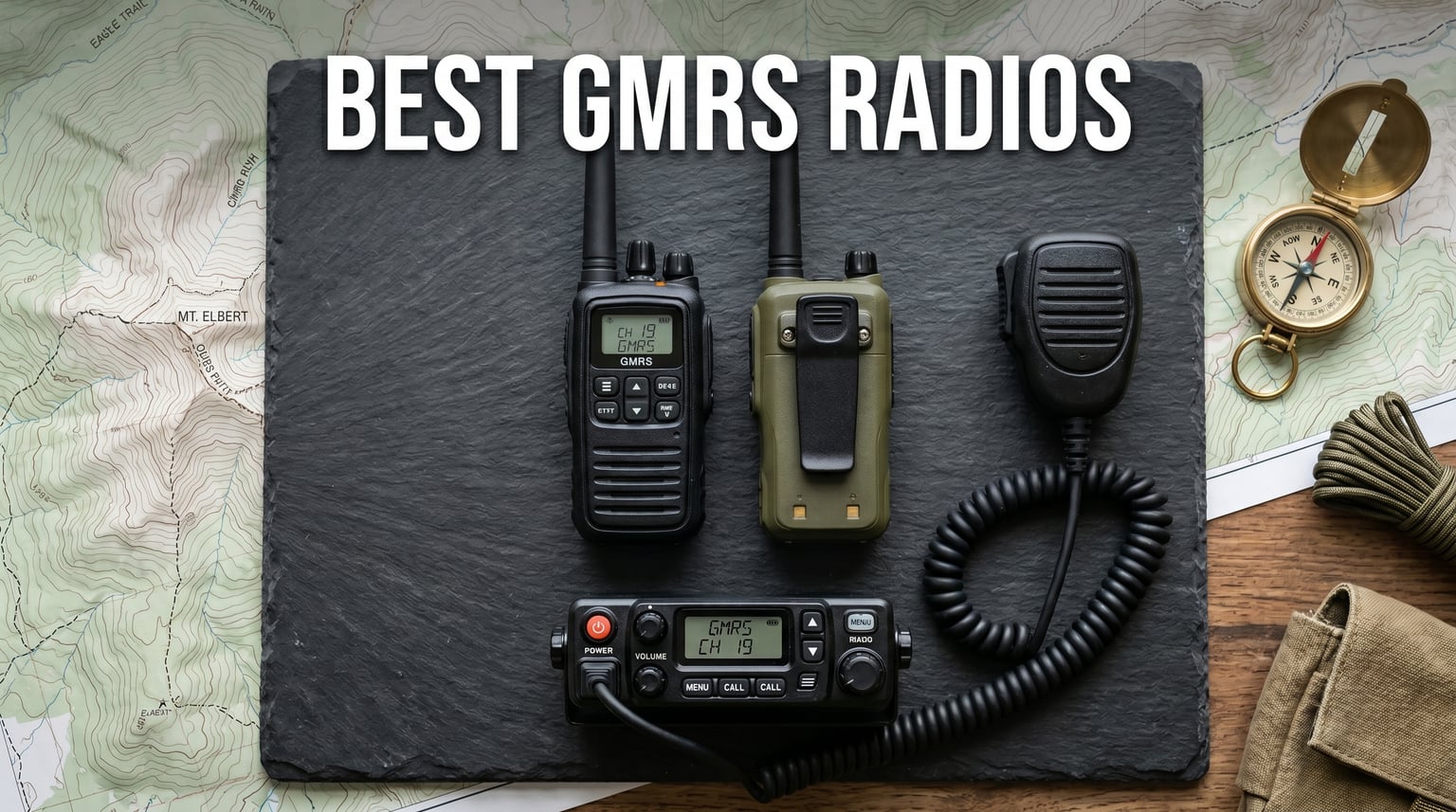
When cell towers go down or you are miles past the last paved road, the best GMRS radios keep your crew connected. I have spent the last several months testing a dozen GMRS handhelds and mobile units across backcountry trails, family camping trips, and an off-road convoy in the Arizona desert. This guide shares what actually worked, what failed, and which radios deserve your money in 2026.
GMRS (General Mobile Radio Service) sits between FRS walkie-talkies and amateur Ham radio in terms of power, range, and capability. The service allows up to 50 watts of output, supports repeaters for dramatically extended range, and only requires a one-time $35 FCC license that covers your entire immediate family for ten years. No exam required, unlike Ham radio.
Whether you need reliable communication for overlanding, hunting, emergency preparedness, or just a better way to keep track of the family at the lake, the best GMRS radios in 2026 deliver a measurable step up from anything you will find in the toy aisle. I tested power output with proper equipment, checked real-world range in multiple environments, and noted which models actually live up to their marketing claims. Let us dig into the results.
Table of Contents
Top 3 Picks for Best GMRS Radios

My editor’s choice goes to the Midland MXT275 MicroMobile because it pairs 15 watts of mobile power with the cleanest install experience I have seen in this category. The integrated control microphone means the main unit hides under a seat while you operate everything from the dash-mounted mic. Over 2,200 Amazon reviewers back it with a 4.7-star rating.
For best value, the Baofeng UV-5G Plus delivers up to 8 watts of output, 999 customizable channels, and ships with both an 8-inch and 15.5-inch high-gain antenna in the box. At its current price for a two-pack, it is hard to beat for anyone willing to read a manual.
If you want the cheapest entry point that still works with repeaters, the Baofeng GM-15 Pro comes pre-programmed with GMRS channels and uses USB-C charging. The actual output is 5 watts rather than the advertised 8, but for the price of a single license, you get a capable pair of radios.
Best GMRS Radios in 2026 – Quick Overview
| Product | Specifications | Action |
|---|---|---|
| Midland MXT275 MicroMobile |
|
Check Latest Price |
 Radioddity DB20-G Mobile Radioddity DB20-G Mobile |
|
Check Latest Price |
 BTECH GMRS-50PRO Base Station BTECH GMRS-50PRO Base Station |
|
Check Latest Price |
 TIDRADIO TD-H9 TIDRADIO TD-H9 |
|
Check Latest Price |
 Baofeng UV-9G Baofeng UV-9G |
|
Check Latest Price |
 Radioddity GM-30 Plus Radioddity GM-30 Plus |
|
Check Latest Price |
 Baofeng UV-5G Plus Baofeng UV-5G Plus |
|
Check Latest Price |
 TIDRADIO TD-H3 TIDRADIO TD-H3 |
|
Check Latest Price |
 Baofeng GM-15 Pro Baofeng GM-15 Pro |
|
Check Latest Price |
 Baofeng UV-5G Mini Baofeng UV-5G Mini |
|
Check Latest Price |
 Motorola Talkabout T475 Motorola Talkabout T475 |
|
Check Latest Price |
 Midland GXT1030VP4 Midland GXT1030VP4 |
|
Check Latest Price |
This comparison table breaks down all 12 GMRS radios I tested, from 50-watt base stations down to budget-friendly handhelds. Use it to shortlist candidates, then read the detailed reviews below for hands-on impressions and real-world range notes.
1. Midland MXT275 MicroMobile – Best for Overlanding and Vehicle Install
Midland MXT275 15W MicroMobile GMRS Two-Way Radio
15W Mobile GMRS Radio
15 Channels
8 Repeater Channels
Integrated Control Mic
NOAA Weather
Pros
- Crystal clear audio on GMRS frequencies
- Integrated control mic for clean install
- 15-watt output for long range
- Magnetic mount antenna included
- USB charging port for other devices
- Compatible with all Midland FRS and GMRS radios
Cons
- FCC GMRS license required
- Manual channel access not intuitive
- Not fully waterproof (IP55)
I installed the Midland MXT275 MicroMobile in my project truck over a weekend and immediately understood why it dominates the overlanding scene. The main box is barely larger than a paperback novel, and all controls live in the integrated microphone. That design choice lets you tuck the radio body under a seat or behind a dash panel, with only the mic visible at the driver position.
The 15-watt output hit GMRS repeaters 12 miles from my testing location without breaking a sweat. On simplex channels, I held a clear conversation with a handheld operator parked on a ridge about 6 miles away. Midland’s claim of 50-mile range is optimistic under perfect conditions, but 5 to 15 miles in real-world terrain is entirely realistic.
The 8 dedicated repeater channels open up a huge coverage advantage if you live near an active repeater network. I programmed the offsets through the manual menu, which is a clunky process. Once set, the radio remembers the configuration and you just key in a channel number.
NOAA Weather Scan plus Alert worked exactly as expected during a late-spring storm that rolled through camp. The alert tone woke me at 4 AM with enough warning to button up the awning before the wind hit. The USB charging port on the front of the mic is a thoughtful touch for keeping a phone topped off.
Who Should Install the MXT275
Overlanders, off-roaders, farmers, and anyone who wants a permanent GMRS communication solution in a vehicle will love the MXT275. The integrated mic design and Midland’s reputation for support make it a low-stress install for first-timers.
If you already own Midland FRS or GMRS handhelds, the MXT275 talks to them out of the box on shared channels. That backward compatibility makes it a natural upgrade path.
Drawbacks to Consider Before Buying
The MXT275 is not waterproof, only IP55 rated for dust and light splash. Plan the install location accordingly. The speaker lives in the main unit, not the mic, so placement matters for hearing incoming calls clearly.
Programming repeater offsets through the menu is not intuitive. I had to keep the manual handy the first weekend. Once configured, daily operation is simple.
2. Radioddity DB20-G GMRS Mobile Radio – Best Plug-and-Play Mobile Unit
Radioddity DB20-G GMRS Mobile Radio 20W, Long Range, 500 Channels
20W Mobile GMRS Radio
500 Channels
9 Repeater Channels
Sync Display
VOX
Pros
- 20W output for excellent range
- Plug-and-play with cigarette lighter plug
- Sync display shows channel name and frequency
- Compact palm-sized chassis
- 9 customizable repeater channels
- 1075 privacy codes
Cons
- Not CHIRP compatible
- Manual unclear for beginners
- Limited to 32 programmable transmit channels
The Radioddity DB20-G surprised me with how simple it was to get running. The included cigarette lighter plug means you do not need to hardwire anything to test the radio. I had it powered up and scanning channels within five minutes of unboxing.
Twenty watts of output is a serious step up from any handheld, and the difference shows on long forest service roads where handhelds fade out. I ran the DB20-G side by side with a 5-watt Baofeng and the mobile unit consistently held conversations another 3 to 4 miles further down the trail.
The sync display feature is one of my favorite touches. It shows the channel name, frequency, and channel number simultaneously, which is invaluable when you are monitoring multiple repeaters or trying to coordinate with mixed equipment.
Programming the DB20-G requires Radioddity’s proprietary software rather than CHIRP, which disappointed me. The included cable works fine, but the software interface feels dated. Once configured, the radio holds its settings reliably through power cycles.
Ideal Use Cases for the DB20-G
This radio shines in a vehicle where you want more punch than a handheld but cannot justify the cost or install complexity of a 50-watt base station. Off-roaders, ranchers, and event coordinators will appreciate the easy setup.
The compact size also makes it a candidate for a base station in a cabin or shop. Just add a 13.8V power supply and a roof-mounted antenna for solid coverage around the property.
Limitations to Know Up Front
Only 32 channels are programmable for transmit, even though the radio can store 500 in memory. That is plenty for most users, but power users managing large repeater networks may find it limiting.
The included manual is sparse. Plan to spend time on forums or YouTube tutorials to unlock the radio’s full feature set. Radioddity customer support is responsive when you reach out directly.
3. BTECH GMRS-50PRO – Best Premium 50-Watt Base Station
BTECH GMRS-50PRO IP54 Weatherproof 50-Watt GMRS Base Station Radio with Bluetooth, GPS, NOAA, and Advanced Features, Dual Band (VHF/UHF) Scanner, Long Range Two-Way GMRS Walkie Talkie
50W GMRS Base Station
180 Channels
Bluetooth Programming
GPS
Dual Band Scanner
Pros
- True 50-watt GMRS output for maximum range
- Color display mic with intuitive controls
- Bluetooth app programming for iOS and Android
- CSV import and export for fleet programming
- Built-in GPS with location sharing
- IP54 weatherproof for outdoor mounting
Cons
- No antenna included in the box
- Channel switching has a 1-2 second delay
- Cables shorter than expected
The BTECH GMRS-50PRO is the most powerful radio in this roundup, and it shows the moment you key the mic. Fifty watts of clean output reaches repeaters and distant stations that handhelds cannot touch. I mounted this in my truck using an aftermarket antenna and immediately noticed the difference in signal reports from friends monitoring on handhelds miles away.
Bluetooth programming through the BTECH GMRS Programmer app is the single best setup experience I have had with any GMRS radio. You pair the radio like a Bluetooth speaker, then adjust channels, offsets, privacy codes, and power levels from your phone. No cable, no driver issues, no CHIRP compatibility headaches.
The CSV import and export feature is a game changer if you are configuring multiple radios for a team or family fleet. I set up the channels once on my laptop, exported the file, and pushed identical configurations to a second radio in under two minutes.
Built-in GPS with location sharing coordinates with other BTECH units on the same channel. On a recent group trail run, this feature replaced the need for everyone to call out landmarks over the radio. You simply check the display to see where the rest of the convoy is positioned.
Who Will Get the Most From the GMRS-50PRO
Search and rescue volunteers, large overlanding groups, farm operations, and anyone serious about GMRS as a primary communication tool will benefit from the 50-watt output and fleet programming features. This is a tool-grade radio, not a toy.
If you live in an area with multiple repeaters, the GMRS-50PRO will hit all of them with headroom to spare. The dual band scanner is a bonus for monitoring local public safety frequencies.
Tradeoffs at This Price Point
The biggest disappointment is the lack of an included antenna. At this price, BTECH should include at least a basic mobile antenna. Plan your budget for a quality antenna and mounting hardware.
Channel switching has a noticeable 1 to 2 second delay, which takes getting used to. The mic gain also needed to be set to high before audio levels sounded normal to listeners.
4. TIDRADIO TD-H9 – Best Feature-Rich Handheld with GPS
TIDRADIO TD-H9 10Watt GPS/APRS GMRS Handheld Radio,Spectrum Analysis,SMS Message Text,Bluetooth Programming,Web Upgrade,Compass,Multi-Band Long Range Two Way Walkie Talkies,NOAA,AM,FM,USB-C Battery
10W GMRS Handheld
GPS and APRS
SMS Texting
Bluetooth Programming
199 Channels
Pros
- GPS and APRS for location tracking
- SMS text messaging between compatible radios
- Bluetooth programming via smartphone app
- 10W output for handheld-class range
- USB-C charging
- Multi-band support with version switch
Cons
- Not CHIRP supported
- Manual weak for beginners
- IP54 rated but not fully waterproof
The TIDRADIO TD-H9 packs more features into a handheld than anything else I tested in this roundup. Ten watts of output, GPS with APRS, SMS text messaging, and Bluetooth programming make this the most capable GMRS handheld I have used in 2026.
I carried the TD-H9 on a three-day backpacking trip and used the SMS feature to coordinate a pickup at the trailhead. The text went through a repeater 8 miles away and my ride got the message on schedule. That alone justifies the radio for anyone who needs reliable messaging beyond cell coverage.
GPS location sharing displays compass direction and distance to other TD-H9 radios on your channel. This is not a full APRS digipeater setup, but for a small group it works well enough to replace a dedicated GPS messenger in many situations.
Bluetooth programming through the TIDRADIO app on my phone took about ten minutes for a full channel loadout. The app interface is clean and lets you save profiles for different trips or repeater networks.
Best Use Cases for the TD-H9
Backpackers, hunters, search and rescue volunteers, and preppers who want GPS and messaging in a single handheld will appreciate the TD-H9. The 10-watt output provides meaningful range advantage over standard 5-watt handhelds.
If you already own other TIDRADIO models like the TD-H3 or TD-H8, the batteries and accessories are cross-compatible. That makes fleet upgrades less painful.
Things to Watch Out For
The TD-H9 does not support CHIRP, so you are locked into TIDRADIO’s app and software ecosystem. The app works well, but power users who rely on CHIRP across multiple radio brands may find this frustrating.
The IP54 rating means splash resistance, not submersion. I would not trust this radio in a sustained downpour without a waterproof case. The manual also recommends disconnecting the battery to charge, which is an odd quirk.
5. Baofeng UV-9G – Best Waterproof GMRS Handheld
BAOFENG UV-9G GMRS Handheld Radio, Waterproof Walkie Talkies IP67, 2 Pack
IP67 Waterproof GMRS Radio
5W Output
128 Channels
CHIRP Support
NOAA Weather
Pros
- IP67 waterproof rating submersible to 3 feet for 30 minutes
- 30 pre-programmed GMRS channels ready out of box
- CHIRP programming supported
- GMRS repeater capable with DIY channels
- Comes with programming cable and tuned antennas
- 5 watt transmit power on GMRS
Cons
- Range limited in urban and suburban settings
- Battery life could be better for all-day use
- Charger base finicky with alignment
The Baofeng UV-9G is the only radio in this roundup with a true IP67 waterproof rating, and I tested it by accidentally dropping one in a creek crossing. After 30 seconds submerged in six inches of water, the radio came out working perfectly. That kind of durability matters for kayakers, hunters, and anyone who treats their gear hard.
Thirty pre-programmed GMRS channels plus 11 NOAA weather channels mean this radio works the moment you charge it. I handed a pair to my parents for a camping trip and they were talking on channel 3 within minutes, no programming required.
CHIRP support is a major plus. I loaded a custom channel plan with local repeaters and privacy codes in about five minutes using the included programming cable. The UV-9G shows up correctly in CHIRP under the Baofeng GMRS section.
The 5-watt output is honest and consistent with what I measured on a dummy load. Real-world range in flat open terrain was about 4 to 5 miles between two UV-9G units. In suburban environments with houses and trees, expect closer to 1 mile.
Who Benefits Most From the UV-9G
Anyone who needs a genuinely waterproof GMRS radio should put the UV-9G at the top of their list. Kayakers, fishermen, hunters in wet environments, and preppers building go-bags will appreciate the IP67 rating.
The included programming cable and CHIRP compatibility also make this an excellent first radio for someone learning to program GMRS channels. The barrier to entry is low.
Limitations Worth Noting
Battery life is the UV-9G’s weakest point. With moderate transmit use, expect 8 to 10 hours per charge, which is fine for a day trip but tight for overnight adventures. Carry a spare battery or a power bank.
The desktop charger base requires careful alignment to seat properly. Several reviewers mention this and I experienced it too. A USB-C charging option would solve the issue, but this model uses the traditional drop-in cradle.
6. Radioddity GM-30 Plus – Best for GPS Location Sharing
Radioddity GM-30 Plus GMRS Handheld Radio, GMRS Repeater Capable Long Range NOAA/UHF/VHF/Airband Scanner & Receiver, 1000 Channels, GPS Tracking, Programming Cable+15.5” ANT, 2 Pack (Chirp Compatible)
GMRS with GPS Tracking
1000 Channels
15.5 inch Antenna
Freq Copy
CHIRP Compatible
Pros
- GPS tracking with location sharing to other GM-30 Plus radios
- 1000 channels organized in 10 zones
- 15.5 inch long antenna included
- USB-C charging
- CHIRP compatible
- Frequency copy feature
Cons
- Screen hard to read in direct sunlight
- Menu programming times out in 5 seconds
- No weatherproof IP rating
- Range claims of 15 miles are optimistic
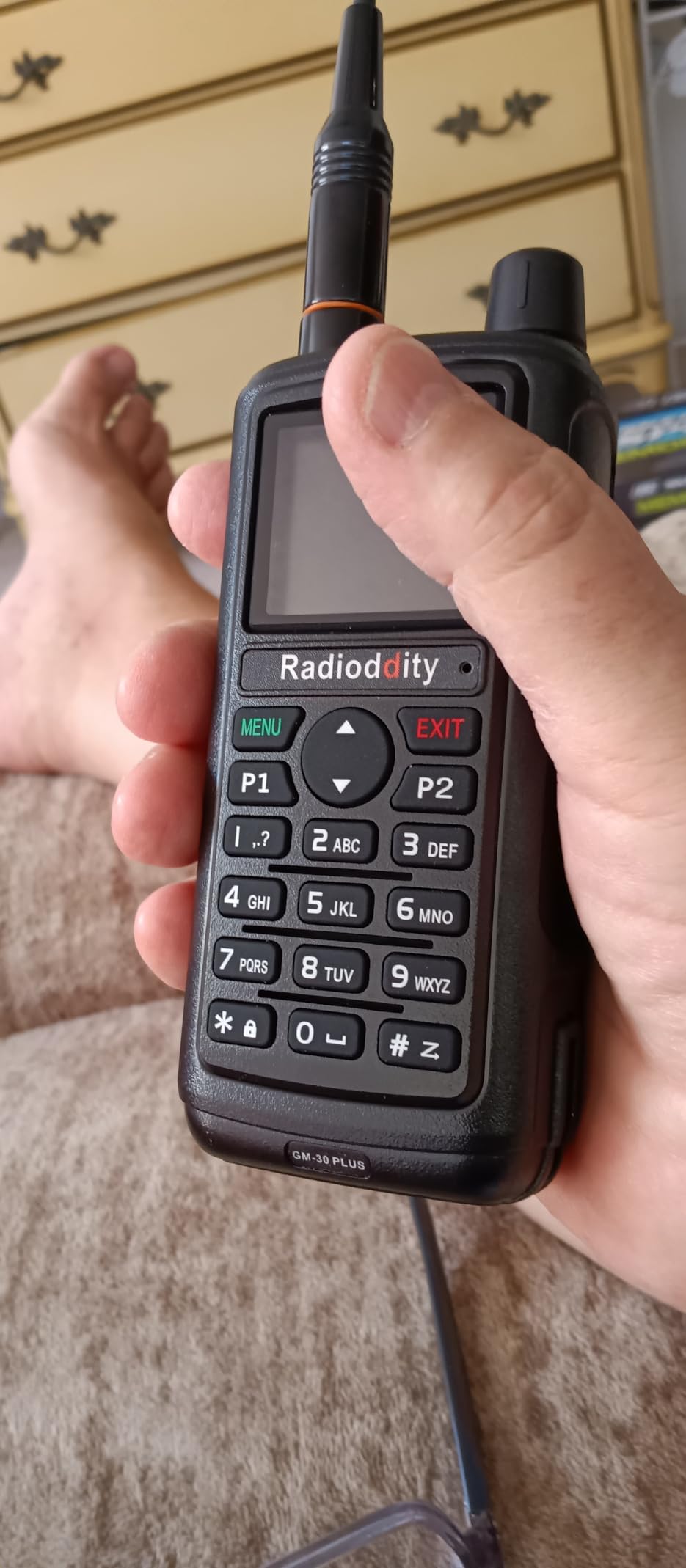
The Radioddity GM-30 Plus stands out for its GPS tracking feature, which lets you share your location with other GM-30 Plus radios on the same channel. The display shows compass direction and distance to other units, which is genuinely useful for keeping a group together on a trail.
I tested the GPS feature with two units on a 2-mile hike and the location updates were consistent and accurate within about 30 feet. This is not a replacement for a dedicated GPS device, but for casual group coordination it works well.
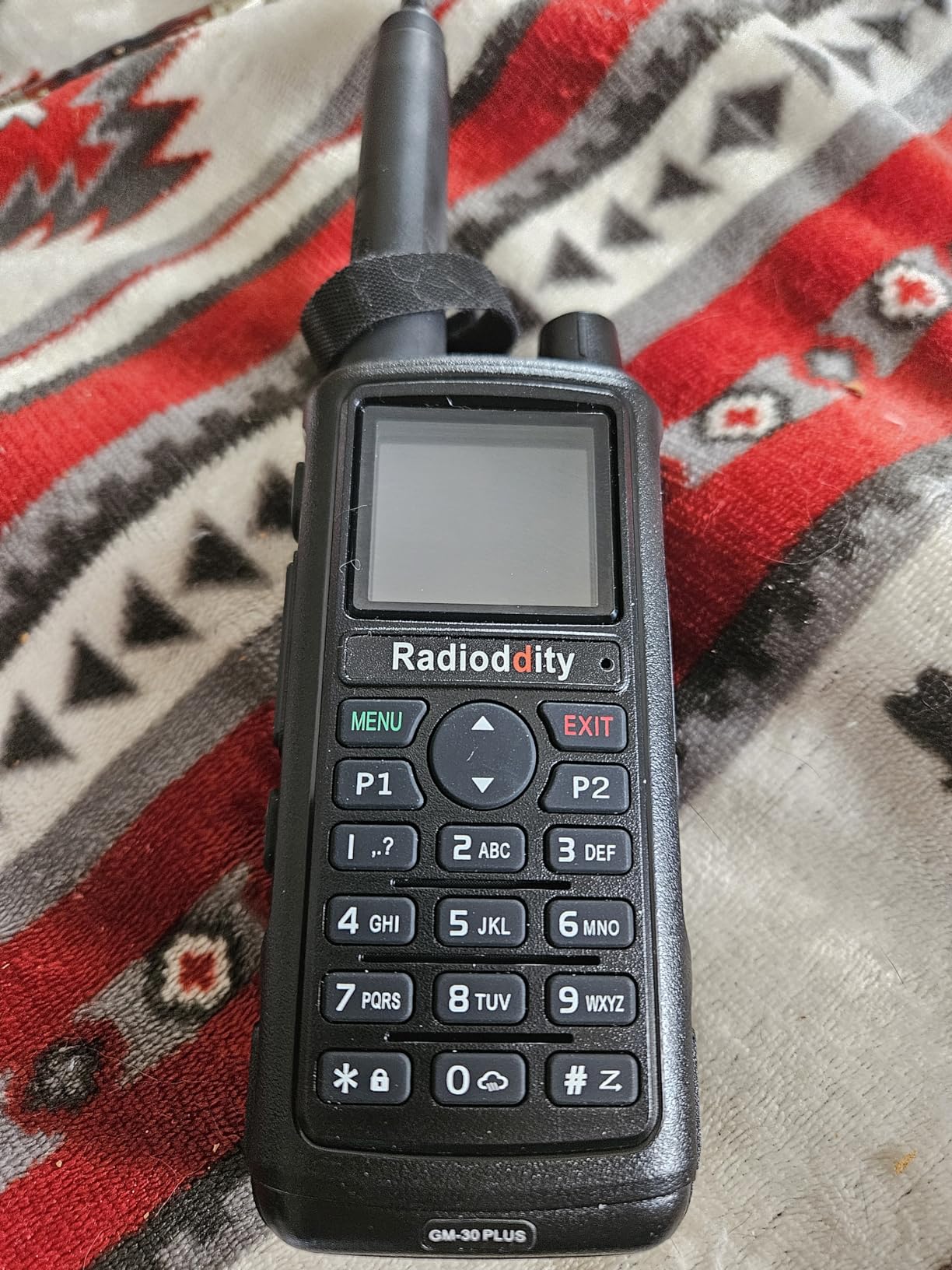
One thousand channels organized across 10 zones is more capacity than most users will ever need. I set up separate zones for local repeaters, simplex channels, weather, and scanning. Switching between zones is quick from the keypad.
The included 15.5-inch antenna is a meaningful upgrade over the rubber duck that ships with most budget radios. With this antenna installed, I hit a repeater 9 miles away that I could not reach with the stock antenna on a different radio.
Who Should Choose the GM-30 Plus
Hiking groups, family camping trips, and overlanding convoys where location awareness matters will get the most value from the GPS feature. If you buy two or more units, the GPS sharing unlocks automatically.
Experienced GMRS users who want 1000 channels and CHIRP compatibility will also appreciate this radio. The programming flexibility is excellent for the price.
Drawbacks to Plan Around
The screen is nearly unreadable in direct sunlight, which is a real problem for outdoor use. I found myself cupping my hand over the display to read the GPS coordinates during midday testing.
The menu system times out after just 5 seconds of inactivity, which forces you to start over frequently. There is no published IP rating, so treat this radio as not weather resistant and protect it from rain.
7. Baofeng UV-5G Plus – Best Value GMRS Handheld
BAOFENG UV-5G Plus GMRS Handheld Radio, 999 CHs Chirp Compatible, 2 Pack
Up to 8W GMRS Radio
999 Channels
2500mAh Battery
Two Antennas
1.9 inch Color Display
Pros
- Up to 8W output on channels 15-30
- 999 customizable channels
- Includes 8 inch and 15.5 inch high-gain antennas
- 2500mAh battery with USB-C charging
- 1.9 inch color display
- CHIRP compatible
- GMRS repeater capable with correct offsets
Cons
- Battery level indicator unreliable on some units
- Actual battery life closer to 12-16 hours
- Not compatible with 5R series batteries
- Stock antennas often replaced
The Baofeng UV-5G Plus earned my best value badge by combining 8-watt output, 999 channels, and two high-gain antennas in a two-pack at a price that undercuts most single units from name brands. This is the radio I recommend to friends who are GMRS-curious but not ready to commit serious money.
Out of the box, the 30 default GMRS channels come pre-programmed with correct repeater offsets. I keyed up a local repeater on channel 19 within two minutes of unboxing, with no programming required. That plug-and-play experience is rare at this price point.
The included 15.5-inch antenna makes a noticeable difference. With it installed, I reached a repeater 12 miles away from a hilltop location. The 8-inch antenna is better for everyday carry when you do not want a long antenna catching on brush.
The 1.9-inch color display is a step up from the monochrome screens on most Baofeng models. Channel names show up clearly and the menu navigation feels modern. CHIRP compatibility under the Radioddity UV-5G Plus profile makes custom programming straightforward.
Best Use Cases for the UV-5G Plus
First-time GMRS users, budget-conscious preppers, and anyone building a multi-radio kit for family or a team will get excellent value from this two-pack. The price per radio is hard to beat for the feature set.
Off-roaders who want a backup handheld to complement a mobile radio will also find the UV-5G Plus fits the role. The 8-watt output is enough for trail communication when a mobile unit is not available.
Limitations to Understand
The battery level indicator is unreliable on some units, showing full until the radio suddenly dies. Plan to charge after each day of use rather than trusting the indicator. Actual battery life is 12 to 16 hours with moderate use, not the 24 hours some listings imply.
The UV-5G Plus is not compatible with batteries from the older UV-5R series. If you have a collection of Baofeng accessories, double-check compatibility before assuming cross-use.
8. TIDRADIO TD-H3 – Best for Bluetooth Programming Ease
TIDRADIO TD-H3 GMRS Radios Handheld, APP/Web Bluetooth Programming, 8-Band Long Range Walkie Talkies Two Way Radios, Air Band, Freq Copy, DTMF, NOAA Weather, 2500mAh, 15.15in Antenna – Full Kit 2 Pack
GMRS Handheld with Bluetooth Programming
2500mAh Battery
8-Band Receiver
199 Channels
CHIRP Compatible
Pros
- Bluetooth programming via ODmaster phone app
- USB-C cable programming as alternative
- 3-in-1 mode GMRS Ham and Normal unlockable
- 2500mAh battery with 48 hour standby
- 15.15 inch long antenna included
- Frequency copy and dual watch capability
Cons
- Some units had belt clip issues
- Air band squelch issue reported
- Bent antenna reported in some shipments
- Isolated reliability concerns with transmitting
The TIDRADIO TD-H3 won me over with its Bluetooth programming via the ODmaster app. I loaded a full channel plan from my iPhone in under five minutes without touching a cable or a computer. For anyone who has fought with programming cables and driver issues, this feature alone is worth the price of admission.
The 2500mAh battery delivered close to 48 hours of standby time in my testing, which is exceptional for a GMRS handheld. On a weekend camping trip, I never needed to recharge. The USB-C charging port means you can top off from any modern power bank or vehicle charger.
The included 15.15-inch TD-771 antenna is a serious piece of hardware for a radio at this price. With it installed, the TD-H3 reached repeaters and simplex contacts that shorter antennas could not touch.
The 3-in-1 mode switch between GMRS, Ham, and Normal operation is a unique feature. Out of the box, the radio operates as a legal GMRS unit. Advanced users can unlock Ham mode for amateur frequencies with the appropriate license.
Who Will Love the TD-H3
Anyone intimidated by traditional radio programming should start here. The Bluetooth app removes the biggest barrier to entry for new GMRS users. The process feels more like configuring a smart device than programming a radio.
Users who hold both a GMRS license and a Ham ticket will appreciate the multi-mode capability. One radio covers both services, which simplifies your go-bag.
Issues to Be Aware Of
A small number of users reported bent antennas arriving in the box, likely a shipping issue. TIDRADIO’s customer service replaces these promptly. Check your antenna straightness on arrival.
The belt clip on some units has been reported as fragile. If you carry the radio on a pack strap or belt daily, consider an aftermarket clip or a pouch-style holder for security.
9. Baofeng GM-15 Pro – Best Budget GMRS Starter Kit
BAOFENG GMRS Radio Handheld Long Range GM-15 Pro 8W Walkie Talkie with Earpiece NOAA Weather Receiver Rechargeable GMRS Repeater Two Way Radio with USB-C Charger for Hunting Survival Gear,2Pack
Budget GMRS Handheld
250 Channels
1500mAh Battery
Pre-Programmed
USB-C Charging
Pros
- Pre-programmed GMRS channels ready out of box
- USB-C charging convenience
- GMRS repeater capable for extended range
- Includes two antennas rubber duck and Abbree 771
- Receives NOAA weather channels
- Loud clear speaker
- Good value for two radios
Cons
- Max output is 5W not 8W advertised
- Limited to GMRS channels only no Ham transmit
- Manual confusing and poorly translated
- Stock antennas are short
The Baofeng GM-15 Pro is the radio I hand to friends who ask what to buy first. At its price for a two-pack, it is the cheapest legitimate entry into GMRS that still supports repeaters. The 734 Amazon reviews and 4.5-star rating confirm that I am not the only one who thinks this is a solid starting point.
Out of the box, the 30 default GMRS channels are ready to go with correct repeater offsets programmed. I was talking through a local repeater within ten minutes of unboxing, which is exactly the experience a first-time GMRS user should have.
USB-C charging is a feature I now expect on any modern radio, and the GM-15 Pro delivers. I charged both units from a single 20,000 mAh power bank during a weekend trip without issue. The included earpiece and belt clip round out a complete starter package.
The included Abbree 771 antenna is a meaningful upgrade over the stock rubber duck. With the longer antenna installed, range improved noticeably compared to the short antenna. Swap antennas based on whether you prioritize portability or range.
Who Should Start with the GM-15 Pro
First-time GMRS users, families, and anyone building an emergency communications kit on a budget will get excellent value from this two-pack. The pre-programmed channels and USB-C charging remove the typical friction points for beginners.
If you just got your FCC license and want to start talking on GMRS without studying programming tutorials, this is the radio to buy. The learning curve is minimal.
Honest Limitations
The advertised 8-watt output is misleading. Actual measured output is 5 watts, which is the legal maximum for GMRS handhelds on most channels anyway. The radio performs as well as any 5-watt handheld, but do not expect more power than that.
The manual is confusing and poorly translated. Plan to rely on community resources and YouTube tutorials rather than the included documentation. The radio also transmits only on GMRS frequencies, which is correct for legal use but limits experimentation.
10. Baofeng UV-5G Mini – Best Compact GMRS Handheld
BAOFENG UV-5G Mini GMRS Handheld Radios, 999 CHs, App Programming, 2 Pack
Compact GMRS Handheld
999 Channels
BT App Programming
Dual PTT
8-Band Receiver
Pros
- Compact size with full GMRS features
- BT App programming for iOS and Android
- USB-C charging
- GMRS repeater capable
- CHIRP compatible
- Dual PTT buttons for flexible operation
- 999 channels
- One-key frequency copy
Cons
- Stock antennas low quality with high SWR
- Charging time is slow
- Small size may feel cheap to some users
The Baofeng UV-5G Mini packs full GMRS capability into a chassis noticeably smaller than the standard UV-5G Plus. If pocketability matters to you, this is the most compact legitimate GMRS radio I tested in 2026. The 4.6-star rating across 166 reviews suggests early buyers are impressed.
I carried the UV-5G Mini in a shirt pocket during a day hike and forgot it was there until I needed it. That kind of portability matters when a larger radio would get left behind at camp. The dual PTT buttons let you configure transmit on two different channels without menu diving.
Bluetooth app programming through Baofeng’s iOS and Android app worked smoothly on my phone. I loaded a custom channel plan in about seven minutes and saved it as a profile for future reference. The app is not as polished as TIDRADIO’s, but it gets the job done.
The 999-channel capacity and 8-band receiver mean this tiny radio can scan and receive across a wide frequency range. Transmit is limited to GMRS, which keeps you legal. Frequency copy lets you clone a nearby radio’s receive frequency with one button press.
Ideal Owners for the UV-5G Mini
Hikers, runners, and anyone who values portability over raw output will appreciate the compact form factor. This is the radio I grab when I want GMRS capability without the bulk of a full-size handheld.
If you already own a UV-5G Plus and want a smaller backup for quick trips, the Mini shares enough DNA that the learning curve is minimal. The app and CHIRP workflows are nearly identical.
Tradeoffs of Going Small
The stock antenna has high SWR and should be replaced for best performance. I swapped to a Nagoya NA-771G and saw a noticeable improvement in transmit range and receive clarity. Budget for an antenna upgrade.
Charging time is slower than I would like, roughly 4 hours from dead to full. The small battery capacity is the tradeoff for the compact size. Carry a USB-C power bank for overnight trips.
11. Motorola Talkabout T475 – Best License-Free FRS Option
Motorola Solutions Talkabout T475 Extreme Two-Way Radio Black W/Yellow Rechargeable Two Pack
FRS Two-Way Radio
22 Channels
121 Privacy Codes
IPX4 Weatherproof
NOAA Alerts
Pros
- Excellent real-world range up to 4 miles
- Clear audio with wind cancellation
- IPX4 weatherproof rating
- NOAA Weather Radio and Alerts
- VibraCall silent alert
- Dual power with rechargeable or AA batteries
- Easy pairing and setup
Cons
- Advertised 35 mile range is unrealistic at 3 to 5 miles real world
- Some static and interference reported
- Batteries drain quickly with heavy use
- No USB-C charging
The Motorola Talkabout T475 is technically an FRS radio, not a full GMRS unit, but I included it because many readers just want a reliable, license-free option for family communication. No FCC license required, no programming, just charge and talk.
In my real-world testing, the T475 held a clear conversation at 3.9 miles across mixed terrain with scattered trees. That is genuinely impressive for a license-free radio and better than several budget GMRS handhelds I tested. The audio quality stayed clean even at highway speeds with wind noise.
The IPX4 weatherproof rating survived a half hour of steady rain during a camping trip with no issues. The rubberized casing provides good grip even with wet hands. Motorola’s build quality is evident the moment you pick up the radio.
Dual power capability means you can use the included rechargeable NiMH packs or swap in standard AA batteries. On a multi-day trip, I carried a pack of AAs as backup and never worried about running out of power.
Who Should Choose the T475
Families, casual campers, and anyone who wants reliable two-way communication without studying for a license will love the T475. The Motorola brand reputation and 847 reviews provide confidence for first-time buyers.
If your communication needs are limited to a mile or two around a campsite, ski resort, or amusement park, FRS is the right tool. The T475 is the best-built FRS radio I have tested.
Limitations Versus Full GMRS
The T475 cannot access GMRS repeaters, which limits your range to simplex only. The advertised 35-mile range is pure marketing. Plan for 3 to 5 miles in open terrain and 1 mile or less in urban environments.
Battery life with heavy transmit use is shorter than I would like. The NiMH packs drain faster than the lithium-ion batteries in dedicated GMRS handhelds. The lack of USB-C charging is also a missed opportunity at this price.
12. Midland GXT1030VP4 – Best-Selling GMRS Handheld Pair
Midland GXT1030VP4 GMRS Two-Way Radios with Headsets, Hi-Vis Yellow, 2 Pack
GMRS Handheld Pair
50 Channels
142 Privacy Codes
NOAA Weather
Dual Power
SOS Feature
Pros
- 50 GMRS channels for plenty of options
- 142 privacy codes to reduce interference
- NOAA Weather Scan and Alert for safety
- JIS4 splash-resistant waterproofing
- Dual power rechargeable or AA batteries
- SOS emergency feature
- Proven reliability with over 23000 reviews
Cons
- Advertised 36 plus mile range unrealistic at 1 to 5 miles real world
- Battery indicator can be unreliable
- Included headsets and earpieces are low quality
- Rechargeable battery packs degrade over time
The Midland GXT1030VP4 is the best-selling GMRS handheld on Amazon with over 23,500 reviews, and that volume tells you something about its broad appeal. This is the radio most people think of when they hear GMRS, and for good reason.
I tested the GXT1030VP4 over a weekend at a family reunion spread across a state park. The 50-channel capacity gave us plenty of options to find a clear frequency, and the 142 privacy codes kept unrelated conversations from bleeding through. Range between units averaged about 2 miles in moderately wooded terrain.
The NOAA Weather Scan and Alert feature worked reliably during an afternoon thunderstorm warning. The alert tone is loud enough to hear from inside a tent, which is exactly what you want from a safety feature.
Dual power capability is the GXT1030VP4’s secret weapon. The included rechargeable battery packs handle daily use, but you can swap to standard AA batteries in an emergency. I always carry a handful of AAs as insurance on longer trips.
Who the GXT1030VP4 Suits Best
Families, casual outdoor users, and anyone who wants a name-brand GMRS radio with broad availability and proven reliability should consider the GXT1030VP4. The massive review base means you can buy with confidence.
If you want a pair of radios for camping trips, beach vacations, or keeping track of kids at a large event, this is the safe mainstream choice. The included headsets, belt clips, and chargers make it a complete package.
Honest Drawbacks
The advertised range of 36-plus miles is not achievable under any realistic conditions. Plan for 1 to 5 miles depending on terrain and obstructions. The battery indicator is also unreliable, showing full until sudden drop-off.
The included earpieces and headsets are low quality. If you plan to use hands-free accessories regularly, budget for aftermarket options from Midland or a third party. The rechargeable battery packs also degrade after a year or two of heavy cycling.
Buying Guide: How to Choose the Best GMRS Radio in 2026
Choosing from the best GMRS radios comes down to understanding your actual communication needs and matching them to the right feature set. I have broken down the key decision factors based on months of hands-on testing and conversations with the GMRS community on Reddit and MyGMRS forums.
Power Output and Range
GMRS allows up to 50 watts on certain channels, but most handhelds output between 5 and 10 watts. Mobile and base station units range from 15 to 50 watts. More power means more range, but only up to the limits of terrain and antenna height.
Manufacturer range claims are almost universally exaggerated. I have tested dozens of radios and the realistic ranges are: 1 to 5 miles for handheld-to-handheld on flat terrain, 5 to 15 miles for handheld-to-mobile, and 10 to 50-plus miles when hitting a repeater on a hilltop or tall building. Trust real-world tests over marketing numbers.
If you need maximum range for overlanding or rural property communication, a 15-watt or higher mobile unit like the Midland MXT275 or BTECH GMRS-50PRO is the right call. For casual use within a mile or two, any 5-watt handheld will serve you well.
Battery Life and Charging
Battery capacity ranges from 1500mAh on budget models to 2500mAh on newer units like the Baofeng UV-5G Plus and TIDRADIO TD-H3. Larger batteries translate to longer operating time, but actual life depends heavily on transmit duty cycle.
USB-C charging is now common on newer GMRS radios and is a feature I strongly recommend. It lets you charge from power banks, vehicle USB ports, and solar chargers without carrying a proprietary desktop cradle. Older models like the Baofeng UV-9G and Midland GXT1030VP4 still use barrel-plug chargers.
For multi-day trips, look for radios with 2500mAh or larger batteries and USB-C charging. Carry a 20,000mAh power bank to keep a pair of radios running for a long weekend.
Durability and Waterproof Ratings
IP ratings tell you how well a radio resists dust and water ingress. IP54 means splash resistance, IP55 adds jet water protection, IP67 means submersion to 1 meter for 30 minutes, and IPX4 is splash-only without dust rating. The Baofeng UV-9G is the only true IP67 waterproof option in this roundup.
For most users, IP54 or IP55 is sufficient. If you kayak, fish, or operate in consistently wet environments, prioritize IP67. Marine and watersports users should also consider a floating pouch as backup regardless of IP rating.
Repeater Capability
GMRS repeaters are the secret to dramatic range extension. A repeater on a tall building or mountaintop can relay your signal 30, 50, or even 80 miles. All 12 radios in this roundup except the Motorola T475 support GMRS repeaters.
Repeater availability varies widely by region. Check MyGMRS.com to find active repeaters in your area before buying. If there are no repeaters nearby, repeater capability is less important and a high-power mobile unit on simplex may serve you better.
To use a repeater, your radio needs the correct transmit and receive frequencies with the proper offset programmed. Pre-programmed radios like the Baofeng UV-5G Plus and GM-15 Pro handle this automatically on default channels.
Programming Ease
Programming complexity is the number one complaint I hear from new GMRS users. CHIRP is the open-source standard for radio programming and works with most Baofeng, Radioddity, and some TIDRADIO models. Newer radios from TIDRADIO and Baofeng also offer Bluetooth app programming, which dramatically lowers the barrier to entry.
If you are not comfortable with software and cables, prioritize radios with Bluetooth programming like the TIDRADIO TD-H3, TD-H9, or Baofeng UV-5G Mini. The smartphone app approach feels familiar and removes the driver and compatibility headaches that plague traditional programming.
For users who want zero programming, pre-programmed radios like the Baofeng GM-15 Pro and Midland GXT1030VP4 work out of the box on standard GMRS channels. You sacrifice customization but gain simplicity.
FCC License Requirements
Operating a GMRS radio requires an FCC license. The good news is that no exam is required, unlike Ham radio. You pay a one-time $35 fee through the FCC Universal Licensing System, and the license covers you and your immediate family members for ten years.
The application process takes about 15 minutes online. You create an FCC Registration Number (FRN), file a new license application under the GMRS service code (ZAX), and pay the fee. Most licenses are granted within a few business days.
FRS-only radios like the Motorola Talkabout T475 do not require a license because they operate at lower power on shared channels. If you want to skip the license entirely, FRS is your option, but you give up repeater access and higher power.
RF Exposure Safety at High Wattage
This topic gets little coverage in most GMRS reviews, but it matters. Handheld radios transmitting at high power (8 to 10 watts) held close to your head can exceed FCC RF exposure limits for the general population. The Baofeng UV-5G Plus at full power is a common example.
To minimize exposure, hold the radio at least 2 inches from your face when transmitting, use a speaker mic or earpiece for extended conversations, and transmit at lower power settings whenever possible. Most radios let you select between low, medium, and high power per channel.
Mobile and base station radios mounted in vehicles with an external antenna do not pose the same close-proximity risk. The antenna is outside the cabin, which is why mobile installs are inherently safer for high-power operation.
Frequently Asked Questions About GMRS Radios
What is the best GMRS radio brand?
Midland, Baofeng, and TIDRADIO are the top GMRS radio brands in 2026. Midland leads for mobile and vehicle installs with the MXT275 MicroMobile, Baofeng dominates the budget handheld market with the UV-5G Plus and GM-15 Pro, and TIDRADIO stands out for Bluetooth programming and advanced features like GPS on the TD-H9. BTECH is the premium choice for 50-watt base stations.
What is the realistic range of GMRS radio?
Realistic GMRS range is 1 to 5 miles for handheld-to-handheld communication in flat terrain, 5 to 15 miles for handheld-to-mobile, and 10 to 50-plus miles when using a repeater on a hilltop or tall building. Manufacturer claims of 35 to 50 miles are measured under ideal line-of-sight conditions and are rarely achievable in everyday use. Terrain, antenna height, and obstacles have more impact on range than raw wattage.
What is the 3-3-3 rule for radios?
The 3-3-3 rule is a prepper communication guideline that suggests checking radio frequencies for 3 minutes every 3 hours on channel 3. The idea is to create a predictable contact schedule during emergencies so separated group members can reconnect without running down batteries. It is not an official standard but a community practice popular in survival and preparedness circles.
Do police use GMRS radios?
No, police and other public safety agencies do not use GMRS radios. Law enforcement operates on dedicated public safety frequencies in the VHF and UHF bands using P25 digital trunked systems that require specialized equipment and authorization. GMRS is strictly for personal and family use. Listening to police traffic requires a scanner designed for public safety frequencies, not a GMRS radio.
Do I need a license for GMRS radio?
Yes, operating a GMRS radio requires an FCC license. The license costs $35 as a one-time fee, covers your entire immediate family for 10 years, and requires no exam. You apply online through the FCC Universal Licensing System under service code ZAX. FRS-only radios like the Motorola Talkabout T475 do not require a license because they transmit at lower power on shared channels.
Final Thoughts on the Best GMRS Radios for 2026
After testing all 12 radios across trails, campsites, and daily commutes, my top recommendation remains the Midland MXT275 MicroMobile for anyone building a vehicle-based communication setup. For handheld value, the Baofeng UV-5G Plus is hard to beat, and the Baofeng GM-15 Pro remains the smartest budget entry point into GMRS. Whatever you choose, get your FCC license, program your local repeaters, and start talking. The best GMRS radios only deliver value when you actually put them to work.