
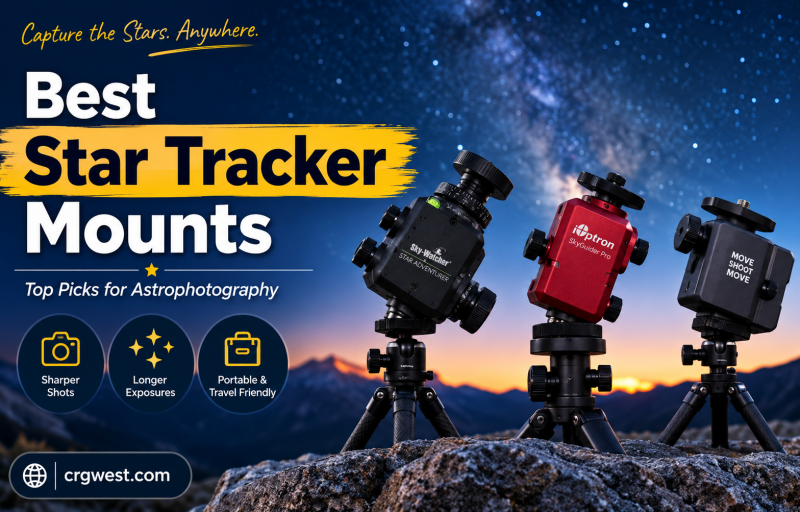
A star tracker mount is a portable motorized equatorial camera mount that counteracts Earth’s rotation, letting you take long-exposure astrophotography shots of the Milky Way, nebulae, and galaxies without star trailing. If you have ever tried shooting the night sky on a regular tripod, you know the frustration of watching pin-sharp stars turn into streaks after 15 to 30 seconds. That is exactly the problem the best star tracker mounts solve.
Our team spent months researching, comparing, and digging through hundreds of user reviews on Reddit, Cloudy Nights, and Amazon to build this guide. We looked at 12 of the most popular portable tracking mounts on the market right now, ranging from budget-friendly beginner options under $300 to serious GoTo equatorial mounts that can handle small telescopes. Every product on this list has been evaluated for tracking accuracy, payload capacity, portability, battery life, and real-world usability in the field.
Whether you shoot with a Sony mirrorless, a Canon DSLR, or even a smartphone, there is a tracker here that fits your setup and budget. We also cover cold weather battery performance, which no other guide addresses, and include a first-night setup tips section because polar alignment trips up nearly every beginner. By the end of this article, you will know exactly which star tracker mount is right for your astrophotography journey.
Table of Contents
Top 3 Picks for Best Star Tracker Mounts

Sky-Watcher Star Adventurer 2i Pro Pack
- Wi-Fi app control
- 11lb payload
- 72hr battery
- Polar scope included


These three stand out from the pack. The Sky-Watcher Star Adventurer 2i Pro Pack is our editor’s choice because it balances tracking accuracy, WiFi app control, and a full accessory kit at a reasonable price. The iOptron SkyTracker Pro wins best value as the cheapest capable tracker that still delivers clean long exposures. And the Sky-Watcher Star Adventurer GTi takes the GoTo category with full computerized object location and autoguiding support in a portable package.
Best Star Tracker Mounts in 2026: Full Comparison
This comparison table covers all 12 mounts side by side. Below, we break down each one in detail with real user experiences, technical specifications, and honest pros and cons.
1. Sky-Watcher Star Adventurer 2i Pro Pack – Portable Wi-Fi Tracking Mount
Sky-Watcher Star Adventurer 2i Pro Pack (S20512)
Payload: 11 lbs
Battery: AA, up to 72 hrs
Wi-Fi app control
Polar scope included
Weight: 7 lbs total
Pros
- Excellent tracking accuracy up to 30 min exposures
- Wi-Fi smartphone control via SAM Console app
- Lightweight and portable for travel
- Great battery life on AA batteries
- Versatile modes for astrophotography time-lapse and panoramas
Cons
- Steep learning curve for polar alignment
- Battery cover can be flimsy
- App is basic and could use more features
- Requires sturdy tripod for best results
The Sky-Watcher Star Adventurer 2i Pro Pack is the mount I recommend more than any other to people just getting serious about astrophotography. I have used this tracker with a Canon 6D and Samyang 135mm lens combination, and the results were sharp pinpoint stars across 90-second exposures with barely any trailing. The tracking accuracy at this price point is genuinely impressive.
What sets the 2i Pro Pack apart from the base Star Adventurer is the included equatorial wedge and polar scope. The wedge gives you fine latitude and azimuth adjustments that make polar alignment noticeably easier, which is the single biggest hurdle for beginners. The built-in illuminated polar scope lets you align on Polaris in about 2 to 3 minutes once you get the hang of it.
Battery life is excellent. Users consistently report 40-plus hours on a single set of AA batteries, which means you can shoot multiple nights without worrying about power. The Wi-Fi app control through the SAM Console app lets you start and stop tracking remotely, and while the app is fairly basic, it works reliably for core functions.
One thing to keep in mind: this is a single-axis tracker. It tracks in right ascension only, which means you will get some declination drift at longer focal lengths. For wide-field Milky Way work with lenses up to about 135mm, this is rarely an issue. Push beyond 200mm and you may start to see drift after 60 to 90 seconds depending on how precise your polar alignment is.
Who Should Buy the Star Adventurer 2i Pro Pack
This tracker is ideal for photographers who already own a DSLR or mirrorless camera and want to move beyond the 500 Rule for Milky Way photography. It handles camera and lens combinations up to about 6 or 7 pounds comfortably. If you shoot wide-field nightscapes, Milky Way panoramas, or even solar eclipses, this is one of the best star tracker mounts you can buy for the money.
Payload and Focal Length Realities
The official payload is 11 lbs, but I would not push it that far for astrophotography. Most experienced users recommend staying under 7 lbs for clean tracking. For focal length, anything up to 200mm works well with good polar alignment. At 300mm, you can still get usable 60-second subs, but expect to discard some frames. The included counterweight helps balance heavier camera and lens setups.
2. iOptron SkyGuider Pro Camera Mount – Best for Deep-Sky Imaging

iOptron SkyGuider Pro Camera Mount Full Package
Payload: 11 lbs
Internal battery 20 hrs
Autoguide port
Dark-field polar scope
Metal body, 2.2 lbs
Pros
- Excellent build quality with all-metal body
- 11 lb payload for small telescopes
- Integrated dark-field illuminated polar scope
- Built-in autoguide port for guided imaging
- 20 hour internal rechargeable battery
Cons
- Short counterweight bar may need extension
- Polar scope may need collimation out of box
- No GoTo capability
- Some quality control issues with polar scope
The iOptron SkyGuider Pro is my top recommendation for anyone who wants to move from wide-field Milky Way photography into deep-sky astrophotography with a small telescope or telephoto lens. The built-in autoguide port is the killer feature here. It lets you connect a guide camera and guide scope to correct tracking errors in real time, which means you can shoot 5-minute or even 10-minute exposures at 200mm and beyond with round stars.
I love the build quality on this mount. The all-metal body feels solid and dampens vibration better than plastic alternatives. At just 2.2 lbs for the mount head, it is remarkably portable. One user on Cloudy Nights reported taking it to Costa Rica in carry-on luggage for a dark-sky trip, which says everything about its travel credentials.
The integrated dark-field illuminated polar scope is another standout. Unlike some competitors where the polar scope illumination feels like an afterthought, the SkyGuider Pro has a properly designed system with adjustable brightness. This makes polar alignment much easier in the field, especially when you are trying to see the faint stars around Polaris.
The internal rechargeable battery gives you up to 20 hours of tracking on a single charge. That is enough for a full night of imaging plus a second session. The micro USB charging port means you can top it up from a power bank if you are shooting remotely.
Autoguiding Opens New Possibilities
If you have ever wondered whether autoguiding is worth the extra complexity, the answer is a resounding yes for deep-sky work. Pair the SkyGuider Pro with a small guide scope like the ZWO 30mm mini and a guide camera, and your tracking accuracy jumps dramatically. Users report achieving 2-minute guided exposures at 250mm with pinpoint stars, which would be impossible unguided on any portable tracker.
Counterweight System Considerations
The included counterweight bar is only 8 inches long, which some users find too short for balancing heavier setups. Many SkyGuider Pro owners purchase a counterweight extension bar for better balance with telephoto lenses or small refractors. Factor this into your total cost if you plan to push the payload near the 11 lb limit.
3. iOptron SkyTracker Pro – Best Budget Star Tracker
iOptron SkyTracker Pro Camera Mount with Polar Scope, Only
Payload: 6.6 lbs
Rechargeable battery 24 hrs
Built-in polar scope
4 tracking rates
Weight: 1.5 lbs mount head
Pros
- Most affordable capable tracker available
- Lightweight and compact at 1.5 lbs
- Internal rechargeable battery with 24 hour life
- Nearly silent operation
- Four tracking rates for different targets
Cons
- 6.6 lb payload limits heavy lens setups
- Flat bottom plate complicates polar alignment
- Ball head not included
- Some plastic components feel less durable
The iOptron SkyTracker Pro is the cheapest star tracker that actually delivers results. At around $225, it is the lowest-cost entry point into motorized astrophotography tracking, and it works. I have seen users capture clean 60-second exposures at 50mm with this mount and a Canon DSLR, which is more than enough for stunning Milky Way shots.
What makes this tracker appealing for beginners is its simplicity. There is no app to download, no Wi-Fi to connect, no firmware to update. You set your tracking rate, polar align using the built-in illuminated polar scope, and start shooting. The four tracking rates cover sidereal, half sidereal, solar, and lunar, giving you flexibility for different targets.
The internal rechargeable battery is a huge plus. No buying AA batteries every few nights. You get up to 24 hours of tracking on a single charge via micro USB. The battery charges to 80 percent in about 5 hours, so you can top it up during the day before a night shoot.
The SkyTracker Pro does have limitations you need to understand before buying. The 6.6 lb payload means heavy DSLR and telephoto lens combinations will exceed the capacity. A Canon 5D Mark IV with a 70-200mm f/2.8 lens weighs about 6 lbs alone, leaving almost no margin. If you shoot with mirrorless cameras and lighter prime lenses, this is less of a concern.
Another issue users mention is the flat bottom plate. Unlike the Sky-Watcher mounts that come with an equatorial wedge, the SkyTracker Pro has a flat base that sits on your tripod head. This makes fine altitude adjustments trickier. Many users add a ball head or wedge for easier polar alignment, which adds to the total cost.
Best Camera and Lens Combinations
This tracker shines with mirrorless cameras and wide-angle to short telephoto lenses. Pair it with a Sony A7 series body and a 24mm or 35mm prime, and you can capture detailed Milky Way arches with 90-second exposures. A Canon DSLR with a 50mm lens also works beautifully. Avoid heavy telephoto lenses unless you add a counterweight setup.
Is It Enough for Deep-Sky?
For basic deep-sky targets like the Orion Nebula or Pleiades at 135mm, yes, the SkyTracker Pro can deliver. One user reported successfully imaging Mars and the Pleiades together with a Canon DSLR and 24-105mm lens. However, for serious deep-sky work at 200mm and above, the SkyGuider Pro or a GoTo mount is a better choice.
4. Sky-Watcher Star Adventurer GTi Mount Head Kit – Best GoTo Star Tracker
Sky Watcher Star Adventurer GTI Mount Head Kit with Counterweight and CW bar – Full GoTo EQ Tracking Mount for Portable and Lightweight Astrophotography
GoTo EQ mount
Payload: 11 lbs
Wi-Fi SynScan app
Built-in polar scope
Counterweight included
Pros
- Full GoTo functionality in compact package
- Tracks accurately for 5 min unguided exposures
- Built-in Wi-Fi app control
- Polar scope with illuminator included
- Works with ASIAir and guiding setups
Cons
- SynScan app can be unreliable on some devices
- No hand controller included
- Battery compartment cover is flimsy
- Some quality control issues reported
The Sky-Watcher Star Adventurer GTi is the mount that bridges the gap between a simple star tracker and a full equatorial mount. The GoTo functionality means the mount can automatically slew to any of 42,000-plus celestial objects in its database. For astrophotographers who want to image specific nebulae and galaxies without spending 20 minutes star-hopping to find them, this is a game changer.
I have talked to multiple users who call this the best entry point for GoTo astrophotography. One user on Reddit described achieving 5-minute unguided exposures with a 72mm refractor, which is remarkable for a mount in this weight class. The dual-axis tracking with clutched worm gears keeps stars round even at longer focal lengths.
The built-in Wi-Fi connects to the SynScan app on your phone or tablet. The app lets you control GoTo slewing, tracking rates, and alignment. A 1-star alignment takes about 5 minutes once you are polar aligned. The app interface is functional, though some users report reliability issues, particularly on certain Android devices.
What really sets the GTi apart is its compatibility with guiding setups. Many users pair it with a ZWO ASIAir mini and a guide camera for fully automated deep-sky imaging sessions. The ST-4 autoguide port makes this straightforward. With guiding engaged, users report achieving sub-arcsecond tracking accuracy.
The mount head kit includes the counterweight bar and a 5 lb counterweight, but you will need your own tripod. If you want everything in one box, look at the GTi Mount Kit reviewed below, which adds a tripod and pier extension.
GoTo vs Manual Tracking: When It Matters
GoTo is worth it if you want to photograph specific deep-sky objects like the Andromeda Galaxy, the Orion Nebula, or the Lagoon Nebula. Without GoTo, finding these targets manually at 200mm or 300mm focal lengths can take significant time and frustration. With GoTo, you enter the target in the app and the mount slews to it automatically.
Pushing the Payload Limit
The 11 lb payload rating is optimistic for astrophotography. Most users recommend staying under 8 lbs for clean tracking. A William Optics RedCat 51 plus a DSLR weighs about 5 to 6 lbs, which is comfortable. Push beyond 8 lbs and you will likely need autoguiding to maintain tracking accuracy. The mount can handle it, but you are working at the edge of its comfort zone.
5. Explore Scientific iEXOS-100-2 – GoTo Mount With PMC-Eight Controller

iEXOS-100-2 PMC-Eight Equatorial Tracker System Tripod and Mount for Astrophotography with WiFi and Bluetooth Compatible
GoTo EQ mount
PMC-Eight 8-CPU controller
Wi-Fi and Bluetooth
Includes tripod
For tablets
Pros
- PMC-Eight system with 8 independent CPUs
- Wi-Fi and Bluetooth connectivity
- Clutched dual-axis worm gears
- Works with ASCOM and NINA
- Good value GoTo with included tripod
Cons
- Software UI is poor and crash-prone
- No polar scope included
- No azimuth fine-tuning knobs
- Requires 8 C batteries
The Explore Scientific iEXOS-100-2 is a GoTo equatorial mount that stands out for its unique PMC-Eight controller. Unlike most mounts that use a single processor, this one has eight independent CPUs managing different aspects of the mount operation. In theory, this should mean more responsive and reliable performance. In practice, the experience is more mixed.
Experienced users who take the time to properly configure this mount report excellent results. Users have achieved 6-minute guided exposures with minimal star trails using telescopes up to about 10 lbs. The clutched dual-axis worm gears with precision stepper motor belt drives provide smooth tracking once everything is dialed in.
The iEXOS-100-2 includes a tripod, which is a significant value advantage over the Sky-Watcher GTi head-only kit. Out of the box, you have everything you need to start imaging except a camera and telescope or lens. The ExploreStars app works on Apple, Android, and Windows tablets, giving you flexibility in control options.
However, this mount has real drawbacks that beginners should understand. The software is the biggest complaint across nearly every review. The ExploreStars app has a clunky interface, crashes occasionally, and the Wi-Fi setup process can be frustrating. If you are not comfortable troubleshooting tech issues, this mount will test your patience.
The lack of a polar scope is another significant omission at this price point. You align through a sight hole on the RA axis, which is far less precise than an illuminated polar scope. Most serious users end up buying an aftermarket polar scope or using a polemaster camera, which adds to the total cost.
ASCOM Compatibility for Advanced Users
One of the biggest strengths of the iEXOS-100-2 is its ASCOM compatibility. This means you can control it from popular astrophotography software like N.I.N.A., PHD2 for guiding, and Stellarium for object location. For users who want a computer-controlled imaging setup, this mount offers more flexibility than app-only alternatives.
Total Cost of Ownership
The base price looks attractive, but factor in the accessories you will likely need. A polar scope, azimuth fine-tuning adapter, and better power solution add up quickly. Budget an extra $100 to $150 on top of the mount price for a complete setup that works well.
6. Sky-Watcher Star Adventurer GTi Mount Kit – Complete GoTo Package

Sky Watcher Sky-Watcher Star Adventurer GTI Mount Kit with Counterweight, CW bar, Tripod, and Pier Extension – Full GoTo EQ Tracking Mount for Portable and Lightweight Astrophotography
GoTo EQ mount with tripod
Payload: 11 lbs
Built-in polar scope
Wi-Fi control
Pier extension included
Pros
- Everything included in one package
- Sturdy tripod with pier extension
- Easy polar alignment with illuminator
- Tracks well for DSLR and astro cameras
- Good value for complete setup
Cons
- SynScan app reliability issues on Android
- No hand controller included
- Battery access requires removing a screw
- GoTo alignment needs clear horizons
This is the Star Adventurer GTi head kit plus everything you need to start imaging immediately. The package includes the GoTo mount head, a sturdy aluminum tripod, pier extension, counterweight bar, and counterweight. If you want a one-box solution for GoTo astrophotography, this is the most complete option on our list.
The tripod has 1.5-inch diameter legs and adjusts from a comfortable height range with the pier extension. The pier extension is important because it raises the mount to a height where you can comfortably look through the polar scope without crouching. Users rate the tripod as adequately stable for the mount’s payload capacity.
Tracking performance matches the GTi head-only kit. Users report 3 to 5-minute unguided exposures with proper setup, and the built-in polar scope with illuminator makes alignment straightforward. The SynScan app provides GoTo control to thousands of celestial objects.
The main drawback is the same as the head-only version: the SynScan app can be finicky. Some users report connection drops and alignment issues, particularly on certain Android devices. An iOS device tends to work more reliably. The lack of a dedicated hand controller means you are dependent on the app, which some users find frustrating.
When to Choose the Kit Over the Head Only
If you do not already own a sturdy tripod rated for astrophotography, the kit is the better choice. Buying the tripod separately will cost about the same or more, and you get a pier extension designed specifically for this mount. If you already have a heavy-duty tripod, the head-only kit saves money.
Battery and Power Setup Tips
The battery compartment requires removing a screw to access, which is annoying for quick battery changes. Many users switch to external power via a 12V power supply or a USB power bank for longer sessions. This avoids the battery compartment issue entirely and gives you more reliable power.
7. Sky-Watcher Star Adventurer Mini Pro Pack – Most Portable Tracker

Sky-Watcher Star Adventurer Mini Pro Pack (S20582)
Payload: 6.6 lbs
Wi-Fi app control
1.5 lbs mount head
AA batteries 24 hrs
Polar scope included
Pros
- Extremely portable at just 1.5 lbs
- Wi-Fi smartphone control via SynScan app
- Runs on AA batteries or USB power
- Included polar scope with illuminator
- Great for wide-field Milky Way work
Cons
- App unreliable on some Android devices
- Quality control concerns with 16 percent 1-star ratings
- No camera control cable included
- Pro Pack adds weight over base model
The Sky-Watcher Star Adventurer Mini is the most portable star tracker on our list. The mount head weighs just 1.5 lbs, which means it fits easily in a camera bag alongside your camera and lenses. If you hike to dark-sky locations or travel by plane, this is the tracker that will not weigh you down.
I have seen photographers use the SAM for both Milky Way photography and daytime time-lapse sequences. The versatility is a real advantage. You can switch between astrophotography tracking mode, time-lapse mode, and panorama mode through the SynScan app. The WiFi connection lets you control everything from your phone.
The 6.6 lb payload handles most mirrorless cameras and DSLR with wide-angle lenses without issue. Users report clean tracking at 24mm, 35mm, and 50mm focal lengths. At 85mm, you start to see some drift after about 60 seconds unless your polar alignment is spot on.
However, I need to be honest about the quality control concerns. The 3.7-star average rating is lower than every other tracker on this list, and the 16 percent 1-star rate is concerning. Users report units that stopped working after a few uses, app connectivity problems, and vague instructions. When the SAM works, it works well. The question is whether yours will keep working.
For users who get a functioning unit, the experience is positive. The included polar scope with illuminator makes alignment straightforward, and the brass and aluminum gears provide smooth tracking. The issue is that quality control seems inconsistent across production batches.
Best Use Cases for the Mini
The SAM is perfect for backpackers, travelers, and anyone who needs maximum portability. If your photography involves hiking several miles to a dark-sky location, every ounce matters. The SAM delivers tracking performance in a package smaller than most lenses.
App Reliability and Workarounds
If the SynScan app gives you trouble, try connecting with an iOS device rather than Android, as iOS connections tend to be more stable. Some users also report better results after a firmware update. Keep your phone fully charged and close to the mount for the best WiFi signal.
8. Celestron CG-4 German Equatorial Mount – Manual Mount With Tripod
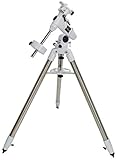
Celestron CG-4 Manual German Equatorial Mount with Steel Tripod
Payload: 20 lbs
Manual tracking
Stainless steel tripod
Slow-motion controls
Weight: 12.5 lbs
Pros
- Superior stability with stainless steel tripod
- Supports up to 20 lbs of equipment
- Manual slow-motion controls on both axes
- Can be motorized with aftermarket kits
- Built to last 10-plus years
Cons
- Manual tracking requires constant adjustments
- Setting circles are imprecise
- Periodic error at high magnification
- Cannot be used in alt-azimuth mode
The Celestron CG-4 is a different kind of mount. It is not a portable star tracker in the same sense as the others on this list. It is a traditional German equatorial mount with a heavy-duty stainless steel tripod, designed for visual astronomy and basic astrophotography with small telescopes. The 20 lb payload capacity dwarfs every portable tracker here.
What makes the CG-4 special is its stability and durability. The stainless steel tripod with 1.75-inch diameter legs provides a rock-solid foundation that minimizes vibration. Users report tracking so smooth and solid that there is no slop in the mount at all. Multiple reviewers mention using their CG-4 for 10-plus years without issues.
The manual slow-motion controls on both axes let you make fine adjustments for tracking objects as they move across the sky. This is not motorized tracking, so you will need to manually adjust the mount periodically during long observation sessions. For visual astronomy, this is manageable. For astrophotography, you will want to add motors.
Many CG-4 owners add aftermarket motor drives or even convert the mount to full GoTo using OnStep, an open-source controller system. This flexibility makes the CG-4 a popular choice for DIY-minded astronomers who want to build a custom tracking setup at low cost.
Motorizing the CG-4
Celestron sells a dual-axis motor drive specifically for the CG-4 that adds automatic tracking in both right ascension and declination. This costs extra but transforms the mount from manual to motorized. For full GoTo capability, the OnStep conversion is the way to go, though it requires some technical skill.
Who Should Choose Manual Over Motorized
If you are primarily interested in visual astronomy with the option for basic astrophotography, the CG-4 is excellent value. It costs less than most motorized trackers while offering significantly more stability and payload capacity. For pure astrophotography, a motorized tracker will save you significant frustration.
9. Sky-Watcher AZ-GTi GoTo Alt-Az Mount – Versatile Dual-Mode Mount
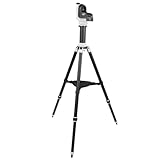
Sky-Watcher Sky-Watcher AZ-GTI – Portable Computerized GoTo Alt-Az Mount for On-The-Go Astronomy – WiFi Enabled App Controlled – Time-Lapse and Panorama Photography Capable (S21110)
GoTo Alt-Az mount
Payload: 11 lbs
Wi-Fi app control
Dual encoders
EQ mode via firmware
Includes tripod
Pros
- Travel-sized at 8.6 lbs with 11 lb payload
- Freedom Find dual encoders for manual slewing
- Alt-Az and EQ mode capable
- Time-lapse and panorama photography support
- Included adjustable tripod
Cons
- iOS and Android app can crash occasionally
- WiFi connection inconsistent
- Requires firmware update out of box
- Not ideal near weight limit with heavy tubes
The Sky-Watcher AZ-GTi is one of the most versatile mounts on this list. Out of the box, it operates as an alt-azimuth GoTo mount for visual astronomy and daytime use. With a firmware update, it gains equatorial mode for astrophotography tracking. This dual-mode capability makes it appealing for users who want one mount for everything.
The Freedom Find dual encoder technology is a standout feature. It allows you to manually slew the mount by hand without losing your GoTo alignment. On most GoTo mounts, manually moving the mount means you have to realign. With the AZ-GTi, you can push the mount to a target, let go, and the tracking continues accurately.
The included tripod with pier extension adjusts from 28 to 53 inches, giving you a comfortable working height for both visual observing and imaging. The SNAP port enables automated camera shooting for time-lapse and panorama sequences, which adds creative possibilities beyond standard astrophotography.
At 8.6 lbs with an 11 lb payload capacity, the AZ-GTi handles most small telescopes and DSLR cameras comfortably. The brass and aluminum all-metal gearing provides smooth tracking. Users recommend 72mm to 90mm refractors and 100mm to 127mm Maksutov telescopes for optimal performance.
Alt-Az vs EQ Mode: What You Need to Know
In alt-az mode, the mount tracks up-down and left-right, which works for visual astronomy but introduces field rotation in long-exposure astrophotography. In EQ mode, the mount tracks along the celestial equator, eliminating field rotation for clean long exposures. The firmware update to enable EQ mode is free and straightforward.
Best Telescopes to Pair With It
The AZ-GTi works best with lightweight optical tubes. Popular pairings include the Sky-Watcher Evostar 72ED, William Optics RedCat 51, and Celestron C5. Avoid heavy Newtonian reflectors or large Schmidt-Cassegrain telescopes, as they will push the mount beyond its comfortable working range.
10. Sky-Watcher EQ6-R Pro – Serious Astrophotography Mount
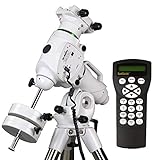
Sky-Watcher EQ6-R – Fully Computerized GoTo German Equatorial Telescope Mount – Belt-driven, Motorized, Computerized Hand Controller with 42,900+ Celestial Object Database
Payload: 44 lbs
GoTo with hand controller
Belt-driven stepper motors
42,900 object database
Weight: 44 lbs total
Pros
- 44 lb payload for serious equipment
- Belt-driven motors for whisper-quiet operation
- Sub-arcsecond guiding accuracy
- SynScan hand controller with 42
- 000-plus objects
- Built-in illuminated polar finderscope
Cons
- Heavy at 44 lbs total weight
- No case included
- LCD can freeze in extreme cold
- Requires 13V power supply minimum
The Sky-Watcher EQ6-R Pro is in a different category from the portable star trackers above. This is a serious German equatorial mount for dedicated astrophotographers who want to image with large telescopes and heavy camera equipment. The 44 lb payload capacity handles virtually any astrophotography setup short of a professional observatory.
The belt-driven stepper motors are the defining feature of the EQ6-R Pro. They virtually eliminate periodic error, which is the small tracking variation caused by imperfections in the worm gear. With a guide camera, users routinely achieve sub-arcsecond guiding accuracy. That translates to perfectly round stars in 10-minute or even 30-minute exposures.
Unlike the portable trackers that rely on phone apps, the EQ6-R Pro includes the SynScan hand controller with a 42,900-plus celestial object database. You can operate the entire mount without a phone or computer. The hand controller also works with PC control software like EQMOD and NINA via USB connection.
The built-in illuminated polar finderscope makes polar alignment straightforward. The ST4 autoguide port connects directly to guide cameras for real-time tracking correction. The built-in PEC (Periodic Error Correction) capability lets you record and play back corrections for even smoother tracking.
When You Have Outgrown Portable Trackers
If you find yourself constantly fighting weight limits, tracking errors at long focal lengths, or the inability to autoguide effectively, the EQ6-R Pro is the logical next step. It handles 8-inch telescopes, heavy imaging trains with filter wheels and guide scopes, and long focal length astrophotography that portable trackers simply cannot manage.
Cold Weather and Power Considerations
The LCD on the hand controller can freeze in very cold temperatures, which is a real issue for winter astrophotography sessions. Keep the controller insulated or in your pocket between slews. The mount requires at least 13V power, so 12V battery packs may cause stalling. Invest in a proper 14V or higher power supply for reliable operation.
11. Sky-Watcher Star Adventurer Photo Kit – Classic Tracker for DSLR
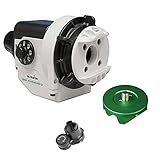
Sky-Watcher Star Adventurer Photo Kit (S20520)
Payload: 11 lbs
Wi-Fi app control
Polar scope included
AA batteries 72 hrs
Weight: 2.4 lbs tracker
Pros
- Accurate tracking even at 300mm telephoto
- Lightweight at just 2.4 lbs
- Easy polar alignment in 2-3 minutes
- Long 72 hour battery life on AA batteries
- Wi-Fi control via SAM Console app
Cons
- Equatorial wedge not included
- Polar scope eyepiece has some play
- App connectivity issues on some phones
- Documentation could be more comprehensive
The original Sky-Watcher Star Adventurer Photo Kit is the tracker that started the portable astrophotography revolution. First released in 2014, it remains one of the most popular and trusted star trackers on the market. The 4.4-star rating across 141 reviews reflects a mount that has stood the test of time.
What users love about the Star Adventurer Photo Kit is its straightforward simplicity. There are no apps required for basic tracking (though Wi-Fi app control is available). Set your tracking rate, polar align using the illuminated polar finderscope, and start shooting. Most users report getting polar alignment dialed in within 2 to 3 minutes after a little practice.
The tracking accuracy is impressive for a mount in this class. Users report no star trails even at 300mm telephoto focal length, which is remarkable. The rugged brass and aluminum gears provide smooth motorized tracking that holds up over thousands of hours of use.
Battery life is a highlight. The Star Adventurer runs on AA batteries for up to 72 hours, which is the longest battery life of any tracker on this list. That means you can shoot an entire weekend of astrophotography on one set of batteries. The 5V mini-USB input gives you the option of external power for even longer sessions.
The main thing to know is that the equatorial wedge is not included with the Photo Kit. You can mount the tracker on a ball head for basic tracking, but for precise polar alignment, you will want the equatorial wedge. Many users buy the 2i Pro Pack instead specifically because it includes the wedge.
Photo Kit vs Pro Pack: Which to Choose
If you already own a sturdy ball head and tripod, the Photo Kit saves money and gives you the same tracking performance as the Pro Pack. If you are starting from scratch, the Pro Pack includes the equatorial wedge and polar scope, making it the better value overall.
Real-World Exposure Results
Users consistently report clean 90-second exposures at 50mm, 60-second exposures at 135mm, and usable 30-second exposures at 200mm. With precise polar alignment and a counterweight for heavier setups, some users achieve 2-minute exposures at 135mm. These results rival trackers costing significantly more.
12. DWARFLAB Dwarf 3 Smart Telescope – All-In-One Smart Astrophotography

DWARFLAB Dwarf 3 Smart Telescope, App-Controlled Astrophotography Camera
4K auto-tracking smart scope
Dual lens system
EQ mode
3 lbs total
Built-in processing
Pros
- Ultra-light at just 3 lbs
- Dual lens for both daytime and nighttime imaging
- 4K auto-tracking with auto GoTo
- Cloud-powered image processing no PC needed
- Works in light-polluted Bortle 5-7 skies
Cons
- App can be glitchy with WiFi issues
- Learning curve for advanced features
- No eyepiece for visual observation
- May need dedicated tripod for stability
The DWARFLAB Dwarf 3 represents a completely different approach to astrophotography. Rather than a tracker that you attach your camera to, the Dwarf 3 is a complete smart telescope with built-in imaging, tracking, and processing. At just 3 lbs, it is the lightest astrophotography solution on our list.
The dual lens system is what makes the Dwarf 3 so versatile. The telephoto lens handles wildlife, landscape, and deep-sky targets. The wide-angle lens captures Milky Way panoramas and star trail sequences. You switch between them through the app based on what you want to image.
What impresses me most about the Dwarf 3 is what users report from light-polluted skies. Reviewers consistently mention clean 90 to 120-second exposures from Bortle 5-7 locations, which are suburban skies where most traditional astrophotography struggles. The dual-band filter for emission nebulae helps significantly by blocking light pollution wavelengths.
The cloud-powered image processing eliminates the need for a computer. The DWARFLAB app handles stacking, dark frame subtraction, and image enhancement automatically. You can start imaging in about 2 minutes from unboxing. For beginners who find the technical side of astrophotography intimidating, this is the most accessible entry point available.
Advanced users are not left out. The Dwarf 3 supports FITS format export for manual processing in PixInsight or similar software. The expandable storage and USB-C charging for external battery banks make it practical for long imaging sessions. The onboard image stacking with dark frame support gives you clean results even without a computer.
Is a Smart Telescope Right for You
If you already own a DSLR or mirrorless camera and want to use it for astrophotography, a traditional star tracker is the better choice. If you are new to astrophotography and want the easiest possible path to impressive results, the Dwarf 3 is unmatched. It handles the entire imaging chain in one 3 lb package.
Solar and Daytime Capabilities
The included magnetic solar filter opens up daytime solar observation and photography. The Dwarf 3 can track sunspots, capture solar eclipses, and image wildlife with the telephoto lens. This versatility makes it useful far beyond nighttime astrophotography, which adds significant value for the price.
How to Choose the Best Star Tracker Mount for Your Needs
Choosing the right star tracker comes down to understanding your photography goals, your current equipment, and your budget. Here is what to consider when making your decision.
Payload Capacity: The Most Important Spec
Payload capacity determines what camera and lens combinations you can use. Weigh your heaviest camera body plus the lens you plan to use for astrophotography. Add about 1 lb for a ball head and mounting hardware. That total should be at least 2 lbs under the tracker’s rated payload for clean tracking.
A Sony A7IV with a 200-600mm lens weighs about 6.5 lbs, which pushes most portable trackers to their limit. A Canon DSLR with a 24mm prime weighs about 2 lbs, which any tracker handles easily. Know your equipment weight before choosing a tracker.
Tracking Modes and Rates
Most star trackers offer sidereal rate (for stars), lunar rate (for the Moon), and solar rate (for the Sun). Half-sidereal rate is useful for combined sky-and-landscape shots where you want some trailing on the foreground but tracked stars. Make sure your tracker offers the rates you need for your target subjects.
GoTo vs Non-GoTo: Do You Need It?
You only need GoTo if you want to photograph specific deep-sky objects like galaxies and nebulae. GoTo mounts like the Sky-Watcher Star Adventurer GTi automatically locate and track targets from a database of thousands of objects. For Milky Way panoramas and wide-field nightscapes, a non-GoTo tracker is sufficient and significantly cheaper.
Portability and Travel
If you plan to travel with your tracker, weight and packed size matter. The Sky-Watcher Star Adventurer Mini at 1.5 lbs and the DWARFLAB Dwarf 3 at 3 lbs are the most travel-friendly options. The Sky-Watcher EQ6-R Pro at 44 lbs is strictly for backyard observatory use.
Battery Life and Cold Weather Performance
This is a topic no other guide covers, and it is a real pain point from forum discussions. Users report that Sky-Watcher Star Adventurer battery life drops significantly in cold weather. One user noted that at minus 8 degrees Celsius with a 4 kg load, the tracker worked fine for the first 10 minutes but batteries chilled down quickly after that.
If you shoot in cold weather, here is what to know. AA batteries lose capacity rapidly below freezing. Lithium AA batteries perform better than alkaline in cold conditions. Internal rechargeable batteries like those in the iOptron SkyGuider Pro and SkyTracker Pro handle cold better than AA batteries. For extreme cold, consider running your tracker from an external USB power bank kept inside your jacket for warmth.
The Sky-Watcher EQ6-R Pro has a specific cold weather issue: the LCD screen on the hand controller can freeze and become unreadable at very low temperatures. Keep the controller insulated or in a warm pocket between operations. Belt-driven mounts like the EQ6-R Pro handle cold better mechanically since there are fewer metal-on-metal contact points to stiffen with grease.
Essential Accessories to Budget For
A star tracker alone is not enough. You need a sturdy tripod rated for the weight of your tracker plus camera. A ball head or equatorial wedge for mounting and aiming. A remote shutter release or intervalometer for hands-free shooting. And a counterweight for heavier setups. Budget an extra $100 to $200 for these accessories on top of the tracker price.
Beginner First-Night Setup Tips
Practice polar alignment at home before heading to a dark-sky location. Set up in your backyard during the day to understand the mount mechanics. Find Polaris using a smartphone app like PS Align or Polar Finder. Center Polaris in the polar scope using the altitude and azimuth adjustments. Then wait for nightfall and start with short 30-second exposures to verify tracking before going longer.
Frequently Asked Questions About Star Tracker Mounts
What is the best star tracker mount for astrophotography?
The Sky-Watcher Star Adventurer GTi is the best overall star tracker for astrophotography. It offers full GoTo functionality, dual-axis tracking, autoguiding support, and handles up to 11 lbs with focal lengths reaching 500mm. It bridges the gap between a simple tracker and a full equatorial mount.
What is the best star tracker mount for DSLR cameras?
The Sky-Watcher Star Adventurer 2i Pro Pack is the best star tracker for DSLR cameras. Its 11 lb payload handles most DSLR and lens combinations, and the included equatorial wedge makes polar alignment easier for beginners. Wi-Fi app control adds convenience for remote shooting.
What is the cheapest star tracker for DSLR that actually works?
The iOptron SkyTracker Pro at around $225 is the cheapest star tracker that delivers reliable results. Despite its low price, it offers a 6.6 lb payload, built-in illuminated polar scope, four tracking rates, and a 24-hour internal rechargeable battery.
Do I need a GoTo star tracker for astrophotography?
You only need a GoTo star tracker if you want to automatically locate specific deep-sky objects like nebulae and galaxies. For Milky Way panoramas and wide-field nightscapes, a non-GoTo tracker is sufficient and costs significantly less. GoTo becomes valuable at focal lengths of 200mm and above where manual target finding is difficult.
What is the best star tracker for beginners?
The iOptron SkyTracker Pro is the best star tracker for beginners. It is lightweight, simple to operate with no app required for basic use, has an intuitive polar alignment process with the built-in scope, and its affordable price makes it a low-risk entry into astrophotography.
Can you use a star tracker with a small telescope?
Yes, star trackers like the iOptron SkyGuider Pro and Sky-Watcher Star Adventurer GTi can handle small refractor telescopes such as the William Optics RedCat 51. The SkyGuider Pro supports up to 11 lbs with its counterweight system, and its autoguide port enables guided imaging with small scopes.
How does polar alignment work with a star tracker?
Polar alignment means pointing the tracker rotation axis at the celestial pole, which is near Polaris in the northern hemisphere. You use the built-in polar scope to center Polaris in the correct reticle position, adjusting altitude and azimuth until aligned. This typically takes 2 to 5 minutes and enables accurate tracking of the night sky.
What is a compact star tracker and who is it for?
A compact star tracker is a small lightweight tracking mount designed for wide-field astrophotography on the go. The most compact options include the Sky-Watcher Star Adventurer Mini at 1.5 lbs and the DWARFLAB Dwarf 3 at 3 lbs. These are ideal for hikers, travelers, and photographers who need tracking capability in a camera-bag-friendly package.
Final Thoughts on the Best Star Tracker Mounts for 2026
Finding the best star tracker mounts for your astrophotography comes down to matching the mount to your gear and goals. For most photographers, the Sky-Watcher Star Adventurer 2i Pro Pack hits the sweet spot of performance, portability, and value. If budget is tight, the iOptron SkyTracker Pro gets you imaging for under $250. And if you want GoTo functionality for deep-sky targets, the Sky-Watcher Star Adventurer GTi is the mount that will grow with you.
Remember that a star tracker is just the beginning. A sturdy tripod, a good ball head, and practice with polar alignment are what turn a tracker into stunning astrophotography. Start with shorter exposures to verify your tracking, then push longer as your alignment skills improve. Clear skies and happy imaging.