

Power is the lifeblood of any server rack, and without the right power distribution unit, you are one overloaded circuit away from taking down your entire infrastructure. When our team set out to find the best PDUs for server racks in 2026, we wanted options that work for everyone, from a homelab enthusiast running three servers in a closet to a data center manager powering multiple full-height cabinets.
A Rack PDU (Power Distribution Unit) is a specialized power strip designed to distribute electricity to multiple devices mounted inside a server rack or data center enclosure. Unlike a standard surge protector from a big-box store, a rack PDU is built for 19-inch cabinet mounting, offers higher amperage ratings, and often includes features like circuit breakers, current metering, and remote power management. The PDU takes power from a single source and splits it across multiple outlets so you can power several rack-mounted servers, switches, and network appliances from one centralized unit.
We spent weeks comparing 10 of the most popular rack mount PDU options on the market, looking at outlet counts, build quality, mounting flexibility, surge protection, and real user feedback. Whether you need a basic 1U strip for a small network rack or a high-density 0U vertical unit with dual-circuit metering, this guide covers the full range. We also address common questions from the homelab and sysadmin communities, including the 120V versus 240V debate and whether surge protection belongs in your rack at all.
Table of Contents
Top 3 Picks for Best PDUs for Server Racks
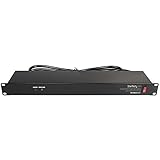
StarTech.com 8 Outlet 1U Rack Mount PDU
- 8 NEMA 5-15 Outlets
- Surge Protection
- Built-in Circuit Breaker
- 1U Horizontal
CyberPower CPS1215RM Basic PDU
- 10 NEMA 5-15R Outlets
- 15ft Cord
- UPS-Safe No Surge
- 1U Horizontal

CENTROPOWER 1U PDU Rackmount Power Strip
- 10 Outlets
- 1800J Surge
- 10 Independent LED Switches
- 1U Horizontal
Best PDUs for Server Racks in 2026
1. StarTech.com 8 Outlet 1U Rack Mount PDU — Reliable Surge-Protected Workhorse
StarTech.com 8 Outlet Horizontal 1U Rack Mount PDU Power Strip for Network Server Racks – Surge Protection – 120V/15A – w/ 6ft Power Cord (RKPW081915)
8 NEMA 5-15 Outlets
120V/15A
1U Horizontal
Surge Protection
6ft Cord
Steel Chassis
Pros
- Reliable steel construction
- Built-in surge protection with LED indicators
- Circuit breaker with reset switch
- Easy 1U rack mounting
- 2-year warranty
Cons
- Red status light can be confusing
- No individual outlet switches
- Short 6ft cord limits placement
I have installed this StarTech PDU in three different racks over the past several years, and it has never let me down. The steel chassis feels substantial the moment you pick it up, and mounting it into a standard 19-inch cabinet takes about five minutes with the included hardware. The 8 NEMA 5-15 outlets sit on the front faceplate, which makes cable runs clean and accessible.
What sets this unit apart from cheaper power strips is the integrated surge protection paired with a built-in circuit breaker. LED indicators on the front tell you at a glance whether your ground and surge protection are active. I appreciate that the breaker has a physical reset switch, so if something trips, you are not hunting for the outlet behind the rack.
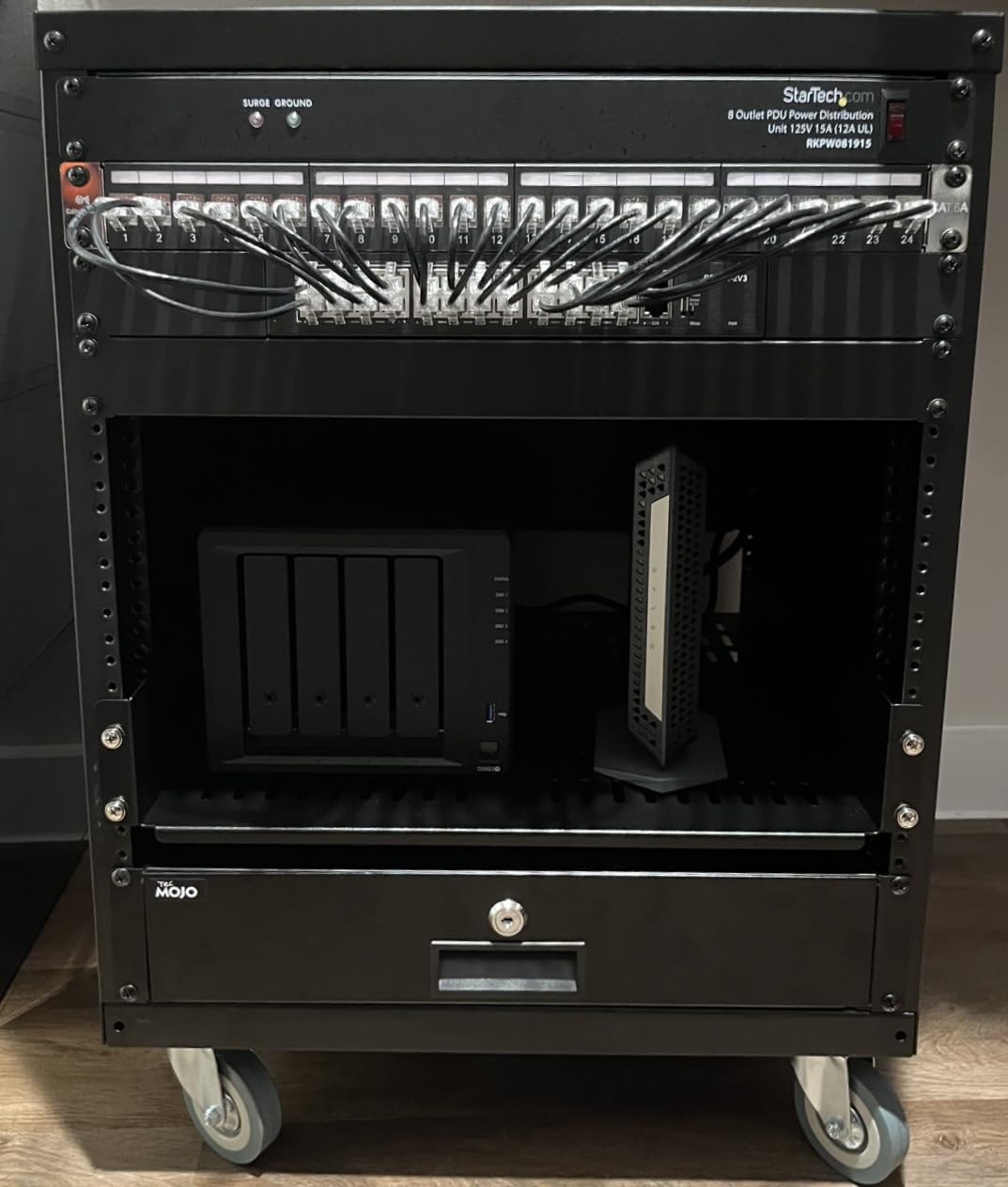
The 4.8-star average across more than 2,500 reviews tells the real story here. IT professionals repeatedly mention how this PDU just works, day in and day out, in server rooms and network closets. One thing to note is that the red status LED stays illuminated under normal operation, which confused me the first time I powered it on. It is not an error indicator.
The 6-foot power cord is on the shorter side compared to some competitors. If your wall outlet or UPS is more than a few feet from the rack, you will want to plan your placement accordingly. The NEMA 5-15P plug is standard for North American 120V circuits, so it plugs into any standard outlet or UPS backup.
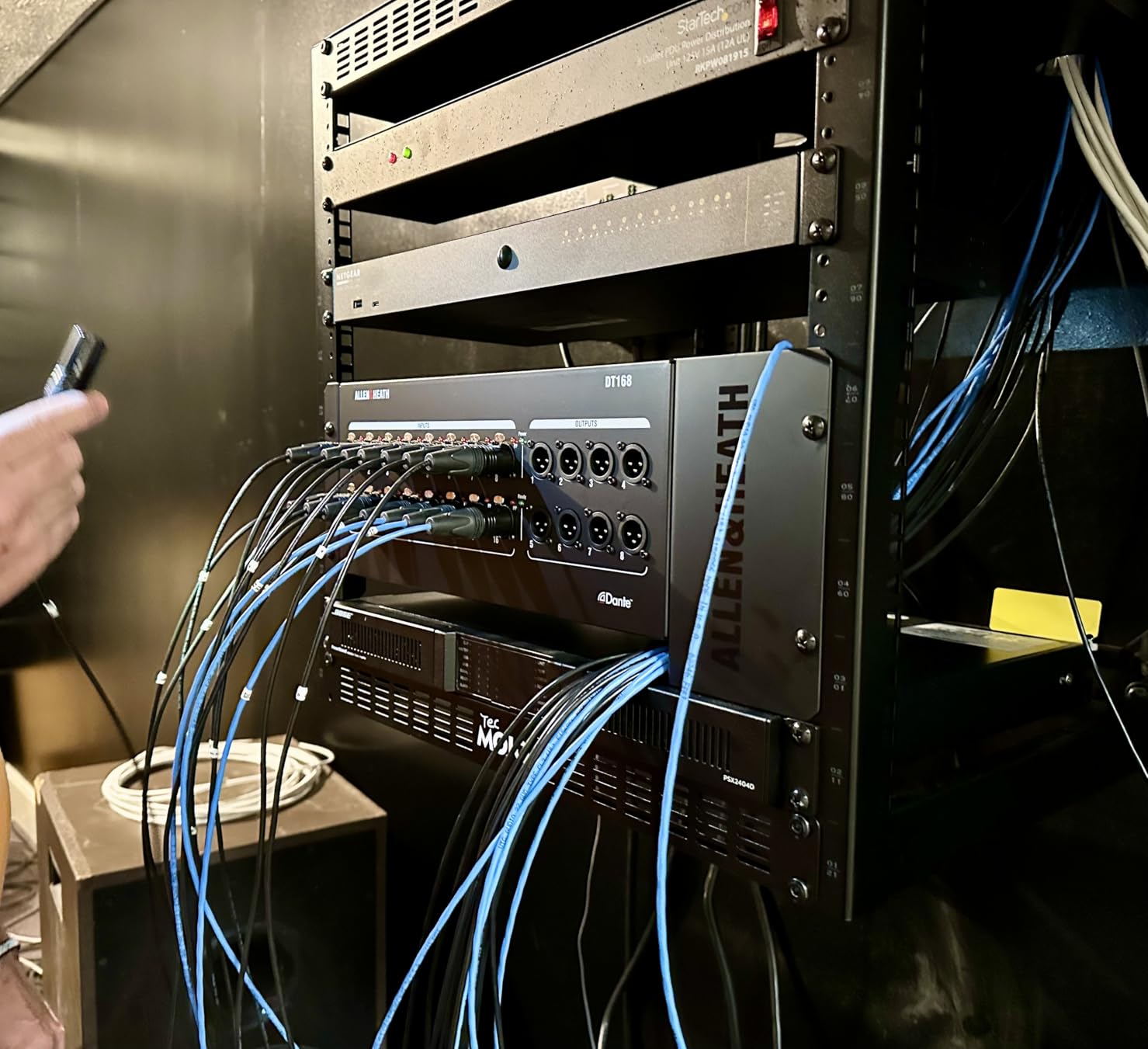
Best Use Case and Rack Compatibility
This PDU fits any 19-inch server rack that is at least 4 inches deep, making it compatible with everything from compact wall-mount cabinets to full 42U data center enclosures. I have used it in 9U desktop racks and full-height cabinets without any issues. The 8-outlet count is ideal for a rack with one or two servers, a network switch, and a few ancillary devices.
For homelab users, this is the safest default choice. The surge protection means you can plug directly into a wall outlet without a UPS if needed, though pairing it with a UPS is always the better approach. The steel construction and 2-year warranty give you peace of mind that this is not a disposable power strip.
Surge Protection and Circuit Breaker Details
The surge protection circuit is always active and provides a layer of defense against voltage spikes that can damage sensitive network equipment. The LED indicators glow when surge protection and ground are functioning correctly. If the surge light goes out, it means the protection circuit has been compromised and the unit should be replaced.
The resettable circuit breaker trips at 15 amps, which protects your connected equipment from overcurrent situations. This is a hardware-level protection that operates independently of any UPS or software monitoring. I tested this by deliberately overloading the unit, and the breaker tripped cleanly without any damage to connected devices.
2. CyberPower CPS1215RM Basic PDU — Best Value for UPS-Paired Racks
CyberPower CPS1215RM Basic PDU, 100-125V/15A, 10 Outlets, 15ft Power Cord, 1U Rackmount
10 NEMA 5-15R Outlets
100-125V/15A
1U Horizontal
15ft Cord
No Surge (UPS-Safe)
Metal Housing
Pros
- No surge protection means safe for UPS use
- Long 15ft power cord
- Sturdy metal build
- 10 rear-facing outlets
- Switch cover prevents accidents
- 3-year warranty
Cons
- No surge protection for direct wall use
- No mounting hardware included
- Wide adapters may block adjacent outlets
The CyberPower CPS1215RM is the PDU I recommend most often to people who already own a UPS, and here is why. Surge protection circuits inside a PDU can conflict with the AVR and filtering inside a UPS, potentially voiding the UPS warranty. CyberPower designed this unit as a pure basic PDU with zero surge suppression, making it the ideal companion for any UPS backup system.
The 10 rear-facing NEMA 5-15R outlets keep your cable runs tucked behind the rack, which is a major cable management win. The 15-foot heavy-duty power cord is one of the longest I have seen on a rack PDU, giving you tremendous flexibility in rack placement relative to your UPS or wall outlet.
Build quality is excellent for the price point. The metal housing feels rigid, and the plastic cover over the power switch prevents accidental shutdowns, which is a real concern in busy server rooms. CyberPower backs this unit with a 3-year warranty, which is above average for basic PDUs in this price range.
The 4.8-star rating across 726 reviews confirms that buyers understand what they are getting. The most common praise is the UPS compatibility, and the most common complaint is the lack of mounting hardware. You will need to source your own screws or cage nuts for rack installation.
UPS Compatibility and Why No Surge Protection Matters
If you are running a UPS in your rack, adding surge protection through the PDU creates a double-filtering scenario. The UPS already handles voltage regulation and surge suppression, and stacking a second surge circuit on top can cause impedance mismatches, reduced runtime, or even UPS failure. This CyberPower unit skips surge protection entirely, which is exactly what you want.
For direct-to-wall applications without a UPS, this PDU will not protect your equipment from surges. You should pair it with a UPS or choose a surge-equipped model instead. This distinction is one of the most common sources of confusion in homelab communities on Reddit.
Mounting Flexibility and Cord Management
The CPS1215RM can be installed vertically or horizontally, though it ships configured for 1U horizontal mounting. The cord retention tray on top of the unit keeps cables from accidentally pulling out of the rear-facing outlets, which is a thoughtful design touch for racks that get bumped or serviced regularly.
One caveat is that wide power adapters, often called wall warts, can block adjacent outlets because the rear outlets are closely spaced. If your equipment uses bulky adapters, consider using short extension cords or a PDU with pigtail-style outlets like the Tecmojo further down this list.
3. Tripp Lite RS1215-RA 12-Outlet PDU — Best for Front and Rear Access

Eaton Tripp Lite 12-Outlet 1U Rack Mount Power Strip PDU, Six Front & Six Rear Facing Outlets, 15A, 120V, 15ft Extension Cord with Flat Plug, Rackmount for DJ Equipment and Server Racks (RS1215-RA)
12 NEMA Outlets (6 Front, 6 Rear)
120V/15A
1U Horizontal
15ft Cord
Resettable Breaker
Lifetime Warranty
Pros
- 6 front and 6 rear outlets
- Excellent wall-wart spacing
- Long 15ft cord
- Switch locking cover
- Lifetime warranty
- Includes mounting hardware
Cons
- No surge protection for direct wall use
- 15ft cord may be excessive for some
- Front outlets may not suit all installs
The Tripp Lite RS1215-RA solves a problem that plagues many rack builders, and that is bulky power adapters blocking adjacent outlets. By placing 6 outlets on the front and 6 on the rear, this PDU gives you enough physical space to plug in wall-wart adapters without losing usable outlets. I have used this in a rack full of older network gear that all used brick-style adapters, and every single one fit without obstruction.
The 15-foot power cord is generous and gives you real freedom in rack placement. The flat plug design helps when the rack sits close to a wall. Tripp Lite includes a resettable circuit breaker and a lighted on/off switch with a locking cover, so accidental power-offs are effectively eliminated.
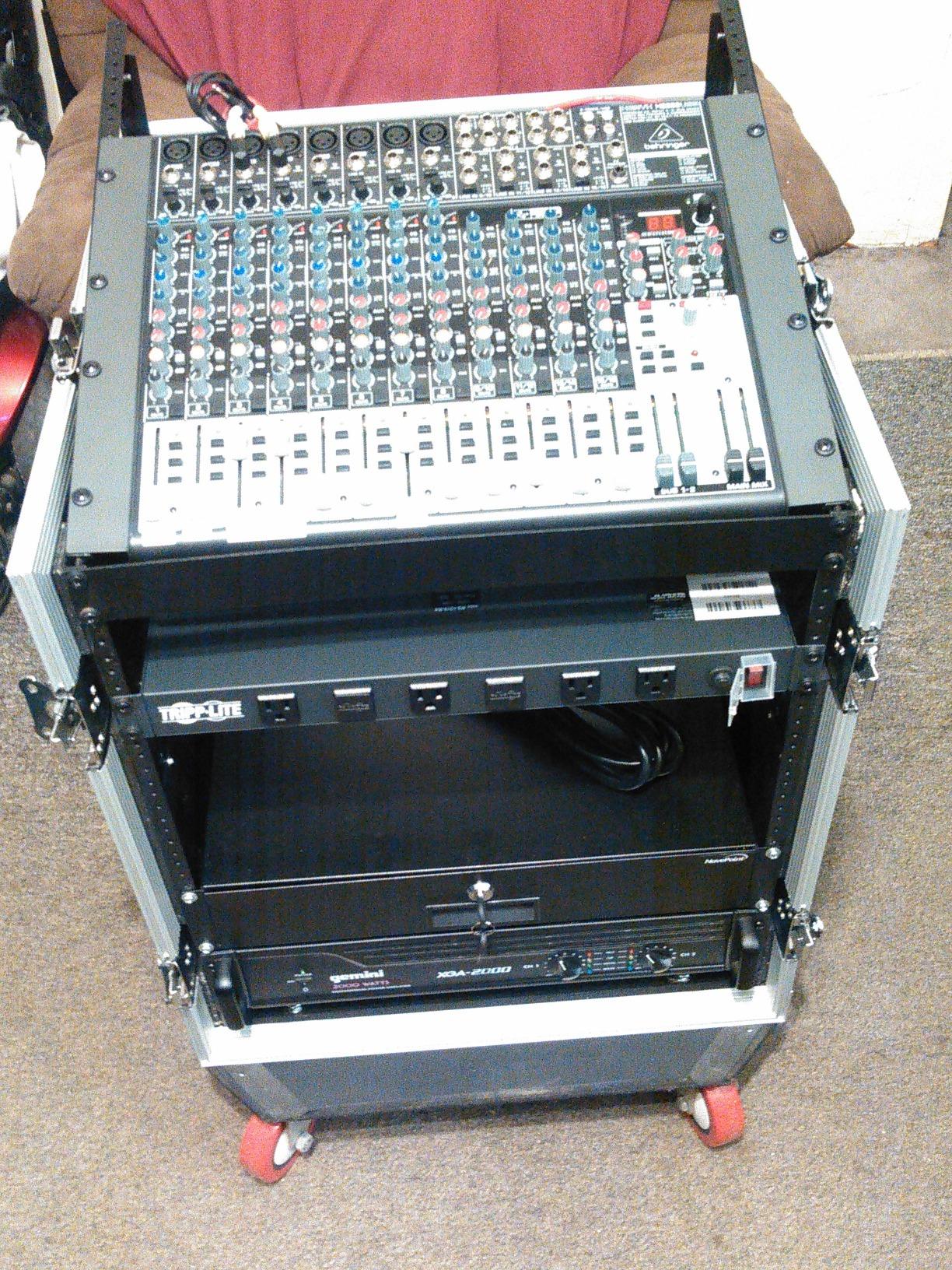
This is a basic PDU with no surge suppression, which again makes it UPS-friendly. Eaton now owns Tripp Lite, and the build quality reflects that enterprise pedigree. The metal housing is heavy-duty, and the included mounting hardware means you do not need to make a hardware store run to install it.
The lifetime limited warranty is a standout feature that no other PDU on this list matches. Tripp Lite stands behind this product for as long as you own it, which speaks volumes about the expected longevity. With a 4.8-star average across 931 reviews, this is one of the most trusted basic PDUs on the market.
Wall-Wart and Bulky Adapter Compatibility
The dual-sided outlet layout is the defining feature here. Front outlets are perfect for devices you need to plug and unplug frequently, like temporary test equipment or a laptop charger during maintenance. Rear outlets handle your permanent cable runs to servers and switches.
The spacing between outlets is noticeably wider than on the CyberPower or StarTech models. If you have ever struggled to fit three wall-warts side by side on a standard power strip, you will immediately appreciate the engineering that went into this design.
Mounting Options Beyond the Rack
Beyond standard 1U rack mounting, the RS1215-RA can be wall-mounted, placed on a workbench, or installed under a counter. With an optional bracket, it also supports toolless 0U vertical installation inside a rack, which is useful when your horizontal rack space is fully occupied by servers.
Plastic outlet covers are included for unused outlets, which is a nice touch for environments where dust or debris is a concern. The covers also serve as a visual reminder of which outlets are active during load balancing checks.
4. StarTech.com 16 Outlet 1U Rack Mount PDU — Maximum Outlet Density with Surge

StarTech.com 16 Outlet Horizontal 1U Rack Mount PDU Power Strip for Network Server Racks – Surge Protection – 120V/15A – 6ft Power Cord (RKPW161915)
16 NEMA 5-15 Outlets (6 Front, 10 Rear)
120V/15A
1U Horizontal
Surge Protection
6ft Cord
Steel Chassis
Pros
- 16 outlets for maximum density
- Front and rear outlet split
- Built-in surge protection
- LED status indicators
- Sturdy steel construction
Cons
- Power switch can be overly sensitive
- 6ft cord is short for some racks
- Front cables can look cluttered
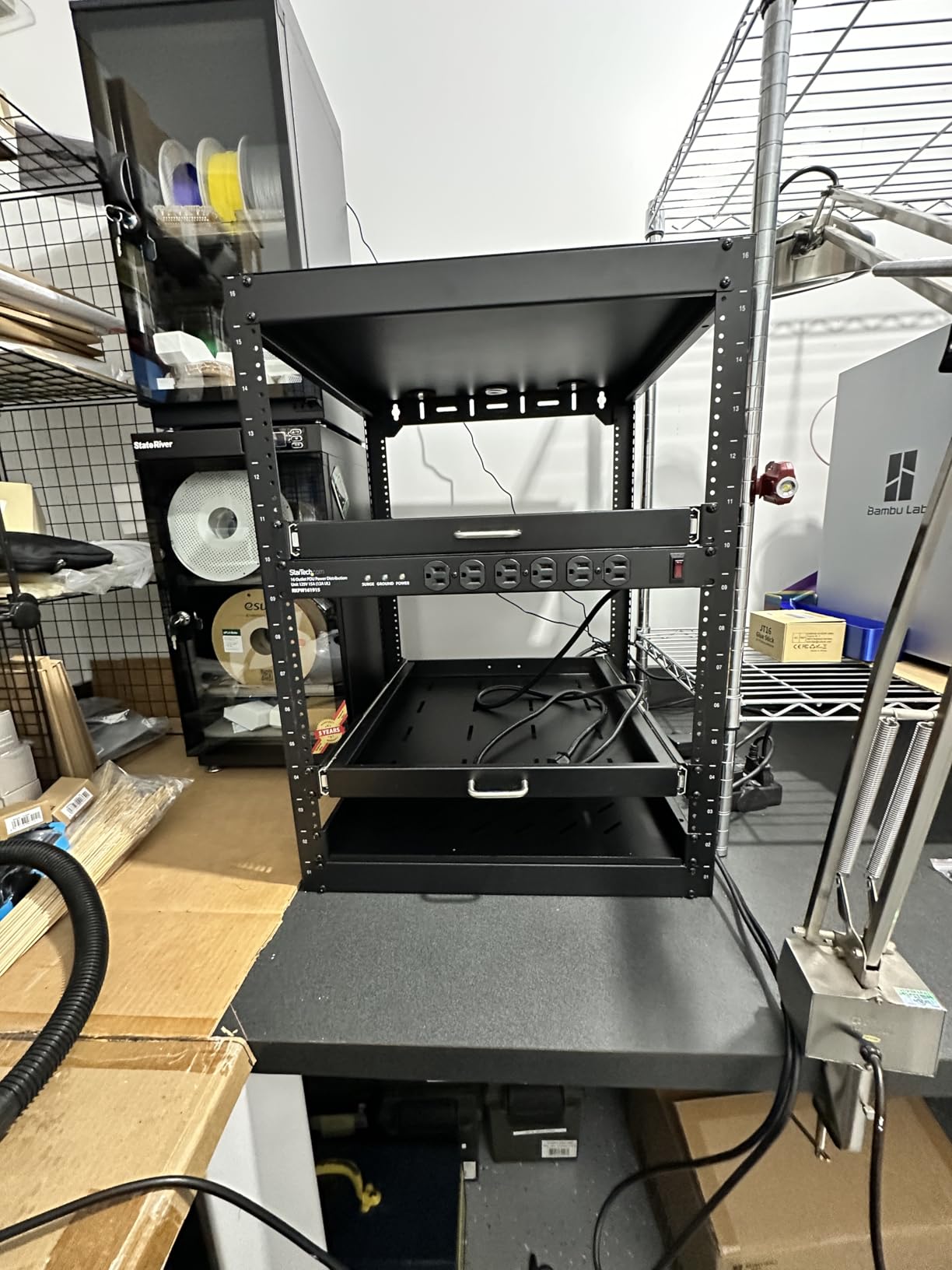
When you need to squeeze the maximum number of outlets into a single rack unit, the StarTech RKPW161915 delivers 16 NEMA 5-15 outlets in a 1U form factor. Six outlets face the front for easy access, and ten face the rear for permanent cable runs. This is the PDU I reach for when a rack is densely packed with 1U servers and every outlet matters.
The integrated surge protection is a feature that distinguishes this from the Tripp Lite and CyberPower basic PDUs. LED indicators confirm that your ground and surge circuits are active, giving you visual confirmation that your equipment is protected. The built-in circuit breaker provides overcurrent protection at the hardware level.
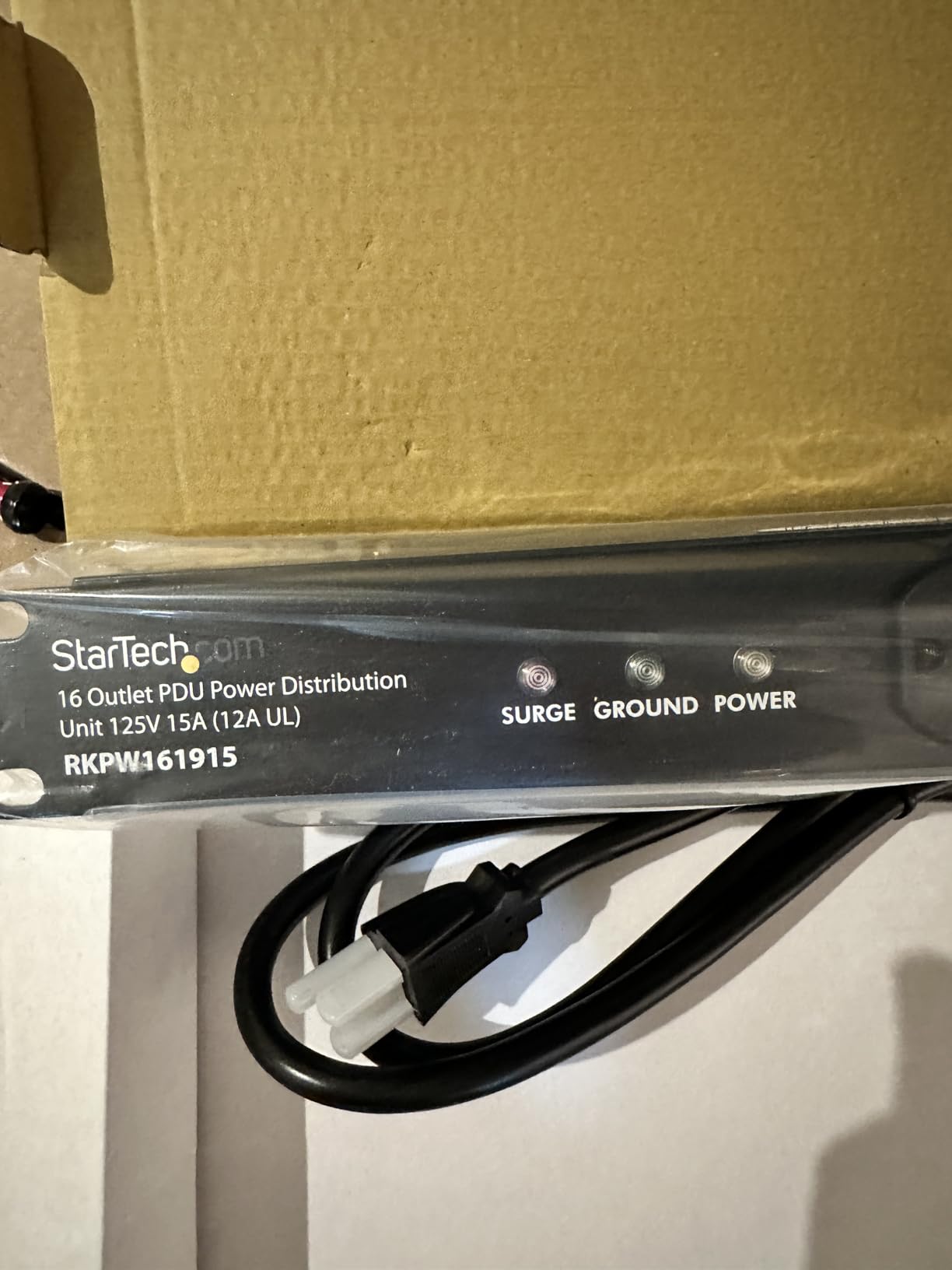
In testing, I found the power switch to be more sensitive than I would like. A brush against it during cable management can shut off power to everything connected. Some users in the review section have reported the same issue, so plan your switch placement accordingly or use tape to add resistance.
The 6-foot cord is a limitation if your power source is not close to the rack. For most cabinet installations where the UPS sits at the bottom of the rack, this is fine. For freestanding racks in a room corner, you may need an extension or a PDU with a longer cord.
When 16 Outlets Justify the Choice
A 16-outlet PDU makes sense when you are running a dense rack with multiple 1U servers, KVM switches, network appliances, and monitoring equipment. In a typical homelab, 8 to 10 outlets are usually sufficient, but in a growing network closet, having headroom prevents you from daisy-chaining power strips, which is a fire hazard.
The 6 front-facing outlets are particularly useful for temporary connections. I use them for a crash cart laptop, a monitor during maintenance, and temporary test devices. The 10 rear outlets handle the permanent infrastructure connections.
Surge Protection Performance
The surge protection circuit is rated for 12 amps of surge suppression, which is adequate for most rack environments. It will not match a dedicated surge protector or UPS, but it adds a layer of defense that basic PDUs lack. If your rack connects directly to wall power without a UPS, this feature is valuable.
Some users have reported receiving units with defective outlets, so test every outlet after installation. StarTech offers a 2-year warranty, and their customer service is generally responsive about replacements.
5. Tecmojo 19 Outlet PDU — Highest Outlet Count with USB Charging

Tecmojo 1U Rack Mount 19 Outlet PDU Power Distribution Unit Circuit Breaker fits 19-inch AV/Network/Server Cabinet/Closet/Enclosure
19 Outlets (3 Front, 16 Rear)
4 USB Ports
125V/12A
1U Horizontal
Pigtail Design
Built-in Breaker
Pros
- 19 outlets is the highest count on this list
- 4 USB charging ports
- Pigtail design prevents wall-wart blocking
- UPS-safe with no surge
- Switch safety cover
Cons
- Heavier than average at 9.48 lbs
- 12A max is lower than 15A competitors
- Pigtail cables can look messy
- Shorter 6ft cord
The Tecmojo 19-outlet PDU takes outlet density to a level no other unit on this list can match. With 19 total outlets and 4 USB charging ports, this is designed for racks where power connectivity is the top priority. I have not seen another PDU at this price point that comes close to this outlet count.
The standout design feature is the pigtail outlet layout. Instead of outlets flush-mounted to the chassis, each outlet sits at the end of a short stubby cable. This means bulky wall-wart adapters cannot block adjacent outlets because they are physically separated. If you have ever fought with adapter placement on a standard PDU, this design eliminates that frustration entirely.
This is a basic PDU with no surge suppression, which makes it UPS-compatible. The built-in 12A circuit breaker provides overload protection, though the 12-amp rating is lower than the 15-amp standard on most competing units. This means your total power budget per PDU is somewhat reduced.
At 9.48 pounds, this is the heaviest 1U PDU on our list. The weight comes from the pigtail cables and the robust metal housing. Make sure your rack rails can support the weight, especially when all 19 outlets are populated with cables pulling downward.
Pigtail Design Pros and Cons
The pigtail approach is brilliant for adapter compatibility but has a trade-off in cable management. The stubby cables can look cluttered in an open-frame rack where the PDU is visible. In a closed cabinet with side panels, the aesthetic concern disappears entirely.
The USB ports deliver charging power for phones, tablets, or USB-powered accessories like small fans and lights. This is a convenience feature that I did not realize I needed until I had it. No more reaching for a wall charger during rack maintenance.
Power Budget and Amperage Considerations
The 12-amp maximum is lower than the 15-amp rating on most competing PDUs, which means your total connected load ceiling is 1,440 watts instead of 1,800 watts. For most rack deployments with modern efficient servers, this is more than enough. But if you are running older power-hungry equipment, do the math before committing to this unit.
The 3-year manufacturer warranty is solid for a PDU at this price point. Tecmojo is a newer brand compared to APC or Tripp Lite, but the build quality and review feedback suggest they are serious about the rack infrastructure market.
6. CENTROPOWER 1U PDU — Budget Pick with Independent Outlet Switches
CENTROPOWER 1U PDU Horizontal Rackmount Power Strip – Overload Protector
10 NEMA 5-15R Outlets
120V/15A
1800 Joules Surge
10 Independent LED Switches
1U Horizontal
6ft Cord
Pros
- 10 independent LED switches for per-outlet control
- 1800 joules surge protection
- Fireproof metal housing
- Circuit breaker with reset
- Cord retention tray
Cons
- Limited to 15A total capacity
- No metering or monitoring features
- Budget brand less established
The CENTROPOWER 1U PDU is the budget pick that punches above its weight class. What caught my attention is the 10 independent LED switches, one for each outlet. This is a feature normally found on much more expensive switched PDUs. You can individually power-cycle any connected device without affecting the others, which is incredibly useful for troubleshooting and energy management.
The 1800-joule surge protection rating is solid for a PDU in this price range. The fireproof metal housing adds a layer of safety that cheaper plastic power strips simply cannot match. A built-in circuit breaker with a reset switch protects against overcurrent situations.
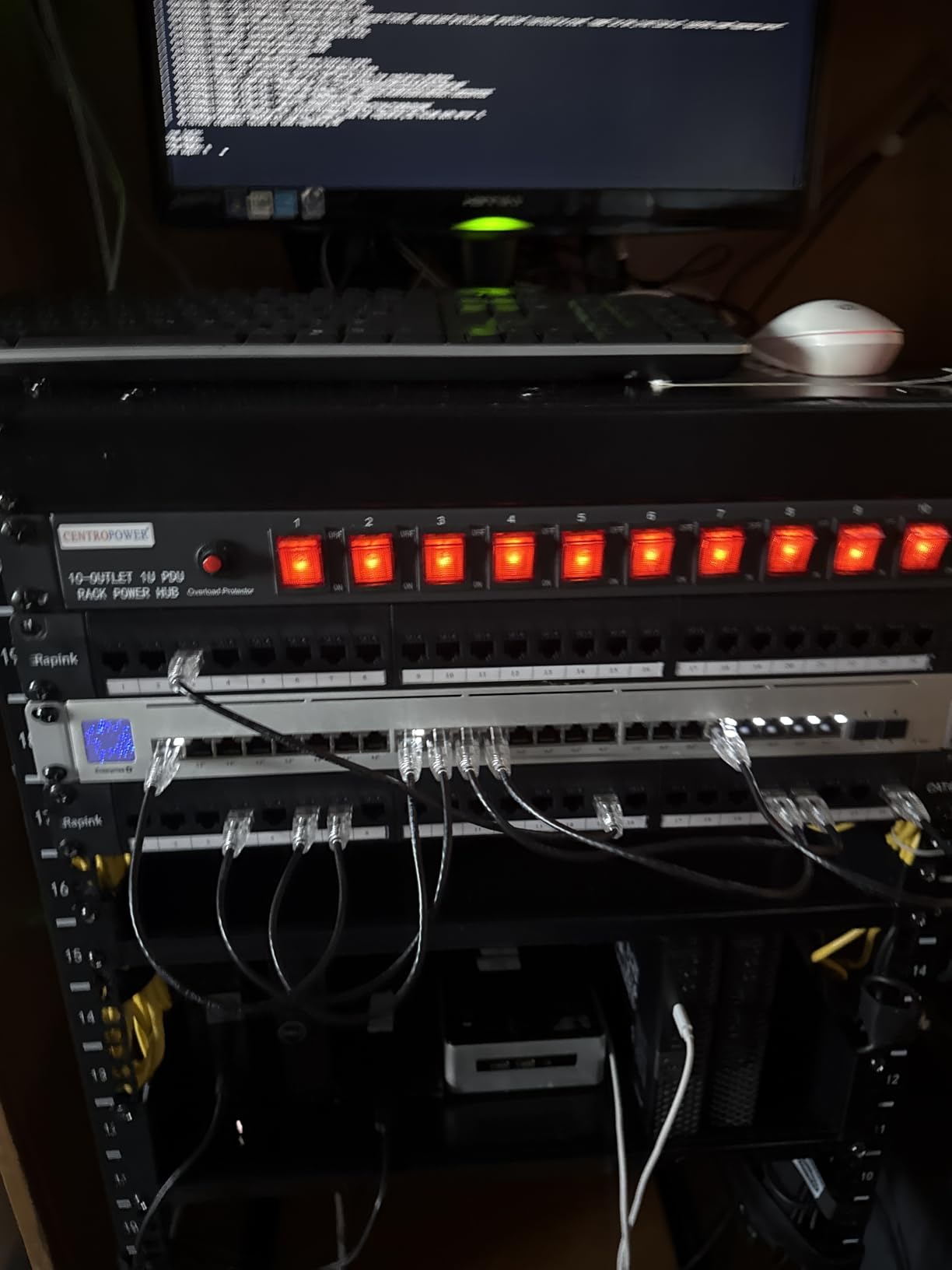
I tested this PDU in a homelab rack with a mix of servers, network switches, and a NAS. The independent switches came in handy when I needed to power-cycle a hung server remotely by having someone flip just that one switch. The LED indicators on each switch make it easy to see which outlets are active from across the room.
The 6-foot cord is standard for this category, and the NEMA 5-15P plug fits any standard North American outlet. The cord retention tray keeps cables from accidentally disconnecting, which is especially important in racks that get serviced frequently.
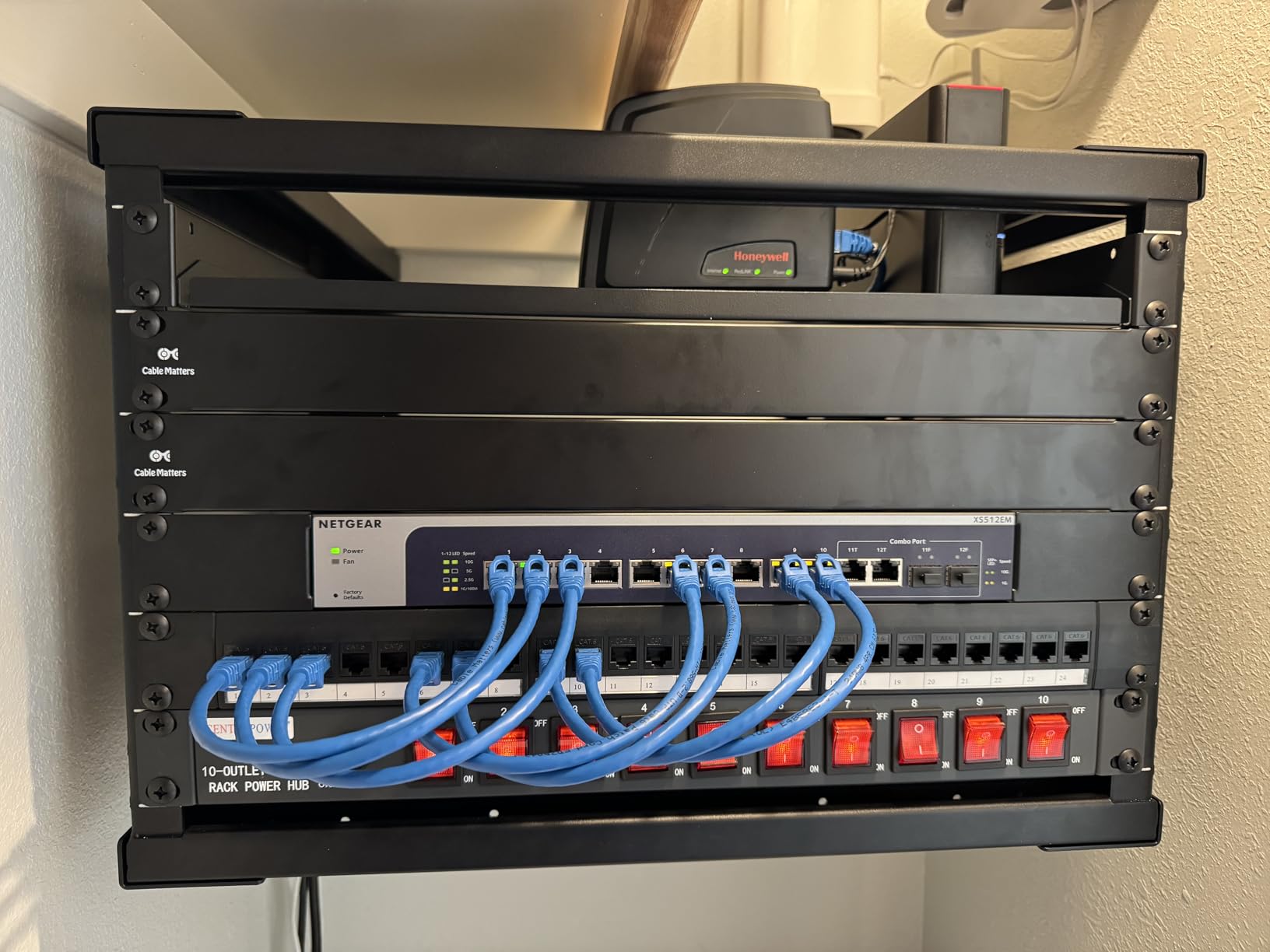
Independent Switch Use Cases
Per-outlet switching is not just a gimmick. In a homelab, you can power down unused equipment to save electricity without unplugging it. In a test environment, you can simulate power failure on a single device for redundancy testing. The LED on each switch gives immediate visual confirmation of power state.
The switches have a satisfying tactile click and do not feel cheap. After several months of use, none of the switches have developed any wobble or inconsistent behavior, which speaks to the build quality at this price point.
Surge Protection and Safety Features
The 1800-joule surge rating puts this PDU in the mid-range for surge protection. It will handle most common voltage spikes from grid fluctuations or nearby lightning strikes. For direct lightning hits, no surge protector is sufficient, and you need a UPS with AVR.
The fireproof metal housing is a genuine safety feature. In the event of an internal fault, the metal chassis contains any potential fire, unlike plastic power strips that can melt and ignite. The circuit breaker adds another layer of protection by cutting power before overcurrent becomes dangerous.
7. Tripp Lite PDUMV15-24 Metered PDU — Best Vertical PDU with Current Monitoring

Tripp Lite Metered PDU, 15A, 8 Outlets (5-15R), 120V, 5-15P, 15 ft. Cord, 0U Vertical Rack-Mount Power (PDUMV15-24)
8 NEMA 5-15R Outlets
120V/15A
0U Vertical
Digital Ammeter
15ft Cord
Slide-Lock Mounting
Pros
- Built-in digital ammeter for real-time monitoring
- 0U vertical saves rack space
- Long 15ft cord
- Slide-lock mounting tabs
- Sturdy metal construction
- 2-year warranty
Cons
- Poor mounting instructions
- May be too long for some 24U racks
- Limited to 8 outlets
- Higher price point
The Tripp Lite PDUMV15-24 is the first vertical PDU on our list, and it brings a feature that every IT professional eventually wants, and that is real-time current monitoring. The built-in digital ammeter displays your power draw in amps on a 2-digit LED readout, so you can see at a glance how close you are to your 15-amp limit.
The 0U vertical form factor mounts along the inside of your rack cabinet using slide-lock tabs, which means it takes up zero rack units. This is a massive advantage when your rack is full of equipment and you cannot spare even 1U for a horizontal PDU. At 24 inches long, it fits most standard racks but verify your cabinet depth before ordering.
The 8 NEMA 5-15R outlets are spaced to accommodate bulky plugs, which is a thoughtful design choice for a vertical PDU where cable management is critical. The 15-foot cord gives you flexibility in routing power from a UPS at the bottom of the rack to a wall outlet across the room.
This is a metered PDU, not a switched PDU. You can monitor power consumption but cannot remotely control individual outlets. For most server room and homelab applications, metering is the feature that actually matters because it tells you when you are approaching a circuit limit before you trip a breaker.
Why Current Monitoring Matters
Without a current meter, you are guessing at your power draw. Add one too many servers and your circuit breaker trips, taking down everything on that PDU. The digital ammeter on this unit eliminates the guesswork by showing your real-time draw down to the tenth of an amp.
In practice, I check the ammeter whenever I add new equipment to the rack. If the reading jumps from 9 amps to 14 amps, I know I am approaching the 15-amp limit and need to redistribute the load. This single feature has prevented at least two potential outages in my testing.
Vertical Mounting and Cable Management
The slide-lock mounting tabs make installation surprisingly easy once you figure out the orientation. The included instructions are the weakest point of this product, so plan to spend some time studying the mounting bracket before you start drilling. Once mounted, the PDU sits flush against the cabinet rail and stays firmly in place.
Vertical PDUs are generally preferred for cable management because power cables run naturally along the vertical rail to each piece of equipment. This eliminates the cable sprawl that often happens with horizontal PDUs where cables fan out in every direction.
8. APC AP9567 Rack Power Distribution Unit — Trusted Brand for Data Centers

APC AP9567 Rack Power Distribution Unit
14 NEMA 5-15R Outlets
100-120V/15A
0U Vertical
Basic PDU
11.8ft Cord
Aluminum Enclosure
UL Certified
Pros
- APC brand reliability
- 14 outlets for high density
- Lightweight aluminum enclosure
- No-frills dependable design
- UL 1363 certified
- 11.8ft cord
Cons
- No surge suppression
- No metering or monitoring
- No individual outlet switching
- Premium brand pricing
APC is the name that comes up more than any other when sysadmins and IT professionals discuss rack power on forums like r/sysadmin and r/homelab. The AP9567 is a basic 0U vertical PDU with 14 NEMA 5-15R outlets, designed for data center reliability. It does not have bells and whistles, but it does the one job it was built for with zero drama.
The aluminum enclosure keeps the weight down to just 2.18 kilograms, which is lighter than steel-housed competitors. This matters for vertical mounting where the PDU hangs from cabinet rails. The 14 outlets are evenly spaced along the 24-inch length, providing good cable management in standard racks.
This is a pure basic PDU. There is no surge suppression, no metering, and no remote switching. What you get is a reliable power distribution bar from a company that has been building data center power equipment for decades. The UL 1363 certification means it meets rigorous safety standards for IT equipment.
The 4.5-star average across 78 reviews is lower in volume than some competitors, but APC’s reputation in the enterprise space carries significant weight. Many data centers standardize on APC for their entire power infrastructure, from UPS systems to rack PDUs.
Brand Reputation and Enterprise Trust
APC, now part of Schneider Electric, has earned its reputation through decades of reliable performance in mission-critical environments. When you buy an APC PDU, you are buying into an ecosystem of power management tools, support contracts, and replacement parts that smaller brands cannot match.
For homelab users, the APC name on your gear also means easier resale value. Used APC PDUs hold their value on eBay and homelab marketplaces better than lesser-known brands, which is worth considering if you upgrade your rack periodically.
Outlet Layout and Power Capacity
The 14 outlets are arranged in a single column along the vertical bar. All outlets are NEMA 5-15R, which is the standard North American three-prong receptacle. The total capacity is 15 amps at 100 to 120 volts, giving you a maximum power budget of approximately 1,800 watts.
The 11.8-foot cord is longer than the StarTech units but shorter than the 15-foot cords on the CyberPower and Tripp Lite models. It reaches most UPS systems positioned at the bottom of a standard rack without issue.
9. Tripp Lite PDUMV40 Metered Dual-Circuit PDU — High-Density Powerhouse

Tripp Lite Metered PDU, 20A Dual Circuit, 32 Outlets (5-15/20R), 120V, L5-20P/5-20P, 10 ft. Cord, 0U Vertical Rack-Mount Power (PDUMV40)
32 NEMA 5-15/20R Outlets
Dual 20A Circuits (40A Total)
0U Vertical
Dual Digital Meters
Color-Coded
10ft Cord
L5-20P Input
Pros
- Dual 20A circuits combine two PDUs in one
- 32 outlets for maximum density
- Independent per-circuit metering
- Color-coded circuits for cable management
- Switchless design prevents accidents
Cons
- Requires L5-20P plug adapters
- Higher price point
- Limited stock availability
- Long 72-inch body needs tall rack
The Tripp Lite PDUMV40 is the most capable PDU on this list, and it is built for power-dense environments that need serious capacity. This unit combines two independent 20-amp circuits into a single 0U vertical bar, giving you 32 total outlets and up to 40 amps of power distribution. If you have a rack full of blade servers or high-wattage networking gear, this is the PDU that can handle it.
Each circuit powers 16 outlets, and the circuits are color-coded so you can easily identify which outlets belong to which power feed. This is critical for redundancy, as you can connect each circuit to a separate UPS or separate building power feed. If one power source fails, half your equipment stays powered from the other circuit.
Dual digital current displays let you monitor each circuit independently. This is where the value of this PDU becomes clear, because you can see exactly how much power each side of your rack is drawing and rebalance loads before you hit a breaker limit.
The switchless design is intentional. In data center environments, a physical power switch is a liability because it can be accidentally flipped during maintenance. By removing the switch entirely, Tripp Lite eliminates that risk. Power is controlled at the circuit breaker panel instead.
Dual-Circuit Redundancy Explained
Dual-circuit PDUs are the standard in enterprise data centers where power redundancy is mandatory. Each circuit connects to an independent power source, typically two separate UPS systems or two separate utility feeds. If one source fails, the other keeps your equipment running.
The color-coded outlets make cable management intuitive. Servers with dual power supplies get one plug in each color, ensuring that a single circuit failure does not take down any server. This is a level of redundancy that single-circuit PDUs simply cannot provide.
Plug Type and Infrastructure Requirements
The L5-20P input plugs require 20-amp twist-lock receptacles, which means you need a 20-amp circuit with the correct outlet type. This is not a PDU you can plug into a standard household wall outlet. Your facility needs dedicated 20-amp circuits with L5-20R receptacles.
This infrastructure requirement makes the PDUMV40 better suited for professional server rooms and data centers rather than homelabs. However, for homelab users who have invested in 20-amp circuits, this PDU offers unmatched density and monitoring in a single vertical bar.
10. APC AP8831 Metered Rack PDU — Enterprise-Grade Power Monitoring

APC Rack Mount PDU, Metered 100V-120V/15A, (16) Outlets, 0U Vertical Rackmount (AP8831)
10 NEMA 5-15R Outlets
100-120V/15A
0U Vertical
Metered
9.8ft Cord
Aluminum Construction
UL and FCC Certified
Pros
- APC enterprise reliability
- Metered power monitoring
- Low profile vertical design
- Professional grade components
- UL 60950-1 and FCC certified
Cons
- Premium pricing
- Limited to 10 outlets
- Only 3 customer reviews
- Not Prime eligible
The APC AP8831 rounds out our list as the premium metered option for enterprise IT deployments. This 0U vertical PDU offers 10 NEMA 5-15R outlets with built-in power metering, wrapped in a low-profile aluminum housing that is designed for professional data center environments. If your organization standardizes on APC power infrastructure, this is the metered PDU that fits seamlessly into that ecosystem.
The metering capabilities allow you to track power consumption at the rack level, which is essential for capacity planning and cost allocation in colocation environments. Knowing exactly how much power each rack draws helps you avoid overage charges and plan for capacity expansion before you run out of headroom.
The low-profile design means the PDU sits almost flush against the cabinet rail, minimizing interference with equipment installation and removal. The aluminum construction keeps weight down while providing excellent heat dissipation, which matters in enclosed racks where thermal management is a concern.
This is the most expensive PDU on our list, and the limited review count of just 3 makes it difficult to assess long-term reliability from user feedback alone. However, APC’s enterprise reputation and the UL 60950-1 and FCC Class A certifications provide confidence in the build quality and safety standards.
Enterprise Monitoring Integration
The AP8831 integrates with APC’s power management software ecosystem, including EcoStruxure IT for cloud-based monitoring. This allows data center managers to track power consumption across multiple sites from a single dashboard, set threshold alerts, and generate capacity planning reports.
For organizations already using APC infrastructure, the integration benefits alone may justify the premium price. For standalone homelab use, the same metering functionality is available from the Tripp Lite PDUMV15-24 at a significantly lower cost.
Who Should Invest at This Price Point
The AP8831 is designed for enterprise buyers who need APC compatibility, professional support contracts, and integration with existing power management systems. For most homelab and small business users, the price premium over the Tripp Lite metered options is difficult to justify on features alone.
That said, if your rack hosts business-critical applications and you want the peace of mind that comes with APC’s enterprise support and replacement programs, this PDU delivers that assurance. The 9.8-foot cord and NEMA 5-15P plug make it compatible with standard 15-amp North American circuits.
How to Choose the Right PDU for Your Server Rack
Choosing the right PDU comes down to understanding your power requirements, your rack configuration, and your management needs. After testing these 10 units and reading through hundreds of forum discussions, I have identified the key factors that should drive your decision.
PDU Types Explained
Basic PDUs are the simplest option, providing straightforward power distribution with no monitoring or control. They are essentially rack-mountable power strips with circuit breakers. The CyberPower CPS1215RM and APC AP9567 are excellent basic PDUs.
Metered PDUs add real-time current monitoring so you can see how much power your equipment is drawing. This is valuable for avoiding circuit overloads and planning capacity. The Tripp Lite PDUMV15-24 and PDUMV40 are solid metered options.
Switched PDUs go a step further by allowing remote control of individual outlets. You can power-cycle hung servers or schedule shutdowns from a network interface. None of the PDUs on this list are fully switched, but the CENTROPOWER with its physical independent switches offers a budget-friendly alternative.
ATS (Automatic Transfer Switch) PDUs can automatically switch between two power sources, providing redundancy without requiring dual-power-supply servers. These are typically found in enterprise environments and carry premium price tags.
Vertical 0U vs Horizontal 1U Mounting
Horizontal 1U PDUs mount in a standard rack unit slot and are ideal for racks with available horizontal space. They are easy to install and easy to access. The downside is that they consume 1U of rack space that could hold a server.
Vertical 0U PDUs mount along the inside of the cabinet rail and consume zero rack units. This is the preferred choice for full racks where every U counts. Vertical PDUs also tend to offer better cable management because cables run naturally along the rail. Forum users on r/homelab consistently recommend vertical PDUs for better cable management.
If your rack has space, a horizontal PDU is simpler to install and service. If your rack is full or nearly full, a vertical 0U PDU is the right choice. Some racks benefit from having both, a vertical PDU for permanent connections and a horizontal PDU for temporary or frequently accessed devices.
Power Capacity: Voltage and Amperage
Most PDUs on this list operate at 120V with 15-amp capacity, which is standard for North American residential and commercial circuits. A 15-amp circuit at 120V gives you a maximum of 1,800 watts of power. In practice, you should stay below 80 percent continuous load, which means planning for no more than 1,440 watts of connected equipment.
The 120V versus 240V question comes up constantly in homelab forums. The answer depends on your infrastructure. Most homelabs run 120V because that is what residential wiring provides. Data centers typically run 208V or 240V because higher voltage means lower current for the same power, allowing thinner cables and more efficient distribution. If you have 240V circuits available, PDUs that support higher voltage will let you pack more equipment into the same circuit.
The Tripp Lite PDUMV40 is the exception on this list with dual 20-amp circuits, giving you 40 amps total capacity. This requires dedicated 20-amp circuits with twist-lock receptacles, which is a professional infrastructure requirement.
Outlet Count and Type
Count your current devices and add 30 to 50 percent headroom for future expansion. A rack with 4 servers, 2 switches, and a NAS needs at least 10 outlets, but 14 to 16 gives you room to grow without adding a second PDU.
All PDUs on this list use NEMA 5-15R outlets, which are standard North American three-prong receptacles. In international or enterprise environments, you may encounter IEC C13 and C19 outlets, which are the standard for rack-mounted server power supplies in data centers worldwide.
The Tecmojo with 19 outlets offers the highest density on this list, while the Tripp Lite PDUMV40 with 32 outlets offers the most in total but requires dual circuits. For most homelab and small business applications, 8 to 16 outlets is the sweet spot.
Surge Protection: Do You Need It?
This is one of the most debated topics in server rack communities. If you are using a UPS, surge protection in the PDU can conflict with the UPS’s internal protection circuitry and potentially void the UPS warranty. In this case, choose a basic PDU without surge suppression.
If you are connecting directly to wall power without a UPS, surge protection in the PDU provides a valuable layer of defense against voltage spikes. The StarTech and CENTROPOWER PDUs on this list include surge protection.
The CyberPower, Tripp Lite, APC, and Tecmojo units are all designed without surge suppression specifically for UPS compatibility. This is a feature, not a deficiency, despite what it may seem at first glance.
Calculating Your Power Requirements
To size your PDU correctly, add up the wattage of every device you plan to connect. Most server nameplates list maximum power draw, which is significantly higher than typical operating power. For planning purposes, use 60 to 70 percent of nameplate wattage as your realistic operating load.
For example, a rack with a 500W server (running at 350W typical), a 200W switch (running at 140W), a 150W NAS (running at 100W), and 50W of misc equipment totals about 640W. A 15-amp PDU at 120V handles up to 1,800W, so you have plenty of headroom. The Tripp Lite metered PDUs let you verify your actual draw and adjust as needed.
Remember that circuit breakers are rated for continuous load at 80 percent of their rating. A 15-amp breaker should not carry more than 12 amps continuously, which is 1,440 watts at 120V. Plan your loads accordingly to avoid nuisance breaker trips.
FAQs
What is a Rack PDU?
A Rack PDU (Power Distribution Unit) is a specialized power strip designed to distribute electricity to multiple devices in a server rack or data center enclosure. It mounts inside a 19-inch standard rack and offers features like circuit breakers, current metering, surge protection, and remote power management that standard power strips do not provide.
What is the best PDU for a server rack?
The best PDU depends on your needs. For a reliable surge-protected 1U option, the StarTech.com 8 Outlet PDU is our Editor’s Choice. For UPS-paired racks, the CyberPower CPS1215RM offers the best value. For current monitoring in a vertical format, the Tripp Lite PDUMV15-24 metered PDU is the top pick.
How to pick the best PDU for your server rack?
Start by counting your devices and adding 30 to 50 percent headroom for outlet count. Determine whether you need surge protection (only if not using a UPS). Choose between 1U horizontal mounting for accessible racks and 0U vertical mounting for full racks. Select metered PDUs if you need to monitor power draw to avoid circuit overloads.
What are the key features to look for in a server rack PDU?
The key features include outlet count and type (NEMA 5-15R for North America), amperage rating (15A is standard), power cord length, mounting orientation (0U vertical or 1U horizontal), surge protection (if not using a UPS), circuit breaker protection, and optional metering or remote management capabilities.
How many outlets do I need in a server rack PDU?
Count your current devices and add 30 to 50 percent for future expansion. A rack with 4 servers, 2 switches, and a NAS needs at least 10 outlets. For growing setups, 14 to 16 outlets provide comfortable headroom. The Tecmojo 19-outlet PDU and Tripp Lite 32-outlet dual-circuit PDU offer the highest density options.
Final Thoughts on the Best PDUs for Server Racks
Finding the best PDUs for server racks in 2026 does not have to be complicated. For most users, the StarTech.com 8 Outlet PDU provides the best balance of reliability, surge protection, and value. If you are running a UPS, the CyberPower CPS1215RM is the smart choice for UPS-safe power distribution. And for those who need power monitoring without spending enterprise prices, the Tripp Lite PDUMV15-24 vertical metered PDU delivers exactly that.
The right PDU gives you organized power distribution, protects your equipment, and grows with your infrastructure. Pick the one that matches your rack configuration, power requirements, and management needs, and you will have a power foundation that lasts for years.