
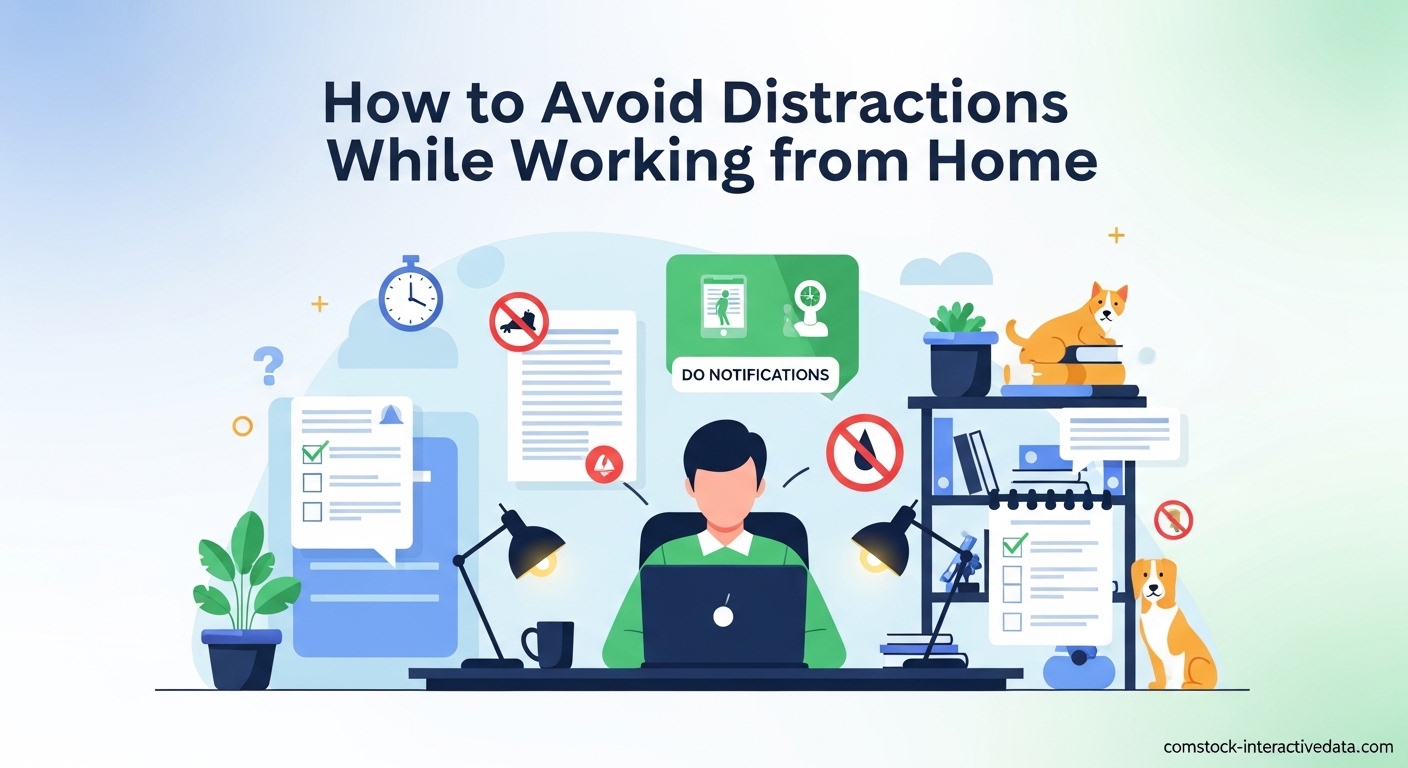
Working from home offers incredible flexibility, but it also brings unique challenges that can derail your productivity. If you’ve found yourself constantly interrupted by household chores, family members, or the endless scroll of social media, you’re not alone. Learning how to avoid distractions while working from home is a skill that thousands of remote workers struggle with daily, and the good news is that it’s completely solvable with the right strategies.
I’ve spent years researching remote work productivity, and I’ve discovered that the most successful home-based professionals don’t have superhuman focus—they simply have systems in place that protect their attention. In this comprehensive guide, I’ll walk you through proven techniques to transform your home environment into a productivity powerhouse, whether you’re dealing with a noisy household, digital temptations, or your own wandering mind.
Table of Contents
Quick-Start Checklist: Stop Distractions Today
Before we dive deep into the psychology and strategies, here are immediate actions you can take right now to reduce distractions:
- Create a visual “do not disturb” signal—a closed door, headphones on, or a simple sign that tells household members you’re in focus mode
- Move your phone to another room or enable Do Not Disturb mode during work hours
- Set up a dedicated workspace even if it’s just a specific corner with a comfortable chair
- Use website blockers like Freedom or Cold Turkey to restrict access to distracting sites during work hours
- Establish clear work hours and communicate them to everyone in your household
- Take a 10-minute break every 90 minutes to maintain mental energy and focus
- Put on noise-canceling headphones even without music to block household sounds
- Set specific times for checking email instead of responding to every notification instantly
How to Avoid Distractions While Working from Home?
The core challenge of remote work is that your home environment is designed for relaxation, not productivity. When you try to work in the same space where you watch TV, sleep, and spend time with family, your brain receives mixed signals about what you should be doing. This confusion creates constant friction between your work intentions and environmental cues.
Why Working from Home Leads to More Distractions
Home offices lack the natural social accountability that exists in traditional workplaces. In an office, simply being surrounded by focused colleagues creates a subtle peer pressure that keeps you on track. At home, that invisible structure disappears, leaving you to rely entirely on self-discipline—a finite resource that can drain quickly throughout the day.
Household distractions are uniquely challenging because they feel justified. Folding laundry during a video call feels productive. Taking a break to empty the dishwasher seems responsible. Checking your phone between tasks feels harmless. But these micro-interruptions accumulate rapidly, with research showing that task switching can reduce productivity by up to 40% and significantly increase mental fatigue.
The digital environment at home also differs from office settings. Without enterprise firewall restrictions and monitoring, you have unrestricted access to entertainment, social media, and personal communication. This freedom, while liberating, requires significantly more self-regulation than most people realize.
The Real Cost of Getting Distracted at Home
Distractions do more than just slow you down—they fundamentally change the quality of your work and your relationship with it. When you’re constantly interrupted, you can’t enter the state of deep focus that produces your best results. This means not only working longer hours but also producing work that doesn’t reflect your true capabilities.
The mental toll is equally significant. Constantly fighting distractions creates cognitive load that depletes your decision-making energy and creative capacity. You might find yourself exhausted at the end of the day despite feeling like you accomplished little. This fatigue can spill over into your personal time, reducing the quality of your relationships and leisure activities.
Long-term, chronic distraction damages your professional reputation. Missed deadlines, delayed responses, and inconsistent work quality communicate unreliability to colleagues and clients. In remote work environments where trust is already harder to establish, these small issues compound into serious career consequences.
Create a Dedicated Workspace That Signals Focus
Your physical environment powerfully influences your mental state. This is why the most effective change you can make is establishing a dedicated workspace, even in a small home. This space doesn’t need to be a separate room—it can be a specific corner, a consistent spot at the kitchen table, or even a converted closet. What matters is that you use this space exclusively for work.
The consistency creates a powerful association in your brain. When you sit in your workspace, your mind automatically shifts into work mode. When you leave that space, you can mentally disconnect from work stress. This separation is crucial for preventing work from bleeding into your entire home life.
Invest in ergonomic basics: a chair that supports proper posture, a desk at the right height, and adequate lighting. These physical comforts reduce fatigue and make it easier to maintain focus for longer periods. If possible, position your workspace away from high-traffic areas and visual distractions like televisions or messy household areas.
For those without dedicated office space, create portable focus cues. A specific lamp you only turn on during work hours, a particular playlist you only play during focus sessions, or even wearing “work clothes” instead of pajamas can all help signal to your brain that it’s time to concentrate.
Set Clear Boundaries with Family and Household Members
One of the biggest challenges of working from home is that the people you live with don’t automatically understand that you’re actually working. Family members, roommates, and even pets can disrupt your focus without intending to. The solution isn’t to demand perfect silence—it’s to establish clear expectations and communication systems.
Start by having explicit conversations about your work schedule. Explain that just because you’re physically present doesn’t mean you’re available. Many people find it helpful to mark their work hours on a shared calendar or create a simple visual signal system. A closed door, headphones on, or even a makeshift “in a meeting” sign can communicate “do not disturb” without requiring verbal explanation.
For parents with children at home, structure is everything. Create predictable break times when you’re available for attention, and communicate these clearly. Many parents find success with strategies like setting up quiet activities for children during focus blocks, using visual timers to help children understand when breaks are coming, or even trading off focus time with a partner if possible.
The key is making your boundaries visible and predictable rather than reactive. When household members know exactly when you’ll be available, they’re less likely to interrupt during focus time. This also prevents you from feeling guilty about not being constantly available—you’ve designated specific times for that purpose.
Minimize Digital Distractions That Sabotage Focus
Digital distractions are particularly insidious because they’re designed to be addictive. Social media platforms, news sites, and communication tools are engineered to capture and hold your attention. Breaking free requires more than willpower—you need structural changes to your digital environment.
Start with your phone, which research shows is the single biggest distraction for most remote workers. The most effective strategy is physical separation—keep your phone in a different room during work hours. If that’s not possible, enable Do Not Disturb mode and turn off all non-essential notifications. Consider using grayscale mode, which makes your phone less visually appealing and reduces the urge to check it constantly.
For computer-based distractions, website blockers are incredibly effective tools. Apps like Freedom, Cold Turkey, or StayFocusd allow you to temporarily block access to distracting websites during work hours. You can set these to activate automatically during your scheduled work times, removing the need for constant willpower decisions. Many people find they don’t even try to visit blocked sites once the barrier is in place.
Email management is another crucial component. Instead of responding to messages as they arrive, schedule specific times for email processing. Many remote workers successfully use the 2-3 time rule—checking email at 10am, 2pm, and 4pm, for example. This batching approach reduces context switching while still ensuring you respond promptly to important messages.
Social media requires special attention because it’s often accessed for “legitimate” work reasons like networking or research. If you genuinely need social media for work, use dedicated tools like Hootsuite or Buffer that separate work posting from personal scrolling. Otherwise, treat it like any other distraction—block it during work hours and enjoy it guilt-free during personal time.
Time Management Techniques That Actually Work
Not all productivity techniques work equally well for remote work. After analyzing dozens of methods and testing them with remote workers across various industries, I’ve identified the approaches that specifically address home-based distractions.
The Pomodoro Technique is particularly effective for home workers because it provides structure without rigidity. Work for 25 minutes, then take a 5-minute break. After four cycles, take a longer 15-30 minute break. This rhythm prevents mental fatigue while creating natural interruption points for household needs. The 25-minute focus period is short enough that you can usually delay non-urgent interruptions until the next break.
Time blocking works exceptionally well for parents and those with unpredictable household demands. Instead of rigid hour-by-hour schedules, block out broader focus periods—perhaps 9-11am for deep work, 1-3pm for meetings and collaboration, and 4-5pm for administrative tasks. This flexibility allows you to adapt to household needs while still protecting dedicated focus time.
Task batching reduces the cognitive cost of switching between different types of work. Group similar tasks together: all your calls in one block, all your writing in another, all your research in a third. This minimizes context switching and allows you to enter deeper focus states for each type of work.
The 3-3-3 rule is perfect for overwhelming days: identify 3 hours for deep work, 3 urgent tasks that must get done, and 3 maintenance tasks to keep things running. This framework prevents the common remote work trap of trying to do everything and ending up scattered across too many priorities.
The 1-3-5 rule helps with realistic daily planning: commit to 1 big task, 3 medium tasks, and 5 small tasks. This prevents overcommitment while ensuring meaningful progress on important work. Remote workers often struggle with overestimating what they can accomplish without the structure of an office, and this rule creates more realistic daily goals.
The 4-hour rule recognizes that most people can only do 4 hours of truly focused, high-value work per day. Structure your schedule to protect these hours for your most important tasks, and use the remaining work time for meetings, email, and lower-value activities. This prevents burnout and ensures your best energy goes to what matters most.
Comparison: Time Management Techniques for Remote Work
| Technique | Best For | Difficulty Level | Flexible Schedule |
|---|---|---|---|
| Pomodoro Technique | Beginners, easily distracted | Easy | Highly flexible |
| Time Blocking | Parents, unpredictable households | Medium | Very flexible |
| Task Batching | Multi-project workers | Medium | Moderately flexible |
| 3-3-3 Rule | Overwhelming days, high workload | Easy | Highly flexible |
| 1-3-5 Rule | Realistic daily planning | Easy | Moderately flexible |
| 4-Hour Rule | Preventing burnout, deep work | Medium | Less flexible |
Take Strategic Breaks That Restore Focus
Strategic breaks are more important than ever when working from home, yet they’re often the first thing to be sacrificed when we feel behind. The irony is that skipping breaks actually makes you less productive, not more. Your brain needs regular downtime to maintain cognitive function and creativity.
The most effective breaks follow a simple pattern: they include movement and don’t involve screens. A 10-minute walk, stretching session, or even stepping outside for fresh air can dramatically improve your ability to focus when you return. These breaks should be taken before you’re completely exhausted—every 60-90 minutes is ideal for most people.
Avoid using breaks for activities that fragment attention further. Scrolling through social media, reading news, or checking personal emails doesn’t give your brain the rest it needs. Instead, choose activities that allow your mind to wander freely. This is when your brain processes information and makes creative connections—why so many great ideas happen in the shower or during walks.
The timing of breaks matters as much as their content. Taking breaks at natural transition points—after completing a task, between meetings, or at the end of a focus block—maximizes their restorative value. This also prevents the common problem of breaks being interrupted by work thoughts because your mind knows you’ve reached a stopping point.
For those who struggle to take breaks, use timers or schedule them in your calendar. Treat breaks with the same respect as meetings—non-negotiable appointments with yourself. The most productive remote workers I’ve encountered protect their break time fiercely because they understand it’s essential to their overall performance.
ADHD-Specific Strategies for Neurodivergent Workers
Working from home can be particularly challenging if you have ADHD or other neurodivergent traits, but it can also offer unique advantages when leveraged correctly. The key is understanding your specific needs and creating systems that work with your brain rather than against it.
Body doubling—working alongside someone else, either virtually or in person—is one of the most effective strategies for ADHD focus. Virtual co-working sessions, where you work on camera with others, create accountability and external structure that many neurodivergent people find essential. Platforms like Focusmate pair you with an accountability partner for structured work sessions.
Sensory management is crucial for ADHD brains. This might mean using noise-canceling headphones, working under bright lighting, or having a fidget toy available during calls. Pay attention to your sensory needs and create an environment that supports rather than taxes your attention. Some people find background music or white noise helps; others need complete silence.
Shorter focus blocks often work better than longer ones for ADHD brains. Instead of trying to work for hours at a time, experiment with 15-minute focus periods followed by brief movement breaks. The Pomodoro Technique’s 25-minute blocks can be adapted to whatever length works for you—even 10 or 15 minutes if that’s your sweet spot.
External structure becomes more important without office routines. This might include using accountability partners, working with a coach, or using apps that track and visualize your time. The goal isn’t to shame yourself but to provide the external feedback that helps ADHD brains stay on track.
Interestingly, working from home can actually be advantageous for ADHD when set up correctly. Without office distractions, ambient noise, and constant interruptions, many ADHD professionals find they can achieve deeper focus than ever before. The key is creating the right structure and removing the unique home-based distractions that didn’t exist in office environments.
Frequently Asked Questions
How to not get distracted while working from home?
The most effective way to avoid distractions while working from home is to create a dedicated workspace, set clear boundaries with household members, use website blockers to restrict digital temptations, and follow structured time management techniques like the Pomodoro method. Start with small changes—moving your phone to another room, establishing work hours, and communicating your schedule to family members. These foundational changes, combined with strategic break-taking and realistic daily planning, can dramatically improve your focus within a week.
Is it ADHD or are you just easily distracted?
ADHD is a neurological condition involving persistent patterns of inattention, hyperactivity, or impulsivity that interfere with functioning and development. Temporary distractibility from stress, lack of sleep, or poor work environment doesn’t indicate ADHD. Key differences include whether distractibility has been lifelong (ADHD typically shows symptoms in childhood) and whether it significantly impacts multiple areas of life (work, relationships, daily tasks). If you suspect ADHD, consult a healthcare professional for proper evaluation rather than self-diagnosing based on work challenges.
What is your biggest WFH struggle?
The most commonly reported work-from-home struggle is maintaining focus without the natural structure and social accountability of an office environment. Remote workers consistently cite three main challenges: household interruptions from family or chores, digital distractions from phones and social media, and difficulty separating work time from personal time. These struggles are normal and don’t reflect poorly on your self-discipline—they simply require different strategies than office-based work.
Is WFH good for ADHD?
Working from home can be excellent for ADHD when structured properly. The lack of office distractions, ambient noise, and constant interruptions allows many ADHD professionals to achieve deeper focus than in open-plan offices. Home-based work also provides control over the environment—lighting, noise level, temperature—that can be optimized for ADHD brains. The key is creating external structure through time blocking, accountability partners, and clear routines that replace the natural scaffolding provided by office environments.
What is the 3 3 3 rule for productivity?
The 3-3-3 rule is a daily planning framework that helps prevent overwhelm and ensure meaningful progress. Each day, identify 3 hours for deep, focused work on your most important project; 3 urgent but smaller tasks that must get done today; and 3 maintenance tasks to keep things running smoothly. This structure prevents the common remote work trap of trying to do everything while ensuring you advance your biggest priorities. It’s particularly useful for days when your to-do list feels impossibly long.
What is the 1 3 5 rule for productivity?
The 1-3-5 rule is a realistic daily planning method that helps prevent overcommitment. Each day, plan to accomplish 1 big task that requires significant time and energy, 3 medium tasks that are important but manageable, and 5 small tasks that can be completed quickly. This framework acknowledges that most people can only accomplish 2-3 hours of high-value work per day while still ensuring progress on multiple fronts. It’s especially helpful for remote workers who tend to overestimate what they can accomplish without office structure.
What is the 4-hour rule for productivity?
The 4-hour rule recognizes that most people can only sustain 4 hours of truly focused, high-value work per day. Instead of trying to be productive for 8+ hours, identify your 4 peak-performance hours and protect them fiercely for your most important work. Use the remaining work time for meetings, email, administrative tasks, and lower-value activities. This approach prevents burnout, ensures your best energy goes to what matters most, and creates realistic expectations about daily capacity.
What is the biggest distraction while working from home?
Smartphones are consistently cited as the single biggest distraction for remote workers. The combination of social media apps, constant notifications, and easy access creates a temptation that few can resist through willpower alone. Household interruptions from family members and chores rank second, while digital distractions like news websites and entertainment streaming follow closely behind. The most effective solutions address these top three: physical phone separation, clear household boundaries, and website blockers during focus hours.
Building Your Distraction-Free Home Office
Transforming your home work environment takes time, so don’t try to implement everything at once. Start with the strategies that address your biggest distraction sources, then gradually add more techniques as your focus improves. The most successful remote workers I’ve worked with built their systems incrementally over weeks or months, not overnight.
Remember that the goal isn’t perfection—it’s progress. Some days will be more distracted than others, and that’s completely normal. What matters is having systems in place that help you return to focus quickly when distractions do occur. With the right environment, boundaries, and techniques, you can build a sustainable remote work routine that leverages the benefits of working from home while minimizing its unique challenges.
Start today by choosing just one strategy from this guide—the one that addresses your single biggest distraction source. Implement it for a week, observe the results, then add another. This gradual approach ensures lasting change rather than temporary fixes that fade when your initial motivation wears off. Your future self, enjoying focused workdays and guilt-free personal time, will thank you for the investment.