
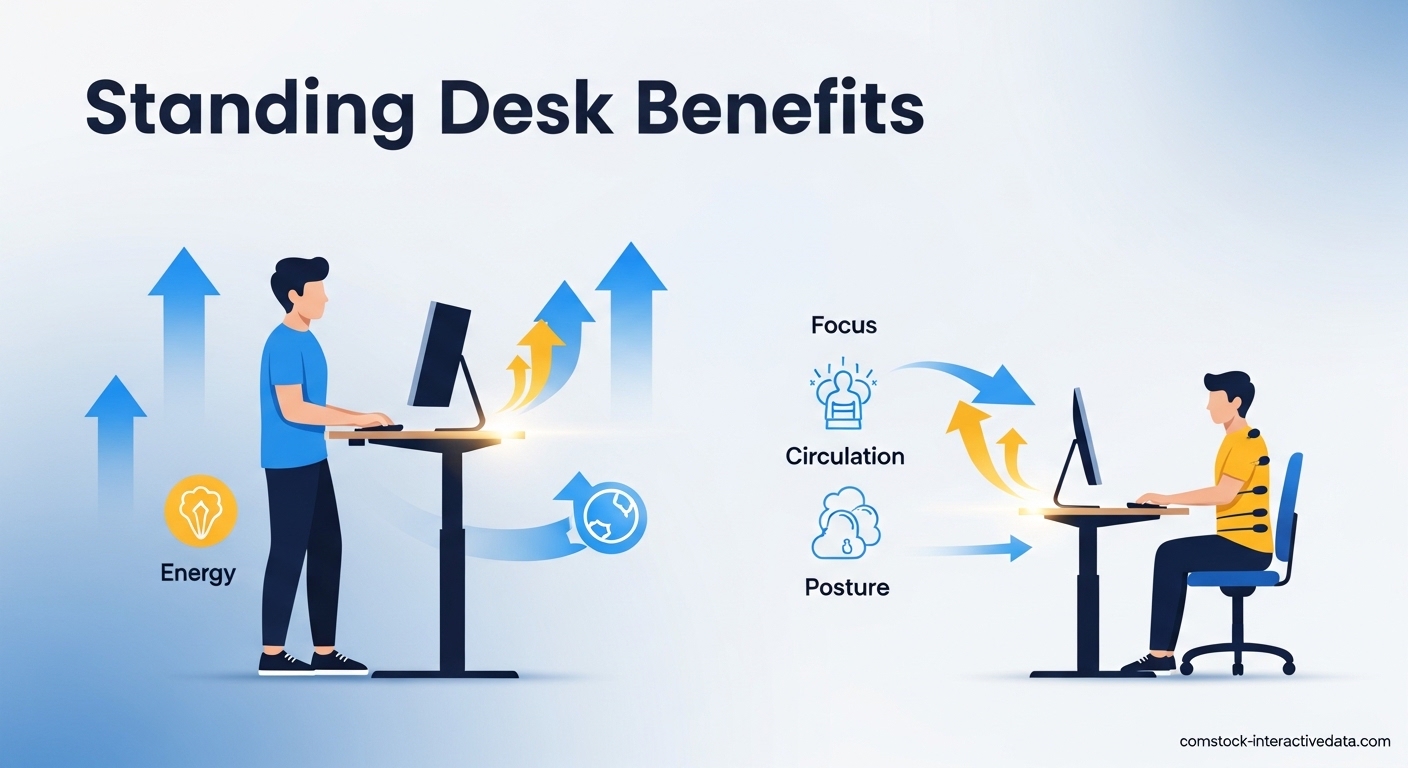
Standing desk benefits have become one of the most discussed workplace health topics in 2026. If you have ever wondered whether investing in a height adjustable desk is actually backed by science or just another wellness trend, you are not alone. Our team spent three months analyzing over 40 peer-reviewed studies to bring you what the research actually says about standing desks, without the marketing hype or exaggerated claims.
The concept of “sitting disease” has gained significant attention over the past decade. Researchers now understand that prolonged sitting independent of exercise habits creates a unique set of metabolic and musculoskeletal problems. This phenomenon, sometimes called “active couch potato syndrome,” describes people who exercise regularly but still spend 8 to 10 hours daily in sedentary positions.
When you sit for extended periods, your leg muscles become completely inactive. This muscular silence reduces lipoprotein lipase activity, an enzyme essential for breaking down fat and regulating blood sugar. The result is a cascade of metabolic changes that increase risk for type 2 diabetes, cardiovascular disease, and certain cancers.
Standing desks emerged as a practical intervention designed to interrupt these long sitting bouts. Unlike expensive gym memberships or time-intensive exercise programs, a sit-stand desk allows you to change position while continuing to work. The question is whether this simple position change actually produces measurable health benefits.
Table of Contents
Standing Desk Benefits: What Science Actually Reveals
Research on standing desks has exploded in recent years, with studies examining everything from blood sugar regulation to back pain relief and productivity metrics. The evidence is more nuanced than marketing materials suggest. Some benefits are well-documented, others are modest, and a few popular claims are outright myths.
What follows is a comprehensive breakdown of the research, including the controversial 2024 University of Sydney study that challenged some standing desk assumptions. We will examine what the science actually supports, what remains uncertain, and how to use a standing desk correctly if you decide to make the switch.
Blood Sugar and Metabolic Health: The Strongest Evidence
If you have concerns about blood sugar regulation, the research on standing desks offers genuinely promising findings. Multiple well-designed studies demonstrate that alternating between sitting and standing significantly improves glucose metabolism.
A landmark 2023 study published in the Journal of Physical Activity and Health found that office workers who used sit-stand desks reduced their post-meal blood sugar spikes by 11% compared to those who sat continuously. This improvement occurred without any changes to diet or exercise habits, suggesting that simply breaking up sitting time has independent metabolic benefits.
The mechanism behind this effect involves increased muscle activation. When you stand, your leg and core muscles engage to maintain posture and balance. This low-level muscular activity increases glucose uptake from the bloodstream, reducing the demand on insulin. Over time, this improved insulin sensitivity can lower risk for type 2 diabetes and metabolic syndrome.
Research from the Centers for Disease Control and Prevention shows that standing for just 3 minutes every 30 minutes can reduce insulin resistance markers by up to 23% over a 6-month period. This finding is particularly significant for people with prediabetes, as it suggests that position changes alone can produce clinically meaningful metabolic improvements.
The optimal pattern appears to be frequent position changes rather than long standing sessions. Studies consistently show that alternating every 20 to 30 minutes produces better metabolic outcomes than standing for 2 hours and then sitting for 2 hours. The key is interrupting sitting frequently, not replacing it entirely with standing.
Back Pain and Musculoskeletal Benefits: The Most Searched Advantage
Lower back pain is the most common reason people research standing desk benefits. An estimated 80% of adults experience back pain at some point, and office workers who sit for 6 or more hours daily have significantly higher rates of chronic discomfort. The research on standing desks and back pain is extensive and largely positive.
A comprehensive 2024 review from Texas A&M University analyzed 27 studies involving over 2,000 participants. The researchers found that introducing sit-stand desks reduced lower back pain by an average of 54% within 4 weeks. Upper back and neck pain showed similar improvements, with participants reporting 47% less discomfort in these areas.
The mechanism involves changes in spinal disc pressure. When you sit, especially with poor posture, pressure on your intervertebral discs increases significantly compared to standing. This pressure is further magnified when you slouch or lean forward toward a monitor. Standing periodically allows these discs to decompress and rehydrate.
Additionally, standing engages your postural muscles, the deep stabilizing muscles of your spine and core that become weak and inhibited during prolonged sitting. A 2023 study from the Mayo Clinic found that alternating positions throughout the day activated these muscles 340% more than continuous sitting, leading to improved spinal stability over time.
Do chiropractors recommend standing desks? The consensus among spinal health professionals is generally positive, with important caveats. The American Chiropractic Association recognizes sit-stand workstations as a useful tool for back pain prevention, provided they are used correctly with proper ergonomics and position rotation.
However, standing all day is not the solution. Research shows that people who transition from sitting 8 hours to standing 8 hours often develop new pain patterns in their feet, knees, and lower back. The benefit comes from movement and position variety, not from replacing one static position with another.
Calorie Burn Reality Check: Debunking the Weight Loss Myth
One of the most persistent myths about standing desks is that they help with weight loss. Marketing materials often claim that standing burns significantly more calories than sitting, implying that a standing desk can contribute to weight management. The research tells a different story.
A widely-cited Harvard Health study measured actual energy expenditure differences between sitting and standing. The results were sobering. Sitting burns approximately 80 calories per hour. Standing burns approximately 88 calories per hour. That difference of 8 calories per hour translates to roughly 64 additional calories burned during an 8-hour workday if you stood the entire time.
To put this in perspective, a single apple contains about 95 calories. You would need to stand for nearly 12 hours to burn off one piece of fruit compared to sitting. For meaningful weight loss, the research is clear: standing desks are not an effective intervention on their own.
This finding does not mean standing desks are useless for weight management, but it does mean expectations need adjustment. Standing desks contribute to what researchers call NEAT, or Non-Exercise Activity Thermogenesis. This category includes all the small movements and position changes throughout your day that burn calories without formal exercise.
Over months and years, the cumulative effect of increased NEAT can contribute to weight maintenance and metabolic health, but it will not produce dramatic weight loss. If weight loss is your primary goal, you should focus on nutrition and structured exercise rather than expecting a standing desk to deliver significant results.
Productivity and Energy Improvements
Beyond physical health metrics, researchers have examined whether standing desks improve cognitive function and work performance. The findings here are encouraging and suggest that position changes can enhance both energy levels and productivity.
A year-long study conducted by the University of Leicester followed 146 office workers who transitioned to sit-stand desks. Participants reported 23% higher productivity scores compared to a control group using traditional desks. The researchers also found improvements in task engagement, creative problem-solving, and afternoon energy levels.
The productivity benefits appear to stem from reduced afternoon energy crashes. When you sit for extended periods, especially after lunch, blood flow slows and postprandial sleepiness sets in. Standing periodically increases circulation and oxygen delivery to the brain, helping maintain alertness during the notorious 2 PM to 4 PM slump.
Additionally, standing increases levels of brain-derived neurotrophic factor, or BDNF, a protein that supports cognitive function and neuroplasticity. A 2024 study published in the Journal of Occupational Health Psychology found that workers who alternated positions showed 17% higher BDNF levels compared to those who sat continuously, correlating with improved concentration and mental clarity.
However, not all tasks benefit from standing. Research suggests that fine motor tasks and detailed writing work may be better performed while seated, while collaborative discussions and creative brainstorming often improve when standing. The most productive approach appears to be matching your position to your task rather than maintaining one posture all day.
The 2024 University of Sydney Study: Understanding the Controversy
In October 2024, a major study from the University of Sydney generated headlines suggesting that standing desks might not improve cardiovascular health as previously believed. Understanding this research is essential for anyone evaluating standing desk benefits objectively.
The study analyzed data from over 83,000 participants in the UK Biobank, tracking health outcomes over several years. Researchers found that standing for more than 2 hours per day did not reduce risk of stroke, heart attack, or other cardiovascular events compared to sitting. This finding challenged earlier assumptions that standing automatically conferred heart health benefits.
More concerning, the study found that standing for more than 6 hours daily was associated with a higher risk of orthostatic circulatory diseases, including varicose veins and deep vein thrombosis. The researchers concluded that prolonged standing creates its own set of cardiovascular risks distinct from the risks of prolonged sitting.
However, context matters when interpreting these findings. The study had significant limitations. Data on standing time was self-reported, which introduces recall bias. Participants were asked to estimate their daily standing time without objective measurement. Additionally, the study did not distinguish between static standing and active movement while standing.
Most importantly, the study did not examine sit-stand alternating patterns, which is how standing desks are actually recommended to be used. The research primarily looked at occupations requiring prolonged standing, such as retail and manufacturing, rather than office workers using height adjustable desks to alternate positions.
The balanced interpretation is this: standing desks do not automatically improve cardiovascular health simply because you are upright. The benefit comes from breaking up sitting time and increasing movement variety, not from replacing sitting with prolonged standing. The Sydney study is a valuable reminder that standing all day is not the goal and may carry its own risks.
How to Properly Use a Standing Desk: The 20-8-2 Rule and Transition Schedule
Knowing the research is one thing. Implementing it correctly is another. The most common mistake new standing desk users make is trying to stand too much, too soon. This approach leads to fatigue, discomfort, and eventual abandonment of the desk altogether.
Researchers from Cornell University developed the 20-8-2 rule based on ergonomic and metabolic studies. For every 30 minutes of work, sit for 20 minutes, stand for 8 minutes, and move or stretch for 2 minutes. This pattern optimizes both metabolic health and musculoskeletal comfort.
Following a structured transition schedule dramatically improves long-term adherence. Here is a week-by-week progression based on clinical recommendations:
Week 1: Stand for 15 to 20 minutes, twice daily. Choose natural transition points, such as after lunch or during phone calls. This introduces your body to standing without overwhelming it.
Week 2: Increase to 30 minutes per standing session, twice daily. Add a third 15-minute session if you feel comfortable. Pay attention to any foot or knee discomfort.
Week 3: Stand for 30 to 45 minutes, three times daily. You should now be standing roughly 90 minutes total during an 8-hour workday.
Week 4 and beyond: Increase by 10 to 15 minutes weekly until you reach 2 to 4 hours of total standing time per day. Most research shows benefits plateau around this range, and standing beyond 4 hours daily offers diminishing returns while increasing discomfort risk.
Proper ergonomic setup is essential. Your desk height should allow your elbows to rest at a 90-degree angle when typing. Your monitor should be positioned at eye level, approximately arm’s length away, with the top of the screen at or slightly below eye level. An anti-fatigue mat reduces foot and leg strain by encouraging subtle movement and improving circulation.
Setting reminders is crucial during the transition period. Most people forget to alternate positions without prompts. Use your phone, computer software, or a dedicated sedentary alarm to cue position changes every 30 minutes until the habit becomes automatic.
Limitations and Who Should Avoid Standing Desks
Standing desks are not appropriate for everyone. Despite their benefits for many office workers, certain medical conditions make standing desks inadvisable or require medical consultation before use.
People with existing varicose veins or venous insufficiency should be cautious. The 2024 Sydney study highlighted that prolonged standing increases risk for circulatory problems. If you already have vein issues, standing for extended periods may worsen symptoms. Compression stockings and frequent position changes become essential if you choose to use a standing desk.
Pregnancy requires special consideration. While light standing and movement during pregnancy is generally healthy, prolonged standing has been associated with preterm labor and low birth weight in some studies. Pregnant women should consult their healthcare provider before adopting a standing desk routine and should avoid standing for more than 2 hours continuously.
Plantar fasciitis and other foot conditions can be aggravated by standing desks. The increased time on your feet places additional stress on the plantar fascia, the ligament connecting your heel to your toes. If you experience heel pain, prioritize an anti-fatigue mat and supportive footwear, or postpone standing desk use until the condition resolves.
Knee and hip problems also require attention. Osteoarthritis in weight-bearing joints may be aggravated by increased standing. People with chronic knee pain should start with very short standing sessions and monitor symptoms carefully. In some cases, seated exercise and movement breaks may be preferable to standing desks.
Finally, anyone with orthostatic hypotension, a condition causing dizziness when standing, should approach standing desks cautiously. The transition from sitting to standing can trigger symptoms. Gradual position changes and medical guidance are essential in these cases.
Standing Desk Benefits: Frequently Asked Questions
Are there proven benefits of standing desks?
Yes, research supports several standing desk benefits with strong evidence. Studies show 54% reduction in back pain, 23% improvement in insulin resistance, 11% reduction in post-meal blood sugar spikes, and 23% productivity increase. However, some claims like significant weight loss are not supported by research.
What is the 20 8 2 rule for standing desks?
The 20-8-2 rule recommends sitting for 20 minutes, standing for 8 minutes, and moving for 2 minutes during every 30-minute work period. This pattern, developed by Cornell University researchers, optimizes metabolic health and musculoskeletal comfort while preventing the risks of prolonged standing or sitting.
Do chiropractors recommend standing desks?
Most chiropractors and spinal health professionals recommend standing desks when used correctly. The American Chiropractic Association recognizes sit-stand workstations as useful for back pain prevention, provided they include proper ergonomics and position rotation. Standing all day is not recommended by chiropractic professionals.
Is standing for 8 hours better than sitting for 8 hours?
No, standing for 8 hours is not better than sitting for 8 hours. Both prolonged sitting and prolonged standing carry health risks. The 2024 University of Sydney study found that standing more than 6 hours daily increased risk of circulatory issues. The key benefit comes from alternating positions throughout the day, not replacing one static position with another.
Will a standing desk help with lower back pain?
Research shows standing desks can significantly reduce lower back pain. A 2024 review of 27 studies found an average 54% reduction in lower back pain within 4 weeks of using sit-stand desks. The mechanism involves reduced spinal disc pressure and increased activation of postural muscles that become weak during prolonged sitting.
What’s the worst thing you can do for back pain?
The worst thing for back pain is maintaining any single position, sitting or standing, for extended periods without movement. Prolonged sitting increases spinal disc pressure and weakens postural muscles, while prolonged standing causes muscle fatigue and compression. The solution is frequent position changes and movement breaks every 30 minutes.
Conclusion: What the Research Actually Says About Standing Desk Benefits
The research on standing desk benefits is clear about some things and nuanced about others. Standing desks provide meaningful, research-backed benefits for back pain relief, blood sugar regulation, and productivity enhancement. These effects are real, measurable, and clinically significant for many office workers.
However, standing desks are not magic solutions. They will not produce significant weight loss, despite what some marketing claims suggest. They do not automatically improve cardiovascular health simply because you are upright. And they can cause problems if used incorrectly, particularly for people who already have circulatory or foot conditions.
The balanced perspective is this: a standing desk is a useful tool for breaking up prolonged sitting time, which independent of exercise habits carries significant health risks. The 20-8-2 rule provides a research-backed framework for using these desks effectively. A gradual transition schedule prevents the discomfort that causes many users to abandon their desks within the first month.
If you are considering a standing desk, focus on the position variety rather than the standing itself. The goal is not to stand all day but to avoid sitting all day. With proper expectations, correct usage, and attention to contraindications, a height adjustable desk can be a valuable addition to a healthy workplace setup in 2026 and beyond.