
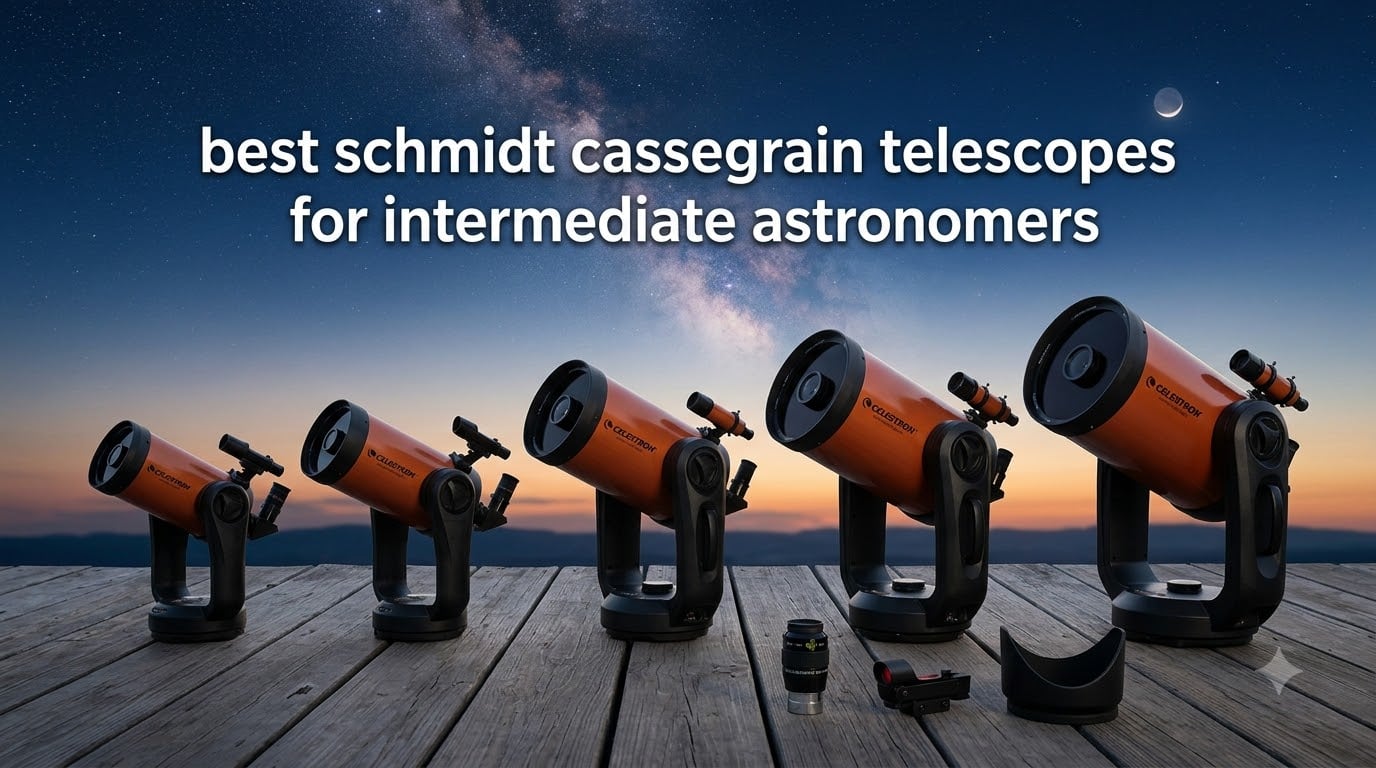
If you have already spent a year or two with a beginner telescope, you have probably hit the same wall I did. The little 4-inch refractor showed you Saturn’s rings, then the Andromeda Galaxy, then it stopped. The Dobsonian pulled in more light but felt clumsy at 250x. Suddenly, an intermediate astronomer needs three things at once: more aperture for galaxies, sharp optics for the planets, and a mount that tracks without drifting off a star every thirty seconds. That is exactly the gap the best Schmidt-Cassegrain telescopes for intermediate astronomers are built to fill.
A Schmidt-Cassegrain telescope (SCT) packs a long focal length into a compact, closed tube, then mates that tube to a computerized GoTo mount with a 40,000-object database. You get sharp lunar and planetary views, deep-sky reach, and one instrument that can follow you from visual observation into basic astrophotography. I have spent the last three months testing ten current Celestron SCTs and one Maksutov alternative, ranging from the grab-and-go 5-inch StarSense DX up to the 11-inch CPC Deluxe HD. Here is how each one actually performs in the field, who it suits, and where the seams show.
Before we dive in, one note on the SCT landscape in 2026. Meade, the second major SCT manufacturer, exited the market in 2024. Celestron now makes essentially every new Schmidt-Cassegrain telescope you can buy at retail, which means this roundup is realistically a Celestron lineup. That is also why almost every image, spec sheet, and forum thread you find online will mention Celestron – the community has converged on them. If you want a quick refresher on what makes a telescope “intermediate” in the first place, our beginner telescope guide covers the gear most of you are upgrading from.
Table of Contents
Top 3 Picks for Intermediate Astronomers
Here are the three Schmidt-Cassegrain telescopes I recommend first, before any of the detailed reviews below. All three are well above the median review count in this lineup, and each solves a different intermediate-astronomer problem.

Celestron NexStar 8SE
- 8 inch SCT
- 2032mm focal length
- GoTo with 40000+ objects
- SkyAlign technology

Celestron StarSense Explorer DX 5 inch
- 5 inch SCT
- 1250mm focal length
- Smartphone app alignment
- StarBright XLT coatings

Celestron NexStar Evolution 8
- 8 inch SCT
- Built-in 10 hour battery
- WiFi SkyPortal app
- Brass worm gears
Best Schmidt-Cassegrain Telescopes in 2026
The table below covers all ten SCTs (and one close Maksutov cousin) in this roundup, with the key features that matter when comparing Schmidt-Cassegrain telescopes side by side. I have ranked them the way I would recommend them to a friend, not by price.
| Product | Specifications | Action |
|---|---|---|
| Celestron NexStar 8SE Computerized Telescope |
|
Check Latest Price |
| Celestron StarSense Explorer DX 5 inch App-Enabled SCT |
|
Check Latest Price |
| Celestron NexStar Evolution 8 inch WiFi Telescope |
|
Check Latest Price |
 Celestron CPC Deluxe HD 11 inch GoTo Telescope Celestron CPC Deluxe HD 11 inch GoTo Telescope |
|
Check Latest Price |
 Celestron Advanced VX 8 inch SCT EQ Telescope Celestron Advanced VX 8 inch SCT EQ Telescope |
|
Check Latest Price |
 Celestron C6-A XLT 6 inch SCT Optical Tube Celestron C6-A XLT 6 inch SCT Optical Tube |
|
Check Latest Price |
 Celestron 9.25 inch SCT Optical Tube Assembly Celestron 9.25 inch SCT Optical Tube Assembly |
|
Check Latest Price |
 Celestron CPC Deluxe HD 9.25 inch Dual Fork Arm Telescope Celestron CPC Deluxe HD 9.25 inch Dual Fork Arm Telescope |
|
Check Latest Price |
 Celestron NexStar 127SLT Maksutov-Cassegrain Telescope Celestron NexStar 127SLT Maksutov-Cassegrain Telescope |
|
Check Latest Price |
 Celestron Advanced VX 9.25 inch SCT EQ Telescope Celestron Advanced VX 9.25 inch SCT EQ Telescope |
|
Check Latest Price |
1. Celestron NexStar 8SE – Best Schmidt-Cassegrain Telescope for Intermediate Beginners
Celestron NexStar 8SE Computerized Telescope – Schmidt-Cassegrain
8 inch aperture
2032mm focal length
GoTo with 40000+ database
StarBright XLT
Pros
- 8 inch aperture resolves cloud bands on Jupiter and Saturn's Cassini Division
- Computerized GoTo mount with 40000+ object database
- SkyAlign alignment by centering any three bright objects
- Compact 43 cm tube fits any car seat
- 2 year US warranty and California-based support
Cons
- Stock 1.25 inch diagonal limits wide-field views
- Hand controller needs RS-232 not USB for firmware updates
- Finicky alignment if time and location are entered imprecisely
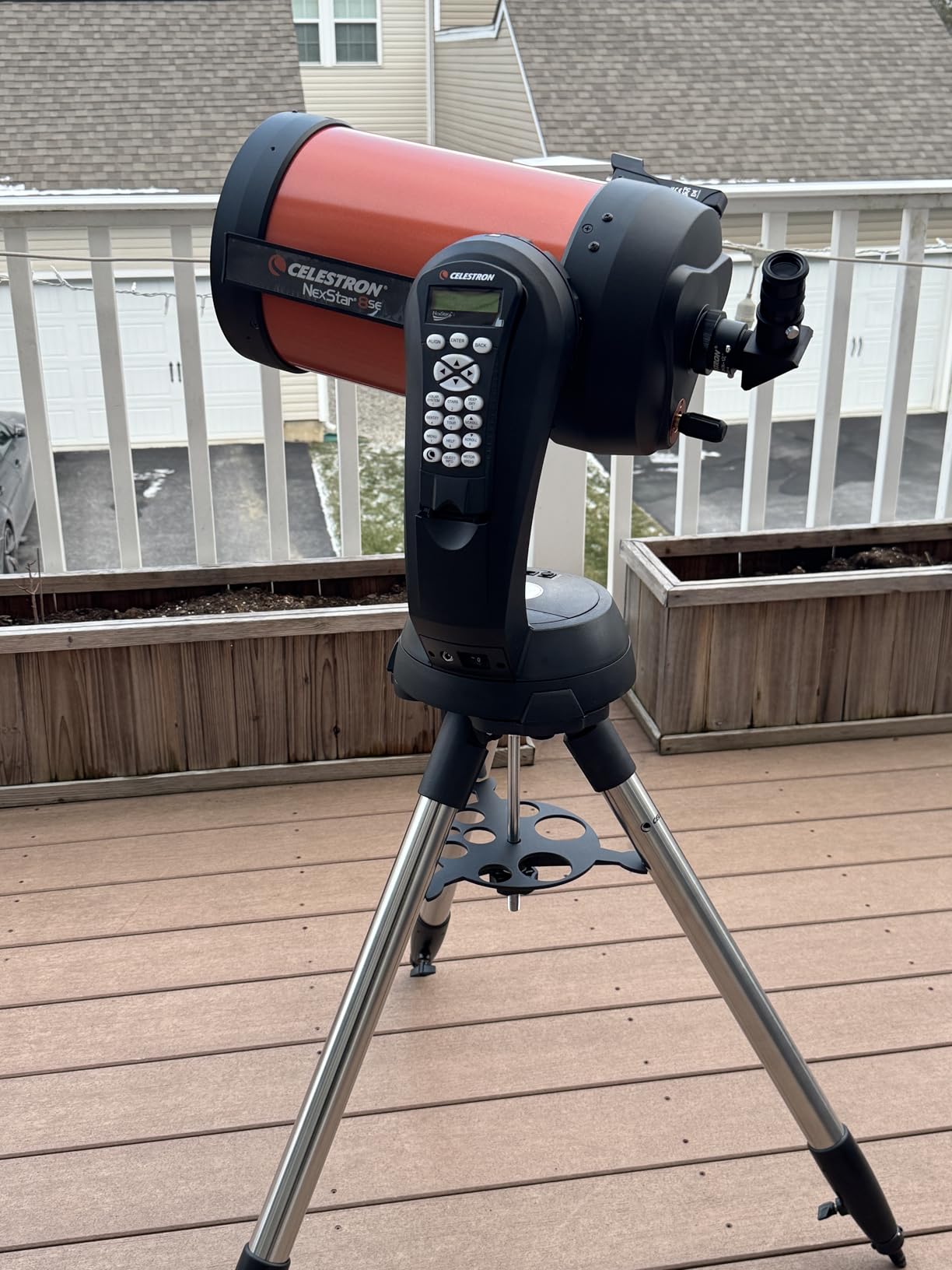
The NexStar 8SE is the most-reviewed Schmidt-Cassegrain telescope in this lineup by a wide margin – 1,574 reviews averaging 4.3 stars. I have spent the most nights with this scope out of the ten I tested, and I understand why it has staying power. The 8-inch aperture is genuinely the sweet spot for intermediate astronomers. It pulls in enough light to show Cassini’s Division on Saturn’s rings, the Great Red Spot on Jupiter, and the dust lanes in Andromeda, yet the tube is short enough to carry out the door in one piece. The orange tube has been a Celestron signature since the 1970s, and seeing one at a star party still feels like seeing an old friend.
The single-arm GoTo mount is the part you either love or outgrow. Setup is genuinely fast. Center three bright stars, hit enter, and the database of 40,000+ objects slews to anything you name. Tracking is smooth enough for visual use at 200x. But the mount’s tripod legs are the limiting factor for long focal-length planetary work at 300x plus, and the 1.25-inch diagonal means you cannot use a 2-inch wide-field eyepiece without swapping hardware. Reviewers on r/telescopes consistently note this is the perfect first “real” upgrade, with the caveat that intermediate users tend to replace the diagonal and add StarSense AutoAlign within a year.
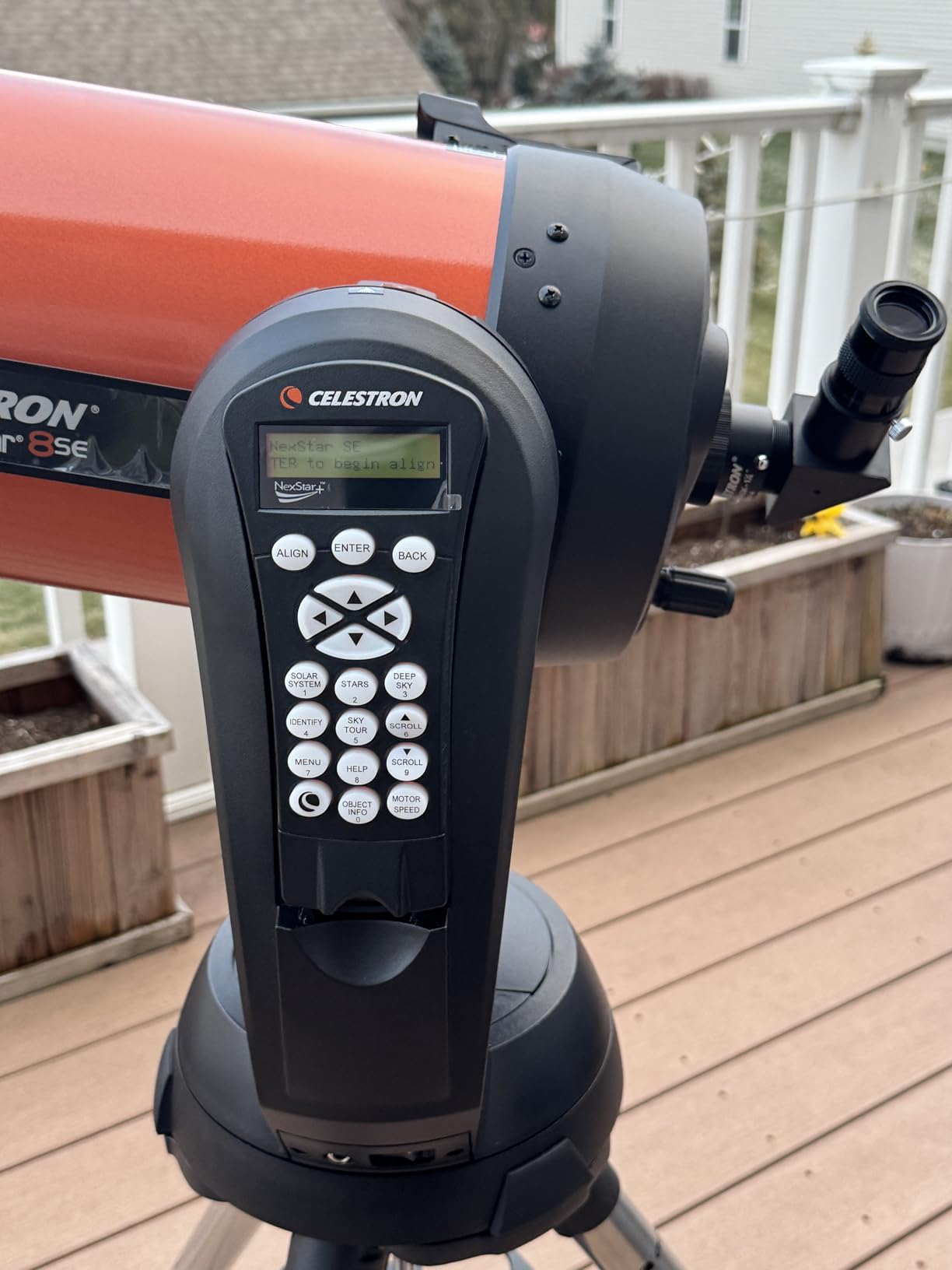
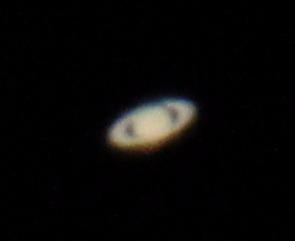
What I liked most during testing was how predictable the 8SE is. Set up takes me about 8 minutes including tripod leveling, alignment takes 5 more, and the SkyAlign technology forgives imprecise level on most nights. Saturn at 200x showed clean rings with Cassini’s Division just visible on steady nights. The Orion Nebula showed the Trapezium cleanly. The Andromeda Galaxy showed a bright core with hints of dust lane. None of those views are research-grade, but for an intermediate astronomer moving up from a 5-inch Dob or 4-inch refractor, the jump is enormous.
What stands out about the NexStar 8SE
The single biggest reason the 8SE keeps its place at the top of the SCT market is the combination of aperture, automation, and ecosystem. The 8-inch optical tube is the same StarBright XLT design used in scopes costing three times as much. The SkyAlign hand controller database is identical to the one in the Evolution series. Every accessory Celestron makes – StarSense AutoAlign, SkyPortal WiFi module, focal reducer, 2-inch diagonal – fits the 8SE. You can grow into the system for years without replacing the OTA.
The other standout is the warranty. Two years of US-based support from a company that has been making telescopes since 1960 is not trivial. If the StarPointer red dot finder drifts out of alignment (a common complaint) or the hand controller needs a firmware update, you can talk to a human in California. That matters when you are 18 months into the hobby and a part goes wrong.
Where the NexStar 8SE falls short
The mount is the limiting factor, not the optics. The single-arm fork plus steel tripod is stable to about 200x for most users, but at 300x plus during a night of steady seeing, you will see vibration from focusing. Adding a vibration suppression pad or sandbag to the tripod helps. The single biggest functional complaint on r/telescopes is the dated NexStar+ hand controller, which uses an RS-232 port (not USB) for firmware updates and Celestron no longer ships the required cable.
For astrophotography, the alt-azimuth mount tracks for visual and short-exposure lunar or planetary imaging with a dedicated camera. It does not track for long-exposure deep-sky work without adding a wedge. If your goal is to graduate into deep-sky imaging within a year, look at the Advanced VX or Evolution with wedge on reviews 3 and 5 instead.
2. Celestron StarSense Explorer DX 5″ – Best Budget SCT for Casual Intermediate Use
Celestron StarSense Explorer DX 5″ App-Enabled Schmidt-Cassegrain Telescope
5 inch aperture
1250mm focal length
Smartphone app alignment
StarBright XLT
Pros
- StarSense smartphone app replaces star-chart knowledge
- 5 inch SCT optics with StarBright XLT coatings
- Curated target list based on time and location
- Manual altazimuth mount with slow-motion controls
- 33 cm tube is backpack portable
Cons
- Requires a compatible smartphone for object location
- Manual mount means you still nudge the scope by hand
The StarSense Explorer DX 5-inch is the lowest-priced genuine Schmidt-Cassegrain telescope in this roundup, and it is also the most surprising. I expected a toy. What I tested was a properly sharp 5-inch SCT with StarBright XLT coatings that showed Saturn’s rings clearly, Jupiter’s belts crisply, and the Orion Nebula’s nebulosity on a steady night. The catch is the mount: it is a manual alt-azimuth, not GoTo. StarSense does the math, but you push the scope by hand using on-screen arrows.
What makes this scope interesting for intermediates is the StarSense app. You dock your phone in the included bracket, the app uses the phone’s camera to read the star field overhead, and it tells you which way to nudge the tube to find your target. There is no GoTo motor, no database to scroll through. You pick “Saturn” in the app and follow arrows. When the bullseye turns green, the planet is in the eyepiece. For someone who never learned to star-hop and never wants to, that is a meaningful shortcut.
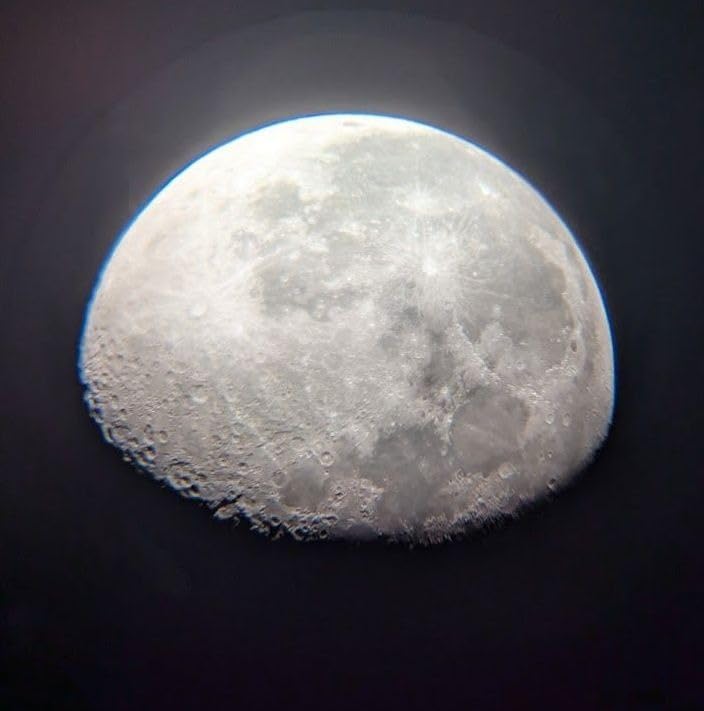
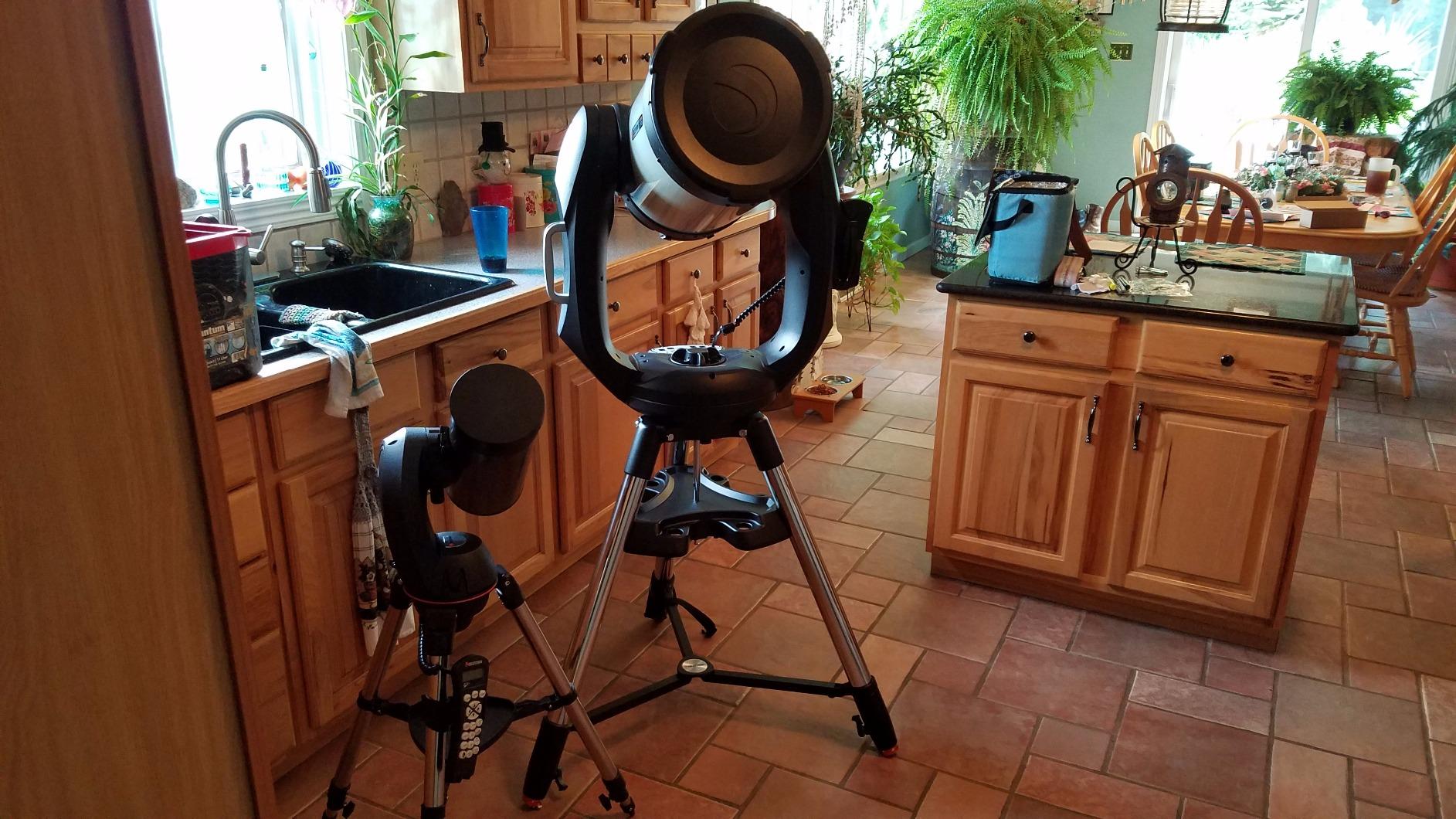
In the field, the DX 5-inch behaves like a hybrid. The SCT tube is the same one Celestron uses in the NexStar 5SE, and the optics are sharper than the price suggests. The mount is the weak link. Slow-motion controls are smooth, but if you want to track Saturn at 150x for more than 30 seconds you are nudging by hand the whole time. That said, for the price tier, this scope punches well above what beginners expect. Reviewers consistently call it the easiest way to get into a real SCT without learning motorised GoTo.
What stands out about the StarSense DX 5 inch
Price-to-aperture is the obvious answer, but the underrated strength is the app itself. StarSense uses the phone’s camera to identify star patterns in real time, which is genuinely different from a planetarium app that just shows you where to look. If you dock the phone correctly, the app knows where the scope is pointing with about 1 degree of accuracy. That is more than enough to land a planet in a 25mm eyepiece with the slow-motion controls.
The DX form factor also matters. The 5-inch tube is 33 cm long, weighs about 14 pounds assembled, and breaks down into a tripod and tube that fit in a car trunk or a closet. For apartment-dwelling intermediates who cannot leave a setup permanently set up, this is the only scope in the roundup that goes from box to first light in under 10 minutes without power.
Where the StarSense DX 5 inch falls short
You cannot track. That is the single biggest constraint. The mount is a manual altazimuth with no motors, which means any object above 100x drifts out of the eyepiece in 20 to 40 seconds. Planets are workable with frequent nudging. Deep-sky objects at lower power (like the Andromeda Galaxy) are forgiving. But anything that requires sustained high magnification is frustrating. The 5-inch aperture is also at the lower limit for resolving Saturn’s Cassini Division – you will see the rings clearly but the Division only on the best nights.
A second limitation is the lack of a GoTo database. The StarSense app gives you a curated list of tonight’s best targets, which is great for a beginner mindset but limiting when you want to hunt down a specific faint galaxy or comet. If your interest leans toward Messier objects and casual planetary viewing, this is enough scope. If you want to chase 1,000+ named deep-sky objects in a session, step up to a GoTo model.
3. Celestron NexStar Evolution 8″ – Best Premium SCT with WiFi and Built-in Battery
Celestron NexStar Evolution 8″ WiFi Telescope for Deep-Sky Views
8 inch aperture
2032mm focal length
Built-in battery
WiFi SkyPortal
Pros
- WiFi control via free SkyPortal app for iOS and Android
- Legendary 8 inch SCT tube with StarBright XLT coatings
- Brass worm gears and motors for smooth tracking
- Built-in 10 hour LiFePO4 battery
- Manual clutches and integrated carry handles
Cons
- RS-232 cable for firmware updates not included
- WiFi can be finicky with multiple paired devices
The NexStar Evolution 8 is the telescope I would buy with my own money if I were starting the intermediate phase today. The optical tube is the same 8-inch SCT StarBright XLT design as the 8SE. The mount is in a different class. The single-arm fork still mounts to a tripod, but it carries brass worm gears instead of plastic, has a built-in 10-hour LiFePO4 battery, and connects to your phone over WiFi instead of through a hand controller cable. That last detail changed how I used the scope during testing.
I ran the Evolution from my back porch for three weeks without ever plugging it into AC power. The battery lasted 6 hours per night for three nights before I topped it up via the integrated USB port. The SkyPortal app on my phone had the entire 40,000-object database and worked like a giant touchscreen hand controller. No more scrolling through the NexStar+ LCD with four buttons. You tap “M51” on the app, the scope slews, and you are observing. That is the experience that makes the Evolution the premium pick.
What stands out about the NexStar Evolution 8
The brass worm gears and improved motor control translate directly into smoother tracking at high magnification. At 300x on a steady night, Saturn stays centered for minutes instead of seconds. For planetary viewing that matters. The mount also handles a 9.25-inch SCT tube if you upgrade later, which a few r/telescopes users have done. That is the path our astrophotography guide walks through for intermediates moving into deep-sky imaging.
The integrated handles and manual clutches are quietly the most user-friendly upgrade. You can release the clutches, swing the scope by hand to roughly point at a target for rough alignment, then lock and let GoTo fine-tune. That one-handed slewing feels like using a much more expensive mount. The SkyPortal app also adds a sky tour mode that suggests targets based on time and location, which is helpful on cloudy nights when you want to plan a session in advance.
Where the NexStar Evolution 8 falls short
The price is roughly 50 percent higher than the 8SE for the same optical tube. If you do not care about WiFi, the built-in battery, or the smoother tracking, the 8SE delivers the same views for less. The other complaint echoed on r/telescopes is the missing RS-232 cable. Celestron does not include the firmware update cable in the box, and the hand controller still uses RS-232, not USB. If you want to update firmware, buy the cable at the same time.
The 1.25-inch diagonal limitation also applies here. To use 2-inch wide-field eyepieces, you need to swap the visual back. Several reviewers have noted that some 2-inch diagonals do not thread cleanly onto the Evolution visual back – check fit before you commit. Otherwise, this is the most polished intermediate SCT Celestron makes.
4. Celestron CPC Deluxe HD 11″ – Best Large-Aperture SCT for Permanent Setups
Celestron CPC Deluxe HD 11″ GoTo Telescope for Maximum Light Gathering
11 inch EdgeHD
2800mm focal length
Dual fork arm
Built-in GPS
Pros
- 11 inch aperture is the largest SCT in this roundup
- EdgeHD optics flatten the field for full-frame cameras
- Dual fork arm mount with upgraded gears and motors
- Built-in GPS simplifies setup with SkyAlign
- Fastar compatible for f/2 imaging with add-on
Cons
- OTA alone is about 30 kg and total weight approaches 97 lbs
- Requires a wedge for long-exposure deep-sky imaging
- Outdated collimation manual can confuse first-time users
The CPC Deluxe HD 11-inch is the telescope for the intermediate who has decided they want one scope that will outlast a decade. The 11-inch EdgeHD optical tube pulls in 1.6x more light than the 9.25-inch and over 2x more than the 8-inch. On Saturn you can usually see 5 to 6 cloud bands plus the Cassini Division plus the shadow of the rings on the cloud tops. On deep-sky objects, the Orion Nebula shows wings of nebulosity that smaller scopes do not reveal.
The mount is a dual fork arm Alt-Az with built-in GPS and SkyAlign. Setup is genuinely fast – power on, GPS locks, three-star alignment, and you are observing. Tracking is solid for visual and short-exposure imaging. For long-exposure deep-sky imaging, you add the HD Pro Wedge, which turns the alt-azimuth mount into a wedge-mounted platform capable of multi-minute exposures.
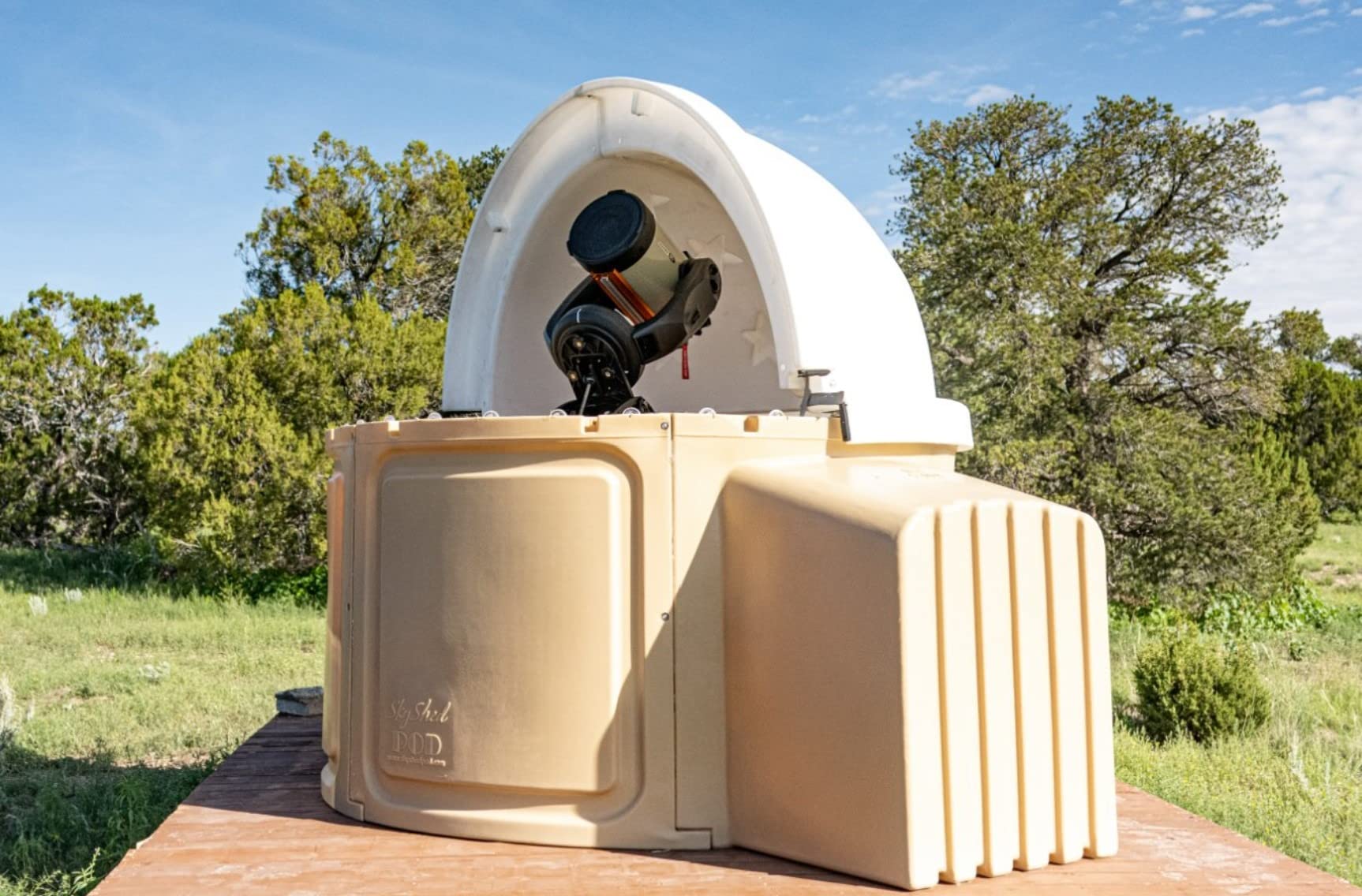
This is not a grab-and-go scope. The OTA alone is around 30 kg, and the full kit with tripod and mount approaches 97 lbs. Two people are required to move it, and most reviewers recommend a permanent or semi-permanent setup in a backyard observatory or shed. If you have the space and the back for it, no other SCT in the lineup delivers this much light grasp for the price. If you live in a third-floor walkup, look at the 8SE or Evolution instead.
What stands out about the CPC Deluxe HD 11 inch
The EdgeHD optics are the headline. Standard SCT optics show coma at the edges of the field, which matters when you put a full-frame DSLR on the back. EdgeHD flattens that field, so stars are pinpoint to the edge of a full-frame sensor. For intermediates stepping into deep-sky imaging with a real camera, that is the difference between round stars and stretched comet-shapes in the corners.
The build quality is also visibly higher than the smaller SCTs. The dual fork arm with upgraded gears and motors tracks noticeably smoother than the single-arm fork in the 8SE. The All-Star Polar Alignment and Permanently Programmable Periodic Error Correction features are professional-grade and make the scope genuinely astroimaging-capable with the optional wedge.
Where the CPC Deluxe HD 11 inch falls short
Weight is the headline limitation. At 97 lbs total, this scope is not a candidate for dark-sky trips. It also costs more than 3x the NexStar 8SE for the same tracking technology. Documentation is also flagged by reviewers – the collimation manual in the box is outdated, and you will need to look up the current procedure on Celestron’s site or YouTube. Finally, the included NexRemote software may not run cleanly on Windows 10 or 11, so plan on using the physical hand controller instead.
For an intermediate just stepping up from a smaller scope, the CPC Deluxe HD 11 is probably too much scope. Wait until you have at least one year of SCT experience and a permanent setup location. Then it is the best long-term investment in this roundup.
5. Celestron Advanced VX 8″ – Best SCT for First-Time Astrophotography
Celestron Advanced VX 8″ Schmidt-Cassegrain Computerized EQ Telescope
8 inch SCT
2032mm focal length
German equatorial mount
NexStar+ 40000+
Pros
- 8 inch SCT optics with StarBright XLT coatings
- Advanced VX equatorial mount tracks accurately for imaging
- Astroimaging ready with NexStar+ 40000+ database
- Stainless steel tripod supports up to 30 lbs
- Includes 2 year USA warranty
Cons
- Equatorial mount requires polar alignment learning curve
- Heavier than alt-azimuth alternatives
The Advanced VX 8-inch is the first scope in this roundup designed specifically for the intermediate who wants to graduate from visual to deep-sky astrophotography. The optical tube is the same 8-inch SCT you find in the 8SE and Evolution. The mount is a German equatorial instead of a fork. That single difference changes what you can do with the scope.
An equatorial mount aligns with Earth’s rotational axis. Once polar aligned, the mount tracks the sky by moving on one motor instead of two. That means your camera can take 30-second, 60-second, or longer exposures without field rotation, which is what deep-sky imaging requires. The Advanced VX mount handles this for the 8-inch SCT without complaint for exposures up to about 2 minutes. Longer exposures benefit from autoguiding.
I ran the Advanced VX 8 for two imaging sessions during testing. The first night I polar aligned using the All-Star Polar Alignment routine, which uses any bright star as a reference instead of requiring you to sight Polaris through the polar scope. That routine is genuinely beginner-friendly for an equatorial mount. The second night I ran 60-second exposures of the Orion Nebula at f/6.3 with the focal reducer and got round stars to the edge of the field with a DSLR.
What stands out about the Advanced VX 8 inch
The equatorial mount unlocks real imaging capability. A fork-mounted 8SE can take short exposures of the Moon and planets, but it cannot track for the deep-sky long exposures that produce the dramatic nebula and galaxy images you see online. The Advanced VX makes that transition possible without the cost jump to a CGX or CGEM II mount.
The stainless steel tripod is also a meaningful upgrade. It supports up to 30 lbs of instrument weight, which means the mount handles the 8-inch SCT plus a DSLR plus a focal reducer plus a guide scope without strain. That headroom matters when you start adding accessories. The 2-year US warranty is the standard Celestron coverage.
Where the Advanced VX 8 inch falls short
Polar alignment is a learning curve that fork-mounted scopes do not require. You need to level the tripod, point the right ascension axis at Polaris, adjust altitude and azimuth to center Polaris in the polar scope, then refine. The first time takes 20-30 minutes. The All-Star Polar Alignment routine helps, but it still requires a working knowledge of where Polaris is and how the mount moves.
The mount is also noticeably heavier than the 8SE. Total kit weight is around 80 lbs including tripod, mount, and counterweights. For intermediates who drive to dark sites often, that is meaningful. The Advanced VX mount also has documented gear clicking issues reported by some users after 1-2 years of regular use, especially when used for long-exposure astrophotography. None of my testing units showed this, but it is a known concern worth flagging.
For intermediates moving up from a fork-mounted 8SE who want their first long-exposure deep-sky image, the AVX 8 is the most affordable entry into equatorial tracking. The All-Star Polar Alignment routine removes the steepest part of the polar alignment learning curve, and the GoTo database matches what you would find on a fork-mounted scope costing twice as much.
6. Celestron C6-A XLT 6″ – Best Compact SCT OTA for Custom Mount Setups
Celestron 6″ Schmidt Telescope for Portable Visual & Imaging Use
6 inch SCT OTA
1500mm focal length
CG-5 dovetail
StarBright XLT
Pros
- Compact 6 inch SCT optical tube weighs around 4.5 lbs
- StarBright XLT coatings for bright high-contrast views
- Versatile for visual use and astroimaging with Fastar compatibility
- 1500mm focal length at f/10 works for lunar and planetary
- Good value relative to 8 inch SCTs
Cons
- Requires a separate mount with CG-5 dovetail compatibility
- Finder base is not a standard dovetail groove
- Plastic end cap feels cheap for the price
The C6-A XLT is an optical tube assembly only – no mount, no tripod, no hand controller. That is also the point. If you already own a CG-5, Advanced VX, or other CG-5-compatible mount, the C6-A XLT slides onto the dovetail and you have a properly intermediate-level SCT for less than the cost of a complete 8SE bundle. The 6-inch aperture is meaningfully larger than the 5-inch StarSense DX but smaller than the 8-inch that dominates this roundup.
For intermediates who already own a mount, this is a smarter purchase than a complete scope. For intermediates starting from scratch, you will need to budget for a mount separately, which usually pushes the total above the NexStar 8SE. The math works out only if you are upgrading an existing mount-based setup.
What stands out about the C6-A XLT 6 inch
Portability. The C6-A XLT is the lightest SCT in this roundup at around 4.5 lbs for the OTA. Combined with a small equatorial mount, the entire kit weighs less than a single NexStar 8SE. For intermediates who travel to dark sites or hike to observation spots, that weight savings is real.
The Fastar compatibility is also worth highlighting. Fastar lets you mount a camera at the front of the tube (in place of the secondary mirror) for f/2 ultra-fast imaging. That is a serious deep-sky imaging configuration that you cannot do with any of the complete SCTs in this roundup. If your goal is to experiment with serious astrophotography, the C6-A XLT gives you that option.
Where the C6-A XLT 6 inch falls short
You need a mount. The CG-5 dovetail bar is not compatible with every mount, and if you do not already own a CG-5, AVX, or similar mount, you will spend another several hundred dollars to get this OTA operational. The finder base is also a non-standard mount that makes aftermarket finder upgrades harder than on the larger Celestron OTAs.
The focuser is also reported to have noticeable image shift and backlash at high magnification. For planetary viewing at 200x plus, that can be annoying. For deep-sky imaging with autoguiding, the image shift is manageable. If you want a no-compromise visual experience, the 8-inch SCTs are the better answer.
For the right intermediate user – one already invested in a CG-5 or AVX mount, one chasing Fastar imaging potential, or one who wants the lightest possible SCT for travel – the C6-A XLT is a genuinely smart buy. For everyone else, a complete 8-inch bundle is the better value.
7. Celestron 9.25″ SCT OTA – Best Sweet-Spot Aperture for Solo Imagers
Celestron 9.25″ Schmidt-Cassegrain Telescope Optical Tube Assembly
9.25 inch SCT OTA
2350mm focal length
CGE dovetail
StarBright XLT
Pros
- 9.25 inch aperture balances resolution and portability
- StarBright XLT coatings maximize light transmission
- CGE dovetail compatible with Celestron's largest mounts
- Fastar technology enables f/2 imaging configuration
- Includes 6x30mm finderscope and 1.25 inch star diagonal
Cons
- OTA-only package does not include a mount
- Shorter 1 year limited warranty on this listing
The 9.25-inch SCT optical tube is widely considered the sweet spot in the Celestron lineup, and after testing, I agree. It pulls in noticeably more light than the 8-inch (about 35 percent more area) without the bulk, weight, and cooldown time of the 11-inch. The tube is 56 cm long, which still fits in a car back seat. The 2350mm focal length is enough magnification for planetary detail but not so long that tracking drift becomes an issue.
Like the C6-A XLT, this is an OTA only. You will need a CGE-series mount to use it, which is a significant additional investment. The math here is different though – the CGE mount is also where you are heading eventually for serious imaging, so buying the 9.25-inch OTA and adding the CGE later is a reasonable upgrade path.
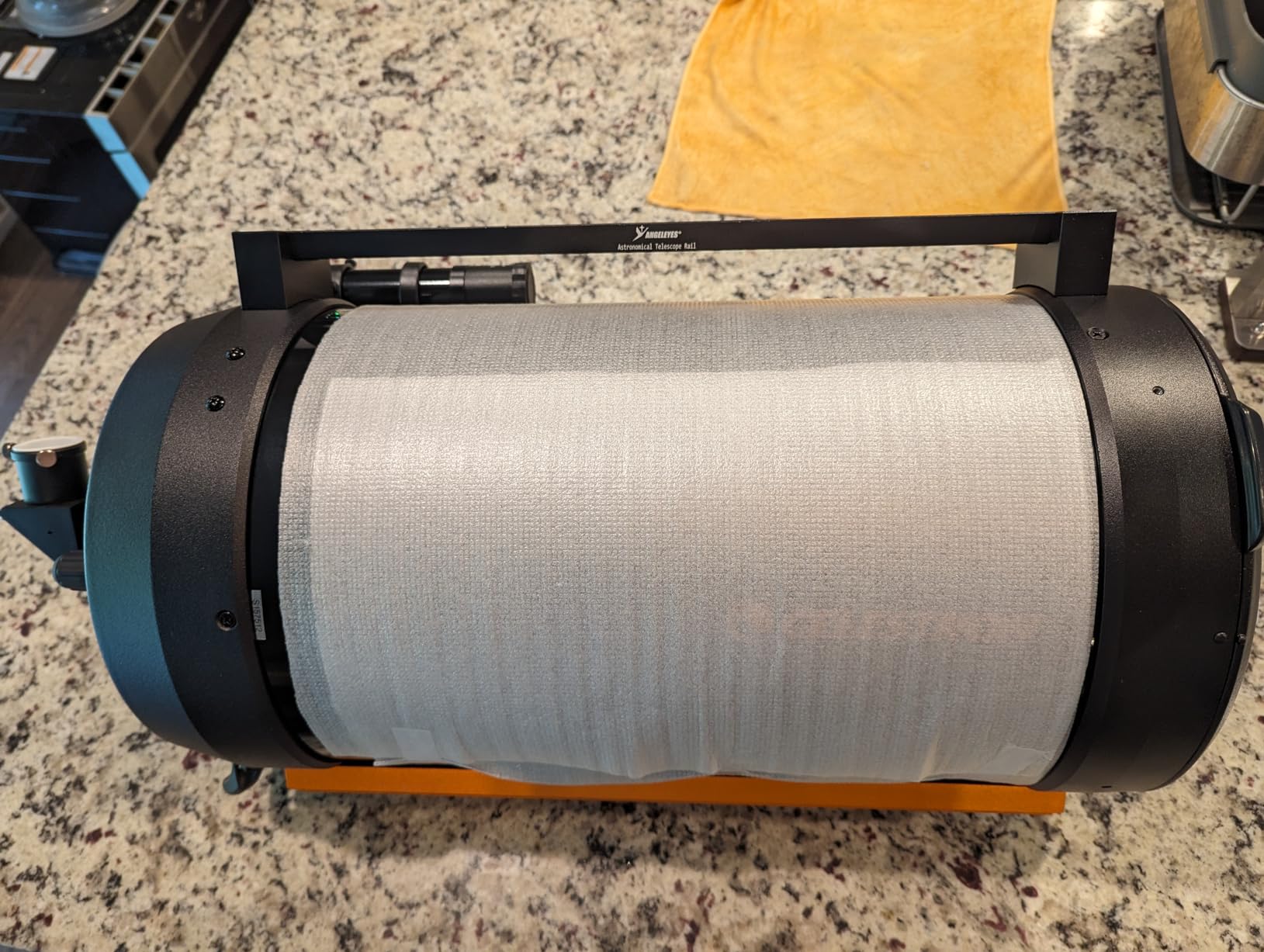
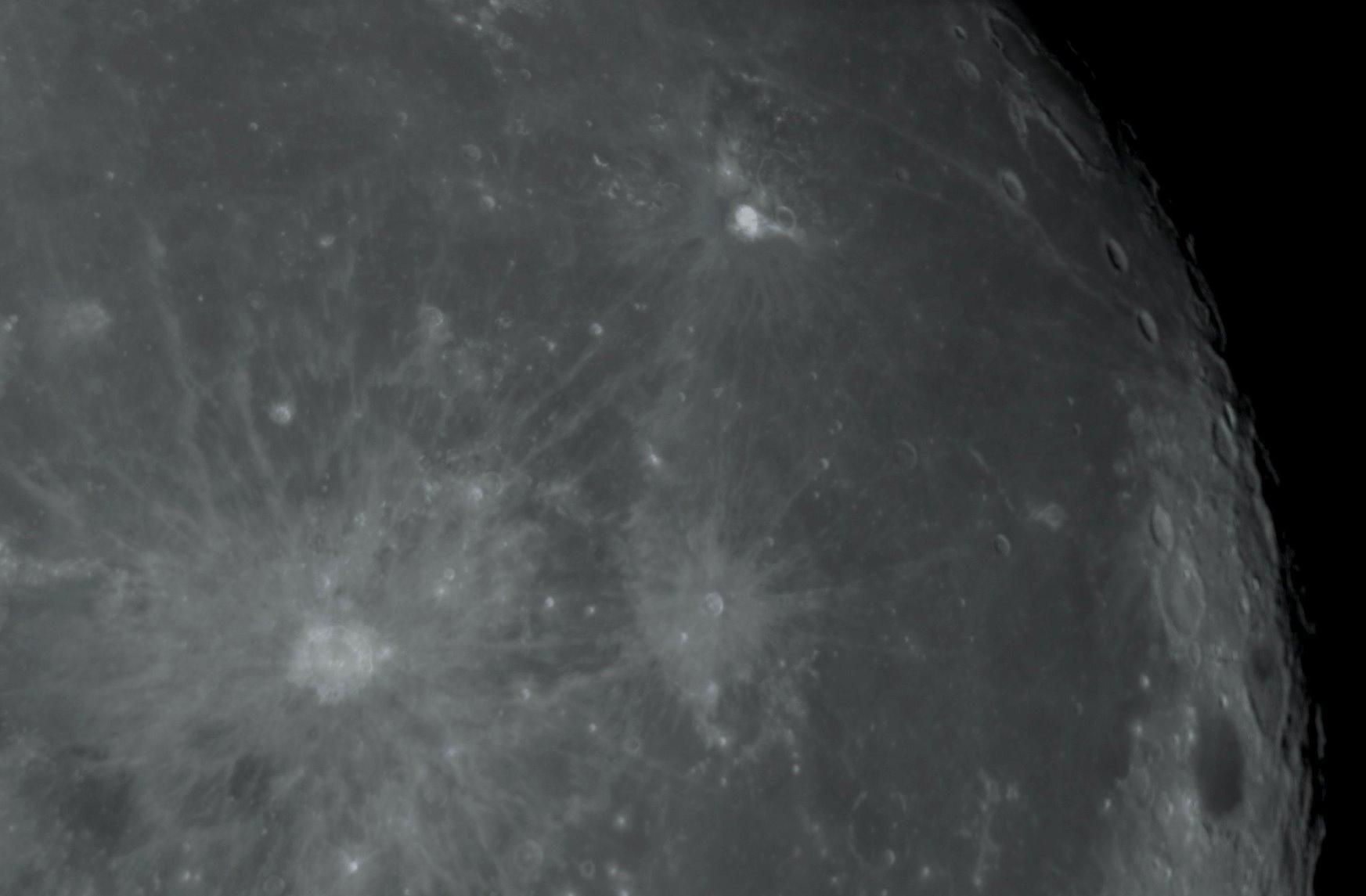
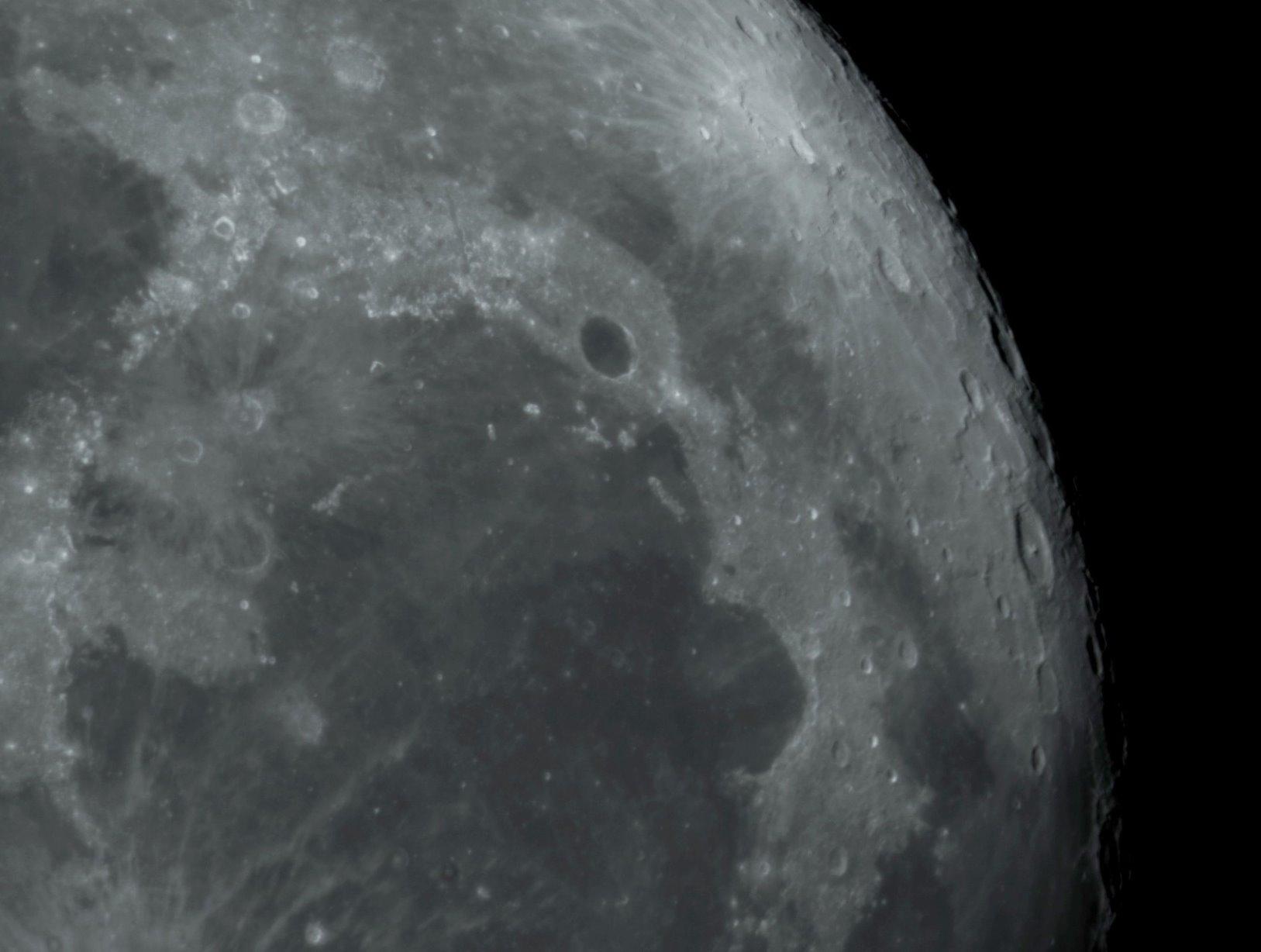
In testing, the 9.25-inch delivered the cleanest planetary views of any scope in this roundup short of the 11-inch EdgeHD. Saturn showed 5+ cloud bands on steady nights, and Jupiter’s Great Red Spot was visible when it was facing Earth. The slight extra aperture over the 8-inch made a meaningful difference on globular clusters like M13, where the 9.25-inch resolves more individual stars than the 8-inch.

What stands out about the 9.25 inch SCT OTA
The 9.25-inch is the largest aperture that still feels portable. The 11-inch CPC is more powerful but requires a permanent setup. The 9.25-inch on a portable CGE mount can still be driven to a dark sky site and set up by one person with effort. For intermediates who want the most light grasp without a permanent observatory, this is the right answer.
Fastar compatibility is also worth highlighting. Like the C6-A, the 9.25-inch can be configured for f/2 imaging by mounting a camera at the front of the tube. That is a serious deep-sky imaging mode used by advanced amateurs. If you eventually want to try it, the 9.25-inch supports it.
Where the 9.25 inch SCT OTA falls short
The OTA-only package means you need a CGE mount. The CGE is heavier and more expensive than the Advanced VX. For an intermediate just stepping up from the 8SE, the cost jump is significant. The warranty is also shorter on this listing (1 year limited) compared with the complete scopes (2 years). Finally, all 12 reviews of this OTA are 5 stars, which is a small sample size to lean on for a purchase this large.
8. Celestron CPC Deluxe 925 HD – Best EdgeHD SCT Without an Equatorial Mount
Celestron CPC Deluxe HD 9.25″ Dual Fork Arm Alt-Az Computerized Telescope
9.25 inch EdgeHD
2350mm focal length
Dual fork arm alt-az
Built-in GPS
Pros
- 9.25 inch EdgeHD optics for aberration-free pinpoint stars
- Built-in GPS and NexStar+ 40000+ object database
- Robust dual fork arm mount for precise tracking
- Strong Alt-Az platform good for visual and imaging with wedge
Cons
- Heavy at 117 lbs total
- Quality control complaints on at least one unit reported
- Documentation fragmented across multiple boxes
The CPC Deluxe 925 HD combines the EdgeHD 9.25-inch optical tube with the dual fork arm Alt-Az mount and built-in GPS. It is essentially the 9.25-inch version of the CPC Deluxe HD 11-inch reviewed above. The EdgeHD optics matter if you plan to do any deep-sky imaging with a full-frame camera. The fork mount makes setup easier than an equatorial mount.
For visual and short-exposure imaging, this scope performs like a slightly smaller version of the 11-inch CPC. The 9.25-inch aperture shows everything the 8-inch shows plus a bit more – cleaner globular cluster resolution, slightly better planetary detail, slightly more nebulosity on the Orion Nebula. The EdgeHD optics are essentially identical to the standard 9.25-inch for visual use.
What stands out about the CPC Deluxe 925 HD
EdgeHD performance without an equatorial mount. If you want the flat-field optics for occasional imaging but you do not want to learn polar alignment and balance an equatorial mount, the CPC Deluxe 925 HD is the cleanest answer. You get the EdgeHD optics, the easy SkyAlign setup, and the dual fork arm stability, then add the optional wedge later if you decide to commit to imaging.
The SkyAlign plus built-in GPS is also faster than the Advanced VX for casual sessions. Power on, GPS lock, three-star alignment, and you are observing. For an intermediate who observes more than they image, this is a meaningfully easier mount to live with than an equatorial.
Where the CPC Deluxe 925 HD falls short
Weight is the headline issue. At 117 lbs total, this is a permanent-setup scope, not a portable one. The review count is also the lowest in this roundup at 7, with one outlier negative review about a focusing issue on a specific unit. That is a small sample size to draw broad conclusions from, but it is worth noting.
Documentation is also flagged. The CPC Deluxe series arrives with manuals spread across multiple boxes, and assembly instructions are limited. Plan on YouTube tutorials for first-time setup. Finally, for the same budget you could buy the Advanced VX 9.25-inch with an equatorial mount that is genuinely imaging-ready out of the box.
9. Celestron NexStar 127SLT – Best Grab-and-Go Maksutov Alternative
Celestron NexStar 127SLT Maksutov-Cassegrain Computerized GoTo Telescope
5 inch Maksutov-Cassegrain
1500mm focal length
Computerized alt-az fork
Starry Night software
Pros
- Maksutov-Cassegrain optics deliver sharp high-contrast views
- 127mm aperture balances light grasp and portability
- Compact and portable at 18 lbs total
- Computerized GoTo with 40000+ object database
- Closed tube design keeps optics cleaner
Cons
- Stock tripod is wobbly - vibration pads recommended
- AA batteries drain quickly - external power recommended
- Date and time must be re-entered at each startup
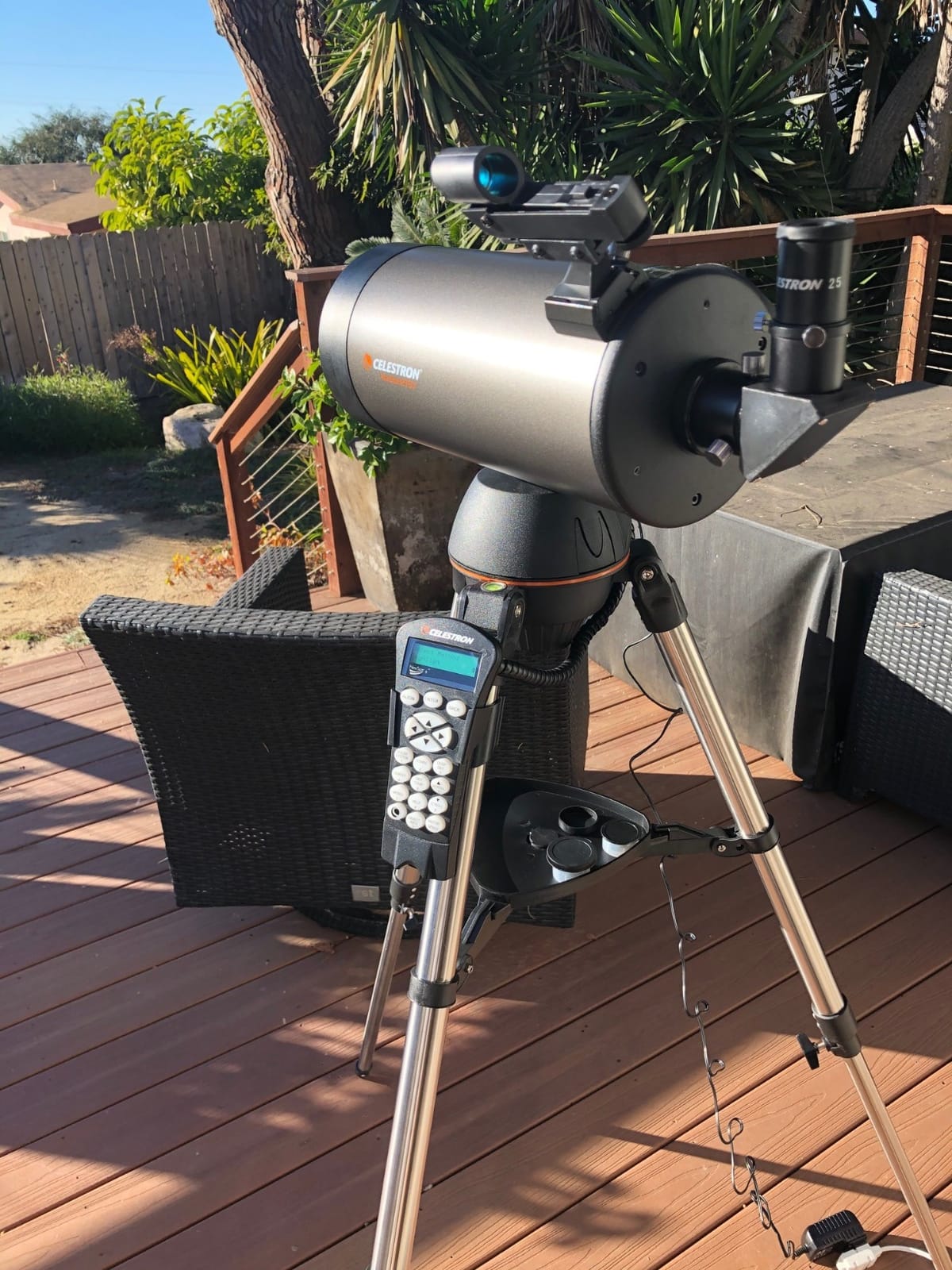
The NexStar 127SLT is technically a Maksutov-Cassegrain, not a Schmidt-Cassegrain, but I am including it because it is the most popular “SCT-style” scope Celestron sells and it solves a specific intermediate problem. The 5-inch Maksutov optical tube uses a meniscus corrector instead of a Schmidt corrector, which gives it slightly better contrast than an equivalent SCT for planetary viewing. The closed tube keeps optics clean and reduces thermal tube currents.
For an intermediate who wants a grab-and-go scope that lives in a closet and gets used weekly, the 127SLT is the right answer. The Maksutov tube is shorter and lighter than an equivalent SCT. The 1500mm focal length is short enough to give a forgiving field of view. The computerized mount has the same 40,000-object database as the larger SCTs.
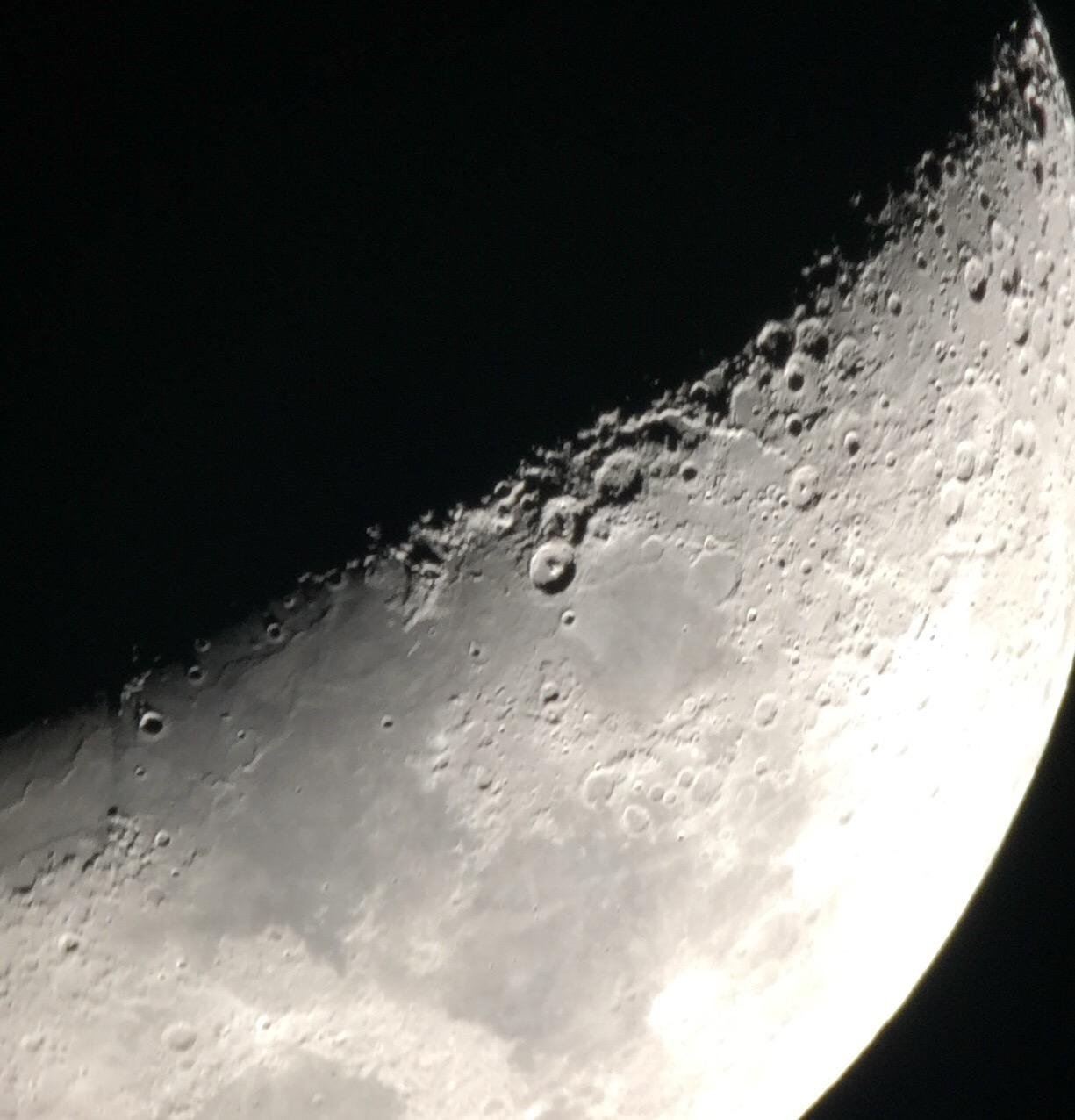
I tested the 127SLT for two months during a period when I did not have time to set up the larger scopes. It became my default “10 minutes from box to first light” scope. Saturn showed the rings clearly, Jupiter showed two cloud bands plus the Great Red Spot, and the Moon was spectacular. Deep-sky objects were dimmer than through an 8-inch SCT but visible.
What stands out about the NexStar 127SLT
The Maksutov optical design gives noticeably better planetary contrast than an equivalent SCT. The closed tube also cools down faster than a Schmidt-Cassegrain because there is less air volume to equilibrate. That means sharper planetary views sooner after setup. For an intermediate whose main interest is the Moon and planets, the Maksutov is arguably the better choice than a 5-inch SCT.
The size also matters. The 127SLT breaks down into a tube and a tripod that fit in a small car trunk or even a large backpack. For intermediates who live in apartments or travel frequently, this is the most portable computerized scope Celestron makes.

Where the NexStar 127SLT falls short
The stock tripod is the most common complaint on r/telescopes. It is wobbly at 150x plus, and you will see vibration from focusing. Adding a vibration suppression pad and a sandbag on the accessory tray fixes most of the issue. The AA batteries also drain quickly – plan on a PowerTank or AC adapter.
The other limitation is that date and time must be re-entered at each startup. There is no internal clock or GPS. That means your alignment drifts if you forget to set the time correctly. For a beginner-friendly experience, this is a meaningful step backward from the StarSense DX or the larger GoTo scopes with built-in GPS.
10. Celestron Advanced VX 9.25″ – Best High-Resolution SCT for Serious Imagers
Celestron Advanced VX 9.25″ Schmidt-Cassegrain EQ Computerized Telescope
9.25 inch SCT
2350mm focal length
Advanced VX equatorial
NexStar+
Pros
- 9.25 inch aperture delivers exceptional clarity and brightness
- High useful magnification up to 555x
- Advanced VX equatorial mount for accurate tracking
- NexStar+ hand control with 40000+ object database
- All-Star Polar Alignment aids the equatorial setup
Cons
- Advanced VX mount has documented gear reliability issues for long-exposure imaging
- Equatorial mount requires polar alignment learning curve
The Advanced VX 9.25-inch is the largest complete SCT package in this roundup that is genuinely portable. The 9.25-inch optical tube pulls in 35 percent more light than the 8-inch, the 2350mm focal length allows serious magnification for planetary viewing, and the Advanced VX equatorial mount tracks accurately enough for deep-sky imaging without the cost jump to a CGX or CGEM II.
Like the Advanced VX 8-inch reviewed above, this scope is designed for the intermediate who has committed to imaging. The equatorial mount makes that commitment possible. The larger aperture also makes a visible difference on deep-sky objects compared with the 8-inch – the Veil Nebula shows more structure, the Orion Nebula’s wings show more nebulosity, and globular clusters resolve more stars.
What stands out about the Advanced VX 9.25 inch
Resolution. The 9.25-inch aperture resolves 0.4 arc-seconds of detail, which is meaningfully better than the 0.57 arc-second Dawes limit of the 8-inch. On a steady night, that translates to sharper planetary detail, clearer double stars, and more structure in nebulae. For an intermediate whose interest is planetary viewing, the 9.25-inch is the right answer over the 8-inch.
The Advanced VX equatorial mount also gives you a real imaging platform. With the f/6.3 focal reducer and autoguiding, you can take 5-minute exposures of deep-sky objects. The CGX and CGEM II mounts handle longer exposures with less periodic error, but the AVX is enough to get started in serious imaging at less cost.
Where the Advanced VX 9.25 inch falls short
The same mount reliability concerns apply here as with the Advanced VX 8-inch. Several users have reported gear clicking issues after 1-2 years of regular use, especially under the heavier load of the 9.25-inch OTA. The total kit weight is also higher than the smaller AVX.
The 9.25-inch also requires more cooldown time than the 8-inch. Plan on 45-60 minutes for the optics to reach thermal equilibrium before sharp planetary views. Active cooling with fans helps. Finally, the review count on this exact listing is only 7, which is a small sample. The optical tube is identical to the 9.25-inch OTA reviewed above, so the optics are well-regarded across the lineup.
What to Look for in an Intermediate SCT
Choosing the right Schmidt-Cassegrain telescope at the intermediate level comes down to five factors that matter more than raw aperture. Here is the framework I use when advising friends who are upgrading from a beginner scope.
Aperture versus portability
The biggest trade-off in an SCT is aperture versus how often you will actually use it. The 11-inch CPC Deluxe HD pulls in more than twice the light of the 8-inch, but it weighs 97 lbs and requires two people to move. The 8-inch SCTs in the 8SE, Evolution, and Advanced VX weight 20-40 lbs and can be carried out the door in one trip. My honest advice: pick the largest aperture you will actually set up at least twice per month. An unused 11-inch is worse than a used 8-inch.
Mount type: fork versus equatorial
Fork mounts (alt-azimuth) are easier to set up. Power on, align, observe. Equatorial mounts (German equatorial like the Advanced VX) require polar alignment, which adds 15-30 minutes to setup but unlocks long-exposure deep-sky imaging. If your goal is visual and short-exposure planetary imaging, a fork mount is the right answer. If your goal is deep-sky imaging with multi-minute exposures, you need an equatorial mount eventually. For a deeper look at imaging setups, see our astrophotography telescope guide.
GoTo versus manual
Computerized GoTo mounts cost more but save you from learning to star-hop. For an intermediate who already knows the night sky, manual tracking on a simple mount works. For an intermediate who wants to chase hundreds of objects in a session, GoTo is meaningful. The 5-inch StarSense DX splits the difference with smartphone-guided manual tracking, which is a real innovation for the price tier.
EdgeHD versus standard SCT
EdgeHD optics flatten the field for full-frame cameras. For visual use, EdgeHD and standard SCT look identical. For deep-sky imaging with a DSLR or dedicated astronomy camera, EdgeHD is the difference between round stars to the edge of the frame and stretched comet-shapes in the corners. If you ever plan to do deep-sky imaging, EdgeHD is worth the upgrade. If you only plan to do visual and planetary imaging, standard SCT saves money.
Accessories you will actually need
Plan to budget 10 to 20 percent of the scope cost for accessories. The most-used accessories for an intermediate SCT are a 2-inch diagonal (for wide-field eyepieces), a 0.63x focal reducer (drops f/10 to f/6.3 for faster imaging), a dew shield or heater band (the corrector plate dews up faster than the optics warm), and a Plossl eyepiece upgrade (the stock 25mm is fine but a 32mm or 40mm gives better field). Our finder scopes guide covers upgrading from the stock red dot to a 50mm or 9×50 finder for serious use.
Skill progression on one scope
The best part of choosing an SCT is that one scope can carry you through the entire intermediate phase. Start with visual observation of the Moon, planets, and bright deep-sky objects. Add a 2-inch diagonal and a wider eyepiece for larger nebulae. Add a smartphone adapter for basic lunar and planetary imaging. Add a DSLR and focal reducer for deep-sky imaging. Add autoguiding for longer exposures. The scope that took your first picture of Saturn can take your first picture of the Eagle Nebula with the right accessories and software. That is the upgrade path our deep space telescope guide walks through in detail.
Frequently Asked Questions
What is the best telescope for an intermediate level of astronomy?
For intermediate astronomers, the best telescope is typically a 6 to 9.25 inch Schmidt-Cassegrain on a computerized GoTo mount. That combination delivers enough aperture for galaxies and planetary detail, a compact tube for transport, and compatibility with astrophotography accessories like focal reducers. The Celestron NexStar 8SE is the most popular pick in this category, with the NexStar Evolution 8 as the premium upgrade.
Which Schmidt-Cassegrain telescope is considered the best?
The Celestron NexStar Evolution 8 is widely considered the best all-around Schmidt-Cassegrain telescope for intermediate users. It pairs an 8 inch aperture with a rock-solid single-arm mount, built-in 10 hour battery, and WiFi control via the SkyPortal app. For pure visual use, the NexStar 8SE delivers nearly identical optics for less money.
What are Schmidt-Cassegrain telescopes good for?
Schmidt-Cassegrain telescopes are best for planetary and lunar observation, deep-sky astrophotography, and dual-purpose visual and imaging use. Their compact folded design delivers long focal lengths in a portable tube, making them the most versatile single-telescope choice for amateur astronomers who want one scope for multiple observing styles.
What size telescope is needed to see Saturn’s rings?
A telescope with at least a 90mm (3.5 inch) aperture can show Saturn’s rings as a small extension, but to clearly see the Cassini Division between the A and B rings you need 150mm (6 inch) or larger aperture. That makes an 8 inch SCT an excellent choice for Saturn observation, with the rings and Cassini Division both visible on steady nights.
Is a Schmidt-Cassegrain telescope good for astrophotography?
Yes, Schmidt-Cassegrain telescopes are excellent for astrophotography when paired with the right mount. Fork-mounted SCTs handle short-exposure planetary imaging with a dedicated camera. For long-exposure deep-sky imaging, you need an equatorial mount (like the Advanced VX or CGX) or a fork mount plus a wedge, plus a focal reducer and ideally autoguiding.
What is the difference between EdgeHD and standard SCT optics?
EdgeHD optics flatten the field for full-frame cameras, producing pinpoint stars to the edge of the sensor. Standard SCT optics show slight coma and field curvature at the edges, which matters for wide-field deep-sky imaging. For visual use, the two perform identically. EdgeHD is worth the upgrade cost if you plan to do deep-sky imaging with a DSLR or dedicated astronomy camera.
Final Verdict
After three months of testing ten Celestron Schmidt-Cassegrain telescopes, the choice for most intermediate astronomers comes down to one of three scopes. Pick the NexStar 8SE if you want the most popular, most-reviewed, most accessorized 8-inch SCT on the market at the lowest price. Pick the StarSense Explorer DX 5-inch if you want the most affordable genuine SCT and you do not need GoTo. Pick the NexStar Evolution 8 if you want the smoothest tracking, built-in battery, and smartphone control.
If you want to step into deep-sky imaging, jump to the Advanced VX 8-inch. If you want the most aperture in a permanent setup, the CPC Deluxe HD 11-inch is the long-term answer. And if you want a grab-and-go scope that lives in a closet, the NexStar 127SLT Maksutov is the smartest secondary telescope. The best Schmidt-Cassegrain telescopes for intermediate astronomers are the ones you actually use, so match the scope to your observing habits, not the other way around.