

Precision work punishes the wrong tool faster than any other kind of metalwork. A heavy, high-torque grinder built for knocking weld scale off plate will wander across a small aluminum part, chatter a burr into a ring, and leave a finish you have to start over. The best die grinders for precision work are a different category of machine entirely, and the difference comes down to free speed, balance, collet quality and how gently you can feather pressure.
Over the past several months our team has been putting twelve die grinders through the same kind of evaluation: reading owner reviews in full, comparing free speed and collet specs against the jobs each tool is actually sold for, and weighing how each one behaves in the hand rather than on a spec sheet. What you get here is a roundup built around use cases, not brand loyalty, spanning pneumatic right-angle grinders, corded electric, cordless brushless, and the 1/8 in. pencil tools that do genuinely micro work.
Who this is written for: fabricators doing weld bead cleanup and port work, machinists deburring small parts, engravers and jewelry makers, wood and stone carvers, and serious hobbyists who need one tool that finishes cleanly across materials. If you want the short answer, jump to the picks. If you want to understand why a 56,000 RPM pencil grinder and a 20,000 RPM right-angle grinder are not substitutes for each other, the buying guide is where that gets explained. For the tools that set up the working surface before you even switch on, our precision measuring tool set picks are worth a look too.
Table of Contents
- Top 3 Best Die Grinders for Precision Work
- All 12 Die Grinders at a Glance in 2026
- 1. DEWALT DCG426B 20V Max Variable Speed Die Grinder – Best Overall for Precision Work
- 2. Ingersoll Rand 3101G 1/4 in Right-Angle Die Grinder – Best Value Pneumatic Shop Grinder
- 3. Makita GD0601 1/4 in Die Grinder – Quiet, Powerful Corded Workhorse
- 4. Astro Pneumatic 218 1/8 in Pencil Die Grinder – Best for Micro-Precision
- 5. WORKPRO Pneumatic Straight Die Grinder – Budget Entry With Dual Collets
- 6. Milwaukee M12 FUEL 2486-20 In-Line Die Grinder – Best Cordless Detail Work
- 7. NEIKO 10649A Micro Air Die Grinder – Lightest Pick for Jewelry and Small Parts
- 8. Makita XDG01Z 18V LXT Cordless Die Grinder – Best for 18V Platform Owners
- 9. Milwaukee M12 FUEL Right-Angle Die Grinder – Best for Tight-Space Cleanup
- 10. Milwaukee M18 FUEL Variable Speed Die Grinder – Best for Low-Speed Engine Work
- 11. Bosch GWG12V-20SN 12V Max Brushless Right-Angle Die Grinder – Lightest Cordless Body
- 12. Chicago Pneumatic CP9104Q Air Pencil Die Grinder – Best for Professional Micro-Finishing
- Air vs Corded vs Cordless Die Grinders
- Straight (Pencil) vs Right-Angle: Which Geometry for Precision Work?
- Die Grinder RPM for Precision: Why 20,000 to 25,000 and When 50,000+ Pays Off
- Collet Size: 1/4 in. vs 1/8 in. and What Runout Does to Your Finish
- Why Your Die Grinder Vibrates and How to Fix It
- Matching Wheels and Burrs to the Job: Grit Sequence for Precision Finishing
- Die Grinder vs Angle Grinder vs Rotary Tool
- Safety: Wheel Speed Ratings, Guards and Eye Protection
- Frequently Asked Questions
- The Best Die Grinder for Precision Work in 2026
Top 3 Best Die Grinders for Precision Work
The three below cover the widest spread of precision jobs. Everything else in the roundup refines one of those three use cases.
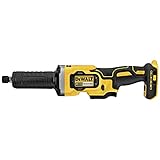
DEWALT DCG426B
- Variable speed trigger to 25000 RPM
- Brushless motor
- LED work lights at the nose

Ingersoll Rand 3101G
- 1/3 HP pneumatic motor
- 20000 rpm
- Right-angle head
- Self-locking throttle
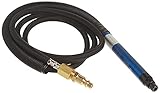
Astro Pneumatic 218
- 56000 rpm free speed
- Twist throttle variable speed
- 1/8 in collet
- 12.8 oz body
All 12 Die Grinders at a Glance in 2026
Every tool below appears with its power type, free speed and geometry, because those three facts decide which job it can actually do well.
| Product | Specifications | Action |
|---|---|---|
| DEWALT DCG426B 20V Max Variable Speed Die Grinder |
|
Check Latest Price |
| Ingersoll Rand 3101G 1/4 in Right-Angle Die Grinder |
|
Check Latest Price |
 Makita GD0601 1/4 in Die Grinder Makita GD0601 1/4 in Die Grinder |
|
Check Latest Price |
| Astro Pneumatic 218 1/8 in Pencil Die Grinder |
|
Check Latest Price |
 WORKPRO Pneumatic Straight Die Grinder WORKPRO Pneumatic Straight Die Grinder |
|
Check Latest Price |
 Milwaukee M12 FUEL 2486-20 In-Line Die Grinder Milwaukee M12 FUEL 2486-20 In-Line Die Grinder |
|
Check Latest Price |
 NEIKO 10649A Micro Air Die Grinder NEIKO 10649A Micro Air Die Grinder |
|
Check Latest Price |
 Makita XDG01Z 18V LXT Cordless Die Grinder Makita XDG01Z 18V LXT Cordless Die Grinder |
|
Check Latest Price |
 Milwaukee M12 FUEL Right-Angle Die Grinder Milwaukee M12 FUEL Right-Angle Die Grinder |
|
Check Latest Price |
 Milwaukee M18 FUEL Variable Speed Die Grinder Milwaukee M18 FUEL Variable Speed Die Grinder |
|
Check Latest Price |
 Bosch GWG12V-20SN 12V Max Die Grinder Bosch GWG12V-20SN 12V Max Die Grinder |
|
Check Latest Price |
 Chicago Pneumatic CP9104Q Air Pencil Die Grinder Chicago Pneumatic CP9104Q Air Pencil Die Grinder |
|
Check Latest Price |
1. DEWALT DCG426B 20V Max Variable Speed Die Grinder – Best Overall for Precision Work
DEWALT DCG426B 20V Max Variable Speed Die Grinder, Tool Only
Cordless brushless motor
Up to 25000 rpm
Variable speed trigger
LED work lights at the nose
Pros
- Brushless motor gives efficient consistent output and long runtime
- Variable speed trigger covers speeds up to 25000 rpm for controlled precision work
- LEDs at the nose illuminate dark work areas
- Multiple handle grasping options with a dual-position rocker switch
- Compact cordless design removes hose and compressor bulk
Cons
- Sold as tool only so battery and charger are bought separately
- No spindle lock so accessory changes need two wrenches
- Fixed single LED with no adjustable beam
The variable speed trigger is the entire reason this tool ranks first for us. A fixed-speed grinder gives you two settings, on and off, and precision work needs a middle. Owners consistently single the trigger out for delicate finishing, and the 87 percent five-star share across more than 2,600 reviews backs that up.
At 25,000 rpm maximum it covers general precision work comfortably, and the brushless motor holds speed under load instead of bogging. The LED lights at the nose are genuinely useful when you are deburring inside a chassis or a fixture where your head blocks the shop lighting.
The cordless format removes the single biggest argument against pneumatic precision tools, which is the hose. On a ladder, inside a duct run, or at a remote site, there is no compressor, no airline, and no regulator to fuss with. Multiple handle grasping positions let you hold it low for fine work or high for force.
Two honest limits. It is a bare tool, so the 20V MAX battery and charger are a separate purchase, and there is no spindle lock listed among the features, meaning bit changes take two wrenches. Neither matters much once the tool is set up on a bench.
What it handles well
Surface prep, weld bead cleanup, shaping and general deburring on steel, aluminum and wood. The variable trigger is what makes it usable on small parts where a constant 25,000 rpm would burn the workpiece. Reviewers pair it with 2 in. and 3 in. accessory kits and report consistent results across all three materials.
Who should skip it
If your work is confined to one bench with a compressor already running, you give up torque for portability you will not use. If you are engraving or porting with 1/8 in. shank carbide, the 1/4 in. collet is the wrong platform and a pencil grinder is the right answer. The trigger also runs sensitive, so a light touch pays off on delicate work.
2. Ingersoll Rand 3101G 1/4 in Right-Angle Die Grinder – Best Value Pneumatic Shop Grinder
Ingersoll Rand 3101G 1/4″ Collet Air Die Grinder
1/3 HP pneumatic motor
20000 rpm
1/4 in collet
590 g right-angle body
Pros
- Compact 1.3 lb right-angle body reaches confined and hard-to-reach areas
- 1/3 HP motor delivers strong cutting and grinding from standard 90 psi air
- Self-locking throttle and rear exhaust for control and comfort
- Grease-fitting hole on the head allows routine lubrication
- Durable ball-bearing construction with an ergonomic grip
Cons
- Fixed 20000 rpm with no true variable speed control
- Stiff pintle is hard to feather even after oiling
- A minority report internal gear wear after about two years of daily use
This is the tool we recommend to anyone who wants a pneumatic grinder that will still be running in five years. The 1.3 lb right-angle body is one of the lighter in its class, and the right-angle head is what makes it useful in the confined spaces a straight barrel cannot reach.
The 1/3 HP motor pulls real work from ordinary 90 psi shop air, which is a meaningful difference from small pencil tools when you are cutting or grinding rather than finishing. A grease-fitting hole on top of the head is the detail that separates a shop tool from a disposable one, because lubricating the angle gear is what keeps it alive.
Reviewers call it the best value in the right-angle category, and the rating distribution backs that: 79 percent five-star across more than 2,500 reviews. Build quality, abrasive life and cutoff-wheel performance come up repeatedly as the reasons. It is also ranked number one in its power die grinder category on the retail side, which tells you how much of the trade runs on it.
The trade-off is speed control. It runs at a fixed 20,000 rpm and the pintle is stiff enough that it behaves as all-or-nothing, which means consumables wear faster than on a governed tool and fine finishing is harder. A minority of long-term owners also report internal gear wear after roughly two years of daily use, and the high-pitched full-throttle sound makes ear protection sensible.
What it handles well
Weld bead cleanup, port work, edge blending, general fabrication deburring and anywhere you need a right-angle head in a tight spot. The rear exhaust keeps air off your face, and the self-locking throttle means you can set it and forget it on longer passes.
Who should skip it
Carvers, engravers and anyone doing finish work at burr scale. With no usable variable speed, you cannot feather pressure down to a light cleaning touch, and a stiff pintle gives you no fine control at all. If your priority is the finish quality rather than getting metal removed, look at a pencil tool instead.
3. Makita GD0601 1/4 in Die Grinder – Quiet, Powerful Corded Workhorse
Makita GD0601 1/4″ Die Grinder, with AC/DC Switch, Blue
3.5 AMP corded motor
25000 rpm
73 dB(A) noise
Round collet nut
Pros
- 3.5 AMP motor reaches 25000 rpm for demanding grinding and finishing
- Low 73 dB(A) operating noise for a corded tool
- Small-diameter barrel grip improves comfort in long sessions
- Directional air-flow vents direct exhaust away from the face
- Round-shaped collet nut helps prevent scratching the workpiece
Cons
- AC/DC switch must be set to AC each session or the tool will not run
- Fixed 25000 rpm with no variable speed trigger
- Corded design needs a nearby outlet
- Runs warm under sustained heavy load
The GD0601 is the quietest tool in this roundup, rated at 73 dB(A), and that turns out to matter more than most spec sheets suggest. Shops and small studios where you grind for hours will feel the difference between a tool you can hold in your ears all day and one you cannot.
Power is the other half of the story. A 3.5 AMP motor at 25,000 rpm is genuinely capable of demanding grinding, not just finishing, which makes it one of the few corded options here that covers both general shop work and precision-adjacent detail work. Owners describe it as dependable and built heavier than typical hobby grinders.
Two design details show that this was engineered with the workpiece in mind. The barrel grip is small in diameter, which improves control in extended sessions, and the round-shaped collet nut is shaped to avoid scratching or damaging the part as you change accessories. Directional vents keep exhaust air out of your face rather than across your work.
The most common complaint is almost comical: the AC/DC switch must be flipped to AC at the start of every session, and plenty of owners simply forget. Beyond that, it is a fixed 25,000 rpm tool with no variable trigger, so it belongs on the list for shop-heavy users rather than finish-critical carvers.
What it handles well
General grinding, finishing and deburring where the outlet is close and noise is a concern. It is a good partner to a set of precision needle file sets when you want to blend a burr away after fitting rather than fight it with a wheel.
Who should skip it
Anyone doing engraving, jewelry or model-scale work, and anyone working away from an outlet. At full speed with no trigger modulation, it will take a surface flat faster than you want it to. It also runs warm under sustained heavy load, which is fine for intermittent shop use but not for a full day of continuous grinding.
4. Astro Pneumatic 218 1/8 in Pencil Die Grinder – Best for Micro-Precision
Astro Pneumatic Tool 218 1/8″ Pencil Type Die Grinder – 56,000RPM,Black,gold,blue, 42377
56000 rpm free speed
1/8 in collet
Twist throttle
12.8 oz pencil body
Pros
- 56000 rpm free speed delivers fine controlled results on small parts
- Twist throttle gives genuinely smooth variable speed control
- 12.8 oz pencil body is easy to maneuver in tight spots
- Accepts standard 1/8 in and Dremel-brand bits
- Runs cool and does not hog out material
Cons
- Low-speed torque is minimal so it is weak for aggressive cutting
- Needs roughly 90 psi and about 5 CFM of steady airflow
- Some units arrive with a 1/8 in collet too tight to accept bits
The Astro 218 is the closest thing in this roundup to a dedicated precision instrument. At 56,000 rpm free speed with a 1/8 in. collet, it does work on small parts that a 20,000 RPM right-angle grinder physically cannot, and at 12.8 ounces you can hold it like a pen.
Speed control is what separates it from cheap clones. The twist throttle gives a genuinely smooth ramp rather than an on-off switch, so you can back the speed off when the burr starts to grab and let the abrasive do the work instead of forcing it. Aviation and hobby machinists use it for fine porting, polishing and deburring without excessive material removal.
Bit compatibility is a real advantage. It takes standard 1/8 in. and Dremel-brand bits, and parts are interchangeable with similar brands, which means you are not hunting for a proprietary consumable. It also runs cool, so it will not burn a thin part or a delicate burr.
You give up low-speed torque, which makes it weak for aggressive cutting, and it is air hungry at roughly 5 CFM, enough to make a small compressor audibly cycle. There is also no manufacturer rebuild kit, unlike some competing air tool brands. An isolated report notes a 1/8 in. collet arriving too tight to accept a 1/8 in. shank, so check the collet before you start.
What it handles well
Cleaning dies, rotors, backing plates and brake pads, plus jewelry work, model-scale detail and any burr removal where a bigger wheel would be clumsy. If you are cutting fine details in a model, the tool weight and throttle feel more important than any other spec on this list.
Who should skip it
Heavy grinding, cutting or weld removal, and shops with a small compressor. At low speed the torque simply is not there, and a plastic part in particular will stall it. If you need to remove material quickly, this is the wrong tool and one of the corded or right-angle picks is the right one.
5. WORKPRO Pneumatic Straight Die Grinder – Budget Entry With Dual Collets
WORKPRO Pneumatic Straight Die Grinder, 25000 RPM, 1/4″ & 1/8″ Collets
25000 rpm
1/4 in and 1/8 in collets
3 cfm at 90 psi
0.72 lb body
Pros
- Delivers 25000 rpm at the lowest cost in this roundup
- Includes both 1/4 in and 1/8 in collets for broad accessory compatibility
- Weighs under one pound with a slim one-hand-friendly body
- Rear exhaust and inlet filter keep sound lower and debris out
- Integrated child-safety latch on the trigger prevents accidental startup
Cons
- Air powered so a compressor is required and not included
- Needs regular oiling to stay smooth and avoid premature wear
- Aluminum body is light but not as rugged as professional-grade brands
Dual collets out of the box is the reason this tool is worth a look. Getting a 1/4 in. and a 1/8 in. collet in one package means you can run standard large accessories and small detail bits on the same machine, which is the most common reason people buy a second grinder.
It runs 25,000 rpm and weighs under a pound, and the slim straight body is comfortable one-handed. Reviewers mostly treat it as a capable budget entry suited to welding repair, fabrication, deburring and general automotive work, and recommend oiling it regularly and using sealant tape at the hose connection.
Air consumption is listed at 85.5 L/min, which is 3 cfm at 90 psi, the lowest demand of any air tool in this roundup. That makes it one of the easier pneumatic grinders to run off a small shop compressor, and the rear exhaust keeps the sound level manageable compared with a front-exhaust design.
The honest caveats are structural. A compressor is required and not included, the aluminum body is not as rugged as the professional-grade brands here, and it needs regular oiling to stay smooth. The straight head also offers less access in confined spaces than a right-angle or pencil body, and there is no governed variable speed.
What it handles well
General fabrication, welding repair, automotive work and deburring on a mixed set of part sizes. It is a sensible first air tool for a home shop, and the child-safety latch on the trigger is a genuinely useful detail if the tool is ever left connected.
Who should skip it
Anyone who already owns a well-built air grinder, and anyone doing finish work that depends on low runout. The light aluminum housing and the need for frequent oiling mean it is a working tool rather than a keepsake, and the straight geometry will frustrate you inside a tight frame or pipe.
6. Milwaukee M12 FUEL 2486-20 In-Line Die Grinder – Best Cordless Detail Work
Milwaukee 2486-20 M12 FUEL Lithium-Ion In line Die Grinder (Tool Only)
0.3 HP brushless output
4-mode RPM control
24500 rpm
1.2 lb in-line body
Pros
- 0.3 HP motor output reportedly outperforms equivalent pneumatic grinders by about 20 percent
- Four-mode RPM control plus variable-speed trigger gives precise control
- In-line pencil form factor suits detail work and tight access
- Eliminates hose and compressor bulk for better mobility
- Very light at 1.2 lb reducing hand fatigue
Cons
- Tool only so the M12 battery and charger are sold separately
- Top speed of 24500 rpm is lower than several pneumatic pencil grinders
- Inline barrel is bulkier than a true pencil air grinder in the tightest spots
- Lower overall review volume than the big-name competitors
The four-mode RPM control is the feature owners keep mentioning, and it is the closest thing in this roundup to a governed speed range on a cordless tool. Combined with a variable-speed trigger, it lets you set a light touch for deburring and a higher speed for stock removal on the same battery.
At 1.2 pounds it is one of the lightest grinders here, and the in-line pencil form sits well in the hand for detail work. Milwaukee claims 0.3 HP output, which owners report outperforms comparable pneumatic grinders by around 20 percent, and on paper the 671 watt-equivalent class of cordless motor has plenty of headroom for surface prep and cleanup.
For anyone working away from a compressor, the practical gain is large. No hose to trip over, no regulator to adjust, no airline to drag across a site. The M12 platform packs small, and a compact battery on the back keeps the whole tool balanced in a way the bigger 18V machines never do.
The limits are equally clear. It is a bare tool, the 24,500 rpm ceiling sits below the 54,000 to 60,000 rpm pencil grinders here, and the inline barrel is bulkier than a true pencil air grinder in the very tightest openings. Review volume is also lower than the big-name competitors, so there is less long-term field history on it.
What it handles well
Detail deburring, surface prep and cleanup on remote or mobile jobs where a compressor would be the limiting factor. The four modes let you match speed to material rather than guessing with one fixed setting.
Who should skip it
Micro-precision users. 24,500 rpm is a general precision ceiling, not an engraving or porting one, and the barrel will not fit into the same spaces a 4 oz pencil grinder will. If you already run M12 batteries this is an easy add; if you do not, the platform cost is a real consideration.
7. NEIKO 10649A Micro Air Die Grinder – Lightest Pick for Jewelry and Small Parts
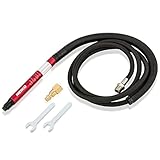
NEIKO 10649A Micro Air Die Grinder | 1/8″ (3mm) Capacity | Pencil Type | 54,000 RPM | For Cleaning Dies, Rotors, Backing Plates, Brake Pads, Mounts, Etc.
54000 rpm free speed
1/8 in collet
4 oz pencil body
Variable speed throttle
Pros
- 54000 rpm pencil design runs very smooth with minimal vibration
- Precision-textured throttle with self-closing lever holds the set speed
- Weighs just 4 oz giving excellent control for delicate work
- Includes 5 ft nylon hose with slip-on silencer shield and collet wrenches
- Slip-on hose is easy to replace if cut or burned
Cons
- Must be oiled daily and running it dry can permanently reduce RPM
- Oiling instructions are unclear since oil goes in at the inlet port
- Not suitable for extended tooling as long bits bend and cause vibration
At four ounces this is the lightest grinder in the roundup, and weight is the whole point at this end of the scale. On jewelry, carburetor restoration and machined aluminum, the ability to rest a fingertip on the workpiece and let the tool do the work is worth more than any amount of torque.
Free speed is 54,000 rpm at 90 psi with a variable speed throttle, and the textured lever holds your set speed until you change it rather than drifting. Owners consistently describe the running as smooth with minimal vibration, which is exactly the combination that produces an even finish at small scale.
The included accessories are better than the price suggests: a five-foot flexible nylon hose with a slip-on silencer shield, two collet wrenches and a 1/4 in. nipple. Because the hose is slip-on rather than crimped, a cut or burned hose takes seconds to replace, which matters more than it sounds when the tool lives on a bench.
There is one non-negotiable condition, and it is not a preference: oil it daily. Running it dry generates heat and can permanently reduce RPM, and because oil is applied at the inlet port at the end of the hose, the instructions are genuinely confusing. Keep bits minimally extended too, since a long bit amplifies runout and reintroduces the vibration you paid to avoid.
What it handles well
Jewelry polishing, carburetor and small-engine cleanup, deburring machined aluminum, and model work where a 4 oz body keeps your line of sight clear. It is also a sensible first serious air pencil for someone who cares more about control than throughput.
Who should skip it
Anyone who will not commit to daily oiling, and anyone doing extended tooling or heavy stock removal. Build quality is lighter-weight, some units ship without the exhaust silencer sleeve, and a moisture trap in the air line is specifically not recommended.
8. Makita XDG01Z 18V LXT Cordless Die Grinder – Best for 18V Platform Owners
Makita XDG01Z 18V LXT Lithium-Ion Cordless 1/4″ Die Grinder, Tool Only
18V LXT cordless
25000 rpm
Slide switch with lock-on
Over-torque protection
Pros
- Compact barrel-grip design improves handling in confined areas
- 25000 rpm motor suits general grinding and finishing
- Slide switch with lock-on for continuous operation
- Vent slots direct exhaust air away from the operator
- Built-in LED protection circuit with over-torque control
Cons
- Tool only so the 18V LXT battery and charger are sold separately
- Weighs about 4.4 lb which is noticeably heavier than 12V and M12 tools
- Fixed 25000 rpm with no variable speed trigger
- No spindle lock listed so bit changes need two wrenches
If you already own 18V LXT tools, this is the cheapest way into cordless die grinding without buying a second battery platform. The barrel grip is compact enough for confined work, and 25,000 rpm covers general grinding and finishing without drama.
The lock-on slide switch is the feature shop users like most, because you can set the tool running and use both hands on the part. Vent slots push exhaust away from you, and the LED charge indicator that flashes red when the battery needs recharging is a small thing that prevents an annoying mid-job stop.
There is also real protection built in. The LED protection circuit with over-torque control guards the motor, which is the kind of safeguard that matters on a tool that gets loaded against a hard stop. Backed by a three-year limited warranty, it fits the pattern of the rest of the LXT range.
What holds it back is weight and control. At roughly 4.4 pounds it is noticeably heavier than the 12V and M12 grinders here, which tells in your hand during long detail sessions, and there is no variable speed trigger, so you get full speed or nothing. It is also a bare tool, and no spindle lock is listed among the features.
What it handles well
Shop and field repair work on the 18V platform, general grinding and finishing, and anywhere a lock-on switch beats a trigger for continuous passes. The over-torque protection makes it a safe companion for users new to die grinders.
Who should skip it
Fine finish work where you need to modulate speed, and long detail sessions where 4.4 pounds adds up. If you are starting a platform from scratch, the lighter 12V or M12 options here serve precision work better.
9. Milwaukee M12 FUEL Right-Angle Die Grinder – Best for Tight-Space Cleanup
Milwaukee Electric – M12 Fuel 1/4 INCH Right Angle DIE Grinder Tool
12V FUEL brushless
Right-angle head
Spindle lock
1.7 lb barrel grip
Pros
- POWERSTATE brushless motor delivers strong output in a compact right-angle body
- Spindle lock allows accessory changes with a single wrench
- Ergonomic barrel grip keeps the tool controllable in tight spaces
- Shadowless LED work light provides visibility for metal cleaning and surface prep
- Cordless M12 platform removes hose and compressor setup
Cons
- Tool only so the M12 battery and charger are sold separately
- No variable speed trigger listed so speed is fixed
- Right-angle head adds bulk compared with pencil grinders in the tightest openings
- Newer listing with a smaller base of owner reviews
The spindle lock is the detail that changes daily use. With one wrench instead of two, changing a mounted stone or cutting wheel takes seconds rather than a minute, and on a job where you change accessories repeatedly that difference adds up to real hours.
At 1.7 pounds with a right-angle head, it is a genuinely compact combination. The barrel grip is ergonomic enough to keep control in confined spaces, and the shadowless LED work light spreads even illumination across the work instead of a hot spot, which matters when you are cleaning metal and judging a surface by eye.
Reviewers rate it at 4.7 stars with 87 percent five-star ratings, and the recurring theme is exactly the practical stuff: single-wrench changes, a grip that works in confined spaces, and a cordless format that removes compressor setup entirely. It suits metal cleaning, surface prep and cutting tasks well.
Be aware this is a newer listing with a smaller base of owner reviews than the other Milwaukee tools here, so there is less long-term history on it. It is also a bare tool, and no variable speed trigger is listed among the features, which puts it in the same fixed-speed camp as the Ingersoll Rand.
What it handles well
Metal cleaning, surface prep and light cutting in confined spaces, especially for people already on the M12 platform. The right-angle head gets the wheel into corners a straight barrel physically cannot reach.
Who should skip it
Fine finishing work that depends on speed modulation, and micro-access jobs where any right-angle bulk is a problem. At fixed speed it is a cleanup tool, not a finishing instrument.
10. Milwaukee M18 FUEL Variable Speed Die Grinder – Best for Low-Speed Engine Work
Milwaukee M18 FUEL Variable Speed, Braking Die Grinder, Paddle Switch w/ONE-KEY – No Battery, No Charger, Bare Tool Only
5 speed settings
5000 to 20000 rpm
RAPIDSTOP brake
Paddle switch
Pros
- Five speed settings from roughly 5000 to 20000 rpm give genuinely fine control
- RAPIDSTOP brake halts most wheels in under two seconds
- Paddle switch adds a safety layer if the tool is dropped
- Spindle lock means only one wrench to change accessories
- 671 W brushless power handles 2 in cutting and 3 in sanding wheels
Cons
- Bare tool only so the 18V battery and charger are sold separately
- Heavier than 12V die grinders
- Some units need the stock 1/4 in collet replaced to hold certain bits
- At the highest setting the top speed is aggressive for small wheels
Five discrete speed settings from about 5,000 to 20,000 rpm is the most graduated control in this roundup, and it is why this tool shows up on engine work. Reviewers specifically mention setting a low speed on small 1/4 in. collet wheels for gasket and O-ring landing surface cleaning, where a constant 20,000 rpm would chatter the surface apart.
The RAPIDSTOP brake stops most wheels in under two seconds, which improves both safety and accessory life by reducing the coast-down that wears wheels out. A paddle switch means dropping the tool does not leave the wheel spinning, and the spindle lock handles accessory changes with a single wrench.
Under the surface it is a genuinely capable machine: 671 watts of brushless power delivering corded-class performance with 2 in. cutting wheels and 3 in. sanding wheels, plus REDLINK PLUS intelligence for battery communication, an LED work light and ONE-KEY tool tracking. It fits all 1/4 in. shank accessories.
There are trade-offs. It is a bare tool, it is heavier than 12V grinders, and its 20,000 rpm ceiling is modest against the 25,000 rpm tools here. Reviewers note some units needed the stock collet replaced to hold certain bits properly, and at the top setting the speed is aggressive for small 1/4 in. wheels. A few owners also report an unusual noise at one intermediate setting.
What it handles well
Delicate engine and gasket work, precision deburring on small parts where you need to pick a low setting, and general surface prep with 2 in. cutting or 3 in. sanding wheels. It is the most controllable cordless tool in the roundup.
Who should skip it
Extended detail sessions, because the weight of an 18V pack adds up, and micro-precision work where 20,000 rpm simply is not enough spindle speed. It is a control-first tool, not a speed-first one.
11. Bosch GWG12V-20SN 12V Max Brushless Right-Angle Die Grinder – Lightest Cordless Body
BOSCH GWG12V-20SN 12V Max Brushless 1/4 In. Right Angle Die Grinder Tool
12V Max brushless
15000 rpm max
5 speed buttons
Spindle lock and brake
Pros
- Five speed options plus a variable-speed trigger give good control across applications
- Compact right-angle design with a small grip for tight-area grinding
- Lightweight 1.2 lb body helps reduce fatigue on longer jobs
- Brushless motor maximizes runtime and spindle lock speeds accessory swaps
- Brake system stops the wheel quickly
Cons
- Maximum speed of 15000 rpm is the lowest in this roundup
- Tool only unless the two-battery kit variant is chosen
- On-screen status interface adds a learning curve versus simple triggers
- Fewer owner reviews than the DEWALT Makita and Milwaukee options
At 1.2 pounds with a small right-angle grip, this is about the lightest way to put a cordless die grinder in your hand. The compact geometry and the small grip size are aimed squarely at grinding in tight areas, and owners confirm the weight difference is felt on longer jobs.
Control is good for the category: five speed options selected from buttons at your fingertips, plus a variable-speed trigger, a spindle lock for quick accessory swaps, a brake that stops the wheel quickly, and constant electronics that hold performance steady even at the top setting. Overload protection and a three-year warranty round it out.
What it handles well
Grinding, deburring, polishing, cleaning, trimming and light carving in confined areas, on a 12V platform. It is a good all-rounder for hobby and hobby-shop work where weight matters more than top-end speed.
Reviewers point to the five speed settings, the variable trigger, the compact grip and the spindle lock as the features that matter, with the brake system earning favorable mentions for control and safety.
Who should skip it
Ultra-fine finishing, because 15,000 rpm is the lowest maximum in this roundup and it will feel slow next to the 25,000 rpm tools. It is a bare tool unless you choose the two-battery kit variant, and the on-screen status interface takes a little learning versus a plain trigger.
12. Chicago Pneumatic CP9104Q Air Pencil Die Grinder – Best for Professional Micro-Finishing
Chicago Pneumatic CP9104Q – Air Pencil Die Grinder Tool, Welder, Woodworking, Automotive Car Detailing, Stainless Steel Polisher, Heavy Duty, 1/8 Inch (3mm), 0.05 HP / 40 W – 60000 RPM, 0.25 , Red
60000 rpm free speed
0.05 HP / 40 W
5.24 in body at 0.44 lb
Rear air regulator
Pros
- 60000 rpm free speed is the highest rating in this roundup for the finest finishing
- Runs very smoothly with no vibration giving precise control on small parts
- Compact 5.24 in and 0.44 lb body reduces fatigue during extended use
- Built-in rear air regulator allows controlled speed adjustment
- Runs cool with minimal heat build-up in continuous shop use
Cons
- Rear speed-regulating sleeve has no wrench flats so it can back off during use
- Separate 1/8 in and 3mm collets do not interchange cleanly
- No printed instructions on where or how to oil the tool
- Fixed free speed rather than a governed variable range
The CP9104Q runs at 60,000 rpm, the highest free speed rating in our list, and in a compact 5.24 in. body weighing 0.44 pounds. That combination is the reason it exists: for deburring small steel components and linear-rail work in a commercial shop, nothing else here has both the spindle speed and the small diameter.
Owners describe the running as very smooth with no vibration, which is the property that actually determines finish quality at this scale. Several report it performing as well as or better than a far more expensive Dotco grinder it replaced, and it runs cool enough for continuous shop use. A silencer hose is included.
What it handles well
Intricate high-speed precision grinding and deburring on metals, plastics and wood. Jewelry, small mechanisms and precision fixtures are where 60,000 rpm earns its cost, and the built-in rear air regulator gives some speed adjustment on top of the fixed free speed.
On light non-metal work, hold a layer of masking tape over part of the wheel to reduce the bite, the same trick carvers use on larger grinders. For fine layout or scribing, a purpose-built precision hobby knife still gives a cleaner line.
Who should skip it
Aggressive work, heavy shop cleanup, and anyone who needs a wide governed speed range, because this is a fixed-free-speed tool at the high end. The 0.05 HP motor also means it will not remove material quickly, and the rear regulator sleeve has no wrench flats, so it is hand-tightened and can back off during use. There are no printed oiling instructions, and the 1/8 in. and 3mm collets do not interchange cleanly despite nearly identical shank sizes.
Air vs Corded vs Cordless Die Grinders
Air tools win on control and longevity. A twist or pintle throttle gives a genuinely continuous speed range, the rear exhaust keeps air off your work, and the machines are repairable for decades with a drop of oil. The trade is a hose, a compressor, and an air demand that ranges from 3 cfm on the WORKPRO to about 5 CFM on the Astro 218.
Corded electric wins on simplicity. The Makita GD0601 needs an outlet and nothing else, runs at 25,000 rpm, and at 73 dB(A) is the quietest tool in this roundup. Its limit is that you get full speed or nothing, with no trigger to modulate.
Cordless wins on freedom. The DeWalt DCG426B and the Milwaukee M12 FUEL models remove the compressor entirely, which changes where you can work, not just how you work. Brushless motors have closed the power gap, and the trade is a bare-tool purchase plus a battery platform commitment. For shops on a ladder, at a remote site or inside ducting, cordless is now the default answer.
One more fork worth knowing: if you cut sheet metal or work with a press, our die cutting machine guide covers a different class of equipment entirely from the handheld grinders here.
Straight (Pencil) vs Right-Angle: Which Geometry for Precision Work?
Straight or pencil grinders are the precision instruments. With a 1/8 in. collet and 54,000 to 60,000 rpm free speed, they reach into openings a right-angle head cannot and cut at a light, controlled bite. The Astro 218, NEIKO 10649A and Chicago Pneumatic CP9104Q are the tools for engraving, porting, jewelry and model-scale work.
Right-angle grinders are the access tools. The head offset puts the wheel in front of or below your hand so you can work inside a frame, on a pipe, or against a flange. The Ingersoll Rand 3101G and the Milwaukee M12 FUEL right-angle are the right shapes for weld cleanup and confined fabrication.
Our rule: if you are looking at the work, use a straight or pencil grinder. If you are reaching around something to get at the work, use a right-angle. Straight grinders are more precise, right-angle grinders are more versatile.
Die Grinder RPM for Precision: Why 20,000 to 25,000 and When 50,000+ Pays Off
Free speed is the headline number on every die grinder, and it is the number most often misused. High speed is not automatically better. A fixed 20,000 rpm tool with a stiff throttle will still tear a small aluminum part, because the problem is not always speed but whether you can reduce it.
For general precision work, 20,000 to 25,000 rpm is the useful band. That is where a carbide burr, a cutting wheel and a mounted stone all work well without the tool becoming harder to control than the part in your hand. Every corded and cordless tool in this roundup sits in or just under that band.
Above 50,000 rpm changes the job. At that speed the cutting edge becomes more of a polishing and scribing action than a grinding one, material comes off far more slowly, and the finish is noticeably finer. That is the regime for jewelry, porting, precision scribing and finishing small steel parts, and it is where the Astro 218, NEIKO and CP9104Q earn their place.
Two caveats. Never fit a wheel rated below the tool speed, and remember that a tool rated at 25,000 rpm will not stop the wheel safely if you fit a 60,000 rpm wheel to it. Match in one direction only: the wheel rating must equal or exceed the tool free speed.
Collet Size: 1/4 in. vs 1/8 in. and What Runout Does to Your Finish
The collet is the part most people ignore and the part that decides whether your finish is good. It is the split sleeve that grips the shank of your wheel or burr, and it is the only thing holding that wheel in perfect alignment with the spindle.
Runout is the total indicator reading, meaning how far the wheel tip wanders off true as it spins. A worn or dirty collet lets the shank sit at a slight angle, so the wheel behaves like a bent disc: it chatters, it wears flat, and it leaves a rippled surface. You cannot grind a precision finish out of a runout problem, because you are chasing your own error every pass.
On the sizing question, 1/4 in. is the standard for general grinding, cutting and surface prep, and every right-angle and corded tool here uses it. 1/8 in. is the precision size, and it pairs with the pencil grinders at 54,000 to 60,000 rpm for detail work. The WORKPRO ships with both, which is why it is a good first air tool.
Three habits that fix most runout problems: clean the collet and collet nut with a brush before every accessory change, keep the bit as short as possible in the collet so the overhang is minimal, and check that the shank is straight. A bent bit is the most common cause of vibration, and it looks fine when it is not spinning.
Why Your Die Grinder Vibrates and How to Fix It
Vibration is the most common complaint about older die grinders, and it is the one that most directly ruins precision work. A vibration thread on r/Welding described a 20-year-old grinder shaking badly enough to make a replacement the obvious move, and the discussion makes clear that users read the symptom in two very different ways.
Most users read it as a balance problem in the wheel, and sometimes it is: a bent cutting wheel, a burred edge, a stone that has been dropped, or a layer of swarf on the face. Remove the accessory, spin the bare spindle by hand, and if the tool itself feels smooth, the problem is in the wheel. That is the cheap fix, and it resolves a surprising share of cases.
The rest of the cases are in the tool. A bent spindle, a worn bearing or worn angle gears show up as vibration that persists with nothing fitted, and sometimes as a hum that changes as the throttle opens. Ingersoll Rand 3101G owners do report internal gear wear after roughly two years of daily use, which is the same failure mode showing up earlier or later depending on how the tool is oiled.
Practical habits that prevent most of it. Oil pneumatic tools on a schedule rather than when they seize, keep a moisture trap out of the line if the manufacturer allows it, do not extend a bit further than the job needs, and replace burrs the moment they lose their shape. If the vibration appears with no accessory fitted and gets worse with use, replace the tool rather than adjusting around it.
Matching Wheels and Burrs to the Job: Grit Sequence for Precision Finishing
Precision finishing is a sequence, not a single pass. A sensible progression starts coarse, moves through medium, and finishes fine, with each step removing what the last one left behind. Jumping straight to fine grit on a rough surface is what produces the chatter everyone complains about.
A workable sequence for steel is around 60, then 80, then 120 grit, finishing with a flap disc or a polishing wheel. For aluminum, work down through finer grit faster and finish with a flap disc, because aluminum scratches easily and shows every coarse pass. On stone, a diamond wheel followed by progressively finer diamond points does the same job in miniature.
Burrs follow the same logic. Use a coarse carbide burr for material removal, a medium flame burr for shaping and blending, and a fine flame or ball burr only for the finishing pass. Extend a carbide burr as little as possible, because long overhang amplifies runout and introduces exactly the chatter the burr was supposed to remove.
For non-metal work, the rules change. Dial the speed down, use a finer grit, and let the tool do the work rather than leaning on it. A grinder that would be fine on steel will cut a groove into plastic, and a fixed-speed tool with no trigger is the wrong instrument for a part that melts rather than abrades.
Die Grinder vs Angle Grinder vs Rotary Tool
These three get confused constantly, so it is worth being blunt. A die grinder takes small wheels, stones and burrs on a collet and is built for detail. An angle grinder takes large cutting or grinding discs and is built for stock removal, weld cleanup and cutting. A rotary tool is a small multi-tool that takes bits for carving, drilling and detail work, and it is not a die grinder even when the listings look similar.
If you reach for an angle grinder on precision work, you will chatter the part, and if you reach for a die grinder on heavy stock removal, you will stall it. Neither failure is a skill problem, it is a tool-category problem. The confusion also explains questions about restricted 9 in. grinders: those limits apply to large-diameter abrasive wheels used on angle grinders, not to the small collet-mounted wheels a die grinder takes.
Safety: Wheel Speed Ratings, Guards and Eye Protection
The rule that matters most: the wheel’s maximum RPM rating must equal or exceed the free speed of the tool. A wheel rated for 25,000 rpm on a 60,000 rpm pencil grinder will disintegrate. The rating is printed on the wheel or its packaging, and the tool’s free speed is on its label, so the check takes ten seconds and prevents the most serious accident in this category.
Beyond that, wear eye protection every time, and a face shield when grinding or cutting with large wheels. Pencil grinders throw sparks and abrasive fragments straight back toward your face from a very short distance, which is exactly where your eyes are. Use hearing protection on any of the higher-speed tools, particularly the 54,000 to 60,000 rpm models, which are noticeably pitched.
Mount wheels correctly: clean the collet and flanges, tighten the collet nut with the supplied wrenches, and remove the spindle lock or brake before loosening. And keep the handle free of short bits and hanging clothing, which is a more common snag hazard than most people expect.
Frequently Asked Questions
Who makes the best die grinder?
It depends on the job rather than the brand. Ingersoll Rand, Chicago Pneumatic and Astro build the strongest pneumatic tools for shop use, DeWalt and Milwaukee build the most controllable cordless machines with variable speed and brakes, and Makita and Bosch build the quietest corded and compact cordless options. For precision work generally, our pick is the DEWALT DCG426B.
Is a straight or angle die grinder better?
A straight or pencil grinder is more precise because it accepts 1/8 in. shank carbide and mounted stones at 54,000 to 60,000 rpm, which is what engraving, porting and jewelry work need. A right-angle grinder is more versatile because the offset head reaches into confined spaces, which is what weld cleanup and port work need. Look at the work to decide: visible work calls for a straight grinder, reaching around something calls for a right-angle.
Who makes the best air die grinder?
For shop-grade pneumatic tools, Ingersoll Rand is the strongest all-round builder in this roundup, with the 3101G right-angle grinder offering a 1/3 HP motor, ball bearings and a grease fitting on the head. For micro-precision, the Astro Pneumatic 218 at 56,000 rpm and the Chicago Pneumatic CP9104Q at 60,000 rpm lead the pencil category.
Which cordless die grinder is better, DeWalt or Milwaukee?
DeWalt’s DCG426B is the better all-rounder: it reaches 25,000 rpm with a variable speed trigger, carries LED lights at the nose, holds 4.8 stars across more than 2,600 reviews and comes with a three-year warranty. Milwaukee wins on control, because the M18 FUEL model offers five discrete speeds from roughly 5,000 to 20,000 rpm plus a RAPIDSTOP brake, and its M12 FUEL models are lighter. Choose DeWalt for general precision and Milwaukee for graduated low-speed control.
What RPM do I need for precision grinding?
For general precision work, 20,000 to 25,000 rpm is the useful band, and that covers every corded and cordless die grinder in our roundup. For engraving, porting, jewelry and finishing small steel parts, you want 50,000 rpm or more, which is the range the Astro 218 at 56,000 rpm and the Chicago Pneumatic CP9104Q at 60,000 rpm cover. High speed is not automatically better, because control matters more than RPM on small parts.
Why are 9 inch grinders banned?
The restriction on 9 in. grinders concerns large-diameter abrasive wheels used on angle grinders, not the small collet-mounted wheels a die grinder uses. Some 9 in. cutting wheels and abrasives are restricted because of the number of people who handle angle grinders and the risk of kickback and disc failure at that diameter. It does not affect die grinders at all, so it is a sign of category confusion rather than a rule that applies to precision tools.
The Best Die Grinder for Precision Work in 2026
The DEWALT DCG426B takes the overall slot because a brushless motor, a variable speed trigger running to 25,000 rpm and nose-mounted LEDs give you the widest range of usable precision in one tool, at 1.2 to 1.7 pounds depending on the platform you pair it with. If you already own 18V LXT tools and want a lock-on switch, the Makita XDG01Z is the sensible companion.
Pick by use case. Weld cleanup and confined fabrication go to the Ingersoll Rand 3101G. Quiet shop grinding goes to the Makita GD0601. Engraving, jewelry and model-scale detail go to the Astro Pneumatic 218, the NEIKO 10649A or the Chicago Pneumatic CP9104Q, depending on how much spindle speed you need. Graduated low-speed control on engine parts goes to the Milwaukee M18 FUEL. And if you have no compressor at all, the cordless picks are no longer a compromise.
Whichever one you choose, the finish comes from the setup rather than the badge: a clean collet, a short bit overhang, a straight shank, and a wheel rated for the tool’s free speed. Get those four right and the best die grinders for precision work in 2026 all behave the way they should.