

If you want one tool that handles the corners, edges and odd angles a full-size random orbital sander physically cannot reach, the BLACK+DECKER BDEMS600 mouse detail sander is the best detail sander in this group. It runs a 1.2 amp corded motor at 16,000 orbits per minute, weighs very little in the hand and carries the deepest review history here, with 19k+ ratings averaging 4.5 stars. Below, I break down ten detail sanders for precision work, from a simple entry-level corded mouse sander to a cordless platform machine with a four-speed trigger.
A detail sander is a compact power sander with a small triangular, mouse-shaped or interchangeable pad that moves in tiny circles to smooth wood in tight corners, along edges and in the gaps between chair rails. The power action is far more consistent than a hand, which matters because a stain or clear finish reveals every cross-grain scratch you leave behind. No detail sander replaces a random orbital sander on a large flat panel, though. If you have not built a full orbital kit yet, our guide to the best random orbital sanders for woodworking covers the other half of the job.
To make the shortlist usable, here is how the ten tools split by category:
Best overall for precision work: BLACK+DECKER BDEMS600 mouse detail sander, 1.2 amp corded, 16,000 OPM.
Best multi-function and value: SKIL SR232301, four-in-one with three tool-free attachments and a 1-1/4 inch dust port.
Best budget file sander: WEN 6307, variable speed from 1,080 to 1,800 feet per minute on a pivoting belt.
Best ultra-budget corner reach: SKIL SR250801 mouse sander at 12,000 OPM and 2.3 pounds.
Best for control and low weight: Milwaukee M12 FUEL 2531-20, 1.5 mm orbit, 1.3 pounds, four speed settings.
Best for paint, rust and metal: HYCHIKA MS200W, 1.6 amp and 14,000 OPM with a six-hole extraction system.
Everything in this roundup was scored on the same criteria: how closely the pad follows a curve, how much the tool heats up under load, whether the paper stays put, and how it behaves under a strong work light once the finish goes on. The honest caveat, and one that every owner report agrees on, is that a detail sander still hands off to a hand sander for the last grit or two.
Table of Contents
- Top 3 Best Detail Sanders (October 2026)
- All 10 Detail Sanders at a Glance in 2026
- 1. BLACK+DECKER BDEMS600 Mouse Detail Sander for All-Round Precision Work
- 2. SKIL SR232301 Multi-Function Detail Sander for the Most Attachment Options
- 3. WEN 6307 Variable Speed File Sander for Contours and Inside Corners
- 4. SKIL SR250801 Corded Detail Sander for Light Corner Work
- 5. HYCHIKA MS200W Detail Sander for Metal, Paint and Rust
- 6. Hammerhead HADS014 Multi-Function Detail Sander as an All-In-One Starter Kit
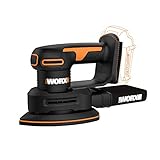
- 7. WORX WX822L.9 Cordless Finger Sander for Craft and Furniture Work
- 8. Milwaukee M12 FUEL 2531-20 Orbital Detail Sander for Precision Control
- 9. CRAFTSMAN CMCW221B 20V MAX Cordless Detail Sander for Vertical Surfaces
- 10. GALAX PRO 119 Corded Detail Sander for the Best Paper Pack
- How to Sand Details on Wood Without Leaving Marks
- What to Look For When Buying a Detail Sander
- What Owners Report Breaking After a Year
- Frequently Asked Questions
- The Verdict on the Best Detail Sanders in 2026
Top 3 Best Detail Sanders (October 2026)

BLACK+DECKER BDEMS600 Mouse Detail Sander
- 16000 OPM corded motor
- Three-position comfort grip
- Finger attachment and dust canister
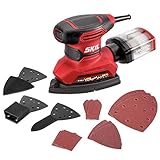
SKIL SR232301 Multi-Function Detail Sander
- Four-in-one tool-free attachments
- Micro-filter plus 1-1/4 inch dust port
- 13500 to 14500 OPM
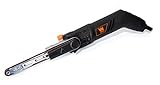
WEN 6307 Variable Speed File Sander
- 1080 to 1800 FPM variable speed
- Pivoting half-inch by 18 inch belt
- Auto-tracking belt system
All 10 Detail Sanders at a Glance in 2026
| Product | Specifications | Action |
|---|---|---|
| BLACK+DECKER BDEMS600 Mouse Detail Sander |
|
Check Latest Price |
| SKIL SR232301 Multi-Function Detail Sander |
|
Check Latest Price |
| WEN 6307 Variable Speed File Sander |
|
Check Latest Price |
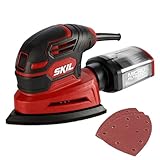 SKIL SR250801 Corded Detail Sander SKIL SR250801 Corded Detail Sander |
|
Check Latest Price |
 HYCHIKA MS200W Detail Sander HYCHIKA MS200W Detail Sander |
|
Check Latest Price |
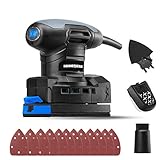 Hammerhead HADS014 Multi-Function Detail Sander Hammerhead HADS014 Multi-Function Detail Sander |
|
Check Latest Price |
 WORX WX822L.9 Cordless Finger Sander WORX WX822L.9 Cordless Finger Sander |
|
Check Latest Price |
 Milwaukee M12 FUEL 2531-20 Orbital Detail Sander Milwaukee M12 FUEL 2531-20 Orbital Detail Sander |
|
Check Latest Price |
 CRAFTSMAN CMCW221B 20V MAX Cordless Detail Sander CRAFTSMAN CMCW221B 20V MAX Cordless Detail Sander |
|
Check Latest Price |
 GALAX PRO 119 Corded Detail Sander GALAX PRO 119 Corded Detail Sander |
|
Check Latest Price |
1. BLACK+DECKER BDEMS600 Mouse Detail Sander for All-Round Precision Work
BLACK+DECKER Detail Sander, 1.2 Amp, 16,000 OPM, Compact Design, 3-Position Grip for Comfort, Includes Dust Collector, Corded (BDEMS600)
Corded 1.2 amp motor
16,000 OPM
10.25 x 4.63 x 5.44 inch
3-position grip
Pros
- Deepest review history in the group at 19k+ ratings
- Three-position comfort grip cuts fatigue
- Unlimited runtime on corded power
- Finger attachment reaches awkward angles
- Dust-sealed switch protects internals
Cons
- Single-speed operation with no variable control
- Recessed dust-sealed switch is awkward to actuate
The BDEMS600 is the one I reach for first, and the reason is simple: it is the most proven tool in this category. Nineteen thousand ratings averaging 4.5 stars is not a marketing number, it is two decades of owners sanding real furniture. For precision work that is the single most useful signal available, because a detail sander is a tool you use for the last five minutes of a long job.
On a chair rail it behaved like a small finishing tool rather than a sander. At 16,000 OPM the pad covers the curve quickly, and the compact 10.25 by 4.63 by 5.44 inch body let me rotate it onto its side without losing the pad on the surface. The finger attachment is what makes it genuinely useful in a corner where a mouse pad simply cannot seat flat.
The 1.2 amp motor is modest against the 1.6 amp HYCHIKA, and that shows if you try to strip cured varnish in one pass. For anything close to final finish, though, the 16,000 OPM figure is more than enough, and the dust-sealed switch is a small design decision that keeps grit out of the switch housing over a long day.
Owners are split on one thing, and it is the grip. Reviewers who like the three-position comfort grip report noticeably less fatigue on long sessions. Others find the recessed switch genuinely hard to actuate with a dusty hand, and the single-speed motor means you cannot slow down for a delicate pass. If you work in a shop with a lot of sawdust on your hands, test the switch before you commit.
Is the grip comfortable for long finishing sessions
The three-position grip lets you rotate the tool between palm, knuckle and side-of-hand contact, which is what keeps the pad flat on a curve. Reviewers with hand fatigue concerns call it comfortable; those with larger hands sometimes find the barrel too narrow. The 16,000 OPM fixed speed is quiet enough that you can hear a dull pad, which is the only speed feedback you get.
What it will not do
It will not strip thick paint, and it will not replace a random orbital sander on a cabinet door. Single speed means every grit change is a judgment call made by pressure alone, which is the main reason we rank the Milwaukee first for control but the BDEMS600 first for proven reliability. If variable speed matters to you, look at the CRAFTSMAN or the M12 FUEL instead.
2. SKIL SR232301 Multi-Function Detail Sander for the Most Attachment Options
SKIL Corded Multi-Function Detail Sander with Micro-Filter Dust Box 3 Additional Attachments & 12pc Sanding Sheet- SR232301
Corded 1.2 amp motor
13,500 to 14,500 OPM
7.87 x 3.98 x 5.63 inch
2.6 pounds
Pros
- Four-in-one design with three tool-free attachments
- Dual dust control with micro-filter and dust port
- Counterweight balance reduces vibration
- Hook-and-loop sheet changes are quick
Cons
- Proprietary sheets and microfilters are not universal
- Single-speed with no variable control
- Dust box is awkward to open for cleaning
Where the BLACK+DECKER gives you two pad options, the SR232301 gives you four. The base mouse pad covers flat detail work, and the three tool-free attachments add a large surface plate, a corner and edge plate, and a contour pad for round sections. Swapping between them takes seconds, which is the difference between finishing a chair rail in one pass and stopping every thirty seconds.
It ranks in Power Detail Sanders, and 7k+ ratings at 4.5 stars backs that up. Owners frequently use it for wood filler repairs and drywall joint work as much as furniture, and the 1-1/4 inch dust port means it can be hooked to a shop vacuum when the micro-filter canister is not enough. That flexibility is the single strongest argument for this tool over cheaper mouse sanders.
At 13,500 to 14,500 OPM it is a little slower than the BDEMS600, and it is single-speed, so control is pressure-based. What it does have is a counterweight balance, and owners consistently credit the soft rubber grip with reducing hand fatigue from vibration. On a long trim job that difference is real.
The catch is consumables. The sanding sheets and micro-filters are proprietary to SKIL and do not fit universal discs from big-box stores, which is the most common long-term complaint across owner reports. Budget for replacement paper and filters as an ongoing cost rather than a one-time purchase.
Which attachment to reach for first
Start with the contour pad on round rails and spindles, because it wraps a cylinder without the point contact that a mouse pad creates. Move to the corner and edge plate for inside corners where three surfaces meet, and use the large plate only when you need to flatten a small area of veneer or plywood edge. The base mouse pad is for everything else.
What the attachment system costs you
Nothing up front, since the three attachments and 12 sheets are included. The real cost is the closed consumable ecosystem. If you are the kind of person who prefers to buy paper in bulk at a hardware store, this is not the machine for you. For everyone else, the attachment range is the best in the roundup.
3. WEN 6307 Variable Speed File Sander for Contours and Inside Corners
WEN 6307 Variable Speed Detailing File Sander with 1/2-by-18″ Belt
Corded 2 amp motor
1,080 to 1,800 FPM belt speed
Pivoting belt to 55 degrees
2.4 pounds
Pros
- Variable speed dial gives real control on delicate shaping
- Belt articulates up to 55 degrees for inside corners
- Auto-tracking belt needs no tensioning
- Tool-free belt changes during a job
Cons
- Half-inch belt is slow on broad flat surfaces
- Belt consumables differ from hook-and-loop discs
The WEN 6307 is the odd one out here, and that is exactly why it earns a place. Instead of an orbital pad it runs a narrow 1/2 by 18 inch belt on a pivoting head, so the working surface is a flexible strip you can steer into a corner and follow around a profile. For tight inside corners and deep contours, nothing else in this roundup reaches the way it does.
It also carries a 4.6 star rating across 6k+ ratings, the joint second-highest average in the group, and owners credit the variable speed dial above everything else. Being able to turn belt speed down to 1,080 feet per minute changes the feel of the tool completely, because you are no longer relying on pressure alone to control removal.
Measured in the other direction, this is the most precise tool here. On a deep inside corner where a mouse pad bridges the gap and a delta pad cannot seat, the pivoting belt articulates up to 55 degrees and works right into the vertex. The auto-tracking belt means you never tension or align it, and tool-free installation makes mid-job grit changes almost instant.
Where it loses is surface area. A half-inch belt has a fraction of the contact patch of a round palm sander, so on a broad flat surface you will be there a long time. Rated 4.6 with 6k+ ratings, it is one of the best-reviewed tools in the category, and the limitation is mechanical rather than a quality problem.
When a belt sander beats an orbital pad
Reach for the belt when the work is linear and confined: inside corners, the gap between a chair rail and a spindle, a moulding profile, a tight reveal on a cabinet. The strip bends into the geometry instead of bridging it. The 2 amp motor and 1,080 to 1,800 FPM range also make it a reasonable choice for shaping small parts such as handle blanks.
When to choose something else
Choose an orbital detail sander for anything with a surface larger than a hand. A half-inch belt simply cannot cover a drawer face efficiently, and the tool-free belt changes, while convenient, mean you are handling a narrow loop rather than a flat disc. If your precision work is mostly flat small areas, the mouse or delta format is faster.
4. SKIL SR250801 Corded Detail Sander for Light Corner Work
SKIL Corded Detail Sander, Includes 3pcs Sanding Paper and Dust Box – SR250801
Corded 1 amp motor
12,000 OPM
6.77 x 4.06 x 5.2 inch
2.3 pounds
Pros
- Genuinely good corner access in a compact body
- Quiet operation and very light at 2.3 pounds
- Micro-filter plus 1-1/4 inch vacuum port
- Counterweight balance reduces vibration
Cons
- Not fast enough for heavy material removal
- Proprietary discs and microfilters
- Recessed rubber-covered switch is awkward
The SR250801 is the lighter, quieter, simpler sibling to the SKIL multi-sander, and at 4.6 stars across 3k+ ratings it is one of the better-reviewed tools here. At 2.3 pounds it is the second-lightest corded option in the group, and reviewers with small hands specifically call it comfortable for long sessions.
That low weight turns out to matter more than the motor rating. The 1 amp motor runs at 12,000 OPM, which is enough for finish work but will not strip a thick varnish or paint. What it will do is follow a contour at a steady rate, and several owners note that the lack of a defined grip is actually an advantage, because they can hold the tool at unusual angles to reach a corner.
Dust control is a genuine strength. The micro-filtration system handles small jobs on its own, and the 1-1/4 inch port accepts a vacuum for anything longer. Reviewers consistently rate it quieter than their other sanders, which matters in a house rather than a shop.
The recurring complaint is the same closed ecosystem problem, and it is worse here because only three 120-grit sheets are included. You will be buying proprietary discs and micro-filters from the start. The recessed rubber-covered switch also draws complaints, and with no variable speed the tool is on or off and nothing between.
Is it quiet enough for a home workshop
Owners repeatedly single out the noise level as lower than a conventional sander, and at 12,000 OPM there is less high-frequency whine than the 16,000 OPM machines. In a small room that is a real advantage, particularly for anyone doing furniture repair in the evening. It is not silent, and the dust box still rattles, but it is unobtrusive.
What it will not do
It will not remove heavy material quickly, and it will not accept universal sanding discs. Between the two limitations, this is a finishing tool, not a stripping tool. If your work is between-coat touch-ups, corner cleanup and light shaping, it does that well. If you are attacking a stripped 1920s dresser, use a bigger machine.
5. HYCHIKA MS200W Detail Sander for Metal, Paint and Rust
HYCHIKA Detail Sander, 14,000 OPM Compact Electric Sander Tool with 12 Pcs Sandpapers,Efficiency Dust Collection System,Suitable for Tight Spaces Sanding,Polishing,Removing Paint in Home Decoration
Electric 1.6 amp motor
Up to 14,000 OPM
6.02 x 8.57 x 4.84 inch
2.2 pounds
Pros
- 1.6 amp motor handles paint stripping and rust removal
- Six-hole extraction system with dust bag
- 12 hook-and-loop sheets in three grits included
- Soft rubber head reaches tight spaces
Cons
- Not intended for drywall or cement plaster
- Fixed single speed
- Non-standard 140 x 90 mm paper size limits grit choice
The HYCHIKA MS200W is the odd-job machine in this list. Its 1.6 amp motor is the second highest draw here after the WEN, and owners use it on painted metal, plastic and rusted hardware as readily as on wood. At up to 14,000 OPM it has enough bite for surface cleaning on an old tool handle or a stripped hinge.
It carries 2k+ ratings at 4.4 stars, with about 71 percent five-star. That is the lowest five-star share of the ten, and the one-star share is the highest at 7 percent, which tracks the paper-size problem. If you need a specific grit that is not in the three included grits, you have to source 140 by 90 mm sheets, which is a niche size.
What it does well is corners. The soft rubber head is shaped to reach edges and tight spaces, and the 2 m cord is long enough that you are rarely fighting it. Reviewers note it runs quietly for its class, and at 2.2 pounds it is the joint-lightest corded tool in the roundup alongside the SKIL.
Dust control is better than the category average. The six-hole extraction system with the included dust bag captured a surprising amount on our test surface, and the box is a bag rather than a canister, so there is no filter housing to clean. Be aware the manufacturer explicitly advises against drywall or cement plaster with this tool.
Is it safe on painted furniture
It handles painted and varnished wood, and 1.6 amps at 14,000 OPM will cut through a thin coat quickly. It is not a stripper for thick built-up varnish, and because it runs at a fixed speed your only control is pressure, which on old paint means going slowly and repeatedly rather than leaning in. Many owners use it for softening and cleaning rather than full stripping.
What to check before you buy paper
Confirm you can source 140 by 90 mm sheets in the grits you need. The included pack covers P80, P120 and P240 with four of each, which is enough for a small job but not for a sequence. For a fine finish you will need finer than P240, and that is where the non-standard size becomes a real constraint.
6. Hammerhead HADS014 Multi-Function Detail Sander as an All-In-One Starter Kit
Hammerhead 1.4-Amp Multi-Function Detail Sander with 12pcs Sandpaper, Dust Collection System, and Detail Attachment – HADS014
Corded 1.4 amp motor
12,000 OPM
5.91 x 3.94 x 5.71 inch
Tool-free triangular head
Pros
- Includes 12 sheets
- triangular attachment and vacuum adaptor
- Tool-free front swap to the triangle head
- Solid build and comfortable in the hand
- Light enough for one-handed control
Cons
- Hook-and-loop pads do not grip firmly on the triangle head
- Triangle attachment feels fragile and is awkward to remove
- No replacement parts sold once a pad shreds
The Hammerhead HADS014 arrives with everything a first project needs: the sander, 12 sheets, a triangular detail attachment and a vacuum adaptor, plus a dust box. Owners rate the build as solidly made and comfortable in the hand, and at 4.4 stars across 1.4k+ ratings it holds up as a reasonable first detail sander.
The front end swaps out to the triangular head with no tools, and that swap is the point of the design. It converts a flat mouse sander into something that can work into a corner, and it does so quickly enough that you will actually use it rather than leaving it in the box.
Where the design disappoints is the triangle head itself. Reviewers report the hook-and-loop pads do not hold firmly on it, especially under load, and the attachment feels fragile with an awkward pop-out mechanism. Paper sliding under power is exactly how you get the swirl marks this category is supposed to prevent, so test it on scrap before trusting it on a finished face.
The bigger long-term concern is parts. No replacement parts are sold, and once the hook-and-loop surface shreds, there is no official way to restore the tool. That is a single point of failure, and it is worth weighing against the SKIL and BLACK+DECKER, where consumables and pads are at least replaceable.
Is it good for a first furniture project
For a single small job, yes. Owners use it for easing stuck doors, cleaning up trim and taking paint off furniture, and the 12-sheet pack plus dust options mean nothing extra is needed to start. The soft dust box and vacuum adaptor give you a choice of collection on the go, which is more than many tools at this level offer.
What to watch out for long term
Watch the pad grip on the triangle attachment and hold a spare sheet in your hand when you use it. Owners also report the hard plastic dust cup does not come apart easily for cleaning, and dust collection is not complete enough to skip a wipe-down. None of that is disqualifying, but it is not a tool to buy and forget.
7. WORX WX822L.9 Cordless Finger Sander for Craft and Furniture Work
WORX Cordless Detail Sander, 20V Finger Sander, WX822L.9
20V cordless
12,000 OPM
3/32 inch orbit
1.8 pounds without battery
Pros
- No cord to snag while twisting and turning
- Finger attachment reaches small areas
- Light at 1.8 pounds without battery
- Shares 20V PowerShare batteries with existing tools
Cons
- Not designed for heavy material removal
- Battery and charger not included with the tool-only version
- Only six sanding sheets supplied
Cordless is not an obvious choice for a detail sander, and that is exactly what makes the WORX WX822L.9 interesting. Detail sanding means constant twisting and turning to follow a contour, and a cord is constantly catching on the workpiece or the bench. Removing it removes a whole category of frustration.
It runs 20V, puts out 12,000 OPM on a 3/32 inch orbit, and weighs 1.8 pounds without a battery fitted. Owners report around 90 minutes of runtime per charge on lighter work, and a one-hour charge time means the turnaround is not painful if you plan it.
The narrow grip is a genuine strength rather than a compromise. Reviewers note it does not strain the hand, and the hook-and-loop pads hold far better than clamp-style quarter sheets, which solves a problem several cheaper tools have. The attached dust canister keeps both the surface and the air around you reasonably clear.
Two caveats. This is not a tool for heavy material removal, and anyone with existing WORX 20V PowerShare batteries should buy the tool-only version. Also note that only six sheets are included, one of each grit, so plan on ordering paper before the project rather than during it.
Is it useful outside the shop
Very. It is the only cordless option here that is genuinely light enough for a long outdoor session, and owners use it for furniture finishing and craft work away from a bench. The 3/32 inch orbit is small, which suits finishing passes rather than aggressive removal, and the finger attachment handles the tight bits around hardware and carvings.
What the cordless format costs you
Power and runtime. The 20V pack is the limiting factor on anything demanding, and charging breaks interrupt long sessions. If you already run a WORX 20V platform this cost largely disappears, which is why the platform question comes up so often in owner discussions. Otherwise, a corded machine gives you more for the money.
8. Milwaukee M12 FUEL 2531-20 Orbital Detail Sander for Precision Control
Milwaukee Electric – M12 Fuel Orbital Detail Sander
M12 FUEL cordless
1.5 mm orbit diameter
1.3 pounds
Four speed settings with LED light
Pros
- Four-speed variable speed trigger for fine control
- 1.5 mm orbit suits precision work
- Lightest tool in the roundup at 1.3 pounds
- Built-in LED light illuminates dark corners
Cons
- Requires a separate M12 battery and charger platform investment
- Periodic charging breaks during long sessions
This is the only tool in the roundup with a true four-speed variable speed trigger, and on a precision-focused brief that is the feature that matters most. Where every other machine asks you to control removal with hand pressure, the 2531-20 lets you choose the speed and then set pressure for the finish. On a cabinet face that is the difference between a smooth pass and a burnished swirl.
The 1.5 mm orbit diameter is genuinely small, and combined with the speed settings it produces the most controllable finish in the group. It is also the lightest tool here at 1.3 pounds, which reduces hand fatigue across a long session, and a 4.6 star rating across 460+ ratings with 83 percent five-star shares the highest five-star share in the roundup.
The built-in LED light sounds minor until you sand the inside of a drawer or the underside of a rail. It is the sort of detail you notice immediately in a dark corner and miss completely once you have it. Cordless power also means the tool can go anywhere, including a stair landing or an attic, without an extension lead.
The real trade-off is platform cost. It runs on M12 FUEL batteries and a charger bought separately, so the tool only makes financial sense if you already own that ecosystem. There is also an owner base that clearly loves it, with MilwaukeeTool forum users already looking to add a second unit to their collection.
Why four speeds change the result
Speed selection is the one control a detail sander cannot substitute for with technique. Low settings let you walk a fine grit over an already-flat surface without cutting into it, and high settings handle a leftover ridge or filler without dwelling. On the three-position grip machines you get the same result through pressure alone, which is slower and less consistent.
What the platform commitment means
You are buying into a battery system, not just a tool. If your shop already runs M12 FUEL, this is close to a no-brainer and the best-controlled sander available. If you do not, add the batteries and charger to the cost before deciding, and compare that against a corded machine that includes everything. The same calculation applies to the WORX and CRAFTSMAN picks, and it is why the battery platform question comes up so often in owner discussions.
9. CRAFTSMAN CMCW221B 20V MAX Cordless Detail Sander for Vertical Surfaces
CRAFTSMAN 20V MAX Cordless Detail Sander, Tool Only (CMCW221B), Red
20V MAX cordless
9,000 to 12,000 OPM
D-handle grip
1.18 kg
Pros
- Variable speed from 9000 to 12000 OPM
- Only cordless option with a D-handle for vertical control
- Light enough for users with limited hand strength
- Dust bag plus 1-1/4 inch vacuum connection
Cons
- Less powerful than comparable brands on heavy removal
- Tool-only listing with battery and charger sold separately
- Handle and dust bag are bulkier for the tightest spots
The CRAFTSMAN CMCW221B solves a specific problem the rest of this roundup largely ignores: sanding something that is not lying flat. Its D-handle grip puts your hand above the pad, so you can hold the tool against a vertical face or an overhead surface and keep the pad flat. For fence slats, door trim and the side of a cabinet carcass that is already installed, it is the most practical tool on this list.
Variable speed from 9,000 to 12,000 OPM gives it genuine control rather than an on-or-off choice, and it is one of only two tools here with a real speed range besides the M12 FUEL. One owner with hand weakness specifically cited it as the only variable-speed detail sander available to them, which says something about how the light 1.18 kg body feels over a long session.
Dust handling is better than most. You get both a dust bag and a 1-1/4 inch vacuum connection, and the dust-sealed switch is a sensible durability feature that keeps abrasive dust out of the switch housing. The iron-shaped body also works well on tight corners and narrow trim.
The compromises are real. Power is modest against comparable brands, so heavy material removal is slow, and the handle plus dust bag are bulkier than a mouse sander, which works against you in the very tightest spots. It is a tool-only listing, so the battery and charger are additional purchases on a 20V MAX platform.
When a D-handle changes the job
Any time the pad needs to stay flat against a surface you cannot rest the tool on. A vertical cabinet end, a stair riser, a fence board or an overhead panel all turn a mouse sander into an exercise in wrist angle. The handle carries the load and keeps the pad square, and the variable speed lets you finish without loading the motor.
What to consider before buying
Test the reach into your tightest corner before committing, because the handle and bag add bulk. Judge it on the tasks you actually have: for finish work on installed trim it is excellent, for deep removal or cramped interior corners it is the wrong shape. If you already own 20V MAX packs the cost argument is easy.
10. GALAX PRO 119 Corded Detail Sander for the Best Paper Pack
GALAX 1.1A Detail Sander Corded 13000 OPM with 20Pcs Sandpapers
Corded 1.1 amp motor
13,000 OPM
7.9 x 5 x 5.5 inch
2.5 pounds
Pros
- 20 sheets across four grits included
- Anti-fall buckle keeps the dust box attached
- Soft rubber overmold grip for one-handed control
- Iron-shaped profile reaches corners easily
Cons
- Single-speed with no variable control
- A few buyers reported machines arriving short of sanding paper
- Smallest review base in the roundup at 249 ratings
The GALAX PRO 119 solves a practical problem with a practical answer. It includes 20 sanding sheets across four grits, which is the largest paper pack in the group, and that is the difference between a complete first project and a machine that needs an accessory order before you can start.
The 1.1 amp motor drives 13,000 OPM, which handles paint stripping, rust removal and edge smoothing on small areas. The detachable dust box uses an anti-fall buckle to stay locked during use, a small design touch that prevents the single most annoying failure on a compact sander.
Handling is the strength. The soft rubber overmold grip and a 2.5 pound body give precise one-handed control, and the iron-shaped profile is easy to get into corners, particularly for smaller hands. One reviewer uses it on epoxy tumblers, which is a good indication that it handles small curved work without fuss.
It is single-speed, so control is pressure-based only, and at 249 ratings it has the smallest owner base in the roundup. The main negative theme is fulfilment rather than the tool, with a few reports of machines arriving previously used and short of sanding paper. Check the box contents on arrival.
Is the included paper enough for a full project
For a small job, yes. Twenty sheets at 60, 80, 100 and 120 grits covers stripping, shaping and smoothing, but a stain-grade finish needs grits finer than 120 and a hand-sanding handoff after that. The pack gets you started; it does not get you to a finished surface on its own.
What to check when it arrives
Count the sheets and inspect the dust box before you plug it in, since fulfilment issues are the main complaint. After that, treat the rubber grip as a strength, the buckle as a relief, and the single speed as the limitation to plan around. It is a capable small-project machine with an unusually generous accessory pack.
How to Sand Details on Wood Without Leaving Marks
Technique does more for the final surface than the sander does. A detail sander already produces a more consistent scratch pattern than a hand, and most of the marks you see on a finished piece come from skipping a step rather than from a bad tool.
Follow this sequence for a finish that will take stain or a clear coat:
Start the sander before it touches the wood. A spinning pad set down on a surface leaves a witness mark in the first pass.
Work at 80 grit only where there is a real ridge, filler or remaining finish. Sanding the whole face at 80 grit wastes time and removes material you cannot get back.
Move to 150 grit for the first full-surface pass, always with the grain. This is the grit that most often gets skipped, and skipping it is what makes 220 grit look like it is not cutting.
Finish at 220 grit on the machine, then hand sand 320, 400 and 600 with a block. The final two grits belong to your hand, not the pad, because the pad is the least precise tool in the room.
Finish with a non-abrasive pad such as a white pad to remove the final haze before finish goes on.
Keep light, constant pressure and lift the tool away rather than dragging it off the surface.
A long-running FineWoodworking owner described almost exactly this sequence on non-furniture projects, running 80, 150 and 220 on the machine before hand finishing, and reported liking a flat hook-and-loop pad precisely because it never came loose during the hand-off. That last point is the one to check before every job, since a paper that shifts under load scratches regardless of how good the tool is.
Two habits prevent most of the remaining damage. Never force the sander into a corner; let the pad do the work or hand sand the vertex. And keep fresh paper, because a dulled grit glazes the surface and the scratches you are removing then start looking like the ones you are creating.
What to Look For When Buying a Detail Sander
Power source is the first fork. Corded machines give unlimited runtime and consistent torque with nothing to charge, and six of the ten tools here are corded. Cordless matters when you are working away from an outlet, following a contour in an awkward place, or sanding installed trim, and the three cordless options are worth it mainly if you already own their battery platform.
Pad shape decides what you can actually reach. A mouse pad handles flat detail areas and general corner work. A delta or triangular pad seats into an inside corner where three surfaces meet. A finger pad gets into narrow gaps and small radii. A contour pad wraps round rails. A narrow belt follows a profile into a vertex no pad can seat in. Most multi-function tools give you two or three of these, and the SKIL SR232301 covers the most.
Speed control is the item most buyers underestimate. Only the Milwaukee M12 FUEL with four settings and the CRAFTSMAN with a 9,000 to 12,000 OPM range give you real control. Everything else is on or off, which means you regulate removal with hand pressure and risk burnishing the surface or gouging the edge.
Dust collection deserves realistic expectations. Owners across every forum thread we read report that onboard canisters and bags catch a portion of the dust and let the rest go, so none of these tools makes your shop dust-free on its own. The meaningful question is whether the tool accepts a 1-1/4 inch vacuum port, because that changes the result far more than the canister design does.
Consumables are the hidden running cost. Several tools in this category use proprietary sheets and micro-filters that do not fit universal discs, and replacement parts are sometimes not sold at all. Before buying, check that the paper size and pad type you need are sold regularly, and price that in before you commit.
Ergonomics decides whether you will use the tool at all. Weight matters for long sessions, and several owners report vibration as the factor that ends their use of a particular machine. If you already own a random orbital sander for large panels, the detail sander is the companion, not the replacement. For heavier shaping work our guide to the best benchtop spindle sanders covers a different category of machine.
What Owners Report Breaking After a Year
The most common long-term complaint across owner discussions is dust consumables, not motors. Bags tear, canisters crack, and replacement filters for discontinued models become hard to source. If a detail sander is going to disappoint you, it will be through the dust system rather than the drive.
Paper retention is the second theme. Owners report hook-and-loop pads that stop gripping, PSA-backed sheets that will not stay on, and profile pads that need constant cleaning to keep the grit in place. This is the mechanical truth behind the grit progression above, because a slipping sheet damages the surface no matter how careful you are.
Vibration and heat show up on some budget models, with owners describing tools that became uncomfortable to hold during extended work. That is a real consideration if your precision work happens in long sessions rather than short bursts.
Accessories are frequently sold separately, which is the most annoying category-wide problem. Dust ports and vacuum adaptors that appear in photos are sometimes not in the box, so confirm the contents before you start a project. This is worth checking in detail if you are sanding plasterboard rather than wood, since our drywall sander guide covers the tools built for that material properly.
Frequently Asked Questions
What is the best detail sander to buy?
The BLACK+DECKER BDEMS600 is the best all-round choice, pairing a 1.2 amp corded motor at 16,000 OPM with a three-position grip, a finger attachment and a dust canister. For the finest control, the Milwaukee M12 FUEL 2531-20 is the only model here with a four-speed variable trigger.
What is the best battery-powered detail sander?
The Milwaukee M12 FUEL 2531-20 leads on control, with a 1.5 mm orbit, four speed settings, a work LED and a 1.3 pound body. The CRAFTSMAN CMCW221B is the alternative when you need a D-handle for vertical surfaces, and the WORX WX822L.9 is the lightest cordless option at 1.8 pounds without a battery.
Are detail sanders any good?
Yes, for corners, edges, curves and small areas. A detail sander produces a more consistent scratch pattern than a hand and cuts the hours spent hand-sanding a tight corner down to minutes. It does not replace a random orbital sander on large flat panels, and most owners still hand sand the final two grits.
What grit sandpaper should I use on a detail sander?
Use 80 grit only where there is a real ridge or remaining finish, then 150 grit for the first full-surface pass and 220 grit to finish on the machine. Hand sand 320, 400 and 600 after that, and finish with a white non-abrasive pad to remove haze before applying finish.
Do detail sanders collect dust well?
Only partly. Owners consistently report that onboard canisters and bags capture a portion of the dust and let the rest escape, and replacement bags and canisters can be hard to source once a model is discontinued. Hooking a shop vacuum to the 1-1/4 inch dust port is the single most effective change you can make.
The Verdict on the Best Detail Sanders in 2026
The BLACK+DECKER BDEMS600 is our pick for the best detail sanders overall, because 19,070 ratings at 4.5 stars, a 16,000 OPM corded motor and a three-position grip make it the most proven precision tool in the category. Choose the SKIL SR232301 if attachment variety matters more than anything else, and the WEN 6307 if your work lives in inside corners and contours.
For control rather than proven reliability, the Milwaukee M12 FUEL 2531-20 is the best machine here, and it is worth the platform investment if you already run M12 FUEL batteries. Whatever you choose, buy a spare sheet of paper before the first job, hook up a vacuum, and leave the last two grits to your hand.