

Flake ice is thin, flat, snow-like ice made by freezing water against a cold plate and scraping off a paper-thin layer. Because the flakes are soft and moldable, they pack into an even bed around fish without bruising the flesh, hold a display temperature close to 32 to 35F, and let meltwater drain away instead of pooling around the product. That is why raw seafood counters, fishmongers, sushi bars, and salad displays run on flake rather than cubes.
We spent weeks comparing the ten commercial flake ice machines below, reading the specification sheets line by line and comparing how each one behaves in a seafood setting rather than in a bar. What came out of that is a capacity ladder from a small plug-in unit to a 1264 lb per day modular head, with the honest gaps noted. Our general commercial ice machine overview covers cube and nugget formats if your display does not need flake.
One caution before you start. Every production figure on this page assumes rating conditions of 70F ambient air and 50F water. A hot, humid seafood back room will produce less than the sticker number, and air-cooled models lose output fastest when airflow is starved. Read the sizing section before you commit to a capacity, and note that we look at machines rather than deals, so nothing here carries a price.
Table of Contents
Top 3 Best Commercial Flake Ice Machines
The best commercial flake ice machines for seafood display fall into three clear winners. The Ice-O-Matic GEMU090 is our top pick because it is the only unit in this group with a meaningful public review history, and its plug-in power and 14.87 inch width make it the easiest unit to add to a small counter without an electrician. The Ice-O-Matic MFI0500A is the workhorse choice when you need real volume from a narrow footprint, with gearbox load monitoring that protects the most expensive component. The Manitowoc UFF0200A wins on warranty coverage and efficiency, backed by a three-year parts and labor plan and a five-year compressor term.


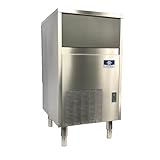
Ice-O-Matic MFI0500A
- About 540 lb per day
- 21 inch wide
- SystemSafe gearbox monitoring
- NSF certified
Quick Overview: All 10 Flake Ice Machines in 2026
| Product | Specifications | Action |
|---|---|---|
| Ice-O-Matic GEMU090 |
|
Check Latest Price |
 SPT SZB-42 SPT SZB-42 |
|
Check Latest Price |
 Manitowoc RFF1300A head Manitowoc RFF1300A head |
|
Check Latest Price |
 Hoshizaki F-330BAK Hoshizaki F-330BAK |
|
Check Latest Price |
 Hoshizaki F-450MAJ Hoshizaki F-450MAJ |
|
Check Latest Price |
| Ice-O-Matic MFI0500A |
|
Check Latest Price |
 Manitowoc RF-0385A Manitowoc RF-0385A |
|
Check Latest Price |
 Ice-O-Matic MFI0800R Ice-O-Matic MFI0800R |
|
Check Latest Price |
| Manitowoc UFF0200A |
|
Check Latest Price |
 Scotsman UF2020A-1 Scotsman UF2020A-1 |
|
Check Latest Price |
The group divides into three tiers. Undercounter machines from SPT, Manitowoc, and Scotsman cover a single case or a small market stall. Mid-size self-contained flakers from Hoshizaki and Ice-O-Matic serve a supermarket counter or a busy restaurant prep line. Remote and modular heads from Manitowoc and Ice-O-Matic feed multiple cases from a machine room.
1. Ice-O-Matic GEMU090: the best compact flake machine for a small seafood counter
Ice-O-Matic GEMU090 Pearl Self-Contained Ice Machine with Air Condensing Unit Pure Ice Technology 115 Volt Plug-In and Quiet Operation in Stainless Steel
85 lb per day output
22 lb bin
115V plug-in at 575 watts
Stainless steel, R134a
Pros
- Only model here with a real review history of 137 reviews
- Plug-in 115V power needs no dedicated hardwiring
- Compact 14.87 inch width fits under a counter
- Quiet running suits a retail counter
Cons
- Output is small for a full fish counter
- 16 percent of reviews are 1-star
Our top pick is the one machine here with a real public record. Across 137 reviews it holds a 4.0 average, and the review distribution tells you something honest: 62 percent five-star against 16 percent one-star. That is a broadly positive machine with a genuine minority of bad experiences, which is exactly the kind of profile you want when a breakdown means spoiled product.
The GEMU090 draws 575 watts on a standard 115 volt supply, so it plugs into a normal outlet instead of requiring a dedicated circuit and an electrician. At 14.87 inches wide and 33.37 inches tall, it slides under a service counter or into a market stall cabinet without remodelling the space.
Two specifications deserve a straight reading. The bin holds 22 pounds against 85 pounds of daily production, so the machine stops and restarts rather than banking a reserve. In a hot summer market, that 22 pound buffer is the number to design around, not the 85.
It also uses R134a, an older refrigerant, and Ice-O-Matic markets this unit under its Pearl and Pure Ice naming rather than as a plate flaker. The ice is soft and free-flowing rather than a dense, sheet-like flake, so if you want visible flakes packed against a fillet, look further down the list.
How the 22 lb buffer behaves on a busy counter
A 22 pound bin sounds small until you do the math. A typical 20 pound fish laid on a proper ice bed can absorb most of that reserve within a couple of hours of peak trading, and the machine takes time to refill the bin once it restarts. Plan your case depth around the bin size, not the daily output figure.
Because it plugs in, you can also run it off-peak and let it build a buffer before opening hours, then let it stop naturally during the quiet middle of the day. That pattern suits a fishmonger far better than a fishmonger who needs 400 pounds of ice before lunch.
Where the GEMU090 falls short
If your case holds whole fish rather than fillets, you will want a genuine plate flaker with more reserve and a thicker bed. The Pearl format ice softens quickly in a warm display, and the one-star reviews most often describe ice quality and durability over time rather than a single bad failure.
Check the clearance before you commit. At 22.62 inches deep, this unit needs genuine breathing room on the intake side, and pushing it tight against a wall in a humid room is where output gets cut.
2. SPT SZB-42: a compact flaker with the filtration kit already in the box
SPT SZB-42 88-lb Automatic Flake Ice Maker in Stainless Steel with Inline Water Filter
88 lb of flake per day
22 lb bin
120V at 242 watts
R290a refrigerant
Pros
- Inline water filter
- mounting kit
- scoop
- and hoses all included
- Full stainless housing suits wash-down areas
- Auto shutoff when the bin reaches full
- Lightest body in the group at 68.6 lb
Cons
- No owner reviews yet so durability is unproven
- Only 22 lb of bin storage against 88 lb daily output
- Listed under home appliance ice makers
- Needs front and side clearance for ventilation
The SZB-42 is the rare machine where the accessories actually matter. The box includes an inline water filter with a mounting kit, an ice scoop, the water supply hose, and a gravity drain hose. For a market stall where plumbing is improvised, that bundle removes most of the setup friction.
It runs on 120 volts at 242 watts and uses R290a, a newer refrigerant with a far lower global warming potential than the R134a and R404a units elsewhere in this list. If your operation has an environmental policy, that specification matters more than it looks.
Production is 88 pounds of flake per day into a 22 pound bin, and the machine shuts off automatically when the bin fills. Output figures are published at rating conditions, so a hot stall will produce less.
Why the included filter matters more than usual
Seafood back rooms are hard on ice machines. Salt spray, fish handling, and wash-down cycles all push contaminants toward the evaporator plate. An inline filter fitted at installation catches the bulk of that debris before it reaches the water distribution arm, and this model ships with one already chosen and sized.
It also means one less dealer line item on your install quote, which is where a surprising amount of small-stall budgets go over.
Where the SZB-42 falls short
There are no customer reviews for this listing, so reliability is unverified rather than proven. Nobody has yet reported a three-year service experience with this unit, and you should treat any durability claim as untested.
The 22 pound bin is also the limiting number, and it sits in the home appliance category rather than the commercial one. Check that your local sanitation rules accept it before you commit.
3. Manitowoc RFF1300A: the high-output modular head for multi-case seafood displays
Manitowoc Commercial Flake Ice Maker Head Only, 1264 lb/Day Production
1264 lb per 24h flake output
Head only, bin sold apart
30 inch W x 27.4 inch H
R290a, ETL and cETLus
Pros
- Highest flake output figure in this group
- Stainless steel bearings and stainless steel finish
- ETL and cETLus certified for commercial duty
- Output published at both 70F/50F and 90F/70F conditions
Cons
- Head only so you need a bin and an install
- No Amazon reviews for this listing
- Self-contained condenser needs real airflow around it
At 1264 pounds of flake per 24 hours at 70F air and 50F water, this is the only machine here built for a display case that runs all day and never stops. A supermarket fish department with two cases, or a seafood wholesaler packing for restaurants, is the kind of operation that justifies this capacity.
Manitowoc publishes two figures, and that is a good sign. The headline 1264 lb per 24 hours at 70F/50F sits alongside an AHRI certified 951 lb per 24 hours at 90F/70F. The AHRI number is the honest one for a real back room, and having both lets you plan against either condition.
The build is heavy duty, with high-load stainless steel bearings and a stainless steel finish, and it carries ETL and cETLus certification for commercial sanitation. Dimensions are 30 inches wide by 23.63 inches deep by 27.4 inches tall, so it is a head you mount rather than a unit you slide into a counter.
Why output published at two temperatures matters
Most listings quote only the friendly number. When a manufacturer also publishes the hotter condition, you can model your own room. Take the ratio between the two figures as a rough derating curve and apply it to whatever ambient temperature your fish case actually sits in.
For a machine this size, that planning exercise usually ends with the conclusion that a machine room, not a counter gap, is the right home for the head.
Where the RFF1300A falls short
It is a head only. There is no bin in the box, so your total project includes a bin, a connection kit, and a technician, and the machine will not run until all three are in place.
The self-contained condenser needs airflow clearance on its intake and discharge. Starve it and a 1264 pound machine quietly becomes something closer to the AHRI figure, or worse.
4. Hoshizaki F-330BAK: the mid-size flaker that cleans itself hourly
Hoshizaki F-330BAK Flaker Ice Machine
331 lb per 24h
80 lb integrated bin
CleanCycle24 hourly wash
24 inch W x 39 inch H
127V
Pros
- CleanCycle24 runs an automatic cleaning cycle every hour
- 80 lb bin gives a real ice reserve
- Greaseless bearing auger cuts a recurring service task
- Front-in and front-out airflow suits tight rooms
- Self-contained body saves floor space
Cons
- 39 inch tall so it will not go under a counter
- No Amazon reviews on this listing
- Only 127V supply listed for a machine this size
The F-330BAK makes 331 pounds of flake per 24 hours and holds 80 pounds in an integrated bin. That ratio is the number to notice. Most of the machines in this group produce several times more than they can store, but an 80 pound reserve on a 331 pound machine means your case keeps a full bed through a rush rather than draining it.
CleanCycle24 runs an automatic cleaning cycle every hour. That does not replace your sanitation schedule, but it keeps the evaporator surface between deep cleans in a way a manual cycle does not, and it matters in a seafood room where the air carries salt and moisture.
The greaseless bearing auger is a quiet quality-of-life change. There is no grease nipple to find during a service call, which removes a small but recurring source of downtime.
Airflow that works in a narrow room
This is a self-contained air-cooled unit with front-in, front-out airflow. That means it pulls and discharges through the front face rather than through the sides, which is why it fits places that a side-vent machine cannot.
It weighs 178 pounds and stands 39 inches tall, so give it a dedicated floor position rather than trying to slide it under a counter. The listed supply is 127V, so confirm what your electrician can actually provide before delivery.
Where the F-330BAK falls short
At 39 inches tall it cannot share undercounter space with another appliance, which costs you floor area in a tight back room. In a small operation that footprint can be as expensive as the machine.
There are no owner reviews on this listing, so the CleanCycle24 cycle is a documented feature rather than a field-verified one. Ask a dealer how often the cleaning cycle is user-adjustable.
5. Hoshizaki F-450MAJ: a mid-size stainless flaker for busy counters
Hoshizaki F-450MAJ, 492 Lbs Ice/24Hr Flake Ice Machine
492 lb per 24h flake output
115V supply
Stainless steel exterior
170 lb unit weight
Pros
- 492 lb per 24h covers a busy mid-size seafood counter
- Stainless steel exterior suits wash-down cleaning
- The single owner review rates it 5 out of 5
Cons
- Only one Amazon review so the rating carries no weight
- No published dimensions or full spec sheet
- No bin capacity is stated for this listing
The F-450MAJ makes 492 pounds of flake ice per 24 hours on a 115 volt supply, which puts it in the middle of the capacity ladder. It suits a supermarket fish counter or a seafood restaurant prep line that needs more than an undercounter machine but does not need a modular head and a separate bin.
The stainless steel exterior is the right choice for a seafood environment, where the case and the surrounding surfaces get washed down several times a day. At 170 pounds, the unit is heavy enough to feel solid and light enough to reposition with two people.
We want to be straight about the rating here. The listing carries one review, rated 5 out of 5, and a single owner tells you almost nothing about reliability across a season.
What you still need to ask the dealer
The listing does not publish dimensions or a bin capacity, and both numbers matter before you commit. Ask for the cut sheet, then check the footprint against your counter run and confirm whether the bin is integrated or sold separately.
Also confirm the electrical requirement against your supply. A 115V rating is convenient, but 492 pounds of daily output is a serious load to run on a small circuit shared with a case.
Where the F-450MAJ falls short
With no published dimensions or bin figure, you are planning from incomplete data, and that is a poor basis for a fitted installation. Demand the full specification sheet before signing anything.
The output figure is also quoted at rating conditions only. In a warm back room you should expect less, and the gap widens if the machine is air-cooled and boxed in.
6. Ice-O-Matic MFI0500A: high output from a 21 inch wide body
Ice-O-Matic MFI0500A Ice Maker, flake-style, air-cooled, self-contained condenser, approximately 540 lb/245 kg production/24 hours, stainless steel finish, cULus, NSF
About 540 lb per 24h
21 inch W x 27 inch H
SystemSafe gearbox monitoring
Water sensor, cULus and NSF
115V
Pros
- Narrow body still produces about 540 lb per day
- SystemSafe stops the cycle before gearbox damage develops
- Water sensor tolerates poor supply conditions
- cULus and NSF certified for food service
Cons
- Only one Amazon review so owner feedback is thin
- Head format requires a separate bin
- R404a is an older high-GWP refrigerant
At 21 inches wide, this is the machine we would look at first when the service alcove is narrow and the demand is not. It produces up to 541 pounds of ice per day, according to the feature list, from a body that measures 24 inches deep by 21 inches wide by 27 inches tall and weighs 205 pounds.
Two sensors do real work here. SystemSafe load monitoring continuously checks gearbox workload and shuts the system down before a failure develops, which protects the most expensive part to replace. The water sensor eliminates low or no water shutdowns that would otherwise leave a seafood case without ice on a busy morning.
Underneath, the specification names a rugged stainless steel evaporator and auger, industrial-grade roller bearings, and a heavy-duty gearbox, plus cULus and NSF certification.
Why gearbox load monitoring matters on a flake machine
A plate flaker runs a rotating auger against a continuously freezing surface. If the plate scales up, or ice builds where it should not, the auger load climbs. That extra load is what wears bearings and breaks gears, and it is why SystemSafe exists.
A machine that stops itself before the damage happens is cheaper than one that runs until it seizes, and it is one fewer emergency call between you and a stocked case.
Where the MFI0500A falls short
It is a head, so you need a bin and an installation on top of the machine. And it runs R404a, an older high global warming potential refrigerant that is being phased down, which may matter for a new installation under a tightening environmental standard.
Only one Amazon review backs the 5.0 rating. The sensor package and build quality are documented; the long-term field record is not.
7. Manitowoc RF-0385A: undercounter flake output in a self-contained body
Manitowoc RF-0385A Air Cooled 332 Lb Flake Ice Undercounter Ice Machine
332 lb flake per day
Air-cooled undercounter
29.06 inch W x 39.5 inch H
120V, R134a, stainless
Pros
- Self-contained format drops straight into a seafood counter
- 332 lb per day is the highest undercounter output here
- Stainless steel body wipes down for wash-down sanitation
- The single owner review rates it 5 out of 5
Cons
- Largest footprint in the group at 29.06 inch wide
- Heaviest body in the group at 230 lb
- Older R134a refrigerant
- Only one Amazon review to judge it by
Among the machines here that fit under a counter, the RF-0385A produces the most: 332 pounds of flake ice per day. If your operation is restricted to an undercounter footprint but still needs to keep a full case, that figure is the deciding number.
It is fully self-contained, with the air-cooled condenser mounted in the machine, so there is no separate bin to buy and no install line item for a head. It runs on 120 volts, which most seafood counters can already reach.
The stainless steel finish suits a wash-down environment. The cost is physical: at 29.06 inches wide, 27.19 inches deep, and 39.5 inches tall, with a listed weight of 230 pounds, this is the largest and heaviest unit in the group.
When a self-contained body pays for itself
Self-contained machines win when the counter run is the only viable location. There is no line set to run, no bin to plumb, and no remote condenser site to find, which usually means a shorter install and fewer things that can be installed incorrectly.
They also fail locally. A problem with the condenser is a service call on one machine, not a project that takes the whole display system down.
Where the RF-0385A falls short
The footprint is the issue. At 29 inches wide and nearly 40 inches tall, it eats a large slice of a service counter, and pulling a 230 pound machine out for servicing is a two-person job.
It also runs R134a and lists no bin capacity in the visible specification, so ask the dealer for the storage figure before you plan a case refill schedule around it.
8. Ice-O-Matic MFI0800R: a remote-cooled head when the fish case is far from the machine
Ice-O-Matic MFI0800R Remote Cooled 819 Lb Flake Ice Machine
Remote-cooled flake head
Reported 819 lb per day
21 inch W x 27 inch H
115V, stainless steel
Pros
- Moves condenser heat and noise away from the display
- High flake output suited to busy seafood retail
- Narrow 21 inch width fits tight back-of-house runs
- Stainless steel construction throughout
Cons
- Needs a matching remote condenser and line set
- No Amazon reviews for this head
- The listing quotes conflicting output figures
Sometimes the fish case is across the room from where the machine can live, or in a room where condenser heat and fan noise are simply not acceptable next to customers. That is the case for the MFI0800R, a remote-cooled head that moves the condenser to a machine room and keeps only the ice-making head near the display.
The head is compact for its output, measuring 24 inches deep by 21 inches wide by 27 inches tall and weighing 205 pounds, and the listing puts flake production at 819 lb per day.
Be aware of a documentation problem. The product data for this model inconsistently quotes both 819 lb and 925 lb of output, and there are no customer reviews to help you settle it. Treat the lower figure as the planning number until your dealer confirms from the cut sheet.
Why remote cooling suits a customer-facing case
An air-cooled machine in a seafood area dumps heat into the same room as your case. Over a long service day that added heat works against you, both for the case refrigeration and for anyone standing in front of it. A remote condenser puts that heat somewhere else entirely.
It also solves the clearance problem. Once the condenser is gone, the head needs much less room at the case, which often turns an impossible layout into a straightforward one.
Where the MFI0800R falls short
You need a matching remote condenser, a line set, and an installation, and that drives the total project well past the cost of the head alone. If you have no machine room and no maintenance budget for refrigerant lines, this is the wrong machine.
Zero owner reviews and inconsistent published output mean you are buying on the strength of the platform rather than on field reports.
9. Manitowoc UFF0200A: the narrowest commercial footprint and the longest warranty
Manitowoc UFF0200A 19-1/4′ Air-Cooled Flake Undercounter Ice Machine with 60-Pound Bin, 115V
257 lb per day, 198 AHRI
50 lb integrated bin
ENERGY STAR, R290a
3 year parts and labor, 5 year compressor
19.69 inch W
Pros
- Three-year parts and labor plus five-year compressor coverage
- ENERGY STAR certified for lower running cost
- Narrowest commercial width in the group at 19.69 inch
- 6 inch adjustable legs make cleaning underneath easier
Cons
- 50 lb bin is small for a peak seafood display
- 257 lb per day is the lowest output among the true commercial flakers here
- Only one Amazon review behind the 5-star rating
Two specifications make the UFF0200A stand out, and both are about the long run rather than the first week. It carries a three-year parts and labor warranty with a five-year compressor term, which is the strongest coverage in this group, and it is ENERGY STAR certified while running R290a.
It also fits. At 19.69 inches wide and 25.98 inches deep, it is the narrowest of the true commercial machines here, and the 6 inch adjustable legs let you set the height to match a counter run and get a cleaning gap underneath.
Output is up to 257 pounds of flake per day, with 198 pounds AHRI certified, into an integrated 50 pound bin. The ice is described as soft and chewable, suited to food displays, salad bars, and seafood beds.
Why warranty length is worth more than output here
A flake machine is a mechanical device with a plate, an auger, a gearbox, and sensors, and something in that list will eventually need attention. Warranty length is the closest proxy you have for the manufacturer’s confidence in their own service life.
Three years of parts and labor also means the expensive early-life failures, which cluster in the first year, are absorbed by someone other than you.
Where the UFF0200A falls short
The 50 pound bin is genuinely small next to the demand of a peak display, and 257 pounds per day is the lowest output among the commercial flakers in this list. For a case that must hold a full bed through a Saturday rush, size up.
The 5.0 rating rests on a single owner review. The warranty and efficiency claims are documented; the satisfaction score is not statistically meaningful.
10. Scotsman UF2020A-1: light to install, but owner reports are poor
Scotsman UF2020A-1 20″ Air-Cooled Flake Undercounter Ice Maker Machine with 57 lb. Storage Capacity, 216 lbs/Day, 115v, NSF
216 lb per day flake
57 lb storage
Aluminum cabinet, R134a
115V, 6 inch legs
NSF certified
Pros
- Lightest commercial body here at 129 lb so it is easy to reposition
- Three-year parts and labor warranty on all components
- NSF certified for food service
- 6 inch adjustable legs fit counters of varying heights
Cons
- Both Amazon reviews are 1-star
- Owners report failure within three to nine months
- One owner reports an unrepairable internal refrigerant leak
- Aluminum cabinet instead of the stainless steel used by the others
We include this machine because its specification sheet looks reasonable and because its owner feedback is the most useful warning in the group. Two verified-purchase reviews, both 1 out of 5, both from owners in food service, both reporting failure within four to nine months. One was told the machine had an internal refrigerant leak that could not be located, and both reference distributor reports of series-wide problems and a service recall.
On paper, the specification is fine: 216 pounds of flake per day into 57 pounds of storage, NSF certified, 115 volt, with sealed maintenance-free bearings, a stainless steel auger and evaporator, and a three-year parts and labor warranty on all components.
At 129 pounds it is the lightest commercial body in this list, which matters if you need to pull it out for cleaning behind a counter.
What the build sheet actually says
The cabinet is aluminum, not the stainless steel used by the other nine machines here. In a seafood room with constant wash-down, aluminum cabinets mark and corrode faster than stainless, and the auger and evaporator being stainless does not change the cabinet material.
The 6 inch adjustable legs are a genuine plus, letting the machine fit counter runs of different heights, and the sealed bearings remove a greasing task.
Where the UF2020A-1 falls short
Two one-star reviews from working food service owners describing early unrepairable failure is the clearest durability signal available, and a refrigerant leak that cannot be located is about the worst failure mode an owner can experience. Owners also reference series-wide problems and a service recall.
If you buy one, confirm the warranty is honoured in your region and ask the dealer directly whether the unit is covered by any open service action.
How to Size a Flake Ice Machine for a Seafood Case
The most common sizing mistake is treating daily production as if it were storage. Daily production is the total weight of ice the machine can freeze in 24 hours at rating conditions. Bin capacity is how much ice you can hold at once. A machine that makes 500 pounds a day into a 50 pound bin will run continuously during service and stop the moment the bin is full, which is a completely different duty pattern from a machine that makes 300 pounds a day into an 80 pound bin.
For the display itself, the working method is surface area multiplied by ice bed depth. Measure the usable bed area of your case in square feet, decide the depth of ice you want to hold against the product, and use the rule of thumb that a well-packed bed of roughly three to four inches of flake ice runs in the region of eight to ten pounds per square foot. Multiply, then add a safety factor of 30 to 50 percent for peak days, warm weather, and product added mid-service.
Then check the result against temperature, not just weight. Raw seafood display belongs below 41F, and the danger zone between 41F and 135F is where growth becomes a real risk. Ice is a temperature control tool first and a presentation tool second, so a case that looks beautiful but sits at 45F is a failed case regardless of how much ice is in it.
Our broader guides on flake ice machine options and shaved ice formats cover the other machine categories you might be weighing against these.
Meltwater drainage decides whether a display case works
Flake ice drains constantly. That is a feature, because meltwater moves away from the fillet instead of pooling around it, but it means your case needs a real drain or a meltwater pan that someone empties on a schedule. A display that quietly holds meltwater is both a food safety problem and a warmer product surface.
Ask your case supplier for the drain capacity and the slope. Then decide whether that drain runs to a floor drain, a condensate line, or a bucket on a timer, and write the emptying task into your opening and closing routine.
Ice bed depth and product fragility
Fillets and whole fish want different beds. Delicate fillets sit better on a thinner, softer layer so the ice does not press against the flesh and bruise it, while whole fish on a display tray need a deeper bed to hold the body temperature evenly along the fish. Most plate flakers let you adjust ice thickness, and that adjustment matters more than output on a mixed case.
If you run both, a single machine with adjustable thickness beats two dedicated machines. If you only run fillets, prioritize soft flake texture over daily pounds.
Air-Cooled vs Water-Cooled vs Remote Condenser
Condenser type is the decision with the biggest effect on real output, and it is the one most often left to the installer.
Air-cooled is the default for undercounter and self-contained machines. It needs clear intake and discharge space, and it is the type that loses the most output in a hot, humid seafood back room. Manufacturers commonly ask for several inches of clearance on the sides, rear, and top, and a starved air-cooled unit can fall well short of its rated figure.
Water-cooled routes heat into a water loop. It runs quieter and holds output better in warm rooms, but it needs a chilled water supply and a return, which means plumbing work and ongoing water chemistry. It suits operations that already have a chilled water loop.
Remote condenser moves the condenser to another location. The head at the case stays compact and quiet, which solves clearance and noise problems permanently, at the cost of a line set run, an installation, and a second service point.
For a raw seafood back room, the deciding question is simple: how hot and how humid is the room, and is there anywhere to put a condenser? A hot room without a machine room points at water-cooled or remote. Everything else can run air-cooled comfortably.
Water Quality, Maintenance, and the Parts That Fail First
Flake ice machines fail for predictable reasons, and almost all of them trace back to water or to a sensor reacting to water. Hard water scales the evaporator plate, which reduces output before anything breaks. Chlorinated and hard supply water fouls sensors. A dirty bin liner puts the ice in contact with a contaminated surface.
A sensible schedule for a machine running a seafood display daily looks like this.
Daily: empty and rinse the bin, sanitise the scoop, and wipe the bin exterior. Check that the ice looks free-flowing and odour-free.
Weekly: clean the evaporator cover and the water distribution arm, and confirm the water filter change indicator has not tripped.
Monthly: inspect the bin sensor and the water sensor for scale or debris, and check the drain line flows freely.
Quarterly: descale the evaporator plate if your water is hard, and have a technician inspect the auger and gearbox.
On the parts most prone to failure, evaporator scale and the water sensors come first because they are water-driven. Next are the bin sensors, which fail when ice sticks to the sensor paddle and the machine never knows it is full. Then the gearbox and the auger bearings, which wear from load rather than age, and which is exactly what the SystemSafe monitoring on the MFI0500A is designed to protect. Fit an inline filter before the machine rather than after, and you remove the largest single cause of avoidable service calls. Our nugget ice machine guide covers the same water and maintenance considerations for nugget formats.
Hoshizaki vs Manitowoc vs Ice-O-Matic vs Scotsman
This is a live question for anyone buying a commercial flaker, so here is the short version.
Hoshizaki shows up here with CleanCycle24 automatic cleaning and a greaseless bearing auger, both of which reduce scheduled service. The F-330BAK also pairs 331 pounds per day with an unusually large 80 pound bin.
Manitowoc offers the widest spread in this group, from the compact ENERGY STAR certified UFF0200A through the undercounter RF-0385A to the 1264 pound modular head, and it publishes both rating-condition and AHRI figures so you can plan against real ambient temperatures. The warranty terms on the UFF0200A are the strongest we saw.
Ice-O-Matic is the most engineering-forward of the three, with SystemSafe gearbox load monitoring on the MFI0500A and the only machine in this roundup with a substantial public review history on the GEMU090.
Scotsman appears with a lighter cabinet and sealed bearings, but the owner feedback on the UF2020A-1 is the weakest here, and owners reference series-wide problems and a service recall.
If reliability under continuous duty is the deciding factor, weigh build details first, warranty length second, and published output third. Output you never reach is worth nothing to a display case.
Frequently Asked Questions
Why use flake ice instead of cubed ice for seafood display?
Flake ice is soft, thin, and moldable, so it packs into an even bed around fish without bruising the flesh. Cubes sit in pockets with air gaps, leave hard edges against the product, and melt into standing water in the tray. Flake holds a display temperature close to 32 to 35F and lets meltwater drain away from the product rather than pooling around it.
How much ice does a seafood display need per day?
Measure the usable bed area in square feet and multiply by your target ice bed depth. A packed bed of roughly three to four inches of flake ice runs about eight to ten pounds per square foot. Add a safety factor of 30 to 50 percent for peak trading days and warm weather, then match that total against daily production at the machine’s rating conditions of 70F air and 50F water.
What is the most reliable commercial ice machine?
Reliability comes down to build detail and warranty length more than output. In this group the Manitowoc UFF0200A offers three-year parts and labor with a five-year compressor term, while the Ice-O-Matic MFI0500A adds SystemSafe gearbox load monitoring that stops the cycle before damage develops. Only the Ice-O-Matic GEMU090 has a large public review history, holding 4.0 across 137 reviews.
Which brand of ice machines is better, Hoshizaki or Manitowoc?
It depends on the machine. Hoshizaki leads on automated cleaning with its CleanCycle24 hourly cycle and a greaseless auger. Manitowoc leads on range, spanning compact undercounter units to a 1264 pound modular head, and it publishes both rating-condition and AHRI output figures. Hoshizaki pairs output with a large bin on the F-330BAK, while Manitowoc carries the stronger warranty terms.
Which part of a flake ice machine is most prone to failure?
The evaporator plate and the water sensors come first because both are driven by water quality. Hard water scales the plate and cuts output before anything breaks, and the same scale fouls the water sensor. Next are the bin sensors, which fail when ice sticks to the sensor paddle so the machine never stops filling. The auger and gearbox wear last, from load rather than age, which is what SystemSafe monitoring protects.
What is the most common cause of ice machine problems?
Water is the most common cause. Scale on the evaporator plate reduces output and increases running cost, and hard or chlorinated supply water trips water sensors and stops production. Poor airflow is the second cause: an air-cooled unit starved of clearance in a hot, humid room quietly loses a large share of its rated output without any fault being reported.
How often should a commercial flake ice machine be cleaned?
Clean the bin and sanitise the scoop daily, clean the evaporator cover and water distribution arm weekly, inspect the bin and water sensors monthly, and descale the evaporator plate quarterly if your water is hard. Some machines, such as the Hoshizaki F-330BAK, run an automatic hourly cleaning cycle that reduces how much deep cleaning falls to staff, but it does not replace the sanitation schedule.
How much does an ice flake machine cost?
Costs run from entry-level undercounter units with a 115 volt plug-in connection through mid-size self-contained flakers to large modular heads that need a separate bin and a remote condenser site. Buying only the head of a modular system understates the project, since the bin, connection kit, and installation add to the total. Ask a dealer for a full installed quote rather than a head price.
Should the ice maker feeler arm be up or down?
The correct position depends on the model and on whether ice is present, so check the manual for your specific machine rather than assuming a universal setting. What matters is that the mechanism moves freely, because a stuck feeler or sensor paddle is a common reason a flake machine never stops filling or never shuts off when the bin is full.
Is there a reset button on my ice maker?
Most commercial machines do not use a consumer-style reset button. They have a control panel with a cycle or power button and service fault codes, and the correct response to a fault is to follow the manual’s code list rather than repeatedly cycling power. Before touching anything on a machine under warranty, confirm with your dealer what will void the cover.
Which Flake Ice Machine Should You Buy in 2026?
For most seafood displays, the best commercial flake ice machines for seafood display come down to three honest options. Buy the Ice-O-Matic GEMU090 if you want a small counter covered with the least disruption and the only real review record in this group. Buy the Ice-O-Matic MFI0500A if you need real daily volume from a narrow alcove and can install a separate bin. Buy the Manitowoc UFF0200A if warranty length and efficiency matter more to you than headline output.
Next step: measure your bed area, pick your target ice depth, multiply by eight to ten pounds per square foot, add your safety factor, and match the result against the capacity ladder. Then check the clearance and the condenser type for the room it will actually live in, not the showroom. Our related reads on commercial ice equipment cover the rest of a cold-counter fit-out.