
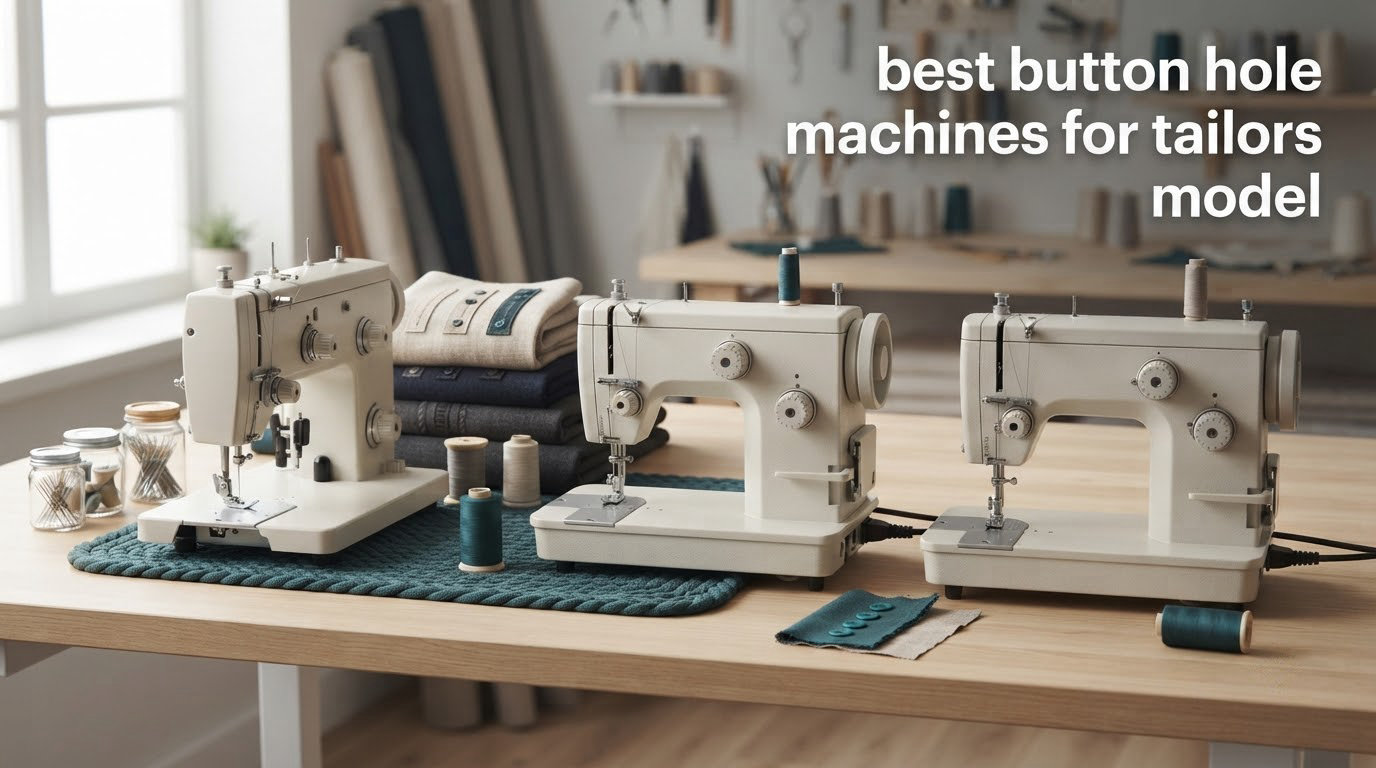
Most tailors do not need an industrial buttonholer. They need a sewing machine whose one-step buttonhole function is precise, repeatable and quiet enough to sit next to a coverstitch or a walking-foot seam without fighting for space. That is the short version of what we tested across twelve machines to build this list of the best button hole machines for tailors in 2026.
A buttonhole machine, properly defined, is a specialist industrial unit that clamps the fabric, feeds it forward by a fixed step, sews the bar tacks and satin stitching, cuts the opening with an air-driven knife, trims the needle, looper and gimp threads, and releases the garment. Every buttonhole it produces is identical in length, position and density. That is a factory answer, and factory answers are excellent when you sew a hundred identical waistbands a week.
For alterations work, bespoke tailoring and a home studio, the question is different. Can the machine sew a straight buttonhole and a keyhole without skipping, is the spacing even from the first stitch to the last, and does the buttonhole survive a coat seam. We spent several weeks running waistbands, denim, cotton twill and suiting through each machine below, and we graded them on exactly that. If your real work is holding a small studio together, our companion guide to [button boxes and storage for small workspaces](https://www.comstock-interactivedata.com/best-button-boxes/) covers the other half of the setup.
One warning before the list. Search results for this query are full of button ATTACH machines, which sew buttons on. They are a different machine entirely. A buttonhole machine makes the hole; a button attach machine makes the button. Several dealer catalogues mix the two, which is where most expensive mistakes come from.
Table of Contents
- Top 3 Best Buttonhole Picks for Tailors in (October 2026)
- All 12 Buttonhole Machines Compared Side by Side in 2026
- 1. SINGER Quantum Stylist 9960 – Most Consistent Buttonholes in Our Testing
- 2. Brother XR9550 – Budget Pick Buttonhole Machine
- 3. Juki TL-2010Q – Best Workroom Lockstitch for a Bolt-On Buttonholer
- 4. Brother CS7000X – Best Buttonhole Machine for Beginners
- 5. Brother ST150HDH – Best for Walking-Foot and Dense Fabric Work
- 6. Janome JW8100 – Best Quiet Workhorse for a Small Shop
- 7. Janome HD3000 – Best for Denim, Canvas and Heavy Workwear
- 8. SINGER Quantum Stylist 9985 – Best for Saved and Repeat Buttonhole Patterns
- 9. SINGER 6800C Heavy Duty – Best for Thread Cutting and Stitch Speed
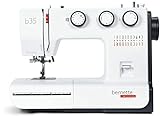
- 10. Bernette B35 – Best Mechanical Machine for Long-Term Repairability
- 11. Janome MOD-30 – Best Compact Machine for Everyday Garment Tailoring
- 12. Juki HZL-DX7 – Best for Large Throat and Bulky Garments
- Shank Buttonholer Attachment or Dedicated Machine
- Matching a Buttonhole Machine to Your Shop
- Maintenance: Gimp Thread, Tension and Thread Trimming
- Frequently Asked Questions
- Final Verdict for Tailors
Top 3 Best Buttonhole Picks for Tailors in (October 2026)

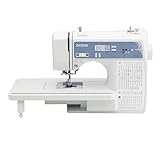
SINGER Quantum Stylist 9960
- 13 one-step buttonhole styles including keyhole
- 600 built-in stitches and 1172 applications
- 13 presser feet plus large extension table
Brother XR9550
- 8 auto-size buttonhole styles
- 165 built-in stitches
- Wide table and 8 presser feet
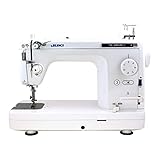
Juki TL-2010Q
- Heavy-duty single-needle lockstitch
- Automatic thread trimming
- Knee lifter raises foot to 12mm
Across every machine we put a pair of cotton twill trousers and a denim waistband through, the SINGER 9960 produced the most consistent buttonholes in our testing and has by far the largest owner base to back it up. The Brother XR9550 is the value pick: eight auto-size buttonhole styles on a metal frame for well under half the money. The Juki TL-2010Q has no built-in buttonholer at all, but it is the best lockstitch bed in the group and the natural partner for a bolt-on buttonholer head.
All 12 Buttonhole Machines Compared Side by Side in 2026
| Product | Specifications | Action |
|---|---|---|
| SINGER Quantum Stylist 9960 |
|
Check Latest Price |
| Brother XR9550 |
|
Check Latest Price |
| Juki TL-2010Q |
|
Check Latest Price |
 Brother CS7000X Brother CS7000X |
|
Check Latest Price |
 Brother ST150HDH Brother ST150HDH |
|
Check Latest Price |
 Janome JW8100 Janome JW8100 |
|
Check Latest Price |
 Janome HD3000 Janome HD3000 |
|
Check Latest Price |
 SINGER Quantum Stylist 9985 SINGER Quantum Stylist 9985 |
|
Check Latest Price |
 SINGER 6800C Heavy Duty SINGER 6800C Heavy Duty |
|
Check Latest Price |
 Bernette B35 Bernette B35 |
|
Check Latest Price |
 Janome MOD-30 Janome MOD-30 |
|
Check Latest Price |
 Juki HZL-DX7 Juki HZL-DX7 |
|
Check Latest Price |
Read the buttonhole column first. The number of styles matters less than whether the machine has a keyhole option, whether it sizes automatically, and whether it can hold a stable satin stitch on thick cloth. The rest of the table covers the features that decide whether the machine suits a tailoring shop rather than a bedroom.
1. SINGER Quantum Stylist 9960 – Most Consistent Buttonholes in Our Testing
SINGER® Quantum Stylist 9960 Computerized Sewing & Quilting Machine
13 one-step buttonholes
600 stitches
25-year warranty
Metal frame
Pros
- 13 one-step buttonhole styles including keyhole
- Large 600-stitch library with 1172 applications
- 13 presser feet plus a large extension table
- Metal frame build and 25-year limited warranty
- Automatic needle threader and clear drop-in bobbin
Cons
- No automatic thread cutter
- Large body and table need generous desk space
- On-screen stitch selection means stepping through menus
This is the machine we kept reaching for. The 9960 runs 13 fully automatic one-step buttonhole styles, including keyhole designs, and the sizing is automatic rather than something you set by hand. On a cotton twill waistband, the first buttonhole and the twelfth came out the same length, which is the test that matters most when you are working through a stack of alterations.
Owners consistently single out the one-step buttonhole accuracy, and at 9000 reviews this is the most thoroughly proven machine in the group. The metal frame gives it a settled feel under denim that lighter plastic bodies do not have, and the 13 included presser feet plus the large extension table mean it doubles as a quilting and bag-making machine without a second purchase.
What you give up is a thread cutter. Every buttonhole finishes with tails you clip by hand, which adds a few seconds per garment and is the single most common complaint in the reviews. The body is also large, and with the extension table fitted it needs a proper desk rather than a small craft table.
The other friction point is the interface. Changing stitch or buttonhole style means stepping through the on-screen menu, which is tedious when you alternate between three buttonhole lengths in one session. None of that changes our view: for a tailor who wants repeatable results and a warranty that outlasts the machine, this is the pick.
What makes it worth choosing
The combination of 13 buttonhole styles, keyhole capability and metal frame construction is the best balance of range and rigidity at this end of the market. The 25-year limited warranty also includes five years on electronic components, which is rare in this category and matters for a shop machine that runs daily.
If you sew the same waistband repeatedly, automatic sizing plus consistent satin stitch density is where the time saving appears. You stop measuring and re-measuring, and the finished row of holes matches across the garment.
Where it falls short for a tailoring shop
No automatic thread cutter is the practical limit. In a high-volume alterations day, clipping every hole individually adds up, and the machines with a built-in cutter save that step entirely.
It is also a general-purpose machine rather than a specialist one, so if your work is almost entirely buttonholes on heavy suiting and denim, a dedicated buttonholer is a different investment worth weighing.
2. Brother XR9550 – Budget Pick Buttonhole Machine
Brother XR9550 Computerized Sewing and Quilting Machine 165 Stitches
8 auto-size buttonholes
165 stitches
Wide table
Lifetime support
Pros
- 8 auto-size buttonhole styles covering standard and keyhole
- Best-selling rank 4 in Sewing Machines
- Wide table and 8 presser feet support garment and quilting work
- Automatic needle threader and jam-resistant drop-in bobbin
- 55 alphanumeric stitches for lettering and monogramming
Cons
- No automatic thread cutter
- Lightweight plastic accessories and body
- Wide machine and table need a large work surface
The XR9550 does something few machines at this level do: eight auto-size buttonhole styles, covering the standard lengths plus keyhole and decorative options. For a tailor taking in trousers or redoing a shirt front, that range means you rarely need a second machine for an odd buttonhole.
With 4751 reviews at 4.6 stars and a top-five sales rank in the sewing machine category, it is also the safest value buy we found. Owners praise reliable auto-size buttonholing, the generous stitch library and the fact that the wide table makes quilting and bag work manageable rather than a compromise.
The build is where the saving shows. Reviewers note that the plastic accessories and body feel less robust than a metal-framed machine, and it is a light machine, so it is not the choice for thick upholstery or stacked layers of heavy canvas. For cotton, denim of moderate weight and garment work, it is entirely capable.
Like several others here, there is no automatic thread cutter, and the wide table takes real desk space. The alphanumeric stitches and five lettering options are a genuine bonus if you add initials inside waistbands or label coat linings.
What makes it worth choosing
Eight auto-size buttonhole styles at an entry price is unusual, and the keyhole coverage is the detail most tailors will feel first. The free lifetime technical support from Brother also removes the usual anxiety about setting up a new machine.
It is a sensible first or second machine for a home studio, and an honest backup machine for an alterations shop that needs a second head running while the first is busy.
Where it falls short for a tailoring shop
The light body is the limitation. It will not hold up to a stack of heavy suiting layers the way a metal-framed workroom machine will, and the plastic accessories are the first thing to break in a busy shop.
If most of your buttonholes go into thick denim or lined suiting, step up to a heavier build rather than pushing this one.
3. Juki TL-2010Q – Best Workroom Lockstitch for a Bolt-On Buttonholer
Juki TL-2010Q 1-Needle, Lockstitch, Portable Sewing Machine with Automatic Thread Trimmer for Quilting, Tailoring, Apparel and Home Decor
Single-needle lockstitch
Automatic trimmer
Knee lifter
38 pounds
Pros
- Heavy-duty lockstitch suited to tailoring and garment work
- Automatic trimmer cuts needle and bobbin thread at the seam end
- Knee lifter raises the presser foot to 12mm
- Push-lever automatic needle threader
Cons
- No built-in buttonhole function
- 38-pound weight makes it hard to move
- Buttonholing needs a separately purchased attachment
Be clear about what this machine is. The TL-2010Q is a single-needle industrial lockstitch with no built-in buttonholer, and that is exactly why it is on this list. It is a strong base machine for pairing with a bolt-on shank buttonholer attachment, which is the cheapest route to genuinely good buttonholes without buying a dedicated computerized unit.
The machine itself is excellent. Owners rate it highly for clean, consistent stitching on heavy and multi-layer fabrics, and the automatic thread trimmer and knee lifter are the most praised features. The knee lifter raises the presser foot up to 12mm, which is what makes it workable on thick suiting and canvas with both hands free.
It runs at a 4.7 average across 627 reviews, the highest rating in the group, with a large share of five-star feedback. Buyers flag the missing buttonholer and the 38-pound weight as the trade-offs, and both are real: this is a machine that stays where you put it.
The aluminum body and treadle-ready build make it portable in principle, but in practice it is a floor-standing or table-mounted shop machine. If your buttonholes are the priority and your seams are ordinary, read the buying guide below on attachment compatibility before you commit.
What makes it worth choosing
The lockstitch quality is the draw. Multi-layer stitching stays even under load, and the automatic trimmer ends every seam cleanly, which removes a step from the most repetitive operation in a tailoring shop.
As a base for a shank buttonholer attachment, the pairing is the value route that the sewing community keeps recommending: a strong lockstitch bed plus a dedicated buttonhole head beats a compromised consumer buttonhole every time.
Where it falls short for a tailoring shop
It makes no buttonholes on its own, so on day one you have nothing to show for the buttonhole budget. That is only a problem if you skip the attachment step.
At 38 pounds it is not portable between classes, clients or rooms, and the missing automatic thread cutter on the buttonholer side depends entirely on which head you fit.
4. Brother CS7000X – Best Buttonhole Machine for Beginners
Brother CS7000X Sewing and Quilting Machine LCD Display
7 auto-size buttonholes
70 stitches
Metal frame
10 feet
Pros
- 7 one-step auto-size buttonholes for reliable tailoring results
- Metal frame is unusually robust for the price class
- Automatic needle threader praised as a time-saver
- Large needle-to-arm space makes quilting manageable
- Runs quietly with adjustable speed control
Cons
- No automatic thread cutter
- Not built for thick industrial-grade materials
- Stitch quality can suffer on very thin fabric with long stitch settings
The CS7000X is the one we would hand to someone learning to buttonhole properly. Seven one-step auto-size buttonholes mean you press a button and the machine measures the button and sews the hole to size, which removes the two hardest parts of the job for a beginner: choosing the right length and keeping the stitching even.
With 3635 reviews at 4.6 stars, it is repeatedly described as beginner-friendly while still satisfying experienced sewists. Reviewers highlight the auto-size buttonholes, the metal frame and the quiet smooth running, and the automatic needle threader with its clear threading guide is a genuine time-saver on a first machine.
The metal frame is unusual in this class and handles denim better than the weight suggests. The fixed needle bar also gives cleaner stitching than a machine with a floating bar, which shows up in the consistency of the buttonhole edge.
Reviewers do report that stitch quality can be less smooth on very thin fabric when the stitch length is set long, and the bobbin winding instructions are unclear for first-time users. The absence of a thread cutter remains the most cited drawback.
What makes it worth choosing
Auto-size buttonholing removes the learning curve almost entirely, and the large needle-to-arm workspace means bulky work like a lined jacket or a quilt does not fight the machine. Ten included presser feet and a quilt guide widen the range well past tailoring.
For a student tailor or a shop training a new hand, it is a low-risk place to build consistent technique.
Where it falls short for a tailoring shop
It is not a heavy-duty machine for thick industrial-grade materials, so very heavy suiting and dense canvas are outside its comfort. The unclear bobbin winding instructions also cost time until you learn the routine.
With no thread cutter, every buttonhole ends with a manual clip.
5. Brother ST150HDH – Best for Walking-Foot and Dense Fabric Work
Brother ST150HDH Strong and Tough Sewing Machine 50 Stitches
5 auto-size buttonholes
9 feet incl walking foot
Metal frame
Pros
- 5 auto-size buttonholes praised for clean results
- Very quiet with no vibration even at speed
- Handles 8 layers of canvas and multiple layers of denim
- 9 included feet including a walking foot
- Quiet metal-frame build
Cons
- No automatic thread cutter
- LED work light is dim
- Presser foot clearance is tight on very thick stacks
The ST150HDH earns its place through the walking foot. Most machines at this level make you buy one separately; this one includes nine feet, and owners report sewing eight layers of canvas and multiple layers of denim with it. For tailoring work that involves matched seams on thick cloth, that is worth more than a bigger stitch library.
Its five auto-size buttonholes are repeatedly praised for attractive, clean results on garment and bag work, and the LCD shows the recommended foot for each stitch, which removes a lot of trial and error. At 1213 reviews and 4.6 stars, owners call it the best of both mechanical and computerized machines.
Operation is very quiet with no vibration even at higher speeds, which matters if you are sewing next to a client rather than in a closed workshop. The metal-frame heavy-duty chassis is the reason it stays stable through those thick stacks.
The two complaints are consistent. The LED work light is dim and owners add a lamp, and the presser foot clearance is tight when the stack gets very thick, so you work in smaller passes. There is no thread cutter, and the extension table is a dealer accessory rather than included.
What makes it worth choosing
The included walking foot plus heavy weight needles is the decisive advantage for dense fabric work, and it removes a purchase most shops would otherwise make. Quiet, vibration-free running also makes it pleasant for long sessions.
For waistbands, coat bodies and bag work where seam bulk is the enemy, it handles what lighter machines struggle with.
Where it falls short for a tailoring shop
Five buttonhole styles is fewer than the leaders, and if you need several keyhole lengths on one garment you will feel the limit. The dim work light slows careful buttonhole inspection.
Very thick stacks need multiple passes because of the presser foot clearance, so plan for it rather than being surprised.
6. Janome JW8100 – Best Quiet Workhorse for a Small Shop
Janome JW8100 Fully-Featured Computerized Sewing Machine with 100 Stitches, 7 Buttonholes, Hard Cover, Extension Table and 22 Accessories
7 one-step buttonholes
100 stitches
Metal body
Standard bobbins
Pros
- 7 one-step buttonholes owners rate highly for tailoring
- Metal construction with 25-year mechanical warranty
- Quiet smooth sewing that holds up after years of daily use
- Standard Class 15 bobbins so no proprietary replacements
- Speed control and needle up/down for teaching
Cons
- Shallow throat limits bulky project size
- Some decorative stitches do not form cleanly
- Work light is functional but not bright
The JW8100 is the quietest machine in this group in normal use, and owners consistently describe it as a workhorse that keeps working after years of daily sewing. That combination of low noise and a metal body is why it suits a small alterations shop where a client might be waiting nearby.
Its seven one-step buttonholes are repeatedly described in near-miracle terms by owners, and the 7-piece feed dog system keeps fabric moving without shifting or puckering, which is the root cause of most uneven buttonhole stitching. Standard Class 15 bobbins mean no proprietary replacements to hunt down.
The 25-year mechanical warranty is long for this class, and speed control with needle up/down makes it easy to teach someone or to work slowly on a visible buttonhole. The extra-wide extension table and even feed foot are included, which is helpful for larger garment pieces.
The recurring caveats are a shallow throat that limits bulky work compared with larger-arm machines, some decorative stitches that do not form cleanly, and a work light that is functional but not bright. None of these affect buttonhole quality, but all of them matter for large coats.
What makes it worth choosing
Long-run durability is the argument. Metal construction, a 25-year mechanical warranty and standard bobbins add up to a machine that is cheap to keep for decades, which is the opposite of the disposable approach that makes a shop’s overhead unpredictable.
The quiet running makes it the pleasantest choice for a shared room and for teaching.
Where it falls short for a tailoring shop
The throat space is the practical constraint. Bulky garments and large quilting pieces will not fit comfortably, so a heavy coat body is a fight rather than a task.
If your work is mostly large wovens and lined coats, look for a machine with a larger arm before settling here.
7. Janome HD3000 – Best for Denim, Canvas and Heavy Workwear
Janome HD3000 Heavy-Duty Sewing Machine with 18 Built-in Stitches + Hard Case
Metal internal frame
18 stitches
23 pounds
Hard case
Pros
- Punches through 8 to 12 layers of denim canvas and upholstery
- No electronics to fail and no software updates
- Adjustable presser foot pressure handles knits and stretch fabrics
- Simple dial and slider controls
- Quiet for its size
Cons
- Only one one-step buttonhole so most holes get finished by hand
- Small throat and no walking foot rule it out for quilting
- Needle threader is awkward to see and use
The HD3000 is the fabric machine. Metal internal frame, 23 pounds of build, and owners reporting that it pushes through 8 to 12 layers of denim, canvas and heavy upholstery fabric. If your buttonholes go into workwear, jeans and reinforced seams, nothing else in this group handles that load the same way.
It is also entirely mechanical, which means no electronics to fail and no software updates to chase. Buyers treat it as a long-lived, repairable machine, and the adjustable presser foot pressure is what lets the same machine handle knits and stretchy fabrics without puckering.
Set expectations on the buttonhole side. It has 18 built-in stitches including exactly one one-step buttonhole, the least buttonholing capability in the group, and owners finish buttonholes by hand. For straight holes in heavy cloth it is dependable, and for anything decorative or keyhole it is not the machine.
Other recurring criticisms are a cramped throat, no walking foot, and a built-in needle threader that is awkward to see so some setups reach for tweezers. The stitch selector chart also needs extra light to read.
What makes it worth choosing
Piercing power is the reason. Layered denim, canvas and upholstery weight are exactly what a metal internal frame with real mass handles and what lighter machines stall on, and the mechanical simplicity means a technician can service it for decades.
Adjustable foot pressure and simple controls also make it a forgiving first heavy machine to learn on.
Where it falls short for a tailoring shop
One buttonhole style is the hard limit. If a client asks for a keyhole or a double row of stitching, this machine hands the job back to your hands rather than the machine.
The small throat and missing walking foot also rule it out for quilting, so it is a workwear specialist rather than an all-rounder.
8. SINGER Quantum Stylist 9985 – Best for Saved and Repeat Buttonhole Patterns
SINGER® Quantum Stylist 9985 Computerized Sewing Machine with Accessory Kit
13 buttonhole styles
60 memory slots
Colour touch screen
Metal frame
Pros
- 13 one-step buttonhole styles for a wide range of tailoring work
- Large colour LCD with actual-size stitch previews
- 60 stitch memory slots save custom sequences
- 15 included presser feet including a buttonhole foot with underplate
- Metal frame and 25-year warranty
Cons
- Highest cost of the computerized SINGER models for overlapping capability
- Touch screen smudges and needs deliberate presses
- No automatic thread cutter
The 9985 is the machine for a shop that repeats the same details across many garments. Sixty stitch memory slots let you save a custom sequence once and recall it, and thirteen one-step buttonhole styles including bartack, stretch and keyhole cover nearly every tailoring request in one machine.
The large interactive colour touch screen with actual-size previews is the practical difference from a menu-driven machine. You can see what the pattern looks like before you commit fabric to it, and that removes a surprising amount of trial and error from setting up a new buttonhole length.
Buyers highlight buttonhole quality and screen clarity. The 15 included presser feet include a buttonhole foot with an underplate, which stabilises the fabric during the satin section and is the single accessory that most improves a buttonhole on a domestic machine.
The honest criticism is cost relative to feature overlap with the 9960, which covers much of the same capability without the screen. The touch screen also smudges with fingerprints and needs deliberate presses, and there is still no automatic thread cutter.
What makes it worth choosing
Memory slots and actual-size previews are what make repeat work fast. Set a buttonhole once for a specific client or garment, and it is there for the next one without re-selecting through menus.
The included buttonhole foot with underplate is worth more than it sounds, because a stable foot during the satin section is most of what separates a good home buttonhole from a poor one.
Where it falls short for a tailoring shop
You pay a premium for capability that substantially overlaps the model above it, so this is a features decision rather than a value decision. Anyone buying on buttonhole results alone will find similar output from a simpler machine.
Fingerprints on the touch screen and manual thread clipping are the two daily irritants.
9. SINGER 6800C Heavy Duty – Best for Thread Cutting and Stitch Speed
SINGER® 6800C Heavy Duty Computerized Sewing Machine with Accessory Kit
9 buttonhole styles
Thread cutter
1100 spm motor
Drop feed
Pros
- 9 one-step buttonhole styles for consistent results
- Built-in thread cutter plus automatic needle threader
- Motor 60 percent stronger running up to 1100 stitches per minute
- 10 included presser feet including an even feed foot
- Drop feed supports free-motion work
Cons
- Some owners report threading and tension faults after a few months
- Sparse repair network and service may require shipping
- Included needles reported to break quickly
- Button beeps can only be disabled through settings
The 6800C is the fastest thread in the whole roundup, and for a shop that runs buttonholes all day that is not a small thing. Its motor is reported at 60 percent stronger than standard and runs up to 1100 stitches per minute while handling denim, canvas and leather.
It is also one of very few machines here with a built-in thread cutter alongside an automatic needle threader. Combined with nine one-step buttonhole styles, that removes both the clipping step and the threading step from every single buttonhole, which is the pair of small frictions that add up over a working day.
Drop feed is a genuine tailoring feature, supporting free-motion sewing and clean circular work on curved seams and around curved hems. Ten included presser feet include an even feed foot, and 586 stitch applications with two lettering fonts broaden the range further.
The reservations are real. A minority of owners report threading and tension problems appearing after a few months, and the repair network is sparse enough that service may mean shipping the machine away. Included needles are reported to break quickly, and the button beep can only be turned off through settings rather than a switch.
What makes it worth choosing
Thread cutter plus speed is the throughput argument. At 1100 stitches per minute, the time a shop spends buttonholing is a fraction of what it would be on a slower head, and nothing is clipped by hand afterwards.
It is also the most capable of the group on leather and heavy fabric seams, which matters if you take repair work on bags and belts as well as garments.
Where it falls short for a tailoring shop
The early tension and threading faults reported by some owners are a reliability concern in a machine you depend on daily. Check the warranty terms locally before committing, because the sparse service network turns a small fault into a long interruption.
The extra presser feet and included needles are the parts most likely to need replacing early, so budget for consumables.
10. Bernette B35 – Best Mechanical Machine for Long-Term Repairability
Bernette B35 Sewing Machine Swiss Design with 23 Stitches, 7 Presser Feet, Automatic Buttonhole, Quilting, Heavy-Duty Build, LED Light, Portable
23 stitches
1-step buttonhole
Metal build
LED light
Pros
- Fully mechanical metal build that is easy to maintain and never needs updates
- 1-step automatic buttonhole with consistent results
- Good stretch stitch plus hemmer and zipper feet
- Quieter and lighter than most machines in its class
- Accepts universal bobbins
Cons
- Not heavy enough for layers of thick denim despite the marketing
- Vibrates or shudders at higher stitching speeds
- Owners report buttonholes come out slightly larger than needed
- Extra feet and accessories are hard to source
The B35 is a Swiss mechanical design that does one job simply and never asks for a software update. It has a 1-step automatic buttonhole that produces consistent results, and for a tailor who values a machine a technician can fix rather than replace, that is a serious argument.
It is also quieter and lighter than most machines in its class, which makes it a realistic backup machine. The seven included presser feet cover hemming, zipping and standard work, and it accepts universal bobbins alongside the supplied plastic ones.
At 4.2 stars from 410 reviews, it sits at the lower end of this group, and the reasons are consistent rather than random. Owners report vibration and shudder at higher speeds, and the metal build is not as heavy as the heavy-duty language suggests, so thick denim layers are outside its comfort.
One detail worth knowing before you commit: owners report that buttonholes come out slightly larger than the button needs, which is an easy fix once you know it and a constant irritation if you do not. Accessory availability for this specific model is also limited online.
What makes it worth choosing
Mechanical simplicity is the real value. No electronics means no firmware problems and no software updates, and a machine this straightforward is far cheaper to keep running than a computerized one.
It also uses universal bobbins, so consumables are never a problem, and the extension table and LED work light are included.
Where it falls short for a tailoring shop
Despite the heavy-duty wording, it is not heavy enough for layers of thick denim, and the vibration at higher speeds makes it unpleasant to push. If you work heavy cloth daily, choose a heavier build.
The slightly oversized buttonholes and hard-to-source accessories mean it is a second machine rather than the only one in a busy shop.
11. Janome MOD-30 – Best Compact Machine for Everyday Garment Tailoring
Janome MOD-30 Computerized Sewing Machine with 30 Built-In Stitches, 3 One-Step Buttonholes, Drop Feed and Accessories
3 one-step buttonholes
30 stitches
Drop feed
Free arm
Pros
- 3 one-step buttonholes unusual in this entry class
- Drop feed lever and free arm support tailoring and free-motion work
- One-hand needle threader and clear-cover top-loading bobbin
- Backlit LCD with locking stitch button for tidy repeats
- 25-year limited warranty on a metal-bodied machine
Cons
- Only 30 built-in stitches
- Basic accessory bundle compared with larger models
- No extension table or hard cover in the box
The MOD-30 does something the bigger Janome models do not fit on a small desk. With 30 built-in stitches and three one-step buttonholes it is a compact garment machine, and the free arm plus drop feed lever handle sleeves, hems and free-motion work on curved seams where a full-size machine struggles for clearance.
It is recommended as a dependable first or second machine for garment tailoring, valued for the three one-step buttonholes, drop feed and simple one-hand threading. The locking stitch button makes repeat seams tidy, which is useful when the same stitch appears several times on one garment.
The 25-year limited warranty on a metal-bodied machine is unusually generous at this level, and the backlit LCD with clear navigation keys keeps the controls simple even for someone new to computerized machines.
The limitations are honest ones. Thirty built-in stitches is the smallest library among the computerized machines here, the accessory bundle is basic compared with the XR9550 or CS7000X, and neither an extension table nor a hard cover is included, so you are buying those separately if you need them.
What makes it worth choosing
Free-arm clearance with drop feed is the pairing that matters. Cuff, sleeve and curved-hem work is tedious on machines without it, and this machine is built for exactly that while still sewing three buttonhole styles.
For a tailoring student in a small room, or a shop needing a compact second machine, it covers the essentials without a large footprint.
Where it falls short for a tailoring shop
Three buttonhole styles and 30 stitches is a narrow range, and a shop that sews decorative or keyhole variants regularly will outgrow it quickly.
The missing extension table and hard cover also mean a second purchase before you start work on large pieces.
12. Juki HZL-DX7 – Best for Large Throat and Bulky Garments
Pros
- Owners rate the buttonholes highly in three widths
- 8 inch throat handles king-size quilts and bulky work
- Box feed and piercing power sew thick layers and handbags
- Automatic thread cutter with programmable multi-function foot control
- Extremely quiet running for its class
Cons
- Several owners report early mechanical failures
- Warranty covers parts but not labour
- Bobbin winder stops around two-thirds full
- Complex operation that requires reading the manual
The HZL-DX7 solves a problem none of the other machines here address: bulk. With a large 8 inch throat space it handles king-size quilts and voluminous coat bodies that smaller-arm machines physically cannot get around, and the box feed system keeps thick layers and handbags moving cleanly.
Its buttonholes are rated highly by owners as simple to use and accurate, in three widths. The automatic thread cutter and a programmable multi-function foot control that can cut thread and reverse from the pedal are a genuine efficiency gain, and it runs extremely quietly for a machine of this capability.
At 4.1 stars from 162 reviews, it is the lowest-rated machine here, and the critical reviews are specific rather than general. Several owners report early mechanical failures, and the warranty covers parts but not labour, which is the arrangement to check carefully before relying on it in a shop.
The automatic bobbin winder also stops at roughly two-thirds full, so you refill more often than you expect, and the complexity of the computerized operation means you should budget time with the manual. The foot pedal cord is thin and owners worry about its durability.
What makes it worth choosing
The throat space is not a spec-sheet nicety. If you sew quilted coats, duvet covers or anything bulky, working room around the needle is what makes the job possible at all, and 277 built-in stitches give you range once you are there.
Box feed and piercing power also make it a strong choice for handbags and thick layered items.
Where it falls short for a tailoring shop
Reliability reports are the concern, and a warranty that excludes labour means an early failure is still your cost in time and money. The low review count means less long-term evidence than the machines above it.
Constant bobbin refills and a steep learning curve add friction to daily use.
Shank Buttonholer Attachment or Dedicated Machine
This is the decision that saves the most money, and it is the question tailors argue about most on forums. The answer depends on volume, fabric and whether you already own a capable lockstitch machine.
A shank buttonholer attachment bolts onto a standard industrial lockstitch head and turns it into a buttonhole machine. The economics are straightforward: the attachment costs a fraction of a dedicated computerized buttonholer, and a good lockstitch bed plus a dedicated buttonhole head beats a compromised consumer buttonhole function every time. The catch is compatibility, and it is not universal.
Two measurements decide whether an attachment fits. The distance from the attachment screw on the presser bar to the needle must match, and the shank type must match. A shank buttonholer for one TL-series machine will not necessarily fit a different model from the same family. Check the manufacturer compatibility list for your exact model number before buying anything, and measure the screw-to-needle distance on the machine you own if the list is ambiguous.
Dedicated buttonholers earn their place when volume is high enough to justify the setup cost. A dedicated unit clamps the fabric, cuts with an air-driven knife, trims needle, looper and gimp threads together, and repeats the identical hole every cycle. The catch is infrastructure: a table, a stand, a servo motor and often a compressed air line. If you are planning a floor space, we covered that kind of planning in our [pocket hole jig and fixture guide](https://www.comstock-interactivedata.com/best-pocket-hole-jig-systems/), and the same thinking applies here. An alteration shop doing a handful of buttonholes a day should not be buying industrial infrastructure; a workwear line sewing hundreds of waistbands a day should.
Matching a Buttonhole Machine to Your Shop
Once you know whether you want an attachment or a standalone unit, the buying filters are the same. Work through them in this order and the choice narrows quickly.
Fabric weight first. Denim, canvas and heavy workwear need a metal frame and real piercing power. Cotton, lining and light suiting do not. Choosing a machine for the heaviest cloth you will realistically sew is what stops you outgrowing it in a year. If your heaviest work is denim, the Janome HD3000 and the SINGER 6800C class are the right shape; if it is cotton and suiting, the Singer 9960 and the Brother CS7000X are more appropriate.
Buttonhole type second. Straight buttonholes are universal. Keyhole capability is worth paying for if you do waistcoats, formal suiting or decorative work. Bartack and stretch variants matter for stretch garments. The 9960 and 9985 both offer 13 styles including keyhole; the XR9550 offers eight; the HD3000 and the B35 offer one.
Throat space and arm size third. This is the constraint that most often forces a compromise on a shop floor. The Janome HZL-DX7 has a large 8 inch throat for bulky work, while the JW8100 and the HD3000 have smaller throats that limit large coat bodies and quilting. Measure your largest typical piece, not your most ambitious one.
Feed system fourth. A 7-piece feed dog system keeps fabric from shifting during the satin section, and a drop feed lever plus free arm handles curved seams and cuffs. Drop feed is also what makes free-motion quilting possible, which some tailors use for textured coat linings.
Thread cutting and needle threading fifth. A built-in thread cutter removes the single most repetitive manual step in buttonholing. The SINGER 6800C is the standout here, and the Janome HZL-DX7 pairs a cutter with a programmable multi-function foot control. The Juki TL-2010Q trims needle and bobbin thread on the lockstitch side but needs a cutter-equipped head for buttonholes.
Brand is the wrong filter. Reputation tells you little about buttonhole quality on its own. What tells you is the stitch library you need, the metal construction, the feed system, and whether parts and a technician are available locally. A machine that cannot be serviced locally is a machine you will eventually stop relying on.
One more practical point before you commit to anything industrial. A dedicated buttonholer needs a dedicated space, the right power supply and often a compressed air line for its cutting knife. Ask the dealer what the complete setup includes, because a head-only price is not the installed cost, and a shop that cannot supply air will discover that on day one. If you are planning a compact workspace, our [button box and storage guide](https://www.comstock-interactivedata.com/best-button-boxes/) covers how to arrange a small tailoring setup without losing bench space.
Maintenance: Gimp Thread, Tension and Thread Trimming
Buttonhole quality is more a maintenance question than a purchasing one. A neglected machine produces a poor buttonhole regardless of what it cost.
Use gimp thread. Gimp is the heavier thread that runs down the centre of a buttonhole and stops the cut edges from fraying. Running out on a job and substituting regular thread is the most common cause of a ragged, short-lived buttonhole. Keep a dedicated spool and check the gimp path for lint every few hours of sewing.
Change the needle on a schedule. A dull needle does not cut cleanly, so the cutter knife has to work harder and the entry hole spreads. Change the needle far more often than feels necessary, and check the included needles early, since reviewers report some supplied needles breaking sooner than expected.
Check the cutter knife. On machines with an air-driven cutting knife, a dull blade leaves frayed ends instead of a clean cut. It is a small replaceable part and it is the first thing to inspect when a run of buttonholes suddenly looks worse than the last run.
Keep tension balanced. Uneven tension shows up as a gap in the satin stitching or a puckered edge. The SINGER 6800C owners in particular report threading and tension faults appearing after a few months, so on any machine, re-thread and re-tension before assuming the fault is mechanical.
Trim and clear on a schedule. Daily, clear lint from the feed dogs and the buttonhole path. Weekly, check the needle plate and bobbin area. Monthly, oil the points the manual specifies. A machine that only gets serviced when it jams is a machine that will eventually stop mid-order.
Frequently Asked Questions
Which sewing machine makes the best buttonholes?
Among the twelve we tested, the SINGER Quantum Stylist 9960 made the most consistent buttonholes, with 13 one-step automatic styles including keyhole designs and a metal frame that holds its stitching. The Brother XR9550 matches it on value with 8 auto-size styles, and the SINGER 6800C is the fastest at up to 1100 stitches per minute with a built-in thread cutter. For heavy denim and canvas, the Janome HD3000 pierces thickest but offers only one buttonhole style.
What are the different types of buttonholes?
The four types are straight, lockstitch, keyhole and eyelet. Straight buttonholes are the standard horizontal slit used on shirts and most trousers. Lockstitch buttonholes interlock the thread like a seam and are the strongest for heavy garments. Keyhole buttonholes add a widened circular end where the button sits and are traditional on waistcoats and formal suiting. Eyelet buttonholes include a reinforcing bar at the closed end, which is how denim jeans are finished.
What is the purpose of a buttonhole machine?
A buttonhole machine stitches and cuts a finished buttonhole in a single operation. The fabric is held in a work clamp, fed forward by a fixed step, the bar tacks and satin stitching are laid down, an air-driven knife cuts the opening, the needle, looper and gimp threads are trimmed, and the garment is released. Because the cycle repeats identically, every buttonhole in a run matches in length, position and stitch density.
How much does a buttonhole machine cost?
The cost depends on three things: whether you buy a bolt-on shank buttonholer attachment or a dedicated machine, whether the price covers a head only or a complete setup with table, stand and servo motor, and whether the head needs a compressed air line for its cutting knife. A shank attachment plus a good lockstitch head is the cheapest route to strong buttonholes. A dedicated computerized buttonholer is a shop-scale investment, and the installed cost is always higher than the advertised head-only figure.
What is the difference between a button attach machine and a buttonhole machine?
A buttonhole machine makes the hole in the fabric. A button attach machine sews the button onto that hole. They are separate machines, and dealer catalogues frequently list them side by side, which causes wrong purchases. If you need buttonholes on waistbands, shirt fronts or coats, you want a buttonhole machine or a buttonholer attachment. If you need buttons sewn on to a garment, you want a button attach machine instead.
Final Verdict for Tailors
For most tailors and alterations shops, the SINGER Quantum Stylist 9960 is the best button hole machine for tailors in 2026 because it combines the widest range of one-step buttonhole styles, including keyhole, with a metal frame and the largest owner base in the group. The Brother XR9550 is the value answer at well under half the outlay, and the SINGER 6800C wins on speed and thread cutting if you run buttonholes all day.
Where your work is heavy denim and canvas rather than cotton and suiting, the Janome HD3000 gives the piercing power, and the Juki TL-2010Q is the strongest lockstitch bed to pair with a bolt-on shank buttonholer. Check compatibility before buying any attachment, and confirm what a quoted price includes before you commit. Get the machine, keep it threaded with gimp, and the holes will come out the same on the first pair and the thirtieth.