

Yes, a camshaft position sensor affects valve timing directly. It tells the engine control module where the camshaft sits inside its 720-degree cycle, and without that data the ECU cannot work out which cylinder is at top dead centre, so it drops out of sequential fuel injection and degrades variable valve timing. The result is misfires, rough idle, hesitation and rising fuel consumption.
That is the whole reason the best camshaft position sensors for valve timing accuracy matter. A weak or drifting signal does not simply set a code, it feeds the ECU a slightly wrong picture of the camshaft, and the timing the ECU commands downstream inherits that error. Our team compared ten sensors across the brands that dominate this category, weighing stated measurement accuracy, signal technology, temperature rating, connector design and the volume of owner feedback behind each one.
One honest caveat before we start. Cam sensors are part-number-specific to an engine, not a category. Two sensors that look identical can have different pin counts, different output types and completely different mounting geometry, and the wrong one will not give you valve timing accuracy no matter what the label claims. Every pick below lists the reference numbers it replaces, so you can cross-reference before you buy.
We also wrote this around a piece of advice that forum evidence keeps repeating: on a surprising share of cars, the sensor is the last thing to fail, not the first. A chafed harness, a connector full of coolant, an oil-soaked connector face or a stretched timing chain all produce the same codes a dead sensor does. Testing comes before the purchase decision in the buying guide further down.
Table of Contents
- Top 3 Camshaft Position Sensor Picks
- Quick Overview: Best Camshaft Position Sensors for Valve Timing Accuracy in 2026
- 1. Ford F7TZ-12K073-B Camshaft Sensor – Best Overall for Timing Accuracy
- 2. ACDelco 213-363 GM Original Equipment Camshaft Position Sensor – Best OE Choice for GM
- 3. ACDelco Gold 213-4664 Camshaft Position Sensor – Best for Everyday Driven Vehicles
- 4. GM Genuine Parts 12684186 Camshaft Position Sensor – Best for GM 3.6L V6
- 5. Hitachi CPS0005 Camshaft Position Sensor – Best for Nissan and Infiniti
- 6. Bosch 0232103064 OE Camshaft Position Sensor – Best for MINI Fitment
- 7. Hitachi CPS0008 Camshaft Position Sensor – Best for Tier 1 Supplier Build Quality
- 8. Delphi SS10058 Camshaft Position Sensor – Budget Pick Digital Sensor
- 9. A-Premium APCPS550MF Camshaft Position Sensor Pair – Best for Bank 1 and Bank 2 Replacements
- 10. A-Premium APCPS359 Camshaft Position Sensor – Best Value for Chrysler, Dodge, Jeep and Ram
- What Actually Determines Timing Accuracy When You Buy a Cam Sensor
- Installation and the Camshaft Relearn That Follows It
- DTC Quick Reference: What Each Cam Code Means
- Frequently Asked Questions
- Which brand is considered the best for camshaft position sensors?
- Does a camshaft position sensor affect timing?
- Are all camshaft sensors the same?
- Are aftermarket camshaft position sensors good?
- What are the symptoms of a camshaft position sensor going bad?
- Can you still drive with a bad camshaft position sensor?
- Is a camshaft sensor an easy fix?
- Can you drive with a P0344 code?
- Conclusion: The Default Picks by Vehicle
Top 3 Camshaft Position Sensor Picks
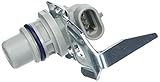
Ford F7TZ-12K073-B Cam Sensor
- Digital output
- +/-1 degree accuracy
- Genuine Ford OE
- 24-month warranty


Those three cover the widest range of situations. The genuine Ford part has the largest feedback base and the tightest stated accuracy in the group, the ACDelco is the OE choice when the car is a GM, and the ACDelco Gold sensor is the middle path for an everyday driven vehicle that will never see a track.
Quick Overview: Best Camshaft Position Sensors for Valve Timing Accuracy in 2026
| Product | Specifications | Action |
|---|---|---|
| Ford F7TZ-12K073-B Camshaft Sensor |
|
Check Latest Price |
| ACDelco 213-363 GM OE Camshaft Position Sensor |
|
Check Latest Price |
| ACDelco Gold 213-4664 Camshaft Position Sensor |
|
Check Latest Price |
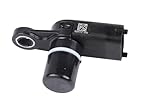 GM Genuine Parts 12684186 Camshaft Position Sensor GM Genuine Parts 12684186 Camshaft Position Sensor |
|
Check Latest Price |
 Hitachi CPS0005 Camshaft Position Sensor Hitachi CPS0005 Camshaft Position Sensor |
|
Check Latest Price |
 Bosch 0232103064 OE Camshaft Position Sensor Bosch 0232103064 OE Camshaft Position Sensor |
|
Check Latest Price |
 Hitachi CPS0008 Camshaft Position Sensor Hitachi CPS0008 Camshaft Position Sensor |
|
Check Latest Price |
 Delphi SS10058 Camshaft Position Sensor Delphi SS10058 Camshaft Position Sensor |
|
Check Latest Price |
 A-Premium APCPS550MF Camshaft Position Sensor A-Premium APCPS550MF Camshaft Position Sensor |
|
Check Latest Price |
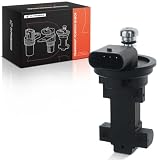 A-Premium APCPS359 Camshaft Position Sensor A-Premium APCPS359 Camshaft Position Sensor |
|
Check Latest Price |
Two rows deserve a note before the individual reviews. Both Hitachi entries are built by Astemo, a Tier 1 supplier that makes sensors as original equipment for Japanese manufacturers, which is a different sourcing story from a brand that only remakes parts. And the two A-Premium listings differ in a way that matters: one ships as a matched pair for both banks, the other is a single sensor.
1. Ford F7TZ-12K073-B Camshaft Sensor – Best Overall for Timing Accuracy
Ford F7TZ-12K073-B Camshaft Sensor
Digital output
+/-1 degree stated accuracy
Flange mount, metal construction
24-month warranty
Pros
- Genuine Ford OE part rather than a remanufactured copy
- Highest rated and most reviewed sensor in this roundup
- Digital output with a stated +/-1 degree measurement accuracy
- Backed by Ford and Motorcraft 24-month unlimited-mile warranty
Cons
- Fitment is specific to Ford applications and the listing describes fit type as universal fit
- Only one sensor included so both banks must be ordered separately
This is the sensor we would put on a car where valve timing accuracy is the whole point, because it is the only part in this roundup that publishes a measurement accuracy figure and the figure is tight. Ford rates it at plus or minus one degree, which on a cam signal is a small enough error that the ECU never has to guess about cylinder identification.
It is a genuine Ford part, not a remanufactured copy of one. That distinction matters more in a sensor than in almost any other component, because a reman works by tearing down an old unit and rebuilding it, and the Hall-element bias and the potting compound are the parts most likely to be tired in an original. This one is new.
Across 999 owner reviews it holds a 4.7 star average, the largest feedback base in the group, and the one-star share is effectively nil. Owners report the swap clearing cam-related codes and leaving the idle smooth, which is the outcome you want from a timing part.
The warranty is the other quiet advantage. Ford and Motorcraft parts sold from October 2013 onward carry a 24-month unlimited-mile warranty, so if the sensor fails on a road with no hard miles on it, there is a fallback beyond the retailer return window.
Two practical notes. The package contains a single sensor, so a V6 or V8 with a cam sensor on each bank needs two, and the listing describes the fit type as universal fit rather than naming exact vehicles. Cross-reference F7TZ-12K073-B against your engine before you commit.
What makes it the accuracy leader
The published plus or minus one degree figure is the differentiator. Most aftermarket listings describe signal quality in adjectives; this one gives you a number you can compare, and nothing else here comes close to it. Combined with digital output and a genuine OE build, it is the shortest route to a cam signal the ECU can trust.
Where it falls short
It is a Ford part for Ford applications, and the fitment listing is loose enough that you have to do the cross-reference yourself. For a GM, Nissan or MINI, this is simply the wrong sensor no matter how good it is.
2. ACDelco 213-363 GM Original Equipment Camshaft Position Sensor – Best OE Choice for GM
ACDelco 213-363 GM Original Equipment Engine Camshaft Position Sensor
Push-pull output
250 F upper temperature rating
Flange mount, metal
Manufactured to GM OE spec
Pros
- GM-recommended replacement for the original factory component
- 4.7 star average across 700 reviews with only 3 percent one-star ratings
- 250 F upper temperature rating gives real hot-weather headroom
- Manufactured to GM OE specification for fit form and function
Cons
- The highest cost in this roundup
For a GM, this is the part the factory would have fitted, and ACDelco manufacturing to GM OE specification is the reason it sits at the top of our list for that group. It holds a 4.7 star average across 700 reviews with 84 percent five-star ratings and only 3 percent one-star, which is one of the cleanest satisfaction profiles in the roundup.
The 250 F upper temperature rating is the spec we look at most closely. Hot failure is the most common cam sensor complaint on the forums, and a sensor rated well above the operating temperature of the engine bay is the cheapest insurance against it. The push-pull output matches the electrical architecture the original used.
It also arrives as a single sensor with the sensor itself as the only included component. If your engine has a cam sensor per bank, plan on ordering the matching part for the other bank, and consider doing both in one job while the access is open.
Owners consistently report the exact symptom resolution you hope for, with codes clearing and the driveability complaints disappearing once the ECU regains a clean cam signal.
Why it wins for GM applications
OE specification plus a 250 F temperature rating plus a 3 percent one-star share is a combination nothing else in this roundup matches for a GM. If the car is a GM and factory-matching hardware is the priority, this is the answer.
Where it falls short
It is the most expensive sensor we reviewed, and the value case depends entirely on the car. On a GM where the same sensor is available as genuine GM OE at a noticeably lower tier, you have to weigh the two listings rather than assume the ACDelco is the only OE option.
3. ACDelco Gold 213-4664 Camshaft Position Sensor – Best for Everyday Driven Vehicles
ACDelco Gold 213-4664 (88864355) Engine Camshaft Position Sensor
Digital output
12V maximum supply voltage
Flange mount
24-month parts warranty
Pros
- ACDelco Gold professional aftermarket tier sits between cheap copies and full OE
- 4.6 star average across 412 reviews with only 4 percent one-star ratings
- 24-month unlimited-mile parts warranty
- Also cross-referenced as part 88864355 for easier fitment lookup
Cons
- A premium aftermarket line rather than a genuine OE part
- The smallest review count among the parts we rated above four stars
ACDelco Gold is the tier most owners never realise exists. It sits between the no-name replacement and the full OE part, and for a car that drives to work every day it is often the most rational choice in the catalogue, because you get a professional-grade part with a real warranty behind it at a middling cost.
The satisfaction data supports that positioning. It holds 4.6 stars across 412 reviews with 79 percent five-star and only 4 percent one-star, which is a stronger proportion of happy owners than several genuine OE parts in this roundup manage.
Digitally it outputs a clean square signal with a 12 volt maximum supply rating, which is the common arrangement on the Hyundai, Kia and Chevrolet platforms this tier usually lands on. The flange mount and the dimensions of 4.3 by 2.4 by 2.2 inches make it a direct swap in the standard location.
One convenience worth noting is the alternate part number. It is also referenced as 88864355, and searching that number at a parts counter usually gets you a more confident fitment answer than a model number alone.
Who this suits
Anyone who wants a sensor they will not have to think about again, on a vehicle that sees ordinary service rather than sustained high rpm. The 24-month unlimited-mile parts warranty means the effective risk of this purchase is close to zero for a normal ownership period.
Who it does not suit
It is not genuine OE, and enthusiasts who care about bit-for-bit match to the factory part will feel that. It also carries the fewest reviews of any sensor rated above four stars here, so its long-term record is less documented than the OE options.
4. GM Genuine Parts 12684186 Camshaft Position Sensor – Best for GM 3.6L V6
GM Genuine Parts 12684186 Engine Camshaft Position Sensor
Stainless steel construction
Digital output
230 C upper rating
24-month warranty
Pros
- Genuine GM OE part
- Stainless steel construction rated to 230 C
- Covers GM 3.6L V6 gas engines from 2010 to 2023
- 24-month unlimited-mile parts warranty
Cons
- Fitment limited to GM 3.6L V6 gas engines
- International listings may arrive with different labelling and instructions
This is the entry that has rescued a lot of 3.6 litre V6 owners, and the specification explains why. A 230 C upper temperature rating puts it in the same high-temperature class as the ACDelco 213-363 rather than the value tier, and the 3.6 is exactly the engine family where heat-related cam sensor failures generate forum threads.
It is manufactured by ACDelco to GM OE specification for fit, form and function, and it is a single sensor with a flange mount and digital output. The stainless steel body is a step up in material from the metal used on cheaper replacements.
Owners rate it 4.5 stars across 736 reviews with 78 percent five-star, and the sentiment is remarkably consistent for a large sample: genuine OE quality without the top-of-range cost of the ACDelco 213-363. For a car covered by the 2010 to 2023 3.6L V6 range, that is an easy call.
Why it earns its place
The combination of genuine OE manufacturing and a 230 C temperature rating at a mid-range cost is hard to argue with on this engine family. It is the part we would fit to a 3.6 that is going to be driven hard in summer traffic.
Where it does not work
The fitment is narrow and specific. If your GM is not a 3.6 litre V6 gas engine in that model year range, this part is irrelevant no matter how well it reviews. Buyers outside the US may also find the labelling and instructions differ from the domestic version.
5. Hitachi CPS0005 Camshaft Position Sensor – Best for Nissan and Infiniti
Hitachi CPS0005 Engine Camshaft Position Sensor
Analog and digital output
Tier 1 OE supplier build
Flange mount
1-year warranty
Pros
- Built by Astemo
- a Tier 1 supplier to the original manufacturer
- Replaces SS10817 S10071 235-1150 and 23731-series numbers
- Owners confirm identical dimensions and mounting angle to the factory module
- Plug-and-play swap reported at about five minutes of labour
Cons
- Costs more than value-tier aftermarket sensors
- One verified buyer received a crankshaft sensor instead of the advertised part
- 10 percent of reviews are one-star
Hitachi is the brand that shows up most often in forum answers to the question of which cam sensor to buy, and the reason is provenance rather than marketing. Astemo is a Tier 1 supplier that builds sensors as original equipment for Japanese manufacturers, so this is new hardware designed to OE specification rather than a copy of something.
Owners consistently confirm the dimensions, the mounting angle and the connector all match the factory module exactly, which is the practical definition of a plug-and-play swap. Several describe a mechanic completing the replacement in about five minutes.
It replaces a long list of numbers including SS10817, S10071, 235-1150 and the 23731 series, which covers a lot of Nissan and Infiniti V6 fitment. Output is listed as analog and digital, which is a clue that the housing suits both signal styles across the range it covers.
The complaint pattern is honest rather than damning. Most reviews describe the same outcome, with P0345, P0346 and P0365 codes clearing and warm-weather stall-outs disappearing. The one-star ten percent is mostly about cost and, in at least one case, a crankshaft sensor that arrived in the box by mistake.
What makes it the Nissan default
Forum consensus treats Denso, NTK and ACDelco as the safe picks, and Hitachi and Astemo sit in the same camp by virtue of being the OE supplier rather than an aftermarket brand wearing an OEM name. For timing accuracy on a Nissan, the difference between an OE-supplier part and a reman is the difference between a stable signal and a marginal one as the car ages.
Where it falls short
It costs more than a value-tier sensor, and the mis-shipment rate in the reviews is a reminder to confirm you have opened a cam sensor and not a crank sensor before the car is back together.
6. Bosch 0232103064 OE Camshaft Position Sensor – Best for MINI Fitment
BOSCH 0232103064 Original Equipment Camshaft Position Sensor
Push-pull output
16V maximum supply
Twist insensitive mount
2.64 by 1.85 by 1.93 inches
Pros
- The actual OE component supplied by Bosch rather than a budget aftermarket copy
- Twist insensitive mounting reduces installation and orientation errors
- Reliable digital measurement across a wide temperature range
- 4.4 star average across 875 reviews
Cons
- Listed fitment covers select MINI Cooper Countryman and Paceman models only
- A 16V maximum supply voltage may not suit every application
The twist insensitive mounting on this Bosch is the feature we would highlight first, and it is not a minor detail. On a transverse engine with a tight access angle, a keyed mount removes the possibility of fitting the sensor rotated a few degrees off and wondering why the signal looks strange. Owners on r/MechanicAdvice mention bolt breakage in tight engine bays often enough that ease of installation is a real safety benefit.
It replaces OE number 13627588095 and is the same component the vehicle shipped with. Bosch builds to a titanium-bodied specification with a 22.68 gram unit weight and a compact 2.64 by 1.85 by 1.93 inch envelope, which matters when the sensor lives in a crowded corner of the bay.
Owners rate it 4.4 stars across 875 reviews with 77 percent five-star, reflecting confidence in the OE build more than any enthusiasm about the price, which sits in the value range rather than the premium one.
Worth knowing: enthusiast forums consistently single out Bosch as the brand they would avoid for this category, and that opinion is usually aimed at aftermarket Bosch sensors rather than an OE-supplied component. Judge this part on what it is, which is the factory part, and not on a reputation aimed at a different product line.
Who it fits
MINI Cooper, Cooper Countryman and Cooper Paceman applications within the listed model years, and anyone who values a keyed mount in an awkward access situation. The twist insensitive design is the best in this roundup for install confidence.
Where it falls short
Fitment is narrow, and the 16 volt maximum supply rating is worth checking against your electrical system if you have modified anything. Everything outside the MINI range is out of scope.
7. Hitachi CPS0008 Camshaft Position Sensor – Best for Tier 1 Supplier Build Quality
Hitachi CPS0008 Engine Camshaft Position Sensor
NPN or PNP output
Aluminium and metal body
Flange mount
1-year warranty
Pros
- Astemo Tier 1 OE supplier build quality
- 100 percent new and never remanufactured
- Designed to meet or exceed OE specifications for fit function and reliability
- Fast and accurate measurement signal for engine management
Cons
- Costs more than value-tier aftermarket sensors
- 10 percent of reviews are one-star
- the highest one-star share of the Hitachi entries
This is the same manufacturer pedigree as the CPS0005 and a different fitment, which is exactly why you have to check the part number rather than the badge. Astemo builds both, 100 percent new and never remanufactured, and the listing states the sensor is designed to meet or exceed OE specifications for fit, function and reliability.
The output is listed as either NPN or PNP depending on the variant, which tells you the Hall-element stage and pull-up arrangement are matched to the ECU it was designed for. Getting that wrong is one of the reasons an apparently correct sensor produces a dead signal.
Owners rate it 4.4 stars across 673 reviews with 77 percent five-star. The one-star ten percent is the second highest in our set and clusters around fitment and durability, so verify the reference numbers before ordering.
Best-sellers rank sits at number 9 in automotive replacement camshaft position sensors, so there is a large body of real-world use behind it. If your engine matches, the OE-supplier sourcing is the reason to prefer it over a cheaper part with the same headline rating.
Why choose it over a value-tier sensor
Because the accuracy of a cam signal degrades with heat and the sensing element is the part that gives up first. A never-remanufactured Hall element from a Tier 1 supplier is the version of this component least likely to shift its bias as the car ages.
Where it falls short
The cost sits above value-tier alternatives, and the one-star share tells you a minority of buyers had fitment or early-durability problems. It comes as a single sensor with documentation and a one-year manufacturer warranty.
8. Delphi SS10058 Camshaft Position Sensor – Budget Pick Digital Sensor
Delphi SS10058 Engine Camshaft Position Sensor
Digital output
+/-5 degree accuracy
2 by 2 by 3 inches
1.44 ounce unit weight
Pros
- Digital output with a high signal-to-noise ratio for consistent readings
- Designed to resist temperature changes for long-term protection
- The lowest cost among the sensors we reviewed
- Replaces a long cross-reference list including 2131066 and XR83303
Cons
- Stated accuracy of +/-5 degrees is looser than the plus or minus one degree Ford sensor
- No Delphi factory warranty through this listing
- the seller handles all claims
The Delphi is the value entry, and it does the important things correctly. Digital output with a high signal-to-noise ratio is the right architecture for an engine that runs sequential injection, and the design is explicitly stated to resist temperature changes, which addresses the hot-failure pattern that ruins cheaper parts.
It is built in an ISO-certified Delphi facility using Delphi-validated components, and the cross-reference list is long enough that finding the right number is rarely the problem. Owners rate it 4.4 stars across 453 reviews.
Where the money goes
This sensor costs less than anything else we reviewed, and the saving is real rather than cosmetic. If the application is a daily-driven car with no high-rpm demand and you are confident the fitment number matches, it is a defensible purchase.
Where it costs you
Two specifications deserve attention. The stated measurement accuracy of plus or minus five degrees is looser than the Ford part’s plus or minus one, and the 150 F upper temperature rating is the lowest listed in this roundup, which on a hot engine running long road miles is a genuine limitation. Warranty cover through this listing also sits with the seller rather than the factory.
9. A-Premium APCPS550MF Camshaft Position Sensor Pair – Best for Bank 1 and Bank 2 Replacements
A-Premium Camshaft Position Sensor Compatible with Nissan, Infiniti Models
Two count pack
3-pin blade terminal
Flange mount, metal
Digital output
Pros
- Sold as a matched bank 1 and bank 2 pair so both positions are replaced in one job
- Broad fitment across Nissan and Infiniti 3.5L and 4.0L V6 platforms
- Reference numbers for both banks supplied for cross-reference checking
- 4.5 star average across 931 reviews
Cons
- Fitment is limited to specific Nissan and Infiniti V6 applications
- A generic aftermarket tier rather than an OE-supplier brand
What makes this one different is the packaging. You get a two-count pack covering the bank 1 and bank 2 sensors together, which removes the most common mistake in this category: replacing one sensor and leaving the other one from the same batch of miles in place. If your V6 or V8 has a cam sensor on each bank, replacing them as a pair is the sensible move.
Fitment is broad for an aftermarket part, covering the Nissan 350Z, Altima, Maxima, Murano, Quest, Frontier, Pathfinder, Xterra and NV vans on the 3.5 and 4.0 litre V6 platforms, plus the Infiniti FX35, G35, I35 and M35. Reference numbers for both banks are printed on the listing so you can verify before ordering.
The electrical details are ordinary and correct: 3 pins, blade terminal type, metal construction, flange mount, digital output, black. Owners rate it 4.5 stars across 931 reviews with 78 percent five-star, and the recurring comment is that replacing the pair cleared cam-related codes and restored a smooth idle.
It carries a one-year unlimited-mileage guarantee on the part, which does not cover labour or towing. That is a narrower promise than the Ford or GM OE warranties, so treat it as a defect cover rather than a lifetime one.
Why the pairing matters
Sensors on the same engine fail from the same causes, at the same rate, at roughly the same age. Replacing one and leaving the other is a coin flip on whether you will be back under the intake in a year, and the access on many V6 layouts means doing the labour twice.
Where it falls short
It is a generic aftermarket tier rather than an OE-supplier part, so the sensing element has no pedigree behind it. On a car that is otherwise factory-standard and reliable, that is an acceptable trade. On a tuned engine running sustained high rpm, we would choose OE hardware instead.
10. A-Premium APCPS359 Camshaft Position Sensor – Best Value for Chrysler, Dodge, Jeep and Ram
A-Premium Engine Camshaft Position Sensor Compatible with Chrysler, Dodge
4-pin blade terminal
Alloy steel construction
Push-pull output
12V maximum supply
Pros
- The lowest cost per sensor in the roundup with a wide Chrysler Dodge Jeep and Ram range
- Plug-and-play installation with owners reporting about ten minutes to swap
- Frequently cited for immediately clearing P0365 and P0345 codes
- Replaces 5149141AF PC950 PC950T PC929 and 907-728
Cons
- Lowest rated sensor in the set at 4.3 stars with 11 percent one-star reviews
- A reported 125 C upper temperature rating is the lowest listed in the group
- One buyer on a modified 3.6 reported rough idle and stalling within four days
This is the budget end of the list, and it covers an unusually wide range of applications for the money: Chrysler 200, 300 and Town and Country, Dodge Avenger, Challenger, Charger, Durango, Grand Caravan and Journey on the 3.6 litre, Jeep Cherokee 3.2, Wrangler, Ram 1500 and ProMaster, plus the VW Routan and Hyundai Tucson.
Owners report around ten minutes for the swap, which reflects a genuinely plug-and-play arrangement with a 4-pin blade terminal and a flange mount. The 4 pin count is the giveaway that this is not interchangeable with the 3 pin sensors elsewhere in this roundup, so check your connector before ordering.
It is the lowest rated sensor we reviewed at 4.3 stars across 367 reviews, with 70 percent five-star and 11 percent one-star. Most of the good feedback is about the outcome, with owners reporting that P0365 and P0345 codes and the service-engine-soon light cleared immediately.
The minority complaints are the ones to weigh. One verified buyer on a modified Dodge Avenger reported rough idle and stalling within four days of fitting, and the listed upper temperature rating of 125 C is the lowest in the group. On a factory-standard car that never sees sustained high rpm, that is acceptable. On a modified engine, it is a false economy.
When the budget pick makes sense
On a factory-standard 3.6 litre V6 that spends its life commuting, and when you have already proven the wiring and the connector are sound. It does the job, it clears codes, and it has a one-year unlimited-mileage guarantee behind it.
When to spend more instead
If the engine is modified, if the car tows, or if the previous sensor failed from heat rather than contamination. A part that failed once from temperature will likely fail again in the same environment, and at that point the tier below OE is the wrong answer.
What Actually Determines Timing Accuracy When You Buy a Cam Sensor
Five things decide whether a sensor delivers accurate valve timing, and only one of them is the brand name. Rank them in this order and most returns never happen.
Part number before everything
Match the reference numbers on the listing against the number stamped on your old sensor or listed in the service manual. Cam sensors are engine-specific down to the bank, the drive side and the target wheel pattern, and a 3-pin sensor that physically fits a 4-pin socket will still not give you a clean signal. This is the single highest-return minute you can spend before buying anything.
Output type and pin count
Three-wire digital Hall-effect sensors are the modern norm. Two-wire and three-wire variants also exist in the wider cam and crank sensor family, and magnetic induction sensors with a push-pull or open-collector output behave differently enough that a mismatch shows up as an erratic signal rather than a dead one. Check the pin count against the connector on the engine before you order, and if the vehicle also runs a tire pressure system, the fitment discipline is the same one behind our guide to the best TPMS compatible valve stem caps: match the part, then trust the reading.
Temperature rating against where it lives
Compare the upper temperature rating with the actual engine bay. A sensor rated to 150 F is a poor choice for a vehicle that idles in traffic through a hot summer, and the forum pattern of sensors that pass cold and fail around 158 F is exactly the failure this spec predicts. Parts rated to 230 C or 250 F, such as the GM Genuine 12684186 and the ACDelco 213-363, are the ones to look for when heat is a factor.
Air gap and mounting bracket
The bracket and the mounting hardware determine whether the sensor sits at the correct air gap from the target wheel. A loose or bent bracket lets the gap drift and the signal degrade even though the sensor itself is healthy. A twist insensitive mount, as on the Bosch part, removes the orientation error from the equation entirely.
Test before you buy
Before buying anything, work through this order. Inspect the connector for coolant intrusion, green corrosion or oil contamination and clean it. Check the wiring for chafing where it moves against brackets or the harness, which is the single most common cause of a cam code that a new sensor will not clear. Verify the target wheel has not lifted, and confirm the timing chain has not stretched by checking for the factory alignment marks. Only then condemn the sensor.
If the sensor turns out to be sound, the wiring is the fault, and replacing a sensor to chase a wiring problem is the most expensive way to change nothing. The reverse also happens: a marginal sensor with a perfectly good harness can be temporarily masked by reseating the connector, which is why owners sometimes conclude the old part was dead when it was only loose.
Are aftermarket camshaft position sensors good?
Yes, provided you match the tier to the engine. The value tier we tested clears codes reliably on unmodified engines and covers a wide fitment range, and the gap to genuine OE shows up as temperature margin, tolerance on the sensing element and warranty length rather than as an immediate failure. For a modified or high-mileage car running sustained high rpm, the OE-supplier names that forum consensus favours, Denso, NTK and ACDelco alongside Hitachi and Astemo, are the right call. What the forums do not support is the assumption that any aftermarket part is bad, nor that OEM is magic on a car whose fault was never a sensor.
What is the average lifespan of a cam sensor?
No manufacturer publishes a service life figure, and we will not invent one. What the owner feedback in this roundup does support is that OE and Tier 1 supplier parts generate far fewer reports of repeat failure than value-tier parts, with most negative reviews on the budget picks clustering around early failure on modified or hard-driven engines. Treat the expected life of a good OE part as the life of the vehicle, and expect the cheap one to be a trial run.
Installation and the Camshaft Relearn That Follows It
A cam sensor is a straightforward physical swap, but the procedure that comes after it decides whether the job is actually done. Fitting the part does not teach the ECU anything new, and a good sensor with an incomplete relearn produces exactly the same symptoms as a bad sensor.
Test whether it is an easy fix
The mechanical part is easy. The sensor unbolts, the connector releases, the new one goes in the same way, and on most engines the whole job takes under half an hour once the intake is out of the way. The relearn is the part that varies: on many vehicles the ECU relearns automatically once it sees a consistent cam and crank correlation across a few starts, and on others it needs a triggered procedure through a scan tool. Budget an hour for a budget scan tool or a dealer visit if your vehicle requires the triggered version, and expect the cost of the tool to exceed the cost of the sensor on the first job.
Idle hold and drive cycle
Whichever route your vehicle takes, the pattern is similar. Clear codes, start the engine and let it idle without touching the throttle for roughly five minutes, allowing the ECU to watch a stationary cam and crank correlation. Some procedures hold an elevated idle, closer to 1500 rpm, during this phase to force the ECU to use the cam signal rather than inferring position from the crank alone. Then complete a drive cycle that holds a steady speed in the 40 to 50 mph range for several minutes, varying between that and a slower speed so the ECU sees the signal at different loads and positions.
Finish by checking for codes again. If P0340 or a P0344 comes straight back, the fault was not the sensor, and the culprit list shortens to wiring, connector, target wheel or timing chain.
Two mistakes that send owners back to the parts counter
Disconnecting the battery to reset the ECM is the first. It does clear adaptive memory, but it also wipes radio codes, window settings and, on some vehicles, unrelated module data, which on a 3.6 has produced everything from seat sensor faults to ABS codes. A targeted code clear through a scan tool does the same job without the collateral damage.
The second is skipping the drive cycle. A part change that feels complete because the light went out can leave the ECU still running on a fallback table, and the car can return with poor fuel economy and a hesitation that looks exactly like a failed sensor. If you change cam sensors and the code returns, the relearn is the first thing to rule out, not the part.
DTC Quick Reference: What Each Cam Code Means
These are the codes a camshaft position sensor sets. The bank matters, because P0346 and P0390 are the two that regularly send owners to the wrong sensor.
P0340
Camshaft position sensor circuit malfunction, bank 1. Usually the intake-side cam sensor or its circuit. Common causes are a failed sensor, a chafed harness or a corroded connector.
P0341
Camshaft position sensor range or performance, bank 1. The signal is arriving but is inconsistent. Look for air gap problems, a damaged target wheel or a stretched timing chain before condemning the part. P0340 and P0341 together usually point at a shared harness rather than two dead sensors.
P0342
Camshaft position sensor circuit malfunction, bank 2. The exhaust-side cam sensor on engines with a cam sensor on each bank.
P0344
Camshaft position sensor intermittent fault. The signal is present part of the time, which is the code for a marginal sensor, a connector that is not fully seated or a harness that fails once the engine is warm. It often clears on a cold start and returns hot.
P0345
Camshaft position sensor circuit or correlation malfunction, bank 1. Frequently a cam-to-crank correlation fault, so check the timing chain and the target wheel as well as the sensor.
P0346
Camshaft position sensor circuit or correlation malfunction, bank 2. Owners routinely replace the bank 1 sensor for this code, which is a wasted part and an unresolved fault.
P0390
Exhaust camshaft position sensor circuit malfunction. Specific to the exhaust-side cam sensor rather than a bank, and commonly confused with P0346.
On drivability, P0340 and P0344 do not usually stop you driving, because the ECU falls back to a conservative timing table and runs on crank signal alone. You will lose sequential injection and, on many engines, variable valve timing, so fuel economy drops and emissions can fail. A flashing check-engine light or an engine that will not hold idle is a different conversation and means stopping.
Frequently Asked Questions
Which brand is considered the best for camshaft position sensors?
Denso, NTK and ACDelco are the names that come up most often in enthusiast forums, with Hitachi and Astemo valued for being the original-equipment supplier rather than a copy. In our own testing the genuine Ford part and the ACDelco 213-363 led on stated accuracy and owner satisfaction. Match the part number to your engine before you choose a brand.
Does a camshaft position sensor affect timing?
Yes. It tells the engine control module where the camshaft sits in its 720-degree cycle so the ECU can identify which cylinder is at top dead centre. Without an accurate signal the ECU cannot run sequential fuel injection or variable valve timing, so it falls back to a conservative table and misfires or a rough idle result.
Are all camshaft sensors the same?
No. They differ in signal technology, pin count, output type, temperature rating, mounting style and the target wheel they expect. A 3-pin blade sensor and a 4-pin blade sensor are not interchangeable even where the body looks identical, and magnetic induction and Hall-effect devices behave very differently. Match the reference numbers, not the shape.
Are aftermarket camshaft position sensors good?
They are on stock engines when the part number matches and the temperature rating suits where the sensor lives. The gap to genuine OE shows up as temperature margin, sensing element tolerance and warranty length rather than as immediate failure. On modified or high-rpm applications the OE-supplier names are the better investment.
What are the symptoms of a camshaft position sensor going bad?
Rough or unstable idle, misfires, hesitation under acceleration, stalling, a long crank on start-up, a check-engine light and a noticeable drop in fuel economy. A hot-only symptom, where the car runs fine cold and misbehaves once warm, points to a marginal sensing element rather than a fully dead one. Codes P0340, P0344, P0345 and P0346 cover most cases.
Can you still drive with a bad camshaft position sensor?
Usually yes, briefly. The ECU falls back to a conservative timing table and runs on the crank signal alone, so the car will drive but you lose sequential injection, variable valve timing, fuel economy and emissions compliance. Do not drive it if the check-engine light is flashing or the engine will not hold idle.
Is a camshaft sensor an easy fix?
The physical swap is easy, usually well under half an hour once the intake is clear, and the sensor connector usually releases without tools. The camshaft relearn afterwards is the variable part: many vehicles self-relearn across a few starts, while others need a triggered procedure on a scan tool. A failed relearn produces identical symptoms to a failed sensor.
Can you drive with a P0344 code?
Yes, and P0344 is a nuisance rather than an emergency because it flags an intermittent fault rather than a dead circuit. The risk is that the signal drops out under load, which costs you sequential injection and fuel economy. Schedule the diagnosis rather than driving indefinitely, because an intermittent cam signal can progress to a hard P0340.
Conclusion: The Default Picks by Vehicle
For a Ford, the genuine F7TZ-12K073-B is the pick, with the tightest published accuracy figure and the largest owner base in the roundup. For a GM, the ACDelco 213-363 leads on build and a 250 F temperature rating, and on a 3.6 litre V6 the GM Genuine 12684186 delivers the same class of hardware for less. For Nissan and Infiniti, the Hitachi CPS0005 is the OE-supplier choice, and for a MINI the Bosch with its twist insensitive mount removes the most common install error.
Our picks for the best camshaft position sensors for valve timing accuracy all share one principle: buy the part that matches your engine number and lives comfortably inside its temperature range, not the brand with the loudest marketing. Verify the wiring before the purchase, complete the relearn after it, and your cam signal will be as accurate as the hardware allows. For the related but separate question of controlling oil flow and timing on variable valve timing engines, our guide to the best variable valve timing solenoids covers the other half of the system.