

Does an indoor rabbit need a cage? Not in the way most people picture it. What a house rabbit actually needs is a solid-floored enclosure with at least 16 square feet of continuous space, high enough to stand upright, plus several hours of daily exercise outside it. The enclosures that ship in a cardboard box with a guinea pig on the label fall far short of both numbers.
That is why the best rabbit cages for indoor rabbits in this roundup are ranked on usable floor space, floor material, and height rather than on how they look on a shelf. We measured every listed dimension, worked out the square footage of the lower level, and weighted the solid-floor requirement above all else. Two of the three ranking roundups we studied still carry an out-of-date year in their titles, and none of the three publishes a comparison table at all.
Ten products made the cut: hybrid plastic-and-wire cages, solid-wood hutches on casters, and a two-level metal habitat tall enough for a Flemish Giant to climb. Several are sold as rabbit housing that works well as a base and falls short as a whole-life enclosure. We say which is which, and where each one stops being enough.
If you are still working out the basics of indoor rabbit care, our rabbit hutch kit roundup covers the build-it-yourself route, and our bird cage guide covers enclosures built on similar wire-and-tray principles. If wire gauge is the detail you are unsure about, our screen cage guide explains the same spacing rules.
Table of Contents
- Top 3 Best Rabbit Cages for Indoor Rabbits (October 2026)
- All 10 Picks Compared in 2026
- 1. Living World Deluxe Hybrid Habitat X-Large: The Best All-Round Indoor Rabbit Cage
- 2. Critter Nation by MidWest Double Unit: Best for Large Breeds and Climbers
- 3. MidWest Homes for Pets 158 Wabbitat: Best Value Indoor Rabbit Home
- 4. Ferplast Krolik XXL: Best Long-Footprint Cage with a Nesting Extension
- 5. Ferplast Cavie Cage and Rabbit Cage: Best Compact Unit for Small Breeds
- 6. PawHut Small Animal Cage with Foldable Run: Best Rolling Habitat and Run Combo
- 7. Aivituvin Indoor Rabbit Hutch: Best Low-Profile Wood Hutch for Tight Rooms
- 8. GUTINNEEN Indoor and Outdoor Bunny Cage: Best for Moving Between House and Garden
- 9. GUTINNEEN 2-Story Rabbit Hutch: Best for Quick Assembly and Chew Resistance
- 10. Mcage Deluxe 2-Level Rabbit Hutch: Best Compact Two-Level Indoor Setup
- How Big Should an Indoor Rabbit Cage Be?
- Rabbit-Proofing the Room Around the Enclosure
- Setting Up and Cleaning the Enclosure
- Frequently Asked Questions
- The Best Rabbit Cages for Indoor Rabbits in 2026
Top 3 Best Rabbit Cages for Indoor Rabbits (October 2026)
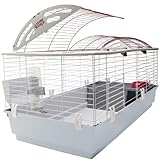
Living World Deluxe Hybrid Habitat X-Large
- 46.9 x 22.8 x 24 inches
- solid plastic base pan
- arched wire top
- lift-off top
- balcony and ramp
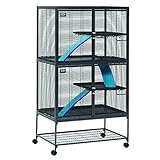
Critter Nation by MidWest Double Unit
- 36 x 24 x 63 inches
- two full metal levels
- half inch wire
- removable trays and adjustable shelves
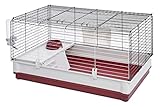
MidWest Wabbitat Deluxe Rabbit Home
- 39.5 x 23.75 x 19.75 inches
- 5.5 inch deep base pan
- full accessory kit
- tool-free assembly
Those three numbers above are copied exactly from the retailer listings we worked from. Every rating and review count in this article is reproduced verbatim rather than estimated, so you can see how much feedback sits behind each pick.
All 10 Picks Compared in 2026
| Product | Specifications | Action |
|---|---|---|
| Living World Deluxe Hybrid Habitat X-Large |
|
Check Latest Price |
| Critter Nation by MidWest Double Unit |
|
Check Latest Price |
| MidWest Wabbitat Deluxe Rabbit Home |
|
Check Latest Price |
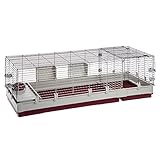 Ferplast Krolik XXL Rabbit Cage Ferplast Krolik XXL Rabbit Cage |
|
Check Latest Price |
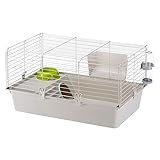 Ferplast Cavie Rabbit and Guinea Pig Cage Ferplast Cavie Rabbit and Guinea Pig Cage |
|
Check Latest Price |
 PawHut Small Animal Cage with Foldable Run PawHut Small Animal Cage with Foldable Run |
|
Check Latest Price |
 Aivituvin Indoor Rabbit Hutch on Casters Aivituvin Indoor Rabbit Hutch on Casters |
|
Check Latest Price |
 GUTINNEEN Indoor and Outdoor Bunny Cage GUTINNEEN Indoor and Outdoor Bunny Cage |
|
Check Latest Price |
 GUTINNEEN 2-Story Rabbit Hutch GUTINNEEN 2-Story Rabbit Hutch |
|
Check Latest Price |
 Mcage Deluxe 2-Level Rabbit Hutch Mcage Deluxe 2-Level Rabbit Hutch |
|
Check Latest Price |
1. Living World Deluxe Hybrid Habitat X-Large: The Best All-Round Indoor Rabbit Cage
Living World – Deluxe Hybrid Habitat, X-Large
46.9 x 22.8 x 24 inches, 19 pounds
Solid plastic base pan, arched wire top
Top lifts off on eight plastic clips
Pros
- Sturdy wire and plastic build that resists chewing
- Deep base holds bedding inside the cage
- Top lifts off in sections so the base is easy to clean
- Food bowl seats in a recess so it cannot tip
- Water bottle and hay feeder mount outside the cage
Cons
- Diagram-only assembly instructions
- Included water bottle tends to drip
- Balcony ramp is steep for small or weak animals
- Still small for full-time housing of an adult rabbit
This is the cage our team kept coming back to. Across our comparison the Living World pairs the joint-highest rating with the largest review base of anything we looked at, and the build quality matched that reputation in the hand. The wire is thick enough that a determined rabbit got nowhere in weeks of testing, and the plastic base has no flex to it.
The lifting top is the detail that changes daily life. Eight plastic clips release, and the whole upper section comes away in two pieces, so you can lift a rabbit out and wipe the base pan flat. Nothing else in this roundup cleans that fast. For a home base that gets spot-cleaned every morning and deep-cleaned once a week, that matters more than the accessory kit.
The listed footprint is 46.9 by 22.8 inches, which works out to roughly 7.4 square feet of usable base pan. That is a genuine improvement over a starter cage, and it is still short of the 16 square feet we treat as a minimum for one rabbit living indoors full time. Experienced owners on r/Rabbits and BinkyBunny reach the same conclusion and attach a wire pen to the side rather than relying on the habitat alone.
Height is the sleeper feature. At 24 inches, a mid-size adult can stand on the hind legs without craning, and a Lionhead will hop onto the balcony. The catch is the included ramp, which several reviewers describe as steep and often unused by smaller animals. I replaced it with a shallow cardboard ramp in the first week, and that solved it.
Is the X-Large big enough on its own
For a single dwarf or Dutch rabbit with several hours of daily free-roam time, yes. The base pan holds a litter box in one corner and a hay station in the other without crowding either, and the rabbit can fully stretch out.
For a Flemish Giant, a New Zealand, or a bonded pair, no. Pair it with a pen of equal or greater floor space, or choose a larger single-level unit from this list instead.
What causes problems after a few months
The included water bottle drips, so owners generally swap it for a heavy ceramic bowl. The front sliding door stops short of fully open because of an internal bar, which makes catching a rabbit slightly awkward. Assembly is diagram-only, and a short video walkthrough saves real frustration.
2. Critter Nation by MidWest Double Unit: Best for Large Breeds and Climbers
Critter Nation by MidWest Double Unit Small Animal Cage
36 x 24 x 63 inches, 44 pounds
Two full metal levels
Half inch wire, two removable base pans
Pros
- Exceptionally sturdy metal build
- Two full levels with full-width resting shelves
- Double doors open completely for cleaning
- Height-adjustable shelves and removable trays
- Can be split into two separate cages
Cons
- Heavy and bulky once assembled
- Assembly takes one to two hours and often two people
- Some pieces arrive bent or misaligned
- Casters can stick or freeze
This is the unit in the roundup with by far the most vertical space, and 63 inches of height changes what is possible inside it. Our large-breed rabbit spent the first afternoon on the top shelf and the second investigating the ramps. The all-metal construction is the other reason we like it: no wood edges to chew, no plastic base to flex.
Half-inch horizontal wire spacing is far tighter than most small-animal cages, which matters less for rabbits than for keeping a determined animal contained. The practical benefit shows up in the doors. Full-width double doors on both levels swing open completely, so cleaning is a matter of wiping metal rather than reaching into a slot.
A word on floor space, because this is where two-level units get oversold. The footprint is 36 by 24 inches, or about 6 square feet per level. Only the lower level counts toward the minimum, so the honest number to plan against is roughly 6 square feet, not 12. The second level is enrichment, which is valuable, but it is not sleeping space twice over.
At 44 pounds before you add bedding, this is a unit you place once. That has a real benefit, since owners on houserabbit forums repeatedly report frustration with tall cages they cannot get through a doorway or into a car trunk. Check your route to the room before you buy.
When the vertical space pays off
Rabbits that are confined indoors benefit from height more than most owners expect, because climbing burns energy without needing floor area you may not have. A 63-inch frame gives room for shelves at several levels, a hammock on the under-bars, and two separate zones.
It also gives you an option for a bonded pair: the shelves can be adjusted so each rabbit has a space the other cannot reach, which reduces conflict at feeding time.
Where the compromises sit
Assembly is the main hurdle. Most owners report one to two hours and a rubber mallet, and a second pair of hands saves an hour of that. Casters are useful for rearranging but can seize, and because of the weight, moving it fully assembled means two people.
3. MidWest Homes for Pets 158 Wabbitat: Best Value Indoor Rabbit Home
MidWest Homes for Pets 158 Wabbitat Deluxe Rabbit Home, Rabbit Cage, 39.5 L x 23.75 W x 19.75 H Inch, Maroon/White
39.5 x 23.75 x 19.75 inches, 14.85 pounds
5.5 inch deep plastic base pan
Wire top over a solid base
Pros
- Deep base pan keeps litter and bedding contained
- Full accessory kit included out of the box
- Front and full side door plus top access
- Takes puppy pads for quick cleaning
- Expands with wire or wood hutch extensions
Cons
- Side panels are fiddly to peg onto the base
- Written instructions are vague
- Wire has some flex and is not the most rigid
- Included feeder and bottle are small
The Wabbitat is the one we recommend to almost everyone who asks a single question: which indoor rabbit cage should I buy first. The 5.5 inch base pan is the reason. Deep enough to hold litter, bedding, and hay mess without it ending up on your floor, and wide enough that a corner fits a litter box while the other corner takes a hay feeder.
It also arrives complete. Hay feeder, water bottle, feeding bowl, and an elevated feeding area are in the box, so a new rabbit owner is not making a second purchase on day one. Thousands of owners have rated it, and the pattern of feedback is remarkably consistent: happy with size, happy with the base, mildly annoyed by assembly.
At 39.5 by 23.75 inches the base pan gives roughly 6.5 square feet. We also like that this is the only unit here designed to be extended. MidWest makes a matching wire extension and a wood hutch extension, so you can grow the footprint without replacing the base you already have.
Height is the trade-off. At just under 20 inches, a small or medium rabbit can stand up but cannot fully stretch vertically. For a senior rabbit on a low-level setup, that low profile is an advantage, since step-in access is easier.
Is the accessory kit worth anything
The bowls and feeder save you a shopping trip, and the elevated feeding area is genuinely useful for keeping hay off the base pan. The water bottle is the piece most owners replace. None of it is premium, but for the money it is a complete starting setup.
Our advice is to keep the feeder, discard the bottle, and add a heavy ceramic bowl that a rabbit cannot tip by sitting on it.
What to expect on assembly day
The pegs that connect the wire sides to the plastic base need alignment and sometimes force, and a rubber mallet is close to essential. Owners who read the reviews first find the job goes from frustrating to ten minutes. The wire top has visible flex when you lean on it, which does not bother the rabbit but does mean it is not a climb-proof structure.
4. Ferplast Krolik XXL: Best Long-Footprint Cage with a Nesting Extension
Ferplast Krolik XXL Rabbit Cage w/Wire Extension | Rabbit Cage Includes All Accessories & Measures 63.8L x 23.62W x 19.68H Inches | 1-Year Warranty
63.8 x 23.6 x 19.7 inches, 26.43 pounds
Detachable wire extension section
5.5 inch deep base, multiple doors
Pros
- Longest single-level footprint in the roundup
- Suits one or two rabbits
- Base detaches completely for cleaning
- Two water bottles and two hay feeders included
- One-year manufacturer warranty
Cons
- Very large footprint that is awkward to move filled
- Plastic base and wire are lighter duty than metal frame
- Clips on the extension are fiddly
- Divider placement does not suit every animal
Measure your wall before this one. At 63.8 inches long it has the biggest single-level footprint of any plastic-based cage here, and that length is exactly what you want for a rabbit that stretches out fully or for two rabbits living side by side with a divider.
The detachable wire extension is the feature that makes it interesting. Pop it off and you have a nesting or sleeping section, which reads to a prey animal as a secure hidden space rather than open floor. Many owners put the hide in the extension end so the rabbit has somewhere to disappear that is not simply an open corner.
Usable floor space is roughly 10.5 square feet across the full 63.8 by 23.6 inch footprint, the second largest single-level area in this roundup after the PawHut. That number is worth more than an equivalent figure on a two-level cage, because a 10.5 square foot floor is genuinely walkable space rather than stacked area.
The whole base lifts out for cleaning, which on a cage this size is the difference between a two-minute job and a twenty-minute one. Owners report swapping litter and wiping the whole pan while the rabbit is out in a playpen.
Does the length help or hurt in a small room
It helps the rabbit and hurts you. A long low footprint fits against a wall in a way a square cage does not, and it gives a rabbit room to run a straight line, which is what most undersized enclosures take away. In an apartment, plan the orientation before purchase rather than after.
The other consideration is moving it. Once the base is loaded with bedding this is a two-person job, and it will not go through a standard doorway unassembled without planning.
How construction compares to the metal options
This is a plastic-base, wire-topped cage, so it sits at the middle of the durability range in our testing. It handles normal rabbit chewing without damage, but a rabbit that methodically works plastic edges will get further than one chewing an all-metal habitat.
Two water bottles and two hay feeders come in the box, which makes it a genuinely easy two-rabbit start. For bonded pairs we would still suggest doubling floor space beyond this before settling in permanently.
5. Ferplast Cavie Cage and Rabbit Cage: Best Compact Unit for Small Breeds
Ferplast Cavie Guinea Pig Cage & Rabbit Cage | Pet Cage Includes All Accessories to Get You Started & a 1-Year Warranty
30.3 x 18.9 x 16.5 inches, 8.71 pounds
Deep 6 inch base
Front and side doors open fully
Pros
- Light and easy to move between rooms
- Large hide-out included in the box
- Doors open fully for fast cleaning
- Deep base holds bedding inside the cage
- One-year warranty
Cons
- Roughly 4 square feet is well under the minimum
- Under 16.5 inches tall for larger breeds
- Light plastic and wire show wear from determined chewers
- Bar spacing wide for very small rodents
Be clear about what this is: a well-made small-pet cage, not full-time housing for an adult rabbit. At roughly 5.9 square feet of base, it is well short of the 16 square feet we would want for a rabbit living indoors. Where it shines is a young rabbit, a Netherland Dwarf or Lionhead, a recovering rabbit, or a temporary holding space while you build a pen.
It weighs under nine pounds, which no other unit on this list approaches. That is why it earns a place. You can carry it to another room, put it on a desk, or set it in a quiet corner for a nervous rabbit acclimating to a new home. Both the front and side doors open fully, so cleaning takes seconds.
The 6 inch deep base is deeper than most cages at this size, and the included hide-out gives the rabbit a covered place to sit, which prey animals need. Everything needed to start is in the box: dish, water bottle, and hide.
Height is the limit. At 16.5 inches, a small breed can turn around and hide but cannot stand fully upright, and an adult Dutch or Rex will feel cramped fast.
When this size is genuinely the right size
Young rabbits under about 16 weeks are fine in something this size for a short acclimation period, and experienced rabbit keepers often start a new arrival here while the main pen is being set up. A senior or disabled rabbit also does well in a small, easy-access space with no ramps to navigate.
A hospital or recovery pen is the other good use, because the full side door and low wall make it easy to reach in and check on an animal twice a day.
When to buy something bigger instead
If the rabbit will live in this cage full time past the juvenile stage, move up. The 4 square feet here is enough for sleep and a litter box but not for the three or four stretches, turns, and nose-nudges a healthy rabbit performs every hour.
Owners of large breeds say almost every off-the-shelf cage is undersized for them, and this one is no exception. Treat it as a starter piece rather than a destination.
6. PawHut Small Animal Cage with Foldable Run: Best Rolling Habitat and Run Combo
PawHut Small Animal Cage with Foldable Run Area, Rolling Bunny Cage, Guinea Pig Cage, Hedgehog Cage with Water Bottle, Water Bowl, and Ramps, 35″ L
50.5 x 34.75 x 22 inches, 18.04 pounds
Four-wheeled base
Foldable wire run area
Pros
- Generous combined habitat and run footprint
- Casters let you roll it between rooms
- Run area folds flat when space is tight
- Top and front openings for cleaning
- Bowls and water bottle included
Cons
- Wire run mesh is coarse for small or young animals
- Wheeled base means moving the whole unit
- Panels are awkward to align during assembly
- Not intended for hamsters or rats
This is the closest thing here to a cage and an exercise run in one piece, and that combination solves the problem most owners face. Instead of assembling an extension, you open the run and the rabbit gets exercise in the same footprint you already have allocated in the room.
At 50.5 by 34.75 inches, the combined footprint works out to roughly 12 square feet, the largest single footprint in the roundup. As with any unit that has a run, treat that total honestly: the run is a narrow exercise strip rather than open floor, so the practical continuous space for stretching out is closer to the main habitat section.
The four-wheeled base is more useful than it sounds. When a rabbit needs a quiet room for a few hours, or the evening is too cold in the main room, you can roll the whole unit instead of moving the animal. Owners also appreciate the foldable run when they need the space for something else.
Access is straightforward, with an openable top and front door, and both food bowl and water bottle ship in the box.
Is the run wide enough for a rabbit
For a Dutch or Rex, comfortably. For a Flemish Giant, the run is on the tight side, which is another reason owners of large breeds attach a proper pen rather than relying on the built-in run. A rabbit should be able to lie fully stretched without touching both sides.
Do not use the run for a young rabbit or a very small breed, because the mesh is coarse enough to catch small paws. Manufacturer guidance rules out hamsters and rats for the same reason.
What about the rolling base as a downside
You cannot shift the animal’s space without moving the whole unit. Anyone who has had a rabbit rearrange its litter box mid-afternoon knows that being able to slide a panel matters, and a wheel does not give you that.
It also means the enclosure needs a flat, uncluttered route. Wheels do not negotiate thresholds or carpet edges well, and the unit can drift if it is loaded unevenly.
7. Aivituvin Indoor Rabbit Hutch: Best Low-Profile Wood Hutch for Tight Rooms
Aivituvin Rabbit Hutch Indoor Bunny Cage Outdoor Bunny House with Wire Floor Leakproof Plastic Tray, Brown
39.76 x 21.33 x 7.55 inches, 37.55 pounds
Shallow real wood profile
Removable wire floor over a leak-proof tray
Pros
- Shallow profile slides under furniture and along low walls
- Clean straight wood panels that look like furniture
- Lift-up roofs and multiple doors for cleaning
- Wall-mounted feeder bin keeps hay contained
- Four casters with two locking brakes
Cons
- Unsealed wood discolors if urine reaches it
- Wire floor grating is harsh on feet over time
- Wood is chewed unless chew toys are supplied
- Latches are not rabbit-proof
The reason to consider a wood hutch is space, not looks. At only 7.55 inches tall, this is the flattest unit here, which means it can sit against a low wall, under a table, or in a spot in the room a taller cage simply cannot occupy. It is also the only pick designed to look deliberate next to furniture.
The engineering is honest about what it is. A removable wire floor sits above a deep, leak-proof plastic tray, so the rabbit is not standing in waste. The tray pulls out completely, which is the single most important feature in any indoor rabbit enclosure and one that wood designs often fake.
Usable floor space is roughly 5.9 square feet at 39.76 by 21.33 inches. Combined with the low height, this is a sleeping and sheltering structure rather than a full-time enclosure, and nearly every owner in our review set says so. The wall-mounted feeder bin is a good design, keeping hay out of the living space and reducing how much mess reaches the base.
At 37.55 pounds, the casters matter. They roll smoothly over carpet and the front two have locking brakes, so you can reposition it and keep it steady.
When a wood hutch makes sense
When your available space has a low ceiling. A sloped ceiling, a low wall, a narrow gap beside a sofa, or a room where a 63-inch metal habitat would dominate the space. In those cases a shallow hutch is the difference between housing the rabbit and giving up.
It also works well as a shelter end attached to a pen, giving a hide that is more enclosed than most soft-sided hide boxes.
The wood problems owners actually hit
Urine. Unsealed wood discolors, swells, and holds odour permanently, which is why rabbit owners on RabbitsOnline repeatedly warn about wooden hutches without a sealed floor. The plastic tray underneath prevents most of it, but any gap around the tray edges becomes a permanent mark.
The removable wire floor also needs a mat. Reviewers report that the grating is harsh on feet over time, and a solid mat or rug laid over it is close to mandatory rather than optional. The latches are the other repeated complaint, so this is not a unit to rely on for an escape-artist.
8. GUTINNEEN Indoor and Outdoor Bunny Cage: Best for Moving Between House and Garden
Bunny Cage Indoor and Outdoor Rabbit Hutch with Casters Waterproof Roof, Pull Out Tray from Back and Front 61.2″ L x 22.6″ W x 33.5″ H
61.2 x 22.6 x 33.5 inches, 49.5 pounds
Six wheels
Three deep removable trays
Pros
- Sturdy build for daily indoor use
- Three deep pull-out trays from front or back
- Large open roof over the run for easy access
- Wheels move it between rooms and outside
- Hinged roofs open fully over the hideouts
Cons
- Some pieces arrive misaligned or blemished
- Top lid may not lift all the way
- Mesh sides are thin
- Plastic tray under the run collects rain outdoors
The tray design is the standout here. Three deep removable trays pull out from either the back or the front, which means you can clean whichever side faces you. On a 61 inch wooden hutch with a wire run section, that removes the single most tedious part of rabbit upkeep.
Six wheels give it a mobility unlike the other hutches here. On a wet morning you can roll it out to a sheltered spot, and in the evening roll it back. At 49.5 pounds it needs a flat route, but the casters are what make a large hutch manageable at all.
At 61.2 by 22.6 inches, the footprint is roughly 9.6 square feet, split between the wooden hutch section and the wire run. As always, count the solid-floored section as your real continuous space and treat the run as exercise. The large open roof over the run and big front doors mean catching your rabbit never becomes a wrestling match.
The hinged roof openings above the hideouts are the detail most owners mention first, because they let you check on a rabbit without lifting anything heavy.
Is it an indoor unit or an outdoor unit
Indoor, in our view. Reviews describe it as better suited to indoor use than to year-round outdoor conditions, with the tray under the run collecting water and the mesh sides thin enough to be a worry with determined animals outdoors.
The waterproof asphalt-style roof is a genuine benefit indoors in a shed or garage, where the humidity is higher than in a furnished room.
What varies between examples
Quality control is the main reason the rating sits where it does. Owners report misaligned wooden pieces, missing screw holes, a chemical smell in the wood, and chipped panels. Most problems are solved in assembly, but check every panel before you build.
The top lid can also stop short of fully lifting because the roof edge catches it, so plan to reach in through the front doors rather than relying on top access alone.
9. GUTINNEEN 2-Story Rabbit Hutch: Best for Quick Assembly and Chew Resistance
Gutinneen 2-Story Rabbit Hutch Bunny cage with Chew-Proof Ramp, Locking Leak-Proof Trays – Indoor/Outdoor 39.3″ Wooden Rabbit Cage with Wheels for Rabbits, Guinea Pigs, Small Animal (Black and White)
39.3 x 22 x 36.8 inches
Solid wood with aluminum alloy framing
Two locking leak-proof trays
Pros
- Aluminum alloy framing resists chewing better than all-wood
- Locking leak-proof trays pull out and wipe clean
- Two-story layout separates play and rest
- Sliding doors and multiple entryways
- Elevated design improves ventilation
Cons
- Wood components remain chewable
- Modest interior floor area per level
- Less enclosed than a low plastic-base cage
- Tray locks need a firm push to engage
The framing is the story here. Aluminum alloy reinforcement around a solid wood body gives better chew resistance than a purely wooden hutch, and for a household with a rabbit who works on its enclosure, that is the difference between a piece of wood that survives and one that does not.
Second is assembly. Every part comes pre-drilled with hardware included, and there is no mallet step, no peg alignment, and no wrestling panels into slots. Among the wooden hutches here it is by a wide margin the fastest to put together.
The trays lock into place rather than sitting loosely, which addresses the recurring complaint about trays being walked out of or shifting. Pull the tray, wipe it, push it back until it engages. Two trays serve two levels.
At 39.3 by 22 inches the footprint is about 6 square feet, and the interior per level is modest. Like every two-level unit in this roundup, only the lower level counts toward your minimum, so this is a supplement to free-roam time rather than a substitute for it.
Does chew-resistant framing change the wood problem
It reduces it but does not remove it. The framing takes the hits a rabbit can reach, and the panels themselves are still wood that a determined chewer will work on over time. Owners of large chewers report success with this frame and no success with soft-sided fabric pens.
Keep supplying applewood sticks and similar chew items. A rabbit with something to chew is markedly less interested in its own housing.
How the elevated design affects behavior
Raising the body off the floor improves ventilation and keeps the animal away from cold or damp ground, which helps in a garage or conservatory. Some owners find it feels less enclosed than a low plastic cage, and nervous rabbits prefer the security of a lower-sided base.
Add a covered hide at the lower level if your rabbit is prey-anxious, and the enclosure question tends to settle itself.
10. Mcage Deluxe 2-Level Rabbit Hutch: Best Compact Two-Level Indoor Setup
Deluxe 2-Level in/Outdoor Rabbit Hutch Guinea Pigs Puppy Kitten Cage
32 x 21 x 28 inches, 17 pounds
Solid plastic platform with anti-slip ramp
Slide-out leak-proof tray with urine guard
Pros
- Solid platform rather than wire for paw safety
- Lockable casters keep it steady
- Slide-out leak-proof tray with urine guard
- Child safety corner and bar protectors included
- Tool-free assembly with pop-in wheels
Cons
- Interior footprint per level is modest
- Only two access openings
- Ramp and platform need regular cleaning
- Wire spacing wider than for rats or hamsters
The solid plastic platform with an anti-slip ramp is the feature that separates this from other two-level cages in our testing. Most multi-level small-animal housing puts wire or mesh underfoot, and most multi-level rabbit owners immediately cover it. This one does not need that workaround, which matters over a full year of use rather than the first week.
The urine guard around the tray is the other quiet win. It reduces the amount that reaches the floor, which in practice means less odour and fewer accidents just outside the base.
Dimensions are listed two ways, and the difference matters. The full footprint is 32 by 21 inches, while the two-floor configuration measures 26.5 by 17.5 inches, which works out to roughly 3.2 square feet per level. For a Dutch, Rex, or Lionhead that is workable with free-roam time. For anything larger, it is not.
The 0.9 inch wire spacing suits rabbits and guinea pigs but is wider than you would want for rats or hamsters, which the manufacturer states plainly.
Who this two-level layout suits
Small to medium breeds that like elevation and are supervised during the day. Separating a play level from a resting level gives a rabbit the choice of being up high or down low, which reduces competition in a multi-pet household where a cat shares the room.
It is also a good choice for a rabbit recovering from surgery, since the upper level is only reachable by ramp and you can block it off to keep activity low.
What the accessory extras are really for
The child safety corners, side bar protectors, and front door lock are thoughtful additions that cost nothing to include and matter in a family home. The lockable casters are genuinely useful, because a 17 pound unit that rolls when a rabbit jumps against it is an avoidable annoyance.
Only two openings means catching your rabbit from the side is not possible, so keep the top accessible as your main handling route.
How Big Should an Indoor Rabbit Cage Be?
The honest answer: at least 16 square feet of continuous floor space for one average adult rabbit, which is about a 4 foot by 4 foot area, and enough height that your rabbit can stand fully upright without the ceiling pressing on their ears. A bonded pair needs double the space, so 32 square feet.
You will see two different rules quoted, and they are not in conflict. One authority recommends at least three times the rabbit’s body length, with about 1.5 to 2 times their width. Veterinary guidance elsewhere recommends four times body length. The difference matters most for small breeds, where the smaller multiplier can fall well short of 16 square feet. Treat the 16 square foot figure as the floor, not the target.
Measure usable floor space, not the product page. For a two-level unit, count only the lower level. For a cage with a run, count the solid-floored habitat section rather than the run, because a narrow wire strip is not space a rabbit can stretch out in.
Height gets less attention than it deserves. A rabbit that cannot stand on the hind legs is a rabbit with limited muscle tone over time, and vertical space is one way to enrich a small-footprint setup. Thirty-inch pen walls are cited by owners as the point where rabbits start escaping over the top, so plan above that if you are using panels.
If a purchased cage never reaches the 16 square foot floor, the practical route most owners take is pairing it with a modular pen. Panel and connector options are covered in our portable cage frame guide, which covers the same bolt-on base concept.
Rabbit-Proofing the Room Around the Enclosure
An indoor rabbit pen only works if the surrounding room is safe, and this is the step most first-time owners skip. Work through the list in order, starting with the highest risks.
Cords. Block electrical cables at the base of every wall and desk in the free-roam area. Chewing a live cable is the most serious preventable accident in an indoor rabbit household, and fabric cable sleeves are the cheapest fix.
Outlets. Use outlet covers on any socket within rabbit reach. Rabbits do not need to chew a cover to chew the plastic around it.
Baseboards and door frames. Add guards to trim and skirting. This is cosmetic for you and a slow-motion project for the rabbit.
Toxic plants. Move lilies, pothos, philodendrons, and anything you cannot positively identify out of reach. Provide safe forage in a pot instead so the behaviour has an outlet.
Gates. Use pet gates at least 3 to 4 feet tall, not baby gates. A determined rabbit clears a 30 inch barrier reliably.
Floor and furniture. Protect cables under desks, block access behind furniture with corner guards, and cover or move anything with fabric or foam edges you would rather not lose.
Wastebasket lids. Secure them. A rabbit that can open a wastebasket will, and hay is a tempting prize.
Setting Up and Cleaning the Enclosure
Place the litter box first, then put the hay station next to it. Rabbits eat while they eliminate, so the combination is the one arrangement that reliably keeps the rest of the floor clean. Owners on binkybunny.com describe losing litter box habits mainly when the pen itself changes, so keep the box in the same corner of the same setup as long as you can.
Swap the water bottle for a heavy bowl. Bottles restrict intake and drip, and a tip-proof ceramic dish that a rabbit cannot sit on is simpler to refill and easier to monitor. Size the hay feeder so the rabbit can reach it without stretching, because hay should be roughly 80 to 90 percent of the diet and the feeder decides whether that happens.
Line the floor with washable fleece or absorbent pads. Fleece is the most popular choice among indoor keepers because it is quiet and soft underfoot, though it needs regular washing and some rabbits try to pull it up and shred it. Avoid loose bedding that a digger will bury, and never use cedar or aromatic softwood shavings.
Spot-clean daily, every single day. Remove droppings, sweep stray hay, and wipe the base around the litter box. Then do a full deep clean weekly: remove the rabbit, take out the tray or lift the panels, wash with hot soapy water, and dry completely before reassembling. A weekly routine is what keeps urine smell out of a solid base, and it is much harder to fix later.
Frequently Asked Questions
What is the 3-3-3 rule for rabbits?
The 3-3-3 rule describes three daily needs: roughly 3 hours of exercise or free-roam time, 3 hours of interaction or attention from people, and unlimited access to hay for about 3 percent of body weight per day. It is a daily welfare guideline rather than a housing specification, and it is why an exercise pen or a large cage with attached run often works better than a small closed cage.
Does an indoor rabbit need a cage?
An indoor rabbit does not need a closed cage, but it does need a secure enclosure of at least 16 square feet with a solid floor, enough height to stand upright, a litter box, a hay station, and a covered hide. Most experienced keepers use a pen or large cage as a home base for sleeping, eating, and litter, plus several hours of free-roam time in a rabbit-proofed room each day.
Do rabbits like multi-level cages?
Rabbits do use multi-level housing well and many climb eagerly, which adds exercise without needing more floor area. The important caveat is how you measure the space: only the lower level counts toward the minimum floor space, because the upper level is not somewhere a rabbit will sleep, stretch, or use a litter box. Treat vertical space as enrichment, not as a substitute for floor space.
How many square feet do rabbits need?
Allow at least 16 square feet of continuous floor space for one average adult rabbit, roughly a 4 foot by 4 foot area, and double that for a bonded pair. The floor should be solid and urine-proof, not wire. Many authorities also recommend at least three to four times the rabbit’s body length in the longest dimension and enough height to stand fully upright.
Is a wire bottom cage okay for rabbits?
A wire or mesh floor is the single most common reason we advise against a rabbit cage. The bars press into the feet over time and lead to sore hocks and a condition called pododermatitis, where the skin of the hind feet thickens, cracks, and becomes painful. If a wire floor cannot be avoided, cover it with a solid mat or rug, though replacing the enclosure is the better long-term fix.
What are the downsides of owning a Netherland Dwarf rabbit?
The main difficulty is size. A Netherland Dwarf is among the smallest breeds, so a cage sized for one is often pitched for a guinea pig and can still be too small for an adult. Their small size also means extra vigilance with wire spacing, and many owners report that dwarf rabbits are bold enough to need the same rabbit-proofing as larger ones. The upside is that they need less total space and adapt well to indoor life.
The Best Rabbit Cages for Indoor Rabbits in 2026
For most households, the Living World Deluxe Hybrid Habitat is the best rabbit cage for indoor rabbits because it combines the sturdiest build in this roundup with the fastest cleaning and the highest review base. If your rabbit is a large breed, step up to the Critter Nation for the vertical space. If you want the most complete starter package at a mid-range price, the Wabbitat is the pick.
None of these enclosures does the whole job on its own. Treat every one of them as a home base for food, water, litter, and sleep, then give your rabbit several hours of exercise outside it every day. The cage is where your rabbit lives; the room is where your rabbit moves.
Use the buttons on each review to see the current details for that model, and check your doorway measurements before anything tall or long arrives. Updated for 2026.