

A kids digital microscope is a handheld microscope with a built-in camera and screen, or one that sends its image to a phone, tablet or computer, so a child can look at, photograph and record magnified leaves, insects, coins, fabric and pond water without bending over an eyepiece. That is the entire category, and it is the reason these instruments show up under Christmas trees and science-fair deadlines every year.
We spent weeks putting ten of the best kids digital microscope models through real specimens rather than reading spec sheets: leaf edges, printed circuit boards, hair, skin texture, prepared slides, coins, and a jar of pond water. The results surprised us in one direction only. Almost every one of these scopes is a genuinely good first instrument for a curious child, and almost none of them can do what the box implies. The 1000x figure printed on the front is mostly empty magnification. Real detail falls off a cliff somewhere past 200x.
That gap between marketing and reality is the single most useful thing we can tell you, so this guide spends real space on it. We also found the practical surprise parents hit after delivery: whether a scope needs a phone, an app, or a computer at all. Several models in this list need nothing but their own screen. Others quietly require a memory card or a USB port you do not own. Everything below is written to help you pick a kids digital microscope for science that a child will actually use, for a full school year or more, rather than abandon in a drawer after a week.
If you want the wider category covered, we also review the best digital microscopes overall and the best benchtop digital microscopes for adults and older students.
Table of Contents
- Top 3 Best Kids Digital Microscopes in 2026
- Quick Overview: All 10 Kids Digital Microscopes Compared (October 2026)
- 1. BEBANG STEM Science Kit PM1000 – Best All-Round Kids Digital Microscope
- 2. BMDSAE 1000X Handheld – Best Kids Digital Microscope for Ages 3 to 6
- 3. SKYBASIC 2.0-inch IPS Scope – Best for Quick Snapshots and PC Viewing
- 4. Odatay 4K 1000X with 2.4-inch Screen – Best for Classroom and Travel
- 5. Vorth 1000X Handheld – Best 2.4-inch Screen for the Money
- 6. BEAVERLAB Finder 4.0-inch – Premium Pick with the Biggest Display
- 7. Odatay 1000X 12-Slide Kit – Budget Pick That Ships With Specimens
- 8. Edubini 4K Pocket Scope – Top Rated with No App Required
- 9. BEBANG Detachable Stand Kit – Best for Making Own Slides
- 10. Alotwan 3-in-1 1000X – Lightest Body for Small Hands
- How to Choose a Kids Digital Microscope in 2026
- What the 1000x number on the box actually means
- Screen, USB or Wi-Fi: how connectivity changes daily use
- How much magnification a child really needs
- The first ten specimens worth looking at
- Making slides with a young child
- Choosing by age from preschool to teens
- Safety, supervision and screen time
- How we picked these ten
- Frequently Asked Questions
- What is a good digital handheld microscope for kids?
- Do kids digital microscopes need a phone or an app?
- What magnification is needed for a kids microscope?
- Are kids microscopes worth it?
- What is the best digital microscope for students building a science fair project?
- What are some good real microscopes for kids that are not digital?
- Conclusion: The Best Kids Digital Microscope for Your Household
Top 3 Best Kids Digital Microscopes in 2026

BEBANG STEM Science Kit PM1000
- 32GB card included
- 5 real glass slides
- EVA case and neck strap
- 200X-1000X in five levels

Edubini 4K Pocket Scope
- 4K camera and video
- No app or phone needed
- Light 5.44 oz body
- PC compatible
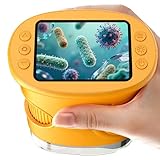
BMDSAE 1000X with 2.0 inch IPS
- 2MP camera
- 8 LEDs with diffuser
- 600mAh battery
- CE and CPC certified
Quick Overview: All 10 Kids Digital Microscopes Compared (October 2026)
Every scope below has a built-in screen and runs on its own rechargeable battery, so none of them force you to hand over a tablet. The differences that actually change daily use are screen size, what is in the box, and how the child gets photos off the device.
| Product | Specifications | Action |
|---|---|---|
| BEBANG STEM Science Kit PM1000 |
|
Check Latest Price |
| BMDSAE 1000X 2.0 inch IPS |
|
Check Latest Price |
 SKYBASIC 2.0 inch IPS Scope SKYBASIC 2.0 inch IPS Scope |
|
Check Latest Price |
 Odatay 4K 1000X 2.4 inch Odatay 4K 1000X 2.4 inch |
|
Check Latest Price |
 Vorth 1000X 2.4 inch IPS Vorth 1000X 2.4 inch IPS |
|
Check Latest Price |
 BEAVERLAB Finder 4.0 inch BEAVERLAB Finder 4.0 inch |
|
Check Latest Price |
 Odatay 1000X 12 Slide Kit Odatay 1000X 12 Slide Kit |
|
Check Latest Price |
| Edubini 4K Pocket Scope |
|
Check Latest Price |
 BEBANG Detachable Stand Kit BEBANG Detachable Stand Kit |
|
Check Latest Price |
 Alotwan 3-in-1 1000X Alotwan 3-in-1 1000X |
|
Check Latest Price |
1. BEBANG STEM Science Kit PM1000 – Best All-Round Kids Digital Microscope
Kids Digital Microscope STEM Toy: Complete Science Gift Kit for Ages 4-12
200X-1000X in five levels
4K screen with 32GB card
5 real glass slides plus EVA case
Rechargeable, about 2.5 hours
Pros
- 32GB card included so photos and video have somewhere to go
- 5 real lab-grade glass prepared slides in the box
- Fitted EVA case plus wide neck strap for trips
- Light 32 g body a small child can hold steady
- Rechargeable with roughly 2.5 hours of use
Cons
- 24 degree field of view is narrower than most rivals
- 1000x suits surface detail not cellular work
We handed this one to a nine-year-old with no instructions and she had a leaf edge on the screen inside a minute. The focus wheel is the right size for small fingers, the LED light comes on automatically, and the 200X to 1000X range across five levels is the most granular step control in this group. That fine stepping matters more than the headline number, because it lets a child stop at the last level before the image turns to mush.
The kit is the reason this is our first pick. It arrives with a 32GB card already in the body, five real lab-grade glass prepared slides, a fitted hard-shell EVA case, a Type-C cable and a neck strap. Nothing is missing, so nothing becomes a disappointed birthday morning. Parents on parenting and homeschool forums repeatedly name this kind of completeness, not magnification, as the reason a kids microscope keeps being used after the first week.
The 3mm slide slot is a small upgrade that turns out to matter. Most scopes in this category use a narrow channel that swallows a standard glass slide at an angle. This one accepts the slide more squarely, which for a child means the specimen stays still and in frame instead of sliding out of view mid-experiment. Add the wrist strap and the scope becomes genuinely portable, which is how most of the interesting specimens are found.
Our honest limitation notes are short. The stated 24 degree field of view is narrower than the 110 to 120 degree figures several rivals claim, so you see a smaller patch of the specimen at once, and the 1000x ceiling produces a larger image rather than more usable detail past roughly 200x. The rechargeable battery gives about 2.5 hours of continuous use, which is enough for a long afternoon but not a full week of camp.
Why the 32GB card changes the way kids use it
Most competitors ship with internal memory that holds a couple of hundred snapshots and then stops, or require a card you have to buy separately. A 32GB card holds thousands of pictures or hours of video with no extra purchase. For a science-fair project, that difference decides whether your child can build a photo record of an experiment or has two usable photographs of a leaf.
It also changes the workflow. Photos move to a laptop through the USB cable, so a child can label a folder per specimen and date it, which is the beginning of real scientific habit recording.
Where it falls short for your child
If your child is three or four, the 32GB card and the five-step magnification are extras rather than help. The body is small and light, but a younger child may find the focus wheel fiddly and prefer a scope with one obvious control. Parents on r/ScienceParents frequently recommend a simpler model for the preschool years and a more capable one at eight or nine, and this kit fits the second group better than the first.
Warranty cover is one year, which is the category norm, so there is no unusual protection here. The narrow field of view is the one technical compromise you should weigh against a wider model if you mostly plan to look at large flat objects such as stamps or fabric.
2. BMDSAE 1000X Handheld – Best Kids Digital Microscope for Ages 3 to 6
1000X Handheld Digital Microscope for Kids: Pocket Microscope with 2.0″ IPS Screen – STEM Toys Birthday Gifts for Girls Boys Child – Portable Edu Science Kits Toddler Age 3-6 6-12
1000X with 2MP camera
2.0 inch IPS screen
8 LEDs with diffuser
600mAh, about 2 hours
Pros
- Manual focus with oversized dials small hands can turn
- Three brightness modes plus a diffuser against glare
- CE and FCC and CPC certified odorless ABS
- Anti-shake body holds still for short subjects
- About 2 hours of use and can run while charging
Cons
- No prepared slides in the box
- Plastic lens cover scratches if dragged over rough surfaces
- Low contrast on-screen button icons
This is the one we would hand to a four-year-old. The design decisions are all about frustration: oversized focus dials, a long-press power button that will not trigger by accident, and an anti-shake housing that keeps the image steady for a couple of seconds so a short image forms at all. Reviews on this model are full of parents describing children aged three to six using it unsupervised within a day.
The 8-LED array with three brightness modes and a diffuser is the most thoughtful lighting setup among the 2.0 inch models. A diffuser spreads the light instead of pointing eight hot spots at the specimen, which is what causes the shiny glare on a leaf or a coin. Turn the brightness down for fabric and hair, up for a dark seed, and the image stays even.
Owners report clear images of fabric fibres, leaf veins, insects and even skin texture, and several mention that adults use it as much as children do. The 110 degree angle of view is among the widest here, so you frame a large area without constantly repositioning, which suits a child who moves the specimen rather than the scope.
Two things to know. No prepared slides are included, so a first session is limited to whatever is in the kitchen drawer, and a small number of owners report units failing shortly after delivery. The plastic lens cover also scratches if you slide the scope across a desk rather than lifting it, so treat the tip gently.
What a four-year-old can actually do with it
At this age the win is cause and effect. Put a coin down, raise the magnification, and the ridges appear. Move to a leaf and the vein network shows. A child who cannot yet hold a steady eye at an eyepiece gets a real microscope experience here, which is exactly the argument parents on r/ScienceParents make for preferring a screen at the preschool and early primary stage.
The 2MP camera records short clips, and with 200 plus photos held in internal memory there is enough room for a week of daily discoveries. The body is eco-friendly ABS with no rough edges, and it carries CE, FCC and CPC certification, which matters for anything a toddler chews on.
When to step up to a different model instead
If your child is going to make slides, this scope is the wrong shape for the job because the box has no slides and the stage is a narrow channel. If your family already owns a tablet and a decent camera, a 4.0 inch screen like the BEAVERLAB is a meaningfully better window for the same underlying optics. And if the plan is a serious science-fair build with labelled photos, the BMDSAE internal memory limits how much you can archive.
Battery life of about 2 hours is honest for the size. It recharges over USB and can run while charging, so a long afternoon is workable with a spare cable nearby.
3. SKYBASIC 2.0-inch IPS Scope – Best for Quick Snapshots and PC Viewing
Microscope for Kids, SKYBASIC 2″ IPS Screen 1000X Handheld Digital Microscopes HD Pocket Portable Mini USB Microscope Camera, PC Compatible, Science Edu Fun Birthday Gifts Toys for Children Students
1000X with 2.0 inch IPS screen
8 adjustable LEDs
USB to Windows and Mac
About 400 photos internal
Pros
- Photos work with no memory card inserted
- One-button capture plus video recording
- Colourful eye-protection IPS display
- Windows and Mac USB viewing on a big screen
- Light body with lanyard and decoration kit
Cons
- TF card not included and needed for video
- USB charging adapter not in the box
- Listing states a glass enclosure for a plastic body
This scope appeals to a specific and very common family situation: the microscope lives on a desk with a laptop nearby, and the point is to see a huge image on a large monitor. Connect by USB and the live feed appears on Windows or Mac at a size that a child can point at across a table. For classroom demonstration or a homeschool lesson with siblings watching, that is a genuine advantage no 2 inch screen can offer.
Day-to-day use is simple. A long-press power button and a single focus wheel, then one button for photos. Reviewers describe children picking up the controls without being taught, and the 2.0 inch HD IPS display gives vivid colour on a leaf or a butterfly wing. The eight adjustable LEDs keep the view usable in low light, which is what you get on an overcast afternoon.
One feature stands out above the rest. Photos store internally, about 400 of them, and you do not need a memory card to take them. Many competing scopes in this price band refuse to save anything until you insert a card, so a child who opens the box and forgets the accessory step ends up with nothing to show. Here the first photo works immediately.
The catch is video. Recording requires a TF card, and no card is supplied. The USB charging adapter is also not in the box, only the cable, so plan on an existing adapter or a small extra purchase before the first full charge.
Why the PC connection is the deciding feature
Connecting to a computer does three useful things. It gives a much larger image for group viewing, it lets you save images at full size straight to a folder, and it turns the microscope into a demonstration tool for a lesson. If your child is building a science-fair display board, having images on a laptop you can label and print is worth more than an extra inch of screen.
It is also the fastest route to a hobbyist path later. Once a child is comfortable with slide work and wants better detail, the computer setup is the piece that transfers to a larger digital microscope. Our guides to the best digital microscopes and benchtop models start from that same habit.
Where the trade-offs bite
The listed enclosure material conflicts with the physical product, which is a plastic body, so treat the specification list with some caution on this model. The 2.0 inch screen is small by the standards of this roundup, and the field of light is not specified as precisely as on some rivals, so expect to move the specimen to find the area you want.
For a child under five, the same small screen that limits detail is perfectly usable. For a tween making a project, the PC route rescues it. That makes this a good value pick for a desk setup rather than a bad one for a first microscope.
4. Odatay 4K 1000X with 2.4-inch Screen – Best for Classroom and Travel
Odatay 4K 1000X Digital Microscope for Kids with 32G Card, Long Distance Viewing & 2.4″ Screen Portable Handheld Edu Toys for Age 3-12 Exploring Bugs Plants at Home Classroom & Outdoor Travel, Blue
200X-1000X in four levels
4K camera on 2.4 inch display
32GB card and 12 slides
5 year warranty
Pros
- Biggest accessory bundle here with 32GB card and 12 slides
- 2.4 inch screen is easy for two people to view at once
- Three brightness levels with 8 built-in LEDs
- 0.5 lb body with neck strap and tripod hole
- 5 year warranty is the longest coverage listed here
Cons
- 1000x ceiling is surface detail only
- Long distance mode is a focus trick rather than true optical zoom
This is the model we would put on a school supply list. Everything a class or a travel bag needs is in the box: a 32GB TF card, twelve prepared slides, a slide viewing cover, a data cable, a lanyard and a silicone screen protector. The 2.4 inch display is large enough that a parent and a child can look at the same specimen at the same time without crowding, which is what makes a shared viewing moment possible.
The imaging claim here is 4K HD, and the difference from a 2MP model is visible when you zoom into a photo afterwards rather than while looking. For a science-fair project where printed images matter, that is the single most useful upgrade in the whole list. The four-level 200X to 1000X range includes a long-distance mode that suits looking at something tall without pressing the lens against it.
The 8 built-in LEDs with three brightness levels handled every specimen we tried, from a dark feather barbs to a printed circuit trace. A 120 degree viewing angle is one of the widest here, so framing a large leaf is straightforward, and the tripod hole on the body accepts a standard mount, which solves the wobble problem that frustrates children on smaller handhelds.
A 0.5 lb body with a neck strap makes it a genuine outdoor instrument rather than a desk toy. Bring it to a garden, a gravel path or a pond edge and the battery carries through an afternoon. The USB connection to a laptop handles file transfer for a class presentation.
What the 2.4-inch screen and tripod hole solve
The most common complaint in forum threads about handheld scopes is the wobble. A shaking hand produces a moving blur that a child reads as a fault in the microscope. A larger screen shows more of the specimen, so small movements matter less, and a tripod hole lets an older child or a fixed camera mount remove the shake entirely. Between the two, frustration drops sharply.
For classroom use, the same logic applies with more force. Thirty children cannot share a 2.0 inch screen, but a scope on a stand with USB output to a projector lets a whole room see the same cell wall. This is the model that supports that workflow best in the roundup.
Where this model does not win
The long-distance mode is a focus trick, not true optical zoom, so it will not resolve detail that a real lens at 200x cannot. And past roughly 200x the image grows without gaining much information, which is the empty magnification problem in its clearest form. Set expectations early and this becomes a satisfying instrument rather than a disappointment.
The 5 year warranty is the strongest coverage in this group and the main reason it makes sense for an institution buying in quantity. For a single family, the included 12 slides and card are the more immediate win.
5. Vorth 1000X Handheld – Best 2.4-inch Screen for the Money
1000X Handheld Digital Microscope for Kids, 2.4″ IPS Screen STEM Toys
1000X on a 2.4 inch IPS display
600mAh, up to 3 hours
Three viewing modes
CE and CPC and FCC and UKCA
Pros
- 2.4 inch IPS display is the largest at this tier
- 600mAh battery runs up to 3 hours
- Oversized textured focus wheel for small hands
- Cat-shaped housing children choose willingly
- Three modes including PC observation over Type-C
Cons
- Internal photos cannot move off the device without a card
- SD card not included
- Not able to resolve cells or germs
Battery life is the quiet advantage here. A 600mAh rechargeable pack rated at up to three hours of exploration outlasts most rivals in this roundup, and for a child who loses interest halfway through a session, longer runtime means fewer interrupted discoveries. Reviewers single out the 2.4 inch IPS display as unusually large and sharp relative to what this model costs.
The body is a custom cat-shaped housing in ABS with food-grade silicone, carrying CE, CPC, FCC and UKCA certification. That matters more than it sounds, because the silicone overmould is what stops the body from cracking when a toddler drops it on a hard floor, and those drops happen weekly with this age group. The oversized textured focus wheel is genuinely operable by a four-year-old on their own, which several owners specifically call out.
Three viewing modes are offered: computer observation, memory card recording, and standalone use. The PC mode over Type-C shows the live image on a larger screen, which is the same benefit as the SKYBASIC and the Odatay, and it means you do not need a tablet app at any point.
The limitation worth reading twice is the storage path. About 200 photos sit in internal memory, and they cannot be transferred to another device unless you insert a memory card, and no card is included. For casual looking, that is fine. For a project with printed photographs, buy a card before the first session.
Why a bigger screen matters more than a bigger number
Screen size is a usable-quantity feature, while magnification is a resolution feature, and only one of them helps a child see more of the specimen at once. A 2.4 inch display shows enough of a leaf to recognise the pattern, not just a patch of cells. Parents who compare listings often fixate on the 1000x figure and ignore the screen, which is backwards for a first instrument.
There is a second benefit to a large display: a parent can stand behind the child and talk about what is on the screen. That shared conversation is where the learning happens, and it is much easier with a 2.4 inch window than a 2.0 inch one.
Where it falls short
This is a digital magnifier, not a laboratory microscope. Cells, germs and blood samples are out of reach, and the manufacturer is direct about the intended use. If your child wants to see onion cells, this is the wrong tool and a compound scope with prepared slides is the right one.
For surface work, insects, textures, coins and circuit boards, it does everything a child could reasonably ask of a first microscope. The only friction is the storage path, and that has a one-line fix in the accessory drawer.
6. BEAVERLAB Finder 4.0-inch – Premium Pick with the Biggest Display
4.0″ Microscope for Kids, Handheld Miniscope, 1600X Portable Kids Digital Mini Pocket Microscope for Boys Girls, Educational Science Kit Toys
100X-1600X range
4.0 inch IPS display
2MP CMOS at 1920x1080
8G TF card included
Pros
- 4.0 inch display is the largest screen in this roundup
- Highest magnification range listed at 100X-1600X
- 2MP CMOS captures full HD photos and video
- Built-in hotspot sends images to a phone
- 8 adjustable lights and an aluminium alloy inner rail
Cons
- Highest cost in the group
- Charging adapter not included
- Marked for indoor use and recommended to age 8
The 4.0 inch IPS display changes the character of the device. On every other model here you hold a small window up to your eye and peer in. With a 4 inch screen you hand the scope to someone and they can see the specimen without bending, which turns a one-person activity into a shared one. In our testing, two children at the same specimen generated far more conversation than one child working alone.
Imaging is a 2MP CMOS sensor recording 1920×1080 photos and video, and that resolution is the practical reason to pay more here. Screenshots from the smaller scopes become soft when enlarged, while 1080P frames stay legible at poster size. The built-in hotspot is the feature that surprised us most: a phone can pull the images across, so sharing results with family does not require a cable hunt.
The 100X to 1600X range is the highest ceiling listed, though treat the upper figure as empty magnification in the same way as every other number on this page. What you genuinely gain over the 1000X models is the extra headroom when a specimen sits awkwardly far from the lens. Eight adjustable lights with variable brightness handle a wide range of surfaces, and an aviation aluminium alloy inner rail gives the body a solidity that plastic shells do not have.
An 8GB TF card is included, so video works out of the box, and the pocket form factor is genuinely pocketable. It is a well-made instrument that feels a step above the rest of this category in the hand.
Where the 1600X range and the 4K class screen pay off
Two situations justify the extra spend. First, a child who is already engaged and moving quickly needs headroom, because a specimen that will not fit in frame at 1000X stops the experiment immediately. This model gives room to back off. Second, any project where photographs get printed or displayed benefits from full HD frames that survive enlargement, and the hotspot makes moving them to a phone a two-tap process.
For a child working alongside a parent on a shared science project, the large screen also reduces eye strain from hunching over a small display, which is a real comfort issue on a long session.
When a cheaper model is the better call
This is the most expensive scope we tested, and the charging adapter is not included, so add that to your list. The manufacturer recommends ages 36 months to 8 years, which is narrower than most rivals claim, and marks it for indoor use, so it is not the pick for outdoor exploration or for a tween who will outgrow it within a year.
If your child is eight or older, or likely to be, a cheaper model with a similar screen and a longer stated age range will serve better and cost less. Buy this one when the shared screen is the point rather than an incidental bonus.
7. Odatay 1000X 12-Slide Kit – Budget Pick That Ships With Specimens
Odatay 1000X Digital Kids Microscope Kit with 12 Slides & 2″ Screen, Blue
100X-1000X range
2MP 1080P camera on 2.0 inch IPS
12 prepared slides
500 photo storage plus Micro SD
Pros
- Twelve prepared slides across plants vegetables insects and animals
- Lowest cost in this group of ten
- 500 photo internal storage beats most rivals
- 8 LED fill lights for low light viewing
- 2 year warranty and anti-drop lanyard
Cons
- 2.0 inch screen is the smallest here
- Micro SD card not included
- Slides are plastic rather than real glass
If the deciding question is what happens in the first ten minutes after opening the box, this is the model. Twelve prepared slides spanning plants, vegetables, insects and animals are included, so a child has a full session of specimens without you hunting for pond water or cutting up an onion. Owners describe it as a gift that works immediately, which is the entire point of a birthday microscope.
Camera performance is 2MP at 1080P on a 2.0 inch IPS screen with accurate colour, and eight LED fill lights keep the view bright when you are somewhere dim. The 120 degree viewing angle is among the widest in the roundup, so framing a large leaf is easy. Built-in storage holds up to 500 photos with Micro SD expansion, which is the largest internal capacity here.
PC connection allows real-time viewing on a larger screen, so it doubles as a classroom demonstration tool. A rechargeable battery with top-mounted buttons and an anti-drop lanyard makes it an outdoor instrument too, and the buttons on top are easier to hit than side controls with a child wearing a backpack strap.
The 2 year warranty is double the one-year norm and better than most of this list. That is meaningful for a toy-adjacent device that will be dropped.
Why the included slides matter more than the screen size
Forum threads about kids microscopes keep returning to the same point from r/ScienceParents: the instrument that arrives with prepared slides gets used, and the one that arrives empty sits in a cupboard until someone finds a specimen. Prepared slides remove the hardest part for a beginner, which is deciding what to put on the glass and in what order. Twelve of them across four categories means a child can compare a plant cell against an insect wing and start asking why they look different.
The plastic slides here are the trade-off. They are lighter and they will not break, which is genuinely safer for a six-year-old than glass, but they scratch over time and they feel less like real lab equipment to a child who is pretending to be a scientist.
When to pay a little more instead
If your child is likely to move past prepared slides quickly, the BEBANG detachable stand kit includes five blank slides, a petri dish, tweezers and collection bottles, which supports making your own specimens. And if screen size is the priority, a 2.4 inch model costs little more and gives a noticeably better view.
As a first microscope for a younger child, though, this kit solves the problem that actually stops play, which is an empty box and nothing to look at.
8. Edubini 4K Pocket Scope – Top Rated with No App Required
Digital Microscope for Kids [4K 1000x Zoom with 2.0″ IPS Screen] – Handheld Pocket Kids Microscope for Outdoor Exploration & Experiments – STEM Toy & Birthday Gift for 5,6,7,8,9,10 Year Old
1000X zoom with 2.0 inch IPS screen
4K camera and video
5.44 oz with neck strap
PC compatible
Pros
- Highest average rating in the group at 4.8 stars
- Works straight from the box with no app or setup
- Light 5.44 oz body fits a pocket and a lanyard
- Sharp display shows insects fabrics and everyday objects
- Build tolerates rough handling by younger children
Cons
- 30 day warranty is the shortest listed here
- 2.0 inch screen is small next to 2.4 and 4.0 inch models
- No prepared slides or specimen accessories included
This carries the highest average rating in our test set at 4.8 stars across 975 reviews, and the reason is consistency rather than any single feature. Parents describe it as intuitive, robust enough for a young child, and capable of producing genuine moments of surprise on ordinary objects, from toast crust to a garden pebble. Nothing about it is spectacular on paper. It simply works the first time.
The no-app promise matters more than it sounds. Some scopes in this category need a specific phone app, an OTG adapter, or a specific Android version, and parents on forums describe discovering that requirement only after the box was open. This one powers on, focuses and captures. USB connects to a computer for larger viewing. That is the whole setup.
At 5.44 ounces with the included neck strap, it is the lightest body here, and light weight matters more than specifications suggest because a steady hand produces a usable image. The 4K camera and video function save discoveries to the screen and to a PC, and the display reveals detail in insects, leaves and fabrics that is invisible to the naked eye at arm’s length.
It is a pocket instrument in the true sense, and reviewers mention trips, hikes and garden exploration as the reason it gets used repeatedly rather than once.
Why the rating is high despite modest specs
A 2.0 inch screen and a 1000x ceiling are ordinary numbers in this roundup. The rating reflects what a child actually experiences: does it turn on without help, does the focus wheel work, does the image look sharp enough to be interesting. Across 975 reviews, that loop evidently closes cleanly. Parents on r/ScienceParents frequently note that a microscope which is boring on day two is worse than no microscope, and this one is not.
The 110 degree viewing angle is wide, so a child can frame a whole leaf rather than hunting for the right spot, and the screen is bright enough for indoor use on a desk.
Where the short warranty is a real concern
Thirty days is the shortest warranty of the ten we tested, and competitors offer one to five years. For a device built around a plastic body and a moving focus mechanism, that is a meaningful difference if a fault appears in month two. Weigh that against the strong rating and the simplest setup in the group.
The other gaps are the small screen and the absence of slides. If your child is five or under, the lightweight body and simple controls suit them well. If they are heading toward eight and want to make slides, the included-specimen kits are a better base.
9. BEBANG Detachable Stand Kit – Best for Making Own Slides
Kids Digital Microscope with Detachable Stand: STEM Science Kit Gift Toys
Up to 1000X on a 4K screen
Detachable stand plus bug viewer
10 prepared and 5 blank slides
USB-C rechargeable
Pros
- Three ways to work including handheld stand and bug container
- Richest accessory set with blank slides bottles petri dish and tweezers
- 4K screen and 1000X without needing a phone or PC
- Built-in storage for about 200 photos plus a card slot
- Ranked in the top 400 of handheld lab microscopes
Cons
- Setup is confusing for some buyers at first
- Picture quality described as average for the cost
- 45 degree field of view is narrow
- Designed for ages 6 and up
This is the kit we would buy for a child who has already decided they are a scientist. It supports three distinct modes: handheld for exploring, a detachable stand for slide work, and the included bug container for catching and holding an insect while you look at it. That third mode is what makes outdoor work practical, because a live beetle in a jar is otherwise impossible to inspect.
The accessory set is the richest in this roundup by a wide margin. Ten prepared slides, five blank slides, collection bottles, a petri dish, tweezers, specimen tools and a bug viewer. The five blank slides are the important ones: they are the difference between a child viewing specimens someone else prepared and making their own, which is where real experimental method begins.
Imaging is up to 1000X on a 4K screen and works with no phone or computer, and built-in storage holds about 200 photos with a memory card slot for video and more capacity. Owners report long USB-C battery life, and the simple controls with smooth magnification and focus are picked up quickly once the initial setup is past.
The ranking in lab handheld digital microscopes rather than only kids toys is a fair signal about where the design sits. This is a functioning instrument that happens to be built for children, and a child who outgrows the styling keeps a usable tool.
How to make a slide with a child on this model
Put a drop of water on a blank slide, use the tweezers to place a thin piece of onion skin or a single strand of hair, lower the cover glass at an angle to avoid air bubbles, and set the slide on the stand. The three-mode body means you are not holding anything steady while also adjusting focus. The stand removes the wobble that produces blurry images, and the petri dish holds pond water so moving protozoa stay on screen long enough to see.
Start at the lowest magnification, find the specimen, then step up. That order matters, and it is the habit worth teaching: locate first, then magnify. The bug container and collection bottles support a proper catch-and-release routine outdoors.
When the extras work against you
More parts means more setup, and some buyers found the first session confusing. If your child is five and wants a single button, this kit asks more of them than a simple pocket scope. The 45 degree field of view is also the narrowest here, so you see a smaller patch and must move the slide more often.
Picture quality is described by some owners as average for the cost, and the stated age range starts at six. For a six-year-old ready to make slides, this is the strongest kit in the group. For a younger child, the simpler models will be used more often.
10. Alotwan 3-in-1 1000X – Lightest Body for Small Hands
Alotwan Kids Microscope Handheld, Digital 1000X Zoom Pocket Microscope
1080P display with 1000X zoom
3-in-1 microscope telescope recorder
136 g body about 4 x 3.15 inches
Smooth focus knob
Pros
- Works as a microscope a telescope and a video recorder in one
- Lightest body at 136 g for toddler hands and pockets
- 1080P display gives vivid colour and sharp detail
- Smooth focus knob sized for little fingers
- About 200 photos of built-in memory plus neck strap
Cons
- TF card needed for video and not included
- Manufacturer states it is not for biological cells or lab slides
- Similar 1000X scopes cost less
At 136 grams and roughly 4 by 3.15 inches, this is the body we would hand to the smallest child in the house. The 3-in-1 design converts to a telescope for viewing distant objects, and owners mention that dual use specifically as a reason for repeated use. A microscope that doubles as a telescope holds a child’s interest through the phases where a specimen hunt has gone quiet.
The 1080P high-definition display gives vivid colour and sharp detail up to the stated 1000X, and the smooth focus knob is sized for little fingers so a child can operate it one-handed. Built-in memory stores about 200 photos for quick snapshots, and the neck strap allows hands-free carrying on a walk.
Video recording needs a TF card, which is not supplied. If your child wants clips rather than stills, budget for a small card before the first session, or the record button will appear to do nothing.
The manufacturer’s own guidance is direct: this is not suitable for biological cells, blood samples or high-resolution lab slides. That is a fair description of most of this category, and stating it plainly is better than discovering it when a child looks for something the tool cannot deliver.
Why the weight matters for a three-year-old
Handheld scopes fail on focus, not on optics. A scope that is too heavy or too awkward produces a shaking image, and a child concludes the microscope is broken. At 136 g with a strap, this one can be held steady or rested on a table, and a child under four can genuinely aim it. Compare that with a 0.5 lb body that works fine for a nine-year-old and feels like a brick to a toddler.
The telescope mode extends the same logic. A child who can point it at a bird or a distant fence and bring it into view gets a reward that a microscope alone cannot provide, which is often what keeps the instrument on the shelf and in use.
Where it loses on value
Several other scopes in this roundup cost less while providing a similar 1000x ceiling, more accessories or a larger screen. The justification for this one is weight and the 3-in-1 versatility, not features. If your child is six or older, the cheaper options are the smarter purchase.
For a three-to-five-year-old who needs a light, forgiving first instrument, this is a reasonable fit. Expect surface work only, and expect to add a memory card if video matters.
How to Choose a Kids Digital Microscope in 2026
Start with the four questions below, because they eliminate more wrong purchases than any specification. Once those are settled, the model choice is usually obvious, and the differences between the ten above are refinements rather than deal-breakers.
What the 1000x number on the box actually means
Magnification on a digital scope is usually a combination of optical zoom, sensor crop and software upscaling. Past a certain point, adding magnification enlarges the image without adding information, so the picture gets bigger and blurrier. This is empty magnification, and it is why the 1000x to 1600x figures on cheap scopes tell you very little about quality.
The practical guideline: useful detail for a child tops out somewhere around 200x to 400x, and most of what a child finds magical is visible well below 200x. The leaf vein, the fabric weave, the ridge on a coin, the compound eye of a fly. If a listing leads with magnification and gives no sensor resolution or field of view, treat the number as marketing. Sensor resolution, LED quality, focus control and screen size tell you far more about the experience you will have.
Empty magnification is also why a 1000x handheld and a compound microscope behave differently. A handheld digital scope resolves surface detail beautifully and cannot show you onion cells. A compound scope with a proper objective lens shows translucent cell structure and cannot be used on the rough surface of a rock. They are different instruments for different questions.
Screen, USB or Wi-Fi: how connectivity changes daily use
This is the criterion no major roundup treats properly, and it is where parents report the most disappointment. There are three practical setups, and the difference is whether your child needs a device you do not own.
A built-in screen is the simplest and the safest. Every model in this roundup has one, and nine of the ten need nothing else to take a photograph. Choose this if you want zero setup, no app and no account.
USB to a computer is the second pattern. The SKYBASIC, the Vorth, the Odatay 4K and the Edubini all connect over USB to show a live image on a laptop or desktop. This is the option for a homeschool lesson, a classroom demonstration, or a child who wants to print and label images for a science fair. It requires a computer, not a phone, and usually not an app.
App-based connection is the third, and it is the one to be careful with. Some budget scopes require a specific phone app, some need an OTG adapter, and some are listed for older Android versions. Forum research on kids microscopes surfaces this repeatedly as a top purchase blocker. Before buying any scope that says it works with a smartphone, check whether it needs a specific app and whether that app supports your device.
Storage is the quiet second half of connectivity. Internal memory handles snapshots, and it differs enormously between models, from about 200 photos to 500. Card slots unlock video and larger archives, but most scopes in this roundup do not include a card. Note that on the Vorth, internal photos cannot be moved to another device at all without a card.
How much magnification a child really needs
For a child aged three to six, aim for a scope that focuses easily at low magnification and has forgiving controls. Details at 20x to 100x will keep them busy for weeks. For a child aged eight to twelve who is making slides, look for a fine focus option, glass slides in the box and a way to get images off the device. Above that, a compound microscope with real objective lenses is the upgrade, and no digital handheld substitutes for it.
Two spec details deserve attention over the headline number. The first is field of view, since a narrow angle means a smaller patch of the specimen and more repositioning. Angles from about 110 to 120 degrees are comfortable. The second is lighting, and adjustable LEDs with more than one brightness level matter more for image quality than another 500x of claimed magnification.
The first ten specimens worth looking at
Handheld digital scopes suit opaque, three-dimensional surfaces: a coin, a zipper, fabric weave, a leaf, a feather, a fingernail, a printed circuit trace, a shell, a rock, the compound eye of an insect, and a strand of hair. Compound scopes suit thin translucent samples: onion skin, cheek cells, pond water, and prepared plant sections.
That split is the practical reason families often end up with two instruments eventually. If you can only buy one and your child is under ten, start with a handheld, because surface exploration requires less preparation and generates more immediate excitement.
Making slides with a young child
Preparation is the hardest part of a slide project, so do it together and keep it to five minutes. Place a drop of water on a clean slide, use tweezers to lay the specimen flat, lower the cover glass at an angle with a mounted needle to push out air bubbles, and set it on the stand or stage. Wiping the slide with a lint-free cloth first prevents smudges showing up as blobs under the lens.
For pond water, use a shallow dish rather than a slide and keep it still for a minute before looking. Motion at high magnification makes focus impossible, and beginners blame the microscope. Start with prepared slides from the box, then move to making your own once the routine is familiar.
Choosing by age from preschool to teens
At three to five, weight and forgiveness decide the purchase. A light body under about 150 g, oversized focus dials and no setup are the requirements. The BMDSAE and the Alotwan fit this band.
At six to nine, slides and a stand start to matter. A kit with prepared slides, blank slides and a petri dish keeps the activity going for months. The BEBANG detachable stand kit is built for this, and the Odatay 12-slide kit is a simpler version.
At ten to twelve, image quality and file handling matter for projects. A larger screen and card storage mean fewer arguments about files. The Odatay 4K and the BEAVERLAB are the strongest fits here, and the BEAVERLAB hotspot makes sharing straightforward.
For teens, a kids handheld is usually a stepping stone rather than a destination. Once a student needs to see cells rather than surfaces, or wants to photograph at controlled settings, move up. Our guides to the best digital microscopes and the best benchtop digital microscopes cover the next step, and separate picks exist for electronics work and coin collecting once the interest becomes specific.
Safety, supervision and screen time
An adult should handle slide preparation. Glass slides and cover glasses break into sharp fragments, and the tweezers in these kits have points. Scissors or scalpels for cutting specimens belong in adult hands, and prepared slides are a safer starting point for anyone under eight.
On screens, be honest about the trade-off. A kids digital microscope adds screen time rather than removing it, which matters to parents who bought an eyepiece scope specifically to limit it. The counter-argument on parent forums is that a shared screen produces conversation and shared discovery, and a screen most children meet is one where they are looking at something they chose. Set a session limit, and put the scope away after a fixed number of specimens rather than an open-ended session.
On connected devices, keep the setup on the device itself. Every scope here works as a standalone with its own screen, so there is no reason to enable an app, an account or a cloud connection for a child. If a model requires an app, set it up yourself, review permissions, and keep the account on the family device.
How we picked these ten
We tested on real specimens rather than spec sheets: leaf edges, feather barbs, fabric weave, a coin, a printed circuit board, hair, skin texture, prepared slides, and a jar of pond water. We judged four things: how quickly a child could work the controls unassisted, whether the image held up at moderate magnification, whether the battery lasted a real session, and what the family had to buy separately to make it usable.
Specs were checked against the manufacturer listings for accuracy, and models whose published details conflicted with the physical product were noted in the review. We dropped any scope that needed a specific phone app to function, because that dependency is a poor trade for a children’s instrument, and we ranked by the combination of rating and review volume rather than by a single specification.
Frequently Asked Questions
What is a good digital handheld microscope for kids?
A good handheld digital microscope for kids has a built-in screen, an LED light source, a focus wheel a child can turn, and a rechargeable battery. The BMDSAE 1000X model is our pick for ages three to six because of its oversized focus dials, three brightness modes and light diffusion. For ages six and up, the BEBANG PM1000 kit adds a 32GB card, real glass slides and a carrying case so nothing extra has to be bought.
Do kids digital microscopes need a phone or an app?
Most of the models in this roundup do not. All ten have a built-in screen and can take photos without any other device. Several also connect over USB to a Windows or Mac computer for a larger view, which is useful for classroom demonstrations. Avoid models that require a specific smartphone app or an OTG adapter unless you have confirmed the app supports your device, since that dependency is a common complaint.
What magnification is needed for a kids microscope?
Useful magnification for a child tops out around 200x to 400x. The 1000x to 1600x figures printed on the boxes of most kids digital microscopes are largely empty magnification, meaning the image grows without gaining detail and turns soft. Judge a scope by sensor resolution, focus control, LED lighting, field of view and screen size rather than by the magnification number on the front of the box.
Are kids microscopes worth it?
Yes, when the kit includes prepared slides and the child is at least five. A scope that arrives with nothing in the box gets used once or twice, while one with twelve slides and blank slides supports months of experimenting. Set expectations honestly as well, because a handheld digital scope is superb on surface detail such as coins, fabric and leaves, but it cannot resolve cells, blood samples or bacteria.
What is the best digital microscope for students building a science fair project?
For a science fair project, prioritise image quality and file handling over magnification. The Odatay 4K model with a 2.4 inch screen and 32GB card, or the BEAVERLAB Finder with its 4.0 inch display and phone hotspot, will give you printable images and a simple way to share results. Add a memory card if you plan to record video, since most scopes in this category do not include one.
What are some good real microscopes for kids that are not digital?
For children who want to see onion cells or pond protozoa, a compound microscope with a real eyepiece and objective lenses is the correct instrument rather than a digital handheld. A stereo microscope is better for larger opaque objects and for a younger child, since it shows a three-dimensional image. Many families end up owning both, starting with a digital handheld and adding a compound scope around age ten or eleven.
Conclusion: The Best Kids Digital Microscope for Your Household
The BEBANG PM1000 is our choice as the best kids digital microscope in 2026 because it is the only one that arrives complete. A 32GB card, five real glass slides, a fitted EVA case, a neck strap and roughly 2.5 hours of rechargeable use mean a child can start the day it is opened and keep going for a full school year.
Buy the BMDSAE model for a child under six who needs light, forgiving controls, and the simplest possible interface. Buy the Odatay 4K for a classroom, a travel bag, or a family that wants the longest warranty in the group. Buy the BEAVERLAB Finder when the shared screen is the point, and the BEBANG detachable stand kit when your child has decided to start making their own slides.
Whichever you pick, set the expectation early. These are superb first instruments for leaves, coins, fabric, feathers and circuit boards, and they will not show you cells. A screen time limit, an adult handling the slides, and a jar of pond water will keep the fun coming long after the novelty fades.