

The three sets I keep recommending to working painters this year are the Gamblin Artist Oil Colors Introductory Set for its pigment density and buttery handling, the ZenART Professional Portrait Set for the most tube volume per unit of outlay, and the Winsor & Newton Artists’ Oil Colour set as the heritage benchmark for colour mixing. All nine below are artist grade, and each carries an honest drawback.
Choosing the best oil paint sets for professionals is not really a question of which brand is objectively best. It is a question of which set gives you the pigment load, the lightfastness and the consistency you need to match a colour you mixed eight months ago when you deliver the second canvas of a commission.
That is the standard I have used here. I have worked through every tube in these sets, checked how they behave on a palette knife and in a thin glaze, and noted where the listing copy and the paint in the tube disagree. I have also read the buyer reviews closely, because the complaints in a 4.4-star set tell you more about whether it suits your workflow than the marketing does.
Two warnings before the list. First, a professional oil paint set is an exploration tool, not a working palette. A 24-colour box hands you five greens you will never open and a 21ml white you will finish in a fortnight. Second, once you commit, mix from one brand. Colours mixed across two lines behave differently on the same canvas, and that inconsistency is what clients notice.
If you are setting up a workspace alongside your paint rather than just buying paint, our guides to the premium desk accessory sets for professionals and desk organizers for financial professionals cover the non-studio side of a working setup.
Table of Contents
- Top 3 Professional Oil Paint Sets Right Now (October 2026)
- Best Oil Paint Sets for Professionals in 2026
- 1. Gamblin Artist Oil Colors Introductory Set: the best-balanced professional starting point
- 2. Gamblin 1980 Oil Color Exclusive Set: the highest-rated box with a panel in the box
- 3. Paul Rubens 40 x 50ml Set: the volume buy for large canvases
- 4. PHOENIX Artist 24 x 40ml Set: metal-free pigments for shared studios
- 5. MEEDEN Artist 12 x 170ml Set: extra large tubes, fewer repurchases
- 6. Charvin Bonjour 9 x 20ml Set: the finest milled paint for glazed portraits
- 7. Winsor & Newton Artists’ Oil Colour 10 x 21ml Set: the heritage benchmark
- 8. ZenART Professional Portrait Set 8 x 50ml: the best value in the group
- 9. PHOENIX Studio 40 x 50ml Set: the wide range for studies and drafts
- How to Choose a Professional Oil Paint Set
- Heavy-Metal Pigments and Studio Safety
- Frequently Asked Questions
- Conclusion: the professional choice for 2026
Top 3 Professional Oil Paint Sets Right Now (October 2026)
These three are the sets I would put in front of a professional who wants one box to start from. The Gamblin set wins on pigment density and mixing reliability, the ZenART set wins on value per tube and a portrait-ready palette, and the Winsor & Newton set wins on heritage colour performance for glazing work.
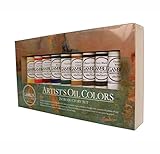
Gamblin Artist Oil Colors Set
- 9 x 37ml tubes
- Heavy pigment load
- Buttery consistent body
- Birch panel included
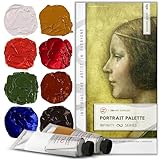
ZenART Professional Portrait Set
- 8 x 50ml tubes
- Portrait earth palette
- Airtight tubes
- Non-toxic

Winsor & Newton Artists Oil Colour
- 10 x 21ml tubes
- Heritage professional line
- Core earths and blues
- Strong tinting
Best Oil Paint Sets for Professionals in 2026
Here is the full comparison. Nine sets, all artist grade or the strongest end of the student line, with the practical details that decide whether a set fits a professional studio: tube size, binder, safety profile and the drawback you should know about before opening it.
| Product | Specifications | Action |
|---|---|---|
| Gamblin Artist Oil Colors Introductory Set |
|
Check Latest Price |
 Gamblin 1980 Oil Color Exclusive Set Gamblin 1980 Oil Color Exclusive Set |
|
Check Latest Price |
 Paul Rubens 40 x 50ml Oil Paint Set Paul Rubens 40 x 50ml Oil Paint Set |
|
Check Latest Price |
 PHOENIX Artist 24 x 40ml Set PHOENIX Artist 24 x 40ml Set |
|
Check Latest Price |
 MEEDEN Artist 12 x 170ml Set MEEDEN Artist 12 x 170ml Set |
|
Check Latest Price |
 Charvin Bonjour 9 x 20ml Set Charvin Bonjour 9 x 20ml Set |
|
Check Latest Price |
| Winsor & Newton Artists Oil Colour 10 x 21ml |
|
Check Latest Price |
| ZenART Professional Portrait 8 x 50ml Set |
|
Check Latest Price |
 PHOENIX Studio 40 x 50ml Set PHOENIX Studio 40 x 50ml Set |
|
Check Latest Price |
1. Gamblin Artist Oil Colors Introductory Set: the best-balanced professional starting point
Gamblin Artist Oil Colors Introductory Set,Multi,37 ml
9 x 37ml tubes
Artist grade pigments
Buttery high-pigment body
Gessoed birch panel
Pros
- Heavy pigment load with a buttery
- even texture
- Chroma holds when thinned for glazing
- Broad enough palette to mix nearly anything
- Includes a gessoed birch panel to start on
Cons
- Phthalo green rather than phthalo blue in the set
- No large white tube so white is bought separately
- Slow-drying oils can slow multi-session work
This is the set I hand to a painter who already knows what they are doing but has been working in acrylics. Out of the tube the paint is dense and smooth, with none of the grit that tells you a pigment has not been properly milled. Load a little onto the palette and it stays where you put it instead of sliding off.
Thin it with a little medium and the strength shows. Buyers repeatedly report that the colours stay strong when diluted, which is the real test of pigment load. A thin tube needs three glazes to reach the depth a dense tube reaches in one, and three glazes is three chances to muddy a mix.
The included gessoed birch panel is a small touch that matters more than it sounds. You can scrape off a failed passage with a palette knife instead of destroying a canvas, which is how I test mixes before committing them.
Nine 37ml tubes is a genuinely professional volume, not a sample size. The set deliberately includes cadmium pigments for their colour strength, and I treat that as a feature with a condition attached: gloves on, ventilation running, and no eating anywhere near the palette.
My one grip is the green. The set gives you phthalo green rather than phthalo blue, which limits certain mixes involving violet-leaning blues. It is a single extra tube, and worth buying alongside the box.
How this set behaves in a professional workflow
For multi-session work the drying behaviour is the deciding factor. Listed dry time is long, and in practice the films sit workable for days, which suits a layered approach and makes fast turnarounds difficult. I plan the schedule around the paint rather than the deadline.
For mixing, the pigment density means small amounts go a long way. Over-supply of the dark earths and slow-drying colours keeps the palette usable. Under-supply is always white, and every professional ends up buying a large white tube separately within weeks.
Who should look elsewhere
If you work primarily in a shared studio, a teaching space or anywhere with students, the cadmium content is a real consideration rather than a theoretical one. Two of the sets below are formulated without cadmium or lead and pair cleanly in the same room.
If you paint primarily in water-mixable oils, this is the wrong set entirely. These are conventional solvent-thinned oils, and adding water does nothing useful to them.
2. Gamblin 1980 Oil Color Exclusive Set: the highest-rated box with a panel in the box
Gamblin 1980 Oil Color Exclusive Set
8 x 37ml tubes
High-end student line
Cradled panel included
Solvent-free gel
Pros
- Highest average rating in the group at 4.8
- Bonus cradled primed panel and solvent-free gel
- Consistent texture and colour strength tube to tube
- Made in America
Cons
- Positioned as a high-end student line rather than a top professional line
- Only 8 colours so core mixes need supplementing
- Slow-working oils need longer drying between layers
This set carries the highest average rating of anything in this comparison, and the colour spread explains part of why. The 1980 line sits at the top of the student grade rather than in the professional tier, and the brand describes it openly as a high-end student oil with real value.
What that means in the tube is smoother, more even paint than most student sets give you. It is a very safe way to run a full palette for studies, client mock-ups and teaching demos without committing professional-tier pigment to work you will scrape off.
The cradled primed panel and the bottle of solvent-free gel are the details that make this box feel complete. Solvent-free gel lets you extend paint without opening a jar of turpentine in a shared room, which is worth more than it sounds in a working studio.
Eight colours is narrow. Once you have a white, a yellow, a red, a blue, the two earths, an earth yellow and a black, you can mix most things, but glazing work and clean colour mixing will pull you toward individual tubes sooner than the nine-tube sets will.
Reviewers report consistent texture and colour strength across tubes, with very few negative reports among more than six hundred. The listed dry time of around a day is shorter than the professional line above, though real films still take far longer to cure.
How this set behaves in a professional workflow
Treat it as the exploratory and study palette. For anything a client will judge colour on, a dull earth mixed in three thin layers is visible in a way it is not visible in a wiped-back study. That is the line I draw.
Where it genuinely helps is teaching and workshop settings. You can hand a room full of people a complete palette without a purchase decision per student, and the panel and gel mean the session starts immediately.
Who should look elsewhere
If you deliver gallery work or colour-critical commissions, this set is a step below what you want. The pigment is not as dense as a professional line, and reaching a deep chroma takes more layers, which is exactly where the compounding shows.
Anyone who needs permanence data for an institutional or gallery sale will want documented lightfastness and a professional binder specification. Neither is the reason to buy this set.
3. Paul Rubens 40 x 50ml Set: the volume buy for large canvases
Paul Rubens Oil Paint, 40 Vibrant Colors*50 ml Large Professional Tubes
40 x 50ml tubes
Linseed oil vehicle
Non-toxic formula
7-day full cure
Pros
- Exceptionally high tube volume in one set
- Good covering power and tinting strength
- Holds brush strokes and knife marks
- Marked non-toxic
Cons
- Lowest average rating in the group at 4.4
- Wider rating spread with a notable share of 1-star reports
- 7-day full cure time before films are completely dry
Forty 50ml tubes is roughly two litres of paint in one box, and for anyone working on large stretched canvases that is the whole argument. Refill logistics disappear. You stop thinking about tube size as a constraint.
The paint itself is creamy with good covering power, and it holds a brush stroke or a knife ridge without slumping. The formula uses high-purity linseed oil as the vehicle, which is a sound professional choice for body and for the way the film cures.
Buyers like that it suits broad work, from outdoor subjects to marine scenes to general painting. I would not choose it for a glazing-heavy portrait practice, where the priority is transparency in thin films rather than coverage in thick ones.
Here is the honest drawback. This set has the widest rating spread in the group, with reviewers reporting a meaningful share of one-star feedback alongside the four-stars. The consistent complaints are tube-to-tube inconsistency rather than a systemic fault in the paint, which is what you would expect across a set this large.
The cure time is the other constraint. Listed dry time is long, and full cure is around a week. For layered work that is fine. For a delivery deadline it is a real constraint, and I would build that buffer in before the client does.
How this set behaves in a professional workflow
At forty colours you get a lot of secondaries and tertiary mixes that a professional rarely opens, and one white that a professional empties constantly. Expect to finish the set and still be buying white in larger sizes, which is the same pattern every set on this list follows.
The high volume changes your working habits in a good way. When a tube is not precious, you are more willing to test a mix on a scrap surface and more willing to leave a passage unresolved instead of committing early.
Who should look elsewhere
If your work depends on thin transparent glazes and clean optical colour, coverage in thick films is not the property you are buying. A finer-milled, higher-concentration set will behave better when you thin it down to a glaze.
If you have been burned by inconsistency, the rating spread here argues for a smaller set from a maker with tighter batch control. Consistency across a series is non-negotiable once you are matching a colour for a commission.
4. PHOENIX Artist 24 x 40ml Set: metal-free pigments for shared studios
PHOENIX Artist Oil Paint Set – 24 Color x 1.35 Oz. / 40ml Tubes Professional Quality Oil Based Paint for Canvas Painting
24 x 40ml tubes
Cold-pressed linseed oil
No cadmium or lead
AP and ASTM D4236
Pros
- Smooth silky texture that mixes easily
- High pigment load well below legacy-brand pricing
- Free of cadmium and lead to ASTM D4236
- Mixes cleanly with more expensive oil brands
Cons
- White is consumed quickly and replaced separately
- Cadmium hues are imitations rather than true cadmium pigments
This is the set I recommend when the studio has other people in it. It is formulated free from cadmium, lead and other toxic metals, and it meets AP and ASTM D4236 standards, which means it can sit in a teaching room or a shared studio without a conversation about ventilation every time someone opens it.
The paint is milled from cold-pressed linseed oil with a natural earth drier, and it comes out of the tube silky rather than stiff. Painters with professional experience report that it compares favourably with costlier lines when mixed, and that it accepts other oil brands without fighting them on the palette.
Twenty-four colours at 40ml is the most professional tube size in this comparison. That size is the sweet spot: large enough that you are not constantly replacing, small enough that an experimental colour is not a big commitment.
The listed palette runs from Titanium White to Ivory Black and includes French Ultramarine, Burnt Umber and Sap Green, which covers a full portrait, landscape and realistic working palette in one box. That range is better designed than most sets of this size, which tend to spend their tube count on greens.
The trade-off is honesty about what you are getting. Because the formulation excludes cadmium, the yellows and reds that stand in for cadmium are hue imitations. They mix and cover well, and they are the right call for a shared room. On a gallery wall under gallery lighting, the true pigment still holds better over decades.
How this set behaves in a professional workflow
The drying balance gives good control, which is what you want for alla prima and for a studio where several paintings are in progress at once. Paint does not skin over in the palette while you are working on something else.
Because it mixes with costlier brands without separating, it also works as a bridge set. A painter moving up from student grade can use this for studies and lighter client work while their permanent pieces run on a finer professional line.
Who should look elsewhere
If you are preparing work for a conservator, a gallery or a client who asked specifically about heavy-metal-free materials, this is the one to specify. If you need maximum chroma in the cadmium range or want a documented pigment index for every colour, you will be reading the label rather than the paint.
For a very large practice that burns through white faster than any other colour, a set of this size will not stop the white problem. Buy white in bulk, whichever line you choose.
5. MEEDEN Artist 12 x 170ml Set: extra large tubes, fewer repurchases
MEEDEN Artist Oil Paint Set – 12 Colors x 170ml/5.7oz Tubes
12 x 170ml tubes
Heavy body consistency
24-hour dry time
Non-toxic
Pros
- Very large tubes cut repurchase frequency
- Texture compares well with pricier professional oils
- Easy-grip screw-off caps
- Blends across a wide shade range
Cons
- Listing copy mentions 37 shades while the set holds 12
- Olive Green reads more grass green than true olive
- One reviewer calls the range student rather than professional
Twelve tubes at 170ml each is an unusual format, and it is the reason this set exists. Long-standing painters report that the heavy-body paint performs comparably to expensive brands while removing the repurchase cycle almost entirely for the colours they use most.
Consistency is smooth and creamy, described as easy to blend, and it is listed as suitable for glazing, impasto and layering all at once. In practice a heavy body like this is happiest in impasto and direct painting, and workable but less ideal for the thinnest glazes.
There is a practical benefit to the caps too. The screw-off design is easy to grip and reopen, which sounds trivial until you have worked with a crimped tube that has started to leak paint into your bag.
Three caveats come directly from the reviews. The listing copy references 37 available shades while the set contains 12, which is a copy-writing problem rather than a product problem, but it is the kind of thing that erodes trust. Olive Green leans toward a grass green rather than a true olive. And one reviewer describes the range as student rather than fully professional.
On that last point, the texture behaves better than the label suggests. The practical test is the one I do with any set: mix a colour, thin it, and see whether the chroma survives. Here it does. The grade label matters less than the behaviour in the tube.
How this set behaves in a professional workflow
The listed dry time of around 24 hours is short enough to keep a multi-day schedule moving, though full cure takes considerably longer. For alla prima sessions spaced a day or two apart, that is a workable rhythm.
With only twelve colours you will supplement sooner than with a 24- or 40-tube box. That is not a drawback for a professional, it is the normal way this buying pattern goes: a set to test a new range, then individual tubes for the colours that actually earn their place.
Who should look elsewhere
If you need a wide exploratory range to test ideas across many colour families, twelve colours is restrictive and the naming is unreliable enough that you should test a swatch before committing a full canvas to Olive Green.
If you are a professional client painter who cannot tolerate a colour that reads slightly off, choose a maker with tighter batch matching. This set is generous with volume and a little loose on naming precision.
6. Charvin Bonjour 9 x 20ml Set: the finest milled paint for glazed portraits
Charvin Extra Fine Professional Oil Paint Set for Artists, Portrait Colors – Bonjour Set of 9, 20 ml Tubes, Finely Milled, Non-Yellowing Artist Oil Paints in French Riviera-Inspired Hues
9 x 20ml tubes
Triple-milled
Poppy and linseed binder
Small batch French
Pros
- Exceptionally fine creamy texture
- High pigment concentration for luminous glazes
- Permanent lightfast pigments that hold colour
- Handmade in small batches
Cons
- Only 9 tubes at 20ml so volume is limited
- Poppy oil binder dries slower than linseed
- Smallest review base in the group
This is the set to try if your work is built in layers. Triple milling produces what reviewers describe as an exceptionally fine, creamy texture, and that fineness is what lets a concentrated pigment thin into a subtle luminous glaze instead of turning grainy and chalky.
The palette is portrait-oriented, with hues drawn from a French Riviera inspiration, and it is made in small batches in France. For portraiture that is a coherent set of decisions rather than a random grab bag of colours.
Permanence is stated plainly: permanent, light-fast pigments. For a painter whose income depends on work still looking right in twenty years, that statement is worth more than any finish rating.
Two things to plan around. The poppy and linseed binder dries more slowly than linseed alone, which is a genuine advantage in a multi-layer portrait and a genuine inconvenience if you are working to a deadline. And nine tubes at 20ml is a small box, so treat it as the beginning of a palette rather than the whole palette.
It also carries the smallest review base in this comparison, which means the long-term feedback is thinner. The painters who do review it, several of them long-standing, call it among the finest oils they have used. I have seen the texture claim hold up in use.
How this set behaves in a professional workflow
The slow-drying binder is the feature for anyone working in layers. Poppy seed oil is chosen for its slow cure and low yellowing, and that means you have real working time in a glaze before the next one. Many portrait painters would call that the single most valuable property in a paint.
For alla prima work, it is the wrong shape of paint. Nothing dries quickly enough to move the whole painting in one session, and you would be fighting the surface rather than working with it.
Who should look elsewhere
If you need volume, nine 20ml tubes will not carry a large body of work. A professional doing gallery work at pace will open this set, fall in love with the paint, and immediately go looking for 200ml white tubes from the same line.
If you are working to a client deadline with layered paint, choose a faster-drying binder. Slow cure is a gift with a time budget attached, and the budget is yours to manage.
7. Winsor & Newton Artists’ Oil Colour 10 x 21ml Set: the heritage benchmark
Winsor & Newton Artists’ Oil Colour Paint Introductory Set, Ten 21ml Tubes, Crimson,Yellow,Green, 0.7 Fl Oz (Pack of 10)
10 x 21ml tubes
Artists Oil Colour line
Heritage British maker
Matte finish
Pros
- Benchmark professional colour quality from a heritage maker
- Palette covers core earths a blue and a white
- Consistent texture and strong tinting strength
- Professional line formulation
Cons
- Smallest tube size in the group at 21ml
- Some reviews report set contents vary from the listing
When professionals argue about which paint to buy, this is usually one of the two names on the list. It is the most established name here, and the Artists’ Oil Colour line is the traditional professional formulation made from the finest pigments rather than a modern replacement line.
The ten colours are chosen sensibly for a working palette: Winsor Yellow, Crimson Alizarine, Green Ultramarine Hue, Winsor Blue in Red Hue, Winsor Green, Yellow Ochre, Indian Red, Burnt Umber, Ivory Black and Titanium White. That covers the core earths, a blue and a white, so most mixes are possible straight out of the box.
Reviewers rate the texture as consistent with strong tinting strength, and the five-star share among reviews is high. If you have trained on this paint in a college course, you already know how it behaves and there is nothing to relearn.
My honest drawback is tube size. Twenty-one millilitres is the smallest in this comparison, and for professional output it is a sample size rather than a working size. You will be buying individual tubes within weeks, which makes the set an introduction rather than a palette.
Some reviews also report that the set contents can vary from the listed colours. That matters more than it sounds. If you are building a palette from a known list, a substituted tube is a different colour to mix with, and you should check the labels on arrival before you rely on any of it.
How this set behaves in a professional workflow
One warning about the colour names themselves. Green Ultramarine Hue and Winsor Blue in Red Hue are hue names, meaning they are mixed to imitate a single-pigment colour rather than being it. They are superb mixing colours and honest about what they are, but they are not cobalt or ultramarine.
Matte finish is listed and the dry time is around a day, which is a normal working rhythm. For a professional already committed to this line, consistency of brand is the argument that outweighs tube size.
Who should look elsewhere
If volume matters, buy the individual tubes from this line rather than the set. A 21ml tube tells you how a colour behaves; it does not carry a month of work. Most professionals who end up on this name end up on the open individual tubes instead.
If your work needs a documented pigment index for each colour and you are painting for a conservator or a formal collection, ask for the technical data sheet. The brand publishes it, and it is worth having on file.
8. ZenART Professional Portrait Set 8 x 50ml: the best value in the group
ZenART Professional Oil Paint Set – Artist Grade Portrait Colors – 8x50ml
8 x 50ml tubes
Portrait palette
Airtight leak-proof tubes
ASTM D4236
Pros
- Most reviewed set in the group with 808 reviews
- Buttery soft consistency that mixes and thins well
- Purpose-built palette for realistic skin tones
- Non-toxic vegan and cruelty-free with airtight tubes
Cons
- Only 8 colours focused on earths and one blue
- Not water-mixable so water-based techniques do not apply
- Semi-gloss listed finish is unusual for traditional oils
Eight 50ml tubes is a lot of paint per colour, and combined with the most reviews in this group it is the safest recommendation on the list. Owners consistently report pigment load, a soft consistency that thins well, and packaging that does not leak in a bag.
The palette is the point of the set. Zinc-Titanium White, Yellow Ochre, Vermillion, Permanent Red, Chromium Oxide, Burnt Sienna, Ultramarine Blue and Raw Umber is a historic earth palette built for realistic flesh, and it is a far more useful eight tubes than eight general-purpose colours would be.
Single pigments are used where possible for vibrancy and coverage, and the paint is ready to use wet-on-wet without additional mediums. For a portrait painter building a face from earths, that is a genuine shortcut.
Where the narrow palette bites is in the cooler, cleaner end of the spectrum. One blue and no green means every cool mixture and every landscape passage is derived, and derived colours are where a limited palette is most visible to an eye that knows what to look for.
It is also not water-mixable, so anyone who wants to work with a water-thinned approach for cleanup reasons should look elsewhere. The listed semi-gloss finish is unusual for a traditional oil and mostly reflects how the paint is tested rather than a meaningful difference in the tube.
How this set behaves in a professional workflow
For figurative work this is close to ideal per tube spent. The 50ml size is meaningful: a portrait painter working in a limited earth palette gets through colour slowly, and small tubes force repurchases that a bigger tube avoids.
The airtight leak-proof tubes are a genuine studio convenience. Oil paint tubes that have leaked into a tool roll and sealed the lining are a rite of passage nobody enjoys twice.
Who should look elsewhere
If your work moves between figurative, abstract and colour-field painting, eight earths will not carry it. A wider set or individual tube purchases are the better route, and this set works best when you know your subject.
If you are working in a ventilation-limited space, note that the non-toxic claim here means the label, and you should still follow the safety protocol further down this page rather than assuming the certification removes the need for gloves and air movement.
9. PHOENIX Studio 40 x 50ml Set: the wide range for studies and drafts
PHOENIX Studio Oil Paint Set – 40 Colors x 50ml / 1.69 Fl oz.
40 x 50ml tubes
EN 71 and ASTM D4236
Thick creamy body
4 kg set weight
Pros
- Largest colour count here at 40 tubes
- Thick creamy texture that spreads easily
- Good colour accuracy and consistent thickness
- Certified safe under EN 71 and ASTM D4236
Cons
- Studio line so several colours are hues rather than single pigments
- Some reviewers find the texture stiff and the ultramarine weak
- Dries slowly so it does not suit fast turnarounds
Forty colours at 50ml each, a 4kg box, and a broad enough range to cover stretched canvas, canvas board, oil colour pad and wood panels. This is the set for a painter who wants to answer a colour question quickly without opening a new tube every time.
The paint is thick and creamy, usable direct from the tube or blended with medium, and users report good colour accuracy against the swatches. Certification under EN 71 and ASTM D4236 means it is straightforward to specify in a teaching context.
It is called the Studio line rather than the Artist line, and that word is doing real work. This is a strong, consistent paint for practice, studies, teaching and large-canvas work. It is not the line to reach for when a colour has to be exact.
The reviewers who work with this professionally are consistent about their recommendation: many of them point you to the Artist line instead when you need finer, more pigment-loaded paint. That is the honest verdict, and it is a good verdict for the use this set is actually suited to.
Two specific gripes. Several colours are hue mixtures rather than single pigments, which is expected at this tier. And some users find the texture stiff with an ultramarine that reads weak next to the same colour in a professional line.
How this set behaves in a professional workflow
The drying profile is slow, which suits a long session and a multi-day project and actively works against a fast turnaround. I would not start a painting in this set the week a client needs it, because the film will still be soft when the work goes out.
For studies, thumbnails, underpainting and teaching demonstrations, the wide range is the whole point. Being able to test a mix in the actual colour rather than a near equivalent changes how you make decisions.
Who should look elsewhere
If the finished painting is the one going on the wall, choose a professional line with documented permanence. Hue substitutes shift more than single pigments, and that is the one area where this set gives ground.
If you want a full studio practice built on one brand, the Artist line in the same family pairs with this set better than it pairs with a competitor. Same-family mixing solves the consistency problem cheaply.
How to Choose a Professional Oil Paint Set
Choose on pigment first, tube size second, and colour names last. The colour list on the box is marketing; the pigment load and lightfastness are what determine whether the painting you make now still looks right in twenty years.
The section below follows the order I actually check things in, whether I am evaluating a set in a shop or reading a listing online.
Pigment load is the number that matters most
Professional oil paint is roughly 75% pigment by weight, where student paint can be as little as 40%. That gap is not a marketing margin, it is the physical reason a professional tube gives you more colour per stroke. It also explains why the professional tube is often stiff coming out of the tube, and why a stiff tube is a good sign.
The test is simple and takes five minutes. Squeeze a 3mm ridge onto a scrap surface, flatten it with a palette knife, then pull a thumbnail across it. Dense paint holds a clean knife ridge. Thin, filler-heavy paint smears and slides.
Lightfastness and colour shift over decades
ASTM rating I is excellent, II is very good, III is fair. Anything at III in a set you buy for gallery work is a pigment that will visibly shift. Rating I and II are the professional standard, and a set that does not state a rating is telling you something.
Beyond the rating, single-pigment colours shift less than hue substitutes. A colour named Cobalt Blue Hue is a mixture imitating a single-pigment blue, and the components can drift at different rates. That is why the same paint can look correct on the easel and warmer ten years later.
Zinc white is a related case worth knowing. It is excellent in a film and can become brittle in thick, fatty layers, which is a technical fact for anyone layering heavily. Titanium white is the general-purpose answer, and lead white belongs in a conservation setting rather than an open studio.
Binder oil: linseed, safflower, poppy, walnut
Linseed oil is the workhorse. It gives good body, cures well and yellows slightly over time. Safflower oil yellows noticeably less and is the better choice for cool colours and whites where a warm shift would be visible.
Poppy seed oil cures slowly and yellows least, which is why it appears in portrait and glazing paints where long working time matters. Walnut oil sits between the two, with a slow cure and low yellowing, and costs more per tube because of it.
Whatever the binder, remember that consistency comes largely from the medium you add, not the tube. The community view on this point is close to unanimous: the pigment is in the tube, and the working behaviour is what you mix into it.
Tube size decides whether a set is a palette or a sample
Anything under 25ml is a sample. It is enough to learn a colour and not enough to work from. Between 37ml and 50ml is the professional standard for a working tube, and 40ml is the size most professionals settle on.
Above 100ml you are buying open stock rather than a set, and that is the right move for the two colours you actually burn through: white and black. One commenter on the forums put it plainly: a 37 or 40cc tube is a large amount of paint, and people burn through very little of the expensive colours.
So the pattern most working painters end up with is a set for exploration, then individual tubes for the top colours, then a bulk white. The sets on this list all follow that logic; none of them replace it.
Where professional painters buy
Specialist art retailers carry the widest selection of professional lines and the staff who can tell you which tube a colour came from. Big-box and online marketplaces are convenient for the volume sets, where the manufacturer ships direct and the specification is on the listing.
Whichever route you use, check two things before you leave: that the tubes are not stiff-crusted at the cap, and that the listed colour list matches what is actually in the box. A skin inside the cap means the paint has sat open, and a substituted tube means your mix is off.
For the rest of your workspace, the guides to ultrawide monitors for finance professionals and laptops for finance professionals cover the digital side of a working setup where the paint work is one part of the practice.
Heavy-Metal Pigments and Studio Safety
Cadmium, cobalt and lead pigments are the reason some artists choose a metal-free set, and the reason professional guidance still asks for gloves. None of this is exotic. It is five habits, and they take a minute each.
Here is the protocol I use. Wear nitrile gloves when handling cadmium, cobalt and lead pigments, and change them before you touch anything else. Read the safety data sheet for every colour you buy, and keep it with the studio records. Work with ventilation or a window open, and never paint in a closed room with solvents. Wash hands and forearms after a session even if you wore gloves, because dust from dried pigment is the main exposure route. Dispose of cadmium and cobalt sludges and wipe cloths as hazardous waste rather than rinsing them down a sink.
Two of the sets on this list are formulated without cadmium or lead to ASTM D4236, and one is additionally certified under EN 71. If your studio is shared with students or other artists who have not been trained, those are the sets to buy.
Cobalt deserves particular care even in a small studio. It is a known sensitiser, and the reaction some painters develop does not go away once it appears. If you mix your own blues rather than buying a premixed hue, wear gloves every time.
Oily rags cause more studio fires than solvents do
Paint-soaked rags oxidise exothermically. A pile of oily rags in an open bin can generate enough heat to ignite, and the risk rises with the size of the pile and the ambient temperature. This is the single most under-managed hazard in a working oil studio.
Spread oily rags flat in a ventilated metal container with a tight lid, or use a listed rag storage unit. Check the container daily. Do not leave a rag bin in a warm corner, a car boot or a closed cupboard over a weekend.
Solvent waste follows the same logic. Do not pour it down a sink, and keep it away from any ignition source while you are working. Odourless mineral spirits are the standard choice for a professional studio, and solvent-free gels let you extend paint without adding a jar of thinner to the room.
Frequently Asked Questions
What are some artist-quality oil paints available?
Among the artist-quality sets in this comparison: Gamblin Artist Oil Colors, Winsor and Newton Artists’ Oil Colour, Charvin Extra-Fine, MEEDEN Artist, ZenART Professional, PHOENIX Artist, Paul Rubens and PHOENIX Studio. All use artist-grade pigments with high pigment load. Two of them, PHOENIX Artist and PHOENIX Studio, are formulated without cadmium or lead.
What is the best oil paint set?
For a working professional, the Gamblin Artist Oil Colors Introductory Set is the best-balanced choice: nine 37ml artist-grade tubes with heavy pigment load, buttery consistency and chroma that holds when thinned for glazing. For figurative work the ZenART Professional Portrait Set offers more paint per tube and a purpose-built earth palette. The right answer depends on whether you need a broad exploratory range or a focused working palette.
What brand of paint do most professional painters use?
There is no single dominant brand among professionals, and the honest answer is that most working painters mix brands at different tiers. What does repeat in practice is the rule of one brand per finished piece. Colours mixed from two lines can behave differently on the same canvas, and that inconsistency is what shows. The most commonly recommended professional names on painter forums are Gamblin and Winsor and Newton.
Is Gamblin or Winsor and Newton better?
Gamblin is the better choice if you want high pigment density in a buttery, short-to-medium oil body and easy mixing. Winsor and Newton Artists’ Oil Colour is the better choice if you want the established traditional formulation, a heritage palette and a long record of consistent colour. The 1980 Gamblin set in this comparison scores highest on average rating, while the Winsor and Newton set ships smaller 21ml tubes.
How long do oil paints stay good in the tube?
Sealed oil paint tubes stay usable for years, and the paint cures in the tube rather than spoiling. Once opened, a tube will skin over and eventually dry out. Keep the cap clean, wipe the thread before closing, and store tubes flat rather than standing with the cap down. If paint skins, cut the skin off and use the paint underneath; a small amount of medium restores working consistency.
Is it better to use oil or acrylic paint on canvas?
Oil is still the right choice for professionals working in layers, blending, glazing and long studio projects, because it cures rather than evaporates and stays workable far longer. Acrylic is faster, cleans up with water and is more forgiving for tight deadlines. For client work that has to be delivered quickly, acrylic wins. For a body of work built up over months, oil remains the professional standard.
Conclusion: the professional choice for 2026
For most working painters the best oil paint sets for professionals come down to three picks. The Gamblin Artist Oil Colors Introductory Set is the most balanced starting point, with the pigment load and buttery handling that daily studio work requires. The ZenART Professional Portrait Set is the best value and the best choice for figurative work, where 50ml earths and a portrait palette go a long way. The Winsor & Newton Artists’ Oil Colour set is the heritage benchmark for anyone who wants the traditional professional formulation.
Beyond those three, the Charvin Bonjour set wins for layered glazing, the Paul Rubens and PHOENIX Studio sets win on volume, the PHOENIX Artist set wins for metal-free pigments in a shared studio, and the MEEDEN set wins for painters who want fewer repurchases.
Whichever you start with, buy the set to learn a line, then move to individual tubes for the colours you actually use, and buy white in bulk. Use one brand per painting, wear gloves when the pigments demand it, and store oily rags in a lidded metal container. Those three habits will protect your work long after the set is finished.