

The best board games for family game night are the ones that survive contact with a real group: a parent who half-remembers the rules, a teenager who would rather be upstairs, a grandparent who has never held game pieces, and two kids who want to blame each other when things go wrong. We played this roundup at a kitchen table over several weeks, testing with mixed ages from 6 to 60+ and with groups as small as two and as large as ten.
That sounds obvious, but most board game roundups rank games on complexity instead of outcomes. A game can be beautifully engineered and still fail on a Tuesday evening when nobody wants to read a rulebook. The 15 games below all cleared the same bar: rules teachable in a few minutes, a play time that fits an evening, and enough unpredictability that a second round stays interesting.
We also paid attention to three things most lists ignore. Whether the game needs reading to play matters if you have non-English speakers or kids under 8 at the table. Whether the components survive being handled by children matters more than the box art. And whether an older relative can win without being politely handed the easiest option. If you want a quick detour first, our guide to card games for family travel covers the small-box version of the same night.
Table of Contents
- Top 3 Best Board Game Picks for Family Game Night in 2026
- All 15 Games Compared Side by Side (October 2026)
- 1. SEQUENCE Review: The Best All-Rounder for Family Game Night
- 2. Trouble Review: The Fastest Game for Young Children
- 3. Rummikub Review: The Best Tile Game for Mixed Ages and Languages
- 4. Sorry! Review: A Racing Game Built for Comebacks
- 5. Azul Review: The Best Two-Player Strategy Game on the List
- 6. Splendor Review: The Top Rated Game for Family Strategy Nights
- 7. Blank Slate Review: The Best Opener for Large Gatherings
- 8. Carcassonne Review: The Best Gateway Tile-Laying Game
- 9. Blokus XL Review: The Best Four-Player Area Control Game
- 10. Hues and Cues Review: The Best Word Game for Ten Players
- 11. The Game of Life Review: Best for Families With Big and Little Players Together
- 12. One Night Ultimate Werewolf Review: Best for Bluffing and Suspicion
- 13. Pictionary Review: The Best Equalizer Between Kids and Adults
- 14. Trivial Pursuit Family Edition Review: Best for a Mixed Trivia Night
- 15. CATAN Review: The Best Deep Strategy Game for Longer Evenings
- How to Choose Board Games for Family Game Night
- Frequently Asked Questions
- Final Verdict for Family Game Night 2026
Top 3 Best Board Game Picks for Family Game Night in 2026
These three earn a place on the table before anything else. Each one has been through enough family sessions to be predictable in the best sense, which is exactly what a group with mixed ages needs.

SEQUENCE is the safest first recommendation because it scales from two players to teams of twelve without any rule change. Rummikub earns its slot for the opposite reason: tiles carry no text, so a family that does not share a first language can play it immediately. Trouble rounds out the trio as the fastest option for a room full of children who have not yet learned to sit through a turn-based game.
All 15 Games Compared Side by Side (October 2026)
Here is every game in the roundup in one view, with the specs you actually need when deciding what to pull off the shelf. Player counts come from the box, not from forum wishful thinking.
| Product | Specifications | Action |
|---|---|---|
| SEQUENCE |
|
Check Latest Price |
 Trouble Trouble |
|
Check Latest Price |
 Rummikub Rummikub |
|
Check Latest Price |
 Sorry! Sorry! |
|
Check Latest Price |
 Azul Azul |
|
Check Latest Price |
 Splendor Splendor |
|
Check Latest Price |
 Blank Slate Blank Slate |
|
Check Latest Price |
 Carcassonne Carcassonne |
|
Check Latest Price |
 Blokus XL Blokus XL |
|
Check Latest Price |
 Hues and Cues Hues and Cues |
|
Check Latest Price |
 The Game of Life The Game of Life |
|
Check Latest Price |
 One Night Ultimate Werewolf One Night Ultimate Werewolf |
|
Check Latest Price |
 Pictionary Pictionary |
|
Check Latest Price |
 Trivial Pursuit Family Edition Trivial Pursuit Family Edition |
|
Check Latest Price |
 CATAN 6th Edition CATAN 6th Edition |
|
Check Latest Price |
1. SEQUENCE Review: The Best All-Rounder for Family Game Night
SEQUENCE- Original SEQUENCE Game with Folding Board, Cards and Chips by Jax ( Packaging may Vary ) White, 10.3″ x 8.1″ x 2.31″
Ages 7+
2-12 players
Folding board, 2 decks, 135 chips
19.75 x 15.25 inch board
Pros
- Rules learned in under five minutes
- Scales to teams of 12
- Mix of card luck and board strategy
- Durable board and chips
Cons
- Round chips need supervision around small children
- Drags with very large groups
- Limited variety over the long term
SEQUENCE is the game we return to when the group is unknown. You draw a card, you place a chip, and that is genuinely the whole loop. I have run it with two adults, with four adults and two kids, and once with a mixed group of nine split into teams, and every one of those sessions started within five minutes of opening the box.
What makes it work as one of the best board games for family game night is the gap between how easy it looks and how much thinking happens underneath. Kids feel like they are playing a simple card game. Adults are calculating which sequence to abandon and whether the opponent two seats over is about to complete a run. Neither group feels patronised.
The components matter more here than in most games at this level. The folding board opens flat and stays flat, the cards have survived multiple years of being slid along the grid, and the 135 chips do not bend or crack. It needs no batteries, which is exactly what you want at a table where nobody has charged anything in weeks.
The one genuine safety note comes from the chips themselves. They are small and round, which is a poor pairing with a child under three who is still putting things in their mouth. For a family game night with older children this never comes up. With toddlers wandering the table, supervise the chip pile rather than assuming it is fine.
Replayability is the one place SEQUENCE shows its age. Two decks and one board give you plenty of variety for a season, but reviewers report that after a year of weekly play the decisions start feeling familiar. Adding an expansion card deck is the usual fix, and it costs far less than replacing a game that has earned its place.
Who SEQUENCE Fits Best
SEQUENCE works for anyone hosting an unknown room. Our group’s first-night table usually had three adults who had never played and two kids who had. Nobody had to ask what the game was about, and nobody sat out a round while the rules were explained.
It also works well as a second game after a heavier opener. Once the table has argued about resource trades for an hour, a fast card-and-chip round gives everyone a clean finish.
Where SEQUENCE Falls Short
Very large groups are the weak spot. At nine or ten players, turns stretch out and everyone spends more time waiting than deciding. Our honest ceiling for a genuinely fun session is around eight; beyond that we split into two boards or switch games.
It also does almost nothing for a group that wants competition with real stakes. Nobody builds a narrative around a lost SEQUENCE game, and nobody wants to play a rematch immediately. If your group likes a story arc, read on to the deduction games further down this page.
2. Trouble Review: The Fastest Game for Young Children
Hasbro Gaming Trouble Board Game for Kids Ages 5 and Up 2-4 Players
Ages 5+
2-4 players
Pop-O-Matic roller
30 minute playtime
Pros
- Very quick to set up and learn
- Tactile Pop-O-Matic roller
- Power Up Spaces add challenge
- Adults and kids play happily together
Cons
- Outcomes are heavily luck-driven
- Young kids may need help reading the unit
- Little strategic depth once rules are known
Trouble is the game we hand to a five-year-old who has just been told he cannot play yet. There is no reading, no setup beyond unfolding the board, and the physical mechanism does half the explaining. You press the dome, the plastic unit rattles, and everyone understands what happens next.
For family game night this is a great opener and a poor main event. The Pop-O-Matic roller adds enough theatre that kids queue up for their turn, and the Power Up Spaces variant adds a bit of competition without complicating anything. Once those spaces are on the board, adults start trying to land on them.
Be honest about what drives the outcome. Nearly everything here is the die. Reviewers describe it as luck-heavy with very little player agency, and that is accurate. A child and a trained adult have close to identical odds of winning a given round, which is arguably a fair way to end a game with a five-year-old in the room.
One practical snag: younger children often cannot read the game unit without help, which slows the very game designed to keep them moving. Practise one round before game night and the issue largely disappears.
The unit itself is the component to inspect. It is the part that wears, and it is the part children love most, so it is worth keeping an eye on the dome and the internal pegs.
When Trouble Is the Right Call
Pick Trouble when the players are five to eight, when there are only two to four of them, or when you have fifteen minutes before something else happens. It is also the safest choice for a child who becomes overwhelmed by a rulebook.
Our test family played it as a palate cleanser between two longer games and it worked every time. Everyone relaxes, a few kids win by accident, and the mood at the table improves.
What Trouble Will Not Give You
Adults quickly run out of things to think about. The decisions after the first round are close to automatic, and the conversation stops. If your game night depends on adults competing seriously, put this one in the rotation but do not plan around it.
It is also the weakest choice for teaching anything beyond the rules themselves. There is no strategy to unpack afterwards, which is fine for entertainment and thin for a family that likes discussing a game over coffee.
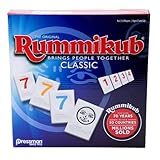
3. Rummikub Review: The Best Tile Game for Mixed Ages and Languages
Pressman Rummikub – The Original Rummy Tile Game | Exciting Family Game of Strategy and Luck | Promotes STEM Skills | For Kids, Teens, Adults | 2-4 Players, Ages 8+
Ages 8+
2-4 players
104 tiles
Develops sequencing and planning
Pros
- Tiles carry no text
- Quick to learn
- Deepens as players plan jokers
- Reinforces pattern recognition
Cons
- Frustrating tile-lock situations
- Can become luck-dependent
- Best for players who like number games
Rummikub is the answer whenever we have guests who do not read the dominant language of the group. Every tile is a number and a colour. Nothing needs translating, nothing needs reading aloud, and the entire rule set fits in a minute of explanation.
It sits comfortably in the middle of our difficulty range. The opening moves are obvious: get three or four in a run, or group them by number. Then the planning starts. Which tile do you hold back, which discard do you force on your partner, when do you commit to a group that blocks the table?
More than 55 million units have been sold, which tells you less about quality than about how often the game survives contact with a family over decades. It is not a fad purchase. Our own box has been played across three generations and still produces arguments about discards.
The failure mode is tile lock. Everyone holds the tile somebody else needs, nobody can move, and the round stalls until someone concedes. Experienced players treat this as normal and start dumping unwanted tiles early. Newcomers sometimes read it as a dead game, so set that expectation before you start.
The 1.1 pound weight and 10.5 inch square footprint make it easier to handle than a large board game, which matters when several players are reaching in at once.
Who Plays Rummikub Best
Rummikub suits two to four players who like numbers. It is one of the few games here that a child and a grandparent can play competitively with equal footing, because pattern recognition transfers between generations better than most skills.
It is also a strong pick for the memory and planning side of development that parents ask about. Reviewers consistently mention sequencing and pattern recognition as the skills that get exercised without anyone calling it a lesson.
Where Rummikub Falls Flat
It needs players who enjoy working through options. If your group prefers shouting accusations at each other, a deduction game like One Night Ultimate Werewolf fits better. Rummikub is quiet by comparison.
It also does not stretch past four players. More hands means more tiles in circulation and longer turns for everyone. Our advice is to start a second set rather than squeeze six people around one rack.
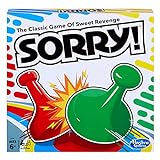
4. Sorry! Review: A Racing Game Built for Comebacks
Sorry! Board Game for Kids Ages 6 and Up; Classic Hasbro Board Game; Each Player Gets 4 Pawns; Family Game
Ages 6+
2-4 players
4 pawns each
45 cards
Pros
- Dramatic card-driven reversals
- Quick setup
- Many card possibilities
- Sends opponents back to start
Cons
- Outcome depends heavily on the cards dealt
- Little strategy beyond card luck
- Young children may need help counting
Sorry! works because the bad news is part of the fun. A player sitting two squares from home can be sent all the way back to start, and the room laughs while it happens. That single mechanic turns a race into a story you talk about afterwards.
Setup takes under a minute and the rules are genuinely simple. Everyone understands sliding, colliding and drawing cards. That makes it a strong third game of the night when the group is tired but not ready to stop.
The visual drama is the selling point. Chips fly, pawns slide, and the tension before a card flip is real even though nobody has done anything clever. Children who cannot yet follow complex rules handle this fine because the turn structure is so short.
The drawback is the same as Trouble, in a more competitive wrapper. The cards decide far more than the players. Reviewers are blunt about the limited strategic depth, and our own sessions confirmed that the outcome often feels decided two rounds before the finish.
A small parts warning applies for younger children, and counting spaces can be hard for a six-year-old holding four pawns at once. Both are manageable if an adult handles the movement for the first round.
Where Sorry! Shines
It is one of the best board games for family game night when you want noise and reaction rather than deliberation. Kids chase it because something keeps going wrong, which is a reliable form of engagement.
It also plays well with a wide age gap. A fourteen-year-old and a six-year-old can compete without the older player feeling like they are tutoring.
Who Should Skip Sorry!
Skip it if your family prefers games where thinking beats luck. Nobody at our table felt they earned a Sorry! victory, and the table talk afterwards is thin compared with a strategy game.
It is also not the game to pick when you want a serious contest between two adults. The unpredictability is fun once and repetitive by the fifth round.
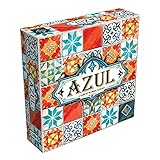
5. Azul Review: The Best Two-Player Strategy Game on the List
Azul Mosaic Tile-Placement Strategy Board Game, 2-4 Players, 30-45 Min
Ages 8+
2-4 players
100 resin tiles
30-45 minutes
Spiel des Jahres 2018 winner
Pros
- Simple rules with real strategic depth
- Gorgeous resin tiles and mosaic wall
- Excellent head-to-head for two
- Shifting tile options each round
Cons
- Not ideal for very young children
- Can produce dry stretches of passing
- Takes longer than a quick party game
Azul is the one we recommend when two adults want something that looks as good as it plays. The finished mosaic wall becomes shelf art within a single session, which is not a small part of why it keeps getting picked.
The draft-and-deny mechanic is the whole game in one idea. You take tiles from shared factory displays, and you can also take a tile that would be better for your opponent. Denying is often stronger than taking, and that realisation takes about ten minutes to arrive at and changes how the rest of the game feels.
Component quality is genuinely exceptional. The 100 resin tiles have weight and colour saturation that make them pleasant to handle, and the linen storage bag keeps the box tidy between sessions. For a game intended to live on a shelf and be replayed, that durability matters.
The compromises are real. Despite the family positioning, the scoring maths is too fiddly for most children under ten, and we have watched that end a promising family session early. It also runs longer than the games people reach for on a weeknight.
There is a further wrinkle at low player counts. With only two players, the turn order keeps rotating, and some groups find the rhythm odd. Reviewers mention the passing rounds that happen when a board is blocked, which can stall a round without much to do in the meantime.
Why Azul Earns Its Place
It is the strongest gateway strategy game here for adults, and the tile drafting translates well across ages once everyone is past the basic scoring. A teenager and a parent can play a genuinely tight game.
It also survives a large family split. In our test, two adults played a head-to-head while the rest of the table did Blokus, and both halves of the table stayed occupied for the same 40 minutes.
When Azul Is the Wrong Choice
Do not bring it to a table with children who cannot yet handle score arithmetic and you will lose them inside two rounds. This is a family game for older children and adults, not for the under-eights.
It is also a poor fit as a filler. If you have 20 minutes and a big room, this is the wrong tool. Save it for a planned evening where the table is small.
6. Splendor Review: The Top Rated Game for Family Strategy Nights
Asmodee Splendor Gem Trading Strategy Board Game, 2-4 Players
Ages 10+
2-4 players
90 development cards
About 30 minutes
4.9 average rating
Pros
- Highest average rating in this roundup
- Only three actions per turn
- No elimination keeps everyone engaged
- Real tension over noble tiles
Cons
- Light interaction for some groups
- Can feel slow with cautious players
- Best for players comfortable with engine-building
Splendor carries the highest average rating of any game we tested, at 4.9 with 93 percent of buyers giving it five stars. The reason is simple: it is the most polished entry-level strategy game on the market, and almost nothing about it is wasted.
Each turn you have three options and no more. Take one gem, take a gem and a discount card, or reserve a card and the gold it requires. That constraint is what makes it teachable, and the depth lives in the timing of when you make those choices.
What sets it apart from other engine builders is that nothing is ever taken off the table. No board gets wrecked, no card gets burned, and a slow player is never knocked out. Grandparents and younger kids stay genuinely competitive to the final round.
Open information is the quiet advantage. Everyone can see the development cards coming, so nobody has to guess what the table knows. That reduces the amount of table talk but makes the decisions cleaner, which some groups love and others find dull.
The noble tiles add the tension. Each one arrives with a permanent requirement, and grabbing a noble too early costs you points you cannot recover. Timing a claim correctly is the most satisfying moment in the game.
Who Splendor Suits
Splendor fits families with children around 10 and up, and it is one of the few games here where an older relative can compete at full strength without pretending. The rules never exceed three actions, and nothing is eliminated.
It also packs into about 30 minutes, which makes it the best option on this list for a family that wants real strategy inside a weeknight.
Who Should Pass on Splendor
Groups that want to bluff, accuse and negotiate will find it too polite. There is very little direct interaction here, so if your family enjoys arguing about someone else being a werewolf, choose a deduction game instead.
Cautious players flatten it. If everyone takes the safe gem every turn, the round drags. Our table taught this one by taking aggressive discounts in the first two minutes.
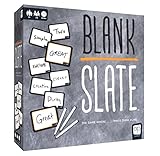
7. Blank Slate Review: The Best Opener for Large Gatherings
Blank Slate Board Game, A Party Game of Addicting Predictions
Ages 8+
3-8 players
250 cue cards
8 dry-erase slates
20-35 minutes
Pros
- Learns in seconds
- Scales to large mixed-age groups
- The group supplies the humour
- Reliable holiday and cottage game
Cons
- Not strategic enough for competitive players
- Shallow with two or three players
- Slates and markers wear with heavy use
Blank Slate is the game we open with when eight people are arriving at slightly different times and nobody has the patience for a rules briefing. The instruction is one sentence: write the word that finishes the cue, without hinting.
You score by writing exactly what a teammate would write, or by getting there when they are guessing. What makes it work is that the funny material comes from the players. A family that argues about who bought the wrong milk will produce better answers than any printed card.
It handles ages eight upward and mixes well with grandparents, which is why it keeps showing up in holiday recommendations. There is nothing to study and nothing to remember between rounds.
The 250 double-sided cue cards mean you are very unlikely to run out. The scoreboard and eight slates make it work for up to eight players without anyone tracking scores on paper.
The weak point is depth. Once the group learns that vague synonyms win points, some players start overthinking, and the pace slows. Two or three players is a poor number for this game; reviewers are clear that the format needs bodies at the table to work.
Plan for wear too. The dry-erase slates and markers are the components that fail first, and capping the markers keeps the lines from turning permanent.
When Blank Slate Works Best
It is a perfect icebreaker for a group that does not know each other well, including family gatherings with in-laws. Conversation happens as a side effect rather than as homework, which is the main reason to pick it.
It also works as a palate cleanser between heavier games, and as a closer for a group that has run out of attention rather than ideas.
When to Choose Something Else
Skip it if the group plays to win. There is no strategy to improve and no skill ceiling to reach, so competitive players disengage after two rounds.
Also skip it for a quiet evening. This game is loud by design, and it wants a room where laughing at someone is allowed.
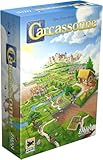
8. Carcassonne Review: The Best Gateway Tile-Laying Game
Carcassonne Tile Placement Strategy Board Game, 2-5 Players, 35 Min
Ages 7+
2-5 players
35 minutes
The Abbot and The River expansions included
Pros
- Rules a seven-year-old can learn
- Random draws refresh the board
- Meeples add real scoring tension
- Two mini-expansions in the base box
Cons
- Scoring is fiddly to teach at first
- One large feature can swing the endgame
- Best with four or five players
Carcassonne is the tile-layer that most families meet first, and it is a good gateway into the genre. Draw a landscape tile, place it against a matching edge, drop a meeple on a completed feature, and score. It looks like more than it is.
The accessibility is real. We handed it to a seven-year-old who had never placed a tile game before and had the basic loop running within two rounds. Adults, meanwhile, spend the rest of the session arguing about whether a monastery is worth another meeple.
Replayability comes from the draw. Since tiles are pulled at random from a bag, the landscape you build changes every time, and the strategic problem of where to extend shifts with it. That variance is what keeps a familiar game fresh.
This edition includes The Abbot and The River, two small expansions that add new scoring conditions without changing the core game. That is unusual value at this level and gives an easy upgrade path for a family that likes the system.
The fiddly part is scoring. Counting the longest road, tallying a city, remembering which meeple you left where, all of it takes practice. The first two games are harder to teach than the last five, so plan on one sacrificial round.
Two players is workable but thin. Reviewers note the game shines with four or five, where blocking and shared threats create the strongest competition.
Why Families Keep Coming Back to Carcassonne
The 35-minute runtime is the underrated feature. It is long enough to feel like a proper game and short enough to finish before a child loses interest or a parent has to start cooking. Very few strategy games manage that balance.
It also travels well as a concept. If the family splits across rooms, a tile game and a small box are easier to move than a sprawling board with dozens of wooden pieces.
Where Carcassonne Disappoints
Players who like a clean arc may find the endgame anticlimactic. A single large scoring feature landing last can erase everything built in the first hour, and that frustration shows up in reviews repeatedly.
It also is not a two-player showpiece. If that is your group, Azul or Splendor deliver more tension for a head-to-head.
9. Blokus XL Review: The Best Four-Player Area Control Game
Mattel Games Blokus XL Board Game for Ages 7+, 2-4 Players
Ages 7+
2-4 players
12 x 12 inch board
One core rule
Pros
- Learns in under a minute
- Oversized board and chunky pieces
- Real blocking strategy for adults
- Builds spatial reasoning
Cons
- Pieces shift on the loose grid
- Best with four players
- No storage compartment in the box
Blokus is competitive Tetris without the falling pieces. You have 21 pieces, one rule about how they may touch, and a board that fills up. Lowest number of pieces left wins. The whole explanation takes about forty seconds.
The XL board is the reason to pick this version rather than a smaller one. At 12 by 12 inches it is nearly two inches larger than the standard game, which means four players can all see the whole position without leaning across each other.
The chunky pieces matter as much as the board. They are easy for children to pick up, easy to see across a table, and they do not get lost under a sofa cushion the way small plastic counters do.
Strategy is deeper than it looks. Blocking your neighbours early is almost always better than completing your own colour set, and adults discover this within a game or two. That discovery is the reason the game keeps its hold on a mixed table.
The recurring complaint is the grid. Pieces rest on a loosely defined outline, so they can be knocked or nudged out of place, and an argument about placement can derail a turn. Agree on the boundaries before the first round and the problem mostly disappears.
Two and three players use different rules and feel noticeably weaker. Reviewers consistently rate it best at four, and many of them skip the Junior edition entirely.
Blokus as a Four-Player Filler
This is the game for a table of exactly four who want a real contest inside half an hour. It fills the gap between a party game and a strategy game better than anything else in this roundup.
It also settles arguments about whose turn it is, because there is never a long decision to make. That makes it a good late-game closer when attention is fading.
Blokus for Families With Very Young Players
Children around seven can handle the placement rule, but they will need help at the start. Nothing in the game is frightening, however, and there is no reading involved.
Expect the box to end up as a jumble of pieces. There is no storage compartment in this edition, so a small container or a bag inside the lid saves a lot of hunting before the next game night.
10. Hues and Cues Review: The Best Word Game for Ten Players
HUES and CUES – Vibrant Color Guessing Board Game for 3-10 Players Ages 8+, Connect Clues and Guess from 480 Color Squares
Ages 8+
3-10 players
480 color squares
100 color cards
About 30 minutes
Pros
- Handles up to ten players in one round
- Word clues create lively discussion
- Non-gamers pick up the rules instantly
- Visual matching appeals across ages
Cons
- Clue quality depends on group vocabulary
- Shallow once colour patterns are learned
- Wood pieces and board wear over time
Hues and Cues solves a problem most word games create: not enough seats. With support for three to ten players in a single round, it is the largest group game here that still feels competitive rather than chaotic.
The mechanism is simple. Your team gives one or two word clues to steer the active player toward a colour on the grid. Hints get simpler as time runs out, so a great clue can earn more points than a vague one. It is a word game where being too clever hurts.
What surprised us was how quickly complete non-gamers started giving clues. There is no special vocabulary and no obscure reference to know. A first-timer is useful within their first turn, which is unusual for this category.
The 480 colour squares across the board give it more variety than most guessing games, and the wooden player pieces feel better in the hand than plastic pawns of the same price.
The obvious catch is language. Reviewers repeatedly note that the quality of play depends on vocabulary and confidence in the host language, so this is not a good pick for a group with mixed fluency. Our own experience matched that exactly.
Long-term wear is the other issue. The dry-erase board and wooden pieces show marks after repeated sessions, so expect to replace the board sooner than the rest of the game.
Hues and Cues for Big Family Gatherings
This is the game for the family reunion, the holiday table and any night when more than six people want to play the same thing. Ten players with no eliminations and no downtime means nobody watches from the sidelines.
It also makes a good bridge between generations because the older players usually give better clues and the younger ones draw faster, so both halves of the age range contribute.
When to Pick a Different Word Game
Choose something else when the group does not share a strong vocabulary. In that situation a visual game such as Pictionary is far kinder, because the skill being tested is drawing rather than language.
Also consider a different choice once the group learns the trick of naming hue, shade and tone separately. After a few games, experienced players can stall on precision and the round-by-round variety drops.
11. The Game of Life Review: Best for Families With Big and Little Players Together
Hasbro Gaming The Game of Life Board Game, Family Games for Kids Ages 8+, Includes 31 Careers, Family Board Games for 2-4 Players, (Amazon Exclusive)
Ages 8+
2-4 players
31 careers
115 cards
Spinner board
Pros
- Instant setup and easy play
- 31 careers and multiple vacations
- Spin to Win creates table arguments
- Introduces money and financial basics
Cons
- Outcomes lean on spinner and cards
- Little meaningful decision-making
- Longer sessions test younger players
The Game of Life is what we pull out when grandparents are visiting and nobody wants to explain anything. Everyone has seen it, or has been told about it, or has played it badly at a holiday many years ago. The setup is immediate.
This edition leans into variety. Thirty-one career cards and multiple vacation options mean the path through the game changes from playthrough to playthrough, and the 115 cards keep the story moving in a way older versions did not.
Spin to Win is the moment people remember. Hitting the money space and settling everything instantly produces genuine table drama, and it happens often enough that a 30-minute session contains two or three of them.
For younger children, the game quietly teaches the basics of money: earning, paying, borrowing and settling up. That is a real benefit for an eight-year-old watching a parent go bankrupt on a vacations card.
Being straight about the rest: the spinner and the cards do most of the deciding. Reviewers note little meaningful player decision-making, and our own sessions confirmed it. Treat it as a shared event rather than a contest.
Sessions also drift longer than expected with young players, because the spinning adds dead time between decisions.
Where The Game of Life Belongs
It is a reliable second or third game on a family night with a wide age span. Nothing about it frightens anyone, and the nostalgia factor does half the work of getting a quiet teenager to engage.
It also works well as an icebreaker for adults who have not played a board game in years, since the rules are effectively pre-installed.
Why Competitive Players Will Pass
If you want a game that rewards thinking, this is not it. The outcome is decided before most players finish their second turn, and the game gives you nothing to work on.
It also works better with two to four players than with a crowd, and it needs a surface with room for a spinner board. Do not plan it as the main event for eight people.
12. One Night Ultimate Werewolf Review: Best for Bluffing and Suspicion
Bezier Games One Night Ultimate Werewolf Fast-Paced Bluffing Party Game
Ages 13+
3-10 players
10 minute rounds
Companion app included
Pros
- Simultaneous play with no narrator
- Hidden roles like Seer and Doppelganger
- App narrates roles and paces debate
- Compact enough to travel
Cons
- Card corners peel and can reveal roles
- Needs five players to really land
- Newcomers take a round or two to bluff
One Night Ultimate Werewolf is the shortest game here that produces a genuine story. Everyone holds a secret role, everyone wakes at the same time, and everyone spends five minutes lying about what they saw. Then night falls again and it is over.
Because there is no narrator, nobody sits out. A standard Werewolf setup removes a player from every round; this does not. With eight or ten people, that alone changes the evening.
The free companion app handles the role distribution and time limits, which removes the fiddly admin and keeps debates moving. It also fits the modern complaint about card games feeling slow in the first round.
Role variety is where the replay lives. Seer, Troublemaker, Doppelganger and others change how the night resolves, so two sessions with the same players can play out very differently. Expansions add further characters for groups that exhaust the base box.
The print quality is the recurring complaint, and it is a legitimate one. Card corners can peel with handling, and a lifted corner exposes a role to an observant neighbour. Reviewers almost universally recommend sleeving the deck before a serious night.
Five players is really the minimum for the deduction to pay off. Below that there is not enough information in the room, and the vote becomes a guess.
Who Enjoys One Night Ultimate Werewolf
Teens and adults. The hidden-role format rewards the kind of calm, committed lying that older players enjoy, and it produces enough accusation and backtracking to keep a whole table engaged for ten minutes at a time.
It is also excellent as a filler between heavier games. Play three rounds while dinner finishes, then open the main game when everyone is seated.
Where It Does Not Fit
Do not start with it on a first family game night. It is rated for ages 13 and up, and children under about nine tend to reveal their roles by accident, which ends the deduction early.
It is also a poor fit for families who hate tension. Bluffing games create a different emotional temperature from tile games, and some groups prefer to keep the evening relaxed.
13. Pictionary Review: The Best Equalizer Between Kids and Adults
Mattel Games Pictionary Board Game for Ages 8+, 2 Teams
Ages 8+
Two teams
222 clue cards
400 bonus clues
Erasable boards
Pros
- Drawing skill becomes the great equalizer
- About four minutes from box to play
- Encourages creativity and teamwork
- Compact enough to travel
Cons
- Small erasable boards and pens wear quickly
- Needs four or more players
- Under-eights struggle to read clues fast
Pictionary does something almost no other game does: it makes adults genuinely bad at something in front of their children. Nobody is good at drawing quickly with a timer running, which levels the table in a way strategy games never will.
Our group went from box to first guess in about four minutes. One team member draws, the rest guess, points go to the team, and it repeats until someone reaches the target. There is nothing to learn and nothing to prepare.
This special edition adds white-barreled pens and a Catch-All Category with 400 bonus clues, on top of the standard 222 cards. Reviewers who play regularly say the extra category is what stops the familiar clues from running dry in month three.
The real complaint is the hardware. The included drawing boards and markers are small, and the pens wear out or dry quickly with heavy use. Plenty of buyers add a larger whiteboard within the first few sessions, which fixes the problem permanently.
Four players is where this game starts working well. Reviewers note it needs four or more to deliver the chaotic energy, and children under eight can struggle to read the clue cards fast enough against the timer.
Also worth knowing: it travels. The box is flat and compact, so it works as a car game or a waiting-room activity as well as a table game.
Why Pictionary Wins Family Nights
It keeps children off screens for over an hour without feeling like a lesson, which reviewers mention more than any other benefit. The activity is the entertainment and nobody has to be told to enjoy it.
It is also a good choice for a table where the age gap is wide. Grandparents, parents and children all draw badly, and that shared failure is its own kind of bonding.
Where Pictionary Falls Short
It is not a competition for serious players. There is no strategy and no skill ceiling, and groups who like to think will be bored by round five.
It also does not scale down well. Two or three players turns it into a relay, which loses the team dynamic that makes it work.
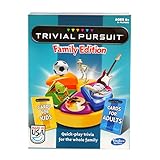
14. Trivial Pursuit Family Edition Review: Best for a Mixed Trivia Night
Hasbro Gaming Trivial Pursuit Game: Family Edition Board Game, Family Trivia Games for Adults and Kids, 2+ Players, Ages 8+ (Amazon Exclusive)
Ages 8+
2+ players
1200 questions
Six categories
Split adult and kids decks
Pros
- Separate adult and kids decks level the field
- 1200 questions keep repeats low
- Fast board compared with classic versions
- Play solo or in teams
Cons
- Question difficulty varies between decks
- Less social than deduction games
- Knowledge gaps can embarrass confident players
The headline feature of this Family Edition is the split deck: 100 blue cards for adults and 100 yellow cards for kids. It is the feature reviewers single out most, because it lets a whole family compete without one side feeling outmatched.
Rolling onto any coloured space to claim a wedge rather than matching a colour shortens the game considerably compared with the classic version. In practice a session finishes in the range most families can actually give it.
With 1200 questions across six categories, repetition is rarely an issue. That matters more than it sounds, because a trivia game that repeats is a trivia game that gets skipped.
Two cardholders, six scoring tokens and 36 wedges support both solo and team play, so the group can decide on the night rather than committing to a format in advance.
The fairness is approximate. Some kids cards are noticeably easier than the adult ones, which is the intended design but occasionally feels generous. Reviewers also note that knowledge gaps can embarrass confident players, particularly with categories a whole family may not share.
Compare it to the deduction games on this list. Trivial Pursuit is quieter and less social; nobody accuses anybody of anything. If your family prefers conversation and accusation to categories and facts, pick a bluffing game instead.
Trivial Pursuit as a Family Bridge
This is the safest choice for a table with a nine-year-old and a grandparent who stopped reading newspapers in the eighties. The split decks mean both ends of the age range get a fair shot at most categories.
It is also a natural closer. A short trivia round after dinner ends the evening without anyone feeling that the night ended too abruptly.
When Trivia Is the Wrong Choice
Skip it for a night built around strategy or deception. The game has no bluffing, no resource management and no negotiation, and it will feel flat to a group used to those mechanics.
It is also a weaker pick for very young children. The manufacturer lists ages 8 and up, and reading speed matters more here than in any other game on this list.
15. CATAN Review: The Best Deep Strategy Game for Longer Evenings
CATAN Board Game (6th Edition) Trade, Build & Settle in the Classic Strategy Game for Family, Kids & Adults, Ages 10+, 3-4 Players, 60-90 Min Playtime
Ages 10+
3-4 players
19 terrain hexes
60-90 minutes
120 cards
Pros
- Modular hex board makes each game different
- Trading creates real negotiation
- Clear 10 victory point objective
- Deep ceiling that rewards repeat plays
Cons
- 60-90 minutes is long for casual nights
- Weakest with two players
- Trade rules need explaining
- Small discs are hard for children
CATAN is the one game here that rewards planning rather than quick decisions. You gather resources, you build roads and settlements, and you trade with the people trying to outbuild you. The modular hex board means no two games play the same, which is the main reason it survives years of repeat play.
That negotiation is the part families remember. Two players and their parents sitting at the same table, openly asking for a sheep, is a genuinely different experience from a game where nobody speaks to anybody.
The objective stays legible throughout: reach 10 victory points. Players never lose points permanently, and there is no elimination, which means the game keeps everyone engaged to the end.
The compromise is time. Sixty to ninety minutes is a commitment, and reviewers name the length as the main drawback for casual family nights. If your evening is measured in leftover evenings after bedtime, this is the wrong slot.
Two players is the weak spot. The box lists three to four players, and reviewers report the game is at its least interesting as a duel because the trading layer thins out.
Teach the trade rules before the first competitive round. Once players know they are allowed to deal openly, the tension appears quickly. Small components such as the number discs can also be hard for a child to handle early on.
Who CATAN Works For
Families with children around ten and up, on a weekend evening with nowhere else to be. The 6th edition includes player aids, which reduces the amount of rule-checking that used to slow the first game down.
It also works well as a project for a group that already enjoys talking to each other. The negotiation is only fun when people are comfortable pointing out each other options.
Why Some Families Skip CATAN
Runtime is the reason most often given. A game that has not ended when the youngest player loses interest has missed the window, and 90 minutes is a long window to lose.
It is also a poor choice for a first family game night with non-gamer adults. The rules are heavier than anything else on this list, and an unexplained trade phase kills the energy quickly.
How to Choose Board Games for Family Game Night
The single most useful question is not which game is best. It is what the table looks like. Player count, age spread and the amount of patience in the room will narrow the list faster than any ranking.
Match the Game to Your Player Count
For two players, Azul and Splendor both produce a genuine contest in 30 to 45 minutes. For three or four players, SEQUENCE, Blokus XL and Sorry! cover the range from light to competitive. For five or more, look at Blank Slate, Hues and Cues and One Night Ultimate Werewolf, all of which handle large numbers without eliminations.
Avoid stretching a four-player game to eight. Two boards beat one crowded board nearly every time.
Match the Game to Your Youngest Player
Under age six, Trouble and Sorry! work because the rules are short and the outcomes are fast. Ages six to nine opens up SEQUENCE, Blokus XL and Carcassonne. Ages ten and up unlocks Splendor and CATAN for the players who want real strategy.
If your table includes someone aged nine to fourteen, pay attention to what makes adults good at a game. Werewolf and Pictionary work because the skill needed is not the one adults have trained on.
Games That Work Across Languages and Ages
Language is a real barrier more families than expected. Word games such as Hues and Cues and Trivial Pursuit depend on vocabulary in the host language, which reviewers flag as a genuine limitation.
Conversely, games that need no words are the safest for a mixed household. Rummikub, Blokus, Pictionary and Trouble all work with tiles, shapes, colours and drawings rather than sentences.
For guests over 60 with no board game background, pick something with visual action and no elimination. Blokus, Rummikub and Pictionary are the strongest of this list for that situation, because nobody is knocked out of the game early and nobody has to ask what the point is worth.
If your gatherings run long, a backdrop for the table matters as much as the game. Our charcuterie board picks and pizza oven guide cover the food side of game night, and a two-player duel pair like backgammon works well between larger groups. Our backgammon board set guide covers that.
A Simple Hosting Checklist for Game Night
Set up the lighting and the seating first. Games that need reading fail in a dim living room, and a table too small for the box open plus the components slows everything down.
Learn the rules yourself before anyone arrives, even a game you have never played. Reading a rulebook at the table kills momentum faster than any difficult game.
Plan two games, not five. Families lose interest in the choices before they lose interest in the game. A tight opener, one main event, and a filler for stragglers is a better night than a full shelf.
Keep a snack that does not need plates. Anything crumbly near a board with 135 small chips is a decision you will regret, and a bowl of something finger-sized solves the problem. Our backgammon and travel card game guides both work well for nights where the food comes out in waves.
Frequently Asked Questions
What are some classic family board games?
The classic family board games in this roundup are SEQUENCE, Trouble, Sorry!, The Game of Life and Trivial Pursuit Family Edition. SEQUENCE works for 2-12 players and teaches in minutes, Trouble suits ages 5 and up with its Pop-O-Matic roller, and Sorry! covers ages 6 and up with card-driven races. All three need no reading beyond the box instructions.
What are the top 7 party games for a family game night?
Seven good party games for family game night are One Night Ultimate Werewolf, Blank Slate, Hues and Cues, Pictionary, Trivial Pursuit Family Edition, Blokus XL and Trouble. One Night Ultimate Werewolf runs ten-minute rounds for 3-10 players, Blank Slate handles up to eight with 250 cue cards, and Hues and Cues seats up to ten. Trouble is the quickest option for younger children at about 30 minutes.
What is the best board game for families overall?
SEQUENCE is the best board game for families overall because it scales from 2 to 12 players without rule changes, teaches in under five minutes, and mixes card luck with strategy so adults and children stay equally engaged. It also uses a folding board, two decks of cards and 135 chips, needs no batteries, and holds a 4.8 average rating across more than 45,000 reviews.
What games can families play together with mixed ages?
Families with mixed ages can play games that need no reading, such as Rummikub, Blokus XL, Pictionary and Trouble, or games with a low floor and high ceiling, such as SEQUENCE and Carcassonne. For a wide gap between a six-year-old and a grandparent, choose games where nobody is eliminated and where the scoring stays simple. Rummikub is particularly good because tiles carry no text.
How do I choose board games for a family game night?
Start with the table rather than the ranking. Count the players, note the youngest age, and decide how long the evening realistically runs. Then pick from that shortlist based on whether the group wants luck, strategy, bluffing or cooperation. Finally, check that the game does not need more reading than your players can manage.
Final Verdict for Family Game Night 2026
SEQUENCE is the pick we return to most often. It scales from a two-player evening to a twelve-player gathering, teaches in under five minutes, and keeps adults thinking while children believe they are just playing cards. With more than 45,000 reviews at a 4.8 average, it is also the safest bet in the best board games for family game night roundup we could assemble.
Buy Rummikub if your household does not share one first language, Trouble if your players are five and under, and Splendor if your family wants real strategy inside a weeknight. Add One Night Ultimate Werewolf for the nights when your group enjoys arguing with each other.
Start with two games instead of ten, learn the rules before anyone arrives, and the evening takes care of itself.