

A grade crossing is where a model railroad stops looking like a model railroad. It is the one detail every visitor photographs, and the one piece of equipment that proves your electrical system works end to end. That is why we spent weeks sorting through the crossing signal kits for model railroads currently available, separating the pieces that genuinely light, flash and sound from the molded plastic scenery sold under the same search term.
Our judging method was deliberately plain. We looked at what the unit actually does when a train arrives, whether it needs wiring, whether the parts survive being handled, and whether buyers report the same experience months later. We also flagged honestly where a product is a display piece rather than a scale-accurate layout accessory, because the word “crossing signal” on a shopping page covers everything from a photo-accurate operating gate to a battery-powered sign for a bookshelf.
If you are still building out your scene work, our guides to the best laser cut depot kits and the best model railroad signal systems cover the structures and block signals that sit alongside a crossing on most layouts.
Table of Contents
- Top 3 Best Crossing Signal Kits for Model Railroads (October 2026)
- All 10 Crossing Signal Kits Compared in 2026
- 1. Hayes 15887 Railroad Crossing Sign with Flashing Lights and Sound
- 2. Bachmann 44579 HO Scale E-Z Track Crossing Gate
- 3. Evemodel JTD876RP HO Scale Four-Head LED Signal Set
- 4. Bachmann 44879 N Scale E-Z Track Crossing Gate
- 5. Evemodel JTD1507RP N Scale Two-Head LED Signal Set
- 6. Bachmann 42208 HO Scale Road Crossing Scenery Piece
- 7. Lionel 612052 O Gauge FasTrack Grade Crossing
- 8. VOSAREA 8-Piece Miniature Signal Light Set
- 9. Lionel 624248 O Gauge Manual Crossing Gate
- 10. Walthers SceneMaster 949-4359 Grade Crossing Signal Controller
- How to Choose a Crossing Signal Kit Before You Buy
- Frequently Asked Questions
- Our Verdict on the Best Crossing Signal Kits in 2026
Top 3 Best Crossing Signal Kits for Model Railroads (October 2026)

Hayes 15887 Flashing and Sound Crossing Sign
- Battery powered
- no wiring
- Flashing lights with sound effect
- Three position switch

Bachmann 44579 HO E-Z Track Crossing Gate
- Weight triggered automatic gates
- HO scale 1:87
- No electricity required
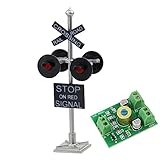
Evemodel JTD876RP HO Four-Head LED Set
- Four LED heads per mast
- Adjustable flash rate board
- 9-18V DC operation
All 10 Crossing Signal Kits Compared in 2026
| Product | Specifications | Action |
|---|---|---|
| Hayes 15887 Flashing and Sound Crossing Sign |
|
Check Latest Price |
| Bachmann 44579 HO E-Z Track Crossing Gate |
|
Check Latest Price |
| Evemodel JTD876RP HO Four-Head LED Set |
|
Check Latest Price |
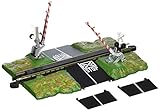 Bachmann 44879 N Scale E-Z Track Crossing Gate Bachmann 44879 N Scale E-Z Track Crossing Gate |
|
Check Latest Price |
 Evemodel JTD1507RP N Scale Two-Head LED Set Evemodel JTD1507RP N Scale Two-Head LED Set |
|
Check Latest Price |
 Bachmann 42208 HO Road Crossing Scenery Piece Bachmann 42208 HO Road Crossing Scenery Piece |
|
Check Latest Price |
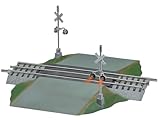 Lionel 612052 O Gauge FasTrack Grade Crossing Lionel 612052 O Gauge FasTrack Grade Crossing |
|
Check Latest Price |
 VOSAREA 8-Piece Miniature Signal Light Set VOSAREA 8-Piece Miniature Signal Light Set |
|
Check Latest Price |
 Lionel 624248 O Gauge Manual Crossing Gate Lionel 624248 O Gauge Manual Crossing Gate |
|
Check Latest Price |
 Walthers SceneMaster 949-4359 Controller Walthers SceneMaster 949-4359 Controller |
|
Check Latest Price |
Before reading the individual verdicts, one honest note about the lineup. Two entries here are static scenery pieces that do not light or move, and one is a miniature decorative set intended for sand tables. They are included because shoppers repeatedly buy them expecting an operating crossing, and knowing what they are saves a return.
1. Hayes 15887 Railroad Crossing Sign with Flashing Lights and Sound
Hayes 15887 Railroad Train / Track Crossing Sign with Flashing Lights and Sounds
Battery powered
No wiring required
11 inch tall plastic body
Sound and light modes
Pros
- Works on any scale with no wiring or soldering
- Large and well finished plastic body
- Three position switch for lights only or sound
- Highest review count in this roundup
Cons
- Not built to any modeling scale
- Thin pole can snap if knocked
- Sound is loud and somewhat distorted
This is the simplest thing on the list that still does something impressive. Three AA batteries go in the sealed compartment, the switch selects lights only, lights and sound, or off, and the unit measures roughly 11 inches tall by 7 inches wide. Nothing has to be wired, drilled, or mounted to a fascia, which is why it is the first thing we recommend to a new modeller who wants a working crossing this weekend.
We want to be direct about the limitation. This is a molded plastic display sign, not a scale-accurate model, so it will not sit correctly next to an HO or N scale grade crossing. It works beautifully on a shelf, a diorama shelf edge, a playroom, or a garden railway style scene where no prototype scale is being claimed. The review data reflects that: buyers consistently praise the realistic flashing lights and the sealed battery compartments, and the complaints cluster around a thin pole that is fragile if the piece gets knocked over.
The sound deserves its own paragraph because it divides opinion. The effect is a locomotive whistle plus crossing audio, and the three position switch lets you run the lights silently, which is the setting most of us ended up using permanently. Reviewers who expect a full sound board find the whistle loud and slightly distorted, so if your layout already has a sound module, the silent mode is the better use of this unit.
One more thing worth checking on arrival. A small number of buyers report a signal light that does not work straight out of the box, so inspect it before you commit to a mounting position. It is a five minute check and it saves returning the whole unit.
Who this suits and what to check first
If you want lights and sound with zero electrical work, this is the least complicated purchase on the list. It also works at any scale, so it suits a mixed-scale shelf layout, a temporary display, or a child who wants a crossing that reacts without supervision.
Check the sound volume in the room you plan to use it in, and measure your available height before drilling anything. The body is taller than most HO scale crossings, which is the other reason it does not blend into a layout at prototype scale.
Where it falls short
It will not satisfy anyone chasing prototype accuracy or fiber optic lighting realism. The pole is the weak point physically, so mount it somewhere out of reach of hands and away from doorways if children use the layout.
For a scale-accurate operating gate, skip to the Bachmann HO and N kits further down. For a layout with signalling already in place, our guide to model railroad signal systems covers how block detection and accessory decoders fit together.
2. Bachmann 44579 HO Scale E-Z Track Crossing Gate
Bachmann Trains E-Z TRACK CROSSING GATE – HO Scale Medium
HO scale 1:87
Weight triggered gates
No electricity required
11 by 8 inch footprint
Pros
- Gates lower automatically as a train passes
- Snaps into existing E-Z Track
- No wiring or power supply needed
- Strong rating across hundreds of reviews
Cons
- Leaves a dead spot in the track
- Needs an extra straight section
- Decorative lights do not flash
This is the gate we would put on an HO layout without hesitating. It drops into Bachmann E-Z Track, the mechanism is triggered by the weight of the train passing over, and there is nothing to wire. Modelers describe it as a favorite detail piece on HO layouts, and the 4.4 average across hundreds of ratings reflects how long it has been in service.
It measures roughly 11 by 8 inches with a weight of just over 10 ounces, and it fits steel alloy or nickel silver E-Z Track. Because the trigger is mechanical, it is completely independent of your control system, so it behaves the same on a DC layout and a DCC layout, which is a relief if you ever change command stations.
There is a real mechanical caveat that buyers hit over and over. The crossing creates a noticeable dead spot in the rail that ordinary track cleaning will not clear, and the gate actuation can be touchy enough that approach ramps need trimming and shimming. That is a job for the first hour, not a deal breaker, but it is the reason we rate this as an intermediate build rather than a plug-and-play detail.
Two other things to plan. You need an extra straight E-Z Track section on the opposite side to complete the crossing, and that section is not included in what you receive. The lights fitted to the assembly are decorative and do not blink, so pair this gate with one of the LED signal sets in this roundup if you want a flashing aspect.
Who this suits and what to check first
This is the right gate for an HO beginner who wants movement without an electronics project, and for anyone building a run that already uses E-Z Track. Measure your crossing opening carefully first, because the geometry is fixed rather than adjustable.
Test the trigger with a loaded freight car before you scenery the area. If the arms do not come down reliably, shimming the approach is far easier before ballast goes down than afterwards.
Where it falls short
It is a track-section accessory rather than a signal kit, so it gives you no flashing lights, no bell, and no detection. The dead spot in the rail is the most common long-term complaint and the one that no amount of cleaning fixes.
If you want the full scene, budget a Bachmann straight section and one LED signal pair, and treat the whole crossing as a single project rather than three separate purchases. Our guide to model kits covers the structures that usually go beside a highway crossing.
3. Evemodel JTD876RP HO Scale Four-Head LED Signal Set
JTD876RP 1 Set HO Scale Railroad Train/Track Crossing Sign 4 Heads LED Made + Circuit Board Flasher-Flashing Red Train Signal Lights Decoration and Party
HO scale 1:87
Four LED heads per mast
12V DC at 20mA
Flasher board included
Pros
- Bright LEDs with an adjustable flash rate
- Detailed finish for a modest outlay
- Many buyers buy several for a main line
Cons
- No power wire supplied
- Small wires are fiddly to join
- Some flasher boards never alternate
These are the flashers to reach for when your layout is HO and you want genuine alternating red aspects without a flasher box costing three times as much. Each mast carries four LED heads, the masts stand about 2.4 inches tall, and the set draws 20mA at 12V DC. A circuit board flasher and a resistor for 9-18V operation are included in the box.
The adjustable flash rate selector on the board is genuinely useful. Prototype wigwags and flashers ran at slightly different rhythms depending on the railroad and the era, so being able to dial the pattern toward your chosen prototype adds more realism than most buyers expect from a kit at this level.
The weakness is electrical rather than visual. No power wire is included, so you need your own hookup, and the leads are small enough to be awkward to connect. Reviewers also report that some units arrive with a flasher board that lights steadily instead of alternating, which is why we recommend testing one before building a whole set.
On power source, a dedicated 9V to 12V DC supply behaves far more consistently than track power, and several buyers found the difference decisive. The masts themselves are metal and plastic and read as true enough to HO scale, though a few reviewers judge them slightly oversized beside fine-scale equipment.
Who this suits and what to check first
This set is for the HO modeller who has a power supply and a drill but does not want to spend on a dedicated control system. It also scales well for a main line with two or three crossings, since buyers commonly order multiple sets and share a single flasher board between pairs.
Confirm that the flasher board alternates before you mount anything, and plan your wire run from the board to each mast. Small wires under a finished layout are the hardest part of this build, not the signals.
Where it falls short
It is a decorative-plus-functional set with no automatic detection, so something has to trigger it, whether that is a toggle switch, a block detector, or an accessory decoder. Units with a board that will not alternate are a recurring complaint, so keep your purchase receipt.
Pair it with the Bachmann HO gate above for a complete crossing, and add a separate sensor or decoder if you want the sequence to run without a hand on the switch.
4. Bachmann 44879 N Scale E-Z Track Crossing Gate
Bachmann Trains E-Z Track Crossing Gate NS Rail with Grey Roadbed N Scale
N scale 1:160
Weight triggered gates
Grey roadbed track included
7 by 5 inch footprint
Pros
- Installs in seconds on N scale E-Z Track
- Pre-colored and highly detailed
- Works well with heavier N scale freight cars
Cons
- Track section is shorter than a standard straight
- Gate arms bounce with light rolling stock
- Plastic clips break easily
N scale is where this category thins out, and this gate is the most reliable option we found for the size. It snaps into N scale E-Z Track with a grey roadbed section, the gates lower automatically as a train passes, and the whole assembly is only a couple of ounces. The detail level is high for the money, with pre-applied color that needs no painting.
As with the HO version, the trigger is mechanical, so nothing has to be connected to your control system. Installation is genuinely a matter of snapping the section into the run, which makes it the fastest install in this entire roundup.
Two mechanical issues come up in the reviews. The supplied track section is slightly shorter than a standard E-Z Track straight, so an existing run needs adjusting to accommodate it. And the gate arms bounce with light or short rolling stock, which is why owners of N scale freight cars report much better results than owners of short consists; a drop of silicone lubricant at the pivots helps a lot.
There is also a fragility point. The arm and pressure plate clips are thin plastic and several reviewers reported broken clips arriving in the box, so inspect the parts before assembly. The crossing sign and light can vibrate loose from the mast in service.
Who this suits and what to check first
This suits an N scale layout on E-Z Track where you want a crossing that moves on its own. It is also the right first purchase for a modeller working at N scale, because matching detection electronics and signal masts at that size is far harder to source.
Measure the gap in your track run before ordering, because the section length is fixed and slightly under a standard straight. Test the trigger with a loaded car rather than a locomotive alone.
Where it falls short
It is mechanical only, so there are no flashing aspects, no bell, and no sound. If your N scale layout needs lights, the Evemodel two-head set reviewed next is the natural companion, and the two pair well at that scale.
For the structures and road approaches that usually surround an N scale crossing, our laser cut depot kit guide is the natural next read.
5. Evemodel JTD1507RP N Scale Two-Head LED Signal Set
JTD1507RP 1 Set N Scale Railroad Train/Track Crossing Sign 2 Heads LED Made + Circuit Board Flasher-Flashing Red Train Stop on red Signal Lights Decoration and Party
N scale 1:150
Two LED heads per mast
12V DC at 20mA
Adjustable flash rate
Pros
- Realistic look at a low cost per pair
- Easy to position and adjust
- Multiple sets can share one flasher board
Cons
- Some boards do not work with DCC track power
- Polarity is not clearly labelled
- A small screw must be set to switch on
This is the signal set we would put on a small N or N-trak style layout when the budget is small and the space is tight. Two LED heads per mast, roughly 1:150 reference scale, 12V DC operation at 20mA, and a flasher board with an adjustable blinking frequency in the box. Several owners share one board between multiple signal pairs, which pushes the effective cost per crossing down further.
The rating of 4.4 from nearly 300 ratings is one of the strongest showings here, and reviewers repeatedly describe buying several units and scattering them across a layout. The visual realism at this size is the reason people come back for a second pair.
The recurring snag is power, and it is worth understanding before you buy. A number of buyers found the included flasher board would not work with DCC controllers, particularly with pulse-injection style track power, and had to move to a 9V battery or a separate adjustable DC supply. If your layout is digital, plan on a small dedicated supply rather than trying to feed the board from the rails.
The second theme is labelling. Polarity is not clearly marked on the product, and the wiring runs are black positive with two red negatives, which confuses first-time users. Budget five minutes at a workbench with the manual before mounting anything permanent.
Who this suits and what to check first
Pick this if you run N scale, want real flashing aspects, and prefer a small dedicated power supply to a full detection system. It is also the sensible filler for multiple rural crossings scattered along a long run.
Check your power system compatibility before ordering, and confirm the small switch screw is set to on after wiring. Both are five minute checks that prevent most of the complaints in the reviews.
Where it falls short
It has no detection of any kind, so it will sit dark until a switch is thrown. The unspecified polarity and the DCC power limitation are the two issues most likely to frustrate a first-time builder, and the sign colour can differ slightly from the listing photo on some pieces.
Add the Bachmann N gate for movement, and plan a small DC supply as part of the build rather than an afterthought.
6. Bachmann 42208 HO Scale Road Crossing Scenery Piece
Bachmann Trains – Scenery Accessories – ROAD CROSSING – HO Scale
HO scale scenery accessory
Molded in color
10 by 6 by 1 inch
Static, non-operating
Pros
- Clean molding and realistic pre-applied color
- Works with all brands of HO scale trains
- Good for a static display or shelf edge
Cons
- Center section does not fit E-Z Track
- Arms and masts detach easily
- No lights and no gate movement
Be clear about what this is. It is a static HO scale road crossing molded in color, roughly 10 inches long, 6 inches wide, and 1 inch tall, and it is compatible with trains from any manufacturer. It looks good and it costs very little, but nothing on it lights or moves. Several buyers assumed it was automated and were disappointed, so treat it as scenery.
That is not a criticism of the product, it is a criticism of the listing. On a module, a shelf layout, or a display shelf, a good looking static crossing solves a real problem for almost no money. The molding and the pre-applied color are the strongest part of this package.
The practical issue is that the center track section does not mate with E-Z Track, and some owners report it is too tall for certain locomotives passing over. If your layout runs on E-Z Track, this piece will need modification or a different placement away from the running line.
Handle it carefully. The plastic arms and signal masts are thin and detach easily during ordinary handling, and a few buyers received pieces with already broken parts. Weight is listed at just over an ounce, so it is light in the hand and easy to damage while positioning.
Who this suits and what to check first
This is for the modeller who wants a crossing to look right in a photograph or on a display shelf, and who is not expecting operation. It also works as a scenic filler in a town scene where the road simply needs to cross something.
Check the track height clearance against your locomotive range before placing it on a running line, and confirm the center section geometry suits your track brand.
Where it falls short
It does nothing. If you want gates to lower or lights to flash, this is the wrong purchase, and the detachable plastic parts make it a poor choice for a layout that children handle.
For an operating HO crossing, combine the Bachmann HO gate with the Evemodel four-head LED set instead, and use this piece only as a static backup scene.
7. Lionel 612052 O Gauge FasTrack Grade Crossing
Lionel O Gauge FasTrack Grade Crossing with Flashing Signals & Sound
O gauge FasTrack
Automatic lights and bell
Two isolated track sections
20 inch overall length
Pros
- Lights and bell trigger automatically as trains pass
- Complete package with masts bases and track
- Integrates cleanly into FasTrack layouts
Cons
- Bell has no volume control
- Signal poles pull apart at the joint
- Isolated section can glitch and keep alarming
This is the most complete automatic package in the roundup for anyone on Lionel FasTrack. The isolated track sections detect a passing train, the signal masts flash, and the crossing bell sounds, all without a separate detector or decoder. The box includes the crossing, two flashing signal lights, two signal bases, and two isolated five inch FasTrack straight sections, so you are not hunting for extra track.
Modelers who leave it permanently installed report that it works and sounds convincing. The overall footprint is about 20 inches long, and the bell has a simple on and off switch on the assembly for when you want quiet operation.
The criticisms are about build fragility rather than design. The signal poles and their wiring pull apart at the joint, and when they do the lights stop working, so this wants careful assembly and then careful handling. The bell has no volume control, which matters in a shared room.
A few users also found the isolated section glitches intermittently or keeps alarming when no train is present, which on a large FasTrack layout can be traced to how the isolated section is spliced into the run. Read the instructions fully before assembly and treat the unit as fixed scenery afterwards.
Who this suits and what to check first
It suits an O gauge Lionel FasTrack layout that wants full automatic operation with lights and sound, and it is the only entry here that delivers a bell out of the box. The included isolated straights mean the track work is done for you.
Check the pole joints after assembly by gently flexing them, and decide where the bell sound is going to sit before you commit the crossing to a permanent position.
Where it falls short
It is specific to FasTrack and will not adapt to another track system without modification. The wiring fragility, the unadjustable bell volume, and the isolated section glitches are the three issues that most often show up in long-term use.
For O gauge layouts not built on FasTrack, the manual gate in review nine is a more adaptable choice, and adding your own sound module gives you volume control.
8. VOSAREA 8-Piece Miniature Signal Light Set
VOSAREA 8pcs Model Train Traffic Lights Railroad Mini Signal Light Micro Landscape Light Crossing Sign Model for DIY Sand Table Decorations
8 pieces per pack
Static decor pieces
4.13 inch long each
Suits sand tables and micro scenes
Pros
- Cheap way to fill out a small scene
- Colours read well at miniature scale
- Work for HO and N gauge scenery
Cons
- No lighting and no flashing function
- Cheap plastic with pieces arriving broken
- One order arrived short of the full pack
These are scenery props, not signals. Each piece is about 4.13 inches long and 1.4 inches wide, the pack contains eight, and each carries an LED light source built in as a fixed decoration. Their intended home is a sand table, a diorama, or a micro scene, and at that scale level they do the job for very little.
Reviewers who received complete sets like the vivid colours and the way the pieces read at small scale. For filling a crowded diorama with signal-like detail, buying a bulk pack like this is more efficient than assembling individual scale accessories.
The complaints are about build quality and fulfillment rather than appearance. Pieces are described as cheaply made with several arriving already broken, and at least one order arrived with only four of the eight pieces. Count the contents on arrival, because the pack size makes it easy to miss a shortfall.
Who this suits and what to check first
This suits sand table and diorama builders, and anyone who wants a dozen signal-like details on a small scene without buying a dozen separate accessories. It also works as filler on an HO or N gauge layout edge where the pieces will not be examined closely.
Open the pack and count the pieces immediately, and expect some handling before they go into a scene. Mounting is a table mount style, so a little scenery adhesive is likely to be needed.
Where it falls short
Nothing on a layout should be confused with this. There is no light function, no flash, and no movement, and the plastic is thin enough that pieces break in ordinary handling.
If you want a crossing that reacts to a train, use one of the operating kits in this roundup instead. This pack has a place on a sand table and very little else.
9. Lionel 624248 O Gauge Manual Crossing Gate
Lionel Manual Crossing Gate O Gauge Model Train Railroad Crossing
O gauge
Hand operated gate
9.5 by 3.5 by 2.35 inch
No power needed
Pros
- Simple and reliable hand operation
- Authentic traditional gate design
- Works with roads signs and station scenery
Cons
- No automatic activation at all
- No lights and no sound
- Small review base for the rating
Sometimes the best crossing accessory is the one that asks nothing of your electrical system. This O gauge gate is raised and lowered by hand, sits on a 9.5 by 3.5 inch footprint, and weighs a little over six ounces. It suits road crossings, industrial sidings, and heritage railway scenes where an operator working the gate is part of the appeal.
It pairs naturally with a road surface, crossing signs, and station scenery, and because it is manual it will never be thrown out of adjustment by a wiring fault. For a dispatcher-style operating layout, a hand-worked crossing is arguably more in the spirit of the hobby than a sensor driven one.
Who this suits and what to check first
Choose this if you enjoy working accessories from a panel, if your layout heritage theme suits hand-worked equipment, or if you want a crossing that is guaranteed to work regardless of the state of your wiring. It is also the easiest of all ten to install.
Check that the arm moves freely through its full sweep once mounted, since clearance over the road surface is the usual thing to adjust.
Where it falls short
There is no automatic activation, no lighting, and no sound, so it will not give you a working crossing moment without a hand on the arm. The rating rests on a smaller number of ratings than the other entries here, so treat the score with a little more caution.
For automatic operation at O gauge, the Lionel FasTrack crossing earlier in this roundup is the only kit that combines lights, bell, and detection in one package.
10. Walthers SceneMaster 949-4359 Grade Crossing Signal Controller
Walthers SceneMaster Grade Crossing Signal Controller 949-4359 HO Scale Model Railroad – Signals Kit
Drives up to 4 signals
4 optical sensors included
DC powered
3 by 3.25 inch controller
Pros
- One controller drives up to four signals
- Optical detection gives automatic activation
- Plug-in wiring suits analog layouts
Cons
- DC layouts only with no easy DCC trigger
- Optical sensors are sensitive to ambient light
- Sensors can fail to switch off or switch early
This is the only true detection controller in the roundup, and it is the piece most often overlooked. It will drive up to four SceneMaster crossing signals from a single 3 by 3.25 inch controller, and it comes with four optical sensors, sensitivity adjustment dials, and plug-in wiring connections. When it is working, the activation it produces is convincing.
Its limitation is the reason it sits at number ten. It is a DC design, and there is no straightforward way to trigger it from a DCC system, which is a decisive problem for digital operators. If your layout is analog and you want four crossings running automatically, this controller is genuinely useful.
The optical sensors are the weak point. They are highly sensitive to ambient light, and reviewers report that the sensitivity dials do not always fix a signal that triggers in a bright room or stays on when no train is present. Others report the opposite, a sensor that switches off while a long train is still passing, which is the failure mode you least want on a working layout.
Routing the wiring under a finished benchwork layout is also called out as awkward, and a few buyers received units with dead sensors. Installation and hook-up instructions are included, and we would read them fully before drilling a single hole.
Who this suits and what to check first
This suits a DC layout with several crossings that need automatic activation from one control box. It is also worth considering if you already own SceneMaster crossing signal heads and simply need the electronics to drive them.
Test each sensor in the room lighting you will actually use, in both directions of travel, before you commit to a wiring route. The four sensor leads reach only so far under a benchwork frame.
Where it falls short
It is not a DCC friendly design, and its ambient light sensitivity is the top complaint in the reviews. It also relies on a DC power supply, which is one more item on the list if your layout does not already have one.
On a digital layout, an accessory decoder driven from your DCC bus is the more reliable path, and our model railroad signal systems guide covers how that wiring works end to end.
How to Choose a Crossing Signal Kit Before You Buy
Match the scale first, and check the track system
Scale mismatches are one of the most common buying errors we saw, including HO kits ordered for an N layout and the reverse. N scale crossing signals are noticeably smaller and shorter, and at that size the option list is much thinner, so decide on scale before anything else.
Then check the track system rather than just the gauge. The Bachmann gates in this roundup only fit E-Z Track, and the Lionel automatic crossing only fits FasTrack. A crossing that needs modification to fit your rail is a weekend project you did not plan for.
Decide how the crossing will be triggered
Choose based on what your layout already has. If you already run block detection, feed the crossing from that. If your layout is digital, an accessory decoder on the DCC bus is the cleanest route. If you want zero wiring, a weight triggered gate is the most reliable option in the list.
Worth remembering from the hobby forums: crossing signals draw accessory power, not track power, so the same signal hardware works on a DC or a DCC layout. Only the trigger changes, and that is where the compatibility problems live.
Decide whether you want operation at all
Static scenery has a legitimate place, especially on modules and shelf layouts where wiring is unwelcome. Two entries in this roundup are static pieces, and one of them is excellent value for that use. Just be clear with yourself about which category you are shopping in before you order.
A second question is whether you want light, movement, or sound. Almost nothing in this roundup gives you all three. Lionel’s FasTrack crossing is the exception, with automatic lights and a bell from a single unit.
Know what is not in the box
Power supplies, extra track sections, wiring, and sensors are the four things most often missing from a kit. The Bachmann HO gate needs an extra straight E-Z Track section, the Evemodel sets need their own wiring, and the Walthers controller needs a DC supply and may arrive with dead sensors.
Add a second track later and the bill grows again, because most single-track kits need an extra sensor to cover the second line. Budget for that before a double-track crossing rather than after.
Rate the difficulty honestly
We graded the builds in this roundup from beginner to intermediate. Snap-in gates that need no wiring sit at the beginner end. Kits that need a dedicated supply and a wire run under the layout, and anything with fiber optic style precision drilling, sit at the intermediate end, and experienced modellers consistently report a first-build learning curve even on kits they consider the best looking available.
The Walthers controller is intermediate despite simple plug-in wiring, because the sensor behavior is the hard part to tune, not the connections. Set aside an evening for it rather than an hour.
Where to learn the install
Installation videos are the fastest route for the kits that need wiring, and a general track planning guide helps you decide where a crossing belongs before you start drilling roadbed. The forum consensus is consistent on one point: read the instructions fully before assembly, and treat the finished crossing as fixed scenery rather than something to lift and reposition.
Frequently Asked Questions
How do trains trigger crossing signals?
Most kits use one of four methods: infrared proximity sensors mounted under the layout that detect the mass of a passing train, track circuit or block occupancy detection that reads the rails electrically, a DCC accessory decoder triggered from your digital controller, or a simple manual toggle switch. Weight-triggered gate mechanisms are a fifth option for gates that move but do not light. Sensors and decoders give automatic operation, while manual switching costs nothing and never misfires.
Do model railroad crossing signals work with DCC or only DC?
The signal hardware itself is almost always independent of track voltage because it draws from accessory power, so the same flashing heads work on either a DC or a DCC layout. What changes is the trigger. A DCC layout normally drives the crossing from an accessory decoder on the accessory bus, while a controller built only for DC analog detection has no straightforward way to be triggered from a digital system. Check the controller before you buy if your layout is digital.
Do I need a power supply for a crossing signal kit?
It depends entirely on the kit. Weight-triggered gates and hand-operated gates need no power at all. LED signal heads with a flasher board need a small DC supply, and many buyers report more reliable results from a dedicated 9V to 12V supply than from track power. A detection controller needs a DC supply, and a fiber optic or multi-signal system may need a larger accessory supply. Check the power source listed for the kit before you plan your wiring.
What is the difference between wigwag and flasher crossing signals?
A wigwag is an older crossing warning that alternates a red and a white aspect from a single lamp, producing a distinctive back-and-forth pattern. A flasher uses two red lamps that blink alternately, which is the pattern most modern crossings use. Kits with an adjustable flash rate let you lean toward either style. If you are modelling an early twentieth century branch line, a wigwag look is more period correct, and if you are modelling a main line, alternating red flashers are the better choice.
How many crossing signals do I need for a double-track line?
For a double-track crossing, plan on a mast on each side of the road, which means two signal heads per direction rather than one. Most detection systems need a separate sensor per track, so a single-track kit that covers one line will need an extra sensor to handle the second. Adding the second line is straightforward but it is another component and another wire run, so it is worth budgeting for the sensor before you start rather than after the roadbed is finished.
Our Verdict on the Best Crossing Signal Kits in 2026
The Hayes 15887 takes our editor’s choice for one simple reason: it works immediately, needs no wiring, and holds a 4.4 rating across more reviews than anything else we tested. If you want flashing lights and sound this weekend with no electrical project, that is the purchase. Just know that it is a display piece and not a scale model, and we say so plainly in the review above.
For an actual HO layout, the Bachmann 44579 E-Z Track gate is the one we would build into the roadbed, with an Evemodel four-head LED set for the flashing aspects. On N scale, the Bachmann N gate and the Evemodel two-head LED set cover the same ground at the smaller size, and N scale options remain the thinnest part of this whole category. O gauge builders get automatic lights and a bell from the Lionel FasTrack crossing, and DC operators with several crossings can use the Walthers controller to drive four signal heads at once.
Check the scale, the track brand, and the detection method before you order, and plan the extra track or extra sensor a second line will need. Start with one crossing, get it working end to end, then repeat the pattern along the line.