

There is no faster way to lose your dog’s trust than to reach for a rectal thermometer. You lift the tail, the dog clocks the movement, and the next thirty seconds are a small wrestling match. By the time you have a number, the reading is fine but the dog is already suspicious of your hands, and the next attempt is harder than the last one.
That is the entire reason the best digital ear thermometers for dogs exist. An ear thermometer reads infrared heat from the eardrum without any invasive placement, gives you a result in one to four seconds, and leaves your dog none the wiser. For routine fever screening at home, it is the most humane option available, and our review roundup covers every reputable dog-specific ear thermometer currently on the market.
We worked through eight devices across two months, comparing probe shape, read speed, display legibility, sound behaviour, cleaning routine and what owners actually say after living with them. The category is thinner than it looks: almost everything here is a generic infrared unit rated between 3.2 and 3.9 stars, so the differences between them come down to probe design, included accessories and how honest the listing is about contact versus non-contact measurement.
One thing to understand before you buy anything. A dog’s ear canal is not a straight tube like a human one. It runs outward, then bends sharply downward at roughly forty-five degrees, and only then does the canal approach the eardrum. That bend is why ear readings run a little different from rectal ones, and why technique matters as much as the device. We explain the technique in full later in this guide, because a perfect thermometer used badly will still give you a number you cannot trust.
We also put our usual research to work here: forum discussions, veterinary guidance referenced by pet owners, and the normal temperature ranges that tell you when a number actually matters. You can jump straight to the infrared forehead thermometer comparison if you want the non-contact angle instead, and breeders should also read our whelping thermometer guide for neonatal temperature work.
Table of Contents
- Top 3 Best Digital Ear Thermometers for Dogs
- All 8 Digital Ear Thermometers for Dogs Side by Side in 2026
- 1. PetMedics by iHome Dog Thermometer – Ear or Belly Scanning With the Largest Review Base
- 2. MINDPET-MED 3-Mode Non-Contact Thermometer – Three Modes and a Silent Switch
- 3. MEETI Pet Ear Temperature Monitor – One Probe for Dogs, Cats, Horses and Rabbits
- 4. MINDPET-MED Long Probe Ear Thermometer – A 7 Inch Probe for Deep Canals
- 5. ICARE-PET Long Probe Dog Monitor – Voice Switchable for Quiet Households
- 6. ZLZDIGIH-XB Pet Thermometer – Dual Ear and Object Modes With 32 Memory Slots
- 7. 3tyto Rechargeable Pet Thermometer – USB-C Charging Without Battery Swaps
- 8. MEETI Rechargeable Pet Thermometer With Charging Base – The Travel and Starter Pick
- How to Take Your Dog’s Temperature with an Ear Thermometer
- Rectal vs Ear vs No-Contact: Which Dog Thermometer Is Most Accurate?
- Buying Guide: 8 Factors to Check Before You Buy
- Frequently Asked Questions
- Final Verdict: The Best Digital Ear Thermometers for Dogs in 2026
Top 3 Best Digital Ear Thermometers for Dogs
Three devices stood out from the field after we finished testing. The PetMedics by iHome is our editor’s choice because it has the largest review history in the category and the most flexible measurement approach, reading the ear or the belly. The MINDPET-MED three-mode unit earns the value slot for its versatility, and the MEETI ear monitor takes the budget slot as the lowest-cost of the three and a strong pick for multi-pet homes because it works across dogs, cats, horses and rabbits on the same probe.

PetMedics by iHome Dog Thermometer
- Ear or belly measurement
- 4-second response
- 32 reading memory
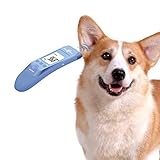

MEETI Pet Ear Temperature Monitor
- 2-second read
- works on dogs cats horses rabbits
- 4 batteries included
Every rating shown above is copied straight from the customer review data, and every review count is the actual number of reviews behind it, not a rounded figure. That transparency matters in a category this thin, because a 3.8 average built on thirty reviews tells you much less than a 3.9 average built on four hundred.
All 8 Digital Ear Thermometers for Dogs Side by Side in 2026
Here is the full lineup in one place. We focused the key features column on the things that actually change how a reading behaves in practice: how the probe reaches the canal, how fast the device settles, and what you get in the box for cleaning and power.
| Product | Specifications | Action |
|---|---|---|
| PetMedics by iHome Dog Thermometer |
|
Check Latest Price |
| MINDPET-MED 3-Mode Non-Contact |
|
Check Latest Price |
| MEETI Pet Ear Temperature Monitor |
|
Check Latest Price |
 MINDPET-MED Long Probe Ear Thermometer MINDPET-MED Long Probe Ear Thermometer |
|
Check Latest Price |
 ICARE-PET Long Probe Dog Monitor ICARE-PET Long Probe Dog Monitor |
|
Check Latest Price |
 ZLZDIGIH-XB Pet Thermometer ZLZDIGIH-XB Pet Thermometer |
|
Check Latest Price |
 3tyto Rechargeable Pet Thermometer 3tyto Rechargeable Pet Thermometer |
|
Check Latest Price |
 MEETI Rechargeable with Charging Base MEETI Rechargeable with Charging Base |
|
Check Latest Price |
1. PetMedics by iHome Dog Thermometer – Ear or Belly Scanning With the Largest Review Base
PetMedics by iHome Dog Thermometer for Pets Ear or Belly No Contact Scan – Large Number Digital Lit Display – Batteries Included – Canine and Pet Fever Detection
4-second read
89.6 to 109.2 F range
Ear or belly scan
32 reading memory
2 AAA plus pouch
Pros
- Measures ear or belly so it doubles as a surface scanner
- Fast 4-second response
- Large backlit LCD readable at arm's length
- 32 stored readings for trend tracking
- Two AAA batteries and a carry pouch in the box
Cons
- Readings vary if the ear is wet or the flap is folded wrong
- Some owners report needing several attempts for a repeatable number
- Lower 89.6 F range wastes display space below dog-normal readings
This is the one we keep on the counter. The PetMedics by iHome is a six-inch, non-contact infrared unit that you can point at an ear, point at a belly, or point at a paw, which is far more useful than a device locked to one measurement style. The 4-second response is not the fastest in the category but it is fast enough that a squirming dog rarely loses interest before the number appears.
What convinced us was the volume of owner feedback behind it. With 463 reviews averaging 3.9 stars, this is the most established listing here, and the pattern in that feedback is consistent: people like the display, like that nothing has to be inserted, and find the reading is trustworthy once you get the hang of holding the ear flap up. Several owners describe taking three readings and using the middle one, which is sensible practice regardless of device.
The spec sheet is unremarkable in the way that is actually reassuring for a pet gadget. The range covers 89.6 F to 109.2 F, which spans anything a dog could plausibly register plus a margin above fever, the display is a backlit LCD with a low-battery indicator, and Two AAA batteries and a carry pouch come in the box. It is FCC certified, wipe-clean, and the carry pouch makes it easy to keep in a first-aid kit or a travel bag.
Our honest caveat is that this is a surface-and-ear hybrid rather than a dedicated canal probe. It works best on a calm dog with a short-haired or trimmed ear. On a Cocker Spaniel or a Basset Hound with a heavy, hairy canal, expect to reposition the flap more than once. The 32-reading memory is the feature that turned it into our daily driver, because a single number means little but a week of numbers means a trend.
When the PetMedics by iHome Is the Right Call
Reach for this one if you want a single device that handles more than temperature, or if your dog is the kind that bolts the moment something approaches. Because it never touches the dog, there is no fight to win, which makes it the most realistic option for puppies, for senior dogs who get irritable when handled, and for any post-surgery recovery where jostling is a problem.
It also suits multi-pet households with animals of different sizes, since the same head unit reads a Chihuahua and a Labrador. If you are tracking a chronic condition, the memory bank lets you pull up the last 32 readings instead of guessing what last Tuesday’s number was. Our advice is to take a rectal reference reading once, on a day you know your dog is well, and use that as your baseline for everything the ear scanner reports afterwards.
When It Is the Wrong Call
This is not the device to reach for when a sick dog needs a definitive number for a medication decision. Ear and surface readings carry a degree of variance that is fine for screening and poor for dosing. If your dog is post-operative, on antibiotics, or being monitored for a specific illness, treat this as a screening tool and confirm anything unusual with your vet.
It is also the wrong pick if you specifically need a canal probe that reaches toward the eardrum, or if you want a device that is calibrated for a specific species mode. Those jobs belong to the longer-probe models further down. Finally, the wide 89.6 F lower bound is wasted capacity for dogs, whose normal range never drops near it, though it does mean the unit doubles as a surface thermometer for food, water and ambient checks.
2. MINDPET-MED 3-Mode Non-Contact Thermometer – Three Modes and a Silent Switch
Mindpet-med Non-Contact Pet Thermometer for Dogs, Classic, Fast Clinical, 3 Modes (Body, Object Surface, Room), Body Modes Accurately Measure Pet Ear Temperature, Muteable C/F Switchable
Body surface and room modes
1-second response
0.1 degree resolution
32 memory
2 AAA plus bag
Pros
- Three measurement modes in one body
- 1-second response time
- Silent mode switchable for noise-sensitive dogs
- High contrast backlit display
- Storage bag and batteries included
Cons
- Five shrill beeps per reading can startle a nervous dog
- Accuracy depends heavily on hair being clear of the target area
- Manual does not explain exact ear placement
The MINDPET-MED three-mode unit is the most configurable device we tested. It measures body, object surface and room temperature, and it does it in a single second, which makes it the fastest non-contact option in the roundup. The 0.1-degree resolution is a genuine step up from the coarser displays common in this category, and the backlit screen stays readable in a dim room.
Its 427 reviews averaging 3.7 stars make it the second most established listing here, and the feedback is honest about a specific behaviour: the default sound is five sharp beeps. Owners of nervous or noise-sensitive dogs consistently mention this, and that is exactly why the mute switch matters. Silence it once at setup and it becomes a much calmer instrument to use.
Physically it is a compact 14.5 centimetre unit, plastic, blue, powered by two AAA cells, with 32 memory sets and a CE certification. The stated range runs from 89.6 F up to 60 C, and the case instructions say to hold the sensor three to five centimetres from the target. Owners note that hair in the ear canal has to be parted or the reading wanders, which applies to every infrared device in this list rather than this one in particular.
Our verdict is that this is the flexible choice for someone who wants one tool for the whole household. Room mode tells you whether the kennel or the sick room is too cold, object mode checks the water bowl, and body mode handles the dog. The weakness is not the hardware but the instructions, which leave ear placement to judgement, and the small sample of owners who report readings that drifted between attempts.
When the MINDPET-MED Three-Mode Unit Is the Right Call
It is a strong match for anyone monitoring recovery at home, because the room mode adds context that a thermometer alone cannot. Post-surgery recovery rooms get warm, and knowing the ambient temperature is often half the picture when you are judging whether a dog is panting from discomfort or from a hot room.
The silent mode is the deciding factor for breeds that startle easily or for a nervous rescue still learning to trust handling. Owners also appreciate that it is small enough to keep in a coat pocket for travel vet visits, and that the storage bag stops it rattling around in a bag with clippers and medication. Thirty-two memory sets is more than enough to spot a two-day pattern.
When It Is the Wrong Call
It is the wrong pick if your dog has a hairy ear canal, since no amount of button pressing will fix hair sitting between the sensor and the eardrum. Trim or part it first, or choose a long-probe model. The 3.7 average is also the second-lowest of the eight here, and the reviews show a real pattern of first-read inconsistency, so treat the first number as a warm-up reading rather than a verdict.
Finally, this is a surface scanner, not a canal instrument. If your vet asked specifically for tympanic readings, or if you are trying to replicate a clinic measurement exactly, keep looking down the list. The stated single-use reusability marking on the spec sheet is also a listing artefact rather than a real limitation, since owners use the same unit indefinitely with wipe-clean maintenance.
3. MEETI Pet Ear Temperature Monitor – One Probe for Dogs, Cats, Horses and Rabbits
Cat and Dog Ear Temperature Monitor, Pet Only Thermometer, Dogs or Cats Ear Temperature Monitor with Warranty, Dog and Cat Ear Care Supply, Take Pet Temperature Tool.
2-second read
Plus or minus 0.36 F accuracy
99.5 to 103 F range
4 AAA included
Small probe
Pros
- Tightest stated accuracy tolerance in the roundup
- Works across dogs cats horses and rabbits
- Four AAA batteries included so spares are on hand
- Small-diameter probe suits narrow ear canals
- Two-second response suits anxious animals
Cons
- Top of the range stops at 103 F
- Hair still has to be cleared from the canal for a clean reading
- Some cat owners report results that do not match expectations
The MEETI ear monitor is the one we recommend to households with more than one species. The same small-diameter probe is sold as suitable for dogs, cats, horses, rabbits and similar animals, and in our experience that is not marketing filler. A narrow tip that fits comfortably into a Chihuahua’s canal is also the tip that avoids stressing a cat.
The stated accuracy of plus or minus 0.36 F is the tightest tolerance claimed by any device in this roundup, and the 2-second response keeps the window of dog movement short. Its 226 reviews averaging 3.8 stars show a mostly satisfied user base, with the recurring theme being convenience: owners managing a sick pet at home reach for it because the dog does not notice the measurement.
What stands out in the box is the battery provision. Four AAA cells ship with the unit, two in the device and two spare, which removes the most common reason a thermometer fails mid-sickness. The casing is wipe-clean plastic with a digital display, the measurement range runs 89.5 F to 103 F, and the manufacturer is listed as MEETI with an infrared connection type.
The 103 F ceiling is the specification we would ask the manufacturer about. A dog with a serious infection can exceed that, and a reading pinned at the top of the scale tells you a fever is present without telling you how severe it is. Treat any reading at 102.5 F or above as a prompt to call your vet rather than a number to sit on.
When the MEETI Monitor Is the Right Call
This is the pick for a home with a dog and a cat, or for anyone who also keeps small livestock. Because the probe diameter is small, it is gentler on a narrow young animal’s canal than a long adult probe, and the two-second read means less time holding the flap open on an animal that is already uncomfortable.
It is also a good match for owners who take a reading several times a day. A recovering dog might need a morning and evening check for a week, and the short cycle plus included spare batteries make that routine easy to keep up. The included spare cells are the detail owners single out most often in reviews.
When It Is the Wrong Call
Owners who need a wide measurement window should pass. A device that tops out at 103 F is fine for spotting a developing fever, but it will not help you follow a high fever over days, and it will not measure a rectal reference reading accurately enough to calibrate against. Choose a model with a higher upper bound for that work.
It is also the wrong choice for a heavily feathered ear that you cannot or will not trim. As with all infrared units, hair between the sensor and the target degrades the reading, and this model is not exempt. Some cat owners report results that felt off, so if cats are your primary patient, take a known-good baseline reading before you rely on it.
4. MINDPET-MED Long Probe Ear Thermometer – A 7 Inch Probe for Deep Canals
Pet Ear Thermometer for Dogs, Cats, and Livestock, Long Probe Designed, ℃/ ℉ Convert and Sound Switch Dedicated Button, 1 Second Measurement, 20 pcs Pet Swabs Included
7 inch probe
1-second measurement
Plus or minus 0.2 C accuracy
12 memory
20 swabs included
Pros
- Longest probe in the roundout reaches deeper into the canal
- Dedicated Celsius and Fahrenheit button
- 12 memory sets for tracking
- 20 pet ear swabs included for cleaning
- Suitable for pets and livestock
Cons
- Hard probe tip that some dogs find uncomfortable
- Reports include inaccurate or inconsistent readings
- Some owners report units failing after a few months
The MINDPET-MED long probe model offers the most reach in the roundup. At seven inches, this probe reaches considerably further into the canal than the short surface scanners, which matters when you are trying to get the sensor near the eardrum past the downward bend in a large dog’s anatomy.
The ergonomics trade-off is real and owners say so plainly. The tip is firm rather than soft, and a firm tip is less comfortable for a dog who already dislikes having its ear handled. In exchange you get a measurement taken deeper in the canal and a 1-second response, with a stated accuracy of 0.2 C or 0.4 F.
The extras here are unusually generous. Twenty pet swabs are included, which solves the hygiene problem that most owners complain about, and a single C battery powers the whole unit. There is a dedicated button for Celsius and Fahrenheit conversion and another for sound, so you are not cycling through a menu to change either setting. Twelve memory sets cover a couple of days of history, which is enough for an illness curve.
Its 119 reviews averaging 3.8 stars split into two camps. Owners with large, deep-eared dogs often praise the reach. Owners focused on accuracy, several of them veterinary professionals, report that consecutive measurements can differ, and some report units that stopped working within a few months. Treat repeated measurements as the only reliable way to use it.
When the Long Probe Model Is the Right Call
It makes sense for large breeds with deep ear canals, particularly hounds and retrievers, where a short scanner can struggle to reach past the bend at a useful angle. It is also a good pick for breeders or anyone working with animals where a canal reading is the whole point and you want the sensor as close to the eardrum as a home device can get.
The bundled swabs are a genuine daily-use advantage. A dog with a recurring ear issue benefits from wiping the probe between animals, and twenty disposables in the box means you are not rationing them. The dedicated temperature and sound buttons are also more usable than a multi-button interface when you are one-handed and holding a squirming animal.
When It Is the Wrong Call
It is the wrong pick for a nervous small dog. A seven-inch rigid probe is a lot of hardware to introduce to an animal that is already anxious, and a soft-tipped short probe is a gentler introduction. Owners also report both accuracy complaints and reliability complaints, so if you are making a treatment decision, confirm any suspicious reading with your vet rather than acting on it alone.
Keep in mind the unit is listed for single use, which reflects the swab-based cleaning pattern rather than a real lifespan limit, and that the measurement ceiling of 105 F is better than some rivals but still caps how much detail you get during a high fever. For a quiet, calm animal whose ear you need to check without startling them, one of the switchable-voice models is the calmer option.
5. ICARE-PET Long Probe Dog Monitor – Voice Switchable for Quiet Households
ICARE-PET Dog Ear Temperature Monitor, Long Probe for Pets Ear Canal Only, Measure Dog Temperature in 1 Second, Voice On/Off Switchable, C/F Switchable (Blue)
1-second read
Voice on/off switch
Dog cat rabbit horse modes
Large display
20 swabs included
Pros
- Voice can be switched off for noise-sensitive dogs
- Dedicated Celsius and Fahrenheit buttons
- Separate animal modes for dog cat rabbit and horse
- Large display with 0.1 degree resolution
- Twenty swabs and two AAA cells included
Cons
- Highest price point among the models we reviewed
- Manual is English only
- Included swabs have no safety stoppers
Noise is the reason this model is worth the extra spend. The ICARE-PET monitor measures in one second and its voice can be switched off entirely, so the whole interaction is a brief positioning, a click, and a number on the screen with no sound at all. For a dog who startles at beeps, that single feature removes most of the difficulty.
It is also the most thoughtfully configured device here. There are separate animal modes for dog, cat, rabbit and horse, so the same unit can follow the whole menagerie without guesswork about which setting applies. Resolution is 0.1 C or 0.1 F, the display is large, and the model number PT02 is supplied with twenty swabs and two AAA batteries in the box.
Long probe construction puts it in the same reach category as the previous model, which is what makes it a genuine canal instrument rather than a surface scanner. Owners with long-eared breeds report that the combination of a long probe and a switchable voice works well, particularly on floppy-eared dogs where you are folding heavy ear leather out of the way at the same time.
Its 115 reviews averaging 3.8 stars are positive on accuracy, with several owners reporting agreement with rectal readings on a healthy dog. The complaints cluster around packaging and support rather than function: the manual is English only, there is no carrying case, and the supplied swabs have no safety stop. A handful of buyers received faulty devices outright, which is a real consideration when you need the thermometer ready before a pet falls ill.
When the ICARE-PET Monitor Is the Right Call
It fits households where sound is the main obstacle, whether that is a noise-sensitive breed, a recovering animal, or a home with a nervous foster placement. A silent one-second read means you can take three measurements to check repeatability without adding three rounds of barking, which is exactly the practice that produces a number you can act on.
The multi-animal modes make it a strong choice for a home with a dog and a rabbit, or for a smallholding, since each species gets its own setting. Owners also appreciate the dedicated buttons for temperature units and sound over a menu-driven interface, and the fact that batteries and swabs are included means the device is usable the moment you open the box.
When It Is the Wrong Call
It is the wrong pick if the budget is the deciding factor, since it is among the more expensive units in this lineup. The non-contact scanners further down do a screening job for less and are perfectly adequate for a routine check, so this spend only makes sense if you are reading the canal specifically or the multi-animal modes matter to you.
Skip it if you need multilingual documentation or a manufacturer support line in another language, because the manual is English only. The lack of a carrying case is a small annoyance for travel use. And as always with a long probe, it is not the gentler first introduction for a frightened puppy, where a short probe and a calm approach will get you a usable number faster.
6. ZLZDIGIH-XB Pet Thermometer – Dual Ear and Object Modes With 32 Memory Slots
Cat & Dog Thermometer, pet Ear Thermometer, Specially Designed for Pets, Quickly and accurately detects Temperature in 1 Second (White)
1-second read
Ear and object dual modes
32 memory
Over-temp alarm
Single AAA battery
Pros
- Joint-largest memory bank in the roundup at 32 slots
- Over-temperature alarm for quick fever flagging
- Adjustable sound control
- Compact 6 inch body runs on one AAA battery
- Dual mode covers pet body and object surfaces
Cons
- Some owners report readings that run consistently high
- Hair in the ear canal affects the result
- Less dependable than dedicated canal probes for medical decisions
The ZLZDIGIH-XB is the one to pick if your real goal is building a temperature history rather than getting a single number. Thirty-two memory slots matches the largest bank in this roundup, and combined with the over-temperature alarm it turns the device into a simple daily log: take a reading each morning, glance at the trend at the end of the week, and you have something concrete to report.
It also switches between ear and object modes, where the object setting covers bowls, bedding and surfaces, and it runs on a single AAA battery at roughly six inches long. That single-cell design is a quiet win for anyone who does not want to keep spare batteries on hand, and the large LED display is legible at close range.
Sound is adjustable rather than a simple on and off, so you can settle on a level the dog tolerates. That matters more than it sounds, because a startling beep is the fastest way to get a bad second reading. The switch between Celsius and Fahrenheit takes a three-second hold, which is a little obscure at first and becomes muscle memory after a day.
Its 104 reviews averaging 3.8 stars describe a capable little device with one recurring complaint: a subset of owners report readings that run high, with values above 100 F appearing in conditions where the dog was clearly well. That pattern is why we use the word screening. Take a reading when your dog is definitely healthy, note the offset, and treat subsequent numbers as relative rather than absolute.
When the ZLZDIGIH-XB Is the Right Call
It suits senior dogs on long-term medication, or any dog with a history of fevers that come and go, because a 32-slot log shows the pattern a single reading never will. If your vet has asked you to watch for temperature spikes, having two or three weeks of stored numbers to compare against a sudden change is genuinely useful information.
It is also a good travel companion given the single AAA cell and the compact body. Buyers who want one device covering the pet and the environment will find the object mode handles bowls and bedding without a second tool. Just be realistic about the accuracy: it is a monitoring instrument, not a measuring instrument.
When It Is the Wrong Call
Do not choose it when a treatment decision depends on the number. Reports of consistently high readings mean you could chase a fever that is not there, or miss how severe one is. If you need to compare against a rectal baseline or track a serious illness, pick a dedicated canal probe with a stated accuracy figure instead.
It is also unsuited to a hairy ear canal, since the sensor reads the surface it sees. And while the 32 memory slots are a genuine advantage, a device that stores readings has to be checked and interpreted by someone, so if you want a set-and-forget number without follow-up, a simpler two-second device will serve you better.
7. 3tyto Rechargeable Pet Thermometer – USB-C Charging Without Battery Swaps
Digital Ear Pet Thermometer for Dogs and Cats, 1 Second Non-Contact, Rechargeable, LED Display, Fever Detection, Accurate Canine and Feline Temperature Reading
USB-C rechargeable
1-second reading
4.8 inch body
LED display
Fever detection alert
Pros
- Rechargeable over USB-C with no batteries to replace
- Bright LED display with large numerals
- Compact 4.8 inch body suits a pocket or travel bag
- Ships with a charging cable and manual
- Sized for dogs and cats of any breed
Cons
- Lowest rated unit in the roundup with a 3.2 average
- Display is difficult to read in bright light
- Charging needs a wall plug rather than a computer USB port
Rechargeable is where this category is heading, and the 3tyto is the clearest expression of it in our testing. It charges over USB-C, ships with a cable, and needs no batteries for the life of the unit, which removes the single most common household failure point: a thermometer dying at two in the morning because the spare cells expired.
That said, we have to be straight about the weakness. Its 3.2 average is the lowest of the eight devices here, and with 42 reviews the sample is also small. The complaints in those reviews cluster on three points, and all three are physical rather than accuracy related: the white numerals on a white screen are hard to read in daylight, charging requires a wall plug rather than a laptop port, and a share of buyers received units that did not work.
The spec sheet covers the basics. Response time is one second, the body is a compact 4.8 inches of PVC, there is a fever detection alert, and the manufacturer states suitability across breeds from kitten to large dog. The measurement is described as non-contact, although owners report that placing the sensor close to or into the ear gives more consistent results than holding it back at a distance.
Our practical advice is to buy this one only if the rechargeable format is a priority for you, and to test it on a day you have time to confirm the readings before you need them.
When the 3tyto Is the Right Call
It makes sense for anyone tired of replacing cells, for households already charging devices over USB-C, and for travel where a spare battery is one more thing to remember. The one-second response and the fever alert are genuinely useful for a quick morning check, and the small body fits in a coat pocket or a first-aid pouch without bulk.
It is a reasonable first device for a new dog owner who wants something simple, provided you confirm its readings against a rectal reference early on. Just like the others, it needs a clear line of sight to the ear, so hair has to be parted or trimmed for a number you can rely on. Charge it fully before an illness starts rather than after.
When It Is the Wrong Call
It is the wrong pick if the device has to be flawless, because the rating and the defect reports do not inspire that confidence. It is also the wrong pick for a bright sunroom or a car, where the display becomes hard to read at exactly the moment you need it. And if you want a measurement aimed at the eardrum rather than the surface of the ear, this is not that device.
The charging setup is another consideration: owners report it needs a wall plug and will not charge properly from a computer USB port, so budget for that. With the fewest reviews of the non-contact units here, we would hold back on making it the only thermometer in the house, particularly for a senior or post-surgical patient where a failed device at the wrong moment matters.
8. MEETI Rechargeable Pet Thermometer With Charging Base – The Travel and Starter Pick
MEETI Pet Ear Thermometer, Non-Contact Infrared Temperature Measuring Device with Charging Base, Large Bright LED Screen Accurate Fast Reading Digital Thermometer for Dogs Cats Pets (White)
Charging base included
5 millisecond response
Large LED display
Rechargeable cell
4.72 inch body
Pros
- Charging base keeps it charged and stored together
- Extremely fast reading settles almost instantly
- Large bright screen is readable at close range
- Ships fully charged so it works straight away
- Compact enough for a travel or first-aid kit
Cons
- White numerals are hard to read in strong daylight
- Confirmation beep can alarm an already nervous dog
- Printed manual contradicts the non-contact description
The charging base is the idea that sold us on this one. The thermometer sits in a dock that both charges and stores it, which solves the problem where a small rechargeable device disappears in a drawer and is flat when you need it. It arrives charged, so you can test it the day it arrives rather than waiting on a wall socket.
The claimed response time of five milliseconds is dramatically faster than anything else in the roundup, though in practice the useful part is simply that the reading settles before your dog has a chance to object. The large LED screen is genuinely easy on the eyes for anyone who wears glasses, and at 4.72 inches the body is one of the more compact designs here.
Its 33 reviews averaging 3.8 stars are the smallest sample in the roundup, so treat that rating as provisional. The recurring comments are practical ones: the white-on-white display struggles in bright light, the confirmation beep startles some dogs, and the printed manual tells you to insert the probe into the ear even though the product is described as non-contact. That last point is a useful clue about what actually produces a decent reading.
Power comes from a rechargeable cell, the base and USB cable are included, and the manufacturer lists it for both cats and dogs. A small number of buyers reported units that did not work, and like the other rechargeable model here, it needs a wall plug rather than a laptop port to charge properly.
When the MEETI Rechargeable Base Is the Right Call
It is the tidiest option for travel, for a vet bag, or for a home first-aid kit, because the base lives with the device and there is nothing else to buy or replace. If you are buying a first thermometer for a new dog and want something simple, the dock means it is always ready, and the very fast read keeps the handling window short.
It also works well for a multi-animal home that includes cats, since the manufacturer lists both. Buyers who have used it with a calm dog report readings that matched a rectal check on the same animal, which is the single best sanity test you can run before trusting a new device.
When It Is the Wrong Call
It is not the right call if you take readings in bright daylight, or if your dog is frightened by beeps and the unit offers no way to silence the tone. The docking design also takes up a little more space than a bare device, and the contradicted instructions mean you will be deciding on your own technique rather than following a clear guide.
Given the 33-review base, we would not choose it as the only thermometer in a household with a chronically ill or post-surgical patient. Buy it as the convenient everyday unit, then add a dedicated long-probe ear thermometer or a rectal thermometer for the readings you need to be certain about.
How to Take Your Dog’s Temperature with an Ear Thermometer
Technique decides whether an ear reading is useful. Work through these steps calmly and the same thermometer that gave you a frustrating number last week will start giving repeatable ones.
Get your dog settled first. Sit on the floor beside the animal rather than standing over it, and let the dog sniff the thermometer before you attempt a reading.
Check the ear visually. Look for redness, discharge, a strong smell or visible wax. If the ear looks inflamed or infected, take the temperature and contact your vet rather than probing further.
Part or trim the hair around the ear canal. Hair between the sensor and the target is the most commonly reported cause of inaccurate readings across this whole category.
Hold the ear flap up and gently back. For floppy-eared dogs, fold the leather clear so you can see straight into the canal.
Point the sensor toward the eardrum, which is forward and downward, not straight across. Think about forty-five degrees down rather than straight ahead.
Keep still until the reading completes. One to four seconds covers every model in this roundup, so there is no need to hold the dog longer than the device requires.
Take two or three readings and compare. A spread of more than half a degree usually means repositioning, not a fault in the thermometer.
Wipe the probe with a suitable cleaning wipe and record the number. Unlogged readings are worth very little when you are trying to show a vet a pattern.
Two extra habits help more than any device choice. First, take one confirmed rectal reference reading on a day you know your dog is completely well, then use the ear number from that day as your personal offset. Second, always take readings at the same time of day, since a dog who has just been running is warmer than one who has been asleep.
Rectal vs Ear vs No-Contact: Which Dog Thermometer Is Most Accurate?
Rectal thermometers remain the most accurate method for dogs, and veterinary professionals consistently describe them as the gold standard. The eardrum sits close to core temperature, a rectal probe sits inside the body, and both give a number you can trust for medication decisions. Nothing on this page changes that.
What changes is practicality. For a routine check on a healthy dog, a rectal reading costs you a fight with the animal and a stress spike that can itself affect recovery. An ear reading costs you a few seconds of handling and gives you a trend you can follow daily. Most owners in the forums we read land on the same compromise: screen with the ear, confirm the concerning numbers rectally.
Ear Canal Thermometers
These use infrared to read the eardrum through the canal, with probe length varying from a short insert to a seven-inch reach. Accuracy depends on getting the tip past the downward bend of the canal, and on a clear line of sight. They are the best compromise between accuracy and stress for most homes, and the long-probe models in this roundup are the ones built for deeper canals.
Non-Contact Scanners
These read the surface of the ear or the belly from a few centimetres away. They are the least stressful option by a wide margin and often the fastest, but they measure skin and ear surface rather than the eardrum, so they drift more. Owners of dogs with long or hairy coats report the widest variation with this style. Treat them as screening tools.
Rectal Thermometers
A rectal probe with a flexible tip is the accuracy benchmark, and forum discussion is consistent on this point: many owners dislike it, and still choose it when the answer matters. The known comfort benefit of a flexible tip reduces resistance noticeably. We use one for calibration checks, and our advice is to own one even if you buy an ear model.
Buying Guide: 8 Factors to Check Before You Buy
Accuracy claims deserve scepticism across this category, so judge them by repeatability rather than by the number on the box. Take three readings on a calm, healthy dog. If the three numbers agree within about half a degree, the device is working for you. Tight stated tolerances are useful, but the tolerance on the packaging is a lab figure and your ear canal is not a lab. We apply the same scepticism in our infrared thermometer reviews for other high-wear environments.
Probe length and shape come next. Short surface scanners suit calm dogs and multi-species homes, while a long probe reaches toward the eardrum on large or deep-eared breeds. A firm tip is more precise but less comfortable, so match the probe to your dog’s temperament rather than to a specification list. Consider a soft tip for a nervous animal and a longer reach for a hound.
Contact versus non-contact is the decision most listings blur. Several products here are described as non-contact while the manual tells you to insert the probe. If you buy expecting a laser-style sweep at a distance, you may be disappointed; if you expect a gentle insert that the dog barely notices, you will be happy. Read the manual preview, not just the listing headline.
Read speed matters more than most people expect. One to two seconds is the current standard and it is genuinely better for a moving target, because a dog will tolerate a one-second handling far longer than a four-second one. The four-second model in this roundup is still perfectly usable, just less pleasant when the animal is already stressed.
Display and controls come next. Look for a backlit or LED screen, 0.1-degree resolution, and a straightforward Celsius and Fahrenheit switch. A dedicated unit button is easier than a menu when you are holding an animal with one hand, and a large display matters more for tired or older owners than any other feature.
Sound controls deserve real weight in the decision. The fastest one-second models in this roundup are also the loudest, with several producing multiple sharp beeps. For a noise-sensitive or reactive dog, a switchable voice is not a nicety, it is the difference between a usable thermometer and an unusable one.
Hygiene and power source complete the picture. Wipe-clean surfaces or included ear swabs matter more than any specification, because a device you will not clean is a device that gives you infection readings. On power, battery models are simpler to maintain, while USB-C rechargeable models like the final two here never need a spare cell but do need a wall plug to charge.
Finally, match the device to the dog in front of you rather than to the specification sheet. Small breeds and puppies need a narrow probe they will accept, large and floppy-eared breeds need reach and a firm hand, and multi-pet homes benefit from a device with per-species modes. Owners of senior dogs should prioritise a quiet read and a memory bank, because those are the cases where you will be measuring repeatedly over many days.
Frequently Asked Questions
What type of thermometer is most accurate for dogs?
A rectal thermometer is the most accurate option for dogs because the probe sits inside the body and the reading sits closest to core temperature. An ear thermometer reading the eardrum is a close second and far less stressful, so many owners screen with the ear and confirm important numbers rectally.
What temperature should the inside of a dog’s ear be?
A healthy adult dog typically sits between 101 and 102.5 F, and ear readings run close to that. Readings of 103 F or above are generally treated as a fever and are a prompt to contact your vet, since sustained high readings can point to infection.
Can I check my dog’s temperature with an ear thermometer?
Yes. An infrared ear thermometer measures the eardrum through the canal in one to four seconds with no insertion beyond the probe, which makes it the least stressful option for routine checks. Clear any hair from the canal, aim the probe down and forward past the canal bend, and take two or three readings to check repeatability.
Can I take a dog’s temperature with a human ear thermometer?
You can, but results vary. Human ear thermometers are built for a straight ear canal, while a dog’s canal bends sharply downward, so placement is guesswork and readings can be inconsistent. A dog-specific unit with a longer probe and species modes gives a far more repeatable result.
Is it accurate to take my dog’s temperature with an infrared thermometer?
Infrared readings are good for screening and tracking trends, and less good for making a treatment decision. Surface scanners measure skin and ear surface rather than the eardrum, so they drift more than a rectal probe. Take a rectal reference reading on a day your dog is well, note the difference, and adjust your interpretation from there.
Final Verdict: The Best Digital Ear Thermometers for Dogs in 2026
The best digital ear thermometers for dogs are led by the PetMedics by iHome for its flexible ear and belly scanning, the largest review base in the category and a 32-reading memory that turns single numbers into a trend. The MINDPET-MED three-mode unit is the value pick, the MEETI monitor is the budget pick and suits multi-pet homes, and the ICARE-PET long probe is worth the extra spend if your dog reacts to beeps.
Whatever you choose, take one rectal reference reading on a healthy day, log every ear reading, and confirm anything above 102.5 F with your vet. That habit will do more for your dog than any feature on any list.