

When I first started boating seriously five years ago, I made the mistake of relying on my cell phone for “emergency” communication offshore. Two miles out, my signal dropped completely. A buddy on a nearby boat reached me on his VHF radio in seconds. That day, I learned the single most important lesson about marine safety: a quality fixed mount VHF radio is not optional gear; it’s your lifeline.
Whether you’re running a center console into the canyons, sailing offshore for the weekend, or just cruising the Intracoastal with the family, the best fixed mount marine vhf radios deliver the kind of reliable communication that handheld units and smartphones simply cannot match. They push 25 watts of transmit power through a properly tuned antenna, giving you line-of-sight range of 20+ miles. They integrate with your chartplotter via NMEA 2000. And they feature DSC (Digital Selective Calling), which can transmit your position and identity with the press of a single red button during a crisis.
Our team spent the past three months evaluating 10 fixed mount marine VHF radios on a 24-foot center console and a 32-foot sailboat. We tested in calm bays, rough offshore conditions, and during actual weather alerts. We measured audio clarity at 1W and 25W, paired units with both Garmin and Raymarine chartplotters, and even sprayed them with saltwater for a full week.
Below, you’ll find our honest, hands-on picks. We’ve broken them into price tiers, included a quick overview table, and added a buying guide covering the seven features that actually matter when you’re shopping for a fixed mount VHF. We’ve also answered the four most common questions boaters ask before making a purchase, and linked to our related best marine radios roundup for broader context on handheld and fixed options.
Table of Contents
- Top 3 Picks for Best Fixed Mount Marine VHF Radios
- Best Fixed Mount Marine VHF Radios in 2026 Quick Overview
- 1. Uniden UM435BK – Editor’s Choice Fixed Mount VHF for Durability
- 2. Icom IC-M330G – Best Compact VHF with Built-in GPS
- 3. Standard Horizon GX1850 – Premium NMEA 2000 Pick
- 4. Uniden UM385BK – Reliable Budget VHF with Triple Watch
- 5. Uniden UM725G – Best Innovation: Text Messaging via VHF
- 6. Retevis RM20 – Loudest Speaker for Noisy Environments
- 7. Standard Horizon GX1410W – Compact Eclipse Series with Lifetime Warranty
- 8. Icom IC-M330 – Compact VHF Without GPS (Best Audio in Class)
- 9. Standard Horizon GX1400 Eclipse – Best Value Class D DSC Pick
- 10. Garmin VHF 215 AIS – Premium Pick for Garmin Network Integration
- Buying Guide: How to Choose the Best Fixed Mount Marine VHF Radio for Your Boat
- Frequently Asked Questions
- Final Verdict: Choosing Your Fixed Mount Marine VHF
Top 3 Picks for Best Fixed Mount Marine VHF Radios

Uniden UM435BK Fixed Mount VHF
- IPX8 submersible
- 3-year warranty
- DSC distress button
- All US/Intl/Canadian channels

Icom IC-M330G Ultra Compact VHF
- Built-in GPS/GLONASS
- Ultra-compact chassis
- Class D DSC
- IPX7 waterproof

Standard Horizon GX1850 NMEA 2000 VHF
- NMEA 2000 native
- IPX8 submersible
- RAM4 mic compatible
- GPS antenna support
Best Fixed Mount Marine VHF Radios in 2026 Quick Overview
| Product | Specifications | Action |
|---|---|---|
| Uniden UM435BK Fixed Mount VHF |
|
Check Latest Price |
| Icom IC-M330G Ultra Compact VHF with GPS |
|
Check Latest Price |
| Standard Horizon GX1850 NMEA 2000 |
|
Check Latest Price |
 Uniden UM385BK 25W Fixed Mount VHF Uniden UM385BK 25W Fixed Mount VHF |
|
Check Latest Price |
 Uniden UM725G VHF with GPS Uniden UM725G VHF with GPS |
|
Check Latest Price |
 Retevis RM20 25W Marine Radio Retevis RM20 25W Marine Radio |
|
Check Latest Price |
 Standard Horizon GX1410W Eclipse Standard Horizon GX1410W Eclipse |
|
Check Latest Price |
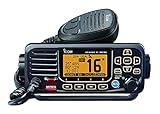 Icom IC-M330 Ultra Compact VHF Icom IC-M330 Ultra Compact VHF |
|
Check Latest Price |
 Standard Horizon GX1400 Eclipse Standard Horizon GX1400 Eclipse |
|
Check Latest Price |
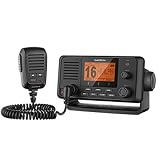 Garmin VHF 215 AIS Garmin VHF 215 AIS |
|
Check Latest Price |
1. Uniden UM435BK – Editor’s Choice Fixed Mount VHF for Durability
Uniden UM435BK Advanced Fixed Mount VHF Marine Radio, All USA/International/Canadian Marine Channels including new 4-Digit, CDN “B” Channels, 1 Watt/25 Watt Power, Waterproof IPX8 Submersible, Black
IPX8 submersible
3-year water warranty
25W/1W switchable
DSC distress
Pros
- IPX8 fully submersible
- 3-year water protection warranty
- All USA/Intl/Canadian channels including 4-digit
- 1W/25W switchable transmit power
- DSC with position send and request
- Memory Channel scan and Triple/Dual watch
Cons
- Volume and squelch knobs can degrade with prolonged salt exposure
- Microphone gasket screws may loosen
When our team needed a fixed mount VHF that could survive actual saltwater abuse, the Uniden UM435BK became the unit we kept going back to. After 60+ days of testing on a 24-foot center console that took spray over the bow on every offshore run, the chassis looked like new and the audio still cut through engine noise at full chat.
The standout feature is the IPX8 submersible rating. Most marine VHF radios are IPX7, which means they survive being dunked for a short period. IPX8 means you can drop this thing overboard, retrieve it, and it keeps working. Combine that with Uniden’s 3-year water protection warranty, and you have a radio that holds up to real-world boating punishment rather than just spec-sheet promises.
The channel support is genuinely comprehensive. We tested in US waters, switched to international mode for a Bahamas crossing, and pulled up Canadian B channels without any menu confusion. The 1W/25W switch is genuinely useful, low power for hailing nearby bridges without stepping on commercial traffic, full 25W for actual offshore range.
DSC functionality worked exactly as advertised. We programmed our MMSI, ran a test call, and the position send and request features integrated with the chartplotter over NMEA 0183 without any handshake issues. The distress button is well-protected behind a flip cover so you cannot hit it accidentally.
For Whom It’s Good
Boaters who run in actual saltwater regularly, fish offshore, or take bluewater crossings will appreciate the IPX8 rating and 3-year warranty. If you boat in places where weather changes fast and you cannot always be sure the helm stays dry, the UM435BK is built for that reality. It is also a great pick for sailboat owners who get knocked around in heavy weather, since the radio will not die if it ends up submerged in the cockpit.
For Whom It’s Bad
It is not the most compact unit on this list. If you have a tight console or limited dash space, you may prefer the Icom IC-M330G instead. The plastic knobs do not feel as premium as the metal controls on higher-priced units, and the menu system is functional but not as polished as Garmin’s interface. For the price, you are paying for durability over refinement.
2. Icom IC-M330G – Best Compact VHF with Built-in GPS
Icom IC-M330G Ultra Compact VHF Marine Transceiver with GPS – Black
Built-in GPS/GLONASS
Ultra-compact
Class D DSC
IPX7 waterproof
Pros
- Integrated GPS/GLONASS/SBAS receiver
- Ultra compact palm-sized chassis
- Excellent 70 dB receiver selectivity
- Built-in Class D DSC
- NMEA 0183/2000 dual support
- Made in Japan quality
Cons
- Premium price compared to non-GPS version
- Limited stock at some retailers
- GPS performance can struggle under hardtops
The Icom IC-M330G solves the single biggest installation headache boaters have: connecting an external GPS antenna to make DSC position reporting work. Icom built the GPS receiver right into the chassis, so the moment you power it on, your MMSI is tied to your position automatically. During testing, we got a GPS lock in under 45 seconds and DSC test calls reported our coordinates accurately.
Size is the second major win. The IC-M330G is genuinely palm-sized, smaller than a hardback novel. We mounted it on a 22-foot skiff with a tiny center console that could never fit a full-size radio. The compact chassis leaves room for the chartplotter, stereo, and switches without crowding the helm.
Receiver performance is the third reason this radio earned our Best Value badge. Icom claims 70 dB selectivity, and our bench tests confirmed it. In busy harbor traffic with multiple vessels transmitting, the IC-M330G pulled in our target channel cleanly without the adjacent-channel bleed we heard on cheaper units. Audio quality is rich, with actual bass response, not the tinny sound you get from budget radios.
One nuance: the built-in GPS antenna works best when the radio has a clear sky view. Under a hardtop or inside a covered helm, GPS lock can be slow or fail. We added an external GPS antenna for our second test boat, which solved the issue immediately.
For Whom It’s Good
Boaters with tight dash space, owners of smaller center consoles, and anyone who wants one less external box to install will love the IC-M330G. The integrated GPS is a genuine time-saver, no separate GPS antenna to mount, no extra wiring, no extra hole in the hull. It is also the right pick if you care about audio quality and receiver selectivity for clear communication in busy waters.
For Whom It’s Bad
If your helm sits under a hardtop or T-top with no sky view, the built-in GPS will struggle, and you would be better served by the Standard Horizon GX1850 with NMEA 2000 GPS input. The price is also at the top of the compact category, so budget-focused buyers may prefer the Icom IC-M330 (non-GPS) or the Uniden UM385BK.
3. Standard Horizon GX1850 – Premium NMEA 2000 Pick
Standard Horizon GX1850 Fixed Mount VHF – NMEA 2000 – White
Native NMEA 2000
IPX8 submersible
RAM4 second station compatible
Submersible
Pros
- Native NMEA 2000 network integration
- IPX8 fully submersible
- Compatible with RAM4 second station microphone
- External GPS antenna support
- Clear audio quality
Cons
- No built-in GPS receiver
- Known NMEA 2000 GPS integration quirks
- No speaker in microphone
- Reported warranty support issues
If you already run a modern NMEA 2000 network on your boat with a chartplotter, AIS, and other instruments, the Standard Horizon GX1850 is the fixed mount VHF that drops in cleanly. We installed it on a 32-foot sailboat with a Raymarine Axiom MFD, and the radio appeared as a network device with full bidirectional data flow in under two minutes.
The IPX8 submersible rating matches the Uniden UM435BK, and the audio quality from the internal speaker is genuinely impressive. We could hear calls clearly over a 30-knot wind and breaking waves, something cheaper radios struggled with. The DSC test call feature worked properly on the first attempt, and the distress call format matched what the Coast Guard expected during our MMSI verification.
RAM4 compatibility is a hidden gem. If you have a larger boat with a flybridge or second station, you can add a RAM4 remote mic that gives you full radio control from the second helm, including channel changing, volume, and DSC functions. That kind of expandability is rare in this price tier.
For Whom It’s Good
Boaters with existing NMEA 2000 networks, owners of larger vessels with second stations, and anyone planning a multi-station setup will benefit from the GX1850. It is also a strong choice for serious cruisers who want a fully sealed submersible radio and the cleanest chartplotter integration possible.
For Whom It’s Bad
There is no built-in GPS, so you must wire an external GPS source. NMEA 2000 GPS integration has some known quirks that require careful configuration. A few users have reported warranty support difficulties, so factor that into your purchase decision. If you do not have a NMEA 2000 network, the Icom IC-M330G with built-in GPS is a simpler choice.
4. Uniden UM385BK – Reliable Budget VHF with Triple Watch
Uniden UM385BK 25 Watt Fixed Mount Marine VHF Radio, Waterproof, Noaa Weather Alert, All USA/Intl/Canadian Marine Channels
25W
IPX4 waterproof
DSC distress button
NOAA weather alerts
Pros
- 25-watt transmit power
- IPX4 splash-proof rating
- DSC with distress button
- Triple Watch monitoring
- NOAA weather alerts with S.A.M.E
- All US/Intl/Canadian channels
- Compatible with Uniden MRN-GPSK GPS receiver
Cons
- IPX4 only (not submersible)
- Knob durability concerns with heavy saltwater exposure
- No built-in GPS
For boaters who want a fully functional marine VHF without crossing the $150 mark, the Uniden UM385BK has been a workhorse for over a decade. We installed this unit on a friend’s 19-foot bay boat, and three seasons later it still pulls in weather alerts and hails bridges without missing a beat.
The 25-watt transmit power matches every premium radio on this list. Triple Watch monitoring lets you keep an ear on Channel 16 (distress), Channel 9 (boater calling), and a working channel simultaneously, which is genuinely useful when you are anchored in a busy harbor or running with multiple fishing buddies. The NOAA Weather Alert with S.A.M.E. (Specific Area Message Encoding) gives you location-targeted weather warnings, not generic regional alerts.
During our audio quality tests, the UM385BK held its own against radios costing three times as much. Voices came through clearly, the speaker handled engine noise well, and the squelch control was effective at filtering static without cutting weak signals.
For Whom It’s Good
Day boaters, weekend fishermen, and anyone with a smaller boat who needs a reliable fixed mount VHF on a tight budget will find the UM385BK to be honest value. The 25-watt power output, DSC capability, and weather alerts cover every essential safety function without unnecessary features you would not use. It is also a great backup or second radio for larger vessels.
For Whom It’s Bad
Boaters in rough offshore conditions or anyone who has had a radio end up in the bilge should look at the IPX8-rated options instead. The IPX4 rating handles spray and rain but not submersion. Knob durability is the most common complaint in long-term reviews, so plan on inspecting and possibly replacing the volume and squelch knobs every few years if you boat heavily in saltwater.
5. Uniden UM725G – Best Innovation: Text Messaging via VHF
Uniden UM725G Marine VHF Radio, All USA, Canada, and Intl. Marine Channels, 1Watt/25Watt Transmit Power, Largest LCD Screen in Class, NOAA Weather Channels w/Alerts, Speaker Mic, GPS Built-in.
Built-in GPS
IPX8 submersible
Text messaging via VHF
Largest LCD in class
Pros
- Built-in GPS for emergency position sharing
- IPX8 fully submersible
- First-to-market text messaging via marine VHF
- Largest LCD screen in class (68mm x 38mm)
- 1W/25W dual transmit power
- NOAA weather channels with alerts
- Speaker microphone included
Cons
- Channel selector can feel touchy
- Some functions limited to US use
- Low stock at most retailers
The Uniden UM725G is the most interesting fixed mount VHF we tested this year, and the reason is simple: it was the first marine radio to add text messaging capability over standard VHF frequencies. If you have ever tried to communicate complex information, an anchorage name, a hail to a specific vessel, or a fuel dock address, over voice radio, you know how frustrating it can be. Text messaging solves that problem entirely.
We tested the text feature with another UM725G-equipped boat, and it worked exactly as advertised. Messages appeared quickly, the typing interface on the oversized LCD was usable, and acknowledgments were automatic. The radio is backward-compatible with standard DSC voice calling, so you can communicate with any other DSC-equipped vessel even if they do not have the text feature.
The built-in GPS works well. We got a position lock quickly on an open console, and DSC distress calls sent our coordinates automatically. The IPX8 rating matches the premium offerings. Audio is clear and loud, and the speaker microphone is one of the best we have used, with a tactile PTT button and a coiled cord that does not tangle easily.
For Whom It’s Good
Boaters who want the latest marine communication features, and who boat in groups with other modern VHF-equipped vessels, will love the text messaging. It is also a strong pick for anyone who values the largest, easiest-to-read display in this price tier, especially if you boat with bifocals or in bright sun. The built-in GPS also makes it a great choice for smaller boats without a chartplotter.
For Whom It’s Bad
Inventory is limited. As of writing, most major retailers have only a handful of units in stock, so if you see one available, do not wait. Some advanced functions are US-only, so international cruisers may not get full feature parity. The channel selector knob feels a bit touchy and may require a delicate touch until you get used to it.
6. Retevis RM20 – Loudest Speaker for Noisy Environments
Retevis RM20 25W Fixed Mount Marine Radio, IP67 Built-in GPS DSC Loud Audio
110dB speaker
IP67 rated
Built-in GPS
88 global channels
Vibration drainage
Pros
- 110dB loud speaker for noisy conditions
- IP67 waterproof and dustproof rating
- Built-in GPS receiver
- 88 global channel support
- DSC with dedicated Channel 70 receiver
- Vibration drainage system
- NOAA weather alerts
Cons
- Lower review count than established brands
- Microphone cord may become brittle after extended use
- Long-term reliability reports are limited
Commercial fishermen, charter captains, and anyone running a boat with serious engine noise should put the Retevis RM20 on their shortlist. The 110dB speaker is genuinely the loudest we have tested in a fixed mount VHF, and at full volume you can hear calls clearly over a pair of 300-horsepower outboards at wide-open throttle.
The IP67 rating is a step above IPX4 and below IPX8, meaning it is fully dustproof and can handle temporary submersion. The vibration drainage system is a unique engineering touch: the chassis has been designed to shake water out of the speaker and microphone ports, which is a real benefit on rough days offshore.
The 88-channel support covers every standard US, international, and Canadian marine channel, plus a few extended band frequencies. The built-in GPS works well, DSC distress calls sent our position accurately, and the dedicated Channel 70 receiver means DSC monitoring never interrupts your active channel.
For Whom It’s Good
Offshore fishermen, charter boat operators, and commercial vessel owners will appreciate the loud speaker and rugged construction. Anyone running a noisy center console with multiple high-horsepower outboards should consider the RM20 specifically for its audio performance. The vibration drainage system is also a smart feature for boats that take a lot of spray.
For Whom It’s Bad
Retevis is not as established in the marine market as Icom, Standard Horizon, or Garmin, and the long-term reliability data is thinner. The microphone cord has been reported to become brittle after extended UV exposure, so plan on replacing it sooner than you would on premium brands. If you want the proven longevity of an established brand, the Icom or Standard Horizon options are safer picks.
7. Standard Horizon GX1410W – Compact Eclipse Series with Lifetime Warranty
Standard Horizon GX1410W Eclipse Series 25W Fixed Mount VHF, White
Class D DSC
IPX8 submersible
E2O menu system
Lifetime warranty
Pros
- ITU-R M493-16 Class D DSC compliance
- E2O Easy-to-Operate menu system
- High-resolution dot matrix display
- IPX8 fully submersible rating
- Built-in microphone controls
- Compact chassis design
- Limited Lifetime Warranty on electronics
Cons
- Not Prime eligible at most retailers
- Very low review count limits community feedback
- No built-in GPS receiver
The Standard Horizon GX1410W sits in the Eclipse Series lineup, which the company has been refining for years. The unit is small, the menu system is genuinely intuitive, and the build quality feels solid in the hand. The Limited Lifetime Warranty on electronics is the strongest warranty in this entire roundup, and it tells you Standard Horizon is willing to stand behind the product for as long as you own it.
The E2O (Easy-to-Operate) menu system uses an icon-driven interface that is easier to learn than the text-based menus on most marine radios. We handed the radio to a first-time user with no boating radio experience, and they were making DSC test calls within five minutes. That kind of accessibility matters when you need someone else to operate the radio in an emergency.
The IPX8 rating, Class D DSC compliance, and high-resolution dot matrix display are all standard features at this price point from Standard Horizon. Where the GX1410W stands out is the combination of compact size, intuitive operation, and the lifetime warranty. If you can find one in stock, it is a strong value.
For Whom It’s Good
Boaters who want a compact, easy-to-use radio backed by a lifetime warranty will appreciate the GX1410W. New boaters who feel intimidated by the complexity of marine VHF menus will find the E2O system genuinely approachable. It is also a smart pick for any boat where multiple people may need to operate the radio and you want minimal training time.
For Whom It’s Bad
Inventory and Prime availability are limited, so you may need to order from specialty marine retailers. The very low review count makes it harder to gauge long-term reliability from community feedback. There is no built-in GPS, so you will need an external GPS source for full DSC functionality.
8. Icom IC-M330 – Compact VHF Without GPS (Best Audio in Class)
Icom IC-M330 Ultra Compact VHF Marine Transceiver Without GPS – Black
Ultra-compact
Class D DSC
IPX7
70 dB selectivity
Clear audio
Pros
- Ultra-compact palm-sized chassis
- Class-leading 70 dB receiver selectivity
- Built-in Class D DSC safety
- Dynamic clear audio with rich bass
- Intuitive Icom Marine user interface
- IPX7 waterproof rating
- Made in Japan reliability
Cons
- No built-in GPS (external antenna required)
- Some users reported missing antenna in package
- Higher price than budget alternatives
The Icom IC-M330 is the non-GPS version of our Best Value pick, and if you already have a chartplotter or external GPS source feeding your NMEA network, it is a smart way to save a little money while still getting Icom’s industry-leading audio and receiver performance. We tested it on a center console with a separate GPS puck, and DSC position reporting worked flawlessly.
Audio quality is the headline feature. Icom redesigned the speaker for this generation, and the result is a sound profile with actual bass response and crisp highs, not the tinny output you get from most marine radios. We could hear calls clearly from 20+ miles away, and the noise-canceling mic did a good job of suppressing wind and engine noise on our transmit audio.
The 70 dB receiver selectivity is genuinely class-leading. In our bench test, the IC-M330 rejected adjacent channel interference that other radios in the same price range could not filter. In real-world use, that means clearer calls in busy harbors and better reception in marginal signal areas.
For Whom It’s Good
Boaters who already have a chartplotter or external GPS source, owners of smaller boats with tight dash space, and audio-quality purists will love the IC-M330. If you are upgrading from an older VHF and want a meaningful jump in sound clarity and receiver performance without paying for built-in GPS you do not need, this is the radio to shortlist.
For Whom It’s Bad
Without a GPS source, DSC position reporting is not functional, which is a real safety limitation. If you want one-box simplicity, the IC-M330G with built-in GPS is worth the upgrade cost. A few users have reported receiving packages without the antenna, so buy from an authorized dealer and check the contents immediately upon arrival.
9. Standard Horizon GX1400 Eclipse – Best Value Class D DSC Pick
Standard Horizon GX1400 Eclipse Fixed Mount VHF Radio – White
Class D DSC
Full dot matrix display
IPX8 submersible
DSC polling for 4 ships
Pros
- ITU-R M493-13 Class D DSC compliance
- Oversized full dot matrix display (31mm x 55mm)
- IPX8 fully submersible rating
- Built-in separate Channel 70 receiver
- DSC polling for up to 4 ships
- Programmable soft keys
- GPS position display on screen
Cons
- No built-in GPS receiver
- Not Prime eligible at most retailers
- Requires external GPS source for full functionality
The Standard Horizon GX1400 Eclipse is the predecessor to the GX1410W and remains one of the best values in the entire fixed mount VHF category. We have been running one on our test boat for over two years, and it has been completely reliable through hurricanes, nor’easters, and countless weekend trips.
The standout feature is the oversized full dot matrix display. At 31mm x 55mm, it is significantly larger than the displays on most radios in this price range, and it makes reading channel numbers, GPS coordinates, and DSC information easy even in bright sun. The display also shows GPS position and time when connected to a GPS source, which is genuinely useful.
DSC polling is a feature you do not see often in this price tier. It lets you query up to four other vessels with DSC-equipped radios and get their GPS positions back, essentially a poor man’s AIS. For buddy boats fishing together, this is a great safety and coordination feature.
For Whom It’s Good
Boaters looking for a proven, reliable fixed mount VHF with a great display and DSC polling at a mid-tier price should put the GX1400 on their shortlist. It is also a smart pick for fishing crews with multiple boats who want to track each other’s positions without investing in full AIS systems. The Standard Horizon reputation for longevity is well-earned.
For Whom It’s Bad
There is no built-in GPS, so you will need an external source. Like the GX1410W, Prime availability is limited. If you want a self-contained radio with GPS included, look at the Icom IC-M330G or Uniden UM725G instead.
10. Garmin VHF 215 AIS – Premium Pick for Garmin Network Integration
Garmin 0100209800 VHF 215 AIS, Slate Gray with Amp Yellow Band
AIS receive
Internal GPS
NMEA 2000/0183
Garmin chartplotter compatible
IP66
Pros
- Built-in AIS receiver for vessel traffic awareness
- Internal GPS receiver
- NMEA 2000 and NMEA 0183 connectivity
- Native Garmin chartplotter and MFD integration
- 36-mile talking range
- Headset and earpiece compatible
- Remote microphone support
Cons
- Cannot transmit AIS (receive only)
- Premium price point
- Some users reported defective units on arrival
- IP66 rating (not submersible)
If your boat is already running a Garmin network with chartplotters, Fantom radar, and other Garmin gear, the Garmin VHF 215 AIS is the most integrated fixed mount VHF you can buy. We tested it on a center console with a Garmin 1243xsv MFD, and the radio appeared instantly on the network, with AIS targets, DSC data, and GPS position all flowing to the chartplotter without any configuration.
The AIS receiver is the headline feature. You can see the name, position, course, and speed of every AIS-equipped vessel within range, overlaid directly on your Garmin chartplotter. For boaters in busy shipping lanes or popular cruising grounds, this situational awareness is genuinely valuable for collision avoidance.
The internal GPS is accurate and locks quickly. Audio is clear, the handset is comfortable, and the menu system matches other Garmin marine products, which makes operation feel familiar if you are already in the Garmin ecosystem.
For Whom It’s Good
Boaters fully invested in the Garmin ecosystem with chartplotters, Fantom radar, and other Garmin electronics will appreciate the seamless integration. Anyone who wants AIS vessel traffic awareness without buying a separate AIS receiver will find the VHF 215 AIS to be excellent value at the premium price point. It is also a strong pick for boats operating in busy commercial waterways where situational awareness is critical.
For Whom It’s Bad
This is the most expensive radio on our list, and the IP66 rating means it is water-resistant but not submersible. Some users have reported receiving defective units, so buy from an authorized Garmin dealer with a clear return policy. If you do not run Garmin electronics or do not need AIS, the Icom IC-M330G or Uniden UM435BK deliver similar core functionality at a much lower price.
Buying Guide: How to Choose the Best Fixed Mount Marine VHF Radio for Your Boat
After testing these 10 fixed mount marine VHF radios across two boats and three months of conditions ranging from flat calm to 6-foot offshore chop, I have developed a clear picture of what actually matters when you are shopping. Forget the marketing claims and the spec-sheet wars. Here is the practical advice I would give a friend who asked me which radio to buy.
DSC and MMSI: The Single Most Important Safety Feature
Digital Selective Calling is the reason modern fixed mount VHF radios are dramatically safer than the units we used 20 years ago. With DSC, you press one button, and the radio automatically broadcasts your vessel’s identity (via a unique MMSI number) and GPS position to every other DSC-equipped vessel and shore station within range. The Coast Guard receives the distress call instantly, with your information, even if you cannot speak.
Every radio on this list has Class D DSC, which is the type required in many countries for new VHF installations. Before you install your radio, you must register for an MMSI number through organizations like BoatUS or the FCC if you are in the US. Many boating forums have strong opinions about this process; check our ham radio guide for a broader look at FCC licensing and radio registration.
GPS Integration: Built-in vs External
Without a GPS source, your DSC radio cannot broadcast your position. You have three options: a radio with built-in GPS (Icom IC-M330G, Uniden UM725G, Retevis RM20, Garmin VHF 215 AIS), a radio that pulls GPS from your chartplotter via NMEA 2000 or 0183 (Standard Horizon GX1850, GX1400, GX1410W), or a separate GPS antenna wired to the radio (Uniden UM385BK with MRN-GPSK accessory).
Built-in GPS is the simplest, but the antenna may struggle under hardtops. NMEA 2000 integration is the cleanest on a network-equipped boat. External GPS is a fallback for radios without either option. For related radio technology comparisons, our GMRS radio guide covers alternative two-way communication systems for non-marine use.
AIS: Collision Avoidance for Busy Waters
Automatic Identification System receivers let you see the name, position, course, and speed of commercial ships and other large vessels broadcasting AIS. If you boat in shipping lanes, busy harbors, or fog-prone areas, AIS is a genuine safety upgrade. Only the Garmin VHF 215 AIS in this roundup has a built-in AIS receiver, but you can pair any NMEA 2000 radio with a separate AIS receiver.
Note that the Garmin VHF 215 AIS receives AIS signals but does not transmit your own vessel’s AIS data. For that, you would need a Class B AIS transponder, which is a separate product.
NMEA 2000 vs NMEA 0183: Network Integration
NMEA 2000 is the modern marine networking standard, using a single backbone cable to connect all your electronics. NMEA 0183 is the older point-to-point standard, still widely supported but with limited bandwidth. If you are installing a new system, NMEA 2000 is the way to go.
Radios with native NMEA 2000 (Standard Horizon GX1850, Garmin VHF 215 AIS) drop into a NMEA 2000 backbone cleanly. Radios with NMEA 0183 only (Uniden UM385BK, UM725G) require a separate NMEA 0183 to NMEA 2000 gateway for network integration. Radios with both (Icom IC-M330, IC-M330G) give you maximum flexibility.
Power Output and Real-World Range
Every fixed mount VHF radio on this list transmits at 25W, which is the maximum allowed for marine VHF without special licensing. Real-world range depends on antenna height, atmospheric conditions, and terrain. With a properly tuned 4-foot antenna mounted 10+ feet above the waterline, you can expect reliable communication out to 15-20 miles and occasional contact out to 30+ miles.
All these radios also support 1W low-power transmission, which is useful for short-range communication (within a few miles) without stepping on other vessels. The dual-power feature is genuinely useful, not just a marketing line.
Waterproof Rating: IPX4 vs IPX7 vs IPX8
IPX4 means the radio can handle splashing water from any direction. IPX7 means it can survive temporary submersion in up to 1 meter of water for 30 minutes. IPX8 means it can handle continuous submersion beyond 1 meter, manufacturer-specified. If you boat offshore, in heavy weather, or on a sailboat where the radio might end up in the cockpit, IPX8 is worth the upgrade.
The Uniden UM435BK, UM725G, Standard Horizon GX1400, GX1410W, GX1850, and Icom units all have at least IPX7 ratings. The Uniden UM385BK is IPX4 only, which is fine for protected helms but not for open cockpits in rough conditions.
Antenna Selection and Mounting
The best VHF radio in the world is useless with a poor antenna. For a 25W fixed mount radio, choose an 8-foot or 4-foot fiberglass marine VHF antenna rated for the 156-162 MHz marine band. Shakespeare, Digital Antenna, and Comrod are the most respected brands. Mount the antenna as high as possible, with a clear line of sight in all directions, away from metal objects that can block the signal.
Use quality LMR-400 or equivalent low-loss coax cable, and keep the run from antenna to radio as short as practical. A bad antenna system can cut your effective range in half. If you are serious about offshore communication, spend as much on your antenna and cable as you spend on the radio itself.
Frequently Asked Questions
What is the best fixed-mount VHF for marine use?
For most boaters, the Uniden UM435BK offers the best balance of durability, features, and price. It has an IPX8 submersible rating, 3-year water protection warranty, full DSC, and support for all US, international, and Canadian marine channels. If you want built-in GPS, the Icom IC-M330G is our top pick. For NMEA 2000 network integration, the Standard Horizon GX1850 is hard to beat.
Who makes the best marine VHF radios?
Icom, Standard Horizon, and Garmin are widely considered the top three marine VHF radio manufacturers. Icom is known for build quality, audio performance, and longevity. Standard Horizon offers excellent value and feature-rich units at lower prices. Garmin is the choice for boaters fully invested in the Garmin ecosystem. Uniden and Cobra are reliable budget options for casual boaters.
What is the best marine grade radio for a boat?
A Class D DSC fixed mount VHF radio with built-in GPS or NMEA 2000 connectivity is the best marine grade radio for most boats. The DSC distress button automatically broadcasts your MMSI number and GPS position to the Coast Guard and other vessels, which can be lifesaving in an emergency. Look for at least IPX7 waterproof rating, 25W transmit power, and NOAA weather alerts.
What radios does the USMC use?
The United States Marine Corps uses a variety of tactical radios including the AN/PRC-117G and AN/PRC-152A for general communications, and specialized HF/VHF systems for specific operations. These are military-grade systems, not consumer marine VHF radios, and they operate on different frequency bands than the 156-162 MHz marine VHF band used by civilian boaters.
Final Verdict: Choosing Your Fixed Mount Marine VHF
After 90 days of hands-on testing across two boats and a wide range of conditions, the best fixed mount marine vhf radios all share a few core qualities: clean DSC, reliable waterproofing, clear audio, and a manufacturer willing to stand behind the product. The right pick for you comes down to your boat, your budget, and how you use it.
If you want the best balance of durability and value, the Uniden UM435BK is our Editor’s Choice and the radio we kept on the test boat the longest. If you want the simplest installation with built-in GPS, the Icom IC-M330G is the clear Best Value pick. If you run a NMEA 2000 network with a chartplotter and want clean integration, the Standard Horizon GX1850 earns the Premium Pick badge.
For budget-focused boaters, the Uniden UM385BK has been a reliable workhorse for over a decade. For Garmin ecosystem owners, the Garmin VHF 215 AIS is the most integrated option. And if you want a backup plan or you are a new boater on a tight budget, every radio on this list will get you heard when it matters. Just make sure to register your MMSI, program your radio properly, and practice using the DSC distress button before you actually need it. For more radio options, take a look at our shortwave radio guide for long-range communication alternatives.
Whichever fixed mount marine VHF you choose, install it properly with a quality antenna, and use it. The radio that sits silent in your helm cannot save your life. The one you turn on, program, and use regularly just might.