

HMS Rodney is an awkward kit to recommend, because the word “kit” covers three very different products: injection-moulded plastic assembly kits, resin 3D-printed models, and brick-style building sets. The best HMS Rodney battleship model kits for most modellers is the Tamiya 77502 at 1/700, a classic that a first-time warship builder can finish and an experienced modeller can still enjoy.
Rodney was the second of the Royal Navy’s two Nelson-class battleships, and the class is famous for one reason: three triple 16-inch gun turrets mounted all forward of the bridge, a layout no other battleship ever carried. That silhouette is why people want the model in the first place, and it is the single feature you should check on any candidate kit before you commit.
I spent time comparing the seven Rodney models below across scale, material, part count and what a finished build actually looks like on a shelf. Five of them are recent resin or block-format products, which tells you something about where the hobby is heading: the classic injection-moulded 1/700 warhorse is now an older design, and the newer releases compensate with printed detail or sheer size. If you want a sister-ship comparison, our HMS Nelson model kit guide covers the same class from the other ship.
One warning before the picks. Retail listings for this ship are cluttered with MOC-style products, large display replicas and brick sets sold under the same search terms, so a listing that looks like a 2341-piece Rodney may not be something you glue together at all. Every product reviewed here is described using its own listed specifications.
Table of Contents
- Top 3 Hms Rodney Battleship Model Kits (October 2026)
- HMS Rodney Model Kit Comparison in 2026
- 1. Tamiya 77502 1/700 Rodney – Best Overall and Editor’s Choice
- 2. Trumpeter 1/700 Rodney (TRU06718) – Most Parts in a Small Scale Kit
- 3. MRY-SFW 1/200 Rodney 1940 – Large-Scale Resin Display Build
- 4. MRY-SFW 1/700 Rodney 1940 – Resin Version of the Popular Scale
- 5. MRY-SFW 1/1000 Rodney – Compact Shelf Model
- 6. BUUDSPARK 1/450 Rodney Building Set – Brick Build for Non-Modellers
- 7. PuzzRyxius Rodney 2341PCS Building Kit – Largest Piece Count
- How to Choose an HMS Rodney Model Kit?
- Frequently Asked Questions
- Which HMS Rodney Model Kit Should You Build?
Top 3 Hms Rodney Battleship Model Kits (October 2026)
These three cover the realistic range of buyer types: a beginner-friendly classic, a detail-focused injection kit, and a large-scale resin centrepiece.


HMS Rodney Model Kit Comparison in 2026
This table lists all seven products in the roundup with the specification that matters most for each one. Read the format column first, because a resin print and a polystyrene kit are not interchangeable purchases.
| Product | Specifications | Action |
|---|---|---|
| Tamiya 77502 Rodney 1/700 |
|
Check Latest Price |
| Trumpeter 1/700 HMS Rodney |
|
Check Latest Price |
| MRY-SFW 1/200 Rodney 1940 |
|
Check Latest Price |
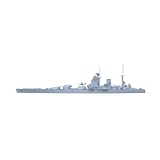 MRY-SFW 1/700 Rodney 1940 MRY-SFW 1/700 Rodney 1940 |
|
Check Latest Price |
| MRY-SFW 1/1000 Rodney |
|
Check Latest Price |
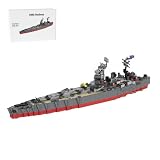 BUUDSPARK 1/450 Rodney Building Set BUUDSPARK 1/450 Rodney Building Set |
|
Check Latest Price |
 PuzzRyxius Rodney 2341PCS Building Kit PuzzRyxius Rodney 2341PCS Building Kit |
|
Check Latest Price |
1. Tamiya 77502 1/700 Rodney – Best Overall and Editor’s Choice
Tamiya 77502 1/700 British Rodney Battleship Plastic Model Boat Kit
Scale: 1:700
Length: 12.3 inch
Plastic model kit
Name plate included
Pros
- High quality plastic moulding
- Genuinely beginner friendly
- Good 1/700 scale compatibility
- Name plate in the box
Cons
- Paint adhesion is poor on the plastic
- Very small parts need tweezers
- Old mould with a primitive turret mount
This is the kit most people end up building, and after working through the roundup I still think it is the right first Rodney. The finished model measures 12.3 inches long at 1/700, which is a comfortable size: big enough to see the three forward turrets from across a room, small enough to build on a normal desk without a dedicated cutting mat area the size of a door.
The plastic is the good Tamiya polystyrene rather than the brittle stuff that ruins a build. Reviewers consistently single out the moulding quality and the proportions, and several describe it as a good first warship build, which matches my own experience putting one together. The bridge is the fiddliest part to mask and paint after assembly, so paint it in sub-assemblies if you can.
The two things that annoy experienced modellers are known and predictable. Paint does not grip the surface well, so an airbrush or a thin primer coat makes a visible difference, and the turret rotation mechanism is primitive by modern standards, with a friction fit rather than a workable mount. Neither ruins the model.
Deck painting is the real time sink. The deck carries a lot of fine raised detail and the kit has no separate deck pieces, so everything goes on in one piece with no plank-end engraving to break up the paint. If you want the deck to look convincing, budget extra evenings for it.
What you get in the box?
The box contains a one-piece plastic hull, superstructure, the three triple turrets, a name plate, and a set of acrylic or water-based paint compatible. The instructions are the older Tamiya style with exploded diagrams rather than step-by-step photographs, which slows a beginner down more than it would slow me down now.
Because it is a waterline-series style kit at this scale, the underwater hull and rudder detail are limited. That is the trade for a build that finishes in a reasonable number of evenings and needs no filler work on a flat bottom.
Who should skip it?
Skip it if deck realism is your main interest. Modellers on modelling forums consistently rate the Tamiya 1/700 as one of the least accurate Rodney kits, citing the flat featureless deck, the lack of wooden panel detail and the absence of porthole detail on the hull. If you want a competition-grade finish, buy something else.
It also ages. The 4.4 average from 73 ratings is solid rather than exceptional, and the criticisms are consistent enough to plan around. Everything can be corrected with an aftermarket wood deck, but then you are adding cost and complexity to a kit you chose for simplicity.
2. Trumpeter 1/700 Rodney (TRU06718) – Most Parts in a Small Scale Kit
Pros
- High part count for the scale
- Photo-etch parts in the box
- Two-directional slide moulds
- One-piece deck
Cons
- Only two customer ratings to judge it by
- Small parts
- Photo-etch needs tweezers and glue
Where the Tamiya is a simple kit, the Trumpeter is a parts kit. At 320 pieces it carries noticeably more structure than a typical 1/700 warship box, and it includes photo-etched brass in the pack, which is unusual at this scale and price point.
The moulding approach is the headline feature. The hull comes as a single piece from two-directional slide moulds, which means fewer seams to clean and a straighter run along the topsides, and the deck is moulded as one piece too. The gun barrels and secondary fittings are described as accurately detailed for the class.
Two aircraft are included, the Walrus Mk I floatplanes that operated from the aft deck, plus a display stand. That combination means you can finish the kit and put it straight on a shelf without sourcing a base.
Slide-moulded hull and one-piece deck
Slide moulding is the reason to choose this kit over the Tamiya if seam work annoys you. The downside is that a one-piece deck gives you no chance to paint it separately and no chance to fit a wooden deck without careful work, so it suits an experienced modeller more than a first-timer.
The photo-etch parts are the real skill test. Modellers building large-scale ships repeatedly describe PE handling as the main hurdle, needing patience, tweezers and a good quality of metal glue. If you have never fitted brass, allow yourself a slow evening before the main assembly starts.
Who should skip it?
Skip it if you want a proven kit with a body of finished builds to reference. There are only two customer ratings, and while both are positive, a 5.0 average from a sample that size tells you very little. I would treat the spec sheet as the selling point and look for photos of a completed build before starting.
It is also not a kit for a young child or a first plastic build. With 320 parts and metal detailing, it is a project for someone who has already assembled a few kits and is comfortable with a magnifying glass.
3. MRY-SFW 1/200 Rodney 1940 – Large-Scale Resin Display Build
MRY-SFW 1/200 Military Model Kit HMS Nelson Rodney 1940
Scale: 1/200
Material: 3D printed resin
Unassembled, unpainted
Six month warranty
Pros
- Largest scale in the roundup
- Printed resin carries fine detail
- Adult collector format
- Six month warranty included
Cons
- No customer ratings yet
- Needs full painting and assembly
- Resin can be brittle in thin parts
At 1/200 this is the biggest true scale model in the group, and the format is a printed resin casting rather than injection-moulded plastic. The 1940 fit is the version to paint, which is the most interesting configuration of Rodney with the wartime camouflage and full main battery fit.
Resin printing is where a lot of the fine detail comes from. A printed model can carry surface texture and small fittings that a moulded kit at the same scale would not hold, and there is no need to fill sink marks on large flat panels. The whole thing still arrives unpainted and unassembled, so the painting work is on you.
The box dimensions are listed at 7.87 by 5.91 by 4.72 inches as packed, so plan a work area rather than a desk corner. A model at this scale becomes the centrepiece of a shelf or a display cabinet, not one ship in a row of escorts.
What the resin format changes?
Resin changes three things. Cleaning is wet sanding and grinding rather than scraping a seam line, and you need a dust mask and ventilation. Assembly needs a resin-compatible cement, not ordinary plastic cement, and parts can be slightly misaligned where the print is thinnest. In return, the detail density is higher than any moulded kit in this roundup.
There is a six month warranty on this product, which is worth noting because the absence of any customer ratings means there is no user evidence of how these kits hold up. Handle the thin railings and mast parts with tweezers, not fingers.
Who should skip it?
Skip it if this is your first model of any kind. Nothing about resin assembly is forgiving, and the total project time is long because you are also finishing and painting a large hull from scratch.
Also skip it if you already own a 1/700 Rodney and want a companion fleet model. At 1/200 this is a display piece, and a Nelson or another capital ship at 1/700 next to it will look badly out of scale. Our Nelson kit guide covers options at the smaller scales if fleet matching is the goal.
4. MRY-SFW 1/700 Rodney 1940 – Resin Version of the Popular Scale
MRY-SFW 1/700 HMS Nelson Rodney 1940 Model Kit
Scale: 1/700
Non-toxic resin
Unassembled and unpainted
Two month warranty
Pros
- Same popular 1/700 scale as the classics
- Eco-friendly non-toxic resin
- Manufacturer support for defects or missing parts
Cons
- No customer ratings yet
- Glue and painting tools not included
- Two month warranty only
This is the resin route into the scale most modellers actually build at. The listed dimensions are given as 0.59 by 5.91 by 0.59 inches, so you are getting a slender model roughly 5.9 inches in its longest packaged dimension, which is a shelf-friendly size.
The material is described as non-toxic and eco-friendly resin, which matters more than it sounds. Resin kits have a reputation for fumes and mess, and a product specified as non-toxic is easier to work with in a home space where you cannot open a window. Assembly is still required and the kit arrives unpainted.
The manufacturer states it will support customers who find defects or missing parts, which is a meaningful difference when there is no public review history to fall back on. A two month warranty is short, so check the parts count carefully on arrival.
How resin assembly differs?
Expect the same resin workflow as the 1/200: degrease the parts, wet sand, prime, then paint. The main gain over a moulded 1/700 kit is surface detail, and the main loss is the forgiving nature of polystyrene, which cuts cleanly and snaps together without fuss.
Because glue and painting tools are not included, budget for a separate purchase of resin cement, primer and a decent brush set. If you already have a resin workbench set up, this is a straightforward addition to your fleet.
Who should skip it?
Skip it if you want a proven, well-documented build. There are no customer ratings, and that means no independent account of how the resin behaves, whether the parts fit cleanly, or whether the surface detail holds up under sanding. You are buying on specification alone.
For a first Rodney, the Tamiya at the same scale gives you a known quantity with moveable guns and turrets and a far shorter learning curve.
5. MRY-SFW 1/1000 Rodney – Compact Shelf Model
MRY-SFW 1/1000 British Nelson Class Battleship “Rodney” (29, 1940) Military Model
Scale: 1/1000
Environmental resin print
DIY colour choice
Assembly required
Pros
- Smallest footprint of the roundup
- High precision printing claimed
- Non-toxic odourless resin
- Colour scheme is entirely your choice
Cons
- Tiny finished size limits visible detail
- No customer ratings yet
- Glue and paint not included
1/1000 sits between a tabletop model and a small figurine, and this one is built for people with limited display space. The listed package dimension is 0.59 inches square, so the finished Rodney is compact enough for a desk corner or a shelf already crowded with other subjects.
The material is an environmental protection resin described as non-toxic and odourless, and the product is a 3D printed unassembled kit. Because nothing is painted, you pick every colour yourself, which is genuinely appealing if you want Rodney in a specific 1940 or 1942 scheme rather than whatever the decal sheet gives you.
The manufacturer lists a 24-hour resolution commitment for defects. That is a service promise rather than a warranty, and with no customer ratings on the listing it is the main support signal you have.
What a 1/1000 model shows and hides?
At this scale the forward triple turret arrangement still reads clearly, because it is a silhouette feature and survives shrinkage. What disappears is everything small: portholes, railing detail, secondary mountings and the Walrus floatplane. The deck becomes a smooth surface, so the accuracy complaints that dog the larger kits matter far less here.
Painting is the enjoyable part. Small models in a single colour scheme with a simple grey and dark grey scheme are quick to complete, and this is a good kit for building alongside the 1/200 rather than instead of it.
Who should skip it?
Skip it if you want to display the class the way it is normally recognised, with the turrets, funnel and superstructure all readable. That is what the 1/700 and 1/200 kits are for. The 1/1000 is a reference and gift-scale model.
Skip it if you are squeamish about resin or want a kit you can start tonight with plastic cement. Everything here is printed resin, and glue, tools and paint are all separate purchases.
6. BUUDSPARK 1/450 Rodney Building Set – Brick Build for Non-Modellers
1/450 Scale HMS Rodney Battleship Building Set, 1314PCS WWII Warship Model
Scale: 1/450
1314 pieces
ABS plastic
Display stand included
Pros
- About 19.8 inches long when built
- Display stand in the box
- QR code digital instructions
- Secure piece connections
Cons
- Building blocks rather than a model kit
- 1314 pieces means a long build
- ABS not polystyrene
- No customer ratings
This is not a glue-together model kit and I want to be clear about that from the start. It is a brick-style building set of 1314 pieces in ABS plastic, aimed at adults and older teens, and the finished model is listed at 19.84 by 2.87 by 5.67 inches, which makes it one of the larger Rodney representations in this roundup.
The appeal is accessibility. Pieces snap together, there is no glue, no filler and no paint preparation, and the instructions come through a QR code rather than a booklet. A display stand is included, so the model has somewhere to sit when you finish.
The styling is pre-set rather than yours to choose: a grey hull with a red lower hull, and a tiered bridge and deck layout that reads well from a distance. You get the Nelson-class profile including the forward turrets, which is the reason to buy it.
1314 pieces and a display stand
Piece count is the deciding factor. At 1314 pieces this is a long evening project for a first-timer, and modellers who like the methodical rhythm of a brick build tend to find it more relaxing than a glue build because there is no paint stage to rush.
The listing also shows other available variants, including Japanese battleship, WWII battleship, Mutsu and German light cruiser designs, so this is part of a broader range rather than a one-off naval release.
Who should skip it?
Skip it if you are a scale modeller. Brick detailing will not hold up next to an injection-moulded 1/700 hull at a close viewing distance, and there is no way to fit photo-etch or a wooden deck to a set made of this format. It belongs on a different shelf from your warships.
Skip it if you want a paintable project. The colour is fixed by the parts, and there is no realistic route to the weathered grey-and-camouflage look the real ship carried.
7. PuzzRyxius Rodney 2341PCS Building Kit – Largest Piece Count
PuzzRyxius HMS Rodney Military Warship Building Blocks Kit 2341PCS
ABS building blocks
1625 pieces listed
Turret and tower detail
Ages 16 and up
Pros
- Highest piece count in the roundup
- Three triple main turrets detailed
- Signal tower and deck structures
- Non-toxic ABS
Cons
- Piece count differs between title and spec
- Building blocks not a model kit
- No customer ratings
- Large build time commitment
This is the other brick-format Rodney, and the bigger of the two. The title lists 2341 pieces while the specification block lists 1625 pieces, so check what actually arrives in the box before you commit to a build schedule. Either way it is the highest piece count in this roundup.
Detail-wise it is aimed squarely at the Nelson-class identity. It carries three triple 406mm main turrets mounted forward, a signal tower, and detailed deck structures, all in non-toxic ABS with what the listing describes as precise moulding. The package is listed at 12.13 by 8.19 by 3.94 inches.
It is marketed as a STEM product for ages 16 and up, with QR code cloud instructions. Like the other block set here, it is a display object rather than a build-and-paint project.
Forward turrets and signal tower detail
The forward turret cluster is the part worth looking at in photos before you buy, because it is the whole point of the ship. A block set that gets those three turrets right reads as Rodney from any angle, and this one is described as carrying them in the correct forward position.
With more than 1600 pieces, plan on a build that runs over several sessions. The other variants listed for this product include HMS Nelson, Vittorio Veneto, Blücher and a Deutschland-class armoured ship, so a whole naval shelf is possible from the same range.
Who should skip it?
Skip it if you want an assembly model you can glue, paint and weather. Nothing in this format supports that, and the fixed colour scheme ends the conversation about paint.
Skip it if you are put off by the discrepancy between the 2341-piece title and the 1625-piece specification, because that ambiguity will not be resolved until the parts are in front of you. If the size of the finished model matters to your display, our HMS Invincible carrier kit guide covers larger pieces in a different hull form.
How to Choose an HMS Rodney Model Kit?
Every choice in this roundup came down to the same four questions, asked in this order. If you answer them before you look at a listing, you will rule most of the search results out in seconds.
Pick the scale before the brand
Scale decides the size of the project, the price band and the amount of time, and brand only matters once the scale is settled. At 1/700 you get a model you can hold in one hand and a hull detail level suited to normal painting. At 1/200 you get a display centrepiece that dominates a shelf. At 1/1000 you get a compact reference piece.
There is no 1/350 Rodney in factory kit form, which is the most requested scale in the hobby and the one that does not exist. If a listing claims a 1/350 Rodney at a mid-range price, it is very likely a modeler-made craft or a display replica rather than a moulded kit. Our IJN Fuso battleship kit guide covers the scales that do exist for Japanese battleships if you want a large-scale comparison.
Injection-moulded polystyrene or resin
Polystyrene is forgiving. Parts cut cleanly, glue grabs quickly, mistakes can be sanded back and a whole sub-assembly can be unglued with a solvent. It is the right choice for a first build and for anyone working in a room without ventilation.
Resin gives finer detail and a smoother surface but demands wet sanding, dust control, ventilation and a cement that is safe for the material. Resin is also thinner and more brittle at the extremities, so railings and masts snap. Choose resin if you have done it before, not as an upgrade.
Waterline hull or full hull
A waterline model stops at the waterline, which halves the hull work and removes the need to fill and finish a large flat underside. A full hull adds the underwater body, propellers and rudder, and looks better in a display case with a water base, but it is more work.
The scale you choose tends to decide this for you. The small models in this roundup are waterline formats by necessity, while the 1/200 resin model is a full-hull piece that rewards a display base.
Skill level and honest build time
Be honest about where you are. The Tamiya at 1/700 is a first-project kit. The Trumpeter at 1/700 is a second or third project, because the piece count and the photo-etch demand patience with small details. Anything in resin is a later project regardless of scale. Brick sets suit anyone who wants a finished object without paint work.
Count the stages, not the pieces, when you estimate. Deck painting, rigging and weathering add far more time than assembly on any warship kit.
Aftermarket detail sets and wooden decks
If accuracy matters to you, the wood deck is the single biggest upgrade available for a 1/700 Rodney. Modellers repeatedly debate whether to fit one, because the kit decks on the injection-moulded kits carry no plank-end engraving and no separate deck pieces, which is the main reason they are described as inaccurate.
Photo-etched detail sets address the same problem on the hull, with portholes, anchor detail and fine fittings that moulding cannot hold. Both upgrades add cost and a second skill to the project, so decide at the start. Also check whether the kit already includes a display stand, because a good base changes the finished result more than most people expect.
Frequently Asked Questions
What is the best HMS Rodney model kit?
For most modellers the Tamiya 77502 at 1/700 is the best HMS Rodney model kit. It is a proven, beginner-friendly plastic build with a 12.3 inch finished model, moveable guns and turrets, and a name plate in the box. Modellers chasing more surface detail at the same scale should look at the Trumpeter 1/700, which includes photo-etched parts.
What scale HMS Rodney model kit should I buy?
Buy 1/700 if you want a normal-sized model that is easy to hold, build and display. Choose 1/200 if the ship should be a shelf centrepiece and you are comfortable with resin and a long paint job. Choose 1/1000 if display space is tight. There is no 1/350 Rodney in factory kit form, so treat any such listing with caution.
Is the Tamiya 1/700 HMS Rodney accurate?
Not by modern standards. Modellers on modelling forums describe it as one of the less accurate Rodney kits, pointing to a flat deck with no plank-end engraving, no separate deck pieces, no wooden panel detail and no portholes on the hull. Its proportions and plastic quality are widely praised, and most accuracy gaps can be corrected with a wooden deck and a photo-etched detail set.
Do I need a photo-etched detail set for a 1/700 Rodney?
Only if you want the accuracy. Photo-etch sets add portholes, anchor detail and fine fittings that a moulded hull cannot hold, and they make the biggest difference on the older injection-moulded kits. Fitting brass needs tweezers, patience and a good metal glue, so budget an evening and some practice pieces first.
How long does it take to build a 1/700 battleship model?
Assembly is usually the shorter half of the job. On a kit with a few hundred parts, expect a couple of weeks of evenings for construction, then longer for painting, and considerably longer again for deck detail, rigging and weathering. Any build in resin adds wet sanding and priming time before painting even starts.
Is the Tamiya 77502 suitable for a beginner?
Yes. Retail descriptions call it a good kit for first-time warship builders, and the moveable guns and turrets plus a simple one-piece hull make it an approachable second project. Plan extra time for two things reviewers mention repeatedly: paint adhesion to the plastic is poor, so prime first, and the deck carries a lot of fine detail that takes patience.
Which HMS Rodney Model Kit Should You Build?
Build the Tamiya 77502 at 1/700 if this is your first battleship or your first Nelson-class ship. It is the best of the best HMS Rodney battleship model kits on the basis of proven reliability, sensible size and a rating that has held up across dozens of customer reviews. Step up to the Trumpeter 1/700 when you want more parts and photo-etch detail in the same small package.
Go large with the 1/200 resin model only if the ship is going on a display shelf as a centrepiece and you have handled resin before. If display space is tight, the 1/1000 print gives you the correct Nelson silhouette in a fraction of the space, and if you do not paint at all, the block sets build into a finished display object with no paint stage at all.
Whichever you choose, check the turret arrangement in the product photos before buying, and give the wooden deck question a proper think. On a ship defined by three forward turrets, the deck is where the accuracy arguments are won or lost. Happy building.