

Most home shops do not have a cutting problem, they have a grinding problem. An angle grinder turns a straight line into a wavy, heat-browned edge that has to be ground back flat before it can be welded, and on thin material that cycle warps the panel. A plasma cutter changes the geometry of the job: an arc superheats compressed air into a jet that melts and blows metal away along a narrow kerf, so the cut comes out square and fast enough to finish a fence panel in an afternoon.
This roundup covers ten machines that all actually cut metal, rated from 4.1 to 4.8 stars with review counts from 124 up to 2400. Every pick runs on 110V or 220V and uses a standard air compressor. Nothing here needs a dedicated industrial bay. We also cover the things that decide whether the purchase works on day one: whether your panel can feed it, whether your air is dry, and whether the torch starts the way you need it to.
Disclosure: We may earn a commission when you buy through links on this page. That never changes what we recommend, and it never changes the order of the list. Every rating and review count quoted here is copied from the listing as it stood when we published.
Table of Contents
- Top 3 Best Plasma Cutter Picks for Home Use in 2026
- The Best Plasma Cutters for Home Use at a Glance (October 2026)
- 1. ARCCAPTAIN CUT50 50A: The Best Overall Plasma Cutter for Home Use
- 2. LOTOS LTP5505D 55A: Best for Rust, Paint and Salvage Metal
- 3. Bestarc BTC500DP 50A: Best Value with an Air Pressure Sensor
- 4. YESWELDER 60A Non-HF: Best for CNC Work and Electronics-Sensitive Garages
- 5. PrimeWeld CUT50D 50A: Best Supported with a Long Owner Record
- 6. ARCCAPTAIN iControl CUT55 Pro: Best for App-Controlled and Feature-Heavy Setups
- 7. PrimeWeld CUT60 60A: Best for Sustained Thick-Plate Work
- 8. Reboot RBC6000D 60A: Best Budget Path to 60 Amps
- 9. GZ GUOZHI CUT-50 50A: Most Versatile with a 60 Percent Duty Cycle
- 10. Tosense PLC55 55A: Best for Light Sheet-Metal Projects
- How to Choose a Plasma Cutter for Home Use
- Common Plasma Cutting Mistakes Home Shops Make
- Frequently Asked Questions
- Which Plasma Cutter Should You Buy in 2026?
Top 3 Best Plasma Cutter Picks for Home Use in 2026
The short answer is this: the ARCCAPTAIN CUT50 50A is the best overall plasma cutter for home use, the PrimeWeld CUT50D is the best supported machine in the group, and the Bestarc BTC500DP is the best value if you want an air pressure sensor and app control at the entry end of the market. If you want the full field of picks, we also track the general plasma cutter roundup and a separate list of the best machines for metal fabrication.
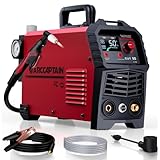
ARCCAPTAIN CUT50 50A
- 50A dual voltage output
- 1/2 inch clean cut on 220V
- 13 lb body with shoulder strap
- LED readout with error codes

PrimeWeld CUT50D
- 1/2 inch clean cut capacity
- Pre-plumbed air filter and regulator
- Responsive US warranty support
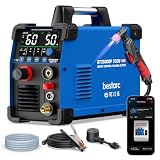
Bestarc BTC500DP
- 50A IGBT inverter
- Bluetooth app remote to 98 ft
- Built-in air pressure sensor
- Rust removal mode
The Best Plasma Cutters for Home Use at a Glance (October 2026)
Every machine below is dual voltage and air-fed. Most reach a true 1/2 inch clean cut on 220V when the amperage and air pressure are set correctly, and a couple go further. The factors that separate them in practice are start type, whether air pressure is measured on the front panel, the duty cycle at rated output, and how heavy the unit is to carry up a basement stair. Use this table to narrow the field, then read the individual reviews for the parts that only show up after a year of ownership.
| Product | Specifications | Action |
|---|---|---|
| ARCCAPTAIN CUT50 50A |
|
Check Latest Price |
 LOTOS LTP5505D 55A LOTOS LTP5505D 55A |
|
Check Latest Price |
| Bestarc BTC500DP 50A |
|
Check Latest Price |
 YESWELDER 60A Non-HF YESWELDER 60A Non-HF |
|
Check Latest Price |
| PrimeWeld CUT50D 50A |
|
Check Latest Price |
 ARCCAPTAIN iControl CUT55 Pro ARCCAPTAIN iControl CUT55 Pro |
|
Check Latest Price |
 PrimeWeld CUT60 60A PrimeWeld CUT60 60A |
|
Check Latest Price |
 Reboot RBC6000D 60A Reboot RBC6000D 60A |
|
Check Latest Price |
 GZ GUOZHI CUT-50 50A GZ GUOZHI CUT-50 50A |
|
Check Latest Price |
 Tosense PLC55 55A Tosense PLC55 55A |
|
Check Latest Price |
1. ARCCAPTAIN CUT50 50A: The Best Overall Plasma Cutter for Home Use
ARCCAPTAIN 50A Plasma Cutter Machine, 110V/220V Dual Voltage, 2/3″ Max Cut
50A dual voltage output
12mm at 35A on 110V, 18mm on 220V
13 lb body
Pros
- 13 lb body with shoulder strap for one-handed carry
- Cuts 1/2 inch steel smoothly on 220V
- LED screen shows voltage current and error codes
- Built-in regulator and pressure gauge
- Ready to use out of the box
Cons
- Some users report the arc starting and stopping intermittently
- Cut finish on thin material is not the cleanest
- No laminated thickness and amperage reference chart
This is the machine we keep coming back to because it does the least amount of nothing. At 13 pounds it is the lightest machine listed here, and it comes with a shoulder strap, which matters more than it sounds when you are carrying it from the garage to a trailer or up a set of shop stairs. The body is 13 by 6 by 8 inches, so it takes up about as much bench space as a large toaster.
The electrical spec is where it earns the top slot. It is rated 50A, and the rated maximum cut is listed as 12mm at 35A on 110V and 18mm at 50A on 220V, meaning the useful capacity moves with the outlet you plug into rather than staying pinned to a marketing number. Built-in protections cover overload, overheat, overcurrent, and a low-voltage IGBT warning.
On the compressor side, a metal-cased air filter is pre-installed with a 1/4 inch NPT quick-connect fitting, and a regulator and gauge are built into the chassis. That means you are hooking a hose to a filter rather than assembling a regulator stack on day one, which is where a lot of first-time setups go wrong.
Control is simple in a way that matters. The LED screen reads out voltage, current, and error codes, and post-flow cooling is adjustable from 5 to 15 seconds with both 2T and 4T trigger modes available. For a home shop, 4T lets you set amperage once, then take your finger off the trigger during long pierces without losing your settings.
The noise figure is listed at 60 dB, which is about the level of a normal conversation, and the cooling fan is described as smart rather than running flat out. Owners on Amazon consistently report clean cuts on mild steel up to 1/2 inch on 220V, low weight, and simple setup. The same reviews mention a minority with inconsistent arc starts and rougher finishes on thin stock, and one buyer who wanted a laminated reference chart for amperage by material thickness.
Where the 13-pound body earns its place in a home garage
Very few machines in this group are easier to carry. If your cutting happens on a driveway, at a fence line, or in a shared workshop where the machine lives in a locker rather than a corner, weight becomes a daily decision instead of a spec-sheet detail.
The included 110/220V power adapter also means one machine covers a garage outlet and a shop outlet without a separate cord. That single feature removes the most common reason people end up owning two machines they never use at the same time.
Where 50 amps stops being enough
Rated capacity is 18mm at 50A on 220V, so this is a machine for plate up to about three-quarter inch, not for structural slab. If your work regularly involves half-inch and thicker A36 or you want to cut stainless without a consumable change every job, you want a 60A unit instead.
The thin-stock finish criticism is worth taking seriously if you are making visible parts rather than cutting blanks. Reviewers report rougher results on very thin material; if your project is decorative sheet metal, test a scrap piece first.
2. LOTOS LTP5505D 55A: Best for Rust, Paint and Salvage Metal
LOTOS LTP5505D 55A Pilot Arc Plasma Cutter with Rust Removal Mode
55A with rust removal mode
Non-touch pilot arc
5/8 inch clean cut
Auto 110V/220V
Pros
- Cuts 1/2 inch steel cleanly with minimal slag
- Non-touch pilot arc extends consumable life and avoids blowback
- Built-in front air regulator with filter and dryer
- Light enough to carry in one hand
Cons
- Consumables are used up quickly and cost extra
- Ground clamp lead is much shorter than the torch lead and can pop loose
- Air regulator fittings can be loose and need Teflon tape
This machine has been available since 2011, and the 2400 review count is the largest in the group. That matters in a category where most listings are two years old, because long-running owners report on year-three reliability rather than first-week impressions. Lotos is the model most owner reports describe when they describe the 55A class.
The differentiator is the rust removal mode paired with non-touch pilot arc ignition. Instead of touching the electrode to the workpiece to start, the pilot arc strikes across the gap, which means you can start on dirty, painted, or rusted material without grinding a clean spot first. On scrap steel or a frame pulled off a trailer, that prep step is the entire time budget.
Clean cut capacity is listed at 5/8 inch, or 16mm, across steel, stainless, aluminum, and copper. Output is 55A from an inverter power source, and voltage sensing is automatic across 110V and 220V, so you do not flip a switch to change outlets.
The air side is unusually complete for this tier. A front-mounted air regulator is built into the case, and the package includes a filter and dryer plus a pre-fitted 1/4 inch NPT Type-D plug. Dry air at the machine is the single biggest factor in how long your electrode and nozzle last, and having the filtration hardware pre-installed removes the temptation to skip it.
Long-standing owners cite strong value and clean cuts under 1/4 inch with almost no slag once air pressure and amperage are dialed in. Recurring gripes are the short ground lead, loose air fittings, thin documentation on air pressure and heat settings, and consumable cost. A small number failed early and were replaced through support.
Why non-touch pilot arc changes a rusty-metal workflow
Forum users consistently describe non-touch pilot arc as the feature that saves the most preparation time on scrap. You set the tip on the plate, press the trigger, and the arc jumps the gap without a ground contact. There is no grinding step, no grounding in bare metal, and no arc wandering when you start on scale.
The rust removal mode is a separate setting rather than a marketing label. It manages the pierce behavior so a rusty surface does not blow back and stall the cut on thicker stock, which is the failure mode that pushes people back to oxy-fuel.
What to plan for over the first year
Consumable cost is the honest complaint here. Non-touch pilot arc strikes wear tips faster than contact start, and this listing carries several of them as recurring negatives. Budget for a replacement electrode and nozzle set a few times a year if you cut regularly.
The ground lead is also much shorter than the torch lead, and reviewers report it popping loose. Check the clamp connection before each session rather than mid-cut, and consider a heavier ground clamp as an early accessory.
3. Bestarc BTC500DP 50A: Best Value with an Air Pressure Sensor
Bestarc Plasma Cutter Machine, Pilot Arc, 50A IGBT 110V 220V Dual Voltage
50A IGBT inverter
Bluetooth app to 98 ft
Built-in air pressure sensor
LED error codes
Pros
- Fast clean cuts on thin and medium steel
- Pilot arc handles rusty and painted material without prep
- LED panel and air sensor show real-time PSI and current
- Compact 15 lb body with front-mounted controls
Cons
- Ground lead and cable gauge are thin
- Supplied poly air line and fittings are basic
- One machine had an early air regulator failure
Most budget plasma cutters make you guess at air pressure. The Bestarc BTC500DP has a built-in air pressure sensor that displays real-time PSI on the front panel, with a recommended working range of 50 to 80 PSI. That single readout eliminates the most common cause of bad cuts and short consumable life, which is running the torch below spec pressure because nobody had a gauge on the machine.
Recommended capacity is 1/2 inch at 35A on 110V at 50 PSI, and 2/3 inch at 50A on 220V at 65 PSI. The manual also suggests a breaker up to 40A at 110V and up to 30A at 220V, which is useful if you are sizing a circuit rather than guessing.
There is also a Bluetooth app that controls the machine from up to 98 feet away, or 30 meters. Owners running a CNC table use this to change parameters without walking to the machine. If you are not running remote equipment, it is a novelty, but it costs nothing in practice.
Trigger handling is thorough: 2T and 4T modes, post-flow cooling adjustable from 3 to 15 seconds, and a pilot arc that can be held up to 15 seconds for extended starts on difficult material. The rust removal mode sits alongside the standard pilot arc setting.
At 15.2 pounds the body is compact, and every control sits on the front panel rather than being split between the machine and a separate box. The package includes a built-in regulator, an air sensor, and the plasma torch.
Reviewers widely report replacing more expensive commercial machines with this one, praising easy setup, clean cuts up to 1/2 inch, and pilot arc performance on rusty material. Common downsides are thin cabling, basic poly air fittings, and the need for a decent compressor on a 20A circuit. One machine suffered an early air regulator failure.
Why the PSI readout pays for itself quickly
Under-pressure air is the number one reported cause of destroyed electrodes in owner reports across every forum thread we reviewed. It produces an unstable arc, more spatter, and a tip that burns out in a fraction of the normal time. A machine that displays pressure lets you catch it before the consumable is gone.
The recommended 50 to 80 PSI range is wide enough to work with a small shop compressor without upgrading anything. Set it once, watch the number, and stop guessing.
Where the cabling holds it back
Ground lead and cable gauge are thin, and that shows up as arc wander when the work is dirty or the clamp is far from the cut. Reviewers flag this specifically. A heavier ground clamp is an inexpensive first accessory.
The supplied poly air line and fittings are also basic. If you are running the machine more than a few times a month, replacing the hose with proper rated tubing and sealing fittings removes one of the recurring complaints.
4. YESWELDER 60A Non-HF: Best for CNC Work and Electronics-Sensitive Garages
YESWELDER 60A Non-HF Plasma Cutter, Non-Torch Pilot Arc, 110/220V
60A with blow-back start
5/8 inch clean cut at 220V
Digital error code display
ETL certified
Pros
- Non-high-frequency blow-back start avoids interference with nearby electronics
- 5/8 inch ideal clean cut on 220V and 63/64 inch max
- Digital display with air pressure voltage current and error codes
- Non-touch pilot arc IPT40 torch extends consumable life
Cons
- Heavier body than the 50A options
- Consumable tips and electrodes need regular replacement
Almost every small plasma cutter starts with a high-frequency arc, and high-frequency start is what makes phones buzz, garage door openers twitch, and CNC stepper controllers misbehave. This one uses a non-high-frequency blow-back start system instead, which produces the same non-touch pilot arc ignition without the electrical noise. If you are building a table, running a plasma torch near a shop PC, or just tired of interference, that is a structural reason to pick this machine over a standard 60A.
Capacity is listed at an ideal clean cut of 5/16 inch at 110V and 5/8 inch at 220V, with a maximum cut of 1/2 inch at 110V and 63/64 inch at 220V. Note the gap between those two columns: the same machine that does 5/8 inch clean on a dedicated 220V circuit manages 5/16 inch on a household outlet.
The digital display reports air pressure, voltage, current, and error codes. Trigger functions cover PT, 2T, and 4T, and post-flow is adjustable from 5 to 20 seconds, which is generous enough for a long pierce on thick plate.
On the safety and build side, the machine carries an IP21 water rating with overload and overheat protection, and it is ETL certified. Among budget-tier cutters that is not universal, and for a shop with a concrete floor and a water-cooled setup nearby it is worth something.
The review picture is broadly positive on power and the digital interface. Owners running CNC or working around sensitive electronics specifically seek out the non-HF start. The main tradeoff is consumable wear, plus a larger unit than the 50A options.
What non-HF start actually solves
High-frequency start fires a brief burst of high-frequency energy to ionize the air gap. On a CNC table that burst shows up as noise on the signal lines feeding stepper drivers, and owners report random jogs and lost steps until they moved to a non-HF machine. Blow-back start achieves ignition mechanically instead, with no HF burst to radiate.
For a plain garage cutter, the practical benefit is simpler: fewer strange resets in nearby electronics. If you already run a computer, a welder, and an air compressor off the same circuits, fewer noise sources is a quiet win.
Whether the extra amperage is worth the tradeoffs
The jump from 50A to 60A buys you the difference between roughly 1/2 inch and 5/8 inch clean on 220V. That is real, but only if you have a 220V circuit that can supply it. On 110V the machine is closer to a 45A cutter with better electronics.
Consumables need regular replacement on this machine, and non-touch pilot arc starts contribute to tip wear. If you are cutting thin sheet all day, budget for consumables. If you are cutting 1/4 inch and heavier, the deeper pierce is the more valuable feature.
5. PrimeWeld CUT50D 50A: Best Supported with a Long Owner Record
PrimeWeld 50A Air Inverter Plasma Cutter, Portable Plasma Cutting Machine, Premium and Rugged Plasma Cutter Kit, Automatic Dual Voltage 110V/220V AC with Plasma Torch, 1/2″ Clean Cut, CUT50D
50A air inverter
1/2 inch clean cut
Auto 110V/220V AC dual voltage
AG60 torch
Pros
- Cuts 1/4 inch to 1/2 inch steel fast and cleanly
- Pre-installed air filter and regulator simplify setup
- Well thought out accessories with plenty of hose and fasteners
- Responsive customer service with warranty repairs
Cons
- Instruction manual is poor and largely unusable
- Some air fittings on this model leaked
- 220V power cord is short and requires an extension
The PrimeWeld CUT50D carries a 4.7 rating across 668 reviews and has been available since 2015. In a category where listings turn over in two years, a decade of owner reports is the closest thing to a long-term reliability record you can get, and owners repeatedly single out PrimeWeld customer service as the reason.
The support story is specific rather than generic. Reviewers describe receiving prepaid shipping labels and full refurbishments with a new torch and consumables, which is a materially different experience from buying an entry-level unit on the page. Forum owners treat warranty length and US-based support as decisive criteria, and this machine is usually the one they name.
Mechanically it is a 50A air inverter with a listed 1/2 inch clean cut capacity and automatic 110V/220V AC dual voltage. The torch is an AG60 style with a trigger guard, which is the ergonomic upgrade people notice after long sessions.
Setup is the other strength. The air filter and regulator come pre-installed, and the 220V cord is pre-installed too, with a 220V to 120V adapter in the box. The machine arrives plumbed, so the first cut is a hose connection rather than a rebuild.
Owners call out the accessories as a real differentiator rather than filler: plenty of hose and fasteners are included, so you are not ordering a ground clamp and connectors before the first cut. One of the most cited weaknesses is documentation, with several reviewers noting they learned cutting settings from videos and straight-edge guides because the manual is largely unusable.
Why the pre-plumbed back end matters on day one
Most first plasma setups go wrong at the air connection, not the cut. Fitting a regulator, a filter, and a quick-connect in a cramped corner with the wrong fittings is a two-hour job that most people abandon. This machine arrives with the filter and regulator already mounted and sealed.
That also means the moisture control forum owners insist on is in the machine rather than in a bucket on the floor. Air is filtered at the machine, which is where the electrodes need clean air, not at the tank.
What the support record tells you about year three
A 4.7 rating is not carried by first-week impressions. Owners describe warranty repairs that came back with a new torch and consumables installed, and PrimeWeld is one of the few names in this category where US-based support shows up repeatedly in owner reports.
The tradeoffs are honest ones. The manual is poor, and the 220V power cord is short enough that most owners run an extension. Some air fittings on this model leaked, which is a fit issue rather than a design flaw, but it is worth tightening during setup.
6. ARCCAPTAIN iControl CUT55 Pro: Best for App-Controlled and Feature-Heavy Setups
ARCCAPTAIN iControl CUT55 Pro Plasma Cutter Machine, 55Amp, 120V/240V
55A MCU digital inverter
12mm quality cut, 20mm max
App control to 10 m
3-year warranty
Pros
- Cuts up to 3/4 inch max thickness on 240V
- App control lets you change settings away from the machine
- Non-touch pilot arc handles dirty rusty and coated surfaces
- Pre-installed regulator means one-minute setup
- 3-year warranty
Cons
- Around 19.5 lb
- heavier than the 50A machines
- Advanced digital and app features add complexity for beginners
This is the machine for someone who wants the electronics. It uses a 55A MCU-controlled digital inverter rather than a conventional analog panel, with a listed quality cut of 12mm, or 1/2 inch, and a maximum of 20mm, or 3/4 inch. The GZ GUOZHI listed below matches that 20mm maximum at 50A on 220V, and no duty cycle is published for this machine.
The app control runs from up to 10 meters away, which is far enough to matter on a CNC table or a long workbench setup. You can adjust parameters, check status, and monitor the machine without walking to the panel. Start method is high-frequency non-touch pilot arc, so if electronics sensitivity is a concern, look at the non-HF model further up this list instead.
Post-blow is automatic and scales with load: 5 seconds at 20 to 34A, 8 seconds at 35 to 45A, and 10 seconds at 46 to 55A. In practice that means you do not have to guess how long to hold the torch after you finish a cut.
The package is unusually complete: a 10 foot AG60 cutting torch, 10 feet of air hose, a 10 foot earth clamp, a 120/240V power adapter, and the machine. Protection covers overcurrent, overvoltage, overload, and overheating, and the unit is ANSI certified.
Buyers like the combination of cutting power and app-based control, and report strong performance on dirty and rusted stock. Against the smaller 50A models, the tradeoff is weight and a denser interface.
Where app control earns its place
The useful case is a machine you cannot easily reach. On a CNC table, on a plasma cart at the far end of a driveway, or on a workbench where you are climbing in and out, changing amperage from your phone removes a walk and a stop.
It is also a decent teaching aid for a new user. Watching amperage and post-flow change on the screen while you adjust on the panel builds intuition faster than a manual does, which matters given how thin most documentation in this category is.
Where the extra weight and complexity work against you
At 19.46 pounds this is one of the heavier machines in the group, and it is noticeably heavier than the 13-pound ARCCAPTAIN CUT50 for a modest amperage increase. If you are carrying it to a driveway or up stairs regularly, that difference is felt.
Feature density cuts the other way for beginners. Reviewers specifically call out the digital and app features as added complexity, and the MCU-controlled platform is doing more behind the panel than a simple analog machine with one knob.
7. PrimeWeld CUT60 60A: Best for Sustained Thick-Plate Work
PRIMEWELD CUT60 60Amp Non-Touch Pilot Arc PT60 Torch Plasma Cutter 110V/220V Dual Voltage 3 Year Warranty
60A non-touch pilot arc
PT60 blow-back torch
60 percent duty cycle
110V/220V
Pros
- 4.8 stars from 486 reviews
- 60 percent duty cycle at 60 amps
- PT60 blow-back torch with Euro central connection
- Three-year warranty with USA support
Cons
- Needs a 220V circuit to reach its full rated output
- PT60 torch consumables add to the running cost
- Bigger footprint than the 50A machines
At 4.8 stars with a 86% five-star share, this is the best-rated machine in the roundup. The number comes from 486 reviews of a machine that has been available since 2018, so the satisfaction is coming from owners who have lived with it rather than from first impressions.
The figure that matters most here is the duty cycle: 60 percent at 60 amps. That is a real spec on paper and a real difference in practice, because a lower duty cycle machine trips its thermal protection partway through a thick cut and forces you to wait before continuing. At 60 percent you can finish a heavy plate cut in one pass.
Ignition is blow-back pilot arc, which means no high-frequency burst, and it is paired with a PT60 cutting torch using a Euro central connection. Continuous pilot arc is specifically called out for expanded, rusted, and painted metals, which suits farm and fabrication work.
Operation is 110V and 220V with an adapter included, so it can be moved between a household outlet and a dedicated circuit, though you need the 220V side to see the rated output. The package measures 20 by 11 by 19 inches, which takes noticeably more bench space than the compact 50A machines.
Reviewers point consistently at three things: the duty cycle, the quality of the PT60 blow-back torch, and the three-year warranty with USA support. Those are the same three criteria forum owners use when they separate serious machines from disposable ones.
Why duty cycle decides thick-plate work
Duty cycle is the percentage of a 10-minute cycle a machine can cut at rated output. At 60 percent, this machine cuts for six minutes and rests for four. A unit rated at 20 percent cuts for two minutes, which is not enough to finish a 1/2 inch plate cut with a pierce in front of it.
This is the single most common owner complaint about budget machines: thermal protection cutting out mid-job. If your work involves repeated heavy cuts rather than occasional ones, the duty cycle is worth more than the headline amperage.
What a 60A class machine commits you to
You need a real 220V circuit and a compressor that can hold pressure through a long cut. The amperage is meaningless on a household outlet, and under-pressure air on a 60A cut is the fastest route to a burned tip.
The PT60 torch is the machine’s strongest component and also its most distinctive running cost. Its consumables are specific to that torch rather than to the universal PT31 kit, so buy a spare set before you need it. If you want the deepest cuts here, that is the commitment.
8. Reboot RBC6000D 60A: Best Budget Path to 60 Amps
Reboot 60A Plasma Cutter Dual Voltage 120V/240V, 1/2″ Clean Cut IGBT Inverter, Portable Metal Cutting Machine with Torch & Tips – RBC6000D 2025 Upgraded (Pre-Installed Air Regulator)
60A IGBT inverter
1/2 inch at 120V, 5/8 inch at 240V
PT31 consumables
Air regulator fitted
Pros
- Cuts 1/4 inch and thicker steel easily once set up
- Light and compact for a 60A machine
- Simple beginner-friendly amperage and PSI guidance
- Strong value for occasional hobby cutting
Cons
- 120V operation trips household breakers at higher amperage
- Torch roller guide does not stay fixed in place
- Some machines failed within a few hours of use
The RBC6000D is the most direct route in this roundup to a genuine 60A inverter. The 2025 version lists 1/2 inch, or 12mm, at 35A on 120V and 5/8 inch, or 16mm, at 60A on 240V, with automatic dual voltage detection splitting the range into 10 to 35A at 120V and 30 to 60A at 240V.
That split is the whole story for a home buyer. It is a 60A machine only if you have a dedicated 240V circuit, and on a household outlet it becomes a mid-range machine with the headroom removed. The listed recommended breakers of 50A at 120V and 40A at 240V make clear that this is a real 240V load.
Air requirements are 70 to 75 PSI, or 0.48 to 0.52 MPa, at 60 L/min or above, and the regulator is pre-installed. Consumables are the PT31 model, which is the most widely available torch ecosystem in this category, so replacements are easy to find.
Start method is touch arc rather than non-touch pilot arc, and that is the tradeoff for the lower entry cost. On clean, bare, previously cut steel you will barely notice. On rust, paint, or expanded metal you will spend time grinding a contact point before every cut, which is exactly the workflow that makes people abandon the tool.
Owners cutting lightly on 240V describe it as exceptional value that saved hours of grinding. The recurring negatives are electrical: 120V operation trips household breakers, and several buyers reported machines that stopped working entirely within days, with support declining to cover return shipping.
Who gets the most out of this machine
Someone with a dedicated 240V outlet who cuts mostly clean mild steel and wants the deepest reach for the money spent. Under those conditions, 1/2 inch on 120V and 5/8 inch on 240V is genuinely useful capability, and the 14.22 pound body is easy to move.
It is also a reasonable occasional-use machine. Forum owners describe budget 50A and 60A machines as perfectly fine for a few cuts a month, provided the owner accepts consumable wear and checks the torch roller guide before starting.
Where the reviews and the manual disagree
The listed power path shows why reviews report breaker trips. Running 50A output on a 120V circuit needs far more current than most garage receptacles on a 15A or 20A branch circuit are designed to deliver continuously.
The early failures are the more serious concern for anyone planning around this machine. Support that does not cover return shipping transfers the failure cost to the buyer, which changes the real cost of ownership quickly. If reliability matters more than capability, move up to a 50A machine from a brand with a longer warranty.
9. GZ GUOZHI CUT-50 50A: Most Versatile with a 60 Percent Duty Cycle
GZ GUOZHI Plasma Cutter, 50 Amp Air Inverter Plasma Cut, 110V/220V Dual Voltage Digital Display IGBT Inverter Plasma Cutting Machine with 2T/4T/TEST Function
50A IGBT, 60 percent duty cycle
3/4 inch max cut on 220V
2T/4T/TEST modes
D-type air plug
Pros
- 60 percent duty cycle and 3/4 inch maximum cut on 220V
- Sets up in about a minute with the pre-fitted D-type air plug
- 2T/4T/TEST modes simplify long and short cuts
- Rated to operate down to minus 20 degrees
Cons
- Only 1-year manufacturer warranty
- Cut quality and slag control need amperage and PSI tuning
- Elevated one-star share among reviews
The headline spec on this machine is unusual for its tier: a 60 percent duty cycle on a 50A inverter. Many budget cutters list 20 or 30 percent duty cycle, which is why they overheat on real work. This one lists a recommended maximum cut of 1/4 inch, or 12mm, at 35A on 110V at 50 PSI, and 3/4 inch, or 20mm, at 50A on 220V at 65 PSI.
Trigger functions include 2T, 4T, and a TEST mode. TEST is a short non-cutting cycle used to check that the machine powers up and to let air flow through the torch before committing to a real cut, which is genuinely useful for a first-time owner setting up in a new shop.
The air connection is a pre-fitted 1/4 inch industrial D-type plug, so there is no separate regulator installation to do. Protection covers overheat and overcurrent, and the machine is rated to operate down to minus 20 degrees, which matters if you are in a cold garage or cutting outside in winter.
Recommended breakers are up to 40A at 110V and up to 30A at 220V, which is a sensible guide if you are planning a dedicated circuit rather than a kitchen-adjacent outlet.
Satisfaction centers on the low entry cost, quick setup, and adequate 220V cutting depth for hobby work. Against that, the warranty is only 1 year, which is half to a third of what PrimeWeld offers, and the one-star share among reviews is elevated relative to the other listings here, with a few buyers reporting machines that did not perform as expected.
Why the duty cycle rating is worth checking
A listed 60 percent duty cycle means six minutes of cutting per ten-minute cycle at rated output. If that holds, this machine will finish a thick cut that a lower-duty-cycle budget cutter makes you pause halfway through.
Because it is a spec on a listing rather than a verified measurement, treat the first real cut as a test. Time a heavy cut and watch whether protection engages. Reviewers do warn that cut quality and slag control need amperage and PSI tuning, so expect to spend a session calibrating before the results look consistent.
What a one-year warranty means for a home shop
Warranty length is one of the trust signals owners use most when separating these machines. A one-year term covers manufacturing defects and not much else, and it is the main reason this listing sits below the PrimeWeld machines despite competitive specs.
The weight is also worth noting at 19.31 pounds, which is heavier than several machines rated at the same amperage. Plan a permanent bench position rather than a portable setup.
10. Tosense PLC55 55A: Best for Light Sheet-Metal Projects
Plasma Cutter 55Amp PLC55 Dual Voltage Plasma Cutting Equipment 110V / 220V, IGBT DC Inverter Portable Air Plasma Cutter Machine 1/2 Inch Clean Cut Intelligent Digital Display (110/220V)
55A output, 110V/220V
1/2 inch max clean cut
PT-31 torch, 3 consumable sets
10 ft ground clamp
Pros
- Cuts 1/8 inch to 1/4 inch material quickly and cleanly
- PT-31 torch includes three sets of consumables
- 10 ft ground clamp and pressure filter included
- Continuously adjustable cutting current
Cons
- Power switch melted on one machine after a short cutting session
- Spare consumables included in the box did not fit
- Customer service did not respond to a consumable issue
This is the entry point of the roundup, and it carries the lowest average rating here at 4.1 across 124 reviews. We include it because a real segment of buyers needs exactly this: a dual-voltage machine with a torch, three sets of consumables, a 10 foot ground clamp, and a pressure filter already in the box, with nothing else to buy before the first cut.
The power source is an IGBT inverter listed at 30 percent energy saving, with maximum output current of 55A and dual voltage 110V and 220V within plus or minus 15 percent, at both 50 and 60 Hz. Maximum clean cut is listed at 1/2 inch, or 12mm, with best results at 60 to 70 PSI.
Protection covers overcurrent, overvoltage, and low voltage, and the cutting current is continuously adjustable rather than stepped. That continuous adjustment matters more than it sounds on thin material, where the useful amperage range is narrow.
Owners mostly use this machine for small sheet-metal work and 1/8 to 1/4 inch projects, and report it is fast for the money. The weaker rating reflects specific component failures, most notably a power switch that melted on one machine after a short cutting session.
There is also a consumable fit complaint: spare parts in the box did not fit, and support did not respond when the issue was raised. That combination, a component failure plus an unanswered support request, is the main reason this machine sits at the bottom of the list rather than higher.
Where a 55A sheet-metal machine makes sense
If your work is thin material, decorative panels, small brackets, or 1/4 inch and thinner plate, this machine covers it. Clean cut capacity on the projects owners describe is adequate, and 30 percent energy saving on an inverter is a real difference in shop heat over a long session.
The included kit is genuinely generous for a first machine. Three sets of consumables means you have spares before the first failure, and a 10 foot ground clamp is longer than the short leads that cause arc wander on many budget machines.
Why the rating drags it to last place
One owner reported a melted power switch after a short session, which is a component-level complaint rather than a preference. A power switch that fails under normal load points to a current-handling limit rather than a one-off.
The unanswered consumable support issue is the more useful warning. When the box includes spare consumables that do not fit and nobody responds, you are left sourcing parts yourself. If you are buying at this end of the market, verify the torch model and consumable fit before you order, and check the warranty terms rather than assuming coverage.
How to Choose a Plasma Cutter for Home Use
Amperage is the headline number, but clean cut capacity is the one that decides whether you are happy. A machine rated at 55A that clean cuts 1/2 inch is more useful than a 60A machine that only manages 3/8 inch. Look at clean cut first, maximum severance second, and treat advertised amperage as the least reliable figure on the page.
Duty cycle tells you how long the machine can sustain that output. Anything at 20 or 30 percent will interrupt a thick cut with thermal protection, which is the most common complaint about budget machines in owner reports. Two of the machines here list 60 percent, and both are the ones we would consider for repeated heavy work.
110V versus 220V: the constraint that decides everything
This is the biggest home-shop purchase constraint, and it is worth doing the arithmetic before you buy. Power is amps times volts, so the same 50A output draws roughly 30A of current at 110V and roughly 15A at 220V. A machine listed at 50A will typically deliver somewhere in the 25 to 35A range on a household outlet, which means the rated cut capacity on the spec sheet is not what you will get from a garage receptacle.
Check what the machine does with a soft start on 110V before you commit. The Reboot unit in this roundup explicitly lists 10 to 35A at 120V and 30 to 60A at 240V, which is exactly the derating you should expect. If your only realistic outlet is a 20A household circuit, plan on 30 to 35A of real output, or plan on installing a 220V circuit.
For a dedicated 220V circuit, the Bestarc and GZ GUOZHI machines both recommend a 30A breaker at 220V, and the Reboot recommends 40A at 240V. Those manufacturer figures are the right starting point for sizing, and the heavier the machine the more likely your existing panel needs a subpanel rather than a new circuit on an existing breaker slot. If your panel has no spare capacity, that electrical work is often a bigger cost than the machine itself.
Air supply: the part every owner learns the hard way
All compressed-air plasma cutters need dry, filtered air delivered at a stable pressure. The air requirement across these machines runs from 50 L/min up to 60 L/min or more, which is why forum owners settle on a 20 to 30 gallon compressor delivering 4 to 6 SCFM. A small pancake compressor is not enough for anything but the thinnest material.
Moisture in the air supply destroys electrodes almost immediately, and it is the number one reported cause of premature consumable failure. Mount a water separator and a desiccant dryer at the machine rather than at the tank, since condensation forms in the line between the tank and the torch. Set the pressure with a gauge on the regulator at the machine, inside the range the manufacturer lists, and check it while you cut.
Long cuts over about a minute need more airflow than a small compressor can deliver once the receiver pressure drops. If your duty cycle is high, either budget for a larger compressor or accept that sustained heavy cutting will pause.
Pilot arc, blowback and high-frequency start compared
Contact or touch arc start requires the electrode to touch the workpiece before the arc strikes. It is the simplest method and it works well on clean, bare metal that you have already cut with the same machine. It fails on rust, paint, expanded metal, and thin stock, which is where preparation time disappears.
Non-touch pilot arc starts the arc across the gap, so you can begin on dirty, rusted, or coated material without grinding a clean spot. Most of the machines here use it. Forum users consistently name it as the feature that saves the most prep time on scrap work.
High-frequency start produces a non-touch arc using a brief burst of high-frequency energy, and it is fast and reliable on most machines here. The cost is electrical noise, which is why owners running CNC tables or sensitive electronics choose a non-HF model. The YESWELDER 60A in this roundup uses a non-high-frequency blow-back start for exactly that reason, and the PrimeWeld CUT60 uses blow-back pilot arc as well.
Trigger modes and consumable ecosystems
2T mode requires you to hold the trigger for the whole cut, which gets tiring on long pierces. 4T mode lets you set amperage, press once to arm the machine, press again to start, and press a third time to finish. Most of the machines here offer both, and one adds a TEST mode for a no-cut power check. Longer cuts are noticeably easier in 4T.
Post-flow keeps air moving through the torch after you stop, cooling the tip and nozzle. Adjustable post-flow here ranges from about 3 to 20 seconds; the ARCCAPTAIN iControl scales it automatically with amperage.
For consumables, PT31 and PT-56 style torches are the most widely supported torch types in this category, which means replacements are easy to source. The PT60 torch on the PrimeWeld CUT60 and the IPT40 torch on the YESWELDER are specific to those machines, so buy a spare set before you need them. Plan on replacing the electrode and nozzle several times a year on regular work, and more often with non-touch pilot arc starts.
Safety and ventilation
Plasma cutting produces intense ultraviolet light, hot spatter, and metal fume. Wear a proper welding helmet with the correct shade lens, gloves rated for heat, and flame-resistant clothing. Never look at the arc, even through a closed visor with the wrong shade, and treat every cut as if it is a flash burn.
Ventilation matters more than most roundups acknowledge. Cut outside or in a garage with the door open, and use a fume extraction hood or a window-mounted fan if you cut indoors regularly. Spark containment also protects your property, so cut on a steel table or a heavy non-combustible surface with the drag shield set for the material thickness.
Total cost of ownership, beyond the machine
Budget the machine as one of three purchases. You also need an air compressor that meets the CFM requirement, an air dryer and water separator at the machine, and a first-year supply of electrodes and nozzles. If you already have a compressor and a reasonable shop outlet, that drops to a machine and a consumable kit. If you have neither, the compressor is often the larger purchase.
Cut quality also depends on consumable condition more than most buyers expect. A worn electrode produces an arc that wanders and a cut edge that needs grinding, which is the problem the machine was bought to solve.
Common Plasma Cutting Mistakes Home Shops Make
The five mistakes show up in that order. Dragging the tip along the work destroys nozzles quickly and produces a wide, dirty kerf. Keep a small standoff, let the molten stream lag slightly behind the arc, and let the machine move at its own speed.
Skipping air filtration is the second. A tank-mounted regulator alone is not enough, because condensation forms in the line. Put a water separator and dryer at the machine, and check pressure with a gauge while cutting rather than trusting the setting you set earlier.
Oversizing the machine is the third, and it is the most expensive. Owners regularly report buying 60A and 80A machines for occasional home use and then discovering their panel cannot feed them. A 50A dual-voltage machine covers more material than most home projects need, and it runs on an outlet you already have.
Ignoring the ground clamp connection is the fourth. Arc wander, sputtering, and inconsistent penetration all trace back to a poor clamp connection, especially on thin material where you are cutting through the clamp is not an option. Clean the clamp face, tighten it on solid metal, and keep it on the same side as the torch lead.
Rushing consumable replacement is the fifth. Tip and electrode wear shows up as a rougher edge and a wider kerf before it shows up as failure. Replacing them on schedule keeps the cut quality you bought the machine for, and non-touch pilot arc machines wear tips faster than contact-start machines do.
Frequently Asked Questions
How many amps is a good plasma cutter?
For home use, 40 to 50 amps is the sweet spot. A machine that clean cuts 1/2 inch of mild steel covers more material than most garage projects require. Look at clean cut capacity rather than the headline amp rating, and treat maximum severance numbers as optimistic. Check the duty cycle as well, because a low rating interrupts thick cuts with thermal protection.
Do all plasma cutters use air?
All compressed-air plasma cutters need dry, filtered compressed air delivered at stable pressure, typically 50 to 80 PSI and 4 to 6 SCFM from a 20 to 30 gallon compressor. Only industrial nitrogen-plasma systems run without it. Moisture in the air is the leading cause of premature electrode failure, so add a water separator and desiccant dryer at the machine, not just at the tank.
What is the best plasma cutter for a beginner?
A dual-voltage 50A machine with non-touch pilot arc is the easiest starting point, because it runs on either a household outlet or a 220V circuit and starts on rusty or painted metal without preparation. The ARCCAPTAIN CUT50 50A at 13 pounds is the most portable option, while the PrimeWeld CUT50D is the best supported if you value warranty service. Look for adjustable post-flow and both 2T and 4T trigger modes.
What amperage do I need for a plasma cutter?
About 25 amps clean cuts 1/4 inch mild steel, 40 to 50 amps handles 3/8 to 1/2 inch, and 60 amps reaches roughly 5/8 inch cleanly. These figures assume a 220V circuit with correct air pressure. On 110V the same machine typically delivers only 25 to 35 amps, so a household outlet turns a 50A machine into a mid-range cutter.
How thick of metal will a 45 amp plasma cutter cut?
A 45 amp plasma cutter clean cuts roughly 3/8 inch of mild steel and can sever about 5/8 inch, though on 110V the real output is closer to 30 to 35 amps and the results shrink accordingly. Kerf width widens as thickness increases, so plan for extra finishing on thick plate and expect more dross on anything past the clean cut rating.
What are the common plasma cutter problems?
The most common issues are wet or low-pressure air, rapid tip consumption, arc stutter, dross on the back of the cut, tripping breakers on 110V, and arc wander from a weak ground clamp. Moisture and under-pressure air destroy electrodes fastest, and running a 50A machine on a 20A household circuit trips the breaker before the cut is finished.
Is pilot arc really necessary?
Pilot arc is not strictly required, but it saves more prep time than any other feature on rusty, painted, or expanded metal. Contact start needs a clean bare spot for every cut, which is exactly the preparation step people buy a plasma cutter to avoid. If you only ever cut clean, previously cut steel, a basic contact-start machine will serve you fine.
Which Plasma Cutter Should You Buy in 2026?
If you want one answer for the best plasma cutters for home use, take the ARCCAPTAIN CUT50 50A. It hits a 1/2 inch clean cut on 220V, weighs 13 pounds, arrives with the regulator and filter already installed, and has the largest review count on this page to back it up. Buy the PrimeWeld CUT50D instead if support and warranty service matter more to you than weight, the YESWELDER 60A if you are running electronics or a CNC table nearby, and the Bestarc BTC500DP if you want front-panel air pressure and app control.
Whatever you choose, sort out the compressor and the 220V circuit before you order. Those two things decide more about your cutting experience than the last few amps do. If you are planning a table-driven setup, our guides to the best CNC plasma tables and the CNC plasma cutting tables for a fabrication shop cover the next step.