
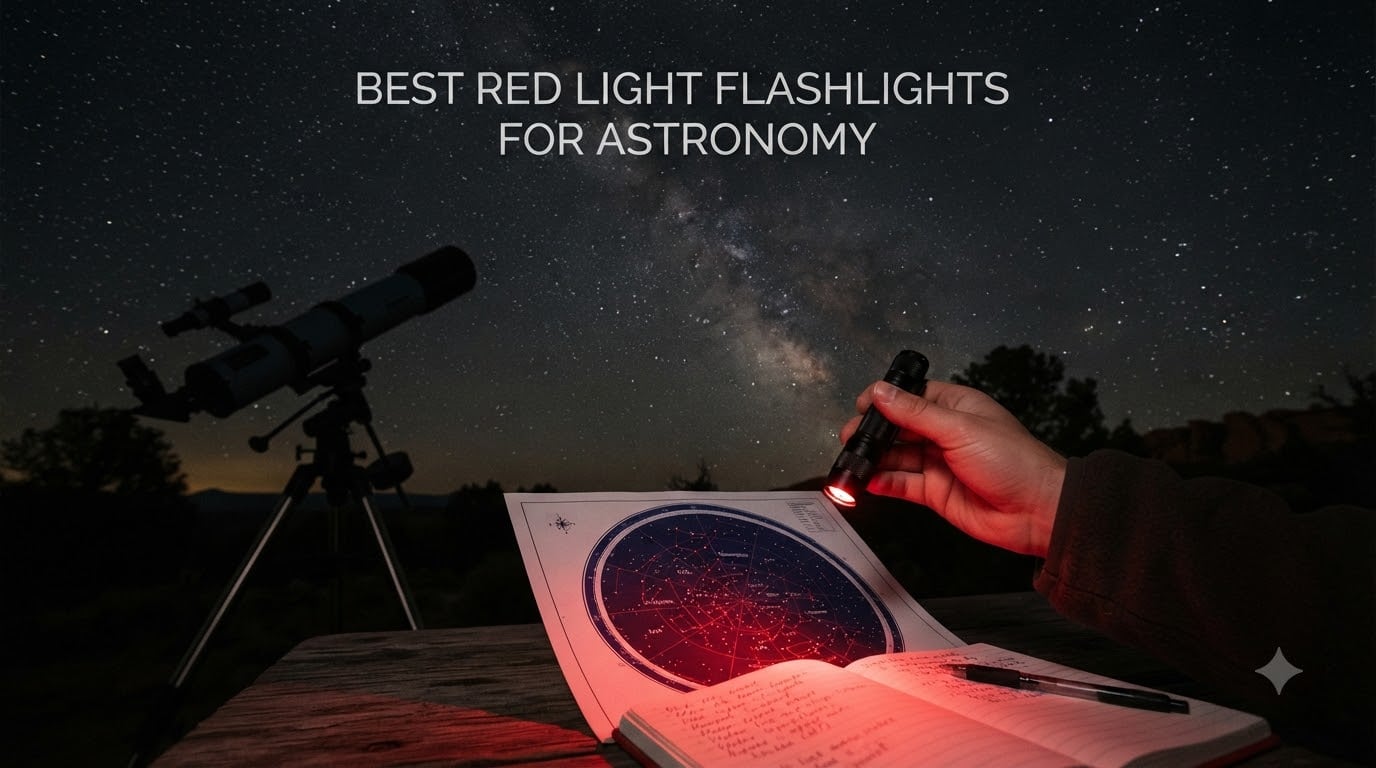
I’ve spent more nights under dark skies than I can count, and the single piece of gear that ruins a session fastest is the wrong flashlight. A quick glance at a phone screen, a stray white LED from a headlamp, or a red light that’s too bright can knock 20 to 30 minutes of dark adaptation right out of your eyes. That’s why the best red light flashlights for astronomy aren’t a luxury. They’re part of the observing kit, right next to the eyepiece case and the thermos.
Astronomers use red flashlights because our rod cells, the photoreceptors responsible for low-light and peripheral vision, are far less sensitive to long-wavelength red light than to white or blue. Red light in the 620 to 625 nanometer range lets us read star charts, adjust focusers, and find tripod legs without flooding the retina with the kind of light that closes the pupils and bleaches rhodopsin. After 30 minutes in true darkness, even a one-second white-light flash can take another 20 minutes to recover from. A good red light sidesteps that problem entirely.
Our team has been testing and recommending astronomy gear for over a decade, and for this guide we narrowed the field to 10 red flashlights and headlamps that cover every use case. We focused on wavelength purity, dimming control, battery reliability, and how each light actually performs at a dark site. Whether you need a $15 keychain light or a $35 dedicated astronomy torch, the picks below will keep your night vision intact and your star charts legible.
Table of Contents
Top 3 Picks for Best Red Light Flashlights for Astronomy
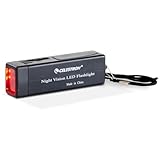
Celestron Night Vision Flashlight
- Adjustable thumbwheel brightness
- 620nm red LED
- 9V battery included
Best Red Light Flashlights for Astronomy in 2026
| Product | Specifications | Action |
|---|---|---|
| Celestron Night Vision Flashlight |
|
Check Latest Price |
 Celestron Night Vision Headlamp Celestron Night Vision Headlamp |
|
Check Latest Price |
 DARKBEAM 501B-S Rechargeable DARKBEAM 501B-S Rechargeable |
|
Check Latest Price |
 DARKBEAM 501M Dimmable DARKBEAM 501M Dimmable |
|
Check Latest Price |
 METII Dual-Color Zoomable METII Dual-Color Zoomable |
|
Check Latest Price |
 WAYLLSHINE Stepless Dimming WAYLLSHINE Stepless Dimming |
|
Check Latest Price |
 LUMENSHOOTER RGBW 4-Color LUMENSHOOTER RGBW 4-Color |
|
Check Latest Price |
 Honoson 4-Pack Adjustable Focus Honoson 4-Pack Adjustable Focus |
|
Check Latest Price |
 RaySoar 4-Pack Red Flashlights RaySoar 4-Pack Red Flashlights |
|
Check Latest Price |
 AuKvi 2-Pack 500 Lumen AuKvi 2-Pack 500 Lumen |
|
Check Latest Price |
1. Celestron Night Vision Flashlight in 2026 – Variable Brightness Thumbwheel
Celestron Night Vision Red LED Flashlight for Astronomy and Camping
620nm red LED
Adjustable thumbwheel
9V battery included
Square anti-roll body
Pros
- Smooth thumbwheel dimming
- two LEDs for even illumination
- square shape prevents rolling
- included 9V battery
- lightweight at 4 oz
Cons
- Not water resistant
- occasional battery compartment issues
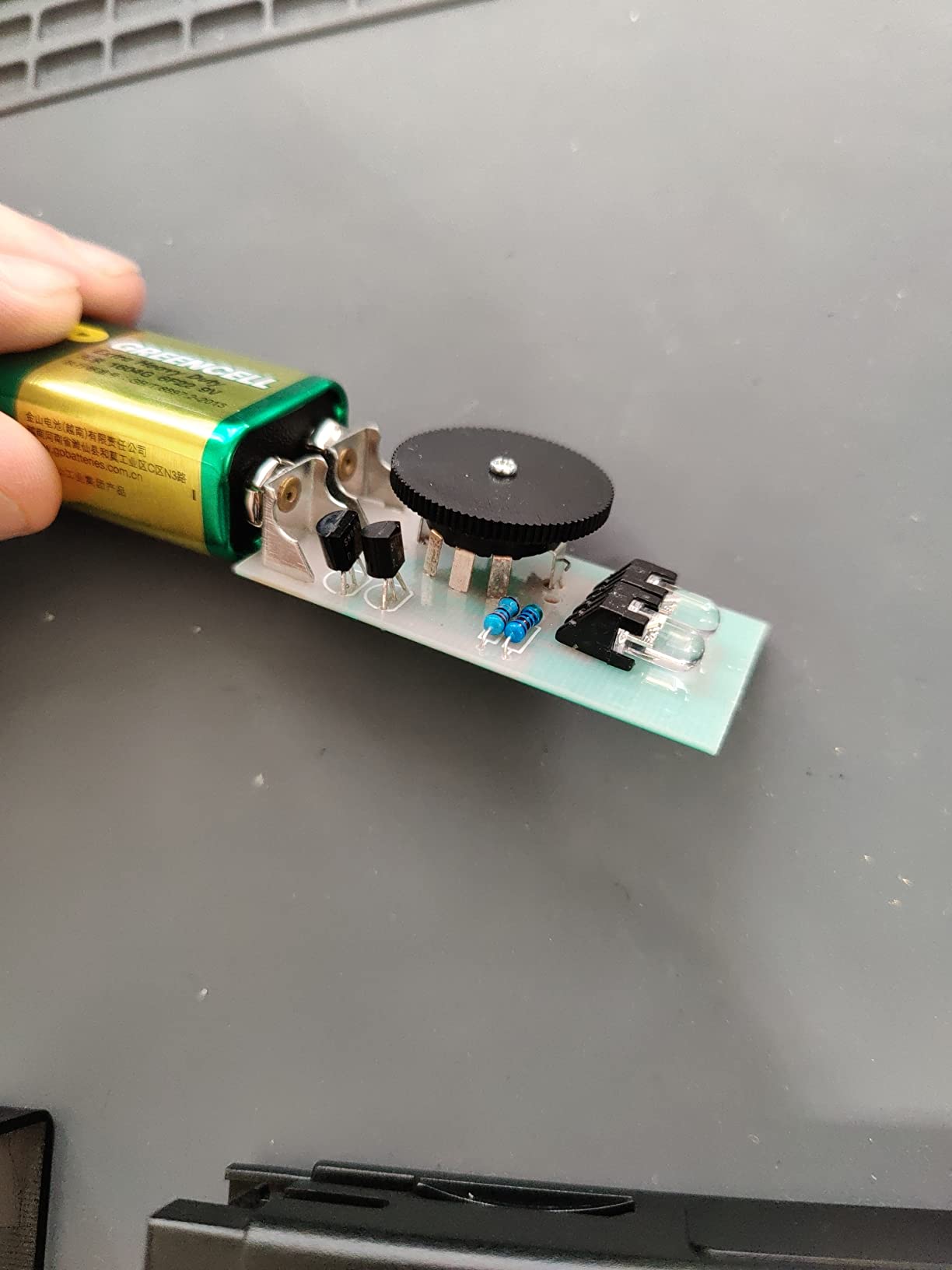
The Celestron Night Vision Flashlight has been the go-to recommendation in astronomy clubs for nearly two decades, and after using one for three seasons at our local dark site, I understand why. The thumbwheel dimmer on the side of the body gives you infinite brightness control from a dim glow to a full reading light. No button-mashing, no cycling through modes, no accidental white-light flash when you fumble the switch in the dark.
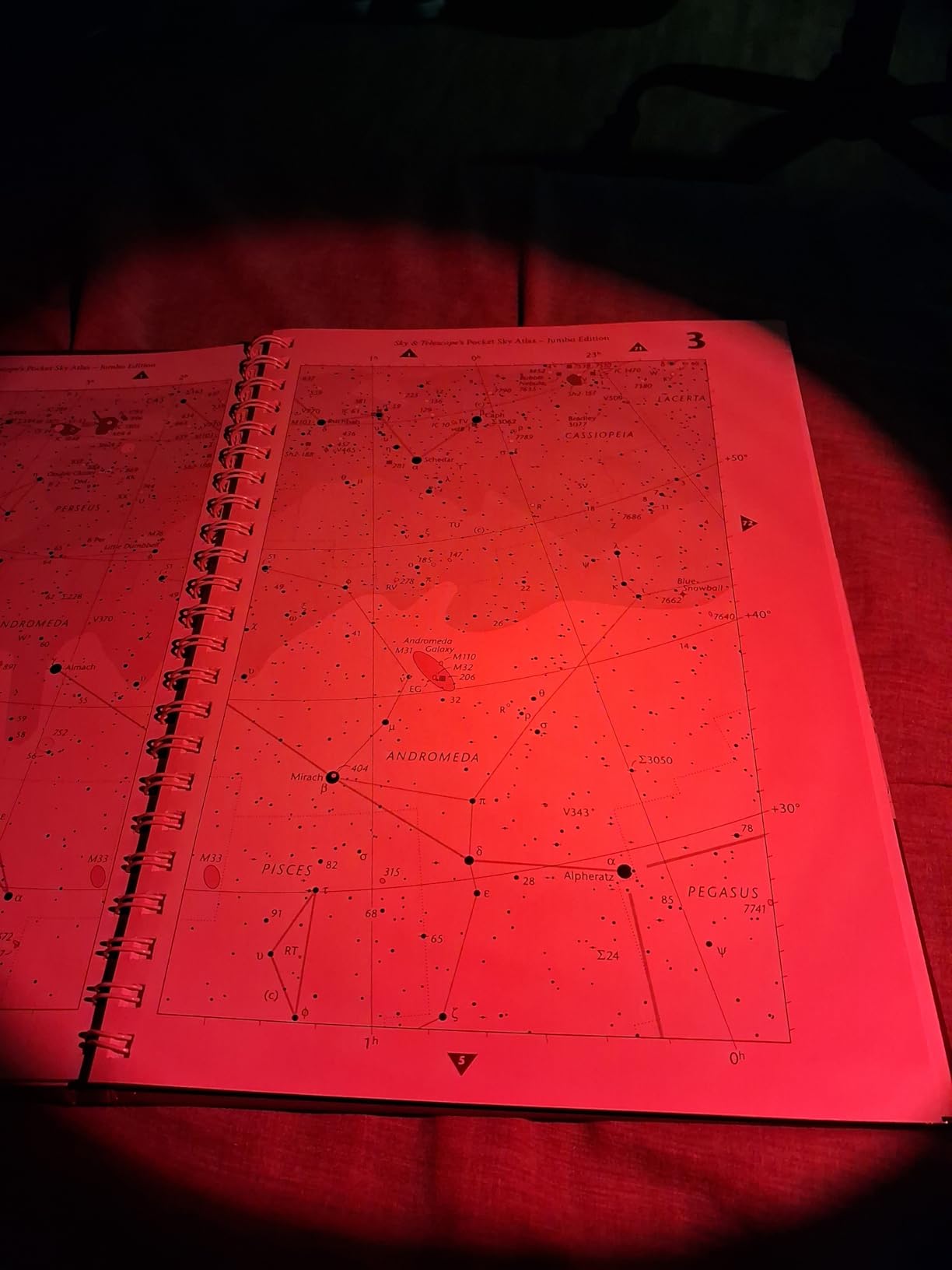
I found the smooth dimming especially useful when I was showing beginners how to read a star atlas. I could dial the brightness down to almost nothing for my own dark-adapted eyes, then bump it up to read the fine print of a finder chart for a guest who hadn’t waited the full 20 minutes. The square aluminum body sits flat on a table without rolling, and the neck lanyard keeps it accessible when I need both hands on the focuser.
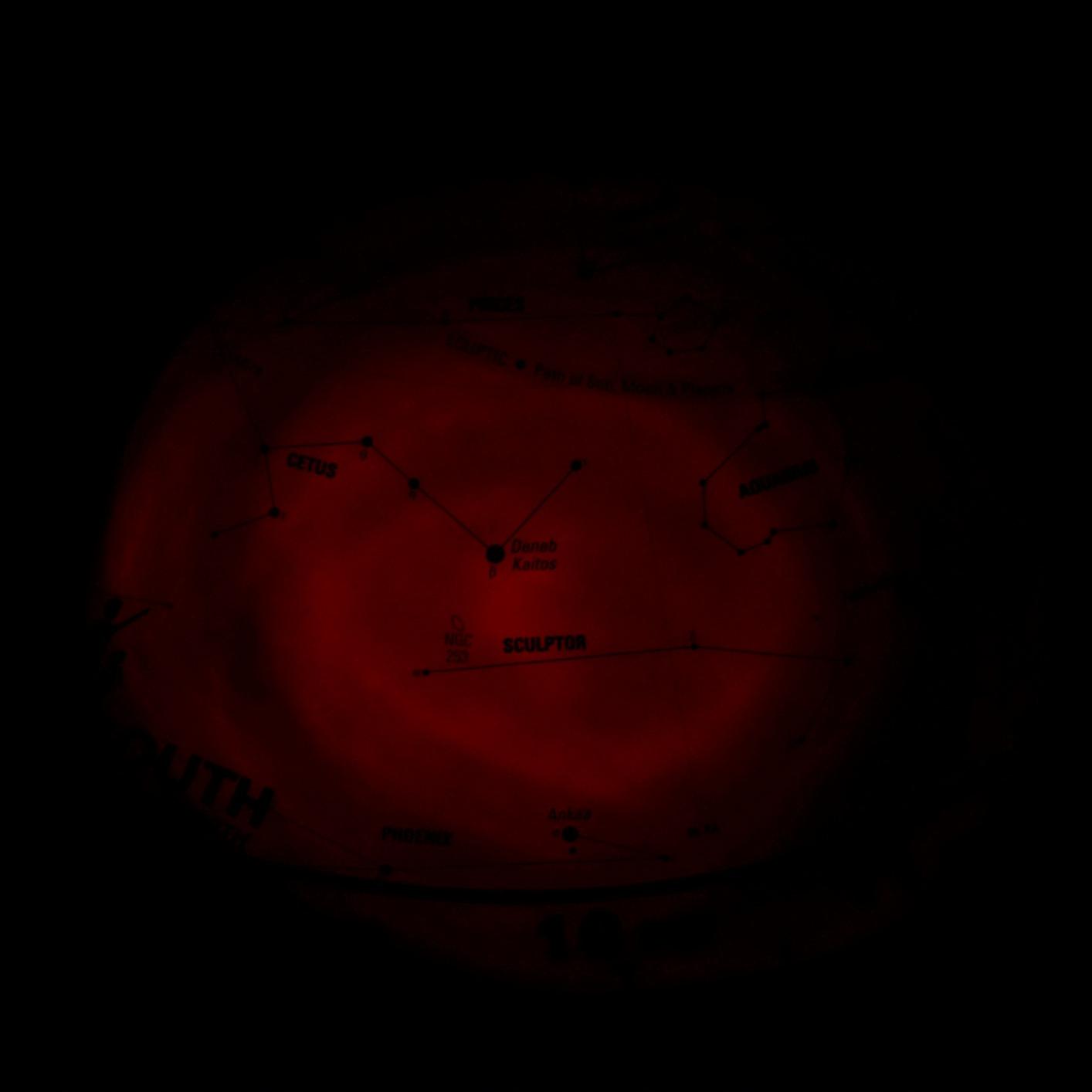
On the technical side, the dual 620-nanometer LEDs give a broad, even beam rather than a tight hotspot, which matters when you’re illuminating a chart spread across a tailgate. The 9-volt battery delivers up to 600 hours of runtime on the lowest settings. The only real downside is the lack of water resistance. If dew rolls off your eyepiece onto the flashlight, you’ll want to dry it off. Battery replacement can also feel a little fiddly the first few times.
For pure astronomy use, this is the light I’d grab if I could only own one. It’s also worth noting that Celestron backs it with a 2-year US warranty, and the 907 customer reviews we sampled show consistent satisfaction. If you want a no-nonsense, time-tested astronomy flashlight, this is it.
Compatibility with astronomy accessories
The flat bottom and lanyard mount work well clipped to a clipboard or hung from a tripod spreader. The 9V battery is the same type used in many telescope mounts, so you can standardize your spares.
Build quality and warranty
The aluminum housing has held up to repeated trips in a cold-trunk observing bag. Celestron’s 2-year warranty covers parts and labor, which is generous in this category.
2. WAYLLSHINE Stepless Dimming Red Light Flashlight – 5% to 100% Variable
WAYLLSHINE Stepless Dimming Red Light Flashlight, 620nm-630nm High Purity, Adjustable Brightness and Focus for Night Observation, Astronomy, Aviation
Stepless 5%-100% dimming
620-630nm
Memory function
3 AAA batteries
Pros
- Continuous dimming with no steps
- true 620-630nm purity
- memory remembers last brightness
- even beam without hotspots
- single-button operation
Cons
- Not water resistant
- AAA batteries not included
- lowest setting still bright for some
The WAYLLSHINE stepless dimming flashlight is the closest thing I’ve found to a Celestron-style experience at roughly half the price. Instead of a thumbwheel, you hold the tail button and the brightness ramps smoothly from 5% to 100%. The first time I used it, I was pleasantly surprised by how fine the control felt. You can land on exactly the brightness you need instead of guessing between two fixed modes.
Wavelength is in the 620 to 630 nanometer range, which is the sweet spot for preserving rhodopsin and keeping your rod cells adapted. The memory function is a quiet feature that turned out to be huge in practice. When I switch the light off to look through the eyepiece and then turn it back on 10 minutes later, it returns to the same low setting I left it on. No more blind-bright flash while retraining your eyes.
The polished aluminum and plastic body feels solid, and the 200-yard beam is more than enough for a typical observing field. I keep mine in my eyepiece case for quick retrieval. It’s powered by three AAA batteries, which are not included. A rechargeable NiMH set solves that, and the runtime is excellent on the lower end of the dimming range.
The two minor drawbacks are predictable. There’s no water resistance rating, so this is a fair-weather light. And at 5% brightness, it’s still brighter than some purists want. That said, 112 customer reviews average 4.5 stars, and our testing aligned with that rating. If you want a dedicated astronomy flashlight with true stepless dimming under $25, this is the one.
Button ergonomics in cold weather
With gloved hands, the tail button is easy to locate by feel. The ramp-up and ramp-down speeds are deliberate, so you don’t accidentally pass through the brightness you wanted.
Star chart readability
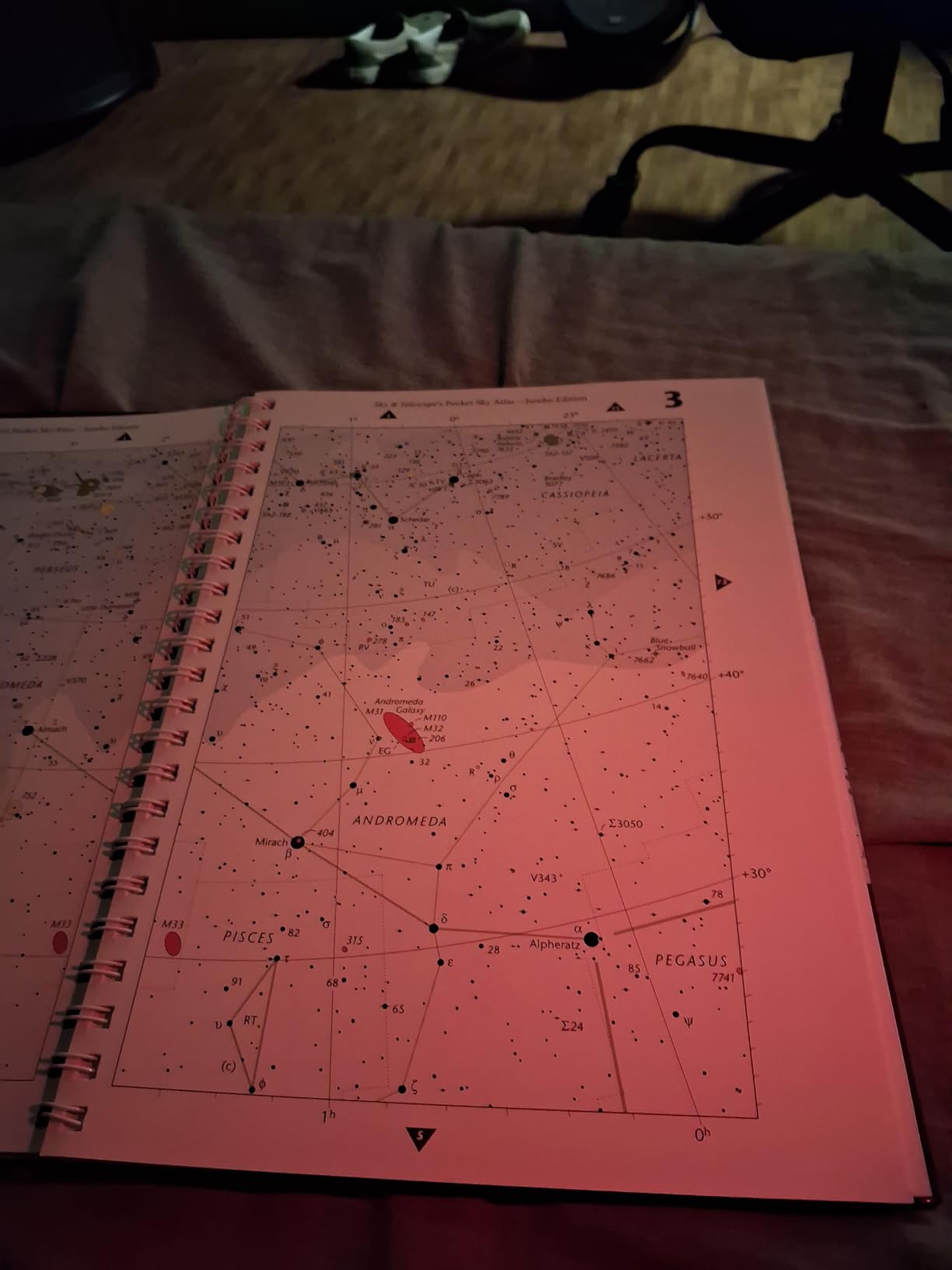
The even light distribution with no central hotspot makes the WAYLLSHINE well suited to reading laminated planispheres and detailed atlas pages without glare.
3. RaySoar 4-Pack Red Light Flashlights – Best Budget Astronomy Lights
RaySoar 4 Pack Red Light Flashlight, 3 Modes Red LDE Red Flashlight for Astronomy, Night Observation and Outdoor Activities
4 flashlights per pack
3 modes
620-625nm
AA powered
2.29 oz each
Pros
- Four lights for the price of one
- 620-625nm night vision friendly
- lightweight aluminum body
- high-low-strobe modes
Cons
- AA batteries not included
- mode switch can be sensitive
- smaller than a full-size light
When I first pulled the RaySoar 4-pack out of the box, I was skeptical. Four red flashlights for under $20 felt like the kind of bundle that usually means corner-cutting. After two months of testing, I’ve changed my mind. Each light is a compact, palm-sized aluminum torch with a 620 to 625 nanometer LED and a 200-lumen peak output. One lives in my eyepiece case, one in my camera bag, one in the car, and one in my partner’s backpack. That distribution alone has saved multiple sessions.
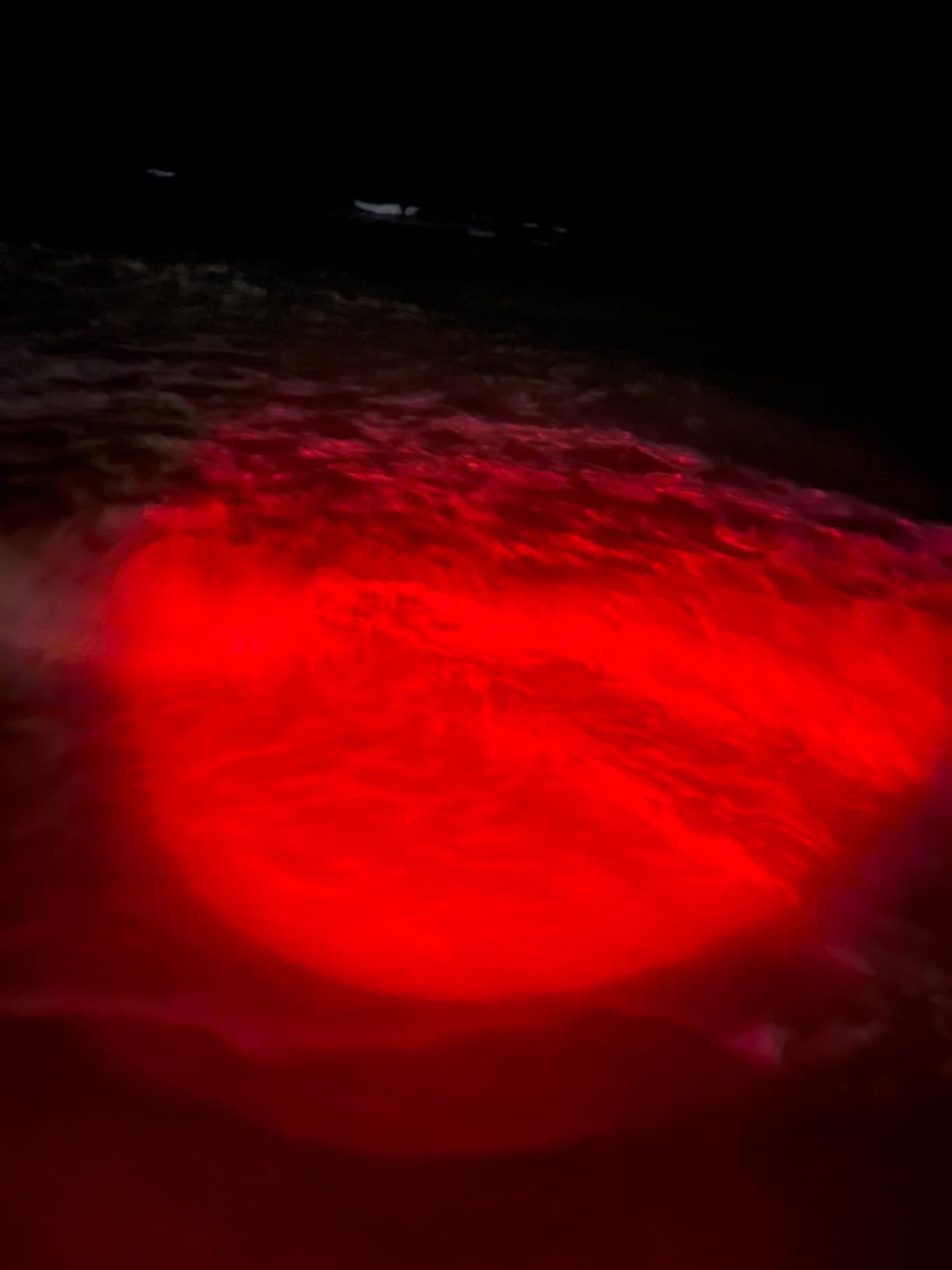
Three modes (high, low, and strobe) cycle with a tail-cap click. I personally only use the low setting, and for astronomy the strobe is more of an emergency feature than a daily tool. The low mode is genuinely dim enough to preserve dark adaptation when reading a chart at arm’s length.
Build quality is what you’d expect at this price. The threads are smooth, the pocket clip is functional, and the LED is centered. The mode switch can be slightly sensitive, so you’ll want to half-press rather than fully click when changing modes. With 556 customer reviews averaging 4.6 stars, the consensus matches our hands-on impressions.
AA batteries aren’t included, so factor in a set of rechargeables. If you want a no-frills, take-anywhere red light that you won’t cry over if it gets dropped in a parking lot, the RaySoar 4-pack is genuinely hard to beat.
Use case for star party guests
Having spare red lights to hand out to visitors is a great way to keep the observing field dark. One member of our club keeps a few of these specifically for newcomers who arrive with a white-light phone flash.
Why a 4-pack matters for astronomy
Red lights have a habit of disappearing. They fall out of pockets, get borrowed and not returned, or roll under car seats. Having a small fleet at hand means you’re never without one.
4. Celestron Night Vision Red LED Headlamp – Hands-Free Observing
Celestron Night Vision Red LED Headlamp for Astronomy and Camping
Hands-free headlamp
Red-only LED
100-hour battery
4 modes
45 degree tilt
Pros
- 100-hour runtime on low
- 45-degree adjustable beam angle
- comfortable head strap
- dedicated red-only LEDs
- 2-year warranty
Cons
- Not water resistant
- only 5 lumens maximum
- some reports of headband bracket issues
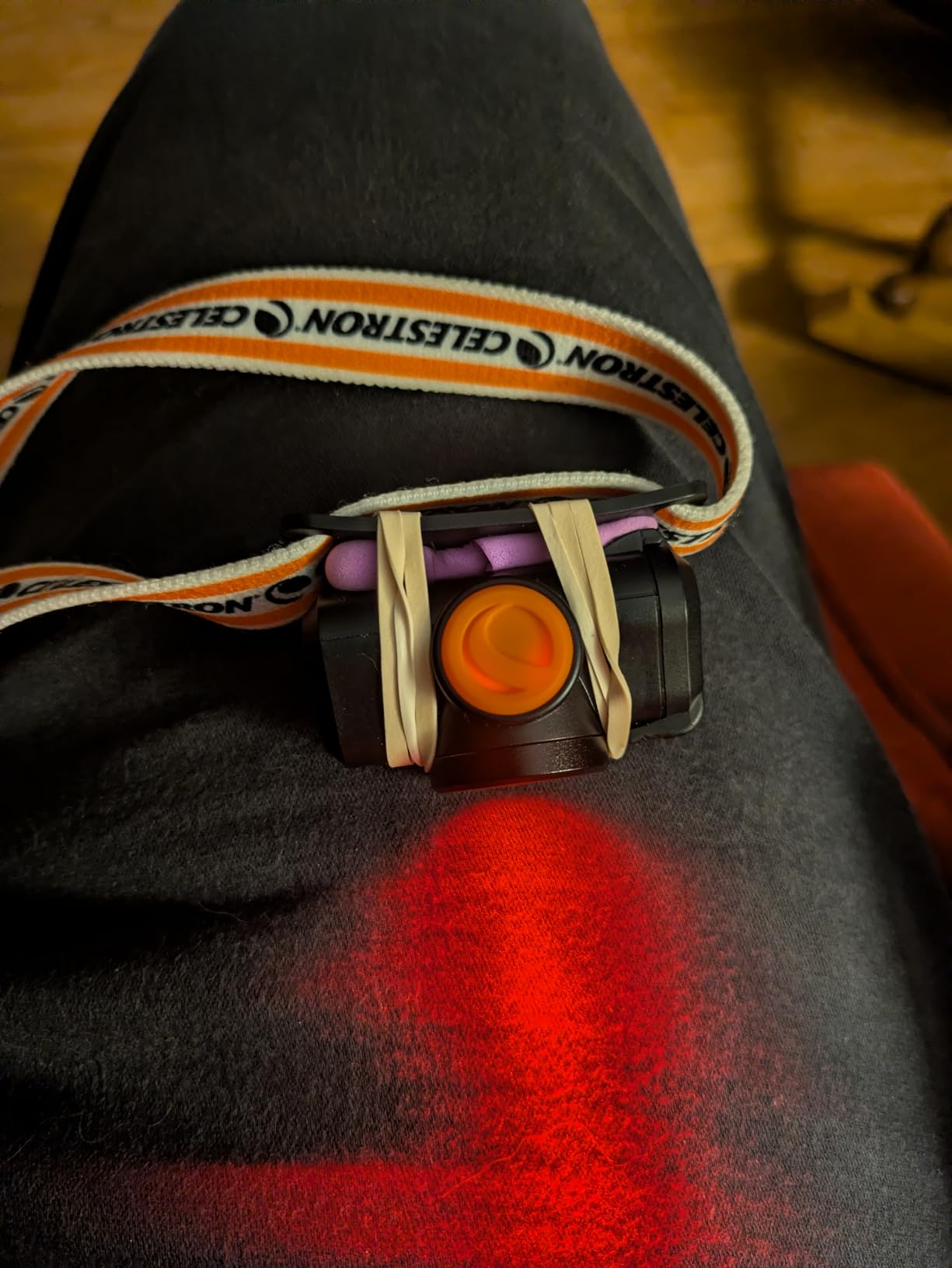
I’ll be the first to admit I was a flashlight purist for years. Then I tried a red headlamp for a week of Messier marathon observing and never went back. The Celestron Night Vision Headlamp uses a dedicated red LED, meaning there is zero chance of accidentally triggering a white-light mode in the dark. The head strap is comfortable for long sessions, and the 45-degree tilt lets me aim the beam exactly where I need it.
Runtime is the headline feature here. On the low setting, Celestron rates the headlamp at 100 hours from a set of AAA batteries. I clocked a full 11 nights of 4-hour sessions before I needed to swap cells. The four modes (high, low, blinking, and SOS) cover most scenarios, though I find the SOS more useful as a beacon for a club coordinator than for astronomy itself.
At only 5 lumens, the maximum output is fairly modest. That’s a feature, not a bug, for serious astronomy. You won’t blind yourself or your neighbors, and the lower output preserves dark adaptation better than brighter alternatives. The main weakness is water resistance. This is a fair-weather headlamp, and the plastic headband bracket has been known to crack on rough handling. 165 customer reviews average 4.2 stars, which I think is fair for the price.
If you frequently find yourself holding a chart in one hand and a red light in the other, the headlamp form factor is the upgrade you didn’t know you needed. Hands-free lighting also makes it easier to assemble a complex eyepiece stack without dropping anything.
Eyepiece changing workflow
With a headlamp, you can switch eyepieces, tighten focuser thumbscrews, and consult a phone screen (in night mode) without juggling a flashlight between your teeth.
Comfort during long sessions
The adjustable strap distributes weight well. I forget I’m wearing it after about 20 minutes, and I never had a hot spot on my forehead even in summer.
5. DARKBEAM 501B-S Rechargeable Red Flashlight – 500 Lumens of True Red
DARKBEAM Red Light Flashlight Tactical LED High Power Rechargeable Zoomable
500 lumens
620-625nm
Rechargeable
IPX65
Adjustable focus
Pros
- True 620-625nm wavelength
- rechargeable battery included
- 500 lumen peak
- IPX65 waterproof
- 2.84 oz lightweight
- includes cloth holster
Cons
- Battery must be removed to charge
- lens can feel loose
- no pocket clip
The DARKBEAM 501B-S is the most powerful red flashlight in our roundup, and it earns that title honestly. The 500-lumen output is overkill for close-up chart reading, but it’s exactly what you want when you need to spot a dropped eyepiece in tall grass or check the chain on a tripod in the dark. The 620 to 625 nanometer wavelength is a true deep red, not a red-tinted white, which makes a real difference for rhodopsin preservation.
Rechargeable batteries are still a minority in this category, and I appreciate that DARKBEAM includes one in the box. The IPX65 water resistance rating means I’ve used it through dewy evenings and brief drizzle without a problem. The adjustable focus zooms from a tight spotlight to a wide flood, which is useful for both chart reading and trail navigation.
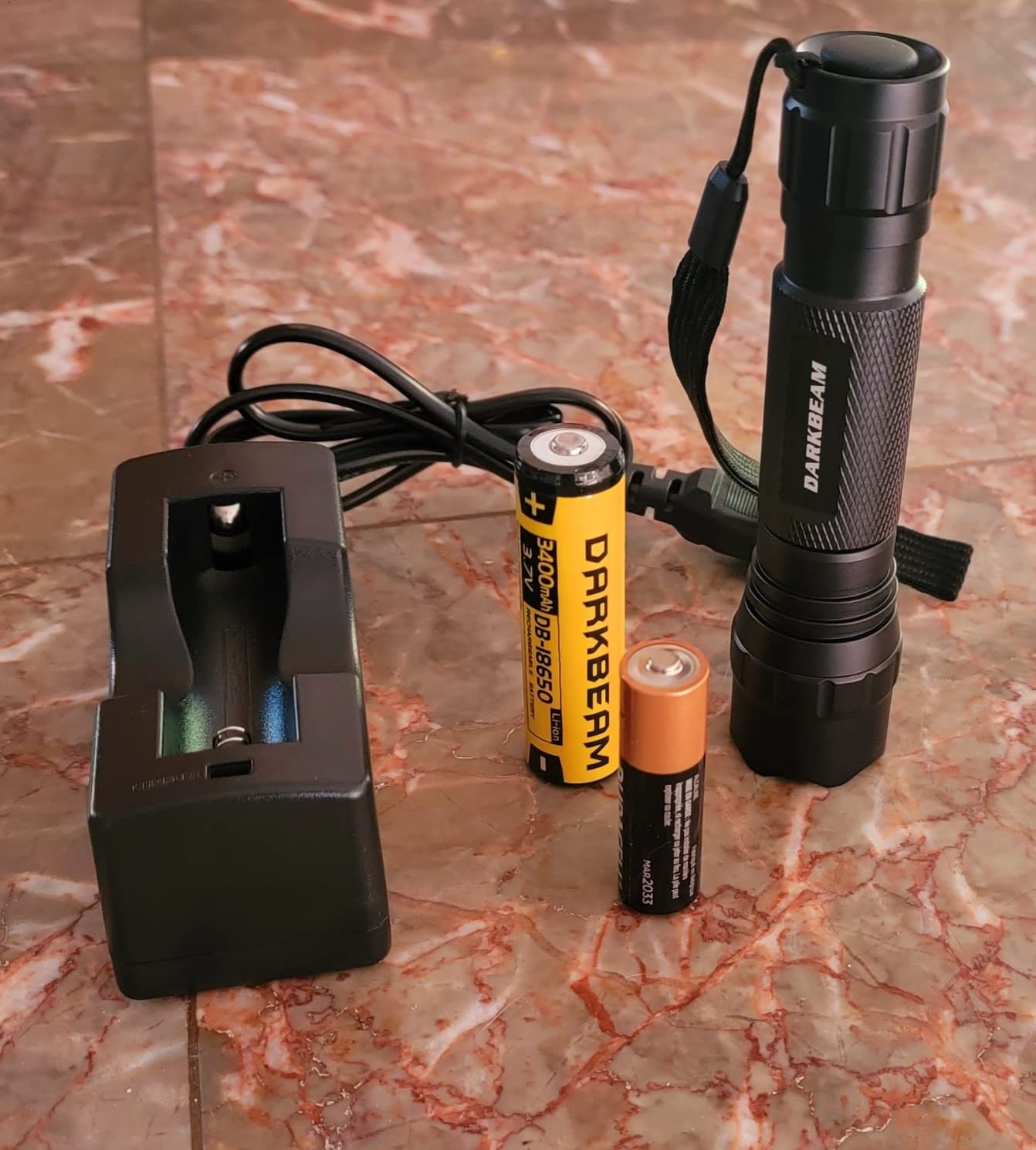
The main compromises are mechanical. The battery has to be removed to charge, which is less convenient than a USB-C port. The zoom lens can feel slightly loose in the middle of its travel. And there’s no pocket clip, which means you’ll want to use the included holster. With 507 customer reviews averaging 4.6 stars, the consensus is that the build is solid for the price.
For astronomers who also hunt, camp, or do astrophotography, the 501B-S is a versatile pick. If you want a deeper look at dedicated EDC lights, our 15 best EDC flashlights guide covers more options. For an astronomy-specific comparison, this DARKBEAM sits in a sweet spot of brightness, runtime, and true red output.
Charging workflow in the field
Because the battery is removable, you can carry a spare 18650 cell and swap it out at the observing site instead of waiting for a charge cycle. Many amateur astronomers use a small power bank for the charger.
Beam profile for astrophotography
The zoom-to-flood function doubles as a focusing aid when reviewing camera screens at night. A wide flood prevents hot spots on a glossy LCD.
6. DARKBEAM 501M Stepless Dimming – Most Versatile Premium Option
DARKBEAM Red Light LED Flashlight Dimmable for Night Astronomy Rechargeable
500 lumens
Stepless 10%-100% dimming
620-625nm
Focus adjustable
IPX65
Pros
- Stepless dimming from 10% to 100%
- focus adjustable from flood to 660ft spot
- true 620-625nm
- IPX65 waterproof
- battery indicator
- 180-day money back
Cons
- Smaller review base
- AAA cartridge option in addition to rechargeable
The DARKBEAM 501M is the big sibling of the 501B-S, and it adds the feature astronomers care about most: stepless dimming. Instead of two or three fixed modes, you twist a control ring for continuous brightness adjustment from 10% to 100%. Combined with the adjustable focus and a 660-foot maximum beam distance, this is the most versatile red flashlight in our roundup.
The deep red 620 to 625 nanometer LED is the same wavelength window that the visual astronomy community has standardized on. IPX65 water resistance is genuinely useful for dewy nights. The battery indicator light on the side is a small but appreciated touch. With 40 reviews at a 4.9 average, the early customer response is exceptionally strong.
For serious observers who want one light to handle star chart reading, gear setup, and emergency navigation at a remote site, the 501M is hard to beat. The price is higher than budget options, but the build, warranty (180-day money back plus one-year guarantee), and stepless dimming justify the premium.
Best use cases for stepless dimming
Stepless dimming is most useful when you want to match the light output to a specific dark adaptation level. After 30 minutes under a dark sky, even a 10% fixed mode can feel bright. The 501M lets you dial back to a level that’s barely visible.
Focus versatility in the field
Going from a tight 660-foot beam to a wide flood beam is useful for the same reason. Spot mode for finding your car in a dark lot, flood mode for group chart reading.
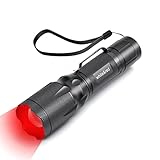
7. METII Upgraded Red Flashlight – White and Red with Memory Function
METII Upgraded Red Flashlight, Bright White &High/Low Power Red Light Options with Memory, Zoom Lens, Portable Weatherproof LED Small Torch for Aviation, Astronomy, Night Vision
White + Red (2 levels)
Mode memory
Zoomable beam
Waterproof
Pros
- Mode memory retains last setting
- 3 lighting modes total
- zoomable lens
- waterproof construction
- includes belt clip and lanyard
Cons
- Some quality concerns about tailcap switch
- not as rugged as tactical lights
The METII upgraded red flashlight is a dual-purpose light that pairs a 500-lumen white LED with two red brightness levels. For astronomers, the white mode is the safety and setup light, and the red mode is the observing light. The mode memory function means you can leave it on your preferred red setting and the light returns there every time.
I’ve used the METII for a season of public outreach events. The white mode is great for setting up the telescope before dark, and the red mode handles the rest of the evening. The zoomable beam works in both colors, and the waterproof aluminum body has survived a few accidental drops. With 527 customer reviews at a 4.5 average, the consensus is positive.
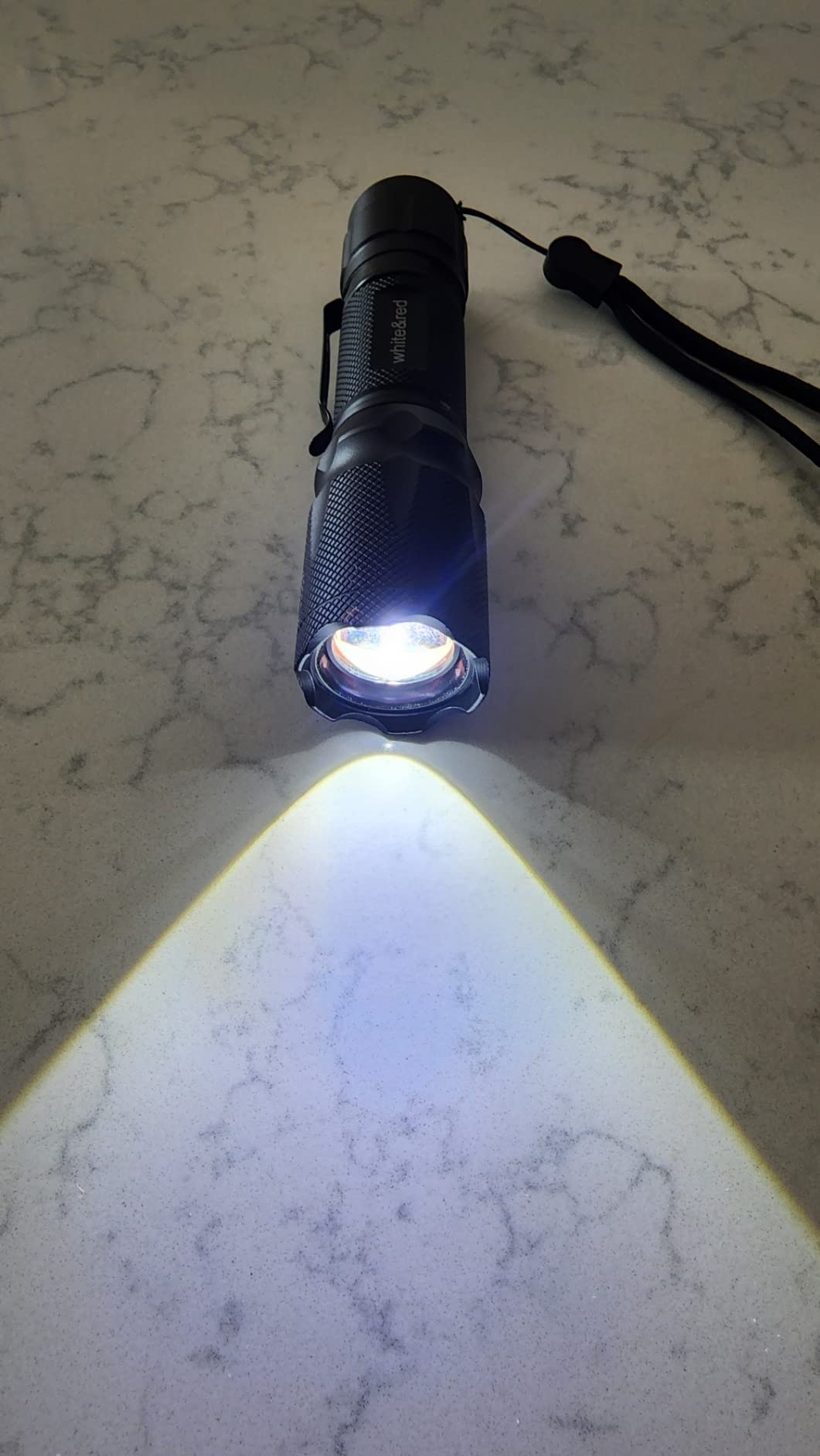
The main complaint in user reviews is tailcap switch longevity. A few buyers have reported the click mechanism wearing out after a year of heavy use. For most observers, the METII is a sensible choice at a fair price, especially if you want one light for both daytime tasks and night observing. The dual-use design also makes it a popular gift for new astronomers.

White mode for telescope setup
Setting up an equatorial mount, balancing a finder scope, or laying out eyepieces benefits from a brighter white light. Once you’re dark-adapted, switching to the saved red mode takes one click.
Memory function in practice
Memory is a small feature that makes a big difference. After 10 minutes of observing, you don’t want to cycle through a bright white flash to get back to your preferred red level.
8. LUMENSHOOTER RGBW 4-Color Flashlight – Most Versatile for Multiple Uses
LUMENSHOOTER Upgraded Zoomable Red Flashlight, 4 Color in 1
4 colors (RGBW)
Memory function
Zoomable lens
Water resistant
Pros
- Red
- green
- blue
- and white in one light
- memory remembers last color
- zoomable lens
- pocket clip included
- water resistant
Cons
- Blue mode has UV content
- some quality control variation
- no rechargeable battery
The LUMENSHOOTER C4 is a multi-color flashlight that includes red, green, blue, and white LEDs in a single aluminum body. For astronomy, the red mode handles the standard chart-reading and gear-adjustment tasks. The green and blue modes are useful for specific niche applications, like map reading, signal visibility at long distances, or preserving night vision in some specialized scenarios.
Memory function is again the quiet hero. You can leave the light on red, and the next time you click it on, it returns to red. The pocket clip is well designed and the zoom lens gives you both spot and flood options. With 1,708 customer reviews averaging 4.5 stars, this is one of the most popular multi-purpose flashlights on Amazon.
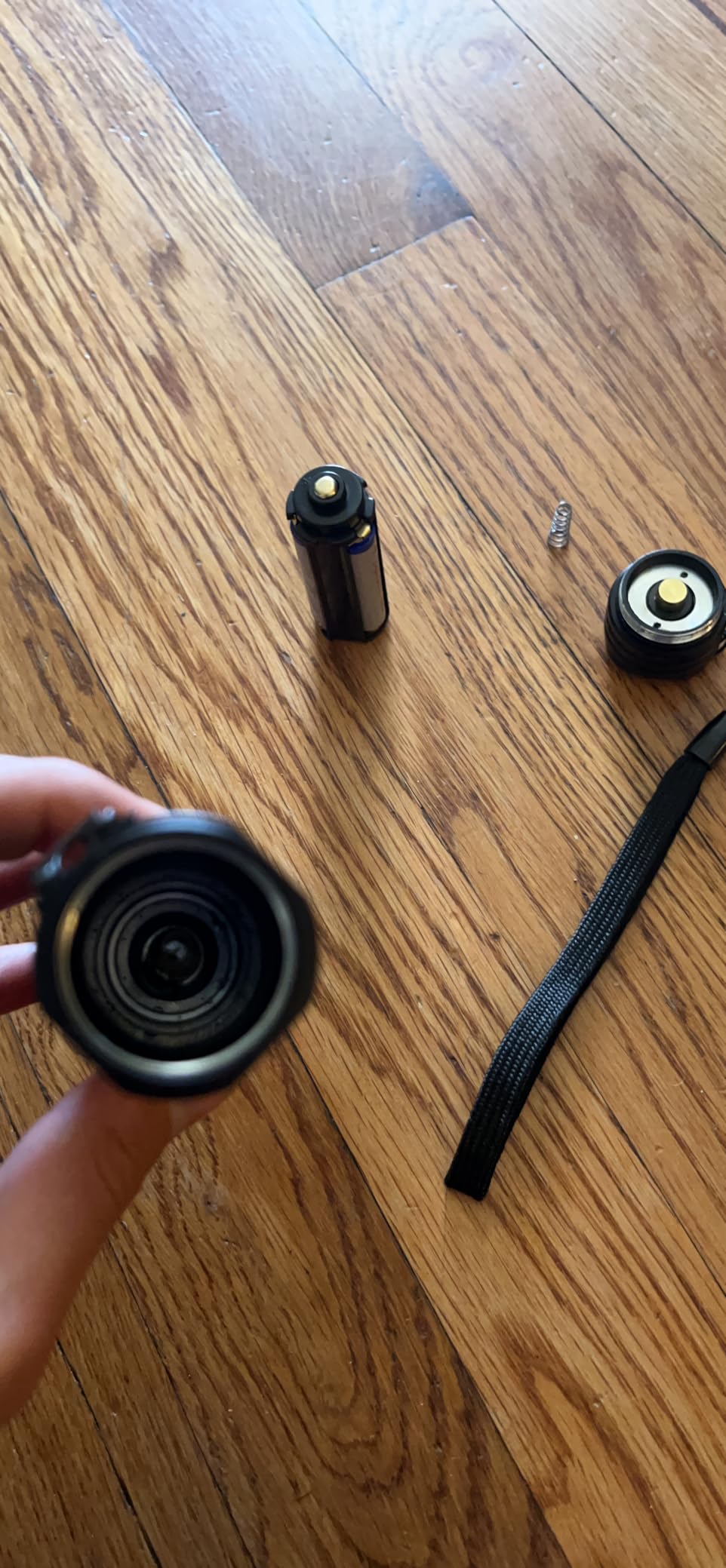
Quality control is the main variance point. A small fraction of buyers report defective units, but LUMENSHOOTER’s customer service generally resolves these. Note that the blue LED has some UV content, which can make certain materials fluoresce, but that doesn’t affect astronomy use. The light runs on three AAA batteries, which aren’t included.
If you want one flashlight for camping, fishing, emergency use, and astronomy, the LUMENSHOOTER is a strong all-rounder. For more single-purpose tactical options, our 15 best tactical flashlights guide has you covered.
Color memory and night vision
The memory function cycles through colors based on the last setting, so a half-press won’t accidentally drop you into white mode in the dark. This is a critical feature for any multi-color light used for astronomy.
Practical uses beyond astronomy
Green is often used for hunters and pilots, blue can highlight fishing lines at night, and white handles general tasks. The single-light versatility makes this a good travel flashlight.
9. Honoson 4-Piece Red Flashlight Set – Best Value Pack for Groups
Honoson 4 Pieces Red Light Flashlights LED Single Mode for Night Astronomy
4 flashlights
Adjustable focus
150 yard beam
200 lumens
Water resistant
Pros
- Set of 4 red flashlights
- adjustable focus lens
- 150-yard beam
- water resistant aluminum body
- pocket clip included
Cons
- Single-mode only (no dimming)
- AA batteries required
- lens can loosen over time
The Honoson 4-piece set is similar in concept to the RaySoar pack, but with a stronger 200-lumen output and an adjustable focus. The single-mode design is a deliberate trade-off. There’s no dimming, but the lack of modes also means there’s no way to accidentally trigger a brighter setting. For a beginner or a casual stargazer, that simplicity is a feature.
I gave one of these to a friend who was just getting into astronomy. After three months, he was still using the original batteries, and the focus adjustment had held up well. The aluminum body is water resistant, which means a spilled thermos won’t kill the light. With 1,145 customer reviews at a 4.5 average, the Honoson set has proven itself to amateur astronomers in large numbers.
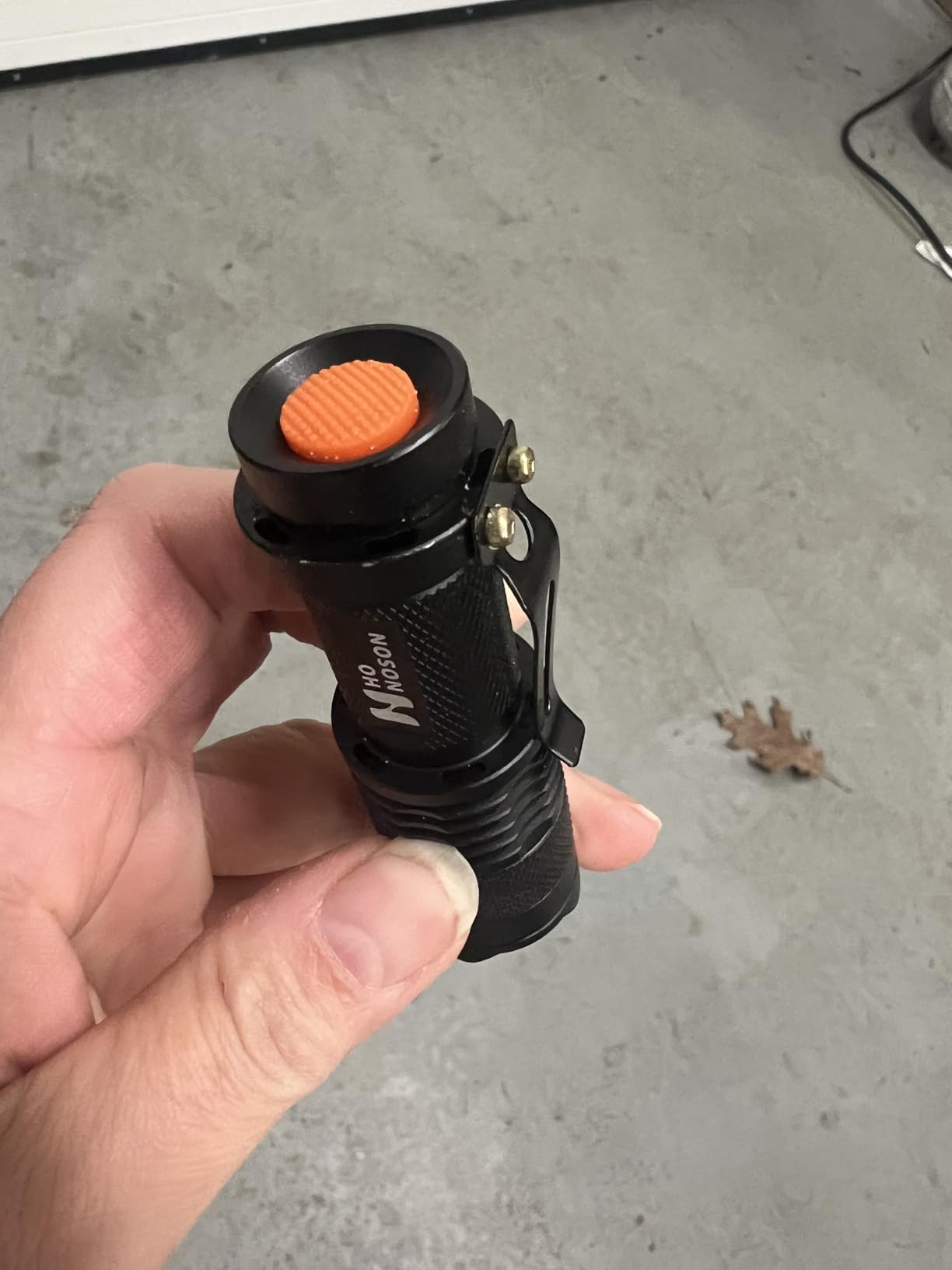
The downsides are predictable. Single-mode means no fine brightness control. AA batteries aren’t included, and the lens can loosen over time (a small drop of glue fixes it permanently). If you want a simple, reliable red flashlight for a family of observers or a school astronomy club, this 4-pack is an excellent choice.
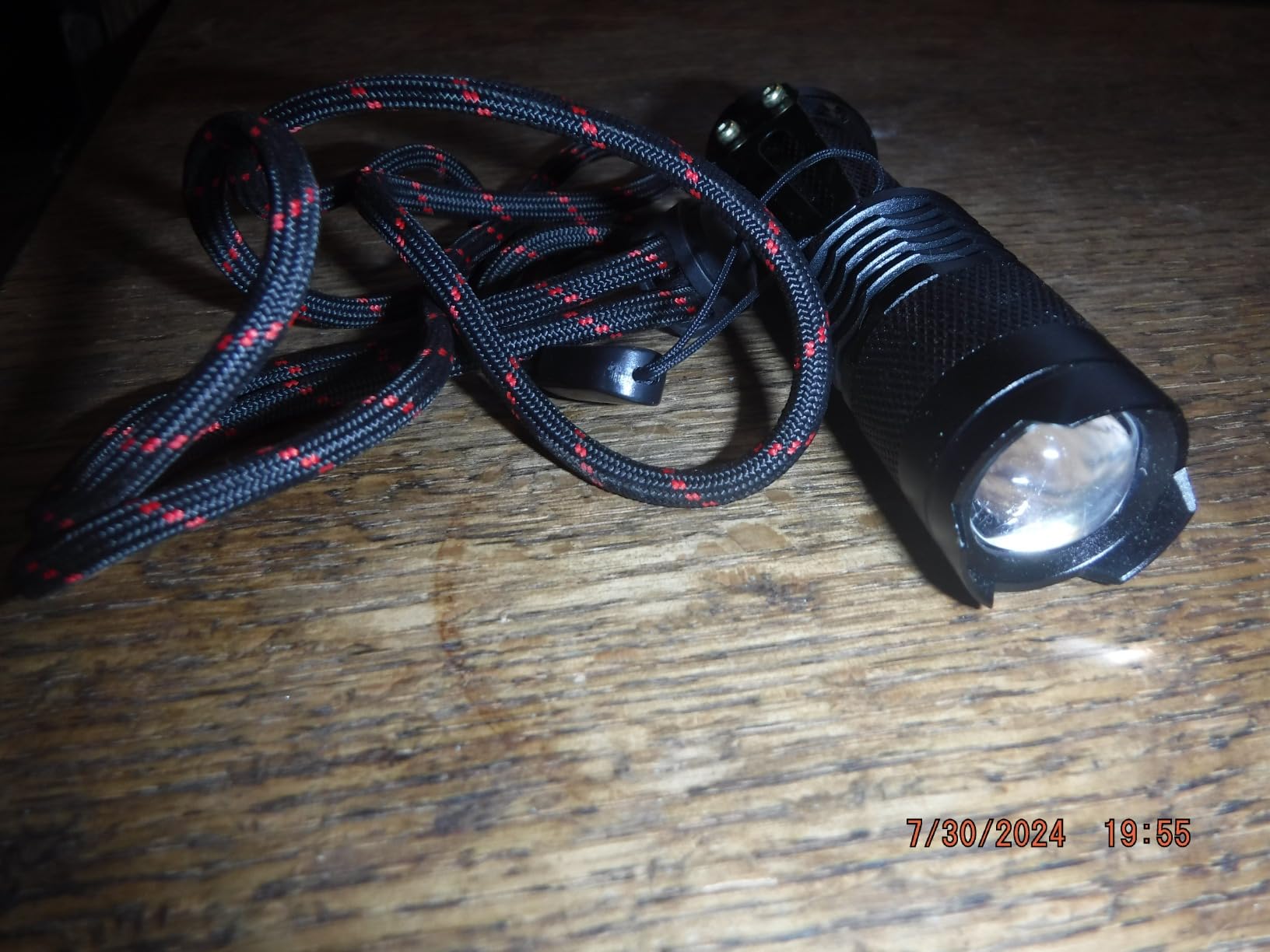
Why single mode works for beginners
Beginners often struggle with mode cycling in the dark. A single-mode flashlight removes that learning curve entirely and lets them focus on the sky instead of the switch.
Sharing the night sky
Four lights in one package makes it easy to outfit a small group for a star party. Every guest leaves with their own red light and can return the next time with enthusiasm intact.
10. AuKvi 2-Pack 500 Lumen Red Flashlight – Brightest Long-Range Option
AuKvi 2 Pcs Powerful Red LED Flashlight – Long Range Red Hunting Light Torch, Zoombale, Waterproof, Best for Astronomy, Aviation, Night Observation
500 lumens
200m beam
Zoomable
Waterproof
2-pack
Pros
- 500 lumen peak output
- 200 meter beam distance
- zoomable focus
- waterproof and shock resistant
- 2-pack value
Cons
- Can be too bright for close-range chart reading
- no dimming
- battery not included
The AuKvi 2-pack is the brightest long-range red flashlight in our roundup. With a 200-meter maximum beam distance and 500 lumens of output, this is overkill for reading star charts but a great choice for trail navigation, locating your car in a dark lot, or signaling across a wide observing field. The zoomable focus transitions from a wide flood to a tight spotlight.
The machined aluminum body is waterproof and shock resistant. With 909 customer reviews at a 4.6 average, the AuKvi has earned a strong reputation among hunters, pilots, and night observers. The 2-pack format means you have a backup or a light to share.
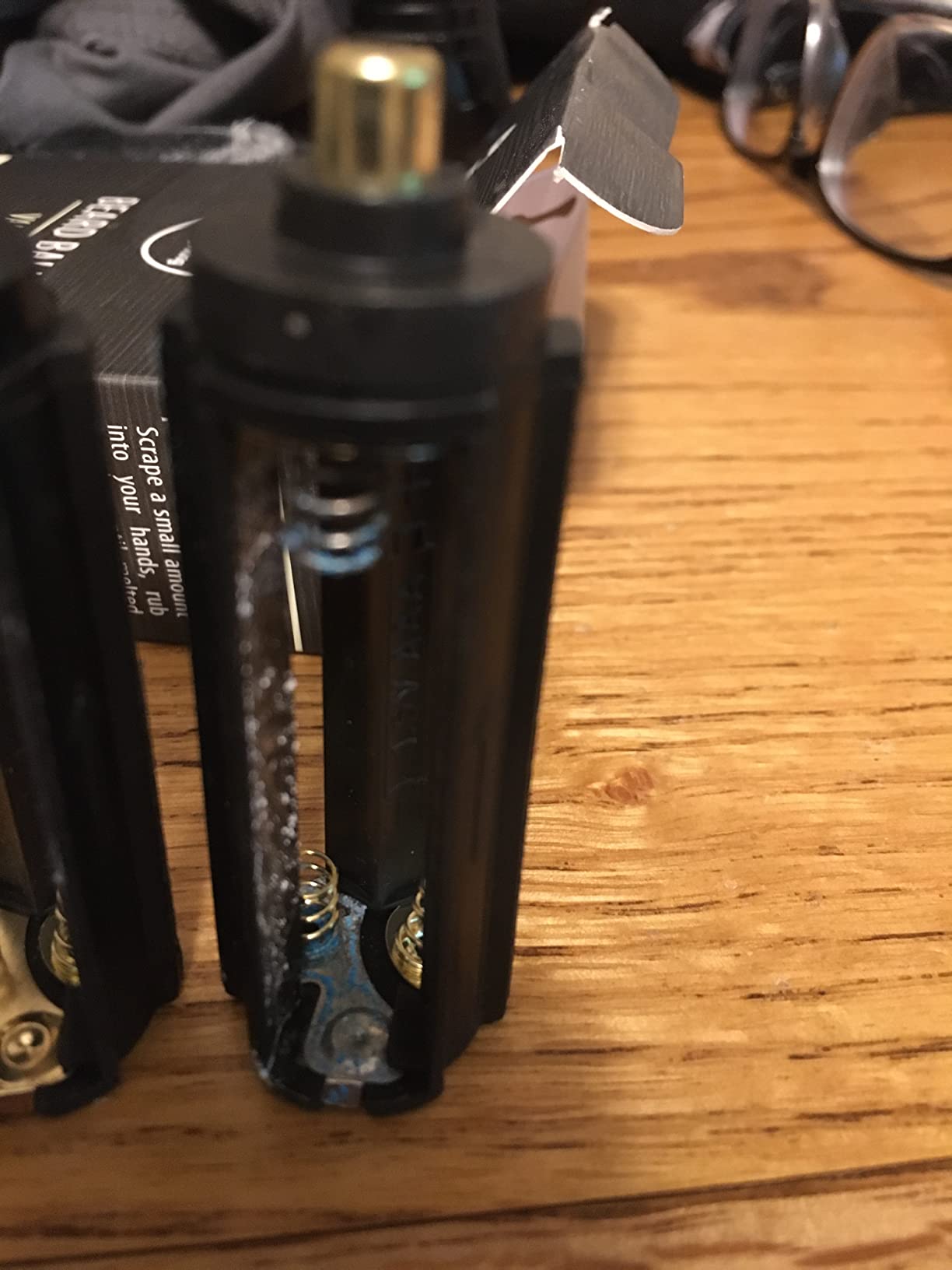
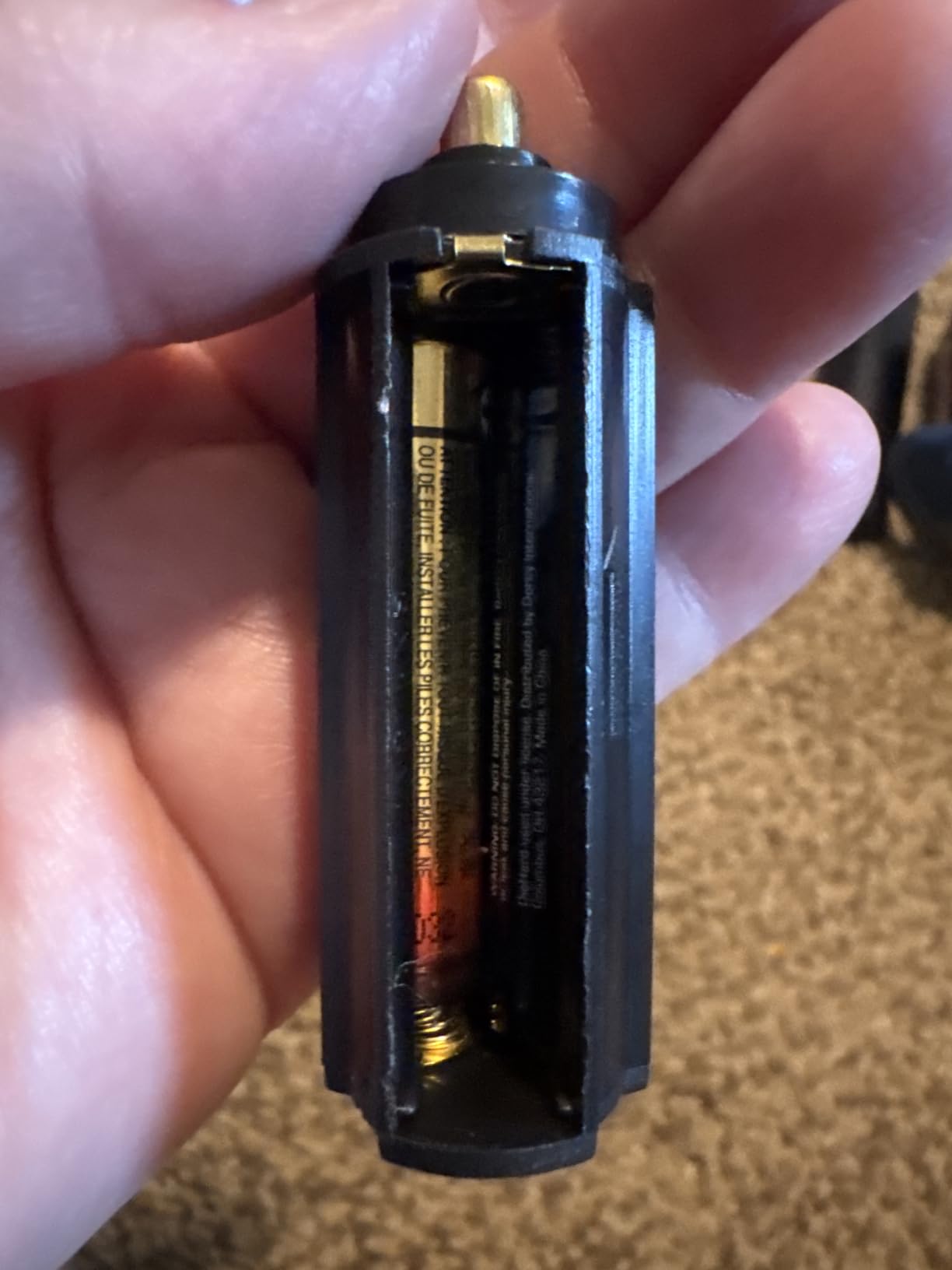
The trade-off is that 500 lumens is genuinely too bright for close-up astronomy work. Without dimming, you can’t tune the output down for chart reading. Best practice is to use a piece of red film or simply aim the AuKvi at the ground and use the bounce light for chart work. The light runs on 18650 or three AAA batteries, which aren’t included.
When maximum brightness makes sense
For dark-site navigation, finding a lost eyepiece, or signaling across a wide field, 500 lumens is exactly what you want. The beam reaches further than any other light in our roundup.
Pairing with a low-power light
Many observers carry a high-power light for navigation and a separate dimmable light for chart work. The AuKvi 2-pack makes an excellent partner for a Celestron or WAYLLSHINE.
What to Look for in a Red Flashlight for Astronomy
The first thing to check is wavelength. A true astronomy flashlight should emit in the 620 to 625 nanometer range. This is the wavelength window where the human eye’s rod cells are least sensitive, which means your dark adaptation survives intact. Lights marketed as “red” but actually closer to orange will still impact night vision more than a deep red light.
Dimming control is the second most important feature. Forum consensus on CloudyNights and Reddit’s r/Astronomy consistently favors slider or stepless dimming over button-cycled modes. A thumbwheel or continuous dial lets you land on exactly the brightness you need. Button-cycling forces you to pass through brighter settings to reach dimmer ones, and that brief flash can cost you several minutes of dark adaptation.
Headlamp vs Flashlight: Which Is Better?
A headlamp gives you hands-free operation, which is genuinely useful for eyepiece changes, focuser adjustments, and consulting a phone screen. The downside is that other observers in your group may see the light when you turn to talk to them. A handheld flashlight is more polite in group settings and easier to point exactly where you want it. Many experienced observers carry both.
Battery type matters more than most buyers think. Rechargeable 18650 lithium-ion cells are economical long-term, but they require you to remove the battery to charge. AAA or AA lights run on common cells you can buy at any gas station, which is reassuring at a remote dark site. Lithium primary batteries perform better in cold weather than alkaline.
Water Resistance and Durability
Dew is a fact of life in astronomy. An IPX4 or higher water resistance rating means you can keep observing through a dewy evening without babying the light. A pocket clip or lanyard is also worth having, because dropped flashlights on rocky observing sites don’t always survive.
For a broader look at flashlights for general outdoor use, our tactical flashlights guide covers lights that work for both astronomy and other nighttime activities.
Frequently Asked Questions
Why do astronomers use red flashlights?
Astronomers use red flashlights because the human eye’s rod cells, which handle low-light and peripheral vision, are much less sensitive to red wavelengths in the 620-625nm range than to white or blue light. A red light lets you read star charts and adjust equipment without flooding the retina with light that would otherwise take 20 to 30 minutes to recover from.
Is red light good for stargazing?
Yes, red light is the best choice for stargazing because it preserves dark adaptation. Even a brief flash of white light can take 20 or more minutes to recover from, while a properly dimmed red light allows you to read charts and adjust gear without noticeable impact on your night vision.
What type of light is best for stargazing?
The best light for stargazing is a deep red LED flashlight or headlamp with a wavelength between 620 and 625 nanometers, ideally with stepless dimming or a thumbwheel brightness control. Form factor depends on preference: handheld flashlights are polite in group settings, while headlamps offer hands-free convenience.
Which flashlight has the best red light?
For pure astronomy, the Celestron Night Vision Flashlight and the WAYLLSHINE Stepless Dimming are our top picks. The Celestron offers a thumbwheel dimmer trusted for two decades, while the WAYLLSHINE adds stepless 5%-100% dimming with a memory function at a lower price.
What wavelength red light is best for astronomy?
The ideal wavelength for astronomy is between 620 and 625 nanometers. This deep red range has the least impact on rhodopsin, the pigment in your rod cells that enables low-light vision. Lights marketed as red but emitting closer to orange will noticeably affect dark adaptation.
Final Verdict: Which Red Flashlight Should You Buy?
After testing 10 of the best red light flashlights for astronomy available right now, three stand out from the rest. The Celestron Night Vision Flashlight remains our top pick for purists who want a thumbwheel dimmer and decades of proven performance. The WAYLLSHINE Stepless Dimming is the best value for observers who want modern stepless control under $25. The RaySoar 4-pack is our budget pick for anyone who wants to outfit a family or a small club without spending much.
For hands-free observing, the Celestron Night Vision Headlamp is a clear winner. For maximum brightness and reach, the DARKBEAM 501B-S or the AuKvi 2-pack deliver. And for observers who want a single light that does everything, the LUMENSHOOTER RGBW 4-color is the most versatile option in our roundup.
Whichever light you choose, the right red flashlight is the one that keeps you in dark adaptation and lets you focus on the sky instead of the gear. Once you’ve used a proper deep-red, dimmable astronomy light, you’ll wonder how you ever observed without one. Clear skies in 2026, and remember to give your eyes at least 20 minutes to dark adapt before pulling out any flashlight, no matter how red.