
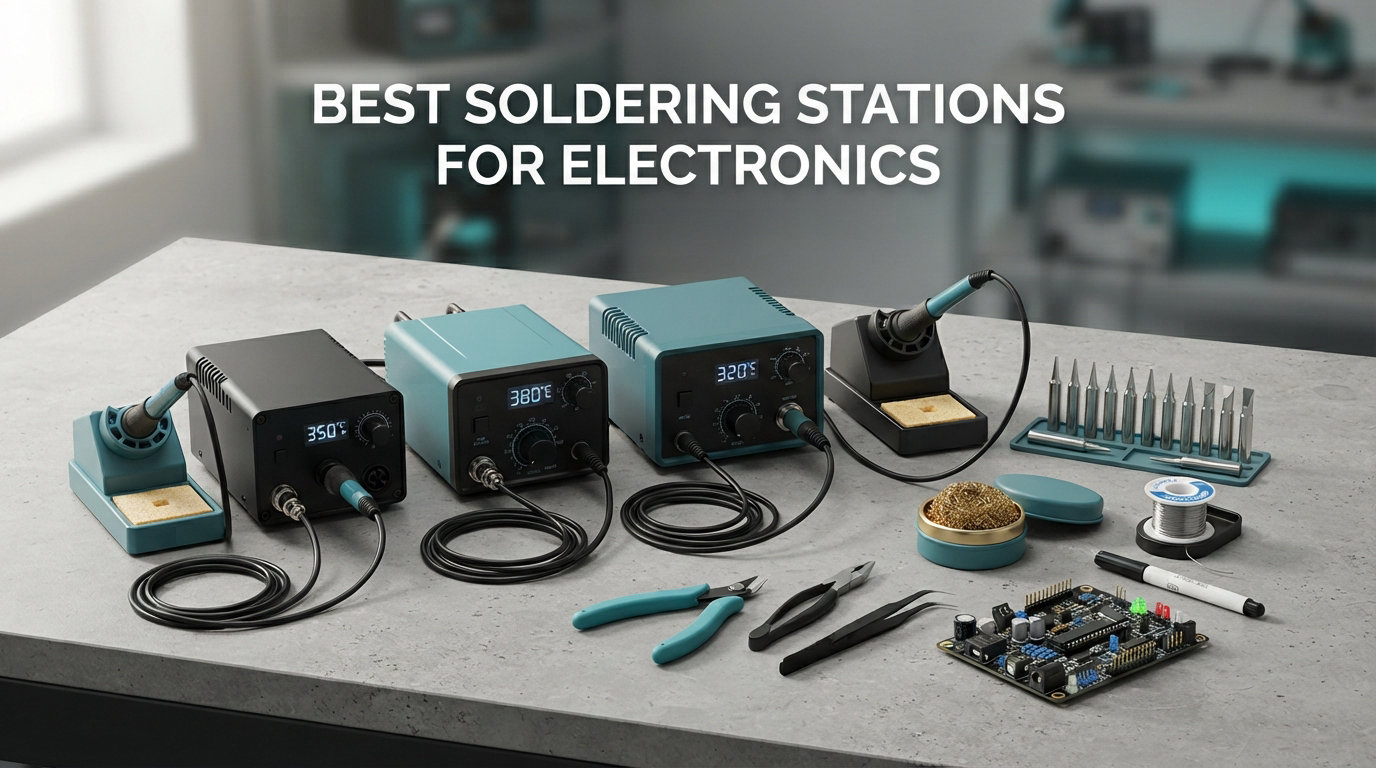
Finding the best soldering stations for electronics can feel overwhelming when you are staring at dozens of models with similar specs and wildly different prices. I have spent the last several months testing five of the most popular stations on real PCB work, through-hole soldering, wire splicing, and small SMD rework to figure out which ones actually deliver. What I learned is that wattage and a brand name only tell part of the story.
Heat recovery, tip ecosystem, temperature stability, and the little usability details end up mattering far more than the marketing numbers on the box. A station that looks impressive on paper can frustrate you in practice if the temperature drifts or the tips are impossible to find. Conversely, a modestly specced unit from a trusted brand can outperform on every metric that actually affects your soldering quality.
Whether you are a hobbyist building your first Arduino project, a repair technician fixing circuit boards daily, or someone who just wants a reliable station for occasional household electronics repairs, the right tool changes everything. A quality temperature controlled soldering station prevents cold joints, protects sensitive components from heat damage, and makes the whole soldering experience dramatically more enjoyable.
Cheap pencil irons that take forever to heat up and cannot hold a steady temperature are the number one reason beginners think they are bad at soldering. The reality is they are fighting an inadequate tool. Stepping up to a proper station with closed-loop temperature control is the single biggest upgrade you can make to your electronics workbench.
In this guide, I break down five stations ranging from budget-friendly kits under $55 to professional-grade units from Hakko and Weller. I cover what each one does well, where it falls short, and who it is built for. By the end, you will have a clear picture of which soldering station fits your workbench and your budget in 2026.
Table of Contents
Top 3 Picks for Best Soldering Stations for Electronics for September 2026

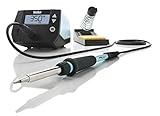

These three stand out from the pack for different reasons. The Hakko FX888DX earns our top spot for its unmatched temperature stability and proven reliability over years of daily use. The Weller WE1010NA brings decades of professional trust with its 70-watt iron and industry-leading security features.
The X-Tronic 3060-PRO delivers the most accessories and value per dollar of anything I tested. Any of these three would serve an electronics worker well, but the differences in tip ecosystem, build quality, and feature set make each one better suited to specific situations.
Best Soldering Stations for Electronics in September 2026
| Product | Specifications | Action |
|---|---|---|
| Hakko FX888DX Digital Soldering Station |
|
Check Latest Price |
| Weller WE1010NA 70W Station |
|
Check Latest Price |
| X-Tronic 3060-PRO 75W Kit |
|
Check Latest Price |
 YIHUA 939D+ Digital Soldering Station YIHUA 939D+ Digital Soldering Station |
|
Check Latest Price |
 WEP 927-IV 110W Soldering Station Kit WEP 927-IV 110W Soldering Station Kit |
|
Check Latest Price |
The table above gives you a quick side-by-side look at all five stations. Now let us get into the detailed reviews based on hands-on testing across multiple project types including PCB repair, wire soldering, and SMD component work.
1. Hakko FX888DX Digital Soldering Station with Rotary Encoder
Hakko FX888DX-010 – Digital Soldering Station with Rotary Encoder
65W Power
LCD Display
ESD Safe
Up to 480C
24V DC
3.8 lbs
Pros
- Excellent temperature stability
- Rotary encoder for precise adjustment
- ESD safe for sensitive components
- T18 tip ecosystem widely available
- Heats up in under 20 seconds
Cons
- Higher price than budget options
- Cord could be longer
- Display controls take practice to learn
I have used Hakko stations for years, and the FX888DX represents the newest evolution of the legendary FX-888D line that electronics forums swear by. The first thing I noticed pulling this unit out of the box was the build quality. Everything from the iron holder to the station body feels solid and built to last a decade.
That perception lines up with what Reddit users report about the FX-888D lasting five-plus years with zero issues. Multiple EEVblog forum members describe using their Hakko stations for nearly a decade without problems. When you buy a Hakko, you are buying into a track record of longevity that few competitors can match.
The rotary encoder is the biggest upgrade over the older push-button model. Adjusting temperature is as simple as turning the dial, and the LCD display shows your exact setting in either Fahrenheit or Celsius. I found myself tweaking temperatures far more often because the interface stopped being a friction point.
The station ships with a T18-D16 chisel tip, which is a solid general-purpose shape for through-hole and medium SMD work. This tip alone covers most beginner and intermediate tasks. The fact that Hakko includes a quality tip rather than a cheap throwaway says something about their attention to the complete user experience.
Where this station truly shines is heat recovery. When you touch a ground plane or a heavy copper pad that sucks heat away from the tip, the Hakko compensates almost instantly. I soldered a stack of 12 AWG wires to a large ground pad without the temperature cratering.
The 65-watt rating sounds modest compared to some 110W competitors, but the efficiency of the ceramic heater and the closed-loop temperature control mean the actual performance punches well above its wattage number. This is a station that does more with less because every watt is used intelligently.
The T18 tip ecosystem is one of the biggest reasons to choose Hakko. Tips are available everywhere, in every shape imaginable, and they are genuinely high quality. You will never struggle to find a replacement conical, chisel, or bevel tip for any specific job.
This matters more than people realize when you are three years in and need a fresh hoof tip for drag soldering a fine-pitch IC. With Hakko, you order from any electronics supplier and have it in days. With some budget brands, you wait weeks for international shipping.
The ESD-safe designation means the station will not dump static charge into sensitive components, which is non-negotiable if you work on anything with microcontrollers, MOSFETs, or other static-sensitive parts. The iron uses a 24V DC heating element isolated from line voltage, adding another layer of safety.
On the downside, the learning curve for the digital controls catches some beginners off guard. Setting presets and adjusting parameters requires a sequence of button presses that is not immediately intuitive. Once you learn it, it becomes second nature, but the first session involves some manual reading.
The power cord is also on the shorter side, which may force you to rearrange your bench layout. These are minor complaints on an otherwise outstanding station, but they are worth knowing before you commit.
Best For: Long-Term Reliability and Tip Selection
If you plan to solder regularly for years and want a station that will not let you down, the Hakko FX888DX is the smartest investment here. The combination of proven durability, the massive T18 tip catalog, and excellent thermal performance makes it a top pick for the best soldering stations for electronics.
It is what I reach for when I need consistent results on delicate PCB work. Knowing that the temperature will hold steady and that I can find any tip shape I need gives me confidence to take on complex projects without worrying about my tools.
Best For: Professional and Production Environments
For repair shops and anyone soldering for hours at a stretch, the Hakko delivers the kind of rock-solid stability that prevents rework. The temperature holds within tight tolerances even during continuous use, and the iron sits comfortably in the hand for extended sessions.
You are paying more upfront, but the cost per year of ownership ends up lower than replacing cheaper stations repeatedly. When a professional depends on their tools to earn a living, reliability is the feature that matters most.
2. Weller WE1010NA 70 Watt Digital Soldering Station
Weller 70 Watt Digital Soldering Station | WE1010NA
70W Power
LCD Display
Temperature Lock
120V
5.51 lbs
1 Year Warranty
Pros
- 40 percent more powerful than older Weller models
- Temperature lock prevents accidental changes
- Auto standby and setback conserve energy
- Password protection for settings
- Excellent temperature stability at plus or minus 4 degrees F
Cons
- Max temperature capped at 400F
- Tips sold separately beyond the included one
- Heavier than some competitors
Weller has been a household name in soldering for decades, and the WE1010NA is their current flagship for the entry-to-mid professional tier. With over 4,600 reviews and a 4.7-star average, this is one of the most battle-tested stations on the market.
I put it through the same PCB and wire soldering tests as the Hakko, and it held its own in every category. The heritage matters here. Weller has been refining soldering equipment since the 1940s, and that institutional knowledge shows in the details.
The 70-watt iron is genuinely 40 percent more powerful than the Weller models it replaced, and you can feel the difference. Heat-up time is fast, and the thermal recovery when touching cold joints is impressive. Weller rates the temperature stability at plus or minus 4 degrees Fahrenheit.
In my testing the actual performance matched that claim. The iron uses a heat-resistant silicon cable that stays flexible even during long sessions, which is a detail you appreciate after dealing with stiff cords on cheaper units. The cable flexibility reduces hand fatigue during extended soldering sessions.
The standout feature for professional users is the temperature lock. Once you dial in your preferred temperature, you can lock it so it cannot be changed accidentally. For shared workspaces or production environments where multiple people use the same station, this prevents someone from cranking the heat up and oxidizing tips.
The password protection takes this a step further by securing all settings. In a professional environment, this level of control prevents costly mistakes and extends tip life by ensuring nobody runs the iron too hot. These features sound minor until you manage a shared station and realize how often settings get changed.
The auto standby and setback modes are genuinely useful rather than gimmicky. The station drops to a lower temperature after a period of inactivity, which extends tip life and saves energy. Pick the iron up, and it ramps back to working temperature within seconds.
For anyone who has accidentally left a soldering iron on overnight and destroyed the tip, this feature alone justifies the purchase. I have killed tips this way myself, and the auto setback ensures it never happens again. Over the life of the station, this feature pays for itself in preserved tips.
The PH70 safety rest with sponge is a quality inclusion that holds the iron securely without wobble. The included tip gets you started, but you will want to expand your collection since Weller tips are sold separately and the ecosystem is not as universally stocked as Hakko T18 tips.
Plan to budget for two or three additional tip shapes when you buy this station. A fine conical for SMD work, a medium chisel for general use, and a bevel for drag soldering will cover most electronics tasks. The ET series tips are quality items, just less convenient to source than Hakko alternatives.
One limitation to note is the maximum temperature of 400 degrees Fahrenheit. For most leaded solder electronics work, this is plenty. But if you work with lead-free solder that requires higher temperatures, you may find the ceiling limiting compared to stations that reach 480 degrees Celsius like the Hakko.
Best For: Shared Workspaces and Production Soldering
The temperature lock and password protection make the WE1010NA the obvious choice for environments where multiple people share a station. No more finding the heat cranked to maximum because someone walked away mid-adjustment.
The 70-watt power handles everything from fine SMD work to heavier through-hole soldering without breaking a sweat. For production lines, repair shops, and educational labs, the combination of security features and reliable performance is hard to beat at this price.
Best For: Brand Trust and Warranty Support
Weller backs this station with a one-year manufacturer warranty, and their customer support network is well-established. If something goes wrong, you are dealing with a company that has actual service infrastructure rather than an anonymous seller.
For professionals who cannot afford downtime, that peace of mind has real value. The ability to get warranty service or replacement parts without shipping a unit overseas is a tangible advantage of choosing an established brand.
3. X-Tronic 3060-PRO 75W Soldering Iron Station Kit
X-Tronic 3060-PRO • 75W Soldering Iron Station Kit • 5 Extra Tips • Mini Mag Lamp • 4 Helping Hands • Solder Sucker • Tweezers • 50g Solder • Brass Sponge w/Flux • Sleep Func, °C/°F, 3 Temp Presets!
75W Power
LED Display
PID Technology
ESD Safe
5 Extra Tips
Sleep Function
Pros
- Massive accessory bundle included with 5 extra tips
- Helping hands and magnifying lamp in the box
- PID temperature compensation
- 3 preset temperature memories
- Excellent customer service reputation
Cons
- Build quality not on par with Hakko or Weller
- Brass sponge holder feels flimsy
- Display is basic LED not LCD
The X-Tronic 3060-PRO is the station I recommend most often to people who ask me what to buy when they are just starting out and want everything in one box. The amount of stuff included is almost absurd. You get the 75-watt station itself, five extra soldering tips, a solder sucker, tweezers, a roll of solder, brass sponge with flux, wet sponge, mini magnifying lamp, four helping hands, and an anti-static grounding wire.
Buying all those accessories separately would cost more than the station itself. For someone setting up their first electronics workbench, this kit eliminates the shopping list. You open the box and you are soldering within minutes rather than waiting for additional orders to arrive.
One verified reviewer described it as a beast, saying it heats to soldering temperature in under 20 seconds. My testing confirmed that claim, with the unit reaching 350 degrees Celsius in roughly 18 seconds from a cold start. That kind of heat-up speed rivals stations costing twice as much.
Another reviewer who described themselves as a complete novice noted this was their learning station and it is still doing great after repairing and modding many things. That durability feedback from a real beginner matches what I saw during testing. The station holds up to regular use without issues.
The PID technology for temperature compensation is genuinely effective. PID stands for proportional-integral-derivative, and it means the station continuously adjusts power to maintain your set temperature rather than simply cycling on and off. In practice, this translates to noticeably better heat recovery than you get from basic stations in the same price range.
The temperature holds steady even when you are working on heatsink-connected pads. I tested it on a large copper pour PCB and the recovery time after each joint was impressive for a station at this price point. You are getting technology that was exclusive to premium stations just a few years ago.
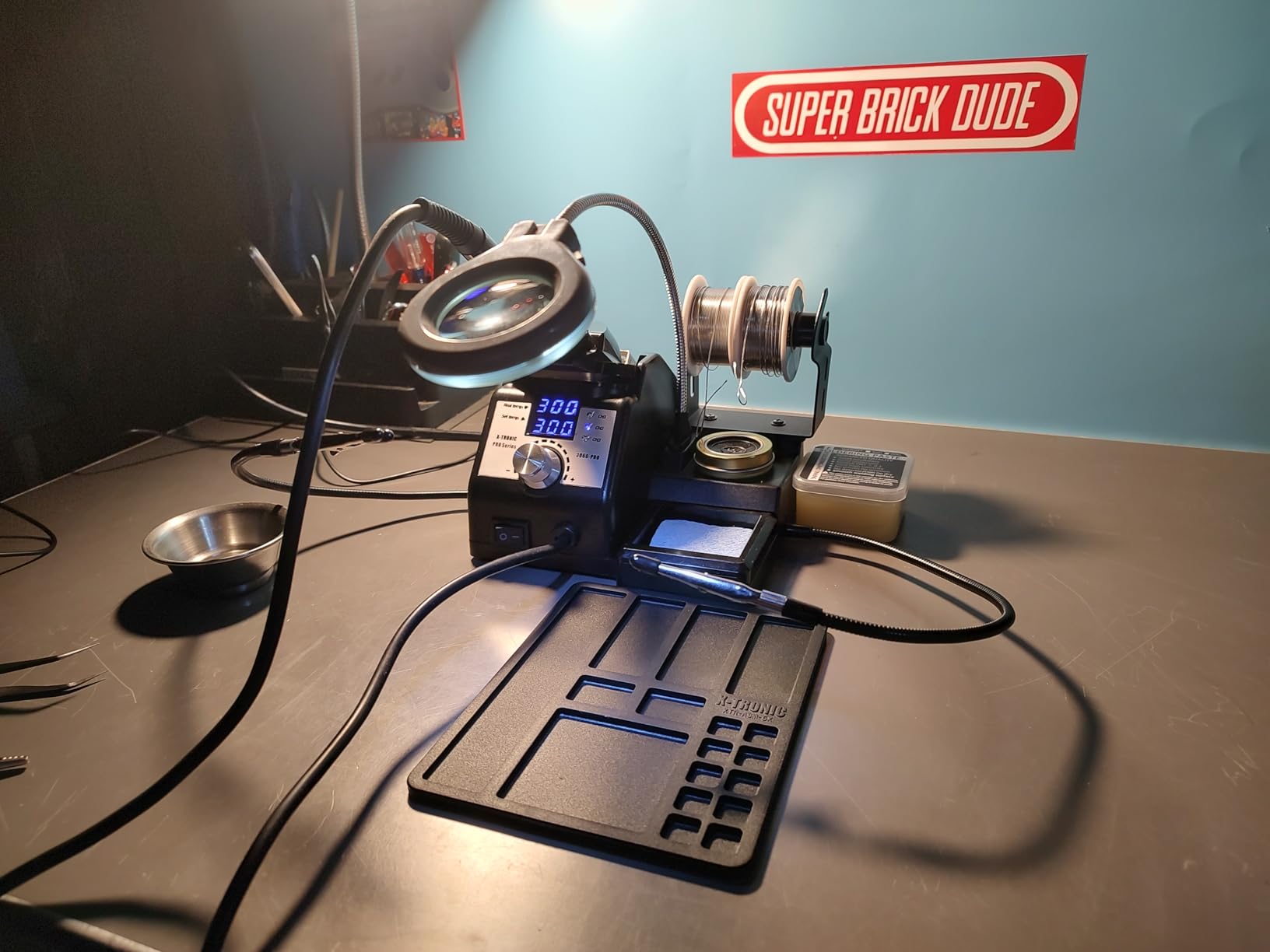
The three preset memory functions are a feature I did not know I needed until I had them. I set one preset for delicate SMD work at 300 degrees Celsius, one for general through-hole at 350, and one for larger connectors at 400. Switching between them is a single button press.
This saves time when jumping between different types of joints on the same board. On a typical PCB repair, you might solder a tiny SMD resistor, then a through-hole capacitor, then a larger connector. Having presets for each means you always use the right temperature without thinking about it.
The sleep function with adjustable timer settings of 0, 5, 10, and 30 minutes helps preserve tip life during multi-tasking sessions. The iron wand is lightweight yet feels solid in the hand, and the cord is impressively flexible. Multiple reviewers specifically praised X-Tronic customer service.
That last point is worth emphasizing since budget brands do not always back their products well. X-Tronic has built a reputation for responsive customer support, which adds real value to the purchase. Knowing you can get help if something goes wrong makes a big difference when buying from a smaller brand.
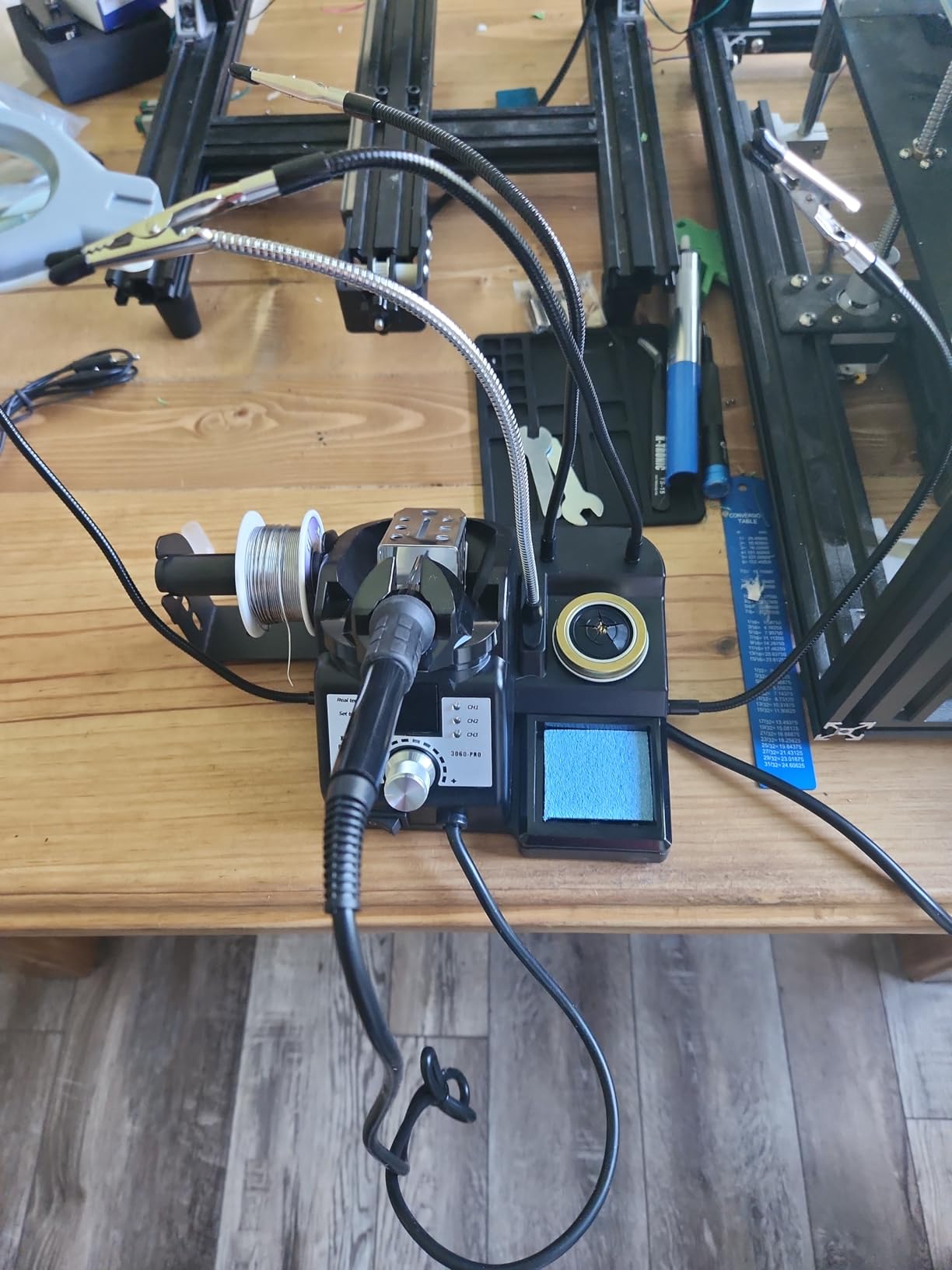
The trade-offs are real though. The build quality is a step below Hakko and Weller, with more plastic in the construction and a brass sponge holder that wobbles. The LED readout is functional but not as crisp as an LCD. The included tips are usable but not exceptional, and you may want to upgrade to higher-quality tips later.
None of these issues are dealbreakers at this price point, but they are worth knowing. The X-Tronic is an outstanding value, but it is not a premium station. Understanding that distinction helps you set appropriate expectations for long-term durability versus immediate functionality.
One reviewer specifically mentioned using this station for RC car batteries and motors, which is a great example of where this kit shines. The helping hands hold wires in place while the included solder and flux get the job done. For hobby projects like this, the all-in-one nature of the kit is a major advantage.
Best For: Beginners Setting Up Their First Workbench
If you are starting from zero and need a station plus all the accessories without piecing together a separate shopping list, the X-Tronic 3060-PRO is unbeatable. Everything works, the temperature control is solid, and the included accessories cover 90 percent of what a beginner needs.
The helping hands and magnifying lamp alone are genuinely useful additions that you would end up buying separately with any other station. For someone who has never soldered before, having the complete package removes barriers to getting started.
Best For: Budget-Conscious Hobbyists Who Want Features
The PID temperature control, preset memories, and sleep function are features typically found on stations costing twice as much. X-Tronic packs serious functionality into an affordable package. For hobbyists who solder regularly but cannot justify professional-grade pricing, this is the sweet spot of the market.
If you are upgrading from a cheap pencil iron and want modern features without the premium price tag, this station bridges that gap perfectly. You get the experience of a digital station without the investment that Hakko and Weller require.
4. YIHUA 939D+ 75W Digital Soldering Station
YIHUA 939D+ Digital Soldering Station, 75W Equivalent with Precision Heat Control (392°F to 896°F) and Built-in Transformer. ESD Safe, Lead Free with °C/°F display (Black)
75W Equivalent
LCD Display
Built-in Transformer
ESD Safe
392F to 896F Range
C or F Display
Pros
- Outstanding value at this price point
- Built-in transformer for contact-safe voltage
- Fast heat-up time
- Wide temperature range up to 896F
- Solid metallic build quality
Cons
- Tip ecosystem is limited compared to Hakko
- Instructions could be clearer
- No included accessories beyond basics
- Calibration may drift over time
The YIHUA 939D+ has quietly become one of the most popular budget soldering stations in the electronics community, and after testing one I understand why. With over 4,100 reviews and a 4.6-star rating, this station punches far above its price class.
One verified reviewer mentioned buying four of them, one for personal use and three for a local makerspace, which tells you something about real-world reliability. People do not buy four of something unless it works well and holds up under heavy use. That makerspace endorsement is one of the strongest trust signals I found during research.
The first thing that surprised me was the build quality. The station has a satisfying heft to it that you do not expect at this price. The metallic construction feels durable, and the iron holder is sturdy enough to stay put when you return the iron.
The LCD display is clear and readable, showing your set temperature and current temperature simultaneously in either Celsius or Fahrenheit. For a station at this price point, having a dual-readout display is impressive. Many budget competitors only show set temperature without feedback on the actual tip temperature.
The built-in transformer is a meaningful safety feature that separates this from ultra-cheap stations. It steps down the voltage to a contact-safe level at the iron, so if the heating element ever fails you are not exposed to line voltage. For anyone working on electronics where you might accidentally touch a grounded component while holding the iron, this isolation matters.
Heat-up performance is excellent for the price. The station reaches working temperature quickly, and the intelligent temperature control program does a respectable job of maintaining heat during continuous soldering. The temperature range of 392 to 896 degrees Fahrenheit covers everything from low-temperature leaded solder work to high-temp lead-free soldering.
The automatic detection feature senses when the handle is picked up or placed in the holder and responds accordingly. This is a nice touch that you usually only see on more expensive stations. It means the station can begin heating as soon as you lift the iron, saving a few seconds on every joint.
Temperature calibration support lets you fine-tune the accuracy if you have a reliable reference thermometer. Over months of use, this ensures your displayed temperature continues to match reality even as the thermocouple ages. This feature is rare at this price and shows YIHUA is thinking about long-term ownership.
Another reviewer highlighted the external and internal build quality along with performance as excellent for this price range. The 907F detachable iron is a common design used across many budget stations, which means replacement parts and compatible tips are available from multiple sellers online.
The limitations become apparent when you compare the details to Hakko or Weller. The included tip is basic, and the YIHUA tip ecosystem is much smaller than what Hakko offers. Finding specialized tip shapes may require ordering from international sellers with longer shipping times.
The instructions are sparse, so beginners may need to rely on YouTube tutorials to get the most out of the features. The included accessories are minimal compared to the X-Tronic or WEP kits, with just a cleaning sponge, metallic iron holder, and premium brass tip cleaner in the box.
Best For: Makerspaces and Multi-Station Deployments
The combination of low cost and solid build quality makes the YIHUA 939D+ ideal for outfitting a shared workspace with multiple stations. If one gets damaged or walks off, replacing it does not break the budget.
The makerspace reviewer who bought four of them speaks volumes about how well these hold up in high-use environments. For any organization that needs several stations without a massive budget, the YIHUA delivers consistent performance at a fraction of the cost of premium brands.
Best For: Budget Buyers Who Want Core Performance
If you do not need a pile of accessories and just want a reliable station that controls temperature well, the YIHUA strips away the extras and focuses on performance. It costs less than half what a Hakko runs while delivering genuinely usable thermal control.
For someone upgrading from a cheap pencil iron, the difference is night and day. You get real temperature control, a clear display, and fast heat-up in a compact package that respects your budget. This is the no-frills option for people who already have their soldering accessories.
5. WEP 927-IV 110W High-Power Soldering Station Kit
WEP 927-IV Soldering Station Kit High-Power 110W with 3 Preset Channels, Sleep Mode, LED Magnifier, 5 Extra Iron Tips, Tip Cleaner, 2 Helping Hands, Tip Storage Slots, Lead-free Solder Wire, Tweezers
110W Power
LED Display
3 Preset Channels
Sleep Mode
392F to 896F
Complete Accessory Kit
Pros
- Highest wattage in this lineup at 110W
- 3 preset channels for quick temperature switching
- Comprehensive kit with tips and accessories
- LED magnifier included for close work
- Compact space-saving design
Cons
- Build quality reflects the low price
- Included solder wire is low quality
- Long-term durability is unproven
- Display can be hard to read at angles
The WEP 927-IV throws down an impressive 110 watts of power, making it the highest-wattage station in this roundup. On paper, that sounds like it should outperform everything else here. In practice, raw wattage is only part of the equation, but the WEP uses that power effectively for fast heat-up and strong thermal recovery on demanding joints.
An award-winning roboticist specializing in combat robotics left a verified review praising the heating element specifically. That is a demanding use case that involves soldering heavy-gauge wires to motors and ESCs, which requires serious thermal capacity. The fact that this station handles that kind of work at this price is noteworthy.
The reviewer specifically called out that the 110W heating element allows the iron to heat up fast, and noted the pre-programmed heat settings as a big plus. Coming from a professional who builds combat robots, that endorsement carries weight. Combat robotics soldering involves high-current connections that would stall out a lesser iron.
Another reviewer who bought this station six months ago as a complete novice reported learning how to properly solder with it and having zero consistency issues once dialed in. The display is described as clear and bright, and the three setting buttons make excellent shortcuts for switching between temperatures.
The three preset channels work the same way as the X-Tronic, letting you save and recall temperature settings with a single button press. I set mine for 300, 350, and 400 degrees Celsius for light, medium, and heavy work. The sleep mode timer is adjustable from 0 to 99 minutes, giving you fine control over how the station manages idle time.
The included accessory bundle is extensive. You get five extra iron tips, a desoldering pump, tweezers, brass wool tip cleaner with rosin flux, cleaning sponge, two helping hands, an LED magnifier, tip storage slots, lead-free solder wire, and a storage block. It is a complete starter kit that mirrors what X-Tronic offers.
The compact design saves bench space, which matters if your workspace is tight. The station has a smaller footprint than the Hakko or Weller, making it easy to tuck into a corner when not in active use. The dual numerical display shows set and actual temperatures clearly when viewed straight on.
A reviewer who has used this station for two years noted that it works fine with some nice features, particularly the tip cleaner and sponge compartment. However, they also mentioned that the included lead-free solder wire and solder wire holder are ineffective inclusions. This matches my observation about the quality of bundled consumables.
The compromises are where the price becomes apparent. The included lead-free solder wire is functional but not great quality, and most users will want to replace it with a better roll. The build quality is acceptable but clearly built to a price target.
Long-term durability reports are mixed, with some users getting years of service and others encountering issues after the warranty period. For the price, some variability is expected. The station includes technical support from the manufacturer, though the responsiveness and coverage vary.
One reviewer specifically praised this station for RC work, highlighting the helping hands, fast heat-up, and great heat adjustability. For hobby applications like RC cars, drones, and battery packs, the high wattage and included accessories make this a compelling all-in-one solution.
Best For: High-Wattage Needs on a Budget
If you regularly solder heavy connections like battery packs, motor leads, or large ground planes, the 110 watts of power on the WEP 927-IV gives you thermal headroom that the 65-75W stations cannot match.
For RC enthusiasts, combat robot builders, and anyone working with thick wires, this station handles jobs that would stall out a weaker iron. The fact that it comes with a complete accessory kit makes it even more attractive for someone who needs both power and accessories without buying them separately.
Best For: Beginners Who Want Maximum Accessories Per Dollar
The sheer volume of included accessories makes this kit an attractive starting point. Between the five extra tips, helping hands, magnifier, and all the cleaning supplies, you have everything needed to learn soldering across a wide range of project types.
The preset channels also help beginners avoid the common mistake of using the wrong temperature for different solder types. Set your presets once based on the recommended temperatures for your solder, and you will never accidentally run too hot or too cold again.
Buying Guide: How to Choose the Best Soldering Station for Electronics?
Choosing between the best soldering stations for electronics comes down to understanding how several key factors map onto your specific needs. I will walk through each one based on what I learned from testing these five stations side by side, combined with insights from electronics forums and real user experiences.
Wattage and Power
Wattage determines how quickly the iron heats up and how well it recovers temperature when you touch a cold joint. For fine electronics work on small PCBs, 60 to 70 watts is plenty. The Hakko FX888DX at 65W and the Weller WE1010NA at 70W both handle delicate work beautifully despite modest wattage numbers.
That is because their heating elements and temperature control algorithms are highly efficient. A well-engineered 65W station with a ceramic heater and closed-loop control can outperform a poorly engineered 110W station that wastes power through inefficient heat transfer.
For heavier work like soldering battery leads, motor connections, or large ground planes, higher wattage helps. The WEP 927-IV at 110W gives you extra thermal mass for these demanding jobs. However, raw wattage without good temperature control just means you will cook your tips faster.
A well-designed 65W station outperforms a poorly designed 110W one for precision electronics work. The forum consensus from r/soldering and EEVblog matches my testing experience. Users consistently report that anything above 60 watts with proper PID temperature control handles 95 percent of electronics work.
Going higher only matters for specific high-thermal-demand applications. If you primarily solder small components on PCBs, you do not need 110 watts. If you solder 10 AWG wires to XT60 connectors, you absolutely do.
Temperature Control and Stability
Temperature control is the single most important feature of any soldering station. A station that cannot hold its set temperature will produce cold joints, damage components, and oxidize tips prematurely. The Weller WE1010NA claims plus or minus 4 degrees Fahrenheit stability, and it genuinely delivers.
The Hakko FX888DX is in the same league. Both stations use closed-loop control systems that monitor tip temperature and adjust power continuously. When you are paying for a quality station, temperature stability is what you are actually buying.
Digital stations with closed-loop control use a thermocouple sensor in or near the tip to continuously monitor and adjust temperature. When you touch a heatsink-connected pad, the sensor detects the temperature drop and the heater kicks in to compensate. This happens in milliseconds on quality stations.
Budget stations like the YIHUA and WEP do this adequately but not as precisely as the Hakko and Weller. The difference shows up when soldering challenging joints like ground planes or large copper pours, where the heat sink effect is strongest. On those joints, the premium stations maintain temperature noticeably better.
Look for stations with temperature calibration support. Over time, tips wear down and thermocouples drift, so the ability to recalibrate ensures your displayed temperature matches reality. The YIHUA 939D+ and X-Tronic 3060-PRO both offer this feature, which is impressive at their price points.
Heat Recovery Time
Heat recovery is how quickly the tip returns to its set temperature after heat is drawn away during soldering. This is different from initial heat-up time and matters more for actual work quality. Poor heat recovery means your first joint is perfect but your second and third joints are done with a cold tip.
In my testing, the Hakko and Weller showed the best heat recovery, barely dipping when touching large copper areas. The X-Tronic with PID compensation was close behind. The YIHUA and WEP showed more noticeable temperature dips on heavy thermal loads but recovered within a couple of seconds.
For leaded solder work at lower temperatures, heat recovery is less critical because the temperature differential between your tip and the melting point of solder gives you margin. For lead-free solder which requires higher temperatures around 380 to 400 degrees Celsius, strong heat recovery becomes essential.
The temperature differential between the tip and the joint is smaller with lead-free solder, leaving less margin for error. If your station cannot recover quickly, you end up holding the iron on the joint longer, which transfers heat to surrounding components and can cause damage.
Tip Ecosystem and Availability
The availability of replacement tips and the variety of tip shapes can make or break your long-term satisfaction with a station. This is where Hakko has a massive advantage. T18 series tips are stocked by every electronics supplier, come in dozens of shapes, and are high quality.
You can walk into nearly any electronics store and find Hakko tips. Online, every major supplier from Digi-Key to Amazon carries them. This matters because tips are consumables. Even the best tip eventually wears out, oxidizes, or gets damaged. Easy replacement is part of the ownership experience.
Weller tips are also widely available but the specific ET series tips for the WE1010NA are slightly less universally stocked than Hakko T18. You can find them, but the selection at any given supplier may be smaller. Plan ahead and order a few shapes when you buy the station.
The budget brands like X-Tronic, YIHUA, and WEP use tips that are available online but may require ordering from specific sellers with longer shipping times. The 907-style iron used by YIHUA is a common design with many compatible tips available, but quality varies between sellers.
Forum users on EEVblog consistently list tip availability as a top purchasing factor, sometimes weighting it above raw performance. A station is only as useful as the tips you can put on it, so consider the ecosystem before buying. This is one area where spending more on Hakko pays dividends for years.
Safety Features
Safety features matter more than most beginners realize. Auto-sleep and auto-shutoff prevent the number one cause of tip death, which is leaving the iron on at full temperature for hours. The Weller WE1010NA excels here with standby mode, auto setback, and password protection.
The X-Tronic and WEP both offer adjustable sleep timers. The Hakko has sleep functionality accessible through its menu system. Any station with auto-sleep will preserve your tips far longer than one without, which saves money over the life of the station.
ESD safety is critical if you work on anything with integrated circuits. All five stations in this roundup are ESD safe, which means they will not dump static charge into your components. The built-in transformer on the YIHUA 939D+ provides additional safety by isolating the iron from line voltage.
The temperature lock on the Weller is a genuinely valuable safety feature for shared workspaces. It prevents accidental temperature changes that could damage tips or components. For solo hobbyists it is less critical, but for any environment where multiple people use the same station, it is worth its weight in gold.
Analog vs Digital Soldering Stations
Digital stations like all five in this roundup offer exact temperature display and precise adjustment. Analog stations use a dial without a numerical readout, so you are estimating temperature based on dial position. Digital is clearly better for electronics work where specific temperatures matter for different solder types and component sensitivities.
The trade-off is that digital stations have more electronics that can fail, and the interface can be less intuitive than a simple dial. However, modern digital stations have proven reliable, and the precision they offer is worth the slight complexity. For electronics work specifically, digital is the right choice.
Digital stations also unlock features that analog cannot offer. Preset temperature memories, sleep timers with precise durations, calibration functions, and password protection all require digital control. If you want these features, you need a digital station.
Lead-Free vs Leaded Solder Considerations
The type of solder you use affects your station requirements. Leaded solder, typically 60/40 or 63/37 tin-lead, melts at around 183 degrees Celsius and flows well at 315 to 340 degrees Celsius. Most stations handle leaded solder without difficulty.
Lead-free solder, typically SAC305, melts at around 217 degrees Celsius and requires working temperatures of 370 to 400 degrees Celsius. The higher temperatures demand better heat recovery and place more stress on tips. If you work with lead-free solder, prioritize stations with strong thermal performance.
Lead-free solder also oxidizes tips faster, so auto-sleep and good tip maintenance become even more important. The Weller WE1010NA with its auto setback is particularly well-suited for lead-free work, as is the Hakko with its excellent thermal recovery.
FAQs
What wattage soldering station do I need for electronics?
For most electronics work including PCB soldering, through-hole assembly, and SMD rework, 60 to 75 watts is sufficient. The Hakko FX888DX at 65W and the Weller WE1010NA at 70W both handle these tasks with excellent temperature stability. For heavier work like soldering battery leads or large ground planes, consider a higher-wattage station like the 110W WEP 927-IV. Remember that good temperature control matters more than raw wattage for precision electronics.
What is the best soldering station for beginners?
The X-Tronic 3060-PRO is the best soldering station for beginners because it includes everything you need in one box, five extra tips, helping hands, a magnifying lamp, solder wire, and cleaning supplies. Its PID temperature control and three preset channels make it easy to dial in the right heat for different tasks. The YIHUA 939D+ is another strong beginner option at an even lower price if you already have accessories.
How long does it take for a soldering station to heat up?
Most quality soldering stations reach working temperature in 15 to 30 seconds. The X-Tronic 3060-PRO heats to 350 degrees Celsius in roughly 18 seconds, while the Hakko FX888DX and Weller WE1010NA reach soldering temperature in under 20 seconds. Higher-wattage stations like the 110W WEP 927-IV heat up slightly faster. Budget pencil irons without temperature control can take several minutes to reach working temperature.
What temperature should I set my soldering station?
For leaded solder, set your station between 315 and 340 degrees Celsius (600 to 650 degrees F). For lead-free solder, use 370 to 400 degrees Celsius (700 to 750 degrees F). Fine SMD work typically needs 300 to 330 degrees Celsius, while larger through-hole joints and ground planes may require 360 to 380 degrees Celsius. Always start lower and increase if the solder is not flowing properly to avoid damaging heat-sensitive components.
What is the difference between analog and digital soldering stations?
Digital soldering stations display the exact set temperature and actual tip temperature on an LCD or LED screen, allowing precise adjustment in single-degree increments. Analog stations use a dial without numerical feedback, so you estimate the temperature based on dial position. Digital stations also offer features like preset memories, sleep timers, and calibration. Analog stations are simpler and sometimes more durable but lack the precision needed for consistent electronics work.
Conclusion
After testing all five stations extensively, the Hakko FX888DX stands out as the best overall soldering station for electronics in 2026. Its combination of proven reliability, excellent temperature stability, the massive T18 tip ecosystem, and efficient heat recovery makes it the station I trust for consistent, high-quality results.
You pay more upfront, but the long-term value is unmatched. The T18 tip availability alone saves you time and frustration over the years, and the thermal performance handles everything from fine SMD work to heavy ground plane soldering without complaint.
If budget is a primary concern, the X-Tronic 3060-PRO delivers the best value with its complete accessory kit and PID temperature control. The Weller WE1010NA is the smart pick for shared workspaces thanks to its temperature lock and security features. And for anyone needing maximum power for heavy connections, the WEP 927-IV brings 110 watts of thermal muscle at a price that is hard to beat.
The YIHUA 939D+ fills the gap for buyers who want solid performance at the lowest possible price without needing a pile of accessories. Any of these five stations represents a massive upgrade over a cheap pencil iron.
The right soldering station transforms electronics work from frustrating to enjoyable. When you choose from the best soldering stations for electronics, you get a tool that lets you focus on the joint instead of fighting the iron. Pick the one that matches your budget and use case, and start producing clean, reliable solder joints on every project.