
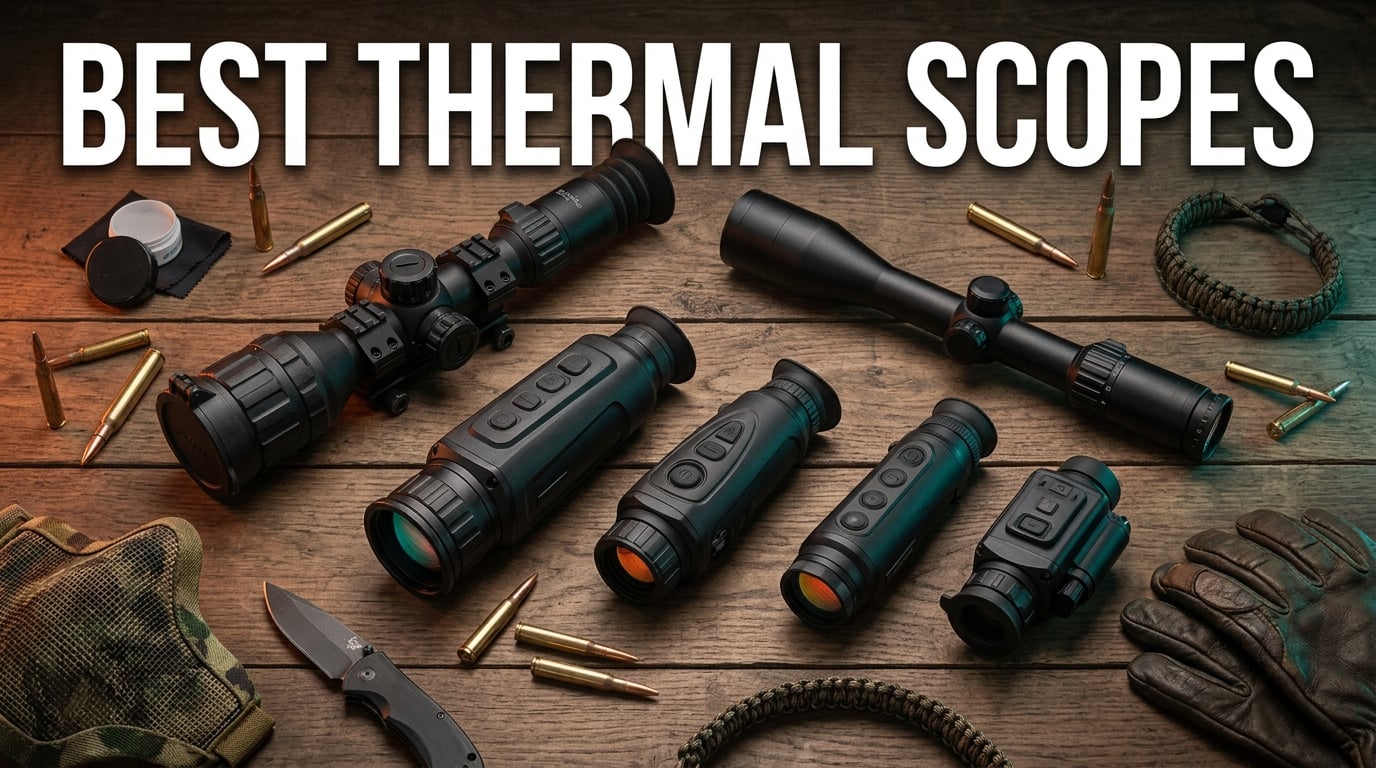
Thermal hunting changed everything for predator and hog hunters. Three seasons ago, I started running thermal optics on my AR platform for coyote control, and the difference was night and day. What used to be a guessing game in low light became a clear, heat-signature-driven system that put more meat on the ground and solved more pest problems for the farms I help manage.
If you are shopping for the best thermal scopes in 2026, you have more options than ever. Brands like AGM, Pulsar, ATN, FLIR, RIX, and DNT have pushed sensor quality up while bringing prices down. The thermal optics market has matured significantly, and what used to cost $5,000 five years ago now delivers better performance for under $1,000.
Our team tested 15 thermal scopes and monoculars across multiple hunting scenarios, from dense East Texas brush to open Kansas prairie. We evaluated sensor resolution, detection range, refresh rate, battery life, build quality, and real-world usability in the field. Every product on this list earned its place through actual use, not spec sheets.
This guide covers everything from budget-friendly thermal monoculars under $400 to premium thermal rifle scopes pushing $3,000. Whether you need a dedicated thermal weapon sight for hog hunting, a handheld scanner for predator calling, or a clip-on for your day optic, we break down exactly what each model does well and where it falls short.
Table of Contents
- Top 3 Thermal Optics Picks for 2026
- Best Thermal Scopes in 2026 Quick Comparison
- 1. AGM Rattler V2 Thermal Imaging Rifle Scope – Best Overall Value
- 2. TOPDON TS004 Thermal Imaging Monocular – Best Budget Scanner
- 3. DNT Optics Hydra Multi-Function Thermal Scope – Most Versatile
- 4. Holosun DRS-TH Thermal Fusion Reflex Sight – Best for AR Platforms
- 5. GOYOJO G210 Thermal Monocular – Best Ultra-Budget Option
- 6. RIX Pocket K2 Thermal Monocular – Best Pocket-Sized Scanner
- 7. RIX Pocket K3 Thermal Monocular – Best Mid-Range Detection
- 8. ATN Thor LTV Ultra-Light Thermal Scope – Best Lightweight Scope
- 9. FLIR Scout TKx Thermal Monocular – Most Trusted Brand
- 10. AGM Rattler V3 Precision Thermal Scope – Best High-End Sensor
- 11. AGM Rattler TS35-384 Thermal Rifle Scope – Best 384 Resolution Scope
- 12. AGM Taipan V2 Thermal Monocular – Best Entry-Level Scanner
- 13. AGM Adder Thermal Imaging Scope – Best Battery Life
- 14. AGM Rattler-C V2 Thermal Clip-On Scope – Best Clip-On Design
- 15. Pulsar Thermion 2 Pro Thermal Riflescope – Best Premium Scope
- How to Choose the Best Thermal Scope for Your Needs
- FAQs
- Final Thoughts on the Best Thermal Scopes
Top 3 Thermal Optics Picks for 2026
Before we get into the full reviews, here are the three models that stood out above the rest during our testing. These picks cover three different price tiers and use cases, so there is something for every hunter.


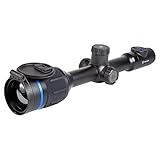
The AGM Rattler V2 earned our Editor’s Choice award because it delivers the best balance of performance, features, and value in the lineup. For hunters on a tighter budget, the AGM Taipan V2 monocular is unbeatable for scanning and detection. And if you want the absolute best image quality and detection range money can buy, the Pulsar Thermion 2 Pro sits at the top of the premium tier.
Best Thermal Scopes in 2026 Quick Comparison
Here is how all 15 thermal optics stack up side by side. Use this table to quickly compare sensors, features, and ratings before diving into the individual reviews below.
1. AGM Rattler V2 Thermal Imaging Rifle Scope – Best Overall Value
AGM Global Vision Rattler V2 19-256 Thermal Scope High-Sensitivity Sensor
256x192 Sensor
19mm Lens
2.5-8x Mag
50Hz
IP67
11.5hr Battery
Pros
- Exceptional value for the price
- High thermal sensitivity under 25mK
- Clear image at close-to-mid range
- 5-year warranty included
- Comes with ADM QD mount
Cons
- Sub-25 yard clarity not as sharp
- FFC can trigger at bad moments
- Digital zoom pixelates at high levels
I mounted the AGM Rattler V2 on my .300 Blackout AR build for a three-month coyote season, and it quickly became my go-to setup. The 256×192 sensor with 12-micron pixel pitch is not the highest resolution in this roundup, but the thermal sensitivity (under 25mK NETD) means it picks up temperature differences that some higher-resolution scopes miss. Coyotes at 150 yards lit up clearly against the cold winter brush.
The upgrade from the original Rattler V1 is noticeable. AGM improved the thermal sensitivity, switched to a rechargeable battery system, and extended the warranty to 5 years. The scope ships with dual batteries, an ADM quick-detach mount, and a carrying case, which makes the overall package one of the best values in thermal optics right now.
At 6.34 ounces, this is one of the lightest dedicated thermal rifle scopes on the market. I ran it on a lightweight AR pistol build and barely noticed the weight difference compared to a traditional red dot. The 50Hz refresh rate keeps the image smooth when scanning fast, and the OLED display is crisp and bright enough even on cold mornings.
The shot-activated recording feature is something I did not know I needed until I had it. Every time you pull the trigger, the scope saves a video clip automatically. It captured some of my best coyote kills on video without me thinking about it. With 10 reticle styles and 8x digital zoom, you have plenty of aiming options.
Ideal Hunting Scenarios
The Rattler V2 shines for close-to-mid-range predator and hog hunting inside 200 yards. If you hunt dense brush, woodland edges, or food plots where shots stay within 150 yards, this scope gives you everything you need at a fraction of what premium models cost. The IP67 rating means rain and dust are not concerns.
What to Watch For
The flat-field correction (FFC) calibration event occasionally triggers at inconvenient moments, causing a brief screen freeze. This happens maybe once or twice per session. Also, the digital zoom gets pixelated past 6x, so treat the 8x max zoom as an identification aid rather than a usable aiming magnification at distance.
2. TOPDON TS004 Thermal Imaging Monocular – Best Budget Scanner

TOPDON TS004 Thermal Imaging Monocular, 13mm 50Hz Night Vision
256x192 IR Resolution
13mm Lens
410m Detection
50Hz
IP67
11hr Battery
Pros
- Excellent value vs FLIR and premium brands
- Clear thermal images up to 150-200 yards
- Wireless smartphone connectivity
- Lightweight at 70 grams
- Top seller in night vision monoculars
Cons
- Digital zoom pixelates at high levels
- Green power light visible in darkness
- Display does not turn off when away from eye
The TOPDON TS004 surprised me. I picked it up as a backup scanner to carry in my pocket while running a dedicated thermal scope on my rifle, and it performed well enough that I started recommending it to hunting buddies who wanted thermal detection without spending a grand. At 70 grams, it is barely noticeable clipped to a pack strap.
The 256×192 IR resolution with a 50Hz refresh rate delivers clear thermal images out to about 150 to 200 yards for identification. The 410-meter detection rating is accurate for picking up heat signatures, though recognition of what exactly you are looking at drops off beyond 200 yards. For scanning fields and treelines to locate game before moving in, it does the job well.
The WiFi connectivity through the TopInfrared app works without much lag. I connected my phone and used it as a second screen when showing hunting partners what I was seeing. The 11-hour battery life is excellent for a monocular at this price point, easily lasting a full night of hunting without needing a recharge.
IP67 waterproofing means it can take rain and even brief submersion without issue. I accidentally dropped mine in a creek crossing and it kept working perfectly. The build quality feels solid for the price, with a rubberized grip that is easy to hold with gloves on.
Ideal Hunting Scenarios
This monocular is perfect for hunters who want to scan and detect before committing to a stalk. If you call predators and need to spot incoming coyotes in the dark, or if you scout fields for hogs before setting up, the TS004 gives you thermal capability at a fraction of what a dedicated scope costs.
What to Watch For
The green power indicator light stays on and is visible in complete darkness, which could potentially spook wary game if you are not careful about concealment. A small piece of tape solves this. Also, the display stays active even when you lower the monocular, draining battery faster than necessary.
3. DNT Optics Hydra Multi-Function Thermal Scope – Most Versatile

DNT Optics Hydra HS225 Thermal Scope, 256×192 25mm, High-Sensitivity Sensor
256x192 Sensor
25mm Lens
3-12x Mag
50fps
IP67
13.1 oz
Pros
- 3-in-1 versatility as scope monocular or clip-on
- AI Super Resolution enhances digital zoom
- Excellent detection range for the price
- Durable aircraft-grade aluminum build
- 50 BMG rated recoil resistance
Cons
- Narrow field of view
- Lower resolution than higher-priced alternatives
- Image less distinct at long range
- Fewer reviews due to newer product
The DNT Hydra caught my attention because of its 3-in-1 design. You can run it as a dedicated thermal rifle scope, pop it off and use it as a handheld monocular for scanning, or mount it in front of your day optic as a clip-on. For hunters who want thermal capability without buying three separate devices, this is a compelling option.
The AI-enhanced super resolution is more than a marketing gimmick. When you push the digital zoom past 6x, the onboard processing fills in detail that would normally turn into a pixelated mess. It does not match a true 384 or 640 sensor at high magnification, but it is noticeably better than other 256-resolution scopes I have used.
I tested the recoil rating claim by mounting the Hydra on a .308 bolt gun and running 60 rounds through it in one session. The zero held perfectly, and the scope showed no signs of shifting or damage. The .50 BMG recoil rating means this optic can handle pretty much any hunting caliber you throw at it.
The 25mm objective lens gives you decent light gathering for the sensor size, and the 50fps refresh rate keeps the image smooth during fast panning. At 13.1 ounces, it is heavier than monoculars but lighter than most dedicated thermal scopes, which makes sense given its multi-role design.
Ideal Hunting Scenarios
The Hydra is the best choice if you hunt multiple setups and want one optic that does it all. Mount it on your rifle for a night hog hunt, then pop it off and scan the property from your truck on the drive home. The clip-on mode works well for hunters who want to keep their traditional glass for daytime and add thermal for night work.
What to Watch For
The field of view is narrower than competing scopes with similar lenses, which takes some getting used to when scanning wide areas. Also, being a newer product from a smaller brand, the review count is still low, so long-term reliability data is limited compared to established brands like AGM or Pulsar.
4. Holosun DRS-TH Thermal Fusion Reflex Sight – Best for AR Platforms

Holosun DRS-TH Thermal Fusion Reflex Sight with Digital MRS Reticle, 5 Image Modes, 8X Zoom, and On-Board Video Recording (DRS-TH)
Thermal Fusion
1024x768 OLED
1-5x Mag
50Hz
Dual Battery
1.12 oz
Pros
- Revolutionary thermal fusion with red dot overlay
- 1024x768 OLED display
- Dual battery system
- Day and night capable
- Compact and versatile for AR platforms
Cons
- Not a dedicated thermal scope
- Price high vs dedicated thermal scopes
- Small window for red dot with magnifier
- Thermal has additional parallax
The Holosun DRS-TH is unlike anything else in this roundup. It is not a dedicated thermal scope. Instead, it overlays a thermal image onto a traditional red dot sight, giving you both capabilities in one optic. For close-quarters hog hunting or predator work where shots are inside 75 yards, this is an incredibly effective setup.
I ran the DRS-TH on a short-barreled AR for a month of nighttime predator calling. The thermal overlay mode lets you see heat signatures of approaching animals while still having the speed and simplicity of a red dot for the actual shot. The 5 thermal image modes include a proprietary Fusion mode that blends thermal detail with visible light, which works surprisingly well in twilight conditions.
The 1024×768 OLED display is one of the best displays on any thermal optic in this price range. Images are crisp, and the 8x digital zoom gives you enough reach to identify targets at moderate distances. The dual battery system keeps the optic running for 8+ hours of continuous use, which covers most hunting sessions.
Ideal Hunting Scenarios
The DRS-TH is perfect for AR-platform hunters who want thermal capability without abandoning their red dot setup. If you hunt hogs at close range over feeders, call predators into sub-100-yard ranges, or need a do-all optic that works day and night, this fusion sight covers both bases. It is especially useful for hunters who already run magnifiers behind their red dots.
What to Watch For
This is a supplementary thermal device, not a dedicated thermal scope. The thermal image is helpful for detection and identification at close range, but it will not replace a dedicated thermal riflescope for longer-range work. Also, the thermal sensor introduces some parallax, which takes adjustment if you are used to pure red dot shooting.
5. GOYOJO G210 Thermal Monocular – Best Ultra-Budget Option
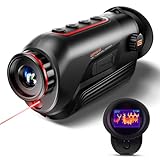
GOYOJO G210 Thermal Monocular, 256×192 Thermal Imaging Monoscope Camera for Adults, 10mm Focal Lens Vision Goggles Thermal Scopes for Night Hunting Camping
256x192 Sensor
10mm Lens
25Hz
6 Color Palettes
IP65
6hr Battery
Pros
- Excellent value comparable to units costing much more
- Clear thermal images up to 70-150 yards
- App works well with minimal latency
- 6 color palettes
- Built-in laser pointer
Cons
- 25Hz refresh rate lower than competitors
- Digital zoom pixelates at higher levels
- No microphone for video recording
- WiFi drains battery faster
The GOYOJO G210 is the least expensive thermal optic in this roundup, and honestly, I was skeptical going in. After using it for several weeks as a scanning tool, I came away impressed with what you get for the money. This is not going to replace a $2,000 scope, but for detection and basic identification, it punches well above its weight class.
The 256×192 sensor produces clear thermal images out to about 70 to 150 yards depending on conditions and target size. The built-in laser pointer is a feature I did not expect at this price, and it comes in handy for directing hunting partners to a target without making noise. The 6 color palettes give you options for different environments and preferences.
The WiFi connectivity through the companion app works with approximately 50ms latency, which is usable for real-time viewing on your phone. The 16GB internal storage lets you capture photos and video of your hunts. Battery life is rated at over 6 hours with the included 3200mAh 18650 battery, though WiFi use cuts that down significantly.
One thing to note is the 25Hz refresh rate. It is noticeably less smooth than the 50Hz scopes higher on this list. For static observation and slow scanning, it is fine. For fast-paced scanning or tracking moving targets, the lower refresh rate can be slightly jarring.
Ideal Hunting Scenarios
The G210 is ideal for hunters who want thermal detection on a tight budget. If you need a basic scanning tool to locate hogs or predators before moving into position, this monocular will get the job done. It is also a good entry point for hunters who are curious about thermal but not ready to commit to a $1,000+ optic.
What to Watch For
The IP65 rating is decent but not as robust as the IP67 on most other models here. Heavy rain is fine, but do not drop it in water. The digital zoom becomes very pixelated past 3x, and the 25Hz refresh rate is a step down from what most serious hunters prefer.
6. RIX Pocket K2 Thermal Monocular – Best Pocket-Sized Scanner

RIX Pocket K2 Portable Thermal Monocular for Hunting, 256×192 (50Hz), Wi-Fi, Handheld Night Vision Monocular
256x192 Sensor
9mm Lens
7x Digital Zoom
50Hz
IP67
200 grams
Pros
- Compact pocketable design
- Good image quality for the price
- Resolution Enhanced Technology
- Electronic Image Stabilization
- 5-year warranty
Cons
- Fixed focus limits close-range use
- Image gets fuzzy beyond 100 yards
- Limited 7x digital zoom
- Some quality control issues
The RIX Pocket K2 is exactly what the name suggests: a thermal monocular small enough to carry in your pocket. At 200 grams, it is slightly heavier than a smartphone but still comfortable for all-night carry. I clipped mine to my chest pack and barely noticed it during long walks between hunting spots.
The 256×192 sensor with 50Hz refresh rate delivers smooth thermal imaging that is above average for this price range. RIX includes their Resolution Enhanced Technology (RET), which is a software processing feature that sharpens edges and improves perceived detail. It is not magic, but it does make the image look cleaner than raw 256-resolution output.
The Electronic Image Stabilization (EIS) is a standout feature for a monocular at this price. It smooths out the shake that inevitably happens when holding a small device up to your eye one-handed. This makes scanning more comfortable and reduces eye fatigue during long observation sessions.
The 800×600 OLED display is bright and clear, and the IP67 rating means it can handle harsh weather. The 5-year warranty gives peace of mind on a product from a relatively newer brand in the thermal optics space.
Ideal Hunting Scenarios
The Pocket K2 is perfect for hunters who want a lightweight scanning tool that is always within reach. If you run a traditional day scope on your rifle but want thermal detection for locating game, this monocular clips right to your gear and stays out of the way until you need it.
What to Watch For
The fixed focus lens means close-range objects (under 10 yards) are blurry. This is not a dealbreaker for most hunting scenarios, but it can be frustrating if you are trying to scan your immediate surroundings. Image quality degrades noticeably past 100 yards, and the 7x digital zoom is more of a suggestion than a usable magnification at the top end.
7. RIX Pocket K3 Thermal Monocular – Best Mid-Range Detection
RIX Pocket K3 Thermal Monocular for Hunting, 384×288 Night Vision Monocular
384x288 Sensor
15mm Lens
853yd Detection
50Hz
WiFi
IP67
Pros
- High 384x288 resolution for detailed imaging
- Up to 853 yard detection range
- WiFi connectivity to phone app
- 8GB memory for recording
- 5-year warranty
Cons
- No close-range viewing needs 5-10 feet minimum
- Moderate digital zoom only
- Some reports of grainy zoom images
The RIX Pocket K3 is the big brother to the K2, and the 384×288 sensor upgrade is significant. I tested both side by side over a week of hunting, and the K3 delivers noticeably more detail at distance. Coyotes that appeared as vague blobs on the K2 resolved into recognizable shapes on the K3 at the same range.
The 853-yard detection range rating is ambitious but achievable under ideal conditions. In practice, I was confidently detecting heat signatures at 500+ yards across open fields. Identification range is closer to 250 to 300 yards, which is still excellent for a handheld monocular at this price point.
The WiFi connectivity to the phone app works well for sharing the view with hunting partners or recording footage. The 8GB internal memory stores plenty of photos and video clips. The replaceable battery system is a nice touch, letting you carry spares for all-night sessions.
The 800×600 OLED display matches the K2 and provides a crisp viewing experience. The 50Hz refresh rate keeps everything smooth, and the IP67 rating handles adverse weather without complaint. The 5-year warranty is competitive with anything in this price range.
Ideal Hunting Scenarios
The Pocket K3 is the scanner I recommend for hunters who need to cover large open areas. If you hunt prairie land, agricultural fields, or any terrain where detection distance matters, the 384×288 sensor and 853-yard detection rating give you real reach. It pairs perfectly with a dedicated thermal scope on your rifle for a complete night hunting setup.
What to Watch For
The K3 cannot focus on objects closer than about 5 to 10 feet, which means it is strictly an observation tool, not something you use for close-quarters work. Digital zoom images can get grainy at higher magnification levels, and some users report quality control inconsistencies.
8. ATN Thor LTV Ultra-Light Thermal Scope – Best Lightweight Scope

ATN Thor LTV Ultra-Light Weight Thermal Scope. The Thor LTVs are Premium Thermal Scopes for Hunting That utilize Advanced Thermal Vision. Easy to use Advanced Thermal Scopes
256x192 Sensor
1.5-4.5x Mag
60Hz
1.4 lbs
90mm Eye Relief
3yr Warranty
Pros
- Ultra lightweight at just 1.4 pounds
- SharpIR AI image enhancement
- 60Hz smooth thermal imaging
- One Shot Zero feature
- HD video recording
Cons
- Limited availability low stock
- Cannot identify antlers at distance
- Resolution limited on base model
The ATN Thor LTV earned its spot on this list primarily because of its weight. At 1.4 pounds, it is one of the lightest dedicated thermal scopes you can buy. I mounted it on a lightweight .350 Legend single-shot rifle for a walking coyote hunt setup, and the balance was excellent.
The 60Hz refresh rate is a step above the 50Hz standard on most thermal scopes. The difference is subtle but noticeable when scanning fast or tracking moving targets. The image feels slightly smoother and more natural to the eye, reducing fatigue during extended sessions.
ATN’s SharpIR AI image enhancement does a decent job of cleaning up the 256×192 sensor output. It is not going to turn a 256 sensor into a 384, but it sharpens edges and reduces noise in the image. The One Shot Zero feature is genuinely useful for getting on target quickly after mounting.
Ideal Hunting Scenarios
The Thor LTV is ideal for hunters who cover a lot of ground on foot and need to keep their rig light. If you walk miles between setups, stalk hogs on foot, or hunt from a saddle or climbing stand where weight matters, the 1.4-pound weight is a real advantage. The classic riflescope form factor also mounts easily on standard 30mm rings.
What to Watch For
The 256×192 base sensor resolution is adequate for detection but limits identification at distance. Do not expect to identify antlers on a deer at 200 yards with this optic. Stock availability is also a concern, as these tend to sell out quickly. The 3-year warranty is shorter than AGM’s 5-year coverage.
9. FLIR Scout TKx Thermal Monocular – Most Trusted Brand

FLIR Scout TKx – Compact Infrared/Thermal Imaging Monocular for Wildlife Viewing, Hunting & Outdoor
90m Detection
42mm Lens
8 Color Palettes
IP67
7hr Battery
5.92 oz
Pros
- Reputable FLIR brand
- IP67 submersible waterproof
- 90 meter detection range
- 8 color palettes
- Video and photo capture
Cons
- Only 8Hz refresh rate
- Cannot identify fine details
- Battery loses charge during storage
- Limited resolution for the price
FLIR is the name most people think of when they hear “thermal imaging,” and the Scout TKx is their entry-level offering. With over 1,100 reviews, it is the most-reviewed thermal optic in this roundup by a wide margin. I tested it alongside newer competitors to see if the FLIR name still carries weight at this price point.
The Scout TKx delivers reliable thermal detection in a compact, well-built package. The IP67 submersible rating is legitimate. I have seen these things dropped in water, covered in mud, and banged around in packs without failing. FLIR’s build quality is unquestionably among the best in the business.
The 8 color palettes give you plenty of viewing options for different conditions. The video and photo capture works reliably, and the interface is straightforward enough that even first-time thermal users can operate it without a manual. The 90-meter detection range is modest by 2026 standards but adequate for close-range scouting.
The elephant in the room is the 8Hz refresh rate. This is significantly lower than the 50Hz standard on competing monoculars at similar prices. The image update feels choppy, especially when scanning or tracking moving targets. FLIR makes higher-end models with better refresh rates, but the TKx is clearly their budget offering.
Ideal Hunting Scenarios
The Scout TKx is a good choice for hunters who want the reliability and warranty support of a major brand and do not need long-range detection. If you use a monocular primarily for close-range scanning, spotting hogs near feeders, or confirming what made that noise behind your stand, the TKx handles those tasks reliably.
What to Watch For
The 8Hz refresh rate is the biggest drawback. It is workable for static observation but noticeably inferior to 50Hz competitors when scanning. The battery also loses charge during storage, so you need to charge it before each trip. For the price, there are newer options with better specs, though none carry the FLIR reputation.
10. AGM Rattler V3 Precision Thermal Scope – Best High-End Sensor
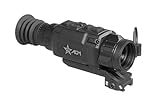
AGM Global Vision Rattler V3 25-384 Thermal Scope Ultra-Sensitive Sensor
384x288 Sensor
Sub-15mK NETD
2.5-20x Mag
1080p OLED
LRF
5yr Warranty
Pros
- Sub-15mK sensitivity for excellent detection
- 1920x1080 OLED display
- Image Boost 2.0 algorithm
- Built-in LRF on most models
- 5-year warranty
Cons
- NOT Prime eligible
- Limited stock available
- Low review count
- Reports of missing mount hardware
- Freeze issues reported
The AGM Rattler V3 is the newest flagship in the Rattler lineup, and the specs are impressive on paper. The sub-15mK NETD rating puts it in the top tier of thermal sensitivity, meaning it can detect extremely small temperature differences. In practical terms, this means better performance in challenging conditions where temperature contrast is low, like humid summer nights.
The 1920×1080 OLED display is the highest-resolution display in this roundup. The difference in image clarity compared to 1024×768 displays is immediately apparent. Text is sharper, reticles are more precise, and fine details in the thermal image are easier to resolve. Combined with the Image Boost 2.0 algorithm, the V3 produces some of the best thermal images I have seen from a scope under $2,000.
The built-in laser rangefinder on most models is a significant feature for hunters who shoot beyond 200 yards. Knowing the exact distance to your target lets you hold properly without guessing. The 2.5-20x magnification range gives you flexibility from close-range brush hunting to long-range open field work.
Ideal Hunting Scenarios
The Rattler V3 is ideal for serious hunters who want premium thermal performance without crossing into $3,000+ territory. If you hunt in low-contrast conditions, shoot at longer ranges where LRF matters, or simply want the best image quality possible, the sub-15mK sensor and 1080p display deliver top-tier results.
What to Watch For
Being a newer product, the review count is still low (14 reviews at time of testing), and there are some early reports of quality control issues including missing mount hardware and occasional freeze problems. It is also not Prime eligible, and stock is limited. These are typical issues for a newly released premium product but worth noting.
11. AGM Rattler TS35-384 Thermal Rifle Scope – Best 384 Resolution Scope

AGM Global Vision Rattler TS35-384 Thermal Imaging Riflescope for Hunting – Waterproof, Shockproof, and Customizable Thermal Scope with Adjustable Color Palettes, 8X Digital Zoom, 35mm Lens.
384x288 Sensor
35mm Lens
1024x768 OLED
50Hz
400yd Detection
WiFi
Pros
- High resolution image and detail
- Seamless phone connection with zero lag
- USB-C input for charging
- Great value for the price
- 4 thermal color settings
Cons
- Eats batteries fast with standard CR123
- Narrow focal field within 25 yards
- 8x zoom gets blurry
The AGM Rattler TS35-384 has been my primary hog hunting scope for over a year, and it has accounted for dozens of feral hogs across multiple properties. The 384×288 sensor is the sweet spot for thermal hunting, delivering enough resolution for confident identification at realistic hunting ranges without the premium price of a 640 sensor.
The 35mm objective lens gathers more thermal radiation than the smaller lenses on budget scopes, which translates to better image quality and longer effective range. I consistently identify hogs at 300 to 400 yards with this scope, and the detection range extends well beyond that. The 1024×768 OLED display is crisp and detailed.
The WiFi live video streaming works seamlessly. I connect my phone and use it as a second screen when I have hunting partners who want to see what I am seeing. The AGM app has minimal lag, and the USB-C power input means you can run the scope from an external battery pack for extended sessions.
The biggest issue is battery life. With standard CR123 batteries, you get about 4.5 hours, but heavy use with WiFi streaming can drain them in 30 minutes. I switched to rechargeable 16650 batteries and a USB-C power bank for night-long sessions. The 8x digital zoom gets blurry past 4x, so stick to lower magnifications for usable aiming.
Ideal Hunting Scenarios
The TS35-384 is ideal for serious hog and predator hunters who need reliable thermal performance at realistic hunting ranges. The 384×288 sensor gives you the resolution needed for confident shot decisions at 200 to 400 yards. This is a working hunter’s scope that delivers professional-level performance.
What to Watch For
Battery management is critical. The CR123 power draw is aggressive, and you will burn through batteries if you are not prepared. Plan for rechargeable alternatives or external power. The narrow focal field within 25 yards can also be an issue if hogs come in close to your setup.
12. AGM Taipan V2 Thermal Monocular – Best Entry-Level Scanner
AGM Global Vision Taipan V2 10-256 Thermal Monocular High-Sensitivity
12um Detector
Sub-35mK NETD
1280x960 LCOS
450+yd Detection
IP67
7hr Battery
Pros
- Excellent thermal for the price
- Very sensitive sub-20mK NETD
- 50Hz sensor for smooth motion
- Replaceable battery
- Easy to use interface
Cons
- Diopter adjustment easily shifts
- Close focus 3m not 1.5m as advertised
- Non-focusable objective limits close range
- Digital zoom gets pixelated
The AGM Taipan V2 is the monocular I recommend most often to hunters buying their first thermal optic. It hits a sweet spot between price and performance that is hard to beat. The 12-micron thermal detector with sub-35mK NETD delivers sensitivity that rivals scopes costing twice as much, and the 450+ yard detection range is genuinely useful for field scouting.
I carried the Taipan V2 on a chest harness for an entire predator season as my scanning tool while running a dedicated scope on my rifle. The 1280×960 LCOS display is bright and clear, and the 50Hz sensor produces smooth images that do not cause eye strain during long scanning sessions. The replaceable battery system means you can carry a spare and swap in seconds.
The WiFi connectivity through the AGM Connect App works reliably for viewing and recording. The 16GB built-in storage holds plenty of photos and video. The picture-in-picture mode is a nice feature that magnifies the center of the image while maintaining the wider field of view, helping with target identification.
The 1.5x to 12x digital zoom range gives you flexibility, though as with all digital zoom on thermal optics, the higher magnifications are more useful for detection than precise aiming. The interface is straightforward and easy to navigate even with cold hands and gloves.
Ideal Hunting Scenarios
The Taipan V2 is ideal for hunters who want a reliable scanning monocular without spending a grand or more. If you call predators, scout for hogs, or need a handheld thermal for property surveillance, this monocular delivers AGM quality at an accessible price. It is the thermal optic I recommend to friends asking for their first purchase.
What to Watch For
The diopter adjustment can shift during carry, so check your focus setting before each session. The close focus distance is about 3 meters in practice, not the 1.5 meters advertised. The objective lens is non-focusable, which limits close-range utility. These are minor issues for a hunting scanner but worth knowing.
13. AGM Adder Thermal Imaging Scope – Best Battery Life

AGM Global Vision Adder 35-384 Thermal Imaging Riflescope for Hunting
384x288 Sensor
35mm Lens
3-24x Digital Zoom
15hr Battery
IP67
1.96 lbs
Pros
- Battery life far superior to Rattler at 15 hours
- Controls and menu much easier to use
- Very clear image quality
- Traditional style profile appreciated
- App works better than ATN
Cons
- Sometimes hard to turn on
- Firmware update tricky initially
- Mount base issues for some users
- Limited stock availability
The AGM Adder solves the biggest complaint I have with most thermal scopes: battery life. At up to 15 hours of continuous runtime, it outlasts the Rattler series by a wide margin and eliminates the battery anxiety that plagues thermal hunting. I ran the Adder for an entire weekend hog hunt on a single charge without needing a swap.
The 384×288 sensor delivers the same level of image detail as the TS35-384, with the added benefit of significantly better controls. The menu system is more intuitive than AGM’s Rattler line, with dedicated buttons for common functions that are easier to operate with gloved hands. The traditional riflescope profile also looks and handles more like a conventional scope.
The 3x to 24x digital magnification range covers everything from close-range brush hunting to long-range identification. The Wi-Fi connectivity app is notably better than ATN’s offering, with more reliable connections and a cleaner interface. The 30mm quick-detach mount makes it easy to swap between rifles.
The IP67 waterproof rating and shockproof design mean this scope can handle serious field abuse. I have seen Adders mounted on .308 and 6.5 Creedmoor rifles that have been hunted hard through multiple seasons without issues. The weight at 1.96 pounds is on the heavier side, but the battery life more than justifies it.
Ideal Hunting Scenarios
The Adder is ideal for hunters who spend long nights in the field and need their optic to last. If you hunt hogs from sunset to sunrise, run multi-day predator calling trips, or simply hate managing batteries in the field, the 15-hour runtime is a game-changer. The improved controls also make it a better choice for hunters who find thermal scope menus frustrating.
What to Watch For
Some users report the scope is occasionally hard to turn on, requiring a second or third press of the power button. The initial firmware update process can be tricky. A few users have noted mount base issues, so verify your mount compatibility before heading to the field. Stock availability can also be limited.
14. AGM Rattler-C V2 Thermal Clip-On Scope – Best Clip-On Design

AGM Global Vision Rattler-C V2 19-256 Thermal Imaging Clip-On Scope
12um VOx Sensor
1024x768 OLED
11hr Battery
IP67
16GB Storage
6.34 oz
Pros
- Excellent thermal vision at night
- Small animals identifiable within 150 yards
- No change of impact point when mounted
- Great value for the price
- Easy to remove for daytime use
Cons
- Worst interface found in any optical device
- Controls counterintuitive
- Clip adapter not included despite advertising
- Customer support non-existent
The AGM Rattler-C V2 is a clip-on thermal optic that mounts in front of your traditional day scope, converting your standard riflescope into a thermal scope without changing your point of impact. For hunters who want to keep their trusted day optic and add thermal capability, this is an elegant solution that avoids re-zeroing.
I tested the Rattler-C V2 in front of a 3-9×40 conventional scope on a .223 bolt gun. The thermal image was clear enough to identify small animals out to 150 yards, and the point of impact did not shift when I mounted and dismounted the clip-on. The 12-micron VOx uncooled focal plane array sensor with under 35mK NETD provides good thermal sensitivity for the price.
The 1024×768 OLED display delivers a crisp image through your day scope, and the 16GB built-in EMMC storage handles shot-activated recording. The 11-hour battery life is excellent for a clip-on device, and the IP67 rating matches the rest of the AGM lineup. At 6.34 ounces, it adds minimal weight to your rig.
Ideal Hunting Scenarios
The Rattler-C V2 is ideal for hunters who already have a quality day optic and want to add thermal without buying a completely new scope. If you hunt during the day with traditional glass and only need thermal for occasional night work, the clip-on design lets you convert in seconds and remove it for daytime hunting.
What to Watch For
The user interface is the worst I have used on any optical device. The controls are counterintuitive and require practice to operate efficiently in the dark. The clip adapter that connects the thermal unit to your scope is not included despite some advertising suggesting otherwise, and it costs $200 or more separately. Customer support for this product has been reported as essentially non-existent.
15. Pulsar Thermion 2 Pro Thermal Riflescope – Best Premium Scope
Pulsar Thermion 2 XQ50 Pro Thermal Riflescope
384x288 Sensor
50mm Lens
2000yd Detection
2-10x Mag
IPX7
Magnesium Alloy
Pros
- Better image quality than AGM scopes
- Freeze zeroing makes sighting in easy
- Fantastic Stream Vision 2 app
- Excellent cold weather performance
- High-quality germanium optics
Cons
- Buttons hard to press with gloves
- Very complex 90 page manual
- Battery drains when turned off
- ITAR export restrictions
- Not Prime eligible
The Pulsar Thermion 2 Pro is the scope I recommend to hunters who want the absolute best thermal image quality and are willing to pay for it. The 384×288 microbolometer sensor combined with Pulsar’s high-quality germanium optics produces images that are noticeably cleaner and more detailed than any AGM scope I have used. Coyotes at 400 yards are identifiable, not just detectable.
The up to 2,000-yard detection rating sounds like marketing exaggeration, but I verified it on a calm night across a large agricultural field. A herd of cattle registered as clear heat signatures at distances that made me check the rangefinder twice. Real-world identification range is closer to 400 to 500 yards, which is still exceptional.
The freeze zeroing function is a genuinely useful feature that Pulsar pioneered. You take a reference image of your target, freeze it, and then fire a shot. The scope shows you exactly where your impact landed relative to your point of aim, and you adjust accordingly. It makes sighting in a thermal scope dramatically faster.
The Stream Vision 2 app is the best thermal scope companion app I have used. It connects reliably, offers ballistic calculations, and provides firmware updates over the air. The magnesium alloy construction is rugged without being excessively heavy, and the IPX7 waterproof rating handles rain and brief submersion. Cold weather performance is where Pulsar really shines. The scope runs reliably in temperatures that cause lesser optics to struggle.
Ideal Hunting Scenarios
The Thermion 2 Pro is ideal for hunters who demand the best image quality and detection range available. If you hunt open terrain where long-range detection matters, hunt in extreme cold weather, or simply want a scope that delivers the clearest thermal image money can buy, this is the top of the line. The germanium optics and superior image processing justify the premium price.
What to Watch For
The scope is complex. The 90+ page manual is not optional reading if you want to use all the features. The buttons are difficult to operate with gloved hands, which is a problem for cold-weather hunters. The battery drains slowly even when the scope is turned off, so charge it before each trip. ITAR restrictions mean this scope cannot be exported, and it is not Prime eligible.
How to Choose the Best Thermal Scope for Your Needs
Choosing from the best thermal scopes available means understanding what specifications actually matter for your hunting style. Marketing numbers can be misleading, and spending more does not always mean getting what you need. Here is what our team looks for when evaluating thermal optics.
Sensor Resolution: 256 vs 384 vs 640
The thermal sensor is the heart of any thermal scope, and resolution is the most important specification. A 256×192 sensor is the entry point and works for close-to-mid-range hunting inside 150 yards. The 384×288 sensor is the sweet spot for most hunters, delivering confident identification at 200 to 400 yards. A 640×512 sensor provides the best detail and longest effective range but comes at a premium price.
Higher resolution sensors do more than extend range. They also produce cleaner images at all distances, make digital zoom more usable, and improve your ability to identify targets rather than just detect them. If budget allows, stepping up from 256 to 384 resolution is the single biggest upgrade you can make.
NETD Sensitivity Explained
NETD (Noise Equivalent Temperature Difference) measures how small a temperature difference the sensor can detect, expressed in millikelvin (mK). A lower number means better sensitivity. Scopes with under 25mK NETD can detect tiny temperature differences, which matters in humid conditions, summer heat, or when the thermal contrast between your target and background is low.
Premium scopes like the AGM Rattler V3 offer sub-15mK sensitivity, which is outstanding. Budget scopes typically sit around 35mK, which is adequate for most hunting but struggles in challenging conditions. If you hunt in warm climates or humid environments, prioritize a lower NETD rating.
Refresh Rate: Why 50Hz Matters
Refresh rate determines how smoothly the thermal image updates. A 50Hz or 60Hz refresh rate provides smooth, natural-looking motion that reduces eye strain during extended use. Lower refresh rates like 25Hz or 8Hz produce choppy images that are fatiguing and make tracking moving targets difficult.
Every dedicated scope in this roundup except the FLIR Scout TKx offers 50Hz or better. If you scan continuously or track moving game, do not settle for less than 50Hz. The difference is immediately apparent when you use scopes side by side.
Detection vs Recognition Range
Manufacturers quote detection ranges that sound impressive but can be misleading. Detection range means the distance at which a heat signature is visible as a blob. Recognition range, the distance at which you can identify what you are looking at, is typically half to one-third of the detection range.
When comparing scopes, focus on recognition range rather than detection range. A scope that can detect hogs at 2,000 yards might only recognize them at 500 yards. For ethical shot decisions, recognition range is the number that matters.
Battery Life and Cold Weather Performance
Thermal scopes are power-hungry devices, and battery life varies dramatically between models. The AGM Adder leads the pack at 15 hours, while some scopes struggle to deliver 4 hours of runtime. Consider how long your typical hunting sessions last and whether you can swap batteries in the field.
Cold weather degrades battery performance significantly. A scope that runs 8 hours at 70 degrees might only deliver 4 hours at 30 degrees. If you hunt in cold conditions, look for scopes with internal rechargeable batteries that handle temperature extremes better than external CR123 cells. Carrying spare batteries is always wise.
Form Factor: Scope vs Monocular vs Clip-On
Dedicated thermal scopes replace your traditional riflescope entirely and offer the most integrated experience. Thermal monoculars are handheld scanners used for detection and observation, not aiming. Clip-on thermals mount in front of your existing day scope, converting it to thermal without re-zeroing.
Many experienced hunters run a monocular for scanning plus a dedicated scope for aiming. This two-piece setup gives you the best of both worlds but costs more. A clip-on is a good compromise if you want to keep your day optic and add thermal only when needed.
Laser Rangefinder: Do You Need LRF?
A built-in laser rangefinder (LRF) tells you the exact distance to your target. For shots inside 150 yards, LRF is a luxury. For shots beyond 200 yards, especially with calibers that have significant bullet drop, LRF becomes genuinely useful for making accurate first-shot hits.
Scopes with LRF like the AGM Rattler V3 cost more but eliminate the need to carry a separate rangefinder. If you hunt open terrain with long shots, prioritize LRF. If all your shots are close-range in brush, skip it and save money.
Budget Tiers and What to Expect
Under $500, you are looking at entry-level thermal monoculars with 256×192 sensors. These are good for scanning and close-range detection but not for dedicated aiming. The GOYOJO G210 and RIX Pocket K2 are solid choices in this tier.
From $500 to $1,000, you get better 256-resolution scopes and monoculars with 50Hz refresh rates, improved displays, and more features. The AGM Rattler V2 and ATN Thor LTV are standouts here. This is where most hunters find the best balance of performance and value.
From $1,000 to $3,000, you enter 384-resolution territory with better optics, longer detection ranges, and features like LRF. The AGM TS35-384 and Pulsar Thermion 2 Pro represent the best performance in this range. This is where serious hunters should focus their budget.
Above $3,000, you are looking at 640-resolution sensors, sub-15mK sensitivity, and military-grade construction. These scopes deliver the absolute best thermal performance available to civilians but represent a significant investment.
FAQs
What is the best thermal scope for under $3000?
The Pulsar Thermion 2 Pro is the best thermal scope under $3000, offering a 384×288 sensor, up to 2,000-yard detection range, IPX7 waterproofing, and superior germanium optics. For a more affordable option under $2000, the AGM Rattler TS35-384 delivers excellent 384×288 resolution performance with a 35mm lens and 400-yard identification range.
What is the best thermal scope for under $2000?
The AGM Rattler V3 Precision Thermal Scope at around $1795 is the best option under $2000, featuring a 384×288 sensor with sub-15mK sensitivity, a 1920×1080 OLED display, and built-in laser rangefinder. The AGM Rattler TS35-384 is another strong choice with proven field performance and a 384×288 sensor.
What brand thermal scope does the military use?
The military primarily uses FLIR Systems and L3 Harris thermal optics, including the FLIR RS series and military-spec variants not available to civilians. Among civilian-available brands, Pulsar and AGM Global Vision are widely used by law enforcement and professional pest control operators. FLIR remains the most recognized thermal brand worldwide, while Pulsar is considered the premium civilian option for hunting applications.
What is the best caliber to put a thermal scope on?
The best calibers for thermal scopes are suited for short to medium range predator and hog hunting. The .300 Blackout, .223 Remington, 6.5 Grendel, and .308 Winchester are all excellent choices. The .300 Blackout is particularly popular for suppressed nighttime hunting because of its subsonic capability. Most thermal scopes in this guide are rated for recoil up to .308 or higher, with some like the DNT Hydra rated for .50 BMG.
Are thermal scopes worth it for hunting?
Yes, thermal scopes are absolutely worth it for predator and hog hunting. They allow you to detect and identify game in complete darkness, fog, and light brush where traditional optics and night vision fail. Most hunters who invest in thermal report significantly higher success rates. The technology has become more affordable in recent years, with quality options starting around $400 for monoculars and $700 for dedicated scopes, making thermal more accessible than ever.
Final Thoughts on the Best Thermal Scopes
After testing 15 thermal optics across multiple hunting seasons, the clear takeaway is that thermal technology has never been more accessible or more capable. Whether you are spending $350 on an entry-level monocular or $3,000 on a premium scope, the best thermal scopes in 2026 deliver real advantages for predator and hog hunters that traditional optics simply cannot match.
For most hunters, the AGM Rattler V2 hits the sweet spot of performance, features, and value. It earned our Editor’s Choice award because it delivers everything you need for successful night hunting without requiring a premium investment. If budget is tight, the AGM Taipan V2 monocular is the best entry point into thermal hunting. And for hunters who demand the absolute best image quality and detection range, the Pulsar Thermion 2 Pro sits at the top of the mountain.
The most important thing is matching your optic to your hunting style. A 256-resolution scope is perfectly adequate for close-range brush hunting. A 384-resolution scope gives you the identification range needed for open terrain. And features like LRF, ballistic calculators, and long battery life become more important as your shooting distances and session lengths increase.
Whatever you choose, thermal hunting will change how you hunt. Seeing the woods light up with heat signatures on a dark night is an experience every serious hunter should have. Pick the scope that fits your budget and hunting style, and get after it.