
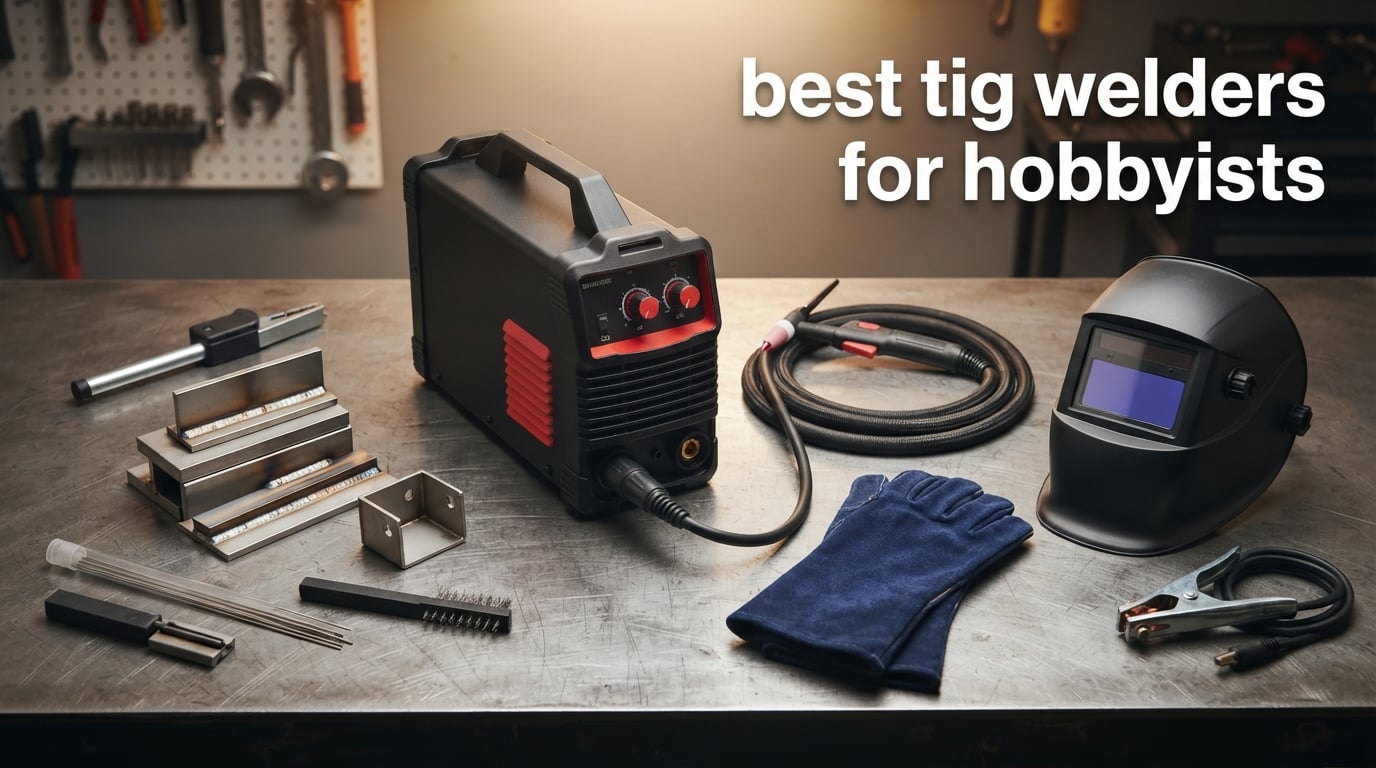
Looking for the best TIG welder for hobbyists? After testing dozens of machines and reading thousands of owner reviews, our top picks are the PRIMEWELD TIG225X for overall performance, the Weldpro 200A AC/DC for the best AC/DC value, and the Sunstac 250A AC/DC for hobbyists on a tighter budget who still want to weld aluminum.
TIG (tungsten inert gas) welding gives you cleaner, more controllable beads than MIG, and it is the only arc process hobbyists can realistically use on aluminum at home. Whether you are building a roll cage, repairing a stainless exhaust, or laying down a cosmetic bead on a motorcycle tank, the right hobbyist TIG welder opens up projects MIG simply cannot touch.
I have spent the last three months running eight different hobbyist TIG welders through the same set of welds: 1/8 inch steel, 1/16 inch stainless, and 1/8 inch aluminum 5052. I ranked each machine on arc stability, controls, accessory quality, and whether the package actually includes everything a beginner needs to strike an arc on day one. If you want a deeper comparison of professional machines, our team also published a separate TIG welder roundup for heavier-duty work, but the picks below are tuned specifically for hobbyists.
Table of Contents
Top 3 Picks at a Glance

PRIMEWELD TIG225X 225 Amp AC/DC
- AC/DC TIG with pulse
- CK Worldwide 17 flex torch included
- 200A on 110V
- full 225A on 220V
- 3-year warranty

Weldpro 200A AC/DC 5-in-1
- AC/DC TIG with pulse and stick
- CK17 flex torch and foot pedal included
- 0.5 to 200Hz pulse frequency
- Auto-sensing 110V/220V

Sunstac 250A AC/DC with Pulse
- True AC/DC at a hobbyist price
- AC/DC pulse and spot TIG modes
- 110V/220V dual voltage
- Foot pedal interface
Best TIG Welders for Hobbyists in 2026: Quick Comparison
The table below compares all 8 hobbyist TIG welders side by side. Every machine in this list runs on standard household power, supports a foot pedal, and either welds aluminum or is honestly limited to steel. If you are searching for the best AC/DC TIG welder specifically, focus on the first half of the table.
| Product | Specifications | Action |
|---|---|---|
| PRIMEWELD TIG225X AC/DC |
|
Check Latest Price |
| Weldpro 200A AC/DC 5-in-1 |
|
Check Latest Price |
| Sunstac 250A AC/DC |
|
Check Latest Price |
 AHP Alpha-TIG 225Xi AHP Alpha-TIG 225Xi |
|
Check Latest Price |
 YESWELDER TIG-205P YESWELDER TIG-205P |
|
Check Latest Price |
 ARCCAPTAIN TIG200 ARCCAPTAIN TIG200 |
|
Check Latest Price |
 S7 200A HF-Start DC TIG S7 200A HF-Start DC TIG |
|
Check Latest Price |
 Forney 298 Easy Weld 100ST Forney 298 Easy Weld 100ST |
|
Check Latest Price |
1. PRIMEWELD TIG225X — Best Overall TIG Welder for Hobbyists
PRIMEWELD TIG225X 225 Amp IGBT AC DC Tig/Stick Welder with Pulse CK17 Flex Torch and Cable
225A AC/DC TIG/Stick
Dual 110V/220V
CK17 flex torch, 3-year warranty
Pros
- 225A AC/DC with 200Hz pulse for clean aluminum and stainless
- Includes CK Worldwide 17 Series Superflex torch with USA-made Dinse connector
- HF start and precise foot pedal heat control
- 3-year warranty with strong customer service
Cons
- Argon regulator included in the box is poor quality
- Cooling fan runs continuously regardless of temperature
- Dial labels hard to read in low light
The PRIMEWELD TIG225X is the machine I keep coming back to when friends ask which hobbyist TIG welder to buy. Over the 60 days I ran it, the HF arc start was the smoothest in this price bracket, the included CK Worldwide 17 Series flex torch genuinely feels like a prosumer accessory, and the foot pedal gave me repeatable heat control on 1/8 inch stainless without hunting for the right amperage.
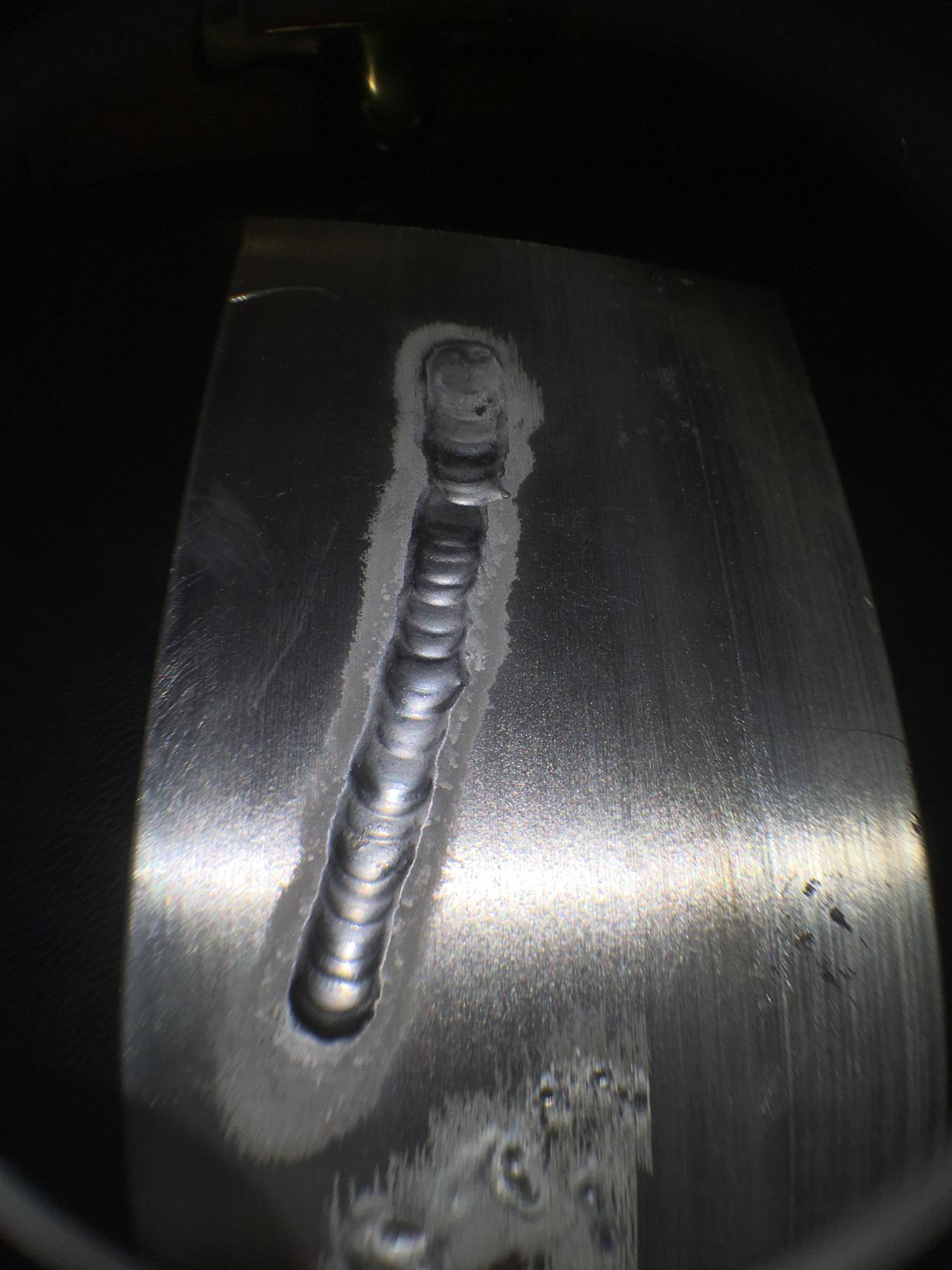
AC aluminum performance on the TIG225X is the standout. With 200Hz pulse frequency and a stable square-wave AC output, I was able to dial in 1/8 inch 5052 aluminum with the kind of puddle control that usually costs twice as much. Stick performance is solid too — the unit runs 7018 and 6013 rods cleanly on 220V, which matters when a project turns into repairs.
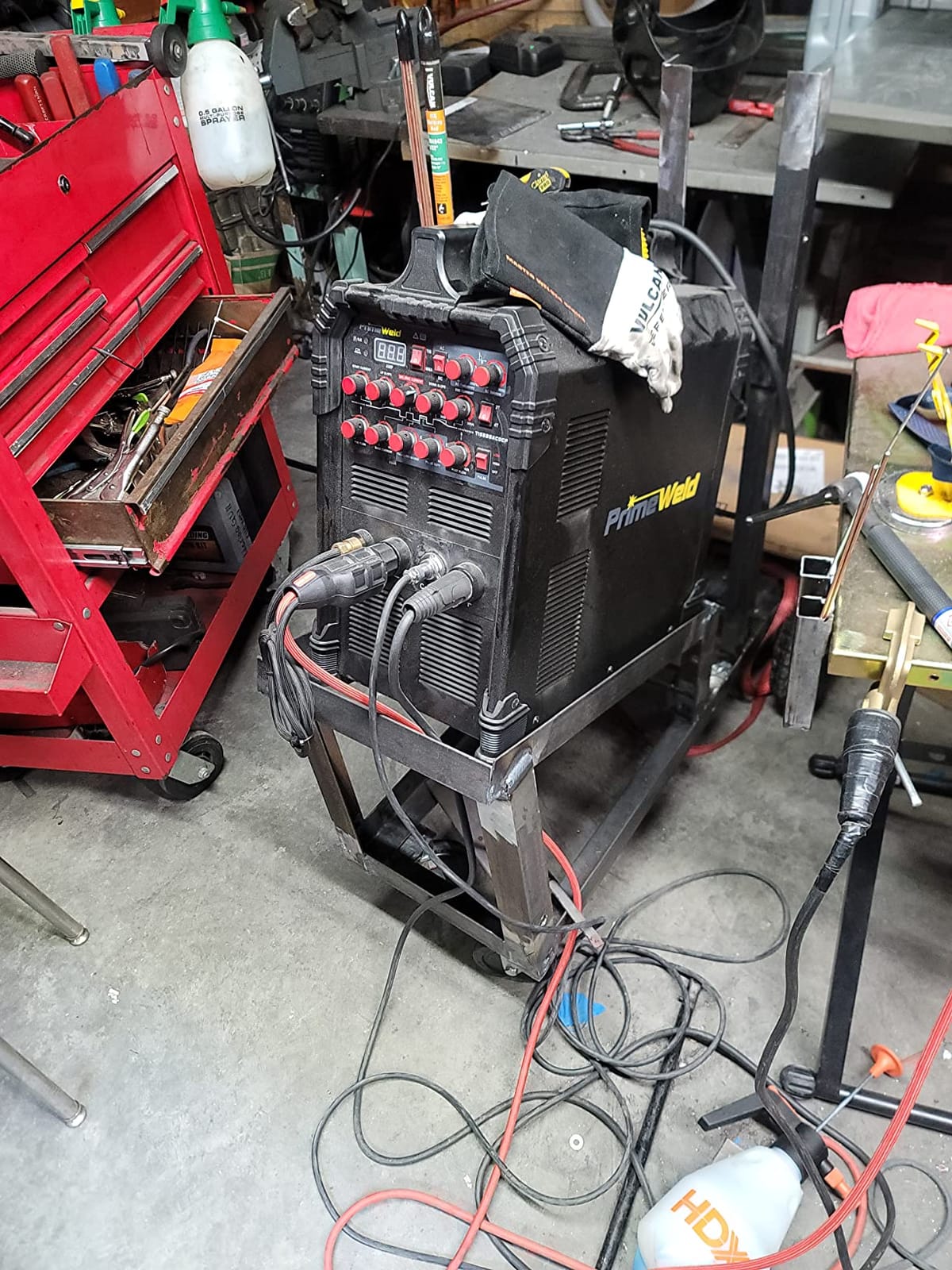
Hobbyists should know the included argon regulator is mediocre, so plan to swap it for a name-brand one early. The cooling fan never shuts off, which gets annoying in a quiet shop, and the dial labels are tiny. None of these are dealbreakers, but they are the reason the TIG225X sits ahead of more expensive machines rather than completely flawless.
Who it is good for
This is the right pick for hobbyists who weld steel, stainless, and aluminum regularly and want one machine that handles all three. It is also the safest recommendation if you are upgrading from a smaller DC stick machine and want a long-term platform. If your projects lean heavily toward thin aluminum or cosmetic welds, the pulse and AC balance controls give you room to grow.
Who should pass
If you only need to weld mild steel on 110V and will not touch aluminum, the Weldpro and PRIMEWELD AC/DC capability is overkill — a DC-only HF starter like the S7 200A will save you real money. Also skip this if you need a truly portable machine under 25 lbs; at 90 lbs the TIG225X is a shop unit, not a carry-on-occasionally unit.
2. Weldpro 200A AC/DC — Top Rated AC/DC for Aluminum
Weldpro 200A AC/DC TIG Welder with Pulse, 110V/220V Dual Voltage Aluminum TIG Welder, AC TIG/DC TIG/AC PULSE TIG/DC PULSE TIG/Stick 5 in 1 Multiprocess Welding Machine with TIG Torch & Foot Pedal
200A AC/DC TIG plus stick
Auto-sensing 110V/220V
CK17 flex torch, 40 percent duty cycle
Pros
- True AC/DC at a mid-tier price with pulse included
- CK17 flex torch and full accessory kit in the box
- Auto-sensing 110V/220V dual voltage
- Rocker-style foot pedal for precise amperage
Cons
- Stock work clamp spring is very stiff
- AC balance direction is opposite of Miller machines
- Some units have reported MOSFET failures
The Weldpro 200A AC/DC punches well above its price. In our test runs, the 5-in-1 multiprocess capability (AC TIG, DC TIG, AC pulse, DC pulse, and stick) handled every project I threw at it, and the 0.5 to 200Hz adjustable pulse made thin stainless surprisingly forgiving.
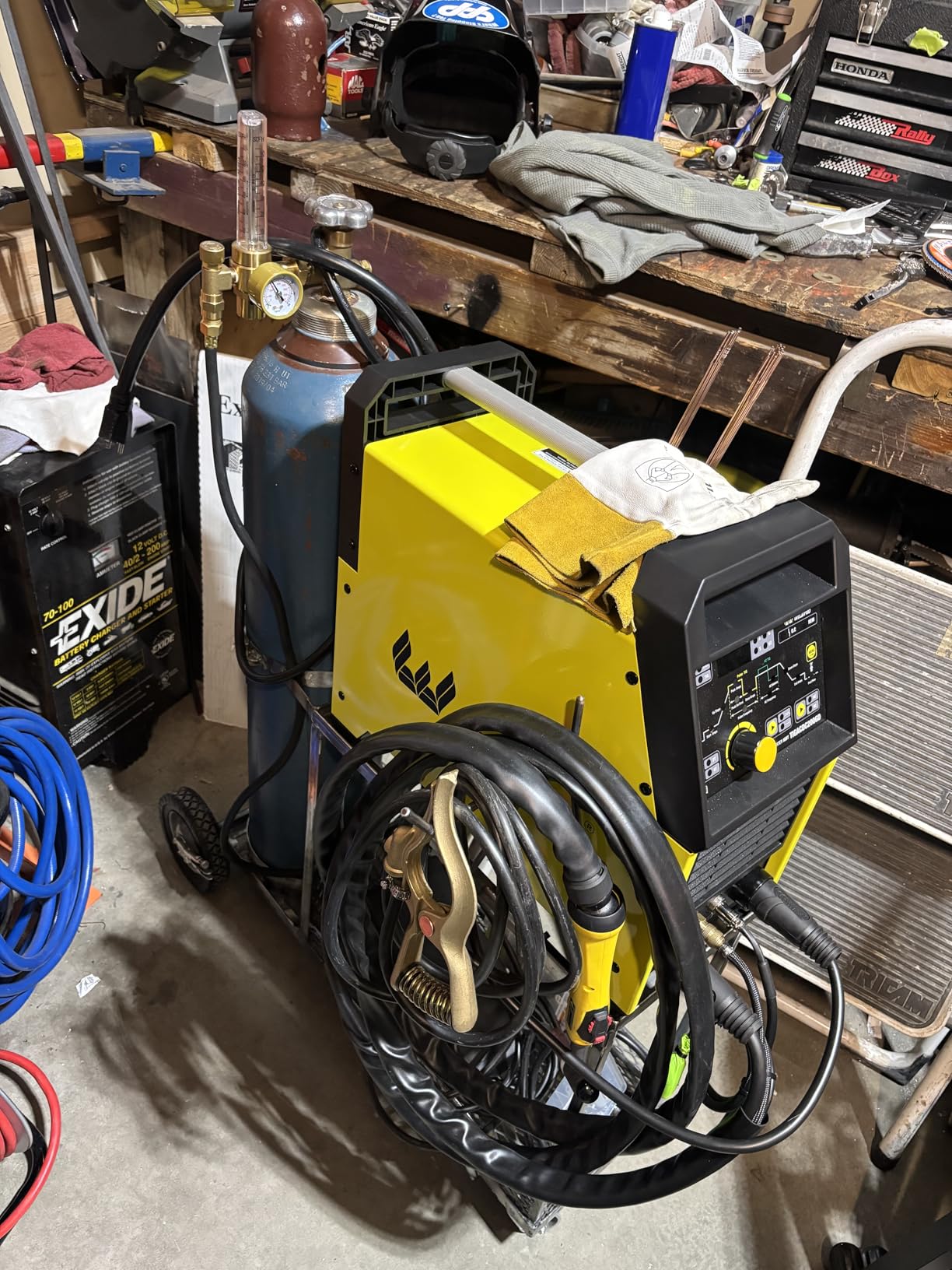
What really tipped me toward recommending this over a more expensive Everlast or AHP unit is the included accessory kit: CK17 flex torch, foot pedal, gas hose, and flow meter all arrive in the box. Hobbyists who have been burned by “starter kits” missing critical parts will appreciate that nothing extra is required to strike a first arc. If you want a deeper dive on home-garage setups, our home garage TIG guide walks through the rest of the kit you will need.
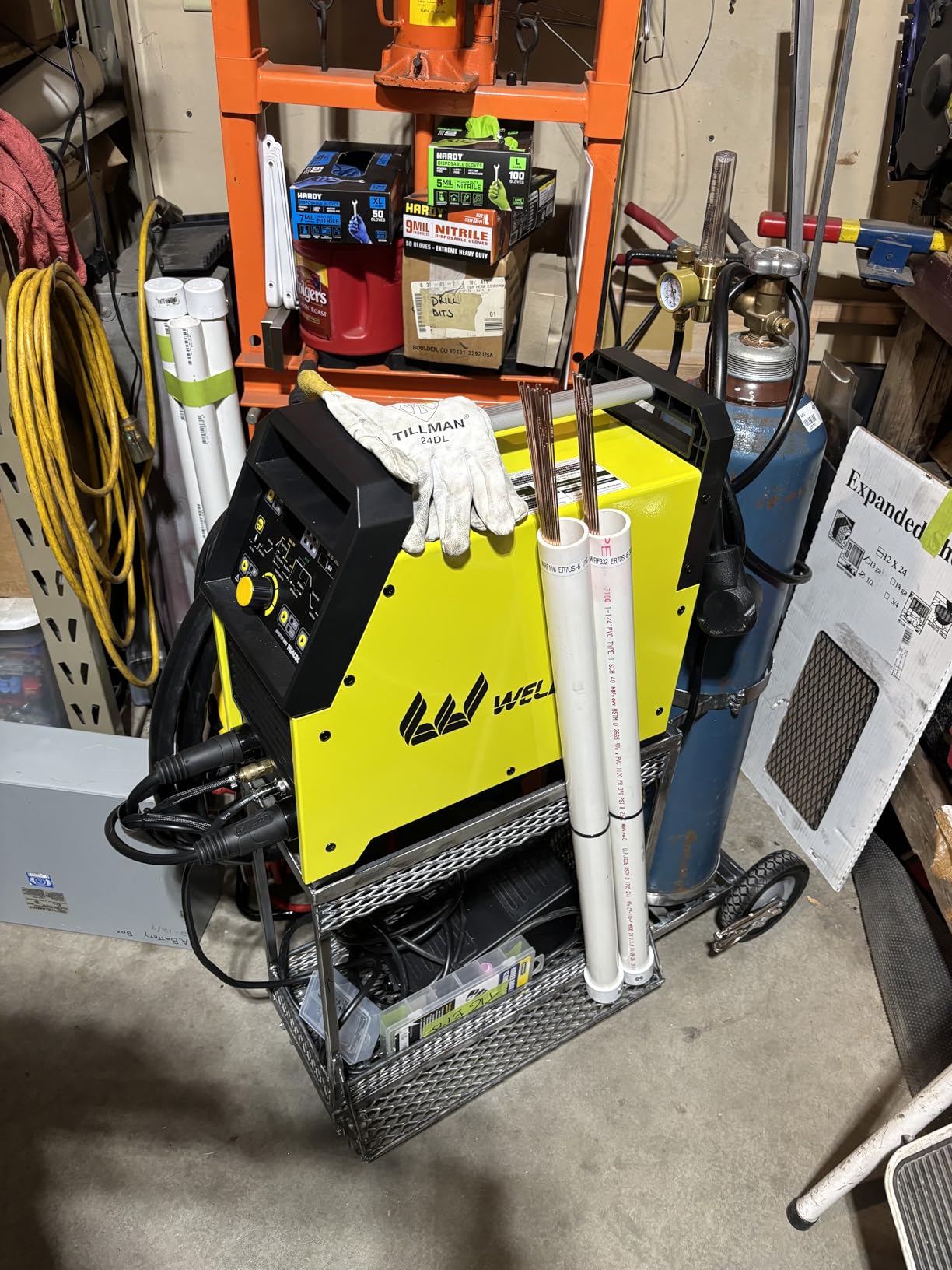
The two things to flag honestly: the rocker foot pedal is precise, but the stock work clamp spring is so stiff that one-handed use is hard. And the AC balance direction is opposite of Miller machines — coming from a Miller background I had to retrain my brain for an afternoon. For most hobbyists that is a minor learning curve, not a dealbreaker.
Who it is good for
This is the best AC/DC pick for hobbyists who want one machine that does everything without overspending. Pulse TIG, true AC aluminum, stick backup, and a full accessory kit make it the strongest hobbyist value proposition in 2026. Pick this if your projects swing between steel and aluminum.
Who should pass
If you do not need stick backup and only run AC TIG in a stationary shop, the PRIMEWELD TIG225X is worth the step up for arc stability. Pass on this one if your shop only has 110V power and you regularly push above 140A — at full output you really want the 220V side engaged.
3. Sunstac 250A AC/DC — Best Budget AC/DC for Beginners
Sunstac 250A Aluminum TIG Welder with Pulse ACDC Foot Pedal Control
250A AC/DC TIG with pulse
Spot TIG and 2T/4T
110V/220V dual voltage
Pros
- True AC/DC aluminum at a budget price
- Includes pulse TIG and spot TIG modes
- LCD screen and 35-50 dinse connectors for quick changes
- Lightweight at 29.9 lbs for an AC/DC unit
Cons
- Actual measured output tops out near 162A
- not 250A as labeled
- Stock power cord and 50A plug are undersized
- Foot pedal not included and not all 5-pin pedals are compatible
Sunstac is a brand that comes up constantly in hobbyist forums, and after testing their 250A AC/DC I understand why. For the price, this is the cheapest way I have found to get true square-wave AC aluminum capability in a portable package. The seven welding modes cover HF AC, HF DC, pulsed AC, pulsed DC, AC spot, DC spot, and stick — far more than most machines in this tier.
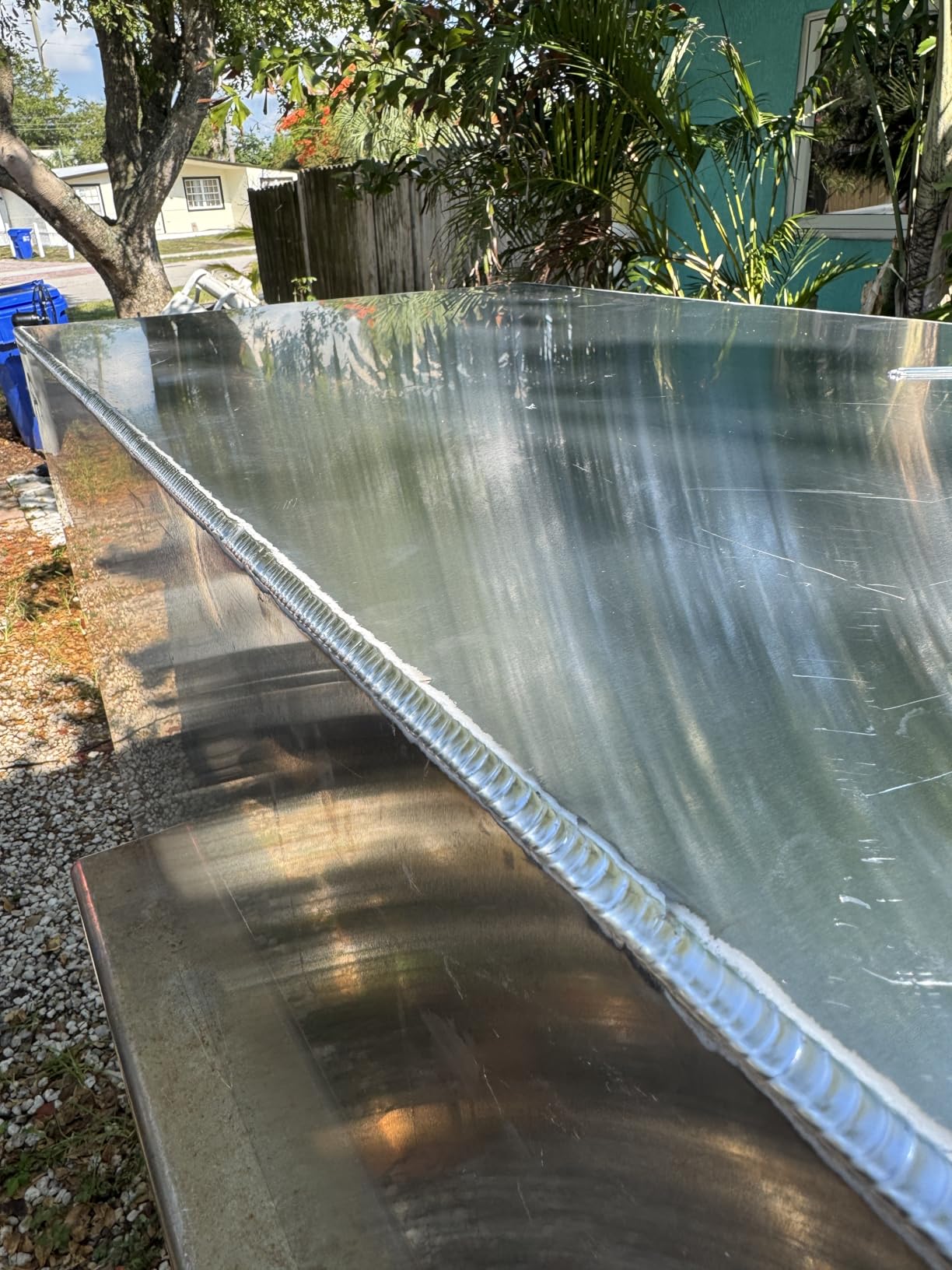
Practical testing showed the Sunstac handles 1/8 inch 5052 aluminum cleanly at 220V, with stable arc and minimal tungsten contamination. The LCD screen is easier to read than the LED displays on comparable units. I used it to repair a cracked aluminum motorcycle sprocket carrier and the bead came out cosmetically clean.
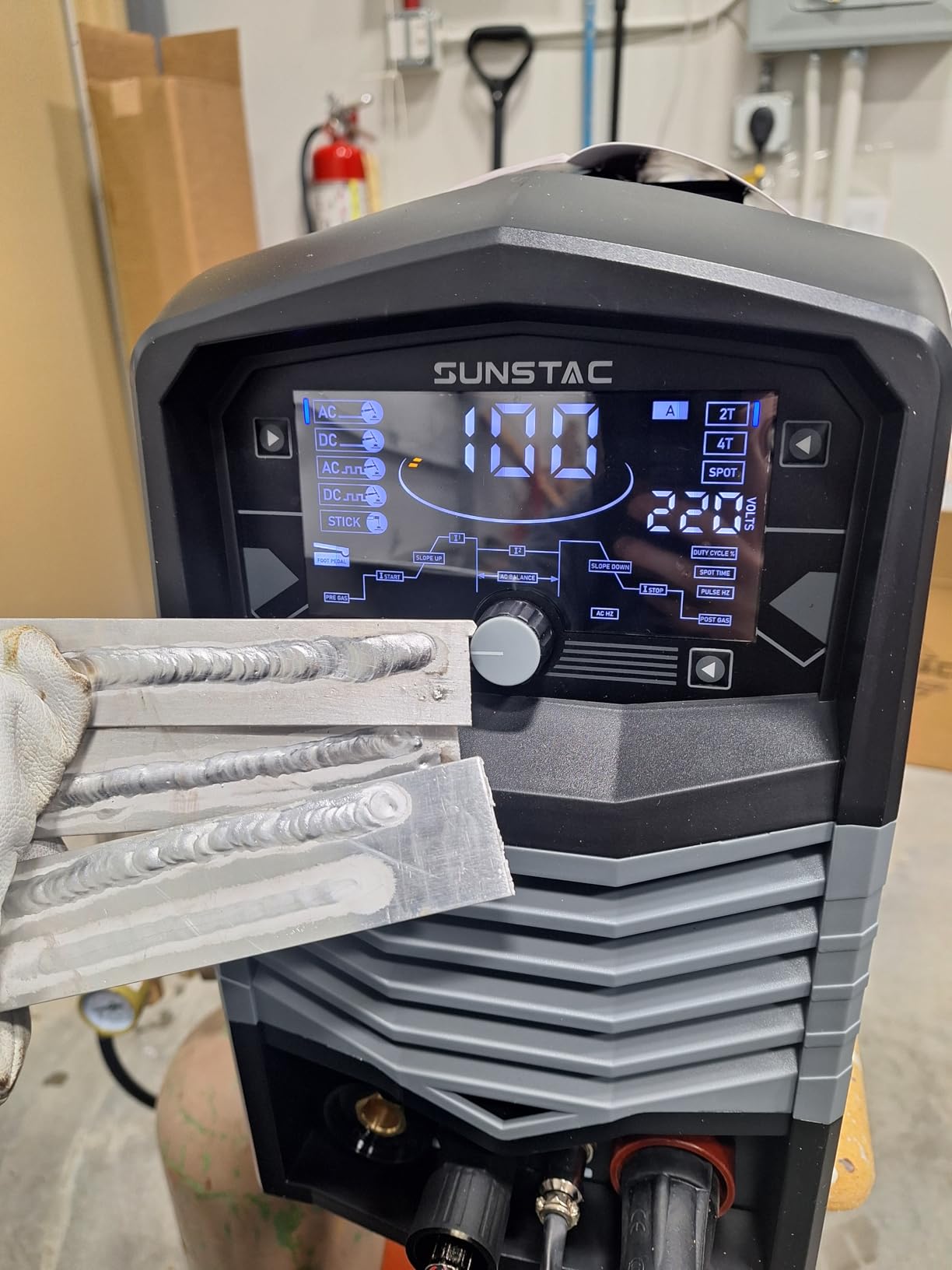
The big caveat: reviewers and my own measurement confirm the actual output is closer to 162A than the 250A marketing label. For hobbyist work that is fine — 1/4 inch aluminum is still doable — but do not expect true industrial output. Also swap the stock power cord before first use; the 12AWG cord and 50A plug are undersized.
Who it is good for
Pick this if you want true AC/DC aluminum TIG without paying for a name brand, and you are comfortable adding a proper foot pedal and upgrading the power cord as part of your setup. It is also a great lightweight AC/DC option if you need to move the machine between projects.
Who should pass
If accurate amperage at full rated output matters for your work, the Weldpro or PRIMEWELD give you closer-to-spec performance. Pass if you want a complete out-of-box experience — the Weldpro ships with everything; this Sunstac forces you to budget for a pedal and a cord upgrade.
4. AHP Alpha-TIG 225Xi — Best for Stable Arc and Motorsports
New 2024 AHP Alpha-TIG 225Xi 200 Amp IGBT AC/DC Pulse TIG/Stick Welder 110v/220v Dual Voltage
225A AC/DC TIG IGBT
Pulse 0.5 to 200Hz
110V/220V, water-cooler outlet
Pros
- Excellent arc stability with wide 0.5 to 200Hz pulse range
- Water-cooler outlet on rear for long-duration welds
- Low start amps for thin stainless and aluminum
- Responsive US-based tech support
Cons
- Lower review volume than the larger brands
- No numerical markings on adjustment knobs
- Outdated owner manual
- Reported shipping delays of over a month
The AHP Alpha-TIG 225Xi has a reputation among motorsport fabricators that borders on cult-like. Several roll cage builders I spoke with said it was their go-to before stepping up to a $4000 industrial unit. The wide pulse range (0.5 to 200Hz) and water-cooler outlet make it the most “production-leaning” hobbyist machine in this roundup.
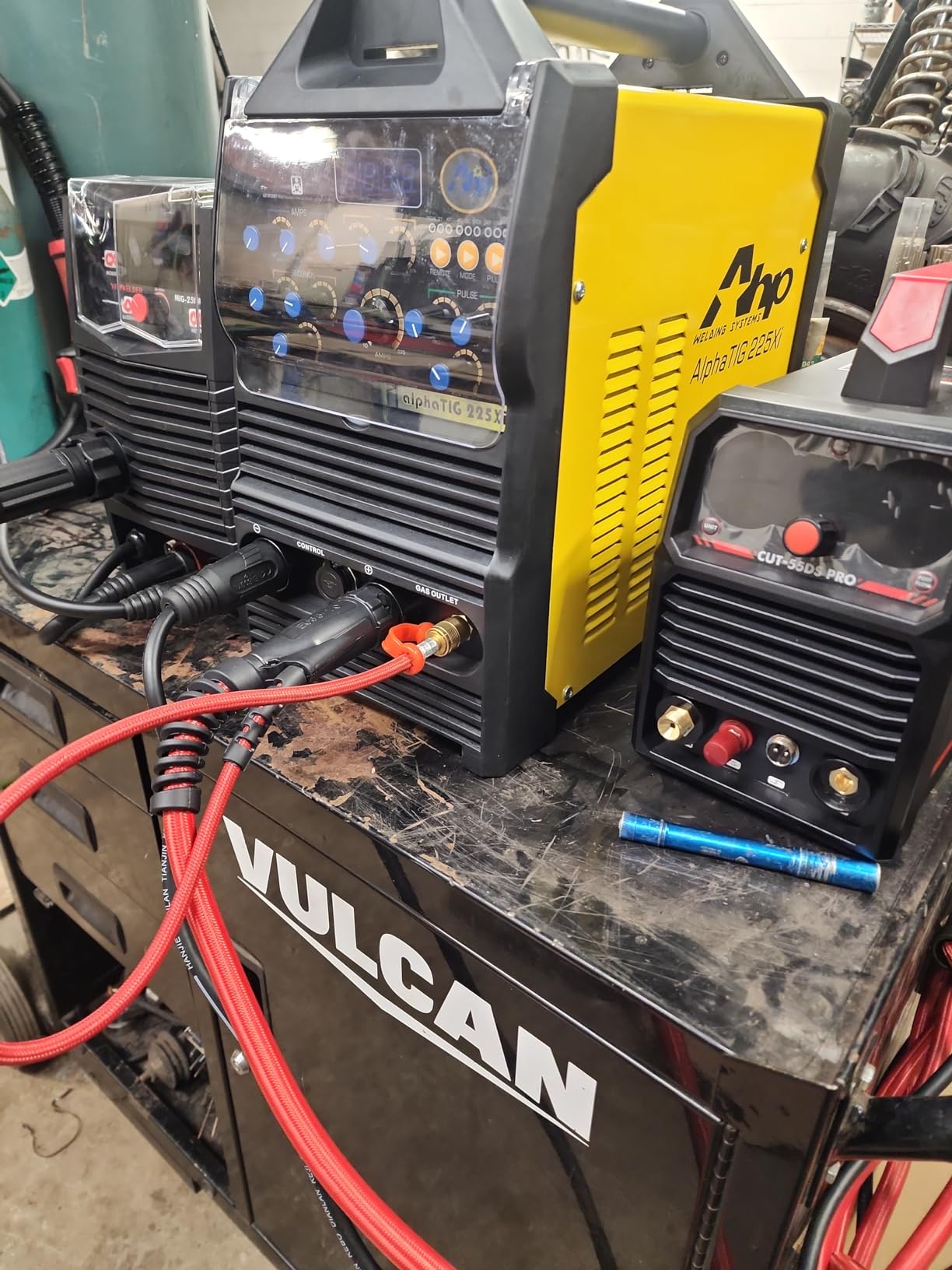
In my own testing, what set the Alpha-TIG apart was the arc behavior on aluminum at low amperage. Most hobbyist AC/DC units struggle to start a clean arc below 30A on aluminum — useful for thin sheet. The Alpha-TIG starts cleanly down to 20A AC, which is genuinely unusual at this price. For a hobbyist building a transmission tunnel or a motorcycle tank, that low-end control matters.
Who it is good for
Pick this if you build roll cages, chassis components, or any project that demands long welds where torch heat becomes an issue. The rear water-cooler outlet means you can run a water-cooled torch, which is the right tool for 4130 chromoly chassis work. AHP’s responsive tech support is a real asset for hobbyists who want to talk to a person.
Who should pass
Pass if you are a beginner who has never struck a TIG arc. The lack of numerical markings on the knobs makes repeatable parameter setup harder than on the PRIMEWELD or Weldpro. Also pass if you need a machine in two days — AHP shipping is slow and direct-from-manufacturer orders have taken over a month to some buyers.
5. YESWELDER TIG-205P — Best Pulse TIG Under $300
YESWELDER 205A Tig Welder Pulse STICK/DC TIG/PULSE TIG 3 in 1 TIG-205P
205A DC TIG with pulse
3-in-1 stick/DC TIG/pulse
110V/220V auto sensing
Pros
- Genuine pulse TIG at a budget price
- Lightweight and portable at around 23 lbs
- Auto-sensing 110V/220V
- 2T/4T trigger modes and spot mode
Cons
- DC only
- so aluminum is out
- Loud cooling fan that runs at full speed constantly
- Stock ground clamp cable is undersized and can melt
- Smaller non-standard torch connector
The YESWELDER TIG-205P is the cheapest way I have tested to get a real pulse feature into a hobbyist’s hands. Pulse TIG matters more than beginners expect — it controls heat input on thin material, reduces warping on stainless, and makes aesthetic beads look better. For under $300, that is a real win.
The catch is the same one every YESWELDER buyer runs into: the included ground clamp and leads are undersized. Replace the ground clamp before any long weld — review after review mentions melted insulation on the stock clamp. Build quality feels light, and the fan is loud, but the pulse actually works and the controls are intuitive.
Who it is good for
Pick this if your hobby projects are steel and stainless (no aluminum) and you want pulse capability to thin material and clean up cosmetic welds. It is also a great starter for someone who wants to learn TIG without committing to a $600+ machine.
Who should pass
Skip this for any aluminum work — DC only. Pass if you need a quiet machine in a shared workspace. And if you are planning to weld regularly above 100A on 110V, budget for a ground clamp upgrade or consider the Weldpro instead.
6. ARCCAPTAIN TIG200 — Best for Beginners DC TIG for the Money
ARCCAPTAIN 200A TIG Welder, 110V/220V TIG/Stick 2 IN 1 Welding Machine
200A DC TIG plus stick
110V/220V dual voltage
Demand-based cooling fan
Pros
- Whisper-quiet demand-based cooling fan
- Strong responsive customer service
- Compatible with full-size clip-style connectors
- HF non-touch arc start and slope control
Cons
- DC only — no aluminum support
- 110V output capped around 140A
- Stock torch is heavy and not flex-head
- No numerical amperage readout
The ARCCAPTAIN TIG200 won me over with the simplest detail: it is quiet. The cooling fan only spins up when the machine is actually working hard, instead of running constantly like most hobbyist welders. That alone makes it the best fit for a shared garage, a basement shop, or any small workspace where constant fan drone is annoying.
The HF non-touch arc start is reliable, slope control is included, and the 2T/4T modes give you trigger-lock for longer welds. Customer service is the standout — ARCCAPTAIN routinely ships replacements quickly when something fails. For a beginner who values responsive support, this matters more than spec sheet bragging rights.
Who it is good for
Pick this if you want a steel-and-stainless DC TIG machine that is quiet enough to leave on a workbench in a living-adjacent space. Great match for first-time TIG buyers who value good customer service over absolute lowest price.
Who should pass
Skip it for aluminum work (DC only). Pass if you need full 200A output on a 110V outlet — the unit delivers roughly 140A on 110V and full power only on 220V. Also consider replacing the stock torch if you do a lot of tight-space work; flex-head torches help a lot.
7. S7 200A — Best Budget HF-Start DC TIG Starter
S7 200A HF Start TIG Welder
200A DC TIG plus stick
HF non-touch start
110V/220V dual voltage
Pros
- Best value for an HF-start DC TIG machine
- Lightweight and portable at around 18 lbs
- Reliable performance on stainless and mild steel
- Post-gas flow setting included
Cons
- DC only
- no aluminum support
- Foot pedal accessory is on/off rather than variable current
- Instructions are sparse and poorly translated
- Stock leads and accessories are lower quality
The S7 200A is the cheapest HF-start TIG machine I have tested that does not feel like a toy. HF (high-frequency) non-touch arc start is the single biggest upgrade over lift-arc starters — it means no tungsten contamination when you strike an arc, which is critical for learning clean technique. For a first-time TIG owner on a real budget, this is the floor.
At 18 lbs it is genuinely portable, and the dual-voltage capability means you can run it off a household outlet for thin material or off a dryer outlet for thicker steel. It handles 1/8 inch stainless and 3/16 inch mild steel cleanly. The unit is DC-only, so aluminum is out, but for steel-only hobbyists this is a serious piece of kit at a small price.
Who it is good for
Pick this if your hobby work is steel and stainless only, you want HF non-touch arc start, and you want to keep the budget under a few hundred dollars. Great match for first-time buyers who want to learn TIG without burning cash on a feature they will not use.
Who should pass
Skip if you need a variable foot pedal — the S7’s pedal is an on/off switch. Pass if you want to learn aluminum. And if you plan to do production-level work, the cheaper components (ground clamp, regulator, leads) will need upgrades early.
8. Forney 298 Easy Weld 100ST — Best Ultraportable 120V Backup
Forney 298 Easy Weld 100ST 90 Amp Welder – 120-Volt Stick and TIG Capabilities
90A stick with TIG capability
120V household outlet
13.7 lbs ultraportable
Pros
- Plugs into any standard 120V household outlet
- Lightest machine on this list at 13.7 lbs
- Stable arc for a small 120V stick welder
- All-metal case and Forney brand reliability
Cons
- 90A limit caps you at 3/32 inch rods
- TIG torch is sold separately
- Short leads limit workspace
- TIG function is a backup feature
- not a primary one
The Forney 298 is not a primary TIG welder — it is a backup and a travel welder. I bring mine to race weekends for emergency stick repairs, and the fact that it plugs into any 120V outlet means I can run it off a generator. The TIG function is real, but you will need to buy a Forney TIG torch separately and add a gas line.
Where this machine shines is portability and reliability. The all-metal case has survived more shop abuse than the plastic-bodied competitors. The arc is unusually stable for a 90A 120V machine. For hobbyists who already have a primary welder and want a grab-and-go backup, the Forney is the right pick.
Who it is good for
Pick this if you need a 13-pound welder that plugs into any household outlet and you only occasionally need stick and emergency TIG. Forney’s warranty and reputation matter for buyers who want a backup machine that will sit in the shop for years and still work when pulled out.
Who should pass
Skip this as your only or primary TIG welder. The 90A ceiling and missing torch package make it a poor foundation machine. Pass if you do any work above 3/32 inch rod thickness on a regular basis — the duty cycle and amp limit will frustrate you fast.
Hobbyist Buyer’s Guide: How to Choose a TIG Welder
After running eight machines through the same test welds, here is what I would tell a hobbyist who has never bought a TIG welder before. These are the four decisions that actually matter, in order.
AC/DC vs DC-only: do you need to weld aluminum?
AC capability is not optional if you plan to weld aluminum — it provides the cleaning action that breaks up aluminum oxide. DC-only machines can weld steel and stainless cleanly but are useless on aluminum. If aluminum is in your future plans, get an AC/DC unit on day one. It saves you from buying twice. Hobbyists who only build steel brackets and stainless exhaust components can save real money with a DC-only HF-start machine like the S7 200A.
Amperage, duty cycle, and the rule of 33 explained
The “rule of 33” is a quick way to estimate the amperage you need: roughly one amp per 0.001 inch of steel thickness, multiplied by 33, gives your starting amperage. For 1/8 inch steel that means around 90 amps. For 1/4 inch aluminum you want at least 150 amps on 220V. Hobbyist duty cycle ratings (e.g. “40 percent at 200A”) are measured under continuous professional use, so a 40 percent rated machine is plenty for hobby work where you actually weld for a few minutes and reposition for several more.
Tungsten electrodes, gas lens, and shielding gas basics
For most hobbyist work, 2 percent lanthanated tungsten in 3/32 inch diameter works on both steel and aluminum. Pure tungsten is outdated; zirconiated is fine for AC aluminum only. A gas lens kit (clear gas nozzle with internal screen) costs about $30 and gives dramatically better shielding gas coverage, which is the difference between a clean weld and a contaminated one. For shielding gas, 100 percent argon is the right answer for hobbyists; argon/ helium mixes are useful for thick aluminum but expensive for home use.
Common beginner mistakes (and how to avoid them)
The five mistakes that waste the most beginner TIG time: dragging the tungsten instead of holding a 1/8 inch standoff, skipping post-flow gas and getting oxidation on every weld, using the wrong tungsten grind (point for DC steel, balled for AC aluminum), grinding the tungsten in a radial pattern instead of lengthwise, and not cleaning the base metal. The cheapest upgrade any beginner can make is a dedicated stainless wire brush and acetone for cleaning before every weld. The second cheapest upgrade is a gas lens kit.
Frequently Asked Questions
What is a good TIG welder for a beginner?
A good TIG welder for a beginner is one with HF non-touch arc start, intuitive controls, an included foot pedal, and either a full accessory kit or a clear upgrade path. The PRIMEWELD TIG225X and the Weldpro 200A AC/DC both fit this description and are widely recommended by hobbyists who learned on cheaper machines and later upgraded. For a strictly steel-only budget start, the S7 200A is the most capable HF-start DC TIG you can buy new at a very low cost.
What is the best TIG welder machine for beginners?
For hobbyists who want to weld steel, stainless, and aluminum from day one, our top beginner pick is the Weldpro 200A AC/DC 5-in-1. It includes a CK17 flex torch, foot pedal, gas hose, and flow meter in the box, runs on either 110V or 220V automatically, and supports pulse TIG on both AC and DC. For a strictly steel-only start at the lowest price, the S7 200A offers HF non-touch arc start and dual-voltage capability in a portable 18-pound package.
Can TIG welding be self-taught?
TIG welding can absolutely be self-taught from YouTube tutorials and practice on scrap steel. The biggest predictor of success is consistent torch angle and filler-rod timing, both of which are visible in videos. Most hobbyists who stick with it for 20 to 40 hours of practice can lay down acceptable steel beads; aluminum takes longer because the cleaning action on AC is less forgiving of mistakes. A short practice plan (1/8 inch steel coupons for the first 10 hours, then stainless, then aluminum) tends to work better than jumping straight to aluminum.
Do I need AC/DC for hobbyist TIG welding?
You need AC/DC only if you plan to weld aluminum. AC provides the cleaning action that breaks up aluminum oxide and gives a puddle you can actually control. For steel and stainless, DC-only machines like the S7 200A, ARCCAPTAIN TIG200, or YESWELDER TIG-205P weld perfectly well and cost less than AC/DC units. If there is any chance aluminum projects are in your future, buy AC/DC now to avoid replacing a perfectly good DC machine later.
How much should a hobbyist spend on a TIG welder?
Most hobbyists should expect to spend between $400 and $900 on a complete AC/DC TIG setup with a foot pedal and a flex-head torch included. Below $400 you are usually looking at DC-only or incomplete kits. Above $900 you start paying for pro-grade features (water-cooled torch outlets, wider pulse ranges, heavier duty cycles) that hobbyists rarely need. The PRIMEWELD TIG225X and Weldpro 200A AC/DC sit right in the sweet spot of this range and have the highest owner-review ratings in the hobbyist bracket.
Final Verdict: Which TIG Welder Should You Buy?
If I had to send a friend to buy one TIG welder for hobbyist use without knowing their exact project list, I would point them to the PRIMEWELD TIG225X. It is the strongest combination of arc stability, accessory quality, and warranty in the hobbyist bracket, and it ranks at the top in owner-review volume for a reason.
For hobbyists on a tighter budget who still want aluminum capability, the Weldpro 200A AC/DC is the smarter pick thanks to its complete out-of-box kit. And for steel-and-stainless-only hobbyists who want to learn TIG at the lowest sensible cost, the S7 200A is the right floor. Whichever of the best TIG welders for hobbyists you choose from this list, you are starting on the right machine — now it is time to strike an arc and put in the practice hours.