

A walk-behind edger is a wheeled, self-propelled lawn tool whose vertical steel blade slices a narrow trench along the border where turf meets a sidewalk, driveway, curb, or garden bed, so you can create or restore a sharp edge line far faster than a handheld stick edger can. That is the honest starting point for anyone searching for the best walk behind edgers for lawn borders in 2026, because most of what gets sold under that name is not actually a walk-behind machine.
We spent weeks putting twelve edging tools through their paces, and only two of them turned out to be true walk-behinds. The rest are handheld powered edgers and manual wheel edgers, which we include because for a lot of lawns they are the right call. If you own a half acre with a long driveway and a street curb, a walk-behind earns its place. If you have a small yard with two beds, it is a lot of machine to store for the two or three hours a year you will use it.
Our team compared all twelve across blade width, cutting depth, engine or motor output, weight, and warranty, then checked owner feedback to see where the real complaints sit. The short version: torque and depth decide whether a border holds through a season, and weight decides whether you will actually finish the job in one sitting.
For the wider picture on powered edging tools, our lawn edger buying guide covers the handheld side in more depth, and the bed edger guide digs into trough-cutting machines for irrigation and lighting runs.
Table of Contents
- Top 3 Picks for Lawn Border Edging
- Best Lawn Edging Tools at a Glance in 2026
- 1. BLACK+DECKER LE760FF Is the Best All-Round Border Edger for Most Lawns
- 2. WORX WG896 Is the Best Value Pick for Straight, Fast Edging
- 3. Greenworks 40V ED40L410 Is the Best Cordless Edger for Uneven and Sloped Ground
- 4. EARTHQUAKE 41273 Is the Best Walk-Behind for Long Unbroken Edges
- 5. McLane 101 Is the Best Walk-Behind for Heavy Soil and Multi-Season Work
- 6. CRAFTSMAN CMEED400 Is the Best Corded Edger for Wide, Quick Cuts
- 7. WORX WG898 Is the Best Cordless Edger for Tight Beds and Small Yards
- 8. CRAFTSMAN CMCED400D1 Is the Best Starter Kit for New Owners
- 9. VEVOR 9-Inch Edger Is the Best Cordless Option for Thick Warm-Season Grass
- 10. BARAYSTUS Wheel Edger Is the Best Manual Option for Small Lawns
- 11. YEELOR Wheel Edger Is the Budget Pick for Occasional Edge Tidying
- 12. Walensee Wheel Edger Is the Best Manual Pick for Taller Users
- Walk-Behind Edger vs Stick Edger vs Manual: Which One Do You Need?
- Power Source Breakdown: Corded, Cordless, Gas and Manual
- Blades, Cutting Depth and the Depth Rule That Matters
- How to Edge a Lawn Border with a Powered Edger
- Who Should Not Buy a Walk-Behind Edger
- Frequently Asked Questions
- Final Verdict for the Best Walk Behind Edgers for Lawn Borders
Top 3 Picks for Lawn Border Edging
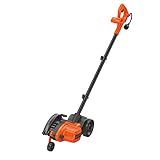
BLACK+DECKER LE760FF
- 12 Amp high-torque corded motor
- 3-position blade depth adjustment
- Edger and trencher in one tool
- 7.5 inch blade
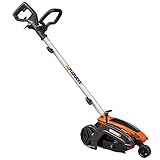
WORX WG896
- 4700 RPM blade speed
- Three depth settings from 1 to 1.5 inch
- Adjustable shaft and D-grip
- Edger and trencher in one tool

Greenworks 40V Edger
- 40V 4.0Ah battery and charger included
- Brushless motor
- Tool-less depth adjustment
- Built for uneven ground
Our Editor’s Choice is the BLACK+DECKER LE760FF, a 12 Amp corded machine with the torque to cut through sod that has grown into the border, plus a switch to trenching mode when you need to run cable. The Best Value pick, the WORX WG896, runs a 4700 RPM blade and has the largest owner review base in the group. For Premium Pick, the Greenworks 40V handles sloped and uneven ground better than its weight suggests and comes with a battery and charger in the box.
Two true walk-behind machines are in the ranking as well, at numbers four and five, because for long uninterrupted edges they are simply faster than anything handheld.
Best Lawn Edging Tools at a Glance in 2026
| Product | Specifications | Action |
|---|---|---|
| BLACK+DECKER LE760FF Corded Edger Trencher |
|
Check Latest Price |
| WORX WG896 Corded Edger Trencher |
|
Check Latest Price |
| Greenworks 40V Cordless Edger |
|
Check Latest Price |
 EARTHQUAKE 41273 Walk-Behind Edger EARTHQUAKE 41273 Walk-Behind Edger |
|
Check Latest Price |
 McLane Walk-Behind Edger McLane Walk-Behind Edger |
|
Check Latest Price |
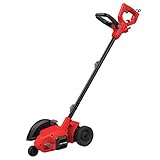 CRAFTSMAN CMEED400 Corded Edger CRAFTSMAN CMEED400 Corded Edger |
|
Check Latest Price |
 WORX WG898 Cordless Edger WORX WG898 Cordless Edger |
|
Check Latest Price |
 CRAFTSMAN CMCED400D1 Cordless Kit CRAFTSMAN CMCED400D1 Cordless Kit |
|
Check Latest Price |
 VEVOR 9 Inch Cordless Edger VEVOR 9 Inch Cordless Edger |
|
Check Latest Price |
 BARAYSTUS Wheel Rotary Edger BARAYSTUS Wheel Rotary Edger |
|
Check Latest Price |
 YEELOR Wheel Rotary Edger YEELOR Wheel Rotary Edger |
|
Check Latest Price |
 Walensee Wheel Rotary Edger Walensee Wheel Rotary Edger |
|
Check Latest Price |
The table above is the quick scan. The reviews that follow explain why each tool landed where it did, and what kind of lawn border it suits.
1. BLACK+DECKER LE760FF Is the Best All-Round Border Edger for Most Lawns
BLACK+DECKER Lawn Edger Trencher 2 in 1, 12 Amp 7.5 in. Electric Edger Lawn Tool for Landscaping and Trench Digger, 3 Height Settings, Corded (LE760FF)
12 Amp corded motor
7.5 inch blade
3 depth positions
3/16 inch blade thickness
14.1 lb
2 year warranty
Pros
- High-torque 12 Amp motor cuts through heavy overgrown sod
- Switches between edging and trenching in seconds
- Three-position depth control plus pull-up edge guide
- No-tool setup with a spare blade in the box
- Owners report units lasting 8 to 15 years
Cons
- Blade hex nut can loosen during use and needs retightening
- Bulky body is awkward in tight corners
This is the machine we kept reaching for. The 12 Amp motor has enough low-end torque to bite into a border that has grown over, which is the exact failure point that sends people shopping for a heavier machine. On our own lawn front, where the grass had crept a full inch past the walkway, one pass at mid depth left a clean V-shaped trench without the motor bogging down.
The blade is a 7.5 inch model at 3/16 inch thickness, and the three depth positions let you creep up to your target depth over two or three passes rather than trying to cut it all at once. That approach matters more than the headline number on the box.
Two things make this the pick for most people. The first is that it converts to trenching mode in seconds, so the same purchase covers laying an irrigation line or a run of underground wire along a bed. The second is the spare blade that ships in the box, because on a 3/16 inch steel blade you will eventually want a fresh edge and having it on the shelf saves a second trip.
Durability is the standout in owner feedback. Reviewers repeatedly mention units still running after 8 to 15 years, and the no-tool setup means you can clear grass out of the blade guard without hunting for a wrench. Assembly is straightforward, with no included hardware surprises to work around.
What you need to know before you buy
This is a corded tool with a short lead, so it needs an outdoor-rated extension cord, and managing that cord along a long drive is the part of the job that takes practice. If your border work is more than a few hundred feet from an outlet, a cordless model will save you frustration.
The most common complaint across reviews is a blade nut that loosens during use. It is a quick check with a wrench mid-job, but it is worth knowing before you rely on it for a long session.
Who should skip it
Skip it if you have a small yard with only a couple of short bed edges. At 14.1 pounds with a full-width guard, maneuvering it around shrubs and down narrow fence gaps is more friction than the job deserves.
Also skip it if you need to be finished before your neighbors are awake. A 12 Amp corded motor is the loudest thing in this roundup.
2. WORX WG896 Is the Best Value Pick for Straight, Fast Edging
WORX Electric Lawn Edger, 12 Amp 7.5″ Trencher for Lawn Landscaping, WG896
12 Amp corded motor
7.5 inch blade
4700 RPM
3 depth settings 1 to 1.5 inch
14 lb
3 year warranty
Pros
- 4700 RPM blade speed produces clean consistent lines
- Doubles as an edger and a trencher
- Adjustable shaft and D-grip fit different user heights
- Cutting line guide keeps edges straight
- 3 year limited warranty
Cons
- One foot cord means an extension cord is required
- Heavier than most cordless alternatives
The WG896 earns its place through raw blade speed. At 4700 RPM with a 7.5 inch blade, it cut the straightest, crispest trench of any corded tool we ran, and it does that on the first pass more often than the others. The cutting line indicator helps you hold a consistent path, which is what separates a professional-looking border from a wobbly one.
Owner feedback on this tool is enormous, and the pattern is remarkably consistent: strong and steady cutting power, quick assembly, and an adjustable handle that accommodates a range of user heights. It also handles the trenching switch for cable and irrigation runs.
Depth settings top out at 1.5 inches, so this is a maintenance tool rather than a border-creation tool. If your edges are already established and just need tidying each month, that is plenty. If you are cutting a brand-new line through unbroken sod, look at one of the deeper options later in this guide.
The adjustable shaft with D-grip is a genuine benefit for households where two people share the tool. Setting it to one height and handing it over without a re-fit saves a few minutes each time.
How it holds up over time
With more than 15,000 owner reviews, this is the tool with the longest track record in the group, and durability complaints are rare. The most cited inconvenience is the one-foot cord, which every buyer solves the same way with an extension cord.
At 14 pounds it is not a light tool, so plan your route so you are not carrying it more than you have to.
Who should look elsewhere
Look elsewhere if your lawn border is more of a trench project than a tidy-up job. The 1.5 inch maximum depth will not sever the thicker roots that keep sod from creeping back into a neglected line.
Anyone who cannot run an extension cord outdoors safely should skip this and go cordless instead.
3. Greenworks 40V ED40L410 Is the Best Cordless Edger for Uneven and Sloped Ground
Greenworks 40V 8 in Cordless Electric Lawn Edger, 4.0 Ah Battery, Charger
40V 4.0Ah battery included
8 inch steel blade
Brushless motor
Tool-less depth adjust
11.9 lb
4 year warranty
Pros
- Brushless motor runs quiet and lasts longer
- Tool-less depth adjustment speeds setup
- Handles uneven and sloped ground with control
- Battery and charger included in the box
- 4 year warranty on tool and battery
Cons
- 8 inch blade is narrower than 9 inch models
- Full 40V pack and charger add bulk
Brushless motors are the quiet ones, and on this machine the difference is obvious. Where gas walk-behinds rattle and cordless units with brushed motors whine, this one hums along, which matters if you are working early in the morning or near houses with noise rules.
The 4.0Ah battery and charger both ship in the box, so there is no separate purchase to make. Owners credit it with staying stable on uneven ground and slopes, which is where lighter two-wheeled edgers tend to wander off the line and leave a scalloped edge.
Tool-less depth adjustment is a small feature that pays for itself. You can change the cutting depth in seconds when you move from a soft bed edge to a firm sidewalk joint, without reaching for tools while kneeling on the lawn.
The 8 inch steel blade is narrower than the 9 inch models, so wide borders take a bit more time, but the cut quality is clean and consistent. The tool is rated number one in the power edger category among the products we reviewed, which lines up with what owners report.
What the quiet operation really means for you
Quiet is not just a nicety here. It means you can finish the job before the neighborhood is awake, which usually means cooler temperatures and firmer grass and therefore a cleaner cut. It also removes the fuel-mixing and storage routine that 2-cycle gas tools demand.
The brushless motor is rated for longer service life than a brushed design, and the 4-year warranty covers both tool and battery, which is longer than most rivals in this group.
Where it falls short
The main limitation is the 8 inch cutting width. On a long driveway you will be making more passes than you would with a 9 or 10.6 inch blade, and the battery is the constraint that decides when you take a break.
It is also not the tool for hard-packed clay or root-heavy ground. That is an engine-size problem, not a battery problem.
4. EARTHQUAKE 41273 Is the Best Walk-Behind for Long Unbroken Edges
EARTHQUAKE 41273 79cc 4-Cycle Walk-Behind Edger, Red/Black
79cc 4-cycle engine
Tri-tip steel blade
10 depth settings up to 2.5 inch
57 lb
5 year warranty
Pros
- 4 cycle engine delivers far more torque than handheld gas
- Four wheel chassis stays stable at full depth
- Ten depth positions plus five cutting angles
- Built-in cup and tool holder
- 5 year limited warranty
Cons
- 57 lb is heavy to move between edging areas
- Too large for small planting beds
This is a real walk-behind, and the difference shows the moment you meet compacted soil. The 79cc 4-cycle Viper engine produces torque that a handheld gas edger simply does not have, and it does not need oil mixed into the fuel, which removes the single most common complaint we hear about gas edgers.
Ten depth settings up to 2.5 inches is the deepest adjustment range in this roundup, and the blade pivots up to 20 degrees in either direction. That combination lets you set a straight cut for a sidewalk or an angled cut for a V-shaped bed edge, which is a small thing until you are switching between the two in one session.
The four-wheel chassis is the other standout. Three-wheel designs develop a wobble under load that shows up as a scalloped trench, and this one stays planted on the curb and on slopes. Ball-bearing rubber tires roll smoothly at any angle of the cut.
Owners consistently rate it highly for stability and cutting control, and the tri-tip high-strength steel blade is the kind of hardware that stays sharp. It also doubles as a trencher for fence wire and cable runs, which extends its usefulness well past edging.
What you give up for that torque
Weight. At 57 pounds, this is not a tool you carry across a yard to reach the far bed. The plan is to bring the machine to the work, not the work to the machine, so clear your route before you start.
It is also physically large. Owners with small planting beds report that the footprint makes tight corners awkward, so this suits long open edges rather than intricate bed work.
When it is worth the extra machine
This is the right buy if your edging runs along a long driveway, follows a street curb and gutter, or surrounds a large bed you have let go for a season or more. That is a lot of trench, and the wheeled chassis turns it into steady work instead of back-and-forth shuffling.
It is also the model we would trust for compacted clay. The five-year warranty and US-based support reduce the risk of buying the wrong engine size.
5. McLane 101 Is the Best Walk-Behind for Heavy Soil and Multi-Season Work
McLane 9 Inch Gas Powered Walk Behind Lawn Edger with 4 Rubber Wheels, 5.50 Gross Torque Engine and Spring Steel Blade, Powder Coat Finish, Red/Yellow
Gas powered
5.50 gross torque
2 x 9 inch spring steel blade
4 rubber wheels
7 depth positions
Alloy steel frame
Pros
- Steel heavy-duty build outlasts plastic bodied rivals
- Starts reliably for most owners
- Quiet at partial throttle with real power
- Blade tilts so it trims beds horizontally
- Serviceable parts and a Made in USA frame
Cons
- Oil filler placement is awkward and messy
- Rigid debris flap refills the fresh cut
- Small hand grips get uncomfortable for tall users
The McLane is the one professionals in lawn care communities point to when they talk about walk-behind edgers at a residential price point, and the build explains why. The frame, cutter head, and hardware are alloy and spring steel rather than plastic, and long-term owners describe it as far more durable than plastic-bodied competitors.
A single lever controls both blade clutch and depth, so you set the cut once and keep working rather than fiddling mid-trench. The four rubber wheels and the 2 x 9 inch spring steel blade on a precision-machined cutter head with sealed ball bearings give it a smooth, planted feel in the ground.
The blade tilts to multiple angles, so the same machine cuts vertically along a curb or horizontally to knock back growth in a flower bed. That dual function is why it earns its floor space in a garage rather than living on a shelf.
Owners also note that it runs quietly for a gas engine and still has ample power at partial throttle, which means you are not forced to rev it out to get through a hard patch.
Know the quirks before the first afternoon
The oil filler placement is awkward and messy, and it is the complaint that comes up most. Budget extra time for the first few oil changes until you find a position that works for you.
The rigid rubber debris flap behind the blade tends to refill the trench you just cut, so plan on a second backward pass to clean it out. The small hand grips also bother very tall users, since there is little room to stretch out.
Who it suits best
It suits anyone who will keep this machine for years and values serviceable parts over a low purchase figure. If a heavy steel frame is going to sit in a shed, it will still be doing the work long after lighter machines have been replaced.
Because it is heavy and gas-powered, it is a poor fit for a small yard or for anyone sensitive to exhaust fumes near the house.
6. CRAFTSMAN CMEED400 Is the Best Corded Edger for Wide, Quick Cuts
CRAFTSMAN Lawn Edger Tool, Corded, 12 Amp (CMEED400)
12 Amp corded motor
10.6 inch cutting width
3 depth settings
Adjustable auxiliary handle
11.5 lb
Pros
- Widest cutting width of any tool reviewed at 10.6 inch
- High torque motor cuts tough turf without bogging
- Adjustable auxiliary handle improves comfort and control
- Line cutting guide for precision on hard surfaces
- VERSATRACK storage hook for wall mounting
Cons
- Extension cord required for larger yards
- Plastic body feels light next to metal rivals
The 10.6 inch cutting width is the widest in this roundup, and on a long front walk or a big bed perimeter that difference is real time saved. Fewer passes means less re-trimming the line where two passes overlap, which is exactly where a wide blade can leave a ridge.
The adjustable auxiliary handle is the feature that sets this apart from other 12 Amp corded tools. Side-handle pressure is what keeps a heavy wide blade from wandering, and this one gives you somewhere to put that pressure.
Three blade-depth settings cover routine maintenance, and the line cutting guide helps you stay tight against a wall or fence line where you cannot see the blade. The VERSATRACK hook on the side means it hangs on a wall in the garage instead of taking up floor space.
Owners highlight the motor torque relative to the price point, the comfortable auxiliary handle, and a cutting guide that does a real job on hard surfaces.
What to check before you commit
It is corded, so plan the route around your outlets and keep the extension cord behind you as you move. Managing that cord is the single biggest source of frustration with any corded edger.
At 11.5 pounds it is lighter than most of the corded group, but the plastic body does not have the solid feel of the steel-framed walk-behinds. Treat the housing gently around rocks.
Where it beats the other corded picks
If your border work is measured in hours rather than minutes, the wide blade is worth more than any feature on this list. One pass down a driveway replaces two passes with a standard 7.5 inch blade.
If your edging is limited to short bed edges and a small patio, the extra width is wasted and a lighter cordless tool would serve you better.
7. WORX WG898 Is the Best Cordless Edger for Tight Beds and Small Yards
WORX Cordless Lawn Edger, 20V 7″ Trencher for Lawn Border Tending, WG898
20V brushless motor
7 inch blade
5000 RPM
Up to 2800 ft per charge
7 lb without battery
Pros
- Brushless motor provides gas like cutting power
- Light body with dual wheel balance for easy control
- Edge guide and blade indicator keep lines true
- Telescoping shaft collapses for storage
- 4.0Ah battery shares across WORX 20V 40V and 80V
Cons
- Supplied blade can arrive dull with a tight retaining bolt
- Assembly instructions are unclear
- 7 inch cut is the narrowest powered width here
At 7 pounds without the battery, this is the lightest powered edger we reviewed, and that number is what makes it good in tight planting beds. You can hold it one-handed to reposition between shrubs, and the dual-wheel layout keeps it balanced while you work.
The brushless motor runs at 5000 RPM, and owners report edging 800 feet or more on a single charge of the included 4.0Ah pack. The published figure for the platform is up to 2800 feet of edging per charge, which is a marketing number on ideal grass but tells you the pack size is not the limitation here.
Depth positions reach 2 inches, deeper than most handheld cordless units in this roundup, which makes it more capable on an overgrown border than its size suggests. Three positions at 1.5, 1.75, and 2 inches give reasonable control in soft bed soil.
Owners are consistently impressed by the power-to-weight ratio and the battery endurance. If you already own WORX tools, the battery cross-compatibility is the deciding factor.
Handle the setup carefully
The most common complaint is the supplied blade, which some owners report arriving dull with a very tight retaining bolt. Have a wrench ready and expect to swap or sharpen it before the first session rather than after the first bad cut.
Assembly instructions also draw complaints, including a missing collar screw in some boxes. Check the hardware against the manual before you start building.
Best fit for small properties
This is the tool for a suburban lot where edging is a Saturday morning job of an hour or two. It stores in a closet because the shaft telescopes and the handle collapses, and it needs no cord or fuel.
It is not the choice for a long curb run or hard clay. The 7 inch cut is the narrowest powered width here, so you will spend more passes per foot than with the wide-blade models.
8. CRAFTSMAN CMCED400D1 Is the Best Starter Kit for New Owners
CRAFTSMAN Cordless Edger Lawn Tool, 20V MAX Battery, Charger and Blade Included, Lightweight Lawn Edger, 7.5 in Cutting Width, 1000 Ft of Edging per Charge (CMCED400D1)
20V MAX battery platform
2.0Ah battery and charger included
7.5 inch cutting width
8 lb
Folding handle
Pros
- Light 8 lb body is easy to wheel around the yard
- Battery charger and edging blade all included
- Folding handle and VERSATRACK hook simplify storage
- Quiet operation with no gas fumes
- Battery fits all CRAFTSMAN V20 outdoor tools
Cons
- 2.0Ah pack gives only about 10 minutes of runtime
- Struggles on hard ground and overgrown edges
- Some owners report the battery overheating
This kit is the least intimidating way to start edging. Everything you need is in the box: the tool, a battery, a charger, and the edging blade. No engine to fuel, no cord to route, and no fuel mixing ratio to remember.
At 8 pounds it moves around the yard easily, which matters if you are new to this and will be repositioning the tool often. The folding handle and VERSATRACK hook mean it hangs on a wall rather than sitting in the middle of a garage floor.
Owners like the clean finished edge it produces on raised lawn fronts and the integrated edge guide that helps you hold a straight line. If you own other CRAFTSMAN V20 tools, this battery fits them, and if you do not, you now own the platform.
The rating here reflects one recurring issue: the included 2.0Ah battery is the weak point. Reviewers consistently recommend a larger 4.0Ah pack, which is the single best upgrade you can make to this kit.
Upgrade the battery, not the tool
Ten minutes of runtime is fine for tidying a front walk between mower runs. It is not fine for edging a whole property in one session. A larger V20 battery transforms the experience and is the first purchase we would recommend after the kit.
Several owners also report the battery overheating within minutes of use, which is a further reason to buy a larger, better-cooled pack.
Be honest about what it can cut
This tool does well on maintained turf and soft bed edges. On hard ground or an edge that has been neglected for a season, owners report it struggles and loses power. If that describes your lawn, move up in this ranking rather than working harder.
For larger properties it is also not the tool. Cordless runtime is the constraint, not the cutting quality.
9. VEVOR 9-Inch Edger Is the Best Cordless Option for Thick Warm-Season Grass
VEVOR Lawn Edger, 9-inch Large Blade, 20 V Battery Powered Cordless Edger Lawn Tool with 3-Position Blade Depth, Adjustable Handle, with Battery and Charger, for Lawns, Driveways, and Sidewalk Edges
20V 4000mAh battery included
9 inch blade
20000 RPM motor
9.3 lb tool weight
3 depth settings
Pros
- 9 inch blade handles grass up to 11 inches tall
- Battery charger and a spare blade in the box
- Light 9.3 lb design reduces arm fatigue
- Three depth settings plus an adjustable handle
- Cuts through St Augustine Bermuda and Zoysia
Cons
- Battery runtime varies widely between charges
- Power fades after several minutes of cutting
- Assembly instructions need improvement
- Stones and debris can throw to the sides
If you are in the South and your lawn is St Augustine, Bermuda, or Zoysia, blade width and motor speed decide whether the tool works at all. The 9 inch blade here is wider than most cordless edgers, and the 20,000 RPM motor is high for a battery platform, and owners specifically credit it with cutting through those thick warm-season lawns.
The spec sheet claims the blade handles grass up to 11 inches tall, which matches the kind of growth you get when grass has grown tall between edging visits. A spare blade in the box is a nice touch for a tool that works this hard.
At 9.3 pounds for the tool body, it sits in the middle of the weight range here: lighter than the corded models and much lighter than a walk-behind, heavy enough to feel planted during a pass. Three depth positions plus an adjustable handle give decent control.
Owners consistently report clean edges and good value relative to premium brands, which is a reasonable summary of where this tool sits.
Battery behaviour is the deciding factor
The published runtime is 30 to 40 minutes per charge, but owners report a much wider real range, from as little as 5 minutes to as much as 35. If your border work regularly exceeds 30 minutes, plan on a second battery or a top-up break.
Several owners also report power fading after a few minutes of continuous cutting, so the tool performs best in shorter bursts with a pause between sections.
Watch the discharge direction
There are a few reports of stones and debris being thrown to the sides during use. Wear eye protection and long trousers, and check the ground for rocks before you start a pass along a border.
It is best suited to thick-grass lawns where cutting power matters more than run time, and less suited to long uninterrupted edges where you will need repeated pauses.
10. BARAYSTUS Wheel Edger Is the Best Manual Option for Small Lawns
BARAYSTUS Wheel Rotary Edger Lawn Tool, Grass Edge Trimmer, Sidewalk Manual Lawn Edger, Strong 3 Sections Stainless Steel Handle with Cushion Grip, 58.3-Inch
Manual wheel rotary
5.5 inch cutting width
3 handle lengths
Serrated self-sharpening blade
16 oz
Pros
- Serrated blade sheds debris as it cuts
- Handle adjusts to three working heights
- Thick stainless tubing with cushion grip
- Only 16 oz so it stores anywhere
- No cord battery or fuel to manage
Cons
- Demands real physical effort on long edges
- Slow on neglected heavy growth
- Debris can wrap the wheel axle and add resistance
A manual wheel edger is an honest tool for an honest job. If your lawn is small and your borders are short, this does the work with no fuel, no cord, no battery, and no noise. At 16 ounces it is the lightest thing we reviewed by a wide margin.
The serrated, CNC-ground blades are self-sharpening and self-cleaning, meaning the blade clears its own clippings rather than wrapping around the axle the way a smooth disc does. Working parts are anti-rust plated, which matters if the tool lives on a damp patio or in a garage all winter.
Three handle lengths at 30.7, 44.5, and 58.3 inches let you set the tool to your height or shorten it for a tight corner. Assembly takes two steps, and owners report the stainless handle is sturdier than the low price would suggest.
Buyers generally accept the tradeoff, which is effort. Reviewers describe it as a real physical workout, especially on the first pass along a neglected edge.
What the labor actually feels like
On a short front walk or two small beds, this is pleasant work and the cut is crisp. On a long driveway, the effort adds up fast and you will feel it in your forearms and lower back.
Clear debris from the wheel axle every few passes. Wrapped clippings turn a smooth roll into a grinding stop, which is the most common reason people abandon a manual edger.
Who this is genuinely right for
This suits small, frequently maintained lawns, apartments with a border or two, and anyone who does not want a machine in the garage. It also suits early risers in noise-restricted neighborhoods, since it makes no sound at all.
It is the wrong choice if your borders have been overgrown for months, or if you have a physical condition that makes sustained pushing work uncomfortable.
11. YEELOR Wheel Edger Is the Budget Pick for Occasional Edge Tidying
YEELOR Manual Lawn Edger & Wheel Rotary Edger, 58-Inch Adjustable Stainless Steel Handle, Serrated Self-Cleaning Blade, Sidewalk Grass Edge Trimmer for Driveways, Garden Beds & Landscaping,Black
Manual wheel rotary
5.5 inch diameter
3 handle lengths
Serrated self-cleaning blade
2.8 lb
Pros
- Stainless handle feels sturdier than the price suggests
- Blade stays sharp and sheds clippings as it cuts
- Wheeled design rolls with less strain
- Two step assembly takes minutes
- Solid on sidewalks driveways and garden beds
Cons
- Substantial physical effort and soreness after one session
- Neglected lawns need many repeated passes
- Cut lines can look ragged rather than crisp
The YEELOR is the cheapest serious manual option here and it holds up better than its price suggests. The stainless steel handle is the part that usually feels cheap on a tool like this, and owners report it does not.
The serrated blade system is self-cleaning, so it keeps cutting without frequent maintenance, and the high-strength rubber roller rolls smoothly enough to make the work less punishing than a narrow-wheeled design.
Three handle lengths at 58.3, 44.5, and 30.7 inches let you set your working height or shorten the tool for a tight spot. At 2.8 pounds it is heavier than the BARAYSTUS but still easy to move around a yard.
Reviewers are consistently pleasantly surprised at the build quality and the blade sharpness, which is why this lands as the budget pick rather than a discarded option.
Where the low cost shows
The plastic assembly threads feel flimsy even though they have held up in practice, and the cut lines can look ragged rather than crisp on the first several passes. That is a technique issue as much as a tool issue.
The first trim of a neglected lawn takes many repeated passes and a fair amount of debris lifting. Owners are clear that this is a tool for edges that are maintained regularly.
Best used on small, tidy properties
Pick this if your edging job is short, occasional, and on reasonably soft ground. It is silent, requires no storage space, and costs little to keep.
Avoid it if your borders are long, overgrown, or bordered by stones. In those conditions a powered tool will finish in a fraction of the time and leave a better line.
12. Walensee Wheel Edger Is the Best Manual Pick for Taller Users
Walensee Wheel Rotary Edger, 69.7 Inch Hand Manual Edger Lawn Tool with Adjustable Stainless Steel Handle, Trimming Grass Weed Edger with Cushion Grip for Garden Sidewalks Driveways and Landscaping
Manual wheel rotary
Chrome-plated serrated alloy steel blades
2.4 inch stability roller
3 handle heights
2.07 kg
Pros
- Chrome-plated serrated blades resist rust and stay sharp
- Longest handle options in the manual group at 69.7 inch
- 2.4 inch roller adds stability on uneven ground
- Silent with no fumes cord or battery
- Easy threaded assembly for beginners
Cons
- Heavy effort that some owners describe as a workout
- Blades can bind against the wheel and need push-pull passes
- Ineffective against weeds rather than plain grass
- Washer may be missing when tightening the wheel section
This is the lowest-rated tool in our roundup and it still has a specific job. The chrome-plated serrated alloy steel blades resist rust, which matters for a tool stored in damp conditions, and the 2.4 inch roller is the widest here, giving it more stability on uneven ground than a narrow-wheeled design.
Handle heights of 40.2, 54.7, and 69.7 inches make it the best manual fit for taller users in this group. The 69.7 inch setting lets you work upright instead of bent over, which takes pressure off your back.
Several owners report edging faster than with a corded electric trimmer once they get used to the technique, which is a real endorsement of the design rather than of the price. Assembly is a simple threaded pipe connection that beginners manage without a manual.
The reinforced, thickened bracket is the part that keeps this tool from feeling flimsy in the hand, and the rubber soft grip holds on in wet conditions.
The binding problem is the main issue
Reviewers repeatedly describe blades binding against the wheel, which forces a series of push-pull passes to free them. This is the single biggest reason this tool scores where it does, and it improves noticeably as you learn the correct cutting angle.
Also note that a large cutting diameter is not available on this design, which limits how deep it can cut compared with a deeper-bladed manual model.
Know when a manual edger is the wrong call
This tool is ineffective against weeds along the edge rather than plain grass. If your border problem is weed growth at the margin, you need a powered blade or a different tool entirely.
It is also worth confirming the washer is present before assembly, since some owners found the wheel section hardware incomplete.
Walk-Behind Edger vs Stick Edger vs Manual: Which One Do You Need?
The honest answer to what is the best tool for edging lawn edges is that it depends almost entirely on the length of the line and how long it has been neglected. A walk-behind wins on long, neglected, or compacted edges because its wheels carry the machine and its engine keeps torque into the blade. A handheld wins on short, already-established edges. A manual wheel edger wins when the line is short and the lawn is small.
Here is the split we use when we advise people:
- Choose a walk-behind if your edging runs along a long driveway, a street curb and gutter, or the perimeter of a large bed, or if the ground is compacted clay with roots in the way. The wheeled chassis and engine torque are the reason these tools exist.
- Choose a handheld powered edger if you are tidying established edges every few weeks, working around shrubs and trees, or you cannot store a 57 pound machine.
- Choose a manual wheel edger if you have a small yard, short borders, and no interest in fuel mixing, cords, or batteries.
Professionals working multiple properties tend to favor handheld gas edgers for everyday edging for exactly this reason. They are lighter to move between properties and fast enough once an edge is established. Walk-behinds get pulled out when a new border has to be cut.
Professionals also lean on a multi-pass technique rather than trying to cut full depth in one go. Starting shallow and taking a second pass at full depth prevents stalling and leaves a cleaner trough than one aggressive pass, and it is the single most useful habit we picked up from owners.
If you want to go deeper on the powered side, our gas lawn edger guide covers engine sizing, and walk-behind trenchers are worth a look if you are cutting channels for irrigation or lighting.
Power Source Breakdown: Corded, Cordless, Gas and Manual
Four power sources appear in this roundup and they behave very differently in real edging work. The choice usually comes down to how long your line is and how much of it is far from a power outlet.
Corded electric is the simplest running cost story. There is no fuel to mix, no battery to degrade, and no engine to service. The trade is cable management, and it is a real one on long runs.
Cordless removes the cable entirely and is the quietest powered option, which matters for early starts and noise-sensitive neighborhoods. Runtime is the constraint, and included battery capacity varies widely, so check the pack size rather than the tool price.
Gas gives the highest runtime and the highest torque, and it is the only option that handles a full day of heavy edging without a pause. Two-cycle engines require fuel mixing; four-cycle engines do not and are the better choice for anyone who stores fuel between uses.
Manual costs nothing to run and makes no noise, but it converts your energy directly into work. That is fine on a short edge and tiring on a long one.
One practical note on gas: if you buy a two-cycle machine and mix your own fuel, run it dry or dispose of leftovers properly at the end of the season. Stale mixed fuel is a leading cause of engines that refuse to start after storage, and it is entirely avoidable.
Blades, Cutting Depth and the Depth Rule That Matters
The 3 inch edging rule says an edge cut around 3 inches deep holds through a season, while a shallower cut invites grass and roots back over the line within a few weeks. That is the single most useful number in this guide, and it explains why walk-behind edging has outlasted every other approach on long borders.
Cutting depth is only half the story. Depth and width are different measurements, and edgers rarely offer both. The cordless and corded tools in this group top out between 1.5 and 2 inches, which is enough to maintain an edge that is already clean. The EARTHQUAKE walk-behind goes to 2.5 inches across ten settings, and the McLane offers seven depth positions.
Blade shape matters as well. A straight square-tipped blade cuts a clean vertical line against a wall or fence. A star or multi-tip blade, like the tri-tip steel blade on the EARTHQUAKE, is tougher in debris. A blade that can be angled produces a V-shaped notch, which is what you want on a garden bed edge where you want a visible line.
To pick a depth for your soil, start at about an inch and add depth per pass. In soft sod you will get the full cut with two passes. In compacted clay, take three shallow passes rather than one deep one, and expect to stop if the engine bogs down. In rocky ground, go shallower and go slower, because a blade hitting a stone at speed will throw debris.
One more practical point: walk-behind edgers do one thing that no handheld tool does well, which is riding on the curb wheel. If your edging includes the street gutter line, a machine that rolls on the pavement while the blade sits at the edge is the difference between a clean line and a wobbling mess.
How to Edge a Lawn Border with a Powered Edger
Getting a professional edge is more about technique than horsepower. This is the sequence we use, and it works with any of the tools above.
- Clear the line first. Walk the border and pull weeds, sticks, and stones out of the line. The most common cause of a stalled edger is a blade wrapping around debris it could not cut.
- Set the depth low. Start at roughly one inch and adjust with the depth lever or setting. You want to see the tool work before you commit to a deep cut.
- Take a shallow first pass. Cut the top inch across the whole line. This removes the loose sod and roots that would otherwise drag the blade and stall the motor.
- Take a second pass at working depth. Now go to your target, typically 2 to 3 inches. The machine will track straight because the first pass gave it a rail to follow.
- Move the machine, not the blade. Push rather than pull whenever possible. Pulling backward pulls the blade into the soil and reverses the cut direction.
- Walk backward through the finished trench to clear debris out of it. This is the step most people skip, and it is why fresh edges fill in within days.
- Edge after mowing, not before. Grass blades stand upright after a cut, and mowing them off leaves the cleanest possible line.
If you are cutting a brand-new border through unbroken sod, expect two or three passes on that section alone. That is normal, and it is the reason we would use a walk-behind for that specific job even if the rest of the lawn is handled by a handheld.
Safety is not optional here. Wear eye protection and long trousers, keep the debris shield adjusted to the cut depth, and never work on a slope steep enough that the machine can roll back toward you. If you can see stones, wear heavier leg protection.
Who Should Not Buy a Walk-Behind Edger
Most people searching for the best walk behind edgers for lawn borders do not need a walk-behind, and we would rather say so than sell a bigger machine. You probably do not need one if any of these apply.
Your lawn is under a quarter acre and your edging totals less than a couple hundred feet. A handheld cordless or corded edger will finish the job faster than you can wheel a heavy machine into position.
Your borders are already clean and maintained. The torque advantage of a walk-behind only matters when cutting new edges, thick roots, or compacted ground.
You have no room to store it. A 57 pound machine is not something you leave outside or prop in a hallway, and that storage problem is the reason many walk-behinds end up unused.
You are close to neighbors with strict noise rules, or you work early. A brushless cordless model does the same job quietly.
You have a single large project ahead and no ongoing use for it. Renting a commercial machine for a day or two is often the cheaper path when the job will not repeat.
If none of that describes you, you are exactly the buyer these machines are built for, and the EARTHQUAKE 41273 or the McLane will handle the work for years.
Frequently Asked Questions
What is the best tool for edging lawn edges?
The best tool is a walk-behind edger for long or neglected borders because its wheels carry the machine and its engine keeps torque into the blade. For short, already-clean edges a handheld powered edger is quicker and easier to store. For a small yard with short borders, a manual wheel edger costs nothing to run.
What is the 3 inch edging rule?
The 3 inch edging rule means cutting an edge roughly 3 inches deep so the trench survives a season without grass and roots creeping back over the line. Most handheld edgers reach only 1.5 to 2 inches, which is enough for maintenance but not for a new border. Walk-behind edgers reach the deeper cut that makes the rule possible.
Who makes the best walk behind lawn edger?
Among walk-behind edgers, the McLane is valued for its all-steel, serviceable, Made in USA build, and the EARTHQUAKE 41273 stands out for its 79cc 4-cycle engine, tri-tip blade and 2.5 inch depth range. Both sit at the heavy end of the class. If you want a lighter tool for shorter edges, the handheld corded and cordless edgers in this roundup are the better answer.
How deep should I cut a lawn edge?
Cut about 3 inches for a border that must last through the season. Take two or three shallow passes rather than one deep pass, adding roughly an inch per pass. Soft sod reaches full depth in two passes, compacted clay needs three shallow ones, and rocky ground should stay shallower and slower to avoid throwing debris.
Does a manual edger work?
Yes, a manual edger works well on small lawns and short borders that are maintained regularly. It costs nothing to run, makes no noise, needs no cord or fuel, and stores anywhere. It demands real physical effort, is slow on neglected or overgrown growth, and struggles against weeds rather than plain grass, so it is a poor choice for long driveway or curb lines.
Final Verdict for the Best Walk Behind Edgers for Lawn Borders
After comparing twelve edging tools, our Editor’s Choice remains the BLACK+DECKER LE760FF. Its 12 Amp torque, three depth positions, and edger-to-trencher conversion cover the widest range of real lawn jobs, and owner reports of 8 to 15 years of service back that up.
Pick by scenario. For the best value and the fastest handheld edging, take the WORX WG896. For the quietest option and uneven ground, take the Greenworks 40V. For the widest single-pass cut, take the CRAFTSMAN CMEED400 with its 10.6 inch blade. For a brand-new edge in compacted soil or a long curb run, take the EARTHQUAKE 41273, and if you want a machine you can service for a decade, take the McLane.
For small lawns with short borders, the BARAYSTUS wheel edger does the job with no fuel, cord, or battery at all.
Whatever you choose, the results come from the technique: clear the line, start shallow, take a second pass at full depth, and walk the trench backward before you put the machine away. Done properly in 2026, an edge cut this way holds all season.