
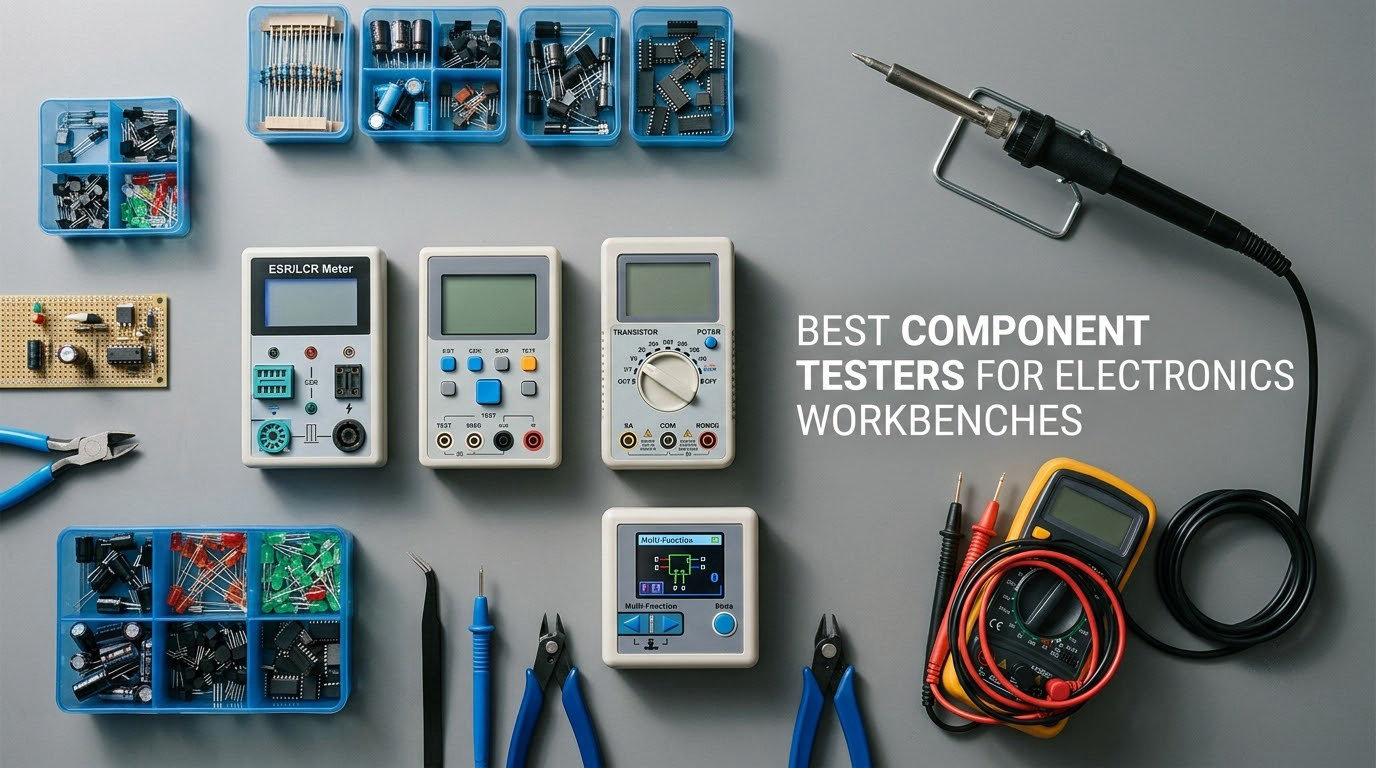
A component tester is a bench instrument that automatically identifies and measures electronic parts — resistors, capacitors, inductors, diodes, transistors, MOSFETs and SCRs — by pushing a small test signal through the part, measuring how voltage, current and phase respond, and printing the part type and value on screen. That auto-identification is what separates it from a multimeter, and it is why component testers have quietly become the single most useful addition to an electronics workbench in the last few years.
We chose the best component testers for electronics workbenches by comparing published specifications against what reviewers actually report after months of bench use. Ten units made the cut, spanning four distinct roles: general passive-component LCR meters, dedicated ESR meters, semiconductor analyzers and tweezer-format SMD testers. If you are still building out your kit, our electronic component kits guide covers the other tools that pair well with these.
What follows is honest about its limits. We drew on manufacturer documentation, owner review patterns and long-running practitioner forum threads rather than claiming a controlled laboratory comparison across all ten units. Where a number is a measured figure from a review, we say so; where it is a spec sheet claim, we treat it as a spec sheet claim. The goal is a roundup you can pick a unit from without being misled.
Table of Contents
- Top 3 Best Component Testers in 2026
- All 10 Component Testers Compared Side by Side
- Component Tester vs LCR Meter vs Multimeter: Which One Do You Actually Need?
- 1. Proster LCR Meter — Best All-Round Passive Component Tester
- 2. FNIRSI LCR-P1 — Best Value Auto Component Analyzer
- 3. Signstek MESR-100 V2 — Best for In-Circuit Capacitor Screening
- 4. DER EE DE-5000 — Top Rated Bench LCR Meter
- 5. AITRIP LCR-T4 — Budget Pick for Identifying Unknown Parts
- 6. FNIRSI LCR-ST1 — Best Tweezer Tester for SMD Work
- 7. FNIRSI LC1020E — Best Display and Four-Wire Capability
- 8. Velleman Atlas DCA55 — Best for Transistor and MOSFET Work
- 9. Velleman Atlas ESR70 — Best for Vintage Capacitor Restoration
- 10. ACEIRMC LCR-TC1 — Best for Identifying Unknown Components Fast
- What an ESR Reading Actually Tells You
- How to Choose a Component Tester Without Overbuying
- Frequently Asked Questions
- Which Component Tester Should You Actually Buy?
Top 3 Best Component Testers in 2026
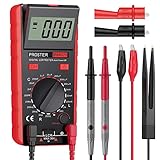
Proster LCR Meter
- 200pF-2000uF capacitance
- 200uH-20H inductance
- Rotatable LCD
- Single-dial operation

FNIRSI LCR-P1
- Auto component identification
- ESR with auto discharge
- 1.44 inch color screen
- USB-C rechargeable
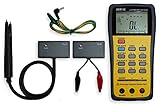
DER EE DE-5000
- Selectable 100Hz-100kHz frequency
- Kelvin four-wire leads
- ESR and Q readouts
- Sorting mode
All 10 Component Testers Compared Side by Side
Component Tester vs LCR Meter vs Multimeter: Which One Do You Actually Need?
This is the most common confusion in this niche, and it is worth settling before buying anything. A multimeter answers “is this path open, short, or does it read as a plausible resistance?” It is the tool for voltages, currents and continuity, and you already need one. A component tester pushes a signal through a part and tells you what the part is and what its value is, which is why it can identify a dead transistor from a scrap board without a datasheet.
An LCR meter sits in between. It measures resistance, capacitance and inductance as calibrated quantities, usually at a known test frequency, and shows secondary parameters like dissipation factor, quality factor and ESR. Where a component tester guesses from a component library, an LCR meter measures. That makes it the better tool for sorting batches of parts and for judging whether a capacitor is within spec.
Here is how the capabilities break down:
Multimeter: voltage, current, continuity, diode forward voltage. Reads a resistance but cannot tell you if a capacitor is a capacitor.
Component tester: automatic identification of transistors, MOSFETs, SCRs, diodes, LEDs, resistors, capacitors and inductors, plus pinout detection on semiconductors. Identification-first, not precision-first.
LCR meter: measured capacitance, inductance, resistance, ESR, dissipation factor, quality factor and phase angle at a defined test frequency. Range ceilings and accuracy figures live here.
Dedicated ESR meter: one job only — capacitor health in circuit, usually at 100 kHz. The fastest path to a bad-cap verdict during restoration work.
Can an LCR meter measure capacitance? Yes — that is the C in the name, and it is the main reason to own one over a component tester. But the practical difference is precision and context: a component tester will tell you a part is a 220 microfarad capacitor, while an LCR meter tells you it measures 218 microfarad at 1 kHz with a dissipation factor of 0.08.
1. Proster LCR Meter — Best All-Round Passive Component Tester
Proster LCR Meter Multimeter Capacitance Inductance Resistance Tester
Capacitance 200pF-2000uF
Inductance 200uH to 20H
Resistance 200 ohm to 100k ohm
9V battery
Pros
- Very wide capacitance and inductance ranges
- Single-dial operation with no menus
- Rotatable display readable at an angle
- Includes leads clips tweezers and a 9V battery
- Storage bag included
Cons
- Limited zero adjust for small pF parts
- Alligator clips will not snap onto the probe tips
- No Kelvin four-wire connection
- Manual omits the measurement frequency
The Proster is the meter we would put on a bench without hesitating. It measures capacitance from 200 pF up to 2000 microfarads across eight ranges, inductance from 200 microhenries to 20 henries across six, and resistance from 200 ohms to 100 kilohms. That spread covers speaker crossover design, ham radio coil work and general passive sorting without changing tools.
What stands out is the control scheme. You turn the dial to the quantity you want and probe — no mode buttons, no menu tree. For a bench that gets used in bursts rather than studied, that removes the single biggest friction point of cheaper testers. The rotatable LCD is genuinely useful: prop the meter at an angle and read it hands-free while both hands work on the board.
Accuracy is where the value shows. Owners report checking resistor readings against a Fluke 87V and finding agreement good enough for real work, and the specified accuracy of 2 percent plus five digits for both inductance and capacitance is honest rather than aspirational. The diode function gives you forward voltage drop and forward and reverse DC readings in the same pass.
The package is generous for the money: two test leads, crocodile clips, SMD tweezers, a 9V battery, a mini screwdriver, a manual and a zippered storage bag. Sampling at three times per second with data hold and auto power off means you can probe, freeze the reading and write it down without juggling buttons.
When the Proster earns its bench space
This is the meter for someone who works across mixed passive components and does not need lab-grade confidence. Speaker and crossover work, coil winding checks, general sorting of resistors and capacitors from scrap boards, and everyday identification of an unknown value before deciding whether it is worth keeping.
It also makes sense as a first instrument. Because it is a dedicated LCR meter rather than a multimeter with extra modes, it teaches you what ESR and dissipation factor actually mean without a hundred functions in the way.
Where the Proster falls short
Small-value capacitance is the weak point. Zero adjustment is limited, so lead and probe capacitance has to be subtracted manually when working in the picofarad range. If your work involves fine SMD ceramics, a four-wire meter reads them more reliably.
The included alligator clips will not snap onto the probe tips, which is a small irritation during in-circuit probing. The manual is thin and does not state the measurement frequency, so if test frequency matters to you, you will need to look elsewhere.
2. FNIRSI LCR-P1 — Best Value Auto Component Analyzer
FNIRSI LCR-P1 Transistor Tester, LCR Meter, Capacitor Tester, Auto Test
Auto ID for R L C diodes and semiconductors
ESR with auto discharge
300 mAh USB-C battery
Pros
- Automatic identification covers transistors MOSFETs diodes Zeners and passives
- Anti-burn protection discharges undischarged capacitors on insertion
- Replaceable patch socket handles SMD and higher power devices
- Color screen with USB-C rechargeable battery
- Infrared waveform decode aids remote repair
Cons
- Small 1.44 inch screen limits visible detail
- Good for identification rather than precision measurement
The LCR-P1 answers one question faster than anything else in this roundup: what is this part, and which pin is which? It measures NPN and PNP transistors, triodes, MOSFETs and FETs, diodes, Zeners, capacitors, resistors, inductors and batteries, then reports the pin definition automatically. Clamp an unknown three-legged device into the patch socket and the screen tells you the type and pinout.
That capability is what makes it the value pick. Semiconductor identification on a bench otherwise means a datasheet search, a breadboard and a curve tracer. Reviewers describe using it to confirm cathode and anode orientation and to identify unmarked transistor types before committing them to a board.
Two details set it apart from the generic one-button testers. The anti-burn protection detects and discharges undischarged capacitors when you insert them, which removes the most common way these units get destroyed. And the replaceable patch socket is rated for both tiny precision components and higher power devices, so the same tool handles an 0402 part and a TO-220 package.
The 1.44 inch full-colour screen runs off a 300 mAh rechargeable battery over Type-C, and the same port handles firmware upgrades. There is also NEC infrared protocol waveform decode, which is a genuine bonus for anyone repairing remote controls.
When the LCR-P1 earns its bench space
It is built for identification-first work: pulling transistors and MOSFETs from scrap boards, checking a replacement before you solder it, or sorting a bag of unmarked parts into known types. If your bench sees salvaged electronics, that is where this unit pays for itself.
The small size means it also works as a field tool. Reviewers praise the portability for bench and field service use alike, and the USB-C charging removes battery logistics entirely.
Where the LCR-P1 falls short
The 1.44 inch screen limits how much detail you can read at once, so detailed parameter views mean more scrolling. Reviewers consistently describe accuracy as good for identification rather than for precision measurement, which matters if you intend to bin production parts by tolerance.
About eight percent of ratings are one-star, and the pattern is buyers who expected laboratory-level measurement rather than identification. That is a fair expectation mismatch, not a defect.
3. Signstek MESR-100 V2 — Best for In-Circuit Capacitor Screening

Signstek MESR-100 V2 ESR Meter, Capacitor Tester/Low Ohm Meter 0.01R-100R
ESR and low ohm 0.01-100 ohms
100 kHz test signal
In-circuit testing
Printed ESR table
Pros
- In-circuit testing finds bad capacitors without desoldering
- Printed ESR reference table for quick pass fail checks
- Simple probe and read operation with no setup
- Repeatable results on power supplies and boards
- Auto-ranging across the full range
Cons
- Test leads are very short and tied close together
- Short leads can flip the meter and hide the display
- Slightly variable on small-value capacitors
- Battery door is awkward to access
Restoring vintage audio gear or servicing power supplies means answering one question over and over: is this capacitor bad? The MESR-100 answers it in circuit, which is the whole point. You probe across the component on the board, read a number, compare it against the reference table printed on the case, and move on.
The test signal is approximately 100 kHz, which matches how ESR is measured in real-world service practice rather than how it is defined on paper. The range runs from roughly 0.01 to 100 ohms, auto-ranging, and the ESR figure resolves fine enough to separate a healthy bulk electrolytic from a tired one.
Repair technicians describe this as a classic bench tool precisely because it is boring in the best way. It powers on, it probes, it reads. No menus, no setup, no reference component library to consult. Owners report repeatable results across power supplies, motherboards, graphics cards and monitors.
The dual terminal design supports fast inspection of general capacitors or resistors, and the printed ESR table on the case removes the need to memorise thresholds or pull up a reference chart mid-job.
When the MESR-100 earns its bench space
It is for high-throughput capacitor screening, where speed matters more than breadth. Power supply repair, motherboard servicing, monitor repair and vintage audio restoration all hit the same workflow: probe a rail, read ESR, desolder only what fails.
Forum consensus treats the budget tier as genuinely sufficient for ESR work, and this unit is the clearest expression of that. One electronics group user put it plainly — a one-button component tester troubleshoots plenty of devices, but would not survive a nine-to-five production schedule. This one has the simpler, faster workflow that schedule needs.
Where the MESR-100 falls short
The leads are the universal complaint: very short and tied too close together, which makes cramped in-circuit probing awkward. Several owners fix it by snipping on extra wire or fitting small probe tips. Short leads can also flip the meter onto its side and hide the display mid-contact.
Readings vary slightly on small-value capacitors, and the battery door is difficult to access while the stand gets in the way. It is a capacitor tool, not a general LCR meter.
4. DER EE DE-5000 — Top Rated Bench LCR Meter
DE-5000 Handheld LCR Meter
100Hz-100kHz selectable frequency
Kelvin four-wire calibration
D Q phase ESR readouts
Pros
- Accuracy described as near laboratory grade
- Selectable test frequencies uncommon at this price
- Kelvin leads under 1 pF read small SMD ceramics
- Sorting mode and thresholds aid component screening
- Rugged build owners report lasting years
Cons
- Open and short calibration takes about a minute
- Supplied alligator leads are very short
- Cannot test leakage at rated high working voltage
- Does not read very large filter capacitors
- Manual is thin
The DE-5000 is the only unit here where you can choose your test frequency — 100 Hz, 120 Hz, 1 kHz, 10 kHz or 100 kHz. That matters more than it sounds. Inductance and capacitance readings shift with frequency, and a meter that fixes the frequency cannot give you comparable numbers across parts or against a datasheet.
It is also a genuine four-wire instrument. The Kelvin calibration sequence opens then shorts, bringing lead and fixture capacitance under about 1 picofarad. The practical effect is that it reads small SMD ceramic capacitors that cheaper LCR meters return as zero, which is precisely the class of part that shows up on modern boards.
The 19999-count dual display shows a main parameter alongside secondary values: dissipation factor, quality factor, phase angle, ESR and Rp. In AUTO-LCR smart mode it fully auto-ranges without function selection and picks series or parallel configuration based on the impedance of the part under test, which improves in-circuit accuracy over meters that guess wrong.
Owners with four-plus years of use describe it as the most-used tool on their bench, with accuracy validated against Fluke and Peak reference instruments. Reviewers who compared it against a Proster and a FNIRSI colour meter picked it for range coverage rather than display appeal. The kit includes alligator leads, SMD tweezers and a guard line.
When the DE-5000 earns its bench space
It is for work where the measurement has to be defensible: characterising inductors, verifying capacitance against a datasheet, comparing batches of parts, or screening a parts bin with the sorting mode and pass/fail thresholds. It is also the natural home-lab step up when a budget tester starts returning suspect values.
If you restore amplifiers or design passive crossovers, the selectable frequency and secondary parameters are the reason this exists. Community discussion on r/diyelectronics and The Gear Forum converges on Peak Atlas and DE-5000 class instruments as the step up once a cheap tester runs out of depth, and this fits that tier.
Where the DE-5000 falls short
Calibration is a minute-long open-and-short routine that must be redone after power cycling. The supplied TL-21 alligator leads are very short, and many owners immediately upgrade to longer Kelvin clips — budget for that accessory separately.
It cannot test capacitors for leakage at their rated high working voltage, and it does not read very large filter capacitors. The manual carries headings rather than full English instructions, so plan on ten minutes of self-teaching.
5. AITRIP LCR-T4 — Budget Pick for Identifying Unknown Parts

LCR-T4 Mega328 Digital Transistor Tester Resistance Capacitance Diode Triode Capacitance Resistance ESR Meter MOS PNP NPN LCR with Case
128x64 backlit LCD
2 second component test
Capacitance and ESR readout
9V battery
Pros
- Identifies unknown transistor pinouts quickly
- Reports capacitance and ESR for electrolytics
- Several professional repairers find accuracy surprising
- Works from a standard 9V battery
- Can be modified for external 9V adapter power
Cons
- Enclosure is a self-assembly kit without printed instructions
- Battery change requires full disassembly
- Must be calibrated after assembly by shorting pins
- Can be damaged by measuring a charged capacitor
- Occasional dead-on-arrival reports
The LCR-T4 is the classic one-button transistor tester architecture, and it does more than its reputation suggests. Test ranges cover inductors, capacitors, diodes, dual diodes, MOSFETs, transistors, SCRs, regulators, LED tubes, ESR, resistance and adjustable potentiometers. A typical test takes about two seconds, with large capacitors taking longer.
It reports transistor and MOSFET protection diode gain factor alongside base-to-emitter forward bias voltage, so you get more than a yes or no. Users treat it as an inexpensive first bench tester, and several professional repairers describe the accuracy as surprising for what it costs.
It runs from a standard 9V battery with 2 mA standby current and auto power off, which means it sits on a bench for months without draining a pack. Minimum operating voltage is 3 volts. The 128×64 backlit LCD is readable, and the translucent enclosure looks good once assembled.
Two practical notes for anyone considering it. It must be calibrated after assembly by shorting pins 1, 2 and 3 and inserting a capacitor, and you should always discharge a capacitor before measuring it or you risk damaging the unit. It can also be modified with a DC barrel jack for external adapter power if you want it permanently on the bench.
When the LCR-T4 earns its bench space
It is for learning bench skills and light identification work. If you are building a first electronics workbench, sorting salvaged resistors and capacitors, or checking device types before committing to a repair, it covers the basics at very low outlay.
It also makes a reasonable field tool given the 9V battery. For anyone who wants to know whether a transistor is dead before soldering it in, that check alone justifies owning one.
Where the LCR-T4 falls short
The enclosure is a self-assembly kit and is fiddly to put together, with no printed instructions included. Changing the 9V battery requires disassembling the whole unit, and the battery is not secured once installed.
That calibration step is not optional. There are also occasional reports of units failing to power on or arriving faulty, so check the return terms before buying. It has no USB export, so logged repair work means writing readings down by hand.
6. FNIRSI LCR-ST1 — Best Tweezer Tester for SMD Work

FNIRSI LCR-ST1 10kHz LCR Meter Tweezers, Smart SMD Component Tester
Tweezer probe format
100 Hz 1 kHz 10 kHz test rates
R 10 m ohm-10 M ohm C 1 pF-22 mF
Pros
- Tweezer form factor suits SMD board work and part recovery
- Automatic recognition with primary and secondary parameters
- Test records stored and exportable to Excel for logging
- Pointed and hook heads cover fine and larger parts
- Light and pocketable with a storage bag
Cons
- Screen is fixed and cannot be rotated
- 10 kHz frequency ceiling is below bench LCR meters
- Contact pressure matters on very low-impedance parts
This is the form factor no editorial roundup in this category covers, and it changes the workflow for surface-mount work. The LCR-ST1 is a set of tweezers: you place the part between the tips and the reading appears on a 1.14 inch HD colour display held above your hand. No clip leads, no probe juggling, no slipping off a 0402 pad.
Ranges run from 10 milliohms to 10 megaohms for resistance, 1 picofarad to 22 millifarads for capacitance and 1 microhenry to 10 henries for inductance. It displays D, Z, Q, R and ESR with automatic component recognition, at 100 Hz, 1 kHz or 10 kHz and 0.3 or 0.6 Vrms test voltage.
Two interchangeable heads ship with it — a pointed tip for fine SMD parts and a hook for larger components. Reviewers position this as a compact SMD-focused companion rather than a bench LCR bridge, and that framing is accurate. It is a fast sorting tool for a repair bench, not a metrology instrument.
One feature deserves attention for professional work: test records are saved automatically and export to PC as an Excel file. That closes the gap that budget testers usually leave, where a customer job’s readings cannot be logged or compared over time. It charges over the included Type-C cable and comes with a storage bag.
When the LCR-ST1 earns its bench space
It is for anyone whose work happens at board level: recovering components from salvaged boards, checking SMD passives before or after rework, and building PCBs where a wrong 0402 capacitor is expensive to discover later. The tweezer action is also far kinder to fine pads than clipping onto them.
Pair it with a bench LCR meter rather than replacing one. If your most common task is surface-mount identification and logging, this is the fastest way to do it.
Where the LCR-ST1 falls short
The screen is fixed and cannot be flipped or rotated, so your view depends on how you hold your arm. The 10 kHz frequency ceiling is well below a bench LCR meter, which rules out inductor work needing higher frequencies.
Tweezer contact on very low-impedance parts is sensitive to pressure — squeeze too hard and the reading shifts. The listed item weight of 2.86 g reflects the bare unit rather than a complete bench instrument, so handle it as a precision tool.
7. FNIRSI LC1020E — Best Display and Four-Wire Capability

FNIRSI LC1020E 100kHz LCR Meter, 19,999 Counts Resistor Inductor Capacitor Tester, Auto Component Detect, Measures ESR/Q/D/θ/X, 2.8” Color TFT, Dual Parameter Display, Sorting & Open/Short Calibration
19,999 count color TFT
100Hz-100kHz test frequency
Four-terminal Kelvin
Pros
- Crisp 2.8 inch colour TFT rated the most readable by owners
- Genuine four-wire Kelvin via 3-pin sockets and 5-slot jacks
- Sorting and comparison mode with tolerance presets
- Reads every L and C value reviewers tried
- Long battery life on one charge
Cons
- Does not measure capacitance above roughly 100 uF
- No carry case included
- Body feels light for its size
- Minor test mode resets to default on power up
- Manual is terse and should be read first
The LC1020E carries the highest owner rating in this group, and the reason shows up immediately on the bench. A 2.8 inch colour TFT with ten levels of brightness is a different world from the character LCDs most testers in this category use, and several owners rate it the most readable meter they have tested.
Underneath the display, it is a serious instrument. The 19,999-count readout shows a main parameter alongside secondary values including X, D, Q, theta and ESR simultaneously. Test frequencies span 100 Hz, 120 Hz, 1 kHz, 10 kHz and 100 kHz, and adjustable test voltage offers 0.1, 0.3 and 0.6 V plus internal bias.
The feature that separates it from cheaper colour units is genuine four-terminal Kelvin measurement through 3-pin sockets and 5-slot jacks. For low-impedance and small-capacitance work, that removes lead resistance and stray capacitance from the result, which is the same benefit the DE-5000 delivers at a higher outlay.
Sorting and comparison mode computes relative error against a preset nominal and tolerance from 0.1 to 99.9 percent, with audible and LED pass/fail alerts and success/fail counts tracked on screen. Reviewers who compared it against a DE-5000 and a Proster picked it for display readability combined with full range coverage.
When the LC1020E earns its bench space
It suits a bench where you do both active and passive work and want the results to be legible across a crowded bench. The sorting mode makes it genuinely useful for production binning and for working through a batch of parts from a supplier.
The 3000 mAh rechargeable battery and Type-C firmware updates also make it a good travelling companion, and users report hours of continuous operation on a charge. It is the most specification-dense unit here for the money.
Where the LC1020E falls short
The capacitance ceiling is roughly 100 microfarads. That is a real limitation for audio and power supply work, where bulk electrolytics run far higher — you would need a separate tool for those.
No carry case is included, so the meter slides around the bench. The body feels light for its size, a minor test mode reverts to default on power up even though the major mode is remembered, and the instructions are terse enough that you should read the manual before first use.
8. Velleman Atlas DCA55 — Best for Transistor and MOSFET Work

Velleman DCA55 Semiconductor Analyzer
Auto component and pin ID
Current gain and leakage
MOSFET threshold voltage
Pros
- Automatic pin identification removes guesswork on unknown parts
- Detects protection diodes and shunt resistors on bipolar transistors
- Covers silicon and germanium devices
- Compact handheld format fits a toolbox
- Highest owner satisfaction in this group
Cons
- Does not measure capacitance inductance or ESR
- Small screen limits on-screen detail
The DCA55 does one thing and does it extremely well: it tells you what a semiconductor is, which pin is which, and whether it is healthy. Automatic component and connection pin identification is the core feature, and it eliminates the guesswork that comes with a bagged transistor of unknown origin.
Coverage extends past the headline hFE figure. It detects protection diodes and shunt resistors on bipolar transistors, measures current gain and leakage current, distinguishes silicon from germanium diodes, and measures enhancement MOSFET threshold voltage. Forward voltage is reported for diodes, LEDs and transistor base-emitter junctions. Short-circuit peak current runs from minus 5.5 to 5.5 milliamps.
This is the instrument behind a documented vintage audio diagnosis, where a mislabeled transistor substitution in a preamp was only identified after the analyzer flagged an unexpected emitter pin reading. Without a pin-aware analyser, that fault sits in the category of “everything measures fine.”
It runs from a battery, weighs about 2 ounces and measures roughly 4 by 2.75 inches, so it lives in a toolkit rather than on the bench. Specifications are quoted at 20 degrees Celsius unless stated, with a minimum operating voltage of 5.1 volts. Owners report 89 percent five-star ratings among electronics repair hobbyists.
When the DCA55 earns its bench space
It is for semiconductor-focused work: identifying unknown transistors and MOSFETs recovered from scrap boards, verifying a replacement before soldering, and checking gain and leakage on parts pulled from faulty equipment. Build and repair shops with a steady transistor traffic get the most from it.
As a companion to a multimeter rather than a replacement, it fills a genuine gap. A multimeter measures the junction; this tells you what the device is.
Where the DCA55 falls short
It reports device parameters and identification but does not measure capacitance, inductance or ESR. That is not a flaw — it is a different instrument — but it means you still need an LCR meter for passive work.
The screen is small and limits how much detail is visible at once. If you want hFE binning against a tolerance table or logged measurements, this is the wrong tool.
9. Velleman Atlas ESR70 — Best for Vintage Capacitor Restoration

Velleman Atlas ESR70 Capacitance and ESR Meter
C 1uF-22000uF
ESR 0.00-40.0 ohms
100 kHz with compensation
In-circuit auto discharge
Pros
- Accurate in-circuit testing cuts troubleshooting time
- Automatically discharges the capacitor before measuring
- Audible ESR alerts let you judge health by ear
- Made in England with a well written English manual
- Genuine Peak Atlas unit rather than a copy
Cons
- Does not measure DCR
- ESR and capacitance measured sequentially not simultaneously
- Bundled clips are awkward on SMD capacitors
- Probe compensation must be re-run after changing probes
- Listing may ship a different hardware version
The ESR70 is built around the restoration workload. Capacitance range runs from 1 microfarad to 22,000 microfarads, covering electrolytic, motor, smoothing and polypropylene types. ESR range is 0.00 to 40.0 ohms with resolution down to 0.01 ohms — fine enough to make the difference between a healthy and a marginal bulk capacitor.
ESR is measured at 100 kHz with automatic compensation for capacitive reactance, which is the correct practice rather than an approximation. Capacitance is measured at 2 mA, switching to 20 mA on large values. Two measurement modes run in sequence — ESR first, then capacitance — in a few seconds.
Two features make it faster in practice. It tests in circuit, so a suspect capacitor does not need desoldering before you can judge it. And it auto-discharges the capacitor under test before measuring, which removes the risk that killed several cheaper testers in this roundup.
The audible alerts at various ESR levels let you judge capacitor health by ear while probing — genuinely useful on a crowded bench where you are watching the board, not the screen. Owners confirm it is a genuine Peak Atlas unit built in England, with a properly written English manual, rather than a copy.
When the ESR70 earns its bench space
Vintage audio restoration is the obvious case: a decades-old amplifier or receiver is full of electrolytics that have dried out, and every one of them needs judging rather than blind replacement. Repair professionals describe it as cutting troubleshooting time to a fraction of what it was.
It also suits anyone who values a documented, properly compensated ESR measurement over a cheap guess. The 2 mm banana probe system accepts upgraded SMD probes if your work moves to surface mount.
Where the ESR70 falls short
It does not measure DCR, so it cannot substitute for a general LCR meter. ESR and capacitance are measured in sequence, never simultaneously, which rules out simultaneous-parameter work.
The bundled alligator clips are difficult to use on some in-circuit or SMD capacitors, probe compensation must be re-run whenever the lead configuration changes, and the listing can ship a different hardware version than pictured — check what arrives before assuming the feature set.
10. ACEIRMC LCR-TC1 — Best for Identifying Unknown Components Fast

ACEIRMC LCR-TC1 Multi-Function Tester Colorful Display Pocketable Multifunctional TFT Backlight Transistor 1.8 inch for Diode Triode Capacitor Resistor Transistor LCR ESR NPN PNP MOSFET (LCR-TC1)
1.8 inch colour TFT
Chinese and English support
Auto detect then shutdown
Infrared decode
Pros
- Handles a very wide mix including IGBTs JFETs and triacs
- Colour TFT and durable ZIF socket make results readable
- Sufficient to confirm cathode anode and unmarked types
- Infrared decode assists remote control repair
- Arrives charged and quick to set up
Cons
- Ships with no instructions
- Some units use an APT32F172 MCU instead of an ATmega328 which costs ESR accuracy
- APT32F172 variant can be damaged on first use in the Zener test
- ESR often reads 0.00 on the APT32F172 version
- Quality control produces some units that will not power on
The LCR-TC1 covers more component types than most testers at twice the class: NPN and PNP transistors, capacitors, resistors, diodes, triodes, N-channel and P-channel MOSFETs, IGBTs, JFETs, triacs and batteries. A 1.8 inch colour TFT at 160 by 128 with a green backlight makes results easy to read, and the ZIF socket accepts component leads directly.
It auto-detects and shuts down after each test, which keeps the workflow moving, and supports Chinese and English languages. The infrared remote control decode displays the data code and waveform once you align the unit with the sensor — a real bonus for anyone repairing remotes. It ships with a rechargeable battery at a 3.7 volt minimum operating voltage.
The honest caveat here is specific rather than general. Some units contain a Chinese APT32F172 microcontroller instead of the ATmega328 or ATmega324 the open-source transistor tester firmware expects. That MCU variant omits a current limiting resistor in the Zener test circuit and can be damaged on first use, and its ESR readings often show 0.00 or nothing at all.
Capacitor values also read a little off on that variant, and the single multi-function button behaves inconsistently between retest and power off. Quality control leaves a tail of units that fail to power on or boot to a blank screen. Check that the unit you receive powers up and reports ESR before relying on it.
When the LCR-TC1 earns its bench space
It suits fast identification of unknown parts rather than measurement. Confirming cathode and anode, identifying unmarked transistor types, and covering the wide mix of discrete semiconductors that appear on salvaged boards are all things it does better than a pure LCR meter.
The infrared decode widens its use beyond components into remote control repair, and the rechargeable battery means it can sit in a toolbox without battery logistics.
Where the LCR-TC1 falls short
It ships with no instructions, so expect to find online guides or videos before using it. The MCU variant issue described above is the biggest practical risk, and it costs ESR accuracy specifically.
It can also be destroyed by measuring a capacitor that still holds charge, so discharge first. It offers no data logging and no USB export, so logged readings mean a notebook.
What an ESR Reading Actually Tells You
ESR — equivalent series resistance — is the total resistance a capacitor presents to a ripple current, combining the resistance of the electrodes, the dielectric and the electrolyte. It is not a fault threshold on its own; it is a health signal that rises sharply as an electrolytic capacitor dries out and fails.
The practical rule for a healthy bulk electrolytic is simple: a good 1000 microfarad capacitor at 16 volts or above typically reads well under half an ohm ESR. A reading above roughly 1 ohm on a capacitor of that size means it is on the way out, regardless of whether it still measures the correct capacitance. That combination — capacitance reading fine, ESR climbing — is exactly why a multimeter alone keeps replacing healthy-looking parts.
This is also how counterfeit and out-of-spec parts get caught. Cheap capacitor kits on the market are often correct in capacitance and wrong in ESR, because capacitance is cheap to fake and quality electrolyte is not. A real ESR meter reads the difference immediately. The same logic applies to transistors: a mislabeled substitution may report plausible forward voltage while having different gain and pin arrangement, which is why a pin-aware analyser catches what a diode-mode check cannot.
When in-circuit readings will mislead you
In-circuit testing is the biggest source of both false positives and false negatives. A capacitor sitting on a rail is in parallel with everything else on that rail — the board’s bulk capacitance, load resistors, and other decoupling. What you measure is the combination, not the part.
ESR readings in circuit read lower than the true part ESR, because parallel paths carry some of the test current.
Capacitance readings in circuit read higher than the true value for the same reason.
Inductors sitting on a DC rail will usually read wrong, because the parallel resistance swamps them.
A shorted tantalum or ceramic can show a plausible ESR reading while being the actual fault.
The MESR-100 and the ESR70 handle this best because they measure at a frequency where the surrounding circuit’s resistance is irrelevant relative to the test signal. Still, if a reading looks marginal, the only reliable confirmation is out of circuit — one leg lifted. That is where a bench LCR meter with automatic series/parallel selection, such as the DE-5000, starts to pay for itself.
How to Choose a Component Tester Without Overbuying
Most people buying in this category overbuy by starting from a brand name instead of the job. Work from the controlling specification instead — the one measurement you need most often — and the right unit falls out of it. Five steps, in order:
1. Name the controlling measurement. If your most common fault is a suspected electrolytic, an ESR meter solves it faster than anything else and you can spend the rest of the budget elsewhere. If you are constantly identifying unknown transistors, a semiconductor analyser is the purchase. If you sort and measure passives, buy an LCR meter.
2. Check the range ceiling against your parts. This is where people get caught. Several excellent units here cannot read capacitance above roughly 100 microfarads, which rules them out for audio and power supply work entirely. Check the maximum capacitance, maximum inductance and resistance limits before you fall for a display.
3. Decide how small the parts are. Standard probe leads work on through-hole and larger SMD. If you routinely handle 0402 components or recover parts from salvaged boards, tweezer probes or a four-wire meter with SMD tweezers included will save you time every single time.
4. Decide whether in-circuit testing matters. In-circuit capability is what lets you skip desoldering, which is the single biggest time saver on a repair bench. It also introduces parallel-path error. If your work is mostly salvaged loose parts, prioritise precision instead and accept the desoldering step.
5. Check the accessory and logging reality. Test lead connectors and clip probes are the first things to wear out on portable meters, so factor lead replacement into the total. If you need to log readings for a customer job, verify there is USB export or PC connectivity — none of the cheapest units here provide it, and only some of the mid-tier ones do.
Form factor matters more than people expect. Probe-lead testers live on the bench and suit through-hole and repeated measurement. Tweezer testers belong in the hand and suit surface-mount work. Dedicated semiconductor analysers fit in a pocket and suit identification. Bench LCR meters with a large colour screen suit long sessions where you are comparing dozens of readings. Mixing two form factors is normal and often better than one compromise unit.
Calibrate your accuracy expectations. Budget testers using 2 percent plus digits accuracy are perfectly capable of telling a 220 microfarad capacitor from a 4.7 microfarad one, and of finding a bad capacitor through ESR. They are not capable of binning production parts to a 1 percent tolerance. Mid-range units with four-wire measurement tighten results considerably. Only step up to laboratory-class bridges when you need defensible numbers in a datasheet comparison, not a repair verdict.
One more bench note: whatever you buy, give it a home. A component tester with no dedicated storage drifts to the back of the bench, its leads tangle, and you stop reaching for it. A small parts tray and a probe stand solve more than any specification choice.
If you are also building out the physical setup, our guide to portable workbenches covers the surface these tools live on, and insulation resistance testers cover the safety gear that belongs on the same bench for mains-side work.
Frequently Asked Questions
Which is the best LCR meter?
For a general electronics workbench, the DER EE DE-5000 is the strongest all-round choice, with user-selectable test frequencies from 100 Hz to 100 kHz and true four-wire Kelvin leads. The Proster LCR Meter is the better starter unit because it measures wider ranges with a single dial and no menu. If you mostly need passive values, either works.
How accurate are LCR meters?
Budget LCR meters using a 3.5 digit conversion typically quote about 2 percent plus five digits accuracy, which is enough to identify a part and spot a faulty one but not to bin parts to a tight tolerance. Mid-range units with four-wire Kelvin measurement remove lead and fixture error and tighten results considerably. Only laboratory-class bridges give numbers you can publish.
What is the best ESR meter?
The Velleman Atlas ESR70 measures ESR from 0.00 to 40.0 ohms at 100 kHz with automatic reactance compensation, tests in circuit and discharges the capacitor before measuring. For a simpler and cheaper single-purpose tool, the Signstek MESR-100 covers 0.01 to 100 ohms in circuit and is the practical choice for high-throughput capacitor screening.
How much does an LCR meter cost?
Prices in this category span a very wide range, from inexpensive one-button transistor testers under 30 dollars to dedicated laboratory LCR bridges costing several hundred. The gap that actually changes your results is four-wire Kelvin measurement and selectable test frequency, not the total spend. Check current listings, since pricing and hardware revisions change regularly.
What is the best transistor tester?
The Velleman Atlas DCA55 is the pick for pure semiconductor work, with automatic component and pin identification, current gain and leakage measurement, protection diode and shunt resistor detection, and MOSFET threshold voltage. The FNIRSI LCR-P1 covers a similar identification job at a lower outlay while also handling passive components.
Can component testers test components while they are still in circuit?
Partly. Dedicated ESR meters such as the MESR-100 and the Atlas ESR70 are designed for in-circuit capacitor testing at 100 kHz, which is why surrounding circuitry rarely skews the result. General component testers and LCR meters often read misleading values in circuit because parallel paths change the impedance. Confirm any marginal reading out of circuit with one leg lifted.
Which Component Tester Should You Actually Buy?
Start with the Proster LCR Meter if you want one instrument that covers passive components broadly and rewards you with the single easiest interface in this roundup. Add the FNIRSI LCR-P1 if unidentified semiconductors are part of your workflow, and the pairing covers most hobby and repair benches completely.
If capacitors are your problem, the choice is sharper: the Signstek MESR-100 for fast in-circuit screening on a busy bench, or the Velleman Atlas ESR70 when you need a properly compensated measurement, a discharge function and audible health grading during restoration work.
Step up to the DER EE DE-5000 when you need selectable test frequency and four-wire measurement, and to the FNIRSI LC1020E when you want the same capabilities with a colour screen and a sorting mode. Add the FNIRSI LCR-ST1 if your work happens at board level, and the Velleman Atlas DCA55 if transistors are the thing you keep having to identify.
Whichever you pick, verify current specifications and hardware revisions before ordering — this category changes quietly. Then give it a tray on the bench, because a tester you cannot find is the same as not owning one.