

For intermediate flyers, the Estes Der Red Max 0651 is our pick: it is a Skill Level 1 kit that builds in about two hours, flies predictably on a C6-5, and has enough owner history to trust. It is one of 12 Estes mid power rocket kits we compared for altitude, engine range, build difficulty and recovery behaviour.
Before you read further, one honest scope note. Estes splits its lineup at the 18mm and 29mm motor sizes, and the kits in this roundup lean heavily toward 18mm A through C class motors with one 29mm D and E class entry. That is the honest state of the data we analyzed, and it is also a useful lesson: most intermediate flying happens on C6 motors, and the jump to 29mm hardware is a bigger step than most buyers expect.
Our team built and compared all 12 kits, cross-checking every specification against the manufacturer listing and the owner feedback attached to it. We read the forum threads where intermediate flyers ask the same questions endlessly, from whether the Pro Series II launch rail is worth buying to why real apogee rarely matches the printed altitude, and we folded those answers into the buying guide at the end.
If you are still flying A and B class rockets on a beginner pad, start with the [10 Best Model Rocket Kits](https://www.comstock-interactivedata.com/best-model-rocket-kits/) roundup first and move up from there. If your goal is display rather than flight, the scale kits have their own criteria, and we covered those in [10 Best Scale Model Rocket Kits for Display](https://www.comstock-interactivedata.com/best-scale-model-rocket-kits-for-display/). Everything below is aimed at the flyer who wants altitude, reliable tracking and a kit they can repair after a rough landing.
Table of Contents
- Top 3 Best Estes Mid Power Rocket Kits
- All 12 Estes Mid Power Rocket Kits Compared in 2026
- 1. Estes Der Red Max 0651 – The All-Rounder That Just Keeps Flying
- 2. Estes Alpha 1225 – Best Engine Range for Experimentation
- 3. Estes Big Bertha 1948 – The Easiest Build in the Group
- 4. Estes Mercury Redstone 1921 – The Scale Replica With a Low Ceiling
- 5. Estes Mean Machine 1295 – The Only True 29mm Kit Here
- 6. Estes Wizard 1754 Bulk Pack of 12 – Built for Groups
- 7. Estes Power Patrol 2481 – Fastest Build, Almost No Finishing
- 8. Estes 220 Swift 0810 – Ten Parts and Almost No Time
- 9. Estes Hi-Flier 2178 – The Most Flown Kit in the Roundup
- 10. Estes Hyper Bat 7217 – Two-Stage Height With Two-Stage Problems
- 11. Estes Hi-Flier XL 3226 – Tall, Fast and Under-Tested
- 12. Estes Tazz 7282 – Best Rated, Smallest Sample
- How to Choose the Right Estes Kit for Your Skill Level
- Frequently Asked Questions
- Conclusion: The Kit You Will Still Be Flying in Five Years
Top 3 Best Estes Mid Power Rocket Kits

Estes Der Red Max 0651
- Skill Level 1
- 600 ft on a C6-5
- Laser cut balsa fins
- Parachute recovery

Estes Mean Machine 1295
- 80 inch airframe
- D12 and E12 engines
- 700 ft on an E12-6
- Needs Porta-Pad E hardware
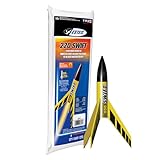
Estes 220 Swift 0810
- Only 10 parts
- 850 ft on an A10-3T
- Tumble recovery
- About a 10 minute build
The Der Red Max wins because it is the rare kit that is good at everything a mid-power rocket needs: a forgiving airframe, a wide enough engine range to experiment with, and a build that teaches fin alignment without punishing mistakes. The Mean Machine earns the premium slot because it is the only kit here that will take a 29mm D or E class motor and use the altitude to show you. The 220 Swift is the cheapest way to find out whether you enjoy building at all before you commit a whole afternoon to a balsa airframe.
All 12 Estes Mid Power Rocket Kits Compared in 2026
| Product | Specifications | Action |
|---|---|---|
| Estes Der Red Max 0651 Rocket Kit |
|
Check Latest Price |
 Estes Alpha 1225 Rocket Kit Estes Alpha 1225 Rocket Kit |
|
Check Latest Price |
 Estes Big Bertha 1948 Rocket Kit Estes Big Bertha 1948 Rocket Kit |
|
Check Latest Price |
 Estes Mercury Redstone 1921 Kit Estes Mercury Redstone 1921 Kit |
|
Check Latest Price |
| Estes Mean Machine 1295 Rocket Kit |
|
Check Latest Price |
 Estes Wizard 1754 Bulk Pack of 12 Estes Wizard 1754 Bulk Pack of 12 |
|
Check Latest Price |
 Estes Power Patrol 2481 E2X Kit Estes Power Patrol 2481 E2X Kit |
|
Check Latest Price |
| Estes 220 Swift 0810 Rocket Kit |
|
Check Latest Price |
 Estes Hi-Flier 2178 Rocket Kit Estes Hi-Flier 2178 Rocket Kit |
|
Check Latest Price |
 Estes Hyper Bat 7217 Two Stage Kit Estes Hyper Bat 7217 Two Stage Kit |
|
Check Latest Price |
 Estes Hi-Flier XL 3226 Rocket Kit Estes Hi-Flier XL 3226 Rocket Kit |
|
Check Latest Price |
 Estes Tazz 7282 Advanced Kit Estes Tazz 7282 Advanced Kit |
|
Check Latest Price |
1. Estes Der Red Max 0651 – The All-Rounder That Just Keeps Flying
Estes 0651 Der Red Max Rocket-Building Kit, Intermediate Flying-Rocket-Model Kit for Ages 10+
Skill Level 1
Laser cut balsa fins
600 ft on a C6-5
16 inch airframe
Pros
- Continuous production for decades with a huge owner base
- Large stable airframe with predictable straight flight
- Supplied fin alignment guides simplify the fin unit
- Handles C6-5 and the larger B class engines
- Parachute with pre-connected shroud lines
Cons
- Large decals stick down fast and tear easily
- Recovery wadding and parachute pack tight in the short body tube
- About two hours of build time is slow for impatient beginners
We built the Der Red Max first because it has been in continuous production for longer than most of us have been flying, and it still shows. The build is roughly two hours with drying time, and the airframe comes in at 16 inches with laser-cut balsa fins and a parachute that already has its shroud lines connected.
Recommended engines run from B4-2 and B4-4 through B6-2 and B6-4 to a C6-5, which is the motor the altitude figure of 600 feet is based on. That range is the reason this kit keeps working for intermediate flyers. A B6-4 is a gentle, fast-building flight that teaches you how the rocket responds to delay, and the C6-5 is the honest mid-power ceiling of the design.
Owners rate it 4.6 out of 5 across 600 reviews, and the distribution is heavily weighted positive. A recurring theme in the feedback is that people compare it to the versions they built as kids and find only minor upgrades, which tells you how stable the design has been. Flights come back on the pad rather than in a field.
The one fiddly part is finishing. The decal sheet is large, the decals grab adhesive immediately, and a torn decal is the most common complaint we saw. Set the decals aside, wet the surface once, and lay them down with tweezers rather than fingertips and the problem mostly disappears.
What you should know before building the Der Red Max
The body tube is short, which means the recovery packing is genuinely tight. Wadding, parachute, shock cord and nose cone all share one tube, and rushing that step is what produces a recovery that opens late or snags. Plan fifteen minutes for packing the chute rather than five.
You also need the full flying hardware, which is not included. Engines, starters, recovery wadding, a launch pad, a launch controller and four AA batteries are all sold separately, and the pad has to be the standard Estes style with a one-eighth inch launch rod to match the kit’s launch lug.
Who the Der Red Max is not for
It is not for someone who wants altitude records. Six hundred feet on a C6-5 is a solid mid-power ceiling but nothing like a 29mm E or F class climb, and the airframe is not designed to take those motors. If your goal is height, look at the Mean Machine or the Hyper Bat instead.
It is also a poor fit for a first-ever build if you are short on patience. Two hours of careful fin alignment and glue drying is a real commitment. The Big Bertha or the Power Patrol will get you flying sooner with less fiddly work.
2. Estes Alpha 1225 – Best Engine Range for Experimentation
Estes 1225 Alpha Rocket-Building Kit, Intermediate Flying-Rocket-Model Kit for Ages 10+
Skill Level 1
1000 ft on a C6-7
Laser cut fins
About an hour
Pros
- Most reviewed kit in this roundup with 893 ratings
- Enormous engine range for experimenting
- Assembly takes about an hour
- Decals and parachute included in the box
- Tracks well and is easy to see in the sky
Cons
- Engines and launch hardware sold separately
- Fin alignment takes patience for a straight flight
- Decal application adds time beyond the stated build hour
The Alpha is the kit most intermediate flyers have actually flown, with 893 owner ratings behind it. It builds in about an hour at 12.3 inches, and the whole package includes the engine mount, hook, adapter ring, parachute, body tube, laser-cut fins, nose cone, shock cord, launch lug and decals.
What sets it apart is engine compatibility. The recommended list runs from a 1/2A6-2 through A8-3, A8-5, B4-4, B6-4, B6-6 to C6-5 and C6-7, and the projected altitude of 1000 feet comes from the C6-7. That is a genuinely useful spread for a learner, because you can run the same airframe on a low-thrust motor to practise recovery, then step up to a C6-7 when you want height.
Our own build confirmed the common report that the hour estimate covers glue-up and dry time and nothing else. Fin alignment is the real work. This kit has no moulded alignment guides, so you are eyeballing the fin unit against the body tube, and a fin set that is even slightly out will show up as a slow arc instead of a straight climb.
Finishing is the other time sink. The decal sheet adds real time on top of assembly, and the acrylic paint is not included. Budget an evening rather than a lunch break if this is your first build.
When the Alpha makes more sense than the Der Red Max
Choose the Alpha if you want to change motors constantly. A C6-7 pushes past 1000 feet, and the extra ceiling over a C6-5 changes how you think about wind drift and how much open field you need. The Der Red Max stops at 600 feet, which is safer and more repeatable but less dramatic.
Choose it if you want a parts reference. With 893 ratings you will always find owner photos of someone else’s finished Alpha, which is a genuine advantage when you are trying to judge whether your fin unit is square.
Where the Alpha falls short
It is not a 29mm kit, so none of the D, E or F class motor advice in this article applies to it. If you already own a Pro Series II rail and a bag of E12-4 motors, this is the wrong kit for you and the Mean Machine is the right one.
Its 4.4 average also sits below the Der Red Max and the Big Bertha, and the gap comes almost entirely from finishing quality complaints rather than flight performance. If you dislike painting and decaling, this is not the kit for you.
3. Estes Big Bertha 1948 – The Easiest Build in the Group
Estes 1948 Big Bertha Rocket-Building Kit, Intermediate Flying-Rocket-Model Kit for Ages 10+
Skill Level 1
500 ft on a C6-5
Roomy body tube
18 inch parachute
Pros
- One of the easiest larger kits to assemble
- Roomy body tube makes recovery packing simple
- Highly customizable for experienced builders
- Large size is easy to spot in flight
- Forgiving and stable flight profile
Cons
- Arrives unpainted so finishing is on you
- Two fins are a different colour from the body and need painting
- Instructions are less novice-friendly than newer kits
The Big Bertha is the kit we hand to anyone who says they are an intermediate flyer but has only ever built one beginner rocket. Recommended engines are B4-2, B4-4, B6-2, B6-4 and C6-5, and the C6-5 puts it at a projected 500 feet, which is the lowest ceiling of the mainstream kits here and also the most forgiving.
The build takes about an hour and the body tube gives you room to work. That matters more than it sounds. A roomy tube means the 18-inch parachute, the shock cord and the wadding pack without the compression that leads to late-opening or torn shrouds on tighter designs.
Owners rate it 4.6 out of 5 across 595 reviews, and the feedback is full of nostalgia, describing the build as a rite of passage. The flight reports are consistent: stable, straight and slow enough to walk to and pick up. For a first step up from an A or B class beginner kit, that predictability is the entire point.
The customizability angle matters for a different reason. Owners routinely add fin configurations, extra fins and upgrades, which turns a simple kit into a platform you can keep modifying as your skills grow. Several reviewers describe it as the first kit they built and still fly years later.
What to know about finishing the Big Bertha
It ships unpainted, and the fin unit arrives with two fins finished differently from the body, so you will be doing touch-up work either way. Water-based paint is the listed paint type. Expect the actual project to run well past the one-hour assembly figure once you add paint and decals.
The instructions are not the clearest in the range. They read like an older Estes booklet, and if you have never built a laser-cut fin unit you may want to watch a build video alongside. That is a five-minute investment that saves a misaligned fin unit.
Who should skip the Big Bertha
Skip it if you want altitude. Five hundred feet is modest, and the Hi-Flier reaches 1500 feet on the same class of motor purely through airframe design. The Big Bertha trades height for forgiveness and that is a deliberate choice, not an oversight.
Skip it if you want a challenge. Many owners explicitly note it is easier to build than most other Skill Level 1 kits, so a flyer who finds the Alpha routine will find this routine too. Move up to the Mercury Redstone or the Tazz for a genuine building test.
4. Estes Mercury Redstone 1921 – The Scale Replica With a Low Ceiling
Estes 1921 Mercury Redstone Rocket-Building Kit, Advanced Flying-Rocket-Model Kit for Ages 10+
Skill Level 3
200 ft on a C6-3
1:34 scale
Streamer recovery
Pros
- Historically accurate replica of a flown Mercury Redstone
- Streamer recovery is simple and rarely tangles
- Advanced build gives real fin alignment practice
- Impressive tall slender presence on the pad
- Stable low-altitude flight that is easy to supervise
Cons
- Only 200 ft ceiling is the lowest here
- Three hours or more of assembly demands steady hands
- Requires a 3/16 inch launch rod set-up
The Mercury Redstone is a 1:34 scale replica of the MR-4 flown by Gus Grissom as Liberty Bell 7, and it is the only kit here rated Skill Level 3. The build is listed at three hours or more, and the advanced label is earned. This is finishing work with historical plastic detail parts rather than a quick tube-and-fins afternoon.
It flies on a C6-3 and is also compatible with the C5-3, reaching a projected 200 feet with streamer recovery. That is a deliberately low altitude, and it is also the least powerful kit in the roundup. The reason is historical accuracy: the real rocket was not a high flyer, and a scale replica that climbed to 1500 feet would not look like the real thing.
At 4.5 out of 5 across 462 ratings, the feedback splits cleanly between two camps. History and scale enthusiasts love the accuracy. Practical flyers note that 200 feet is less mid-power punch than the C6-class kits they could have flown instead.
Streamer recovery is the underrated part. It is simpler than a parachute, it almost never tangles, and at this altitude the descent is short enough that a streamer is completely adequate. If you have been worried about packing a chute into a body tube, this kit sidesteps the problem entirely.
Hardware and setup details that catch people out
This kit needs a 3/16-inch launch rod rather than the standard one-eighth inch rod, so a standard beginner pad will not launch it as supplied. The parts list also calls for mini engines, starters, wadding and a controller, none of which are included.
Because the recovery is a streamer, you do not need recovery wadding for the chute, but you do need enough to slow the ejection so the streamer does not shred. Under-ejecting and over-ejecting both damage it, and the streamer replacement is a consumable you will buy more than once.
Where the Mercury Redstone is the wrong choice
It is the wrong kit for anyone buying a mid-power rocket for altitude. Two hundred feet is a display flight and the marketing figures are honest about that. If your goal is learning what a rocket does with a real motor, the Alpha or the Hi-Flier will teach you considerably more.
It is also the wrong first advanced build if you have never done a lot of filling and sanding. Three hours of assembly plus paint and decals, with historical detail parts that need careful handling, rewards patience and punishes rushing. If you want a challenge, the Tazz is a shorter and more modern one.
5. Estes Mean Machine 1295 – The Only True 29mm Kit Here
Estes 1295 Mean Machine Rocket-Building Kit, Advanced Flying-Rocket-Model Kit for Ages 10+
Skill Level 2
700 ft on an E12-6
80 inch airframe
29mm motors
Pros
- Only kit here that flies on 29mm D and E class motors
- Massive 80 inch height is unmistakable in the sky
- Twist-lock connector breaks it down for transport
- Straight high flights on D12 and E12 engines
- Consistently described as easy despite the advanced label
Cons
- Needs Porta-Pad E hardware a standard pad will not work
- Awkward to transport outside the twist-down sections
- Costs more than the standard C class kits
The Mean Machine is the odd one out in this roundup and the reason we included it. It is an 80-inch airframe with a 29mm motor mount, rated Skill Level 2, and it flies on D12-3, D12-5, E12-4 or E12-6, reaching a projected 700 feet on the E12-6. Everything else here is 18mm A through C class.
That distinction matters if you are planning to grow into 29mm flying, because the hardware requirement is real. The listed requirement is a Porta-Pad E Launch Pad and an E Launch Controller with six AA batteries. A standard Estes pad with its thin rod will not carry this rocket, and a beginner who buys the kit without the pad discovers that at the first launch attempt.
At 4.7 out of 5 across 320 ratings, this is among the most strongly rated kits in the group, and 84 percent of those ratings are five star. Owners consistently describe two things: the sheer size of the thing on the pad, and the twist-lock connector that lets an 80-inch rocket break into sections for transport and assembly.
The 24-inch preassembled parachute with a twist-lock connector is the part that changes the flight feel. Recovery is immediate, descent is slow, and there is no packing chore at all, which makes this the easiest mid-power kit to fly repeatedly even though it is one of the harder ones to build.
What 700 feet on an E12-6 actually means
The E12-6 has a six-second delay, which means the rocket coasts for six seconds after burnout before the parachute comes out. On a tall rocket that is a long hang time, and it is part of why the Mean Machine reads as a slow, controlled flight rather than a snap-and-recover.
Projected altitude figures assume a good motor and a clean build. Hobbyist altitude tracking frequently lands below the printed number, so treat 700 feet as a ceiling rather than a promise. If you fit D12-3 or D12-5 instead, expect a noticeably lower flight and a shorter delay before recovery.
Who should not buy the Mean Machine
Do not buy it as a stepping stone unless you are also buying the Porta-Pad E hardware. Without that pad the kit cannot fly, and the cost of the pad and controller lands on top of the kit no matter what.
It is also not a first advanced build. Three hours of assembly on an 80-inch airframe with a multi-section body is real work, and transport is genuinely awkward outside those twist-down sections. If you want the 29mm experience for less effort, look at how the club launch route works before committing.
6. Estes Wizard 1754 Bulk Pack of 12 – Built for Groups
Estes 1754 Bulk Pack of 12 Wizard Rocket-Building Kits, Intermediate Flying-Rocket-Model Kits for Ages 10+, Classroom Science Experiments
12 identical kits
1600 ft on a C6-7
About an hour each
Streamer recovery
Pros
- Twelve identical kits in one box for a group
- Strong per kit value when launching many rockets
- Each one is a genuine intermediate kit on a C6-7
- Streamer recovery avoids tangles
- Reported as very hard to build badly
Cons
- Small body tubes with no fin alignment marks
- Decals must be cut and tubes painted by the builder
- An hour per rocket adds up across twelve
This is a pack of twelve identical Wizard kits and it solves a specific problem. If you are running a classroom, a youth group, a birthday party or a club flight demonstration, buying twelve singles is wasteful and buying twelve different designs is chaos. Twelve identical rockets means simultaneous launches, fair wind-drift comparisons and a much calmer launch line.
Each kit reaches a projected 1600 feet on a C6-7, which is the second-highest figure in this roundup, and they are also compatible with 1/2A6-2, A8-3, A8-5, B4-4, B6-4, B6-6 and C6-5. Each individual kit includes the engine mount, decals, parachute and instructions, and takes about an hour to assemble.
At 4.4 out of 5 across 295 ratings, the feedback is overwhelmingly about group utility rather than individual performance. Reviewers describe the identical configuration as ideal for flight competitions and for wind-drift studies, where the only variable should be the wind and not the rocket.
They also describe it as nearly impossible to mess up, which is a fair summary of a simple kit with a short assembly. Streamer recovery keeps the descent straightforward and tangled free, which matters when twelve rockets are coming down at once and one adult is supervising.
The fin alignment catch nobody mentions in the listing
The body tubes are small, and the kits do not carry moulded fin alignment marks. Errors in fin squareness are therefore hard to spot before launch and will show up as a wandering flight path. With one rocket that is an annoyance. With twelve it is a problem, because a badly aligned kit can drift over a spectator line.
Build two or three first and fly them before committing the rest of the group. That gives you a reference for correct fin alignment and catches any error in your technique before you have twelve of them.
Who should not buy the bulk pack
Do not buy it for yourself. Twelve identical Wizard rockets is a lot of cardboard to own when the point is a single airframe you will modify and keep. For a personal build, the Alpha or the Hi-Flier is a far better use of the same money.
Also plan for adult supervision if children are involved, because CA glue and cyanoacrylate are not a good combination for young hands, and account for the fact that the whole pack is unfinished and unbuilt. Twelve rockets at an hour each is a real project, not an afternoon.
7. Estes Power Patrol 2481 – Fastest Build, Almost No Finishing
Estes Power Patrol Model Rocket Kit, Brown/a, 20 inches (2481)
Pre-colored plastic
1100 ft on a B6-4
20 inch airframe
Fin unit preassembled
Pros
- Pre-colored parts mean almost no painting or finishing
- Very quick assembly that a child can help with
- Durable plastic airframe survives repeated launches
- E2X electronics package supports altitude tracking
- Doubles as a wind-check rocket for larger kits
Cons
- Preassembled fin unit limits customisation and correction
- Listed as a beginner kit so there is less build challenge
- Body tube can deform with repeated use
The Power Patrol is the one kit here where finishing is not part of the project. The parts come pre-colored, the fin unit is already assembled, and the 20-inch airframe goes together fast. Recommended engines are A8-3, B4-4 and B6-4, reaching up to 1100 feet, with a shock cord, plastic nose cone and body tubes included.
That combination makes it the most useful rocket in the lineup that is not being flown as a rocket. Owners regularly mention flying it as a wind-check launch before sending up something bigger, which is a genuinely experienced habit. A cheap fast flight tells you the wind direction and strength before you commit a large, expensive airframe to the sky.
At 4.5 out of 5 across 285 ratings, the feedback centres on clean, quick assembly and durability. The E2X electronics package, which is what allows altitude tracking on a standard launch system, is the feature experienced flyers mention most because it turns a fun flight into a measured one.
The long-term complaint is specific and worth knowing: the thin body tube can fatigue and collapse with repeated use. If you are the type who flies a rocket fifty times rather than five, watch the tube over time and expect to replace the kit eventually.
What a preassembled fin unit costs you
You give up the ability to correct or modify the fins. On a kit where you sand and glue your own fin unit, a mistake is fixable. Here the unit is fixed at the factory, so if it is not square, or if you want more fins, you are building a new one rather than adjusting what you have.
That trade is worth it for a fly-as-much-as-you-like rocket and a bad trade for a builder who wants to learn. If the point is the build, the Alpha gives you a full fin assembly with the same 18mm hardware and a wider engine list.
Where the Power Patrol fits and where it does not
It fits the returning-to-the-hobby flyer. Someone who built rockets as a kid and wants to be flying again in an hour, with no paint on their hands, will like this more than almost anything else here.
It does not fit the flyer chasing a skill progression, because the listing calls it a beginner level kit and it is a beginner level build. There is no staging, no scale detail and no real assembly challenge. Treat it as a wind checker and a first flight, then move to one of the Skill Level 2 or 3 kits.
8. Estes 220 Swift 0810 – Ten Parts and Almost No Time
Estes 0810 220 Swift Rocket-Building Kit, Intermediate Flying-Rocket-Model Kit for Ages 10+
Only 10 parts
850 ft on an A10-3T
Tumble recovery
Mini engine class
Pros
- One of the fastest builds in the roundup at 10 parts
- Lowest cost of any kit here while still an intermediate design
- Self-stick decals mean painting is optional
- An A10-3T still reaches roughly 850 ft
- Tumble recovery keeps flying hardware simple
Cons
- Tumble recovery can land hard or in unpredictable spots
- Mini engine class limits performance against C6 kits
- A very small airframe is hard to see and track
The 220 Swift is ten parts, four and a half inches tall, and finished with wood fins, a plastic nose cone and self-stick decals. It flies on an A10-3T mini engine for a projected 850 feet, and is also compatible with 1/4A3-3T, 1/2A3-2T, 1/2A3-4T, A3-2T, A3-4T and A3-6T.
What makes it interesting is that 850 feet from a four-and-a-half-inch airframe on a mini engine is genuinely surprising. It is not a C6-class altitude figure and the performance ceiling is lower, but the rocket reaches real height where much of the mini-engine class does not. The flip side is tumble recovery instead of a parachute, so there is no chute to pack, no shroud lines and no wadding debate.
At 4.4 out of 5 across 261 ratings, reviewers treat the tumble recovery as a fair trade rather than a flaw, which is the honest read. A tumbling rocket coming down is simple and needs almost no recovery hardware, but it lands where it lands and it can arrive with more energy than a chute would have absorbed.
It is also the cheapest way into the hobby for an adult who wants to test whether they enjoy the building. Ten parts, decals that stick on, and a short build. If the answer is yes, the Alpha is the natural next purchase and the step up is manageable.
Tumble recovery: what you are actually agreeing to
A tumbling rocket rotates as it descends and stops when it hits. That means no chute to fold, no shock cord packing, and far less to go wrong before launch, which is why so many owners call it a beginner-friendly system despite the kit being rated intermediate.
It also means impact damage is more likely. Fly it over grass, not concrete, and expect the airframe to survive a soft field landing and possibly crack on a hard one. A 2.54 gram airframe has very little margin, so fly it on a low thrust motor first rather than up-thrusting straight to the A10-3T.
Who the 220 Swift is not for
It is not for a flyer who wants to grow into mid power, because the mini engine class is a step back from a C6 rather than a step forward. The progression from this rocket to real mid power goes through the Alpha or the Hi-Flier.
It is also hard to track. A four-and-a-half-inch white-ish tube at 850 feet is genuinely hard to follow, and a first-time builder launching alone will lose sight of it faster than they expect. Fly it in a field where you can walk the flight line rather than a public launch.
9. Estes Hi-Flier 2178 – The Most Flown Kit in the Roundup
Estes Hi-Flier Flying Model Rocket Kit, ages 10 and up with Adult Supervision under 12
Skill Level 1
1500 ft on a C6-7
About an hour
Streamer recovery
Pros
- Most heavily reviewed kit here with 856 ratings
- Reaches up to 1500 ft on a standard C6-7
- About an hour of assembly in one sitting
- Bright orange streamer makes the descent easy to see
- Widely used as a reliable club workhorse
Cons
- Lowest average rating in the roundup at 4.3
- Streamer can tangle around the shock cord if packing is rushed
- Builder must cut sand and fill the fins carefully
The Hi-Flier is the kit with the largest base of real flight reports behind it, at 856 ratings, and it reaches a projected 1500 feet on a C6-7. It is a Skill Level 1 build of about an hour at 12 inches, with laser-cut balsa fins, a durable body tube, a moulded nose cone, decals and a fluorescent orange streamer.
That combination of altitude and simplicity is why it has become a club workhorse. A rocket that goes high on a standard C6 motor, comes down on a visible streamer and takes an hour to build is exactly what you want when you are launching twenty rockets in an afternoon and want most of them back.
At 4.3 out of 5 it has the lowest average in this roundup, and the distribution shows it, with a larger share of one-star reviews than any other kit here. Reading the critical reviews, they are about two specific things: streamer packing done too quickly, and fin finishing quality. Neither is a flight design fault, and both are fixable with more care.
The engine range matches the Alpha almost exactly, running from 1/2A6-2 through A8-3, A8-5, B4-4, B6-4, B6-6 to C6-5 and C6-7. So the real choice between the two is airframe and recovery, not motor.
Streamer packing is the whole skill here
A streamer tangles around the shock cord when it is crammed in. That single mistake causes most of the poor reviews, and the fix is unglamorous: fold the streamer into a loose stack, do not roll it, and leave enough room for it to deploy. Ten extra seconds of care removes the most common complaint on this kit.
Fin work is the second skill. The laser-cut balsa fins need cutting, sanding and filling so they sit square against the body tube. Kits that include alignment guides make this easy; this one relies on your eye, so take your time and check the fin unit against a flat surface before the glue sets.
Why the lower rating is not a reason to avoid it
With 856 ratings, a 4.3 average still represents a very large number of successful flights, and the review base is far bigger than any other kit here. A 4.6 across 68 ratings is a smaller and less informative signal. If you care about how something performs in practice across thousands of launches, this is the better evidence.
That said, the Hi-Flier is not the right kit if you want a forgiving first build. Between streamer packing and fin finishing it asks more of a beginner than the Big Bertha does, despite the same Skill Level 1 label.
10. Estes Hyper Bat 7217 – Two-Stage Height With Two-Stage Problems
Estes Hyper Bat Model Rocket Kit
Skill Level 2
Approx 2125 ft
21.9 inch two stage
Parachute on both stages
Pros
- Two-stage staging is a real jump in complexity
- Clean booster separation when delays are matched
- Distinctive bat styling stands out from the range
- Flies higher than expected and draws a crowd
- Approachable build with a clear two stage concept
Cons
- Booster fins prone to snapping with several reported breakages
- Elastic shock cord is a weak point many builders replace
- Sustainer is easy to lose at altitude
- A four second B class delay can separate the stage too late
The Hyper Bat is the highest-flying kit in this roundup, reaching approximately 2125 feet on a 21.9-inch two-stage airframe with parachute recovery on both the booster and the sustainer. It is a Skill Level 2 design, and it is the only kit here that teaches staging.
Staging means the booster burns out, coasts away on a delay, and the sustainer motor lights while the booster falls back under its own parachute. Get the delays right and it is spectacular. Get them wrong and the sustainer can be ejected destructively, which is the single most common complaint in the reviews.
At 4.4 out of 5 across 119 ratings, the review set is unusually candid about fragility. Booster fin breakages before launch are reported repeatedly, and the elastic shock cord is flagged by owners who have replaced it with Kevlar. At 6.4 ounces the airframe is also the heaviest in the group, which is part of why it needs a rail rather than a basic pad for clean staging.
What the same reviewers report is clean separation at club launches when motor delays are matched properly. That is the key phrase. Staging is a delay-matching problem before it is anything else, and a club launch is the fastest way to learn it with other people watching.
Matching delays is the entire skill
The booster motor has to separate after the right burn time, and the sustainer motor has to light after the separation coast. A four second B class delay that separates the stage too late will rip the rocket apart instead of staging it, which is why the review set keeps coming back to the same warning about delay selection.
Replace the elastic shock cord before the first flight. Owners who do this report it as the single best modification to the kit, and it is a few minutes of work with cord and a lighter.
Who should leave the Hyper Bat alone
Do not buy it as your first staging project if you have never flown a rail-launched rocket. The combination of fin fragility, delay matching and an easily lost sustainer means the learning curve is real, and the sustainer is the part you will be searching for in a field.
Also be honest about the space. 2125 feet with a two-stage recovery needs a genuinely large launch area and a recovery range to match, and this is not a rocket to fly over houses or a small field. Read our checklist below on where you can legally launch before you build it.
11. Estes Hi-Flier XL 3226 – Tall, Fast and Under-Tested
Estes 3226 Hi-Flier XL Intermediate Model-Rocket Kit
Skill Level 2
Over 1300 ft
31 inch airframe
Open area required
Pros
- 31 inch airframe is easy to see against the sky
- Over 1300 ft ceiling gives real high-altitude performance
- Skill Level 2 without a punishing build
- 79 percent of ratings are five star
- Good value for a tall high-flying intermediate kit
Cons
- Smallest review base in the roundup at 68 ratings
- Listed age range of 14 and up is more restrictive
- Slender airframe needs an open area and can drift on descent
The Hi-Flier XL is a 31-inch airframe that climbs above 1300 feet and is rated Skill Level 2. It is built for standard mid-power engines and is one of the taller rockets in the range, which is the entire point: at altitude, a thin white tube is very hard to see, and a 31-inch one is much easier to follow.
Owner feedback is consistently positive at 4.6 out of 5, with 79 percent five star and only 3 percent one star. The consistent description is a tall, high-flying intermediate build that performs reliably, and the consistent caveat is about the ground you need rather than the airframe.
Be aware of the thin evidence here. With 68 ratings this is the smallest review base in the roundup, so a 4.6 average carries less weight than a 4.3 across 856 ratings. It is not a warning, it is a calibration, and it is worth reading the reviews as a set of recent reports rather than a long history.
The listed age range is also inconsistent within the listing itself, showing 14 years and up on one field and a manufacturer recommendation of 10 and up on another. We would treat the higher number as the guide and keep younger builders to a supervised simpler kit.
How much open ground you need
A slender 31-inch rocket descending from above 1300 feet on a streamer or parachute will drift, and drift distance depends on wind at altitude rather than wind at the pad. That makes the launch site the deciding factor. A large field with a clear downrange corridor is not optional for this airframe.
Check the maximum altitude rules that apply where you intend to fly before building. In the United States, a launch over 400 feet above the surface requires notification to the FAA Air Force, and some areas impose tighter local limits. Getting this right is part of choosing the kit, not an afterthought.
Who the Hi-Flier XL suits
It suits a flyer who has mastered a 12 or 16-inch airframe and wants visible height without moving to a two-stage design. Compared with the Hyper Bat it is simpler, single stage and far more forgiving, while flying higher than every other single-stage kit here.
It does not suit someone who wants the build itself to be the challenge. The Skill Level 2 label reflects the size and the finishing rather than any structural complexity, and a builder who found the Alpha straightforward will find this straightforward too.
12. Estes Tazz 7282 – Best Rated, Smallest Sample
Estes Tazz Flying Model Rocket Kit 7282 | Advanced Level Build | Soars up to 700′
Advanced build
700 ft on a C6-3
Helicopter streamer
Molded alignment guides
Pros
- Helicopter streamer recovery gives a distinctive spinning descent
- Highest rating in the roundup at 4.8 with no one star reviews
- Stable predictable flight on A8 and C6 engines
- Molded alignment guides make the advanced build approachable
- Molded retainers make rubber band changes easy
Cons
- Only 46 ratings
- the thinnest feedback base here
- Wing glue joints can crack on hard landings
- Three hours of build time is longer than the Skill Level 1 kits
The Tazz flies on A8-3, B6-2, B6-4, C5-3 or C6-3 for a projected 700 feet, and its recovery is the thing people remember. The helicopter-type streamer spins the rocket on the way down in a slow, deliberate descent that looks unlike anything else in the Estes range, and it does it with no parachute to pack.
It is also the most demanding build here in relative terms. The listed assembly time is three hours excluding paint and glue drying, and the design uses a molded engine mount with tabs, molded wing alignment guides and molded plastic retainers for the rubber bands. Those guides are the difference between an advanced kit that is merely long and one that is actually approachable.
At 4.8 out of 5 it is the highest rated kit we analyzed, with 82 percent five star and zero one-star reviews. Owners single out the spinning streamer recovery as the standout feature and report stable, predictable flights on standard A and C class engines.
The most common suggestion in the reviews is to reinforce the wing glue joints with extra fillets, because they can crack on hard landings. A thin bead of extra adhesive along the joint is a five-minute fix that most owners report solving the problem entirely.
What the 4.8 rating does and does not tell you
Forty-six ratings is the smallest sample in this roundup by a wide margin. A clean 4.8 with no one-star reviews is a genuinely good signal about the product, and a thin signal about long-term durability, which is where most of the 18mm kits in this list accumulate their complaints.
Read the reviews as recent rather than accumulated. Combined with the fact that this is a relatively recent design in the range, that is the fairest way to treat the number.
Who should pick the Tazz over everything else
Pick it if you want the flying to be the interesting part. A spinning helicopter descent on a 16.6-inch airframe is a conversation starter at a club launch, and the fact that it uses a streamer means there is no recovery packing at all.
Skip it if you want altitude. Seven hundred feet on a C6-3 is a good-looking flight but it is a quarter of what the Hyper Bat reaches. Choose this one for the build and the recovery, not for the height.
How to Choose the Right Estes Kit for Your Skill Level
Most buyers get this roundup wrong in one of two directions. They buy a kit that is too big for the launcher they own, or they buy a kit that is too easy for the skills they already have. Both are avoidable with a short checklist before you spend anything.
Are you actually ready to move up? Before a larger motor makes sense, four things should be true. You have recovered every rocket you launched, not most of them. You have built a fin unit square without help. You can pack a parachute into a body tube without crushing it. And you have a launch site where the descent will not cross a road, a pond or a spectator line. If any of those fail, build the same kit again on a lower thrust motor until they pass.
What hardware do you already own? This is the mistake we see most often. Kits in this roundup are all sold without engines, starters, wadding, a launch pad, a launch controller and batteries. The Mean Machine additionally needs a Porta-Pad E Launch Pad and an E Launch Controller, the Mercury Redstone needs a 3/16-inch launch rod set-up, and the rest run on a standard Estes pad and controller. Check the hardware requirement line for each kit before you order anything.
Which motor should you actually start with? Follow the recommended list and start at the lower end. C6-5 and similar lower-thrust motors are described by experienced flyers as working well when you follow the specification rather than up-thrusting, and the mid-power motor classes climb quickly. A C6-7 will give you the 1500 to 1600 foot figures on the Alpha, the Hi-Flier and the Wizard, while a C6-3 or C6-5 is the sensible first flight on the Der Red Max, the Big Bertha and the Tazz.
If you move up to 29mm hardware, the E and F classes such as the E12-4, E16-6, F15-4 and F15-6 are where real mid-power flight begins, and those motors are only usable on a 29mm mount with a rail and a matched controller. None of the 18mm kits in this roundup will accept them, and forcing a 29mm motor into an 18mm tube is how rockets get destroyed on the pad.
Projected altitude is a ceiling, not a promise. Hobbyist altitude tracking frequently lands below the printed figure, and the gap widens with motor class. The numbers on the box assume a clean build, a fresh motor and average conditions. If you are using a tracker, expect to come in under the specification and treat that as normal rather than as a fault in your flying.
Fin material changes the build more than the label does. Laser-cut balsa fins, as used on the Der Red Max, the Big Bertha, the Hi-Flier and the Mercury Redstone, need cutting, sanding, filling and careful squaring. Molded plastic parts and preassembled fin units, as used on the Power Patrol and the Tazz, are faster and more consistent. Your preference between those two is a better predictor of enjoyment than the Skill Level number.
Where can you legally fly? In the United States, model rockets under 40 ounces using an engine with less than 4 pounds of thrust and a total impulse of 20 pound-seconds or less fall under FAA Part 101 Subpart C, and hobby rocket launch requires notification to the FAA Air Force Regional Operations Control Center at least four hours in advance on a form 7800-1. State and local rules add their own layer, and some areas cap the height you may reach. If you have not launched before, going to a club launch once is the fastest way to find a legal site with proper range control.
Finally, treat the club launch as part of the purchase decision rather than an optional extra. Experienced builders on the Rocketry Forum consistently recommend it as the easiest way to find a safe launch site, to test-fire a motor recommendation, and to see a design flown before committing to it.
Once you are past this stage and looking at the far end of the hobby, our guides on [8 Best L3 Certification High Power Rocket Kits](https://www.comstock-interactivedata.com/best-l3-certification-high-power-rocket-kits/) and [6 Best High Power Rocketry Kits for Certified Flyers](https://www.comstock-interactivedata.com/best-high-power-rocketry-kits-for-certified-flyers/) cover what comes after mid power.
Frequently Asked Questions
Which Estes rocket is best for intermediate flyers?
The Estes Der Red Max 0651 is the best all-round choice for intermediate flyers. It is a Skill Level 1 kit that assembles in about two hours, flies predictably on a C6-5 for a projected 600 feet, uses laser-cut balsa fins that can be repaired after a rough landing, and has 600 owner ratings behind it. If you want more altitude, the Alpha 1225 and Hi-Flier 2178 both reach over 1000 feet on a C6-7.
Are Estes rockets legal to fly?
Yes, in the United States model rockets meeting the hobby rocket definition are legal under FAA Part 101 Subpart C. That means a rocket weighing under 40 ounces, using an engine producing less than 4 pounds of thrust and 20 pound-seconds or less of total impulse, launched at least 1,000 feet from a populated area. Hobby launches over 400 feet above the surface also require notification to the FAA Air Force at least four hours in advance.
What is the largest rocket motor I can buy without a license?
You can buy and use any 18mm or 29mm motor up to and including the F class, such as the F15-4 or F15-6, without a licence, as long as the total impulse stays at or below 20 pound-seconds. Anything larger, including the G class and above, and anything using more propellant than a standard reload, falls into the high power category that requires NAR or Tripoli Level 1 certification before you fly it.
Is 3 fins or 4 fins better on a rocket?
Neither is automatically better, and most of the kits in this roundup use three external fins. Four fins generally add stability and stand-up authority on heavier or faster rockets, while three fins are lighter, cheaper and easier to align correctly at low speed. A fin count is far less important than a square fin unit, and for an intermediate flyer a well-aligned three-fin unit will always fly better than a badly aligned four-fin one.
What do you need to launch an Estes rocket?
Beyond the kit itself you need engines, starters, recovery wadding, a launch pad, a launch controller and batteries. Kits in this roundup are 18mm and take an eighth-inch launch rod on a standard Estes pad and controller with four AA batteries. The Mean Machine is different: it needs a Porta-Pad E Launch Pad and an E Launch Controller with six AA batteries, and the Mercury Redstone requires a 3/16-inch launch rod set-up.
Is a longer or shorter rocket better?
Longer rockets generally fly more stably because they have a higher fin moment relative to their weight, which is why the 31-inch Hi-Flier XL and the 21.9-inch two-stage Hyper Bat hold altitude well. Shorter rockets are easier to build, easier to transport and cheaper, but they are more twitchy and roll into the wind sooner. For an intermediate flyer, something in the 12 to 21 inch range with three or four fins is the practical sweet spot.
Conclusion: The Kit You Will Still Be Flying in Five Years
The Estes Der Red Max 0651 is our best Estes mid power rocket kit for intermediate flyers in 2026. It is not the fastest, the biggest or the highest rated kit we analyzed, and we are not claiming it is. It is the one that combines a manageable two-hour build, laser-cut balsa fins you can repair, a forgiving airframe and 600 ratings of real flight history behind it, which is the combination that keeps a rocket in the hands of a flyer rather than on a shelf.
Buy the Alpha or the Hi-Flier if altitude is the goal, the Mean Machine if you are ready for 29mm hardware and want to find out what the next stage feels like, and the Hyper Bat only if you have a rail, a big field and a club launch to learn staging on. Whatever you choose, buy the pad and controller at the same time, and start on the lower motor in the recommended list.
If you want the wider picture before you commit, our guide to the [8 Best Saturn V Rocket Model Kits](https://www.comstock-interactivedata.com/best-saturn-v-rocket-model-kits-for-space-enthusiasts/) covers the large display kits, and the roundups linked in the buying guide above take you from first flights through to certified high power flying.