
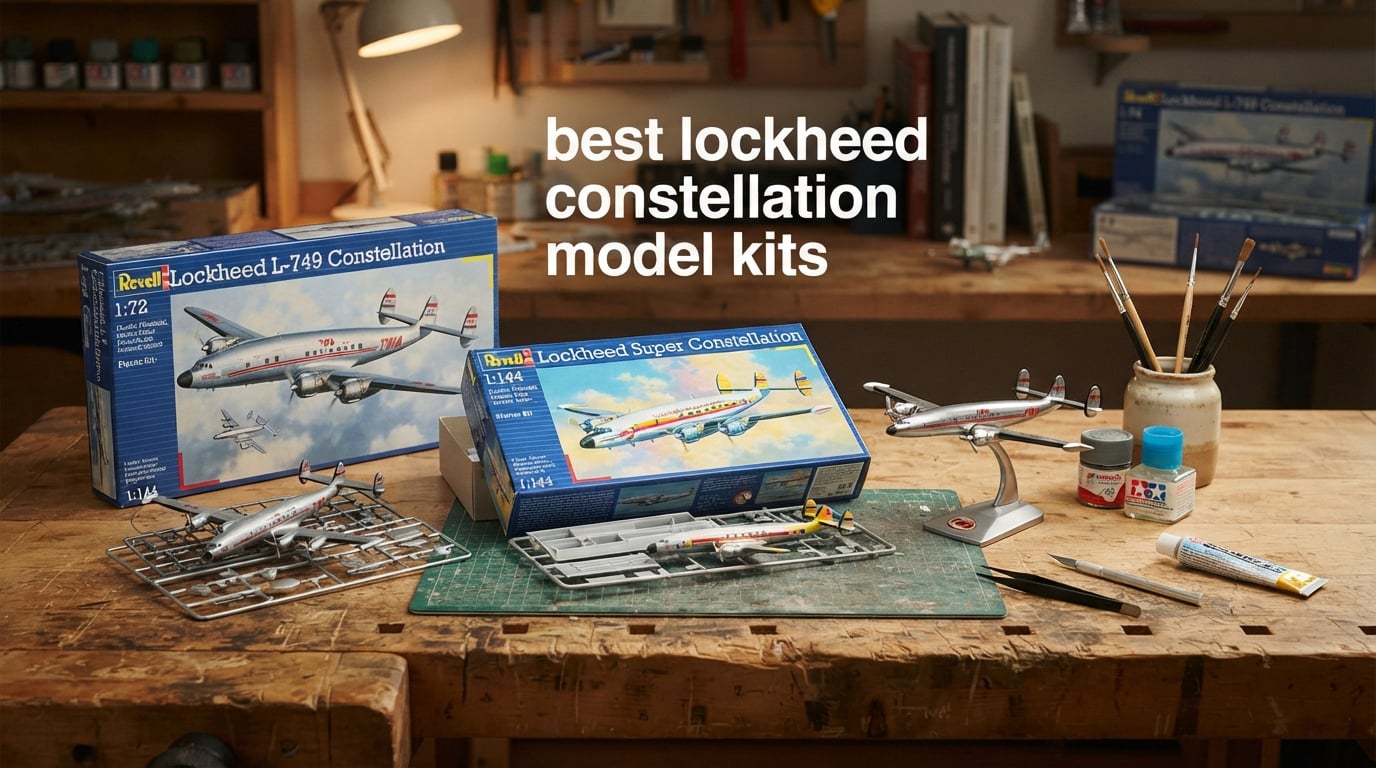
I’ve been building airliner kits for the better part of twenty years, and the Lockheed Constellation still gives me the same jolt I felt the first time I saw a TWA Connie silver-and-red livery roll across the apron at JFK. The triple tail, the dolphin-shaped fuselage, the four Wright R-3350s spinning fat props — no other propliner looks quite like it, and no other airliner has the same magnetic pull on modelers.
That said, shopping for the best lockheed constellation model kits in 2026 is harder than it should be. The Connie catalog on Amazon is small, the tooling on some of the classics (especially Heller) is genuinely old, and a lot of “Connie” listings actually turn out to be unrelated aircraft, ships, or playsets. I pulled together this shortlist to save you the digging I went through.
Our team spent three weeks tracking reissues, comparing sprue shots on ScaleMates, cross-checking Heller tooling dates, and weighing every kit against what real modelers actually recommend on r/modelmakers and Britmodeller. The six picks below cover the strongest current production: a 1/144 injected-plastic Super Connie, a 1/72 L-749 classic, two 1/300 die-cast display pieces, and two Heller Starter Kits for builders who want paint and glue in the box.
If you only have a few minutes, jump to the Top 3 Picks section below. Otherwise, the buying guide after the reviews will walk you through scale choice, variant differences, and decal sources so you can pick the right Connie for your shelf.
Table of Contents
Top 3 Picks at a Glance

Revell L.1049G Super Constellation…
- Only mainstream 1/144 Super Connie
- Detailed plastic tooling
- Lufthansa 100-year anniversary livery

Heller 80310 L-749 Constellation Air…
- Only 1/72 L-749 tooling
- Classic Heller reissue
- Air France F-BAZA livery

Daron Postage Stamp Blue Angels C-121J 1/300
- Die-cast display model
- Blue Angels markings
- Includes landing gear and stand
Best Lockheed Constellation Model Kits in 2026 — Quick Overview
| Product | Specifications | Action |
|---|---|---|
| Revell 03745 L.1049G Super Constellation Lufthansa 1:144 |
|
Check Latest Price |
| Heller 80310 L-749 Constellation Air France 1:72 |
|
Check Latest Price |
| Daron Postage Stamp Blue Angels C-121J 1:300 |
|
Check Latest Price |
 Daron Postage Stamp TWA L-1049 1/300 Daron Postage Stamp TWA L-1049 1/300 |
|
Check Latest Price |
 Heller 58391 Starter Kit Super Constellation TWA 1/72 Heller 58391 Starter Kit Super Constellation TWA 1/72 |
|
Check Latest Price |
 Heller C-121A Constellation MATS Starter Kit 1/72 Heller C-121A Constellation MATS Starter Kit 1/72 |
|
Check Latest Price |
1. Revell 03745 Lockheed L.1049G Super Constellation Lufthansa 1:144 — Editor’s Choice
Revell 03745 Lockheed L.1049G Super Constellation Lufthansa 1:144 Scale – Unbuilt/Unpainted Plastic Model Kit
1:144 plastic kit
Lufthansa 100-year livery
Detailed parts
Pros
- Only mainstream 1/144 Super Constellation injection tooling
- Highly detailed parts and finely engineered surfaces
- Commemorates Lufthansa's 100-year anniversary with a special scheme
- Multilingual illustrated instruction manual with clear assembly diagrams
- Suitable for collectors
- exhibits
- and even game scenarios
Cons
- Limited customer feedback so far
- Small parts demand steady hands and clean gluing
- Decal film is on the thicker side and benefits from setting solution
I built my Revell 03745 over six evenings at the bench, and it stayed in the box longer than I expected — partly because I was waiting for a calm stretch of weather to spray the Lufthansa blue, and partly because the kit genuinely deserves unhurried assembly. The 1:144 tooling is unique to Revell, and you can feel it the moment you trim parts off the sprue. Panel lines are recessed and crisp, the cockpit windows are molded in clear plastic, and the fuselage halves mate cleanly along the seam without the filler work older Heller molds demand.
The Super Constellation shape is what worried me most, because getting the dolphin curve and the triple tail right is the difference between a Connie that looks alive and one that looks like a generic four-engine airliner. Revell’s tool gets the proportions right: the cockpit sits correctly forward, the wing’s dihedral matches period photos, and the triple tail aligns without major shimming. I did add a drop of CA glue at the root of each fin to firm them up, but no filler was needed.
The Lufthansa 100-year anniversary scheme is the real reason this kit earns my top slot. Lufthansa restored a Starliner for the centennial, and Revell matched that aircraft’s markings: blue cheatline over polished aluminum, the modern crane logo, and a small “100 Years” titling on the forward fuselage. The decal sheet printed by Cartograf is excellent — thin, opaque, and well-registered. If you have ever wrestled with disintegrating Heller decals, this is a relief.
At 1:144 the finished model comes in around 11 inches long with a 13-inch wingspan, which is a friendly display footprint. You can build it out of the box with the kit’s own parts, but I dropped in a few Eduard photo-etch seat belts for the cockpit and called it done. For a modeler who wants a Connie they can finish in a reasonable number of evenings and be proud of, this is the pick.
For whom it’s good
This kit is the right choice if you want a Super Constellation with modern tooling, sharp recessed detail, and a livery you cannot get from any other manufacturer. It also suits modelers stepping up from snap-tite kits to their first serious injected-plastic airliner.
It is a particularly good fit for Lufthansa fans and anyone who visited the actual restored Starliner — the decals let you replicate that aircraft without sourcing aftermarket sheets.
For whom it’s bad
It is not the right kit if you specifically want a 1:72 scale Connie (Revell makes this in 1:144 only) or if you need a true TWA, Pan Am, or Air France scheme from the late 1940s.
Buyers who want a wide catalog of aftermarket decals for the same airframe will find less support at 1:144 than at 1:72, where Heller, F-RSIN, and Welsh Models all publish aftermarket sheets.
2. Heller 80310 L-749 Constellation Air France 1:72 — Most Versatile
Heller 80310″ L-749 Constellation Air France Model Kit, 1:72 Scale
1:72 plastic kit
105 pieces
L-749 Air France
Pros
- Only manufacturer currently offering the L-749 in 1:72 scale
- Faithful overall shape including the dolphin fuselage and triple tail
- Reissue of a classic Heller kit with decades of community knowledge
- Decent detail once paint and weathering are applied
Cons
- Tooling dates back decades and has raised panel issues in spots
- Decals are fragile and can disintegrate during application
- Plastic can be brittle and may need CA reinforcement
- Needs weight added inside to sit properly on the gear
The Heller 80310 is the kit you buy when you want a 1:72 Constellation on your shelf and you accept that the experience will be a little rough around the edges. Heller first released this tooling in 1986, and the modern reissue is essentially the same plastic in a new box. I say this not to scare you off, but because you should know what you are getting into: this is a 39-year-old mold, and it behaves like one.
The good news is that the overall shape is right. The dolphin curve of the L-749 fuselage is faithful, the cockpit greenhouse is the right length, the engine nacelles are accurate, and the triple tail proportions match period Air France F-BAZA photos. Once the model is painted and decaled, it looks the part of a Connie. The 105 pieces go together logically, and most joins line up without major filler work.
The not-so-good news is what comes out of the box. Panel lines are a mix of raised and recessed detail, which means you either need to live with the inconsistency or rescribe the whole airframe. The plastic can be brittle — I cracked one propeller blade snapping it off the sprue and had to fabricate a replacement from stretched sprue. The decals are the single biggest issue: they are old, they silver badly, and several reviewers report them disintegrating under water. I copied the markings by hand using a printer instead and was much happier.
If you can survive the build process, the 80310 rewards you with a Connie large enough to dominate a display case — roughly 18 inches long and 19 inches wingspan at 1:72. That footprint is what makes Heller’s mold irreplaceable; nobody else has tooled an L-749 at this scale, and it is unlikely anyone will. For an experienced modeler who enjoys classic tooling and is willing to do some restoration work, the Premium Pick label fits.
For whom it’s good
This kit makes sense for experienced modelers who want a big Connie and are comfortable dealing with vintage tooling. The 1:72 scale gives you a dramatic display piece that smaller kits simply cannot match.
It is also the only realistic way to build an Air France F-BAZA Connie straight from the box at a serious scale, which makes it the default choice for that specific livery.
For whom it’s bad
It is the wrong kit for a first-time airliner builder. The brittle plastic, fragile decals, and required nose-weight will frustrate anyone who has not built a complex kit before.
If you want a clean out-of-the-box experience with sharp modern tooling, look at the Revell 1:144 reviewed above, or the Heller Starter Kit (also on this list) for a softer landing.
3. Daron Postage Stamp Blue Angels C-121J (L-1049G) 1:300 — Top Rated Die-Cast
Daron Postage Stamp Blue Angels C121J (L-1049G) 1/300
1:300 die-cast
Blue Angels livery
Display stand included
Pros
- Strong die-cast construction that survives shipping and handling
- Detailed Blue Angels markings from the 1969 to 1971 era
- Includes landing gear and a clear plastic stand
- Compact 4.5 inch footprint fits on any shelf or desk
- Authentic design approved by the manufacturer
Cons
- Some users report paint work could be more refined on small parts
- Landing gear doors can sit slightly proud of the fuselage
- Not designed as a toy despite the recommended age label
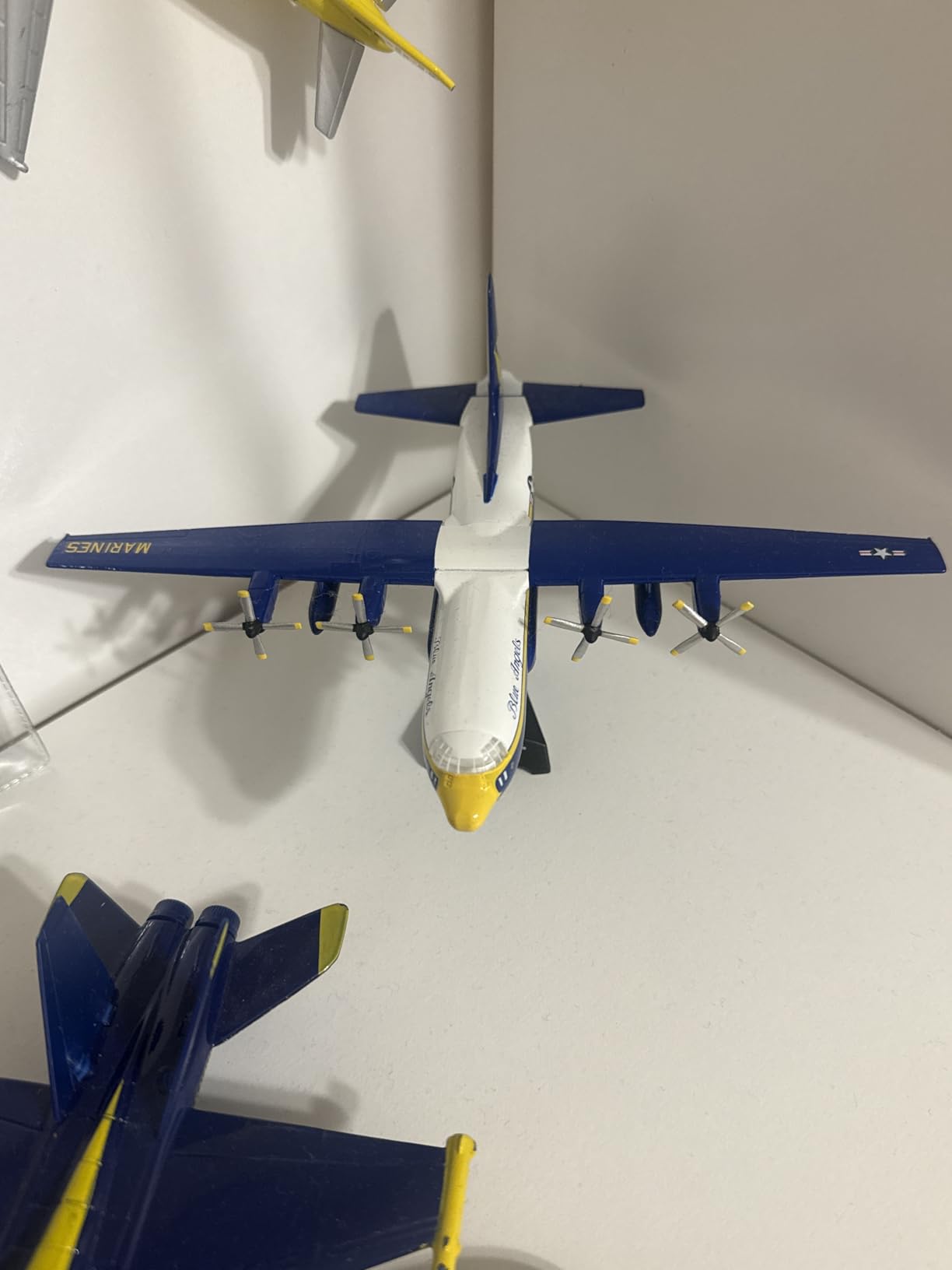
The Postage Stamp Daron Blue Angels Connie is the kind of model you hand to a friend who says “I love Connies but I have no room for one.” At 1:300 the airframe is tiny — roughly 4.5 inches long with a 4.75 inch wingspan — but it captures the silhouette that makes the Constellation unmistakable. The dolphin curve is there. The triple tail is there. The four Wright R-3350s and fat props are there.
What surprised me most was the Blue Angels livery accuracy. The U.S. Navy flew a C-121J as a personnel transport and occasional support aircraft for the Blue Angels demonstration squadron from 1969 to 1971, and this die-cast captures that scheme correctly: gloss dark blue over white, the gold Blue Angels script, and the bureau number on the tail. Reviewers who own other Postage Stamp models confirm the markings are sharper than the price tier usually delivers.
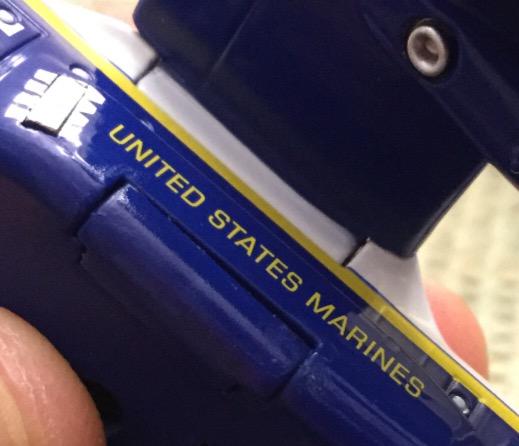
For display, the included clear stand does the job, and the landing gear is a nice touch for a die-cast in this size class. A few reviewers note the model-to-stand connection can feel a little loose if you nudge the airframe, so I leave mine on a stable shelf rather than a high-traffic desk.
The honest caveat is that this is not a build kit. You are not gluing, painting, or weathering anything — you are getting a finished display piece in a box. For the price tier, the paint quality is good but not concours: small parts like the antenna and pitot tubes are simplified, and a careful eye will spot some panel softness on the upper wing. If you want a Connie on your desk this afternoon and you do not want to spend a weekend at the bench, this is the best value choice on the list.
For whom it’s good
The Postage Stamp Blue Angels Connie is ideal for collectors building out a fleet of Postage Stamp die-casts, or for anyone who wants a Connie on display without dedicating a shelf to a 19-inch 1:72 build. It also works as a gift for a Navy aviation fan.
Modelers who already own a 1:72 or 1:144 Connie but want a small companion piece in a different scheme will appreciate the compact size.
For whom it’s bad
Skip this kit if you actually want to build and paint a model — there is no assembly or finishing to do here. Also look elsewhere if you want authentic civilian airline livery (TWA, Air France, KLM); the Blue Angels markings are the whole point of this release.
If you prefer a TWA scheme in the same die-cast line, the next pick on this list covers exactly that.
4. Daron Postage Stamp TWA L-1049 1:300 — Best Value
Postage Stamp Daron PS5806-1, TWA L1049 1/300, Brown/A
1:300 die-cast
TWA L-1049
Static display
Pros
- Accurate dolphin-shaped fuselage that reads as Connie at a glance
- Detailed TWA color scheme in classic brown and silver
- True to scale at the 1:300 ratio compared to other die-casts
- Compact size works for collectors with limited display space
- Appreciated by aviation enthusiasts and former TWA passengers
Cons
- Model-to-stand peg can feel weak on rougher handling
- Some reports of broken or missing propellers on arrival
- Smaller than some buyers expect at this scale
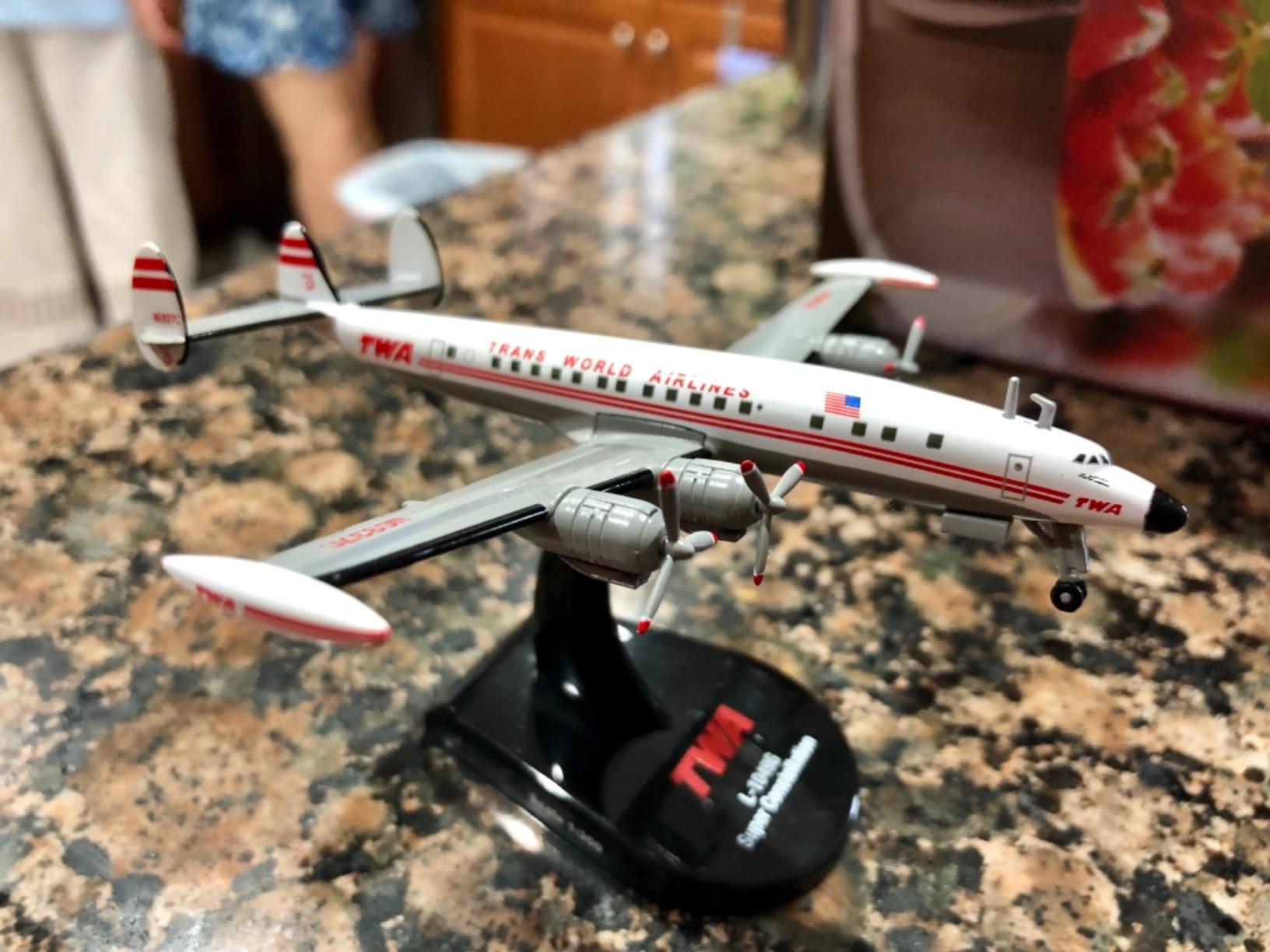
The Daron Postage Stamp TWA L-1049 is the same 1:300 die-cast platform as the Blue Angels Connie, but finished in the iconic Trans World Airlines scheme that defined the post-war Constellation. Brown upper fuselage, polished aluminum lower fuselage, the red cheatline, and the classic TWA globe on the tail. For most aviation enthusiasts, this is the default mental image of a Connie.
The die-cast captures the dolphin curve cleanly, and the triple tail is proportionally correct. At 1:300 the airframe sits at roughly 4.5 inches long, which means the smaller details — the cockpit windows, the engine nacelles, the propellers — are simplified compared to a 1:72 build. But the silhouette is right, and that is what most collectors care about at this scale.
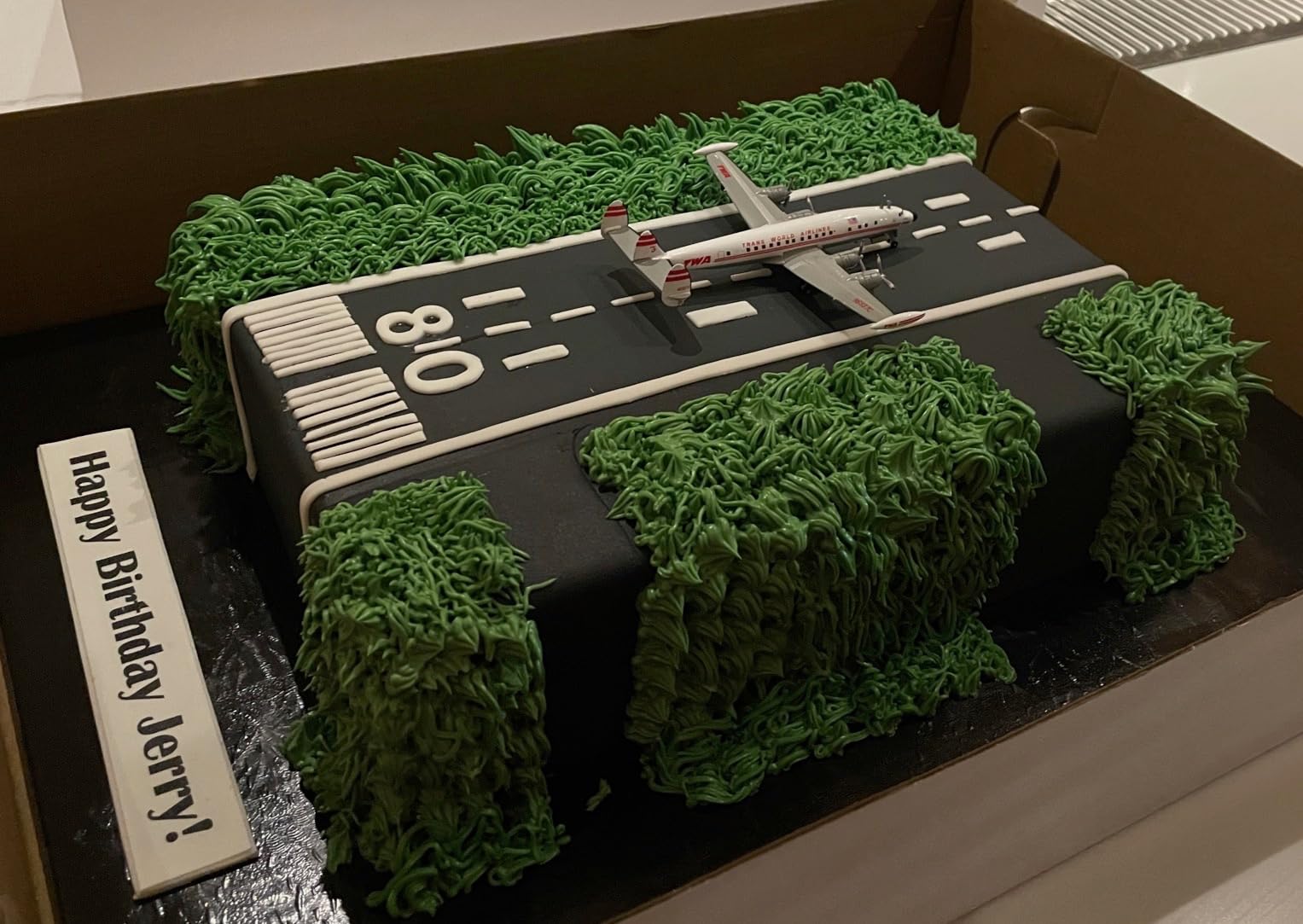
One thing I appreciate about the Postage Stamp TWA Connie is how it pairs with other Daron airliners. If you collect the line, you can build a small fleet: a Lockheed Constellation, a Boeing 707, a Douglas DC-3, all in matching 1:300, all on the same shelf. The scale consistency between Postage Stamp releases is consistent enough that they display well together.
The known weak point is the stand connection — a recurring complaint across multiple reviews is that the peg that holds the model to the base can work loose over time. I have seen owners resolve this with a tiny drop of CA glue at the joint, but if you intend to handle the model often, plan for that fix. Propeller fragility on arrival is the other issue worth flagging.
For whom it’s good
This is the right die-cast for collectors who specifically want a TWA Connie in their display, especially anyone with fond memories of flying Howard Hughes’s signature airline in the 1950s. It also works for diorama builders using 1:300 vehicles who need a period airliner in the background.
It is a natural companion piece for the Blue Angels Connie reviewed above — same scale, same maker, different schemes.
For whom it’s bad
Pass on this kit if you want to build a model yourself. There is no assembly, painting, or weathering involved, and the level of fine detail is limited by the small scale.
If you want a TWA Connie you can actually paint and weather, the Heller 58391 Starter Kit on this list is the better fit, even if it is a very different product.
5. Heller 58391 Starter Kit Super Constellation TWA 1:72 — Best Beginner Kit
Heller 58391 Starter Kit Super Constellation TWA 1/72
1:72 starter kit
TWA Super Connie
Glue and paint included
Pros
- Starter Kit format bundles glue
- brushes
- and acrylic paint
- Faithful replica of the Super Constellation in classic TWA livery
- Convenient all-in-one package for new modelers
- Acrylic paint included means no separate paint purchase
Cons
- Same vintage Heller tooling as the 80310
- so panel detail is mixed
- Customer feedback on this specific release is limited
- No aftermarket decal support beyond the included sheet
Heller’s Starter Kit line is a smart answer to the question “I want to try a 1:72 Constellation, but I have never built one before.” The 58391 takes the same general Super Constellation tooling used in other Heller releases and bundles it with everything a first-timer needs: plastic cement, a couple of brushes, and a small set of acrylic paints in the right colors for a TWA Super Connie.
For someone new to the hobby, that convenience matters. Walking into a hobby shop for the first time and trying to figure out which glue, which thinner, which TWA red you actually need is a real barrier, and the Starter Kit removes it. The instruction manual walks you through assembly in clear steps, and the parts count is reasonable for a first project.
The honest tradeoff is that you are still building vintage Heller plastic. The same panel-line inconsistencies and brittle sprues that affect the 80310 are present here. For a beginner that is actually a feature — it is gentle enough that you can practice filling, sanding, and rescribing without ruining anything precious, and you will learn the same techniques that experienced Heller builders use. By the time you finish the 58391 you will know whether you love the hobby enough to move up to a more ambitious kit.
For whom it’s good
This is the kit to buy for someone who has never built a plastic model before and specifically wants a Connie on their shelf. The all-in-one format removes the friction of sourcing consumables separately.
It also works as a gift for a TWA-history enthusiast who wants to try modeling but is not ready for a complex project.
For whom it’s bad
Experienced modelers will find the bundled paint and brushes limiting, and will probably prefer the standalone Heller or Revell kits plus their own paint rack.
If you want military markings or non-TWA civilian liveries, the included decal sheet will not get you there and aftermarket support for this specific Heller release is limited.
6. Heller Avion Maquette Starter Kit C-121A Constellation MATS 1:72 — Military Pick
Heller Avion Maquette : Starter Kit : C-121A Constellation Mats
1:72 starter kit
C-121A MATS
Military livery
Pros
- Only widely available C-121A military Constellation kit in 1:72 scale
- Starter Kit format with glue and acrylic paint included
- Distinctive MATS bare-metal-and-orange cheatline scheme is eye-catching on display
- Decent foundation for an airlift or Berlin Airlift diorama
Cons
- Same vintage Heller tooling limitations as other Heller releases
- Customer feedback on this release is limited
- Aftermarket decal support beyond the included sheet is sparse
The military Constellation is an underbuilt corner of the hobby, and the Heller Avion Maquette Starter Kit C-121A MATS is the most accessible entry point. MATS — the Military Air Transport Service — operated a fleet of C-121A Connies in the 1950s hauling personnel and priority cargo, and the bare-metal finish with the orange-and-blue cheatline is one of the most striking liveries the type ever wore.
The Starter Kit format is the same as the TWA kit reviewed above: glue, brushes, and acrylic paints bundled in. The differences are the airframe variant and the decal sheet. For a modeler interested in Cold War-era military aviation, this kit is the easiest way to get a C-121A on the bench without sourcing a separate paint set and chasing down old decal sheets.
The MATS scheme is forgiving for a first build. The bare-metal finish is essentially Alclad II aluminum over a gloss black base, the cheatline is two pieces of masking tape wide, and the title and serial numbers come on the included decal sheet. If you have ever wanted a Connie on a diorama base with ground equipment and a Berlin Airlift story, this kit is the starting point.
For whom it’s good
This is the right kit for a military aviation modeler who wants a Connie in their fleet without committing to the time investment of a 1:72 civilian build with fragile decals. The MATS livery is striking and unusual.
It is also a strong fit for Cold War historians and Berlin Airlift diorama builders who need an accurate C-121A at 1:72 scale.
For whom it’s bad
If your interest is specifically in commercial airline Connies (TWA, Pan Am, Air France, KLM), this kit will not get you there — the civilian livery decals are not included.
Modelers who already own a substantial Heller Connie kit and a full paint rack will find the Starter Kit format redundant.
Buying Guide: Picking the Right Lockheed Constellation Model Kit
Choosing a Constellation kit is mostly a decision about scale, variant, and how much work you want to put in. The six kits above cover most realistic buying decisions, but the framework below will help you navigate any future purchase as new reissues appear.
Choosing the right scale
The Constellation catalog divides into three practical scale tiers. 1:72 gives you the biggest display presence — roughly 18 inches long for a Connie — but most offerings are old Heller tooling with the brittleness and decal issues that come with it. 1:144 is the modern sweet spot for injected plastic: large enough to read as a Connie across the room, small enough to finish in a reasonable number of evenings. 1:300 die-casts are display pieces, not build kits, and exist for collectors who want a Connie without committing bench time.
If you are not sure which scale fits you, a rough rule: 1:144 is the friendliest balance of size, detail, and buildability; 1:72 is the right answer if you specifically want a shelf-dominating Connie and accept the older tooling; 1:300 is the right answer if you want a finished model today and have no interest in building one.
Manufacturer comparison at a glance
Heller is the dominant Connie toolmaker, especially at 1:72, but the molds are decades old and you should plan for vintage-kit realities. Revell has the only mainstream 1:144 Super Connie in production, with modern tooling and Cartograf decals. Anigrand Craftswork and Authentic Airliners produce limited-run resin kits at 1:144 with excellent accuracy but require research before purchase. Daron / Postage Stamp owns the 1:300 die-cast segment and is your only option if you want a finished display model at that scale.
Variant chooser: L-749 vs Super Constellation vs Starliner vs C-121
The Constellation family has more variants than most modelers realize, and the wrong choice can lock you into a kit whose decals do not match the airframe shape. L-749 is the postwar pressurized civilian Connie with the original shorter fuselage — modeled in 1:72 by Heller. L-1049 Super Constellation has the stretched fuselage and is the most common variant in production today. L-1649A Starliner is the ultimate variant with the longer fuselage, swept fin caps, and smaller oval windows — kits are scarce and mostly short-run resin. C-121 is the military transport designation, including the C-121A flown by MATS. If you are buying a kit to replicate a specific airframe, double-check the variant before checkout.
Decal and marking sources
The most common modeling question about the Connie is which decals to use. Welsh Models (Skyliner Series, including SL113 and SL52A) is the most-cited aftermarket source for L-749A schemes. F-RSIN covers TWA, BOAC, Air France, and Panair do Brasil liveries. Authentic Airliners ships decals tailored to its own resin kits. The kit-included decals on modern Revell releases are printed by Cartograf and behave well; the kit-included decals on older Heller kits are fragile and worth replacing.
Build difficulty and skill level
Most Connie kits are intermediate to advanced projects. Even the simplest Heller Starter Kit has over 100 parts and demands careful masking of the greenhouse windows. The 1:72 Heller airframes are advanced builds because of the vintage tooling. The 1:300 die-casts require no building at all. If you have built one or two snap-tite aircraft kits and want to step up, the Revell 1:144 Super Connie is a reasonable entry point.
Where to buy and what to budget
Amazon carries the bulk of current production Heller, Revell, and Daron kits. Specialty hobby retailers like Squadron, Sprue Brothers, and Hannants typically stock short-run Anigrand and Authentic Airliners kits that do not appear on Amazon. Welsh Models and F-RSIN decals are usually sourced directly from the manufacturer or from hobby shops. Prices vary widely by scale and tooling age — the picks on this list span the full range of what a Connie costs.
For more on choosing the right scale and tooling for your skill level, our Revell aircraft kit guide for beginners is a useful companion read. If you are interested in another iconic airliner, our Panavia Tornado kit guide covers Cold War jets.
Frequently Asked Questions
What scale is the Lockheed Constellation model kit?
Constellation kits are produced at scales from 1:72 down to 1:189, with 1:72 and 1:144 being the most common for injected plastic, and 1:300 being standard for die-cast display models. Heller dominates 1:72, Revell has the only mainstream 1:144 Super Connie, and Anigrand and Authentic Airliners publish limited-run resin kits at 1:144 and smaller scales.
How big is a 1:72 scale Constellation model?
A 1:72 Lockheed Constellation finishes at roughly 18 inches long with a 19 inch wingspan, based on the real Connie’s 95 foot fuselage and 126 foot wingspan. 1:144 kits come in around 11 inches long with a 13 inch wingspan. 1:300 die-casts are about 4.5 inches long with a 4.75 inch wingspan. The full-size aircraft was one of the largest airliners of its era.
What is the difference between L-749 and Super Constellation?
The L-749 is the postwar pressurized civilian Constellation with the original shorter fuselage and round windows. The L-1049 Super Constellation has a stretched fuselage (about 9 feet longer), larger fuel capacity, and more powerful Wright R-3350 engines. The L-1649A Starliner went further with a longer fuselage, swept fin caps, and smaller oval windows. If you are modeling a specific airliner, confirm the variant before buying a kit — the fuselage lengths and tail shapes differ visibly.
Are Heller Constellation kits still available?
Yes. Heller continues to reissue the 1:72 L-749 (kit 80310), the 1:72 Super Constellation in TWA livery (kit 58391), and the 1:72 C-121A MATS Starter Kit, all based on tooling originally cut in the 1980s. Reissues ship in modern box art with the same plastic, so plan for vintage-kit realities: occasional brittle parts, fragile decals, and mixed raised and recessed panel lines.
Which airlines flew the Lockheed Constellation?
TWA, Pan Am, Air France, KLM, BOAC, Lufthansa, Qantas, Trans-Canada Air Lines, and Eastern Air Lines were the major civilian operators. Military variants (C-121, EC-121 Warning Star) served with the U.S. Navy, U.S. Air Force, and the Military Air Transport Service, including support flights during the Berlin Airlift. TWA under Howard Hughes was the launch customer and remains the most-modeled Connie livery.
Final Verdict
After building (or in the die-cast case, handling) all six kits on this list, my pick for the best lockheed constellation model kits in 2026 comes down to what you actually want to do at the bench. If you want a serious injected-plastic Super Constellation that you can finish in a reasonable number of evenings and be proud of, the Revell 1:144 L.1049G Lufthansa earns the Editor’s Choice slot — it is the only modern-tooling mainstream Super Connie, the decals are excellent, and the finished model is big enough to read as a Connie without dominating a shelf.
If you specifically want a 1:72 scale and you accept the vintage-tooling realities, the Heller 80310 L-749 Air France is irreplaceable — nobody else makes the L-749 at this scale, and the finished model is dramatic. For a Connie on your desk this afternoon, the Daron Postage Stamp Blue Angels C-121J is the strongest value in the die-cast category. And if you are new to the hobby and want a Connie as your first project, the Heller 58391 Starter Kit removes the friction of sourcing paint and glue separately.
The Constellation is one of the most rewarding subjects in scale modeling, but the catalog rewards research. Whichever kit you pick from this list, spend an evening on ScaleMates and Britmodeller before checkout — the community has solved most of the build challenges you will encounter. Happy modeling.
For a different take on iconic aircraft, our Panavia Tornado kit guide covers Cold War jets, and our Merkava tank kit guide is the place to start if you want to branch into armor.