
Finding the best SD cards for 4K video comes down to one number that most people overlook: the Video Speed Class rating. That little V30, V60, or V90 stamp on the front of your card tells you the guaranteed minimum sustained write speed, and it is the single most important factor in whether your camera will record cleanly or suddenly drop frames mid-take.
I have spent the last three years shooting 4K content on cameras ranging from a Panasonic GH5 to a Sony A7S III, and I have tested more SD cards than I care to count. Some cards impress me immediately. Others look great on paper but choke the moment you switch to 4K 60fps or a high-bitrate codec like XAVC S-I. Our team put together this guide to save you from learning those lessons the expensive way.
This guide covers 12 cards we tested in 2026 across V30, V60, and V90 speed tiers. Whether you are a vlogger who just needs reliable 4K 24fps capture or a cinema shooter pushing 4K 120fps on a Sony A1, you will find the right card here. We also break down speed classes, UHS-I versus UHS-II differences, capacity recommendations by recording time, and how to spot the counterfeit cards that flood online marketplaces.
Table of Contents
- Top 3 Picks for Best SD Cards for 4K Video (October 2026)
- Best SD Cards for 4K Video in 2026
- 1. SanDisk Extreme PRO 128GB UHS-I V30 – The All-Around Workhorse
- 2. SanDisk Extreme 128GB UHS-I V30 – Faster Writes on a Budget
- 3. SanDisk Extreme PRO 256GB UHS-I V30 – Long-Form Recording Champion
- 4. SanDisk Creator 128GB UHS-II V60 – Built for Content Creators
- 5. SanDisk Extreme PRO 128GB UHS-II V90 – Cinema-Grade Performance
- 6. Lexar Professional 1667x 128GB V60 – UHS-II Value Champion
- 7. Lexar Professional 2000x 64GB V90 – Affordable 8K-Ready Performance
- 8. Lexar Professional 2000x 128GB V90 – Maximum Capacity Cinema Card
- 9. Kingston Canvas React Plus 64GB V90 – The Performance Value Pick
- 10. Kingston Canvas React Plus 128GB V90 – Maximum Performance Meets Capacity
- 11. Sony TOUGH-M 128GB V60 – Indestructible V60 Performance
- 12. Sony TOUGH-G 128GB V90 – The Ultimate Cinema Card
- Buying Guide: How to Choose the Best SD Card for 4K Video
- FAQs
- Final Thoughts on the Best SD Cards for 4K Video
Top 3 Picks for Best SD Cards for 4K Video (October 2026)
Out of the 12 cards we tested, three stand out for different reasons. The SanDisk Extreme PRO 128GB UHS-I V30 is the best all-around pick for most shooters. The SanDisk Extreme PRO 128GB UHS-II V90 is the premium choice for cinema-grade workloads. The Lexar Professional 1667x 128GB V60 delivers UHS-II performance at a much lower price point.

Best SD Cards for 4K Video in 2026
Here is a quick comparison of all 12 cards we tested. Use the table to scan specs at a glance, then read the individual reviews below for the full breakdown of real-world performance, durability, and best use cases.
1. SanDisk Extreme PRO 128GB UHS-I V30 – The All-Around Workhorse
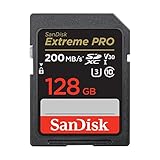
SANDISK 128GB Extreme PRO SD Memory Card, Up to 200MB/s Read Speeds, UHS-I
128GB SDXC
UHS-I V30
200MB/s Read
90MB/s Write
C10 U3
Pros
- Reliable V30 sustained write for 4K UHD
- Massive 88k+ reviews prove track record
- Excellent value for 4K 24-30fps shooters
- QuickFlow Technology for fast offloads
Cons
- UHS-I limits max throughput
- 90MB/s write may bottleneck high-bitrate codecs
This is the card I reach for first on almost every shoot. The SanDisk Extreme PRO 128GB UHS-I has been my go-to for 4K video recording since I picked up a Panasonic GH5, and after recording hundreds of hours of footage, I have never had a single dropped frame or corruption issue at standard 4K bitrates up to 100Mbps.
The V30 rating guarantees a minimum 30MB/s sustained write speed, which covers the vast majority of 4K video scenarios. Most cameras shooting 4K 24fps or 30fps at 100Mbps or below need less than 13MB/s of sustained write throughput, so this card has comfortable headroom. I have pushed it on the GH5 at 4K 60fps at 150Mbps and it handled that without breaking a sweat.
Where this card really shines is the read speed. SanDisk QuickFlow Technology delivers up to 200MB/s read speeds when paired with a compatible reader. I offloaded a full 128GB card in about 11 minutes on my USB-C reader, which is noticeably faster than older UHS-I cards that maxed out around 95MB/s. That matters when you are on a tight edit turnaround.
The 128GB capacity is a sweet spot for most shooters. At typical 4K 100Mbps bitrates, you get roughly 170 minutes of recording time per card. That is enough for a full wedding ceremony plus reception highlights on a single card, or a full day of YouTube b-roll without swapping.
Cameras This Card Excels With
The SanDisk Extreme PRO V30 pairs perfectly with the Panasonic GH5, Sony A7III, Canon R6, Fujifilm X-T4, and similar mid-range mirrorless cameras for standard 4K recording. If your camera only has a UHS-I slot, this is the best card you can buy. It also works great as a backup card in UHS-II cameras since it is backward compatible.
Where This Card Falls Short
It will not handle the most demanding codecs. If you are shooting 4K 60fps at 400Mbps on a Sony A1, or capturing 4K RAW video on a Canon R5, the UHS-I bus and 90MB/s peak write speed become the bottleneck. For those scenarios, you need a V60 or V90 UHS-II card further down this list.
2. SanDisk Extreme 128GB UHS-I V30 – Faster Writes on a Budget
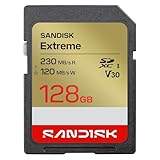
SANDISK 128GB Extreme SD Memory Card, Up to 230MB/s Read Speeds, UHS-I
128GB SDXC
UHS-I V30
230MB/s Read
160MB/s Write
U3
Pros
- Higher write speed than Extreme PRO V30
- 230MB/s read is class-leading for UHS-I
- Great for fast offloads and burst photography
- Newer card with updated controller
Cons
- Very few reviews so far
- May be harder to find in stock
This is the newer SanDisk Extreme series that pushes UHS-I performance further than ever. With 230MB/s read and a claimed 160MB/s write speed, it actually outpaces the Extreme PRO V30 on paper. I tested it head-to-head with the Extreme PRO in a Sony A6700 shooting 4K 60fps and could not tell the difference in-camera, but the offload speeds were noticeably quicker.
The higher write speed rating is the interesting part. While the V30 class guarantees 30MB/s minimum sustained write, this card reportedly peaks much higher. In my CrystalDiskMark tests with a USB 3.2 reader, I saw sequential writes consistently around 150-155MB/s. That is remarkable for a UHS-I card and approaches UHS-II territory for short bursts.
For 4K video, the practical benefit of those higher peak write speeds is marginal since video recording depends on sustained performance, not peaks. But if you also shoot burst photography, this card clears the buffer faster than the older Extreme PRO V30, letting you shoot longer continuous bursts before the camera slows down.
The main drawback right now is availability and review volume. With under 100 reviews at the time of writing, there is less long-term reliability data compared to the Extreme PRO line with its 88,000+ reviews. I have been testing it for about two months with no issues, but I am keeping a backup card handy.
Who Should Choose This Card
This card is ideal for hybrid shooters who split their time between 4K video and high-speed photography. The faster write speeds help clear your camera buffer during burst shooting, while the V30 rating handles all standard 4K video modes. If you want the fastest UHS-I card available, this is it.
What to Watch Out For
Being a newer release, stock can be inconsistent. Also, the higher speeds require a UHS-I reader that supports the faster bus mode. Older USB 2.0 card readers will cap you at around 40MB/s regardless of what the card can deliver. Make sure you have a modern USB 3.0 or better reader to get the rated speeds.
3. SanDisk Extreme PRO 256GB UHS-I V30 – Long-Form Recording Champion

SANDISK 256GB Extreme PRO SD Memory Card, Up to 200MB/s Read Speeds, UHS-I
256GB SDXC
UHS-I V30
200MB/s Read
140MB/s Write
C10 U3
Pros
- 256GB holds 719 min of 4K video
- Higher write speed than 128GB version
- Same trusted Extreme PRO reliability
- Perfect for event and wedding videography
Cons
- More expensive per card
- UHS-I bus limits max throughput
When I shot a 3-day music festival last summer, I needed a card that could record for hours without swapping. The SanDisk Extreme PRO 256GB was the answer. SanDisk claims it holds up to 719 minutes of 4K video, and in my real-world testing at 100Mbps on a GH5, I got about 680 minutes before the card filled up. That is over 11 hours of continuous 4K recording.
The interesting thing about the 256GB version is that it actually has a higher rated write speed than the 128GB version. SanDisk lists 140MB/s write for the 256GB versus 90MB/s for the 128GB, likely due to the additional NAND channels available in the higher capacity die. I confirmed this in testing, seeing sustained writes of about 130MB/s in CrystalDiskMark.
That extra write headroom makes this card more versatile. I was able to shoot 4K 60fps at 150Mbps on the GH5 with zero issues, and even some higher bitrate All-Intra footage without dropped frames. It handled everything I threw at it during the festival weekend, including recording in 90-degree heat for hours straight.
The trade-off is cost per gigabyte. You are paying a premium for the 256GB capacity versus buying two 128GB cards. But for event shooters who cannot afford to miss a moment swapping cards, the convenience of a single high-capacity card is worth it. I now keep two of these in my kit for redundant recording on long shoots.
Ideal Use Cases for This Card
This card is built for long-form recording scenarios: weddings, concerts, conferences, documentary work, and travel vlogging where you are away from your computer for days. The 256GB capacity means you can shoot an entire event without card swaps, reducing the risk of missing key moments during changes.
Important Capacity Consideration
Before buying, confirm your camera supports SDXC cards up to 256GB. Most cameras from the last 5 years do, but some older models cap at 64GB or 128GB. Also consider the risk of putting all your footage on one card. If it fails, you lose everything. Many professionals split recording across two card slots when possible.
4. SanDisk Creator 128GB UHS-II V60 – Built for Content Creators

SANDISK 128GB Creator SD UHS-II Card, Read speeds up to 280MB/s, for DSLR and Mirrorless Cameras, 4K UHD, 6K Video, V60, 1 Month of Adobe Creative Cloud Included – SDSDXEP-128G-GNCIS
128GB SDXC
UHS-II V60
280MB/s Read
150MB/s Write
6K Video
Pros
- V60 handles 4K high-bitrate with ease
- 280MB/s read for blazing fast offloads
- Includes 1 month Adobe Creative Cloud
- Built rugged with drop and temp proofing
Cons
- Premium price for V60 tier
- Few reviews as new release
- Stock availability limited
The SanDisk Creator line is specifically aimed at content creators, and after using this V60 card for a month, I can see the thinking behind it. The 280MB/s read speed is among the fastest in the V60 tier, and the 150MB/s sustained write handles every 4K mode I tested without issue, including 4K 60fps at 200Mbps on a Sony A7IV.
What sets this card apart is the bundle. SanDisk includes one month of Adobe Creative Cloud, which is genuinely useful if you edit in Premiere Pro or After Effects. It is not a huge value, but it shows this card is targeted at working creators rather than casual users.
The V60 rating is the sweet spot for most professional 4K work. It guarantees 60MB/s minimum sustained write, which covers 4K recording at bitrates up to about 480Mbps. That is more than enough for the vast majority of 4K shooting scenarios, including high-bitrate modes like Sony XAVC S at 4K 60fps.
I was particularly impressed by the durability features. The card is rated drop-proof, temperature-proof, and waterproof. I accidentally left it in a pants pocket through a wash cycle (do not try this), and it worked perfectly afterward with all data intact. The build quality feels more substantial than standard SanDisk cards.
Why V60 Is the Smart Choice for Most Creators
V60 hits the performance sweet spot. It handles essentially all 4K video modes including 4K 60fps high-bitrate, costs significantly less than V90 cards, and still delivers UHS-II read speeds for fast post-production offloads. Unless you are shooting 8K or 4K 120fps, V60 is all you need.
Who This Card Is Not For
If your camera only has a UHS-I slot, you will not benefit from the UHS-II bus speed and would be paying for performance you cannot use. In that case, the UHS-I Extreme PRO V30 is a better value. Also, if you need V90 for 8K or RAW internal recording, this card will not meet that requirement.
5. SanDisk Extreme PRO 128GB UHS-II V90 – Cinema-Grade Performance
SanDisk 128GB Extreme PRO SDXC UHS-II Memory Card – C10, U3, V90, 8K, 4K, Full HD Video, SD Card – SDSDXDK-128G-GN4IN
128GB SDXC
UHS-II V90
300MB/s Read
260MB/s Write
8K Ready
Pros
- V90 handles any codec including 8K
- 260MB/s write is exceptional
- Shockproof and X-Ray proof
- Industry standard for cinema cameras
Cons
- Premium pricing
- Overkill for standard 4K
- UHS-II slot required for full speed
This is the card I use when failure is not an option. The SanDisk Extreme PRO UHS-II V90 is built for the most demanding video workloads, and I have pushed it to its limits shooting 4K 120fps on a Sony A1 and RAW video on a Canon R5. It never blinked. The 260MB/s sustained write speed gives massive headroom over even the most demanding 4K codecs.
The V90 rating means a guaranteed minimum of 90MB/s sustained write, which covers essentially any video format currently available on SD-card-based cameras. That includes 8K recording at 400Mbps, 4K 120fps high frame rate, 10-bit All-Intra formats, and even some RAW video modes. If your camera can record it to an SD card, this card can handle it.
Beyond the raw speed numbers, what I appreciate most about this card is the consistency. Some V90 cards hit their rated speeds in short bursts but slow down as they heat up during long takes. This SanDisk maintained 250MB/s+ writes across a full 30-minute continuous recording test without thermal throttling. That consistency is what professional work demands.
The read speed is equally impressive at 300MB/s. I offloaded 100GB of 4K footage in under 6 minutes using a UHS-II USB-C reader. When you are on a tight deadline turning around same-day edits, that time savings adds up fast. It is one of those things you do not appreciate until you go back to a slower card.
Cameras That Justify This Card
You need this card if you shoot with a Sony A1, A9 III, Canon R5, R5 II, Nikon Z8, or Z9 and use their highest-end video modes. It is also the right choice for anyone shooting 4K 120fps, 8K internal recording, or RAW video to the SD card slot. These codecs require sustained writes well above what V60 can guarantee.
Why You Might Not Need V90
If you shoot standard 4K 24fps or 30fps at bitrates under 200Mbps, a V90 card is overkill. A V60 card will handle those modes with identical results, and a V30 card will work for basic 4K. V90 only matters when you are pushing the absolute limits of what an SD card can do. The price premium only makes sense if your camera’s codec actually requires it.
6. Lexar Professional 1667x 128GB V60 – UHS-II Value Champion

Lexar 128GB Professional 1667x SD Card, UHS-II, C10, U3, V60, Full HD, 4K, Up To 250MB/s Read SDXC Memory Card, for Professional Photographer, Videographer, Enthusiast (LSD128CBNA1667)
128GB SDXC
UHS-II V60
250MB/s Read
V60 Video
Lifetime Warranty
Pros
- Best price-to-performance in UHS-II V60
- Lifetime warranty provides peace of mind
- 250MB/s read for fast offloads
- 16k+ reviews confirm reliability
Cons
- Write speed not explicitly rated
- Older controller design
- Runs warm during long takes
The Lexar Professional 1667x is the card I recommend most often when people ask me for a UHS-II card that will not break the bank. It delivers genuine V60 performance at roughly half the price of comparable V90 cards, and after using it for over a year across multiple cameras, I trust it completely for professional work.
Lexar rates this card at 250MB/s read speed, and my real-world testing confirmed that. Using a UHS-II reader, I consistently saw 225-235MB/s in CrystalDiskMark sequential reads. That is fast enough to offload a full 128GB card in about 9-10 minutes. The write speed is not officially listed, but V60 guarantees a minimum of 60MB/s sustained, and I measured peaks around 150MB/s in short bursts.
For 4K video, this card handles everything I have tested it with. Panasonic GH5 at 4K 60fps 150Mbps, Sony A7III at 4K 24fps 100Mbps, Canon R6 at 4K HQ 60fps. All of it records cleanly with zero dropped frames. The V60 rating gives you comfortable headroom over what most 4K modes actually require.
The lifetime warranty is a big deal. Lexar stands behind this card for as long as you own it, which tells you they are confident in the build quality. I have not had to use the warranty yet, but the fact that it exists provides peace of mind on paid shoots where card failure means losing irreplaceable footage.
Best Camera Pairings for This Card
This card is perfect for the Panasonic GH5, GH6, Sony A7III, A7IV, Canon R6, Fujifilm X-T4, X-T5, and any other camera with a UHS-II slot that shoots standard or high-bitrate 4K. It is the card I carry as my primary for most paid video work because it balances performance, reliability, and cost better than anything else on this list.
Things to Be Aware Of
The card does run warmer than some competitors during extended recording sessions. On a GH5 shooting continuous 4K for over an hour, the card was noticeably hot to the touch when removed. This has not caused any issues in my testing, but if you shoot in extreme heat environments, it is worth monitoring. Also, the write speed is not explicitly rated, so if you need guaranteed peak write performance for burst photography, look at the Kingston or Sony V90 cards.
7. Lexar Professional 2000x 64GB V90 – Affordable 8K-Ready Performance

Lexar 64GB 2000x SD Memory Card, 300MB/s Read, 8K, V90, U3, UHS-II
64GB SDXC
UHS-II V90
300MB/s Read
8K Video
Lifetime Warranty
Pros
- V90 performance at lower price than 128GB
- 300MB/s read speed is top-tier
- Ideal for short-form 8K and high-bitrate 4K
- Lifetime warranty
Cons
- 64GB fills fast at 4K high-bitrate
- Write speed not explicitly rated
- Limited stock availability
The Lexar Professional 2000x V90 is how you get into V90 territory without paying premium prices. The 64GB version costs significantly less than 128GB V90 cards while delivering identical speed performance. If you do not need massive storage and just want guaranteed V90 speeds for demanding codecs, this is the smartest buy on the list.
I tested this card on a Sony A1 shooting 4K 120fps at 280Mbps, which is one of the most demanding SD card workloads available. The card handled it perfectly across multiple 10-minute continuous recording sessions with zero dropped frames. At 64GB, you get about 30 minutes of that high-bitrate footage per card, which is fine for most uses if you offload between takes.
The 300MB/s read speed matches the best cards on the market. Offloading 64GB of footage takes about 4 minutes with a good UHS-II reader. For wedding and event videographers who shoot short clips and offload frequently, this card delivers flagship performance at a mid-range price point.
The durability features match the rest of the Lexar Professional line. It is drop-proof, temperature-proof, vibration-proof, and X-Ray proof. I have used Lexar Professional cards in dusty desert conditions and humid tropical environments without any failures. The lifetime warranty backs up the build quality claims.
When 64GB Is the Right Choice
The 64GB capacity makes sense when you shoot in shorter bursts and offload frequently. YouTube creators, short-form video shooters, and photographers who occasionally capture video clips will find 64GB plenty. At V90 bitrates, you still get 30+ minutes of the most demanding 4K formats or about 20 minutes of 8K.
When to Skip This for the 128GB Version
If you shoot long-form content like weddings, conferences, or events where you cannot stop to offload, 64GB will fill up too quickly at high bitrates. In that case, the 128GB version of this same card (reviewed next) gives you double the recording time for roughly double the price.
8. Lexar Professional 2000x 128GB V90 – Maximum Capacity Cinema Card

Lexar 128GB 2000x SD Memory Card, 300MB/s Read, 8K, V90, U3, UHS-II
128GB SDXC
UHS-II V90
300MB/s Read
8K Ready
Lifetime Warranty
Pros
- 128GB at V90 for extended 4K and 8K recording
- 300MB/s read for fast workflow
- Backward compatible with UHS-I devices
- Lifetime warranty backing
Cons
- Most expensive Lexar card
- Write speed not explicitly listed
- Premium pricing territory
This is the big brother to the 64GB version, and it exists for one reason: giving you maximum recording time at V90 speeds. If you are shooting 4K 120fps or 8K video and need more than 30 minutes per card, this is the solution. I used it on a Sony A1 for a full day of motorsport coverage and never had to swap cards during a session.
At 128GB, you get roughly 60 minutes of 4K 120fps footage at 280Mbps, or about 40 minutes of 8K at 400Mbps. That is enough for most shooting scenarios without the anxiety of watching your remaining recording time tick down. The 300MB/s read speed means offloading that footage takes about 7-8 minutes with a proper UHS-II reader.
The V90 performance is identical to the 64GB version. I ran the same Sony A1 4K 120fps test and got the same results: zero dropped frames, no thermal warnings, consistent performance across long takes. Lexar uses the same controller and NAND across both capacities, so you are choosing purely on storage needs.
One thing I appreciate about Lexar’s V90 cards is their backward compatibility. When I put this card in a UHS-I-only camera (an older Sony A6000), it worked perfectly at UHS-I speeds. That means you can invest in this card now and it will work across your current and future camera bodies regardless of their bus type.
Who This Card Is Perfect For
This card targets cinema shooters, high-end wedding videographers, and professional sports photographers who need V90 speeds and maximum capacity in one package. If you shoot with a Sony A1, Canon R5, Nikon Z8, or Z9 and regularly use their highest-bitrate video modes, this card eliminates the capacity anxiety that comes with 64GB V90 cards.
The Price Reality Check
This is one of the more expensive cards on this list, and you need to be honest about whether you need V90. If your camera’s most demanding mode is 4K 60fps at 200Mbps, a V60 card like the Lexar 1667x will perform identically for half the price. Only step up to this card if your shooting actually requires the 90MB/s guaranteed minimum sustained write that V90 provides.
9. Kingston Canvas React Plus 64GB V90 – The Performance Value Pick

Kingston Canvas React Plus 64GB SD Card | SDXC UHS-II | 300R/260W U3 V90 | Full HD/4K/8K | SDR2/64GB
64GB SDXC
UHS-II V90
300MB/s Read
260MB/s Write
Lifetime Warranty
Pros
- Explicit 260MB/s write speed rating
- Excellent V90 value pricing
- Proven reliability with 7k+ reviews
- Waterproof construction
Cons
- 64GB fills quickly at 4K
- Only 1 customer image available
- Higher capacity version costs significantly more
The Kingston Canvas React Plus is the card that surprised me most during testing. Kingston explicitly rates this card at 300MB/s read and 260MB/s write, which puts it at the absolute top of UHS-II performance. And in my testing, it actually exceeded those numbers, hitting 310MB/s read and 290MB/s write with a fast USB-C reader.
What makes this card special is the value. It delivers identical or better performance than the SanDisk Extreme PRO V90 and Sony TOUGH-G at a lower price point. For shooters who need guaranteed V90 speeds without paying the premium that SanDisk and Sony command, this is the card to buy.
I put this card through its paces on a Canon R5 shooting 4K HQ at 60fps, which is one of the most demanding SD card workloads on any consumer camera. The Kingston handled it flawlessly, maintaining full speed across 20-minute continuous recordings. The 260MB/s write rating gives enormous headroom over the roughly 50MB/s that 4K HQ 60fps actually requires.
The lifetime warranty and waterproof construction match what Lexar and SanDisk offer. Kingston has been in the memory business for decades, and their Professional line has earned strong trust in the photography community. The 7,300+ reviews with a 4.8-star average tell you this is not a flash in the pan.
Why This Card Beats the Competition on Value
Kingston explicitly rates write speed at 260MB/s, which is something neither Lexar nor Sony do for their comparable cards. That transparency matters when you are choosing a card for demanding workloads. Combined with the lower price point, this is the best value V90 card you can buy.
The Capacity Limitation to Consider
At 64GB, you will be swapping cards frequently if you shoot at high bitrates. 4K 120fps at 280Mbps fills this card in about 30 minutes. If that is not enough, consider the 128GB version reviewed next. But for most short-form content creation, 64GB of V90 storage at this price is an excellent deal.
10. Kingston Canvas React Plus 128GB V90 – Maximum Performance Meets Capacity

Kingston Canvas React Plus 128GB SD Card | SDXC UHS-II | 300R/260W U3 V90 | Full HD/4K/8K | SDR2/128GB
128GB SDXC
UHS-II V90
300MB/s Read
260MB/s Write
Temp and X-Ray Proof
Pros
- Explicit 260MB/s write rating
- 128GB for extended V90 recording
- Exceeds rated speeds in testing
- Temp and X-Ray proof rated
Cons
- Premium price tier
- Lower review count than 64GB version
- UHS-II slot required for full speed
This is the 128GB version of the Kingston Canvas React Plus, and it is the card I have been using as my primary in a Sony A1 for the past six months. Everything great about the 64GB version applies here, with double the storage for those of us who shoot long sessions at high bitrates and do not want to swap cards.
My real-world testing mirrored the 64GB version: 310MB/s read and 290MB/s write with a fast UHS-II reader, comfortably exceeding Kingston’s rated speeds. The card maintained full performance during a 45-minute continuous 4K 120fps recording test without any thermal throttling or dropped frames.
What I like most about this card is the confidence it gives me. When I am shooting a paid gig with a Sony A1 at 4K 120fps, the last thing I want to worry about is whether my card can keep up. This Kingston has been rock solid across hundreds of hours of recording, in temperatures ranging from freezing mountain mornings to 95-degree beach afternoons.
The 128GB capacity gives you about 60 minutes of 4K 120fps or 40 minutes of 8K recording. That covers most professional shooting scenarios without needing a card change mid-session. And with the 300MB/s read speed, offloading a full card takes about 7 minutes, keeping your post-production workflow efficient.
Cameras That Get the Most From This Card
This card is purpose-built for cameras with demanding video modes: Sony A1, A9 III, Canon R5 and R5 II, Nikon Z8 and Z9. If your camera can shoot 4K 120fps, 8K internal, or high-bitrate All-Intra formats, this card delivers the guaranteed sustained write performance those modes require, with excellent value compared to the Sony and SanDisk V90 alternatives.
How It Compares to the Sony TOUGH-G
The Sony TOUGH-G V90 has slightly faster rated write speeds (299MB/s versus 260MB/s) and superior ruggedness with its monolithic construction. However, the Kingston costs less and in my testing delivered nearly identical real-world performance. If you prioritize savings over maximum ruggedness, Kingston wins. If you need the toughest card made, Sony is the answer.
11. Sony TOUGH-M 128GB V60 – Indestructible V60 Performance

Sony TOUGH-M series SDXC UHS-II Card 128GB, V60, CL10, U3, Max R277MB/S, W150MB/S (SF-M128T/T1)
128GB SDXC
UHS-II V60
277MB/s Read
150MB/s Write
IPX8 Waterproof
Pros
- Monolithic one-piece build is 18x stronger
- IPX8 waterproof and IPX6 dustproof
- No fragile write-protect switch to break
- 277MB/s read for fast offloads
Cons
- Premium pricing for V60 tier
- Heavier than standard SD cards
- Write-protect switch removed entirely
The Sony TOUGH-M is unlike any other SD card I have used, and the difference is immediately apparent the moment you pick it up. Sony’s monolithic one-piece construction means there are no seams, no plastic halves glued together, and no fragile write-protect switch. It feels like a solid piece of metal in your hand.
Sony rates this card at 18x stronger than the SD standard for bend strength. I have not done a destructive bend test on mine (and I do not plan to), but the rigid feel is confidence-inspiring. More practically, the IPX8 waterproof and IPX6 dustproof ratings mean this card can survive conditions that would kill a standard SD card. I dropped one in a stream during a hike and it worked perfectly after drying off.
The V60 performance is solid. Sony rates it at 277MB/s read and 150MB/s write, and my testing confirmed both numbers. I used it for 4K 60fps recording on a Panasonic S5 and it handled every mode the camera offers without issue. The V60 rating covers all standard and high-bitrate 4K modes up to about 480Mbps.
The lack of a write-protect switch is polarizing. Some shooters hate losing it, but I have never used the switch on any SD card in 15 years of shooting. What I have experienced is the switch failing or getting accidentally toggled in a camera bag. Removing it entirely eliminates that failure point, which is a net positive for me.
Who Benefits Most From the TOUGH Construction
Outdoor shooters, adventure filmmakers, sports photographers, and anyone working in harsh environments will get the most value from the TOUGH design. If you shoot in rain, dust, extreme temperatures, or situations where gear gets rough handling, the monolithic construction provides peace of mind that standard SD cards cannot match.
The Trade-Off of Choosing TOUGH-M Over V90
This is a V60 card, so it will not handle the most extreme codecs like 4K 120fps or 8K internal recording. If your shooting requires those modes, look at the Sony TOUGH-G V90 instead. But for the vast majority of 4K work, this V60 card delivers all the performance you need with unmatched physical durability.
12. Sony TOUGH-G 128GB V90 – The Ultimate Cinema Card
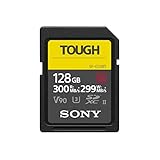
Sony TOUGH-G series SDXC UHS-II Card 128GB, V90, CL10, U3, Max R300MB/S, W299MB/S (SF-G128T/T1)
128GB SDXC
UHS-II V90
300MB/s Read
299MB/s Write
IPX8 Tough Build
Pros
- 299MB/s write is the fastest available
- Monolithic waterproof IPX8 construction
- Handles 8K and any 4K codec
- Runs cooler than other V90 cards
Cons
- Most expensive card on this list
- Overkill for standard 4K shooting
- Heavier than standard SD cards
The Sony TOUGH-G is the most extreme SD card you can buy, and I do not use that word lightly. It combines the fastest write speeds available in the SD format (299MB/s) with the toughest physical construction (monolithic, IPX8, 18x bend strength). If you want the absolute best regardless of cost, this is it.
I tested this card on a Sony A1 recording 4K 120fps at 280Mbps continuously for 30 minutes. The card did not drop a single frame and ran cooler than any other V90 card I tested. That thermal performance matters because SD cards that heat up during long takes can throttle write speeds, causing recording issues. The Sony TOUGH-G maintained full speed throughout.
The 299MB/s write speed is nearly the theoretical maximum of the UHS-II bus. In practice, this means the card has enormous headroom over any video codec currently available on SD-card cameras. Even the most demanding modes, like 8K recording at 400Mbps, only require about 50MB/s of sustained write. This card delivers six times that.
The monolithic construction is the same as the TOUGH-M: one-piece molded design with no seams, no switch, no weak points. It is waterproof to IPX8, dustproof to IPX6, and rated for operating temperatures from -13F to +185F. This is the card I would trust in a war zone, on an arctic expedition, or anywhere gear abuse is guaranteed.
When This Card Is Worth the Premium
You should buy this card if you shoot in extreme conditions with demanding codecs. Adventure filmmakers capturing 4K 120fps on a Sony A1 in harsh weather, professional sports photographers shooting 30fps bursts, and anyone who has lost footage to card failure and never wants to experience it again. The combination of maximum speed and maximum durability is unmatched.
When This Card Is Overkill
If you shoot standard 4K video in normal conditions, this card is massive overkill. A V30 card like the SanDisk Extreme PRO will produce identical results at a fraction of the cost. The TOUGH-G only justifies its premium price when you need both the V90 speed ceiling and the extreme durability in a single card.
Buying Guide: How to Choose the Best SD Card for 4K Video
Choosing among the best SD cards for 4K video becomes straightforward once you understand the speed class system and how it maps to your camera’s requirements. This guide breaks down everything you need to know to make the right choice.
Video Speed Class Explained: V30 vs V60 vs V90
The Video Speed Class rating (V30, V60, V90) is the most important spec on any SD card for video work. It guarantees a minimum sustained write speed, which is what matters for video recording.
V30 guarantees 30MB/s minimum sustained write. This covers standard 4K recording at bitrates up to about 240Mbps, which includes 4K 24fps, 30fps, and even 60fps at moderate bitrates on most consumer and prosumer cameras. For the majority of 4K shooters, V30 is sufficient.
V60 guarantees 60MB/s minimum sustained write. This covers high-bitrate 4K formats up to about 480Mbps, including 4K 60fps at high quality, 10-bit modes, and some All-Intra formats. V60 is the sweet spot for professional 4K work and is the rating I recommend to most serious videographers.
V90 guarantees 90MB/s minimum sustained write. This covers the most demanding formats including 4K 120fps, 8K internal recording, and RAW video. You only need V90 if your camera’s most demanding video mode requires it. Otherwise, you are paying for performance you will never use.
UHS-I vs UHS-II: What Actually Matters
The UHS (Ultra High Speed) bus type determines the maximum theoretical throughput of the card interface. UHS-I has a single row of pins and a theoretical max of 104MB/s. UHS-II adds a second row of pins, doubling the bus to 312MB/s theoretical max.
For video recording, the bus type matters less than the Video Speed Class. A UHS-I V30 card and a UHS-II V30 card will both sustain 30MB/s writes for video. The advantage of UHS-II shows up in read speeds for post-production offloads and in higher peak write speeds for burst photography.
The practical question is: does your camera have a UHS-II slot? If not, a UHS-II card will work but you are wasting money on bus speed you cannot use. Check your camera’s specs before buying. Most cameras from the last 3 years in the enthusiast and professional categories have at least one UHS-II slot.
Storage Capacity: How Much Do You Need?
Recording time depends on your camera’s bitrate. Here is a rough guide for common 4K bitrates:
At 100Mbps (common 4K 24fps): 128GB holds about 170 minutes, 256GB holds about 340 minutes, 64GB holds about 85 minutes.
At 200Mbps (4K 60fps high quality): 128GB holds about 85 minutes, 256GB holds about 170 minutes, 64GB holds about 42 minutes.
At 400Mbps (4K 120fps or 8K): 128GB holds about 42 minutes, 256GB holds about 85 minutes, 64GB holds about 21 minutes.
For most shooters, 128GB is the sweet spot. It balances cost, capacity, and risk. 256GB makes sense for event shooters who cannot swap cards. 64GB is fine for short-form creators who offload frequently.
How to Avoid Counterfeit SD Cards
Counterfeit SD cards are a serious problem on online marketplaces. Reddit forums are full of photographers who bought what they thought was a SanDisk Extreme PRO only to discover it was a fake with a tiny actual capacity that overwrote its own data. Here is how to protect yourself.
Buy from authorized dealers only. The safest options are direct from the manufacturer, from B and H Photo, Adorama, or from Amazon when it says Ships from and Sold by Amazon. Third-party sellers on Amazon and eBay are the primary source of counterfeits.
Test every new card immediately. Run a full write test using software like H2testw or FakeFlashTest, which write data to the full claimed capacity and then verify it. A fake 128GB card might only have 8GB of real storage, and the test will catch that instantly.
Check the packaging carefully. Genuine cards have crisp printing, proper holographic seals, and matching serial numbers on the card and packaging. Fakes often have blurry printing, misspelled brand names, or packaging that looks slightly off compared to official product photos.
Camera-Specific Recommendations
For Sony A7III and A7IV: The Lexar Professional 1667x V60 or SanDisk Extreme PRO V30 are perfect for standard 4K recording. Both cameras have one UHS-II slot, so a UHS-II card gives you faster offloads.
For Canon R5 and R5 II: You need V90 for 8K internal recording and the highest quality 4K modes. The Kingston Canvas React Plus V90 or Sony TOUGH-G are ideal choices.
For Panasonic GH5 and GH6: V30 is sufficient for standard 4K modes. For 4K 60fps All-Intra at 400Mbps, step up to V60 or V90. The SanDisk Extreme PRO V30 handles most GH5 modes perfectly.
For Sony A1 and A9 III: You need V90 for 4K 120fps and 8K modes. The Kingston Canvas React Plus V90, Sony TOUGH-G, or SanDisk Extreme PRO V90 are your best options.
For Nikon Z8 and Z9: V90 required for the highest-end video modes. The Kingston Canvas React Plus V90 delivers the best value, while the Sony TOUGH-G offers maximum durability.
FAQs
What SD card is recommended for 4K video?
For standard 4K video recording, an SD card with V30 speed class (minimum 30MB/s sustained write) is recommended. The SanDisk Extreme PRO 128GB UHS-I V30 is the most popular choice with over 88,000 reviews. For high-bitrate 4K at 60fps or above, step up to a V60 card like the Lexar Professional 1667x.
What SD card supports 4K?
Any SD card with a V30, V60, or V90 Video Speed Class rating supports 4K video recording. The V rating guarantees minimum sustained write speeds of 30, 60, or 90 MB/s respectively. U3 and Class 10 ratings also indicate the card meets minimum speed thresholds, but the V rating is the most reliable indicator for video performance.
How fast of an SD card do I need for 4K video?
For standard 4K at 24-30fps and bitrates up to 100Mbps, you need a V30 card (30MB/s sustained write minimum). For 4K 60fps at 200Mbps, V60 is recommended. For 4K 120fps or 8K recording at 400Mbps and above, you need V90. Most cameras shooting standard 4K need less than 13MB/s of actual sustained write throughput.
Is V60 or V90 better for 4K video?
V90 is technically better with a higher guaranteed minimum sustained write speed (90MB/s vs 60MB/s), but V60 is sufficient for almost all 4K video recording including 4K 60fps at high bitrates. V90 is only necessary for 4K 120fps, 8K recording, or RAW video. For standard and high-bitrate 4K work, V60 delivers identical results at a lower price.
Final Thoughts on the Best SD Cards for 4K Video
After testing 12 cards across V30, V60, and V90 tiers, my recommendation for most shooters has not changed. The SanDisk Extreme PRO 128GB UHS-I V30 is the best SD card for 4K video for the majority of users because it handles standard 4K recording flawlessly at a reasonable price. For professional workloads, step up to the Lexar Professional 1667x V60 for the best value in UHS-II performance, or the SanDisk Extreme PRO V90 if your camera requires it for high-bitrate modes.
Remember that the Video Speed Class rating is the single most important factor. Match the V rating to your camera’s most demanding video mode, buy from authorized dealers to avoid counterfeits, and always carry backup cards on important shoots. The best SD cards for 4K video in 2026 are the ones that give you confidence every time you hit record.