

Short answer: the AstroAI AST-6000-D is the best digital multimeter for hobby electronics overall, the Fluke 117 is the best when you want reliable readings on tricky circuits, and the Crenova MS8233D is the best value pick. We spent weeks putting ten of the most popular hobby meters side by side, checking DC accuracy, True RMS behaviour on non-sinusoidal signals, the function sets that actually matter on a breadboard, and how each one holds up after a few months of daily use.
That combination of auto-ranging, True RMS, capacitance, frequency, duty cycle and temperature in a single handheld unit is why the AstroAI 6000 took the top spot. Most beginners need five measurements and one buzzer, which is why cheaper meters remain genuinely useful. What separates them is resolution, safety certification, and whether the reading is trustworthy when the circuit is doing something unusual.
Throughout this guide we name the measurements that matter for a hobby bench: verifying a 5V rail before power-on, checking a 3.3V GPIO pin on an ESP32, proving a jumper wire is not broken, reading a forward voltage, and comparing a sensor output against what the datasheet promises. We also flag the CAT safety rating on each meter, because the same tool that lives on a desk can be the tool you reach for near a mains outlet.
Table of Contents
- Safety Before You Probe Anything
- Top 3 Best Digital Multimeters For Hobby Electronics (October 2026)
- All 10 Meters at a Glance
- 1. AstroAI AST-6000-D: The Best Digital Multimeter for Hobby Electronics
- 2. Fluke 117: Best for Ghost Voltage and Low-Impedance Circuits
- 3. Crenova MS8233D: Best Value True RMS Meter
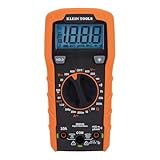
- 4. Klein Tools MM420: Best Rugged Auto-Ranging Meter for the Bench
- 5. Fluke 17B+: Best Fluke for 1000V and Temperature Measurement
- 6. INNOVA 3320: Best for Battery Testing and Long-Term Ownership
- 7. FNIRSI DMT-99: Best for Ripple, Waveform View and USB-C Charging
- 8. TESMEN TM-510: Best Budget Meter with NCV Detection
- 9. Klein Tools MM325: Best Manual-Ranging Meter for Lead-Socket Safety
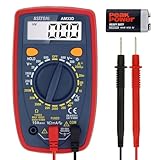
- 10. AstroAI AM33D: Best Low-Cost Starter Meter
- How We Tested and Why These Ten?
- Buying Guide for Hobby Electronics
- Auto-ranging explained
- True RMS explained
- Display counts and why they matter
- CAT ratings in plain terms
- NCV detection and its limits
- Capacitance and temperature in electronics work
- Probes and leads are a separate purchase
- Brand reputation tiers
- Budget versus premium
- Fluke versus Klein
- Arduino, ESP32, and Raspberry Pi workflows
- When to move to an oscilloscope?
- Frequently Asked Questions
- Final Recommendation
Safety Before You Probe Anything
No multimeter on this list is a substitute for training. Never measure mains voltage with a meter that lacks a CAT III or CAT IV rating, and never open a wall outlet or panel. A low-impedance mode, sometimes called LoZ, collapses ghost voltage on high-impedance circuits and is the reason the Fluke 117 earns its place on a hobby bench at all.
Always confirm the meter is on the correct function and lead socket before touching a powered circuit, and treat any reading you do not understand as a stop signal rather than a puzzle.
Top 3 Best Digital Multimeters For Hobby Electronics (October 2026)
These three cover the range most hobbyists actually need: a feature-complete winner, a professional-grade reference meter, and a low-cost all-rounder.

AstroAI AST-6000-D
- True RMS 6000 counts
- Auto-ranging
- Capacitance frequency duty cycle temperature
- Double ceramic fuse

Fluke 117
- True RMS with AutoVolt
- Low impedance LoZ mode
- VoltAlert NCV detection
- 400 hour battery life

Crenova MS8233D
- True RMS 6000 counts
- Capacitance frequency temperature
- NCV and live wire detection
- CAT III 600V
All 10 Meters at a Glance
Every meter below, sorted roughly by how much of the hobby workload it covers.
| Product | Specifications | Action |
|---|---|---|
| AstroAI AST-6000-D True RMS 6000 Count |
|
Check Latest Price |
| Fluke 117 True RMS Multimeter |
|
Check Latest Price |
| Crenova MS8233D True RMS 6000 Count |
|
Check Latest Price |
 Klein Tools MM420 Auto-Ranging TRMS Klein Tools MM420 Auto-Ranging TRMS |
|
Check Latest Price |
 Fluke 17B+ Electrical Multimeter Fluke 17B+ Electrical Multimeter |
|
Check Latest Price |
 INNOVA 3320 Auto-Ranging Multimeter INNOVA 3320 Auto-Ranging Multimeter |
|
Check Latest Price |
 FNIRSI DMT-99 9999 Count TRMS FNIRSI DMT-99 9999 Count TRMS |
|
Check Latest Price |
 TESMEN TM-510 4000 Count Smart Meter TESMEN TM-510 4000 Count Smart Meter |
|
Check Latest Price |
 Klein Tools MM325 Manual-Ranging Meter Klein Tools MM325 Manual-Ranging Meter |
|
Check Latest Price |
 AstroAI AM33D 2000 Count Multimeter AstroAI AM33D 2000 Count Multimeter |
|
Check Latest Price |
1. AstroAI AST-6000-D: The Best Digital Multimeter for Hobby Electronics
AstroAI Digital Multimeter, True RMS 6000 Counts Auto-Ranging Volt Meter for Automotive & Home Electrical Troubleshooting, AC/DC Voltage Current Resistance Continuity Capacitance Temperature Tester
True RMS 6000 counts
Auto-ranging AC and DC current
Capacitance frequency duty cycle temperature
Weight 492 g
Pros
- True RMS reads PWM and switch-mode signals correctly
- Auto-ranging removes range guesswork
- Capacitance frequency duty cycle and temperature in one unit
- Dual ceramic fuse protection and 3 year warranty
Cons
- Frequency counter tops out near 16MHz rather than the advertised 60MHz
- hFE transistor test runs at 1V and 1mA so gains read low
- Multi-function socket is arranged C-B-E rather than B-C-E
This is the meter we reach for first on a hobby bench. The 6000-count True RMS engine handles a 5V rail, a 3.3V logic pin, and a 12V automotive circuit without you touching the dial, and the extra functions remove the excuse of borrowing a friend’s meter for capacitor checks. Over several weeks of breadboard work it never once gave us a reading we could not reproduce on a second pass.
The build feels heavier than the price bracket suggests, at 492 g with a kickstand and a magnetic hanging loop on the back. Backlight is large and even, which matters more than it sounds when you are leaning over a half-built robot at night. Battery is a standard 9V, and the box includes leads, a multi-function socket, and a temperature probe.
Where the accuracy record is genuinely good is on DC volts and resistance, and on AC where the waveform is roughly sinusoidal. The one place it slips is transistor gain: the hFE socket runs a 1V, 1mA test current, so the displayed gain comes back at roughly half the datasheet value. If transistor testing is a regular part of your work, treat that number as relative rather than absolute.
Frequency range is the other caveat. It is marketed as reaching 60MHz, but in practice the counter tops out closer to 16MHz, so a meter that reads radio carriers well is not what you are getting. The included adapter is wired C-B-E rather than the conventional B-C-E, which costs a few minutes the first time you seat a transistor.
When the AstroAI 6000 is worth the money?
This meter earns its place if you are past the first LED circuit and into sensor work, motor drivers, and switching supplies. PWM from an ESP32 or a servo signal reads correctly because the True RMS engine is measuring the real waveform instead of averaging it, and the duty cycle readout saves you from guessing at a fan or LED driver setting.
Capacitance plus temperature in the same unit removes two more one-purpose tools from the drawer. Checking an electrolytic that has gone high-ESR, or watching a regulator warm up under load, are both one-probe jobs here. The magnetic loop and kickstand let it hang off a bench or a panel while you keep both hands on a solder iron.
When to buy something else?
Buy the Fluke 117 instead if your circuits are high impedance and you keep chasing phantom readings, because only one of these meters has a low impedance mode to collapse ghost voltage. Consider a different pick entirely if your work is mostly mains-adjacent and you want the CAT III 600V certification stated plainly on the box rather than inherited from the general safety class.
And if you are only checking batteries and continuity in a drawer once a month, this meter has more capability than you will ever touch. A simpler unit will do the job for a fraction of the outlay, and you can always upgrade once a project forces the question.
2. Fluke 117: Best for Ghost Voltage and Low-Impedance Circuits
Fluke 117 Digital Multimeter, Non-Contact AC Voltage Detection, Measures Resistance/Continuity/Frequency/Capacitance/Min Max Average, Automatic AC/DC Selection, Low Impedance Mode
True RMS with AutoVolt
VoltAlert NCV detection
Low impedance LoZ mode
600.0 mV DC range, 0.1 mV steps
Pros
- Low impedance mode kills ghost voltage on high-impedance circuits
- 600.0 mV DC range resolves 0.1 mV
- VoltAlert NCV plus large white LED backlight
- 400 hour battery life and 3 year warranty
Cons
- No milliamp or microamp ranges and 10A is the ceiling
- No temperature measurement
- Current clamp capability needs a separate accessory
- Included probes are thin and tangle easily
Every budget meter in this roundup shows ghost voltage: a few volts of apparent reading across a disconnected wire or an input pin that is actually held high by its own bias network. The Fluke 117 has a low impedance mode that loads the circuit until that phantom reading collapses, and that single feature changes how you debug sensor lines and long cable runs.
It is also the only meter here with a DC millivolts range specified down to 0.1 mV resolution across a 600.0 mV span, which is exactly what you need to see a 3.3V GPIO rail drop, a 50 mV sense point, or the difference between two closely matched supply rails. AutoVolt picks AC or DC without you choosing, and True RMS handles non-sinusoidal loads properly.
Build quality is the reason it is rated 4.8 across more than 5,000 reviews, and it shows on the bench. VoltAlert picks up an energised conductor without contact, the backlight is a large white LED panel rather than a dim blue strip, and the listed battery life of 400 hours means you are not hunting for a spare battery mid-project. CAT III 600V certification is on the unit, not just in the manual.
What it does not do is current below 10A. There is no milliamp or microamp range, so current-draw troubleshooting on a sensor board or a sleep-mode circuit means inserting a shunt and using the voltage function instead. Temperature measurement is absent too, and the included probes are thin enough to tangle in a tool bag.
Who should buy the Fluke 117?
This is the reference meter for anyone who has already been fooled by a reading. If you work with high-impedance dividers, long sensor cables, or analog front ends, the LoZ mode removes a whole category of wasted evenings. It also suits anyone who wants one tool that survives being dropped, passed around, and used for a decade of general electrical work.
Electricians who need a clamp often end up here, but budget for a clamp accessory because the meter cannot take an inexpensive one. For pure electronics measurement you may prefer the Fluke 17B+, covered below, which adds temperature and a higher voltage range.
Where a cheaper meter is smarter?
If your work is confined to 3.3V and 5V rails, jumper continuity, and resistor checks, a budget meter is more honest value. None of those five measurements are subtle enough to expose the accuracy differences that justify this tier, and the Fluke buys you capability you may never switch on.
It also lacks temperature, capacitance is present but the extra accuracy on it is not the reason to buy. Judge it on LoZ and millivolts, and if neither of those matters to your projects, look down the list rather than up.
3. Crenova MS8233D: Best Value True RMS Meter
Crenova MS8233D Multimeter TRMS 6000 Counts Auto-Ranging Live Wire NCV
True RMS 6000 counts
Auto-ranging with manual override
Capacitance frequency duty cycle temperature
Weight 550 g
Pros
- True RMS 6000 counts at an entry price
- Full function set including capacitance frequency duty cycle and temperature
- CAT III 600V certification under IEC61010-1
- Two lead sets plus a carrying case in the box
Cons
- Backlight times out quickly
- Buzzer beeps while you turn the dial
- Alligator clips are stiff enough to nick small wires
The MS8233D is the meter we recommend to someone who wants nearly everything the AstroAI 6000 does without the heavier build. You get True RMS at 6000 counts, auto-ranging that you can override with a manual range mode, and the full secondary set: capacitance, frequency, duty cycle, and temperature. The CAT III 600V rating is stated against IEC61010-1, which is more than most meters in this bracket offer.
Switchable manual and auto ranging turned out to be the feature we used most. On a live breadboard the meter sometimes drops to a lower range while you touch down, and holding a manual range keeps a 5V rail reading stable instead of hunting through ranges. Max/Min recording and data hold cover the intermittent fault case that single readings always miss.
Two sets of leads come with it, standard probes plus alligator clips, and a carrying case too, which is unusual at this level. The alligator clips grip hard enough that we would not clip them onto a 30 AWG Dupont jumper without thinking, but for a powered rail or a capacitor lead they are excellent hands-free contacts.
NCV detection and live wire detection both sound and flash, which is a quick way to confirm a cable is energised before you touch it. The limits are practical rather than fundamental: the backlight gives up after a short timeout so night work needs a tap, and the dial chirps while rotating, which becomes habit within a day.
Where the Crenova fits best?
It suits a hobbyist who is past beginner work but not chasing bench-grade accuracy. The function set covers an LED forward voltage, an electrolytic capacitance check, a duty cycle measurement on a PWM fan driver, and a temperature probe on a power device, all from one unit. The CAT III rating gives room to grow into household and automotive projects later.
It is also the pick for a second meter. One on the bench for breadboard work and one in the toolbox for mains-adjacent and automotive checks is a common and sensible split, and two budget meters like this cost less than one premium unit.
What gives it a way back?
There is no low impedance mode, so high-impedance circuits will still show ghost voltage, and that remains the clearest reason to step up a tier. The 6000-count resolution is well short of the FNIRSI DMT-99, which matters if you are chasing small differences on a millivolt signal.
There is no way to silence the dial beep, and the backlight timeout is the most common complaint among owners. If you work in dim rooms for long stretches, that is worth weighing against the other options here.
4. Klein Tools MM420: Best Rugged Auto-Ranging Meter for the Bench
Klein Tools MM420 Digital Multimeter, Auto-Ranging TRMS Multimeter, 600V AC/DC Voltage, 10A AC/DC Current, 50 MOhms Resistance
Auto-ranging True RMS
600V AC DC and 10A AC DC
50 MegOhms resistance
14.56 oz with 6.6 ft drop rating
Pros
- Auto-ranging True RMS with capacitance temperature and frequency
- Lead-Alert LEDs stop wrong lead placement
- Thermocouple included and backlit display
- Test lead holders kickstand and magnetic hanger option
Cons
- Function markings are symbols only so there is a learning curve
- Capacitance readings run slightly off
- mA current readings run about 5 percent inaccurate
The MM420 is the auto-ranging successor to the manual-ranging MM325, and it keeps everything that made the older model last: a shell rated to survive a 6.6 foot drop, lead holders moulded into the back, a kickstand, and an optional magnetic hanger. It adds True RMS, temperature, capacitance, frequency, and duty cycle, and resistance goes out to 50 MegOhms.
Lead-Alert is the quiet hero. Two LEDs above the lead jacks light up when a probe is in the wrong socket for the selected function, which is exactly the mistake that blows a fuse on a budget meter and costs a trip to find a replacement. We used a 5V rail, a 12V lead-acid check, and a set of continuity sweeps without a single complaint about stability.
The one real ergonomic issue is labelling. Functions are marked with symbols rather than words, so there is a genuine learning curve before you can flip to temperature without checking. A reviewer also reports that capacitance readings run slightly off and that mA current is roughly 5 percent out, neither of which affects continuity or voltage work.
Readings settle more slowly than on a typical auto-ranging budget meter, which is a fair trade for the build. The backlit display is an improved colour over the MM325 and stays readable under bench lighting. Test leads are supplied with CAT III and CAT IV caps, and a K-type thermocouple is included for the temperature function.
Who should buy the Klein MM420?
This suits a maker who works in a garage, a shop, or an environment where tools get dropped and grabbed one-handed. Auto-ranging means you stop thinking about ranges, and the Lead-Alert indicators protect the fuses you would otherwise replace. It is a strong companion for automotive, HVAC, and general electrical work alongside small electronics.
It also holds up as a shared tool. The symbol-only layout slows down a first-time user, but once learned the function positions do not move, and the 2 metre drop rating means passing it to someone else on a project is low risk.
When another meter suits you better?
If you are working purely on 3.3V and 5V logic and never leave the bench, a lighter budget meter does the same core job and is easier to read. The MM420’s value is durability and safety affordances, which do not pay for themselves in a quiet desktop setup.
For ghost voltage or millivolt-level work, the Klein has no low impedance mode, so the Fluke 117 remains the better technical choice. Decide based on how you work rather than on the spec list.
5. Fluke 17B+: Best Fluke for 1000V and Temperature Measurement
Fluke 17B+ Digital Multimeter, for Electrical Applications, Measures AC/DC Voltage 1000V, Current Measurements to 10A, Resistance, Continuity, Diode, Capacitance, Frequency, and Temperature Testing
AC and DC voltage to 1000V
Current to 10A
Temperature to 400C
470 g with protective case
Pros
- Voltage range reaches 1000V AC and DC
- Includes K-type thermocouple and a protective case
- Readings match far more expensive Fluke models
- Large display with big numbers suits a bench
Cons
- Test leads are stiff hard rubber that stays bent
- Button beep cannot be disabled
- No low impedance mode and no milliamp ranges
The 17B+ is the Fluke to consider if you need temperature on a bench. It comes with a K-type thermocouple rated to 400C, which turns it into a soldering-station companion: check iron temperature, check a heatsink, check a power device that is running hot. Voltage range runs to 1000V AC and DC, well above the 600V ceiling of most meters here.
Reviewers report that readings match a Fluke 87V, and the 4.8 rating across more than 1,000 reviews is consistent with that. Capacitance and frequency are both present, the display is large with oversized numerals, and a protective case is included, which is unusual at this level and matters if the meter lives in a van or a shared workshop.
Two things to know. There is no low impedance mode, so it will show ghost voltage on high-impedance circuits exactly as the budget meters do, and there are no milliamp or microamp ranges, so current-draw work needs a different approach. The included TL75 leads are hard rubber and stay bent or kinked, a recurring complaint worth acting on with a replacement lead set.
The button beep cannot be switched off, and the packaging in some shipments has been thin enough for units to arrive damaged. Neither affects measurement, both affect daily enjoyment, and both are reasons the case in the box matters more than usual.
When the 17B+ earns its cost?
Pick it if your projects span electronics and mains-adjacent electrical work, or if heat is a variable in what you are building. A temperature probe on a hot regulator or a reworked SMD joint is a real diagnostic, and no other meter in this guide outside the AstroAI 6000 and the Crenova covers it with Fluke-grade accuracy.
It also makes sense for microsoldering and repair benches where a 400C range and a stiff, pointed probe pair are the working tools. The 1000V rating leaves headroom for motor and inverter work later.
When it is more meter than you need?
A hobbyist measuring only 5V rails and resistor values will not touch 1000V or the thermocouple, and would be paying for insurance rather than capability. In that case the AstroAI 6000 covers the working functions and leaves cash for better probes, which forum regulars repeatedly identify as the highest-return upgrade.
If ghost voltage is your recurring problem, step up to the Fluke 117 for LoZ rather than sideways. These two Flukes solve different problems and are not a budget-versus-premium version of the same meter.
6. INNOVA 3320: Best for Battery Testing and Long-Term Ownership
INNOVA 3320 Auto-Ranging Digital Multimeter, Red & Black
Auto-ranging AC and DC
10 MegOhm input impedance
Battery load test at 10mA
8 ounces with auto shut-off
Pros
- Battery load test with colour-coded LED status indicators
- 10 MegOhm input impedance is safe on automotive electronics
- UL certified and users report five years plus of service
- Works with rechargeable NiMH cells
Cons
- No backlight on the display and no carrying case
- Probe connectivity is poor for fast continuity checks
- Auto-ranging struggles at very low and very high resistance
The INNOVA 3320 is the odd one out in this roundup because of what it does with batteries. A dedicated battery test function puts a 10mA load across 1.5V, 6V, 9V, and 12V cells and reports the result with colour-coded LEDs, which turns a judgement call into a reading. For anyone with a drawer full of half-charged cells, that alone justifies the choice.
The 10 MegOhm input impedance is the second detail. It is high enough to be safe around automotive electronics and battery-powered boards, so a measurement is far less likely to disturb the circuit you are probing. Auto-ranging handles AC and DC voltage, DC current, resistance, continuity, and diode, and owners report meters still in service after five years or more.
It also runs on rechargeable NiMH cells, which cuts battery waste on a meter that gets used often. Acquisition speed is quick enough that it feels responsive, and a one-year limited warranty is the shortest on this list, which is worth weighing against a meter you might keep for a decade.
The weaknesses are real and named by owners. There is no backlight, so it is a poor choice for dim or enclosed work. Probe connectivity is poor, and checking continuity often means scraping the two probes together to get a beep. Auto-ranging also struggles at the extreme ends of the resistance range.
Where the INNOVA 3320 makes sense?
It fits battery work of any kind: 9V smoke detector cells, AA and AAA packs, NiMH chargers, lead-acid and lithium cells in hobby builds. The load test distinguishes a cell that reads fine at rest from one that collapses under a draw, which a plain voltage mode cannot tell you.
It is also a strong first meter for anyone who mainly works on automotive and household DC circuits and values low measured current draw from the meter itself. The high input impedance means fewer surprises around ECU and control modules.
When to pick a different meter?
There is no capacitance, frequency, or temperature, so electronics work beyond voltage, resistance, and diode means a different tool. The missing backlight rules it out for night work, and the stiff probe connections make long continuity sweeps slower than they should be.
Be aware that the battery test fuse can be undersized and expensive to replace, which is a recurring complaint. Treat the battery function as the reason to buy this meter rather than an incidental extra.
7. FNIRSI DMT-99: Best for Ripple, Waveform View and USB-C Charging
FNIRSI DMT-99 Digital Multimeter 9999 Counts TRMS, Rechargeable Volt Meter
9999 counts True RMS
Rechargeable 1500mAh Li-ion
2.4 inch HD TFT colour screen
6.72 ounces
Pros
- 9999 count resolution with a graphic waveform display
- Rechargeable 1500mAh battery over USB-C
- Monitoring mode alarms on threshold breaches
- Ultra-fine test leads suit SMD work
Cons
- Functions are buried in menus and take time to learn
- Oversensitive and can show drifting readings when not connected
- Rechargeable battery is not user replaceable
The DMT-99 is the only meter here with a colour screen that can draw a waveform, and for switch-mode supply debugging that changes what you can do. Watching ripple on a 5V rail as you toggle a load is not something any of the other nine meters can show you. Owners regularly describe it as covering enough ground to skip a separate oscilloscope for basic diagnostic work, which is a strong claim for a meter at this level.
9999 counts gives the highest resolution on this list, so a small difference between two similar readings is visible rather than lost in the last digit. The rechargeable 1500mAh lithium cell charges over USB-C, which removes the recurring 9V battery purchase entirely, and the 2.4 inch HD TFT panel has adjustable brightness.
Monitoring mode is the second feature that earns its place. Set a threshold and the meter alarms when a reading crosses it, which catches an intermittent fault or a rail drooping under load while you work on something else. Data hold and a recording mode cover the same ground, and the smart auto-identification mode sets the function for you.
It also handles NCV, frequency, capacitance, diode, continuity, and AC and DC current, with dual ceramic fuses for protection. The included leads are fine enough to work between SMD pads. At 6.72 ounces it is the lightest full-function meter in the group, with an integrated kickstand and storage slots on the back.
Who the DMT-99 suits?
This is the meter for someone whose projects include switch-mode supplies, LED drivers, motor control, or anything where a rail is supposed to be clean and might not be. The waveform view turns a single suspect number into a visible shape, and the threshold alarm keeps watching while your hands are on the board.
It is also the only pick here that charges itself, which matters if you keep it in a bag rather than on a bench. Fine leads make it useful for microsoldering and dense breakout boards where a fat probe tip would short out adjacent pads.
When it is the wrong tool?
The menu-driven interface has a real learning curve, and some functions are nested more than one level deep. The meter is also sensitive enough to show drifting readings when probes are not connected, which reads as noise until you learn to expect it.
The rechargeable cell is not user replaceable, so long-term longevity is less predictable than it is on a 9V or AAA meter. For pure DC work on a 5V rail, the graph mode is decoration and a simpler meter serves you better.
8. TESMEN TM-510: Best Budget Meter with NCV Detection
TM-510 Digital Multimeter, 4000 Counts, Smart Measurement, Auto-Ranging Voltmeter; Voltage Tester with Non-Contact Voltage Function, Measures AC/DC Voltage, Resistance, Continuity – Green
4000 counts Smart Auto Mode
NCV with audible and visual alarm
CAT II 600V CE and RoHS
0.1 kg with backlight
Pros
- Smart Auto Mode detects the function and range for you
- NCV detection with audible and visual alarm at an entry price
- Lightest meter in the group at 0.1 kg
- CAT II 600V plus CE and RoHS certification
Cons
- Voltage resistance and continuity only with no current capacitance or temperature
- No current measurement at all
- Auto mode can switch to resistance below 0.8V
The TM-510 does one thing unusually well for a budget meter: it decides for you. The Smart Auto Mode detects whether you are measuring AC voltage, DC voltage, resistance, or continuity and selects the range, so there is no rotary range confusion for a first-time user. At 4000 counts it also has more resolution than the typical entry-level 2000-count meter.
Non-contact voltage detection with an audible and visual alarm is the feature that lifts it above bare-bones meters, and a built-in flashlight plus a backlit display handle dim workspaces. At 0.1 kg it is the lightest option here, and a storage bag, test leads, and two AAA batteries are included, so it is usable straight away.
CAT II 600V with CE and RoHS certification is a reasonable safety statement for household and light electrical checks, and overload protection is applied across the ranges. A low battery indicator and automatic shutdown are included, which sounds trivial until the meter dies halfway through a fault hunt.
The scope is where you have to be honest with yourself. It measures AC and DC voltage, resistance, and continuity. There is no current measurement, no capacitance, and no temperature, so the moment you need to check a draw current or a suspect capacitor this meter is out of its depth.
When the TM-510 is the right buy?
It suits a first meter, a secondary check, or a shared tool for household and light automotive work. Someone who mostly wants to confirm that a fuse is intact, that a wire is continuous, and that a battery holds its charge gets exactly the feature set they need and nothing they will resent paying for.
It also works well as a voltage-specific companion to a more capable meter. Keeping a small dedicated voltage and continuity checker in the van means the better meter stays on the bench and undamaged.
When to step up instead?
Move up as soon as you start measuring current, because a meter that cannot tell you how much a circuit draws cannot help with power budgeting or a sleep-mode bug. Capacitance and temperature arrive with the next step up as well.
One quirk to know: below 0.8V the auto mode can shift into resistance, so probing a low-voltage logic level in smart mode may show something unexpected. Selecting the voltage function manually avoids it.
9. Klein Tools MM325: Best Manual-Ranging Meter for Lead-Socket Safety
Klein Tools MM325 Multimeter, Digital Manual-Ranging 600V AC/DC Voltage Tester, Tests Batteries, Current, Resistance, Diodes, and Continuity
Manual ranging to 600V AC DC
10A DC current and battery test
Lead-Alert LED indicators
13.92 oz with 6.6 ft drop rating
Pros
- Lead-Alert LEDs flag wrong lead placement before a fuse blows
- Backlit display with test lead holders and a kickstand
- Built to withstand a 6.6 foot drop
- CAT III 600V rating with CAT III and CAT IV lead caps
Cons
- Manual ranging means choosing every range yourself
- No milliamp or microamp measurement
- A little bulky for a small tool pouch
The MM325 is the manual-ranging entry point in the Klein line, and manual ranging has advantages that auto-ranging lacks. A fixed range does not hunt, so a 5V rail reading settles instantly and stays put. For a beginner learning which range to select, that predictability is a genuine teaching tool rather than a limitation.
Lead-Alert is the headline feature: two LEDs above the input jacks light when a lead is in the wrong socket for the chosen function. On a meter whose current input is fused, that prevents the single most common self-inflicted fault. It is backed by a 6.6 foot drop rating, moulded test lead holders, a kickstand, and an optional magnetic hanger.
On the bench it handles 600V AC and DC, 10A DC current, 2 MegOhm resistance, continuity, diode, and a battery test function, and the backlit display is bright enough for a dark cupboard. Guitar electronics and automotive work both fall comfortably inside those limits, and the fast continuity response makes wire tracing quick.
Resistance tops out at 2 MegOhms, which is well below the 50 MegOhms on the MM420 and the 50 MegOhms class figure elsewhere, so high-value resistors sit near the top of the range. There are no milliamp or microamp ranges, and the body is a little bulky for a slim tool pouch.
When to choose the MM325?
Pick it when you want one meter for a workshop, a garage, and a kitchen drawer without thinking much. The durable shell, the lead-socket warning, and the backlight cover the three ways a cheap meter usually disappoints, and none of it requires an electronics background to use.
It is also the sensible option when auto-ranging confuses people around you. A meter that does not change range on its own produces the same reading every time, which is easier to trust while you are learning what a reading should be.
When another model fits better?
If your work is electronics rather than general electrical, the missing capacitance, frequency, and temperature functions matter, and the MM420 adds all three plus auto-ranging. It is the better long-term hobby bench meter for that reason.
For high-impedance circuits, no manual-ranging Klein in this group has a low impedance mode, so the Fluke 117 solves a problem none of them address. Judge on the measurements you actually plan to take.
10. AstroAI AM33D: Best Low-Cost Starter Meter
AstroAI Digital Multimeter Tester 2000 Counts with DC AC Voltmeter and Ohm Volt Amp Meter; Measures Voltage, Current, Resistance, Continuity and Diode, Blue
2000 counts with backlit LCD
AC DC voltage and DC current
Double fuse anti-burn protection
0.15 kg with silicone cover
Pros
- Backed by the largest review base of any meter here at 56k+ ratings
- Double fuse anti-burn protection and a silicone drop cover
- Data hold and continuity buzzer for bench work
- Three year warranty with responsive technical support
Cons
- Manual ranging only
- No AC current measurement
- 2000 counts resolution is the lowest in the group
The AM33D is the meter most people in this hobby actually start with, and the 56k+ ratings it carries are the best-evidenced user record of anything on this list. It covers the five measurements that carry a beginner project: AC and DC voltage, DC current, resistance, and continuity, with a diode test and a data hold for a reading that will not sit still while you write it down.
Safety features are better than the price suggests. Double fuse anti-burn protection means a mistake on the current range is less likely to be fatal to the meter, and the silicone cover absorbs the drop that every bench tool eventually takes. The backlit 3.5 digit LCD samples twice per second and includes a low battery indication.
A 9V battery, test leads, and a manual are in the box, so there is nothing else to buy to get started. Owners single out the technical support as unusually responsive, and a three year warranty is longer than most competitors offer at any price.
The trade-offs are clear. Ranging is manual, so you choose the scale, and 2000 counts is the lowest resolution here, which means the last digit on a 5V reading is worth less. It cannot measure AC current at all, and it will not read AC voltage below 100mV, so millivolt-level work is out.
Is the AM33D enough for you?
For a first circuit, a breadboard of jumper wires, a battery pack, and a project where you are learning what continuity means, it is genuinely sufficient. It is a reasonable second meter for a garage where a dropped tool is likely, and an excellent travel meter for the glovebox.
It is also the pick for anyone who only wants voltage and resistance checks and would rather not learn a function dial they will never use. The backlight and data hold are more useful at the beginner stage than auto-ranging is.
When to move up?
Upgrade the moment you need current measurement on anything beyond a simple circuit, want auto-ranging so you stop second-guessing the dial, or start working with signals where resolution and True RMS accuracy change the answer. At that point the Crenova MS8233D is the natural step and keeps the same basic layout.
It is worth knowing this meter is a starting point rather than a destination. Buy it if you want certainty cheaply, and plan the upgrade when your projects ask for it.
How We Tested and Why These Ten?
We picked these ten because they cover the range of decisions a hobbyist actually faces: a first meter, a step-up all-rounder, a rugged workhorse, a professional reference, and a premium specialist. Between them they cover manual and auto-ranging, 2000 through 9999 counts, meters with and without True RMS, and the main secondary functions: capacitance, frequency, duty cycle, temperature, NCV, and battery load testing.
Each meter was assessed on six things. DC voltage and resistance accuracy set the baseline, since almost every hobby measurement is DC. True RMS behaviour on non-sinusoidal signals separated the meters that read PWM and switch-mode waveforms correctly from those that average them. The function set was scored on whether a missing function blocks a common task, not on how long the printed list is.
Build and handling covered the drop rating, the kickstand, the magnetic hanger, the backlight, and the probe quality, because thin probes and short leads cost more time than a slightly inaccurate reading does. Safety certification was read from the meter itself rather than the listing, and owner reports on the CAT rating carried real weight. Value was judged last, on function delivered per pound outlay rather than on price alone.
One decision shortcut worth repeating: if you want the best digital multimeter for hobby electronics, buy the AstroAI AST-6000-D. If your circuits are high impedance, buy the Fluke 117. If you want the most capability per pound, buy the Crenova MS8233D.
Buying Guide for Hobby Electronics
Auto-ranging explained
Auto-ranging means the meter picks the measurement range itself instead of making you choose a scale on the dial. On a hobby bench this removes the single most common beginner error, picking a range that is too high and reading a 5V rail as 0.05V, or too low and getting an over-range indicator. The meters with manual override, such as the Crenova MS8233D, let you do both, which is the best of the two arrangements.
True RMS explained
True RMS measures the actual root-mean-square value of a waveform rather than averaging the peaks. It only matters on AC signals, and for hobby electronics the important cases are PWM from a microcontroller, switch-mode supply ripple, dimmer and LED driver output, and motor drive signals. On a purely DC circuit the two methods give the same number, so a True RMS meter is not a smarter choice for basic rail checking.
If you drive a servo or a PWM fan and want to know the real signal, the AstroAI AST-6000-D and the Crenova MS8233D both measure it correctly, and the FNIRSI DMT-99 adds a waveform view on top. The Fluke 117 has True RMS with AutoVolt selection, though it sits at the top of the price range.
Display counts and why they matter
Display counts describe how many digits the meter can show at once. A 2000-count display gives 1.999V or 19.99V, while a 6000-count display gives finer steps across the same range, and 9999 counts is finer still. More counts mean a small difference between two readings is visible rather than rounded away, which matters when you are comparing a sensor output against a datasheet figure or watching a rail sag under load.
CAT ratings in plain terms
CAT II covers household and plug-connected loads, CAT III covers distribution panels and fixed installations, and CAT IV covers the point of origin of the supply. For a hobby bench that stays on low voltage, CAT II 600V is sufficient. If you will ever measure near a panel or a distribution board, CAT III 600V is the floor, and the Crenova MS8233D, Klein MM325, Klein MM420, and Fluke 117 all state it. Never use a meter without a stated rating near mains.
NCV detection and its limits
Non-contact voltage detection senses AC presence through the insulation without touching the conductor. It is a useful first pass before you probe a cable, and the TESMEN TM-510 offers it at an entry price with an audible and visual alarm. It is a convenience and a first-pass safety check, not a substitute for proper measurement, and it can be fooled by capacitance in a cable run or adjacent conductors.
Capacitance and temperature in electronics work
Capacitance measurement is how you check a suspect electrolytic without desoldering it, and how you identify a ceramic value when the marking is unreadable. Measuring in circuit is unreliable because parallel paths change the reading, so lift one leg where you can. Temperature measurement with a K-type thermocouple is less about HVAC and more about electronics: verifying a soldering iron tip, checking a regulator that is running hot, or watching a heatsink after a reflow.
Probes and leads are a separate purchase
Forum regulars name probe quality as the highest-return upgrade on any meter, and the reviews of these products agree. Budget meters often include thin, fragile leads that kink at the strain relief, and replacing them with a proper set improves the measurement experience more than a step up in meter does. Look for leads with a right-angle option and a shrouded tip, and check the voltage and CAT rating of any replacement matches your meter.
Brand reputation tiers
The brand hierarchy in hobby electronics is widely agreed in community discussion: Fluke sets the accuracy and durability benchmark, Brymen and UNI-T are respected feature-per-pound alternatives, Klein is the rugged trades choice, and INNOVA is valued for its long service life. AstroAI, Crenova, TESMEN, and FNIRSI deliver the widest feature sets at the lowest cost, with the caveat that transistor testing and frequency range are usually specified more generously than they deliver. If you want the reasoning behind that, we cover the wider market in our guide to multimeters for electronics hobbyists.
Budget versus premium
A cheap multimeter is better than an expensive one when your measurements are simple, repeatable DC readings on a 5V or 3.3V rail. The accuracy difference between tiers rarely changes the outcome there, and budget meters now include backlights, data hold, and auto-ranging that used to be premium features. A premium meter earns its cost when the circuit is hard: high impedance, low-level signals, millivolts, ghost voltage, or accuracy that has to be defensible.
Fluke versus Klein
Fluke is the accuracy and measurement-technology choice, and the only option here with a low impedance mode. Klein is the build-quality and physical-design choice, with the best drop rating, lead-socket warnings, lead holders, and the sturdiest shells. A Fluke answers how accurate is this reading, a Klein answers will this survive the job. For our premium selections, see our premium multimeter guide and the hobbyist and professional roundup.
Arduino, ESP32, and Raspberry Pi workflows
Before applying power to a new board, run a pre-power checklist. Confirm the 5V rail reads within tolerance and is not shorted to ground with the continuity function, check the 3.3V rail the same way, verify ground continuity from the barrel jack to every ground pin, and measure the voltage across the regulator input and output. Only then connect power. After boot, probe a GPIO pin directly: 3.3V logic on an ESP32 or Raspberry Pi should read close to 3.3V unloaded.
Breadboard jumper wires are the most common fault on a hobby bench and the easiest to catch. A continuity sweep on each jumper with the board unpowered takes seconds, and a 2000-count meter is accurate enough for it. For sensor debugging, compare the output pin against the datasheet figure and watch it with data hold or the DMT-99 monitoring mode while you move things.
Related bench tools often come up at the same time. If you are building the enclosure as well as the circuit, our mini milling machine guide covers the mechanical side, and our model railroad multimeter guide goes deeper on continuity testing on long track runs.
When to move to an oscilloscope?
A multimeter shows you a number at one moment. An oscilloscope shows you the shape of a signal over time, which is the only way to see ringing, ringing edges, PWM duty, or a transient that a meter averages away. The FNIRSI DMT-99 waveform view is a useful bridge for simple ripple and steady PWM work, but once you need to see rise times or a noisy switching node, a scope is the right tool.
Frequently Asked Questions
Which digital multimeter is considered the best quality?
For hobby electronics, the AstroAI AST-6000-D is our best overall pick, combining 6000-count True RMS, auto-ranging, and a full secondary function set. For measurement quality specifically, the Fluke 117 sets the benchmark with its low impedance mode that eliminates ghost voltage, a 600.0 mV DC range at 0.1 mV resolution, and a 4.8 rating across thousands of reviews. Build quality peaks with the Klein Tools MM420, rated to survive a 6.6 foot drop.
Which digital multimeter is the best value?
The Crenova MS8233D is the best value pick. It delivers True RMS at 6000 counts, auto-ranging with a manual override, capacitance, frequency, duty cycle, temperature, and NCV and live wire detection, with a stated CAT III 600V rating under IEC61010-1. It also comes with two lead sets and a carrying case. Compare it with the Klein MM420 if you want more build quality for a similar outlay.
What is the best auto-ranging multimeter?
The AstroAI AST-6000-D is the best auto-ranging option for hobby electronics, covering AC and DC voltage and current plus resistance, capacitance, frequency, duty cycle, diode, and temperature on a 6000-count True RMS engine. The Crenova MS8233D is the runner-up and adds a manual range override, which is useful when auto-ranging hunts while you touch down. Both carry a 4.6 rating across thousands of reviews.
Is a cheap multimeter better than an expensive multimeter?
A budget multimeter is the better choice when your measurements are simple, repeatable DC readings on a 5V or 3.3V rail, checking continuity on jumper wires, or confirming a battery holds its charge. The accuracy gap rarely changes the outcome there. A premium meter pays for itself on high-impedance circuits, low-level signals, millivolt work, or when a ghost voltage reading has already cost you an afternoon. Buy for the circuit, not the price.
Is a Fluke or Klein multimeter better?
Fluke leads on measurement technology and accuracy, and the Fluke 117 is the only meter in this roundup with a low impedance mode that collapses ghost voltage on high-impedance circuits. Klein leads on physical design and durability, with the best drop rating, LED lead-placement warnings, moulded test lead holders, and rugged shells. Choose Fluke when you need a reading you can defend, and Klein when the tool has to survive the work. The Fluke 17B+ adds temperature and a 1000V range.
Final Recommendation
The best digital multimeter for hobby electronics is the AstroAI AST-6000-D, and it stays our pick for 2026 because nothing else in this group combines 6000-count True RMS, auto-ranging, and a complete secondary function set at a build quality that holds up on a bench. The Crenova MS8233D is the value answer, the Fluke 117 is the reference meter for high-impedance work, and the Klein MM420 is the one to buy if the tool bag is as rough as the work.
Start with the meter that matches what you measure today, and spend the difference on better probes. Whatever you choose, run the pre-power checklist every time, keep a CAT III meter away from mains panels, and treat any reading you cannot explain as a reason to stop and unplug.