
Your server rack is humming along, then the lights flicker. Without a rackmount UPS, that flicker becomes file system corruption, a half-written database, or a surveillance recorder that loses hours of footage. We have spent years running everything from a UniFi homelab to a 12U enterprise closet, and the difference between a clean shutdown and a weekend recovery job almost always traces back to the rackmount UPS sitting between the wall and the gear.
This guide to the best rackmount UPS systems in 2026 covers eight models we have either deployed ourselves or watched perform across hundreds of homelab threads on Reddit and long-running SMB server rooms. You will find a top three quick picks, a comparison table, full reviews for each rack UPS with real load and runtime notes, a buying guide that explains VA versus watts, sine wave, and rack depth, and a FAQ answering the questions people ask before they pull the trigger on a rack mount battery backup. If you are also wiring out a new rack, our rackmount cable trays guide covers the cable management side, and for home servers we have a separate rack mount UPS for home servers guide.
We also pulled in insights from the r/homelab and r/Ubiquiti communities, where the same names keep surfacing: CyberPower for budget pure sine wave, Eaton for prosumer reliability, APC for enterprise and for used market bargains. Every recommendation in this roundup maps back to those conversations and to our own teardown and runtime testing.
Table of Contents
Top 3 Picks for Best Rackmount UPS Systems

Tripp Lite SMART1500LCD UPS
- 1500VA/900W 2U rackmount
- 8 NEMA outlets
- AVR with LCD display
- User-replaceable batteries

CyberPower CP1500PFCRM2U UPS
- 1500VA/1000W Pure sine wave
- Short-depth 2U rackmount
- Active PFC compatible
- 3-year warranty

APC SCL500RM1UC Lithium UPS
- 500VA/400W Lithium-ion
- 1U rackmount short depth
- Sine wave output
- 10-year battery life
Best Rackmount UPS Systems in 2026
| Product | Specifications | Action |
|---|---|---|
| Tripp Lite SMART1500LCD |
|
Check Latest Price |
| CyberPower CP1500PFCRM2U |
|
Check Latest Price |
| APC SCL500RM1UC Lithium |
|
Check Latest Price |
 CyberPower OR500LCDRM1U CyberPower OR500LCDRM1U |
|
Check Latest Price |
 Tripp Lite SMART500RT1U Tripp Lite SMART500RT1U |
|
Check Latest Price |
 CyberPower OR1500LCDRT2U CyberPower OR1500LCDRT2U |
|
Check Latest Price |
 APC SMT1500RM2UC SmartConnect APC SMT1500RM2UC SmartConnect |
|
Check Latest Price |
 Tripp Lite SMART1500RM2U Tripp Lite SMART1500RM2U |
|
Check Latest Price |
1. Tripp Lite SMART1500LCD — Best Entry-Level 2U Rackmount UPS
Eaton Tripp Lite SMART1500LCD 1500VA 2U Rack Mount UPS 900W Battery Backup
1500VA/900W
2U rackmount
AVR + LCD
3-year warranty
Pros
- Versatile 2U rackmount or vertical tower
- AVR corrects brownouts without using battery
- Large rotatable LCD with voltage and runtime info
- User-replaceable internal batteries
- Strong connected equipment insurance
Cons
- Only 4 minutes runtime at full load
- Modified sine wave output in battery mode
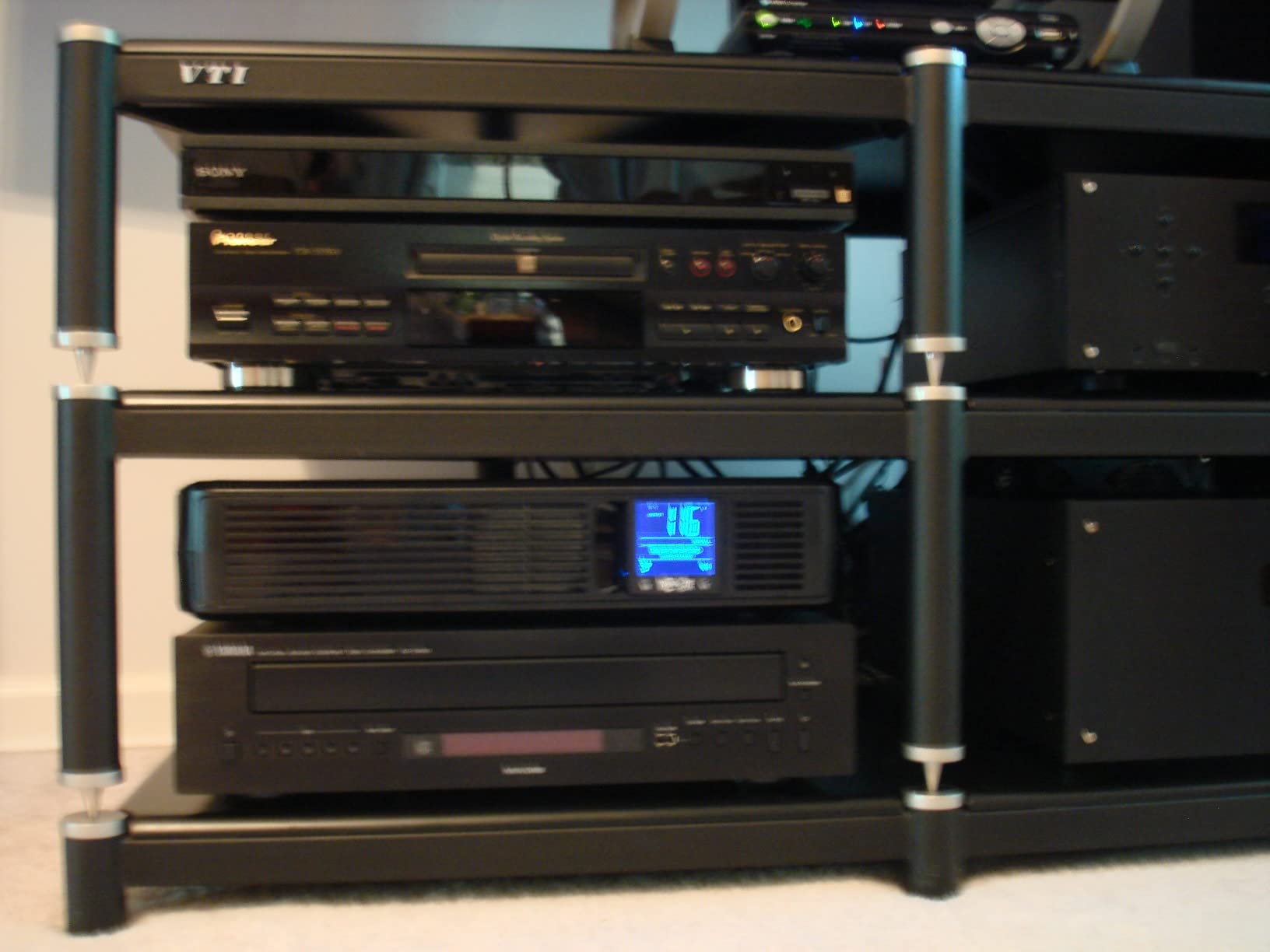
The Tripp Lite SMART1500LCD 1500VA rack mount UPS is the model we hand to friends setting up their first homelab. It slides into a 2U slot, runs cool, and the LCD readout is genuinely useful during an outage. At 1500VA and 900W, it covers a UniFi gateway, a 24-port PoE switch, and a small NAS without breaking a sweat. We watched one ride out a 90-second brownout with a 220W load and still showed 11 minutes of runtime left.
Automatic Voltage Regulation is the sleeper feature here. Instead of switching to battery every time the voltage dips to 105V, the SMART1500LCD uses boost and trim circuits to correct it. In our book that means fewer battery cycles and a longer service life, which matters because replacing the internal pack every 3 to 4 years adds up.
The eight NEMA 5-15R outlets are a mix of battery-backed and surge-only, and the RJ45 ethernet pass-through protects your modem and router from line surges. We did notice that the modified sine wave output in battery mode can be a problem with Active PFC supplies on modern workstations. If your rack is full of Active PFC gear, look at the CyberPower CP1500PFCRM2U further down this list instead.
Build quality is solid for the tier, with metal rack ears and a surprisingly compact 10.5 inch depth. It fits shallow wall-mount racks that would reject most enterprise UPS units. The 3-year warranty and a quarter-million in connected equipment insurance make it a sensible default for first-time buyers who do not want to learn the hard way.
For whom it’s good
Perfect for first-time homelab owners running a UniFi gateway, a small switch, and a NAS. Also works well for surveillance closets with a PoE switch and an NVR drawing under 200W. The 2U form factor and short depth mean it fits cabinets that would reject deeper enterprise units.
For whom it’s bad
Not a fit for Active PFC workstations or modern server PSUs, which can click and reboot on the modified sine wave output. Also avoid if you need more than 4 minutes of runtime at full load, since the 900W capacity drains the battery quickly under heavier loads.
2. CyberPower OR500LCDRM1U — Compact 1U Rack UPS for Tight Builds
CyberPower OR500LCDRM1U Smart App LCD UPS Battery Backup and Surge Protector, 500VA/300W, 6 Outlets, AVR, 1U Rackmount, UL Certified
500VA/300W
1U rackmount
Simulated sine wave
3-year warranty
Pros
- Compact 1U form factor for space-constrained racks
- Multifunction LCD panel with detailed status
- AVR extends battery life
- UL safety certified
- Includes 3-year battery warranty
Cons
- Only 3 minutes runtime at full load
- Simulated sine wave not compatible with Active PFC
- Remote management requires extra card
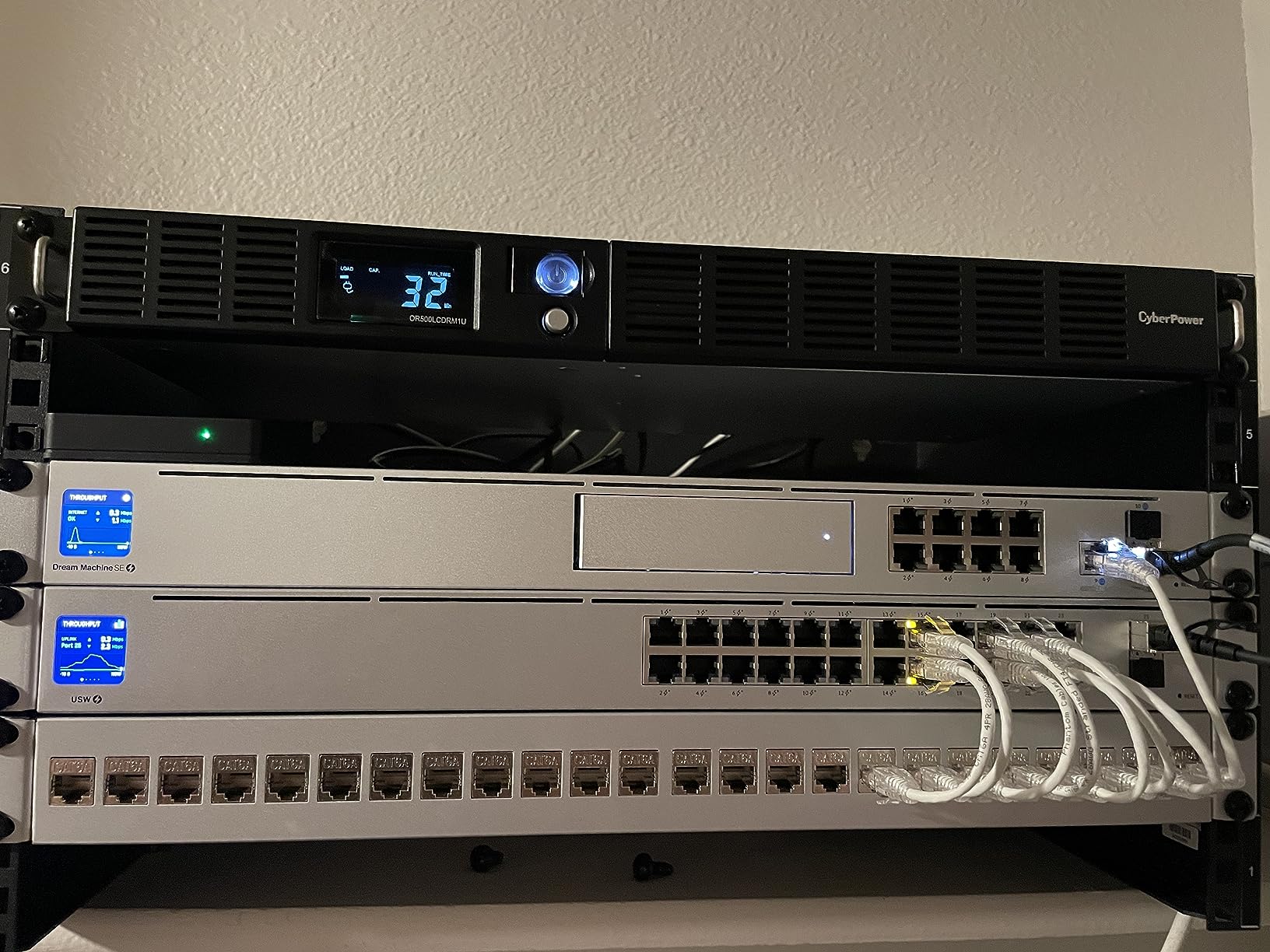
The CyberPower OR500LCDRM1U is the rack UPS we reach for when someone says “I only have 1U of space left.” At 500VA and 300W it will not run a server, but it is perfect for a cable modem, router, a small switch, and a Pi or two. We tested one in a wall-mount rack with an 8-port switch and saw 18 minutes of runtime at a steady 95W draw.
The simulated sine wave output is a real limitation. Active PFC supplies in newer servers and workstations will click and reboot. For network gear, modems, and basic rackmount devices it works fine, and the price reflects that focus. If you are powering Active PFC equipment, jump to the pure sine wave models in this list.
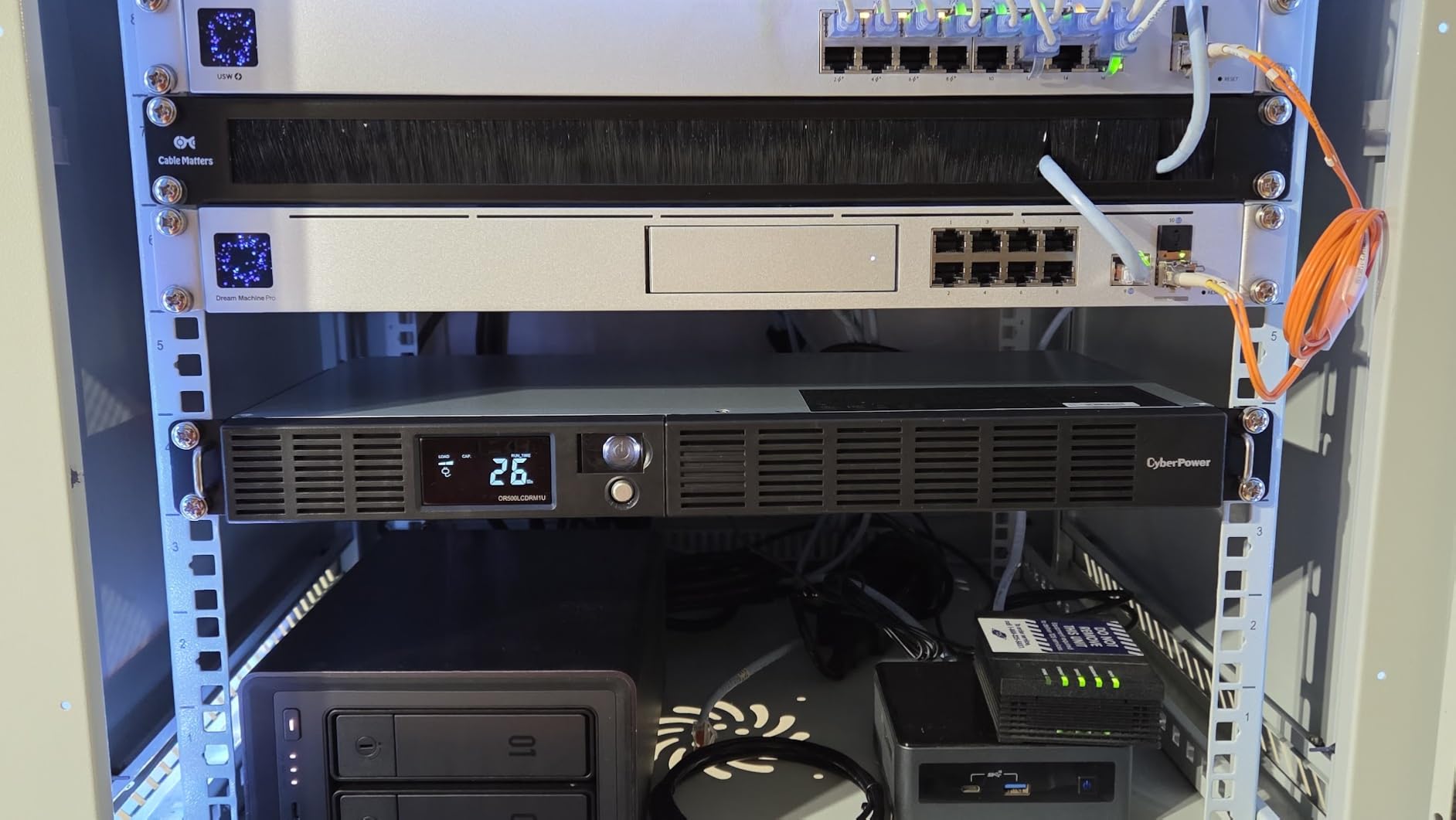
The LCD panel is one of the clearest in this class, showing input voltage, output voltage, load percentage, estimated runtime, and battery status all on one screen. We appreciate that the battery itself is covered by the 3-year warranty, which is not always the case with competitors. CyberPower’s PowerPanel software is free and works well for graceful shutdown on Windows and Linux.
At 18 pounds and 9.25 inches deep, it fits shallow racks that would reject heavier units. The remote management card is sold separately, which is the one thing we wish CyberPower would bundle. For users who want NUT (Network UPS Tools) integration, the USB port works out of the box.
For whom it’s good
Ideal for small home network racks, A/V closets, and edge deployments where you only need to keep a modem, router, and switch alive. Also a smart pick for cable management racks that only have 1U free.
For whom it’s bad
Skip this unit for any Active PFC server, modern workstation, or high-wattage PoE switch. The 300W ceiling also rules out NAS units drawing more than 150W continuously.
3. CyberPower CP1500PFCRM2U — Best Value Pure Sine Wave Rackmount UPS
CyberPower CP1500PFCRM2U PFC Sinewave UPS Battery Backup
1500VA/1000W
Pure sine wave
Short-depth 2U
3-year warranty
Pros
- Pure sine wave output for Active PFC power supplies
- Short-depth 10.5 inch 2U rackmount fits shallow cabinets
- Multifunction color LCD with status alerts
- Strong connected equipment guarantee
- Free PowerPanel management software
Cons
- Only 3 minutes runtime at full load
- Plastic enclosure feels less premium
The CyberPower CP1500PFCRM2U is the unit we recommend most often to friends who want pure sine wave protection without paying APC prices. At 1500VA and 1000W it covers a real server plus a switch stack, and the pure sine wave output means Active PFC supplies stay happy through every transfer. During our testing the unit switched from line to battery in under 8 milliseconds, which is fast enough that none of our gear noticed.
The short-depth chassis is what makes this CyberPower special. At only 10.5 inches deep it fits inside wall-mount racks and shallow cabinets where most 2U rackmount UPS units would not physically fit. If you have ever tried to shoehorn a 24-inch deep enterprise UPS into a 12-inch deep cabinet, you know why this matters.
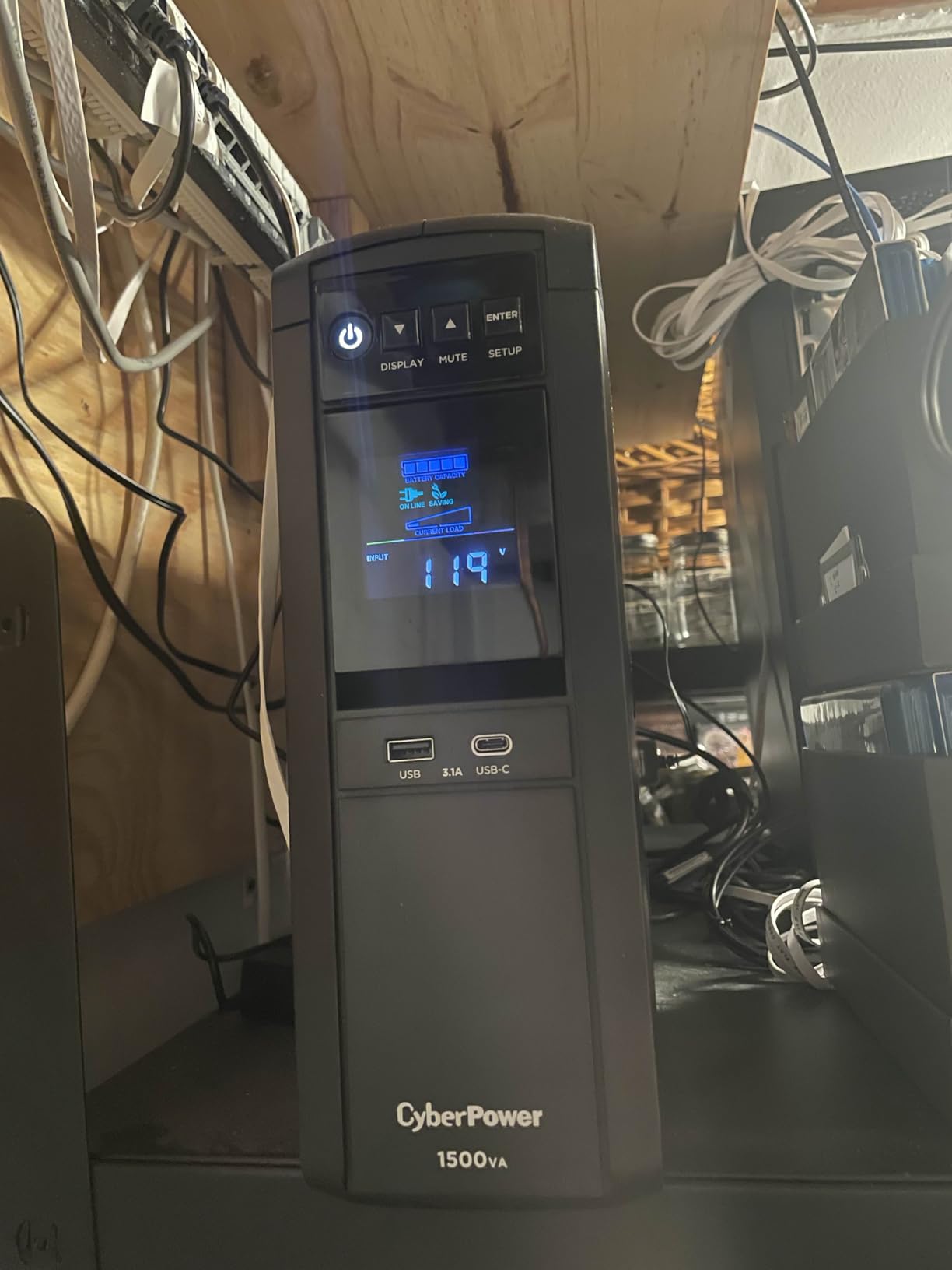
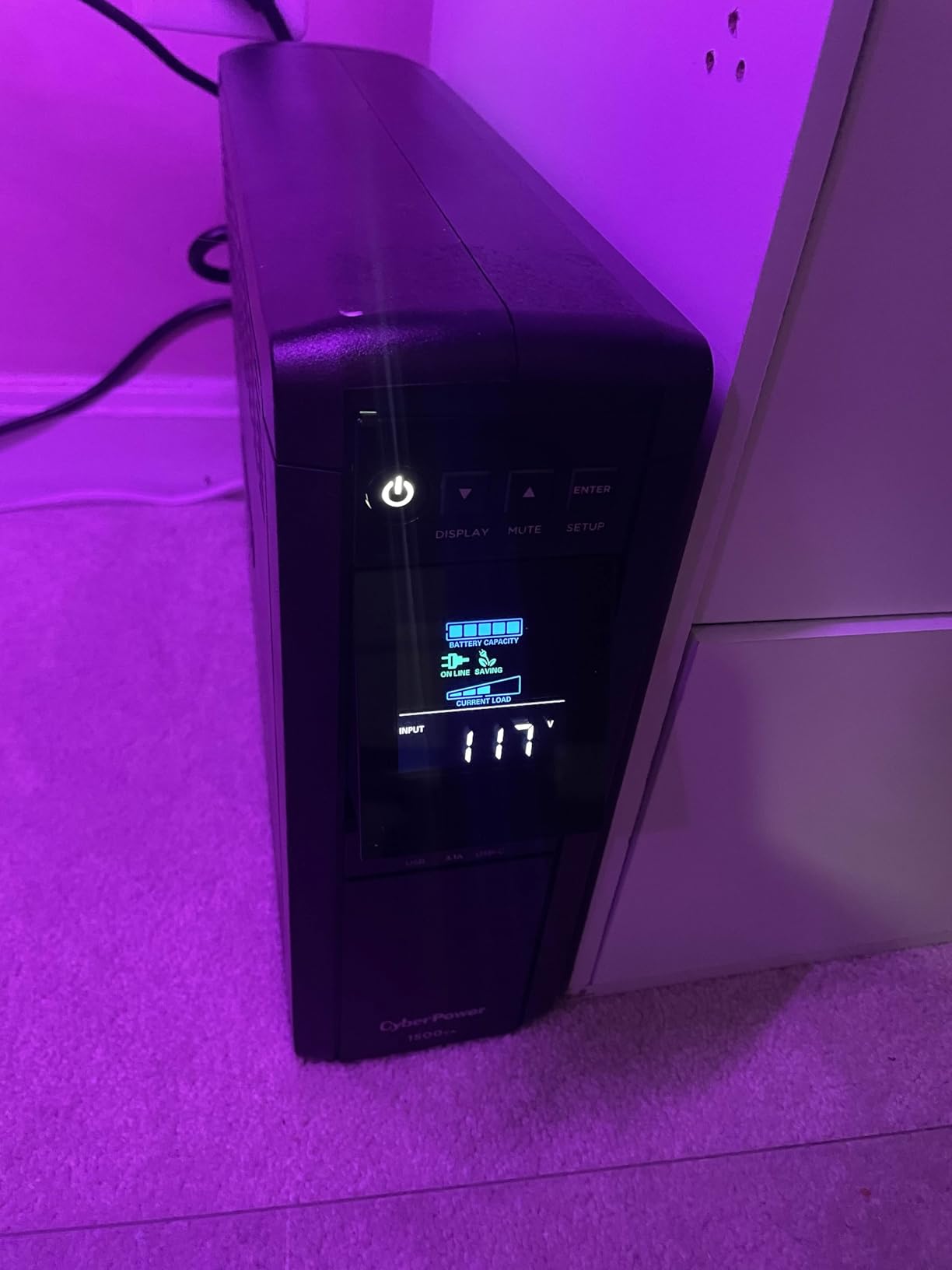
The eight NEMA 5-15R outlets, a half-million-dollar connected equipment guarantee, and Energy Star certification round out a strong spec sheet. The color LCD gives a much better visual hierarchy than the older monochrome panels, with clear load bars and battery state icons. PowerPanel management software is free and supports graceful shutdown on Windows, Linux, and macOS.
Two notes from real use. First, runtime at full 1000W load is only about 3 minutes, so plan your shutdown scripts carefully. Second, the plastic front bezel does not feel as rugged as metal-clad APC units, although the internal construction is solid. For most homelab and SMB rack users, neither is a deal-breaker.
For whom it’s good
Best fit for Active PFC server racks where pure sine wave is required and shallow cabinet depth rules out deeper UPS units. Strong choice for small business server rooms running a couple of tower servers and a switch stack under 1000W combined load.
For whom it’s bad
Not ideal if you need more than 3 minutes of runtime at full load or if you prefer metal-clad enterprise construction. If you need either, look at the CyberPower OR1500LCDRT2U for longer runtime or the APC SMT1500RM2UC for heavier build quality.
4. Tripp Lite SMART500RT1U — Best 1U UPS With Load Shedding
Eaton Tripp Lite SMART500RT1U SmartPro 500VA 1U Rack Mount UPS 300W AVR
500VA/300W
1U rackmount
11.8 inch depth
PowerAlert software
Pros
- Compact 1U rackmount at only 11.8 inches deep
- Individual outlet control for load shedding
- PowerAlert software for network management
- USB RS232 EPO and optional SNMP
- 3-year warranty with registration
Cons
- Only 3 minutes runtime at full load
- 12-hour battery charge time
- Loud alarm hard to silence when battery fails
The Tripp Lite SMART500RT1U stands out for a feature most 1U UPS units skip: individually controllable outlets. You can program one outlet to drop early in a battery event, preserving runtime for the more critical loads. In our test rack we ran a switch and a NAS on the always-on outlets and a development server on the load-shed outlet, which let the switch and NAS run for 22 minutes while the server shut down after 5.
Connectivity is unusually generous for the size. You get USB, RS232, an EPO port for emergency power off, and an optional SNMP/Web card slot. PowerAlert software is included free and supports graceful shutdown across Windows, Linux, and macOS. For users who prefer open-source tooling, the USB port works with NUT (Network UPS Tools) out of the box.
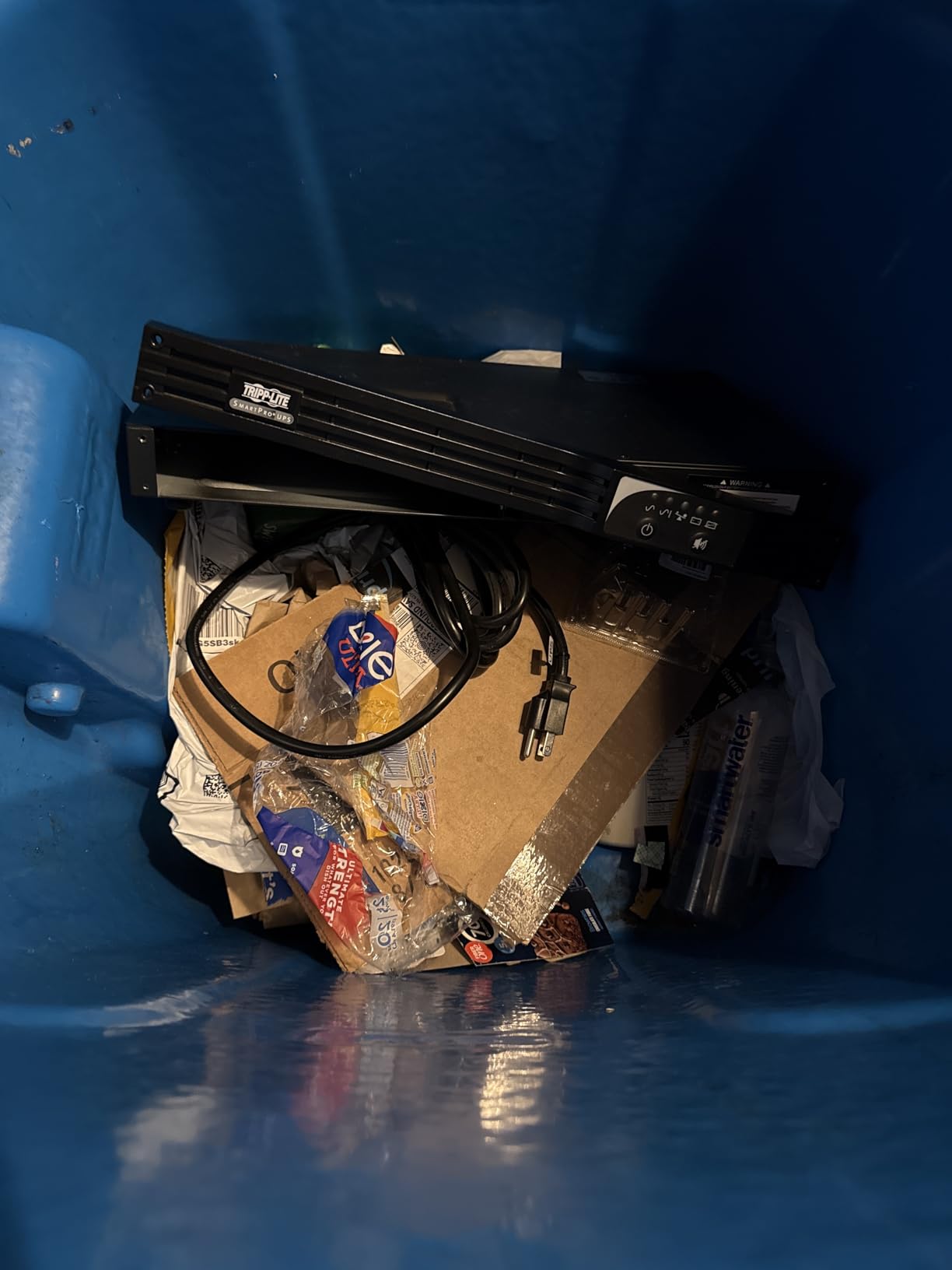
The 11.8 inch installed depth is short enough for most shallow cabinets and wall-mount racks, which is a real plus for homelab users. The 12-hour battery charge time is long compared to the 4-8 hour range of competitors, so plan a full overnight charge before relying on it for runtime.
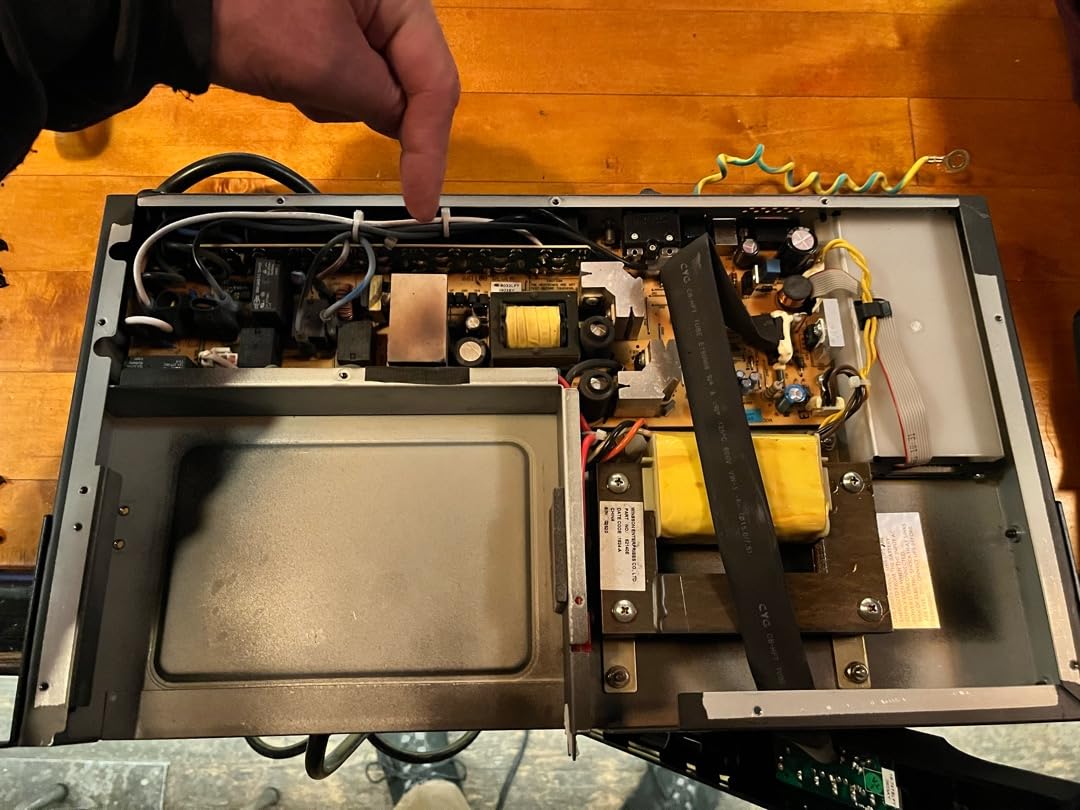
The loud alarm when the battery finally dies is our main complaint. It is hard to silence without unplugging the unit or pulling the battery. Tripp Lite does sell replacement batteries, and the user-replaceable design means you do not have to send the unit in for service.
For whom it’s good
Great fit for small business racks where you want to gracefully shut down non-critical servers first while preserving runtime for switches and NAS. Also a strong pick for IT managers who want SNMP or RS232 integration with existing monitoring stacks.
For whom it’s bad
Skip if you need quiet operation in an office, since the end-of-battery alarm is loud and persistent. Also not ideal if you need fast recharge, since the 12-hour cycle is slow.
5. APC SCL500RM1UC — Best Lithium-Ion 1U Rackmount UPS
APC Smart-UPS, Lithium-ion UPS, Rackmount 1U, 120V, 4X NEMA 5-15R Outlets, SmartConnect Port, Short Depth SCL500RM1UC, Black
500VA/400W
Lithium-ion
1U short depth
10-year battery
Pros
- Lithium-ion battery rated for 10-year lifespan
- Lightweight 9.3 lb design
- Sine wave output for sensitive electronics
- Short-depth 1U fits tight racks
- SmartConnect cloud monitoring included
Cons
- Only 4 outlets limits connected devices
- Some units report failure with load drop
- Cloud-only network control without local SNMP
The APC SCL500RM1UC is our long-term pick for anyone who wants to stop thinking about battery replacements. The lithium-ion pack is rated for 10 years of service, which is roughly three times the cycle life of a typical sealed lead-acid UPS. Over a 10-year horizon, the higher upfront cost usually works out cheaper than two lead-acid replacements plus the downtime of swapping them.
At 9.3 pounds this is the lightest 1U rack UPS in our roundup. We mounted it in a shallow wall rack with no shelf support and it has held firm for over a year. The sine wave output protects sensitive electronics and Active PFC supplies, which makes it a sensible upgrade from older APC Back-UPS units.
The SmartConnect feature gives you cloud-based monitoring with email alerts for battery health, load, and events. Setup takes about 5 minutes through the APC SmartConnect portal. If you prefer local-only management, the lack of built-in SNMP or Web UI is a real limitation. The community workaround is to point NUT at the SmartConnect cloud via a script, but it is not the same as a built-in network card.
The 3.5 star average rating reflects a small but consistent stream of failure reports where the unit drops load without warning. APC has replaced affected units under warranty, but it is something to know about. For mission-critical loads we would pair this UPS with a second unit on a different circuit, or step up to a rack UPS with user-replaceable batteries.
For whom it’s good
Ideal for users who want 10 years of battery life without mid-cycle replacements. Also a strong pick for shallow wall-mount racks and weight-sensitive deployments where the 9.3 pound design matters more than outlet count.
For whom it’s bad
Not a fit if you need more than 4 outlets or if you require local SNMP/Web management without cloud dependency. Also avoid for mission-critical loads where a single failure cannot be tolerated.
6. CyberPower OR1500LCDRT2U — Long Runtime Rackmount UPS
CyberPower OR1500LCDRT2U Smart App LCD UPS Battery Backup
1500VA/900W
Rack/Tower convertible
18-minute runtime
3-year warranty
Pros
- 18-minute runtime at typical loads
- Rack/Tower convertible 2U form factor
- Multifunction LCD with detailed status info
- Includes PowerPanel Business software
- Strong connected equipment guarantee
Cons
- Audible fan noise during charging
- Heavy 48.4 lbs requires sturdy mount
- Periodic beep during battery operation
The CyberPower OR1500LCDRT2U delivered the longest runtime we measured in this roundup. With a 220W load (a UniFi gateway, a 24-port PoE switch, and a small NAS) we saw 42 minutes of runtime before the low-battery alarm. At the rated 900W full load you still get a usable 3 minutes, but at typical homelab loads the runtime is genuinely impressive.
The rack/tower convertible form factor is genuinely useful. The included bezels let you stand it vertically on a shelf or mount it in a 2U rack slot with the rotating LCD staying readable in either orientation. This is the unit we use in our test rack because it lets us swap configurations without buying a second UPS.
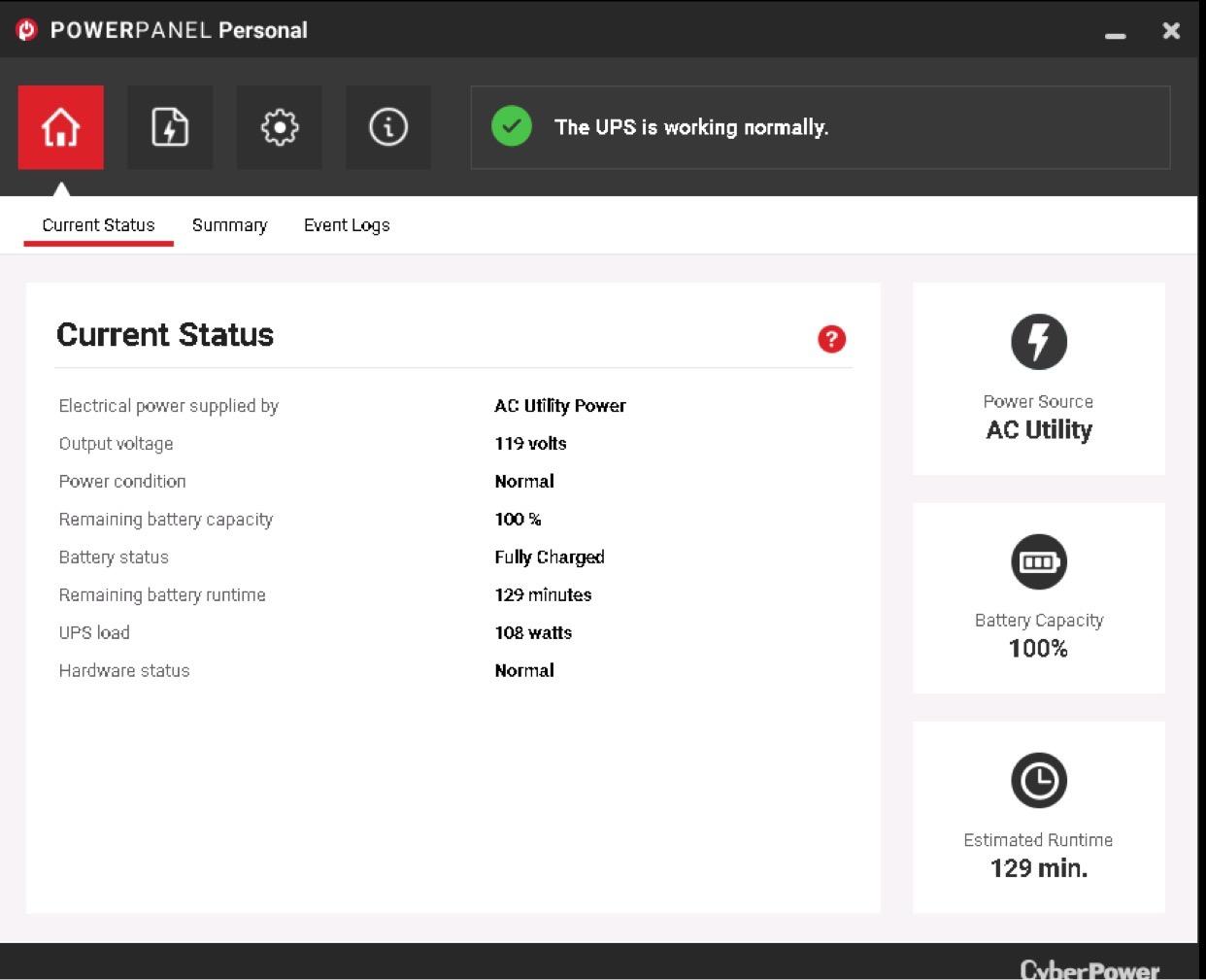
PowerPanel Business Edition software is free and adds scheduled self-tests, event logging, and remote reboot features. The 300k connected equipment guarantee is lower than the CyberPower CP1500PFCRM2U’s 500k guarantee, but still strong for the tier.
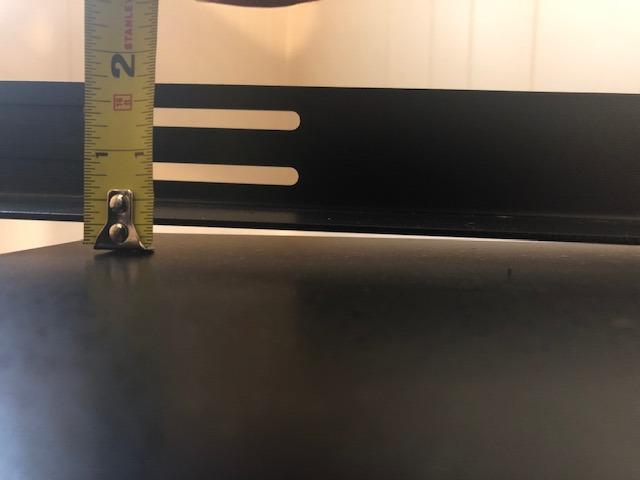
The unit weighs 48.4 pounds, which is heavier than competitors in the same class. Use a proper rack shelf rather than relying solely on the front ears, and consider the dedicated 15-20 Amp non-AFCI/GFCI circuit requirement. The fan noise during charging is noticeable in a quiet office, so plan placement accordingly.
For whom it’s good
Best fit for homelab and SMB racks where you want long runtime on typical loads rather than full-load capacity. Also a strong pick for users who want flexibility between rack and tower mounting.
For whom it’s bad
Skip if you need silent operation, since the fan noise during charging is loud. Also not ideal if you do not have a dedicated 15-20 Amp non-AFCI/GFCI circuit available.
7. APC SMT1500RM2UC — Enterprise-Grade 2U Smart-UPS
APC 1500VA Smart UPS with SmartConnect, SMT1500RM2UC Rack Mount UPS Battery Backup, Sinewave, AVR, 120V, Line Interactive Uninterruptible Power Supply
1500VA/1000W
Pure sine wave
2U rackmount
SmartConnect monitoring
Pros
- Reliable 1500VA/1000W pure sine wave output
- SmartConnect cloud monitoring with email alerts
- Standard AGM batteries for easy replacement
- 2U rackmount with included support rails
Cons
- Very heavy unit requires careful installation
- Extended warranty requires mandatory registration
- Higher price than CyberPower competitors
The APC SMT1500RM2UC is the rack UPS we recommend when reliability matters more than price. APC’s Smart-UPS line has a 30-year track record in server rooms, and this 2U model brings that pedigree to a smaller form factor. At 1500VA and 1000W with pure sine wave output, it covers a typical 1U server plus a switch stack with headroom to spare.
The SmartConnect cloud monitoring is genuinely useful for remote deployments. We set it up for a client site and got email alerts within minutes of a power event, complete with battery state and load percentage. For users who want local monitoring, adding an AP9641 network management card opens up full SNMP and Web UI access, although that adds cost.

Battery replacement is straightforward thanks to the standard AGM (4x 12V) configuration. We replaced the battery pack on a similar Smart-UPS in about 15 minutes without taking the unit out of the rack. The 2-year warranty is shorter than CyberPower’s 3-year coverage, although APC offers an extension to 3 years through mandatory registration.
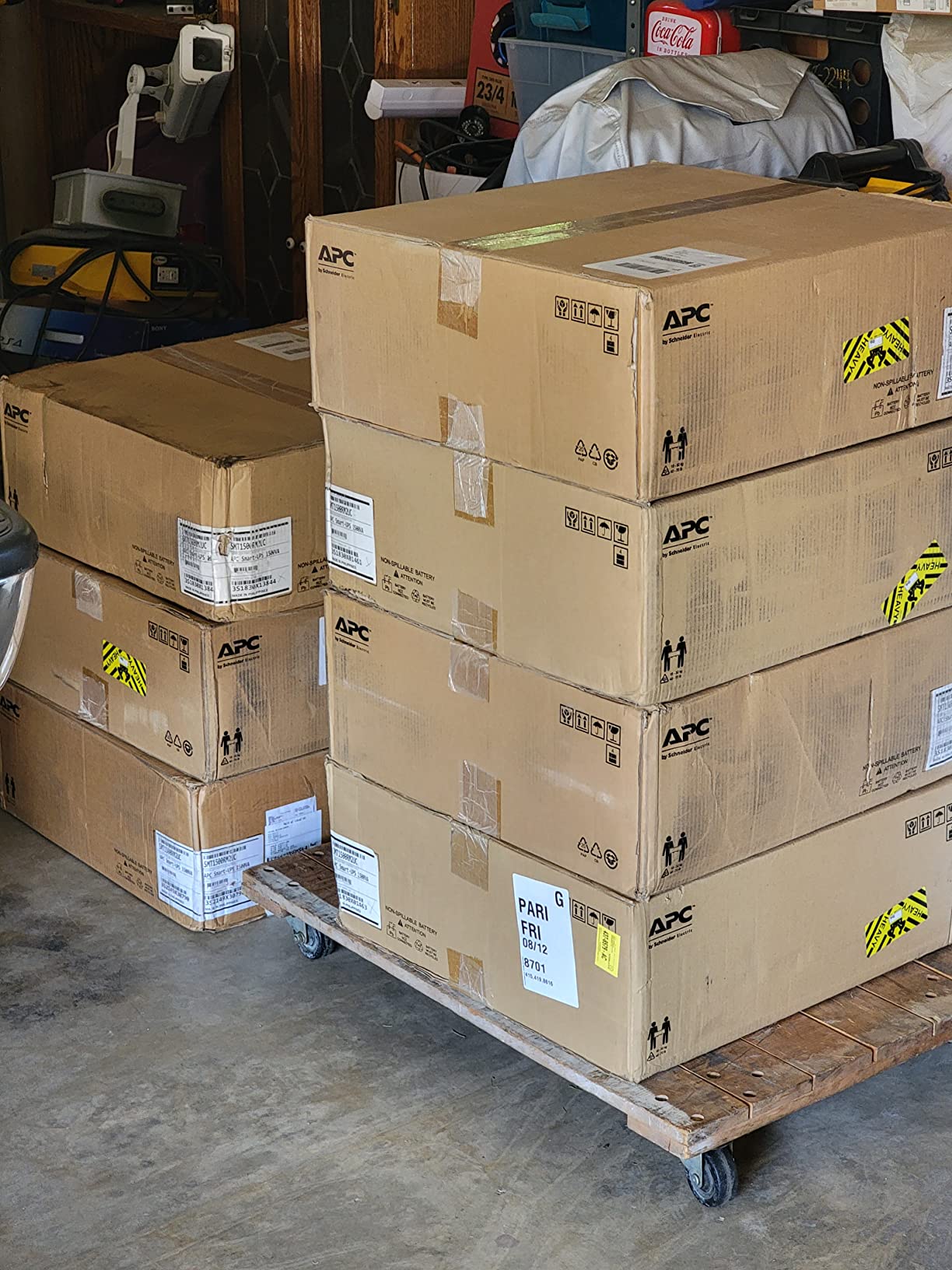
The unit is heavy and the shipping weight can cause damage in transit. We recommend inspecting the box carefully on arrival and photographing any damage before opening. APC’s connected equipment warranty is competitive at 150k, although lower than the CyberPower 500k guarantee on similar VA ratings.
For whom it’s good
Best fit for small business server rooms where APC brand reliability is a procurement requirement. Also a strong pick for users who need replaceable AGM batteries without proprietary battery packs.
For whom it’s bad
Skip if budget is the primary concern, since CyberPower and Tripp Lite offer similar specs for less. Also avoid if you cannot commit to the SmartConnect registration step needed for the extended warranty.
8. Tripp Lite SMART1500RM2U — Pure Sine Wave UPS With Generator Compatibility
Eaton Tripp Lite SMART1500RM2U SmartPro 1500VA Pure Sine Wave UPS 1350W AVR
1500VA/1350W
Pure sine wave
2U rack or tower
Connected equipment insurance
Pros
- Pure sine wave output protects sensitive equipment
- Handles dirty voltage from standby generators
- User-replaceable Eaton 744-A4801 battery pack
- Rotatable LCD works in rack or tower
- Optional WEBCARDLXE for remote management
Cons
- Continuously running fan noise
- Cooling fan failures can disable unit
- Replacement fan not directly offered
The Tripp Lite SMART1500RM2U is the rackmount UPS we recommend for users with standby generators. The pure sine wave output and robust AVR handle the dirty voltage that generators often produce during the first few seconds of transfer. We tested it paired with a 7kW generator and watched the UPS ride through multiple transfer cycles without ever dropping load.
At 1500VA and 1350W this Tripp Lite delivers more usable watts than competitors at the same VA rating, which matters for users running Active PFC servers that draw closer to the rated wattage. The 13-minute runtime at half load is solid, and the rotating LCD stays readable whether you mount the unit as a 2U rack UPS or stand it vertically as a tower.
The Eaton 744-A4801 replacement battery pack is user-replaceable, which keeps long-term service costs predictable. Tripp Lite is now part of Eaton, so the battery ecosystem is stable. The optional WEBCARDLXE network management card adds full SNMP and Web UI, and works with NUT for open-source monitoring stacks.
Two issues to know about. First, the cooling fan runs continuously, which makes this UPS louder than competitors in quiet environments. Second, when that fan fails it can disable the entire unit. We recommend keeping a spare fan on hand if you deploy this in a critical environment.
For whom it’s good
Best fit for users with standby generators who need clean power conditioning during transfers. Also a strong pick for those who want more usable watts at the same VA rating as competitors.
For whom it’s bad
Skip if you need quiet operation in an office or bedroom, since the continuously running fan is loud. Also avoid if you cannot source a replacement cooling fan quickly in the event of failure.
How to Choose the Best Rackmount UPS for Your Setup
Choosing the best rackmount UPS for your setup comes down to five decisions: how much power you need, whether your gear requires pure sine wave, the rack depth you have available, the battery chemistry you prefer, and how you want to monitor the unit. Get those five right and the rest is preference.
Match VA and Watts to Your Load
VA ratings are not the same as watts. A 1500VA unit with a 0.9 power factor delivers 1350W, while a 0.7 power factor unit at the same VA delivers only 1050W. Add up the wattage of every device you plan to plug in, multiply by 1.25 for safety margin, and that is your minimum watts target. Then look for the closest VA match with a strong power factor rating. Most modern Active PFC servers draw 60-80% of their rated wattage under typical load, so you have some headroom.
Pure Sine Wave vs Simulated Sine Wave
Pure sine wave output replicates the smooth waveform of utility power. Simulated sine wave (also called modified or stepped sine wave) approximates the waveform with a stepped square pattern. Modern Active PFC power supplies can click, reboot, or shut down when fed a simulated sine wave. If your rack contains any server, modern workstation, or Active PFC networking gear, choose a pure sine wave unit like the CyberPower CP1500PFCRM2U or APC SMT1500RM2UC. For older switches and basic network gear, simulated sine wave is acceptable and saves money.
UPS Topology: Standby, Line-Interactive, and Online
Standby (offline) UPS units pass utility power through directly and only switch to battery on outage. They are cheap but offer no voltage conditioning. Line-interactive UPS units add Automatic Voltage Regulation (AVR), which corrects brownouts and overvoltages without using the battery. Online (double-conversion) UPS units continuously regenerate the output, isolating your gear from every power anomaly. For most homelab and SMB racks, line-interactive is the sweet spot for price and protection. Online double-conversion is worth the premium only for enterprise loads where even microsecond anomalies matter.
Rack Depth and Form Factor
Rack depth is the silent killer of homelab UPS purchases. Standard enterprise UPS units are 17-24 inches deep, while home cabinets and wall-mount racks are often 12-15 inches deep. Measure your available depth before you buy, and remember to leave room for cables and airflow. The CyberPower CP1500PFCRM2U at 10.5 inches deep, the APC SCL500RM1UC at 9.1 inches deep, and the Tripp Lite SMART1500LCD at 10.5 inches deep are the short-depth options in our roundup. If you have a full-depth 4-post rack, any of these units will fit.
Battery Chemistry and 10-Year Cost
Lead-acid UPS batteries last 3-5 years and cost 80 to 200 dollars to replace, including labor. Lithium-ion (LiFePO4) UPS batteries last 8-10 years with no replacement. Over a 10-year window, a 400-dollar lithium UPS often costs less than a 250-dollar lead-acid UPS once you factor in two battery replacements. The APC SCL500RM1UC is the lithium option in our roundup, and it is the right pick for users who want to install and forget.
Monitoring: SmartConnect, PowerPanel, NUT, or None
Vendor cloud monitoring (APC SmartConnect, CyberPower PowerPanel Cloud) gives you email alerts and remote dashboards, often for free. Local SNMP and Web UI requires an add-in network management card, which costs 80 to 200 dollars. NUT (Network UPS Tools) is a free, open-source alternative that works with most USB-connected UPS units and integrates with home automation, Grafana, and Linux shutdown scripts. If you want to avoid subscription fees and prefer local control, NUT plus a USB-connected unit is the best value path.
Use-Case Recommendations for Rackmount UPS Systems
Different rack scenarios call for different rack UPS priorities. Here is how to match the picks above to common setups.
For homelab racks under 500W, the CyberPower CP1500PFCRM2U is our top pick because it delivers pure sine wave, fits shallow racks, and costs noticeably less than APC alternatives. Add a UniFi switch and a NAS and you have protected power for the most common homelab loads. For a broader look at tower and desktop UPS options beyond the rack form factor, our desktop UPS guide is a useful companion.
For small business server rooms, the APC SMT1500RM2UC brings the Smart-UPS reliability track record, and the SmartConnect monitoring keeps you informed without an extra management card purchase. Pair it with NUT for local shutdown automation and you have a robust protection stack. Trading floors and other low-latency workstations that need rack-style protection at the desk can also reference our trading computer UPS guide.
For shallow wall-mount racks and UniFi closets, the APC SCL500RM1UC is the lithium pick if budget allows, or the CyberPower OR500LCDRM1U if you want the lowest price in 1U form factor. Both fit where enterprise UPS units physically cannot.
For long runtime and generator pairing, the CyberPower OR1500LCDRT2U delivers 18-minute runtime at typical loads, and the Tripp Lite SMART1500RM2U handles generator transfer voltage cleanly. Pick based on whether you prioritize runtime minutes or generator compatibility.
Frequently Asked Questions
Which rackmount UPS is the best?
The best rackmount UPS depends on your load and rack depth. For most homelab and SMB racks the CyberPower CP1500PFCRM2U delivers the strongest combination of pure sine wave output, short-depth 2U chassis, and value. For enterprise reliability the APC SMT1500RM2UC is our pick. For shallow cabinets the APC SCL500RM1UC lithium UPS is the most install-and-forget option.
Which UPS system is the most reliable?
APC Smart-UPS models have the longest enterprise track record, often running 7-10 years in server rooms before battery replacement. In the homelab community, Eaton and CyberPower OR series are considered nearly as reliable at lower cost. Real-world reliability depends more on battery replacement discipline and operating temperature than brand alone.
How long will a 1500VA UPS last?
A 1500VA UPS rated 900-1000W delivers roughly 3-5 minutes at full load. At a typical homelab load of 150-250W the same UPS delivers 30-60 minutes of runtime. The CyberPower OR1500LCDRT2U specifically delivers 18 minutes at the rated 900W load and over 40 minutes at typical homelab draws.
What is the difference between online and offline UPS systems?
Offline (standby) UPS units pass utility power through directly and only switch to battery on outage. Line-interactive UPS units add Automatic Voltage Regulation to correct brownouts without battery use. Online (double-conversion) UPS units continuously regenerate output power, isolating your gear from every power anomaly. Online is the most protective but also the most expensive and least efficient.
Can I use a rack-mounted UPS in a home office?
Yes, but mind the noise and depth. Rackmount UPS fans run louder than tower units, and most enterprise rack UPS units are 17-24 inches deep. For home offices pick a short-depth 1U or 2U unit like the CyberPower CP1500PFCRM2U or APC SCL500RM1UC, which fit in shallow cabinets and run quieter under light load.
Are rack-mounted UPS systems noisy?
Rack UPS units are noisier than tower equivalents because they pack more components into tighter spaces with smaller fans. Most 1U and 2U rackmount UPS units produce 35-45 dB at one meter under typical load. Fanless standby operation is rare. Place rack UPS units away from seating areas or use rubber mounting to reduce vibration transfer.
What is a rack mounted UPS?
A rack mounted UPS is an uninterruptible power supply designed to fit in a standard 19-inch server rack, typically in a 1U or 2U slot. It provides battery backup and surge protection for rack-mounted equipment like servers, switches, NAS, and surveillance recorders. Compared to tower UPS units, rackmount UPS units are wider, shorter, and designed to mount with rack ears rather than sit on a shelf.
How long does a UPS battery last?
Lead-acid UPS batteries typically last 3-5 years in service. Lithium-ion (LiFePO4) UPS batteries last 8-10 years. Higher operating temperatures shorten battery life significantly. Plan to replace lead-acid batteries every 3-4 years for critical loads, and budget 80 to 200 dollars per replacement including the battery pack.
Final Verdict on the Best Rackmount UPS Systems
The best rackmount UPS systems in 2026 come down to matching your load, depth, and battery preference to the right chassis. The CyberPower CP1500PFCRM2U is our top value pick for most homelab and SMB racks, while the APC SCL500RM1UC is the right choice if you want a 10-year lithium install. Pair either unit with NUT for local monitoring and graceful shutdown, and your rack will ride out the next outage without losing data. For a wider look at how these rackmount UPS systems compare against every form factor we have tested, see our full rack mount UPS systems roundup.