
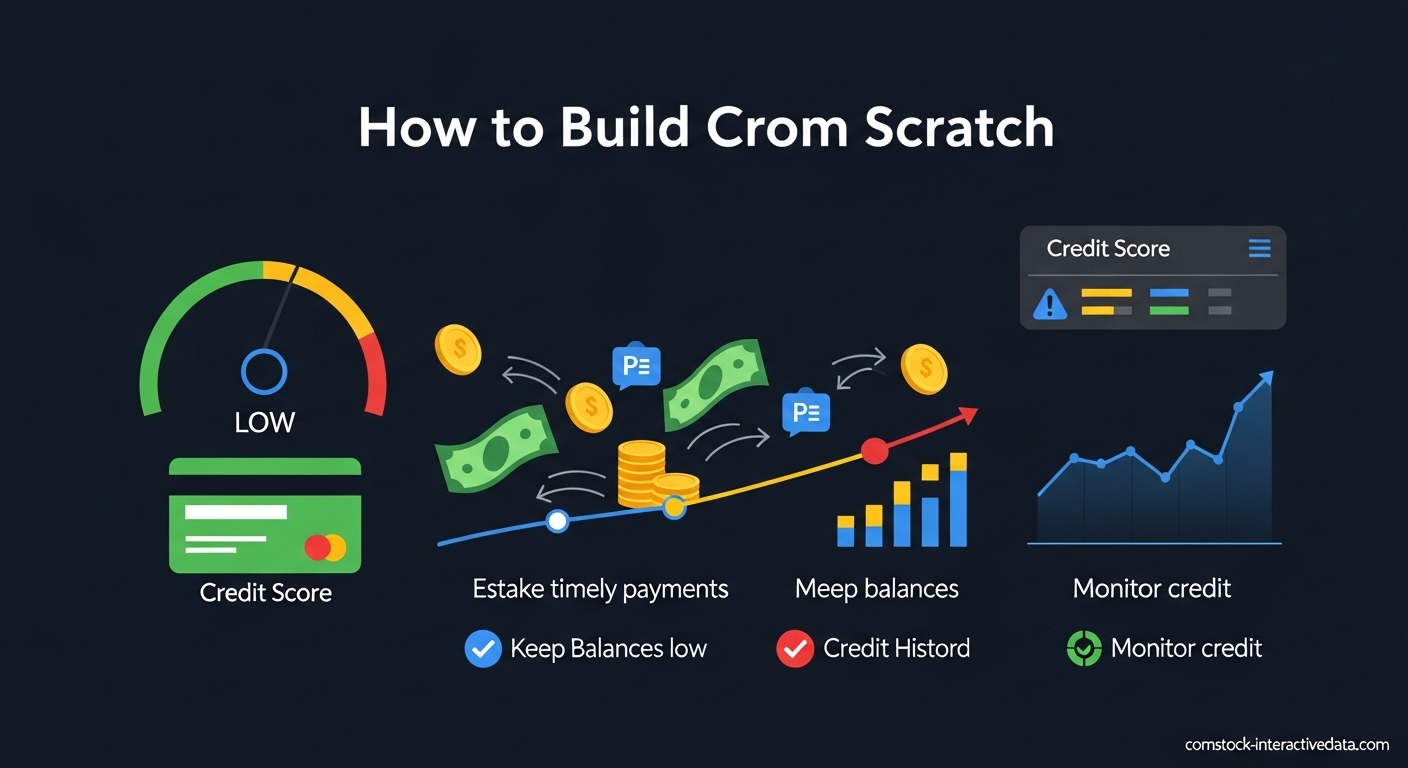
Building credit from scratch feels like trying to get a job without experience. You need credit to get credit, but how do you start when you have zero history? The good news is that millions of people successfully build credit every year using proven strategies that work in 2026.
In this comprehensive guide, I will walk you through exactly how to build credit from scratch. You will learn four proven methods that work for beginners, the timeline for seeing real results, and the habits that separate people with excellent credit from those who struggle.
Here are the four fastest ways to build credit from nothing:
- Get a secured credit card with a small refundable deposit
- Become an authorized user on someone else’s established account
- Use a credit builder loan from a credit union or online lender
- Report your rent and utility payments through alternative services
Each method has its pros and cons depending on your situation. Some work faster than others. Some cost nothing while others require small deposits. By the end of this guide, you will know exactly which path fits your circumstances and how to execute it step by step.
Table of Contents
Understanding Credit: The Foundation You Need
Credit is essentially a financial trust system. Lenders, landlords, and even some employers want to know if you are reliable with money before they extend you credit or services. Your credit history acts as a report card showing how you have handled borrowed money in the past.
Credit bureaus collect information about your borrowing behavior and compile it into credit reports. Three major bureaus operate in the United States: Equifax, Experian, and TransUnion. Each maintains a separate file on you, though the information is often similar.
Your credit score is a three-digit number calculated from your credit report data. The most commonly used model is the FICO score, which ranges from 300 to 850. Most lenders consider scores above 670 to be good, while scores above 740 are excellent.
The five C’s of credit represent what lenders evaluate when making decisions:
- Character: Your credit history and payment patterns
- Capacity: Your ability to repay based on income and debt
- Capital: Your savings and assets that could repay debt
- Collateral: Assets that secure the loan if you default
- Conditions: Economic factors and how you will use the loan
Good credit matters because it affects major life milestones. Without it, renting an apartment often requires larger security deposits. Buying a car means paying higher interest rates that cost thousands more over the loan term. Getting a mortgage becomes difficult or impossible. Some employers even check credit reports for certain positions.
Method 1: Get a Secured Credit Card
A secured credit card is the most common starting point for building credit from scratch. It works like a regular credit card but requires a refundable security deposit that typically becomes your credit limit. This deposit protects the issuer if you fail to pay, making approval much easier for beginners.
Most secured cards require deposits between $200 and $500. You get this money back when you close the account in good standing or when the card graduates to an unsecured card. The deposit does not go toward your monthly payments. You must still pay your bill each month just like a regular card.
Here is the step-by-step process for getting and using a secured card effectively:
Step 1: Compare and choose a secured card. Look for cards with no annual fee if possible. Check whether the issuer reports to all three credit bureaus, as some only report to one or two. Major issuers like Discover, Capital One, and Citi offer secured cards that graduate to unsecured cards after responsible use.
Step 2: Submit your application. You will need to provide basic information including your Social Security number, income, and employment details. The application will also require your bank account information for the security deposit transfer.
Step 3: Fund your deposit. Most issuers require the deposit within a set timeframe after approval, typically 30 days. The card will not be activated until the deposit clears.
Step 4: Use the card strategically. Make small purchases you can afford to pay off completely each month. Keep your balance under 30% of your limit, ideally under 10%. Set up autopay to ensure you never miss a payment.
Step 5: Wait for graduation. Most secured cards review your account after 6 to 12 months of on-time payments. If you have managed the card well, the issuer will refund your deposit and convert the card to an unsecured version. This graduation is a major milestone in your credit building journey.
The biggest advantage of secured cards is that they function exactly like unsecured cards for credit building purposes. Payment history gets reported monthly. Credit utilization gets calculated. You build the same positive history that eventually leads to excellent scores.
Method 2: Become an Authorized User
Becoming an authorized user on someone else’s credit card is arguably the fastest way to build initial credit. When you are added as an authorized user, the primary cardholder’s entire account history typically appears on your credit report. If they have a 10-year-old card with perfect payment history, you instantly gain that positive history.
This strategy is often called credit piggybacking. It is completely legal and recognized by credit scoring models. FICO and VantageScore both factor authorized user accounts into their calculations. Many people build their first 100 points of credit score this way within just a few months.
Choosing the right person is critical for this strategy to work safely. The ideal primary cardholder has:
- At least 3 years of positive payment history
- A low credit utilization ratio, ideally under 10%
- No recent late payments or derogatory marks
- A card that reports authorized users to credit bureaus (most major issuers do)
The risks of being an authorized user are often misunderstood. You are not responsible for the debt on the card. The primary cardholder remains solely liable for payments. However, their negative behavior affects your credit too. If they max out the card or pay late, your score suffers alongside theirs.
You do not need to use the card or even possess a physical card to benefit. Many people become authorized users simply to capture the payment history while never touching the account. The account age, credit limit, and payment history all contribute to your credit profile regardless of whether you make purchases.
One consideration is what happens if you are removed as an authorized user. The account will eventually disappear from your credit report, potentially reducing your average account age. For this reason, many experts recommend using authorized user status as a boost while also establishing your own primary accounts.
Method 3: Use a Credit Builder Loan
Credit builder loans flip the traditional loan model on its head. Instead of receiving money upfront and paying it back over time, you make monthly payments first and receive the loan amount at the end. This structure eliminates risk for the lender while helping you build payment history.
Here is how the typical process works. You apply for a credit builder loan, usually between $300 and $1,000, though some go higher. The lender places the loan amount into a locked savings account or certificate of deposit. You make fixed monthly payments over 6 to 24 months. Once you complete all payments, the lender releases the funds to you minus any fees.
Credit builder loans create installment credit on your report. This differs from the revolving credit created by credit cards. Having both types of credit improves your credit mix, which accounts for 10% of your FICO score. Lenders like seeing that you can handle different types of debt responsibly.
You can find credit builder loans at several types of institutions:
- Credit unions: Often have the lowest fees and interest rates. Many require membership but have minimal requirements.
- Community banks: Local banks sometimes offer these products specifically for credit building.
- Online lenders: Companies like Self, SeedFi, and Credit Strong specialize in credit builder products.
- Fintech apps: Some banking apps now include credit builder features as add-ons.
Costs vary significantly between providers. Credit unions often charge the least, sometimes just a small administrative fee. Online lenders typically charge interest rates between 5% and 16% plus setup fees around $10. Calculate the total cost before committing, as you want the credit building benefit to exceed what you pay in fees.
Credit builder loans work best when you do not need immediate access to the funds. The money stays locked until the end of the term. If you need credit building plus immediate cash, a secured card might be more flexible. Many people use both strategies simultaneously for maximum impact.
Method 4: Alternative Credit Building Options
Not everyone wants or qualifies for traditional credit products. Alternative credit building methods offer additional paths to establish your history. These approaches work well as supplements to the main three methods or as standalone options for specific situations.
Student credit cards provide an excellent entry point for enrolled college students. These cards typically have lower approval requirements and no security deposit needed. Issuers understand that students have limited income and credit history. Many offer educational resources and forgiving terms for first-time cardholders. Approval usually requires proof of enrollment and some form of income.
Retail or store credit cards sometimes have easier approval standards than general credit cards. Department stores and major retailers often approve applicants with limited history. The downside is high interest rates, low limits, and limited usability. Some store cards only work at that specific retailer. Financial experts generally recommend avoiding these unless you shop at the store frequently and pay in full each month.
Rent reporting services allow you to add apartment rent payments to your credit report. Services like RentTrack, PayYourRent, and LevelCredit work with property managers or directly with tenants. Your monthly rent gets reported as a tradeline, building positive payment history. This is particularly valuable for people who pay rent on time but have no other credit accounts.
Experian Boost is a free service that adds utility and telecom payments to your Experian credit report. After connecting your bank account, Experian identifies on-time payments for bills like electricity, water, cell phone, and streaming services. These payments get added as positive history. The boost is immediate and can raise your Experian score by several points instantly.
Alternative data programs are expanding what counts toward credit. Some lenders now consider bank account cash flow, employment history, and even educational background. Fintech companies use machine learning to assess creditworthiness beyond traditional reports. While not directly building credit history in the traditional sense, these options can help you access credit products that then report to bureaus.
The 5 Key Habits That Build Great Credit
Opening a credit account is just the beginning. The habits you practice determine whether your credit score rises or falls over time. FICO calculates scores using five factors with different weights. Understanding these helps you focus on what matters most.
Habit 1: Pay every bill on time without exception. Payment history makes up 35% of your FICO score, making it the single largest factor. One late payment can drop your score by 50 to 100 points and stays on your report for seven years. Set up autopay for at least the minimum payment on every account. Pay the full statement balance to avoid interest charges. Even a single 30-day late payment hurts significantly, so prioritize on-time payments above everything else.
Habit 2: Keep credit utilization under 30%, ideally under 10%. Credit utilization accounts for 30% of your score, making it the second biggest factor. Utilization measures how much of your available credit you are using. If you have a $500 limit and a $250 balance, your utilization is 50%, which hurts your score. Pay down balances before the statement closing date to ensure low utilization gets reported. Consider making multiple payments per month if you use the card heavily.
Habit 3: Keep old accounts open even if unused. Length of credit history makes up 15% of your score. The average age of all your accounts matters. Closing your oldest card can drop your average age and hurt your score. Keep old accounts open, even if you never use them. Make a small purchase every few months to prevent the issuer from closing the account for inactivity.
Habit 4: Maintain a healthy credit mix over time. Credit mix accounts for 10% of your score. Lenders want to see you can handle different types of credit. Having both revolving accounts (credit cards) and installment accounts (loans) shows versatility. Do not take out loans just for mix, but consider it when choosing between options. A credit builder loan plus a secured card gives you both types.
Habit 5: Limit hard inquiries and new accounts. New credit also accounts for 10% of your score. Each hard inquiry from a credit application can lower your score by 5 to 10 points temporarily. Multiple inquiries in a short period hurt more. Space out credit applications by at least 3 to 6 months. Rate shopping for mortgages or auto loans within a 14-day window counts as one inquiry, so cluster those applications if needed.
These five habits work together. Someone who pays on time, keeps utilization low, maintains old accounts, has mixed credit types, and limits inquiries will build an excellent score. Someone who violates any of these habits will see their progress stall or reverse.
Month-by-Month: What to Expect When Building Credit
Understanding the timeline helps you set realistic expectations and avoid disappointment. Credit building does not happen overnight. Knowing what to expect each month keeps you motivated and helps you catch problems early.
Months 1 to 3: You open your first account and begin using it. The account may not appear on your credit report immediately. Most lenders report to bureaus once per month, typically after your statement closes. Expect your first account to appear on your report within 30 to 60 days of opening. Check your free reports at AnnualCreditReport.com to verify the account appears correctly.
Months 4 to 6: Your first credit score gets generated. FICO requires at least one account open for 6 months before calculating a score. VantageScore can generate a score with as little as one month of history. Your initial score typically ranges between 300 and 650 depending on your activity. Do not panic if it is on the lower end. You are just getting started.
Months 7 to 12: Your score begins solidifying and potentially rising significantly. With 6 to 12 months of on-time payments, you establish a positive pattern. If you added multiple accounts or became an authorized user, you may see gains of 50 to 100 points. This is when secured cards often graduate to unsecured. Consider requesting credit limit increases on existing cards to improve utilization.
Year 2 and beyond: You enter prime credit territory. With 12 to 24 months of positive history, scores above 700 become achievable. You can qualify for premium credit cards with rewards. Auto loan rates improve dramatically. You might qualify for mortgage pre-approval depending on income and other factors. Continue the habits that got you here to reach 750 and above.
Key milestones to track:
- First account appears on credit report (Month 1-2)
- First credit score generated (Month 4-6)
- First account graduates from secured to unsecured (Month 6-12)
- First credit limit increase (Month 8-18)
- Score crosses 700 threshold (Month 12-24)
- Score crosses 750 threshold (Month 18-36)
Remember that individual results vary based on starting point, methods used, and consistency of good habits. Someone who becomes an authorized user on a 20-year-old account may see faster gains than someone starting with only a new secured card.
Credit Myths Debunked: What Actually Hurts Your Score
Misinformation about credit runs rampant, often passed down from family members who learned outdated rules decades ago. Understanding what actually affects your score prevents costly mistakes and unnecessary anxiety.
Myth 1: Checking your own credit hurts your score. This is completely false. Checking your own credit report or score generates a soft inquiry, which has zero impact on your score. You can check daily without consequences. In fact, regular monitoring helps you catch errors and identity theft early.
Myth 2: You need to carry a balance to build credit. This persistent myth costs people millions in unnecessary interest. You do not need to carry a balance or pay interest to build credit. Paying your statement balance in full each month builds excellent credit while costing you nothing in interest. The credit bureaus receive the same positive payment history whether you pay in full or carry a balance.
Myth 3: Closing old accounts helps your score. Closing old accounts usually hurts rather than helps. Your credit utilization increases when you lose that available credit. Your average account age decreases. Unless an account has an annual fee you cannot justify, keep it open. If you must close an account, close newer ones first.
Myth 4: Your income affects your credit score. Credit scores measure payment behavior, not wealth. Your salary, job title, and bank account balance do not factor into FICO or VantageScore calculations. A millionaire who pays late has a lower score than someone earning minimum wage who pays on time. Lenders consider income when making approval decisions, but it does not change your score.
Myth 5: All credit inquiries hurt your score equally. Hard inquiries from credit applications cause small temporary drops. Soft inquiries from pre-approval offers, employer checks, or your own monitoring have zero impact. Multiple hard inquiries for the same type of loan within a short window, such as mortgage shopping, count as one inquiry. Do not avoid checking your credit out of fear of inquiries.
Common Mistakes Beginners Must Avoid
Beginners make predictable mistakes that derail their credit building progress. Learning from others’ errors saves you months of setbacks and score damage.
Mistake 1: Paying late even once. Late payments are the single biggest credit score killer. Payment history comprises 35% of your FICO score. A single 30-day late payment can drop a good score by over 100 points. The negative mark stays on your report for seven years. Set up autopay for at least the minimum payment on every account. If autopay fails, pay within the grace period. If you miss a payment, call the issuer immediately. Some waive late fees and do not report if it is your first time.
Mistake 2: Maxing out credit cards. High utilization signals financial stress to lenders. Maxing out a $500 card means 100% utilization, which severely hurts your score. Even if you pay in full each month, high utilization at statement closing gets reported. Keep balances under 30% of your limit. Better yet, keep them under 10%. Make multiple payments per month if needed to maintain low reported balances.
Mistake 3: Applying for too many cards at once. Each application generates a hard inquiry and lowers your average account age. Multiple applications in a short period compound the damage. Lenders see someone desperate for credit. Space applications by at least 3 to 6 months. Focus on managing existing accounts well before seeking new ones. Quality beats quantity in credit building.
Mistake 4: Ignoring credit reports and scores. You cannot improve what you do not monitor. Errors on credit reports are common and can cost you points. Identity theft goes undetected without regular checks. You are entitled to free weekly reports from all three bureaus at AnnualCreditReport.com. Review them at least quarterly. Dispute any errors immediately using the bureau’s online dispute process.
Mistake 5: Falling for predatory products. The credit building space attracts bad actors. Avoid payday loans, title loans, and rent-to-own schemes. These charge exorbitant interest and often do not build credit at all. Be wary of credit repair companies promising quick fixes. They cannot legally remove accurate negative information. Legitimate credit building takes time. Anyone promising instant results is lying.
What to Do If You’re Denied Credit?
Rejection stings, especially when you are trying to build credit responsibly. One denial does not mean you cannot succeed. Understanding why you were denied and taking corrective action puts you back on track quickly.
Lenders must provide an adverse action notice explaining why they denied your application. Common reasons for denial include insufficient income, lack of credit history, high existing debt, recent negative marks, or errors on your application. Read this notice carefully to identify the specific issue.
If denied for a secured card, you still have options. Try a different issuer. Discover and Capital One have reputations for approving beginners. Credit unions often have more lenient standards. Consider a credit builder loan instead, as they sometimes have easier approval requirements. You might also try becoming an authorized user first to establish some history.
Check your credit report for errors if the denial reason does not make sense. Approximately 1 in 5 Americans have errors on their credit reports. A mistaken identity mix-up or fraudulent account could explain an unexpected denial. Dispute any errors immediately with the relevant credit bureau.
Wait at least 3 to 6 months before reapplying for the same product. Multiple applications in quick succession compound the damage from hard inquiries. Use this waiting period to address whatever caused the denial. Pay down existing debt. Increase income if possible. Build some history as an authorized user.
Consider calling the reconsideration line if you believe the denial was an error or your situation has changed. Many issuers have dedicated phone lines for reviewing denied applications. A human reviewer might approve you after hearing additional context. Be prepared to explain your circumstances and demonstrate why you are now a good candidate.
Frequently Asked Questions
What is the easiest way to build credit for beginners?
The easiest ways for beginners to build credit include: 1) Becoming an authorized user on a trusted person’s established credit card, 2) Getting a secured credit card with a small refundable deposit, 3) Using a credit builder loan from a credit union, and 4) Signing up for rent reporting or Experian Boost to add utility payments to your credit report.
How long does it take to build credit from scratch?
Building credit from scratch typically takes 3 to 6 months to generate your first credit score. Most people see significant improvement within 12 months of responsible credit use. Reaching a good credit score of 700 or higher generally takes 12 to 24 months of consistent on-time payments and low credit utilization.
Can I build credit without a credit card?
Yes, you can build credit without a credit card. Alternative methods include credit builder loans, becoming an authorized user on someone else’s card, rent reporting services, and Experian Boost for utility payments. These options let you establish payment history without managing your own credit card account.
What is a good credit score for beginners?
A good credit score for beginners falls in the 670 to 739 range on the FICO scale. Excellent credit starts at 740. Most beginners start with scores between 300 and 650. With consistent on-time payments and low utilization, beginners can reach 700 or higher within 12 to 24 months.
What is the biggest killer of credit scores?
Late payments are the biggest killer of credit scores. Payment history makes up 35% of your FICO score. A single 30-day late payment can drop your score by 50 to 100 points and remains on your credit report for seven years. Always pay at least the minimum payment before the due date.
What are the 5 C’s of credit?
The 5 C’s of credit are: 1) Character – your credit history and payment patterns, 2) Capacity – your ability to repay based on income and debt, 3) Capital – your savings and assets, 4) Collateral – assets that secure the loan, and 5) Conditions – economic factors and loan purpose. Lenders evaluate these when making credit decisions.
Should I become an authorized user?
Becoming an authorized user is a smart strategy if you have a trusted family member or friend with excellent credit history. You inherit their account history on your credit report, potentially boosting your score significantly. Choose someone with at least 3 years of positive history, low utilization, and no recent late payments.
What is a credit builder loan?
A credit builder loan is a financial product designed specifically to help people establish credit. Unlike traditional loans where you receive money upfront, you make monthly payments first and receive the loan amount at the end. The lender reports your payments to credit bureaus, building positive payment history without requiring existing credit.
Start Your Credit Journey Today
Building credit from scratch is one of the most important financial steps you can take in 2026. The four methods outlined in this guide work for millions of people every year. You just need to choose one and get started.
If you have someone trustworthy with good credit, becoming an authorized user offers the fastest boost. If you prefer independence, a secured credit card from a major issuer gives you full control. Credit builder loans work well for those who want structured payments without temptation to overspend. Alternative methods like Experian Boost can supplement any of these approaches.
Whatever method you choose, remember the five key habits. Pay on time every single month. Keep your utilization low. Keep old accounts open. Maintain a healthy credit mix. Limit unnecessary inquiries. These habits, practiced consistently over months and years, will carry you to a 700 or even 800 credit score.
Your action step for this week is simple. Pick one method from this guide. Research providers or talk to that family member about authorized user status. Open the account. Set up autopay. Make your first small purchase and pay it off. You have just started building credit from scratch. The journey to excellent credit begins with that single step.