
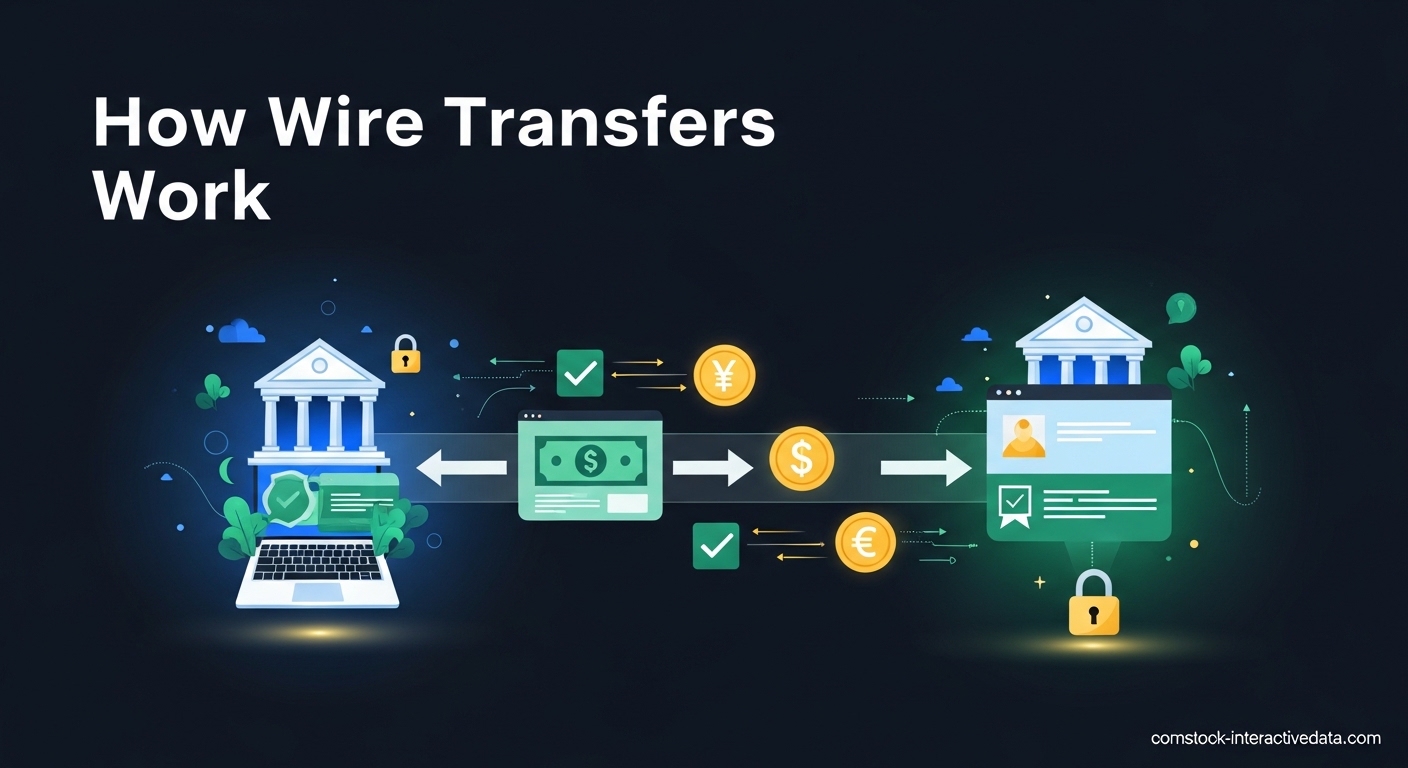
Wire transfers move money electronically between bank accounts without any physical cash changing hands. Understanding how wire transfers work helps you send large sums safely, whether you are paying for a home, funding a business deal, or sending money abroad. This guide breaks down the entire process into clear steps you can follow.
I have helped dozens of people navigate their first wire transfers over the past five years. The process seems intimidating until you understand what happens behind the scenes. Once you see the steps laid out, you will feel confident handling any wire transfer situation.
Table of Contents
What Is a Wire Transfer?
A wire transfer is an electronic funds transfer that moves money from one bank account to another through secure banking networks. Unlike writing a check or using a payment app, a wire transfer sends instructions between banks to adjust account balances directly. No physical money ever travels between locations.
The term “wire transfer” dates back to when banks literally sent instructions over telegraph wires. Today, the same principle applies using modern electronic networks. Banks communicate securely to debit the sender’s account and credit the recipient’s account almost instantly.
Two main networks handle most wire transfers. Domestic transfers within the United States use the Fedwire system operated by the Federal Reserve. International transfers use the SWIFT network, which connects banks across 200 countries and territories worldwide.
When Should You Use a Wire Transfer?
Wire transfers work best when you need to move large amounts quickly and securely. Real estate closings often require wire transfers for down payments because the funds must be available immediately. Business transactions frequently use wires when paying international suppliers.
Personal situations also call for wires. You might wire money to help family members in another country or pay for a vehicle purchased from a distant seller. The key advantage is certainty. Once a wire transfer completes, the money is available. There is no waiting for checks to clear.
How Wire Transfers Work: A Step-by-Step Guide
The wire transfer process follows a clear sequence from initiation to completion. Each step builds on the previous one to ensure your money reaches the right destination safely. Here is exactly how wire transfers work from start to finish.
Step 1: Determine Whether You Need a Domestic or International Transfer
The first decision affects everything that follows. Domestic wire transfers stay within the same country and use different networks than international transfers. Sending money from a New York bank to a California bank follows a completely different path than sending money to Germany or Japan.
Domestic transfers typically process faster and cost less. They use the Fedwire system or the Clearing House Interbank Payments System (CHIPS). International transfers require SWIFT codes and may pass through intermediary banks, adding time and potential fees.
Step 2: Gather All Required Recipient Information
Accuracy matters enormously in wire transfers. One wrong digit in an account number can send your money to the wrong person or cause expensive rejection fees. Collect every piece of information before starting the transfer process.
For domestic transfers, you need the recipient’s full name, bank name, bank account number, and routing number (also called ABA number). The routing number identifies the specific bank branch where the account sits.
For international transfers, requirements expand. You need the recipient’s full name and address, their bank’s name and address, the SWIFT code (also called BIC code), and the recipient’s account number. Some countries also require an IBAN (International Bank Account Number). Certain transfers need intermediary bank details if no direct relationship exists between the sending and receiving banks.
Step 3: Access Your Bank’s Wire Transfer System
Most banks offer multiple ways to initiate wire transfers. Online banking platforms handle many domestic transfers directly through their websites or mobile apps. This option works 24 hours a day, though transfers initiated outside business hours may not process until the next business day.
For large transfers or international wires, banks often require in-person visits or phone verification. Some institutions set thresholds, such as requiring branch visits for transfers over $10,000. Call your bank ahead to confirm their specific policies and save yourself a wasted trip.
Step 4: Enter the Transfer Details
Whether online or in person, you will complete a wire transfer form with all the recipient information collected earlier. Double-check every entry before submission. Banks typically will not refund fees if you provide incorrect information that causes delays or rejections.
The form asks for the transfer amount, the recipient’s full banking details, and any reference information. Some transfers include a reference number or invoice number to help the recipient identify the payment purpose. This step helps both parties track the transaction.
Step 5: Review, Verify, and Authorize
Take time to verify every detail before authorizing the transfer. Compare the account numbers and routing codes against your source documents. Small errors create big problems. A single transposed digit can route your money to a stranger’s account.
Authorization methods vary by bank and transfer size. Smaller transfers might need only online login credentials. Larger transfers often require two-factor authentication, phone callbacks, or in-person signatures. These security measures protect against fraud and unauthorized transactions.
Step 6: Your Bank Processes the Request
Once authorized, your bank verifies that sufficient funds exist in your account. They may also verify your identity again depending on the amount. The bank then prepares the transfer message containing all payment instructions.
Your bank debits your account immediately for the transfer amount plus any fees. This deduction happens even though the recipient has not received the money yet. The funds are effectively reserved for the transfer, ensuring the money remains available when the transaction completes.
Step 7: The Transfer Travels Through the Banking Network
Now the technical magic happens. For domestic transfers, your bank sends a secure message through the Fedwire system. This network connects all Federal Reserve member banks in real time. The message includes instructions to move funds from your bank to the recipient’s bank.
International transfers use the SWIFT network. Your bank sends a SWIFT message (specifically an MT103 message for customer payments) to the recipient’s bank. If the banks do not have a direct relationship, the message routes through one or more intermediary banks. Each intermediary may deduct a small fee and can add processing time.
The settlement process differs between systems. Fedwire transfers settle immediately. The Federal Reserve adjusts the reserve accounts of both banks instantly. International SWIFT transfers may take longer because settlement depends on correspondent banking relationships and currency conversion processes.
Step 8: The Recipient Receives the Funds
Once the recipient’s bank receives the transfer message, they credit the recipient’s account. For domestic transfers, this often happens within hours. International transfers may take one to five business days depending on time zones, intermediary banks, and currency conversion requirements.
The recipient bank may hold funds temporarily for verification, especially for large amounts. They also check for compliance with anti-money laundering regulations. If anything seems suspicious, the bank may delay the deposit while investigating.
Both sender and recipient typically receive confirmation once the transfer completes. The sender sees a confirmation number. The recipient sees the deposit in their account, often with a reference number linking back to the original transfer.
Domestic vs International Wire Transfers
Understanding the differences between domestic and international wire transfers helps you choose the right method and set proper expectations. Each type serves different purposes with distinct requirements, timing, and costs.
| Feature | Domestic Wire | International Wire |
|---|---|---|
| Network Used | Fedwire or CHIPS | SWIFT |
| Required Codes | Routing Number (ABA) | SWIFT/BIC Code, IBAN |
| Processing Time | Same business day | 1-5 business days |
| Average Fee | $15-$30 | $35-$75 |
| Intermediary Banks | Rarely needed | Often required |
| Currency Conversion | Not applicable | Required |
| Regulatory Checks | Standard | OFAC screening |
Domestic Wire Transfers
Domestic wires move money within the same country. In the United States, these transfers use the Fedwire Funds Service, operated by the Federal Reserve Banks. The system processes transactions in real time during business hours.
You need the recipient’s routing number and account number. The routing number is a nine-digit code identifying the specific bank and branch. You can find routing numbers on checks, bank websites, or by calling the bank directly.
Cutoff times matter for domestic transfers. Banks set daily deadlines for same-day processing. A transfer initiated after 2:00 PM might not process until the next business day. Weekends and federal holidays also delay processing since Fedwire operates only on business days.
International Wire Transfers
International wires cross borders and often involve currency conversion. The SWIFT network handles most international bank-to-bank transfers. SWIFT stands for Society for Worldwide Interbank Financial Telecommunication, though the network now operates simply as SWIFT.
You need additional information for international transfers. The SWIFT code (also called BIC) identifies the recipient’s bank globally. IBANs replace regular account numbers in many European and Middle Eastern countries. Some transfers require intermediary bank details when the sending and receiving banks lack direct relationships.
International transfers face more regulatory scrutiny. United States banks screen international wires against Office of Foreign Assets Control (OFAC) sanctions lists. Transfers to certain countries or individuals may be blocked or delayed for compliance review. This screening protects against money laundering and terrorist financing but can add unexpected delays.
Wire Transfer Fees and Costs
Wire transfer fees frustrate many users. Unlike free payment apps or low-cost ACH transfers, wires carry significant fees that add up quickly for frequent users. Understanding the fee structure helps you minimize costs and avoid surprises.
Outgoing Wire Fees
Sending a wire transfer costs money at virtually every bank. Domestic outgoing wires typically range from $15 to $30 per transaction. Some online banks charge less, while traditional brick-and-mortar banks often charge more. Premium bank accounts sometimes include free outgoing wires as a perk.
International outgoing wires cost more, usually $35 to $75 per transfer. The higher fees reflect the additional complexity, intermediary banks, and currency conversion involved. Some banks also charge a separate fee for the currency conversion itself, often as a percentage of the transfer amount.
Incoming Wire Fees
Receiving money via wire transfer sometimes incurs fees too. Many banks charge $15 to $20 for incoming domestic wires. International incoming wires may carry similar or slightly higher fees.
Not all banks charge incoming wire fees. Some online banks and credit unions offer free incoming wires as a competitive advantage. If you expect to receive frequent wire transfers, choosing a bank without incoming fees can save significant money over time.
Hidden Costs and Rejection Fees
Beyond obvious fees, other costs can surprise you. Intermediary banks handling international transfers may deduct processing fees from the transfer amount. Your recipient might receive less money than you sent without any clear explanation.
Rejection fees sting the most. If you provide incorrect information, the receiving bank may reject the transfer and charge a fee, often $25 to $50. Your sending bank may also charge a rejection fee. You pay for the mistake even though no money moved. Always verify recipient details carefully.
How to Reduce Wire Transfer Costs?
Several strategies help minimize wire transfer expenses. Sending larger amounts less frequently reduces per-transaction costs. Using the same bank as the recipient eliminates some domestic wire fees entirely. Some banks offer relationship pricing with reduced fees for customers with multiple accounts or large balances.
For international transfers, specialized services like Wise (formerly TransferWise) or OFX often charge less than traditional banks. These services use different mechanisms to move money across borders, sometimes avoiding SWIFT fees entirely. Compare total costs including exchange rate markups before choosing.
How Long Do Wire Transfers Take?
Timing expectations vary based on transfer type, timing, and banking relationships. Understanding realistic timelines helps you plan transactions and avoid unnecessary anxiety about delayed funds.
Domestic Wire Transfer Timing
Domestic wire transfers typically complete within the same business day if initiated before the bank’s cutoff time. Most banks set cutoff times between 2:00 PM and 4:00 PM local time. Transfers initiated after the cutoff process the next business day.
Weekends and holidays delay transfers. Since Fedwire operates only on business days, a Friday afternoon transfer might not complete until Monday. Federal holidays add additional delays. Plan accordingly for time-sensitive payments like real estate closings.
Same-bank transfers work faster. When both sender and recipient use the same bank, internal systems handle the transfer instantly regardless of business hours. These internal transfers may not technically be wire transfers but achieve the same result.
International Wire Transfer Timing
International transfers take longer, typically one to five business days. Several factors affect the timeline. Time zone differences mean a transfer sent Friday evening in New York arrives Saturday in Asia when banks are closed.
Intermediary banks add processing time. Each bank in the chain must receive, process, and forward the transfer message. Currency conversion also takes time, especially for exotic currencies with limited trading volume.
Regulatory screening causes unexpected delays. OFAC screening, anti-money laundering checks, and fraud prevention reviews can pause transfers for hours or days. Banks rarely notify you of these delays in advance.
Wire Transfer Limits
Most banks impose daily wire transfer limits for security and regulatory compliance. Personal accounts often have limits between $5,000 and $100,000 per day. Business accounts typically enjoy higher limits, sometimes reaching millions for established commercial relationships.
You can transfer $50,000 in one day at most major banks, though you may need to visit a branch or complete additional verification steps. Call your bank in advance for large transfers to ensure your limit accommodates the amount. Some banks allow temporary limit increases with proper notice and documentation.
Wire Transfer Security and Fraud Prevention
Wire transfers offer strong security through established banking networks and regulatory oversight. However, they also present unique fraud risks that users must understand and guard against.
Why Wire Transfers Are Generally Secure?
Bank-to-bank wire transfers travel through encrypted, private networks rather than the open internet. Fedwire and SWIFT use sophisticated security protocols to protect messages from interception or tampering. Banks authenticate both sender and recipient through established account relationships.
Regulatory oversight adds another layer of protection. United States banks must follow strict Know Your Customer (KYC) and Anti-Money Laundering (AML) regulations. International transfers undergo OFAC screening to prevent sanctioned parties from moving money. These requirements create accountability and traceability.
Once completed, wire transfers are irreversible. This feature protects recipients from chargebacks but also means senders must be absolutely certain before authorizing. Unlike credit card payments, you cannot dispute a wire transfer simply because you changed your mind.
Common Wire Transfer Fraud Schemes
Business Email Compromise (BEC) attacks target wire transfers specifically. Scammers compromise or spoof email accounts to send fraudulent payment instructions. Victims wire money to criminal-controlled accounts believing they are paying legitimate suppliers or vendors.
Real estate wire fraud has exploded in recent years. Scammers intercept closing communications and send fake wire instructions to homebuyers. Victims lose their entire down payment in seconds. The FBI estimates billions lost annually to this scheme alone.
Romance scams and lottery scams also use wire transfers. Scammers build trust with victims online, then request money via wire for supposed emergencies or processing fees. The anonymity of wire transfers makes recovery nearly impossible.
How to Protect Yourself from Wire Fraud?
Verify all wire instructions independently before sending. Call the recipient at a known phone number to confirm account details. Never trust wire instructions received solely through email, even from familiar contacts whose accounts may be compromised.
For real estate transactions, confirm closing instructions in person or through verified channels established early in the process. Do not act on last-minute changes without direct verbal confirmation from your title company or attorney.
Watch for red flags. Urgent requests, pressure to act immediately, or instructions to bypass normal procedures suggest fraud. Legitimate businesses rarely demand immediate wire transfers without proper documentation. When in doubt, pause and verify.
Common Wire Transfer Mistakes to Avoid
First-time wire transfer senders make predictable errors that cause delays, extra fees, or lost funds. Learning from others’ mistakes saves you money and stress.
Providing Incorrect Banking Information
The most common mistake involves simple data entry errors. Transposed digits in routing numbers or account numbers send money to the wrong destination. Some errors cause immediate rejection with fees. Others send money to strangers who may not return it.
Always double-check every number against official documents. Ask the recipient for a voided check or official bank letter showing their details. Do not rely on email signatures or informal communications that may contain typos.
Missing Intermediary Bank Details
International transfers sometimes require intermediary banks that maintain relationships between the sending and receiving institutions. Missing this information causes delays or rejections. Ask your bank whether intermediary details are needed for your specific international transfer.
Currency issues also trip up senders. Specify whether you are sending US dollars or foreign currency. The wrong choice can trigger unexpected conversion fees or cause the transfer to bounce if the recipient’s account cannot hold the specified currency.
Ignoring Daily and Per-Transaction Limits
Attempting transfers above your daily limit causes immediate rejection. Know your bank’s limits before initiating large transfers. Some banks allow limit increases with advance notice. Others require branch visits for high-value wires.
Multiple transfers in one day can also trigger holds. Sending several wires approaching your daily limit may flag fraud monitoring systems. If you need to move substantial sums, plan across multiple days or contact your bank to inform them of your plans.
Frequently Asked Questions
How long does a $10,000 wire transfer take?
A $10,000 domestic wire transfer typically completes within the same business day if initiated before the bank’s cutoff time (usually 2:00 PM to 4:00 PM). International wire transfers of the same amount take 1 to 5 business days depending on the destination country, intermediary banks, and currency conversion requirements.
How exactly does a wire transfer work?
A wire transfer works by sending electronic instructions between banks through secure networks like Fedwire (domestic) or SWIFT (international). The sender provides recipient banking details, authorizes the transfer, and their bank debits their account. The receiving bank then credits the recipient’s account based on the instructions received.
Can I transfer $50,000 in one day?
Yes, most major banks allow $50,000 wire transfers in one day, though you may need to complete additional verification steps or visit a branch in person. Personal accounts often have daily limits between $5,000 and $100,000. Contact your bank in advance for large transfers to ensure your specific limit accommodates the amount.
Does Sofi accept wire transfers?
Yes, Sofi accepts both incoming and outgoing wire transfers. Sofi Bank customers can send domestic wire transfers through the mobile app or website, though international wires may require phone assistance. Incoming wires to Sofi accounts are typically free, while outgoing domestic wires may carry a fee depending on your account type.
Are wire transfers reversible?
No, wire transfers are generally not reversible once completed. The immediate, irrevocable nature of wire transfers makes them secure for recipients but risky for senders. If you make an error or fall victim to fraud, contact your bank immediately. Recovery is possible only if the receiving bank has not yet released the funds.
What happens if a wire transfer fails?
If a wire transfer fails due to incorrect information, the receiving bank rejects the transfer and returns the funds to the sender. Both banks may charge rejection fees, typically $25 to $50 each. The sender must correct the information and resubmit the transfer, paying new fees. Funds usually return within 3 to 5 business days.
Conclusion
Understanding how wire transfers work empowers you to move money confidently when the situation demands speed and certainty. The process breaks down into clear steps. Determine your transfer type, gather accurate recipient information, submit through your bank’s system, verify every detail, and authorize the transaction. Your bank handles the technical routing through Fedwire or SWIFT networks.
Wire transfers remain essential for large transactions where other payment methods fall short. Real estate purchases, business supplier payments, and international transfers all benefit from wire transfer security and immediacy. The fees are significant but justified when time and certainty matter most.
Protect yourself by verifying recipient information independently and watching for fraud warning signs. Double-check every digit before authorizing. Once you send a wire, the money moves quickly and permanently. With the knowledge from this guide, you can handle wire transfers safely and effectively for any financial need in 2026 and beyond.