
When we applied for our first mortgage, my partner and I thought our credit scores were the only number that mattered. We were wrong. The lender immediately asked about our debt-to-income ratio, and suddenly we realized there was an entirely different metric we had never tracked. That conversation changed how we approach personal finance entirely.
Your debt-to-income ratio (DTI) is one of the most important numbers in your financial life, yet most people have never calculated it. This ratio tells lenders how much of your monthly income goes toward debt payments, and it plays a massive role in whether you qualify for loans, mortgages, and even rental applications. Understanding your DTI can mean the difference between approval and denial, between favorable interest rates and expensive ones.
In this guide, we’ll walk through exactly what debt-to-income ratio means, how to calculate it, what counts as a good DTI, and practical steps you can take to improve yours. By the end, you’ll have a clear picture of where you stand and what to do next.
Table of Contents
What Is Debt-to-Income Ratio?
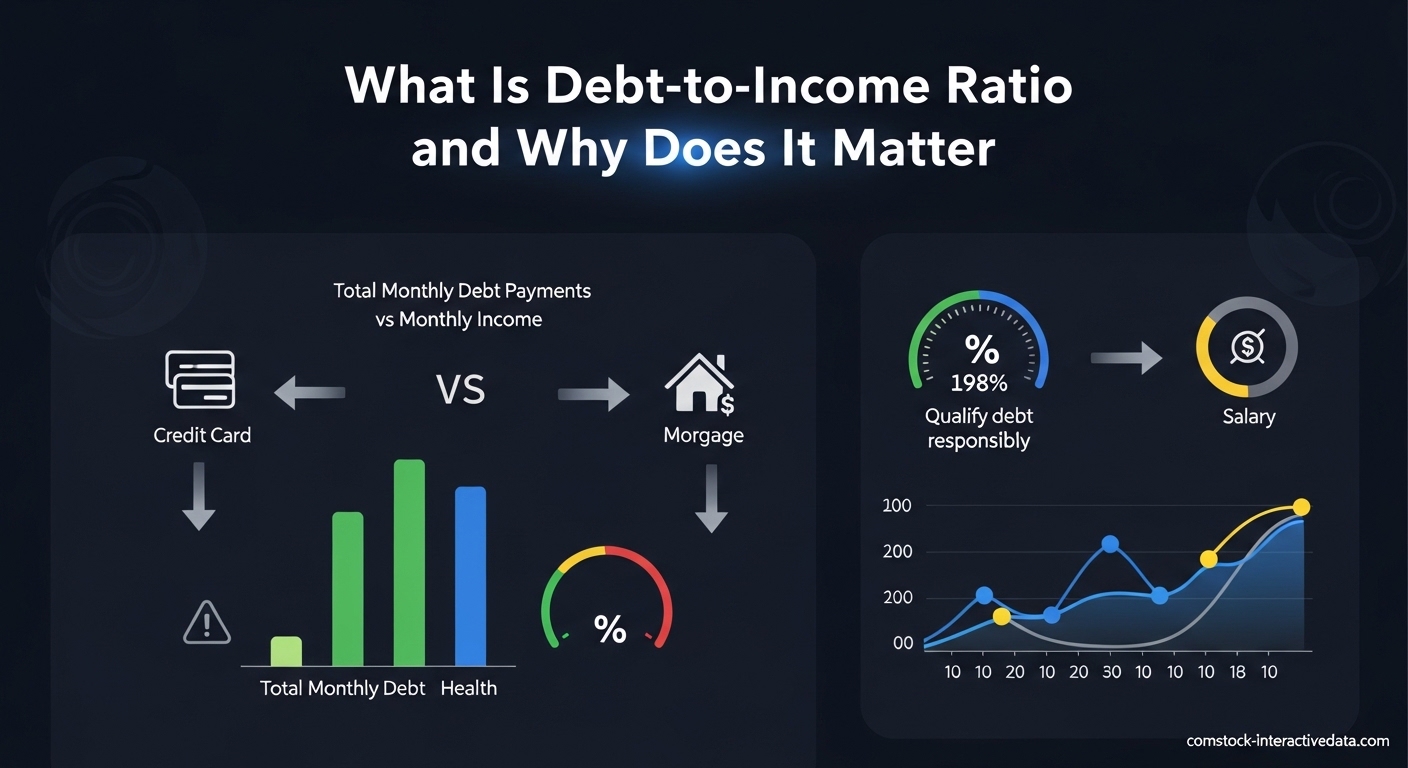
Your debt-to-income ratio compares your monthly debt payments to your gross monthly income. The formula is straightforward: divide your total monthly debt payments by your gross monthly income, then multiply by 100 to get a percentage.
The debt-to-income ratio gives lenders a snapshot of how much of your income is already committed to existing debt obligations. A lower DTI suggests you have plenty of room in your budget to take on additional loan payments. A higher DTI signals that you may be stretched thin financially.
For example, if you earn $5,000 per month before taxes and have $1,500 in monthly debt payments, your DTI ratio would be 30%. That means 30% of your gross income goes toward debt service.
How to Calculate Your Debt-to-Income Ratio?
Calculating your DTI takes about five minutes once you gather the right numbers. Here is the step-by-step process our team uses when helping clients understand their financial picture.
Step 1: Add Up All Monthly Debt Payments
Start by listing every debt payment you make each month. This includes mortgage or rent, auto loans, student loans, credit card minimum payments, personal loans, and any other recurring debt obligations.
Do not include regular expenses like groceries, utilities, gas, or streaming subscriptions. These are not debt payments. Only include minimum payments on credit cards, not the full balance you might pay to avoid interest.
For instance, imagine you have a car payment of $400, student loans at $300 per month, and a credit card minimum payment of $75. Your total monthly debt payments would be $775.
Step 2: Determine Your Gross Monthly Income
Next, calculate your gross monthly income. This is your total income before any taxes, deductions, or withholdings are taken out.
Include all sources of income: salary, wages, bonuses, commissions, alimony received, rental income, or any side business income. If you are salaried, simply take your annual salary and divide by 12.
For example, if your annual salary is $72,000, your gross monthly income would be $6,000. Do not use your take-home pay (net income) in this calculation, because lenders specifically want to see your gross income figure.
Step 3: Apply the DTI Formula
Now divide your total monthly debt payments by your gross monthly income, then multiply by 100.
Using our example numbers: $775 in debt payments divided by $6,000 gross income equals 0.129. Multiply by 100, and your DTI ratio is 12.9%, rounded to 13%.
This calculation works whether you are looking at an individual DTI or a household DTI. For household calculations, simply add both partners’ gross incomes and both partners’ debt payments together before dividing.
What Is a Good Debt-to-Income Ratio?
Lenders categorize DTI ratios into ranges that indicate different risk levels. Understanding where you fall helps you know what to expect when applying for credit.
The Golden Rule: 36% or Less
The general guideline we follow is simple: keep your DTI at 36% or below. This is what most lenders consider the threshold for a healthy financial profile. At this level, you have sufficient income left over after debt payments to cover living expenses, emergencies, and savings.
Consumer finance experts often suggest aiming for a consumer DTI below 10% of gross income for optimal financial health. This is particularly important if you plan to apply for a major loan like a mortgage in the near future.
Front-End vs Back-End DTI
There are actually two different DTI calculations that lenders use. Understanding the difference matters, especially when applying for a mortgage.
Front-end DTI only considers housing-related costs: mortgage payments, property taxes, homeowners insurance, and HOA fees. This is sometimes called the housing ratio. Back-end DTI includes all debt obligations: housing costs plus car loans, student loans, credit cards, personal loans, and any other debt.
For conventional mortgages, lenders typically want your front-end DTI to be 28% or less and your back-end DTI to be 36% or less. FHA loans are more flexible, allowing back-end DTI up to 43% in some cases, and certain government-backed loans can go even higher with special approval.
DTI Thresholds by Loan Type
Different loan products have different DTI requirements. Here is what we typically see across common loan types:
Conventional loans usually max out at 43% for the back-end ratio. This is the maximum for a qualified mortgage, which offers certain legal protections for borrowers. FHA loans can go up to 50% in some cases, making them more accessible for buyers with existing debt. VA loans often allow higher ratios on a case-by-case basis. Auto loans and personal loans vary widely, but most lenders prefer to see DTI below 40%.
Why Lenders Care About Your DTI?
Lenders use your debt-to-income ratio as a risk assessment tool. They want to ensure you can comfortably manage your monthly payments throughout the life of the loan.
When your DTI is low, it signals that you have breathing room in your budget. Even if unexpected expenses come up, you are more likely to keep making your payments on time. When your DTI is high, lenders worry that any financial shock could push you into default.
Your DTI also affects how much lenders are willing to let you borrow. A lender might technically approve you for a certain loan amount, but if your DTI would be too high with that payment, they may reduce the approved amount or offer less favorable terms.
We have seen firsthand how this works. A client with excellent credit but a 45% DTI was approved for a smaller mortgage than someone with slightly lower credit but a 32% DTI. The lower DTI told the lender there was more room to absorb potential rate changes or income disruptions.
DTI vs Credit Score: What’s the Difference?
Many people confuse these two metrics, but they measure entirely different things. Your credit score reflects how you have handled credit in the past, while your DTI ratio measures your current debt burden relative to income.
Credit scores look at factors like payment history, credit utilization, length of credit history, and types of credit. A high credit score means you have a strong track record of managing credit responsibly.
Your DTI ratio does not appear on your credit report at all. It is calculated fresh each time you apply for a loan, using your current income and debt information. This is why you can have an excellent credit score but a problematic DTI, or vice versa.
Lenders typically look at both numbers together. Strong credit with a manageable DTI suggests a reliable borrower. Even with perfect credit, a very high DTI can result in loan denial or much higher interest rates.
How to Lower Your Debt-to-Income Ratio?
If your DTI is higher than you would like, there are proven strategies to bring it down. The approach you choose depends on your timeline and financial situation.
Pay Down Existing Debt
The most direct way to lower your DTI is to reduce what you owe. Focus on paying off debts with the highest monthly payments first, a strategy sometimes called the avalanche method. Each time you eliminate a debt payment entirely, your DTI drops immediately.
Even making extra payments on existing debts can help over time, though the impact on DTI will be smaller until the debt is fully paid off.
Increase Your Income
Your DTI ratio changes when either side of the equation shifts. Raising your income has the same effect on your DTI as paying down debt. Consider asking for a raise, taking on freelance work, selling items you no longer need, or starting a side business.
An extra $500 per month in income on a $6,000 salary would drop a 40% DTI to about 32%, for example. That could be the difference between approval and denial for a mortgage.
Avoid New Debt Before Major Purchases
If you are planning to apply for a mortgage or major loan, avoid taking on new debt in the months leading up to your application. This includes financing furniture, buying a new car, or opening new credit cards.
Lenders pull your credit report and calculate your DTI at the time of application. Any new debt shows up immediately and can push your DTI higher right when you need it lowest.
Refinance or Consolidate
Refinancing existing loans can sometimes lower your monthly payments, which reduces your debt-to-income ratio. This works particularly well for high-interest debt like credit cards, though you need to be careful not to extend the loan term so much that you end up paying more interest overall.
Student loan refinancing, auto loan refinancing, and balance transfer cards are common tools people use to restructure debt and improve their DTI ratio.
Frequently Asked Questions
Is a 42% debt-to-income ratio bad?
A 42% DTI ratio is considered high by most lenders. While it may not automatically disqualify you for certain loans like FHA, it will limit your borrowing options and likely result in higher interest rates. For conventional mortgages, lenders prefer DTI at 36% or below. If your DTI is 42%, focus on paying down existing debts or increasing income before applying for major loans.
Is a lower DTI always better?
Generally, a lower DTI indicates better financial health and borrowing capacity. However, having an extremely low DTI does not automatically make you a better borrower. Lenders also want to see that you have some debt management experience. The sweet spot is typically between 20% and 36%, which demonstrates responsible borrowing while still showing you can handle debt payments.
Does rent count in debt-to-income ratio?
Yes, your monthly rent or mortgage payment counts in your DTI calculation. For renters, this is typically your largest monthly debt obligation. For homeowners, mortgage principal, interest, property taxes, and insurance all factor into your front-end DTI calculation.
Are utilities included in debt-to-income ratio?
No, utilities such as electric, gas, water, internet, and phone services are not included in your DTI calculation. These are considered regular living expenses, not debt obligations. Only minimum required payments on loans, credit cards, mortgages, and similar debt products count toward your DTI ratio.
What debt-to-income ratio do I need to buy a house?
For conventional mortgages, most lenders prefer a DTI of 36% or less, with a maximum of 43%. FHA loans can allow DTI up to 50% in some cases with compensating factors like higher credit scores or larger down payments. Keep in mind that your DTI is only one factor lenders consider. Your credit score, down payment, and loan type all influence approval decisions.
Conclusion
Your debt-to-income ratio is a powerful number that influences major financial decisions, from mortgage approvals to interest rates. Understanding where you stand gives you a clear path forward, whether that means paying down existing debts, increasing your income, or simply being strategic about when you apply for new credit.
We recommend calculating your DTI today using the steps outlined above. It takes just a few minutes, and you might be surprised at what you find. If your DTI is above 36%, start with small steps: pay off one debt, add a side income stream, or avoid taking on new obligations before a major purchase.
The good news is that unlike credit scores, which take months to improve, your DTI ratio can change quickly once you start making progress on your debt. Track it regularly, and you will be in a much stronger position when it comes time to borrow.