
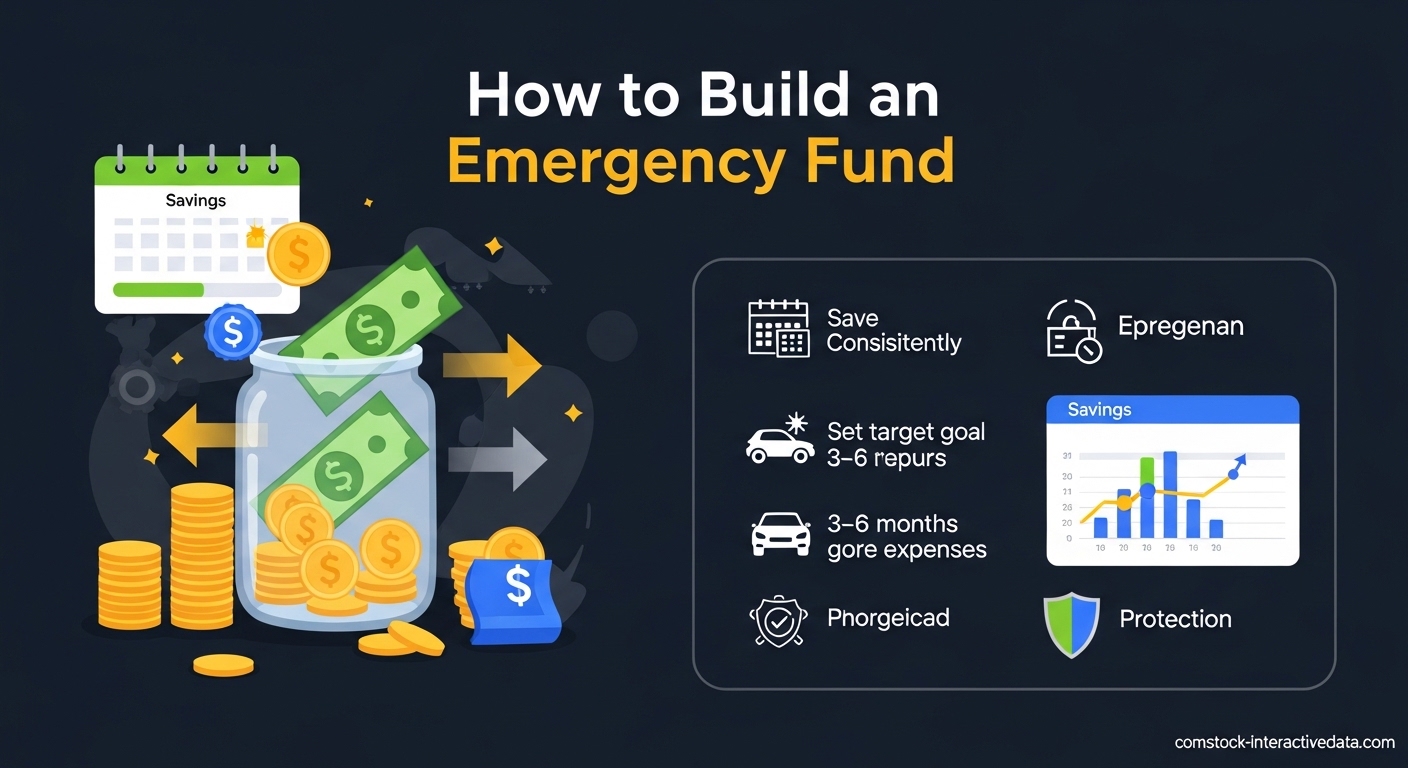
Learning how to build an emergency fund step by step is one of the most important financial skills you can master. An emergency fund is money set aside in a dedicated savings account to cover unexpected expenses or financial emergencies like medical bills, car repairs, or job loss. Without this financial safety net, even minor setbacks can spiral into debt and financial stress.
I have helped hundreds of people build their first emergency fund over the past decade, and I have seen how life-changing it can be. In this guide, you will learn exactly how much to save, where to keep your money, and the proven step-by-step process to build your fund quickly. Whether you are starting from zero or trying to grow an existing fund, these strategies work.
Table of Contents
What Is an Emergency Fund?
An emergency fund is a pool of cash reserved specifically for unplanned expenses that you cannot cover with your regular budget. It serves as a buffer between you and financial disaster when life throws you a curveball.
Financial experts distinguish between two types of financial shocks that your emergency fund should cover. Spending shocks are one-time unexpected expenses like a car repair, medical bill, or broken appliance. Income shocks happen when your regular income stops or decreases significantly, such as job loss, layoffs, or reduced hours.
Your emergency fund should consist of liquid assets that you can access quickly without penalties. This means keeping the money in an account where you can withdraw it within 24 to 48 hours. The key is accessibility combined with enough separation from your daily spending account to avoid temptation.
Why You Need an Emergency Fund?
An emergency fund prevents you from going into debt when unexpected expenses arise. According to recent studies, over 60 percent of Americans could not cover a $1,000 emergency without borrowing money. When you have cash set aside, you can handle surprises without reaching for credit cards or loans.
Beyond the financial protection, an emergency fund provides genuine peace of mind. Knowing you have money available for emergencies reduces stress and anxiety about the future. You can make better long-term decisions about your career and life when you are not constantly worried about the next unexpected bill.
Your emergency fund also protects your other financial goals. Without one, you might need to raid your retirement account, sell investments at a loss, or abandon your savings goals when trouble hits. This buffer keeps your long-term plans on track even during short-term setbacks.
How Much Should You Save? The 3/6/9 Rule Explained
The 3/6/9 rule provides a simple framework for determining how much you need in your emergency fund. This rule helps you calculate the right amount based on your personal situation rather than using generic advice.
3 Months: If you are single with a stable job, no dependents, and low monthly expenses, aim for three months of essential expenses. This is the minimum recommended for anyone with regular bills.
6 Months: If you have dependents, own a home, are the sole breadwinner, or work in an industry with moderate job instability, target six months of expenses. This is the standard recommendation for most families.
9 Months or More: If you are self-employed, work on commission, have irregular income, or work in a high-risk industry with frequent layoffs, consider saving nine to twelve months of expenses. The extra cushion provides security during income fluctuations.
To calculate your specific target, add up your essential monthly expenses. Include housing, utilities, food, transportation, minimum debt payments, insurance, and any other non-negotiable costs. Multiply this total by your chosen multiplier (3, 6, or 9) to get your target emergency fund amount.
For example, if your essential monthly expenses total $3,500 and you need six months of coverage, your target would be $21,000. Is $10,000 a decent emergency fund? It depends entirely on your monthly expenses. For someone spending $1,500 monthly, $10,000 covers over six months. For someone spending $5,000 monthly, it covers just two months.
Where to Keep Your Emergency Fund?
The right account for your emergency fund balances accessibility with earning potential. You need quick access to your money, but you also want it working for you while it sits.
High-Yield Savings Accounts: These are the most popular choice for emergency funds. They offer much higher interest rates than traditional savings accounts while keeping your money accessible within one to two business days. Most online banks offer rates significantly better than brick-and-mortar institutions, and your money stays FDIC insured.
Money Market Accounts: These accounts typically offer competitive rates similar to high-yield savings and may include check-writing privileges or debit card access. They are also FDIC insured and provide the liquidity you need for emergencies.
Certificate of Deposit (CD): While CDs offer higher interest rates, they lock your money away for a specific term. Breaking a CD early usually means paying penalties. If you choose this route, consider a CD ladder strategy where you have multiple CDs maturing at different times.
What to Avoid: Do not keep your emergency fund in your regular checking account where it mixes with daily spending money. Avoid the stock market because volatility means your balance could drop right when you need it. Also avoid retirement accounts because early withdrawals trigger taxes and penalties.
How to Build an Emergency Fund Step by Step?
Building an emergency fund is simpler than most people think. Follow these eight steps to create your financial safety net systematically.
Step 1: Calculate Your Monthly Expenses
Start by reviewing your bank and credit card statements from the past three months. List every essential expense you cannot cut during a financial crisis. This includes rent or mortgage, utilities, groceries, transportation, insurance, minimum debt payments, and phone bills.
Be honest about what is truly essential. Netflix subscriptions, gym memberships, and dining out do not belong in this calculation. Focus only on what you absolutely need to survive and maintain basic obligations during an emergency.
Step 2: Set Your Target Amount
Using the 3/6/9 rule, decide how many months of expenses you need based on your situation. Multiply your monthly essential expenses by your chosen multiplier to determine your full emergency fund target.
Do not let a large target discourage you. Most people find that breaking the goal into smaller chunks makes it achievable. If your full target is $15,000, start by focusing on your first $1,000, then $3,000, and build from there.
Step 3: Open a Dedicated Savings Account
Your emergency fund needs its own account, separate from your daily checking. This separation reduces temptation to spend the money and helps you track progress clearly.
Choose a high-yield savings account at an online bank or credit union. Look for no monthly fees, competitive interest rates, and easy online transfers to your checking account. Having it at a different institution from your checking account adds an extra layer of separation.
Step 4: Set Smaller Milestone Goals
Large goals feel overwhelming, so break your target into achievable milestones. Start with $500, then $1,000, then one month of expenses, and continue building.
Celebrating these smaller wins keeps you motivated. Every milestone reached means you can handle more emergencies without borrowing money. The first $1,000 covers most minor car repairs or medical deductibles. Three months of expenses covers most job transitions.
Step 5: Automate Your Savings
Automation is the secret weapon of successful emergency fund builders. Set up automatic transfers from your checking account to your emergency savings on every payday.
Even small amounts add up quickly with consistency. $50 per week becomes $2,600 in one year. $100 per week becomes $5,200. By automating, you remove the decision-making process and ensure consistency even during busy or stressful times.
If your employer offers direct deposit splitting, have a portion of your paycheck go directly to your emergency fund. This makes saving painless since you never see the money in your checking account.
Step 6: Start with Small, Consistent Contributions
Do not wait until you have extra money to start saving. Begin with whatever amount you can manage right now, even if it is just $10 or $20 per week.
Consistency matters more than amount in the beginning. Building the habit of regular saving is more valuable than the dollars themselves early on. Once the habit is established, you can increase contributions as your budget allows.
Step 7: Use Windfalls Wisely
Tax refunds, work bonuses, gift money, and proceeds from selling unused items can accelerate your emergency fund growth significantly. Instead of spending these windfalls, direct them straight to your savings.
I have seen people build their entire emergency fund in one year simply by directing their tax refund and annual bonus toward savings. This approach lets you reach your goal faster without cutting your regular budget.
Step 8: Track Progress and Adjust
Review your emergency fund balance monthly. Watch it grow and celebrate milestones along the way. If you find extra money in your budget, increase your automatic transfer amount.
Life changes may require adjustments. If you get a raise, increase your savings rate. If you have a child or buy a home, recalculate your target using the 3/6/9 rule and adjust accordingly.
How to Build an Emergency Fund Fast?
Sometimes you need to build your fund quickly due to an upcoming life change or recent financial scare. While slow and steady works for most people, these strategies can accelerate your progress.
Can you save $10,000 in three months? For most people, this requires significant lifestyle changes or additional income. You would need to save over $3,300 monthly, which is not realistic on an average income without major changes. A more realistic fast-track goal is six to twelve months for a full emergency fund.
Temporarily reduce discretionary spending to the bare minimum. Pause dining out, subscription services, entertainment, and non-essential shopping for a few months. Redirect every possible dollar to your emergency fund.
Consider generating extra income through side work, selling unused items, or picking up overtime at your current job. Even an extra $200 weekly from side income gets you to over $10,000 in three months when combined with reduced spending.
Some people temporarily pause retirement contributions to build their emergency fund faster. While controversial, having three to six months of accessible savings can be more important than retirement contributions if you have no safety net. Once your emergency fund is established, resume retirement savings immediately.
Common Mistakes to Avoid
Building an emergency fund is straightforward, but several common mistakes can derail your progress or reduce your fund’s effectiveness.
Keeping It Too Accessible: When your emergency fund sits in your main checking account, it becomes too easy to spend on non-emergencies. Keep it at a separate bank to add friction between you and impulse spending.
Investing Your Emergency Fund: The stock market is too volatile for emergency savings. You cannot afford to have your balance drop 20 percent right when you lose your job. Keep emergency funds in safe, insured accounts.
Using It for Non-Emergencies: Define what constitutes a true emergency before you start saving. Vacations, holiday gifts, and routine car maintenance do not qualify. If you would not take a loan to pay for it, it is not an emergency.
Stopping Contributions After Reaching Your Goal: An emergency fund is not a one-and-done project. If you use it, you must rebuild it. Even when full, continue small contributions to cover inflation and occasional withdrawals.
Not Replenishing After Use: If you need to tap your emergency fund, make replenishing it your top financial priority. Pause discretionary spending and redirect all extra money to rebuilding the fund before returning to normal savings patterns.
When to Use Your Emergency Fund?
Having clear criteria for using your emergency fund prevents the slow drain that happens when people dip into savings for non-essentials. Set your rules now while you are not facing pressure.
A true emergency is an unexpected necessary expense that you cannot cover with your regular budget and that affects your health, safety, or ability to earn income. Job loss, medical emergencies, essential home repairs, and necessary car repairs qualify.
What does not qualify? Planned expenses like annual insurance premiums, holiday spending, or routine maintenance. Things you want but do not need, like upgrading to a nicer car or taking a vacation. And expenses you could cover by cutting discretionary spending for a month or two.
The key question to ask: would you be willing to take a high-interest loan to pay for this? If the answer is no, it is probably not a true emergency worth touching your fund.
How to Rebuild After Using Your Emergency Fund?
Using your emergency fund is not a failure. It means the system worked exactly as designed. The important thing is rebuilding it promptly so you are ready for the next unexpected event.
Do not get discouraged if you need to drain your fund. Many people face this situation, especially early in their savings journey. The fund did its job protecting you from debt and financial disaster.
Resume contributions immediately after the emergency passes. Treat rebuilding your fund as a non-negotiable priority, just like paying rent or utilities. Redirect any windfalls, bonuses, or tax refunds to get back to your target faster.
If the emergency was large, you may need to temporarily tighten your budget. Cut discretionary spending for a few months to accelerate the rebuild. Consider whether you need to adjust your target amount based on what you learned from the emergency.
Frequently Asked Questions
What is the 3 6 9 rule for emergency funds?
The 3/6/9 rule is a guideline for determining how much to save in your emergency fund. Save 3 months of expenses if you are single with a stable job. Save 6 months if you have dependents, own a home, or are the sole breadwinner. Save 9 or more months if you are self-employed, have irregular income, or work in a high-risk industry.
How to quickly build up an emergency fund?
Build an emergency fund fast by temporarily reducing discretionary spending, generating extra income through side work or selling unused items, and directing all windfalls like tax refunds straight to savings. Some people temporarily pause retirement contributions to accelerate emergency savings, then resume contributions once the fund is established.
Is $10,000 a decent emergency fund?
Whether $10,000 is enough depends on your monthly expenses. For someone spending $1,500 monthly, $10,000 covers over six months of expenses and is excellent. For someone spending $5,000 monthly, it covers only two months and may be insufficient. Calculate your essential monthly expenses and aim for 3 to 6 months of coverage.
Can you save $10,000 in 3 months?
Saving $10,000 in three months requires setting aside over $3,300 monthly. This is not realistic for most people on average incomes without major lifestyle changes or additional income sources. A more achievable fast-track goal is building an emergency fund over six to twelve months through consistent automated savings.
How long does it take to build an emergency fund?
Building an emergency fund typically takes six months to two years depending on your target amount and savings rate. Saving $200 monthly gets you to a $5,000 fund in about two years. Saving $500 monthly achieves the same goal in ten months. The key is consistent automated savings, not the speed.
Can you have too much in an emergency fund?
Yes, you can have too much in an emergency fund. Money beyond 6 to 12 months of expenses might earn better returns in retirement accounts or other investments. However, having extra emergency savings is only a problem if you are neglecting other goals like retirement savings or paying off high-interest debt.
What counts as a real emergency?
A real emergency is an unexpected necessary expense that affects your health, safety, or ability to earn income. Examples include job loss, medical emergencies, essential home repairs like a broken furnace, and necessary car repairs that prevent you from working. Planned expenses, wants, and costs you could cover by temporarily cutting discretionary spending do not qualify.
Should I invest my emergency fund?
No, you should not invest your emergency fund in the stock market or other volatile investments. Emergency funds need to be safe, accessible, and stable. Keep them in FDIC-insured high-yield savings accounts or money market accounts. The small amount of extra return from investing is not worth the risk of your balance dropping when you need it most.
Conclusion
Learning how to build an emergency fund step by step is one of the most empowering financial moves you can make. This financial safety net protects you from debt, reduces stress, and keeps your long-term goals on track when life gets unpredictable.
Start by calculating your essential monthly expenses and applying the 3/6/9 rule to set your target. Open a dedicated high-yield savings account, automate your contributions, and focus on consistency over speed. Even $25 per week gets you started, and you can increase contributions as your budget allows.
The most important step is the first one. Open that savings account today and make your initial deposit, no matter how small. Your future self will thank you when the inevitable emergency arises and you have the cash to handle it without financial devastation.