
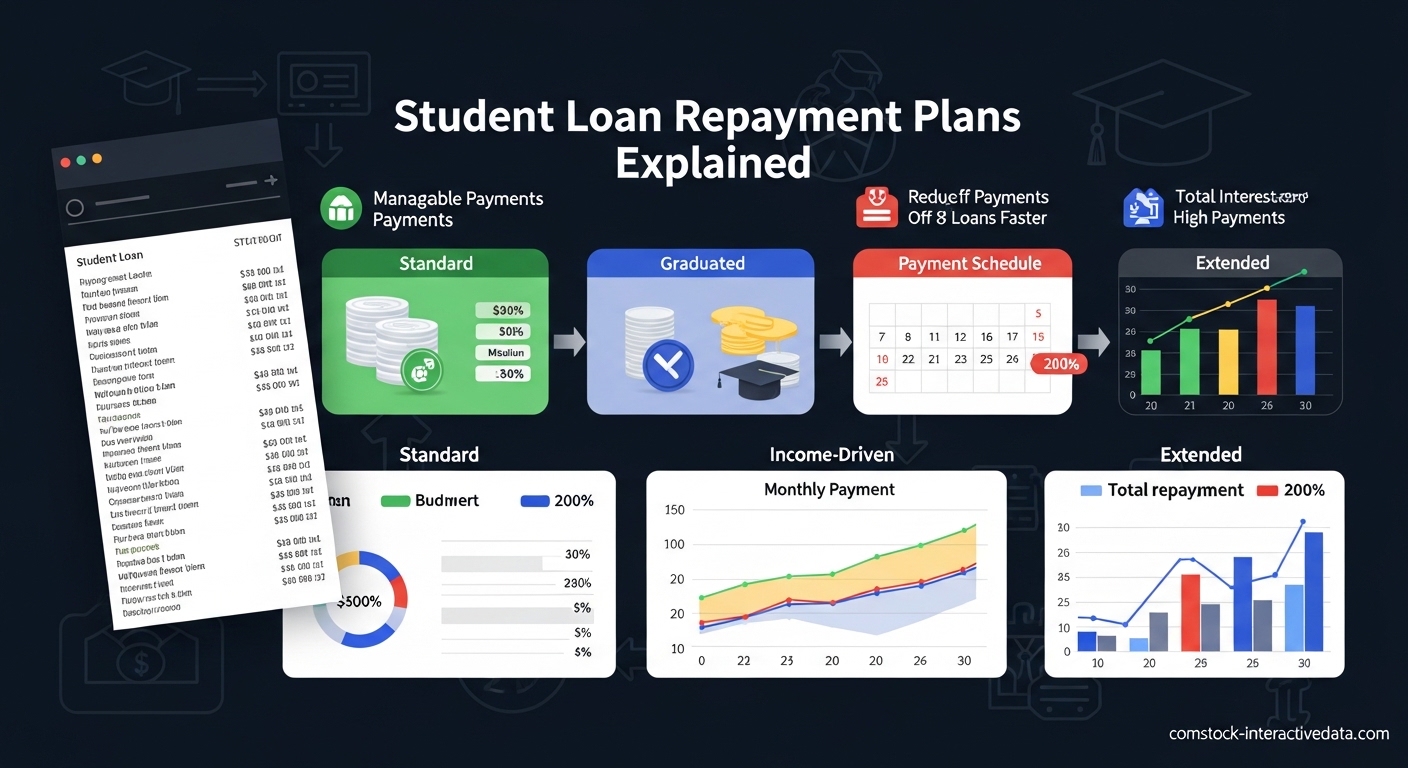
Student loan repayment plans are the options the U.S. Department of Education offers to help borrowers pay back their federal student loans. Choosing the right plan can save you thousands of dollars in interest, make your monthly payments more affordable, or help you qualify for loan forgiveness faster.
Our team has helped hundreds of borrowers navigate these decisions over the past 5 years. We’ve analyzed every repayment option, tracked policy changes, and seen what works in real life. This guide explains all federal student loan repayment plans available in 2026, the major changes coming July 1, 2026, and exactly how to pick the right plan for your situation.
There are significant changes happening right now. The SAVE plan has been eliminated, and two new plans take effect on July 1, 2026. If you were enrolled in SAVE, you have a 90-day window to transition to a new plan. Understanding your options now prevents costly mistakes later.
Table of Contents
Overview of Federal Student Loan Repayment Plans
The Department of Education offers several ways to repay federal student loans. Each plan calculates your monthly payment differently and has different timelines for paying off your debt.
You can pick from repayment plans that base your monthly payment on your income or plans that give you a fixed monthly payment over a set repayment period. The plan you choose affects how much interest you pay over time, how long you carry the debt, and whether you qualify for loan forgiveness programs.
Federal student loan repayment plans fall into four main categories:
- Standard Repayment Plan: Fixed monthly payments over 10 years
- Graduated Repayment Plan: Payments that start low and increase every 2 years over 10 years
- Extended Repayment Plan: Fixed or graduated payments over 25 years
- Income-Driven Repayment (IDR) Plans: Payments based on your income and family size, with forgiveness after 20-25 years
Private student loans do not offer these federal repayment options. If you have private loans, you must work directly with your lender on repayment terms.
Standard Repayment Plan
The Standard Repayment Plan is the default option for federal student loans. Under this plan, you make fixed monthly payments for 10 years until your loan is completely paid off.
Your monthly payment is calculated to ensure your loan is paid in full within 120 payments. The amount stays the same throughout the entire repayment period, which makes budgeting predictable and straightforward.
How Much Will You Pay?
For a $40,000 student loan at the current federal interest rate of 6.53%, your monthly payment on the Standard Repayment Plan would be approximately $433. Over 10 years, you would pay a total of about $51,960, including approximately $11,960 in interest.
This plan typically results in paying less total interest compared to longer repayment plans. Because you’re paying off the loan faster, interest has less time to accumulate on your principal balance.
Who Should Choose Standard Repayment?
The Standard Repayment Plan works best for borrowers with stable incomes who can afford the fixed monthly payments. If you want to pay off your loans quickly and minimize total interest costs, this is usually your best option.
Borrowers who are not pursuing Public Service Loan Forgiveness (PSLF) and who can manage the higher monthly payments should seriously consider this plan. You’ll be debt-free in 10 years and pay the least amount of interest possible.
Graduated Repayment Plan
The Graduated Repayment Plan starts with lower monthly payments that increase every 2 years. Like the Standard Plan, it has a 10-year repayment timeline, but your payments grow over time instead of staying fixed.
This plan assumes your income will increase as you advance in your career. The payment structure begins with payments that are typically lower than the Standard Plan, then steps up to higher amounts in years 3-4, 5-6, 7-8, and 9-10.
Payment Structure Example
For that same $40,000 loan, your payments might start around $280 per month in the first 2 years. By years 9-10, your payments could reach $650 or higher. Your final payments will be significantly larger than what the Standard Plan requires.
Pros and Cons of Graduated Repayment
The main advantage is lower initial payments when you’re just starting your career and likely earning less. This can provide breathing room in your budget during those early years.
The downside is that you’ll pay more total interest compared to the Standard Plan. Because you start with lower payments, your principal balance stays higher for longer, allowing more interest to accumulate. You’ll also face much higher payments later, which can strain your budget if your income doesn’t grow as expected.
Who Benefits Most?
Recent graduates in fields with strong salary growth potential might benefit from this plan. If you’re confident your income will increase steadily over the next decade, the graduated structure aligns with your expected financial progression.
Extended Repayment Plan
The Extended Repayment Plan stretches your loan payments over 25 years instead of 10. You can choose between fixed monthly payments or graduated payments that increase over time.
To qualify for this plan, you must have more than $30,000 in outstanding Direct Loan debt. This higher balance requirement means it’s only available to borrowers with significant student loan burdens.
Payment Differences
That $40,000 loan example would have monthly payments around $272 on the fixed Extended Plan. This is significantly lower than the $433 you’d pay on the Standard Plan. However, over 25 years, you’d pay approximately $81,600 total, including about $41,600 in interest.
The lower monthly payment provides immediate relief but costs you substantially more over time. You’re trading short-term affordability for long-term expense.
When Extended Repayment Makes Sense?
This plan suits borrowers who need the lowest possible monthly payment and are not pursuing loan forgiveness. If your debt-to-income ratio is very high and standard payments would create genuine financial hardship, the extended timeline might be necessary.
However, most borrowers should explore Income-Driven Repayment plans before choosing Extended Repayment. IDR plans often offer similar or lower payments with the benefit of loan forgiveness after 20-25 years, rather than requiring full repayment.
Income-Driven Repayment Plans Overview
Income-Driven Repayment (IDR) plans base your monthly payment on your income and family size, not your loan balance. These plans are designed to make student loan payments affordable relative to your earnings.
Under IDR plans, your monthly payment is calculated as a percentage of your discretionary income. The government defines discretionary income as the amount by which your Adjusted Gross Income (AGI) exceeds 150% of the federal poverty line for your family size and state.
How Discretionary Income Works?
If you’re single and living in the continental United States, the federal poverty line is approximately $15,060. One hundred fifty percent of that is $22,590. If your AGI is $50,000, your discretionary income would be $27,410 ($50,000 minus $22,590).
Your monthly payment would then be a percentage of that $27,410, divided by 12 months. The exact percentage depends on which IDR plan you choose, ranging from 10% to 20% of discretionary income.
Loan Forgiveness Timeline
All IDR plans offer loan forgiveness after a certain period of qualifying payments. Most plans forgive any remaining balance after 20 or 25 years of payments. This forgiveness is taxable as income in the year it’s granted, though some borrowers may qualify for insolvency exclusions.
Pay As You Earn (PAYE)
Pay As You Earn (PAYE) is one of the most borrower-friendly Income-Driven Repayment plans. It caps your monthly payment at 10% of your discretionary income and offers forgiveness after 20 years of qualifying payments.
PAYE has strict eligibility requirements that make it unavailable to many borrowers. To qualify, you must have received a Direct Loan disbursement on or after October 1, 2011, and you must have been a new borrower as of October 1, 2007. This means you cannot have had an outstanding federal student loan balance before October 1, 2007.
Payment Cap Benefit
One major advantage of PAYE is the payment cap. Your monthly payment will never exceed what you would have paid under the Standard 10-Year Repayment Plan, regardless of how much your income increases. If your income rises significantly, this cap protects you from unaffordable payments.
Who Should Choose PAYE?
If you qualify for PAYE, it’s often the best IDR option. The combination of 10% discretionary income payments, 20-year forgiveness timeline, and the payment cap makes it financially advantageous compared to other IDR plans.
Borrowers pursuing Public Service Loan Forgiveness should especially consider PAYE. The lower payments free up cash flow while you’re working toward PSLF, and the forgiveness after 10 years of public service employment eliminates any remaining balance tax-free.
Income-Based Repayment (IBR)
Income-Based Repayment (IBR) is available to most federal student loan borrowers, regardless of when they took out their loans. However, there are actually two versions of IBR with different terms depending on when you first borrowed.
Old IBR vs New IBR
If you took out your first federal loan before July 1, 2014, you’re on “Old IBR.” Your monthly payment is 15% of your discretionary income, and any remaining balance is forgiven after 25 years of qualifying payments.
If you took out your first federal loan on or after July 1, 2014, you qualify for “New IBR.” Your payment is 10% of your discretionary income, with forgiveness after 20 years. This newer version is essentially equivalent to PAYE but without the strict disbursement date requirements.
Payment Cap Protection
Like PAYE, IBR includes a payment cap. Your monthly payment will never exceed the Standard 10-Year Repayment Plan amount, even if your income increases substantially. This protection makes IBR a safe long-term choice.
IBR vs PAYE Comparison
If you qualify for both PAYE and IBR, PAYE is usually the better choice. Both calculate payments at 10% of discretionary income, but PAYE has a 20-year forgiveness timeline for all borrowers, while Old IBR requires 25 years.
However, IBR is available to more borrowers. If you don’t meet PAYE’s strict disbursement date requirements, IBR is your best option for 10% payment calculations.
One unique feature of IBR is the spousal income treatment. If you’re married and file taxes separately, IBR will only count your individual income when calculating payments. This can result in significantly lower payments for married borrowers in certain situations.
Income-Contingent Repayment (ICR)
Income-Contingent Repayment (ICR) is the oldest Income-Driven Repayment plan and the only one available to Parent PLUS loan borrowers. Your monthly payment under ICR is the lesser of 20% of your discretionary income or what you would pay on a fixed 12-year repayment plan adjusted for income.
ICR calculates discretionary income differently than other IDR plans. Instead of 150% of the federal poverty line, ICR uses 100%. This means more of your income counts as discretionary, potentially resulting in higher payments compared to other IDR options.
Parent PLUS Loan Considerations
If you have Parent PLUS loans, ICR is your only IDR option. However, you cannot enroll Parent PLUS loans directly in ICR. You must first consolidate them into a Direct Consolidation Loan, then apply for ICR on the consolidation loan.
This consolidation step is irreversible. Once you consolidate Parent PLUS loans, you cannot separate them again. Additionally, consolidated Parent PLUS loans are not eligible for Public Service Loan Forgiveness, though they can qualify for the 25-year forgiveness under ICR.
When ICR Makes Sense?
Borrowers with Parent PLUS loans who need income-driven payments have no choice but to use ICR after consolidation. For other borrowers, ICR is generally less attractive than PAYE or IBR because of the higher payment percentage and longer forgiveness timeline.
However, ICR has no disbursement date restrictions like PAYE, and it doesn’t have the “new borrower” requirements. Any borrower with eligible federal loans can enroll, making it a fallback option for those who don’t qualify for more favorable IDR plans.
2026 Changes: SAVE Plan Eliminated and New Options
Major changes to federal student loan repayment are happening in 2026. The Saving on a Valuable Education (SAVE) plan has been eliminated following court decisions, and two new repayment options take effect July 1, 2026. If you were enrolled in SAVE, you need to take action to avoid disruption.
SAVE Plan Elimination
The SAVE plan, introduced in 2023 as the replacement for REPAYE, has been struck down. If you were enrolled in SAVE, you must select a new repayment plan within 90 days of your notification. If you do nothing, you will be automatically enrolled in another plan that may not be optimal for your situation.
The elimination affects millions of borrowers who had chosen SAVE for its borrower-friendly terms. Those terms included payments set at 5% of discretionary income for undergraduate loans and a shorter forgiveness timeline for those with smaller original balances.
RAP Plan (Repayment Assistance Plan) – Effective July 1, 2026
The new Repayment Assistance Plan (RAP) replaces SAVE as the primary income-driven option for many borrowers. RAP sets monthly payments at 5% of discretionary income for undergraduate loans and 10% for graduate loans.
Under RAP, borrowers with original principal balances of $12,000 or less receive forgiveness after 10 years of payments. For balances above $12,000, you add one year of payments for every additional $1,000 borrowed, up to a maximum of 20 years for undergraduate-only borrowing or 25 years if any loans were for graduate school.
Tiered Standard Plan – Effective July 1, 2026
The Tiered Standard Plan is another new option replacing the Extended Repayment Plan for some borrowers. This plan offers fixed monthly payments based on your loan balance tiers:
- Less than $10,000: Payments over 10 years (unchanged)
- $10,000 to $20,000: Payments over 15 years
- $20,000 to $40,000: Payments over 20 years
- $40,000 to $60,000: Payments over 25 years
- Over $60,000: Payments over 30 years
The Tiered Standard Plan does not require income verification and offers predictable fixed payments. However, the longer repayment periods mean significantly more interest paid over the life of the loan.
Action Steps for Affected Borrowers
If you were enrolled in SAVE, take these steps immediately:
- Check your email and mail for notification from your loan servicer about your 90-day transition window
- Compare your options using the Loan Simulator at StudentAid.gov
- Choose a new plan based on your current income, loan balance, and forgiveness goals
- Submit your application before your 90-day deadline
If you do not select a new plan within 90 days, you will be automatically placed on another plan. This automatic placement might put you on Standard Repayment with higher payments, or another IDR plan with less favorable terms than what you could have chosen.
How to Choose the Right Repayment Plan?
Selecting the right student loan repayment plan depends on your specific financial situation, career goals, and loan characteristics. Here’s a framework to help you decide.
Decision Factors
Start by assessing your current debt-to-income ratio. Divide your total monthly student loan payments by your gross monthly income. If this ratio is above 8-10%, you likely need an Income-Driven Repayment plan to make payments manageable.
Consider your career trajectory. If you’re in a field with steady salary growth, Graduated Repayment might align with your income increases. If your income is variable or uncertain, an IDR plan provides flexibility.
Evaluate your forgiveness goals. If you work in public service and plan to pursue PSLF, you must enroll in an IDR plan. PAYE or IBR typically make the most sense for PSLF seekers because they offer the lowest payments.
High Income vs Low Income Considerations
High-income borrowers with stable employment should consider Standard Repayment to minimize total interest costs. Even if you could afford IDR payments, paying off loans quickly saves money.
Low-income borrowers or those with high debt-to-income ratios should prioritize IDR plans. The payment relief allows you to manage other financial priorities while staying current on your loans. RAP, PAYE, or New IBR offer the lowest payment percentages.
Married Filing Status Implications
If you’re married, your tax filing status affects IDR payment calculations. When you file jointly, both spouses’ incomes count toward your AGI. When you file separately, only your income counts for most IDR plans.
However, filing separately often increases your tax liability and disqualifies you from certain deductions and credits. You need to calculate whether the IDR payment reduction outweighs the tax cost of separate filing.
Step-by-Step Selection Process
- Gather your loan information (balances, interest rates, loan types) from StudentAid.gov
- Calculate your current debt-to-income ratio
- Determine if you’re pursuing PSLF or regular forgiveness
- Use the Loan Simulator at StudentAid.gov to compare monthly payments under each plan
- Consider the total cost over time, not just monthly payments
- Factor in your career stability and expected income growth
- Select the plan that best balances affordability with long-term cost
The Loan Simulator tool at StudentAid.gov is the most reliable way to compare plans. Enter your actual loan data and income information to see accurate payment estimates for every available option.
Public Service Loan Forgiveness (PSLF) Considerations
Public Service Loan Forgiveness (PSLF) offers tax-free loan forgiveness after 10 years of qualifying payments while working full-time for a qualifying employer. Only federal Direct Loans are eligible, and you must be enrolled in an Income-Driven Repayment plan.
PSLF Qualifying Requirements
To qualify for PSLF, you must work full-time for a government organization (federal, state, local, or tribal) or a 501(c)(3) non-profit organization. Other non-profits that provide qualifying public services may also qualify.
You must make 120 qualifying monthly payments under an eligible repayment plan while working for a qualifying employer. These payments do not need to be consecutive. If you switch to non-qualifying employment for a period, those months won’t count, but you can resume PSLF progress when you return to qualifying work.
Which Plans Qualify for PSLF?
All Income-Driven Repayment plans qualify for PSLF: PAYE, IBR, ICR, and the new RAP plan. The Standard 10-Year Repayment Plan also qualifies, but making standard payments for 10 years would pay off your loan completely, leaving no balance to forgive.
Borrowers pursuing PSLF should choose the IDR plan with the lowest monthly payment to maximize the amount forgiven after 10 years. This is typically PAYE or New IBR at 10% of discretionary income.
Employment Certification
You should submit an Employment Certification Form annually or whenever you change employers. This form verifies that your employment qualifies for PSLF and tracks your progress toward the 120 payments required.
The PSLF Help Tool on StudentAid.gov simplifies this process. It pre-populates your form with your loan information and helps you get your employer’s signature.
The 50/30/20 Rule for Student Loan Budgeting
The 50/30/20 rule is a budgeting framework that divides your after-tax income into three categories: needs, wants, and savings or debt repayment. This rule helps you structure your budget to accommodate student loan payments without sacrificing financial stability.
How the Rule Works?
Under the 50/30/20 rule:
- 50% for Needs: Essential expenses including housing, utilities, groceries, transportation, minimum student loan payments, and other mandatory bills
- 30% for Wants: Discretionary spending like dining out, entertainment, hobbies, and subscriptions
- 20% for Savings and Extra Debt Payments: Emergency fund contributions, retirement savings, and additional payments toward student loan principal
Applying It to Student Loans
Your minimum student loan payment falls under the 50% needs category. This is non-negotiable spending that must be covered before anything else. If your student loan payment pushes your needs category above 50%, you may need to reduce other fixed expenses or enroll in an IDR plan with lower payments.
Any extra payments you make toward your student loans come from the 20% savings and debt repayment category. Making additional principal payments can significantly reduce your total interest costs and shorten your repayment timeline.
Adjusting for High Loan Balances
If your student loans require more than 50% of your income just to cover minimum payments, the standard 50/30/20 framework doesn’t work for you. In this situation, an IDR plan is essential to bring your payments down to a manageable percentage of your income.
Some borrowers temporarily adjust the ratios to 60/20/20 or even 70/15/15 during periods of financial strain. The key is ensuring you’re covering essentials while still making progress on your financial goals.
How to Switch Repayment Plans?
You can change your federal student loan repayment plan at any time, free of charge. The process is straightforward but requires attention to detail to avoid processing delays.
Step-by-Step Process
Step 1: Log in to StudentAid.gov using your FSA ID. Navigate to the “Manage Loans” section and select “Repayment Plans.”
Step 2: Review your current plan and compare alternatives using the Loan Simulator tool. This shows your estimated payments under each available plan.
Step 3: Complete the Income-Driven Repayment Plan Request if you’re switching to an IDR plan. This requires submitting income documentation, typically your most recent tax return or pay stubs.
Step 4: Submit your request through StudentAid.gov or contact your loan servicer directly. Online submission is faster and provides confirmation of receipt.
Step 5: Continue making payments on your current plan until you receive confirmation that the change has been processed. This prevents any lapse that could affect your credit.
Timeline for Changes
Plan changes typically take 1-2 billing cycles to process. If you’re switching to an IDR plan, the processing time includes verifying your income documentation. Submit your request well before your next payment due date to ensure smooth transitions.
If you do not choose a repayment plan, you will be automatically enrolled in the Standard Repayment Plan. This default assignment happens when your grace period ends, and it may result in higher payments than necessary for your situation.
What Happens If You Do Nothing?
Failing to actively choose a repayment plan has consequences. You’ll be placed on Standard Repayment by default, which may stretch your budget unnecessarily. If you’re transitioning from the eliminated SAVE plan and don’t select a new option within 90 days, your servicer will auto-enroll you in another plan that might not fit your financial needs.
Auto-enrollment rarely selects the optimal plan for your situation. Taking the time to compare options and make an active choice almost always results in better financial outcomes.
Frequently Asked Questions
What are the student loan repayment options for 2026?
What is the monthly payment on a $40,000 student loan?
What is the best option for student loan repayment?
What is the best strategy for student loan repayment?
What is the 50 30 20 rule for student loans?
Will I get financial aid if my parents make over $400,000?
Conclusion
Student loan repayment plans explained clearly can make the difference between years of financial stress and a manageable path to debt freedom. The right plan depends on your income, loan balance, career goals, and whether you’re pursuing forgiveness.
Remember the key factors: Standard Repayment saves the most money if you can afford the payments. Income-Driven plans like RAP and PAYE provide essential relief when payments would otherwise strain your budget. The new RAP and Tiered Standard Plans taking effect July 1, 2026 offer additional options worth evaluating.
If you were enrolled in the now-eliminated SAVE plan, take action within your 90-day window. Don’t let auto-enrollment place you in a plan that doesn’t serve your financial interests.
Use the Loan Simulator at StudentAid.gov to compare your actual numbers across all available plans. The 30 minutes you spend evaluating options could save you thousands of dollars over the life of your loans. Take control of your repayment today and build a plan that works for your financial reality.